A history of Islam · c. 300 CE – present
The history of Islam: how it evolved, and how we know.
Islam began in early seventh-century Arabia, in a world of Christian and Jewish empires and Arabian gods, with a prophet and a recited text. This series traces what came after, chapter by chapter: the Arabia of Ḥimyar and the two great empires, Muhammad and the first community at Medina, the Qur'an from recitation to book, the conquests and the first civil war, the Umayyads and the Dome of the Rock, the Abbasids and the making of Islamic law and theology, the Sufis, the Turks, Crusaders and Mongols, the Ottoman, Safavid and Mughal empires, the reform movements and the colonial age, the twentieth century, the revolution of 1979, and the Islam of today.
The Qur'an's text was fixed early, within a generation or so of Muhammad's death; almost everything else people picture as Islam has a later date. The first dated coin to name Muhammad was struck in 685–686; the hadith collections and the four schools of law took shape in the ninth and tenth centuries; Sunni and Shia became separate communities over the same centuries; the Sufi orders, the madrasa, the Wahhabi movement and modern Islamism came later still. Each has a date and evidence, and the series tracks them one by one.
Every chapter names the manuscript, inscription, coin, papyrus, chronicle or study behind its claims and tags each one by how settled it is: consensus, majority, contested, speculative or political. The Muslim tradition is reported as what it says, with its date, and set beside the earliest evidence; whether the Qur'an is revealed is outside what history can test. Where scholars disagree, as they do over the biographies of Muhammad, the conquests or ʿĀʾisha's age, the strongest version of each side is stated. Start with How We Know for the methods, or go straight to the period you want.
14 chapters, c. 300 CE – present, about 6 hours of reading.
Or begin with How we know, on the evidence and the dating methods.

The whole span
Time axis compressed: each labelled interval gets equal width
Bars overlap where periods do: §3 follows the Qur'an from the first revelation to the settled text around 700, alongside §2, §4 and §5, and §7 traces Sufism across six centuries beside §6 and §8. That overlap is the actual history, not a rendering artefact.
The full timeline, era by era (free to embed)
All chapters
- Start here: the methods How We Know Manuscripts, biographies, hadith, outside witnesses, inscriptions and coins: the reader's toolkit for early Islam Leaves of the Qur'an survive on parchment that radiocarbon dates to the first decades of Islam: the Birmingham folios to 568–645 CE, the Ṣanʿāʾ palimpsest to before about 670. All known early Qur'an manuscripts except the lower text of the Ṣanʿāʾ palimpsest descend from one written copy, most likely the standard text the tradition credits to the caliph ʿUthmān, c. 650. 26 min read Majority view
- Chapter 1 c. 300 – 610 CE Late Antique Arabia Empires, kings, gods and monotheists: the world in which Islam began Arabia before Islam was not isolated. Rome and Persia fought over its edges through Arab allies, the Ghassanids and the Lakhmids, and their last great war, from 602 to 628, exhausted both empires in Muhammad's lifetime. From about 380 the kings of Ḥimyar in Yemen gave up the old gods for one god, later called Raḥmānān, 'the Merciful', in a monotheism close to Judaism; around 523 a Jewish king killed the Christians of Najrān, and Christian Aksum conquered Ḥimyar soon after. Ḥimyar (Yemen), the Ḥijāz, and the Roman and Persian frontiers in Syria and Iraq 25 min read Majority view
- Chapter 2 c. 570 – 632 CE Muhammad From Mecca to Medina: what the Qur'an, the documents and the biographies can and cannot tell us about the prophet That Muhammad existed, preached in Mecca, led a community in Medina from 622, took Mecca in 630 and died in 632 is accepted by almost all historians. Christian writers name him by about 640, and the outline is confirmed by the Qur'an and the earliest documents. Nearly everything else, from his birth in the 'Year of the Elephant' to the order of his campaigns and the words of his speeches, comes from biographies written a century and more after his death; historians weigh those reports one by one. Mecca and Medina (Yathrib), western Arabia 24 min read Majority view
- Chapter 3 c. 610 – 700 CE The Qur'an From recitation to book: the collection, the oldest manuscripts, the readings, and the text's late-antique world The Qur'an began as recitation: its own verses speak of being recited and memorized, and Muslim tradition says no single written copy of the whole existed when Muhammad died in 632. Tradition credits a first collection to Abū Bakr (c. 633) and a standard text to the caliph ʿUthmān (c. 650), who sent copies to the provinces and had other copies burned; companions such as Ibn Masʿūd and Ubayy ibn Kaʿb kept codices that differed in wording and in the order of the suras. Mecca and Medina; then Damascus, Kufa, Basra, Fusṭāṭ and Ṣanʿāʾ 29 min read Majority view
- Chapter 4 c. 632 – 661 CE The Conquests and the First Caliphs Twenty years of conquest, a new ruling class, and the civil war that divided the community Within twenty years of Muhammad's death in 632, Arab armies took Syria, Palestine, Iraq, Egypt and most of Iran from two empires that had just fought each other to exhaustion in the war of 602–628. The conquests are confirmed by contemporaries: a Christian sermon of December 634 says the Saracens blocked the road to Bethlehem, and a Coptic bishop writing c. 690 describes the surrender of Egypt and the taxes that followed. Arabia, Syria and Palestine, Iraq, Egypt and Iran; Medina, then Kufa and Damascus 21 min read Majority view
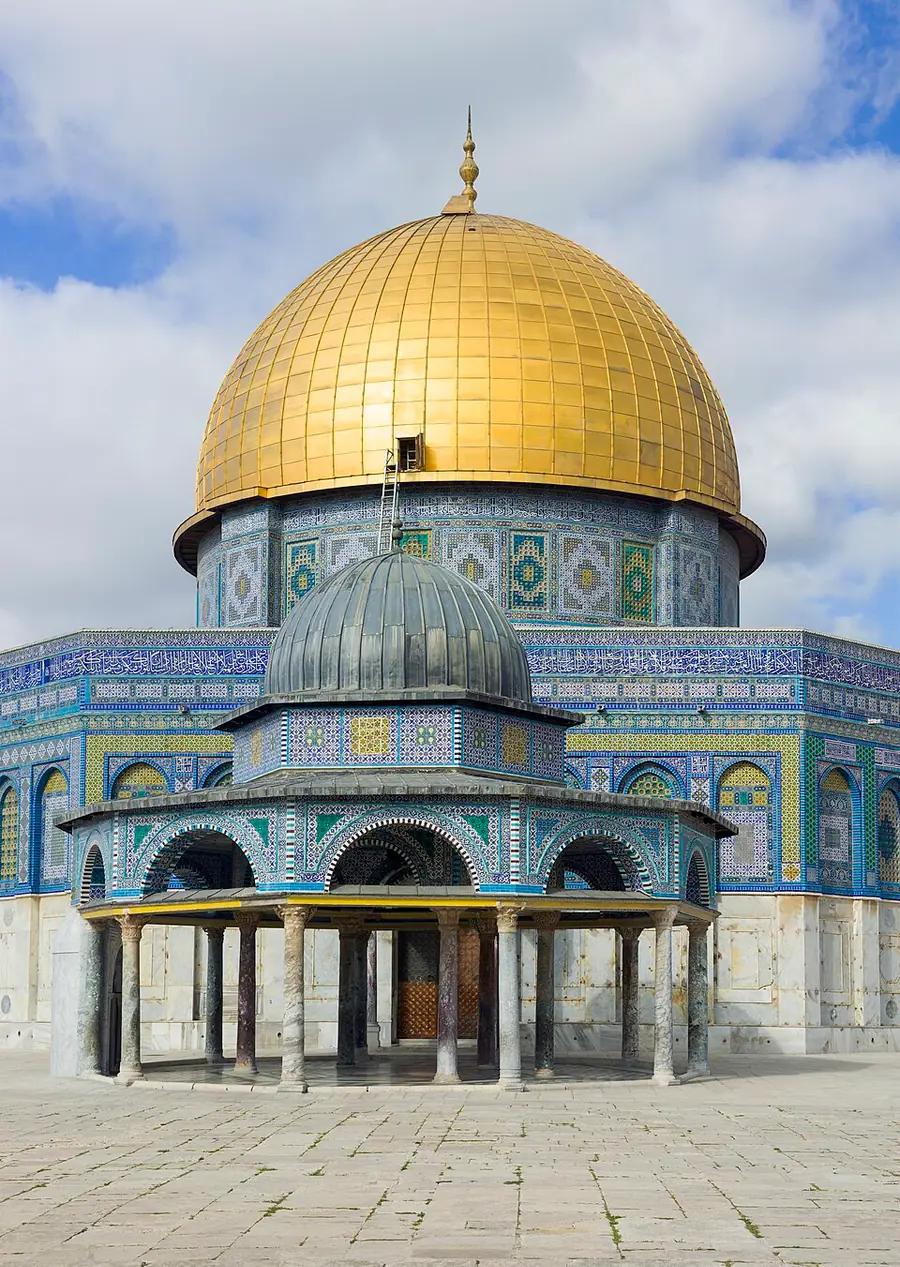
- Chapter 5 c. 661 – 750 CE The Umayyads An Islamic state: Damascus, Karbalāʾ, the Dome of the Rock, the coins, and the empire from Spain to Sindh Muʿāwiya made Damascus the capital in 661 and named his son Yazīd as heir, turning the caliphate into a dynasty; a Greek inscription of 662–663 already calls him 'the servant of God, commander of the believers'. At Karbalāʾ in October 680 Umayyad troops killed Muhammad's grandson al-Ḥusayn and most of his small company. The penitents and al-Mukhtār's revolt that followed were the first movements of the Shia, the 'party' of ʿAlī's family. Syria, Iraq and the Ḥijāz; Egypt, Iran and Central Asia; North Africa and Spain; Sindh 25 min read Majority view
- Chapter 6 c. 750 – 1000 CE The Abbasids: Law, Hadith and Theology Baghdad, the schools of law, the hadith canon, the created Qur'an, and how Sunni and Shia became separate communities The Abbasids took the caliphate in 750 and founded Baghdad in 762, but by the mid-tenth century real power had passed to provincial dynasties, and in 945 a Shia dynasty, the Buyids, ruled Baghdad in the caliph's name. Islamic law was built by scholars, not issued by caliphs. The schools named after Abū Ḥanīfa, Mālik, al-Shāfiʿī and Ibn Ḥanbal, all of whom died between 767 and 855, became organized schools only around 900–950. Iraq (Baghdad, Kufa, Basra, Samarra), Iran and Khurāsān, Egypt, North Africa and Arabia 25 min read Majority view
- Chapter 7 c. 700 – 1300 CE The Mystics: Sufism From the renunciants of Basra to the Sufi orders: Rābiʿa, Junayd, al-Ḥallāj, al-Ghazālī, Rūmī and Ibn ʿArabī Sufism grew out of the renunciants (zuhhād) of eighth-century Iraq, such as al-Ḥasan al-Baṣrī (d. 728); the word ṣūfī, most likely from ṣūf, 'wool', named a recognisable group in Baghdad only in the ninth century. Rābiʿa of Basra (d. c. 801) is real but thinly documented: no writing can be securely tied to her, and the famous stories and prayers about her pure love of God come mostly from sources written centuries later. Iraq (Basra, Baghdad), Khurāsān and Central Asia, Anatolia, Syria, Egypt, North Africa, al-Andalus and northern India 25 min read Majority view
- Chapter 8 c. 1000 – 1400 CE Turks, Crusaders and Mongols Seljuk sultans and the madrasa, the Crusades from the Muslim side, the Mongol conquest, Ibn Taymiyya, and Islam's new frontiers From 1055 Turkish sultans ruled in Baghdad beside the Abbasid caliph, who kept his title and lost his power. Their viziers founded madrasas, endowed colleges of law, the most famous of them the Niẓāmiyya of Baghdad (1065–67). Muslim writers called the crusaders 'Franks' and had no word for 'crusade'. The response was slow at first; holy war against the Franks was preached from 1105, organised under Zengi and Nūr al-Dīn, and won Jerusalem back for Saladin in 1187. The last Frankish city on the mainland, Acre, fell to the Mamluks in 1291. Iraq, Iran, Syria, Egypt and Anatolia; al-Andalus and North Africa; north India; West Africa; Sumatra and the Malay coast 25 min read Majority view
- Chapter 9 c. 1400 – 1800 CE The Great Empires: Ottomans, Safavids, Mughals Ottoman law and the caliphate claim, Iran made Shia, Akbar and Aurangzeb, and Islam's spread across Southeast Asia Between 1450 and 1600 three dynasties, the Ottomans, the Safavids and the Mughals, came to rule most of the Muslim world from the Balkans to Bengal, and each built a different relationship between the ruler, the scholars and the law. The Ottomans made the Ḥanafī school an arm of the state, with a hierarchy of salaried scholars under the şeyhülislam. Their claim to the caliphate grew mostly later: the story that the last Abbasid caliph handed it to Selim I in 1517 is first recorded in the late eighteenth century. Anatolia and the Balkans, the Arab lands, Iran, North India and the Deccan, the Malay world and Java 23 min read Majority view
- Chapter 10 c. 1700 – 1920 CE Reform, Revival and Empire Ibn ʿAbd al-Wahhāb and the Saudis, the West African jihads, India after 1857, the Egyptian reformers, the Tanzimat, and the new movements of the nineteenth century In 1744 the Najdi scholar Muḥammad ibn ʿAbd al-Wahhāb and the ruler of Dirʿiyya, Muḥammad ibn Saʿūd, made a pact: the scholar would lead in religion, the ruler in war and politics. Their first state took Mecca in 1803 and was destroyed by an Ottoman–Egyptian army in 1818. 'Wahhabi' is an outsiders' label: the movement called itself al-muwaḥḥidūn, those who affirm God's oneness, and many adherents today prefer 'Salafi'. Who is entitled to name it is part of the modern argument. Arabia (Najd, the Ḥijāz), Ottoman Iraq, Syria and Istanbul, Egypt, India, West Africa, Libya and Iran 22 min read Majority view
- Chapter 11 c. 1920 – 1979 CE The Twentieth Century The end of the caliphate, new states and their religions, the birth of Islamism, Pakistan, the Nation of Islam, and the veil On 3 March 1924 the Turkish Grand National Assembly abolished the caliphate, an office claimed by Ottoman sultans and held in some form since 632. Attempts to revive it, by Sharif Hussein of Mecca in 1924 and at congresses in Cairo (1926) and Jerusalem (1931), failed. New states took over religion. Atatürk's Turkey closed the Sufi lodges, replaced Islamic law with a Swiss-based civil code and put mosques under a state directorate; Reza Shah's Iran banned the veil in 1936; Ibn Saud's Saudi Arabia, proclaimed in 1932, made a Wahhabi reading of Islam the creed of a state that struck oil in 1938. Turkey, Egypt, Arabia, Iran, British India and Pakistan, the United States 26 min read Majority view
- Chapter 12 c. 1979 – 2001 CE Revolution and Revival Iran's clerical state, the siege of Mecca, the Afghan jihad, Saudi Salafism, the Rushdie affair and al-Qaeda, 1979–2001 The Iranian revolution of 1979 created something new in Shia history: a state ruled by a senior jurist. Khomeini set out the idea in lectures at Najaf in 1970, and the constitution approved in December 1979 wrote it into law; most of the senior ayatollahs of the day did not accept it. In the same year a Saudi preacher's followers seized the Grand Mosque of Mecca for two weeks, proclaiming a Mahdi; the Soviet Union invaded Afghanistan; and Pakistan's military ruler introduced Qur'anic punishments into criminal law. Iran, Saudi Arabia, Afghanistan and Pakistan; Algeria, Lebanon and Palestine; Britain 22 min read Majority view
- Chapter 13 c. 2001 – 2026 CE Islam Today How many Muslims there are, where they live, and the movements, laws and arguments that have shaped Islam since 2001 The Pew Research Center counted about 2 billion Muslims in 2020, 25.6 per cent of the world, the fastest-growing major religious group of the decade, mainly because Muslims are younger and have more children on average. Most Muslims live in Asia: Indonesia, Pakistan, India and Bangladesh have the largest populations. Shia Muslims are about 10–13 per cent of the total (Pew, 2009). Worldwide, with most Muslims in Asia and Africa 23 min read Majority view
Questions, answered with the evidence
All 16 questions- Are Ahmadis Muslims?
- Did Muhammad exist?
- How old is the Kaaba?
- How old is the oldest Qur'an?
- How old was ʿĀʾisha when she married Muhammad?
- Was Islam spread by the sword?
- What are the Satanic Verses?
- What happened at Karbala?
- What is Sharia, and where does it come from?
- What is Sufism?
- What is the Nation of Islam?
- What is Wahhabism?
- When did Muslim women start wearing the hijab?
- Who were the first four caliphs?
- Why did Sunni and Shia Muslims split?
- Why was the Dome of the Rock built?
Reading the confidence tags
- Consensus Broad agreement across the field
- Majority view Mainstream, with a real minority view
- Contested Open, with competing schools
- Speculative Worth stating, but thin evidence
- Politically contested Driven by modern politics as much as data
Where the field disagrees, the strongest version of each position is stated rather than resolved. See How we know for the inscriptions, manuscripts and source criticism behind the dates, and how this series treats the relation between faith and history, and Sources for every primary citation in the series plus the annotated bibliography behind it.