In the eighth century, in the garrison cities of Iraq, some Muslims turned away from the wealth of the new empire to a life of renunciation, fear of judgment and constant prayer. In ninth-century Baghdad their heirs were called ṣūfīs, probably after the coarse wool they wore, and a circle of teachers around al-Junayd developed a language for the soul’s journey to God: stations and states, the self’s extinction in God and its return. One of them, al-Ḥallāj, was executed in 922, and his case taught Sufis to write carefully. From the late tenth century they produced manuals arguing that their path was the inner dimension of Sunni Islam; al-Ghazālī, the most influential scholar of his age, made that argument after a personal crisis in 1095, and it largely prevailed. In the twelfth and thirteenth centuries Sufism became institutional: lodges, endowments, rules of initiation, and orders that carried a master’s method across the Muslim world, from Morocco to India. In the same century Rūmī wrote the most loved poetry of Persian mysticism and Ibn ʿArabī its most ambitious metaphysics, and the cult of saints and their tombs drew both crowds and critics. Much of what is called “Sufism” (the word, the manuals, the orders, the shrines) has a date in this story. Majority
This chapter follows Sufism from its first ascetics to the orders of the thirteenth century. The schools of law and theology that Sufis worked alongside are in §6; the Turkish and Mongol conquests that shaped the later orders are in §8; Sufism’s role in the spread of Islam in India is told from the Hindu side in Hinduism §10.
Timeline
| Date | Event or evidence | Confidence |
|---|---|---|
| d. 728 | Al-Ḥasan al-Baṣrī, preacher of renunciation in Basra, later claimed as a founding figure[1] | Consensus |
| d. c. 801 | Rābiʿa al-ʿAdawiyya, woman ascetic of Basra; most stories about her are later[2] | Majority |
| 781–857 | Al-Ḥārith al-Muḥāsibī, teacher of self-examination in Baghdad[1] | Consensus |
| d. c. 875 | Abū Yazīd al-Bisṭāmī, remembered for ecstatic sayings[1] | Majority |
| 9th c. | Ṣūfī names a recognizable circle in Baghdad[3] | Majority |
| d. 910 | Al-Junayd, the Baghdad master later called the model of “sober” Sufism[3] | Consensus |
| 26 March 922 | Al-Ḥallāj executed in Baghdad[4][5] | Consensus |
| d. 988 | Al-Sarrāj, Kitāb al-Lumaʿ, one of the first surviving Sufi manuals[6] | Consensus |
| d. 1021 | Al-Sulamī of Nishapur, biographies of Sufi men and of Sufi women[7][8] | Consensus |
| 1045–1046 | Al-Qushayrī’s Risāla, the most widely read Sufi handbook[9] | Consensus |
| c. 1070s | Al-Hujwīrī’s Kashf al-maḥjūb, the first Sufi treatise in Persian[10] | Majority |
| July 1095 | Al-Ghazālī’s crisis in Baghdad; he leaves to live as a Sufi[11][12] | Consensus |
| d. 1166 | ʿAbd al-Qādir al-Jīlānī, eponym of the Qādiriyya[13] | Consensus |
| d. 1168 | Abū l-Najīb al-Suhrawardī, eponym of the Suhrawardiyya[13] | Consensus |
| 1182 | The caliph al-Nāṣir joins the futuwwa brotherhoods, which he reorganizes around himself[13] | Majority |
| d. 1221 | Najm al-Dīn Kubrā killed when the Mongols take Gurganj[13] | Majority |
| d. 1236 | Muʿīn al-Dīn Chishtī at Ajmer, founder of the Chishtiyya in India[14] | Consensus |
| d. 1240 | Ibn ʿArabī in Damascus, after the Fuṣūṣ al-ḥikam (1229)[15] | Consensus |
| d. 1258 | Abū l-Ḥasan al-Shādhilī, eponym of the Shādhiliyya[13] | Consensus |
| 1273 | Rūmī dies in Konya; his son and disciples organize the Mevleviyya[16] | Consensus |
| 1310 | Ibn Taymiyya’s treatise against journeys to visit tombs, the grounds for his last imprisonment in 1326[17] | Consensus |
The renouncers
Wealth and its critics
The conquests of §4 made a few Arabs very rich and turned the garrison towns of Iraq, Basra and Kufa, into cities. Within two generations some Muslims reacted against that world. They were called zuhhād, “renouncers”, or nussāk and ʿubbād, “devotees”: people who fasted, prayed through the night, wept over their sins, distrusted the court and preferred poverty.[1][3] Consensus They were not a sect. They were Muslims of the ordinary community, many of them scholars of hadith and the Qur’an, for whom fear of God and the coming judgment ruled everything.
The most celebrated was al-Ḥasan al-Baṣrī (642–728), a preacher in Basra whose sermons against worldliness made a deep impression on his contemporaries. He was also a theologian and a reciter of the Qur’an, and almost none of his writing survives; his sayings come down in later collections, and the letters that bear his name are later attributions.[1] Majority From the ninth century Sufi writers placed him in their chains of teachers, so that the line of masters ran from the Prophet through ʿAlī to al-Ḥasan and on to the Sufis themselves. That he influenced later renouncers is secure; that he was a Sufi in the later sense is an anachronism. Majority
Were they borrowing?
Renunciation was not new in the Near East. Christian monks and hermits lived throughout Syria, Iraq and Egypt, and Sufi stories often show Muslim ascetics talking with them. Older scholarship proposed Christian, Neoplatonic, Zoroastrian or Indian sources for Sufism; Annemarie Schimmel’s survey of those theories treats them with caution, above all for the earliest period.[18] Alexander Knysh argues that the debate between “native” and “foreign” origins has been shaped by apologetic and polemical motives on both sides, and that Islamic asceticism could absorb the piety of its neighbours while drawing its language from the Qur’an and the Prophet’s example.[1] Majority on that framing; Contested on any specific borrowing.
The Qur’an itself gave the renouncers their vocabulary. It speaks of remembering God constantly, “truly it is in the remembrance of God that hearts find peace” (13:28); of a God “closer to him than his jugular vein” (50:16), and of a people whom God “loves and who love Him” (5:54).[19][20][21] Remembrance, dhikr, became the central Sufi practice; nearness and love, its central themes. Consensus on the verses’ use.
Rābiʿa: from Basra ascetic to legend
The most famous woman in the history of Islamic mysticism is Rābiʿa al-ʿAdawiyya of Basra, a freed slave of the Qays ibn ʿAdī clan who is traditionally said to have died in 801.[2] Majority What can be known about her is little. Rkia Elaroui Cornell, in the fullest study, finds that two early Basran authors mention her reputation, which is the best evidence that she lived, and that no body of writing can be securely tied to her; even the usual dates of her birth and death come from much later sources.[2] Majority The early Sufi biographer al-Sulamī (d. 1021) already knew more than one ascetic woman called Rābiʿa, and stories of them seem to have merged.[7][8]
Her legend grew over four centuries. The stories most often told (that she was sold into slavery as a child and freed when her master saw a light above her as she prayed, that she bested al-Ḥasan al-Baṣrī in conversation, that she carried a torch and a bucket to burn paradise and quench hell so that people would love God for Himself alone) are found in the Persian poet ʿAṭṭār’s Memorial of the Saints (Tadhkirat al-awliyāʾ, c. 1200) and similar late works.[22][2] There is no early evidence that she ever met al-Ḥasan, who died when she would have been a child. Majority
Cornell traces four faces of Rābiʿa in the sources: the teacher, the ascetic, the lover of God, and finally the Sufi, each the product of a different age’s needs.[2] What the legend attaches to her is real enough as a historical development: by the tenth century Sufis were speaking of a love of God (maḥabba) that sought neither reward nor safety, and Rābiʿa became its emblem. Majority Whether she said what she is remembered as saying is a different question, and mostly cannot be answered.
The name and the Baghdad circle
“Wool”
The Arabic ṣūfī most probably means “a wearer of wool” (ṣūf), from the coarse woollen garment that marked an ascetic. Al-Qushayrī in the eleventh century and Ibn Khaldūn in the fourteenth already rejected other derivations on grounds of grammar, such as ṣafāʾ, “purity”, or the ahl al-ṣuffa, the poor companions who lived on a bench at the Prophet’s mosque; modern scholars agree.[9][1] Consensus Ahmet Karamustafa, in a study of the formative period, argues that “Sufi” became the name of a recognizable group, distinct from the wider renouncers, in Baghdad in the second half of the ninth century, and that “Sufism” in the strict sense begins there.[3] Majority
Al-Muḥāsibī and al-Junayd
Two Baghdad teachers set the tone. Al-Ḥārith al-Muḥāsibī (c. 781–857) took his name from muḥāsaba, examining one’s conscience, and wrote about the hidden motives of the self: the hypocrisy that makes even good deeds a display.[1] Consensus His most famous student in practice, if not in formal teaching, was al-Junayd (d. 910), a jurist of the Shāfiʿī school who learned the path from his uncle Sarī al-Saqaṭī and became the acknowledged master of the Baghdad Sufis.[3][1] Consensus
Little of al-Junayd’s writing survives beyond a collection of letters, but his definitions were quoted for centuries. Asked what Sufism is, he is reported to have said: “that the Real should make you die to yourself and give you life in Him.”[9] The idea behind it, fanāʾ, the passing away of the self in God, followed by baqāʾ, continuing to live in God and return to the world, became the core of Sufi theory. Al-Junayd insisted that the experience be governed by the law and by sound belief, and that its higher states not be spoken of to the uninitiated.[3] Majority
Bisṭāmī and the ecstatic sayings
In Khurāsān, Abū Yazīd al-Bisṭāmī (d. c. 875) left no writings, but a body of startling sayings was transmitted in his name: utterances, called shaṭaḥāt, in which the speaker seems to speak as God. The early reports also describe him as scrupulous in ritual and respectful of the jurists.[1][5] Majority Sufi theorists later explained such sayings as words spoken in a state of extinction, when the self is gone and God speaks; critics heard blasphemy.
“Sober” and “drunk”
Later handbooks sorted the early masters into two schools: the “sober” (ṣaḥw) path of al-Junayd, which returns from ecstasy to ordinary consciousness and the law, and the “intoxicated” (sukr) path of Abū Yazīd, which speaks from the ecstasy itself.[10] Jawid Mojaddedi has shown that this typology is not found in the earliest sources; it was created in eleventh-century handbooks, above all al-Hujwīrī’s, which projected a later classification back onto the masters.[23] Majority It remains useful as shorthand for a real difference of temperament, provided it is not read as two organized schools in the ninth century.
Al-Ḥallāj
Ḥusayn ibn Manṣūr al-Ḥallāj (c. 858–922) was the son of a cotton-carder (ḥallāj) from Fārs, a disciple for a time of Sahl al-Tustarī, ʿAmr al-Makkī and al-Junayd, and a traveller who preached from Khurāsān to India. Unlike the Baghdad masters, he took the language of union to the public. He attracted a large popular following and powerful supporters at court, and as many enemies: jurists who called him a heretic, theologians who called him a fraud, and Sufis who thought he had betrayed secrets meant for the few.[4][1] Consensus
The saying for which he is remembered is anā l-ḥaqq, “I am the Real”; al-Ḥaqq, “the Real” or “the Truth”, being one of the names of God. The reports of when and where he said it conflict: the earliest comes from a hostile account, and stories placing it in a conversation with al-Junayd appear later.[4] Majority His defenders read it as al-Junayd’s fanāʾ spoken aloud: the self extinguished, God speaking. His accusers read it as a claim to be God, or as ḥulūl, the “indwelling” of God in a human being, which Muslim theology rejected. Consensus that both readings were made.
He was arrested in about 913 and held in prison in Baghdad for about nine years, his treatment rising and falling with the fortunes of his friends and enemies among the caliph al-Muqtadir’s ministers. He was condemned in 922, on charges that included plotting against the Kaʿba in the manner of the Qarmaṭī rebels, and executed on 26 March 922 on the bank of the Tigris.[4] Consensus on the outline and the date. Carl Ernst, studying how such sayings were treated in law, argues that blasphemy was poorly defined in the legal tradition and that heresy charges were pressed when they were politically useful; the rivalry of the vizier Ḥāmid ibn al-ʿAbbās and al-Ḥallāj’s patrons at court was decisive.[5] Majority that politics weighed at least as heavily as doctrine.
Most Sufis of his own time disapproved of him. Later generations made him a martyr of love: the French scholar Louis Massignon, whose study of al-Ḥallāj (1922; English 1982) remains the fullest, read his life as a self-offering for the Muslim community, a reading many have found too close to a Christian model.[4][1] Contested on Massignon’s interpretation.
Writing Sufism down: the manuals
Al-Ḥallāj’s death and the suspicion of scholars pushed Sufis to explain themselves. From the late tenth century they wrote handbooks that set out their terms, gave lives of the masters, and argued, in effect, that Sufism was the inner side of the same Sunni Islam the jurists and theologians taught.[1] Majority
- Abū Naṣr al-Sarrāj (d. 988), Kitāb al-Lumaʿ (“The Book of Flashes”), defines the stations (maqāmāt) and states (aḥwāl) of the path and defends even the ecstatic sayings as capable of a sound meaning.[6] Consensus
- Abū Ṭālib al-Makkī (d. 996), Qūt al-qulūb (“The Nourishment of Hearts”), a manual of devotional practice that al-Ghazālī later read closely.[11] Consensus
- Abū ʿAbd al-Raḥmān al-Sulamī (d. 1021) of Nishapur, Ṭabaqāt al-ṣūfiyya, generations of Sufi masters, and a separate book of women ascetics and Sufis (below).[7] Consensus
- Abū l-Qāsim al-Qushayrī (986–1072), al-Risāla (437 AH / 1045–1046), written in Nishapur during a persecution of Ashʿarī scholars by the Seljuk vizier, which aimed to show that the beliefs of the early masters were those of Ashʿarī Sunni theology (§6). It became the most widely copied Sufi handbook in the Muslim world.[9] Consensus
- ʿAlī al-Hujwīrī (d. c. 1072–1077), Kashf al-maḥjūb (“The Unveiling of the Veiled”), the first treatise on Sufism in Persian, written in Lahore, where his tomb is now one of the most visited shrines of South Asia.[10] Majority
These books give Sufism much of what it is still known by: the path as a sequence of stations, from repentance through renunciation, patience and trust to love and knowledge; the master–disciple relationship; the listening to poetry and music (samāʿ) that could bring on ecstasy, and the rules that hedged it. They are also, as Mojaddedi and Karamustafa stress, arguments: they choose which masters to include and how to present them.[23][3] Majority
Al-Ghazālī
The crisis
Abū Ḥāmid al-Ghazālī (c. 1058–1111), from Ṭūs in Khurāsān, was the most celebrated scholar of his generation: a Shāfiʿī jurist, Ashʿarī theologian and critic of the philosophers, appointed in 1091 to the Niẓāmiyya madrasa in Baghdad, the most prestigious teaching post in the Muslim world (§8). In his autobiography, al-Munqidh min al-ḍalāl (“The Deliverer from Error”), written late in life, he describes what happened next.[11][12] Consensus
Having studied theology, philosophy and the claims of the Ismāʿīlīs (§6), he says, he turned to the Sufis, read al-Makkī, al-Muḥāsibī and the sayings of al-Junayd, al-Shiblī and Abū Yazīd, and saw that their knowledge could not be learned from books but only reached “by taste” (dhawq) and by following the path.[11] He examined his own teaching and found its motive was reputation, not God. For about six months, from Rajab 488 (July 1095), he wavered; then, he writes, God “locked my tongue” so that he could not lecture, and he could neither eat nor digest.[11] He left Baghdad on the pretext of a pilgrimage, gave away his wealth except what his children needed, and spent two years in seclusion in Damascus (climbing the minaret of the Umayyad mosque and shutting himself in), then went to Jerusalem, Hebron, Mecca and Medina, and finally home to Ṭūs.[11] Consensus that this is his account. Historians debate how much of the story is shaped as a conversion narrative, and whether political danger after the murder of his patron Niẓām al-Mulk in 1092 played a part; Frank Griffel reconstructs the chronology and the circumstances from other sources.[12] Contested on the motives.
The synthesis
In about ten years of retreat, he writes, it became certain to him that “the Sufis are the ones who travel the way of God in particular”, and that their way of life was the best.[11] His great work, Iḥyāʾ ʿulūm al-dīn (“The Revival of the Religious Sciences”), in forty books, takes the reader through ritual, daily life, the vices that destroy and the virtues that save, and ends with love, longing and the remembrance of death.[24] It placed Sufism, as a discipline of the heart, inside the ordinary obligations of Sunni law and belief. In 1106 he returned to teaching, at the Niẓāmiyya of Nishapur, before retiring again to Ṭūs, where he died in December 1111.[12] Consensus
Al-Ghazālī’s achievement is usually described as reconciling Sufism with Sunni orthodoxy. Historians now add two qualifications: the manuals of al-Sarrāj and al-Qushayrī had made the same argument before him, and the Iḥyāʾ itself was attacked in its first century, burned in al-Andalus under the Almoravids and criticised by jurists who found weak hadith in it.[1][12] Majority His authority was a result of his success, not its cause.
From circles to orders
Lodges and rules
Until the eleventh century, Sufism was a matter of teachers and their circles. From the eleventh century, lodges (called khānqāh in Persian lands, ribāṭ or zāwiya in Arabic ones, later tekke in Turkish) were built and endowed by rulers and patrons, with rules for residents and travellers.[13][25] Consensus J. Spencer Trimingham’s classic account describes three stages, named after their typical institutions: the khānqāh stage, of masters, disciples and lodges; the ṭarīqa stage, from the twelfth and thirteenth centuries, when a master’s method of devotion was handed on by initiation along a chain of masters (silsila) reaching back to the Prophet; and, from the fifteenth century, the ṭāʾifa, an organized brotherhood with branches and lay members.[13] Later historians find the stages too tidy, but the direction is clear.[25] Majority
An initiate received the master’s cloak (khirqa), learned the order’s form of dhikr (repeated formulas, aloud or silent, alone or together) and joined a community with its own lodges, festivals and saints. Because the chains crossed borders, an order could link lodges from North Africa to India under one name.[25] Majority
The first orders
The orders took the names of masters who, in several cases, had not founded an institution themselves. Their disciples and descendants did that.[13] Majority
| Order | Named after | Where | What the history shows |
|---|---|---|---|
| Qādiriyya | ʿAbd al-Qādir al-Jīlānī (c. 1077–1166), a Ḥanbalī preacher in Baghdad | Iraq; later everywhere | His sons and later hagiographies made a Baghdad preacher the head of a worldwide order[13] |
| Suhrawardiyya | Abū l-Najīb al-Suhrawardī (1097–1168); organized by his nephew ʿUmar (1145–1234) | Baghdad, Iran, India | ʿUmar worked with the caliph al-Nāṣir and wrote a standard manual, ʿAwārif al-maʿārif[13] |
| Chishtiyya | Chisht in Afghanistan; Muʿīn al-Dīn Chishtī (1143–1236) at Ajmer | Northern India | Kept apart from courts; music and poetry in worship[14] |
| Kubrawiyya | Najm al-Dīn Kubrā (1145–1221) | Khwārazm, Central Asia | Analysis of visionary experience; Kubrā died in the Mongol sack of Gurganj[13] |
| Shādhiliyya | Abū l-Ḥasan al-Shādhilī (1196–1258) | Morocco, Tunisia, Alexandria | No withdrawal from work or family; a learned urban following[13] |
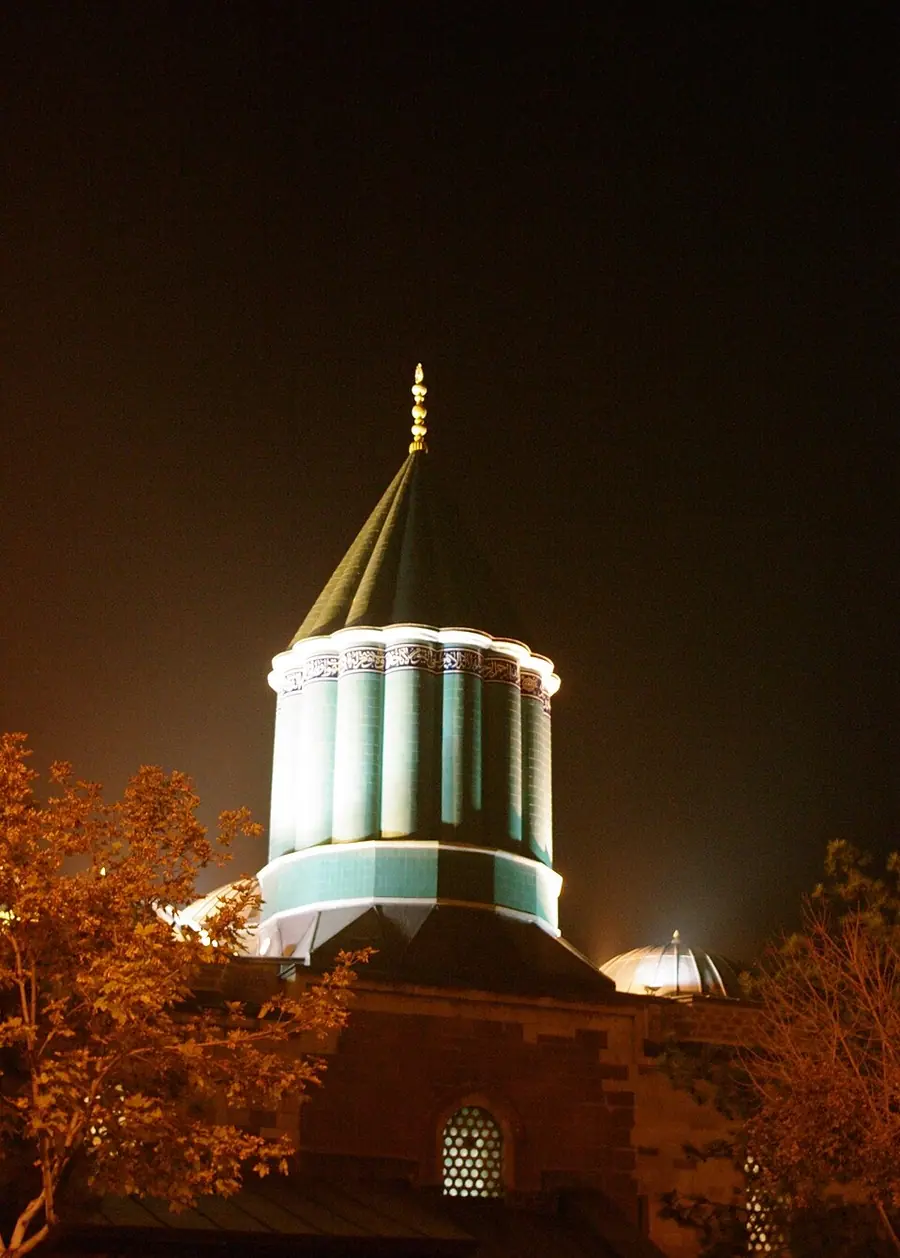
| Mevleviyya | Jalāl al-Dīn Rūmī (1207–1273) | Konya, Anatolia | Organized after his death by his son Sultan Walad[16] |
The caliph al-Nāṣir (r. 1180–1225) shows how quickly the new forms acquired political meaning. He had himself initiated into the futuwwa, the brotherhoods of young urban men with their own codes of honour, in 1182, and reorganized them with himself at their head, with the help of ʿUmar al-Suhrawardī.[13] Majority In India, by contrast, the Chishtī masters made a principle of refusing royal grants and court service, though their shrines later drew royal patronage.[14] Majority
Rūmī
Jalāl al-Dīn Muḥammad, called Rūmī (“of Rūm”, Anatolia, recently Byzantine), was born in 1207 in Wakhsh near Balkh, the son of a preacher and jurist, Bahāʾ al-Dīn Walad. The family left Central Asia as the Mongols advanced and settled in Konya, the Seljuk capital of Anatolia, in 1228. Rūmī succeeded his father as a teacher of law and religion.[16] Consensus
In November 1244 he met a wandering dervish, Shams of Tabrīz, and his life changed. Their intimacy alarmed his family and disciples; Shams left, returned, and in 1247 or 1248 disappeared for good. Rūmī’s grief poured into the lyric poems collected as the Dīwān-i Shams-i Tabrīzī, signed with his friend’s name.[16] Consensus on the outline; the stories that Shams was murdered are later and uncertain. Contested
His long didactic poem, the Masnavī-yi maʿnavī, in six books and some 25,000 couplets, dictated to his disciple Ḥusām al-Dīn Chalabī over his last twelve years, opens with the lament of a reed flute cut from its reed-bed: the soul longing for its origin.[26] It became, for Persian- and Turkish-speaking Muslims, the most read book after the Qur’an, sometimes called “the Qur’an in Persian”. Majority After his death in December 1273 his son Sultan Walad and Ḥusām al-Dīn organized his followers into the Mevlevi order, whose ritual of turning to music, the samāʿ, made them the “whirling dervishes”.[16] Consensus
Rūmī is now, in English translation, among the best-selling poets in the United States, usually detached from the Qur’an and the Islamic law that framed his life. Franklin Lewis’s study documents both the historical Rūmī and the modern reception.[16] Majority
Ibn ʿArabī and the “unity of being”
Muḥyī l-Dīn Ibn ʿArabī (1165–1240) was born in Murcia in al-Andalus, left the Iberian peninsula for good in 1200, travelled through North Africa, Mecca, Anatolia and Syria, and settled in Damascus in 1223, where he died. Hundreds of works are attributed to him. The two most influential are al-Futūḥāt al-makkiyya (“The Meccan Openings”), an encyclopaedic work of some 560 chapters, and the short Fuṣūṣ al-ḥikam (“The Ringstones of Wisdom”, 1229), on the wisdom of the prophets from Adam to Muhammad.[15][27][28] Consensus
His thought gave later Sufism its most ambitious metaphysics. In William Chittick’s reading, its centre is that existence (wujūd) belongs properly to God alone, and that everything else is a self-disclosure (tajallī) of God through His names, existing only by borrowing; the “perfect human” (al-insān al-kāmil) is the one in whom all the names are reflected.[15] Majority on the reading. He grounded these ideas in close readings of the Qur’an, including verses such as “He is the First and the Last, the Outward and the Inward” (57:3).[15]
The label usually attached to this teaching, waḥdat al-wujūd, “the unity of existence”, is not the name he gave it. Chittick traces the phrase to his followers, such as Ṣadr al-Dīn al-Qūnawī, Ibn Sawdakīn and Ibn Sabʿīn, and above all to the polemic of Ibn Taymiyya (d. 1328), who used it for a doctrine he condemned as identifying the Creator with creation.[29] Majority Defenders replied that dependence is not identity. The argument continued for centuries, as far as seventeenth-century India, where the Naqshbandī Aḥmad Sirhindī proposed instead a “unity of witnessing”: the unity is in the mystic’s perception, not in being.[29] Contested on what Ibn ʿArabī meant; Consensus that the controversy is real and long.
Saints, shrines and their critics
By the twelfth century Sufi masters were widely regarded as awliyāʾ, “friends of God” (the usual English is “saints”), through whom God’s blessing (baraka) worked, during their lives and after their deaths. Their tombs became places of pilgrimage (ziyāra), where people prayed, made vows and held the master’s death-day as a festival, his ʿurs or “wedding” with God.[25][14] Consensus The cult of saints was not peculiar to Sufism; the tombs of the Prophet’s family and of prophets were also visited. But the orders gave it a structure: each lodge kept its founder’s tomb, and each chain of masters was a chain of blessing.
It had critics from the start. Jurists objected to music and dance, to claims of miracles, to the veneration of graves and to masters who seemed to set themselves above the law.[1] The most consequential critic was Ibn Taymiyya (1263–1328), a Ḥanbalī jurist of Damascus, who condemned the monism he saw in Ibn ʿArabī’s followers and, in a treatise of 1310, argued that travelling specifically to visit the tombs of prophets and saints was a forbidden innovation; the controversy over that treatise led to the imprisonment in which he died.[17] Consensus He did not reject Sufism as such: he wrote on passages of al-Qushayrī’s Risāla and treated early masters such as al-Junayd as authorities, and some historians argue that he was himself affiliated with the Qādiriyya.[1] Majority His arguments against shrine pilgrimage would be revived in eighteenth-century Arabia by Muḥammad ibn ʿAbd al-Wahhāb (§10).
Women in Sufism
The renunciant movement offered women one of the few religious roles in which they could be recognized in their own right. Al-Sulamī’s Dhikr al-niswa al-mutaʿabbidāt al-ṣūfiyyāt (“Remembrance of the Women Devotees and Sufis”), written before 1021, records dozens of them, from Basra, Syria, Khurāsān and Egypt: teachers, ascetics and women who instructed men. Cornell, who translated it, reads it as evidence of a women’s tradition the later handbooks largely left out.[7][8] Majority
Rābiʿa became the representative woman of that tradition, and Sufi writers used her both to praise women’s spiritual capacity and, at times, to make the point that a woman who reached that level was “a man” in spirit. In the orders that followed, women appear as patrons who endowed lodges, as members, and occasionally as teachers, but rarely as heads of orders.[2][25] Majority
The evidence
| Question | What the evidence supports | Key evidence | Confidence |
|---|---|---|---|
| Origins | Grew from Iraqi renunciants; drew on the Qur’an and on a Near East full of monks | Early biographies; the Qur’an’s language of remembrance and love[1][3] | Majority |
| The name | Ṣūfī from wool; a named group in Baghdad by the later ninth century | Al-Qushayrī; Karamustafa[9][3] | Majority |
| Rābiʿa | A real Basran ascetic; most stories are centuries later | Cornell; ʿAṭṭār[2][22] | Majority |
| Sober and drunk | A real difference, but the typology is an eleventh-century creation | Mojaddedi; al-Hujwīrī[23][10] | Majority |
| Al-Ḥallāj | Executed 922 after long imprisonment; politics as decisive as doctrine | Massignon; Ernst[4][5] | Majority |
| The manuals | Late tenth and eleventh centuries; arguments for Sufism’s orthodoxy | Al-Sarrāj; al-Qushayrī[6][9] | Consensus |
| Al-Ghazālī | A crisis in 1095 and a synthesis in the Iḥyāʾ | Al-Munqidh; Griffel[11][12] | Consensus |
| Orders | Twelfth and thirteenth centuries, often organized after their eponyms | Trimingham; Green[13][25] | Majority |
| Waḥdat al-wujūd | A label applied by followers and critics, not Ibn ʿArabī’s own | Chittick[29] | Majority |
Primary sources
Show the 8 primary sources
1. “People He loves and who love Him”: Q 5:54
fa-sawfa yaʾtī llāhu bi-qawmin yuḥibbuhum wa-yuḥibbūnahu
“God will soon replace you with people He loves and who love Him.” (Q 5:54, trans. Abdel Haleem)[21][30]
What it proves. The Qur’an speaks of love between God and believers in both directions. In context the verse concerns those who would replace believers who abandon their faith; Sufi writers read it as a charter for the love of God. Consensus on the text; the Sufi reading is later.
2. “Closer to him than his jugular vein”: Q 50:16
wa-naḥnu aqrabu ilayhi min ḥabli l-warīd
“We are closer to him than his jugular vein.” (Q 50:16)[20]
What it proves. The nearness of God to the human self, which the mystics made a theme, is in the Qur’an’s own words. Consensus
3. “In the remembrance of God hearts find peace”: Q 13:28
a-lā bi-dhikri llāhi taṭmaʾinnu l-qulūb
“Truly it is in the remembrance of God that hearts find peace.” (Q 13:28)[19]
What it proves. Dhikr, remembrance, is a Qur’anic command and promise before it is a Sufi technique; the orders turned it into a practice with fixed formulas and methods. Consensus
4. Al-Junayd’s definition, as al-Qushayrī records it
an yumītaka l-ḥaqqu ʿanka wa-yuḥyiyaka bihi
“That the Real should make you die to yourself and give you life in Him.”[9]
What it proves. The classic formula of fanāʾ and baqāʾ, passing away and abiding, in the words credited to the Baghdad master and preserved in the eleventh-century handbook. It shows what the manuals wanted the tradition to be: union described as God’s act, not the mystic’s claim. Majority on the attribution.
5. “I am the Real”: al-Ḥallāj
anā l-ḥaqq
“I am the Real” (or “I am the Truth”).[4]
What it proves. Only that a saying in these words was attributed to al-Ḥallāj and became central to how his case was remembered. The earliest report is hostile and the settings conflict; the saying’s meaning (union, extinction or blasphemy) is what the controversy was about. Majority that he said something of this kind; Contested on when and what he meant.
6. “God locked my tongue”: al-Ghazālī, al-Munqidh min al-ḍalāl, after 1106
jāwaza l-amru ḥadda l-ikhtiyāri ilā l-iḍṭirār, idh aqfala llāhu ʿalā lisānī ḥattā iʿtaqala ʿan al-tadrīs
“The matter passed beyond choice to compulsion, for God locked my tongue so that it was shut against teaching.”[11]
What it proves. The crisis of July 1095 as al-Ghazālī himself presented it: a breakdown in which he could not lecture or eat, resolved by leaving Baghdad. It is autobiography written years later, shaped as a conversion, and has to be read as both evidence and argument. Consensus on the text.
7. “The ones who travel the way of God”: al-Ghazālī on the Sufis
innī ʿalimtu yaqīnan anna l-ṣūfiyyata humu l-sālikūna li-ṭarīqi llāhi taʿālā khāṣṣatan, wa-anna sīratahum aḥsanu l-siyar, wa-ṭarīqahum aṣwabu l-ṭuruq
“I knew with certainty that the Sufis are the ones who travel the way of God in particular, that their way of life is the best of lives, and their path the most correct of paths.”[11]
What it proves. The conclusion the most authoritative Sunni scholar of his age drew and published: Sufism as the summit of the religious life, not a deviation from it. It explains why later Sunni learning made room for Sufism. Consensus on the text.
8. The reed: Rūmī, Masnavī, book 1, lines 1–2
bishnaw az nay chūn ḥikāyat mīkunad / az judāyīhā shikāyat mīkunad kaz nayistān tā marā bubrīda-and / az nafīram mard u zan nālīda-and
“Listen to the reed, how it tells a tale, complaining of separations: ‘Ever since they cut me from the reed-bed, men and women have wept at my cry.’”[26]
What it proves. The opening image of the most widely read work of Persian mysticism: the soul as a reed flute longing for its origin. The text follows R. A. Nicholson’s edition; the translation is this site’s own. Consensus
What is absent
- Writings by Rābiʿa. No poem or text can be securely attributed to her; her sayings come through later authors. Majority
- A Sufi “founder”. No single person founded Sufism, and the early masters did not found orders; the orders’ chains of masters were drawn up later. Consensus
- Al-Ḥallāj’s trial record. Accounts of his trial come from later chronicles and partisan collections. Majority
- The phrase waḥdat al-wujūd as Ibn ʿArabī’s own name for his doctrine. It comes from his followers and critics. Majority
- Organized orders before the twelfth century. Circles, masters and lodges existed; orders with rules and branches came later. Majority
- Separate Sufi law. Sufis followed the ordinary schools of law (§6); al-Junayd was a Shāfiʿī, ʿAbd al-Qādir a Ḥanbalī, al-Shādhilī a Mālikī. Consensus
Debates
Islamic origin or foreign borrowing?
| View | Position | Main proponents |
|---|---|---|
| Foreign origins | Sufism took key ideas from Christian monasticism, Neoplatonism or Indian religion | Older orientalist scholarship, as surveyed by Schimmel[18] |
| Qur’anic origins | Sufism grew from the Qur’an and the Prophet’s example; parallels are coincidence or later | Many Muslim scholars; Louis Massignon on the Qur’an’s vocabulary[4] |
| Interaction | Islamic piety developed in a world of monks and philosophers and absorbed some of it, in its own terms | Knysh; Karamustafa[1][3] |
Majority for interaction; Contested on specific borrowings.
When does “Sufism” begin?
With the renunciants of the eighth century, as the later Sufi tradition says, or with a named movement in ninth-century Baghdad, as Karamustafa argues? The answer depends on whether one follows the tradition’s own chains or the first use of the name.[3][1] Contested
Was al-Ḥallāj executed for heresy?
For the tradition, and for Massignon, he died for his mystical claims; for Ernst and others, those claims were the occasion, and court politics the cause.[4][5] Contested
Did al-Ghazālī reconcile Sufism and orthodoxy?
The standard view credits him with the decisive synthesis; others point out that the manuals of the tenth and eleventh centuries had already made the case, and that his authority grew after his death.[12][1] Majority that he was decisive for its reception; Contested on how original.
Further reading
Show further reading (12 works)
- Alexander Knysh, Islamic Mysticism: A Short History (Brill, 2000).
- Ahmet T. Karamustafa, Sufism: The Formative Period (Edinburgh, 2007).
- Annemarie Schimmel, Mystical Dimensions of Islam (North Carolina, 1975).
- Nile Green, Sufism: A Global History (Wiley-Blackwell, 2012).
- Rkia Elaroui Cornell, Rabiʿa from Narrative to Myth (Oneworld, 2019).
- Carl W. Ernst, Words of Ecstasy in Sufism (SUNY, 1985).
- Louis Massignon, The Passion of al-Hallāj, trans. Herbert Mason (Princeton, 1982).
- Frank Griffel, Al-Ghazālī’s Philosophical Theology (Oxford, 2009).
- William C. Chittick, The Sufi Path of Knowledge: Ibn al-ʿArabi’s Metaphysics of Imagination (SUNY, 1989).
- Franklin D. Lewis, Rumi: Past and Present, East and West (Oneworld, 2000).
- J. Spencer Trimingham, The Sufi Orders in Islam (Oxford, 1971).
- Carl W. Ernst and Bruce B. Lawrence, Sufi Martyrs of Love: The Chishti Order in South Asia and Beyond (Palgrave, 2002).
References
- ^ a b c d e f g h i j k l m n o p q r s t Alexander Knysh Islamic Mysticism: A Short History. Brill, 2000. The standard survey of Sufism from the renunciants to the modern orders, and of the debate over its origins.
- ^ a b c d e f g Rkia Elaroui Cornell Rabiʿa from Narrative to Myth: The Many Faces of Islam's Most Famous Woman Saint, Rabiʿa al-ʿAdawiyya. Oneworld, 2019. How little is known of the historical Rābiʿa and how her legend grew; four portraits in the sources.
- ^ a b c d e f g h i j k Ahmet T. Karamustafa Sufism: The Formative Period. Edinburgh University Press, 2007. Argues that Sufism as a named movement emerged in Baghdad in the later ninth century, alongside other forms of piety.
- ^ a b c d e f g h i Louis Massignon The Passion of al-Hallāj: Mystic and Martyr of Islam, trans. Herbert Mason. Princeton University Press, 1982. English translation of Massignon's monumental study (French, 1922; revised 1975) of al-Ḥallāj's life, trial and legacy.
- ^ a b c d e Carl W. Ernst Words of Ecstasy in Sufism. State University of New York Press, 1985. The ecstatic sayings (shaṭaḥāt), their interpretation, and how they were treated in law; argues al-Ḥallāj's trial turned on politics.
- ^ a b c Abū Naṣr al-Sarrāj, Kitāb al-Lumaʿ fī l-taṣawwuf — The Book of Flashes on Sufism. before 988 CE. Arabic. One of the earliest surviving Sufi manuals: stations, states and a defence of the ecstatic sayings. about
- ^ a b c d Abū ʿAbd al-Raḥmān al-Sulamī, Dhikr al-niswa al-mutaʿabbidāt al-ṣūfiyyāt — Remembrance of the Women Devotees and Sufis. before 1021 CE. Arabic. Short notices of early women ascetics and Sufis, including more than one woman called Rābiʿa; translated by Rkia Cornell as Early Sufi Women (1999). about
- ^ a b c Rkia Elaroui Cornell (trans.) Early Sufi Women: Dhikr an-niswa al-mutaʿabbidat as-sufiyyat by Abu ʿAbd ar-Rahman as-Sulami. Fons Vitae, 1999. Edition and translation of al-Sulamī's book of women ascetics and Sufis.
- ^ a b c d e f g al-Qushayrī, al-Risāla al-Qushayriyya fī ʿilm al-taṣawwuf — al-Qushayrī's Epistle on Sufism. 437 AH / 1045–1046 CE. Arabic. The most widely read Sufi handbook, written in Nishapur to show that the early masters held Ashʿarī Sunni beliefs; records al-Junayd's definition of Sufism and discusses the word ṣūfī. about
- ^ a b c d ʿAlī al-Hujwīrī, Kashf al-maḥjūb — The Unveiling of the Veiled. c. 1070s CE. Persian. The first treatise on Sufism in Persian, written in Lahore; the source of the classification of masters into 'sober' and 'intoxicated' schools. about
- ^ a b c d e f g h i j al-Ghazālī, al-Munqidh min al-ḍalāl — The Deliverer from Error. after 1106 CE. Arabic. Al-Ghazālī's account of his intellectual search, his crisis of Rajab 488 / July 1095 when 'God locked my tongue', his years of retreat, and his verdict that the Sufis travel the way of God. read the text
- ^ a b c d e f g Frank Griffel Al-Ghazālī's Philosophical Theology. Oxford University Press, 2009. Reconstructs al-Ghazālī's life, including the chronology and circumstances of his departure from Baghdad in 1095.
- ^ a b c d e f g h i j k l m n J. Spencer Trimingham The Sufi Orders in Islam. Clarendon Press, 1971. Classic history of the orders, with the three-stage model of khānqāh, ṭarīqa and ṭāʾifa.
- ^ a b c d Carl W. Ernst & Bruce B. Lawrence Sufi Martyrs of Love: The Chishti Order in South Asia and Beyond. Palgrave Macmillan, 2002. doi History of the Chishtī order, its masters and shrines.
- ^ a b c d William C. Chittick The Sufi Path of Knowledge: Ibn al-ʿArabi's Metaphysics of Imagination. State University of New York Press, 1989. Ibn ʿArabī's thought presented through translations from the Futūḥāt.
- ^ a b c d e f Franklin D. Lewis Rumi: Past and Present, East and West. Oneworld, 2000. The life, works and teachings of Rūmī from the sources, and his modern reception.
- ^ a b Ibn Taymiyya, treatise on travelling to visit tombs (Ziyārat al-qubūr / Shadd al-riḥāl) — On visiting graves. 1310 CE. Arabic. Ibn Taymiyya's argument that travelling specifically to visit the tombs of prophets and saints is a forbidden innovation; the controversy led to his final imprisonment. about
- ^ a b Annemarie Schimmel Mystical Dimensions of Islam. University of North Carolina Press, 1975. Classic introduction to Sufi thought, poetry and practice; surveys the theories of foreign origin.
- ^ a b Qur'an 13:28 — The Qur'an. 610–632 CE. Arabic. 'In the remembrance of God hearts find peace': the Qur'anic root of dhikr, the central Sufi practice. read the text
- ^ a b Qur'an 50:16 — The Qur'an. 610–632 CE. Arabic. 'We are closer to him than his jugular vein': God's nearness to the self, a favourite verse of the mystics. read the text
- ^ a b Qur'an 5:54 — The Qur'an. 610–632 CE. Arabic. God will bring a people 'He loves and who love Him': the Qur'anic basis Sufis cited for mutual love between God and believers. read the text
- ^ a b Farīd al-Dīn ʿAṭṭār, Tadhkirat al-awliyāʾ — Memorial of the Saints. c. 1200 CE. Persian. Persian lives of the early saints; the main source of the famous stories about Rābiʿa, written about four centuries after her. about
- ^ a b c Jawid A. Mojaddedi Getting Drunk with Abū Yazīd or Staying Sober with Junayd: The Creation of a Popular Typology of Sufism. Bulletin of the School of Oriental and African Studies 66/1, 2003. Shows that the 'sober' and 'intoxicated' schools are a classification of eleventh-century handbooks, not of the early sources.
- ^ al-Ghazālī, Iḥyāʾ ʿulūm al-dīn — The Revival of the Religious Sciences. c. 1096–1106 CE. Arabic. Forty books in four quarters — worship, daily life, the vices that destroy, the virtues that save — placing Sufi discipline inside Sunni practice. about
- ^ a b c d e f Nile Green Sufism: A Global History. Wiley-Blackwell, 2012. Sufism as an institution and a tradition across the Muslim world, from lodges and orders to shrines.
- ^ Ibn ʿArabī, al-Futūḥāt al-makkiyya — The Meccan Openings. begun c. 1202, revised to the 1230s. Arabic. Ibn ʿArabī's encyclopaedic work of some 560 chapters on the path, the divine names and the self-disclosure of God. about
- ^ Ibn ʿArabī, Fuṣūṣ al-ḥikam — The Ringstones of Wisdom. 1229 CE. Arabic. Short work on the wisdom of twenty-seven prophets, the most commented and most attacked of Ibn ʿArabī's books. about
- ^ a b c William C. Chittick Waḥdat al-wujūd in Islamic Thought. Bulletin of the Henry Martyn Institute of Islamic Studies 10, 1991. History of the term 'unity of existence': its use by Ibn ʿArabī's followers and its fixing as a label by Ibn Taymiyya's polemic.
- ^ M. A. S. Abdel Haleem The Qur'an: A New Translation. Oxford University Press (Oxford World's Classics), 2004. The translation quoted in the Islam series unless stated.