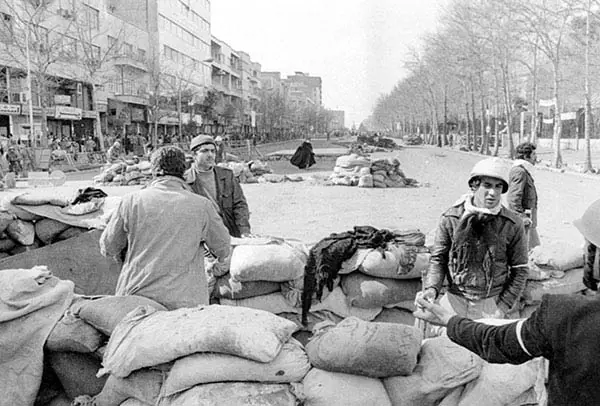
Three events of 1979 set the agenda for the next two decades. In Iran a revolution brought to power Ayatollah Ruhollah Khomeini and a doctrine he had set out in 1970: that in the absence of the twelfth imam a qualified jurist should rule. In Mecca, in the first hour of the Islamic year 1400, armed followers of a Saudi preacher seized the Grand Mosque and proclaimed the Mahdi. And at the end of the year the Soviet Union invaded Afghanistan, drawing Arab volunteers into a war that a Palestinian scholar, ʿAbdallāh ʿAzzām, declared the duty of every Muslim. Over the following two decades Iran and Saudi Arabia competed to speak for Islam; Saudi money spread a Salafi reading of the faith through schools and mosques far from Arabia; Pakistan’s military ruler wrote Qur’anic punishments into criminal law; an Iranian fatwa against a British novelist turned a literary quarrel into a global crisis; and from the Afghan war came the Taliban and al-Qaeda. Most of this was new. A Shia state ruled by a cleric, a call to kill issued across borders by a head of state, and a jihad declared by a private network against a world power have no real precedent in the earlier chapters of this series. Majority
This chapter tells that story as religious history: what each movement claimed, how far its claims were new, and how other Muslims answered. The intellectual roots of political Islam, from the Muslim Brotherhood to Sayyid Quṭb and Mawdūdī, are in §11; Wahhabism’s origins are in §10; the events of 2001 and after are in §13. It stops at describing religious change: the wars of these years are mentioned only where they changed how Islam was practised or argued.
Timeline
| Date | Event | Confidence |
|---|---|---|
| 21 Jan–8 Feb 1970 | Khomeini’s nineteen lectures on Islamic government, Najaf[1][2] | Consensus |
| 11 Feb 1979 | The Shah’s government falls; Khomeini had returned on 1 February[3][4] | Consensus |
| 1979 | Pakistan’s Hudood Ordinances[5][6] | Consensus |
| 1 Apr 1979 | Iran declared an Islamic Republic after a referendum[4] | Consensus |
| 20 Nov–4 Dec 1979 | Juhayman al-ʿUtaybī’s followers hold the Grand Mosque of Mecca[7][8] | Consensus |
| 2–3 Dec 1979 | Iran’s constitution, with the jurist as leader, approved by referendum[9] | Consensus |
| Dec 1979 | Soviet invasion of Afghanistan | Consensus |
| 22 Sep 1980 | Iraq invades Iran; the war lasts until 20 August 1988[10] | Consensus |
| 1982 | Hezbollah founded in Lebanon with Iranian support; programme published 16 Feb 1985[11][12] | Consensus |
| 1984 | ʿAzzām and bin Laden found the Services Bureau in Peshawar[13] | Consensus |
| Dec 1987–Aug 1988 | Hamas founded in Gaza; its charter published[14][15] | Consensus |
| Aug 1988 | Al-Qaeda formed at meetings in Peshawar[16] | Majority |
| 26 Sep 1988 | The Satanic Verses published in London[17] | Consensus |
| 14 Feb 1989 | Khomeini’s call to kill Rushdie[18][17] | Consensus |
| 26 Dec 1991–Jan 1992 | Algeria’s Islamic Salvation Front wins an election’s first round; the army cancels the second[19] | Consensus |
| 1992 | Amina Wadud’s Qur’an and Woman published in Kuala Lumpur[20] | Consensus |
| 27 Sep 1996 | The Taliban take Kabul[21] | Consensus |
| 23 Feb 1998 | The “World Islamic Front” statement[22][23] | Consensus |
Iran: a state ruled by a jurist
The revolution
The movement that overthrew Mohammad Reza Shah in 1978–79 was a coalition: clerics and their followers in the bazaar and the mosques, liberal nationalists, and leftists from the communist Tudeh party to the Islamic-Marxist Mojahedin-e Khalq. Protests began in Qom in January 1978, the Shah left Iran on 16 January 1979, Khomeini returned from exile in France on 1 February, and the old government fell on 11 February.[3][4] Consensus A referendum produced an Islamic Republic, proclaimed on 1 April 1979. Over the next three years the clerical wing defeated or destroyed its former allies, and Khomeini became the arbiter of the state.[4][24] Consensus
Historians differ on why the revolution took a religious form: whether because the clergy had the only nationwide organization the Shah had not dismantled, because Shia symbols of martyrdom and injustice gave the opposition a language, or because Khomeini himself outmanoeuvred the others. Most combine all three.[3][24][4] Majority
Khomeini’s doctrine
Shia law had long given qualified jurists some of the imam’s authority while he is hidden (§6): the care of orphans and endowments, judgment in disputes, the collection of religious taxes. A few jurists argued for more. Aḥmad Narāqī (d. 1829) held that the jurist’s guardianship could extend to political authority, but no one tried to build a state on the idea.[24] Majority
Between 21 January and 8 February 1970, in exile at Najaf in Iraq, Khomeini gave nineteen lectures that turned the idea into a programme. Islamic law, he argued, already contains everything a government needs; what is missing is the will to apply it; and in the imam’s absence the people best qualified to rule are those who know the law, the jurists. The lectures were published that year as Ḥokūmat-e eslāmī (“Islamic Government”) and circulated among his students; Hamid Algar’s translation appeared in 1981.[1][2] Consensus
Said Amir Arjomand calls the resulting state a revolution within Shiism as well as in Iran: never before had Shia jurists ruled a state in their own name, and the doctrine broke with the long tradition, associated with the leading jurists of the twentieth century, that clerics should advise and restrain rulers rather than become them.[24] Majority The constitution approved by referendum on 2–3 December 1979 made the principle law. Its fifth article, as revised in 1989, gives the leadership of the community during the occultation to “the just and pious faqih, who is fully aware of the circumstances of his age”; its fourth requires every law to rest on Islamic criteria.[9] Consensus
The doctrine did not command the Shia world. Olivier Roy notes that almost all of the dozen or so grand ayatollahs living in the revolution’s early years rejected Khomeini’s version of it; among them, in Najaf, the great teacher Abū l-Qāsim al-Khūʾī dismissed it as a basis for Islamic government.[25] Majority Shia religious authority remained divided between those who accept the leader in Tehran as their source of guidance and those who follow other senior jurists. Consensus
War as sacred defence
On 22 September 1980 Iraq invaded Iran. The war lasted until 20 August 1988 and killed, on most estimates, between 450,000 and 500,000 people.[10] Majority on the toll. Each side spoke the language of religion and history. Iran called it the “Sacred Defence”; its volunteer militia, the Basij, drew young men and boys to the front with the imagery of Karbalāʾ and martyrdom (§5). The secular Baʿthist government of Iraq cast itself as heir to the Arab victory over the Persians at al-Qādisiyya in the 630s (§4).[10] Consensus When Khomeini accepted a ceasefire in July 1988, he compared the decision to drinking poison. Consensus
The war made the revolution’s religious language permanent in Iranian public life: the cult of the martyr, the cemeteries, the murals. It also fixed a Sunni–Shia dimension onto a state rivalry. Iran’s attempt to export its revolution, and the Gulf monarchies’ fear of it, coloured Sunni–Shia relations for the rest of the century. Majority
Mecca, 1400
The seizure
At dawn on 20 November 1979, the first day of the Islamic year 1400, several hundred armed men, on most counts between 300 and 600, took control of the Grand Mosque of Mecca during the morning prayer. Their leader, Juhayman al-ʿUtaybī, a former member of the Saudi National Guard, presented his brother-in-law Muḥammad ʿAbdallāh al-Qaḥṭānī to the crowd as the Mahdi, the redeemer expected at the end of time.[7][8] Consensus
Juhayman had come out of a pietist movement, al-Jamāʿa al-Salafiyya al-Muḥtasiba, “the Salafi group that commands right and forbids wrong”, founded in the mid-1960s by followers of the Syrian-Albanian hadith scholar Nāṣir al-Dīn al-Albānī. The senior Saudi scholar ʿAbd al-ʿAzīz ibn Bāz had at first supported it. Thomas Hegghammer and Stéphane Lacroix, using Juhayman’s own pamphlets and interviews with former members, showed that the group was not a political organization but a millenarian offshoot of Saudi Salafism: it denounced the royal family as corrupt and illegitimate, rejected television, images and the employment of women, and condemned the official scholars for keeping silent.[8] Majority
The government needed a religious ruling before it could fight inside Islam’s holiest sanctuary, where bloodshed is forbidden. The senior scholars, led by Ibn Bāz, gave it. Saudi troops, advised by officers of the French gendarmerie’s GIGN, retook the mosque on 4 December after two weeks of fighting; al-Qaḥṭānī was killed. By official figures 127 soldiers, 117 insurgents and 26 pilgrims died. Sixty-three of the captured rebels were publicly beheaded on 9 January 1980 in eight Saudi cities.[7] Consensus on the events; Majority on the figures, which some writers think were understated.
The response
The royal family’s answer was not to weaken the religious establishment but to strengthen it. Through the 1980s the scholars gained authority over education, the media and public morals, and the government, which had begun to allow some social change in the 1970s, reversed it.[26] Majority Lacroix describes the following decade as the high point of the Ṣaḥwa, the “Awakening”, a movement of preachers and teachers who combined the Wahhabi creed (§10) with the political activism of the Muslim Brotherhood (§11), and who turned against the government after it invited American troops into the kingdom in 1990.[26] Majority
Afghanistan and the Arab volunteers
Soviet troops entered Afghanistan at the end of December 1979 to support a communist government against a widening rural revolt. The Afghan resistance called itself the mujāhidīn, “those who wage jihad”, and was armed by the United States, Saudi Arabia and Pakistan. Consensus
The man who turned that war into a cause for Arabs was ʿAbdallāh ʿAzzām (1941–1989), a Palestinian scholar trained at al-Azhar who had taught in Jordan and Saudi Arabia. In a widely circulated tract, Defence of the Muslim Lands, he argued that when unbelievers occupy Muslim land, jihad becomes an individual obligation (farḍ ʿayn) on every Muslim able to fight, not a collective one that others can fulfil, and that Afghanistan was such a case.[13] Majority In 1984 he and Osama bin Laden founded the Services Bureau (Maktab al-Khidamāt) in Peshawar to receive and direct volunteers.[13] Consensus
How many came, and how much they mattered, is disputed. Estimates of the foreign volunteers range from a few thousand to tens of thousands over the decade; Hegghammer stresses that their military role was small beside the Afghan fighters, and that their importance lay in what they took home.[13] Contested on numbers. The Soviet army withdrew in February 1989. ʿAzzām was killed by a car bomb in Peshawar on 24 November 1989; who killed him has never been established.[13] Consensus
Hegghammer calls ʿAzzām the founder of a new kind of movement: one that asked Muslims to fight for other Muslims anywhere in the world, regardless of their own state, and that treated the obligation as binding whatever their scholars or governments said.[13] Majority Classical law had placed the declaration of war in the hands of the ruler. That a private scholar, and then private networks, claimed the right was itself a change. Majority
Pakistan: Islamization from above
General Muḥammad Ziyāʾ al-Ḥaqq (Zia ul-Haq), who seized power in Pakistan in 1977, made the Islamization of law the centrepiece of his rule. In 1979 he issued five ordinances, the Hudood Ordinances, which introduced the fixed punishments (ḥudūd) of classical law into criminal law: for theft, for unlawful sexual relations (zinā), for false accusation of zinā, and for drinking, with a fifth setting out the manner of whipping. A Federal Shariat Court, set up in 1980, could strike down laws it found un-Islamic.[5][6] Consensus
The zina ordinance had the largest effect. Because it required four witnesses to prove rape, but treated a woman’s own complaint as possible evidence of sex outside marriage, women who reported rape could themselves be prosecuted. The lawyers Asma Jahangir and Hina Jilani documented such cases, and the number of women in Pakistani prisons rose sharply during the 1980s.[27] Majority The law was amended in 2006 to return rape to the ordinary penal code.[5] Consensus
Vali Nasr argues that Zia’s Islamization was less a religious revival than a strategy of state power: it gave a military regime legitimacy and a constituency, and made religious parties partners of the state.[6] Majority The same years saw Saudi and Gulf money fund new madrasas in Pakistan’s north-west, many of them Deobandi, which educated Afghan refugees and Pakistani boys alike.[21] Majority
Saudi Arabia and the spread of Salafism
Money, missions and universities
The Saudi state had built an international religious apparatus before the revolution of 1979: the Islamic University of Medina, founded in 1961 to train students from across the Muslim world, and the Muslim World League, founded in Mecca in 1962 under the patronage of Crown Prince Fayṣal. After the oil price rises of the 1970s, and with new urgency after 1979, it funded mosques, schools, textbooks, scholarships and preachers abroad, much of it through such bodies and through private charities. Consensus
How much was spent is not known. Figures of $75 billion, $87 billion and “upwards of $100 billion” over several decades circulate widely; none comes with published accounts behind it. Peter Mandaville, editing a set of case studies of Saudi religious influence, warns against figures built on “non-specific hearsay” and finds the effects real but uneven, often mediated by local movements with their own agendas.[28] Contested on the scale; Majority that Saudi funding spread a Salafi reading of Islam. Political on the modern use of the figures.
What Salafism is
The name comes from al-salaf al-ṣāliḥ, “the pious predecessors”, the first three generations of Muslims. Salafis aim to follow their example directly, from the Qur’an and the hadith, and reject practices they regard as later innovations (bidʿa): saint veneration, many Sufi rituals (§7), and, for many, strict adherence to a single school of law (§6). Salafism overlaps with the Wahhabi tradition of Saudi Arabia (§10) and with al-Albānī’s hadith-centred teaching, but it has other modern roots as well (§10, §11). Majority
Quintan Wiktorowicz, in an influential article of 2006, argued that Salafis share a creed but divide over how to act on it. Purists, the majority, concentrate on teaching and correct practice and avoid politics, often counselling obedience to rulers. Politicos engage in politics and criticise governments, as the Saudi Ṣaḥwa did. Jihadis hold that armed struggle is required against rulers or foreign powers they judge to be at war with Islam.[29] Majority The typology has been refined since, but its central point stands: most Salafis are not jihadis, and the strongest critics of the jihadis have often been other Salafis. Majority
The Rushdie affair
On 26 September 1988 Viking published Salman Rushdie’s novel The Satanic Verses in London. Its dream sequences include a prophet called Mahound, a scene drawing on the early reports about verses praising the goddesses of Mecca (§3), and a brothel in which prostitutes take the names of the Prophet’s wives.[17] Consensus on the content. Many Muslims, most of whom had not read it, understood it as an insult to the Prophet. India banned its import on 5 October 1988; in Bradford, in northern England, protesters burned a copy on 14 January 1989; on 12 February six protesters were killed in Islamabad during an attack on the American Cultural Center.[17][30] Consensus
On 14 February 1989 Radio Tehran broadcast a statement by Khomeini calling on “all valiant Muslims wherever they may be in the world” to kill the author and all those involved in the book’s publication who knew its contents.[18][17] Consensus A religious foundation offered a bounty of millions of dollars. The novel’s Japanese translator, Hitoshi Igarashi, was stabbed to death in July 1991; its Italian translator and its Norwegian publisher were wounded. Consensus
What made the statement new was its reach. A jurist’s fatwā is an opinion, binding on those who follow him; Khomeini was also the head of a state, and he pronounced a sentence of death on a British citizen without trial, to be carried out anywhere.[30] Majority Muslim reactions were divided. Many who condemned the novel rejected the sentence: a scholar of al-Azhar argued that blood must not be shed except after a trial, and the Iranian ayatollah Mehdi Rohani accused Khomeini of respecting neither international law nor Islamic law.[17] Majority Others endorsed it. In 1998 Iran’s foreign minister said that his government would take no action to threaten Rushdie’s life, though the ruling was not withdrawn.[30] Consensus
Kenan Malik argues that the affair’s lasting effect was in Britain and Europe, where it turned immigrants of South Asian origin into a political constituency defined by religion, “Muslims”, rather than by origin or class.[30] Contested Political on the whole affair, whose lessons are still fought over in arguments about free speech and blasphemy. The novel’s sources, the early reports of the “Satanic verses” and how later Muslim scholarship rejected them, are in §3.
Movements of the 1980s and 1990s
The revolution and the Afghan war were not the only sources of the Islamist movements of these decades. Most had local roots, many in the Muslim Brotherhood (§11), and each became a question of national politics as much as of religion. Four illustrate the range. Political on all four.
- Lebanon: Hezbollah. Founded in 1982 among Lebanese Shia during the Israeli invasion, with training and money from Iran’s Revolutionary Guards, Hezbollah published its programme in an open letter on 16 February 1985, pledging loyalty to Iran’s leader as jurist.[11][12] It is the clearest case of Khomeini’s doctrine adopted outside Iran. Consensus
- Palestine: Hamas. Founded in Gaza in December 1987, at the start of the first intifada, by Shaykh Aḥmad Yāsīn and others from the Palestinian branch of the Muslim Brotherhood. Its charter of August 1988 framed the conflict in religious terms, treating the land of Palestine as an Islamic endowment (waqf); in 2017 its leaders issued a new document and described the charter as historical.[14][15] Consensus on the documents.
- Algeria: the FIS. The Islamic Salvation Front, founded in 1989, won the first round of parliamentary elections on 26 December 1991 with 188 seats to the ruling party’s 16. On 11 January 1992 the army cancelled the second round; the FIS was dissolved in March. The civil war that followed, fought between the army and armed Islamist groups, of which the Armed Islamic Group (GIA) was the most violent, lasted until about 2002 and killed tens of thousands.[19] Consensus on events; Contested on the death toll and on responsibility for many massacres.
- Afghanistan: the Taliban. Formed in 1994 around Mullah Muḥammad ʿUmar in Kandahar, from students (ṭālibān) of Deobandi madrasas, many of them in Pakistan, the Taliban took Kabul on 27 September 1996 and declared an Islamic Emirate, recognised only by Pakistan, Saudi Arabia and the United Arab Emirates. They banned girls from school and women from most work, and enforced dress and beard rules through a religious police.[21] Consensus Ahmed Rashid describes their creed as a mixture of Deobandi teaching and Pashtun village custom, far removed from the scholarly tradition of the Deoband seminary in India.[21] Majority In March 2001 they dynamited the monumental Buddhas of Bamiyan as idols, despite appeals from other Muslim governments, among them a Pakistani delegation sent to plead with Mullah ʿUmar. Consensus
Olivier Roy argued in 1994 that political Islam had already failed: the Islamist movements had not produced, and could not produce, a working Islamic state, and were turning into movements of social and moral conservatism.[25] Gilles Kepel’s history of the same movements reached a similar conclusion at the end of the decade.[31] Contested: the movements’ later history has been used to argue both ways.
Al-Qaeda
As the Soviet army left Afghanistan, some of the Arab volunteers looked for a new war. At meetings in Peshawar in August 1988, Osama bin Laden, the son of a Saudi construction magnate, agreed with a group of Egyptian and other veterans to form a base, al-qāʿida, for continuing jihad.[16] Majority on the date and circumstances. ʿAzzām wanted the volunteers to fight where Muslim land was occupied; the Egyptians around Ayman al-Ẓawāhirī wanted to overthrow governments they regarded as apostate. Bin Laden’s network eventually took a third course: war against the United States, which he saw as the power behind both.[16][13] Majority
In August 1996, from Afghanistan, bin Laden issued a declaration of war against the Americans “occupying the land of the two holy places”, Saudi Arabia, where US troops had been based since 1990. On 23 February 1998 the London newspaper al-Quds al-ʿArabī published a statement in the name of a “World Islamic Front”, signed by bin Laden, al-Ẓawāhirī and leaders of groups in Egypt, Pakistan and Bangladesh, declaring that killing Americans and their allies, civilian and military, was an individual duty for every Muslim able to do it.[22][23] Consensus On 7 August 1998 bombs at the US embassies in Nairobi and Dar es Salaam killed 224 people, most of them Africans.[16] Consensus
The 1998 statement took ʿAzzām’s argument for an individual duty and turned it against civilians in any country. It was issued as a fatwa by men who were not, by any traditional standard, qualified to issue one; bin Laden had no formal religious training.[23] Majority The great majority of Muslim scholars and religious bodies, Sunni and Shia, rejected the killing of civilians that it called for, before and after 2001 (§13). Majority
A different revival: women reading the texts
The same decades produced a quieter movement with a longer future. In 1987 the Moroccan sociologist Fatima Mernissi published Le harem politique (in English, The Veil and the Male Elite, 1991), which re-examined the hadith used to limit women’s public role and the men who had transmitted them, applying the classical science of transmitters (§0) to argue that some were unreliable.[32] Majority In 1992 the African-American scholar Amina Wadud, then teaching in Malaysia, published Qur’an and Woman in Kuala Lumpur, a reading of the Qur’an’s verses on gender that argued from the text, not from later law, for the moral equality of women and men.[20] Consensus on what they argued. Wadud was among the founders of Sisters in Islam in Malaysia. Such work became known as “Islamic feminism”, a label some of its writers accepted and others rejected; its later history, and the arguments it provoked, are in §13. Majority
The evidence
| Question | What the evidence supports | Key evidence | Confidence |
|---|---|---|---|
| Jurist rule | New as a state in Shia history; prepared in Khomeini’s lectures of 1970 | The lectures; the constitution; Arjomand[1][9][24] | Majority |
| Clerical support for it | Rejected by most senior ayatollahs of the time | Roy[25] | Majority |
| The Mecca siege | A millenarian Salafi group, not a political party; answered with more religious authority | Hegghammer and Lacroix; Trofimov[8][7] | Majority |
| Saudi spending abroad | Large and real; headline totals unsourced | Mandaville[28] | Contested (scale) |
| Salafi divisions | Purists, politicos and jihadis; most are purists | Wiktorowicz[29] | Majority |
| The Afghan volunteers | Militarily small; ideologically decisive | Hegghammer[13] | Majority |
| The Rushdie fatwa | A cross-border death sentence without precedent; contested among Muslims | Statements; Appignanesi and Maitland; Malik[18][17][30] | Majority |
| Al-Qaeda’s claim | Self-appointed authority; rejected by most scholars | The 1998 statement; Lawrence[22][23] | Majority |
Primary sources
Show the 6 primary sources
1. “Everything is ready”: Khomeini, Islamic Government, Najaf, 1970
Khomeini’s lectures were given in Persian and published as Ḥokūmat-e eslāmī. In Hamid Algar’s translation he tells his students that Islam already provides what a state requires: “The entire system of government and administration, together with necessary laws, lies ready for you… Everything is ready and waiting.”[1][2] (English only; the Persian is not quoted here.)
What it proves. That nine years before the revolution, Khomeini taught that Islamic law was a complete programme for government and that only its application by jurists was missing. It is the founding text of the Islamic Republic’s political theory. Consensus on the text; Majority that its claim was new in Shia jurisprudence.
2. The jurist as leader: the Iranian constitution, Article 5
در زمان غیبت حضرت ولی عصر (عجل الله تعالی فرجه)، در جمهوری اسلامی ایران ولایت امر و امامت امت بر عهده فقیه عادل و با تقوی، آگاه به زمان، شجاع، مدیر و مدبر است که طبق اصل یکصد و هفتم عهدهدار آن میگردد.
dar zamān-e gheybat-e ḥażrat-e valī-ye ʿaṣr (ʿajjala llāhu taʿālā farajahu), dar jomhūrī-ye eslāmī-ye īrān velāyat-e amr va emāmat-e ommat bar ʿohde-ye faqīh-e ʿādel va bā taqvā, āgāh be zamān, shojāʿ, modīr va modabber ast ke ṭebq-e aṣl-e yeksad o haftom ʿohdedār-e ān mī-gardad.
“During the Occultation of the Walī al-ʿAṣr (may God hasten his reappearance), the wilāyah and leadership of the Ummah devolve upon the just and pious faqīh, who is fully aware of the circumstances of his age; courageous, resourceful, and possessed of administrative ability, [who] will assume the responsibilities of this office in accordance with Article 107.”[9]
What it proves. That the Islamic Republic grounds the authority of its leader in the occultation of the twelfth imam (§6): the state’s highest office is defined as a stand-in for the hidden imam. The text quoted is the article as revised in 1989; the original text of 1979 made the same grant and differed in detail. Consensus
3. The Hudood Ordinances, Pakistan, 1979
Summarized here. The five ordinances made theft, unlawful intercourse (zinā), false accusation of zinā and drinking subject to the fixed punishments of classical law, alongside lesser discretionary penalties where the strict standards of proof were not met.[5]
What it proves. That in 1979 a modern state wrote classical criminal penalties into its statute law, a step without precedent in Pakistan’s own legal history, and that it did so by ordinance under a military government. Consensus on the text; Majority on its effects on women.
4. Khomeini on The Satanic Verses, 14 February 1989
Broadcast on Radio Tehran in Persian. In the English version published at the time, Khomeini informs “all valiant Muslims wherever they may be in the world” that the author and the publishers aware of the book’s contents are condemned to death, and calls on them to carry out the sentence.[18][17] (English only.)
What it proves. That the head of a state issued a religious death sentence on the citizen of another state, for a work of fiction, to be carried out by any Muslim anywhere. Its reception, including rejection by Sunni scholars on procedural grounds, shows that there was no single Muslim position. Consensus on the text; Political on its interpretation.
5. The Hezbollah open letter, 16 February 1985
Summarized here. Hezbollah’s founding programme declared loyalty to the leader of Iran as the just jurist, called for the expulsion of Western powers and Israel from Lebanon, and proposed an Islamic order for the country.[12][11]
What it proves. That within six years of the revolution, Khomeini’s doctrine of the jurist had followers outside Iran who acknowledged his authority across a state border. Consensus
6. The “World Islamic Front”, 23 February 1998
Published in Arabic in al-Quds al-ʿArabī. In the translation collected by Bruce Lawrence, the signatories declare that “the ruling to kill the Americans and their allies—civilians and military—is an individual duty for every Muslim who can do it in any country in which it is possible to do it”.[22][23] (English only.)
What it proves. That al-Qaeda’s leaders framed mass killing in the vocabulary of Islamic law, borrowing ʿAzzām’s category of individual duty and extending it to civilians anywhere. That the signers had no standing to issue such a ruling, by the standards of the tradition they invoked, is why most scholars rejected it. Consensus on the text.
What is absent
- A Shia state ruled by jurists before 1979. Jurists had advised and resisted rulers, and the Safavid shahs had patronised them (§9), but none had ruled in their own name. Majority
- Agreement among senior Shia jurists on Khomeini’s doctrine. Most rejected it then; many outside Iran still do. Majority
- Audited figures for Saudi religious spending abroad. The widely quoted totals have no published basis. Consensus
- A single Muslim response to Rushdie. Positions ran from support for the death sentence to rejection of both the book and the sentence. Consensus
- Traditional religious credentials for al-Qaeda’s leaders. Neither bin Laden nor al-Ẓawāhirī was a trained jurist. Majority
Debates
Why did the Iranian revolution become Islamic?
| View | Position | Main proponents |
|---|---|---|
| Organization | The clergy had the only national network the Shah had not destroyed | Abrahamian[3] |
| Ideology | Khomeini’s new doctrine gave the revolution its goal and its leaders | Arjomand[24] |
| Culture | Shia symbols of injustice and martyrdom gave a mass movement its language | Keddie[4] |
Majority that all three mattered; Contested on their weight.
How much did Saudi money change Islam?
Some writers credit Saudi funding with a global shift towards stricter, more literal religion; others, including Mandaville’s contributors, find its effects uneven and dependent on local actors, and note that the headline figures have no published source.[28] Contested; Political.
Did political Islam fail?
Roy and Kepel argued in the 1990s that Islamist movements had failed to build Islamic states and were turning into social movements; their critics point to the movements’ continued electoral and military strength after 2001.[25][31] Contested
Further reading
Show further reading (15 works)
- Ervand Abrahamian, Iran Between Two Revolutions (Princeton, 1982).
- Said Amir Arjomand, The Turban for the Crown: The Islamic Revolution in Iran (Oxford, 1988).
- Nikki R. Keddie, Modern Iran: Roots and Results of Revolution (Yale, 2003).
- Hamid Algar, trans., Islam and Revolution: Writings and Declarations of Imam Khomeini (Mizan, 1981).
- Yaroslav Trofimov, The Siege of Mecca (Doubleday, 2007).
- Thomas Hegghammer and Stéphane Lacroix, “Rejectionist Islamism in Saudi Arabia: The Story of Juhayman al-ʿUtaybi Revisited”, International Journal of Middle East Studies 39 (2007).
- Stéphane Lacroix, Awakening Islam (Harvard, 2011).
- Thomas Hegghammer, The Caravan: Abdallah Azzam and the Rise of Global Jihad (Cambridge, 2020).
- Quintan Wiktorowicz, “Anatomy of the Salafi Movement”, Studies in Conflict & Terrorism 29 (2006).
- Peter Mandaville, ed., Wahhabism and the World (Oxford, 2022).
- Vali Nasr, Islamic Leviathan (Oxford, 2001).
- Kenan Malik, From Fatwa to Jihad (Atlantic, 2009).
- Gilles Kepel, Jihad: The Trail of Political Islam (Harvard, 2002).
- Bruce Lawrence, ed., Messages to the World: The Statements of Osama bin Laden (Verso, 2005).
- Amina Wadud, Qur’an and Woman (Oxford, 1999; first published 1992).
References
- ^ a b c d Ruhollah Khomeini, Ḥokūmat-e eslāmī (Islamic Government), 1970 — Lectures on the governance of the jurist, Najaf, 21 January–8 February 1970. 1970 CE. Persian. Nineteen lectures arguing that in the Imam's absence qualified jurists must govern, because Islamic law already contains everything a state needs. about
- ^ a b c Hamid Algar (trans.) Islam and Revolution: Writings and Declarations of Imam Khomeini. Mizan Press, 1981. The standard English translation of Khomeini's Islamic Government and other texts.
- ^ a b c d Ervand Abrahamian Iran Between Two Revolutions. Princeton University Press, 1982. The social history of modern Iran to the revolution and its coalition.
- ^ a b c d e f Nikki R. Keddie Modern Iran: Roots and Results of Revolution. Yale University Press, 2003. A standard history of Iran from the Qajars to the Islamic Republic.
- ^ a b c d Pakistan, Hudood Ordinances, 1979 — Five ordinances on theft, zina, qazf, alcohol and whipping. 1979 CE. English and Urdu. Zia ul-Haq's ordinances introducing Qur'anic punishments into Pakistani criminal law; the zina ordinance's evidentiary rules led to the prosecution of rape victims until the 2006 amendment. about
- ^ a b c Seyyed Vali Reza Nasr Islamic Leviathan: Islam and the Making of State Power. Oxford University Press, 2001. How the states of Pakistan and Malaysia used Islamization to extend their power.
- ^ a b c d Yaroslav Trofimov The Siege of Mecca: The Forgotten Uprising in Islam's Holiest Shrine. Doubleday, 2007. A narrative history of the 1979 seizure of the Grand Mosque.
- ^ a b c d Thomas Hegghammer and Stéphane Lacroix Rejectionist Islamism in Saudi Arabia: The Story of Juhayman al-ʿUtaybi Revisited. International Journal of Middle East Studies 39.1, 2007. The religious background of Juhayman's movement, from interviews and his own writings.
- ^ a b c d Constitution of the Islamic Republic of Iran, 1979 (amended 1989), Articles 4–5 — Constitution of the Islamic Republic of Iran. December 1979; amended 1989. Persian. Article 5 vests the leadership of the community, during the occultation of the twelfth imam, in a just and pious jurist; Article 4 requires all laws to rest on Islamic criteria. read the text
- ^ a b c Pierre Razoux The Iran–Iraq War. Harvard University Press, 2015. A full military and political history of the war of 1980–1988.
- ^ a b c Augustus Richard Norton Hezbollah: A Short History. Princeton University Press, 2007. Hezbollah's origins in 1982 and its development as party and militia.
- ^ a b c Hezbollah, Open Letter, 16 February 1985 — Hezbollah's founding programme. 16 February 1985. Arabic. Hezbollah's founding manifesto, pledging allegiance to Iran's supreme leader and calling for an Islamic order in Lebanon. about
- ^ a b c d e f g h Thomas Hegghammer The Caravan: Abdallah Azzam and the Rise of Global Jihad. Cambridge University Press, 2020. The biography of ʿAbdallāh ʿAzzām and the Arab volunteers in Afghanistan.
- ^ a b Khaled Hroub Hamas: Political Thought and Practice. Institute for Palestine Studies, 2000. Hamas's origins in the Muslim Brotherhood and its political ideas.
- ^ a b Hamas, Charter (Mīthāq), August 1988 — Covenant of the Islamic Resistance Movement. August 1988. Arabic. Hamas's founding charter, framing Palestine as an Islamic endowment (waqf); described by its leaders in 2017 as a historical document. about
- ^ a b c d Lawrence Wright The Looming Tower: Al-Qaeda and the Road to 9/11. Knopf, 2006. A history of al-Qaeda's origins, from Qutb to 2001.
- ^ a b c d e f g h Lisa Appignanesi and Sara Maitland (eds.) The Rushdie File. Fourth Estate, 1989. Documents and statements from the first year of the Rushdie affair.
- ^ a b c d Ruhollah Khomeini, statement on The Satanic Verses, 14 February 1989 — Radio Tehran broadcast. 14 February 1989. Persian. Khomeini calls on Muslims to kill the author and publishers of The Satanic Verses. about
- ^ a b Michael Willis The Islamist Challenge in Algeria: A Political History. Ithaca Press, 1996. The rise of the FIS and the cancelled election of 1991–1992.
- ^ a b Amina Wadud Qur'an and Woman: Rereading the Sacred Text from a Woman's Perspective. Oxford University Press (first published Kuala Lumpur, 1992), 1999. A gender-inclusive reading of the Qur'an by a Muslim scholar of exegesis.
- ^ a b c d Ahmed Rashid Taliban: Militant Islam, Oil and Fundamentalism in Central Asia. Yale University Press, 2000. The Taliban's rise from the Pakistani madrasas to the capture of Kabul.
- ^ a b c d World Islamic Front, statement on jihad against Jews and Crusaders, al-Quds al-ʿArabī, 23 February 1998 — Statement of the World Islamic Front. 23 February 1998. Arabic. Signed by Osama bin Laden, Ayman al-Ẓawāhirī and three others: declares killing Americans and their allies, civilian and military, an individual duty. about
- ^ a b c d e Bruce Lawrence (ed.) Messages to the World: The Statements of Osama bin Laden. Verso, 2005. Translations of bin Laden's statements from 1994 to 2004.
- ^ a b c d e f Said Amir Arjomand The Turban for the Crown: The Islamic Revolution in Iran. Oxford University Press, 1988. The revolution as a clerical revolution, and the novelty of jurist rule in Shia history.
- ^ a b c d Olivier Roy The Failure of Political Islam. Harvard University Press, 1994. Argues that Islamist movements failed to produce a workable Islamic state and turned towards social conservatism.
- ^ a b Stéphane Lacroix Awakening Islam: The Politics of Religious Dissent in Contemporary Saudi Arabia. Harvard University Press, 2011. The Saudi religious field and the Ṣaḥwa movement of the 1980s and 1990s.
- ^ Asma Jahangir and Hina Jilani The Hudood Ordinances: A Divine Sanction?. Rhotas Books, 1990. Pakistani lawyers' study of how the zina ordinance was applied to women.
- ^ a b c Peter Mandaville (ed.) Wahhabism and the World: Understanding Saudi Arabia's Global Influence on Islam. Oxford University Press, 2022. Case studies of Saudi religious influence abroad, sceptical of the large headline spending figures.
- ^ a b Quintan Wiktorowicz Anatomy of the Salafi Movement. Studies in Conflict & Terrorism 29.3, 207–239, 2006. Divides Salafis by method into purists, politicos and jihadis, who share a creed but disagree on how to apply it.
- ^ a b c d e Kenan Malik From Fatwa to Jihad: The Rushdie Affair and Its Legacy. Atlantic Books, 2009. The Rushdie affair and its effect on British Muslim politics.
- ^ a b Gilles Kepel Jihad: The Trail of Political Islam. Harvard University Press, 2002. A history of Islamist movements from the 1970s to the late 1990s.
- ^ Fatima Mernissi The Veil and the Male Elite: A Feminist Interpretation of Women's Rights in Islam. Addison-Wesley (French original 1987), 1991. Re-examines the hadith restricting women and the men who transmitted them.