The short version: Sufism is not a separate branch of Islam beside Sunni and Shia. It is a way of practising Islam, with its own disciplines, teachers and institutions, that most Sufis have understood as the inner dimension of the same faith and law that other Muslims follow. Its aim is nearness to God, reached through renunciation, remembrance and love. Its history has dates: the renouncers of the eighth century, the name in ninth-century Baghdad, the manuals of the tenth and eleventh, the orders of the twelfth and thirteenth.[1][2] Majority This page traces how that happened, and why Sufism has also always had Muslim critics.
Where the word comes from
The Arabic ṣūfī most probably means “a wearer of wool” (ṣūf), from the coarse woollen garment that marked an ascetic. Al-Qushayrī in the eleventh century and Ibn Khaldūn in the fourteenth already rejected the popular alternatives on grounds of grammar: ṣafāʾ, “purity”, or the ahl al-ṣuffa, the poor companions who lived on a bench at the Prophet’s mosque. Modern scholars agree.[3][1] Consensus
The thing is older than the word. In the generations after the conquests, some Muslims in Basra and Kufa turned against the wealth of the new empire. They fasted, prayed through the night, wept over their sins and distrusted the court. They were called zuhhād, “renouncers”, and they were not a sect: many were ordinary scholars of hadith and the Qur’an.[1][2] Consensus Ahmet Karamustafa argues that “Sufi” became the name of a recognizable group, distinct from the wider renouncers, only in Baghdad in the second half of the ninth century, and that Sufism in the strict sense begins there.[2] Majority Sufi tradition itself traces its chains of masters back through al-Ḥasan al-Baṣrī and ʿAlī to the Prophet; that al-Ḥasan was a Sufi in the later sense is an anachronism.[1] Majority
What Sufis practise and teach
The vocabulary came from the Qur’an. It speaks of God as “closer to him than his jugular vein” (50:16), of people whom God “loves and who love Him” (5:54), and of remembrance: “truly it is in the remembrance of God that hearts find peace” (13:28).[4][5][6] Remembrance, dhikr, repeated formulas said aloud or silently, alone or together, became the central practice. Consensus on the verses’ use.
The Baghdad master al-Junayd (d. 910) gave the path its theory. Asked what Sufism is, he is reported to have said: “that the Real should make you die to yourself and give you life in Him.”[3] Behind it lie two terms: fanāʾ, the passing away of the self in God, and baqāʾ, continuing to live in God and returning to the world. Al-Junayd insisted that the experience be governed by the law and sound belief, and kept quiet before the uninitiated.[2] Majority
Not everyone kept quiet. Abū Yazīd al-Bisṭāmī was remembered for sayings in which the speaker seems to speak as God, and al-Ḥallāj for anā l-ḥaqq, “I am the Real”. Al-Ḥallāj was executed in Baghdad in 922; Carl Ernst argues that court politics weighed at least as heavily as doctrine in his condemnation.[7][8] Majority His case taught Sufis to write carefully.
From circles to orders
From the late tenth century, Sufis wrote manuals arguing that their path was the inner side of Sunni Islam: al-Sarrāj, al-Qushayrī’s Risāla of 1045, al-Hujwīrī in Persian.[3][9] Consensus The best-known statement of the case came from al-Ghazālī (d. 1111), the most celebrated scholar of his day, who left his chair in Baghdad after a crisis in 1095 and wrote that “the Sufis are the ones who travel the way of God in particular”.[10][11] Historians add that the manuals had made the argument before him, and that his Iḥyāʾ was burned in al-Andalus under the Almoravids.[1][11] Majority
Institutions followed. From the eleventh century rulers and patrons endowed lodges, khānqāh, zāwiya, later tekke. From the twelfth and thirteenth centuries a master’s method of devotion was handed on by initiation along a chain of masters (silsila) reaching back to the Prophet: the ṭarīqa, “way”, or order.[12][13] Majority An initiate received the master’s cloak, learned the order’s form of dhikr, and joined a community whose lodges might run from North Africa to India under one name.[13] Majority
The orders took the names of masters who often had not founded an institution themselves:
- the Qādiriyya, after ʿAbd al-Qādir al-Jīlānī (c. 1077–1166), a Ḥanbalī preacher in Baghdad;
- the Suhrawardiyya, organized by ʿUmar al-Suhrawardī (1145–1234);
- the Chishtiyya of northern India, after Muʿīn al-Dīn Chishtī (1143–1236) at Ajmer, known for music in worship and for refusing court service;[14]
- the Shādhiliyya of North Africa and Egypt;
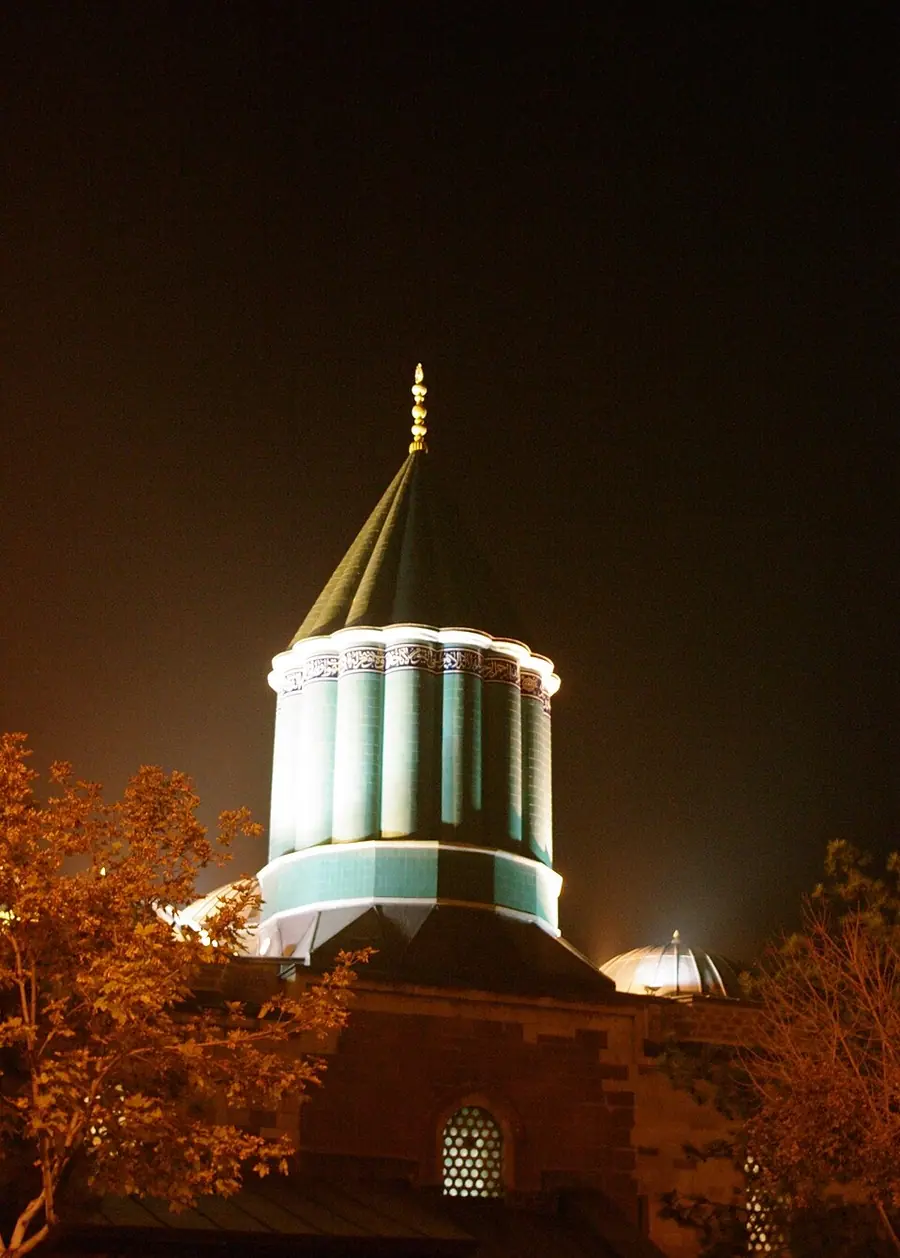
- the Mevleviyya, organized after Rūmī’s death in 1273 by his son Sultan Walad, whose turning ritual made them the “whirling dervishes”.[12][15] Consensus
Rūmī (1207–1273) and Ibn ʿArabī (1165–1240) gave Sufism its best-loved poetry and its most ambitious metaphysics. The label usually attached to Ibn ʿArabī’s teaching, “the unity of being” (waḥdat al-wujūd), was not his own; it came from followers and, above all, from his critic Ibn Taymiyya.[16] Majority Sufism’s place in the spread of Islam in India is told in Hinduism §10.
Saints, tombs and the critics
By the twelfth century Sufi masters were widely regarded as awliyāʾ, “friends of God”, through whom God’s blessing worked during their lives and after their deaths. Their tombs became places of pilgrimage, with vows, prayers and festivals on the death-day.[13][14] Consensus
That is where the critics concentrated. Jurists had long objected to music and dance, claims of miracles and masters who seemed to stand above the law.[1] Ibn Taymiyya (d. 1328) argued in a treatise of 1310 that travelling specifically to visit the tombs of prophets and saints was a forbidden innovation; yet he did not reject Sufism as such, treated early masters such as al-Junayd as authorities, and may himself have been affiliated with the Qādiriyya (§8).[17][1] Majority
His arguments against shrine pilgrimage were revived in eighteenth-century Arabia by Muḥammad ibn ʿAbd al-Wahhāb, whose followers destroyed tombs and shrines where they ruled (§10).[18] Consensus In 1925 the Turkish republic closed the Sufi lodges and shrines; the orders continued in private (§11).[19] Consensus Today the argument continues, between Muslims who see Sufism as the heart of their tradition and Muslims who see its saint cults as a departure from it. Political
Women in Sufism
The renunciant movement gave women one of the few religious roles in which they could be recognized in their own right. Al-Sulamī, before 1021, recorded dozens of women devotees and Sufis, some of whom instructed men.[20][21] Majority Rābiʿa al-ʿAdawiyya of Basra became the emblem of a love of God that seeks no reward. Little can be known about her: the best-known stories, such as the torch and bucket to burn paradise and quench hell, come from ʿAṭṭār’s Memorial of the Saints, about four centuries after her death.[22][23] Majority
Common misconceptions
- “Sufism is a third sect, beside Sunni and Shia.” Most Sufis have been Sunni, following one of the schools of law; there are Shia Sufi orders too. Sufism is a path within Islam, not a separate community.[1] Majority
- “Sufism came from India, Christianity or Neoplatonism.” Older scholarship proposed foreign sources; most historians now see the renouncers drawing their language from the Qur’an and the Prophet’s example while absorbing some of their neighbours’ piety. Specific borrowings remain disputed.[1][24] Contested
- “The ‘sober’ and ‘drunk’ schools go back to the ninth century.” Jawid Mojaddedi showed that this typology was created in eleventh-century handbooks and projected back onto the early masters.[25] Majority
- “Rūmī was a universalist poet outside Islam.” Rūmī was a teacher of Islamic law and religion, and his Masnavī is steeped in the Qur’an; the detachment comes from modern English translations.[15] Majority
What scholars disagree about
When Sufism begins. With the eighth-century renouncers, as the tradition’s chains of masters imply, or in ninth-century Baghdad, as Karamustafa argues.[2][1] Contested
Whether al-Ḥallāj died for heresy or for politics. Massignon read his death as a self-offering; Ernst stresses the court rivalries behind the trial.[7][8] Contested
The full story is in The Mystics: Sufism.
References
- ^ a b c d e f g h i j Alexander Knysh Islamic Mysticism: A Short History. Brill, 2000. The standard survey of Sufism from the renunciants to the modern orders, and of the debate over its origins.
- ^ a b c d e Ahmet T. Karamustafa Sufism: The Formative Period. Edinburgh University Press, 2007. Argues that Sufism as a named movement emerged in Baghdad in the later ninth century, alongside other forms of piety.
- ^ a b c al-Qushayrī, al-Risāla al-Qushayriyya fī ʿilm al-taṣawwuf — al-Qushayrī's Epistle on Sufism. 437 AH / 1045–1046 CE. Arabic. The most widely read Sufi handbook, written in Nishapur to show that the early masters held Ashʿarī Sunni beliefs; records al-Junayd's definition of Sufism and discusses the word ṣūfī. about
- ^ Qur'an 50:16 — The Qur'an. 610–632 CE. Arabic. 'We are closer to him than his jugular vein': God's nearness to the self, a favourite verse of the mystics. read the text
- ^ Qur'an 5:54 — The Qur'an. 610–632 CE. Arabic. God will bring a people 'He loves and who love Him': the Qur'anic basis Sufis cited for mutual love between God and believers. read the text
- ^ Qur'an 13:28 — The Qur'an. 610–632 CE. Arabic. 'In the remembrance of God hearts find peace': the Qur'anic root of dhikr, the central Sufi practice. read the text
- ^ a b Louis Massignon The Passion of al-Hallāj: Mystic and Martyr of Islam, trans. Herbert Mason. Princeton University Press, 1982. English translation of Massignon's monumental study (French, 1922; revised 1975) of al-Ḥallāj's life, trial and legacy.
- ^ a b Carl W. Ernst Words of Ecstasy in Sufism. State University of New York Press, 1985. The ecstatic sayings (shaṭaḥāt), their interpretation, and how they were treated in law; argues al-Ḥallāj's trial turned on politics.
- ^ ʿAlī al-Hujwīrī, Kashf al-maḥjūb — The Unveiling of the Veiled. c. 1070s CE. Persian. The first treatise on Sufism in Persian, written in Lahore; the source of the classification of masters into 'sober' and 'intoxicated' schools. about
- ^ al-Ghazālī, al-Munqidh min al-ḍalāl — The Deliverer from Error. after 1106 CE. Arabic. Al-Ghazālī's account of his intellectual search, his crisis of Rajab 488 / July 1095 when 'God locked my tongue', his years of retreat, and his verdict that the Sufis travel the way of God. read the text
- ^ a b Frank Griffel Al-Ghazālī's Philosophical Theology. Oxford University Press, 2009. Reconstructs al-Ghazālī's life, including the chronology and circumstances of his departure from Baghdad in 1095.
- ^ a b J. Spencer Trimingham The Sufi Orders in Islam. Clarendon Press, 1971. Classic history of the orders, with the three-stage model of khānqāh, ṭarīqa and ṭāʾifa.
- ^ a b c Nile Green Sufism: A Global History. Wiley-Blackwell, 2012. Sufism as an institution and a tradition across the Muslim world, from lodges and orders to shrines.
- ^ a b Carl W. Ernst & Bruce B. Lawrence Sufi Martyrs of Love: The Chishti Order in South Asia and Beyond. Palgrave Macmillan, 2002. doi History of the Chishtī order, its masters and shrines.
- ^ a b Franklin D. Lewis Rumi: Past and Present, East and West. Oneworld, 2000. The life, works and teachings of Rūmī from the sources, and his modern reception.
- ^ William C. Chittick Waḥdat al-wujūd in Islamic Thought. Bulletin of the Henry Martyn Institute of Islamic Studies 10, 1991. History of the term 'unity of existence': its use by Ibn ʿArabī's followers and its fixing as a label by Ibn Taymiyya's polemic.
- ^ Ibn Taymiyya, treatise on travelling to visit tombs (Ziyārat al-qubūr / Shadd al-riḥāl) — On visiting graves. 1310 CE. Arabic. Ibn Taymiyya's argument that travelling specifically to visit the tombs of prophets and saints is a forbidden innovation; the controversy led to his final imprisonment. about
- ^ David Commins The Wahhabi Mission and Saudi Arabia. I.B. Tauris, 2006. The history of the Najdi movement from Ibn ʿAbd al-Wahhāb to the modern kingdom.
- ^ Erik-Jan Zürcher Turkey: A Modern History. I.B. Tauris, 1993. Standard history of modern Turkey, including the Kemalist reforms of religion.
- ^ Abū ʿAbd al-Raḥmān al-Sulamī, Dhikr al-niswa al-mutaʿabbidāt al-ṣūfiyyāt — Remembrance of the Women Devotees and Sufis. before 1021 CE. Arabic. Short notices of early women ascetics and Sufis, including more than one woman called Rābiʿa; translated by Rkia Cornell as Early Sufi Women (1999). about
- ^ Rkia Elaroui Cornell (trans.) Early Sufi Women: Dhikr an-niswa al-mutaʿabbidat as-sufiyyat by Abu ʿAbd ar-Rahman as-Sulami. Fons Vitae, 1999. Edition and translation of al-Sulamī's book of women ascetics and Sufis.
- ^ Rkia Elaroui Cornell Rabiʿa from Narrative to Myth: The Many Faces of Islam's Most Famous Woman Saint, Rabiʿa al-ʿAdawiyya. Oneworld, 2019. How little is known of the historical Rābiʿa and how her legend grew; four portraits in the sources.
- ^ Farīd al-Dīn ʿAṭṭār, Tadhkirat al-awliyāʾ — Memorial of the Saints. c. 1200 CE. Persian. Persian lives of the early saints; the main source of the famous stories about Rābiʿa, written about four centuries after her. about
- ^ Annemarie Schimmel Mystical Dimensions of Islam. University of North Carolina Press, 1975. Classic introduction to Sufi thought, poetry and practice; surveys the theories of foreign origin.
- ^ Jawid A. Mojaddedi Getting Drunk with Abū Yazīd or Staying Sober with Junayd: The Creation of a Popular Typology of Sufism. Bulletin of the School of Oriental and African Studies 66/1, 2003. Shows that the 'sober' and 'intoxicated' schools are a classification of eleventh-century handbooks, not of the early sources.