Between the mid-fifteenth and mid-sixteenth centuries three dynasties rose to rule most of the Muslim world: the Ottomans from Istanbul, taken in 1453, over the Balkans, Anatolia and the Arab lands; the Safavids over Iran from 1501; and the Mughals over northern India from 1526. Each made a different settlement between ruler, scholars and law. The Ottomans turned the Ḥanafī school into an arm of the state, with salaried judges and a chief mufti, and took over the holy cities in 1517; their claim to be caliphs of all Muslims grew mostly later. The Safavids declared a mostly Sunni Iran Twelver Shia and made it so within about a century, creating the Shia Iran of today and, by the eighteenth century, a class of senior jurists with authority of their own. The Mughals ruled a mostly non-Muslim population; Akbar abolished the poll tax on non-Muslims and promoted “universal peace”, and Aurangzeb restored the tax and codified Ḥanafī law. At the same time Islam spread, mostly through trade and teachers rather than conquest, across the Malay world and Java, where the largest Muslim country of today took shape. Majority
This chapter follows the three empires and the Southeast Asian courts. The Turks, Mongols and the Delhi Sultanate that came before are §8; the reform movements and colonial rule that came after are §10. Hindu life under the Mughals, including the temple question, is told in full in Hinduism §10, and the Iberian Jews who found refuge in Ottoman cities in Judaism §9.
Timeline
| Date | Event or evidence | Confidence |
|---|---|---|
| 1297 | Gravestone of Sultan Malik al-Ṣāliḥ of Samudra-Pasai, Sumatra, the first dated Muslim ruler in the archipelago[1][2] | Consensus |
| 29 May 1453 | Mehmed II takes Constantinople; Hagia Sophia becomes the city’s main mosque[3][4] | Consensus |
| 1453–1454 | Gennadios Scholarios installed as Orthodox patriarch under the sultan[5] | Consensus |
| 1470 | The Sahn-ı Seman madrasas complete Mehmed II’s mosque complex, the top of the Ottoman learned hierarchy[3] | Consensus |
| 1501 | Shah Ismāʿīl takes Tabriz and declares Twelver Shiism the religion of his state[6][7] | Consensus |
| 1511 | The Portuguese take Malacca[2] | Consensus |
| 23 Aug 1514 | Selim I defeats Ismāʿīl at Chaldiran[4] | Consensus |
| 1516–1517 | Selim I conquers Mamluk Syria and Egypt and becomes protector of Mecca and Medina[4] | Consensus |
| 21 Apr 1526 | Bābur defeats Ibrāhīm Lodī at Panipat; the Mughal dynasty begins[8] | Consensus |
| 1545–1574 | Ebussuud Efendi is şeyhülislam[9] | Consensus |
| 1564 | Akbar abolishes the jizya[10] | Consensus |
| 1575–1582 | Akbar’s house of debate (1575), the maḥżar (1579), the Dīn-i Ilāhī (c. 1582)[11][8] | Majority |
| 1595 | The illustrated Siyer-i Nebi completed for the Ottoman court, 814 paintings[12] | Consensus |
| 1598 | Shah ʿAbbās makes Isfahan his capital[7] | Consensus |
| 1618 | Aḥmad Sirhindī imprisoned by Jahāngīr[13] | Consensus |
| 1659 | Dārā Shukoh executed, with apostasy among the charges[14] | Consensus |
| 1660s–1670s | The Fatāwā-yi ʿĀlamgīrī, a Ḥanafī legal compendium, compiled for Aurangzeb[15] | Consensus |
| 1679 | Aurangzeb reimposes the jizya[16] | Consensus |
| 1687 | Muḥammad Bāqir Majlisī becomes shaykh al-islām of Isfahan[7] | Consensus |
| 1774 | Treaty of Küçük Kaynarca: Russia recognises the sultan’s religious authority over the Crimean Tatars as caliph[17] | Consensus |
| late 18th c. | Behbahānī’s victory for the Uṣūlī jurists in Shia law[7] | Majority |
The Ottomans: an empire of law
From frontier principality to Rome
The Ottomans began around 1300 as one of several Turkish principalities on the Byzantine frontier in Anatolia (§8). By the mid-fifteenth century they held most of the Balkans, and on 29 May 1453 Mehmed II took Constantinople after a siege of fifty-three days. Hagia Sophia, the greatest church of eastern Christendom, became the city’s chief mosque.[3][4] Consensus The building stayed a mosque until the Turkish Republic made it a museum in 1934–35, and was reclassified as a mosque in 2020. Consensus
Mehmed did not abolish the Orthodox Church. Within months he had the monk Gennadios Scholarios installed as patriarch and gave him authority over his community; later Ottoman and modern accounts would date the whole system of self-governing religious communities to that act (below).[5] Consensus on the appointment. Jews expelled from Spain in 1492 and Portugal in 1497 settled in large numbers in Ottoman cities, above all Salonica and Istanbul (Judaism §9).[18] Consensus
Selim I, the holy cities and the caliphate
Selim I (r. 1512–1520) turned the empire south and east. In 1514 he defeated the Safavid shah at Chaldiran, after obtaining a legal opinion that declared the shah and his followers unbelievers and heretics, and in 1516–1517 he destroyed the Mamluk sultanate and took Syria, Egypt and the protection of Mecca and Medina.[4] Consensus From then on the Ottoman sultan was the “servant of the two holy sanctuaries”, the patron of the pilgrimage, and the ruler of most of the Arab lands for four centuries.
In Cairo Selim found the last Abbasid caliph, al-Mutawakkil III, a figurehead kept by the Mamluks since the fall of Baghdad (§8), and took him to Istanbul. Later writers said that al-Mutawakkil formally handed the caliphate to Selim. No contemporary source records such a ceremony; the story first appears in the 1780s and 1790s, in the account of the Ottoman Empire by the Armenian-Swedish writer Ignatius Mouradgea d’Ohsson, more than 270 years later. Majority that the transfer story is late. The title itself was not new: Ottoman sultans had been called caliph since the fourteenth century, in the general sense of a ruler who governs justly under God, as many Muslim rulers were. What changed later was the claim to be caliph of all Muslims, including those outside the empire. Russia recognised it in the Treaty of Küçük Kaynarca of 1774, which made the Crimean Tatars independent but left the sultan as their religious head as caliph, the first time a European power acknowledged the claim; it became central to Ottoman policy only in the nineteenth century (§10).[17][4] Majority
Kanun beside sharīʿa
The Ottomans ruled through two kinds of law. Sharīʿa, as worked out by the Ḥanafī school (§6), covered worship, family, inheritance, contracts and much of criminal law; kanun, from the Greek kanōn, was the sultan’s own legislation, on land tenure, taxation, administration and punishments the jurists’ books left to the ruler. Mehmed II issued law codes (kanunname), and Süleyman I (r. 1520–1566) was remembered by Ottomans as Kanuni, “the Lawgiver”.[3][9] Consensus The two were meant to work together, not to compete.
The central figure in reconciling them was Ebussuud Efendi (1490–1574), şeyhülislam from 1545 until his death. He framed the empire’s land and tax law in Ḥanafī terms, ruled on new questions such as cash endowments (waqf of money lent at interest) and coffee, and organised the issuing of fatwas into an office with scribes who could answer large numbers of questions in a standard form.[9] Consensus Colin Imber’s study shows how much of this was an effort to give the sultan’s law a sharīʿa foundation, and how far the result depended on the sultan’s authority.[9] Majority
A state-run learned hierarchy
The Ottomans also did something no earlier Sunni state had done so systematically: they made the scholars a branch of government. Mehmed II’s eight colleges around his mosque in Istanbul, completed in 1470, stood at the top of a ranked system of madrasas; graduates entered a career ladder of salaried teaching posts and judgeships, and the chief mufti of Istanbul, the şeyhülislam, rose in the sixteenth century to head the whole learned establishment. He issued fatwas and confirmed new sultans, though he served at the sultan’s pleasure.[3] Consensus
Guy Burak has called this the “second formation” of Islamic law: the state chose one school, the Ḥanafī, as its official law, appointed its jurists and endorsed a particular list of authoritative texts and opinions within it. The schools of §6 had been bodies of scholars largely independent of rulers; the Ottoman Ḥanafī school was, in part, an imperial institution.[19] Majority Many of the empire’s subjects, above all in the Arab provinces, followed other Sunni schools, and judges of those schools continued to sit there for many matters.[19] Majority
Non-Muslims: the millet question
The empire’s Christians and Jews lived under the arrangements described in §4 and §5: protection and self-government in religious and family matters in return for the poll tax (cizye, the jizya) and a lower legal status.[20] Consensus The usual modern description is the millet system: the empire’s non-Muslims organised into officially recognised communities, Greek Orthodox, Armenian and Jewish, each under its religious head.
Benjamin Braude argued in 1982 that this system is in large part a foundation myth. The documents of the fifteenth and sixteenth centuries show local, varied and negotiated arrangements, not a fixed institution; the stories of Mehmed II granting charters to the Greek patriarch, the Armenian patriarch and the chief rabbi were written down later, and “millet” as the official term for a recognised community belongs to the late eighteenth and nineteenth centuries, when the Ottoman reforms (§10) reorganised the communities.[5] Majority Arrangements were real; the neat system is mostly retrospective.
The devşirme
The Ottoman state also recruited from its Christian subjects in a way no earlier Islamic state had. Under the devşirme (“collection”), officials periodically took boys from Christian families, mostly in the Balkans, converted them to Islam and trained them for the Janissary infantry or, for the ablest, the palace service and the highest offices of state. It is first mentioned in an Ottoman record of 1438; a Greek sermon of 1395 already laments children taken by the sultan’s order.[3] Consensus It was a form of slavery, and also a road to power: many grand viziers of the sixteenth century were devşirme recruits. It declined from the late sixteenth century, when Muslims were admitted to the Janissaries, and ended in the early eighteenth.[3][4] Majority on the dates.
The Safavids: making Iran Shia
A dervish order becomes a dynasty
The Safavids began as a Sufi order at Ardabil in north-western Iran, founded by Shaykh Ṣafī al-Dīn (d. 1334) (§7). In the fifteenth century the order’s leaders became the heads of a militant movement among Turkmen tribes of Anatolia and Azerbaijan, called Qizilbash, “red heads”, after their red caps. Their devotion to the order’s leader, as a near-divine figure in whom God or ʿAlī was present, was far from scholarly Twelver Shiism.[21] Majority Kathryn Babayan traces how these messianic beliefs were first exploited and then suppressed by the dynasty they brought to power.[21]
In 1501 the young Ismāʿīl (r. 1501–1524) took Tabriz, had himself proclaimed shah and declared Twelver Shiism the religion of his state. He ordered the Shia form of the call to prayer, with the added testimony that ʿAlī is God’s friend, and required the public cursing of the first three caliphs, Abū Bakr, ʿUmar and ʿUthmān, whom Twelvers regard as usurpers (§4, §6).[6][7] Consensus Most of Iran’s population was then Sunni. Majority
Scholars from Arab lands
Iran had few trained Twelver jurists. The Safavids recruited them abroad, above all from Jabal ʿĀmil in what is now southern Lebanon, where a Twelver scholarly tradition had survived under Sunni rule. The best known, ʿAlī al-Karakī (d. 1533), was given wide authority by Shah Ṭahmāsp to appoint prayer leaders and supervise religious life, and defended positions, such as holding Friday prayer in the imam’s absence, that tied the jurists to the state.[22] Majority
How large and how decisive this migration was is debated. Rula Jurdi Abisaab’s study of the ʿĀmilī scholars stresses their role in building Safavid Shiism and their conflicts with Persian notables and Sufis; Andrew Newman has argued that fewer came than later accounts suggest, that many ʿĀmilī scholars refused to serve the shahs, and that the Persian scholarly elite mattered more.[22][7] Contested
A century of conversion
Conversion was neither instant nor gentle. Sunni scholars were killed or fled, Sunni shrines and orders were suppressed, and the Ottomans, in turn, persecuted Qizilbash sympathisers in Anatolia; the Ottoman–Safavid wars were fought partly as a war of religions.[7][4] Majority Over the sixteenth century, through scholars, endowments, shrines and the rituals of Muharram, Iran became Shia; most historians think a majority of Iranians were Twelver Shia by about 1600. Majority
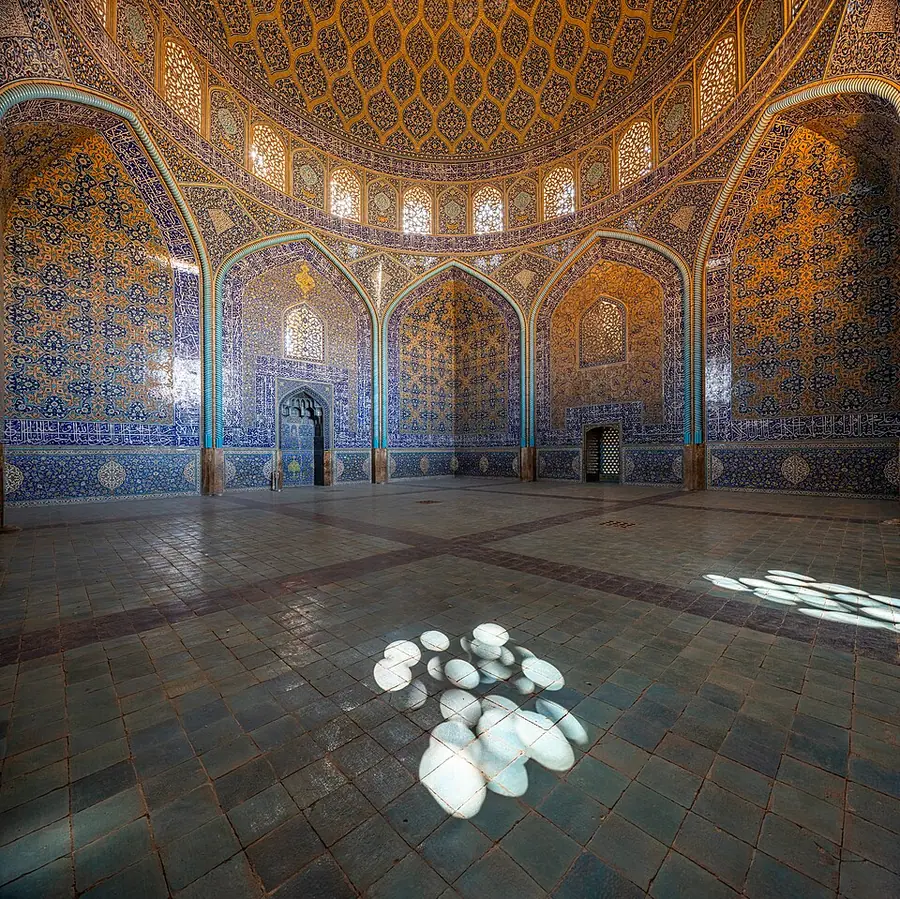
Shah ʿAbbās I (r. 1587/88–1629) moved the capital to Isfahan in 1598 and built around its great square the Shah Mosque and the mosque of Shaykh Luṭf Allāh, named for a Lebanese scholar; he walked on pilgrimage to the shrine of the eighth imam at Mashhad and patronised the shrines that made Iran’s own holy places rivals to Karbalāʾ and Najaf in Ottoman Iraq.[7] Consensus He also broke the power of the Qizilbash with an army of slave soldiers recruited from Georgians, Circassians and Armenians, and deported large numbers of Armenians, settling some of them in New Julfa, a suburb of Isfahan. Majority
The jurists’ rise
By the late seventeenth century the senior scholars were powerful in their own right. Muḥammad Bāqir Majlisī (c. 1627–1699), appointed shaykh al-islām of Isfahan in 1687, compiled the vast hadith collection Biḥār al-anwār (“Seas of Lights”) and campaigned against Sufis, philosophers and Sunnis; he wrote in Persian for ordinary believers and fixed much of popular Twelver devotion.[7] Majority
Within Twelver law, two schools argued over method. The Akhbārīs, revived by Muḥammad Amīn Astarābādī (d. 1627), held that law must be drawn from the imams’ reports, not from the reasoning of jurists; the Uṣūlīs defended ijtihād, the independent reasoning of a qualified jurist, the mujtahid. Akhbārism was strong in the late Safavid period; in the late eighteenth century, after the dynasty had fallen (1722–1736), Muḥammad Bāqir Behbahānī (d. 1792) and his students made the Uṣūlī position dominant.[7] Majority The result was a Shia world in which believers follow living jurists, and the most senior jurists, later called marjaʿ al-taqlīd, “source of imitation”, carry an authority independent of any ruler. It is the foundation of the clerical politics of nineteenth- and twentieth-century Iran (§10, §12). Majority
The Mughals: ruling a mostly non-Muslim empire
Bābur and the dynasty
Bābur, a Timurid prince from Central Asia, defeated the Delhi sultan Ibrāhīm Lodī at Panipat on 21 April 1526 with the help of firearms and field guns. His grandson Akbar (r. 1556–1605) made the dynasty an empire covering most of northern India, ruled through a nobility of Central Asians, Iranians, Indian Muslims and Hindu Rajputs.[8] Consensus Muslims were a minority of the empire’s subjects throughout. Consensus The relations between Mughal rule and Hindu society, including Akbar’s Sanskrit translations, are the subject of Hinduism §10; this section follows the Islamic side.
Akbar: universal peace
Akbar abolished the jizya in 1564. In 1575 he built a house of worship (ʿIbādat-khāna) at Fatehpur Sikri for debates, first among Muslim scholars and then with Hindus, Jains, Zoroastrians and Jesuit missionaries.[10][8] Consensus In 1579 a group of leading scholars signed a declaration, the maḥżar, that recognised the emperor as a just ruler entitled to choose between conflicting opinions of the jurists where they disagreed, in the interest of the state.[11] Majority on its content. Akbar’s minister and historian Abū l-Faḍl framed the reign as ṣulḥ-i kull, “universal peace”: a ruler above sects, bound to protect all his subjects.[23][8] Majority
Around 1582 Akbar formed the Dīn-i Ilāhī, “divine faith”, or tawḥīd-i ilāhī, “divine unity”: a circle of courtiers who pledged personal devotion to him as their spiritual guide. Only about nineteen members are known by name.[8] Majority The scholar-courtier ʿAbd al-Qādir Badāʾūnī, who resented Akbar’s policies, described it as a new religion meant to replace Islam; Abū l-Faḍl’s official history presents it as discipleship. Most modern historians read it as a Sufi-style order of imperial disciples and an instrument of loyalty, not a religion with its own scripture, law or community. Contested on what it was.
Sirhindī and the Naqshbandīs
Akbar’s policies had Muslim critics. The best known later was Aḥmad Sirhindī (1564–1624), a Naqshbandī Sufi who wrote hundreds of letters, the Maktūbāt, to disciples and nobles, urging a return to the sharīʿa, attacking the participation of Hindus in government and rejecting Ibn ʿArabī’s “unity of being” (§7) in favour of a “unity of witnessing”.[24][13] Consensus on his views. He was imprisoned by Akbar’s son Jahāngīr in 1618. His followers called him the mujaddid-i alf-i thānī, the renewer of the second millennium of Islam. Yohanan Friedmann’s study argued that his influence on Mughal policy has been greatly exaggerated: the image of Sirhindī as the man who turned the dynasty back to orthodoxy was built mostly by later disciples and by twentieth-century writers.[13] Majority
Aurangzeb
The Mughal court of the seventeenth century was still a place of religious exploration. Akbar’s great-grandson Dārā Shukoh translated fifty Upaniṣads into Persian in 1657 and argued that Islam and Hindu monism expressed the same truth (Hinduism §10). He lost the war of succession to his brother Aurangzeb (r. 1658–1707), who had him executed in 1659 with apostasy among the charges.[14] Consensus
Aurangzeb took his role as a Muslim ruler more strictly than his predecessors. He commissioned a compendium of Ḥanafī law, the Fatāwā-yi ʿĀlamgīrī, compiled by a commission of scholars in the 1660s and 1670s, which became a standard reference for Islamic law in South Asia into the colonial period.[15] Consensus In 1679 he reimposed the jizya on non-Muslims.[16] Consensus The Sikh Guru Tegh Bahādur was executed in Delhi in 1675.[8] Consensus Temples were destroyed on his orders, among them the Viśvanātha temple at Banaras in 1669 and the Keśava Deva temple at Mathura in 1670, recorded with approval in his official history.[16] Consensus
How to read the reign is one of the most argued questions in South Asian history. Jadunath Sarkar, whose biography long set the standard, saw a deliberate religious policy against non-Muslims that helped wreck the empire.[25] Richard Eaton’s survey of temple desecration found about fifteen securely attested cases in Aurangzeb’s reign, mostly tied to rebellion and war, and Audrey Truschke’s 2017 biography argues that he also protected and endowed Hindu and Jain institutions and should be judged as a ruler of his time rather than as a symbol.[26][27] Critics answer that the reign shows discrimination well beyond temples, in the jizya, in taxes and in appointments. Contested; Political on the modern use. The detailed case on both sides, with the sources, is in Hinduism §10.
Southeast Asia: Islam by trade
Ports and gravestones
Islam reached the islands of Southeast Asia by sea, with Arab, Persian, Indian and Chinese Muslim merchants on the routes between India and China. Marco Polo, passing northern Sumatra in 1292, reported a Muslim town. The first firm evidence of a Muslim dynasty is the gravestone of Sultan Malik al-Ṣāliḥ of Samudra-Pasai, dated 696 AH / 1297 CE. When Ibn Baṭṭūṭa called there in 1345–1346, its sultan was a learned Shāfiʿī.[1][2] Consensus In Java, Muslim gravestones at Trowulan, the capital of the Hindu-Buddhist kingdom of Majapahit, dated from the 1360s onward, appear to belong to Javanese Muslims close to the court, not to foreign traders.[2] Majority
Malacca and Aceh
Malacca, founded around 1400 on the strait between Sumatra and the Malay peninsula, became the region’s greatest port. When its rulers became Muslim is uncertain: the Portuguese writer Tomé Pires and the Malay Annals give different accounts, but Islam was established at court by the reign of Muẓaffar Shāh (r. 1445–1459). Malacca’s trade and its dependent courts spread Islam along the coasts until the Portuguese took the city in 1511.[2] Majority
After 1511 Muslim trade shifted to other ports. Aceh, in northern Sumatra, became a sultanate around 1500, sought help from the Ottomans against the Portuguese in the 1560s, and under Iskandar Muda (r. 1607–1636) dominated much of Sumatra. It was known as the “verandah of Mecca” for its scholars, among them the mystical poet Ḥamza Fanṣūrī, his critic Nūr al-Dīn al-Rānīrī, an Indian-born scholar who had Ḥamza’s books burned, and ʿAbd al-Raʾūf of Singkil. From 1641 to 1699 Aceh was ruled by four queens in succession.[2][28] Majority
Java and the nine saints
In Java the Hindu-Buddhist kingdom of Majapahit gave way in the early sixteenth century to Muslim coastal states, of which Demak was the first to dominate. Javanese tradition credits the conversion of the island to nine saints, the Wali Songo, among them Sunan Kalijaga, said to have taught through shadow puppets and gamelan. Historians treat these stories as later memory: the chronicles that tell them are much later than the events, though some saints are real figures, and the gravestone of one, Malik Ibrāhīm at Gresik, is dated 1419.[2][28] Majority
M. C. Ricklefs describes two processes at once: local people converting, and foreign Muslims settling and intermarrying with local elites; he thinks Sufi teachers, at home in the mystical language of the Hindu-Buddhist courts, made Islam intelligible to them. Javanese Islam long kept much of the older court culture, which Ricklefs calls a “mystic synthesis”.[2] Majority Michael Laffan has shown how much of the familiar story of a uniquely peaceful, Sufi conversion was shaped by later Dutch colonial scholarship and Indonesian nationalists.[28] Majority
The result was the largest concentration of Muslims in the world. Indonesia, which is home to about one in eight of the world’s Muslims, became a Muslim-majority society without ever being conquered by a Muslim empire. Consensus
Painting the Prophet
The courts of this period also produced the best-known paintings of Muhammad. The tradition began earlier: the illustrated copy of Rashīd al-Dīn’s world history made in Tabriz in the early fourteenth century, in his lifetime, shows the Prophet with his face visible (§0).[29] Fifteenth-century Timurid painters in Herat continued it. Covering the Prophet’s face with a veil, out of reverence, often with a flaming halo around him, has earlier examples, but it became the usual convention in Safavid painting from the early sixteenth century and spread from there. Majority
The greatest single cycle is the Ottoman Siyer-i Nebi, a Turkish verse life of Muhammad written in Mamluk Cairo in the 1380s by Muṣṭafā Ḍarīr of Erzurum. Murad III ordered an illustrated copy, completed in 1595 by the palace workshop under the calligrapher Luṭfī ʿAbdullāh: six volumes with 814 paintings, in which the Prophet’s face is always veiled. Volumes I, II and VI are in the Topkapı Palace, III in the New York Public Library and IV in the Chester Beatty Library in Dublin; volume V is lost.[12] Consensus
These were court manuscripts, seen by few, made for rulers who understood them as devotion. They show that the prohibition of images of the Prophet, now held by most Muslims, was not always applied in the Persianate and Ottoman courts. As set out in §0, this series shows such paintings only within chapters, as art history, and never as a page’s main image.
The evidence
| Question | What the evidence supports | Key evidence | Confidence |
|---|---|---|---|
| The Ottoman caliphate | The title is old; the transfer story of 1517 is late; the universal claim is recognised in 1774 | Treaty of Küçük Kaynarca; Finkel[17][4] | Majority |
| State and law | The Ottomans made the Ḥanafī school an official, salaried hierarchy, with kanun beside it | Ebussuud; Burak; İnalcık[9][19][3] | Majority |
| The millet system | Local arrangements early; the fixed system later | Braude[5] | Majority |
| Iran made Shia | A state decision of 1501, achieved over about a century | Safavid decrees; Newman; Abisaab[6][7][22] | Majority |
| Akbar | Jizya abolished, debates, the maḥżar, a small discipleship | Mughal histories; Richards[11][8] | Majority; Contested (Dīn-i Ilāhī) |
| Aurangzeb | Jizya restored, Ḥanafī law codified, temples destroyed; scale and motive debated | Maʾāsir-i ʿĀlamgīrī; Eaton; Truschke; Sarkar[16][26][27][25] | Consensus (events); Contested (meaning) |
| Southeast Asia | Trade and courts from the 1290s; Java’s courts in the 15th–16th c. | Pasai gravestone; Ricklefs; Laffan[1][2][28] | Majority |
| Images of Muhammad | Court manuscripts depicted him; veiling usual from the early 16th c. | Siyer-i Nebi[12] | Majority |
Primary sources
Show the 8 primary sources
1. “ʿAlī is God’s friend”: the Safavid call to prayer, 1501
ashhadu anna ʿAliyyan waliyyu llāh
“I bear witness that ʿAlī is God’s friend.”[6]
What it proves. The phrase Shah Ismāʿīl ordered added to the call to prayer when he declared Twelver Shiism the state religion in 1501. A single line, heard five times a day from every mosque, made the new state’s religion public in a country whose people were then mostly Sunni. It is still heard in Shia mosques. Consensus
2. The jizya verse: Q 9:29
Quoted in §4.[30][31] What it proves. The Qur’anic basis for the poll tax on non-Muslims that Akbar abolished in 1564 and Aurangzeb restored in 1679, and that the Ottomans collected as cizye. Whether a ruler collected it was a test of how he understood his duty as a Muslim sovereign, and both emperors’ decisions were read that way by their contemporaries. Consensus
3. The maḥżar of 1579
Summarized here. A declaration signed by leading Mughal scholars, preserved in Badāʾūnī’s history, which recognised Akbar as a just ruler entitled, where the jurists disagreed, to choose the opinion that best served the state.[11] What it proves. That Akbar sought the scholars’ own sanction for his religious authority, within the terms of Islamic law, before the Dīn-i Ilāhī; how far the signatories agreed willingly is debated. Majority
4. Sirhindī’s letters, Maktūbāt, early seventeenth century
Summarized here. Letters to disciples and Mughal nobles urging the strict application of the sharīʿa, opposing the employment of non-Muslims in high office and criticising the doctrine of the unity of being.[24] What it proves. That a learned Sufi opposition to Akbar’s settlement existed and wrote to the court; it does not show how far the court listened, the question Friedmann’s study answers sceptically. Majority
5. The Fatāwā-yi ʿĀlamgīrī, 1660s–1670s
Summarized here. A compendium of Ḥanafī rulings, in Arabic, compiled for Aurangzeb by a commission of scholars under Shaykh Niẓām of Burhanpur, covering worship, family, property, contracts, crime and the state.[15] What it proves. That a Mughal emperor, like the Ottomans before him, sought to make one school’s law the reference of the state. British courts in India later used it as an authority on Muslim law. Consensus
6. Sultan Malik al-Ṣāliḥ’s gravestone, Samudra-Pasai, 696 AH / 1297 CE
Summarized here. An Arabic inscription on the gravestone of the first known Muslim ruler of Samudra-Pasai in northern Sumatra, dated in the Hijri year 696.[1] What it proves. That a Muslim dynasty ruled a Sumatran port by the end of the thirteenth century, half a century before Ibn Baṭṭūṭa’s visit and two centuries before most of Java’s courts converted. Consensus
7. The Treaty of Küçük Kaynarca, 1774
Summarized here. The peace that ended the Russo-Ottoman war of 1768–1774 declared the Crimean Tatars independent of both empires but left the sultan as their religious authority in his capacity as caliph.[17] What it proves. That the Ottoman sultan’s religious authority over Muslims outside his realm was first set down in an international treaty at the moment the empire lost territory, a claim that became central to Ottoman policy in the nineteenth century (§10). Majority
8. The Siyer-i Nebi, completed 1595
Described above. What it proves. That the Ottoman court commissioned the largest cycle of paintings of the Prophet’s life in Islamic art, with his face veiled, at the end of the sixteenth century; the attitude to such images was a matter of time, place and setting, not a single rule. Consensus
What is absent
- A contemporary record of the 1517 transfer of the caliphate. No Ottoman or Mamluk source of the time describes it. Majority
- A founding charter of the millet system. The supposed fifteenth-century grants are known from later accounts. Majority
- A scripture, law or clergy of the Dīn-i Ilāhī. Only a short list of disciples and hostile and friendly court accounts survive. Majority
- Census figures for conversion. No Ottoman, Safavid or Mughal source counts how many subjects changed religion; rates are estimated from tax registers, names and later censuses. Consensus
- Contemporary accounts of most of the Wali Songo. The stories come from Javanese chronicles written long after them. Majority
Debates
When did the Ottomans claim the caliphate?
The title was used from the fourteenth century as a general claim of just rule; the story of a formal transfer in 1517 is first recorded in the late eighteenth century; the claim to religious authority over Muslims outside the empire was first recognised by treaty in 1774 and stressed in the nineteenth century. Older accounts that date a universal Ottoman caliphate to 1517 rely on the transfer story.[4][17] Majority
Did a millet system exist before the nineteenth century?
Braude argued that the system as usually described is a later construction projected back onto Mehmed II; historians accept that the Ottomans dealt with non-Muslim communities through their religious leaders from the start, and debate how formal and how uniform that was.[5] Majority for a late system; Contested on the earlier degree of organisation.
How Arab was Safavid Shiism?
Abisaab stresses the ʿĀmilī scholars’ role in creating the state’s religious institutions; Newman argues that their numbers and influence were smaller and that Persian scholars and the shahs’ own interests mattered more.[22][7] Contested
What was the Dīn-i Ilāhī?
A new religion (Badāʾūnī’s charge and some modern writers’), or a discipleship of imperial loyalty within Akbar’s policy of universal peace (most modern historians).[8][23] Contested
How should Aurangzeb be judged?
As a ruler with a deliberate policy against non-Muslims (Sarkar and his successors), or as a ruler whose destructions were limited and political and who also protected non-Muslim institutions (Eaton, Truschke); the debate is also a present-day political argument in India.[25][26][27] Contested; Political
How did Southeast Asia become Muslim?
Through merchants, intermarriage and the conversion of port rulers, with Sufis as interpreters, over three centuries (Ricklefs); the familiar picture of a uniquely gentle, Sufi conversion is itself partly a product of colonial and nationalist scholarship (Laffan).[2][28] Majority
Further reading
Show further reading (13 works)
- Halil İnalcık, The Ottoman Empire: The Classical Age, 1300–1600 (Weidenfeld & Nicolson, 1973).
- Caroline Finkel, Osman’s Dream: The Story of the Ottoman Empire, 1300–1923 (John Murray, 2005).
- Colin Imber, Ebu’s-suʿud: The Islamic Legal Tradition (Edinburgh, 1997).
- Guy Burak, The Second Formation of Islamic Law: The Ḥanafī School in the Early Modern Ottoman Empire (Cambridge, 2015).
- Benjamin Braude and Bernard Lewis, eds., Christians and Jews in the Ottoman Empire (Holmes & Meier, 1982), with Braude’s “Foundation Myths of the Millet System”.
- Andrew J. Newman, Safavid Iran: Rebirth of a Persian Empire (I.B. Tauris, 2006).
- Rula Jurdi Abisaab, Converting Persia: Religion and Power in the Safavid Empire (I.B. Tauris, 2004).
- Kathryn Babayan, Mystics, Monarchs, and Messiahs: Cultural Landscapes of Early Modern Iran (Harvard, 2002).
- John F. Richards, The Mughal Empire (Cambridge, 1993).
- Muzaffar Alam, The Languages of Political Islam: India, 1200–1800 (Chicago, 2004).
- Audrey Truschke, Aurangzeb: The Life and Legacy of India’s Most Controversial King (Stanford, 2017).
- M. C. Ricklefs, A History of Modern Indonesia since c. 1200 (4th ed., Palgrave, 2008).
- Michael Laffan, The Makings of Indonesian Islam (Princeton, 2011).
References
- ^ a b c d Gravestone of Sultan Malik al-Ṣāliḥ, Samudra-Pasai (Aceh) — Funerary inscription. 696 AH / 1297 CE. Arabic. The earliest dated grave of a Muslim ruler in Southeast Asia, founder of the Samudra-Pasai sultanate on the north coast of Sumatra. about
- ^ a b c d e f g h i j M. C. Ricklefs A History of Modern Indonesia since c. 1200. Palgrave Macmillan, 4th ed., 2008. Opens with the evidence for the Islamisation of the archipelago: gravestones, travellers and courts.
- ^ a b c d e f g h Halil İnalcık The Ottoman Empire: The Classical Age, 1300–1600. Weidenfeld & Nicolson, 1973. The classic account of Ottoman institutions, including the learned hierarchy, kanun and the devşirme.
- ^ a b c d e f g h i j Caroline Finkel Osman's Dream: The Story of the Ottoman Empire, 1300–1923. John Murray, 2005. The standard one-volume narrative history.
- ^ a b c d e Benjamin Braude Foundation Myths of the Millet System. in B. Braude and B. Lewis, eds., Christians and Jews in the Ottoman Empire, vol. 1 (Holmes & Meier), 1982. The argument that the millet system as usually described is a late construction projected back onto Mehmed II.
- ^ a b c d Shah Ismāʿīl I's decree on the call to prayer, Tabriz, 1501 — Safavid proclamation of Twelver Shiism. 1501 CE. Arabic. Ismāʿīl orders the Shia call to prayer, adding the testimony 'ʿAlī is God's friend', and the public cursing of the first three caliphs. about
- ^ a b c d e f g h i j k l Andrew J. Newman Safavid Iran: Rebirth of a Persian Empire. I.B. Tauris, 2006. A political and religious history of the dynasty; sceptical of the scale of the ʿĀmilī clerical migration.
- ^ a b c d e f g h i John F. Richards The Mughal Empire. Cambridge University Press (New Cambridge History of India), 1993. The standard survey of the empire from Bābur to the eighteenth century.
- ^ a b c d e Colin Imber Ebu's-suʿud: The Islamic Legal Tradition. Edinburgh University Press, 1997. How the şeyhülislam Ebussuud framed Ottoman land and state law in Ḥanafī terms.
- ^ a b Richard M. Eaton India in the Persianate Age, 1000–1765. Penguin / University of California Press, 2019. doi The current standard synthesis of the period.
- ^ a b c d The maḥżar of 1579, in ʿAbd al-Qādir Badāʾūnī, Muntakhab al-tawārīkh — Declaration of the Mughal scholars on Akbar's authority. 1579 CE. Persian. Leading scholars recognise Akbar as a just ruler entitled to choose between conflicting opinions of the jurists in the interest of the state. about
- ^ a b c Siyer-i Nebi, Ottoman illustrated manuscript for Murad III — Life of the Prophet. completed 1595 CE. Ottoman Turkish. Six-volume illustrated life of Muhammad completed in 1595, with 814 miniatures in which the Prophet's face is veiled. about
- ^ a b c Yohanan Friedmann Shaykh Aḥmad Sirhindī: An Outline of His Thought and a Study of His Image in the Eyes of Posterity. McGill-Queen's University Press, 1971. Argues that Sirhindī's influence on Mughal policy was much smaller than his later image.
- ^ a b Supriya Gandhi The Emperor Who Never Was: Dara Shukoh in Mughal India. Harvard University Press, 2020. The current biography.
- ^ a b c al-Fatāwā al-ʿĀlamgīriyya (Fatāwā-yi ʿĀlamgīrī) — Ḥanafī legal compendium compiled for Aurangzeb. 1660s–1670s CE. Arabic. A commission of scholars under Shaykh Niẓām Burhānpūrī compiles Ḥanafī rulings on worship, family, property, crime and the state; later used by British courts in India. about
- ^ a b c d Maʾāsir-i ʿĀlamgīrī — Sāqī Mustaʿidd Khān, tr. Jadunath Sarkar (Calcutta: Royal Asiatic Society of Bengal, 1947), pp. 51–52, 55, 60, 108. 1710 CE. Persian. The official history of Aurangzeb's reign: the April 1669 order on the 'schools and temples of the infidels', the demolition of the Vishvanath temple at Banaras (1669) and the Keshava Deva temple at Mathura (1670), and the reimposition of jizya (1679), all framed in religious language. The 1669 order's wording is disputed (Sarkar: 'to demolish'; Eaton: 'be subject to demolition'). read the text
- ^ a b c d e Treaty of Küçük Kaynarca, 21 July 1774 — Peace treaty between the Russian and Ottoman empires. 1774 CE. Ottoman Turkish, Russian and Italian. Declares the Crimean Tatars independent while recognising the sultan's religious authority over them as caliph, the first international recognition of the claim. about
- ^ Esther Benbassa and Aron Rodrigue Sephardi Jewry: A History of the Judeo-Spanish Community, 14th–20th Centuries. University of California Press, 2000. The settlement of the Iberian exiles in the Ottoman Empire and the rise of Salonica.
- ^ a b c Guy Burak The Second Formation of Islamic Law: The Ḥanafī School in the Early Modern Ottoman Empire. Cambridge University Press, 2015. The Ottoman state's adoption and shaping of the Ḥanafī school as its official law.
- ^ Milka Levy-Rubin Non-Muslims in the Early Islamic Empire: From Surrender to Coexistence. Cambridge University Press, 2011. Traces the Pact of Umar to conquest-era surrender treaties and Byzantine and Sasanian models.
- ^ a b Kathryn Babayan Mystics, Monarchs, and Messiahs: Cultural Landscapes of Early Modern Iran. Harvard Center for Middle Eastern Studies, 2002. The Qizilbash's messianic beliefs and their suppression by the dynasty they brought to power.
- ^ a b c d Rula Jurdi Abisaab Converting Persia: Religion and Power in the Safavid Empire. I.B. Tauris, 2004. The ʿĀmilī scholars and the making of Safavid Shiism.
- ^ a b Muzaffar Alam The Languages of Political Islam: India, 1200–1800. University of Chicago Press, 2004. Mughal political thought, ṣulḥ-i kull and the place of the sharīʿa in a mostly non-Muslim empire.
- ^ a b Aḥmad Sirhindī, Maktūbāt-i Imām-i Rabbānī — Letters of Aḥmad Sirhindī. c. 1600–1624 CE. Persian. Letters to disciples and Mughal nobles urging strict application of the sharīʿa, opposing non-Muslims in high office and rejecting the 'unity of being'. about
- ^ a b c Jadunath Sarkar History of Aurangzib, Mainly Based on Persian Sources, vol. 3: First Half of the Reign, 1658–1681. M. C. Sarkar & Sons, Calcutta, 1916. full text The classic case for a deliberate religious policy under Aurangzeb, reading the 1669 order as a general command to destroy temples; Appendix V collects the sources.
- ^ a b c Richard M. Eaton "Temple Desecration and Indo-Muslim States". Journal of Islamic Studies 11, 2000. doi The survey behind the ~80 documented cases and the political-target pattern.
- ^ a b c Audrey Truschke Aurangzeb: The Life and Legacy of India's Most Controversial King. Stanford University Press, 2017. doi The revisionist short biography: temple destruction under Aurangzeb as limited and political; contested by critics who stress his discriminatory measures.
- ^ a b c d e Michael Laffan The Makings of Indonesian Islam: Orientalism and the Narration of a Sufi Past. Princeton University Press, 2011. How colonial and nationalist scholarship shaped the story of Indonesia's Sufi conversion.
- ^ Rashīd al-Dīn, Jāmiʿ al-tawārīkh (Edinburgh University Library, Or. MS 20) — Compendium of Chronicles. early 14th c. CE. Arabic. Illustrated copy from Rashīd al-Dīn's scriptorium in Tabriz with a cycle of paintings of Muhammad, among the earliest surviving. about
- ^ Qur'an 9:29 — The Qur'an. 610–632 CE. Arabic. Fight the People of the Book who do not believe 'until they pay the tax (jizya) and agree to submit'. read the text
- ^ M. A. S. Abdel Haleem The Qur'an: A New Translation. Oxford University Press (Oxford World's Classics), 2004. The translation quoted in the Islam series unless stated.