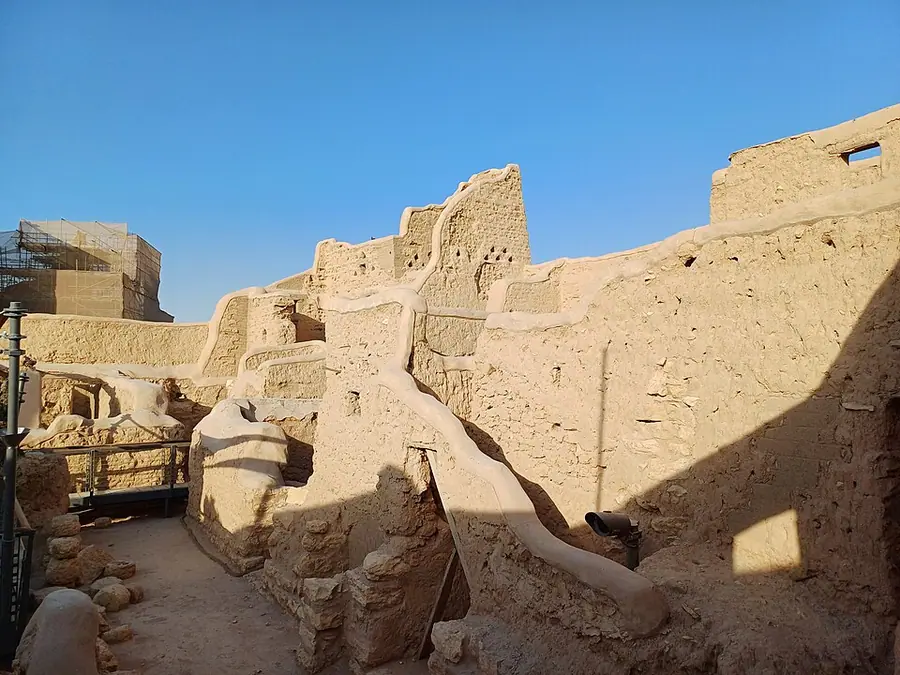
Between about 1700 and 1920, Muslims across the world argued about why their societies seemed to be losing ground, and what a faithful answer would be. In central Arabia, Muḥammad ibn ʿAbd al-Wahhāb taught that Muslims had fallen into associating others with God, and in 1744 his alliance with the house of Saʿūd turned that teaching into a state. In West Africa, scholars led jihads against rulers they judged unfaithful and founded new caliphates. In India, Muslim rule ended, and after the revolt of 1857 scholars built seminaries, colleges and movements that still divide South Asian Islam. In Egypt and Istanbul, reformers argued that Islam was compatible with reason, science and constitutional government, and the Ottoman state rewrote its laws. In Iran and India, new movements claimed new revelation or a new messiah, and most Muslims came to regard them as outside the faith. The First World War ended the Ottoman empire. Nearly every Muslim movement of the twentieth century descends from one of these arguments. Majority
This chapter follows them region by region. §9 describes the empires whose decline the reformers were answering; §11 continues from the abolition of the caliphate in 1924. Where a word used here, such as “Wahhabi” or “Salafi”, is itself fought over, the chapter says who uses it and who does not.
Timeline
| Date | Event | Confidence |
|---|---|---|
| 1703 | Birth of Muḥammad ibn ʿAbd al-Wahhāb at ʿUyayna in Najd[1] | Consensus |
| 1703–1762 | Shāh Walī Allāh of Delhi[2] | Consensus |
| 1744 | Pact of Dirʿiyya between Ibn ʿAbd al-Wahhāb and Muḥammad ibn Saʿūd[1][3] | Consensus |
| 1801–1802 (1216 AH) | Saudi forces sack Karbalāʾ and its shrine of al-Ḥusayn[1] | Consensus |
| 1803–1805 | Saudi forces take Ṭāʾif, Mecca and Medina[1] | Consensus |
| 1804 | Usman dan Fodio’s hijra to Gudu; he is chosen commander of the believers; the jihad begins[4] | Consensus |
| 1818 | An Ottoman–Egyptian army destroys Dirʿiyya; the first Saudi state ends[1] | Consensus |
| 1818–1862 | The caliphate of Ḥamdallāhi in Masina[4] | Majority |
| 1837 | Muḥammad ibn ʿAlī al-Sanūsī founds his order in Mecca[5] | Consensus |
| 1839 | Edict of Gülhane opens the Ottoman Tanzimat[6] | Consensus |
| 1844 | The Bāb announces his mission in Shiraz[7] | Consensus |
| 1857–1858 | Revolt in India; the last Mughal emperor exiled; rule by the British Crown[8] | Consensus |
| 1866 | The seminary at Deoband is founded[8] | Consensus |
| 1869–1876 | The Ottoman Mecelle, a code of Ḥanafī civil law[9] | Consensus |
| 1875 | Sayyid Aḥmad Khān founds the Muhammadan Anglo-Oriental College at Aligarh[10] | Consensus |
| 1884 | al-Afghānī and ʿAbduh publish al-ʿUrwa al-wuthqā in Paris[11] | Consensus |
| 1889 | Mirza Ghulam Ahmad takes the first oath of allegiance at Ludhiana[12] | Consensus |
| 1898 | Rashīd Riḍā founds al-Manār in Cairo[13] | Consensus |
| 1903 | British conquest of Sokoto[4] | Consensus |
| 1916 | Sharīf Ḥusayn of Mecca begins the Arab Revolt against the Ottomans[14] | Consensus |
A century of reform
Historians once described eighteenth-century Islam as stagnant, waiting for Europe to wake it. That picture has been abandoned. The eighteenth century was full of reform movements, in Arabia, India, Africa and Southeast Asia, most of them earlier than any serious European pressure and most of them connected through the scholars who met in Mecca and Medina on pilgrimage and study.[10][1] Majority
They shared some themes: a call to return to the Qur’an and the Prophet’s example, distrust of the accumulated commentaries and of “blind imitation” (taqlīd) of past authorities, hostility to practices they considered later additions (bidaʿ, “innovations”), and in several places the conviction that rulers who tolerated them were not true Muslim rulers. They also disagreed sharply: some reformers were Sufis who wanted to purify Sufism, others attacked it at the root. The word “revival” covers movements that would later fight one another. Majority
From the late eighteenth century a second set of pressures arrived: European conquest and trade. The British took Bengal from 1757, Napoleon invaded Egypt in 1798, the French took Algiers in 1830, and by 1920 nearly every Muslim society except Turkey, Iran, Afghanistan and the centre of Arabia was ruled or controlled by a European power. Reform became a question of how to answer an empire as well as how to purify a faith. Consensus
Muḥammad ibn ʿAbd al-Wahhāb and the first Saudi state
The scholar
Muḥammad ibn ʿAbd al-Wahhāb was born in 1703 at ʿUyayna in Najd, the dry centre of the Arabian peninsula, into a family of Ḥanbalī judges. He studied in Medina and Basra, and began preaching in Najd in the 1740s.[1][3] Consensus His teaching centred on tawḥīd, God’s oneness, which he understood to exclude any act of worship directed at anyone but God. Calling on dead saints for help, vowing offerings at tombs, revering trees and stones believed to bring blessing: all of these, he argued, were shirk, associating partners with God, even when the people who did them called themselves Muslims.[15][3] Consensus on the teaching.
His main work, Kitāb al-Tawḥīd (“The Book of God’s Oneness”), is a short collection of chapters, each built of Qur’anic verses and hadith on one aspect of the theme.[15] His intellectual debts were to the Ḥanbalī tradition, and above all to Ibn Taymiyya (d. 1328) and his student Ibn Qayyim al-Jawziyya, whose writings he and his followers treated as core references (§8).[1][16] Majority Like them, he rejected strict taqlīd in principle; in practice he and his followers worked within Ḥanbalī law.[3] Majority
What made his teaching unusual was its consequence. If the practices he condemned were shirk, then those who practised them and refused correction were not truly Muslims, and fighting them could be a duty. How far he drew that conclusion himself, and how far his heirs did, is one of the main questions about him (below).[3][1] Contested
The pact of 1744
Expelled from ʿUyayna, he went in 1744 to Dirʿiyya, a small town ruled by Muḥammad ibn Saʿūd. There the two men exchanged oaths. The arrangement, as the Saudi tradition remembers it, divided authority: the ruler would govern and wage war, the scholar would direct religion, and each would support the other.[1][3] Consensus The Saudi state today dates its own beginning to 1727, when Muḥammad ibn Saʿūd came to power, but historians treat the pact as the founding of the alliance that has lasted, in three successive Saudi states, to the present.[1] Majority
Over the next half-century the alliance conquered most of Najd, taking Riyadh in 1773 or 1774 (sources differ). The scholar died at Dirʿiyya in 1792.[3] Consensus
Karbalāʾ and the holy cities
Under Saʿūd ibn ʿAbd al-ʿAzīz the state struck beyond Najd. In 1216 AH (1801–1802), its forces attacked Karbalāʾ in Ottoman Iraq, the city of al-Ḥusayn’s tomb (§5), killed thousands of its people and plundered the shrine.[1] Consensus on the event; the figures given by contemporaries vary widely. To Shia Muslims the attack is remembered as a massacre; in the movement’s own terms it was a war on shirk at the shrine. Both memories are still alive. Political
From 1803 to 1805 they took Ṭāʾif, Mecca and Medina, destroyed domed tombs there, including those over the graves of the Prophet’s companions and family, and stopped pilgrim caravans whose practices they rejected.[1] Consensus For the Ottoman sultan, who claimed to protect the holy cities, this was intolerable. On his orders the governor of Egypt, Muḥammad ʿAlī, sent armies from 1811; his son Ibrāhīm Pasha besieged Dirʿiyya and took it in 1818. The emir ʿAbd Allāh ibn Saʿūd was sent to Istanbul and executed.[1] Consensus The alliance revived in a second Saudi state (1824–1891), and the third, founded by ʿAbd al-ʿAzīz ibn Saʿūd from 1902, is §11’s subject.
The name
The movement did not call itself “Wahhabi”. Its members called themselves al-muwaḥḥidūn, “those who affirm God’s oneness”, or simply Muslims; “Wahhābī” was used by their opponents, who presented them as a sect named after a man, as earlier heresies had been.[1] Consensus In the twentieth century many adherents adopted “Salafi” (below). Western historians, including sympathetic ones, still use “Wahhabi” as a descriptive term for the Najdi tradition, because “Salafi” now covers much more. This chapter does the same, with that caution. Political on the label.
India: Shāh Walī Allāh and the end of Mughal rule
Shāh Walī Allāh
In Delhi, the scholar Shāh Walī Allāh (1703–1762) lived through the collapse of Mughal power after Aurangzeb (§9). He studied in Mecca and Medina, translated the Qur’an into Persian so that educated Indians could read it without depending on scholars’ paraphrase, and in his Ḥujjat Allāh al-bāligha (“The Conclusive Argument of God”) set out a reasoned account of why the law commands what it does.[2] Consensus He defended the four schools of law while urging scholars to work from the hadith themselves, and he was a Sufi of the Naqshbandī order who wanted Sufism to stay close to the law. Majority He also wrote to the Afghan ruler Aḥmad Shāh Durrānī, urging him to act against the Marathas; Durrānī’s victory at Panipat in 1761 followed, though how much the letter mattered is debated. Majority on the letter; Contested on its effect.
His sons and grandsons made his family the centre of reformist learning in north India, and almost every later Sunni movement in South Asia, from Deoband to its rivals, claims his heritage.[8] Majority
1857
The revolt that began among the Company’s Indian soldiers at Meerut in May 1857 had many causes; one spark was the rumour that new rifle cartridges were greased with cow and pig fat, offensive to Hindus and Muslims alike. The rebels proclaimed the aged Mughal emperor Bahādur Shāh Ẓafar their leader. When the revolt was crushed, he was exiled to Rangoon, the Mughal dynasty ended, and the British Crown took direct rule of India in 1858.[8] Consensus Many British officials blamed the Muslims in particular, and Delhi’s Muslim elite suffered heavily in the reprisals. The question of how Muslims should live under non-Muslim rule became urgent. Majority For the parallel Hindu story, see Hinduism §11.
Three answers: Deoband, Aligarh and Bareilly
Deoband. In May 1866 a group of scholars, among them Muḥammad Qāsim Nānautawī and later Rashīd Aḥmad Gangohī, founded a seminary in the small town of Deoband, north of Delhi. It was a new kind of institution: a madrasa with a fixed curriculum, classes, examinations and salaried teachers, funded not by princes but by public donations. It taught the Qur’an, hadith and Ḥanafī law, and set out to train scholars who could guide Muslims without a Muslim state, through fatwās, preaching and schools. Barbara Metcalf’s study showed how it combined the reformist programme of Shāh Walī Allāh’s heirs with British-era methods of organisation.[8] Consensus Its graduates founded hundreds of daughter seminaries across South Asia and later the world. Consensus
Aligarh. Sayyid Aḥmad Khān (1817–1898), a Mughal-born official who stayed loyal to the British in 1857, drew the opposite conclusion: Muslims had to master modern, English-language learning or be left behind. In 1859 he published an analysis of the revolt’s causes that blamed British policy rather than a Muslim conspiracy, and in 1875 he founded the Muhammadan Anglo-Oriental College at Aligarh, which became Aligarh Muslim University in 1920.[17][10] Consensus His Qur’an commentary argued that God’s word could not contradict God’s work, the laws of nature, and reinterpreted miracles accordingly. Opponents called him a naturī, a “naturalist”, and some declared him an unbeliever. Consensus He is also remembered, in Pakistan especially, as an early voice for the view that India’s Muslims formed a separate community with separate political interests (§11). Majority
Bareilly. A third movement defended what the reformers attacked. Aḥmad Riḍā Khān (1856–1921) of Bareilly wrote voluminous legal opinions in defence of the Prophet’s exalted status, his knowledge of the unseen, the celebration of his birthday (mawlid) and the visiting of saints’ tombs, and accused the Deobandis and their predecessors of disrespect towards the Prophet.[18] Consensus His followers, called Barelwīs, see themselves as the defenders of the Sunni mainstream, the ahl al-sunna wa-l-jamāʿa, against what they call Wahhabi innovations. Majority The Deobandi–Barelwī rivalry still shapes mosques and politics in Pakistan, India, Bangladesh and the British Muslim community. Consensus
West Africa: jihad and caliphate
Usman dan Fodio and Sokoto
In the Hausa kingdoms of what is now northern Nigeria, the Fulani scholar Usman dan Fodio (1754–1817) preached from the 1770s against the rulers’ taxes, their tolerance of non-Islamic practices and their mistreatment of Muslims. He was a Mālikī jurist and a Sufi of the Qādiriyya. When the king of Gobir turned against his community, he made a hijra in 1804 to Gudu, in deliberate imitation of the Prophet’s emigration; his followers chose him as amīr al-muʾminīn, commander of the believers, and declared jihad.[4] Consensus By 1808 the major Hausa kingdoms had fallen. His son Muḥammad Bello founded the city of Sokoto in 1809, and the caliphate he governed, stretching from present-day Burkina Faso to Cameroon, was the largest state in West Africa until the British conquered it in 1903.[4] Consensus
The Sokoto leaders were prolific writers: Usman, his brother ʿAbd Allāh and Muḥammad Bello wrote hundreds of works on law, theology, government and history, in Arabic and in Fulfulde and Hausa.[4] Majority Usman’s daughter Nana Asmaʾu (1793–1864), a poet in four languages, organised from the 1830s a network of women teachers, the jajis, who trained rural women in groups called yan-taru, “those who gather together”; her poems, many of them teaching texts, are still used in northern Nigeria.[19] Consensus
Masina and ʿUmar Tall
The Sokoto example spread west. In 1818 Seku Amadu (Aḥmad Lobbo) founded a caliphate in Masina, on the inland delta of the Niger, with its capital at Ḥamdallāhi (“Praise God”), built from 1820.[4] Majority In the next generation al-Ḥājj ʿUmar Tall (c. 1794–1864), a scholar from Futa Toro who had made the pilgrimage in the 1820s and become a leader of the Tijāniyya Sufi order, launched a jihad in 1852 that built an empire across the upper Niger. In 1862 he conquered Masina itself, a jihad against a jihad state, which his rivals condemned. He died in 1864.[4] Consensus on the events. ʿUmar’s successor state fell to the French between 1890 and 1893. Consensus
Historians see the West African jihads as part of the same century of reform: their leaders were scholars linked to the Ḥijāz and to the Sufi orders, attacking rulers they judged unfaithful in the name of the law.[4] Majority Unlike the Najdi movement, they were led by Sufis.
The Sanūsiyya
In North Africa, the Algerian scholar Muḥammad ibn ʿAlī al-Sanūsī (1787–1859) founded a Sufi order in Mecca in 1837 and moved to Cyrenaica, in eastern Libya, in the 1840s. His order spread through a network of lodges (zāwiyas) along the Saharan trade routes, teaching, farming and arbitrating among the tribes, and it required its members to support themselves by work.[5] Consensus From 1911 it led the resistance to the Italian invasion of Libya; its fighter ʿUmar al-Mukhtār was executed by the Italians in 1931, and the founder’s grandson became King Idrīs I of an independent Libya in 1951.[5] Consensus
Egypt and the Arab provinces: reason, reform and “salafiyya”
al-Afghānī
Jamāl al-Dīn al-Afghānī (1838/9–1897) presented himself as an Afghan; most historians, following Nikki Keddie, think he was born into a Shia family in Asadābād in western Iran, and that the Afghan identity helped him among Sunni audiences.[11] Majority He travelled from India to Egypt, Istanbul, Paris, London and Russia, calling for Muslim unity against European imperialism and for a revival of reason and science in Muslim thought. Expelled from Egypt in 1879, he published with his student Muḥammad ʿAbduh the Arabic journal al-ʿUrwa al-wuthqā (“The Firmest Bond”) in Paris in 1884, and he inspired opponents of the Shah during Iran’s tobacco protest of 1891–92.[11] Consensus He died in Istanbul in 1897. Consensus
Muḥammad ʿAbduh
Muḥammad ʿAbduh (1849–1905) studied at al-Azhar, joined al-Afghānī’s circle, and was exiled after the failure of the ʿUrābī revolt and the British occupation of Egypt in 1882. Returning in 1888, he became a judge and, in 1899, Grand Mufti of Egypt.[10] Consensus In his Risālat al-Tawḥīd (“Treatise on God’s Oneness”, 1897) he argued that Islam, rightly understood, is the religion of reason, that true religion and true science cannot conflict, and that Muslims had been held back by blind imitation of later authorities. He called for fresh reasoning (ijtihād) from the Qur’an and the example of the first generations, for the reform of al-Azhar’s teaching and for modern schools.[20][10] Consensus Albert Hourani’s Arabic Thought in the Liberal Age (1962) made him the central figure of “Islamic modernism”. Majority
Rashīd Riḍā and al-Manār
ʿAbduh’s Syrian disciple Muḥammad Rashīd Riḍā (1865–1935) founded the journal al-Manār (“The Lighthouse”) in Cairo in 1898 and edited it until his death in 1935. Read from Morocco to Indonesia, it carried ʿAbduh’s Qur’an commentary, fatwās answering readers’ questions from across the world, and debates on everything from photography to the caliphate.[13][10] Consensus Riḍā moved over time towards a stricter position: after the First World War he defended the Najdi movement and supported ʿAbd al-ʿAzīz ibn Saʿūd, and in 1922–23 he wrote a treatise on the caliphate as its abolition approached (§11).[10][21] Majority
What “salafiyya” meant
The reformers appealed to al-salaf al-ṣāliḥ, “the pious forebears”, the first generations of Muslims, as the model against later accretions. From this came the word salafiyya. For much of the twentieth century Western scholars called al-Afghānī, ʿAbduh and Riḍā “the Salafiyya”, as if they had founded a movement of that name. Henri Lauzière has shown that this was largely a later construction: al-Afghānī and ʿAbduh did not call themselves Salafis, the use of the label for them owes much to the French orientalist Louis Massignon, and “Salafism” as a distinct, purist movement, opposed to the modernism ʿAbduh represented, took shape in the twentieth century.[21] Majority The confusion matters, because two opposite things are now called by one name: a rationalist reform that wanted Islam to embrace modern science, and a literalist purism that rejects much of what the modernists accepted. §12 follows the second. Majority
The Ottoman empire: law, constitution and caliphate
The Tanzimat
The Ottoman state answered its crisis by reorganising itself. On 3 November 1839, in the rose garden (Gülhane) of the Topkapı Palace, Sultan Abdülmecid I’s government proclaimed a decree, drafted under the reforming minister Mustafa Reşid Pasha, promising security of life, honour and property to all subjects “whatever religion or sect they may belong to”.[6] Consensus A further decree in 1856 promised non-Muslims legal equality.[14] Consensus The reforms, called the Tanzimat (“reorderings”), reorganised the army, taxation, schools and courts. They also dissolved the old legal order in which non-Muslims were dhimmīs (§5), a change many Muslims resented and many Christians in the Balkans used to press for independence.[14] Majority
The Mecelle
The most important legal reform was a code. Between 1869 and 1876 a commission led by the jurist Ahmed Cevdet Pasha issued the Mecelle-i Aḥkām-ı ʿAdliyye, a code of civil law in 1,851 articles drawn from Ḥanafī jurisprudence, covering contracts, sales, obligations and evidence.[9] Consensus It was the first time a state had issued Islamic law as a code (§6): instead of judges consulting the books of a school, they applied numbered articles enacted by the sultan. It remained in force in parts of the former Ottoman lands well into the twentieth century.[9][22] Consensus Wael Hallaq argues that codification of this kind changed the nature of sharia itself, from a scholars’ law into a state’s law.[22] Contested
A constitution and a caliph
In 1876 the empire adopted a constitution and an elected parliament. Sultan Abdülhamid II suspended both in 1878 and ruled personally until 1908, stressing instead his role as caliph of all Muslims, a claim the Ottomans had made only occasionally before.[14] Majority Pan-Islamic appeals to the caliph found an audience as far away as India. The Young Turk revolution of 1908 restored the constitution. Consensus
The First World War
The Ottoman empire entered the First World War on Germany’s side in November 1914, and the sultan-caliph declared a jihad against the Allies. Few Muslims under British, French or Russian rule answered it. Majority In June 1916 Sharīf Ḥusayn of Mecca, promised British support for an Arab kingdom, began the Arab Revolt against the Ottomans; Arab forces reached Damascus in 1918.[14] Consensus Britain and France, under the Sykes–Picot agreement of 1916, divided the Arab provinces between them instead. Consensus What the defeat meant for the caliphate is §11’s subject.
New movements: the Bābīs, the Bahāʾīs and the Ahmadiyya
The century also produced claims of new revelation from within Islam. Each began among Muslims, and each came to be regarded by most Muslims as having left Islam.
The Bāb and the Bahāʾī faith
In Twelver Shia Iran, where expectation of the hidden imam’s return (§6) was strong around the thousandth year after his occultation, a young merchant of Shiraz, Sayyid ʿAlī Muḥammad (1819–1850), announced in May 1844 that he was the bāb, the “gate” to the hidden imam. His claims grew: he presented himself as the awaited Qāʾim and then as the bearer of a new revelation, the Bayān, which superseded the law of the Qur’an.[7] Consensus His followers, the Bābīs, were suppressed by the Qajar state in armed clashes, and the Bāb was executed by firing squad in Tabriz in July 1850.[7] Consensus In 1863 one of his followers, Mīrzā Ḥusayn ʿAlī Nūrī, called Bahāʾ Allāh, declared himself the figure the Bāb had foretold; his followers became the Bahāʾī faith, which regards itself as a separate world religion.[7] Consensus Abbas Amanat’s history reads the Bābī movement as a radical outgrowth of Shia messianism.[7] Majority The persecution of Bahāʾīs in Iran continues to the present. Political
The Ahmadiyya
In the Punjab, Mirza Ghulam Ahmad (1835–1908) of Qadian, a writer of polemics against Christian missionaries and the Hindu Ārya Samāj, took an oath of allegiance from his first followers at Ludhiana on 23 March 1889, and in 1890–91 claimed to be the Promised Messiah and the Mahdī whose coming Muslims expected.[12][23] Consensus He taught that Jesus had not been taken bodily into heaven but had died a natural death, and that the jihad of the sword was suspended in his age in favour of a jihad of the pen. Majority He also described himself as a prophet, of a kind that brings no new law and is subordinate to Muhammad.[12] Consensus
That claim met the doctrine that Muhammad is “the seal of the prophets” (Q 33:40), understood by most Muslims to mean the last.[24] Yohanan Friedmann’s study traces the Ahmadi interpretation to earlier Sufi ideas of a continuing, non-legislative prophethood.[12] Majority After the founder’s death the movement split in 1914: the Qadian branch holds that he was a prophet; the smaller Lahore branch regards him as a renewer (mujaddid) only.[23] Consensus Ahmadis regard themselves as Muslims; most Muslim scholars and several states do not. How that dispute became law in Pakistan and elsewhere belongs to §13. Political
The evidence
| Question | What the evidence supports | Key evidence | Confidence |
|---|---|---|---|
| The Najdi movement | A scholar–ruler alliance from 1744, a doctrine of strict tawḥīd, conquest of the holy cities 1803–05, destruction 1818 | Ibn ʿAbd al-Wahhāb’s writings; Najdi chronicles; Ottoman and Egyptian sources[15][1][3] | Consensus |
| Was he a moderate? | Disputed: DeLong-Bas’s reformer against the critics’ militant | His letters and treatises read in different ways[25][3] | Contested |
| West African jihads | Scholar-led states from 1804 to the colonial conquests | The Sokoto leaders’ own writings; Last’s history[4][19] | Consensus |
| India after 1857 | Rival institutional answers: Deoband, Aligarh, Bareilly | Founding records; the founders’ writings[8][18][17] | Consensus |
| Islamic modernism | Reason and revelation reconciled; ijtihād revived | ʿAbduh’s Risāla; al-Manār[20][13][10] | Consensus |
| “Salafiyya” as a movement before 1900 | A later label, projected back | The history of the term[21] | Majority |
| Ottoman legal reform | Equality of subjects promised; Islamic law codified by the state | Gülhane; the Mecelle[6][9] | Consensus |
| New movements | Claims of new revelation (Bābīs) and continuing prophethood (Ahmadiyya) | Their scriptures and histories[7][12] | Consensus |
Primary sources
Show the 7 primary sources
1. “The seal of the prophets”: Q 33:40
mā kāna Muḥammadun abā aḥadin min rijālikum wa-lākin rasūla llāhi wa-khātama l-nabiyyīn
“Muhammad is not the father of any one of you men; he is God’s Messenger and the seal of the prophets: God knows everything.” (trans. Abdel Haleem)[24]
What it proves. The verse on which the dispute over the Ahmadiyya turns. Most Muslims, from the classical commentators on, read khātam al-nabiyyīn as “the last of the prophets”; Ahmadis read it as the seal that authenticates later, non-legislative prophets. The words are not in dispute; their sense is. Consensus on the text; Political on its modern legal use.
2. “Whatever religion or sect”: the Edict of Gülhane, 1839
“Perfect security is, therefore, granted by us to the inhabitants of the empire, with regard to their life, their honor, and their fortune, as the sacred text of our law demands… These imperial concessions extend to all our subjects, whatever religion or sect they may belong to; and they will enjoy them without any exception.”[6]
The original is in Ottoman Turkish; the English is the standard nineteenth-century translation. What it proves. That the Ottoman state promised equal security to Muslims and non-Muslims in 1839, and justified the promise as what “the sacred text of our law”, the sharia, already demanded. Reform was presented as fidelity, not as departure. Consensus
3. Kitāb al-Tawḥīd, mid-eighteenth century
Summarized here. Muḥammad ibn ʿAbd al-Wahhāb’s best-known work is a series of short chapters, each opening with Qur’anic verses and hadith, on what counts as worship, and on practices he judged to be shirk: seeking blessing from trees and stones, vowing to anyone but God, seeking help from the dead, exaggerated reverence for the righteous, and amulets.[15] What it proves. The core of the Najdi teaching in its founder’s own selection of texts. Its method, arguing almost entirely by quotation, is itself a statement that the sources speak for themselves. Consensus
4. Ḥujjat Allāh al-bāligha, Delhi, before 1762
Summarized here. Shāh Walī Allāh’s Arabic treatise explains the purposes behind the law’s rules, the benefits they serve and the stages of human society they assume, and argues for working from hadith while respecting the schools.[2] What it proves. That an eighteenth-century Indian scholar, before British rule, was already re-examining the foundations of the law, the reform programme later movements in India inherited. Majority
5. Sayyid Aḥmad Khān on the causes of the revolt, 1859
Summarized here. Written in Urdu (Asbāb-i baghāwat-i Hind), the pamphlet argued that the revolt of 1857 was caused by British misgovernment, by the exclusion of Indians from the legislative council and by fear of forced conversion, not by a Muslim conspiracy.[17] What it proves. That the leading Muslim modernist of India began from loyalty to British rule and from an argument against collective Muslim guilt; his later educational programme followed from both. Consensus
6. ʿAbduh’s Risālat al-Tawḥīd, 1897
Summarized here. Published in Cairo in 1897, after ʿAbduh’s years of exile and teaching in Beirut, it sets out a theology in which reason establishes God’s existence and the need for prophecy, revelation never contradicts sound reason, and Islam is presented as the religion that freed reason from authority.[20] What it proves. The modernist programme in its most systematic form, from the man who would become Egypt’s Grand Mufti two years later. Consensus
7. Nana Asmaʾu’s poems, Sokoto, 1820s–1860s
Summarized here. Over sixty surviving works in Arabic, Fulfulde and Hausa: elegies, histories of the jihad, guides to the Prophet’s life, and teaching poems for women.[19] What it proves. That a reformist jihad state of the nineteenth century trained and employed women scholars, and that its religious teaching was carried in African vernaculars as well as Arabic. Consensus
What is absent
- A single “revival”. The reform movements of the eighteenth and nineteenth centuries had no common centre or programme; several fought each other. Majority
- “Wahhabi” as a self-description. The founder and his followers did not use the name. Consensus
- A Salafi movement in the 1880s. The modernists did not call themselves Salafis; the label is later. Majority
- A Muslim state law code before 1869. Islamic law had never been issued by a state as a code before the Mecelle. Consensus
- A general response to the 1914 jihad. The Ottoman call was little heeded by Muslims under Allied rule. Majority
Debates
Was Ibn ʿAbd al-Wahhāb a reformer or a militant?
| View | Position | Main proponents |
|---|---|---|
| A mainstream reformer | A jurist within eighteenth-century reform, whose violence has been exaggerated by enemies and by his later heirs | DeLong-Bas[25] |
| A rigorous doctrinal reformer | His doctrine of shirk made fighting other Muslims a religious duty, which his state carried out | Commins; Crawford[1][3] |
Natana DeLong-Bas’s Wahhabi Islam (2004) argued that the founder was a moderate whose teaching had little to do with later jihadism. Reviewers, among them Khaled Abou El Fadl, criticised the book as apologetic, for rarely quoting him directly and for leaving unexplained where the tolerant movement it described had existed.[25][3] Contested; Political on its modern use.
Was the eighteenth century a “revival” or a set of local reforms?
Earlier historians saw a connected movement of “neo-Sufi” reform, linked by scholars in the Ḥijāz; later work stresses how different the movements were and how local their causes.[10][1] Contested
Did codification change sharia?
Hallaq argues that state codes like the Mecelle turned a jurists’ law into a state’s law and ended the classical system; others see continuity with earlier Ottoman practice of issuing regulations within the law.[22][14] Contested
Further reading
Show further reading (13 works)
- David Commins, The Wahhabi Mission and Saudi Arabia (I.B. Tauris, 2006).
- Michael Crawford, Ibn ʿAbd al-Wahhab (Oneworld, 2014).
- Natana J. DeLong-Bas, Wahhabi Islam: From Revival and Reform to Global Jihad (Oxford, 2004), to be read with its critics.
- Henri Lauzière, The Making of Salafism: Islamic Reform in the Twentieth Century (Columbia, 2016).
- Albert Hourani, Arabic Thought in the Liberal Age, 1798–1939 (Oxford, 1962).
- Barbara D. Metcalf, Islamic Revival in British India: Deoband, 1860–1900 (Princeton, 1982).
- Usha Sanyal, Devotional Islam and Politics in British India: Ahmad Riza Khan Barelwi and His Movement, 1870–1920 (Oxford, 1996).
- Murray Last, The Sokoto Caliphate (Longmans, 1967).
- Jean Boyd and Beverly B. Mack, eds., The Collected Works of Nana Asma’u (Michigan State, 1997).
- Nikki R. Keddie, Sayyid Jamal ad-Din “al-Afghani”: A Political Biography (California, 1972).
- Abbas Amanat, Resurrection and Renewal: The Making of the Babi Movement in Iran, 1844–1850 (Cornell, 1989).
- Yohanan Friedmann, Prophecy Continuous: Aspects of Ahmadi Religious Thought and Its Medieval Background (California, 1989).
- M. Şükrü Hanioğlu, A Brief History of the Late Ottoman Empire (Princeton, 2008).
References
- ^ a b c d e f g h i j k l m n o p q r David Commins The Wahhabi Mission and Saudi Arabia. I.B. Tauris, 2006. The history of the Najdi movement from Ibn ʿAbd al-Wahhāb to the modern kingdom.
- ^ a b c Shāh Walī Allāh, Ḥujjat Allāh al-bāligha — The Conclusive Argument of God. before 1762 CE. Arabic. Explains the purposes behind the law's rules and argues for working from hadith while respecting the schools. about
- ^ a b c d e f g h i j k Michael Crawford Ibn ʿAbd al-Wahhab. Oneworld, 2014. A critical life of the founder, his doctrine and his alliance with the Saudis.
- ^ a b c d e f g h i j Murray Last The Sokoto Caliphate. Longmans, 1967. The standard history of Usman dan Fodio's jihad and the state it founded.
- ^ a b c Knut S. Vikør Sufi and Scholar on the Desert Edge: Muḥammad b. ʿAlī al-Sanūsī and His Brotherhood. Hurst, 1995. The founder of the Sanūsiyya and his order.
- ^ a b c d Edict of Gülhane (Hatt-ı Şerif of Gülhane), 3 November 1839 — Ottoman imperial rescript opening the Tanzimat. 1839 CE. Ottoman Turkish. Promises security of life, honour and property to all subjects, whatever their religion, as the sacred law demands. about
- ^ a b c d e f Abbas Amanat Resurrection and Renewal: The Making of the Babi Movement in Iran, 1844–1850. Cornell University Press, 1989. The Bābī movement as an outgrowth of Shia messianism.
- ^ a b c d e f Barbara D. Metcalf Islamic Revival in British India: Deoband, 1860–1900. Princeton University Press, 1982. How the Deoband seminary organised reformist learning under British rule.
- ^ a b c d Mecelle-i Aḥkām-ı ʿAdliyye — Ottoman code of civil law. 1869–1876 CE. Ottoman Turkish. The first code of Islamic (Ḥanafī) civil law issued by a state, compiled under Ahmed Cevdet Pasha. about
- ^ a b c d e f g h i Albert Hourani Arabic Thought in the Liberal Age, 1798–1939. Oxford University Press, 1962. The classic study of al-Afghānī, ʿAbduh, Riḍā and Arab reform.
- ^ a b c Nikki R. Keddie Sayyid Jamal ad-Din "al-Afghani": A Political Biography. University of California Press, 1972. Argues al-Afghānī was born in Iran and traces his political career.
- ^ a b c d e Yohanan Friedmann Prophecy Continuous: Aspects of Aḥmadī Religious Thought and Its Medieval Background. University of California Press, 1989. Ahmadi doctrine of non-legislative prophethood and its Sufi antecedents.
- ^ a b c al-Manār, ed. Muḥammad Rashīd Riḍā, Cairo — al-Manār (journal). 1898–1935 CE. Arabic. The most widely read Muslim reformist journal, carrying ʿAbduh's commentary and Riḍā's fatwas. about
- ^ a b c d e f M. Şükrü Hanioğlu A Brief History of the Late Ottoman Empire. Princeton University Press, 2008. The Tanzimat, Abdülhamid II, the Young Turks and the empire's end.
- ^ a b c d Muḥammad ibn ʿAbd al-Wahhāb, Kitāb al-Tawḥīd — The Book of God's Oneness. mid-18th c. CE. Arabic. Short chapters of Qur'an verses and hadith defining worship and condemning practices the author judged to be shirk. about
- ^ Bernard Haykel On the Nature of Salafi Thought and Action. in R. Meijer, ed., Global Salafism (Hurst/Columbia), 2009. Salafism's doctrine and its debts to Ibn Taymiyya and Ibn ʿAbd al-Wahhāb.
- ^ a b c Sayyid Aḥmad Khān, Asbāb-i baghāwat-i Hind — The Causes of the Indian Revolt. 1859 CE. Urdu. Blames British misgovernment, not a Muslim conspiracy, for the revolt of 1857. about
- ^ a b Usha Sanyal Devotional Islam and Politics in British India: Ahmad Riza Khan Barelwi and His Movement, 1870–1920. Oxford University Press, 1996. The Barelwī movement and its defence of devotion to the Prophet and the saints.
- ^ a b c Nana Asmaʾu, poems, ed. J. Boyd and B. B. Mack, The Collected Works of Nana Asma'u (Michigan State University Press, 1997) — Collected works of Nana Asmaʾu. 1820s–1864 CE. Arabic, Fulfulde, Hausa. More than sixty works by Usman dan Fodio's daughter, including teaching poems for the women's network she organised. read the text
- ^ a b c Muḥammad ʿAbduh, Risālat al-Tawḥīd — Treatise on God's Oneness. 1897 CE. Arabic. A theology in which reason and revelation cannot conflict and blind imitation is rejected. about
- ^ a b c Henri Lauzière The Making of Salafism: Islamic Reform in the Twentieth Century. Columbia University Press, 2016. Shows 'salafiyya' as a movement name is a twentieth-century construction projected back onto the modernists.
- ^ a b c Wael B. Hallaq An Introduction to Islamic Law. Cambridge University Press, 2009. Sharia as a jurists' law rather than a state code, and its transformation in modernity.
- ^ a b Spencer Lavan The Ahmadiyah Movement: A History and Perspective. Manohar, 1974. The movement's history to the 1970s, including the 1914 split.
- ^ a b Qur'an 33:40 — The Qur'an. 610–632 CE (recited); standard text c. 650. Arabic. Muhammad is 'God's Messenger and the seal of the prophets'; one of the four places the Qur'an names him. read the text
- ^ a b c Natana J. DeLong-Bas Wahhabi Islam: From Revival and Reform to Global Jihad. Oxford University Press, 2004. Argues the founder was a moderate reformer; criticised as apologetic.