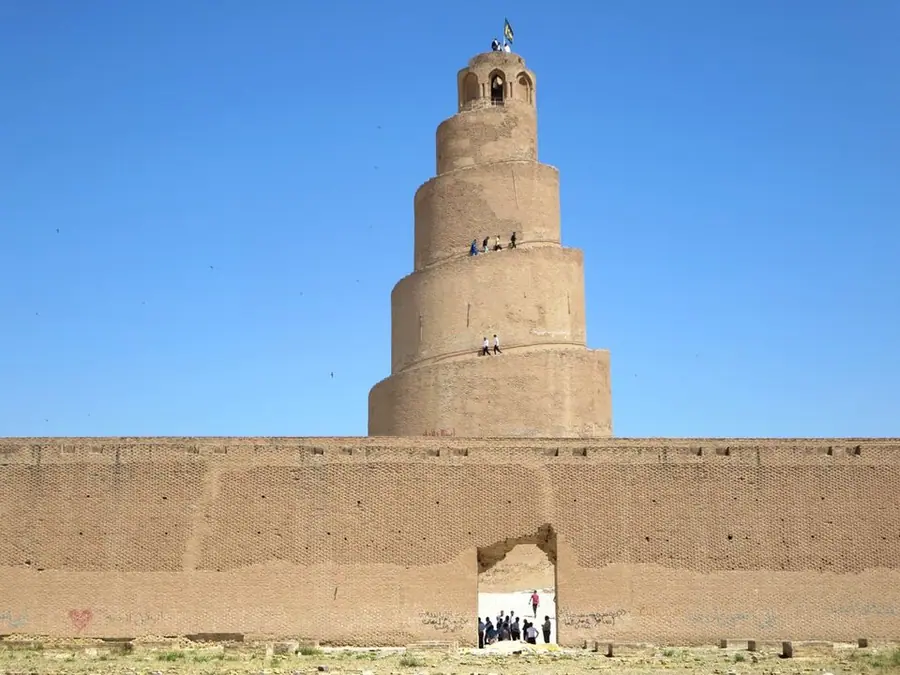
In 750 a revolution from the eastern province of Khurāsān replaced the Umayyad caliphs with the Abbasids, descendants of Muhammad’s uncle al-ʿAbbās, who built a new capital at Baghdad in 762. Their political empire began to break up within a century, but the next two and a half centuries were the years in which Islam took its classical shape. Scholars, not caliphs, built Islamic law out of the Qur’an and the reports of the Prophet’s practice, and organized themselves into the schools that still exist. The great hadith collections were compiled. A caliph’s attempt to impose a theological doctrine, the createdness of the Qur’an, failed, and the theologians who came after set out the positions Sunni Muslims still hold. And the followers of ʿAlī’s descendants became a separate community, with their own imams, law and books, divided among Twelvers, Ismāʿīlīs and Zaydīs, and by the tenth century ruling in Cairo and, behind the caliph, in Baghdad. Almost everything that later Muslims would call the tradition (sharia as a scholarly law, the canonical hadith, Sunni and Shia as names for communities) has its formative date here. Majority
This chapter follows those developments. The earlier civil wars and Karbalāʾ are in §4 and §5; the source problems of the hadith in §0; the mystics, who were also active in these centuries, in §7. Jewish and Christian life under the Abbasids is told from their side in Judaism §8 and Christianity §7.
Timeline
| Date | Event or evidence | Confidence |
|---|---|---|
| 747–750 | Revolt in Khurāsān under Abū Muslim; al-Saffāḥ proclaimed caliph at Kufa (749); the Umayyads defeated at the Zab (750)[1] | Consensus |
| 762 | al-Manṣūr founds Baghdad, the “City of Peace”[1] | Consensus |
| 765 | Death of Jaʿfar al-Ṣādiq, sixth imam; his followers divide over the succession[2][3] | Consensus |
| 767 | Death of Abū Ḥanīfa in Baghdad[4] | Consensus |
| mid-8th–late 10th c. | Greek science and philosophy translated into Arabic[5] | Consensus |
| 795 | Death of Mālik ibn Anas, author of the Muwaṭṭaʾ[6][4] | Consensus |
| 794–795 | Paper made in Baghdad[7] | Majority |
| 820 | Death of al-Shāfiʿī, author of the Risāla on legal theory[8][9] | Consensus |
| 833–c. 848 | The miḥna: judges and scholars must affirm that the Qur’an is created[10][11] | Consensus |
| 855 | Death of Aḥmad ibn Ḥanbal[12] | Consensus |
| c. 846; 870 | al-Bukhārī completes his Ṣaḥīḥ; dies 870[13][14] | Majority (completion date) |
| 874 | Death of the eleventh imam; beginning of the lesser occultation[2][15] | Consensus |
| 909–910 | The Ismāʿīlī Fatimids take Raqqāda in Ifrīqiya; ʿAbd Allāh al-Mahdī proclaimed caliph[3][16] | Consensus |
| c. 900–950 | The schools of law become organized, self-reproducing schools[12][4] | Majority |
| 935–936 | Death of al-Ashʿarī, founder of Ashʿarī theology[17] | Consensus |
| 941 | Death of the fourth agent; the complete occultation; al-Kulaynī’s al-Kāfī[18][19][2] | Consensus |
| 945 | The Buyids, Shia dynasty from Daylam, take Baghdad; the caliph becomes a figurehead[1] | Consensus |
| 963 | First public mourning for al-Ḥusayn on ʿĀshūrāʾ in Baghdad[2] | Majority |
| 969 | The Fatimids take Egypt and found Cairo[3] | Consensus |
A new dynasty and a new capital
The revolution
The Abbasid movement grew in secret among Arab settlers and converts in Khurāsān, in north-eastern Iran, and came into the open in 747 under the black banners of its commander Abū Muslim. It called for rule by “the one acceptable from the family of Muhammad”, a deliberately open phrase that drew supporters who expected a descendant of ʿAlī. In 749 the Abbasid Abū l-ʿAbbās, known as al-Saffāḥ, was proclaimed caliph in the mosque of Kufa, and in January 750 the last Umayyad caliph’s army was destroyed on the Great Zab river.[1] Consensus on the events. That the Abbasids then kept the caliphate in their own family, and later imprisoned or fought ʿAlī’s descendants, is part of why many of ʿAlī’s partisans came to see no caliph as legitimate (below). Majority
Baghdad
The second Abbasid caliph, al-Manṣūr (r. 754–775), founded a new capital on the Tigris in 762, near the old Persian capital of Ctesiphon, and named it Madīnat al-Salām, “the City of Peace”. Its original core was a circular palace-city; within a generation it was among the largest cities in the world.[1] Consensus The move from Syria to Iraq turned the caliphate eastward. The court adopted Persian forms of kingship and administration, Persian secretaries ran the government, and the Arab conquest elite gave way to a mixed Muslim society in which converts and their descendants were the majority of believers.[1][20] Majority Richard Bulliet, counting converts’ names in biographical dictionaries, estimated that most of the population of Iran became Muslim between the late eighth and the tenth century; the method is debated, but the slow pace of conversion is not.[20] Contested on the curve.
An empire that came apart
The empire reached its height under Hārūn al-Rashīd (r. 786–809). A civil war between his sons (811–813) brought al-Maʾmūn (r. 813–833) to power. The caliphs moved to a new capital at Samarra in 836 and back to Baghdad in 892. Meanwhile the provinces drifted away: an Umayyad survivor ruled al-Andalus from 756, and from the ninth century governors and soldiers founded their own dynasties in North Africa, Egypt, Iran and Central Asia. In 945 the Buyids, a Shia dynasty from the mountains of Daylam, took Baghdad and kept the Abbasid caliph as a figurehead.[1] Consensus
The decline of the caliph’s power is the background to everything else in this chapter. The institutions that held Islam together after 900 were not the caliphate’s but the scholars’: law, hadith, theology and education, transmitted from teacher to student across political borders. Majority
Books, paper and the translation movement
Between the mid-eighth and the late tenth century, a large part of the surviving Greek literature of science and philosophy was translated into Arabic: Aristotle and his commentators, Galen and Hippocrates, Euclid, Ptolemy and many others, often through Syriac. Dimitri Gutas, in Greek Thought, Arabic Culture (1998), argues that this was not the work of a single institution but a movement sustained for two centuries by the demand of caliphs, officials, physicians, astronomers and scholars, and that the early Abbasid court adopted a Sasanian ideology in which recovering ancient learning was a duty of kingship.[5] Majority He also doubts that the famous “House of Wisdom” (bayt al-ḥikma) was an academy or a translation bureau: the sources describe a palace library on the Persian model.[5] Majority
Many translators were Christians. The most famous, Ḥunayn ibn Isḥāq (809–873), a member of the Church of the East, translated Galen and Aristotle into Syriac and Arabic and wrote about his own methods of collating Greek manuscripts.[21][5] Consensus From the translated texts grew Arabic philosophy, beginning with al-Kindī in the ninth century, and the astronomy, medicine and mathematics that later reached Europe through Arabic (§8).
The movement was made easier by paper. A well-known story says that Chinese prisoners taken at the battle of Talas in 751 taught papermaking in Samarkand. Jonathan Bloom argues that the story is unlikely: paper was already in use in Central Asia before 751, and Islamic paper was made from rags, not the plant fibres of Chinese paper. What is clear is that paper was being made in Baghdad by the 790s and became the ordinary material of books and documents over the following century, far cheaper than parchment or papyrus.[7] Majority Paper is part of why the ninth and tenth centuries produced so many large books: hadith collections of thousands of reports, legal treatises, and the first great histories, among them al-Ṭabarī’s (d. 923).
Law: what sharia meant
The word and the idea
Sharīʿa originally means a path, especially the way to water. The Qur’an uses the noun once, of the way God has set for the Prophet: “Now We have set you [Muhammad] on a clear religious path, so follow it” (Q 45:18).[22] In Muslim scholarship it came to mean God’s law: the right way of acting, as God wills it. Scholars distinguished it from fiqh, “understanding”, the human effort to work out what that law requires in particular cases. Sharia is God’s; fiqh is the jurists’, and fallible.[23] Consensus on the distinction.
This matters for the modern question “What is sharia?” Historically, sharia was not a code issued by a ruler. It was a body of interpretation built by scholars, recorded in books that set out the opinions of different schools, often disagreeing with one another, and applied by judges (qāḍīs) who used it alongside custom and the ruler’s own regulations.[23][4] Majority Caliphs appointed judges; they did not write the law. When Ibn al-Muqaffaʿ (d. c. 757), a Persian secretary, urged al-Manṣūr to review the conflicting judgments of his judges and issue a single code, nothing came of it, and a widely reported story has a caliph ask Mālik to impose his book on the empire and Mālik decline.[24][6] Majority on the letter; Contested on the story. The first state codification of Islamic law in the form of a code came only with the Ottoman Mecelle of 1869–1876 (§10).
Where the law came from
Joseph Schacht (1950) argued that Islamic law grew out of the administrative practice of the Umayyad governors and the local customs of the conquered provinces, systematized in the eighth century by scholars in Kufa, Basra, Medina and Syria into a “living tradition” of each region, and only later attributed, through hadith, to the Prophet and his companions.[25] Majority that early law drew heavily on regional practice; Contested on how little of it goes back to the Prophet. Later historians, including Harald Motzki and Wael Hallaq, have argued that Schacht dated too much too late, and that legal thinking with a religious basis can be traced to the late seventh century.[26][4] Contested
Four jurists
The four men whose names the surviving Sunni schools bear all lived in the first Abbasid century.
- Abū Ḥanīfa (d. 767), a cloth merchant of Kufa, is remembered for using reasoned opinion (raʾy) and analogy (qiyās) where texts were silent. His legal doctrine is known mainly through the books of his students Abū Yūsuf (d. 798) and al-Shaybānī (d. 805), who served the Abbasid state as judges.[4] Consensus
- Mālik ibn Anas (d. 795) of Medina compiled the Muwaṭṭaʾ (“the well-trodden path”), the oldest surviving book of Islamic law, which sets out the practice (ʿamal) of Medina alongside reports from the Prophet, his companions and their successors. Fewer than half its reports go back to the Prophet himself.[6][4] Consensus
- Muḥammad ibn Idrīs al-Shāfiʿī (767–820), a student of Mālik who died in Egypt, wrote the Risāla, the first surviving work of legal theory. He argued that the Prophet’s sunna, known through reports with sound chains back to him, was binding alongside the Qur’an and took precedence over local practice and the opinions of later authorities; that the Qur’an itself commands obedience to the Messenger (Q 4:59, 59:7); and that where texts were silent, the jurist should reason by analogy from them.[8][9][27][28] Consensus on the argument.
- Aḥmad ibn Ḥanbal (780–855) of Baghdad was above all a collector of hadith, whose Musnad arranges tens of thousands of reports by the companion who transmitted them, and who distrusted reasoned opinion. He became famous for his stand in the miḥna (below).[12] Consensus
al-Shāfiʿī’s insistence on prophetic hadith changed the shape of Islamic law. Wael Hallaq argued in 1993, however, that his synthesis had little following in his lifetime and for most of a century after it, and that the discipline of legal theory (uṣūl al-fiqh) took shape only around the turn of the tenth century, among Shāfiʿī scholars who then made him its founder.[29] Majority
When “schools” became schools
The jurists’ followers did not at first form schools in the later sense. Christopher Melchert showed that the regional “ancient schools” of the eighth century gave way, between about 870 and 950, to personal schools organized around the doctrine of an eponymous founder, with a recognized body of texts, commentaries and teachers who certified students, so that a jurist became a Ḥanafī or a Shāfiʿī by training.[12] Majority The founders’ authority was in part built after their deaths, as later members attributed the school’s whole doctrine to them.[4] Majority Other schools existed and later died out: those of the Syrian al-Awzāʿī (d. 774), of the historian al-Ṭabarī, and the literalist Ẓāhirī school of Dāwūd ibn Khalaf (d. 884).[12] Consensus By about 1100 almost every Sunni jurist belonged to one of four. Shia jurists developed their own law, the Twelvers’ known as Jaʿfarī after the sixth imam.[2] Consensus
The hadith canon
The collections
The ninth century was the age of the great hadith collections. Muḥammad ibn Ismāʿīl al-Bukhārī (810–870), from Bukhara, travelled across the empire and selected for his Ṣaḥīḥ only reports he judged sound by his criteria: about 7,500 with repetitions, roughly 2,600 without. Its full title describes it as a collection of the “affairs of the Messenger of God, his practices and his days”. Muslim ibn al-Ḥajjāj (d. 875) of Nishapur compiled the other Ṣaḥīḥ.[13][14] Consensus Four further collections, arranged by legal topic, followed: those of Abū Dāwūd (d. 889), al-Tirmidhī (d. 892), Ibn Māja (d. 887) and al-Nasāʾī (d. 915).[30] Consensus
How these collections were made, and how modern historians judge the reports in them, is set out in §0. What belongs here is how they became a canon.
How they became canonical
Being compiled did not make these books authoritative. Jonathan A. C. Brown showed that al-Bukhārī’s and Muslim’s collections were recognized as Sunni Islam’s most reliable books after the Qur’an only gradually, over the tenth and eleventh centuries, largely through the work of Shāfiʿī scholars who wrote supplements and commentaries on them and used them as a common standard in debate with other schools.[14] Majority The grouping of “six books” was first made around 1100 by Ibn al-Qaysarānī (d. 1113), who included Ibn Māja’s Sunan.[30] Majority Canonical status did not end criticism: scholars continued to discuss weak reports in both Ṣaḥīḥs, while treating the books as a whole as authoritative.[14] Majority
Shia scholars built a separate corpus, transmitted through the imams. The first of their four canonical books, Muḥammad ibn Yaʿqūb al-Kulaynī’s al-Kāfī, with more than 16,000 reports, was finished about 941; the others are by Ibn Bābawayh (d. 991) and al-Ṭūsī (d. 1067). Twelver scholars do not regard every report in them as sound.[19][2] Consensus The existence of two hadith literatures, each with its own transmitters, is one of the clearest marks of two communities. Majority
Theology: the created Qur’an
The Muʿtazila
In the eighth century, Muslims began to argue systematically about God, using the methods of disputation (kalām) that Christians and others also practised. The most influential school, the Muʿtazila, traced itself to Wāṣil ibn ʿAṭāʾ (d. 748) of Basra. Its members held that reason and revelation could not conflict; that God is one in a strict sense, so that his attributes are not separate eternal things beside him; that God is just and humans are responsible for their own acts; and that the Qur’an, as God’s speech, was created in time, not eternal.[17][31] Consensus on the positions. To the traditionists, the “people of hadith”, an uncreated Qur’an was part of the faith, and to call it created was to make God’s word a creature. Consensus
The miḥna, 833–c. 848
In 833, four months before his death, the caliph al-Maʾmūn ordered his governor in Baghdad to test the judges and leading scholars on the question, and to remove those who would not affirm that the Qur’an was created. His letters, preserved by al-Ṭabarī, present the caliph as the guardian of the community’s faith against ignorant traditionists.[10] Consensus His successors al-Muʿtaṣim (r. 833–842) and al-Wāthiq (r. 842–847) continued the test. Most scholars complied. Aḥmad ibn Ḥanbal refused, was imprisoned, and under al-Muʿtaṣim was flogged until he lost consciousness; public anger in Baghdad led to his release.[12][11] Majority on the details. al-Mutawakkil (r. 847–861) abandoned the policy, and by about 851 the opposite doctrine, that the Qur’an is uncreated, had become the official one.[11] Consensus
Why al-Maʾmūn began it is debated, and John Nawas’s reexamination of the explanations then current showed how little any single one of them settles.[11] Patricia Crone and Martin Hinds argued that the early caliphs had claimed religious authority as “God’s caliph” and that the miḥna was the last serious attempt to hold it, against the scholars who were claiming that authority for themselves.[32] Contested What is not debated is the outcome: from the mid-ninth century, doctrine in Sunni Islam was settled by scholars, not by the caliph. Consensus
Ashʿarīs and Māturīdīs
The Muʿtazila lost their court patronage but not their influence. Their methods passed into the Sunni theology that defeated them. Abū l-Ḥasan al-Ashʿarī (874–935/6), a student of the Muʿtazilī al-Jubbāʾī in Basra, broke with his teacher around the age of forty and used kalām to defend traditionist positions: an uncreated Qur’an, God’s eternal attributes, and God as the creator of all acts, including human ones.[17][33] Consensus In Samarkand, the Ḥanafī Abū Manṣūr al-Māturīdī (d. 944) reached similar conclusions with more room for human freedom. The Ashʿarī and Māturīdī schools became the two main forms of Sunni theology; Ḥanbalīs continued to distrust kalām altogether.[17] Majority Muʿtazilī theology survived among the Zaydī and Twelver Shia, and among Jewish thinkers: Saadia Gaon (d. 942) built Jewish theology on its arguments (Judaism §8).[34][35] Consensus
How Sunni and Shia became separate communities
The dispute over the leadership of the community is as old as the first civil war, and Karbalāʾ in 680 gave it its central story (§4, §5). But for most of the first Islamic century, “Shia” (shīʿat ʿAlī, “ʿAlī’s party”) described a political loyalty more than a separate religious community, and “Sunni” did not yet exist as a name. Both took shape as communities between the eighth and tenth centuries.[36][2] Majority
The imams
For those who held that leadership belonged to ʿAlī’s descendants, the Abbasid revolution was a betrayal. Under the sixth imam, Jaʿfar al-Ṣādiq (d. 765) of Medina, who stayed out of politics, a body of teaching took shape: that God designates each imam through his predecessor (naṣṣ), that the imam has a special knowledge of religion, and that the community owes its obedience to him rather than to any caliph. Marshall Hodgson argued in 1955 that this was the moment when the Shia became a sect in the full sense, a community defined by its own doctrine of authority.[36] Majority Jaʿfar was also respected by Sunni scholars, and Mālik transmitted reports from him in the Muwaṭṭaʾ. Consensus
The succession after Jaʿfar divided his followers. Most accepted his son Mūsā al-Kāẓim (d. 799) and the line after him: ʿAlī al-Riḍā (d. 818), whom al-Maʾmūn named as his heir in 817 in a short-lived attempt at reconciliation; Muḥammad al-Jawād; ʿAlī al-Hādī; and al-Ḥasan al-ʿAskarī.[2] Consensus Others followed the line of Jaʿfar’s son Ismāʿīl and his son Muḥammad: the Ismāʿīlīs.[3] Consensus
The occultation
When the eleventh imam, al-Ḥasan al-ʿAskarī, died in Samarra in 874 (260 AH), his followers fell into what their own sources call ḥayra, “perplexity”. Some denied that he had died, some followed his brother, some held that he had left no son. The group that became the Twelvers held that he had a young son, Muḥammad, whom God had hidden.[15][2] Consensus that the community divided; the existence of the son is a matter of faith on which historians cannot rule.
For about seventy years four agents (nuwwāb) in succession were believed to carry letters between the hidden imam and his followers: the lesser occultation. In 941 (329 AH), the fourth agent, ʿAlī ibn Muḥammad al-Samarrī, is said to have received a final letter telling him that he would die within six days, that he should appoint no successor, and that the complete occultation had begun, to last until God permitted the imam to return.[18][2] Majority on the report. The hidden imam is identified with the Mahdī, who will return to fill the earth with justice. Hossein Modarressi has traced how Twelver scholars of the late ninth and tenth centuries consolidated the doctrine of twelve imams out of this crisis.[15] Majority In the absence of the imam, authority passed to scholars, a development whose political consequences reach to Iran in 1979 (§12). Majority
Ismāʿīlīs and the Fatimids
The Ismāʿīlīs organized a secret mission (daʿwa) that sent missionaries from Iraq and Syria to Yemen, North Africa and Iran. In the 890s the missionary Abū ʿAbd Allāh al-Shīʿī won over the Kutāma Berbers of what is now Algeria; in 909 their army took Raqqāda, the capital of Ifrīqiya, and in January 910 ʿAbd Allāh al-Mahdī was proclaimed caliph, claiming descent from Ismāʿīl and ʿAlī: a rival caliphate to Baghdad’s.[3][16] Consensus In 969 the Fatimids conquered Egypt and founded a new capital, al-Qāhira, Cairo, with the al-Azhar mosque completed by 972. Most of their subjects remained Sunni.[3] Consensus A separate Ismāʿīlī group, the Qarmaṭīs of eastern Arabia, sacked Mecca in 930 and carried off the Black Stone of the Kaʿba, which was returned only in 951.[3] Consensus
Zaydīs
A third branch followed Zayd ibn ʿAlī, a grandson of al-Ḥusayn who rose against the Umayyads in Kufa and was killed in 740. Zaydīs hold that any qualified descendant of ʿAlī and Fāṭima who rises against injustice may be imam, rather than a line designated in advance. They founded states on the Caspian coast in 864 and in northern Yemen in the 890s, where Zaydī imams ruled, with interruptions, until 1962. Their theology stayed close to the Muʿtazila.[2] Consensus
“Sunni”
The other side of the division took shape at the same time. The phrase ahl al-sunna wa-l-jamāʿa, “the people of the Prophet’s practice and of the community”, came into use for those who rejected both the Shia doctrine of the imamate and the Muʿtazila, and who held the hadith, as transmitted by the scholars, to be the guide to the Prophet’s practice. In the ninth century the traditionists around Ibn Ḥanbal came to accept all four of the first caliphs, ʿAlī included, as rightly guided, a position that became the Sunni consensus.[24][12] Majority Muhammad Qasim Zaman has argued that the early Abbasid caliphs, far from opposing these “proto-Sunni” scholars, cultivated them, and that the miḥna was an exception in a long relationship of cooperation.[24] Majority
Two communities in the streets
By the tenth century the division was visible in public. The Buyids, who took Baghdad in 945, were Shia rulers of a mostly Sunni city under a Sunni caliph. In 963 their ruler Muʿizz al-Dawla had the markets closed on ʿĀshūrāʾ, the anniversary of Karbalāʾ, and Shia mourners processed through the streets in black; a festival of Ghadīr Khumm, celebrating the Prophet’s reported designation of ʿAlī, followed. Sunni counter-commemorations and riots between quarters became a feature of Baghdad’s life.[2][1] Majority With a Shia caliph in Cairo and a Shia dynasty in Baghdad, the tenth century is sometimes called the “Shiʿi century”; the Sunni revival that answered it is §8. Majority
Jews and Christians in Abbasid society
The Abbasid caliphate was not yet a majority-Muslim society in most of its lands for much of this period. Jews and Christians lived as dhimmīs, protected subjects who paid the poll tax (jizya). The document known as the Pact of ʿUmar, which listed the restrictions on them, was formalized as a canonical text under the early Abbasids, in Milka Levy-Rubin’s account, though it is attributed to the second caliph.[37][38] Majority Enforcement varied: the caliph al-Mutawakkil issued decrees on distinctive dress and against new places of worship in 850, but non-Muslims served throughout this period as physicians, secretaries and officials.[39] Majority
The patriarch of the Church of the East, Timothy I (780–823), moved his seat to Baghdad and, around 782, debated the caliph al-Mahdī on the Trinity and on Muhammad, writing the exchange up as a model of courteous disputation (Christianity §7).[40][21] Majority The academies of the Babylonian geonim moved to Baghdad, from which they answered questions from Jewish communities across the Islamic world, and Saadia Gaon wrote Jewish theology in Arabic on the model of kalām (Judaism §8).[41][34] Consensus Christian, Jewish and Muslim scholars argued with one another in Arabic, in a shared intellectual world. Majority
The evidence
| Question | What the evidence supports | Key evidence | Confidence |
|---|---|---|---|
| Sharia | A scholars’ law built between the eighth and tenth centuries, not a ruler’s code | The Muwaṭṭaʾ, the Risāla, the school literature[6][8][23] | Majority |
| The schools | Regional traditions became organized personal schools c. 870–950 | Biographical and legal literature[12][4] | Majority |
| al-Shāfiʿī’s theory | Prophetic hadith as binding law; influential mainly from c. 900 | The Risāla; later legal theory[8][29] | Majority |
| The hadith canon | Compiled 9th c.; canonical over the 10th–11th c. | The Ṣaḥīḥs and their commentaries[13][14] | Majority |
| The miḥna | A caliphal test of doctrine, 833–c. 848, that failed | al-Maʾmūn’s letters in al-Ṭabarī[10][11] | Consensus |
| Sunni theology | Ashʿarī and Māturīdī kalām in defence of traditionist positions | al-Ashʿarī’s works[33][17] | Consensus |
| Twelver Shiʿism | A community consolidated after the crisis of 874 | Shia hadith and the agents’ letters[15][18] | Majority |
| Ismāʿīlī caliphate | Fatimid caliphs from 909–910, in Cairo from 969 | Chronicles; Ismāʿīlī literature[3][16] | Consensus |
| Public sectarian ritual | Shia ʿĀshūrāʾ processions in Baghdad from 963 | Chronicles of the Buyid period[2] | Majority |
Primary sources
Show the 8 primary sources
1. The one “sharīʿa” of the Qur’an: Q 45:18
thumma jaʿalnāka ʿalā sharīʿatin mina l-amri fa-ttabiʿhā wa-lā tattabiʿ ahwāʾa lladhīna lā yaʿlamūn
“Now We have set you [Muhammad] on a clear religious path, so follow it. Do not follow the desires of those who lack [true] knowledge.” (trans. Abdel Haleem)[22][42]
What it proves. That the word later used for God’s law appears in the Qur’an as a “path” set by God, not as a body of rules. The law the word came to name was worked out by scholars over the following three centuries. Consensus
2. “Obey God and the Messenger”: Q 4:59 and 59:7
yā-ayyuhā lladhīna āmanū aṭīʿū llāha wa-aṭīʿū l-rasūla wa-ulī l-amri minkum, fa-in tanāzaʿtum fī shayʾin fa-ruddūhu ilā llāhi wa-l-rasūl
“You who believe, obey God and the Messenger, and those in authority among you. If you are in dispute over any matter, refer it to God and the Messenger.” (4:59)
wa-mā ātākumu l-rasūlu fa-khudhūhu wa-mā nahākum ʿanhu fa-ntahū
“Accept whatever the Messenger gives you, and abstain from whatever he forbids you.” (59:7)[27][28]
What it proves. The Qur’anic basis on which al-Shāfiʿī argued that the Prophet’s practice, known through hadith, is binding law alongside the Qur’an. In their own context, 59:7 concerns the division of spoils; its use as a general principle is the jurists’ reading. Consensus on the text; Majority on its later use.
3. A theory of law: al-Shāfiʿī’s Risāla, before 820
Summarized here rather than quoted. The Risāla argues that God’s law is known from the Qur’an and from the Prophet’s sunna, which the Qur’an itself commands believers to follow; that a report with a sound chain of transmission back to the Prophet must be accepted even if local practice or later authorities say otherwise; that the consensus of the community binds; and that where these are silent the jurist reasons by analogy (qiyās), not by unfettered opinion.[8][9]
What it proves. The earliest surviving systematic argument for the place of prophetic hadith in law. It shows that the authority of hadith over the regional traditions had to be argued for around 800. Its slow reception is the subject of a debate (above, and Debates). Consensus on the argument; Majority on its reception.
4. The title of al-Bukhārī’s book, c. 846
al-Jāmiʿ al-ṣaḥīḥ al-mukhtaṣar min umūr rasūl Allāh ṣallā llāhu ʿalayhi wa-sallam wa-sunanihi wa-ayyāmihi
“The abridged sound collection concerning the affairs of the Messenger of God, may God bless him and grant him peace, his practices and his days.”[13]
What it proves. That the compiler presented his book as a selection of sound reports, chosen by criteria of transmission, and organized around the Prophet’s life and practice. The honorific is part of the title and is kept in the quotation. Its status as the most authoritative book after the Qur’an came later (above). Consensus
5. The caliph’s test: al-Maʾmūn’s letters, 833
Preserved in al-Ṭabarī’s history and summarized here. The caliph instructs his governor in Baghdad to assemble the judges and question them on whether the Qur’an is created; to dismiss those who will not affirm it; and to forbid judges from accepting the testimony of those who refuse. The letters describe the caliph as responsible before God for the faith of the community and its scholars as liable to error.[10][11]
What it proves. That in 833 a caliph claimed the authority to define a doctrine and to make public office depend on it, and that he enforced it through the judiciary. Its failure within two decades is the decisive evidence that this authority had passed to the scholars. Consensus
6. “The complete occultation has occurred”: the last letter to al-Samarrī, 941
fa-qad waqaʿati l-ghaybatu l-tāmma
“…for the complete occultation has occurred.”[18]
The rest of the letter, as transmitted by Ibn Bābawayh (d. 991), tells al-Samarrī that he will die within six days and must appoint no successor, and that the imam will not appear again until God permits.
What it proves. How Twelver tradition dated the end of direct contact with the hidden imam, and how it explained the end of the line of agents. It is a text of faith, transmitted by the community that it defined; it does not prove the imam’s existence, and historians do not ask it to. Majority on its date of transmission.
7. The caliph’s dream of Aristotle: Ibn al-Nadīm, Fihrist, 987
Summarized here. Ibn al-Nadīm, a Baghdad bookseller, reports that al-Maʾmūn dreamed of a dignified man who said he was Aristotle, asked him what is good, and was told: what is good according to reason, then according to religious law, then according to public opinion; and that this dream was a reason for the caliph’s patronage of translation.[43][44]
What it proves. Not that the dream happened, but how the Abbasid court and its admirers wanted the translation movement to be understood: as caliphal policy, with reason placed first. Gutas reads the story as propaganda connected with al-Maʾmūn’s other claims to religious authority.[5] Majority
8. The oldest book of law: Mālik’s Muwaṭṭaʾ, before 795
Summarized here. The Muwaṭṭaʾ treats prayer, fasting, pilgrimage, trade, marriage and other topics, setting out for each the reports of the Prophet, the opinions of his companions and their successors, and “the practice among us” in Medina, which Mālik often treats as decisive.[6]
What it proves. That in the late eighth century the leading scholar of Medina grounded law in the living practice of his city as much as in reports from the Prophet: the position al-Shāfiʿī would argue against. Consensus
What is absent
- A legal code. No caliph issued a code of Islamic law; the law exists as scholars’ books. The first state code is Ottoman, of 1869–1876. Consensus
- Schools in the founders’ lifetimes. None of the four eponyms founded an organized school; the schools formed decades after them. Majority
- A closed canon of hadith. The “six books” were not grouped until about 1100, and the status of al-Bukhārī and Muslim was built over two centuries. Majority
- A Muslim majority everywhere. In many provinces Christians, Jews and Zoroastrians remained numerous throughout the period. Majority
- “Sunni” as a name before the ninth century. Neither the word nor the community it names is attested in the eighth century in its later sense. Majority
- The House of Wisdom as an academy. The sources describe a palace library, not a university or translation institute. Majority
Debates
Where did Islamic law come from?
| View | Position | Main proponents |
|---|---|---|
| From the Prophet, through the companions | Law was derived from the Qur’an and the Prophet’s practice from the start, as the tradition holds | Classical Muslim scholarship; Brown on its methods[30] |
| From regional practice, attributed later | Umayyad administration and local custom, projected back onto the Prophet through hadith | Schacht[25] |
| A religious law from the late seventh century | Some legal doctrine with a religious basis can be dated well before Schacht allowed | Motzki; Hallaq[26][4] |
Contested
Was al-Shāfiʿī the founder of legal theory?
The tradition makes him the founder of uṣūl al-fiqh. Hallaq argued that his work was unique in its time and found few followers for nearly a century, and that legal theory as a discipline began around 900, when later Shāfiʿīs made him their founder.[29] Majority
Why did al-Maʾmūn begin the miḥna?
Explanations include his sympathy with Muʿtazilī theology, a bid to bring the scholars under the caliph’s authority, and the defence of the caliph’s claim to religious leadership.[11][32][24] Contested on his motives; Consensus on the outcome.
When did Sunni and Shia become separate?
Some date the decisive break to Karbalāʾ (680); Hodgson to the imamate doctrine of Jaʿfar al-Ṣādiq’s time; others to the tenth century, when separate law, hadith and public ritual made two communities visible.[36][2][15] Contested on the date; Majority that communal separation was a process over these centuries.
Further reading
Show further reading (12 works)
- Hugh Kennedy, The Prophet and the Age of the Caliphates (2nd ed., Pearson, 2004): the political history.
- Wael B. Hallaq, The Origins and Evolution of Islamic Law (Cambridge, 2005), and An Introduction to Islamic Law (Cambridge, 2009).
- Christopher Melchert, The Formation of the Sunni Schools of Law, 9th–10th Centuries C.E. (Brill, 1997).
- Jonathan A. C. Brown, The Canonization of al-Bukhārī and Muslim (Brill, 2007).
- Joseph E. Lowry, ed. and trans., al-Shāfiʿī, The Epistle on Legal Theory (New York University Press, 2013).
- Dimitri Gutas, Greek Thought, Arabic Culture (Routledge, 1998).
- W. Montgomery Watt, The Formative Period of Islamic Thought (Edinburgh, 1973).
- Moojan Momen, An Introduction to Shiʿi Islam (Yale, 1985).
- Farhad Daftary, The Ismāʿīlīs: Their History and Doctrines (2nd ed., Cambridge, 2007).
- Hossein Modarressi, Crisis and Consolidation in the Formative Period of Shīʿite Islam (Darwin, 1993).
- Muhammad Qasim Zaman, Religion and Politics under the Early ʿAbbāsids (Brill, 1997).
- Jonathan M. Bloom, Paper before Print (Yale, 2001).
References
- ^ a b c d e f g h Hugh Kennedy The Prophet and the Age of the Caliphates. Longman, 1986. Standard political history of the Near East from Muhammad to the eleventh century.
- ^ a b c d e f g h i j k l m n Moojan Momen An Introduction to Shiʿi Islam: The History and Doctrines of Twelver Shiʿism. Yale University Press, 1985. The standard introduction to Twelver history and doctrine.
- ^ a b c d e f g h Farhad Daftary The Ismāʿīlīs: Their History and Doctrines. Cambridge University Press, 2nd ed., 2007. The standard history of the Ismāʿīlīs, including the Fatimids and Qarmaṭīs.
- ^ a b c d e f g h i j Wael B. Hallaq The Origins and Evolution of Islamic Law. Cambridge University Press, 2005. How Islamic law took shape from the late seventh to the tenth century, against Schacht's late dating.
- ^ a b c d e Dimitri Gutas Greek Thought, Arabic Culture: The Graeco-Arabic Translation Movement in Baghdad and Early ʿAbbāsid Society. Routledge, 1998. The translation movement as a social and political phenomenon; doubts the House of Wisdom as an academy.
- ^ a b c d e Mālik ibn Anas, al-Muwaṭṭaʾ — Mālik ibn Anas, al-Muwaṭṭaʾ (recension of Yaḥyā ibn Yaḥyā al-Laythī). before 795 CE. Arabic. The oldest surviving book of Islamic law: reports of the Prophet, companions and successors set beside the practice of Medina. read the text
- ^ a b Jonathan M. Bloom Paper before Print: The History and Impact of Paper in the Islamic World. Yale University Press, 2001. Doubts the Talas story; paper in Baghdad by the 790s.
- ^ a b c d e al-Shāfiʿī, al-Risāla — Muḥammad ibn Idrīs al-Shāfiʿī, The Epistle on Legal Theory. before 820 CE. Arabic. The first surviving work of Islamic legal theory: the Prophet's sunna, known by soundly transmitted reports, is binding alongside the Qur'an; consensus and analogy follow. about
- ^ a b c Joseph E. Lowry, ed. and trans. al-Shāfiʿī, The Epistle on Legal Theory (al-Risāla). New York University Press (Library of Arabic Literature), 2013. Arabic text and English translation of the Risāla.
- ^ a b c d al-Ṭabarī, Taʾrīkh, the letters of al-Maʾmūn on the miḥna (year 218 AH) — al-Ṭabarī, The History of al-Ṭabarī, vol. 32, trans. C. E. Bosworth. 833 CE (letters); early 10th c. (history). Arabic. al-Maʾmūn orders his governor in Baghdad to test judges and scholars on the createdness of the Qur'an and to dismiss those who refuse. about
- ^ a b c d e f g John A. Nawas A Reexamination of Three Current Explanations for al-Maʾmun's Introduction of the Miḥna. International Journal of Middle East Studies 26:4, 615–629, 1994. Weighs the explanations for the miḥna; sees in it the caliph's claim to religious authority.
- ^ a b c d e f g h Christopher Melchert The Formation of the Sunni Schools of Law, 9th–10th Centuries C.E.. Brill, 1997. Dates the organized personal schools of law to c. 870–950.
- ^ a b c d al-Bukhārī, al-Jāmiʿ al-ṣaḥīḥ — Ṣaḥīḥ al-Bukhārī. compiled before 870 CE. Arabic. The most authoritative Sunni hadith collection, made with the classical tools of isnād criticism. read the text
- ^ a b c d e Jonathan A. C. Brown The Canonization of al-Bukhārī and Muslim: The Formation and Function of the Sunnī Ḥadīth Canon. Brill, 2007. How the two Ṣaḥīḥs became canonical over the tenth and eleventh centuries.
- ^ a b c d e Hossein Modarressi Crisis and Consolidation in the Formative Period of Shīʿite Islam. Darwin Press, 1993. How Twelver doctrine was consolidated after the crisis of 874.
- ^ a b c Heinz Halm The Empire of the Mahdi: The Rise of the Fatimids. Brill, 1996. The Ismāʿīlī mission and the founding of the Fatimid caliphate in North Africa.
- ^ a b c d e W. Montgomery Watt The Formative Period of Islamic Thought. Edinburgh University Press, 1973. The sects and theological schools of the first four Islamic centuries.
- ^ a b c d Ibn Bābawayh, Kamāl al-dīn wa-tamām al-niʿma, the final letter to al-Samarrī — Ibn Bābawayh (al-Shaykh al-Ṣadūq), Kamāl al-dīn. 941 CE (letter); late 10th c. (compilation). Arabic. The hidden imam's last letter to his fourth agent: he will die in six days, appoint no successor, and 'the complete occultation has occurred'. about
- ^ a b al-Kulaynī, al-Kāfī — Muḥammad ibn Yaʿqūb al-Kulaynī, al-Kāfī. completed c. 941 CE. Arabic. The first of the four canonical Twelver hadith books, with more than 16,000 reports transmitted through the imams. about
- ^ a b Richard W. Bulliet Conversion to Islam in the Medieval Period: An Essay in Quantitative History. Harvard University Press, 1979. The onomastic S-curve of conversion.
- ^ a b Sidney H. Griffith The Church in the Shadow of the Mosque: Christians and Muslims in the World of Islam. Princeton University Press, 2008. Christian Arabic thought and life under the early caliphates.
- ^ a b Qurʾan 45:18 — The Qur'an. c. 610–632 CE. Arabic. 'We have set you on a clear religious path (sharīʿa), so follow it': the Qur'an's one use of the noun sharīʿa. read the text
- ^ a b c Wael B. Hallaq An Introduction to Islamic Law. Cambridge University Press, 2009. Sharia as a jurists' law rather than a state code, and its transformation in modernity.
- ^ a b c d Muhammad Qasim Zaman Religion and Politics under the Early ʿAbbāsids: The Emergence of the Proto-Sunnī Elite. Brill, 1997. The cooperation of early Abbasid caliphs with the scholars who became Sunni orthodoxy.
- ^ a b Joseph Schacht The Origins of Muhammadan Jurisprudence. Clarendon Press, 1950. Legal hadith and the argument that isnāds 'grew backwards'.
- ^ a b Harald Motzki The Origins of Islamic Jurisprudence: Meccan Fiqh before the Classical Schools. Brill, 2002. Isnād-cum-matn analysis tracing material in ʿAbd al-Razzāq's collection to the late seventh century (German original 1991).
- ^ a b Qurʾan 4:59 — The Qur'an. c. 622–632 CE. Arabic. 'Obey God and the Messenger, and those in authority among you'; disputes are to be referred to God and the Messenger. read the text
- ^ a b Qurʾan 59:7 — The Qur'an. c. 622–632 CE. Arabic. 'Accept whatever the Messenger gives you, and abstain from whatever he forbids you', in a verse on the division of gains. read the text
- ^ a b c Wael B. Hallaq Was al-Shafiʿi the Master Architect of Islamic Jurisprudence?. International Journal of Middle East Studies 25:4, 587–605, 1993. Argues that al-Shāfiʿī's synthesis found few followers until legal theory emerged around 900.
- ^ a b c Jonathan A. C. Brown Hadith: Muhammad's Legacy in the Medieval and Modern World. Oneworld, 2009. The hadith and their critics, Muslim and Western.
- ^ Josef van Ess Theologie und Gesellschaft im 2. und 3. Jahrhundert Hidschra. Walter de Gruyter, 6 vols., 1991. The monumental history of early Islamic theology; English translation from 2017.
- ^ a b Patricia Crone and Martin Hinds God's Caliph: Religious Authority in the First Centuries of Islam. Cambridge University Press, 1986. The caliph as 'God's deputy' with religious authority, later ceded to the scholars.
- ^ a b al-Ashʿarī, Maqālāt al-islāmiyyīn — Abū l-Ḥasan al-Ashʿarī, Maqālāt al-islāmiyyīn. before 936 CE. Arabic. A survey of the opinions of Muslim sects and theologians by the founder of Ashʿarī theology, a former Muʿtazilī. about
- ^ a b Saadia Gaon, Book of Beliefs and Opinions — Kitāb al-Amānāt wa-l-Iʿtiqādāt (Hebrew: Emunot ve-Deʿot). 933 CE. Judeo-Arabic. The first systematic Jewish theology, using the methods of Muslim kalām. III.7: "our nation is a nation only by virtue of its laws", against the claim that the Torah had been abrogated. read the text
- ^ Samuel Rosenblatt, trans. Saadia Gaon: The Book of Beliefs and Opinions. Yale University Press, 1948. The complete English translation, from the Arabic.
- ^ a b c Marshall G. S. Hodgson How Did the Early Shîʿa Become Sectarian?. Journal of the American Oriental Society 75:1, 1–13, 1955. Places the Shia's emergence as a sect in the doctrine of the imamate of Jaʿfar al-Ṣādiq's time.
- ^ Pact of Umar (al-Ṭurṭūshī, Sirāj al-Mulūk) — Pact of Umar (Shurūṭ ʿUmar). 9th c. CE (form); attributed to Umar I, 634–644. Arabic. Conditions on non-Muslim subjects, framed as a letter from Christians to the caliph Umar: no new churches or synagogues, distinctive dress, no riding on saddles or bearing arms. Surviving versions are later than Umar; a legal ideal, enforced unevenly. about
- ^ Milka Levy-Rubin Non-Muslims in the Early Islamic Empire: From Surrender to Coexistence. Cambridge University Press, 2011. Traces the Pact of Umar to conquest-era surrender treaties and Byzantine and Sasanian models.
- ^ Mark R. Cohen Under Crescent and Cross: The Jews in the Middle Ages. Princeton University Press, 1994. Compares Jewish life under Islam and Latin Christendom, between the myth of an interfaith utopia and its counter-myth.
- ^ Timothy I, Dialogue with the caliph al-Mahdi — Apology of Timothy the Patriarch before the caliph Mahdi. c. 782 CE. Syriac (and Arabic). The patriarch's written account of his debate with the caliph on the Trinity and on Muhammad. about
- ^ Robert Brody The Geonim of Babylonia and the Shaping of Medieval Jewish Culture. Yale University Press, 1998. The standard account of the geonim: academies, responsa, codes and their rivals.
- ^ M. A. S. Abdel Haleem The Qur'an: A New Translation. Oxford University Press (Oxford World's Classics), 2004. The translation quoted in the Islam series unless stated.
- ^ Ibn al-Nadīm, Fihrist (al-Maʾmūn's dream of Aristotle) — Ibn al-Nadīm, al-Fihrist. 987 CE. Arabic. al-Maʾmūn dreams that Aristotle tells him the good is what reason approves, then religious law, then public opinion; given as a cause of the translations. about
- ^ Bayard Dodge, ed. and trans. The Fihrist of al-Nadīm: A Tenth-Century Survey of Muslim Culture. Columbia University Press, 2 vols., 1970. English translation of Ibn al-Nadīm's catalogue of books.