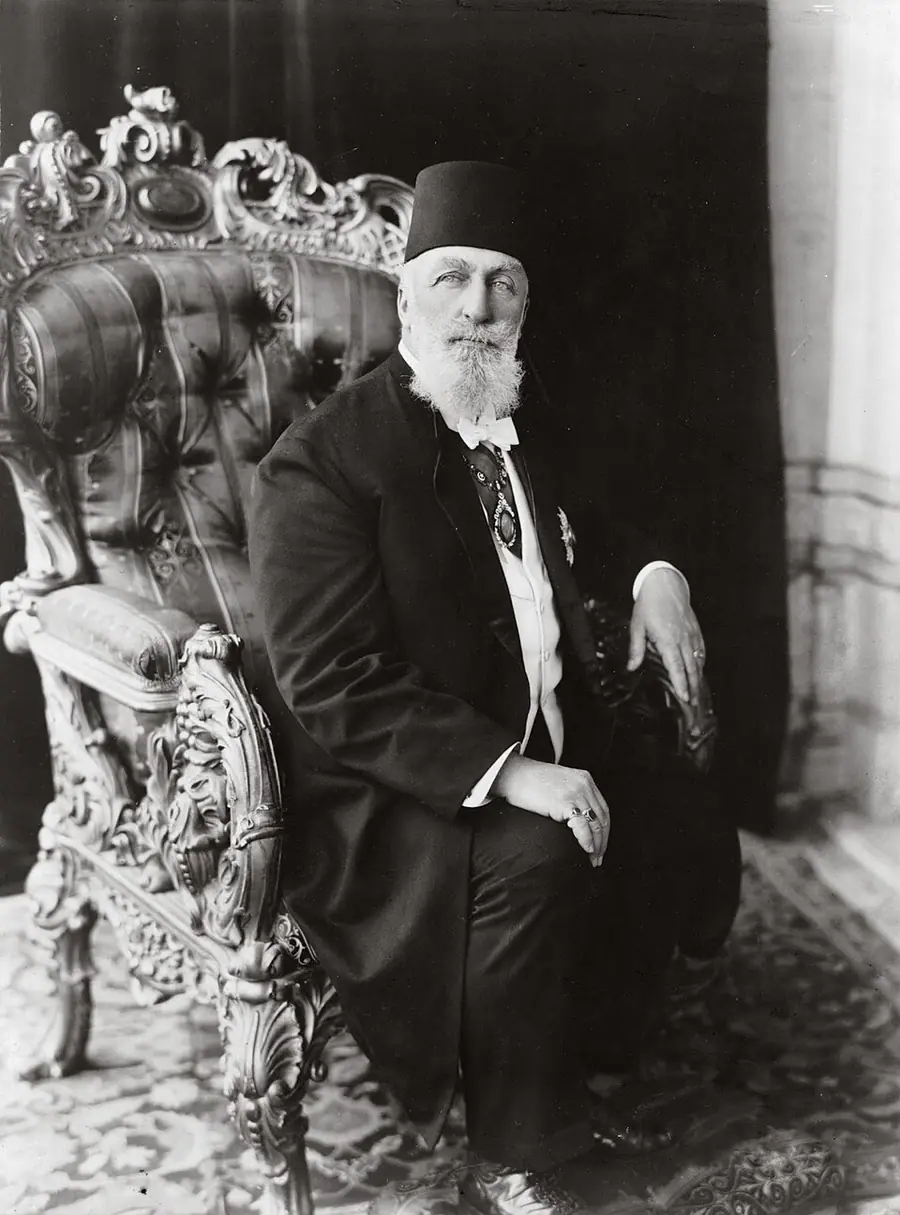
In 1924 the new Turkish republic abolished the caliphate, ending an office that Muslims had held, at least in name, since the death of Muhammad. Within a few years almost every Muslim land was either ruled by a European empire or by a new state that intended to remake religion from above. Atatürk’s Turkey closed the Sufi lodges and replaced Islamic law with a Swiss-based civil code; Reza Shah’s Iran banned the veil; Ibn Saud’s Saudi Arabia made a strict Wahhabi reading of Islam the creed of a desert kingdom that turned out to sit on the world’s largest oil reserves. Out of these shocks came a new kind of religious politics. Ḥasan al-Bannā’s Muslim Brotherhood in Egypt (1928) and Abū l-Aʿlā Mawdūdī’s Jamāʿat-i Islāmī in India (1941) argued that Islam was a complete system that must govern the state; in Nasser’s prisons Sayyid Quṭb sharpened the argument into a judgment on every existing society. Pakistan was founded in 1947 as a homeland for India’s Muslims and spent its first decades arguing over what that meant. In the United States a movement called the Nation of Islam taught a new religion in Islamic dress, and two of its most famous members found their way to Sunni Islam. And veiling, which states had banned or discouraged, returned in a new form in the 1970s. Majority
This chapter follows those changes to the eve of 1979. The reform movements of the eighteenth and nineteenth centuries that prepared them, Wahhabism and Islamic modernism among them, are in §10; the revolution in Iran and what came after are in §12.
Timeline
| Date | Event or evidence | Confidence |
|---|---|---|
| January 1902 | Ibn Saud takes Riyadh, beginning the third Saudi state[1] | Consensus |
| 1919–1922 | The Khilafat movement in India campaigns for the Ottoman caliph[2] | Consensus |
| 1923 | Hudā Shaʿrāwī founds the Egyptian Feminist Union and unveils in public at Cairo station[3] | Consensus |
| 3 March 1924 | Turkey abolishes the caliphate (Law No. 431)[4][5] | Consensus |
| October 1924 – December 1925 | Ibn Saud takes Mecca and then Jeddah; Sharif Hussein, briefly self-proclaimed caliph, abdicates[1] | Consensus |
| 1925 | ʿAlī ʿAbd al-Rāziq’s Islam and the Foundations of Governance; al-Azhar strips him of his rank[6][7] | Consensus |
| 1925–1928 | Turkey closes the Sufi lodges (1925), adopts a Swiss-based civil code (1926) and removes Islam as the state religion (1928)[5] | Consensus |
| 22 March 1928 | Ḥasan al-Bannā founds the Muslim Brotherhood in Ismailia[8] | Consensus |
| March 1929 | Ibn Saud defeats the Ikhwan at Sabilla[1][9] | Consensus |
| 4 July 1930 | Wallace Fard Muhammad begins the Nation of Islam in Detroit[10] | Majority (date) |
| 29 December 1930 | Muhammad Iqbal proposes a Muslim state in north-west India[11] | Consensus |
| 23 September 1932 | The Kingdom of Saudi Arabia is proclaimed[1] | Consensus |
| 8 January 1936 | Reza Shah bans the veil in Iran[12] | Consensus |
| 3 March 1938 | Commercial oil at Dammam No. 7, Saudi Arabia[1] | Consensus |
| 23 March 1940 | The Muslim League’s Lahore Resolution[13][14] | Consensus |
| 26 August 1941 | Mawdūdī founds the Jamāʿat-i Islāmī in Lahore[15] | Consensus |
| 14–15 August 1947 | Partition; Pakistan and India become independent[14] | Consensus |
| 12 February 1949 | Ḥasan al-Bannā is shot dead in Cairo[8] | Consensus |
| 12 March 1949 | Pakistan’s Objectives Resolution[16] | Consensus |
| February–May 1953 | Anti-Ahmadi riots in Lahore; martial law; the Munir Report follows in 1954[17] | Consensus |
| 26 October 1954 | An attempt on Nasser’s life is followed by mass arrests of the Brotherhood[8][18] | Consensus |
| 1961 | Egypt’s reform law brings al-Azhar under state control and adds secular faculties[19] | Consensus |
| March–April 1964 | Malcolm X leaves the Nation of Islam and makes the hajj[20][21] | Consensus |
| 1964 | Sayyid Quṭb’s Milestones[22][18] | Consensus |
| 29 August 1966 | Quṭb is hanged[18] | Consensus |
| 7 September 1974 | Pakistan’s Second Amendment declares the Ahmadiyya non-Muslim[23] | Consensus |
| 1975 | W. D. Mohammed succeeds his father and leads the Nation of Islam towards Sunni Islam[24][10] | Consensus |
| 1970s | A new veiling spreads among students and professionals in Egypt[25] | Majority |
The end of the caliphate
Abolition
The Ottoman sultans had used the title of caliph since the sixteenth century, and from the later nineteenth century they stressed it, presenting the sultan as the protector of Muslims everywhere (§9, §10). When the Ottoman Empire lost the First World War and the nationalist movement led by Mustafa Kemal won the war that followed, the new government in Ankara separated the two offices. It abolished the sultanate in 1922 and, on 19 November 1922, elected the Ottoman prince Abdülmecid II as a caliph with no temporal power.[5] Consensus
That arrangement lasted sixteen months. On 3 March 1924 the Grand National Assembly passed Law No. 431, whose first article declared the caliph deposed and the caliphate abolished “since the caliphate is essentially contained in the meaning and concept of government and republic”. Of the 158 members present, 157 voted for it. Abdülmecid and his family were put on a train at Çatalca that night and escorted to the border.[4][5] Consensus On the same day the assembly abolished the Ministry of Sharia and Pious Foundations, put the mosques under a new Presidency of Religious Affairs, and unified education under the state, closing the separate religious schools.[5] Consensus
Who would be caliph?
Muslims outside Turkey had not been consulted, and the abolition provoked a search for a successor. Sharif Hussein of Mecca, King of the Hejaz, proclaimed himself caliph within days and was recognised in parts of the Arab world, but Britain withdrew its support and Ibn Saud’s forces took Mecca in October 1924; Hussein abdicated the same month.[1] Consensus A congress in Cairo in 1926 concluded that the time was not right to revive the office, and a general Islamic congress in Jerusalem in 1931 did no better. Majority No caliph was recognised by Muslims at large again; the next to claim the title with an army behind him did so in 2014 (§13). Consensus
The Khilafat movement
The strongest support for the Ottoman caliph had come from British India. Between 1919 and 1922 the Khilafat movement, led by the brothers Muḥammad ʿAlī and Shawkat ʿAlī and by Abū l-Kalām Āzād, campaigned for the caliph’s position and the integrity of the holy places, and in 1920 allied with Gandhi’s Non-cooperation movement in the first mass campaign against British rule. Gail Minault showed that the caliphate served Indian Muslim leaders above all as a symbol for mobilising a community, not as a practical constitutional demand.[2] Majority The alliance broke up with the end of Non-cooperation in 1922, and the abolition two years later removed the movement’s cause.[2] Consensus
“Islam and the Foundations of Governance”
The sharpest response came from a judge of Egypt’s religious courts, a graduate of al-Azhar. In 1925 ʿAlī ʿAbd al-Rāziq (1888–1966) published al-Islām wa-uṣūl al-ḥukm, “Islam and the Foundations of Governance”, which argued that the caliphate was not a religious institution at all. Muhammad’s mission, he wrote, was a prophetic one, not the founding of a state; the Qur’an and the sunna prescribe no form of government; and the caliphate had been a political office that rulers dressed in religious authority to protect their thrones. Muslims, he concluded, were free to adopt whatever system of government best served them.[6][7] Consensus on the argument.
The council of senior scholars of al-Azhar tried him in 1925, expelled him from their ranks and removed him from his post as a judge; he was rehabilitated in the 1940s.[7] Consensus Albert Hourani read the book as the moment when one current of Islamic modernism arrived at the separation of religion and politics, and the condemnation as the moment when the religious establishment refused it.[7] Majority
New states, and religion from above
Turkey
Atatürk’s republic did not abolish religion; it took control of it. The Presidency of Religious Affairs (Diyanet), created in 1924, appointed imams and approved sermons. In 1925 the state closed the Sufi lodges and shrines and passed the Hat Law, which replaced the fez with the European brimmed hat for men; in 1926 it replaced Islamic family law with a civil code adapted from Switzerland’s; in 1928 the constitution ceased to name Islam the state religion; and in 1937 secularism (laiklik) was written into the constitution. From 1932 to 1950 the call to prayer was recited in Turkish, not Arabic.[5] Consensus The result was not a separation of state and religion but state control of religion, through a directorate that still runs Turkey’s mosques. Majority The Sufi orders, banned in public, continued in private (§7).
Iran
Reza Shah, who seized power in 1921 and crowned himself in 1926, followed Atatürk’s example by decree. In 1935 a law requiring men to wear European hats provoked protests at the Gawharshād mosque in Mashhad, which troops crushed with heavy loss of life, the estimates ranging from about a hundred to several hundred. On 8 January 1936 he banned the veil: police were ordered to remove the chador and headscarf from women in public. Many women stayed at home rather than go out unveiled. The ban lapsed when he was forced to abdicate in 1941.[12] Consensus Houchang Chehabi argues that the coercion made the veil, for many Iranians, a symbol of resistance to the state, a meaning it would carry into 1979 (§12).[12] Majority
Arabia: the Saudi state and the Wahhabi mission
The alliance between the Saudi family and the heirs of Muḥammad ibn ʿAbd al-Wahhāb dated from 1744 (§10). In January 1902 ʿAbd al-ʿAzīz ibn Saʿūd, known as Ibn Saud, retook Riyadh. From the 1910s he settled Bedouin warriors, the Ikhwan (“brothers”), in agricultural colonies (hujar), where Wahhabi preachers taught them a strict monotheism; there were about 120 of these colonies by 1929. The Ikhwan were his shock troops in the conquest of Mecca (October 1924) and Jeddah (December 1925).[1][9] Consensus
They also wanted more than he could give. At a meeting at al-Arṭāwiyya in 1926 their leaders accused him of religious laxity, citing among other things his sons’ travel abroad and his tolerance of modern inventions. When they raided into British-protected Iraq and Kuwait, Ibn Saud defeated them at Sabilla in March 1929 with a force that now included motor vehicles, and the last rebels surrendered in January 1930.[1][9] Consensus On 23 September 1932 he proclaimed the Kingdom of Saudi Arabia.[1] Consensus
The religious settlement that followed gave the Wahhabi scholars authority over worship, education, public morals and law, and the monarchy authority over everything else. The Wahhabi ulama, who had destroyed tombs and shrines in the Hejaz they regarded as sites of idolatry, now administered the holy cities of all Muslims.[9][1] Majority In 1933 Ibn Saud granted an oil concession to Standard Oil of California’s local company, and on 3 March 1938 the well Dammam No. 7 struck oil in commercial quantity. The wealth that followed would later pay for the export of Saudi religious institutions abroad (§12).[1] Consensus on the dates; Political on how far the state’s wealth shaped Islam elsewhere.
Egypt: Nasser and al-Azhar
In Egypt the free officers who seized power in 1952 used Islam but did not let it set the terms. In 1961 a reform law reorganised al-Azhar, the most prestigious seat of Sunni learning, as a state university: it gave the president the power to appoint the Shaykh al-Azhar, separated the university from the religious institution, and added faculties of medicine, engineering and economics and a college for women.[19] Consensus Muhammad Qasim Zaman argues that state control did not silence the ulama: they gained a mass education system and a public voice that later governments needed and could not fully command.[19] Majority
The birth of Islamism
The Muslim Brotherhood
In March 1928, in the canal town of Ismailia, a young schoolteacher, Ḥasan al-Bannā (1906–1949), founded the Society of the Muslim Brothers with six workers of the Suez Canal Company. Its programme was religious revival through preaching, education and welfare: mosques, schools, clinics and small businesses, built by a disciplined organisation of local branches.[8] Consensus Al-Bannā taught that Islam was a comprehensive system governing faith, society and state, and that the cure for Egypt’s subjection to Britain and to Western culture was a return to it.[8] Consensus The Brotherhood’s motto summed up the programme: God our goal, the Messenger our model, the Qur’an our constitution, jihad our way, death in God’s path our highest hope (Primary source 4).[26] Consensus
The Brotherhood grew into the largest mass organisation in Egypt, with hundreds of thousands of members by the late 1940s.[8] Majority on the numbers, which vary widely by source. It also built a secret armed wing. After bombings and assassinations, the government dissolved the society in late 1948; on 28 December a member of the secret apparatus killed the prime minister, Maḥmūd Fahmī al-Nuqrāshī, and on 12 February 1949 al-Bannā was shot dead in a Cairo street, in what was widely taken as revenge by the state.[8] Consensus on the events. After a Brother fired at Nasser in Alexandria on 26 October 1954, thousands of members were arrested and its leaders executed or imprisoned.[8][18] Consensus
Mawdūdī and the sovereignty of God
In British India, the journalist and scholar Abū l-Aʿlā Mawdūdī (1903–1979) gave the movement its vocabulary. He argued that sovereignty (ḥākimiyya) belongs to God alone, that human beings may not legislate where God has, and that a true Islamic state would be a “theo-democracy”, in which the people exercise authority delegated by God within the limits of his law. On 26 August 1941 he founded the Jamāʿat-i Islāmī in Lahore as a disciplined party of committed members.[15] Consensus He at first opposed the demand for Pakistan, as a nationalism that would put Muslims, not Islam, at the centre; after 1947 he moved to Pakistan and campaigned to make it an Islamic state.[15] Majority Vali Nasr traces how his party moved, over his lifetime, from doctrinal purity towards electoral and coalition politics.[15] Majority
Sayyid Quṭb
Sayyid Quṭb (1906–1966) came to the Brotherhood late. A literary critic and novelist, he studied education in the United States in 1948–1950, at a college in Greeley, Colorado, and wrote of America with disgust at its materialism and sexual freedom. He joined the Brotherhood in the early 1950s and became its chief propagandist. Arrested in the crackdown of 1954, he spent most of the next decade in prison, where he wrote a long Qur’an commentary, In the Shade of the Qur’an, and Maʿālim fī l-ṭarīq, “Milestones”, published in 1964.[18] Consensus
Milestones took Mawdūdī’s sovereignty of God to its conclusion. It divided the world into two societies, the Islamic and the jāhilī, from jāhiliyya, the “ignorance” of pre-Islamic Arabia (§1). A society was jāhilī if it did not devote its worship to God alone in belief, ritual and law, and by that definition, Quṭb wrote, every society on earth was jāhilī, including those that claimed to be Muslim, because they gave the authority to legislate to someone other than God (Primary source 5).[22] Consensus on what the text says. A vanguard of true believers must withdraw from that society spiritually and struggle to restore God’s rule. Released briefly in 1964, he was rearrested in August 1965, convicted of conspiracy against the state and hanged on 29 August 1966.[18] Consensus
John Calvert argues that Quṭb’s radicalism grew out of his prison experience and the torture of his comrades, and that he left the use of violence undefined; his readers drew their own conclusions.[18] Majority Gilles Kepel showed how Milestones became the founding text of the radical groups that emerged in Egypt in the 1970s, which applied its jāhiliyya to their own rulers.[27] Majority The Brotherhood’s own leader, Ḥasan al-Huḍaybī, rejected declaring other Muslims unbelievers in Preachers, Not Judges, a treatise written in prison and published in 1977. Majority The line from Quṭb to the jihadist movements of the 1990s is real but indirect, and its strength is argued (§12, §13). Contested
What “Islamism” names
Historians use “Islamism” or “political Islam” for these movements, which shared a modern idea: that Islam is a complete system, that its law must be the law of the state, and that a disciplined organisation of believers can bring that about. The idea was new in that form. Earlier Muslim states had applied Islamic law through scholars and courts, but none had treated the state itself as the instrument for making society Islamic.[8][15][18] Majority Most Islamists in this period worked through preaching, welfare and, where allowed, elections; the turn to revolutionary violence was a minority’s. Majority This series uses “Islamist” for these movements and never for Muslims in general (§0).
Pakistan: a homeland for India’s Muslims
From Iqbal to the Lahore Resolution
In his presidential address to the All-India Muslim League at Allahabad on 29 December 1930, the poet and philosopher Muḥammad Iqbāl said that “the formation of a consolidated North-West Indian Muslim State appears to me to be the final destiny of the Muslims, at least of North-West India”.[11] Consensus on the words. Historians read it as a call for an autonomous Muslim region within an Indian federation rather than for a separate country. Majority Ten years later, on 23 March 1940, the League under Muḥammad ʿAlī Jinnāḥ resolved that the Muslim-majority areas of the north-west and east should be grouped “to constitute ‘independent States’ in which the constituent units shall be autonomous and sovereign”.[13] Consensus Ayesha Jalal argued that Jinnah used the demand as a bargaining position for Muslim power in a united India, and that the partition that came was not the outcome he wanted.[14] Contested
Partition
Pakistan became independent on 14 August 1947 and India on 15 August, in two wings separated by a thousand miles of India. Between twelve and twenty million people crossed the new borders, and estimates of the dead range from two hundred thousand to two million. Consensus on the scale; Contested on the numbers. The violence was between Muslims, Hindus and Sikhs, and is remembered in all three communities as theirs (see Hinduism §12). Political East Pakistan seceded as Bangladesh in 1971.
What kind of state?
The founding question was whether Pakistan was a state for Muslims or an Islamic state. On 11 August 1947 Jinnah told the Constituent Assembly that the people of Pakistan were free to go to their temples, mosques or churches, and that their religion “has nothing to do with the business of the State” (Primary source 6).[28] Consensus on the words. Some read the speech as a secular charter; others, such as Venkat Dhulipala, argue that the Pakistan movement had promised a “new Medina”, an Islamic state, and that Jinnah’s own later statements fit that promise better.[29][30] Contested Faisal Devji, as his title Muslim Zion suggests, reads Pakistan alongside Israel, as a state founded on an idea rather than on a shared land or ancestry.[30] Majority that the comparison is his.
The constitution moved one way. On 12 March 1949 the Constituent Assembly adopted the Objectives Resolution, moved by the prime minister, Liāqat ʿAlī Khān, which opened by declaring that “sovereignty over the entire Universe belongs to Allah Almighty alone” and that the authority delegated to the state through its people was “a sacred trust” (Primary source 7). Every non-Muslim member voted against it.[16] Consensus Mawdūdī claimed it as a victory for his campaign.[15] Majority It became the preamble of later constitutions, and in 1985 an operative article.[16] Consensus
Who is a Muslim? The Ahmadiyya
The Ahmadiyya movement, founded in Punjab in 1889 (§10), teaches that its founder, Mīrzā Ghulām Aḥmad, was a prophet, a claim that most Muslims hold contradicts Muhammad’s finality as the “seal of the prophets” (§2). In 1953 religious parties, the Jamāʿat-i Islāmī among them, campaigned in Punjab to have Ahmadis declared non-Muslim and the Ahmadi foreign minister, Sir Muḥammad Ẓafrullāh Khān, dismissed. The campaign turned to riots in Lahore; martial law was declared on 6 March 1953, and Mawdūdī was sentenced to death; the sentence was commuted, and he was released after about two years.[17][15] Consensus on the events. The judicial inquiry that followed, the Munir Report of 1954, found that the religious scholars it questioned could not agree on a definition of a Muslim.[17] Consensus that the report says so.
On 7 September 1974 Pakistan’s Second Amendment declared, for the purposes of the constitution and the law, that anyone who did not believe in the absolute finality of Muhammad’s prophethood was not a Muslim, and named the Ahmadi groups.[23] Consensus on the text; Political on its meaning. Later laws and Ahmadis’ status today are in §13.
The Nation of Islam and American Islam
A new religion in Islamic dress
Muslims had come to the Americas with the enslaved Africans of the Atlantic trade, and as immigrants from the Ottoman lands from the late nineteenth century. But the movement that made Islam visible in twentieth-century America began in Detroit. On 4 July 1930, by its own dating, a peddler who called himself Wallace Fard Muhammad began teaching African Americans that they were the original people, Muslims by nature, robbed of their religion and names by slavery. He disappeared in 1934, and his follower Elijah Muhammad (born Elijah Poole) led the movement from Chicago until his death in 1975.[10][24] Consensus
Under Elijah Muhammad the Nation of Islam taught that Fard had been God in person, that Elijah was his messenger, and that the white race had been created by an evil scientist, Yakub; it rejected an afterlife and offered a programme of discipline, self-reliance and separation from white America.[24][10] Consensus on the doctrines. These teachings contradict the core beliefs of Sunni and Shia Islam, that God does not take human form and that Muhammad was the last prophet, and Muslim scholars and immigrant communities rejected them. Consensus Edward Curtis argues that historians should nonetheless study it as part of the history of Islam in America, because its members understood themselves as Muslims and many of them later became Sunni Muslims through it.[24] Majority
Malcolm X and W. D. Mohammed
The Nation’s most famous preacher, Malcolm X, broke with Elijah Muhammad and announced his departure on 8 March 1964. In April he made the pilgrimage to Mecca, where, he wrote, he saw “tens of thousands of pilgrims, from all over the world… of all colors, from blue-eyed blonds to black-skinned Africans” taking part in the same rites (Primary source 8). He returned as el-Hajj Malik el-Shabazz, a Sunni Muslim, and was shot dead in New York on 21 February 1965.[20][21] Consensus Manning Marable’s biography shows him still changing his views in his last year.[21] Majority
When Elijah Muhammad died on 25 February 1975, his son Wallace, later Warith Deen Mohammed, succeeded him and within months began dismantling the doctrines: Fard was not God, Elijah was not a prophet, and the temples became mosques practising the five pillars. The organisation was renamed the World Community of al-Islam in the West (1976) and the American Muslim Mission (1978), and opened to white members. Most of the membership followed him into Sunni Islam.[24][10] Majority on the proportion. From 1977 Louis Farrakhan rebuilt a Nation of Islam on Elijah Muhammad’s teachings.[10] Consensus W. D. Mohammed’s turn is one of the largest conversions to Sunni Islam in American history, and the origin of much of today’s African American Muslim community. Majority
Women and the veil
The face veil and the enveloping outer garment had marked urban women of status across much of the Middle East since long before the twentieth century. Between the 1920s and the 1950s many urban, educated women abandoned them, sometimes by choice and sometimes under compulsion.[3] Consensus
In Egypt the change came from women’s own movement. In 1923 Hudā Shaʿrāwī (1879–1947), returning from an international women’s suffrage congress in Rome, removed her face veil on the platform of the Cairo railway station; the women who met her applauded, and some did the same. She founded the Egyptian Feminist Union that year.[3] Consensus In Iran the state forced it, by the ban of 1936 (above). In Turkey the republic changed men’s dress by law and discouraged the veil by campaign and example. Majority
Leila Ahmed, in Women and Gender in Islam (1992), argued that the colonial argument for unveiling, which linked women’s liberation to adopting European dress, had made the veil a symbol of cultural resistance long before it became a symbol of piety again.[3] Majority From the 1970s a new style of covering, the headscarf with modest, long dress, spread among university students and professional women in Egypt, closely linked to the Islamic revival and the Brotherhood’s return to public life, and from there to much of the Muslim world and its diasporas. In A Quiet Revolution (2011) Ahmed, who had grown up in an unveiled Cairo, traced that return and found that for many women in the United States the veil had come to mean activism and identity rather than subordination.[25] Majority What it meant, and whether it was chosen, varied by country and by woman; the argument over it is political in every country where it occurs. Political
The evidence
| Question | What the evidence supports | Key evidence | Confidence |
|---|---|---|---|
| End of the caliphate | Abolished by Turkish law on 3 March 1924; never revived by general Muslim recognition | Law No. 431; the congresses[4][5][7] | Consensus |
| Separating religion from the state | Argued from within Islamic scholarship in 1925, and condemned by al-Azhar | ʿAbd al-Rāziq’s book and trial[6][7] | Consensus |
| Religion from above | Turkey, Iran and Egypt brought religious institutions under state control | Turkish laws 1924–1937; the 1936 decree; the 1961 al-Azhar law[5][12][19] | Consensus |
| The Saudi state | A Wahhabi monarchy founded by conquest, 1902–1932, and enriched by oil from 1938 | Dates of conquest, Sabilla, proclamation, Dammam No. 7[1][9] | Consensus |
| Islamism | A modern movement for an Islamic state, from 1928 | The Brotherhood; Mawdūdī; Milestones[8][15][22] | Majority |
| Pakistan | A Muslim homeland whose Islamic character was decided after its founding | Jinnah’s speech; the Objectives Resolution; the 1974 amendment[28][16][23] | Contested (intent); Consensus (texts) |
| The Nation of Islam | A new American religion whose members largely moved to Sunni Islam after 1975 | Its doctrines; Malcolm X; W. D. Mohammed[24][10][20] | Consensus |
| The veil | Abandoned by many urban women 1920s–1950s, by choice or force; a new veiling from the 1970s | Shaʿrāwī; the Iranian ban; Ahmed’s studies[3][25][12] | Majority |
Primary sources
Show the 8 primary sources
1. “The caliph has been deposed”: Law No. 431, 3 March 1924
Halife hal’ edilmiştir. Hilafet Hükûmet ve Cumhuriyet mana ve mefhumunda esasen mündemiç olduğundan Hilafet makamı mülgadır.
“The caliph has been deposed. Since the caliphate is essentially contained in the meaning and concept of government and republic, the office of the caliphate is abolished.” (Article 1)[4]
What it proves. The caliphate, held in some form since 632, was ended not by a Muslim scholarly council but by a national parliament, which argued that the republic itself now embodied what the office had meant. The law’s second article expelled the Ottoman dynasty. Consensus
2. “Nothing in religion prevents Muslims”: ʿAlī ʿAbd al-Rāziq, 1925
lā shayʾa fī l-dīni yamnaʿu l-muslimīna an yusābiqū l-umama l-ukhrā fī ʿulūmi l-ijtimāʿi wa-l-siyāsati kullihā, wa-an yahdimū dhālika l-niẓāma l-ʿatīqa lladhī dhallū lahu wa-stakānū ilayh, wa-an yabnū qawāʿida mulkihim wa-niẓāma ḥukūmatihim ʿalā aḥdathi mā antajat al-ʿuqūlu l-bashariyya, wa-amtani mā dallat tajāribu l-umami ʿalā annahu khayru uṣūli l-ḥukm
“Nothing in religion prevents Muslims from competing with other nations in all the social and political sciences, from tearing down that antiquated system to which they have humbled themselves and submitted, and from building the foundations of their state and the system of their government on the latest achievements of human reason and the soundest of what the experience of nations has shown to be the best principles of government.”[6]
What it proves. The book’s closing sentence. Within a year of the abolition, a judge trained at al-Azhar argued on Islamic grounds that the form of government was a human, not a religious, question; the same sentence was quoted against him at his trial. Consensus on the text.
3. “A consolidated North-West Indian Muslim State”: Iqbal at Allahabad, 29 December 1930
“Personally, I would like to see the Punjab, North-West Frontier Province, Sindh and Baluchistan amalgamated into a single State. Self-government within the British Empire, or without the British Empire, the formation of a consolidated North-West Indian Muslim State appears to me to be the final destiny of the Muslims, at least of North-West India.”[11]
What it proves. The first proposal of a Muslim political unit in India by a figure of Iqbal’s standing, seventeen years before Pakistan. It names provinces, not a sovereign country, which is why historians disagree about how far it anticipates Pakistan. Consensus on the text; Majority on its reading.
4. The motto of the Muslim Brotherhood
Allāhu ghāyatunā, wa-l-rasūlu qudwatunā, wa-l-qurʾānu dustūrunā, wa-l-jihādu sabīlunā, wa-l-mawtu fī sabīli llāhi asmā amānīnā
“God is our goal, the Messenger our model, the Qur’an our constitution, jihad our way, and death in the way of God our highest hope.”[26]
What it proves. The Brotherhood’s programme in five clauses: religious, political and militant at once. Calling the Qur’an a “constitution” (dustūr), a word for the written charters of modern states, marks the new idea that scripture should be the law of a state. Consensus on the text; Majority on the reading.
5. “Every society on earth today”: Sayyid Quṭb, Milestones, 1964
inna l-mujtamaʿa l-jāhiliyya huwa kullu mujtamaʿin ghayru l-mujtamaʿi l-muslim! wa-idhā aradnā l-taḥdīda l-mawḍūʿiyya qulnā: innahu huwa kullu mujtamaʿin lā yukhliṣu ʿubūdiyyatahu li-llāhi waḥdah… wa-bi-hādhā l-taʿrīfi l-mawḍūʿiyyi tadkhulu fī iṭāri «al-mujtamaʿi l-jāhilī» jamīʿu l-mujtamaʿāti l-qāʾimati l-yawma fī l-arḍi fiʿlan!
“The jāhilī society is every society other than the Muslim society! If we want an objective definition, we say: it is every society that does not devote its worship to God alone, in belief, in ritual and in law… By this objective definition, every society existing on earth today in fact falls within the frame of ‘the jāhilī society’!”[22]
What it proves. The core of Quṭb’s argument, in his words. A few pages later he includes the societies that call themselves Muslim, not because they worship other gods, he says, but because they do not submit their whole order of life to God alone. The judgment on Muslim societies, not the attack on the West, is what made the book revolutionary. Consensus on the text.
6. “You are free”: Jinnah to the Constituent Assembly, 11 August 1947
“You are free; you are free to go to your temples, you are free to go to your mosques or to any other place of worship in this State of Pakistan. You may belong to any religion or caste or creed — that has nothing to do with the business of the State.”[28]
What it proves. That on the eve of independence the founder of Pakistan described its citizenship as independent of religion. Whether the speech states his settled view or answered the violence of that week is the debate. Consensus on the text; Contested on its weight.
7. “Sovereignty… belongs to Allah Almighty alone”: the Objectives Resolution, 12 March 1949
“Sovereignty over the entire Universe belongs to Allah Almighty alone and the authority which He has delegated to the State of Pakistan, through its people for being exercised within the limits prescribed by Him is a sacred trust.”[16]
What it proves. Within two years of Jinnah’s speech, the Constituent Assembly framed Pakistan’s constitution in the language of God’s sovereignty that Mawdūdī had made central, over the votes of every non-Muslim member. Consensus
8. “Of all colors”: Malcolm X, letter from Mecca, April 1964
“Never have I witnessed such sincere hospitality and overwhelming spirit of true brotherhood as is practiced by people of all colors and races here in this Ancient Holy Land, the home of Abraham, Muhammad and all the other Prophets of the Holy Scriptures… There were tens of thousands of pilgrims, from all over the world. They were of all colors, from blue-eyed blonds to black-skinned Africans.”[20]
What it proves. The moment at which the Nation of Islam’s most famous minister described Sunni Islam’s universal pilgrimage as a refutation of the racial doctrine he had preached. Consensus
What is absent
- A recognised caliph. After 1924 no claimant to the caliphate won general Muslim recognition. Consensus
- A single Islamic state on Islamist lines. Pakistan’s constitutions invoked God’s sovereignty, and Saudi Arabia applied Wahhabi law, but no state founded by an Islamist movement existed before 1979. Majority
- Majority support for the Islamist parties at the polls. Where they competed, as in Pakistan, the Islamist parties of this period won small shares of the vote. Majority
- An agreed definition of a Muslim in law. The Munir inquiry found the scholars could not agree on one; Pakistan’s 1974 amendment defined one by exclusion. Consensus
- Uniform veiling or unveiling. Practice varied by class, city and country throughout. Consensus
Debates
Was Islamism a return or something new?
Its founders presented it as a return to the Qur’an and the practice of the first Muslims. Most historians read it as a modern ideology, shaped by the nation-state, mass organisation and the European political movements of the 1930s, that used older Islamic vocabulary for new ends; others stress continuity with the earlier reform movements of §10.[8][15][18] Majority that it is substantially modern; Contested on how much is continuity.
What did Jinnah want?
A secular state with a Muslim majority, an Islamic state, or a bargaining position that became a country (Jalal, Dhulipala, Devji).[14][29][30] Contested; Political in Pakistan’s own politics.
How did Quṭb lead to jihadism?
Directly, as the theorist whose jāhiliyya licensed revolt against Muslim rulers (Kepel); or indirectly, through readers who drew conclusions he left undefined (Calvert).[27][18] Contested
What did the veil’s return mean?
A symbol imposed by Islamist movements, a choice of identity and activism, or both in different places (Ahmed’s two books chart her own change of view).[3][25] Contested; Political.
Further reading
Show further reading (11 works)
- Albert Hourani, Arabic Thought in the Liberal Age, 1798–1939 (Oxford, 1962): the modernists, ʿAbd al-Rāziq and the end of the caliphate.
- Erik-Jan Zürcher, Turkey: A Modern History (I.B. Tauris, 1993).
- Madawi Al-Rasheed, A History of Saudi Arabia (Cambridge, 2002), and David Commins, The Wahhabi Mission and Saudi Arabia (I.B. Tauris, 2006).
- Richard P. Mitchell, The Society of the Muslim Brothers (Oxford, 1969).
- Seyyed Vali Reza Nasr, Mawdudi and the Making of Islamic Revivalism (Oxford, 1996).
- John Calvert, Sayyid Qutb and the Origins of Radical Islamism (Hurst / Columbia, 2010).
- Ayesha Jalal, The Sole Spokesman (Cambridge, 1985); Faisal Devji, Muslim Zion (Harvard, 2013); Venkat Dhulipala, Creating a New Medina (Cambridge, 2015): three readings of Pakistan.
- Gail Minault, The Khilafat Movement (Columbia, 1982).
- Edward E. Curtis IV, Islam in Black America (SUNY, 2002), and Kambiz GhaneaBassiri, A History of Islam in America (Cambridge, 2010).
- Manning Marable, Malcolm X: A Life of Reinvention (Viking, 2011).
- Leila Ahmed, Women and Gender in Islam (Yale, 1992) and A Quiet Revolution (Yale, 2011).
References
- ^ a b c d e f g h i j k l Madawi Al-Rasheed A History of Saudi Arabia. Cambridge University Press, 2002. The making of the Saudi state, the Ikhwan, and oil.
- ^ a b c Gail Minault The Khilafat Movement: Religious Symbolism and Political Mobilization in India. Columbia University Press, 1982. The caliphate as a symbol for Indian Muslim mobilisation, 1919–1924.
- ^ a b c d e f Leila Ahmed Women and Gender in Islam: Historical Roots of a Modern Debate. Yale University Press, 1992. Women's history in the Middle East and the colonial politics of the veil.
- ^ a b c d Law No. 431 of 3 March 1924 (Hilafetin İlgasına ve Hanedan-ı Osmani'nin Türkiye Cumhuriyeti Memalik-i Haricine Çıkarılmasına Dair Kanun), art. 1 — Law abolishing the caliphate and expelling the Ottoman dynasty. 3 March 1924. Ottoman Turkish. Article 1 declares the caliph deposed and the caliphate abolished, as an office 'essentially contained in the meaning and concept of government and republic'. about
- ^ a b c d e f g h Erik-Jan Zürcher Turkey: A Modern History. I.B. Tauris, 1993. Standard history of modern Turkey, including the Kemalist reforms of religion.
- ^ a b c d ʿAlī ʿAbd al-Rāziq, al-Islām wa-uṣūl al-ḥukm (Cairo, 1925), concluding paragraph — Islam and the Foundations of Governance. 1925. Arabic. Argues that the caliphate is not a religious institution and that Muslims may adopt any form of government; ends: 'nothing in religion prevents Muslims…'. read the text
- ^ a b c d e f Albert Hourani Arabic Thought in the Liberal Age, 1798–1939. Oxford University Press, 1962. The classic study of al-Afghānī, ʿAbduh, Riḍā and Arab reform.
- ^ a b c d e f g h i j k Richard P. Mitchell The Society of the Muslim Brothers. Oxford University Press, 1969. The foundational history of the Muslim Brotherhood to the 1950s.
- ^ a b c d e David Commins The Wahhabi Mission and Saudi Arabia. I.B. Tauris, 2006. The history of the Najdi movement from Ibn ʿAbd al-Wahhāb to the modern kingdom.
- ^ a b c d e f g Kambiz GhaneaBassiri A History of Islam in America. Cambridge University Press, 2010. Islam in America from the Atlantic slave trade to the present.
- ^ a b c Muhammad Iqbal, Presidential Address to the All-India Muslim League, Allahabad, 29 December 1930 — Allahabad Address. 29 December 1930. English. Proposes a 'consolidated North-West Indian Muslim State' of the Punjab, NWFP, Sindh and Baluchistan. about
- ^ a b c d e H. E. Chehabi The Banning of the Veil and Its Consequences. in Stephanie Cronin (ed.), The Making of Modern Iran (Routledge), 2003. Reza Shah's 1936 unveiling and its enforcement and legacy.
- ^ a b All-India Muslim League, Lahore Resolution, 23 March 1940 — Lahore Resolution. 23 March 1940. English. Calls for Muslim-majority areas to be grouped 'to constitute "independent States" in which the constituent units shall be autonomous and sovereign'. about
- ^ a b c d Ayesha Jalal The Sole Spokesman: Jinnah, the Muslim League and the Demand for Pakistan. Cambridge University Press, 1985. Argues the Pakistan demand began as a bargaining position for Muslim power within India.
- ^ a b c d e f g h i Seyyed Vali Reza Nasr Mawdudi and the Making of Islamic Revivalism. Oxford University Press, 1996. Mawdūdī's thought and the Jamāʿat-i Islāmī.
- ^ a b c d e Constituent Assembly of Pakistan, Objectives Resolution, 12 March 1949 — Objectives Resolution. 12 March 1949. English. Opens: 'Sovereignty over the entire Universe belongs to Allah Almighty alone'; opposed by every non-Muslim member; Article 2A of the constitution from 1985. about
- ^ a b c Report of the Court of Inquiry constituted under Punjab Act II of 1954 to enquire into the Punjab Disturbances of 1953 (the Munir Report), 10 April 1954 — Munir Report. 10 April 1954. English. Inquiry into the anti-Ahmadi riots of 1953; finds the religious scholars it questioned unable to agree on a definition of a Muslim. about
- ^ a b c d e f g h i j John Calvert Sayyid Qutb and the Origins of Radical Islamism. Hurst / Columbia University Press, 2010. The standard biography of Quṭb and the development of his thought.
- ^ a b c d Muhammad Qasim Zaman The Ulama in Contemporary Islam: Custodians of Change. Princeton University Press, 2002. How the ulama adapted to modern states, including al-Azhar after 1961.
- ^ a b c d Malcolm X, letter from Mecca, April 1964 — Letter from Mecca. April 1964. English. Describes pilgrims 'of all colors, from blue-eyed blonds to black-skinned Africans' sharing the rites of the hajj. read the text
- ^ a b c Manning Marable Malcolm X: A Life of Reinvention. Viking, 2011. Biography of Malcolm X, including his break with the Nation of Islam and his hajj.
- ^ a b c d Sayyid Quṭb, Maʿālim fī l-ṭarīq (Cairo, 1964), chapter 'Islam is the civilization' — Milestones. 1964. Arabic. Defines the jāhilī society as every society that does not devote its worship to God alone in belief, ritual and law, and places every existing society, including self-described Muslim ones, within it. read the text
- ^ a b c Constitution (Second Amendment) Act, 1974, Pakistan — Second Amendment to the Constitution of Pakistan. 7 September 1974. English. Defines as non-Muslim, for constitutional and legal purposes, anyone who does not believe in the absolute finality of Muhammad's prophethood, naming the Ahmadi groups. about
- ^ a b c d e f Edward E. Curtis IV Islam in Black America: Identity, Liberation, and Difference in African-American Islamic Thought. SUNY Press, 2002. The Nation of Islam, Malcolm X and W. D. Mohammed within the history of Islam in America.
- ^ a b c d Leila Ahmed A Quiet Revolution: The Veil's Resurgence, from the Middle East to America. Yale University Press, 2011. The return of veiling from 1970s Egypt to the United States.
- ^ a b Motto of the Society of the Muslim Brothers — al-Ikhwān al-Muslimūn, motto. 20th c.. Arabic. 'God is our goal, the Messenger our model, the Qur'an our constitution, jihad our way, death in God's path our highest hope.' about
- ^ a b Gilles Kepel Muslim Extremism in Egypt: The Prophet and Pharaoh. University of California Press, 1985. Radical Islamist groups in 1970s Egypt and their debt to Quṭb (French original 1984).
- ^ a b c Muhammad Ali Jinnah, Presidential Address to the Constituent Assembly of Pakistan, 11 August 1947 — Address to the Constituent Assembly. 11 August 1947. English. 'You are free… You may belong to any religion or caste or creed — that has nothing to do with the business of the State.' read the text
- ^ a b Venkat Dhulipala Creating a New Medina: State Power, Islam, and the Quest for Pakistan in Late Colonial North India. Cambridge University Press, 2015. Argues Pakistan was promoted as an Islamic state from the start.
- ^ a b c Faisal Devji Muslim Zion: Pakistan as a Political Idea. Harvard University Press / Hurst, 2013. Reads Pakistan as a state founded on an idea, alongside Israel.