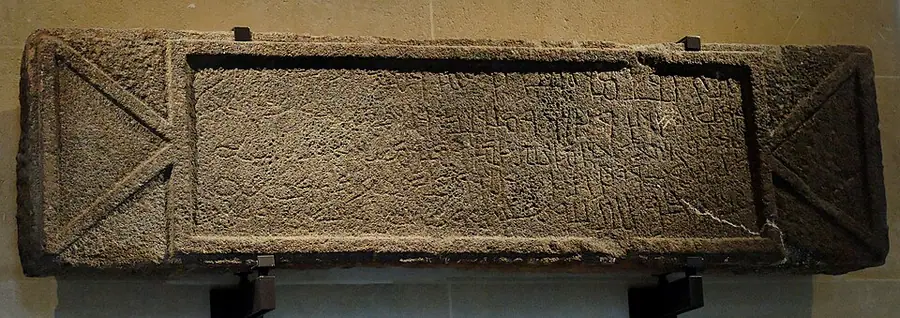
Arabia in the three centuries before Muhammad sat between two empires and was shaped by both. Rome, ruling from Constantinople, and Sasanian Persia, ruling from Ctesiphon, fought for the Near East and used Arab allies to guard their desert frontiers: the Christian Ghassanids for Rome, the Lakhmids of al-Ḥīra for Persia. In the south, the kingdom of Ḥimyar in Yemen gave up its old gods around 380 for a single god, in a monotheism close to Judaism; in the 520s a Jewish king killed the Christians of Najrān, and Christian Aksum, across the Red Sea, conquered the country. Its Christian ruler Abraha raided deep into central Arabia. In the oases of the west lived Jewish tribes; Christians lived in Najrān, on the frontiers and in the tents of the empires’ allies; and most Arabs worshipped gods and goddesses whose names appear in inscriptions centuries older than Islam. Arabic was already being written. The last war between the empires, from 602 to 628, left both exhausted in the years in which Muhammad preached. Majority
This chapter describes that world from the inscriptions, coins and outside texts that date from it, and marks where the picture depends instead on Muslim books written later. The general problem of the sources is set out in §0; Muhammad’s life is §2. The same Arabian world appears from the Jewish side in Judaism §8 and from the Christian side in Christianity §7.
Timeline
| Date | Event or evidence | Confidence |
|---|---|---|
| 267 | An epitaph at Hegra in north-west Arabia, in the Arabic language and Nabataean script[1][2] | Consensus |
| 328 | The Namāra epitaph of Imruʾ al-Qays, “king of the Arabs”, in Syria[3][4] | Consensus |
| c. 375–378 | The Arab queen Mavia fights Rome and demands a bishop for her people[5] | Majority |
| c. 380 | Ḥimyar’s kings abandon the old gods for one god[6][7] | Majority |
| 410 | A bishop of al-Ḥīra, the Lakhmid capital, is recorded[8] | Majority |
| 512 | The Zabad inscription, in Greek, Syriac and Arabic, at a martyr’s shrine near Aleppo[9] | Consensus |
| c. 523 | Yūsuf (Dhū Nuwās) of Ḥimyar kills the Christians of Najrān[7][10] | Majority |
| c. 525 | King Kaleb of Aksum invades Ḥimyar[11] | Majority |
| 528–529 | Jabal Usays: an Arab guard sent by “al-Ḥārith the king”[12] | Consensus |
| c. 529 | Justinian makes al-Ḥārith ibn Jabala head of all Rome’s Arab allies[8] | Majority |
| 548 | Abraha’s Marib dam inscription records envoys from Rome, Persia, Aksum and both Arab dynasties[13] | Consensus |
| 552 | Abraha raids Maʿadd in central Arabia “with the might of Raḥmānān and his Messiah”[14] | Consensus |
| 568 | The Ḥarrān inscription, in Greek and Arabic, at a martyr’s shrine in Syria[15] | Consensus |
| c. 570 | The “Year of the Elephant”, by Muslim tradition[16][17] | Contested (date) |
| 570s | Persian forces take Yemen from Aksumite rule[6] | Majority |
| 580s | Rome dissolves the Ghassanid alliance[8] | Majority |
| c. 602 | Khusraw II deposes al-Nuʿmān III, the last Lakhmid king[8] | Majority |
| 602–628 | The last war between Rome and Persia; Jerusalem falls to Persia in 614[18] | Consensus |
Between two empires
Rome, Persia and the desert frontier
For most of late antiquity the Near East was divided between two great powers. The Roman Empire, Christian from the fourth century and ruled from Constantinople, held Syria, Palestine and Egypt. The Sasanian Persian Empire, whose kings followed the Zoroastrian religion and ruled from Ctesiphon on the Tigris, held Iraq and Iran. Between them, and along their southern edges, lay the Arabian peninsula and the Syrian desert.[8][19] Consensus
Neither empire tried to rule the interior of Arabia directly. Both relied on Arab leaders, given subsidies, titles and weapons in return for guarding the frontier, raiding the other side and keeping the tribes in order. Greek writers called such allies phylarchs, “tribal rulers”, and their followers Saracens, a word Romans used for the Arabs of the desert.[8] Consensus
The earliest such leader known from his own monument is Imruʾ al-Qays son of ʿAmr, buried at Namāra in southern Syria in 328. His epitaph, in the Arabic language but in Nabataean letters, calls him “king of the Arabs” and lists his campaigns as far south as Najrān (below).[3][4] Consensus on the date; Majority on the reading. Later Arabic tradition makes him an ancestor of the Lakhmid kings of al-Ḥīra; his epitaph, on Roman soil, says the tribes he subdued served Rome.
Arab allies could also turn. In the 370s a queen of the Saracens, Mavia, led her people against Rome and made peace only when a Christian hermit called Moses was consecrated as their bishop. The Greek church historian Sozomen tells the story, and in the same chapter explains that the Saracens descended from Abraham’s son Ishmael and his slave-wife Hagar, and that some of them, learning this from the Jews, “inclined to the Hebrew customs and laws”.[5] Majority on the episode.
The Ghassanids
From the late fifth century Rome’s chief Arab allies were the family later Arabic writers called the Ghassanids, and modern historians often call the Jafnids, after their ancestor Jafna. Around 529 the emperor Justinian gave their leader, al-Ḥārith ibn Jabala, command over all Rome’s Arab allies and the title of king.[8][20] Majority
They were Christians, and of a particular kind. The Ghassanids supported the Miaphysite church, which rejected the Council of Chalcedon of 451 (see Christianity §6), and al-Ḥārith helped secure the consecration of Miaphysite bishops, including Jacob Baradaeus, who built up the church later called Syrian Orthodox.[8] Majority Their shrines included the great pilgrimage church of St Sergius at Ruṣāfa in the Syrian desert.
Their own words survive. At Jabal Usays, a hill in the Syrian desert, an Arab named Ruqaym son of Maʿarrif carved in Arabic that “al-Ḥārith the king” had sent him there as a frontier guard, in a year equivalent to 528–529.[12] Consensus It is the only document of Jafnid control on the ground, and among the earliest texts in the Arabic script. Rome’s trust did not last. In the early 580s the Ghassanid king al-Mundhir was arrested, and soon after the alliance was broken up.[8] Majority
The Lakhmids of al-Ḥīra
Persia’s allies were the Lakhmids, also called the Naṣrids, who ruled from al-Ḥīra near the Euphrates in southern Iraq. Their greatest king, al-Mundhir III (r. c. 503–554), raided Roman Syria for half a century and defeated the Ghassanids in battle.[8] Majority Al-Ḥīra was a Christian city as well as a royal one: the Church of the East, the church of Persia’s Christians, recorded a bishop there in 410, and Christianity spread among its people over the next two centuries.[8] Majority Arabic tradition remembers al-Ḥīra as a centre of poetry and of Arabic writing.
Around 602 the Persian king Khusraw II deposed and killed the last Lakhmid king, al-Nuʿmān III, and took the frontier under direct control. A few years later, at Dhū Qār, Arab tribes defeated a Persian force, a victory Arabic tradition celebrated; its date is uncertain, somewhere between about 604 and 611.[8][19] Majority on the deposition; Contested on the date of Dhū Qār. Both empires had dismantled their Arab buffer states on the eve of the conquests (§4).
The last war, 602–628
In 602 a Roman army mutinied and the emperor Maurice was murdered. Khusraw II, whom Maurice had helped to his throne, used the murder as a reason for war. It became the longest and most destructive war the two empires ever fought. Persian armies took Antioch in 613, Jerusalem in 614, carrying off the relic of the True Cross, and Egypt between 618 and 621. The emperor Heraclius struck back in a series of campaigns from 622, survived a Persian and Avar siege of Constantinople in 626, and defeated the Persians near Nineveh in 627. Khusraw was overthrown in 628, and the Cross returned to Jerusalem in 630.[18] Consensus
This war is the only contemporary event the Qur’an clearly mentions: “The Byzantines have been defeated in a nearby land. They will reverse their defeat with a victory in a few years’ time” (Q 30:2–4), usually connected with the Persian conquests of 613–614 (§0).[21] Majority The generation of Muhammad’s preaching was a generation in which the old empires seemed to be falling and apocalyptic expectation ran high among Christians and Jews alike.[18][19] Majority
Ḥimyar: a kingdom of one god
The south before monotheism
The south-west of Arabia, today’s Yemen, was the most urban and literate part of the peninsula. For a thousand years its kingdoms, Saba, Qatabān, Maʿīn and Ḥaḍramawt, built cities, temples and dams and carved thousands of inscriptions in their own alphabet. By the late third century CE one of them, Ḥimyar, had united the whole south under its kings at Ẓafār.[6][19] Consensus Its gods were the old South Arabian pantheon, headed by the national god Almaqah of Saba and the astral god ʿAthtar.[19] Consensus
The turn to one god, c. 380
Then, within a generation, the gods disappear. From around 380, the inscriptions of Ḥimyar’s kings and nobles stop naming the old gods and invoke a single god, “the Lord of heaven”, soon also called Raḥmānān, “the Merciful”. Temples go out of use, and no inscription invokes the old gods again.[6][7] Majority Christian Robin, the leading specialist in the inscriptions, credits the change to the king Malkīkarib Yuhaʾmin (r. c. 375–400); later Arabic tradition remembers his son Abū Karib Asʿad as the king who brought Judaism to Yemen.[6] Majority
How Jewish was it? Some inscriptions are unmistakable: they speak of the “God of Israel” and the “God of the Jews”, name “Israel” as the community, and one, in Hebrew, lists the twenty-four priestly families of 1 Chronicles 24. Others invoke a single god in language a Jew, a Christian or a monotheist of no particular community could have used.[7][6] Robin argues that the official religion was a Judaism of a local kind, not rabbinic, adopted at least partly to keep both Rome and Persia at arm’s length;[6] others, such as Iwona Gajda, read some of the same inscriptions as showing familiarity with rabbinic Jewish law. Contested What is not in doubt is that a powerful Arabian kingdom worshipped one god, called the Merciful, for two centuries before Muhammad. The Qur’an’s name for God, al-Raḥmān, “the Merciful”, is the same word.[6][22] Consensus on the shared word; Majority that the Qur’anic usage comes from the south.
Najrān, c. 523
Christianity had also reached the south, above all the oasis city of Najrān on the northern edge of Ḥimyar, which had a bishop and a church.[6] Consensus In the early sixth century religion and foreign policy merged. Christian Aksum, across the Red Sea in Ethiopia, intervened in Ḥimyar around 518 and installed a Christian king. Around 522 a Jewish noble, Yūsuf Asʾar Yathʾar, seized the throne; Arabic tradition calls him Dhū Nuwās.[7][6] Majority
Yūsuf attacked the Aksumite garrison and the Christian communities that supported it. Sabaic inscriptions carved by his commanders at Biʾr Ḥimā, north of Najrān, around 523, record the campaign from his side: towns taken, Ethiopians killed, and totals of some 12,500 dead, 11,000 prisoners and 290,000 camels, cattle and sheep.[10][6] Consensus on the inscriptions. Christian texts record it as a martyrdom: the Syriac Letter of Simeon of Beth Arsham, written within months by a bishop who heard the news at the Lakhmid court, and the later Book of the Himyarites describe the killing of the Christians of Najrān who refused to give up their faith, led by their chief al-Ḥārith (Arethas).[23][7] Majority on the event; Contested on the numbers.
The Qur’an curses “the makers of the trench, the makers of the fuel-stoked fire” who sat watching what they did to the believers, whose “only grievance against them was their faith in God” (Q 85:4–8).[24] Muslim commentators, from Ibn Isḥāq on, identified the passage with Najrān; some modern scholars read it instead as a picture of punishment in hell, or as an allusion to the furnace of the book of Daniel.[16] Contested
Aksum answered. Around 525 King Kaleb crossed the Red Sea with Roman encouragement, defeated Yūsuf, who was killed, and put Ḥimyar under Christian rule.[11][6] Majority The Jewish kingdom was over; the region’s Judaism was not, and Jews remained in Yemen until the twentieth century.
Abraha
Within a few years an Aksumite commander called Abraha made himself ruler of Ḥimyar, recognising the king of Aksum only loosely. He ruled for some three decades and left the last great inscriptions of ancient South Arabia.[6] Majority They are Christian, and they speak of God in the old Ḥimyarite word:
- The Marib dam, 548. A long inscription, catalogued as CIH 541, records the suppression of a revolt, the repair of the great dam at Marib, and a gathering of envoys from Aksum, Rome and Persia and from the two Arab dynasties, the Ghassanid al-Ḥārith and the Lakhmid al-Mundhir.[13][6] Consensus A ruler of Yemen in the 540s dealt with all the powers of the Near East at once.
- The Maʿadd campaign, 552. At Murayghān in central Arabia, an inscription (Ry 506) records that Abraha raided the tribal confederation of Maʿadd “for the fourth time”, “with Raḥmānān’s might and that of His Messiah”.[14] Consensus
- Lordship over Arabia. A later inscription at the same site claims that he “seized all the Arabs of Maʿadd and Hagar and Khaṭṭ and Ṭayy and Yathrib and Guzām”.[25] Consensus on the text. Yathrib, the town later called Medina, is named; Mecca is not.
His last dated inscription is from about 560. In the 570s Persian forces, called in by a Ḥimyarite prince, drove out the Aksumite regime, and Yemen became a Persian province.[6] Majority
The Year of the Elephant
Muslim tradition tells a story about Abraha that the inscriptions do not. Angry that Arabs preferred the sanctuary of Mecca to the great church he had built at Ṣanʿāʾ, he marched on Mecca with an army that included an elephant, and was turned back when birds pelted his troops with stones; the year became the “Year of the Elephant”, and Muhammad was born in it.[16] Majority that this is the tradition’s account. The Qur’an alludes to the episode without names or dates:
“Do you [Prophet] not see how your Lord dealt with the army of the elephant? Did He not utterly confound their plans? He sent ranks of birds against them, pelting them with pellets of hard-baked clay: He made them [like] cropped stubble.” (Q 105, trans. Abdel Haleem)[17]
The difficulty is the date. The tradition puts the Year of the Elephant around 570; Abraha’s dated inscriptions run from the 540s to about 560, and his campaign into central Arabia is dated to 552. Lawrence Conrad argued in 1987 that “the Year of the Elephant” worked in early Arabic historical writing as a round, symbolic marker rather than a remembered date, and that the link with Muhammad’s birth is a later construction.[26] Robin, by contrast, thinks an expedition against Mecca plausible in itself, and sees the rise of Quraysh in the following decades as its consequence.[6] Consensus that Abraha campaigned in central Arabia; Contested on an attack on Mecca and its date.
The gods of the Ḥijāz
What the inscriptions show
Long before Islam, Arabs across the north of the peninsula and the Syrian desert carved tens of thousands of short inscriptions in their own alphabets, now called Safaitic and Hismaic. Many are prayers. They name gods such as Allāt (al-Lāt), Dushara, Baʿalsamīn and others, and ask them for rain, safety, vengeance or relief.[27] Consensus The goddess al-Lāt is the best attested. The Greek historian Herodotus, in the fifth century BCE, already knew her as “Alilat”, the Arabs’ name for the heavenly Aphrodite.[28] She had a temple at Palmyra and appears in Nabataean inscriptions; al-ʿUzzā and Manāt (Nabataean Manōtu) are attested in Nabataean texts as well.[19] Consensus
The same evidence also shows ʾlh, “god”, and a god called Allāh or ʾlh in some northern inscriptions, and Christian Arabs used the word for the God of the Bible.[27][19] Majority A high god, worshipped alongside or above lesser deities, was not a novelty in seventh-century Arabia.
What the later books say
For Mecca itself, almost everything comes from Muslim writers. The fullest account is the Book of Idols (Kitāb al-Aṣnām) of Hishām ibn al-Kalbī (d. c. 820), written about two centuries after Muhammad.[29][30] It locates the three goddesses near Mecca: al-Lāt at Ṭāʾif, al-ʿUzzā at Nakhla, and Manāt on the coast between Mecca and Medina. It describes Hubal, a red stone figure with a broken right hand replaced in gold, standing in the Kaʿba with seven arrows used for divination, and it tells how a chief called ʿAmr ibn Luḥayy first brought idols to Mecca from Syria.[29] Majority that this is what the book says.
Historians use the Book of Idols with care. It was written by a Muslim scholar in Iraq, long after the shrines it describes had been destroyed, and parts of it read as explanation of Qur’anic verses or as tribal lore. Its picture of Mecca crowded with 360 idols fits the later Muslim image of the “age of ignorance” (jāhiliyya) as much as any evidence.[31][19] Majority Hubal, for instance, appears in only one inscription outside Muslim sources, a Nabataean tomb text at Hegra that names him with Dushara and Manōtu.[19] Majority
The Qur’an’s opponents
The Qur’an is the earliest source for the beliefs of Muhammad’s Meccan opponents, and its picture is not that of the Book of Idols. It names al-Lāt, al-ʿUzzā and Manāt and dismisses them as “nothing but names you have invented” (Q 53:19–23).[32] But it also assumes that its opponents believe in God as creator:
“If you ask the disbelievers who created the heavens and earth and who harnessed the sun and moon, they are sure to say, ‘God.’ Then why do they turn away from Him?” (Q 29:61)[33]
Gerald Hawting argued that the Qur’an’s “associators” (mushrikūn), those who “associate” other beings with God, were monotheists whom the Qur’an judged to fall short, not idol-worshippers in the later sense; Patricia Crone, analysing the verses, concluded that they believed in God as the supreme deity and worshipped lesser beings, angels among them, as intercessors.[31][34] Majority on the reading of the Qur’an’s polemic; Contested on how far it reflects Mecca as a whole.
The ḥanīfs
The Qur’an calls Abraham a ḥanīf: “Abraham was neither a Jew nor a Christian. He was upright and devoted to God, never an idolater” (Q 3:67).[35] Muslim tradition, from Ibn Isḥāq on, names a handful of Meccans before Muhammad who rejected the idols and sought the religion of Abraham, among them Zayd ibn ʿAmr and Waraqa ibn Nawfal, Khadīja’s cousin, who became a Christian.[16] Majority that the tradition says this. No source outside the Muslim tradition names them, and the word’s history is odd: in Syriac its cognate ḥanpā means “pagan”. How the word came to mean a pure monotheist is debated.[31] Contested
Jews and Christians in the west
Jewish communities lived in the oases of north-western Arabia, at Taymāʾ, Khaybar, Fadak and Yathrib, the future Medina. Muslim tradition names three Jewish tribes at Yathrib, the Qaynuqāʿ, the Naḍīr and the Qurayẓa, and Hebrew and Aramaic inscriptions confirm Jews in the region from earlier centuries.[7] Majority Their relations with Muhammad belong to §2 and are told from the Jewish side in Judaism §8.
Christianity surrounded the Ḥijāz rather than filling it. It was the religion of the Ghassanids and of much of al-Ḥīra, of Najrān, of Aksum across the Red Sea, and of the Roman provinces to the north, where Arabic was beginning to be written in Christian settings (below).[8][19] Consensus Whether there were organised Christian communities in Mecca itself is unknown; the tradition mentions individuals, not churches. Majority The Qur’an’s familiarity with Christian stories, which §3 traces, suggests that Christian teaching was heard, in Arabic, by Muhammad’s audience.[36] Majority
Mecca and its trade
The traditional picture
Muslim tradition describes Mecca as a sanctuary town in a barren valley, its tribe of Quraysh grown rich as merchants whose caravans went north to Syria and south to Yemen. The Qur’an’s short sura 106 speaks of Quraysh and their journeys:
“[He did this] to make the Quraysh feel secure, secure in their winter and summer journeys. So let them worship the Lord of this House: who provides them with food to ward off hunger, safety to ward off fear.” (Q 106, trans. Abdel Haleem)[37]
Twentieth-century historians, notably W. Montgomery Watt, built on that picture an account of Mecca as a hub of the international trade in incense and spices, whose new wealth strained the old tribal values Muhammad’s preaching answered.[38] Majority that this was the standard view before 1987.
Crone’s challenge
In Meccan Trade and the Rise of Islam (1987) Patricia Crone argued that the picture did not hold. The incense trade of antiquity had declined long before the sixth century and went largely by sea; Mecca was not on any natural route; what the Muslim sources actually describe Meccans trading is leather, clothing and foodstuffs, not spices; and no Greek, Syriac or other outside source mentions Quraysh or Meccan trade at all.[38] Majority that she showed the international spice trade picture to be unfounded.
The replies
Her critics accepted much of the negative case but not her conclusions. R. B. Serjeant attacked her readings of the Arabic sources in 1990.[39] F. E. Peters described a modest Meccan trade based on the sanctuary and its seasonal fairs.[40] Gene Heck proposed that Meccan wealth came from the gold and silver mines of western Arabia rather than from spices.[41] Mikhail Bukharin, reviewing the classical evidence, argued for a regional caravan trade in which Mecca could have had a place.[42] Contested The position most historians now hold is in between: Quraysh were traders, but on a regional scale, in ordinary goods, and Mecca’s importance was as much religious as commercial.[43] Majority
Was Mecca there at all?
No inscription, coin or outside text from before Islam securely names Mecca. The Qur’an names it once as Makka (48:24) and once as Bakka (3:96), and its sanctuary, “the House”, often.[44] Consensus The Greek geographer Ptolemy, in the second century CE, lists a place called Macoraba in western Arabia. Glen Bowersock reads the name as “Mecca the great”; Crone argued that it has nothing to do with Mecca.[45][38] Contested As §0 explains, silence is weak evidence for a small town in a region that left few documents. A few writers have used it to place Islam’s origins elsewhere, further north; most historians accept the Ḥijāz setting the Qur’an and the tradition both imply.[43] Majority
The Arabic language and its script
Arabic was spoken and written long before the Qur’an. In the north of the peninsula and the Syrian desert, Arabic dialects were written in the Safaitic and Hismaic alphabets, related to the scripts of South Arabia, from the first centuries BCE and CE; Ahmad Al-Jallad and others have shown that these graffiti are an early form of Arabic, “Old Arabic”.[2][27] Majority
The alphabet Arabic is written in today came from somewhere else: the Nabataean script of the kingdom of Petra, a form of Aramaic writing. The Nabataeans wrote Aramaic, but their names and some of their words were Arabic, and over time the letters were used to write Arabic itself.[2] Consensus The key documents are:
- Hegra, 267. An epitaph at Hegra (Madāʾin Ṣāliḥ) in north-west Arabia, written in Nabataean letters but in the Arabic language, is the oldest dated text in Arabic.[1][2] Consensus
- Namāra, 328. The epitaph of Imruʾ al-Qays: Arabic in a late Nabataean script.[3] Consensus
- Zabad, 512. At a shrine of St Sergius near Aleppo, a lintel inscription in Greek, Syriac and Arabic, the Arabic naming the Christian Arabs who built it.[9] Consensus
- Jabal Usays, 528–529. The frontier guard of “al-Ḥārith the king”.[12] Consensus
- Ḥarrān, 568. A Greek and Arabic dedication of a martyr’s shrine in southern Syria by Sharaḥīl son of Ẓālim.[15] Consensus
By the sixth century, then, a recognisable Arabic script was in use, and the surviving examples are Christian. The script of the earliest Qur’an manuscripts and of PERF 558, the papyrus of 643 (§0), grows directly from it.[2][46] Majority
The evidence
| Question | What the evidence supports | Key evidence | Confidence |
|---|---|---|---|
| The empires | Rome and Persia ruled the edges of Arabia through Arab allies until c. 602 | Namāra; Jabal Usays; Greek and Syriac histories[3][12][8] | Consensus |
| Ḥimyar’s monotheism | One god from c. 380, called the Merciful, often in Jewish terms | Sabaic inscriptions[6][7] | Consensus (monotheism); Contested (how Jewish) |
| Najrān | A Jewish king attacked the Christians of Najrān c. 523 | His commanders’ inscriptions; Syriac martyr texts[10][23] | Majority |
| Abraha | A Christian ruler of Yemen campaigning in central Arabia, 548–c. 560 | CIH 541; Ry 506; Murayghān 3[13][14][25] | Consensus |
| The Elephant | An attack on Mecca and its link to Muhammad’s birth | The tradition; Q 105[16][17][26] | Contested |
| The gods | Al-Lāt, al-ʿUzzā, Manāt and others long worshipped; Meccan detail is late | Inscriptions; Herodotus; Ibn al-Kalbī[27][28][29] | Majority |
| Meccan trade | Regional trade in ordinary goods, not an international spice hub | Crone and her critics[38][40][41] | Contested |
| Arabic script | Nabataean in origin; Arabic language written by 267, script recognisable by 512 | Hegra; Namāra; Zabad; Jabal Usays; Ḥarrān[1][9][15] | Consensus |
Primary sources
Show the 9 primary sources
1. “King of the Arabs”: the Namāra epitaph, 328
“This is the funerary monument of Imruʾ al-Qays, son of ʿAmr, king of the Arabs, and his title of honour was Master of Asad and Nizār. And he subdued the Asadīs and they were overwhelmed together with their kings, and he put to flight Madhḥij thereafter, and came driving them to the gates of Najrān, the city of Shammar, and he subdued Maʿadd, and he dealt gently with the nobles of the tribes, and appointed them viceroys, and they became phylarchs for the Romans. And no king has equalled his achievements. Thereafter he died in the year 223 on the 7th day of Kaslūl.” (trans. J. A. Bellamy)[3][4]
What it proves. That in 328 an Arab ruler could be commemorated in the Arabic language, in Nabataean letters, as “king of the Arabs”, with campaigns stretching from Syria to Najrān, and that his tribes served Rome. Several words, including the title, are read differently by different scholars. Consensus on the date; Majority on Bellamy’s reading.
2. “Al-Ḥārith the king”: Jabal Usays, 528–529
“I, Ruqaym son of Maʿarrif the Awsite: al-Ḥārith the king sent me to Usays as a frontier guard, [in] the year 423.”[12]
What it proves. That the Ghassanid king al-Ḥārith ibn Jabala posted men in the Syrian desert, and that one of them wrote in Arabic script in the Bostran year 423 (528–529). It is the only direct document of Jafnid control. Consensus
3. The Saracens and the customs of the Hebrews: Sozomen, Ecclesiastical History 6.38
“As their mother Hagar was a slave, they afterwards, to conceal the opprobrium of their origin, assumed the name of Saracens… Some of their tribe afterwards happening to come in contact with the Jews, gathered from them the facts of their true origin, returned to their kinsmen, and inclined to the Hebrew customs and laws.”[5]
What it proves. That a Greek writer of the 440s knew the Arabs as descendants of Abraham through Ishmael, and believed that some had adopted Jewish practice. It shows the idea of an Abrahamic Arab religion circulating two centuries before Islam, in Christian terms. Consensus on the text.
4. “With Raḥmānān’s might and that of His Messiah”: Abraha at Murayghān, 552 (Ry 506)
“With Raḥmānān’s might and that of His Messiah, King Abraha… inscribed this text when he raided Maʿadd for the fourth time… the two chiefs of the army began to battle against the Banū ʿĀmir.”[14]
What it proves. That a Christian ruler of Yemen led armies deep into central Arabia in 552, and called God by the Ḥimyarite name Raḥmānān with Christ as “his Messiah”. It dates Abraha’s Arabian campaigns, and it does not mention Mecca. Consensus
5. “All the Arabs… and Yathrib”: Murayghān 3
“He seized all the Arabs of Maʿadd and Hagar and Khaṭṭ and Ṭayy and Yathrib and Guzām.”[25]
What it proves. Abraha’s claim to overlordship across Arabia, from the Gulf coast to Yathrib. It is the first mention of Yathrib, the future Medina, in a datable royal text of the sixth century, and another list of Arabian places in which Mecca does not appear. Consensus on the text; how real the claim was is another matter.
6. “The army of the elephant”: Q 105
a-lam tara kayfa faʿala rabbuka bi-aṣḥābi l-fīl; a-lam yajʿal kaydahum fī taḍlīl; wa-arsala ʿalayhim ṭayran abābīl; tarmīhim bi-ḥijāratin min sijjīl; fa-jaʿalahum ka-ʿaṣfin maʾkūl
“Do you [Prophet] not see how your Lord dealt with the army of the elephant? Did He not utterly confound their plans? He sent ranks of birds against them, pelting them with pellets of hard-baked clay: He made them [like] cropped stubble.”[17]
What it proves. That Muhammad’s first hearers knew a story of an army with an elephant destroyed near the sanctuary. The sura names no one and gives no date; the identification with Abraha and the link with Muhammad’s birth come from the later tradition. Consensus on the text.
7. “Their winter and summer journeys”: Q 106
li-īlāfi quraysh; īlāfihim riḥlata l-shitāʾi wa-l-ṣayf; fa-l-yaʿbudū rabba hādhā l-bayt; alladhī aṭʿamahum min jūʿin wa-āmanahum min khawf
“[He did this] to make the Quraysh feel secure, secure in their winter and summer journeys. So let them worship the Lord of this House: who provides them with food to ward off hunger, safety to ward off fear.”[37]
What it proves. The Qur’an’s only mention of Quraysh by name, and of their seasonal journeys, which the tradition explains as trading caravans. It shows a tribe tied to a sanctuary, “this House”; it does not say what or how far they traded. Consensus on the text; Contested on the trade.
8. “They are sure to say, ‘God’”: Q 29:61
wa-la-in saʾaltahum man khalaqa l-samāwāti wa-l-arḍa wa-sakhkhara l-shamsa wa-l-qamara la-yaqūlunna llāh; fa-annā yuʾfakūn
“If you ask the disbelievers who created the heavens and earth and who harnessed the sun and moon, they are sure to say, ‘God.’ Then why do they turn away from Him?”[33]
What it proves. That the Qur’an’s opponents acknowledged God as creator. Their fault, in the Qur’an’s eyes, was worshipping others beside him. It is the main evidence against picturing Mecca as simply polytheist. Majority
9. “Alilat”: Herodotus, Histories 3.8
“They call Dionysus, Orotalt; and Aphrodite, Alilat.” (trans. A. D. Godley)[28]
What it proves. That a goddess whose name is the same as al-Lāt’s was worshipped by Arabs about a thousand years before Islam. The continuity is of a name and a cult, not of a single unchanged religion. Consensus
What is absent
- Mecca in any pre-Islamic document. No inscription, coin or Greek, Syriac or South Arabian text securely names it; Ptolemy’s Macoraba is disputed. Majority
- Quraysh outside Muslim sources. The tribe is named in the Qur’an (106:1) and the tradition, but in no pre-Islamic outside source. Consensus
- Abraha at Mecca. His inscriptions record campaigns in central Arabia and claim Yathrib; none mentions Mecca or an elephant. Consensus
- The Kaʿba’s idols in contemporary evidence. The 360 idols and Hubal’s statue are known from Ibn al-Kalbī and other later writers, not from the period itself. Consensus
- An Arabic Bible. There is no evidence of a written Arabic translation of the Bible before Islam; biblical knowledge circulated orally (§3).[36] Majority
- Contemporary Arabic poetry. The famous pre-Islamic odes were collected and written down in the eighth and ninth centuries; how much of them is authentic is debated. Contested
Debates
How Jewish was Ḥimyar?
| View | Position | Main proponents |
|---|---|---|
| A local Judaism | The kings adopted a Judaism of their own, not rabbinic, partly for reasons of state | Robin[6] |
| Rabbinic elements | The Hebrew priestly list and the legal loanwords of some inscriptions show familiarity with rabbinic law | Gajda |
| A neutral monotheism | Many inscriptions avoid Jewish or Christian markers, a deliberate common ground | Some readings of the “Raḥmānist” formulas[7] |
Consensus on the monotheism; Contested on its character.
When was the Year of the Elephant?
The tradition says c. 570, the year of Muhammad’s birth; Abraha’s inscriptions date his Arabian campaigns to the 550s and end around 560. Either the expedition took place late in Abraha’s reign and the inscriptions are silent about it, or the tradition attached a remembered event to Muhammad’s birth as a symbolic marker.[26][6] Contested
How rich was Mecca?
A centre of international trade (the older view); a town of modest regional trade and pilgrimage (the majority now); or a place whose economic role the sources do not let us judge at all (Crone’s strongest form).[38][40][41][42] Contested
How polytheist was the Ḥijāz?
The later tradition’s Mecca of 360 idols; or a world in which a high God was widely acknowledged and lesser beings worshipped as intercessors, which is what the Qur’an’s arguments presuppose.[31][34] Contested on the balance; Majority that the Qur’an’s opponents acknowledged God.
Further reading
Show further reading (9 works)
- Robert G. Hoyland, Arabia and the Arabs: From the Bronze Age to the Coming of Islam (Routledge, 2001): the best general survey.
- Greg Fisher, Between Empires: Arabs, Romans, and Sasanians in Late Antiquity (Oxford, 2011), and ed., Arabs and Empires before Islam (Oxford, 2015): the Arab allies and their sources.
- Christian Julien Robin, “Arabia and Ethiopia”, in The Oxford Handbook of Late Antiquity (2012): Ḥimyar, Najrān and Abraha from the inscriptions.
- James Howard-Johnston, Witnesses to a World Crisis (Oxford, 2010): the war of 602–628 and its sources.
- G. R. Hawting, The Idea of Idolatry and the Emergence of Islam (Cambridge, 1999).
- Patricia Crone, Meccan Trade and the Rise of Islam (Princeton, 1987), with F. E. Peters, Mecca: A Literary History of the Muslim Holy Land (Princeton, 1994).
- Ahmad Al-Jallad, The Religion and Rituals of the Nomads of Pre-Islamic Arabia (Brill, 2022): the gods of the Safaitic inscriptions.
- Glen Bowersock, The Crucible of Islam (Harvard, 2017).
- Hishām ibn al-Kalbī, The Book of Idols, trans. Nabih Amin Faris (Princeton, 1952).
References
- ^ a b c Hegra (Madāʾin Ṣāliḥ), JSNab 17 — Epitaph of Raqūsh. 267 CE. Arabic in Nabataean script. A funerary inscription at Hegra in the Arabic language written in Nabataean letters: the oldest dated text in Arabic. about
- ^ a b c d e Ahmad Al-Jallad The Earliest Stages of Arabic and Its Linguistic Classification. in E. Benmamoun and R. Bassiouney (eds), The Routledge Handbook of Arabic Linguistics, Routledge, 2018. Old Arabic in Safaitic, Hismaic, Nabataean and Paleo-Arabic scripts.
- ^ a b c d e Namāra inscription (Louvre, AO 4083) — Epitaph of Imruʾ al-Qays son of ʿAmr. 7 Kaslūl 223 of Bostra = 7 December 328 CE. Arabic in Nabataean script. Funerary monument of Imruʾ al-Qays, 'king of the Arabs', listing campaigns to Najrān and the tribes who 'became phylarchs for the Romans'. about
- ^ a b c James A. Bellamy A New Reading of the Namārah Inscription. Journal of the American Oriental Society 105, 1985. The retracing and translation of the Namāra epitaph most often used.
- ^ a b c Sozomen, Ecclesiastical History 6.38 — Sozomen, Ecclesiastical History. c. 440s CE. Greek. Queen Mavia's war with Rome and her demand for the monk Moses as bishop; the Saracens as descendants of Ishmael and Hagar, some of whom 'inclined to the Hebrew customs and laws'. about
- ^ a b c d e f g h i j k l m n o p q r s Christian Julien Robin Arabia and Ethiopia. in S. F. Johnson (ed.), The Oxford Handbook of Late Antiquity, Oxford University Press, 2012. Ḥimyar's monotheism, Najrān, Aksum and Abraha, from the inscriptions.
- ^ a b c d e f g h i Moshe Gil Jews in Islamic Countries in the Middle Ages. Brill, 2004. Detailed survey from pre-Islamic Arabia to the eleventh century, largely from Geniza sources.
- ^ a b c d e f g h i j k l m n Greg Fisher Between Empires: Arabs, Romans, and Sasanians in Late Antiquity. Oxford University Press, 2011. The Jafnids, the Naṣrids and the empires' Arab allies.
- ^ a b c Zabad inscription (Brussels, Art & History Museum) — Trilingual lintel of the martyrium of St Sergius at Zabad. 823 of the Seleucid era = 512 CE. Greek, Syriac and Arabic. Greek, Syriac and Paleo-Arabic texts at a Christian shrine near Aleppo; the Arabic names the Arab Christians associated with its building. about
- ^ a b c Biʾr Ḥimā inscriptions of Yūsuf Asʾar Yathʾar's commanders (Ja 1028, Ry 507, Ry 508) — Sabaic campaign inscriptions. c. 523 CE. Sabaic. Record Yūsuf's campaign against the Aksumites and their allies, including Najrān, with totals of the dead, prisoners and livestock. about
- ^ a b David W. Phillipson Foundations of an African Civilisation: Aksum and the Northern Horn, 1000 BC–AD 1300. James Currey, 2012. The archaeology and history of Aksum.
- ^ a b c d e Jabal Usays inscription — Graffito of Ruqaym son of Maʿarrif. 423 of Bostra = 528–529 CE. Paleo-Arabic. 'Al-Ḥārith the king sent me to Usays as a frontier guard': the only material evidence of Jafnid control on the ground. about
- ^ a b c CIH 541 (the Marib dam inscription) — Inscription of Abraha. 548 CE. Sabaic. Abraha records the suppression of a revolt, the repair of the Marib dam and envoys from Aksum, Rome, Persia, the Ghassanids and the Lakhmids. about
- ^ a b c d Ry 506 (Murayghān 1) — Inscription of Abraha. 552 CE. Sabaic. 'With Raḥmānān's might and that of His Messiah' Abraha raids Maʿadd for the fourth time; battle with the Banū ʿĀmir. about
- ^ a b c Ḥarrān inscription (Lejā, Syria) — Dedication of the martyrium of St John by Sharaḥīl son of Ẓālim. 463 of Bostra = 568 CE. Greek and Paleo-Arabic. A phylarch's bilingual dedication of a martyr's shrine, among the earliest examples of the Arabic script. about
- ^ a b c d e Ibn Isḥāq, Sīrat Rasūl Allāh — The Life of Muhammad (recension of Ibn Hishām). mid-8th c. CE (Ibn Hishām's recension, early 9th c.). Arabic. The earliest surviving Muslim biography of Muhammad; source for his alliance and conflicts with the Jewish tribes of Medina (Qaynuqāʿ, Naḍīr, Qurayẓa) and the conquest of Khaybar. about
- ^ a b c d Qur'an 105 — The Qur'an. early 7th c. CE. Arabic. Sūrat al-Fīl: God's destruction of 'the army of the elephant' with birds and stones. about
- ^ a b c James Howard-Johnston Witnesses to a World Crisis: Historians and Histories of the Middle East in the Seventh Century. Oxford University Press, 2010. The last Roman–Persian war and the sources for the seventh century.
- ^ a b c d e f g h i j Robert G. Hoyland Arabia and the Arabs: From the Bronze Age to the Coming of Islam. Routledge, 2001. The standard survey of pre-Islamic Arabia, its kingdoms, religions and languages.
- ^ Greg Fisher (ed.) Arabs and Empires before Islam. Oxford University Press, 2015. Sources on the Arabs of late antiquity in translation, with commentary.
- ^ Qurʾan 30:2–4 — Qurʾan, Sūrat al-Rūm. 7th c. CE. Arabic. 'The Romans have been defeated in the nearest land…': the Qur'an's one checkable reference to a contemporary event, the Persian conquest of 613–614. read the text
- ^ Nicolai Sinai The Qur'an: A Historical-Critical Introduction. Edinburgh University Press, 2017. The Qur'an as a historical text, from the current mainstream.
- ^ a b Letter of Simeon of Beth Arsham — Simeon of Beth Arsham, Letter on the Ḥimyarite martyrs. c. 524 CE. Syriac. A Miaphysite bishop's account, written soon after the event from news received at the Lakhmid court, of the killing of the Christians of Najrān. about
- ^ Qur'an 85:4–8 — The Qur'an. early 7th c. CE. Arabic. 'Damned were the makers of the trench', who burned believers for their faith; traditionally linked with Najrān. about
- ^ a b c Murayghān 3 — Inscription of Abraha. after 552 CE. Sabaic. Abraha claims to have 'seized all the Arabs of Maʿadd and Hagar and Khaṭṭ and Ṭayy and Yathrib and Guzām'. about
- ^ a b c Lawrence I. Conrad Abraha and Muḥammad: Some Observations apropos of Chronology and Literary Topoi in the Early Arabic Historical Tradition. Bulletin of the School of Oriental and African Studies 50, 1987. The Year of the Elephant as a chronological topos rather than a remembered date.
- ^ a b c d Ahmad Al-Jallad The Religion and Rituals of the Nomads of Pre-Islamic Arabia: A Reconstruction Based on the Safaitic Inscriptions. Brill, 2022. The gods and prayers of the Safaitic inscriptions.
- ^ a b c Herodotus, Histories 3.8 — Herodotus, Histories. c. 430 BCE. Greek. The Arabs call Dionysus Orotalt and the heavenly Aphrodite (Urania) Alilat. about
- ^ a b c Hishām ibn al-Kalbī, Kitāb al-Aṣnām — The Book of Idols. early 9th c. CE. Arabic. The fullest Muslim account of pre-Islamic Arabian gods: al-Lāt at Ṭāʾif, al-ʿUzzā at Nakhla, Manāt, Hubal in the Kaʿba, ʿAmr ibn Luḥayy. about
- ^ Nabih Amin Faris (trans.) The Book of Idols, being a translation from the Arabic of the Kitāb al-Aṣnām by Hishām ibn-al-Kalbi. Princeton University Press, 1952. The English translation of Ibn al-Kalbī.
- ^ a b c d G. R. Hawting The Idea of Idolatry and the Emergence of Islam: From Polemic to History. Cambridge University Press, 1999. Argues that the Qur'an's 'associators' were monotheists judged deficient, not idolaters.
- ^ Qurʾan 53:19–23 — The Qur'an. c. 610–632 CE. Arabic. The goddesses al-Lāt, al-ʿUzzā and Manāt dismissed as 'names you have invented': the setting of the Satanic verses reports. read the text
- ^ a b Qur'an 29:61 — The Qur'an. early 7th c. CE. Arabic. The disbelievers, asked who created the heavens and earth, 'are sure to say, God'. about
- ^ a b Patricia Crone The Religion of the Qurʾānic Pagans: God and the Lesser Deities. Arabica 57, 2010. The Qur'an's opponents believed in God and worshipped lesser beings as intercessors.
- ^ Qur'an 3:67 — The Qur'an. early 7th c. CE. Arabic. Abraham 'was neither a Jew nor a Christian' but ḥanīf, 'upright', never an idolater. about
- ^ a b Sidney H. Griffith The Bible in Arabic: The Scriptures of the 'People of the Book' in the Language of Islam. Princeton University Press, 2013. The earliest Arabic translations of the Bible.
- ^ a b Qur'an 106 — The Qur'an. early 7th c. CE. Arabic. Sūrat Quraysh: the tribe's 'winter and summer journeys' and the 'Lord of this House'. about
- ^ a b c d e Patricia Crone Meccan Trade and the Rise of Islam. Princeton University Press, 1987. Questions Mecca's trade and the reliability of the sīra's detail.
- ^ R. B. Serjeant Meccan Trade and the Rise of Islam: Misconceptions and Flawed Polemics. Journal of the American Oriental Society 110, 1990. A sharp review of Crone's reading of the Arabic sources.
- ^ a b c F. E. Peters Mecca: A Literary History of the Muslim Holy Land. Princeton University Press, 1994. Mecca as a sanctuary town with a modest trade.
- ^ a b c Gene W. Heck 'Arabia without Spices': An Alternate Hypothesis. Journal of the American Oriental Society 123, 2003. Meccan wealth from the mines of western Arabia rather than spices.
- ^ a b Mikhail D. Bukharin Mecca on the Caravan Routes in Pre-Islamic Antiquity. in A. Neuwirth, N. Sinai and M. Marx (eds), The Qurʾān in Context, Brill, 2010. A regional caravan trade in which Mecca could have taken part.
- ^ a b Fred M. Donner Muhammad and the Believers: At the Origins of Islam. Belknap Press of Harvard University Press, 2010. Islam's origins in the early seventh-century preaching of Muhammad.
- ^ Qur'an 3:96 — The Qur'an. early 7th c. CE. Arabic. 'The first House established for people' is the one at Bakka, identified with Mecca. about
- ^ G. W. Bowersock The Crucible of Islam. Harvard University Press, 2017. Arabia between the empires; reads Ptolemy's Macoraba as Mecca.
- ^ ʿAli Ibrahim Ghabban, trans. Robert G. Hoyland The inscription of Zuhayr, the oldest Islamic inscription (24 AH/AD 644–645). Arabian Archaeology and Epigraphy 19, 2008. Edition and discussion of the earliest dated Islamic inscription.