Primary sources
In chronological order of the source itself, not of when it was written down. Every row links to the section that uses it and, where one exists, to somewhere you can read or see it: read the text goes to a free edition of the work (not a permalink to the individual verse, which rarely exists), about to a reference page on a site, artefact or law.
- Herodotus, Histories 3.8 Herodotus, Histories text c. 430 BCE about ↗ The Arabs call Dionysus Orotalt and the heavenly Aphrodite (Urania) Alilat. Greek cited in §01 §01 Late Antique Arabia
- Hegra (Madāʾin Ṣāliḥ), JSNab 17 Epitaph of Raqūsh inscription 267 CE about ↗ A funerary inscription at Hegra in the Arabic language written in Nabataean letters: the oldest dated text in Arabic. Arabic in Nabataean script cited in §01 §01 Late Antique Arabia
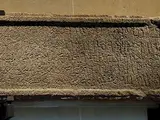
- Namāra inscription (Louvre, AO 4083) Epitaph of Imruʾ al-Qays son of ʿAmr inscription 7 Kaslūl 223 of Bostra = 7 December 328 CE about ↗ Funerary monument of Imruʾ al-Qays, 'king of the Arabs', listing campaigns to Najrān and the tribes who 'became phylarchs for the Romans'. Arabic in Nabataean script cited in §01 §01 Late Antique Arabia
- Sozomen, Ecclesiastical History 6.38 Sozomen, Ecclesiastical History text c. 440s CE about ↗ Queen Mavia's war with Rome and her demand for the monk Moses as bishop; the Saracens as descendants of Ishmael and Hagar, some of whom 'inclined to the Hebrew customs and laws'. Greek cited in §01 §01 Late Antique Arabia
- Zabad inscription (Brussels, Art & History Museum) Trilingual lintel of the martyrium of St Sergius at Zabad inscription 823 of the Seleucid era = 512 CE about ↗ Greek, Syriac and Paleo-Arabic texts at a Christian shrine near Aleppo; the Arabic names the Arab Christians associated with its building. Greek, Syriac and Arabic cited in §01 §01 Late Antique Arabia
- Biʾr Ḥimā inscriptions of Yūsuf Asʾar Yathʾar's commanders (Ja 1028, Ry 507, Ry 508) Sabaic campaign inscriptions inscription c. 523 CE about ↗ Record Yūsuf's campaign against the Aksumites and their allies, including Najrān, with totals of the dead, prisoners and livestock. Sabaic cited in §01 §01 Late Antique Arabia
- Letter of Simeon of Beth Arsham Simeon of Beth Arsham, Letter on the Ḥimyarite martyrs letter c. 524 CE about ↗ A Miaphysite bishop's account, written soon after the event from news received at the Lakhmid court, of the killing of the Christians of Najrān. Syriac cited in §01 §01 Late Antique Arabia
- Jabal Usays inscription Graffito of Ruqaym son of Maʿarrif inscription 423 of Bostra = 528–529 CE about ↗ 'Al-Ḥārith the king sent me to Usays as a frontier guard': the only material evidence of Jafnid control on the ground. Paleo-Arabic cited in §01 §01 Late Antique Arabia
- CIH 541 (the Marib dam inscription) Inscription of Abraha inscription 548 CE about ↗ Abraha records the suppression of a revolt, the repair of the Marib dam and envoys from Aksum, Rome, Persia, the Ghassanids and the Lakhmids. Sabaic cited in §01 §01 Late Antique Arabia
- Ry 506 (Murayghān 1) Inscription of Abraha inscription 552 CE about ↗ 'With Raḥmānān's might and that of His Messiah' Abraha raids Maʿadd for the fourth time; battle with the Banū ʿĀmir. Sabaic cited in §01 §01 Late Antique Arabia
- Murayghān 3 Inscription of Abraha inscription after 552 CE about ↗ Abraha claims to have 'seized all the Arabs of Maʿadd and Hagar and Khaṭṭ and Ṭayy and Yathrib and Guzām'. Sabaic cited in §01 §01 Late Antique Arabia
- Ḥarrān inscription (Lejā, Syria) Dedication of the martyrium of St John by Sharaḥīl son of Ẓālim inscription 463 of Bostra = 568 CE about ↗ A phylarch's bilingual dedication of a martyr's shrine, among the earliest examples of the Arabic script. Greek and Paleo-Arabic cited in §01 §01 Late Antique Arabia
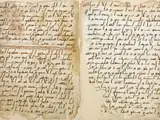
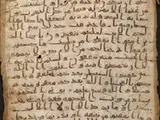
- Birmingham Qur'an manuscript (Cadbury Research Library, Mingana Islamic Arabic 1572a) Two parchment leaves of the Qur'an, suras 18–20 manuscript parchment radiocarbon 568–645 CE about ↗ Two ḥijāzī-script leaves radiocarbon dated by the Oxford Radiocarbon Accelerator Unit to 568–645 CE (95.4%); part of the same codex as Paris BnF Arabe 328(c). Arabic cited in §00 cited in §03 §00 How We Know
- Qurʾan 96:1–5 The Qur'an verse c. 610 CE (by tradition) read the text ↗ 'Read! In the name of your Lord who created': by tradition the first revelation; God teaches 'by the pen'. Arabic cited in §03 §03 The Qur'an
- Qurʾan 30:2–4 Qurʾan, Sūrat al-Rūm verse 7th c. CE read the text ↗ 'The Romans have been defeated in the nearest land…': the Qur'an's one checkable reference to a contemporary event, the Persian conquest of 613–614. Arabic cited in §00 cited in §01 cited in §04 §00 How We Know
- Qur'an 105 The Qur'an scripture early 7th c. CE about ↗ Sūrat al-Fīl: God's destruction of 'the army of the elephant' with birds and stones. Arabic cited in §01 §01 Late Antique Arabia
- Qur'an 106 The Qur'an scripture early 7th c. CE about ↗ Sūrat Quraysh: the tribe's 'winter and summer journeys' and the 'Lord of this House'. Arabic cited in §01 §01 Late Antique Arabia
- Qur'an 85:4–8 The Qur'an scripture early 7th c. CE about ↗ 'Damned were the makers of the trench', who burned believers for their faith; traditionally linked with Najrān. Arabic cited in §01 §01 Late Antique Arabia
- Qur'an 50:16 The Qur'an scripture 610–632 CE read the text ↗ 'We are closer to him than his jugular vein': God's nearness to the self, a favourite verse of the mystics. Arabic cited in §07 §07 The Mystics: Sufism
- Qur'an 29:61 The Qur'an scripture early 7th c. CE about ↗ The disbelievers, asked who created the heavens and earth, 'are sure to say, God'. Arabic cited in §01 §01 Late Antique Arabia
- Qurʾan 75:16–19 The Qur'an verse c. 610–632 CE read the text ↗ The prophet is told not to hurry his tongue: God will see to the text's 'collection and recitation'. Arabic cited in §03 §03 The Qur'an
- Qurʾan 25:32 The Qur'an verse c. 610–632 CE read the text ↗ Critics ask why the Qur'an was not sent down all at once; it was given 'in gradual revelation'. Arabic cited in §03 §03 The Qur'an
- Qurʾan 15:9 The Qur'an verse c. 610–632 CE read the text ↗ God has sent down the 'Reminder' and will guard it: the basis of the doctrine of the text's preservation. Arabic cited in §03 §03 The Qur'an
- Qurʾan 85:21–22 The Qur'an verse c. 610–632 CE read the text ↗ 'A glorious Qur'an [written] on a preserved Tablet': the Qur'an's heavenly original. Arabic cited in §03 §03 The Qur'an
- Qurʾan 2:106 The Qur'an verse c. 610–632 CE read the text ↗ Revelations 'superseded or forgotten' are replaced with something better or similar: the basis of the theory of abrogation. Arabic cited in §03 §03 The Qur'an
- Qurʾan 87:6–7 The Qur'an verse c. 610–632 CE read the text ↗ The prophet will be taught and will not forget, 'unless God wishes'. Arabic cited in §03 §03 The Qur'an
- Qurʾan 29:48 The Qur'an verse c. 610–632 CE read the text ↗ The prophet never recited a scripture before this one nor wrote one with his hand. Arabic cited in §03 §03 The Qur'an
- Qurʾan 16:103 The Qur'an verse c. 610–632 CE read the text ↗ Answering the charge that a man teaches Muhammad: that man's language is foreign, this revelation 'clear Arabic'. Arabic cited in §03 §03 The Qur'an
- Qurʾan 2:23 The Qur'an verse c. 610–632 CE read the text ↗ The challenge to doubters to produce a single sura like the Qur'an. Arabic cited in §03 §03 The Qur'an
- Qurʾan 19:16–17 The Qur'an verse c. 610–632 CE read the text ↗ Mary withdraws to a place to the east, and God's Spirit appears to her as a man: the annunciation. Arabic cited in §03 §03 The Qur'an
- Qurʾan 4:157 The Qur'an verse c. 610–632 CE read the text ↗ 'They did not kill him, nor did they crucify him, though it was made to appear like that to them.' Arabic cited in §03 §03 The Qur'an
- Qurʾan 18:9–26 The Qur'an verse c. 610–632 CE read the text ↗ The Companions of the Cave: the Christian legend of the Seven Sleepers of Ephesus, retold without names or place. Arabic cited in §03 §03 The Qur'an
- Qurʾan 18:83–98 The Qur'an verse c. 610–632 CE read the text ↗ Dhū l-Qarnayn travels to the setting and rising sun and builds a barrier against Gog and Magog; widely identified with Alexander. Arabic cited in §03 §03 The Qur'an
- Qurʾan 53:19–23 The Qur'an verse c. 610–632 CE read the text ↗ The goddesses al-Lāt, al-ʿUzzā and Manāt dismissed as 'names you have invented': the setting of the Satanic verses reports. Arabic cited in §01 cited in §03 §03 The Qur'an
- Qurʾan 22:52 The Qur'an verse c. 610–632 CE read the text ↗ Satan insinuated into the wishes of every prophet, 'but God removes what Satan insinuates'. Arabic cited in §03 §03 The Qur'an
- Qur'an 33:40 The Qur'an scripture 610–632 CE (recited); standard text c. 650 read the text ↗ Muhammad is 'God's Messenger and the seal of the prophets'; one of the four places the Qur'an names him. Arabic cited in §02 cited in §10 §02 Muhammad
- Qur'an 48:29 The Qur'an scripture 610–632 CE (recited); standard text c. 650 read the text ↗ 'Muhammad is the Messenger of God': the Qur'an names him and describes his followers. Arabic cited in §02 §02 Muhammad
- Qur'an 7:157 The Qur'an scripture 610–632 CE (recited); standard text c. 650 read the text ↗ 'The unlettered prophet' (al-nabī al-ummī), described in the Torah and the Gospel. Arabic cited in §02 §02 Muhammad
- Qur'an 106:1-4 The Qur'an scripture 610–632 CE (recited); standard text c. 650 read the text ↗ The Qur'an names Quraysh and ties their security and journeys to 'the Lord of this House'. Arabic cited in §02 §02 Muhammad
- Qur'an 3:123 The Qur'an scripture 610–632 CE (recited); standard text c. 650 read the text ↗ 'God helped you at Badr': the only battle of Muhammad's lifetime the Qur'an names. Arabic cited in §02 §02 Muhammad
- Qur'an 33:26-27 The Qur'an scripture 610–632 CE (recited); standard text c. 650 read the text ↗ People of the Book who supported the besiegers are brought down from their strongholds; some killed, some taken captive; their land and goods passed on. Arabic cited in §02 §02 Muhammad
- Qur'an 59:2 The Qur'an scripture 610–632 CE (recited); standard text c. 650 read the text ↗ Those of the People of the Book who broke faith are driven from their homes 'at the first gathering of forces'; traditionally the Naḍīr. Arabic cited in §02 §02 Muhammad
- Qur'an 48:1 The Qur'an scripture 610–632 CE (recited); standard text c. 650 read the text ↗ 'We have opened up a path to clear triumph for you', traditionally read as referring to the truce of al-Ḥudaybiyya, 628. Arabic cited in §02 §02 Muhammad
- Qur'an 93:6-8 The Qur'an scripture 610–632 CE (recited); standard text c. 650 read the text ↗ 'Did He not find you an orphan and shelter you?' Consistent with the tradition's account of Muhammad's childhood. Arabic cited in §02 §02 Muhammad
- Qur'an 105:1 The Qur'an scripture 610–632 CE (recited); standard text c. 650 read the text ↗ 'How your Lord dealt with the army of the elephant': the event the tradition links with Muhammad's birth year. Arabic cited in §02 §02 Muhammad
- Qur'an 61:6 The Qur'an scripture 610–632 CE (recited); standard text c. 650 read the text ↗ Jesus announces 'a messenger to follow me whose name will be Aḥmad'. Arabic cited in §02 §02 Muhammad
- Qur'an 33:37 The Qur'an scripture 610–632 CE (recited); standard text c. 650 read the text ↗ The marriage of the prophet to the former wife of his adopted son Zayd (Zaynab bint Jaḥsh). Arabic cited in §02 §02 Muhammad
- Qur'an 74:1-2 The Qur'an scripture 610–632 CE (recited); standard text c. 650 read the text ↗ 'You, wrapped in your cloak, arise and give warning!', placed by the tradition among the first revelations. Arabic cited in §02 §02 Muhammad
- Qur'an 96:1 The Qur'an scripture 610–632 CE (recited); standard text c. 650 read the text ↗ 'Read! In the name of your Lord who created', traditionally the first revelation. Arabic cited in §02 §02 Muhammad
- Qur'an 25:7 The Qur'an scripture 610–632 CE (recited); standard text c. 650 read the text ↗ Opponents ask: 'What sort of messenger is this? He eats food and walks about in the marketplaces!' Arabic cited in §02 §02 Muhammad
- Qurʾan 45:18 The Qur'an verse c. 610–632 CE read the text ↗ 'We have set you on a clear religious path (sharīʿa), so follow it': the Qur'an's one use of the noun sharīʿa. Arabic cited in §06 §06 The Abbasids: Law, Hadith and Theology
- Qur'an 13:28 The Qur'an scripture 610–632 CE read the text ↗ 'In the remembrance of God hearts find peace': the Qur'anic root of dhikr, the central Sufi practice. Arabic cited in §07 §07 The Mystics: Sufism
- The 'Constitution of Medina' (Ibn Isḥāq via Ibn Hishām; Abū ʿUbayd, Kitāb al-Amwāl) Pacts between Muhammad, the believers of Quraysh and Yathrib, and their Jewish allies text c. 622–627 CE (preserved in 8th–9th c. works) about ↗ Declares the believers 'one community to the exclusion of other people', regulates blood-money by clan, and makes the Jews of Banū ʿAwf 'a community along with the believers; to the Jews their religion and to the Muslims theirs'. Arabic cited in §02 §02 Muhammad
- Qurʾan 3:144 Qurʾan, Sūrat Āl ʿImrān verse 7th c. CE read the text ↗ 'Muhammad is only a messenger; messengers have passed away before him': one of four places the Qur'an names Muhammad. Arabic cited in §00 cited in §02 §00 How We Know
- Qurʾan 3:18–19 Qurʾan, Sūrat Āl ʿImrān verse 7th c. CE read the text ↗ 'The religion with God is islām': quoted on the Dome of the Rock in 691–692. Arabic cited in §00 cited in §05 §00 How We Know
- Qur'an 3:67 The Qur'an scripture early 7th c. CE about ↗ Abraham 'was neither a Jew nor a Christian' but ḥanīf, 'upright', never an idolater. Arabic cited in §01 §01 Late Antique Arabia
- Qur'an 3:96 The Qur'an scripture early 7th c. CE about ↗ 'The first House established for people' is the one at Bakka, identified with Mecca. Arabic cited in §01 §01 Late Antique Arabia
- Qur'an 2:256 The Qur'an scripture 610–632 CE read the text ↗ 'There is no compulsion in religion: true guidance has become distinct from error.' Arabic cited in §04 cited in §13 §04 The Conquests and the First Caliphs
- Qur'an 5:54 The Qur'an scripture 610–632 CE read the text ↗ God will bring a people 'He loves and who love Him': the Qur'anic basis Sufis cited for mutual love between God and believers. Arabic cited in §07 §07 The Mystics: Sufism
- Qur'an 2:127 The Qur'an scripture early 7th c. CE about ↗ Abraham and Ishmael raise the foundations of the House and pray for it to be accepted. Arabic §01 Late Antique Arabia
- Qur'an 22:26 The Qur'an scripture early 7th c. CE about ↗ God shows Abraham the site of the House and tells him to purify it for worshippers. Arabic §01 Late Antique Arabia
- Qur'an 24:31 The Qur'an scripture early 7th c. CE about ↗ Believing women should guard their modesty and draw their head-coverings (khumur) over their necklines. Arabic §11 The Twentieth Century
- Qur'an 33:59 The Qur'an scripture early 7th c. CE about ↗ The Prophet's wives, daughters and believing women should draw their outer garments (jalābīb) close, to be recognised and not insulted. Arabic §11 The Twentieth Century
- Qur'an 33:53 The Qur'an scripture early 7th c. CE about ↗ Visitors should ask the Prophet's wives for things from behind a screen (ḥijāb). Arabic §11 The Twentieth Century
- Qur'an 17:1 The Qur'an scripture early 7th c. CE about ↗ God takes his servant by night from the sacred place of worship to the furthest place of worship (al-masjid al-aqṣā). Arabic §05 The Umayyads
- Qurʾan 4:171 Qurʾan, Sūrat al-Nisāʾ verse 7th c. CE read the text ↗ 'Do not say "Three"… God is only one God': the verse on Jesus quoted on the Dome of the Rock. Arabic cited in §00 cited in §05 §00 How We Know
- Qurʾan 4:59 The Qur'an verse c. 622–632 CE read the text ↗ 'Obey God and the Messenger, and those in authority among you'; disputes are to be referred to God and the Messenger. Arabic cited in §06 §06 The Abbasids: Law, Hadith and Theology
- Qurʾan 59:7 The Qur'an verse c. 622–632 CE read the text ↗ 'Accept whatever the Messenger gives you, and abstain from whatever he forbids you', in a verse on the division of gains. Arabic cited in §06 §06 The Abbasids: Law, Hadith and Theology
- Qur'an 9:29 The Qur'an scripture 610–632 CE read the text ↗ Fight the People of the Book who do not believe 'until they pay the tax (jizya) and agree to submit'. Arabic cited in §04 cited in §09 §04 The Conquests and the First Caliphs
- Doctrina Jacobi nuper baptizati V.16 Teaching of Jacob, Newly Baptised prose set in 634 CE; written c. 634 about ↗ A Jew reports that 'a prophet has appeared, coming with the Saracens', who claims the keys of paradise; the earliest reference to the prophet of the conquerors. Greek cited in §00 §00 How We Know
- Sophronius of Jerusalem, Christmas sermon (ed. H. Usener, Rheinisches Museum NF 41, 1886, pp. 500–16) Sophronius, Sermon on the Nativity sermon 25 December 634 about ↗ The patriarch of Jerusalem laments that Christians cannot go to Bethlehem for Christmas, 'bound by fear of the Saracens'. Greek cited in §04 §04 The Conquests and the First Caliphs
- al-Ṭabarī, Taʾrīkh, year 15 AH (trans. Y. Friedmann, The History of al-Ṭabarī XII, 1992) The guarantee (amān) of ʿUmar to the people of Aelia (Jerusalem) treaty 637 or 638 CE, as given in a text of the early 10th c. about ↗ ʿUmar's guarantee of safety to Jerusalem's inhabitants, their property, churches and crosses, as preserved by al-Ṭabarī with later additions. Arabic cited in §04 §04 The Conquests and the First Caliphs
- Thomas the Presbyter, Chronicle (British Library Add. MS 14,643) Syriac Chronicle of 640 prose c. 640 CE (manuscript copied 724) about ↗ Records a battle on 4 February 634 between the Romans and 'the Arabs of Muhammad' twelve miles east of Gaza: the earliest datable text to name Muhammad. Syriac cited in §00 cited in §02 cited in §04 §00 How We Know
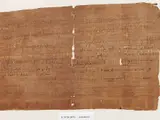
- PERF 558 (Austrian National Library, Papyrus Erzherzog Rainer) Greek–Arabic receipt from Herakleopolis text Jumādā I 22 AH / 25 April 643 CE about ↗ Receipt by the commander ʿAbd Allāh ibn Jābir for 65 sheep; the earliest dated Arabic papyrus, dated by the Hijri era, with dotted letters; the Greek calls the Arabs magaritai. Arabic and Greek cited in §00 cited in §02 cited in §03 cited in §04 §00 How We Know
- Inscription of Zuhayr, Qāʿ al-Muʿtadil near al-ʿUlā Rock graffito inscription 24 AH / 644–645 CE about ↗ 'I, Zuhayr, wrote [this] at the time ʿUmar died in the year four and twenty': the earliest dated Islamic inscription, with dotted letters. Arabic cited in §00 cited in §04 §00 How We Know
- Ṣanʿāʾ 1 palimpsest (Dār al-Makhṭūṭāt, DAM 01-27.1) Qur'an palimpsest from the Great Mosque of Ṣanʿāʾ manuscript 7th c. CE (lower text) about ↗ Found in 1972; the erased lower text is a non-ʿUthmānic Qur'an with variant wording and sura order, overwritten with the standard text. Arabic cited in §00 cited in §03 §00 How We Know
- Tübingen University Library, Ma VI 165 Kufic Qur'an fragment manuscript parchment radiocarbon 649–675 CE about ↗ Fragment acquired from the Wetzstein collection in 1864, radiocarbon dated in Zürich to 649–675 CE (above 95%), announced 2014. Arabic cited in §00 cited in §03 §00 How We Know
- Khuzistan Chronicle (Guidi Chronicle), ed. I. Guidi, 1903 Anonymous Syriac chronicle from Khuzistan chronicle no later than the 660s about ↗ Covers c. 590–660, including the Arab conquest of Susa and Shushtar, and names Muhammad as leader of the sons of Ishmael. Syriac cited in §04 §04 The Conquests and the First Caliphs
- History attributed to Sebeos (trans. R. W. Thomson and J. Howard-Johnston, 1999) Armenian History prose soon after 661 CE about ↗ Describes Mahmet, a merchant of the sons of Ishmael, who taught the Arabs the God of Abraham, followed by an account of the conquests. Armenian cited in §00 cited in §02 §00 How We Know
- Greek inscription in the baths of Hammat Gader Building inscription of the governor ʿAbd Allāh ibn Abī Hāshim inscription 5 December 662 CE (42 AH) read the text ↗ Dates a restoration 'in the days of the servant of God Muʿāwiya, the commander of the faithful' and 'according to the Arabs, the 42nd year'; carved with a cross. Greek cited in §05 §05 The Umayyads
- Maronite Chronicle, on Muʿāwiya's accession Maronite Chronicle (Syriac) chronicle c. 660s CE about ↗ The Arab chiefs give allegiance to Muʿāwiya in Jerusalem; he prays at Christian holy places and 'did not wear a crown like other kings'. Syriac cited in §05 §05 The Umayyads
- Paris, BnF Arabe 328a–b; St Petersburg, NLR Marcel 18; Vatican, Vat. Ar. 1605/1; Khalili KFQ 60 Codex Parisino-petropolitanus manuscript c. 650–700 CE (palaeography) about ↗ 118 surviving leaves, about 45% of the text, copied by five scribes; dated by Déroche to the third quarter of the seventh century. Arabic (ḥijāzī script) cited in §03 §03 The Qur'an
- Dam inscription of Muʿāwiya near al-Ṭāʾif Building inscription inscription 58 AH / 677–678 CE about ↗ Records the dam built for 'the servant of God Muʿāwiya, commander of the believers' in the year fifty-eight; names God and the caliph, not Muhammad. Arabic cited in §00 cited in §04 cited in §05 §00 How We Know
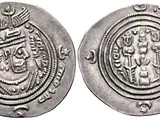
- Arab-Sasanian drachm of ʿAbd al-Malik ibn ʿAbd Allāh, Bīshāpūr (British Museum) Silver coin coin 66 AH / 685–686 CE about ↗ Margin legend 'bism Allāh Muḥammad rasūl Allāh': the earliest dated Muslim text to name Muhammad, struck for a Zubayrid governor. Arabic and Middle Persian cited in §00 cited in §02 cited in §05 §00 How We Know
- John of Nikiu, Chronicle, chs. CXI–CXXI (trans. R. H. Charles, 1916) John of Nikiu, Chronicle chronicle c. 690 CE (Ethiopic version 1602) read the text ↗ A Coptic bishop's account of the Arab conquest of Egypt: the treaty for Alexandria, ʿAmr's taxes, his protection of churches, and early converts to Islam. Ethiopic (Geʿez), from Arabic, from Greek or Coptic cited in §04 §04 The Conquests and the First Caliphs
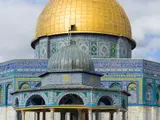
- Dome of the Rock, inner arcade inscription Foundation inscription of ʿAbd al-Malik inscription 72 AH / 691–692 CE about ↗ Monumental kufic band of Qur'anic passages on God's oneness and Jesus as messenger (4:171, 3:18–19, 19:33–36), dated 72; the founder's name was later replaced by al-Maʾmūn's. Arabic cited in §00 cited in §03 cited in §05 §00 How We Know
- Road inscription of ʿAbd al-Malik near Fīq (ʿAqabat Fīq), Golan Arabic road-building inscription inscription Muḥarram 73 AH / May–June 692 CE read the text ↗ ʿAbd al-Malik, commander of the believers, orders a difficult pass levelled; the work done by Yaḥyā ibn al-Ḥakam. The oldest Islamic inscription on road building. Arabic cited in §05 §05 The Umayyads
- 'Standing caliph' dinar of ʿAbd al-Malik, Damascus Arab-Byzantine gold dinar coin 76 AH / 695–696 CE read the text ↗ A standing caliph with sword; 'In the name of God. There is no god but God alone. Muhammad is the messenger of God'; 'this dinar was struck in the year 76'. Arabic cited in §05 §05 The Umayyads
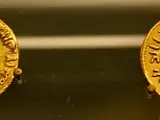
- Reformed gold dinar of ʿAbd al-Malik Aniconic Umayyad coinage coin 77 AH / 696–697 CE about ↗ The first purely epigraphic coins: the shahāda and Qur'an 9:33 on the obverse, sura 112 on the reverse, the date and no images. Arabic cited in §00 cited in §05 §00 How We Know
- John of Damascus, On Heresies 100 Fount of Knowledge, part 2 prose c. 740s CE about ↗ The chapter on 'the heresy of the Ishmaelites', an early Christian polemic against Islam. Greek cited in §05 §05 The Umayyads
- Ibn Isḥāq, Sīrat Rasūl Allāh The Life of Muhammad (recension of Ibn Hishām) prose mid-8th c. CE (Ibn Hishām's recension, early 9th c.) about ↗ The earliest surviving Muslim biography of Muhammad; source for his alliance and conflicts with the Jewish tribes of Medina (Qaynuqāʿ, Naḍīr, Qurayẓa) and the conquest of Khaybar. Arabic cited in §00 cited in §01 cited in §02 cited in §04 §00 How We Know
- Mālik ibn Anas, al-Muwaṭṭaʾ Mālik ibn Anas, al-Muwaṭṭaʾ (recension of Yaḥyā ibn Yaḥyā al-Laythī) prose before 795 CE read the text ↗ The oldest surviving book of Islamic law: reports of the Prophet, companions and successors set beside the practice of Medina. Arabic cited in §06 §06 The Abbasids: Law, Hadith and Theology
- Timothy I, Dialogue with the caliph al-Mahdi Apology of Timothy the Patriarch before the caliph Mahdi prose c. 782 CE about ↗ The patriarch's written account of his debate with the caliph on the Trinity and on Muhammad. Syriac (and Arabic) cited in §06 §06 The Abbasids: Law, Hadith and Theology
- Tashkent, Muslim Board of Uzbekistan: the Samarkand Kufic Qur'an Samarkand Kufic Qur'an manuscript 8th–9th c. CE about ↗ Venerated as ʿUthmān's own copy; palaeography and radiocarbon place it in the eighth or ninth century. Arabic (Kufic script) cited in §03 §03 The Qur'an
- Hishām ibn al-Kalbī, Kitāb al-Aṣnām The Book of Idols text early 9th c. CE about ↗ The fullest Muslim account of pre-Islamic Arabian gods: al-Lāt at Ṭāʾif, al-ʿUzzā at Nakhla, Manāt, Hubal in the Kaʿba, ʿAmr ibn Luḥayy. Arabic cited in §01 §01 Late Antique Arabia
- al-Shāfiʿī, al-Risāla Muḥammad ibn Idrīs al-Shāfiʿī, The Epistle on Legal Theory prose before 820 CE about ↗ The first surviving work of Islamic legal theory: the Prophet's sunna, known by soundly transmitted reports, is binding alongside the Qur'an; consensus and analogy follow. Arabic cited in §06 §06 The Abbasids: Law, Hadith and Theology
- al-Ṭabarī, Taʾrīkh, the letters of al-Maʾmūn on the miḥna (year 218 AH) al-Ṭabarī, The History of al-Ṭabarī, vol. 32, trans. C. E. Bosworth prose 833 CE (letters); early 10th c. (history) about ↗ al-Maʾmūn orders his governor in Baghdad to test judges and scholars on the createdness of the Qur'an and to dismiss those who refuse. Arabic cited in §06 §06 The Abbasids: Law, Hadith and Theology
- Ibn Saʿd, al-Ṭabaqāt al-kabīr, vol. 1 (the gharānīq report) al-Ṭabaqāt al-kabīr prose before 845 CE about ↗ Reports that Muhammad recited words praising the three goddesses before Gabriel corrected him. Arabic cited in §03 §03 The Qur'an
- Ibn Saʿd, al-Ṭabaqāt al-kabīr Ibn Saʿd, The Great Book of Generations book before 845 CE about ↗ The earliest large biographical dictionary of the Prophet, his family and companions; vol. 1 on Muhammad, vol. 8 on the women, including his wives. Arabic cited in §02 §02 Muhammad
- Pact of Umar (al-Ṭurṭūshī, Sirāj al-Mulūk) Pact of Umar (Shurūṭ ʿUmar) prose 9th c. CE (form); attributed to Umar I, 634–644 about ↗ Conditions on non-Muslim subjects, framed as a letter from Christians to the caliph Umar: no new churches or synagogues, distinctive dress, no riding on saddles or bearing arms. Surviving versions are later than Umar; a legal ideal, enforced unevenly. Arabic cited in §04 cited in §05 cited in §06 §04 The Conquests and the First Caliphs
- al-Bukhārī, Ṣaḥīḥ 4986 Ṣaḥīḥ al-Bukhārī, Faḍāʾil al-Qurʾān prose compiled before 870 CE read the text ↗ Zayd ibn Thābit's account of collecting the Qur'an for Abū Bakr after al-Yamāma, 'from palm stalks, thin white stones' and men's memories. Arabic cited in §03 §03 The Qur'an
- al-Bukhārī, Ṣaḥīḥ 4987 Ṣaḥīḥ al-Bukhārī, Faḍāʾil al-Qurʾān prose compiled before 870 CE read the text ↗ ʿUthmān has Zayd and three Qurashīs copy Ḥafṣa's sheets, sends a copy to every province and orders other copies burned. Arabic cited in §03 §03 The Qur'an
- al-Bukhārī, Ṣaḥīḥ 4992 Ṣaḥīḥ al-Bukhārī, Faḍāʾil al-Qurʾān prose compiled before 870 CE read the text ↗ ʿUmar and Hishām ibn Ḥakīm recite sura 25 differently; the prophet approves both: the Qur'an was revealed in 'seven aḥruf'. Arabic cited in §03 §03 The Qur'an
- al-Bukhārī, Ṣaḥīḥ 5133 al-Bukhārī, al-Jāmiʿ al-ṣaḥīḥ, Book of Marriage book compiled before 870 CE read the text ↗ ʿĀʾisha reports (via Hishām ibn ʿUrwa from his father) that the Prophet married her at six and consummated the marriage at nine, and that she was with him nine years. Arabic cited in §02 §02 Muhammad
- al-Bukhārī, Ṣaḥīḥ 3894 al-Bukhārī, al-Jāmiʿ al-ṣaḥīḥ, Merits of the Anṣār book compiled before 870 CE read the text ↗ ʿĀʾisha's longer account, via Hishām ibn ʿUrwa: engaged at six, playing on a swing when her mother prepared her for the marriage in Medina. Arabic cited in §02 §02 Muhammad
- al-Bukhārī, Ṣaḥīḥ 3896 al-Bukhārī, al-Jāmiʿ al-ṣaḥīḥ, Merits of the Anṣār book compiled before 870 CE read the text ↗ ʿUrwa (via Hishām) dates Khadīja's death three years before the hijra and the contract with ʿĀʾisha after it. Arabic cited in §02 §02 Muhammad
- al-Bukhārī, al-Jāmiʿ al-ṣaḥīḥ Ṣaḥīḥ al-Bukhārī book compiled before 870 CE read the text ↗ The most authoritative Sunni hadith collection, made with the classical tools of isnād criticism. Arabic cited in §00 cited in §06 §00 How We Know
- Muslim, Ṣaḥīḥ 1422 (four reports) Muslim ibn al-Ḥajjāj, al-Musnad al-ṣaḥīḥ, Book of Marriage book compiled before 875 CE read the text ↗ Four versions of ʿĀʾisha's age: two via Hishām ibn ʿUrwa; one via al-Zuhrī from ʿUrwa (seven at the contract, nine with her dolls, eighteen at his death); one via al-Aʿmash, Ibrāhīm and al-Aswad. Arabic cited in §02 §02 Muhammad
- al-Bukhārī 3942 Ṣaḥīḥ al-Bukhārī, Book of the Merits of the Helpers text compiled before 870 CE read the text ↗ On arriving in Medina the Prophet found the Jews fasting on the tenth of Muḥarram and fasted on it too; the origin of the Sunni fast of ʿĀshūrāʾ. Arabic §05 The Umayyads
- al-Yaʿqūbī, Taʾrīkh, on the building of the Dome of the Rock al-Yaʿqūbī, History (trans. Guy Le Strange, Palestine under the Moslems, 1890) chronicle late 9th c. CE about ↗ ʿAbd al-Malik forbids Syrians the pilgrimage while Ibn al-Zubayr holds Mecca and declares the Rock 'in the place of the Kaʿba'. Arabic cited in §05 §05 The Umayyads
- al-Ṭabarī, Taʾrīkh al-rusul wa-l-mulūk and Jāmiʿ al-bayān, on Q 22:52 (the gharānīq report) History of the Prophets and Kings; Commentary prose early 10th c. CE about ↗ Al-Ṭabarī's versions of the Satanic verses story, citing Ibn Isḥāq and other early authorities. Arabic cited in §03 §03 The Qur'an
- al-Ṭabarī, Taʾrīkh al-rusul wa-l-mulūk al-Ṭabarī, The History of Prophets and Kings book early 10th c. CE about ↗ The great annalistic history, preserving extracts of Ibn Isḥāq and other early narrators on Muhammad's life and death. Arabic cited in §02 cited in §04 §02 Muhammad
- al-Ṭabarī, Taʾrīkh al-rusul wa-l-mulūk, on Karbalāʾ (after Abū Mikhnaf) al-Ṭabarī, History of the Prophets and Kings chronicle early 10th c. CE, from Abū Mikhnaf (d. 774) about ↗ The fullest account of al-Ḥusayn's journey and death at Karbalāʾ on 10 Muḥarram 61 AH, preserved from the Kufan historian Abū Mikhnaf. Arabic cited in §05 §05 The Umayyads
- al-Ashʿarī, Maqālāt al-islāmiyyīn Abū l-Ḥasan al-Ashʿarī, Maqālāt al-islāmiyyīn prose before 936 CE about ↗ A survey of the opinions of Muslim sects and theologians by the founder of Ashʿarī theology, a former Muʿtazilī. Arabic cited in §06 §06 The Abbasids: Law, Hadith and Theology
- Ibn Mujāhid, Kitāb al-Sabʿa fī l-qirāʾāt Kitāb al-Sabʿa book before 936 CE about ↗ Selects seven readers of Mecca, Medina, Damascus, Basra and Kufa as the authoritative readings of the Qur'an. Arabic cited in §03 §03 The Qur'an
- Saadia Gaon, Book of Beliefs and Opinions Kitāb al-Amānāt wa-l-Iʿtiqādāt (Hebrew: Emunot ve-Deʿot) prose 933 CE read the text ↗ The first systematic Jewish theology, using the methods of Muslim kalām. III.7: "our nation is a nation only by virtue of its laws", against the claim that the Torah had been abrogated. Judeo-Arabic cited in §06 §06 The Abbasids: Law, Hadith and Theology
- Ibn Bābawayh, Kamāl al-dīn wa-tamām al-niʿma, the final letter to al-Samarrī Ibn Bābawayh (al-Shaykh al-Ṣadūq), Kamāl al-dīn prose 941 CE (letter); late 10th c. (compilation) about ↗ The hidden imam's last letter to his fourth agent: he will die in six days, appoint no successor, and 'the complete occultation has occurred'. Arabic cited in §06 §06 The Abbasids: Law, Hadith and Theology
- al-Kulaynī, al-Kāfī Muḥammad ibn Yaʿqūb al-Kulaynī, al-Kāfī prose completed c. 941 CE about ↗ The first of the four canonical Twelver hadith books, with more than 16,000 reports transmitted through the imams. Arabic cited in §06 §06 The Abbasids: Law, Hadith and Theology
- Abū Naṣr al-Sarrāj, Kitāb al-Lumaʿ fī l-taṣawwuf The Book of Flashes on Sufism text before 988 CE about ↗ One of the earliest surviving Sufi manuals: stations, states and a defence of the ecstatic sayings. Arabic cited in §07 §07 The Mystics: Sufism
- al-Muqaddasī, Aḥsan al-taqāsīm, on the mosque of Damascus and the Dome of the Rock al-Muqaddasī, The Best Divisions for Knowledge of the Regions (trans. Guy Le Strange, Palestine under the Moslems, 1890) geography 985 CE about ↗ His uncle explains al-Walīd's mosque and ʿAbd al-Malik's Dome as answers to Syria's churches and the Holy Sepulchre, 'lest it should dazzle the minds of the Muslims'. Arabic cited in §05 §05 The Umayyads
- Ibn al-Nadīm, Fihrist (al-Maʾmūn's dream of Aristotle) Ibn al-Nadīm, al-Fihrist prose 987 CE about ↗ al-Maʾmūn dreams that Aristotle tells him the good is what reason approves, then religious law, then public opinion; given as a cause of the translations. Arabic cited in §06 §06 The Abbasids: Law, Hadith and Theology
- Abū ʿAbd al-Raḥmān al-Sulamī, Dhikr al-niswa al-mutaʿabbidāt al-ṣūfiyyāt Remembrance of the Women Devotees and Sufis text before 1021 CE about ↗ Short notices of early women ascetics and Sufis, including more than one woman called Rābiʿa; translated by Rkia Cornell as Early Sufi Women (1999). Arabic cited in §07 §07 The Mystics: Sufism
- al-Bīrūnī, Kitāb al-Hind, ch. 58 Alberuni's India, tr. Edward C. Sachau (London: Trübner, 1888), vol. 2, p. 103 text c. 1030 CE read the text ↗ "The image was destroyed by the Prince Mahmūd … A.H. 416." A scholar at Maḥmūd's own court records the destruction of the Somanātha liṅga in 1026 matter-of-factly. Arabic cited in §08 §08 Turks, Crusaders and Mongols
- al-Bīrūnī, Taḥqīq mā li-l-Hind, preface (trans. E. C. Sachau, Alberuni's India, 1888) Taḥqīq mā li-l-Hind (Kitāb al-Hind) book c. 1030 CE about ↗ 'I shall place before the reader the theories of the Hindus exactly as they are': a scholar of Maḥmūd of Ghazni's court sets out to describe Indian religion from its own texts. Arabic cited in §08 §08 Turks, Crusaders and Mongols
- al-Qushayrī, al-Risāla al-Qushayriyya fī ʿilm al-taṣawwuf al-Qushayrī's Epistle on Sufism text 437 AH / 1045–1046 CE about ↗ The most widely read Sufi handbook, written in Nishapur to show that the early masters held Ashʿarī Sunni beliefs; records al-Junayd's definition of Sufism and discusses the word ṣūfī. Arabic cited in §07 §07 The Mystics: Sufism
- ʿAlī al-Hujwīrī, Kashf al-maḥjūb The Unveiling of the Veiled text c. 1070s CE about ↗ The first treatise on Sufism in Persian, written in Lahore; the source of the classification of masters into 'sober' and 'intoxicated' schools. Persian cited in §07 §07 The Mystics: Sufism
- al-Ghazālī, Iḥyāʾ ʿulūm al-dīn The Revival of the Religious Sciences text c. 1096–1106 CE about ↗ Forty books in four quarters — worship, daily life, the vices that destroy, the virtues that save — placing Sufi discipline inside Sunni practice. Arabic cited in §07 §07 The Mystics: Sufism
- ʿAlī ibn Ṭāhir al-Sulamī, Kitāb al-jihād Kitāb al-jihād (The Book of Jihad) prose 1105 CE about ↗ Preached in the Great Mosque of Damascus: the Franks' conquest as part of a Christian offensive that had taken Sicily and Spain, and a call to unite and fight. Survives in two incomplete Damascus manuscripts. Arabic cited in §08 §08 Turks, Crusaders and Mongols
- al-Ghazālī, al-Munqidh min al-ḍalāl The Deliverer from Error text after 1106 CE read the text ↗ Al-Ghazālī's account of his intellectual search, his crisis of Rajab 488 / July 1095 when 'God locked my tongue', his years of retreat, and his verdict that the Sufis travel the way of God. Arabic cited in §07 §07 The Mystics: Sufism
- Minbar of Nūr al-Dīn (al-Aqṣā mosque, Jerusalem) Carved wooden pulpit commissioned in Aleppo inscription 1168–1169 CE about ↗ Commissioned by Nūr al-Dīn for al-Aqṣā before Jerusalem was retaken; installed by Saladin after 1187; destroyed by arson on 21 August 1969; replica installed 2007. Arabic cited in §08 §08 Turks, Crusaders and Mongols
- Usāma ibn Munqidh, Kitāb al-iʿtibār (trans. P. K. Hitti, 1929) Kitāb al-iʿtibār (The Book of Contemplation) prose c. 1183 CE about ↗ A Syrian emir's anecdotes of the Franks, from their medicine to their courage, written for Saladin's circle; survives in a single Escorial manuscript. Arabic cited in §08 §08 Turks, Crusaders and Mongols
- Farīd al-Dīn ʿAṭṭār, Tadhkirat al-awliyāʾ Memorial of the Saints text c. 1200 CE about ↗ Persian lives of the early saints; the main source of the famous stories about Rābiʿa, written about four centuries after her. Persian cited in §07 §07 The Mystics: Sufism
- Ibn al-Athīr, al-Kāmil fī l-taʾrīkh, year 617 AH (trans. E. G. Browne, A Literary History of Persia II, 1902, pp. 427–431) al-Kāmil fī l-taʾrīkh (The Complete History) prose 1220s CE about ↗ The Mosul historian's lament on the Mongol invasion of Central Asia: 'the greatest catastrophe and the most dire calamity… which befell all men generally, and the Muslims in particular.' Arabic cited in §08 §08 Turks, Crusaders and Mongols
- Ibn ʿArabī, Fuṣūṣ al-ḥikam The Ringstones of Wisdom text 1229 CE about ↗ Short work on the wisdom of twenty-seven prophets, the most commented and most attacked of Ibn ʿArabī's books. Arabic cited in §07 §07 The Mystics: Sufism
- Ibn ʿArabī, al-Futūḥāt al-makkiyya The Meccan Openings text begun c. 1202, revised to the 1230s about ↗ Ibn ʿArabī's encyclopaedic work of some 560 chapters on the path, the divine names and the self-disclosure of God. Arabic cited in §07 §07 The Mystics: Sufism
- Ṭabaqāt-i Nāṣirī (Raverty, vol. 1, p. 552) Minhāj al-Sirāj Jūzjānī prose c. 1260 CE about ↗ Muhammad Bakhtiyār Khalji's troops take a fortified 'Bihar', kill its shaven-headed inhabitants and find it full of books: a Buddhist monastery, probably Odantapurī, sacked around 1200. Persian cited in §08 §08 Turks, Crusaders and Mongols
- Jalāl al-Dīn Rūmī, Masnavī-yi maʿnavī, ed. R. A. Nicholson The Spiritual Couplets text c. 1260–1273 CE read the text ↗ Rūmī's six-book didactic poem, opening with the lament of the reed flute cut from its reed-bed. Persian cited in §07 §07 The Mystics: Sufism
- Gravestone of Sultan Malik al-Ṣāliḥ, Samudra-Pasai (Aceh) Funerary inscription inscription 696 AH / 1297 CE about ↗ The earliest dated grave of a Muslim ruler in Southeast Asia, founder of the Samudra-Pasai sultanate on the north coast of Sumatra. Arabic cited in §08 cited in §09 §08 Turks, Crusaders and Mongols
- Ibn Taymiyya, fatwas on the Mongols (Majmūʿ al-fatāwā, vol. 28) Fatwas on fighting the Mongols prose 1299–1303 CE about ↗ The converted Ilkhanid Mongols, who judged by the yāsā rather than sharia, are to be fought as a group refusing the law of Islam, whatever they profess. Arabic cited in §08 §08 Turks, Crusaders and Mongols
- Terengganu Inscription Stone (Terengganu State Museum) Malay inscription in Jawi script inscription 702–789 AH (1303–1387 CE), date damaged about ↗ Proclaims the religion of the Prophet in the land and sets out rules of sharia; the oldest known Malay text in Arabic script; found 1887 at Kuala Berang. UNESCO Memory of the World, 2009. Malay (Jawi script) cited in §08 §08 Turks, Crusaders and Mongols
- Rashīd al-Dīn, Jāmiʿ al-tawārīkh (Edinburgh University Library, Or. MS 20) Compendium of Chronicles manuscript early 14th c. CE about ↗ Illustrated copy from Rashīd al-Dīn's scriptorium in Tabriz with a cycle of paintings of Muhammad, among the earliest surviving. Arabic cited in §00 cited in §08 cited in §09 §00 How We Know
- Ibn Taymiyya, treatise on travelling to visit tombs (Ziyārat al-qubūr / Shadd al-riḥāl) On visiting graves text 1310 CE about ↗ Ibn Taymiyya's argument that travelling specifically to visit the tombs of prophets and saints is a forbidden innovation; the controversy led to his final imprisonment. Arabic cited in §07 §07 The Mystics: Sufism
- Ibn Faḍl Allāh al-ʿUmarī, Masālik al-abṣār, on Mali (in Levtzion and Hopkins, Corpus of Early Arabic Sources, 1981) Masālik al-abṣār fī mamālik al-amṣār prose c. 1340 CE about ↗ Mansa Mūsā's spending in Cairo in 1324 lowered gold from 25 to under 22 dirhams a mithqāl for at least twelve years; information from the Cairene official Ibn Amīr Ḥājib. Arabic cited in §08 §08 Turks, Crusaders and Mongols
- Shah Ismāʿīl I's decree on the call to prayer, Tabriz, 1501 Safavid proclamation of Twelver Shiism decree 1501 CE about ↗ Ismāʿīl orders the Shia call to prayer, adding the testimony 'ʿAlī is God's friend', and the public cursing of the first three caliphs. Arabic cited in §09 §09 The Great Empires: Ottomans, Safavids, Mughals
- The maḥżar of 1579, in ʿAbd al-Qādir Badāʾūnī, Muntakhab al-tawārīkh Declaration of the Mughal scholars on Akbar's authority decree 1579 CE about ↗ Leading scholars recognise Akbar as a just ruler entitled to choose between conflicting opinions of the jurists in the interest of the state. Persian cited in §09 §09 The Great Empires: Ottomans, Safavids, Mughals
- Siyer-i Nebi, Ottoman illustrated manuscript for Murad III Life of the Prophet manuscript completed 1595 CE about ↗ Six-volume illustrated life of Muhammad completed in 1595, with 814 miniatures in which the Prophet's face is veiled. Ottoman Turkish cited in §00 cited in §09 §00 How We Know
- Aḥmad Sirhindī, Maktūbāt-i Imām-i Rabbānī Letters of Aḥmad Sirhindī letter c. 1600–1624 CE about ↗ Letters to disciples and Mughal nobles urging strict application of the sharīʿa, opposing non-Muslims in high office and rejecting the 'unity of being'. Persian cited in §09 §09 The Great Empires: Ottomans, Safavids, Mughals
- al-Fatāwā al-ʿĀlamgīriyya (Fatāwā-yi ʿĀlamgīrī) Ḥanafī legal compendium compiled for Aurangzeb law 1660s–1670s CE about ↗ A commission of scholars under Shaykh Niẓām Burhānpūrī compiles Ḥanafī rulings on worship, family, property, crime and the state; later used by British courts in India. Arabic cited in §09 §09 The Great Empires: Ottomans, Safavids, Mughals
- Maʾāsir-i ʿĀlamgīrī Sāqī Mustaʿidd Khān, tr. Jadunath Sarkar (Calcutta: Royal Asiatic Society of Bengal, 1947), pp. 51–52, 55, 60, 108 text 1710 CE read the text ↗ The official history of Aurangzeb's reign: the April 1669 order on the 'schools and temples of the infidels', the demolition of the Vishvanath temple at Banaras (1669) and the Keshava Deva temple at Mathura (1670), and the reimposition of jizya (1679), all framed in religious language. The 1669 order's wording is disputed (Sarkar: 'to demolish'; Eaton: 'be subject to demolition'). Persian cited in §09 §09 The Great Empires: Ottomans, Safavids, Mughals
- Muḥammad ibn ʿAbd al-Wahhāb, Kitāb al-Tawḥīd The Book of God's Oneness treatise mid-18th c. CE about ↗ Short chapters of Qur'an verses and hadith defining worship and condemning practices the author judged to be shirk. Arabic cited in §10 §10 Reform, Revival and Empire
- Shāh Walī Allāh, Ḥujjat Allāh al-bāligha The Conclusive Argument of God treatise before 1762 CE about ↗ Explains the purposes behind the law's rules and argues for working from hadith while respecting the schools. Arabic cited in §10 §10 Reform, Revival and Empire
- Treaty of Küçük Kaynarca, 21 July 1774 Peace treaty between the Russian and Ottoman empires treaty 1774 CE about ↗ Declares the Crimean Tatars independent while recognising the sultan's religious authority over them as caliph, the first international recognition of the claim. Ottoman Turkish, Russian and Italian cited in §09 §09 The Great Empires: Ottomans, Safavids, Mughals
- Edict of Gülhane (Hatt-ı Şerif of Gülhane), 3 November 1839 Ottoman imperial rescript opening the Tanzimat decree 1839 CE about ↗ Promises security of life, honour and property to all subjects, whatever their religion, as the sacred law demands. Ottoman Turkish cited in §10 §10 Reform, Revival and Empire
- Nana Asmaʾu, poems, ed. J. Boyd and B. B. Mack, The Collected Works of Nana Asma'u (Michigan State University Press, 1997) Collected works of Nana Asmaʾu poetry 1820s–1864 CE read the text ↗ More than sixty works by Usman dan Fodio's daughter, including teaching poems for the women's network she organised. Arabic, Fulfulde, Hausa cited in §10 §10 Reform, Revival and Empire
- Sayyid Aḥmad Khān, Asbāb-i baghāwat-i Hind The Causes of the Indian Revolt pamphlet 1859 CE about ↗ Blames British misgovernment, not a Muslim conspiracy, for the revolt of 1857. Urdu cited in §10 §10 Reform, Revival and Empire
- Mecelle-i Aḥkām-ı ʿAdliyye Ottoman code of civil law law code 1869–1876 CE about ↗ The first code of Islamic (Ḥanafī) civil law issued by a state, compiled under Ahmed Cevdet Pasha. Ottoman Turkish cited in §10 §10 Reform, Revival and Empire
- Muḥammad ʿAbduh, Risālat al-Tawḥīd Treatise on God's Oneness treatise 1897 CE about ↗ A theology in which reason and revelation cannot conflict and blind imitation is rejected. Arabic cited in §10 §10 Reform, Revival and Empire
- al-Manār, ed. Muḥammad Rashīd Riḍā, Cairo al-Manār (journal) periodical 1898–1935 CE about ↗ The most widely read Muslim reformist journal, carrying ʿAbduh's commentary and Riḍā's fatwas. Arabic cited in §10 §10 Reform, Revival and Empire
- al-Qurʾān al-karīm, Cairo (Būlāq): Amīriyya Press, 1924 (1342 AH) The Cairo (King Fuʾād) edition book 1924 CE about ↗ The standard printed Qur'an in the reading of Ḥafṣ ʿan ʿĀṣim, with verse numbers and Meccan/Medinan headings; the model for most modern printings. Arabic cited in §03 §03 The Qur'an
- Law No. 431 of 3 March 1924 (Hilafetin İlgasına ve Hanedan-ı Osmani'nin Türkiye Cumhuriyeti Memalik-i Haricine Çıkarılmasına Dair Kanun), art. 1 Law abolishing the caliphate and expelling the Ottoman dynasty law 3 March 1924 about ↗ Article 1 declares the caliph deposed and the caliphate abolished, as an office 'essentially contained in the meaning and concept of government and republic'. Ottoman Turkish cited in §11 §11 The Twentieth Century
- ʿAlī ʿAbd al-Rāziq, al-Islām wa-uṣūl al-ḥukm (Cairo, 1925), concluding paragraph Islam and the Foundations of Governance text 1925 read the text ↗ Argues that the caliphate is not a religious institution and that Muslims may adopt any form of government; ends: 'nothing in religion prevents Muslims…'. Arabic cited in §11 §11 The Twentieth Century
- Muhammad Iqbal, Presidential Address to the All-India Muslim League, Allahabad, 29 December 1930 Allahabad Address speech 29 December 1930 about ↗ Proposes a 'consolidated North-West Indian Muslim State' of the Punjab, NWFP, Sindh and Baluchistan. English cited in §11 §11 The Twentieth Century
- Motto of the Society of the Muslim Brothers al-Ikhwān al-Muslimūn, motto text 20th c. about ↗ 'God is our goal, the Messenger our model, the Qur'an our constitution, jihad our way, death in God's path our highest hope.' Arabic cited in §11 §11 The Twentieth Century
- All-India Muslim League, Lahore Resolution, 23 March 1940 Lahore Resolution text 23 March 1940 about ↗ Calls for Muslim-majority areas to be grouped 'to constitute "independent States" in which the constituent units shall be autonomous and sovereign'. English cited in §11 §11 The Twentieth Century
- Muhammad Ali Jinnah, Presidential Address to the Constituent Assembly of Pakistan, 11 August 1947 Address to the Constituent Assembly speech 11 August 1947 read the text ↗ 'You are free… You may belong to any religion or caste or creed — that has nothing to do with the business of the State.' English cited in §11 §11 The Twentieth Century
- Constituent Assembly of Pakistan, Objectives Resolution, 12 March 1949 Objectives Resolution law 12 March 1949 about ↗ Opens: 'Sovereignty over the entire Universe belongs to Allah Almighty alone'; opposed by every non-Muslim member; Article 2A of the constitution from 1985. English cited in §11 §11 The Twentieth Century
- Report of the Court of Inquiry constituted under Punjab Act II of 1954 to enquire into the Punjab Disturbances of 1953 (the Munir Report), 10 April 1954 Munir Report text 10 April 1954 about ↗ Inquiry into the anti-Ahmadi riots of 1953; finds the religious scholars it questioned unable to agree on a definition of a Muslim. English cited in §11 §11 The Twentieth Century
- Sayyid Quṭb, Maʿālim fī l-ṭarīq (Cairo, 1964), chapter 'Islam is the civilization' Milestones text 1964 read the text ↗ Defines the jāhilī society as every society that does not devote its worship to God alone in belief, ritual and law, and places every existing society, including self-described Muslim ones, within it. Arabic cited in §11 §11 The Twentieth Century
- Malcolm X, letter from Mecca, April 1964 Letter from Mecca letter April 1964 read the text ↗ Describes pilgrims 'of all colors, from blue-eyed blonds to black-skinned Africans' sharing the rites of the hajj. English cited in §11 §11 The Twentieth Century
- Ruhollah Khomeini, Ḥokūmat-e eslāmī (Islamic Government), 1970 Lectures on the governance of the jurist, Najaf, 21 January–8 February 1970 prose 1970 CE about ↗ Nineteen lectures arguing that in the Imam's absence qualified jurists must govern, because Islamic law already contains everything a state needs. Persian cited in §12 §12 Revolution and Revival
- Constitution (Second Amendment) Act, 1974, Pakistan Second Amendment to the Constitution of Pakistan law 7 September 1974 about ↗ Defines as non-Muslim, for constitutional and legal purposes, anyone who does not believe in the absolute finality of Muhammad's prophethood, naming the Ahmadi groups. English cited in §11 cited in §13 §11 The Twentieth Century
- Constitution of the Islamic Republic of Iran, 1979 (amended 1989), Articles 4–5 Constitution of the Islamic Republic of Iran prose December 1979; amended 1989 read the text ↗ Article 5 vests the leadership of the community, during the occultation of the twelfth imam, in a just and pious jurist; Article 4 requires all laws to rest on Islamic criteria. Persian cited in §12 §12 Revolution and Revival
- Pakistan, Hudood Ordinances, 1979 Five ordinances on theft, zina, qazf, alcohol and whipping prose 1979 CE about ↗ Zia ul-Haq's ordinances introducing Qur'anic punishments into Pakistani criminal law; the zina ordinance's evidentiary rules led to the prosecution of rape victims until the 2006 amendment. English and Urdu cited in §12 §12 Revolution and Revival
- Ordinance XX (26 April 1984), Pakistan Penal Code ss. 298-B and 298-C Anti-Islamic Activities of the Quadiani Group, Lahori Group and Ahmadis (Prohibition and Punishment) Ordinance law 26 April 1984 about ↗ Makes it an offence, punishable by up to three years, for Ahmadis to call themselves Muslims or their faith Islam, or to preach it. English cited in §13 §13 Islam Today
- Hezbollah, Open Letter, 16 February 1985 Hezbollah's founding programme prose 16 February 1985 about ↗ Hezbollah's founding manifesto, pledging allegiance to Iran's supreme leader and calling for an Islamic order in Lebanon. Arabic cited in §12 §12 Revolution and Revival
- Hamas, Charter (Mīthāq), August 1988 Covenant of the Islamic Resistance Movement prose August 1988 about ↗ Hamas's founding charter, framing Palestine as an Islamic endowment (waqf); described by its leaders in 2017 as a historical document. Arabic cited in §12 §12 Revolution and Revival
- Ruhollah Khomeini, statement on The Satanic Verses, 14 February 1989 Radio Tehran broadcast prose 14 February 1989 about ↗ Khomeini calls on Muslims to kill the author and publishers of The Satanic Verses. Persian cited in §12 §12 Revolution and Revival
- World Islamic Front, statement on jihad against Jews and Crusaders, al-Quds al-ʿArabī, 23 February 1998 Statement of the World Islamic Front prose 23 February 1998 about ↗ Signed by Osama bin Laden, Ayman al-Ẓawāhirī and three others: declares killing Americans and their allies, civilian and military, an individual duty. Arabic cited in §12 cited in §13 §12 Revolution and Revival
- The attacks of 11 September 2001 September 11 attacks event 11 September 2001 about ↗ Al-Qaeda attacks killing 2,977 people; bin Laden killed in Abbottabad in May 2011. English cited in §13 §13 Islam Today
- Loi n° 2004-228 du 15 mars 2004 (Code de l'éducation, art. L141-5-1) French law on religious symbols in schools law 15 March 2004 about ↗ Bans signs or dress by which pupils conspicuously show a religious affiliation in public schools. French cited in §13 §13 Islam Today
- The Amman Message and its Three Points (November 2004; July 2005) Amman Message declaration 2004–2005 about ↗ Recognises followers of eight schools of law as Muslims and forbids declaring them apostates; 552 signatures from 84 countries by July 2006. Arabic and English cited in §13 §13 Islam Today
- Loi n° 2010-1192 du 11 octobre 2010 interdisant la dissimulation du visage dans l'espace public French face-covering law law 11 October 2010 about ↗ "No one may, in public space, wear clothing designed to conceal the face"; in force 11 April 2011. French cited in §13 §13 Islam Today
- Open Letter to Dr. Ibrahim Awwad Al-Badri, alias Abu Bakr Al-Baghdadi (19 September 2014) Open Letter to al-Baghdadi letter 19 September 2014 about ↗ More than 120 Muslim scholars refute the Islamic State in 24 points, including the killing of innocents, forced conversion, slavery and the declaration of a caliphate without consensus. Arabic and English cited in §13 §13 Islam Today
- Islamic State proclamation of a caliphate (29 June 2014) and al-Baghdadi's sermon in Mosul (4 July 2014) Islamic State statements declaration 29 June – 4 July 2014 about ↗ The group renames itself the Islamic State and names al-Baghdadi caliph; he preaches at the Great Mosque of al-Nuri in Mosul. Arabic cited in §13 §13 Islam Today
- S.A.S. v. France (ECtHR, 1 July 2014) and UN Human Rights Committee views (October 2018) Rulings on the French face-covering ban ruling 2014–2018 about ↗ The European Court upholds the ban on grounds of "living together"; the UN Human Rights Committee finds it disproportionately harmed two women's right to manifest their religion. English and French cited in §13 §13 Islam Today
- Saudi royal decree curtailing the Committee for the Promotion of Virtue and the Prevention of Vice (April 2016) Saudi religious police reform law April 2016 about ↗ Removes the religious police's powers to pursue, question and detain suspects. Arabic cited in §13 §13 Islam Today
- Muhammad ibn Salman, remarks of 24 October 2017, reported in The Guardian "I will return Saudi Arabia to moderate Islam, says crown prince" speech 24 October 2017 about ↗ The crown prince speaks of "returning to what we were before — a country of moderate Islam that is open to all religions and to the world". English cited in §13 §13 Islam Today
- Lifting of the ban on women driving in Saudi Arabia (24 June 2018) Saudi Arabia, women driving event 24 June 2018 about ↗ Women licensed to drive while several campaigners remained in detention. English cited in §13 §13 Islam Today
- The territorial collapse of the Islamic State, 2017–2019 Islamic State event 2017–2019 about ↗ Mosul retaken July 2017, Raqqa 17 October 2017, Baghuz 23 March 2019; al-Baghdadi killed 27 October 2019; about 12 million under IS rule at the end of 2015. English cited in §13 §13 Islam Today
- Arab Barometer, Wave V survey for BBC News Arabic (2018–19), published 23 June 2019 Arab Barometer / BBC News Arabic survey 2018–2019 about ↗ More than 25,000 interviews in ten countries and the Palestinian territories find a rise since 2013 in people calling themselves not religious. Arabic cited in §13 §13 Islam Today
- Joint trilateral statement of Saudi Arabia, Iran and China (10 March 2023) Iran–Saudi Arabia agreement declaration 10 March 2023 about ↗ The two states agree to restore relations broken in 2016 after the execution of Nimr al-Nimr. English cited in §13 §13 Islam Today
- Pew Research Center, How the Global Religious Landscape Changed From 2010 to 2020: Muslim population change (9 June 2025) Pew Research Center report report 2025 about ↗ About 2 billion Muslims in 2020, 25.6% of the world's population, the fastest-growing major religious group of 2010–2020, mainly through youth and fertility. English cited in §13 §13 Islam Today
No sources of that type.