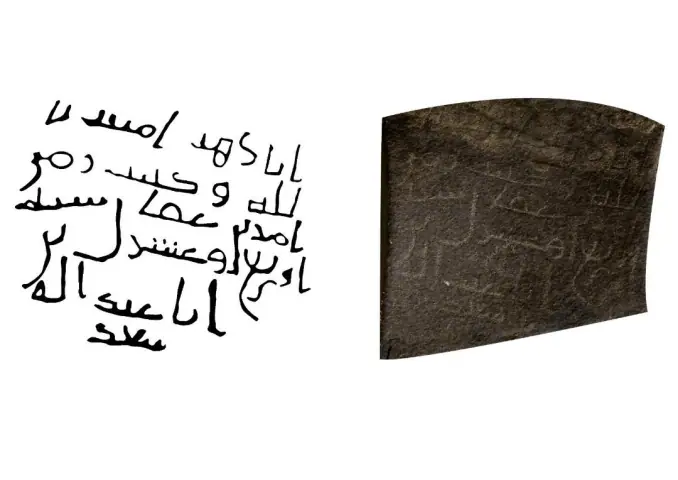
When Muhammad died in 632, the community he left in Medina had no agreed rule for choosing a successor and no hold on much of Arabia. Within two years its first leader, Abū Bakr, had brought the peninsula under Medina’s control; within twenty, Arab armies had taken Syria, Palestine, Iraq, Egypt and most of Iran from the Byzantine and Sasanian empires, which had just fought each other to exhaustion. The conquerors were few. They settled in new garrison towns, lived on the taxes of the conquered, and left most of their subjects in their own religions. Their rulers had to invent a state as they went: a calendar, a register of soldiers and stipends, governors and a title. They were also divided. Of the first four leaders, three were murdered, and the civil war of 656–661 between ʿAlī and Muʿāwiya left the parties that later became Sunni, Shia and Khārijite. Majority
This chapter follows those thirty years. The sources and their problems are set out in §0: the Muslim narratives of the conquests were written down in the eighth and ninth centuries and shaped by later quarrels, so this chapter leans where it can on contemporaries, Christian writers who watched the conquests happen and the earliest Arabic documents.[1][2] Consensus
Timeline
| Date | Event or evidence | Confidence |
|---|---|---|
| 602–628 | The last great war between Byzantium and Sasanian Persia exhausts both empires[3] | Consensus |
| 632 | Muhammad dies; Abū Bakr is chosen as his successor[4] | Majority (date; see Chapter 0: How We Know) |
| 632–633 | The ridda wars bring Arabia under Medina’s control; Musaylima is killed at al-Yamāma[5][6] | Majority |
| Feb 634 | A battle “between the Romans and the Arabs of Muhammad” near Gaza (§0)[7] | Consensus |
| Dec 634 | Sophronius of Jerusalem preaches that fear of the Saracens keeps Christians from Bethlehem[8] | Consensus |
| 634 | Abū Bakr dies; ʿUmar succeeds him[9] | Consensus |
| Aug 636 | Battle of the Yarmūk: the Byzantine field army in Syria is destroyed[3] | Consensus |
| c. 636–638 | Battle of al-Qādisiyya in Iraq; the Sasanian capital Ctesiphon falls[10] | Consensus (event); Majority (date) |
| 637 or 638 | Jerusalem surrenders; the tradition says the patriarch Sophronius handed it to ʿUmar[11][12] | Majority |
| c. 638 | ʿUmar adopts the Hijri calendar, counted from 622, by tradition; garrison towns at Basra and Kufa[9] | Majority |
| 639–642 | Conquest of Egypt by ʿAmr ibn al-ʿĀṣ; Alexandria surrenders by treaty[13] | Consensus |
| 643 | PERF 558: Arab troops in Egypt date a receipt by the Hijri year (§0)[14] | Consensus |
| Nov 644 | ʿUmar killed by a Persian slave; a council chooses ʿUthmān[9] | Consensus |
| 644–645 | The Zuhayr inscription records “the time ʿUmar died” (§0)[15] | Consensus |
| 651 | The last Sasanian king, Yazdegerd III, is killed near Merv[10] | Consensus |
| June 656 | ʿUthmān is killed in Medina by rebels; ʿAlī is acclaimed[16] | Consensus |
| Late 656 | Battle of the Camel near Basra: ʿAlī defeats Ṭalḥa, al-Zubayr and ʿĀʾisha[16] | Consensus |
| July 657 | Battle of Ṣiffīn between ʿAlī and Muʿāwiya; arbitration agreed[16][17] | Consensus |
| 658 | ʿAlī defeats the Khārijites at al-Nahrawān[16] | Majority |
| Jan 661 | ʿAlī is killed in Kufa by a Khārijite; his son al-Ḥasan soon cedes power to Muʿāwiya (§5)[16] | Consensus |
Succession and the ridda
Choosing a successor
The Qur’an names no successor and sets out no procedure for choosing one. Consensus According to the tradition, when Muhammad died in June 632, the Medinan Helpers (anṣār) met in the hall of the Banū Sāʿida to choose a leader of their own; ʿUmar and Abū Bakr hurried there and secured the leadership for Abū Bakr, an early convert from Quraysh and the father of Muhammad’s wife ʿĀʾisha. ʿAlī, Muhammad’s cousin and son-in-law, was absent, preparing the body for burial, and is reported to have delayed his oath of allegiance for some months.[4][16] Majority on the outline; the details were told and retold by partisans of both sides.
The tradition credits Abū Bakr with a short accession speech that later writers held up as a model of accountable rule: he had been given authority although he was “not the best” of them, and they should obey him only so long as he obeyed God and his messenger (Primary sources).[4] Majority that the speech is early in the tradition; its exact words are those of the later biographies.
The wars of “apostasy”
Many Arabian groups had made agreements with Muhammad, paid him alms or simply sent delegations. On his death some stopped paying, and several leaders, the best known being Musaylima of the Banū Ḥanīfa in al-Yamāma and Ṭulayḥa of the Banū Asad, claimed prophecy themselves. Abū Bakr’s commanders, above all Khālid ibn al-Walīd, defeated them in a year of hard fighting; Musaylima was killed at al-Yamāma, the battle the tradition also links to the collection of the Qur’an (§3).[5] Majority
The tradition calls these the wars of the ridda, “apostasy”. Elias Shoufani and Fred Donner pointed out that much of Arabia had never been under Medina’s control in Muhammad’s lifetime, so that the “apostasy” was in large part a first conquest of the peninsula, presented afterwards as the suppression of a revolt.[5][6] Majority Either way, by 633 Medina controlled Arabia’s fighting men, and the question was where they would go next.
The conquests
Two exhausted empires
In 602 the Sasanian king Khusraw II invaded the Byzantine empire, and for two decades Persian armies held Syria, Palestine and Egypt; they took Jerusalem in 614 and carried off the relic of the True Cross. The emperor Heraclius struck back into Mesopotamia from 624, and in 628 Khusraw was overthrown and killed. Peace was made, the provinces returned, and the Cross was restored to Jerusalem in 630. Both empires were left with emptied treasuries, disrupted administrations and armies worn down by a generation of war; plague had returned repeatedly since the 540s.[3][10] Consensus Persia fell into a succession crisis, with several rulers in four years, until the young Yazdegerd III took the throne in 632.[10] Consensus
The Qur’an itself refers to this war: “The Byzantines have been defeated in a nearby land”, with a prediction of their recovery (Q 30:2–4, discussed in §0).[18] Majority on the reference.
Syria and Palestine
Arab raids into southern Palestine began in 633–634. In February 634 a battle near Gaza killed a Byzantine commander, recorded to the day by a Syriac chronicler who called the victors “the Arabs of Muhammad” (§0).[7] By Christmas of that year the countryside around Jerusalem was so unsafe that the patriarch Sophronius preached his Christmas sermon in Jerusalem instead of Bethlehem, lamenting that fear of the Saracens kept Christians from the birthplace of Christ.[8][2] Consensus
Damascus surrendered in 634 or 635 (the sources differ), was given up before the Byzantine counter-offensive and reoccupied after it. In August 636 the main Byzantine field army was destroyed in a battle of several days by the river Yarmūk, a tributary of the Jordan, and Heraclius withdrew from Syria.[3] Consensus on the battle and its outcome; the numbers given for the armies in later sources are not reliable. Jerusalem held out until 637 or 638. The tradition says that Sophronius would surrender the city only to the caliph in person, and that ʿUmar came from Medina to receive it, granting the inhabitants a guarantee of safety for their lives, property and churches.[11] Majority that the city surrendered on terms; Contested on the wording of the guarantee as al-Ṭabarī gives it, which shows later editing.[12]
The guarantee should not be confused with the Pact of ʿUmar, a much longer set of restrictions on non-Muslims presented as a letter from the Christians of Syria to ʿUmar. Historians date its formation to the following centuries; it reached the form later known by the ninth century (Judaism §8; Christianity §7).[19][20] Majority
Iraq and Iran
In Iraq, the richest province of the Sasanian empire, Arab tribes on the desert edge had raided before Islam, and some had served as Persian allies. The decisive battle came at al-Qādisiyya near the Euphrates, which the sources date between 636 and 638; the capital, Ctesiphon, fell soon after, and a second Persian army was defeated at Jalūlāʾ.[10][21] Consensus on the events; Majority on the dates. The Iranian plateau took longer. After a defeat at Nihāwand (c. 642), Yazdegerd III retreated east, and in 651 he was killed near Merv, in today’s Turkmenistan, according to the tradition by a local miller who did not know who he was. With him the Sasanian dynasty ended, though resistance continued in parts of Iran for decades.[10] Consensus
A Syriac chronicle written in Khuzistan in southwestern Iran no later than the 660s, from contemporary reports, describes the fall of the province’s cities, Susa and Shushtar, to the Arabs.[22][2] Consensus
Egypt
ʿAmr ibn al-ʿĀṣ entered Egypt at the end of 639 with a few thousand men. The fortress of Babylon (in today’s Cairo) fell in 641; Alexandria, which could be supplied by sea, surrendered by a treaty negotiated by its Chalcedonian patriarch, Cyrus, and the Byzantine garrison left in 642.[13][10] Consensus Our best witness is John, Coptic bishop of Nikiu in the Delta, who wrote a chronicle in Greek or Coptic around 690. It survives only in an Ethiopic translation of 1602, made from an Arabic version, so its wording has passed through two translations.[13] Consensus John blames the defeat on the sins and divisions of the Byzantines, describes the treaty terms and the taxes that followed, and says that ʿAmr “took none of the property of the Churches” (Primary sources).[13] Majority
Within twenty years of Muhammad’s death, then, the Byzantines had lost Syria, Palestine and Egypt, and the Sasanian empire had ceased to exist. Consensus
How did it happen so fast?
No single cause explains it, and historians weight the causes differently.[6][10][12] Contested on the weighting.
- Exhausted empires. Both empires had been at war for a generation, and Persia had been through a civil war; neither expected a major threat from Arabia.[3] Consensus
- Small, mobile armies. The Arab forces were small by imperial standards, often a few thousand men, but moved fast across the desert and could choose where to fight. Several defeats of large imperial armies were decisive because the empires had few reserves left.[10] Majority
- The frontier Arabs. Arab groups had lived inside and along the imperial frontiers for centuries as allies and soldiers (§1). Some joined the conquerors, and the line between “Arabian invaders” and “imperial Arabs” was not sharp.[12] Majority
- Surrender on terms. Many cities and districts surrendered by agreement, paying tribute in return for security of life, property and worship; for local elites a change of masters could be cheaper than resistance, particularly for Christians the imperial church had persecuted, such as Egypt’s anti-Chalcedonians.[12][13] Majority
- Belief and organisation. Fred Donner argued in 1981 that the decisive factor was the new state in Medina, which tied the tribes into one movement with a shared ideology and central direction. In Muhammad and the Believers (2010) he added that the movement was an apocalyptic, pietist community of “Believers” open at first to pious Jews and Christians.[6][23] Robert Hoyland’s In God’s Path (2015) puts more weight on the empires’ own frontier politics and on the conquests as empire-building by an Arab elite.[12] Contested
The Muslim tradition explains the conquests above all by God’s help to the believers, which the historian can neither confirm nor exclude (§0). What the historian can say is that the conquests were remembered as proof of the cause, and that the plunder and stipends they brought held the conquering elite together. Majority
Conquest is not conversion
The conquered kept their religions
Christian, Jewish and Zoroastrian communities that surrendered became protected subjects, later called dhimmīs, “people of the pact”. They kept their places of worship and their own law in internal matters, and paid tribute: a land tax and a poll tax, the jizya, which the Qur’an demands of the “People of the Book” (Q 9:29).[24][20] Majority The terms varied from place to place, and the fixed legal categories of later centuries took time to form.[20] Majority
The Arab Muslims were a small minority in the lands they ruled. For decades they lived largely apart, in garrison towns, and the state depended on the taxes of non-Muslims. There was little reason for the early rulers to press conversion, and some reason not to: converts claimed tax relief and stipends.[10][12] Majority Christian writers of the time complain of taxes, captives and violence, but rarely of forced conversion.[2] Majority
How fast did the conquered become Muslim?
No census survives. Richard Bulliet, counting the generations at which Muslim names appear in family genealogies, argued for an S-shaped curve: slow conversion for a century, then rapid growth in the ninth and tenth, with a Muslim majority in Iran by around 900 and later elsewhere.[25] Majority that conversion was gradual; Contested on the pace. His method rests on the genealogies of urban elites, who may have converted earlier than villagers. Jack Tannous argues that in Syria, Iraq and Egypt Christians remained a majority for many centuries, and that the line between the ordinary believers of the two religions was often blurred.[26] Contested The same story, from the Christian side, is told in Christianity §7.
“Spread by the sword”?
The phrase is a modern battleground, used by critics of Islam to describe the faith and rejected by many Muslims, who point to the Qur’an’s “There is no compulsion in religion” (Q 2:256).[27] Political The evidence separates two questions:
- The empire was made by war. The territory was taken by military conquest, and the conquests brought killing, captivity and enslavement, recorded by Christian witnesses such as Thomas the Presbyter, who counts about 4,000 villagers killed near Gaza in 634 (§0).[7][2] Consensus
- The faith spread mostly afterwards, and mostly without compulsion. The conquered were not, in general, required to convert; Christian and Jewish communities survived, and conversion took centuries. Incentives such as lower taxes and access to power, marriage, slavery and the converts’ own conviction all played a part, and there were episodes of coercion, more often in later periods and particular places than in the first conquests.[25][26][12] Majority
So the empire spread by the sword; the religion, on the whole, spread inside the empire the sword had made. How much pressure the tax and status of non-Muslims applied is debated. Political
Building a state: ʿUmar
ʿUmar ibn al-Khaṭṭāb (r. 634–644) is remembered as the founder of the early state. Much of what the tradition credits to him was probably developed over a longer period, but several measures are confirmed early.[9] Majority
- The calendar. The tradition says that ʿUmar, finding undated letters a problem, fixed an era beginning with the emigration to Medina in 622, around 638. A receipt from Egypt dated “year twenty-two” (643) and the Zuhayr inscription of 644 show the era in use within a few years (§0).[14][15] Consensus on the use; Majority on the date of adoption.
- The dīwān. A register of the Arab fighters and their families, who received stipends (ʿaṭāʾ) ranked by how early they or their forebears had joined the cause. It turned the conquerors into a salaried ruling class, and made precedence in Islam a source of income.[9][21] Majority
- Garrison towns. Instead of settling in the old cities, the Arab armies founded new camps, the amṣār: Basra and Kufa in Iraq, Fusṭāṭ in Egypt, beside the Byzantine fortress of Babylon. These became the cities where Arabic Islamic culture formed.[10][21] Consensus
- The title. ʿUmar is said to have taken the title “commander of the believers” (amīr al-muʾminīn), which is the title the earliest documents use for the caliph (§0).[28][29] Majority
ʿUmar was stabbed in the mosque at Medina in November 644 by Abū Luʾluʾa, a Persian slave of the governor of Kufa. Before he died he is said to have named a council (shūrā) of six senior companions to choose a successor, and it chose ʿUthmān.[9] Majority
ʿUthmān and the road to civil war
ʿUthmān ibn ʿAffān (r. 644–656) was an early convert from the Umayyad clan of Quraysh, and twice Muhammad’s son-in-law. The tradition credits him with the standard text of the Qur’an (§3). It also remembers him for appointing kinsmen as governors, among them his cousin Muʿāwiya in Syria, and for handling the revenues of the provinces in ways that angered the men of the garrison towns, whose stipends were their livelihood.[16][9] Majority on the grievances; how far they were justified was argued from the start.
In 656 groups of discontented soldiers from Egypt and Iraq came to Medina and besieged ʿUthmān in his house. In June they broke in and killed him, the tradition says while he was reading the Qur’an. It was the first killing of a caliph by Muslims, and every later party had to take a position on it.[16] Consensus
ʿAlī and the first civil war
The Camel
ʿAlī ibn Abī Ṭālib was acclaimed caliph in Medina by the people there, including many of the rebels. Two senior companions, Ṭalḥa and al-Zubayr, together with ʿĀʾisha, Muhammad’s widow, demanded vengeance for ʿUthmān and went to Basra. ʿAlī defeated them near Basra late in 656 in the Battle of the Camel, named after the camel from whose litter ʿĀʾisha watched it; Ṭalḥa and al-Zubayr were killed, and ʿĀʾisha was sent back to Medina.[16] Consensus ʿAlī made Kufa his capital. Consensus
Ṣiffīn, the arbitration and the Khārijites
Muʿāwiya, governor of Syria and ʿUthmān’s kinsman, refused to recognise ʿAlī until ʿUthmān’s killers were punished. In July 657 their armies met at Ṣiffīn on the Euphrates. The tradition says that when the battle was going against the Syrians, they raised leaves of the Qur’an on their lances to call for a decision by God’s book, and that ʿAlī, under pressure from his own men, agreed to arbitration.[17][16] Majority on the arbitration; Contested on the details of the story.
Some of ʿAlī’s followers rejected the arbitration with the slogan lā ḥukma illā li-llāh, “judgment belongs to God alone”: a caliph who submitted a matter God had already decided to human arbiters had, they said, forfeited his right to lead. They withdrew, and became known as the Khārijites, “those who went out”.[17][16] Consensus on the slogan’s place in the tradition. ʿAlī crushed them at al-Nahrawān in 658. The arbitrators, meeting at Dūmat al-Jandal and Adhruḥ, did not restore his position, and the Syrians recognised Muʿāwiya as their ruler.[16] Majority
In January 661 a Khārijite, Ibn Muljam, struck ʿAlī with a poisoned sword in the mosque at Kufa, and he died two days later. His son al-Ḥasan, acclaimed in Kufa, came to terms with Muʿāwiya within months and withdrew to Medina; Muʿāwiya became sole ruler, the first of the Umayyad caliphs (§5).[16][9] Consensus
The seed of Sunni and Shia
The parties of this war are the ancestors of later Islam’s main divisions. The partisans of ʿAlī, the shīʿat ʿAlī, gave the Shia its name; the Ibāḍī communities of Oman and North Africa trace their origin to a moderate branch of the Khārijites, though they reject the name; and the majority who accepted the outcome and later revered all four of the first caliphs became the Sunnis.[9] Consensus But in 661 these were political parties, not yet religious communities with distinct doctrines; Sunni and Shia as communities took shape over the next three centuries (§6). Majority
How to read the succession is itself part of the division. Wilferd Madelung, in The Succession to Muhammad (1997), argued from the early sources that Muhammad’s family had a strong claim, that Abū Bakr’s election deliberately set it aside, and that ʿAlī’s party saw it so from the beginning.[16] Others read the same sources as showing a contest among the leading companions in which there was no clear designation, and treat the later Shia doctrine of ʿAlī’s appointment at Ghadīr Khumm as a development of that dispute.[9] Contested The Sunni tradition holds that the community rightly chose the four “rightly guided” caliphs in turn; the Shia tradition holds that Muhammad designated ʿAlī. Both views are reported here as the traditions hold them. Consensus that both views exist.
What did “caliph” mean?
The tradition says Abū Bakr was called khalīfat rasūl Allāh, “successor of the messenger of God”, and that ʿUmar, finding “successor of the successor of the messenger of God” too long, chose “commander of the believers”.[29] Majority as tradition. The documents agree that amīr al-muʾminīn was the ruler’s title: it appears on Muʿāwiya’s dam at al-Ṭāʾif in 677–678 (§0).[28] Consensus
In God’s Caliph (1986) Patricia Crone and Martin Hinds pointed to Umayyad coins of the 690s and court poetry that call the ruler khalīfat Allāh, “God’s deputy”, and argued that this was the original meaning: the early caliphs claimed religious as well as political authority, and the idea that religious authority belonged to the scholars (§6) won out only later.[29] Contested The title, in other words, was not a settled office handed down from 632 but part of the argument over who spoke for God’s community. Majority
The evidence
| Question | What the evidence supports | Key evidence | Confidence |
|---|---|---|---|
| The conquests happened as dated | Syria, Iraq, Egypt and Iran taken 634–651 | Thomas the Presbyter; Sophronius; John of Nikiu; Khuzistan Chronicle[7][8][13][22] | Consensus |
| Why so fast | Exhausted empires, frontier Arabs, surrender terms and a cohesive movement | Donner; Kennedy; Hoyland[6][10][12] | Contested (weighting) |
| Conversion | Slow; non-Muslim majorities for centuries | Bulliet; Tannous; Christian sources[25][26][2] | Majority (slow); Contested (pace) |
| An early state | Hijri era, Arab garrisons and stipends from the 630s–640s | PERF 558; Zuhayr; the garrison cities[14][15][21] | Consensus |
| Treatment of the conquered | Tribute and protected status; churches mostly kept; later rules shaped over centuries | John of Nikiu; Levy-Rubin[13][20] | Majority |
| The civil war | ʿUthmān killed 656; Camel, Ṣiffīn, Khārijites; ʿAlī killed 661 | Muslim tradition; Madelung[17][16] | Consensus (events) |
| The caliph’s title | “Commander of the believers” in documents; “God’s deputy” on coins of the 690s | Ṭāʾif dam; Crone and Hinds[28][29] | Majority |
Primary sources
Show the 7 primary sources
1. Kept from Bethlehem: Sophronius, Christmas sermon, December 634
The Greek text was edited by Hermann Usener in 1886; Hoyland translates the key passage. The patriarch tells his congregation in Jerusalem that they cannot go to Bethlehem for the feast: not chains but fear of the Saracens keeps them at home.[8][2]
What it proves. That by December 634 Arab forces controlled the roads around Jerusalem, about two and a half years after Muhammad’s death, and that the city’s Christian leader saw them as a punishment for sin rather than as the bearers of a new religion: he calls them “Saracens”, not Muslims. Consensus
2. Abū Bakr’s accession speech, as the tradition gives it
ammā baʿdu ayyuhā l-nās, fa-innī qad wullītu ʿalaykum wa-lastu bi-khayrikum… aṭīʿūnī mā aṭaʿtu llāha wa-rasūlahu, fa-idhā ʿaṣaytu llāha wa-rasūlahu fa-lā ṭāʿata lī ʿalaykum
“O people, I have been given authority over you, though I am not the best of you… Obey me as long as I obey God and His messenger; if I disobey God and His messenger, you owe me no obedience.”[4]
What it proves. How the Muslim tradition of the eighth century remembered the first succession: as authority conditional on obedience to God and the Prophet, not as a hereditary or divine office. It is the biographers’ text, not a seventh-century document, and it served later arguments about legitimate rule. Majority on its age in the tradition; Contested on its exact words.
3. The guarantee to Jerusalem, as al-Ṭabarī gives it
hādhā mā aʿṭā ʿabdu llāhi ʿUmaru amīru l-muʾminīna ahla Īliyāʾa mina l-amān…
“This is the guarantee of safety which the servant of God, ʿUmar, commander of the believers, has granted to the people of Aelia [Jerusalem]. He grants them safety for themselves, their property, their churches and their crosses… Their churches shall not be occupied or destroyed.”[11]
What it proves. That the Muslim tradition remembered the surrender of Jerusalem as a negotiated grant of security, preserving churches, in exchange for tribute. The text in al-Ṭabarī (early tenth century) includes clauses that historians regard as later, and its exact wording cannot be taken as the document of 637–638. Majority on the kind of agreement; Contested on the text.
4. Taxes, churches and converts in Egypt: John of Nikiu, Chronicle CXXI
“And ʿAmr became stronger every day in every field of his activity. And he exacted the taxes which had been determined upon, but he took none of the property of the Churches, and he committed no act of spoliation or plunder, and he preserved them throughout all his days… And now many of the Egyptians who had been false Christians denied the holy orthodox faith and lifegiving baptism, and embraced the religion of the Moslem.”[13]
The chronicle survives only in Ethiopic (Geʿez), translated from Arabic in 1602; the English is R. H. Charles’s of 1916.
What it proves. A hostile Christian witness, writing about fifty years after the conquest of Egypt, records both the heavy taxation and the protection of the churches, and that some Egyptians had already become Muslims, which he condemns. It shows the mixed picture of the first decades: no general persecution of Christians, burdensome tribute, and early, voluntary but socially charged conversion. Majority
5. The jizya verse: Q 9:29
qātilū lladhīna lā yuʾminūna bi-llāhi wa-lā bi-l-yawmi l-ākhiri… mina lladhīna ūtū l-kitāba ḥattā yuʿṭū l-jizyata ʿan yadin wa-hum ṣāghirūn
“Fight those of the People of the Book who do not [truly] believe in God and the Last Day, who do not forbid what God and His Messenger have forbidden, who do not obey the rule of justice, until they pay the tax and agree to submit.” (trans. Abdel Haleem)[24][30]
What it proves. The Qur’anic basis for the tribute paid by Jews and Christians: war against them ends when they pay the tax and accept Muslim rule, not when they convert. What ʿan yadin and ṣāghirūn (“submit”, or “humbled”) imply for their status was argued by later jurists. Consensus on the text; Majority on its link to the conquest settlements.
6. “No compulsion in religion”: Q 2:256
lā ikrāha fī l-dīni qad tabayyana l-rushdu mina l-ghayy
“There is no compulsion in religion: true guidance has become distinct from error.” (trans. Abdel Haleem)[27][30]
What it proves. The verse most often cited against the claim that Islam requires forced conversion. Its scope, and whether later verses limited it, were debated by Muslim commentators; what it shows historically is that the Qur’an itself separates submission to rule from belief. Consensus on the text; Contested on its scope in later law.
7. “Judgment belongs to God alone”: the Khārijite slogan
lā ḥukma illā li-llāh
“Judgment belongs to God alone.”[17]
What it proves. How the first breakaway party justified rejecting ʿAlī: a dispute that God’s book had settled could not be handed to human arbiters. It is preserved in the later histories, where it became the Khārijites’ watchword, and shows that the first civil war was argued in religious terms from the start. Consensus that the slogan is attributed to them.
What is absent
- Muslim documents describing the conquests. No Arabic narrative of the conquests survives from the seventh century; the accounts are eighth- and ninth-century compilations. Consensus
- Reliable numbers. The sizes of armies and casualties in the later sources are literary, not counts. Consensus
- A conversion campaign. Neither the documents nor the Christian witnesses describe a policy of converting the conquered in these decades. Majority
- The Pact of ʿUmar as a seventh-century text. The restrictions known by that name are later. Majority
- A word for “Sunni”. In 661 there were parties, not yet the communities and doctrines of later centuries. Majority
Debates
What drove the conquests?
| View | Main argument | Main proponents |
|---|---|---|
| A new state and its belief | Medina’s state and ideology united the tribes and directed the conquests | Donner (1981, 2010)[6][23] |
| Opportunity and imperial collapse | Exhausted empires and frontier politics made conquest possible; plunder sustained it | Kennedy; Hoyland[10][12] |
| God’s help to the believers | The tradition’s own explanation | The Muslim histories[17] |
Contested on the weighting; most historians combine the first two.
How fast did the conquered convert?
Bulliet’s curve puts the turning point in the ninth and tenth centuries; Tannous argues for much longer Christian majorities in Syria, Iraq and Egypt.[25][26] Contested
Was ʿAlī designated?
The Shia tradition holds that Muhammad designated ʿAlī; the Sunni tradition that the community chose Abū Bakr. Madelung reads the early sources as supporting the strength of ʿAlī’s family claim; others see an open contest.[16][9] Contested
Further reading
Show further reading (9 works)
- Fred M. Donner, The Early Islamic Conquests (Princeton, 1981), and Muhammad and the Believers (Harvard, 2010).
- Hugh Kennedy, The Great Arab Conquests (Weidenfeld & Nicolson, 2007), and The Prophet and the Age of the Caliphates (Longman, 1986).
- Robert G. Hoyland, In God’s Path: The Arab Conquests and the Creation of an Islamic Empire (Oxford, 2015), and Seeing Islam as Others Saw It (Darwin, 1997).
- Walter E. Kaegi, Byzantium and the Early Islamic Conquests (Cambridge, 1992).
- Wilferd Madelung, The Succession to Muhammad: A Study of the Early Caliphate (Cambridge, 1997).
- Patricia Crone and Martin Hinds, God’s Caliph: Religious Authority in the First Centuries of Islam (Cambridge, 1986).
- Richard W. Bulliet, Conversion to Islam in the Medieval Period (Harvard, 1979), with Jack Tannous, The Making of the Medieval Middle East (Princeton, 2018).
- Michael G. Morony, Iraq after the Muslim Conquest (Princeton, 1984).
- Milka Levy-Rubin, Non-Muslims in the Early Islamic Empire (Cambridge, 2011).
References
- ^ Fred M. Donner Narratives of Islamic Origins: The Beginnings of Islamic Historical Writing. Darwin Press, 1998. How the Muslim historical tradition formed, and a survey of the sceptical approaches.
- ^ a b c d e f g Robert G. Hoyland Seeing Islam as Others Saw It: A Survey and Evaluation of Christian, Jewish and Zoroastrian Writings on Early Islam. Darwin Press, 1997. The non-Muslim sources of the first Islamic century and a half, translated and discussed.
- ^ a b c d e Walter E. Kaegi Byzantium and the Early Islamic Conquests. Cambridge University Press, 1992. The Byzantine side of the loss of Syria, Palestine and Egypt.
- ^ a b c d Ibn Isḥāq, Sīrat Rasūl Allāh — The Life of Muhammad (recension of Ibn Hishām). mid-8th c. CE (Ibn Hishām's recension, early 9th c.). Arabic. The earliest surviving Muslim biography of Muhammad; source for his alliance and conflicts with the Jewish tribes of Medina (Qaynuqāʿ, Naḍīr, Qurayẓa) and the conquest of Khaybar. about
- ^ a b c Elias S. Shoufani Al-Riddah and the Muslim Conquest of Arabia. University of Toronto Press, 1973. The 'apostasy' wars as largely a first conquest of Arabia.
- ^ a b c d e f Fred M. Donner The Early Islamic Conquests. Princeton University Press, 1981. The conquests as the work of a new state in Medina that united the tribes under one ideology.
- ^ a b c d Thomas the Presbyter, Chronicle (British Library Add. MS 14,643) — Syriac Chronicle of 640. c. 640 CE (manuscript copied 724). Syriac. Records a battle on 4 February 634 between the Romans and 'the Arabs of Muhammad' twelve miles east of Gaza: the earliest datable text to name Muhammad. about
- ^ a b c d Sophronius of Jerusalem, Christmas sermon (ed. H. Usener, Rheinisches Museum NF 41, 1886, pp. 500–16) — Sophronius, Sermon on the Nativity. 25 December 634. Greek. The patriarch of Jerusalem laments that Christians cannot go to Bethlehem for Christmas, 'bound by fear of the Saracens'. about
- ^ a b c d e f g h i j k Hugh Kennedy The Prophet and the Age of the Caliphates. Longman, 1986. Standard political history of the Near East from Muhammad to the eleventh century.
- ^ a b c d e f g h i j k l m Hugh Kennedy The Great Arab Conquests: How the Spread of Islam Changed the World We Live In. Weidenfeld & Nicolson, 2007. Narrative history of the conquests, region by region.
- ^ a b c al-Ṭabarī, Taʾrīkh, year 15 AH (trans. Y. Friedmann, The History of al-Ṭabarī XII, 1992) — The guarantee (amān) of ʿUmar to the people of Aelia (Jerusalem). 637 or 638 CE, as given in a text of the early 10th c.. Arabic. ʿUmar's guarantee of safety to Jerusalem's inhabitants, their property, churches and crosses, as preserved by al-Ṭabarī with later additions. about
- ^ a b c d e f g h i j Robert G. Hoyland In God's Path: The Arab Conquests and the Creation of an Islamic Empire. Oxford University Press, 2015. The conquests as empire-building, set in the frontier politics of Byzantium and Persia.
- ^ a b c d e f g h John of Nikiu, Chronicle, chs. CXI–CXXI (trans. R. H. Charles, 1916) — John of Nikiu, Chronicle. c. 690 CE (Ethiopic version 1602). Ethiopic (Geʿez), from Arabic, from Greek or Coptic. A Coptic bishop's account of the Arab conquest of Egypt: the treaty for Alexandria, ʿAmr's taxes, his protection of churches, and early converts to Islam. read the text
- ^ a b c PERF 558 (Austrian National Library, Papyrus Erzherzog Rainer) — Greek–Arabic receipt from Herakleopolis. Jumādā I 22 AH / 25 April 643 CE. Arabic and Greek. Receipt by the commander ʿAbd Allāh ibn Jābir for 65 sheep; the earliest dated Arabic papyrus, dated by the Hijri era, with dotted letters; the Greek calls the Arabs magaritai. about
- ^ a b c Inscription of Zuhayr, Qāʿ al-Muʿtadil near al-ʿUlā — Rock graffito. 24 AH / 644–645 CE. Arabic. 'I, Zuhayr, wrote [this] at the time ʿUmar died in the year four and twenty': the earliest dated Islamic inscription, with dotted letters. about
- ^ a b c d e f g h i j k l m n o p Wilferd Madelung The Succession to Muhammad: A Study of the Early Caliphate. Cambridge University Press, 1997. Argues for the strength of ʿAlī's family claim and reads the first civil war from the early sources.
- ^ a b c d e f al-Ṭabarī, Taʾrīkh al-rusul wa-l-mulūk — al-Ṭabarī, The History of Prophets and Kings. early 10th c. CE. Arabic. The great annalistic history, preserving extracts of Ibn Isḥāq and other early narrators on Muhammad's life and death. about
- ^ Qurʾan 30:2–4 — Qurʾan, Sūrat al-Rūm. 7th c. CE. Arabic. 'The Romans have been defeated in the nearest land…': the Qur'an's one checkable reference to a contemporary event, the Persian conquest of 613–614. read the text
- ^ Pact of Umar (al-Ṭurṭūshī, Sirāj al-Mulūk) — Pact of Umar (Shurūṭ ʿUmar). 9th c. CE (form); attributed to Umar I, 634–644. Arabic. Conditions on non-Muslim subjects, framed as a letter from Christians to the caliph Umar: no new churches or synagogues, distinctive dress, no riding on saddles or bearing arms. Surviving versions are later than Umar; a legal ideal, enforced unevenly. about
- ^ a b c d Milka Levy-Rubin Non-Muslims in the Early Islamic Empire: From Surrender to Coexistence. Cambridge University Press, 2011. Traces the Pact of Umar to conquest-era surrender treaties and Byzantine and Sasanian models.
- ^ a b c d Michael G. Morony Iraq after the Muslim Conquest. Princeton University Press, 1984. Continuity and change in Iraq's society, religions and administration after the conquest.
- ^ a b Khuzistan Chronicle (Guidi Chronicle), ed. I. Guidi, 1903 — Anonymous Syriac chronicle from Khuzistan. no later than the 660s. Syriac. Covers c. 590–660, including the Arab conquest of Susa and Shushtar, and names Muhammad as leader of the sons of Ishmael. about
- ^ a b Fred M. Donner Muhammad and the Believers: At the Origins of Islam. Belknap Press of Harvard University Press, 2010. Islam's origins in the early seventh-century preaching of Muhammad.
- ^ a b Qur'an 9:29 — The Qur'an. 610–632 CE. Arabic. Fight the People of the Book who do not believe 'until they pay the tax (jizya) and agree to submit'. read the text
- ^ a b c d Richard W. Bulliet Conversion to Islam in the Medieval Period: An Essay in Quantitative History. Harvard University Press, 1979. The onomastic S-curve of conversion.
- ^ a b c d Jack Tannous The Making of the Medieval Middle East: Religion, Society, and Simple Believers. Princeton University Press, 2018. Christian majorities for centuries after the conquests, and the blurred line between ordinary believers.
- ^ a b Qur'an 2:256 — The Qur'an. 610–632 CE. Arabic. 'There is no compulsion in religion: true guidance has become distinct from error.' read the text
- ^ a b c Dam inscription of Muʿāwiya near al-Ṭāʾif — Building inscription. 58 AH / 677–678 CE. Arabic. Records the dam built for 'the servant of God Muʿāwiya, commander of the believers' in the year fifty-eight; names God and the caliph, not Muhammad. about
- ^ a b c d Patricia Crone and Martin Hinds God's Caliph: Religious Authority in the First Centuries of Islam. Cambridge University Press, 1986. The caliph as 'God's deputy' with religious authority, later ceded to the scholars.
- ^ a b M. A. S. Abdel Haleem The Qur'an: A New Translation. Oxford University Press (Oxford World's Classics), 2004. The translation quoted in the Islam series unless stated.