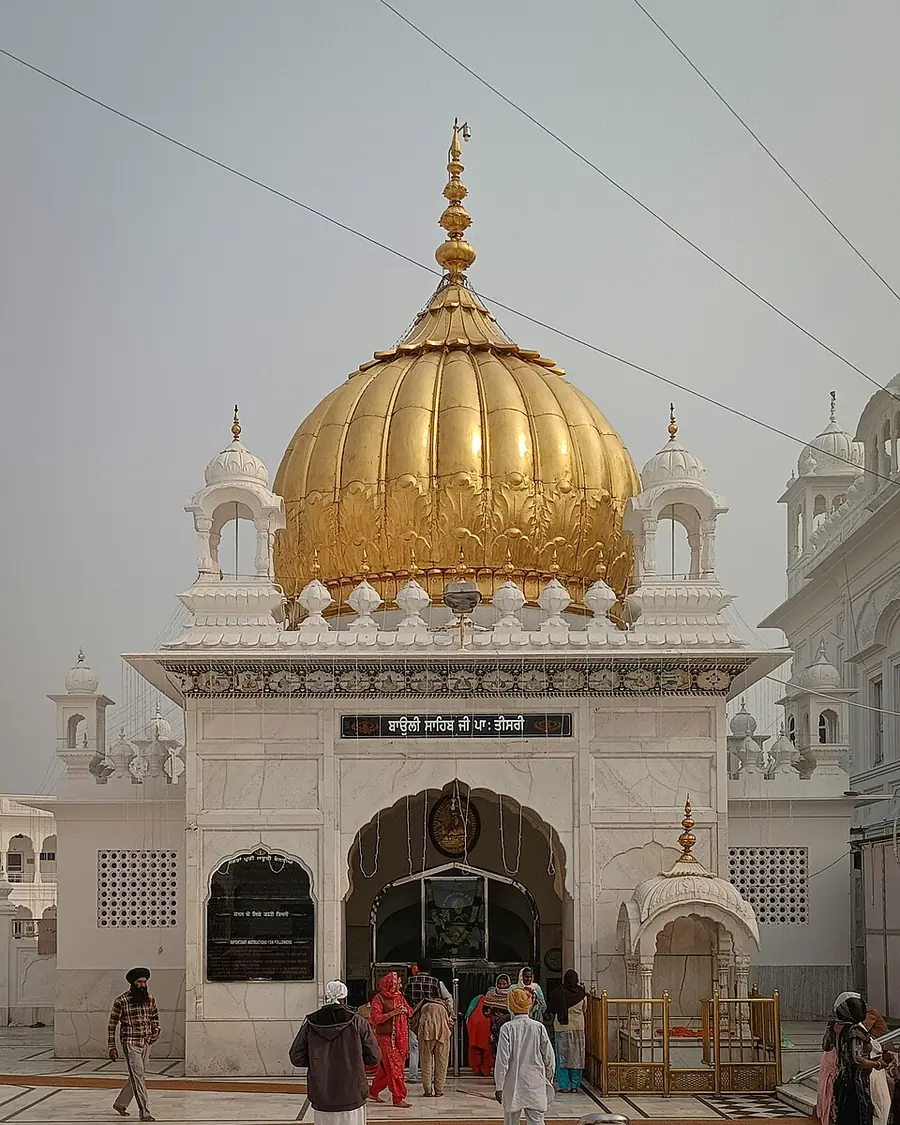
When Guru Nānak died at Kartārpur in 1539 he left a congregation, a body of hymns and a successor who was not his son. Sixty-seven years later, when the fifth Guru, Arjan, died in Mughal custody at Lahore, the Sikhs had a town of their own at Amritsar with a temple in its pool, a book of scripture in their own script, a kitchen where all ate together, deputies collecting offerings across northern India, a rival line of Gurus, and the attention of the emperor. The emperor Jahāṅgīr complained that the Gurus’ following had been growing “for three or four generations”.[1][2] Consensus
This chapter follows those four generations: Guru Aṅgad (1539–1552), Guru Amar Dās (1552–1574), Guru Rām Dās (1574–1581) and Guru Arjan (1581–1606). The evidence for them is better than for Guru Nānak’s life. Their own hymns survive in manuscripts made in their lifetimes or soon after (§0), the scripture includes poems by minstrels of their court, and Bhāī Gurdās knew the last three personally. The argument of the chapter: the institutions that define the Sikh community, from the laṅgar to the scripture, were built by Guru Nānak’s successors in these years, and most of them can be dated. Many of the best-known stories about them cannot, and are first written down a century or more later.[3][4][5] Majority
Timeline
| Date | Event | Confidence |
|---|---|---|
| 1539 | Guru Nānak dies at Kartārpur; Lahaṇā, renamed Aṅgad, succeeds him and settles at Khaḍūr[6][3] | Consensus |
| 1552 | Amar Dās, aged about seventy-three, becomes the third Guru and settles at Goindvāl on the Beās[3] | Consensus |
| c. 1570–1572 | The Goindvāl pothīs copied[7][8] | Majority |
| 1574 | Jeṭhā, Guru Amar Dās’s son-in-law, becomes Guru Rām Dās[3] | Consensus |
| 1577 (tradition) | The pool at Rāmdāspur, later Amritsar, begun[9][3] | Majority |
| 1581 | Arjan, Guru Rām Dās’s youngest son, becomes the fifth Guru; his elder brother Prithī Chand contests it[3][5] | Consensus |
| 1588 (tradition) | Building of the Harmandir begun[9] | Majority |
| 1590 | Tarn Tāran founded[3] | Majority |
| November 1598 | Akbar meets Guru Arjan at Goindvāl[5][9] | Majority |
| 1604 | The Ādi Granth completed and installed in the Harmandir[10][11] | Consensus |
| April 1606 | Prince Khusrau rebels against Jahāṅgīr and is captured[12][13] | Consensus |
| 1606 | Guru Arjan dies in Mughal custody at Lahore, by tradition on 30 May; Hargobind succeeds[1][5] | Consensus (event); Majority (date) |
Guru Aṅgad at Khaḍūr, 1539–1552
A successor chosen over the sons
Lahaṇā was a Khatrī trader from the Mālvā who had come to Guru Nānak at Kartārpur; tradition says he had been a devotee of the goddess Durgā before he met the Guru.[3][14] Majority Guru Nānak renamed him Aṅgad (“of my own limb”) and passed the Guruship to him in place of his own sons, Srī Chand, the ascetic from whom the Udāsīs later claimed descent, and Lakhmī Dās.[3] Consensus
The ballad of Sattā and Balvaṇḍ in the scripture, already quoted in §0, records the succession and the sons’ resistance. It says that the sons did not obey their father’s word and turned their backs on him, while Lahaṇā did what the Guru said and so was set on the throne.[15] Majority on its date (the time of Guru Arjan, §0). The Guruship, in other words, was a contested inheritance from the start, and the Gurus’ own circle defended each succession in verse.
Guru Aṅgad left Kartārpur, where Guru Nānak’s sons remained, for Khaḍūr, near the Beās, where his family had settled. About sixty of his saloks (couplets) are in the scripture; he wrote no long hymns.[11][3] Consensus
Mātā Khīvī and the laṅgar
The ballad is also the earliest evidence for the Gurus’ kitchen. Of Guru Nānak’s court it says that the laṅgar of the Guru’s word ran on, and its stores never ran short; of Guru Aṅgad’s, that his wife, Mātā Khīvī, served it:
ਬਲਵੰਡ ਖੀਵੀ ਨੇਕ ਜਨ ਜਿਸੁ ਬਹੁਤੀ ਛਾਉ ਪਤ੍ਰਾਲੀ ॥ ਲੰਗਰਿ ਦਉਲਤਿ ਵੰਡੀਐ ਰਸੁ ਅੰਮ੍ਰਿਤੁ ਖੀਰਿ ਘਿਆਲੀ ॥
balavanḍ khīvī nek jan jisu bahutī chhāu patrālī | laṅgari daulati vanḍīai rasu aṁmritu khīri ghiālī |
Balvaṇḍ says that Khīvī is a good woman, whose shade is deep and leafy; in the laṅgar the bounty is shared out, rice pudding made with ghee, sweet as nectar (the site’s translation).[15]
Consensus on the text. It shows that by the late sixteenth century the kitchen was remembered as part of the Guru’s household from the first succession. Doris Jakobsh notes that Khīvī is praised here in the role of the provider of food, and that the tradition’s fuller picture of her as the founder of the laṅgar is later.[16] Majority
Gurmukhī
The script in which the Sikh scriptures are written is called Gurmukhī, “from the Guru’s mouth”. Sikh tradition credits Guru Aṅgad with creating it, so that the Gurus’ hymns could be written in a script of their own rather than in the Devanāgarī of Sanskrit or the Persian of the court.[9][17] Consensus that this is the tradition.
The evidence points to a longer history. Gurmukhī belongs to the north-western family of Indian scripts descended from Śāradā, and is closely related to the Laṇḍā (“tail-less”) scripts used by Punjabi merchants and bookkeepers for their accounts, which wrote few vowels and were hard to read back.[18][4] Majority Guru Nānak, who by tradition had kept the accounts of a Lodī storehouse, already composed an acrostic on the letters of an alphabet, the Paṭṭī in Rāg Āsā, which plays on letter names in the way a schoolchild would learn them.[19][11] Majority The likeliest account is that the early Gurus took a script already used in Punjab, added the vowel signs needed to write verse accurately, and made it the script of their community. Its earliest dated examples are the Goindvāl pothīs of about 1570 (§0).[8][4]
Contested on how much was Guru Aṅgad’s own work; Majority that the letters are older than he is. The difference matters less than it seems: a scripture written in its own script, read by shopkeepers and peasants rather than Brahmins or Persian clerks, set the Sikhs apart from both the Sanskrit and the Persian learned worlds.[4][20] Majority
Guru Amar Dās at Goindvāl, 1552–1574
An old man and a new town
Amar Dās was a Bhallā Khatrī and a Vaiṣṇava pilgrim, already in his sixties, when he became a disciple of Guru Aṅgad; he served him for years at Khaḍūr, and became Guru in 1552, aged about seventy-three.[3] Majority on the age. Tradition tells that Guru Aṅgad’s sons, Dāsū and Dātū, refused to accept him, and that Dātū kicked the old Guru from his seat. This is the tradition’s account.[3][9] Majority
He moved to Goindvāl, a new settlement on the Beās at a ferry on the road between Lahore and Delhi. At Goindvāl he had a bāolī dug, a step-well reached by a long flight of steps, which became a place of pilgrimage for Sikhs; tradition counts eighty-four steps and says that a pilgrim who recites the Japjī on each of them is freed from the round of eighty-four lakh births.[3][9] Consensus on the step-well; Majority on the tradition. It was the first Sikh tīrath, a sacred place of bathing, at a time when Guru Nānak’s hymns had denied that bathing at the tīraths brings liberation. Historians read it as a sign that the community now needed a centre and rites of its own.[3][21] Majority
Laṅgar before darshan
Under Guru Amar Dās the laṅgar became a rule. Later tradition attributes to him the saying pahile paṅgat pāchhe saṅgat, “first the row [of those eating], then the congregation”: every visitor had to sit and eat in the kitchen, in a row with everyone else, before seeing the Guru. The best known story says the emperor Akbar did so when he visited Goindvāl.[9][3] Majority that this is the tradition.
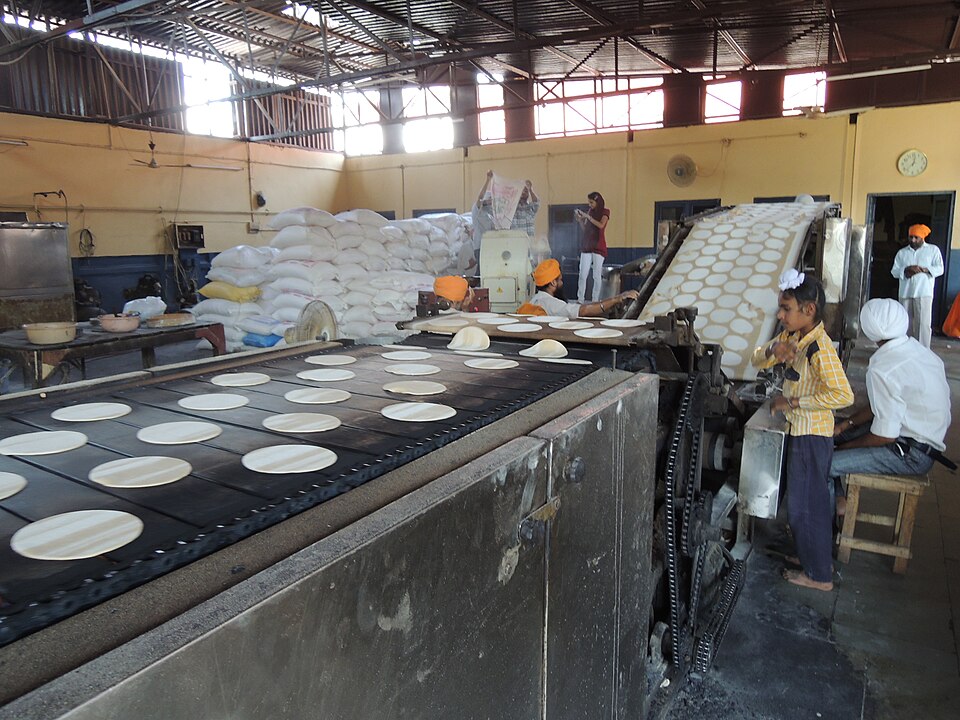
The Akbar story is told in eighteenth-century Sikh chronicles, among them the Mahimā Prakāsh; no Persian source records a visit to Guru Amar Dās.[9] Contested on the visit. Akbar’s dealings with the Gurus are better attested later: Abu’l-Faẓl’s chronicle of the reign records his meeting with Guru Arjan at Goindvāl in November 1598, and Pashaura Singh links a revenue remission for the district’s peasants that year to it.[5][9] Majority Whether Akbar met Guru Amar Dās or not, the point of the story is clear: in the Guru’s kitchen caste and rank were set aside, and a meal taken together, across caste lines, was the price of admission.[3][22] Consensus on the meaning.
The mañjīs
The followers of the Gurus were now spread across Punjab and beyond. Guru Amar Dās is credited with organising them through deputies, each holding a mañjī (“cot”, the seat from which a teacher spoke); the tradition counts twenty-two. The holders taught in the Guru’s name and brought the offerings of their congregations to Goindvāl. Under Guru Rām Dās and Guru Arjan the system became that of the masands (below).[3][21] Majority; the number twenty-two is the tradition’s. Some later accounts say women held some of these seats; the evidence for it is late and thin.[16] Contested
He also fixed occasions for the Sikhs to gather at the Guru’s seat: the spring festival of Vaisākhī and the autumn festival of Dīvālī, the days of the Hindu calendar on which the community would thereafter meet.[3][9] Majority The choice made the Guru’s court, not the Hindu shrines, the place to be on the year’s great days, while keeping the calendar the Sikhs already lived by.
The Goindvāl pothīs
At Goindvāl the hymns of Guru Nānak and Guru Amar Dās, with those of several bhagats, were copied into the volumes now called the Goindvāl pothīs. Their dating, contents and survival are set out in §0; for this chapter they show that the third Guru was already gathering a scripture a generation before Guru Arjan’s.[7][8] Majority
His own hymns: the Anand and satī
Guru Amar Dās was a prolific poet: some nine hundred of his compositions are in the scripture, more than anyone’s but Guru Arjan’s and Guru Nānak’s, among them the Anand (“bliss”), recited at Sikh ceremonies today.[11][20] Majority on the count.
Several of his verses speak about women, and one pair of couplets is often cited as a condemnation of satī, the burning of a widow with her husband’s body. In the vār in Rāg Sūhī he wrote that the true satī is not the woman who burns on the pyre but the one who dies of the pain of separation, or who lives in modesty and contentment and remembers her Lord (Primary sources, 2).[23] Consensus on the text. Read as history, the couplets show that the Guru rejected widow-burning as a religious act, and turned the word to a devotional meaning. They do not record a law against it, and Jakobsh points out that the ideal they set in its place is still a wife’s devotion to her husband.[16][11] Majority The tradition adds that Guru Amar Dās forbade the veil among his followers; that is first told later.[16] Contested
Guru Rām Dās and Rāmdāspur, 1574–1581
A son-in-law, and then a family
Jeṭhā, a Sodhī Khatrī from Lahore, had married Guru Amar Dās’s daughter, Bībī Bhānī, and served the Guru at Goindvāl. In 1574 Guru Amar Dās chose him as his successor over his own sons, and he became Guru Rām Dās.[3] Consensus With him the Guruship entered the Sodhī family and never left it: every later Guru was his descendant.[3][5] Consensus The first three successions had passed over sons; from now on the Guru was chosen from among them, and the brothers who were passed over founded rival lines (below; §4).[3][14] Consensus
The pool and the town
Guru Rām Dās began a new centre in the Mājhā, north of Goindvāl. The tradition dates the beginning of its pool to 1577. How the Guru came by the land is told two ways: that it was bought from the villagers of Tuṅg in Guru Amar Dās’s time, or that Akbar granted it to Bībī Bhānī.[9][3] Majority on the date; Contested on the grant. The settlement was called Rāmdāspur or Chakk Gurū; it took its later name, Amritsar (“pool of nectar”), from the pool.[9] Consensus Guru Rām Dās invited traders and craftsmen to settle there, and it grew into a market town on the trade routes of the Mājhā.[3][5] Majority
The Lāvāṅ
Guru Rām Dās’s hymns include the Lāvāṅ, four stanzas in Rāg Sūhī on the four “rounds” of a marriage, read as the soul’s union with God (Primary sources, 3).[24] Consensus on the text. Today the bride and groom walk four times round the Guru Granth Sāhib while they are sung, in the Anand Kāraj ceremony. The hymn is the Guru’s; the ceremony in its present form was standardised much later, by the Singh Sabhā reformers and the Anand Marriage Act of 1909 (§8), and through the eighteenth and nineteenth centuries many Sikhs married by Hindu rites around a fire.[25][26] Majority
A stanza of his in Rāg Gauṛī gives an early description of a Sikh’s day: rising early, bathing, repeating the Name, and singing the Gurus’ hymns (Primary sources, 4).[27] Consensus on the text.
Guru Arjan, 1581–1606
A disputed succession: Prithī Chand and the Mīṇās
Guru Rām Dās chose his youngest son, Arjan, born at Goindvāl in 1563, over the eldest, Prithī Chand. Prithī Chand did not accept it. He and his descendants set up as Gurus in their own right, kept a following and, for much of the seventeenth century, the Harmandir itself.[3][5][4] Majority Their opponents called them Mīṇās, “dissemblers”; Bhāī Gurdās gave a whole vār to denouncing them, ending its first stanza with the line satigur sachā pātisāhu muhu kālai mīṇā, “the true Guru is the true king; the Mīṇā’s face is blackened”.[28] Consensus on the text.
The rivals were more than a dispute over succession. Prithī Chand’s son Miharbān (d. 1640) and grandson Harijī wrote and collected hymns under the name “Nānak”, and the Miharbān janamsākhī, with its long discourses on the Guru’s hymns, comes from their circle (§0).[29][14] Majority Part of what Guru Arjan’s scripture did, Mann and Pashaura Singh argue, was to fix which hymns were the Gurus’ and which were not.[4][11] Majority
The Harmandir Sāhib
At the centre of the pool at Amritsar Guru Arjan built the Harmandir Sāhib (the Golden Temple), the “temple of God”. It stood on a platform in the water, reached by a causeway, and had a door on each of its four sides, which Sikh writers read as openness to all four castes and all four directions.[9][5] Consensus on the plan; the gilding that gives it its English name came under Ranjit Singh in the early nineteenth century (§7). The building was begun, by tradition, in 1588, and the Ādi Granth was installed in it in 1604.[9][11] Majority on the dates.
The best-known story of its founding is that Guru Arjan asked the Qādirī Sufi Mīāṅ Mīr of Lahore (1550–1635) to lay the foundation stone, and that he did so in December 1588.[9] Consensus that this is the current tradition. It is not in the early Sikh sources, nor in Dārā Shukoh’s life of Mīāṅ Mīr, the Sakīnat al-Awliyā of 1642. The earliest source to name him is Ghulām Muḥyī al-Dīn, known as Būṭe Shāh, in his Persian Tawārīkh-i Panjāb of about 1848, who has the Sufi lay four bricks, one on each side and one in the middle. Sohan Lāl Sūrī’s ʿUmdat ut-Tawārīkh (printed 1885) says only that the Guru sought Mīāṅ Mīr’s help with the tank and buildings; Giānī Giān Singh (1896) says plainly that he laid the foundation. Santokh Singh’s Gurpratāp Sūraj Granth (1843), on the other hand, has the Guru lay it himself.[30][31][9] Majority on when the story is first attested; Contested on what happened. That the Guru and Mīāṅ Mīr knew each other is likely; that the Sufi laid the stone cannot be shown.
Guru Arjan wrote of the pool in his hymns:
ਰਾਮਦਾਸ ਸਰੋਵਰਿ ਨਾਤੇ ॥ ਸਭਿ ਉਤਰੇ ਪਾਪ ਕਮਾਤੇ ॥
rāmadās sarovari nāte | sabhi utare pāp kamāte |
Bathing in the pool of Rāmdās, all the sins they committed are washed away (the site’s translation).[32]
Consensus on the text. Within two generations of Guru Nānak’s hymns against pilgrimage to sacred waters, the Sikhs had a sacred pool of their own, and their Guru praised bathing in it.[3][21] Majority on the reading. Sikh commentators read “the pool of Rāmdās” as the pool of God’s servants, the congregation in which the water of the Name flows, and the bathing as immersion in the Name and the congregation.[32] Consensus that this is the commentators’ reading.
More towns: Tarn Tāran and Kartārpur
Guru Arjan founded further centres in the countryside: Tarn Tāran, south of Amritsar, with a larger pool, in 1590; Kartārpur in the Jalandhar Doāba; and Srī Hargobindpur on the Beās. He dug wells, including one with six Persian wheels near Amritsar (Chheharṭā).[3][5] Majority These were rural places, and W. H. McLeod argued that they mark a shift in the community’s make-up, as Jaṭ peasants joined it in large numbers, with consequences for the next century (§4).[21] Contested
The masands and the dasvandh
The deputies of Guru Amar Dās’s time became, under Guru Rām Dās and Guru Arjan, the masands (from Persian masnad-i ʿālī, a title of nobility). They taught in the Guru’s name, gathered the congregations’ offerings, among them the dasvandh, the tenth of income that Sikhs were asked to give, and brought them to the Guru, often at Vaisākhī.[3][21] Majority The Dabistān-i Mazāhib (c. 1645–1658) describes the system, with masands in many cities.[33][34] Consensus It gave the Gurus an income and a reach that the Mughal state noticed, and it also made the masands a power in their own right, until Guru Gobind Singh abolished them in 1699 (§5).[3] Consensus
The Ādi Granth, 1604
Guru Arjan’s best-known work is the scripture. With Bhāī Gurdās as scribe, he gathered the hymns of the first four Gurus and his own, the bhagats’ hymns already collected in the Goindvāl pothīs and others besides, and the poems of the court minstrels and the Bhaṭṭs (bards) who praised the Gurus, and arranged them by rāg, and within each rāg by author and form. The volume was completed in 1604 and installed in the Harmandir.[11][4][5] Consensus on the compilation and its date. Whether the manuscript kept at Kartārpur is Guru Arjan’s own copy, and what its erasures mean, is set out in §0.[10] Contested
Three things about the book matter for this chapter.
- Arjan’s own hymns are its largest part. About two thousand of its compositions are his, among them the Sukhmanī (“pearl of peace”), twenty-four aṣṭapadīs in Rāg Gauṛī (aṅg 262–296), one of the most widely recited Sikh prayers.[5][11] Majority on the count.
- It includes poets who were not Sikhs. Fifteen bhagats from outside the line of Gurus have hymns in it, among them Kabīr, Ravidās, Nāmdev and the Sufi Shaikh Farīd. Guru Arjan chose them, edited them, and sometimes answered them in verses of his own.[11][35] Consensus What their presence means for the history of the Sant poets is taken up in Hinduism §10; for the Sikhs it means that the scripture claims the bhagats’ teaching as one with the Gurus’. Whether that makes Sikhism a blend of Hindu and Muslim devotion, or a revelation that recognised kindred voices, is a modern argument with high stakes.[11][36] Political
- It closes with a seal. The last composition in Guru Arjan’s order, the Mundāvaṇī (“seal”), likens the book to a platter: thāl vichi tinni vasatū paīo satu santokhu vīchāro, “on the platter three things have been placed: truth, contentment and reflection”.[37] Consensus on the text. Pashaura Singh reads it as Guru Arjan’s statement that the book was complete.[11] Majority
One verse of Guru Arjan’s, in Rāg Bhairau, says nā ham hindū na musalamān, “I am neither Hindu nor Muslim”; the same hymn takes up a theme of Kabīr’s. It is quoted on both sides of the modern argument over whether Sikhs are Hindus.[38][25] Political
Lahore, 1606
What the outside witnesses say
In October 1605 Akbar died and his son Salīm became emperor as Jahāṅgīr. In April 1606 Jahāṅgīr’s eldest son, Khusrau, whom some nobles had favoured for the throne, fled Agra for Punjab, and was captured near the Chenāb at the end of the month.[12][13] Consensus On his way north he met Guru Arjan.
Three witnesses who did not depend on the Sikh tradition describe what followed:
| Witness | Date | What it says |
|---|---|---|
| Jahāṅgīr’s memoirs[1][2] | 1606 | He had long wanted to end the Guru’s “false trade” or bring him into Islam; when the Guru met Khusrau and marked his forehead, he ordered his property confiscated and him executed |
| Jerome Xavier, Jesuit, letter from Lahore[39][40][41] | 25 September 1606 | The Guru was arrested for blessing Khusrau and allowed to buy his freedom for 100,000 crusados; a wealthy Hindu stood surety, stripped his house, had him beaten and starved; he died of it |
| Dabistān-i Mazāhib[33][34] | c. 1645–1658 | He was punished and fined for praying for Khusrau; unable to pay, he was tied up in the open near Lahore and died of the sun, the heat and the injuries inflicted by the collectors |
Consensus on the texts. The emperor’s own words are quoted at length in §0. All three agree that the Guru’s meeting with Khusrau was the occasion, that a fine was imposed, and that the Guru died in custody in Lahore; the Jesuit’s letter, written four months later, records what was said in Lahore at the time, and the Jesuit used the word tiqa, the ṭikā or mark on the forehead, for what the Guru gave the prince.[12][40] Majority Jahāṅgīr names the penalty in Persian as siyāsat o yāsā, terms for capital punishment that Pashaura Singh reads as punishment under the Mongol code.[12][5] Fenech thinks that reading exaggerated and follows Thackston’s plain “executed”.[42][2] Majority on the words; Contested on the reading.
Xavier wrote in Portuguese to the Jesuit Provincial at Goa, and Fernão Guerreiro printed the letter, rearranged, in his annual Relação of the Jesuit missions (Lisbon, 1609); C. H. Payne’s English translation of Guerreiro appeared in 1930. Amandeep Singh Madra and Parmjit Singh print a new translation, by Francisco José Luis, as the first of their eyewitness accounts of the Sikhs (2004), and note that the original letter is among the Marsden manuscripts, now in the British Library (Add. MS 9854, ff. 38–52r).[39][40][41] Consensus
Sirhindī’s letter
A fourth contemporary voice is hostile. Shaikh Aḥmad Sirhindī (1564–1624), the Naqshbandī Sufi whose criticism of Akbar’s religious policy is discussed in Islam §9, wrote to Shaikh Farīd Bukhārī, the noble whom Jahāṅgīr titled Murtazā Khān and to whom he gave the Guru’s houses, rejoicing at the death: “These days the accursed infidel of Gobindwal was very fortunately killed”, he wrote, and called it a great defeat for the Hindus (trans. Friedmann, as quoted by Pashaura Singh).[43][12] Consensus on the text (the Maktūbāt, letter 1.193).
What the letter proves is argued. Many Sikh historians take it as evidence that Naqshbandī revivalists pressed for the execution. Louis Fenech pointed out that the letter was written after the event and to a governor, not to the emperor, and judged Sirhindī’s part in the decision to be conjecture; Yohanan Friedmann had already argued that Sirhindī’s influence at court was much smaller than his later reputation.[44][45] Pashaura Singh replies that Sirhindī’s closeness to Murtazā Khān, the official who carried out the sentence, makes the letter more than a bystander’s comment.[12][5] Contested
What the Sikh sources say, and when
The early Sikh sources say little about how the Guru died. Bhāī Gurdās, who knew him, gives one stanza to his last hours, in images of a fish in the river, a moth in the flame, a deer intent on the sound it loves, and ends: “I am a sacrifice to Guru Arjan” (Primary sources, 5).[46][47] Majority that the stanza is about the Guru’s death. Fenech observes that the Bachitar Nāṭak (§5), the first Sikh text to give martyrdom a central place, mentions Guru Arjan only to say that he “departed to the Lord’s realm”, with no word of execution or martyrdom, and that even the Sikh tradition was long unsure whether he died by torture, execution or drowning in the Rāvī.[47][44][48] Majority
The fuller account grew in stages:[12][44] Majority
| Element | Earliest clear attestation | Confidence |
|---|---|---|
| A fine; death in custody; Khusrau as the occasion | Jahāṅgīr (1606), Xavier (1606), the Dabistān (c. 1645–1658)[1][39] | Consensus |
| Death from heat and exposure | The Dabistān, c. 1645–1658[33] | Majority |
| A river in the account of the Guru’s end | Bhāī Gurdās, Vār 24.23, early 17th c., as image[46] | Contested (reading) |
| A furnace and burning sand, as imagery possibly alluding to the death | An apocryphal salok in the Banno bīṛ, 1640s–1650s[49][12] | Contested |
| The death presented as an execution: Chandū Shāh, a Khatrī dīwān, accuses the Guru of helping the rebel prince with money, pays the fine and takes possession of him | Mahimā Prakāsh Vārtak, ascribed to Kirpāl Dās Bhallā, conventionally dated 1741[50][12][9] | Majority |
| Chandū’s motive: the Guru had refused his daughter as a bride for Hargobind | Sarūp Dās Bhallā, Mahimā Prakāsh, 1776[51][42] | Majority |
| Burning sand poured on the Guru; he was bound and thrown into the Rāvī | Kesar Singh Chhibbar, Baṅsāvalīnāmā, 1769 (some date it 1776)[52][12] | Majority |
| The hot iron plate, the cauldron of boiling water, the last bathe in the Rāvī | Nineteenth-century and later accounts; the full version became standard through Macauliffe (1909)[53][44] | Majority |
The prose Mahimā Prakāsh Vārtak names neither its author nor its date in any surviving manuscript. The attribution to Kirpāl Dās (or Kirpāl Singh) Bhallā and the date 1741 rest on common belief, which Fenech and Pashaura Singh follow.[9][42][12] Majority
The motive the tradition gives for Chandū comes a generation after him: in Sarūp Dās Bhallā’s verse Mahimā Prakāsh (1776) Chandū misleads the emperor into fining the Guru and then tortures him to death in revenge for the Guru’s refusal of his daughter as a bride for Hargobind.[51][42] Majority Pashaura Singh notes that Xavier’s “wealthy Gentile” who stood surety and tormented the Guru matches the Chandū story, and argues that the Mughal administration encouraged that version in Lahore to shift the blame from the emperor; for a century and more the Sikh sources blamed Chandū rather than Jahāṅgīr.[12][5] Fenech answers that the emperor himself recorded his order in memoirs meant to circulate at court, which sits badly with a policy of shifting the blame.[42] Contested on the argument; Majority that the eighteenth-century Sikh sources put Chandū at the centre.
The Guru’s death is commemorated by Sikhs every year in the summer, by tradition on the anniversary of 30 May 1606, with stalls of cold sweetened drink (chhabīl) offered to passers-by in memory of the heat in which he died. The Gurdwārā Ḍerā Sāhib in Lahore marks the place.[5][44] Majority
Why: politics, religion, or both?
Jahāṅgīr gives two reasons in one passage: an old wish to end the Guru’s influence over Hindus and “even some ignorant, stupid Muslims”, and the occasion of Khusrau.[1][2] Consensus on the text. Historians weigh them differently (Debates, below). Most now accept that the execution had a political occasion, that the emperor’s words show a religious motive as well, and that the growing size and wealth of the community under Guru Arjan, with its towns, its masands and its Muslim followers, is what made the Guru worth noticing.[5][3][44] Majority
In modern Sikh memory Guru Arjan is Shahīdāṅ de Sirtāj, “the crown of the martyrs”, the first Sikh martyr, put to death for his faith by a Muslim emperor; in that telling his death is the reason the sixth Guru took up the sword (§4). Fenech has argued that Sikh sources do not present Guru Arjan’s death as a martyrdom until the mid-eighteenth century, and do not call him shahīd until the Singh Sabhā period.[44][47] Pashaura Singh replies that shahīd is already used for martyrs in the late seventeenth-century Charitropākhyān of the Dasam Granth (102.30), and that in Chhibbar’s account Guru Arjan says “our head will be given”.[12][48][52] Contested How the death is framed today, as religious persecution, as a political execution, or as a Mughal crime against Hindus and Sikhs alike, is itself fought over.[44][5] Political
The evidence ledger
| Date | Evidence | Confidence |
|---|---|---|
| 1581–1604 | Sattā and Balvaṇḍ’s ballad: the successions, Guru Nānak’s sons, Mātā Khīvī and the laṅgar[6][15] | Majority (date) |
| 1552–1574 | Guru Amar Dās’s couplets on satī[23] | Consensus |
| c. 1570–1572 | The Goindvāl pothīs: the earliest dated Gurmukhī[7][8] | Majority |
| 1574–1581 | Guru Rām Dās’s Lāvāṅ and his couplet on the Sikh’s day[24][27] | Consensus |
| 1581–1606 | Guru Arjan’s hymn on the pool of Rāmdās; the Sukhmanī; the Mundāvaṇī[32][37] | Consensus |
| 1604 | The Ādi Granth completed; the Kartārpur volume[10][11] | Consensus (compilation); Contested (the volume) |
| 1606 | Jahāṅgīr’s memoirs on the execution[1] | Consensus |
| 1606 | Jerome Xavier’s letter from Lahore[39] | Consensus |
| 1606 or after | Sirhindī’s letter to Shaikh Farīd Bukhārī[43] | Consensus |
| early 17th c. | Bhāī Gurdās on Guru Arjan’s last hours, and against the Mīṇās[46][28] | Consensus |
| c. 1645–1658 | The Dabistān-i Mazāhib: the masands; Guru Arjan’s death from heat and injuries[33] | Majority (author and date) |
| 17th c. | The Miharbān janamsākhī, from Prithī Chand’s line[29] | Majority |
| 1640s–1650s | Apocryphal saloks in the Banno bīṛ: furnace and burning sand as imagery[49] | Contested (reading) |
| c. 1741 | The Mahimā Prakāsh Vārtak, ascribed to Kirpāl Dās Bhallā: the death as an execution; Chandū Shāh[50][9] | Majority |
| 1769 (or 1776) | Kesar Singh Chhibbar: burning sand and the Rāvī[52] | Majority (date contested) |
| 1776 | Sarūp Dās Bhallā’s Mahimā Prakāsh: Chandū’s motive, the refused bride[51] | Majority |
| c. 1848 | Būṭe Shāh: Mīāṅ Mīr lays the Harmandir’s foundation[30] | Majority (date) |
Primary sources
Show the 6 primary sources
1. Mātā Khīvī and the laṅgar: Sattā and Balvaṇḍ, Rāmkalī, aṅg 967
ਬਲਵੰਡ ਖੀਵੀ ਨੇਕ ਜਨ ਜਿਸੁ ਬਹੁਤੀ ਛਾਉ ਪਤ੍ਰਾਲੀ ॥ ਲੰਗਰਿ ਦਉਲਤਿ ਵੰਡੀਐ ਰਸੁ ਅੰਮ੍ਰਿਤੁ ਖੀਰਿ ਘਿਆਲੀ ॥
balavanḍ khīvī nek jan jisu bahutī chhāu patrālī | laṅgari daulati vanḍīai rasu aṁmritu khīri ghiālī |
“Balvaṇḍ says: Khīvī is a good woman, whose shade is deep and leafy. In the laṅgar the bounty is shared out: rice pudding made with ghee, sweet as nectar.” (The site’s translation.)[15]
What it proves. That the Gurus’ kitchen was remembered, in the Gurus’ own circle and inside the scripture, as part of Guru Aṅgad’s household, and that a Guru’s wife ran it. The ballad names Guru Arjan, so it was composed in his time; it is the earliest evidence for the laṅgar after Guru Nānak. Majority on the date.
2. Not the women who burn: Guru Amar Dās, Sūhī, aṅg 787
ਸਤੀਆ ਏਹਿ ਨ ਆਖੀਅਨਿ ਜੋ ਮੜਿਆ ਲਗਿ ਜਲੰਨਿੑ ॥ ਨਾਨਕ ਸਤੀਆ ਜਾਣੀਅਨਿੑ ਜਿ ਬਿਰਹੇ ਚੋਟ ਮਰੰਨਿੑ ॥੧॥ ਭੀ ਸੋ ਸਤੀਆ ਜਾਣੀਅਨਿ ਸੀਲ ਸੰਤੋਖਿ ਰਹੰਨਿੑ ॥ ਸੇਵਨਿ ਸਾਈ ਆਪਣਾ ਨਿਤ ਉਠਿ ਸੰਮੑਾਲੰਨਿੑ ॥੨॥
satīā ehi na ākhīani jo maṛiā lagi jalanni | nānak satīā jāṇīanni ji birahe choṭ maranni ||1|| bhī so satīā jāṇīani sīl santokhi rahanni | sevani sāī āpaṇā nit uṭhi sammhālanni ||2||
“They are not called satīs who burn themselves on the pyres of the dead. Nānak: they are known as satīs who die of the blow of separation. They too are known as satīs who live in modesty and contentment, who serve their Lord and rise each day to remember him.” (The site’s translation.)[23]
What it proves. That the third Guru rejected widow-burning as a religious ideal and gave the word a devotional meaning, the soul’s love for God and a wife’s faithfulness. It is a teaching, not a law; whether it marks a break with patriarchal ideals or a gentler form of them is argued over (Jakobsh).[16] Consensus on the text; Contested on the reading.
3. The marriage hymn: Guru Rām Dās, Lāvāṅ, Sūhī, aṅg 773–774
ਹਰਿ ਪਹਿਲੜੀ ਲਾਵ ਪਰਵਿਰਤੀ ਕਰਮ ਦ੍ਰਿੜਾਇਆ ਬਲਿ ਰਾਮ ਜੀਉ ॥ … ਜਨੁ ਨਾਨਕੁ ਬੋਲੇ ਚਉਥੀ ਲਾਵੈ ਹਰਿ ਪਾਇਆ ਪ੍ਰਭੁ ਅਵਿਨਾਸੀ ॥੪॥੨॥
hari pahilaṛī lāv paravirtī karam driṛāiā bali rām jīu | … janu nānaku bole chauthī lāvai hari pāiā prabhu avināsī ||4||2||
“In the first round the Lord sets out the duties of the householder’s life; I am a sacrifice to the Lord… The servant Nānak says: in the fourth round the Lord is found, the imperishable God.” (The site’s translation.)[24]
What it proves. That the fourth Guru gave his followers a hymn of marriage, and through it a theology of married life as a path to God, in keeping with the Gurus’ preference for the householder over the renouncer. It does not prove that Sikhs married by circling the scripture in his day; the ceremony in its present form is much later (§8). Consensus on the text; Majority on the ceremony’s date.
4. A Sikh’s day: Guru Rām Dās, Gauṛī kī Vār, aṅg 305
ਗੁਰ ਸਤਿਗੁਰ ਕਾ ਜੋ ਸਿਖੁ ਅਖਾਏ ਸੁ ਭਲਕੇ ਉਠਿ ਹਰਿ ਨਾਮੁ ਧਿਆਵੈ ॥ ਉਦਮੁ ਕਰੇ ਭਲਕੇ ਪਰਭਾਤੀ ਇਸਨਾਨੁ ਕਰੇ ਅੰਮ੍ਰਿਤ ਸਰਿ ਨਾਵੈ ॥
gur satigur kā jo sikhu akhāe su bhalake uṭhi hari nāmu dhiāvai | udamu kare bhalake parabhātī isanānu kare aṁmrit sari nāvai ||
“Whoever calls himself a Sikh of the true Guru rises early and meditates on the Lord’s Name; he makes the effort early in the morning, and bathes in the pool of nectar.” (The site’s translation.)[27]
What it proves. That by the 1570s a Sikh was expected to keep a daily discipline: early rising, bathing, repetition of the Name and, the stanza continues, singing the Gurus’ hymns through the day. It anticipates what later codes would call the rahit. Consensus on the text; Majority on the reading.
5. “I am a sacrifice to Guru Arjan”: Bhāī Gurdās, Vār 24, pauṛī 23
ਰਹਿਦੇ ਗੁਰੁ ਦਰੀਆਉ ਵਿਚਿ ਮੀਨ ਕੁਲੀਨ ਹੇਤੁ ਨਿਰਬਾਣੀ। ਦਰਸਨੁ ਦੇਖਿ ਪਤੰਗ ਜਿਉ ਜੋਤੀ ਅੰਦਰਿ ਜੋਤਿ ਸਮਾਣੀ। … ਗੁਰ ਅਰਜਨ ਵਿਟਹੁ ਕੁਰਬਾਣੀ ॥੨੩॥
rahide guru darīāu vichi mīn kulīn hetu nirabāṇī | darasanu dekhi pataṅg jiu jotī andari joti samāṇī | … gur arajan viṭahu kurabāṇī ||23||
“The Guru stayed in the river as the fish of noble kind stays in the water it loves, free of desire; like the moth that sees the flame, his light merged in the Light… I am a sacrifice to Guru Arjan.” (The site’s translation.)[46]
What it proves. That a disciple who knew the Guru remembered his death as a serene union with God under suffering, without naming torturers, fines or the emperor. Whether the river is the Rāvī of the later story or only an image is argued; Fenech takes the stanza as a description of a hero’s death.[47] Majority that it concerns his death; Contested on the river.
6. The death in a Persian survey: the Dabistān-i Mazāhib, c. 1645–1658
“When after the capture of [Prince] Khusrau, His Majesty king Jannat Makani Nuruddin Muhammad Jahangir punished and mulcted Guru Arjan Mal, on account of his having prayed for the welfare of Prince Khusrau… and a large amount was demanded from him, he found himself powerless to pay it. He was tied up and kept [in the open] in the desert around Lahore. He gave up his life there owing to the strong sun, summer heat and the injuries inflicted by the collectors.” (trans. Irfan Habib)[33][34]
What it proves. That forty years after the event, a Persian writer who knew the sixth and seventh Gurus recorded the Guru’s death as the result of a fine he could not pay, exposure to the heat and ill-treatment, with Khusrau as the cause. It is the earliest source for the heat that the later Sikh accounts turn into the hot plate and the burning sand. Majority on the author and date; Consensus on the text.
What is absent
- A Persian record of Akbar at Guru Amar Dās’s laṅgar. The visit is a Sikh tradition; the meeting with Guru Arjan in 1598 is better attested. Majority
- A document of the Gurmukhī script’s invention. The tradition credits Guru Aṅgad; no text of his time says so, and the letters are older. Majority
- Mīāṅ Mīr in any source before the nineteenth century as the layer of the Harmandir’s foundation stone. Majority
- Chandū Shāh by name, the hot plate and the boiling cauldron in any seventeenth-century source. Chandū appears in 1741 and the plate and cauldron later still; the early sources speak of a fine, ill-treatment and heat, and an apocryphal salok of the 1640s–1650s of a furnace and burning sand. Majority
- Evidence that Guru Arjan joined Khusrau’s rebellion. The sources say he blessed or prayed for the prince; none says he gave men or money beyond the later charge in the Sikh accounts. Majority
- The word shahīd (“martyr”) for Guru Arjan in the earliest Sikh sources. Bhāī Gurdās praises his death without it. Contested
Debates
Who made Gurmukhī?
| View | Main argument | Main proponents |
|---|---|---|
| Guru Aṅgad’s creation | The tradition is old and consistent; the Guru created a script for the Gurus’ word | The Sikh tradition[9] |
| Adopted and regularised | The letters belong to the Laṇḍā and Śāradā family and are older; the Gurus adapted and spread them | Most historians of the script[18][4] |
Contested; the two views are closer than they look, since both credit the early Gurus with making it the script of scripture.
Why was Guru Arjan executed?
| View | Main argument | Main proponents |
|---|---|---|
| Political | A ruler punished a man who had blessed a rebel; Jahāṅgīr understood the Guru to have backed Khusrau, and “executed” means just that | Beni Prasad; Sajida Alvi; Fenech; many historians of Mughal India[12][42] |
| Religious, with social and economic causes behind it | The emperor’s own words show he wanted to end the Guru’s influence or convert him; Naqshbandī revivalists rejoiced; the Guru’s following among peasants and Muslims alarmed the state | Pashaura Singh; much Sikh scholarship[5][12] |
| Both, with the community’s growth behind them | Khusrau was the occasion; the size, wealth and new Jaṭ following of the community were the reason it mattered | Grewal; McLeod (the Jaṭ influx, 1976)[3][21] |
Contested; Political in modern use.
Did Sirhindī have a hand in it?
Pashaura Singh argues that his letter and his ties to Murtazā Khān point to an influence on the decision; Fenech and Friedmann that the letter, written after the fact to a governor, shows approval rather than agency.[12][44][45] Contested
Who laid the Harmandir’s foundation stone?
Current tradition says Mīāṅ Mīr; the earliest written sources for that are of the nineteenth century, and others of the same century say the Guru himself.[9][30] Contested
Further reading
Show further reading (7 works)
- J. S. Grewal, The Sikhs of the Punjab (Cambridge, 1990; revised 1998): the narrative of the four Gurus.
- Pashaura Singh, Life and Work of Guru Arjan: History, Memory, and Biography in the Sikh Tradition (Oxford, 2006), and “Understanding the Martyrdom of Guru Arjan”, Journal of Punjab Studies 12.1 (2005): the fifth Guru, and the sources for his death.
- Louis E. Fenech, Martyrdom in the Sikh Tradition (Oxford, 2000), and “Martyrdom and the Execution of Guru Arjan in Early Sikh Sources”, Journal of the American Oriental Society 121 (2001), and “Martyrdom: W. H. McLeod and his Students”, Journal of Punjab Studies 17 (2010): how the death was remembered, and a reply to Pashaura Singh.
- Gurinder Singh Mann, The Making of Sikh Scripture (Oxford, 2001), and Pashaura Singh, The Guru Granth Sahib: Canon, Meaning and Authority (Oxford, 2000): the Goindvāl pothīs to 1604.
- Doris R. Jakobsh, Relocating Gender in Sikh History (Oxford, 2003): Mātā Khīvī, the mañjīs and satī, read critically.
- J. S. Grewal and Irfan Habib, eds., Sikh History from Persian Sources (Tulika, 2001): Jahāṅgīr and the Dabistān in English.
- Yohanan Friedmann, Shaykh Aḥmad Sirhindī (McGill-Queen’s, 1971): Sirhindī and his later image.
References
- ^ a b c d e f Jahāṅgīrnāmā, regnal year 1 (1606) — Memoirs of Jahāṅgīr. 1606 CE. Persian. The emperor's own account of ordering Guru Arjan's execution, which he links to the Guru's blessing of the rebel prince Khusrau.
- ^ a b c d Wheeler M. Thackston, trans. The Jahangirnama: Memoirs of Jahangir, Emperor of India. Oxford University Press and Smithsonian Institution, 1999.
- ^ a b c d e f g h i j k l m n o p q r s t u v w x y z { | } ~ J. S. Grewal The Sikhs of the Punjab. The New Cambridge History of India II.3, Cambridge University Press, 1990. The standard narrative history; revised edition 1998.
- ^ a b c d e f g h Gurinder Singh Mann The Making of Sikh Scripture. Oxford University Press, New York, 2001. The manuscripts from the Goindvāl pothīs to the Damdamā recension.
- ^ a b c d e f g h i j k l m n o p q r s Pashaura Singh Life and Work of Guru Arjan: History, Memory, and Biography in the Sikh Tradition. Oxford University Press, New Delhi, 2006.
- ^ a b Guru Granth Sāhib, ang 966 — Sattā and Balvaṇḍ, Vār in Rāmkalī. late 16th c. CE. Punjabi in Gurmukhi. A minstrels' ballad, inside the scripture, on Nānak passing the Guruship to Lahaṇā (Aṅgad): the earliest account of the succession. read the text
- ^ a b c Goindval Pothīs — Early Sikh manuscript collections. c. 1570s. Punjabi in Gurmukhi. The earliest written Sikh collections, and the earliest datable manuscript witnesses to Kabīr, Nāmdev and Ravidās.
- ^ a b c d Gurinder Singh Mann The Goindval Pothis: The Earliest Extant Source of the Sikh Canon. Harvard Oriental Series 51, Harvard University Press, 1996.
- ^ a b c d e f g h i j k l m n o p q r s t u Harbans Singh, ed. The Encyclopaedia of Sikhism. Punjabi University, Patiala, 4 vols, 1992. open access Published 1992–1998; the standard reference, with signed entries reporting both tradition and sources.
- ^ a b c Kartārpur bīṛ — The volume kept at Kartārpur (Jalandhar) by the Sodhī family. 1604 CE (by tradition and its own dating). Punjabi in Gurmukhi. Held by tradition to be Guru Arjan's master copy of the Ādi Granth; its status, and what its erasures and blank pages mean, are argued over.
- ^ a b c d e f g h i j k l m Pashaura Singh The Guru Granth Sahib: Canon, Meaning and Authority. Oxford University Press, 2000. doi The formation of the Sikh canon, from the 1604 Ādi Granth to its installation as Guru.
- ^ a b c d e f g h i j k l m n o p Pashaura Singh Understanding the Martyrdom of Guru Arjan. Journal of Punjab Studies 12.1, 29–62, 2005. open access Jahāṅgīr, Xavier, the Dabistān, Sirhindī's letter and the Chandū Shāh tradition, set side by side.
- ^ a b John F. Richards The Mughal Empire. Cambridge University Press (New Cambridge History of India), 1993. The standard survey of the empire from Bābur to the eighteenth century.
- ^ a b c W. H. McLeod Early Sikh Tradition: A Study of the Janam-sākhīs. Clarendon Press, Oxford, 1980. The janamsākhī traditions, their manuscripts and how they grew.
- ^ a b c d Guru Granth Sāhib, ang 967 — Sattā and Balvaṇḍ, Vār in Rāmkalī. late 16th c. CE. Punjabi in Gurmukhi. The ballad continued: the laṅgar of the Guru's Word runs on, Nānak's sons turn their backs, and Khīvī distributes the bounty of Aṅgad's laṅgar: the earliest mention of a Guru's kitchen, and the only mention of a laṅgar in the scripture. read the text
- ^ a b c d e Doris R. Jakobsh Relocating Gender in Sikh History: Transformation, Meaning and Identity. Oxford University Press, New Delhi, 2003.
- ^ Eleanor Nesbitt Sikhism: A Very Short Introduction. Oxford University Press, 2nd ed., 2016.
- ^ a b Richard Salomon Indian Epigraphy. Oxford University Press, 1998. open library The standard handbook for inscriptions and their dating.
- ^ Guru Granth Sāhib, ang 432 — Guru Nānak, Paṭṭī Likhī, Rāg Āsā. early 16th c. CE. Punjabi in Gurmukhi. Nānak's acrostic on the letters of the alphabet: evidence that a Punjabi alphabet with named letters was taught before Guru Aṅgad. read the text
- ^ a b Christopher Shackle and Arvind-pal Singh Mandair, trans. Teachings of the Sikh Gurus: Selections from the Sikh Scriptures. Routledge, 2005.
- ^ a b c d e f W. H. McLeod The Evolution of the Sikh Community: Five Essays. Clarendon Press, Oxford, 1976. Includes the argument that the Jaṭ peasantry shaped the community's turn to arms.
- ^ Pashaura Singh and Louis E. Fenech, eds. The Oxford Handbook of Sikh Studies. Oxford University Press, 2014.
- ^ a b c Guru Granth Sāhib, ang 787 — Guru Amar Dās, saloks in the Vār of Rāg Sūhī. 1552–1574 CE. Punjabi in Gurmukhi. "They are not called satīs who burn themselves on the pyres of the dead": the true satī dies of the pain of separation, or lives in modesty and contentment. read the text
- ^ a b c Guru Granth Sāhib, ang 773–774 — Guru Rām Dās, Lāvāṅ (Chhant in Rāg Sūhī). 1574–1581 CE. Punjabi in Gurmukhi. The four rounds (lāvāṅ) of marriage as stages of the soul's union with God; sung today at the Anand Kāraj wedding. read the text
- ^ a b Harjot Oberoi The Construction of Religious Boundaries: Culture, Identity, and Diversity in the Sikh Tradition. University of Chicago Press, 1994. The "Sanātan" Sikhism of the early nineteenth century and the Singh Sabhā's sharper boundaries.
- ^ W. H. McLeod Who Is a Sikh? The Problem of Sikh Identity. Clarendon Press, Oxford, 1989.
- ^ a b c Guru Granth Sāhib, ang 305 — Guru Rām Dās, Vār in Rāg Gauṛī. 1574–1581 CE. Punjabi in Gurmukhi. "Whoever calls himself a Sikh of the true Guru rises early and meditates on the Name": an early description of a Sikh's daily discipline. read the text
- ^ a b Bhāī Gurdās, Vār 36.1 — Vārāṅ. early 17th c. CE. Punjabi in Gurmukhi. The vār against the Mīṇās, Prithī Chand's line: "the true Guru is the true king; the Mīṇā's face is blackened". read the text
- ^ a b Miharbān Janamsākhī — Life of Nānak from the Mīṇā line. 17th c. CE. Punjabi in Gurmukhi. Discourses attributed to Nānak, from the circle of Prithī Chand's descendants, rivals of the main line of Gurus.
- ^ a b c Ghulām Muḥyī al-Dīn (Būṭe Shāh), Tawārīkh-i Panjāb — Persian history of Punjab. c. 1848 CE. Persian. The earliest written source for the story that the Sufi Mīāṅ Mīr laid the foundation of the Harmandir at Guru Arjan's request, placing four bricks on the sides and one in the middle.
- ^ Sohan Lāl Sūrī, ʿUmdat ut-Tawārīkh — Persian chronicle of the Lahore court (printed 1885). 19th c. CE; printed 1885. Persian. Says Guru Arjan went to Lahore and sought Mīāṅ Mīr's help in the construction of the tank and buildings at Amritsar.
- ^ a b c Guru Granth Sāhib, ang 625 — Guru Arjan, Rāg Soraṭh. 1581–1606 CE. Punjabi in Gurmukhi. "Bathing in the pool of Rāmdās, all the sins they committed are washed away": the fifth Guru on the pool at Amritsar. read the text
- ^ a b c d e Dabistān-i Mazāhib, on the Nānakpanthīs — The School of Religions. c. 1645–1658 CE. Persian. A Persian survey of religions with a chapter on the followers of Nānak by an author who knew Guru Hargobind and Guru Har Rāī: the masands, the Gurus' court, and Sikhs who rejected idols and caste rules.
- ^ a b c J. S. Grewal and Irfan Habib, eds. Sikh History from Persian Sources: Translations of Major Texts. Tulika, New Delhi, 2001. Jahāṅgīr, the Dabistān, court newsletters and chronicles in English.
- ^ Salok Shaikh Farīd — Guru Granth Sāhib, angs 1377–1384. 1604 CE. Punjabi in Gurmukhi. Dozens of saloks by a Sufi, canonized inside Sikh scripture. The cross-tradition claim is structural, not token. read the text
- ^ Arvind-pal Singh Mandair Sikhism: A Guide for the Perplexed. Bloomsbury, 2013.
- ^ a b Guru Granth Sāhib, ang 1429 — Guru Arjan, Mundāvaṇī. c. 1604 CE. Punjabi in Gurmukhi. The "seal" of the Ādi Granth: "on the platter three things have been placed: truth, contentment and reflection". read the text
- ^ Guru Granth Sāhib, ang 1136 — Guru Arjan, Rāg Bhairau. 1581–1606 CE. Punjabi in Gurmukhi. "I am neither Hindu nor Muslim" (nā ham hindū na musalamān): a hymn of Guru Arjan on a theme of Kabīr's, quoted in the modern argument over whether Sikhs are Hindus. read the text
- ^ a b c d Jerome Xavier, letter from Lahore, 25 September 1606 — Jesuit letter to the Provincial at Goa, printed in Fernão Guerreiro's Relaçam (1609). 25 September 1606. Portuguese. The Guru who blessed the rebel Khusrau was arrested, allowed to buy his freedom for 100,000 crusados, then stripped, beaten and starved by the wealthy Hindu who stood surety, and died of it.
- ^ a b c C. H. Payne, trans. Jahangir and the Jesuits, from the Relations of Father Fernão Guerreiro. Routledge (Broadway Travellers), 1930. English translation of the Jesuit reports, including Jerome Xavier's letter of 1606 on Khusrau and the Guru.
- ^ a b Amandeep Singh Madra and Parmjit Singh, eds. 'Sicques, Tigers, or Thieves': Eyewitness Accounts of the Sikhs (1606–1809). Palgrave Macmillan, New York and Basingstoke, 2004. doi Opens with Jerome Xavier's letter of 25 September 1606 in a new translation by Francisco José Luis (pp. 3–8); notes the original in the Marsden manuscripts, BM Add. MS 9854, ff. 38–52r.
- ^ a b c d e f Louis E. Fenech Martyrdom: W. H. McLeod and his Students. Journal of Punjab Studies 17.1–2, 75–93, 2010. open access Replies to Pashaura Singh on the yāsā reading, the Chandū Shāh narrative and blame for Guru Arjan's death.
- ^ a b Aḥmad Sirhindī, Maktūbāt-i Imām-i Rabbānī — Letters of Aḥmad Sirhindī. c. 1600–1624 CE. Persian. Letters to disciples and Mughal nobles urging strict application of the sharīʿa, opposing non-Muslims in high office and rejecting the 'unity of being'. about
- ^ a b c d e f g h i Louis E. Fenech Martyrdom in the Sikh Tradition: Playing the "Game of Love". Oxford University Press, New Delhi, 2000.
- ^ a b Yohanan Friedmann Shaykh Aḥmad Sirhindī: An Outline of His Thought and a Study of His Image in the Eyes of Posterity. McGill-Queen's University Press, 1971. Argues that Sirhindī's influence on Mughal policy was much smaller than his later image.
- ^ a b c d Bhāī Gurdās, Vār 24.23 — Vārāṅ. early 17th c. CE. Punjabi in Gurmukhi. Guru Arjan's last hours in images of a fish in the river and a moth in the flame, ending "I am a sacrifice to Guru Arjan": the only contemporary Sikh account of his death. read the text
- ^ a b c d Louis E. Fenech Martyrdom and the Execution of Guru Arjan in Early Sikh Sources. Journal of the American Oriental Society 121.1, 20–31, 2001. doi How seventeenth- and eighteenth-century Sikhs understood the fifth Guru's death; the Bachitar Nāṭak's silence.
- ^ a b Dasam Granth — The Book of the Tenth Guru. compiled early 18th c. CE. Braj, Punjabi and Persian in Gurmukhi. Compositions attributed to Gobind Singh and his court: the Jāp, Akāl Ustat, Bachitar Nāṭak, Chaṇḍī Charitra, Chaubīs Avatār, Charitropākhyān and the Zafarnāmā. Who wrote which parts is the field's most heated textual argument.
- ^ a b Bhāī Banno bīṛ — A seventeenth-century copy of the Ādi Granth. 17th c. CE. Punjabi in Gurmukhi. A recension with compositions the standard text does not include, among them a hymn in Mīrābāī's name.
- ^ a b Mahimā Prakāsh Vārtak — Prose life of the Gurus, ascribed to Kirpāl Dās Bhallā (ed. Kulvinder Singh Bajwa, Singh Brothers 2004), sākhī 81. 1741 CE. Punjabi in Gurmukhi. The first Sikh source to present the death as an execution: Chandū Shāh, a Khatrī dīwān, accuses the Guru of helping the rebel prince with money, pays the fine and takes possession of him.
- ^ a b c Sarūp Dās Bhallā, Mahimā Prakāsh — Verse chronicle of the Gurus (ed. Gobind Singh Lamba and Khazan Singh, Bhasha Vibhag, Patiala, 1971), vol. 2, 22:2–8. 1776 CE. Punjabi in Gurmukhi. Chandū Shāh misleads the emperor into fining Guru Arjan, pays the fine and tortures him to death in revenge for the refusal of his daughter as a bride for Hargobind; the emperor bears no blame.
- ^ a b c Kesar Singh Chhibbar, Baṅsāvalīnāmā — Genealogy of the Ten Gurus. 1769 CE. Punjabi in Gurmukhi. A Brahmin Sikh's history of the Gurus, with an early statement that the Granth is the Guru.
- ^ Max Arthur Macauliffe The Sikh Religion: Its Gurus, Sacred Writings and Authors. Clarendon Press, Oxford, 6 vols., 1909. Written with Sikh scholars of the Singh Sabhā; the tradition's account in English.