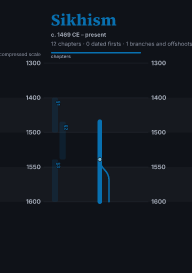
Guru Nānak was born in 1469, in a village called Talvaṇḍī west of Lahore; the year is not in doubt, though the month is (§2).[1] Consensus on the year. The Punjab he grew up in was a frontier province of the Delhi sultanate, on the road between Kabul and Delhi that every army from Central Asia took, and it had been wrecked by one of them, Timur’s, seventy years before. Its rulers were Muslims who governed in Persian; most of its people were Hindu and Muslim peasants and herders who spoke Punjabi. Its religious landscape held Sufi shrines, Brahmin temples and bathing places, the lodges of Nāth yogīs, and the songs of devotional poets from Banaras and Maharashtra.[2][3] Consensus
This chapter describes that world, briefly, because the first Sikh texts answer it. Guru Nānak’s hymns argue with yogīs, Brahmins, qāzīs and Sufis by name, and the scripture Guru Arjan compiled in 1604 includes poems by a Sufi of Pākpattan and by Kabīr, Nāmdev, Ravidās and other bhagats (“devotees”). The difficulty is the evidence. Almost nothing about Punjab’s religious life was written down in Punjab in the fifteenth century; the best witness to it is the Sikh scripture itself, in manuscripts from about 1570 onward. That is the chapter’s argument: the world before Guru Nānak is known largely through the way the Gurus and their scribes remembered and answered it.[4][5] Majority
Hinduism §10 already tells the story of Kabīr and the northern Sant poets from the Hindu side. This chapter keeps that short and looks at the same poets from Punjab.
Timeline
The dates of the Sufi masters and Sant poets are those usually given; several are traditional.[6][7][8]
| Date | Event | Confidence |
|---|---|---|
| d. 1265 | Farīd al-Dīn Masʿūd Ganj-i Shakar, the Chishtī master, dies at Ajodhan (Pākpattan)[6][9] | Majority (the year) |
| d. 1262 | Bahāʾ al-Dīn Zakariyyā, master of the Suhrawardīs, dies at Multan[6] | Majority |
| c. 1270–1350 | Nāmdev, the Marathi poet-saint, by the usual dating[10] | Majority |
| 1398 | Timur crosses the Indus, marches through Punjab and sacks Delhi in December[7] | Consensus |
| 1414 | Khiżr Khān, Timur’s governor in Multan and Lahore, takes Delhi: the Sayyid dynasty[7][8] | Consensus |
| 1420s–1440s | Risings of Jasrat Khokhar in northern Punjab[7][8] | Majority |
| 1451 | Bahlūl Lodī, governor of Sirhind and Lahore, takes Delhi: the Lodī dynasty[8] | Consensus |
| 15th c. | Kabīr and Ravidās at Banaras; their dates are unsettled[11][12] | Contested |
| 1469 | Guru Nānak born at Talvaṇḍī (the year is not in doubt; the month is disputed; §2)[1] | Consensus (year); Contested (month) |
| 1489–1517 | Sikandar Lodī rules from Delhi and Agra[8] | Consensus |
| c. 1500 | Daulat Khān Lodī becomes governor of Lahore[3][2] | Majority |
| 1526 | Bābur defeats Ibrāhīm Lodī at Pānīpat (Islam §9)[8] | Consensus |
| c. 1570–1572 | The Goindvāl pothīs: the earliest dated manuscripts of the bhagats’ hymns[13][14] | Majority |
| 1604 | The Ādi Granth, with Farīd, Kabīr, Nāmdev, Ravidās and others[15][5] | Consensus |
A land between Delhi and Kabul
The sultanate’s frontier
Punjab, “five waters”, is the plain of the Indus’s eastern tributaries: the Jhelum, Chenāb, Rāvī, Beās and Sutlej. Since the Ghaznavid conquest of the eleventh century Lahore had been ruled by Muslim dynasties, and from the thirteenth it was the north-western province of the sultanate of Delhi, facing the Mongols across the Indus.[7] Consensus The province was governed by military commanders holding revenue assignments, and the revenue came from the peasants of the doābs, the land between each pair of rivers.[2] Consensus
Timur, 1398
In the autumn of 1398 Timur, the Turko-Mongol conqueror of Central Asia and Iran, crossed the Indus, marched through southern and eastern Punjab, and sacked Delhi in December, killing a great part of its population. He left again within weeks, by way of the Siwālik foothills and Jammu.[7] Consensus The sultanate never recovered its old reach. Timur’s governor in Multan and Lahore, Khiżr Khān, took Delhi itself in 1414, and his family, the Sayyids, ruled a much smaller state until 1451.[7][8] Consensus For two generations Punjab was contested between the Sayyids, local chiefs such as the Khokhar leader Jasrat, and raiders from Kabul.[7][8] Majority
The Lodīs
In 1451 Bahlūl Lodī, an Afghan who had been governor of Sirhind and Lahore, took the throne of Delhi. His dynasty, the Lodīs, ruled until 1526, and their power rested on Afghan clans settled across the plains, many of them in Punjab.[8] Consensus Not all of Punjab was theirs. From about 1445 Multan and the south-west formed an independent sultanate under the Langāh dynasty, which lasted until 1525; the Lodīs never brought it down.[3] Majority His son Sikandar (r. 1489–1517) built up Agra as a second capital. Under him and his son Ibrāhīm (r. 1517–1526) the governor at Lahore was Daulat Khān Lodī, who appears in the Sikh tradition as the employer of the young Guru Nānak at Sultānpur, in the Jalandhar doāb (§2), and in history as one of the nobles who invited Bābur to invade in the 1520s.[2][1] Majority Bābur’s victory at Pānīpat in 1526 began the Mughal empire (Islam §9); Guru Nānak’s hymns on the invasion are the subject of §0 and §2.
The political lesson for this series is simple. Punjab in Guru Nānak’s lifetime was ruled from outside, fought over by Afghans and Mughals, and governed by men whose language and religion differed from those of most of their subjects. The Gurus’ hymns use the vocabulary of that government (the sultan’s court, the revenue, the accountant’s ledger) as metaphors for God’s rule.[3][15] Majority
The people: Khatrīs, Jaṭs and others
Fifteenth-century Punjab had no census, and the caste picture has to be drawn from later evidence. Two groups matter most for Sikh history.[2][16] Majority
- Khatrīs. A Punjabi caste of traders, shopkeepers, accountants and clerks, who claimed descent from the Kṣatriyas, the warrior varṇa. They served Muslim and Hindu rulers alike as revenue officials and scribes, and kept accounts in the mercantile scripts of the region (below). All ten Gurus were Khatrīs: Guru Nānak was a Bedī, and from the fourth Guru the line was Sodhī.[2][16] Consensus
- Jaṭs. A large caste of herders and cultivators. Irfan Habib argued that the Jaṭs, described as pastoralists in the lower Indus valley in the early Islamic centuries, had moved up the rivers and become the settled peasantry of central Punjab by Mughal times, helped by the spread of the Persian wheel for irrigation.[17] Majority They joined the Sikh community in large numbers from the late sixteenth century, and later became most of it (§4).[16] Consensus
Below both were artisan and service castes, and below them groups treated as untouchable, among them the chamārs, a caste traditionally assigned to leatherwork, the caste of the poet Ravidās.[2] Consensus Conversion to Islam in Punjab was slow and uneven, heaviest in the west, and much of it came later than this chapter, through the gradual attachment of Jaṭ and other clans to Sufi shrines (below).[9][8] Majority
Languages and scripts
Persian was the language of the court and the revenue office; Arabic of the mosque and the madrasa; Sanskrit of the Brahmins. The people spoke forms of Punjabi, from the Lahndā or Multānī dialects of the west to the speech of the central doābs.[2][18] Consensus The devotional poets who reached Punjab from the east sang in a mixed literary language, often called sant bhāṣā, built on the Hindi dialects, and the Gurus wrote in Punjabi and in that mixed language both.[18][4] Majority
Punjabi was written in several related scripts descended from Śāradā, the script of Kashmir and the north-west: the mercantile Laṇḍā scripts used by traders for accounts, and Ṭākrī in the hills.[19] Majority Gurmukhī, the script of the Sikh scriptures, belongs to this family. When and how it took its form, and the tradition that the second Guru, Aṅgad, devised it, are the subject of §3.
The religious field
The Sufis: Farīd and Pākpattan
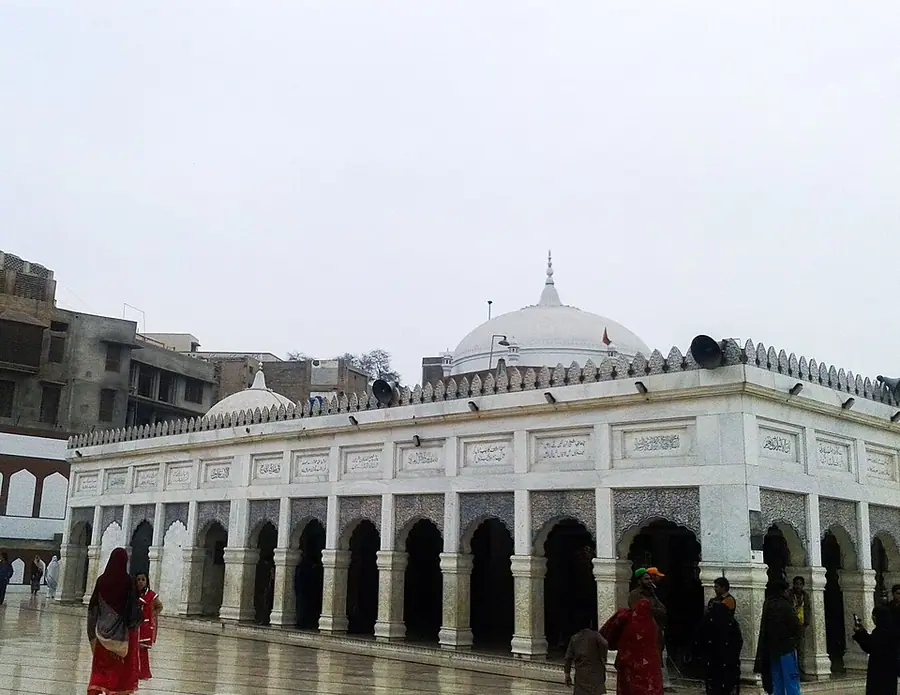
The Sufis had been in Punjab since the eleventh century, when the Persian mystic ʿAlī Hujwīrī settled at Lahore; his tomb there is still the city’s great shrine.[20] Consensus By the thirteenth century two of the new Sufi orders (silsilas) had their Punjabi centres. The Suhrawardīs, led by Bahāʾ al-Dīn Zakariyyā (d. 1262), were based at Multan and worked closely with the sultans; the Chishtīs, who kept apart from courts, had their Punjabi master in Farīd al-Dīn Masʿūd, called Ganj-i Shakar, “treasury of sugar” (d. 1265), at Ajodhan on the Sutlej, the town now called Pākpattan.[6] Majority The Chishtīs and the orders as a whole are described in Islam §7.
Farīd’s shrine outlived him as an institution. Richard Eaton’s study of Pākpattan shows its hereditary keepers (dīwāns, descendants of the saint) holding land, patronage and the loyalty of the surrounding Jaṭ clans over the following centuries, and the annual festival at the tomb, with its passage through the “Gate of Paradise” (bahishtī darwāza), drawing pilgrims across the province. Eaton reads this ritual attachment to the shrine, over generations, as the main way the clans of western Punjab became Muslim.[9] Majority
Farīd also matters to Sikh history in a more direct way. The section of the Guru Granth Sāhib headed Salok Shaikh Farīd has 130 couplets (saloks). In the standard text, as given by BaniDB, eleven stand under headings naming a Guru (mahalā 3, Guru Amar Dās: saloks 13, 52 and 104; mahalā 5, Guru Arjan: 75, 82, 83, 105 and 108–111), and three more (32, 121, 124) carry the name Nānak without a heading.[21] Consensus on the text. The usual count, which Pashaura Singh follows, gives 112 to Farīd and 18 to the Gurus, added by Guru Amar Dās and Guru Arjan to comment on Farīd’s ideas; which of the unheaded couplets make up the eighteen is a matter of commentators’ attribution.[5] Majority There are also four hymns in his name, and together they are the largest body of early Punjabi verse in the scripture outside the Gurus’ own.[21][5] Consensus His couplets dwell on death, the shortness of life and the soul’s longing for God, and some of them argue against the life of the wandering ascetic:
ਫਰੀਦਾ ਜੰਗਲੁ ਜੰਗਲੁ ਕਿਆ ਭਵਹਿ ਵਣਿ ਕੰਡਾ ਮੋੜੇਹਿ ॥ ਵਸੀ ਰਬੁ ਹਿਆਲੀਐ ਜੰਗਲੁ ਕਿਆ ਢੂਢੇਹਿ ॥੧੯॥
pharīdā jaṅgalu jaṅgalu kiā bhavahi vaṇi kaṇḍā moṛehi | vasī rabu hiālīai jaṅgalu kiā ḍhūḍhehi ||19||
“Farīd, why do you wander from forest to forest, pushing the thorns aside? God lives in the heart; why search the forest?” (Salok 19, aṅg 1378; the site’s translation.)[22]
Whose verses these are is argued. Sikh tradition, and many scholars, hold them to be the thirteenth-century master’s. Max Arthur Macauliffe attributed them instead to a later holder of his seat, Shaikh Ibrāhīm (d. 1552), whom the janamsākhīs say Guru Nānak met at Pākpattan. The case against the early date rests on the language of the couplets as they stand; the reply is that three centuries of oral transmission would have changed it.[23][5][24] Contested
The Nāth yogīs
The Nāths, or Kānphaṭa (“split-ear”) yogīs, were an order of Śaiva ascetics who traced their teaching to Gorakhnāth, a master usually placed between the eleventh and thirteenth centuries, and practised haṭha yoga, a discipline of posture, breath and seed aimed at an immortal body, liberation and supernatural powers (siddhis).[25][26] Majority They were divided into twelve orders (panths), and recognisable everywhere by the heavy rings through the split cartilage of the ear, the patched coat (khinthā), the ash on the body, the begging bag and bowl, and the small horn (siṅṅī) they blew.[26] Consensus Their chief seat in Punjab was Ṭillā Gorakhnāth (also called Ṭillā Jogīāṅ), a hilltop monastery in the Salt Range west of the Jhelum, and Punjabi folk legend, from Pūran Bhagat to the hero Rāṅjhā of the Hīr romance, is full of their ṭillās and initiations.[26][25] Majority on the shrine; the romances in their surviving forms are later.
The best evidence for the Nāths’ place in Guru Nānak’s Punjab is in the Gurus’ own hymns, which argue with them more than with any other group. Guru Nānak takes their insignia one by one and turns them into virtues: in the Japjī, contentment is to be the earrings and meditation the ash, and the “Āī Panth”, the name of one of the twelve orders, is to be the whole of humanity (āī panthī sagal jamātī).[27][1] Consensus The long hymn called Siddh Goshṭ, “discourse with the Siddhs”, stages a debate between Guru Nānak and Nāth masters (§2). Bhāī Gurdās, writing in the early seventeenth century, sets one such debate at the Śivrātri fair at Achal Baṭālā, where a yogī called Bhaṅgar Nāth reproaches Guru Nānak for leaving the renouncer’s dress for the householder’s life (Primary sources, below).[28] Majority that this is how the Gurus’ circle remembered the encounter. That the Gurus argued with the Nāths so often is itself the evidence that the yogīs were a presence Sikhs had to answer.[1][3] Majority
Brahmins, temples and pilgrimage
Most Hindus in Punjab lived inside a Brahmanical religion of household rites, caste rules and temple worship, served by family priests (purohits). Devotion to Viṣṇu as Rām and Kṛṣṇa and to Śiva was everywhere, and the goddess was worshipped at the hill shrines of Jvālāmukhī and Kāṅgṛā. Pilgrims went to Hardwar on the Ganges, to Kurukshetra at eclipses, and to the bathing places of the Punjab rivers.[3][2] Majority The Gurus’ hymns take all of this as their setting: the sacred thread, the forehead mark, the cooking square kept pure from castes held to be lower, the bathing at sixty-eight tīrthas. Kabīr had made the same complaint in the north:
ਕਬੀਰ ਬਾਮਨੁ ਗੁਰੂ ਹੈ ਜਗਤ ਕਾ ਭਗਤਨ ਕਾ ਗੁਰੁ ਨਾਹਿ ॥ ਅਰਝਿ ਉਰਝਿ ਕੈ ਪਚਿ ਮੂਆ ਚਾਰਉ ਬੇਦਹੁ ਮਾਹਿ ॥੨੩੭॥
kabīr bāmanu gurū hai jagat kā bhagatan kā guru nāhi | arajhi urajhi kai pachi mūā chārau bedahu māhi ||237||
“Kabīr, the Brahmin may be the guru of the world, but he is not the guru of the devotees: he wore himself out and died, tangled up in the four Vedas.” (Salok Kabīr 237, aṅg 1377; the site’s translation.)[29]
How far fifteenth-century Punjabi Hinduism was organised around temples, and how many were destroyed or rebuilt under the sultans, is poorly documented; the evidence for the Hindu side of the Punjab plains before the Mughals is thin.[3] Majority
The Sant poets
The fourth current came from outside Punjab. From the fourteenth century onward poets in the spoken languages of northern and western India sang of a God beyond form and image, reached by remembering the divine Name and by the grace of the true Guru, and scorned caste, idols, pilgrimage and the authority of both Brahmin and qāzī. The best known were Kabīr, a weaver of Banaras from a Muslim family; Ravidās, a leatherworker of Banaras; and Nāmdev, a tailor or calico-printer of Maharashtra who sang to Viṭhobā at Pandharpur.[12][11][10] Consensus on the outline; the dates of all three are uncertain.
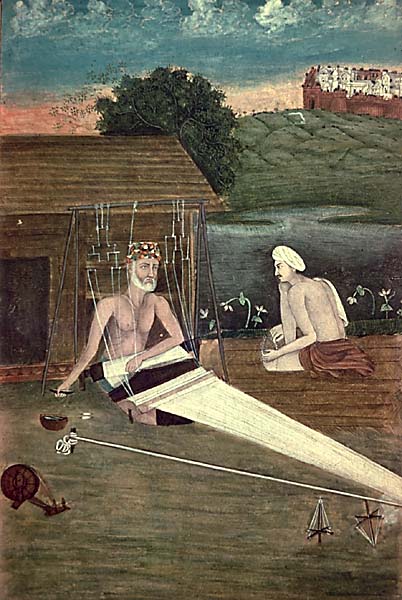
Their songs reached Punjab orally, carried by singers and wandering devotees, long before anyone wrote them down. Nāmdev has a Punjabi afterlife of his own: a shrine at Ghumān in Gurdaspur district claims to mark where he lived and died, and the Hindi songs in his name, including those in the Sikh scripture, belong to a northern tradition distinct from his Marathi verse.[10][30] Majority on the northern tradition; the residence in Punjab is the local tradition’s.
The Guru Granth Sāhib is the earliest dated witness to all three. Its manuscript line runs back to the Goindvāl pothīs of about 1570–1572, which already contain hymns of Kabīr and Nāmdev beside those of Guru Nānak; the completed Ādi Granth of 1604 includes more than five hundred compositions under Kabīr’s name, about sixty under Nāmdev’s and about forty under Ravidās’s, with smaller groups by Trilochan, Beṇī, Dhannā, Sain, Pīpā, Rāmānand and others.[13][14][5] Majority on the counts, which vary with how hymns and couplets are reckoned. Two of their voices belong in this chapter’s primary sources: Nāmdev’s verdict on Hindu and Turk, and Ravidās’s vision of a city without taxes or ranks.
What “Sant” means
Sant comes from Sanskrit sat, “true” or “real”, and in Indian languages names a holy person or devotee of any kind; it is unrelated to Latin sanctus. In English-language scholarship it has a narrower, technical sense. Charlotte Vaudeville, Karine Schomer, W. H. McLeod and others used “the Sants” and “the Sant tradition” for the north Indian poets of the formless (nirguṇa) God, from Nāmdev to Kabīr, Ravidās and Dādū, and the volume Schomer and McLeod edited in 1987 fixed the usage.[12] Consensus Hinduism §10 flags the convention and its problem: the word covers Marathi devotees of an embodied Viṭhobā too, and the line between “formless” and “embodied” poets is drawn more sharply in twentieth-century literary history than in the early manuscripts.[31] Majority
In the Sikh scripture itself the word is common and loose: sant is a holy person, often the true devotee in whose company (sādhsaṅgat) God is found. The poets from outside the line of Gurus are called bhagats, and their compositions bhagat bāṇī.[5] Consensus
Was Guru Nānak a Sant?
The Sant-tradition thesis
McLeod’s Guru Nanak and the Sikh Religion (1968) set Guru Nānak against this background. He described the Sant tradition as a synthesis, drawn chiefly from Vaiṣṇava devotion and from the Nāths’ yoga, with only a small Sufi element, and argued that Guru Nānak’s teaching belonged to it: the formless God, the Name, the Guru as God’s voice, the rejection of caste and ritual, liberation in this life. What set Guru Nānak apart, on this view, was the coherence and depth with which he expressed the tradition, and the community he left behind.[1] Majority that this is McLeod’s argument. The 1987 volume extended the frame: the Sants as a loose family of poets, and counted Guru Nānak and the Sikh Gurus among them.[12]
The replies
Many Sikh scholars rejected the thesis. For the contributors to Fundamental Issues in Sikh Studies (1992) and others, to call Guru Nānak a Sant was to reduce the founder of a revelation to one voice among many, derived from predecessors, and to miss that his hymns claim a revelation of their own; the Sant thesis was, on this reading, a scholar’s genealogy.[32] Contested; Political
Other replies were historical. J. S. Grewal compared Guru Nānak’s teaching with each of his neighbours, Nāth, Vaiṣṇava, Sufi and Islamic, and stressed how much he set aside in each (while preferring the Sufis’ language to the qāzīs’), and called him an originator rather than a synthesiser.[3] Majority Pashaura Singh’s study of the bhagat bāṇī showed that the Gurus did not simply collect the bhagats’ hymns: they selected them, set them to the scripture’s own musical modes, and in places answered or corrected them in couplets of their own, as Guru Amar Dās answers Farīd (Primary sources, below). The bhagats were included because they agreed with the Gurus, and were read through the Gurus.[5] Majority
Where the field stands
Most historians now say both things. Guru Nānak shared the Sant idiom, its theology of the Name and its contempt for caste and ritual, and the Sikh scripture is the earliest and best record of that idiom. He also did what no other poet of the milieu did: he named a successor, founded a settled community of householders at Kartārpur, and began a line of Gurus who made his hymns a scripture (§2–§3).[4][5][33] Majority The argument now is over the weight to give each half, and over whether “Sant tradition” names a real historical tradition or a scholar’s category. John Stratton Hawley’s history of the idea of a “bhakti movement” argues that the single movement sweeping north from the Tamil country is a twentieth-century construction, which makes the question of membership harder to pose than it once seemed.[31] Contested
The evidence ledger
| Date | Evidence | Confidence |
|---|---|---|
| 1398–1399 | Timur’s invasion, in his court histories and the Delhi chronicles[7] | Consensus |
| 15th c. | Persian chronicles of the Sayyid and Lodī sultans, written in Delhi[8] | Consensus |
| 13th c. onward | The Chishtī shrine at Pākpattan and its later records[9] | Consensus |
| c. 1570–1572 | Goindvāl pothīs: hymns of Kabīr and Nāmdev beside Guru Nānak’s[13][14] | Majority |
| 1604 | The Ādi Granth: Farīd, Kabīr, Nāmdev, Ravidās and other bhagats, with the Gurus’ replies[5][21] | Consensus |
| early 17th c. | Bhāī Gurdās, Vār 1: the Gurus’ circle’s picture of the world before Guru Nānak[34][28] | Consensus (date) |
| 17th c. onward | Janamsākhīs: Guru Nānak meets yogīs, Brahmins, qāzīs and Shaikh Ibrāhīm[24][35] | Majority (date) |
| 20th c. | Fieldwork and records on the Nāth seats of Punjab[26] | Majority |
Primary sources
Show the 6 primary sources
1. Farīd and the third Guru: Salok Shaikh Farīd 103–104, aṅg 1383
ਫਰੀਦਾ ਪਾੜਿ ਪਟੋਲਾ ਧਜ ਕਰੀ ਕੰਬਲੜੀ ਪਹਿਰੇਉ ॥ ਜਿਨੑੀ ਵੇਸੀ ਸਹੁ ਮਿਲੈ ਸੇਈ ਵੇਸ ਕਰੇਉ ॥੧੦੩॥ ਮਃ ੩ ॥ ਕਾਇ ਪਟੋਲਾ ਪਾੜਤੀ ਕੰਬਲੜੀ ਪਹਿਰੇਇ ॥ ਨਾਨਕ ਘਰ ਹੀ ਬੈਠਿਆ ਸਹੁ ਮਿਲੈ ਜੇ ਨੀਅਤਿ ਰਾਸਿ ਕਰੇਇ ॥੧੦੪॥
pharīdā pāṛi paṭolā dhaj karī kambalaṛī pahireu | jinhī vesī sahu milai seī ves kareu ||103|| mahalā 3 | kāi paṭolā pāṛatī kambalaṛī pahirei | nānak ghar hī baiṭhiā sahu milai je nīati rāsi karei ||104||
“Farīd: I will tear my silk robe to rags and wear a rough blanket; I will put on whatever dress will bring me to my Lord. (The third Guru:) Why tear your silk robe and put on a blanket? Nānak, the Lord is met sitting in your own home, if your intention is true.” (The site’s translation.)[36]
What it proves. That the Gurus read the Sufi of Pākpattan as a fellow devotee and also disagreed with him, inside their own scripture. Farīd’s couplet speaks for the renunciation that Sufis, yogīs and many Sants prized; Guru Amar Dās’s reply, set directly after it, states the householder ideal that marks the Sikh community from Guru Nānak on. It is the clearest single example of the Gurus answering the religious field around them. Consensus on the text; Contested on which Farīd wrote the first couplet.
2. Neither temple nor mosque: Nāmdev, Gond, aṅg 875
ਹਿੰਦੂ ਅੰਨੑਾ ਤੁਰਕੂ ਕਾਣਾ ॥ ਦੁਹਾਂ ਤੇ ਗਿਆਨੀ ਸਿਆਣਾ ॥ ਹਿੰਦੂ ਪੂਜੈ ਦੇਹੁਰਾ ਮੁਸਲਮਾਣੁ ਮਸੀਤਿ ॥ ਨਾਮੇ ਸੋਈ ਸੇਵਿਆ ਜਹ ਦੇਹੁਰਾ ਨ ਮਸੀਤਿ ॥੪॥੩॥੭॥
hindū annhā turakū kāṇā | duhāṅ te giānī siāṇā | hindū pūjai dehurā musalamāṇu masīti | nāme soī seviā jah dehurā na masīti ||4||3||7||
“The Hindu is blind and the Turk one-eyed; the one who knows is wiser than both. The Hindu worships at the temple, the Muslim at the mosque; Nāmā serves the One where there is neither temple nor mosque.” (The site’s translation.)[37]
What it proves. That the pair “Hindu” and “Turk” (Muslim) as two religious communities, each with its house of worship, was already the frame of devotional poetry before Guru Nānak, if the attribution holds, and that a Sant could claim a third place outside both. Kabīr’s songs use the same pair, and it runs through Guru Nānak’s hymns. The poem is in the northern Hindi tradition of Nāmdev’s songs, which is partly later than the Marathi poet, and its earliest dated witness is the Sikh scripture.[30][10] Majority on the attribution to the historical Nāmdev.
3. The city without sorrow: Ravidās, Gauṛī, aṅg 345
ਬੇਗਮ ਪੁਰਾ ਸਹਰ ਕੋ ਨਾਉ ॥ ਦੂਖੁ ਅੰਦੋਹੁ ਨਹੀ ਤਿਹਿ ਠਾਉ ॥ ਨਾਂ ਤਸਵੀਸ ਖਿਰਾਜੁ ਨ ਮਾਲੁ ॥ ਖਉਫੁ ਨ ਖਤਾ ਨ ਤਰਸੁ ਜਵਾਲੁ ॥੧॥ … ਕਾਇਮੁ ਦਾਇਮੁ ਸਦਾ ਪਾਤਿਸਾਹੀ ॥ ਦੋਮ ਨ ਸੇਮ ਏਕ ਸੋ ਆਹੀ ॥ … ਕਹਿ ਰਵਿਦਾਸ ਖਲਾਸ ਚਮਾਰਾ ॥ ਜੋ ਹਮ ਸਹਰੀ ਸੁ ਮੀਤੁ ਹਮਾਰਾ ॥੩॥੨॥
begam purā sahar ko nāu | dūkhu andohu nahī tihi ṭhāu | nāṅ tasavīs khirāju na mālu | khaüphu na khatā na tarasu javālu ||1|| … kāimu dāimu sadā pātisāhī | dom na sem ek so āhī | … kahi ravidās khalās chamārā | jo ham saharī su mītu hamārā ||3||2||
“Begampurā, ‘without sorrow’, is the city’s name; there is no pain or grief in that place. There is no worry, no land tax, no dues; no fear, no fault, no dread, no decline. … Its kingdom is lasting and eternal; there is no second or third rank there, all are one. … Says Ravidās, the tanner set free: whoever is a citizen there is my friend.” (The site’s translation.)[38]
What it proves. Two things about the world the Sants sang in. Its vocabulary of government was Persian: khirāj is the land tax, pātisāhī the sovereign’s realm, sahar the city, words a leatherworker of Banaras could use of heaven because the sultans’ revenue men used them on earth. And a poet of an untouchable caste could name his caste in his own verse and imagine a realm with no ranks at all. Consensus on the text; Majority on the attribution.
4. What yoga is not: Guru Nānak, Sūhī, aṅg 730
ਜੋਗੁ ਨ ਖਿੰਥਾ ਜੋਗੁ ਨ ਡੰਡੈ ਜੋਗੁ ਨ ਭਸਮ ਚੜਾਈਐ ॥ ਜੋਗੁ ਨ ਮੁੰਦੀ ਮੂੰਡਿ ਮੁਡਾਇਐ ਜੋਗੁ ਨ ਸਿੰਙੀ ਵਾਈਐ ॥ ਅੰਜਨ ਮਾਹਿ ਨਿਰੰਜਨਿ ਰਹੀਐ ਜੋਗ ਜੁਗਤਿ ਇਵ ਪਾਈਐ ॥੧॥
jogu na khinthā jogu na ḍaṇḍai jogu na bhasam chaṛāīai | jogu na muṅdī mūṇḍi muḍāiai jogu na siṅṅī vāīai | añjan māhi nirañjani rahīai jog jugati iv pāīai ||1||
“Yoga is not the patched coat, nor the staff, nor ash smeared on the body. Yoga is not the earrings, nor the shaven head, nor the blowing of the horn. Stay unstained in the midst of the world’s soot: that is how the way of yoga is found.” (The site’s translation.)[39]
What it proves. That the Nāth yogī, with every item of his dress, was a figure Guru Nānak’s hearers knew at sight: the hymn lists the patched coat, the staff, the ash, the earrings, the shaven head and the horn and expects to be understood. It also shows the Guru’s method with his neighbours, keeping the word (jog, union) and changing its content, so that the true yogī is the one who lives in the world without being stained by it. Consensus
5. Hindus and Muslims as the Gurus’ circle saw them: Bhāī Gurdās, Vār 1.21
ਚਾਰਿ ਵਰਨਿ ਚਾਰਿ ਮਜਹਬਾਂ ਜਗਿ ਵਿਚਿ ਹਿੰਦੂ ਮੁਸਲਮਾਣੇ। ਖੁਦੀ ਬਖੀਲਿ ਤਕਬਰੀ ਖਿੰਚੋਤਾਣ ਕਰੇਨਿ ਧਿਙਾਣੇ। ਗੰਗ ਬਨਾਰਸਿ ਹਿੰਦੂਆਂ ਮਕਾ ਕਾਬਾ ਮੁਸਲਮਾਣੇ। ਸੁੰਨਤਿ ਮੁਸਲਮਾਣ ਦੀ ਤਿਲਕ ਜੰਞੂ ਹਿੰਦੂ ਲੋਭਾਣੇ। ਰਾਮ ਰਹੀਮ ਕਹਾਇਦੇ ਇਕੁ ਨਾਮੁ ਦੁਇ ਰਾਹ ਭੁਲਾਣੇ। …
chāri varani chāri majahabāṅ jagi vichi hindū musalamāṇe | khudī bakhīli takabarī khiñchotāṇ kareni dhiṅāṇe | gaṅg banārasi hindūāṅ makā kābā musalamāṇe | sunnati musalamāṇ dī tilak jañañū hindū lobhāṇe | rām rahīm kahāide iku nāmu dui rāh bhulāṇe | …
“In the world are the Hindus, of four varṇas, and the Muslims, of four schools of law. In self-regard, envy and pride they pull against each other and use force. The Hindus have the Ganges and Banaras, the Muslims Mecca and the Kaʿba; the Muslims set store by circumcision, the Hindus by the forehead mark and the sacred thread. They call on Rām and Rahīm: the Name is one, and they have lost their way on two roads. …” (The site’s translation.)[34]
What it proves. How the Gurus’ circle, two or three generations after Guru Nānak, pictured the world he came into: two communities, each with its castes or schools, its pilgrimage and its marks on the body, quarrelling over one God. The pauṛī leads, two stanzas later, to God sending Guru Nānak (§0). It is theology and not a description of fifteenth-century Punjab, but it shows the frame the early Sikhs used, the same “Hindu and Turk” as Nāmdev’s. Consensus on the text and date.
6. A yogī reproaches Guru Nānak: Bhāī Gurdās, Vār 1.40
ਪੁਛੇ ਜੋਗੀ ਭੰਗਰਨਾਥੁ ਤੁਹਿ ਦੁਧ ਵਿਚਿ ਕਿਉ ਕਾਂਜੀ ਪਾਈ। ਫਿਟਿਆ ਚਾਟਾ ਦੁਧ ਦਾ ਰਿੜਕਿਆ ਮਖਣੁ ਹਥਿ ਨ ਆਈ। ਭੇਖ ਉਤਾਰਿ ਉਦਾਸਿ ਦਾ ਵਤਿ ਕਿਉ ਸੰਸਾਰੀ ਰੀਤਿ ਚਲਾਈਂ। … ਹੋਇ ਅਤੀਤੁ ਗ੍ਰਿਹਸਤਿ ਤਜਿ ਫਿਰਿ ਉਨਹੁ ਕੇ ਘਰਿ ਮੰਗਣਿ ਜਾਈ। ਬਿਨੁ ਦਿਤੇ ਕਛੁ ਹਥਿ ਨ ਆਈ ॥੪੦॥
puchhe jogī bhaṅgaranāthu tuhi dudh vichi kiu kāñjī pāī | phiṭiā chāṭā dudh dā riṛakiā makhaṇu hathi na āī | bhekh utāri udāsi dā vati kiu saṅsārī rīti chalāīṅ | … hoi atītu grihasati taji phiri unahu ke ghari maṅgaṇi jāī | binu dite kachhu hathi na āī ||40||
“The yogī Bhaṅgar Nāth asked: why have you put sour whey into the milk? The jar of milk has curdled; churn it, and no butter comes. Why have you put off the renouncer’s dress and taken up the ways of the world? … [Nānak replied:] Having become a renouncer and left the household, you go back to the householders’ doors to beg; unless they give, nothing comes into your hands.” (The site’s translation.)[28]
What it proves. That the early Sikh community remembered its founder’s quarrel with the Nāths as an argument about the householder’s life, the same argument Guru Amar Dās has with Farīd. It does not prove that the debate happened at Achal Baṭālā as Bhāī Gurdās tells it; it is the earliest narrative of such an encounter, written down nearly a century after Guru Nānak. Majority
What is absent
- A fifteenth-century account of Punjab’s religious life written in Punjab. The Persian chronicles of the Sayyids and Lodīs are about sultans, nobles and campaigns, and were written in Delhi; the religious life of the province has to be reconstructed from later texts.[8][3] Majority
- A manuscript of Kabīr, Nāmdev or Ravidās older than the Goindvāl pothīs. The Sikh collections of about 1570 are the earliest dated witnesses to all three.[13][14] Majority
- Farīd’s Punjabi verse in his own century. His sayings were recorded in Persian by the Chishtī circle of Delhi; the Punjabi couplets in his name are first found written down in the Sikh scripture, which is one reason their authorship is argued.[6][5] Majority
- A securely dated text of the Nāths’ own Hindi sayings from before Guru Nānak. The verses ascribed to Gorakhnāth survive in later collections, so the Nāth teaching Guru Nānak heard is known best from the Gurus’ replies to it.[25] Majority
- A “Sant movement” in the sources. The poets did not call themselves a movement or a tradition; the category is a modern scholars’ one, which is why the question “was Guru Nānak a Sant?” can be answered both ways.[12][31] Majority
Debates
Was Guru Nānak a Sant?
| View | Main argument | Main proponents |
|---|---|---|
| Within the Sant tradition | Guru Nānak’s theology of the formless God, the Name and the Guru belongs to the north Indian Sant synthesis of Vaiṣṇava bhakti and Nāth yoga; he gave it its most coherent form | McLeod, Schomer, Vaudeville[1][12] |
| A new revelation | Guru Nānak’s hymns claim a revelation of their own; tracing them to predecessors reduces the founder of a revelation to one voice among many | Fundamental Issues; much Sikh scholarship[32] |
| Shared idiom, new institution | Guru Nānak shared the idiom but rejected renunciation and founded a householder community, a succession and a scripture | Grewal, Mann[3][4] |
| Selection and response | The Gurus chose, framed and answered the bhagats’ hymns; the scripture defines Sikh teaching against its neighbours as well as with them | Pashaura Singh[5] |
| The category is the problem | A single “bhakti” or “Sant” movement is a modern construction; asking who belonged to it imposes a later map | Hawley[31] |
Contested; Political where the question becomes “is Sikhism a branch of Hinduism?” (§8, §9).
Which Farīd wrote the saloks?
The thirteenth-century master, as Sikh tradition and many scholars hold, or a later head of the Pākpattan shrine, Shaikh Ibrāhīm, as Macauliffe argued; the language of the couplets and the janamsākhī story of Guru Nānak’s meeting with Shaikh Ibrāhīm are the evidence each side weighs.[23][5] Contested
How did western Punjab become Muslim?
Richard Eaton’s answer, gradual attachment of clans to shrines such as Pākpattan, against older pictures of conversion by the sword or by Sufi preaching, is now the majority view: a process he traces over several centuries, much of it after 1500.[9][8] Majority
Further reading
Show further reading (11 works)
- J. S. Grewal, Guru Nanak in History (Panjab University, 1969): Guru Nānak set against the politics and religions of his Punjab, one by one.
- J. S. Grewal, The Sikhs of the Punjab (Cambridge, 1990; revised 1998), chapter 1: the background.
- W. H. McLeod, Guru Nanak and the Sikh Religion (Clarendon, 1968): the Sant-tradition thesis.
- Karine Schomer and W. H. McLeod, eds., The Sants: Studies in a Devotional Tradition of India (Motilal Banarsidass, 1987): the category, and its critics’ starting point.
- Pashaura Singh, The Bhagats of the Guru Granth Sahib: Sikh Self-Definition and the Bhagat Bani (Oxford, 2003): Farīd, Kabīr and the others inside the scripture, and the Gurus’ replies.
- Richard M. Eaton, “The Political and Religious Authority of the Shrine of Bābā Farīd”, in Barbara Metcalf, ed., Moral Conduct and Authority (California, 1984): Pākpattan as an institution.
- Carl W. Ernst and Bruce B. Lawrence, Sufi Martyrs of Love: The Chishti Order in South Asia and Beyond (Palgrave, 2002).
- George Weston Briggs, Gorakhnāth and the Kānphaṭa Yogīs (1938): old, but still the fullest description of the Nāths and their Punjabi seats.
- Christian Lee Novetzke, Religion and Public Memory: A Cultural History of Saint Namdev in India (Columbia, 2008).
- John Stratton Hawley, A Storm of Songs: India and the Idea of the Bhakti Movement (Harvard, 2015): why “the bhakti movement” is a modern idea.
- Peter Jackson, The Delhi Sultanate (Cambridge, 1999), and Richard M. Eaton, India in the Persianate Age, 1000–1765 (Allen Lane, 2019): the political frame.
References
- ^ a b c d e f g W. H. McLeod Guru Nanak and the Sikh Religion. Clarendon Press, Oxford, 1968. The critical study of Nānak's life and theology, separating the janamsākhī tradition from the hymns.
- ^ a b c d e f g h i J. S. Grewal The Sikhs of the Punjab. The New Cambridge History of India II.3, Cambridge University Press, 1990. The standard narrative history; revised edition 1998.
- ^ a b c d e f g h i j J. S. Grewal Guru Nanak in History. Panjab University, Chandigarh, 1969. Nānak set against the politics and the religious groups of fifteenth- and early sixteenth-century Punjab.
- ^ a b c d Gurinder Singh Mann The Making of Sikh Scripture. Oxford University Press, New York, 2001. The manuscripts from the Goindvāl pothīs to the Damdamā recension.
- ^ a b c d e f g h i j k l m Pashaura Singh The Bhagats of the Guru Granth Sahib: Sikh Self-Definition and the Bhagat Bani. Oxford University Press, New Delhi, 2003. Farīd, Kabīr, the Sants and the Vaiṣṇava bhagats inside the scripture, and the Gurus' replies to them.
- ^ a b c d e Carl W. Ernst & Bruce B. Lawrence Sufi Martyrs of Love: The Chishti Order in South Asia and Beyond. Palgrave Macmillan, 2002. doi History of the Chishtī order, its masters and shrines.
- ^ a b c d e f g h i Peter Jackson The Delhi Sultanate: A Political and Military History. Cambridge University Press, 1999. The standard political history of the Sultanate from its Ghurid origins.
- ^ a b c d e f g h i j k l m Richard M. Eaton India in the Persianate Age, 1000–1765. Penguin / University of California Press, 2019. doi The current standard synthesis of the period.
- ^ a b c d e Richard M. Eaton "The Political and Religious Authority of the Shrine of Bābā Farīd". in Barbara Daly Metcalf, ed., Moral Conduct and Authority: The Place of Adab in South Asian Islam, University of California Press, pp. 333–356, 1984. Pākpattan as an institution, and the gradual Islamisation of the Jaṭ clans through the shrine.
- ^ a b c d Christian Lee Novetzke Religion and Public Memory: A Cultural History of Saint Namdev in India. Columbia University Press, 2008. Nāmdev's Marathi and northern traditions, including his Punjabi memory.
- ^ a b Linda Hess & Shukdev Singh, trans. The Bījak of Kabir. North Point Press, 1983. full text With an essay on Kabir's unstable textual traditions.
- ^ a b c d e f Karine Schomer & W. H. McLeod, eds. The Sants: Studies in a Devotional Tradition of India. Motilal Banarsidass, 1987. The foundational volume — and the source of the narrow Anglophone use of "Sant" that §10 flags as a convention.
- ^ a b c d Goindval Pothīs — Early Sikh manuscript collections. c. 1570s. Punjabi in Gurmukhi. The earliest written Sikh collections, and the earliest datable manuscript witnesses to Kabīr, Nāmdev and Ravidās.
- ^ a b c d Gurinder Singh Mann The Goindval Pothis: The Earliest Extant Source of the Sikh Canon. Harvard Oriental Series 51, Harvard University Press, 1996.
- ^ a b Pashaura Singh The Guru Granth Sahib: Canon, Meaning and Authority. Oxford University Press, 2000. doi The formation of the Sikh canon, from the 1604 Ādi Granth to its installation as Guru.
- ^ a b c W. H. McLeod The Evolution of the Sikh Community: Five Essays. Clarendon Press, Oxford, 1976. Includes the argument that the Jaṭ peasantry shaped the community's turn to arms.
- ^ Irfan Habib "Jatts of Punjab and Sind". in Harbans Singh and N. Gerald Barrier, eds., Punjab Past and Present: Essays in Honour of Dr Ganda Singh, Punjabi University, Patiala, pp. 92–103, 1976. The Jaṭs' movement from pastoralism in Sind to settled cultivation in Punjab.
- ^ a b Christopher Shackle and Arvind-pal Singh Mandair, trans. Teachings of the Sikh Gurus: Selections from the Sikh Scriptures. Routledge, 2005.
- ^ Richard Salomon Indian Epigraphy. Oxford University Press, 1998. open library The standard handbook for inscriptions and their dating.
- ^ Nile Green Sufism: A Global History. Wiley-Blackwell, 2012. Sufism as an institution and a tradition across the Muslim world, from lodges and orders to shrines.
- ^ a b c Salok Shaikh Farīd — Guru Granth Sāhib, angs 1377–1384. 1604 CE. Punjabi in Gurmukhi. Dozens of saloks by a Sufi, canonized inside Sikh scripture. The cross-tradition claim is structural, not token. read the text
- ^ Guru Granth Sāhib, ang 1378 — Salok Shaikh Farīd 19. 1604 CE (compiled). Punjabi in Gurmukhi. "Why wander from forest to forest? God lives in the heart": Farīd against the wandering ascetic. read the text
- ^ a b Max Arthur Macauliffe The Sikh Religion: Its Gurus, Sacred Writings and Authors. Clarendon Press, Oxford, 6 vols., 1909. Written with Sikh scholars of the Singh Sabhā; the tradition's account in English.
- ^ a b Purātan Janamsākhī — Lives of Nānak in the Colebrooke and Hāfizābād manuscripts. 17th c. CE. Punjabi in Gurmukhi. The tradition McLeod judged the least elaborated, and the basis of his sorting of the stories.
- ^ a b c James Mallinson "Nāth Saṃpradāya". in Knut A. Jacobsen et al., eds., Brill's Encyclopedia of Hinduism, vol. 3, Brill, Leiden, 2011. The current scholarly account of the Nāth order, its history and its haṭha yoga.
- ^ a b c d George Weston Briggs Gorakhnāth and the Kānphaṭa Yogīs. YMCA Publishing House, Calcutta (The Religious Life of India), 1938. The classic description of the Nāths, their twelve orders and their seats, including Ṭillā in the Punjab.
- ^ Guru Granth Sāhib, ang 6 — Guru Nānak, Japjī, pauṛī 28. early 16th c. CE (composed); 1604 CE (compiled). Punjabi in Gurmukhi. Contentment as the yogī's earrings, meditation as his ash, and all humanity as the Āī Panth, one of the twelve Nāth orders. read the text
- ^ a b c Bhāī Gurdās, Vār 1.40 — Vārāṅ. early 17th c. CE. Punjabi in Gurmukhi. At the Śivrātri fair at Achal Baṭālā the yogī Bhaṅgar Nāth asks why Nānak has left the renouncer's dress for the householder's; Nānak answers that renouncers still beg at householders' doors. read the text
- ^ Guru Granth Sāhib, ang 1377 — Salok Kabīr 237. 1604 CE (compiled). Old Hindi (sant bhāṣā) in Gurmukhi. "The Brahmin may be the guru of the world, but he is not the guru of the devotees": Kabīr on Brahmin authority and the Vedas. read the text
- ^ a b Winand M. Callewaert and Mukund Lath The Hindi Songs of Namdev. Orientalia Lovaniensia Analecta 29, Departement Oriëntalistiek, Leuven, 1989. The critical edition of the northern songs in Nāmdev's name, from the Sikh and Rajasthani manuscripts.
- ^ a b c d John Stratton Hawley A Storm of Songs: India and the Idea of the Bhakti Movement. Harvard University Press, 2015. full text Argues that "the bhakti movement" is itself a modern construction. Important and unsettling.
- ^ a b Kharak Singh, G. S. Mansukhani and Jasbir Singh Mann, eds. Fundamental Issues in Sikh Studies. Institute of Sikh Studies, Chandigarh, 1992. Essays against McLeod's school, from its Sikh critics.
- ^ Eleanor Nesbitt Sikhism: A Very Short Introduction. Oxford University Press, 2nd ed., 2016.
- ^ a b Bhāī Gurdās, Vār 1.21 — Vārāṅ. early 17th c. CE. Punjabi in Gurmukhi. Hindus of four varṇas and Muslims of four schools of law quarrel over one God: "they call on Rām and Rahīm; the Name is one." The Gurus' circle's picture of the world before Nānak. read the text
- ^ W. H. McLeod Early Sikh Tradition: A Study of the Janam-sākhīs. Clarendon Press, Oxford, 1980. The janamsākhī traditions, their manuscripts and how they grew.
- ^ Guru Granth Sāhib, ang 1383 — Salok Shaikh Farīd 103–104, with Guru Amar Dās's reply. 1604 CE (compiled). Punjabi in Gurmukhi. Farīd will tear his silk robe and wear a rough blanket to meet his Lord; Guru Amar Dās answers that the Lord is met sitting at home, if the intention is true. The Gurus answering a Sufi inside their own scripture. read the text
- ^ Guru Granth Sāhib, ang 875 — Nāmdev, Gond. 1604 CE (compiled). Old Hindi (sant bhāṣā) in Gurmukhi. "The Hindu is blind, the Turk one-eyed": Nāmdev serves the One where there is neither temple nor mosque. The Hindu–Turk pairing before Nānak. read the text
- ^ Guru Granth Sāhib, ang 345 — Ravidās, Gauṛī (Begampurā). 1604 CE (compiled). Old Hindi (sant bhāṣā) in Gurmukhi. Begampurā, the city without sorrow, with no land tax (khirāj), no ranks, and a tanner set free as its citizen: Persian revenue vocabulary in a Sant's vision of heaven. read the text
- ^ Guru Granth Sāhib, ang 730 — Guru Nānak, Sūhī. early 16th c. CE (composed); 1604 CE (compiled). Punjabi in Gurmukhi. "Yoga is not the patched coat, nor the staff, nor ash": Nānak lists the Nāth yogī's insignia and redefines yoga as living unstained in the world. read the text