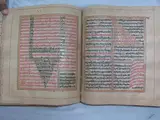
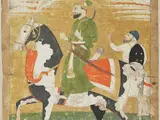
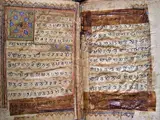
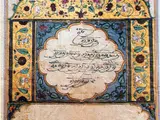
Primary sources
In chronological order of the source itself, not of when it was written down. Every row links to the section that uses it and, where one exists, to somewhere you can read or see it: read the text goes to a free edition of the work (not a permalink to the individual verse, which rarely exists), about to a reference page on a site, artefact or law.
- Guru Granth Sāhib, ang 360 Guru Nānak, Āsā (Bābar-vāṇī) verse 1520s CE (the events); 1604 CE (compiled) read the text ↗ Nānak on the Mughal invasion: "Having made Khurāsān his own, he has terrified Hindustan." The most securely datable lines in the scripture. Punjabi in Gurmukhi cited in §00 cited in §02 §00 How We Know
- Guru Granth Sāhib, ang 432 Guru Nānak, Paṭṭī Likhī, Rāg Āsā verse early 16th c. CE read the text ↗ Nānak's acrostic on the letters of the alphabet: evidence that a Punjabi alphabet with named letters was taught before Guru Aṅgad. Punjabi in Gurmukhi cited in §03 §03 The Gurus Build a Community
- Guru Granth Sāhib, ang 787 Guru Amar Dās, saloks in the Vār of Rāg Sūhī verse 1552–1574 CE read the text ↗ "They are not called satīs who burn themselves on the pyres of the dead": the true satī dies of the pain of separation, or lives in modesty and contentment. Punjabi in Gurmukhi cited in §03 cited in §07 §03 The Gurus Build a Community
- Goindval Pothīs Early Sikh manuscript collections text c. 1570s The earliest written Sikh collections, and the earliest datable manuscript witnesses to Kabīr, Nāmdev and Ravidās. Punjabi in Gurmukhi cited in §00 cited in §01 cited in §02 cited in §03 §00 How We Know
- Guru Granth Sāhib, ang 773–774 Guru Rām Dās, Lāvāṅ (Chhant in Rāg Sūhī) verse 1574–1581 CE read the text ↗ The four rounds (lāvāṅ) of marriage as stages of the soul's union with God; sung today at the Anand Kāraj wedding. Punjabi in Gurmukhi cited in §03 §03 The Gurus Build a Community
- Guru Granth Sāhib, ang 305 Guru Rām Dās, Vār in Rāg Gauṛī verse 1574–1581 CE read the text ↗ "Whoever calls himself a Sikh of the true Guru rises early and meditates on the Name": an early description of a Sikh's daily discipline. Punjabi in Gurmukhi cited in §03 §03 The Gurus Build a Community
- Guru Granth Sāhib, ang 966 Sattā and Balvaṇḍ, Vār in Rāmkalī verse late 16th c. CE read the text ↗ A minstrels' ballad, inside the scripture, on Nānak passing the Guruship to Lahaṇā (Aṅgad): the earliest account of the succession. Punjabi in Gurmukhi cited in §00 cited in §02 cited in §03 §00 How We Know
- Guru Granth Sāhib, ang 967 Sattā and Balvaṇḍ, Vār in Rāmkalī verse late 16th c. CE read the text ↗ The ballad continued: the laṅgar of the Guru's Word runs on, Nānak's sons turn their backs, and Khīvī distributes the bounty of Aṅgad's laṅgar: the earliest mention of a Guru's kitchen, and the only mention of a laṅgar in the scripture. Punjabi in Gurmukhi cited in §02 cited in §03 §02 Guru Nānak
- Guru Granth Sāhib, ang 625 Guru Arjan, Rāg Soraṭh verse 1581–1606 CE read the text ↗ "Bathing in the pool of Rāmdās, all the sins they committed are washed away": the fifth Guru on the pool at Amritsar. Punjabi in Gurmukhi cited in §03 §03 The Gurus Build a Community
- Guru Granth Sāhib, ang 1136 Guru Arjan, Rāg Bhairau verse 1581–1606 CE read the text ↗ "I am neither Hindu nor Muslim" (nā ham hindū na musalamān): a hymn of Guru Arjan on a theme of Kabīr's, quoted in the modern argument over whether Sikhs are Hindus. Punjabi in Gurmukhi cited in §03 cited in §08 §03 The Gurus Build a Community
- Guru Granth Sāhib, ang 50 Guru Arjan, Sirī Rāg verse 1581–1606 CE read the text ↗ "Wandering through eighty-four lakh, you have obtained this birth so hard to gain" (lakh chaurāsīh bhramatiā dulabh janamu pāioi). Punjabi in Gurmukhi cited in §02 §02 Guru Nānak
- Guru Granth Sāhib, ang 176 Guru Arjan, Gauṛī Guārerī verse 1581–1606 CE read the text ↗ "In many births you were worm and moth, elephant, fish and deer… meet the Lord of the world: now is the time": the births before the human one. Punjabi in Gurmukhi cited in §02 §02 Guru Nānak
- Guru Granth Sāhib, ang 278 Guru Arjan, Sukhmanī, Rāg Gauṛī, aṣṭapadī 12 verse 1581–1606 CE read the text ↗ Penance done in pride brings birth "into hell and heaven, again and again" (narak surag phiri phiri avatār): heaven and hell as stations on the round. Punjabi in Gurmukhi cited in §02 §02 Guru Nānak
- Guru Granth Sāhib, ang 534 Guru Arjan, Rāg Devgandhārī verse 1581–1606 CE read the text ↗ "I do not ask for rule, I do not ask for mukti; my mind loves the lotus feet" (rāju na chāhau mukati na chāhau). Punjabi in Gurmukhi cited in §02 §02 Guru Nānak
- Guru Granth Sāhib, ang 388 Guru Arjan, Rāg Āsā verse 1581–1606 CE read the text ↗ "These two syllables, Har Har, are my rosary": the Name as the rosary, enshrined in the heart and taken to the next world. Punjabi in Gurmukhi cited in §11 §11 Sikhs Today
- Mūl Mantar Guru Granth Sāhib verse 1604 CE (compiled) about ↗ "Unborn, self-existent" — ajūnī is a direct rejection of the avatāra doctrine. A scripture that also canonizes Kabīr, Ravidās and a Sufi. Punjabi in Gurmukhi cited in §02 §02 Guru Nānak
- Guru Granth Sāhib, ang 15 Guru Nānak, Sirī Rāgu verse 1604 CE read the text ↗ "Nānak is with the lowest of the low" — the rejection of caste in the Gurus' own voice, not later apologetic. Punjabi in Gurmukhi cited in §02 cited in §11 §02 Guru Nānak
- Salok Shaikh Farīd Guru Granth Sāhib, angs 1377–1384 verse 1604 CE read the text ↗ Dozens of saloks by a Sufi, canonized inside Sikh scripture. The cross-tradition claim is structural, not token. Punjabi in Gurmukhi cited in §01 cited in §03 §01 Punjab Before Guru Nānak
- Kartārpur bīṛ The volume kept at Kartārpur (Jalandhar) by the Sodhī family manuscript 1604 CE (by tradition and its own dating) Held by tradition to be Guru Arjan's master copy of the Ādi Granth; its status, and what its erasures and blank pages mean, are argued over. Punjabi in Gurmukhi cited in §00 cited in §02 cited in §03 §00 How We Know
- Guru Granth Sāhib, ang 1383 Salok Shaikh Farīd 103–104, with Guru Amar Dās's reply verse 1604 CE (compiled) read the text ↗ Farīd will tear his silk robe and wear a rough blanket to meet his Lord; Guru Amar Dās answers that the Lord is met sitting at home, if the intention is true. The Gurus answering a Sufi inside their own scripture. Punjabi in Gurmukhi cited in §01 §01 Punjab Before Guru Nānak
- Guru Granth Sāhib, ang 1378 Salok Shaikh Farīd 19 verse 1604 CE (compiled) read the text ↗ "Why wander from forest to forest? God lives in the heart": Farīd against the wandering ascetic. Punjabi in Gurmukhi cited in §01 §01 Punjab Before Guru Nānak
- Guru Granth Sāhib, ang 1377 Salok Kabīr 237 verse 1604 CE (compiled) read the text ↗ "The Brahmin may be the guru of the world, but he is not the guru of the devotees": Kabīr on Brahmin authority and the Vedas. Old Hindi (sant bhāṣā) in Gurmukhi cited in §01 §01 Punjab Before Guru Nānak
- Guru Granth Sāhib, ang 875 Nāmdev, Gond verse 1604 CE (compiled) read the text ↗ "The Hindu is blind, the Turk one-eyed": Nāmdev serves the One where there is neither temple nor mosque. The Hindu–Turk pairing before Nānak. Old Hindi (sant bhāṣā) in Gurmukhi cited in §01 §01 Punjab Before Guru Nānak
- Guru Granth Sāhib, ang 345 Ravidās, Gauṛī (Begampurā) verse 1604 CE (compiled) read the text ↗ Begampurā, the city without sorrow, with no land tax (khirāj), no ranks, and a tanner set free as its citizen: Persian revenue vocabulary in a Sant's vision of heaven. Old Hindi (sant bhāṣā) in Gurmukhi cited in §01 §01 Punjab Before Guru Nānak
- Guru Granth Sāhib, ang 730 Guru Nānak, Sūhī verse early 16th c. CE (composed); 1604 CE (compiled) read the text ↗ "Yoga is not the patched coat, nor the staff, nor ash": Nānak lists the Nāth yogī's insignia and redefines yoga as living unstained in the world. Punjabi in Gurmukhi cited in §01 cited in §02 §01 Punjab Before Guru Nānak
- Guru Granth Sāhib, ang 6 Guru Nānak, Japjī, pauṛī 28 verse early 16th c. CE (composed); 1604 CE (compiled) read the text ↗ Contentment as the yogī's earrings, meditation as his ash, and all humanity as the Āī Panth, one of the twelve Nāth orders. Punjabi in Gurmukhi cited in §01 §01 Punjab Before Guru Nānak
- Guru Granth Sāhib, ang 1 Guru Nānak, Japu (Japjī) verse before 1539 CE (composed); 1604 CE (compiled) read the text ↗ The first pauṛīs of the Japjī: cleansing, silence and cleverness do not make one true; the way is to walk in the hukam, outside which nothing stands. Punjabi in Gurmukhi cited in §02 §02 Guru Nānak
- Guru Granth Sāhib, ang 150 Guru Nānak, Vār Mājh verse before 1539 CE (composed); 1604 CE (compiled) read the text ↗ "I was a minstrel without work, and the Lord gave me work": Nānak's call in the language of a court minstrel. Punjabi in Gurmukhi cited in §02 §02 Guru Nānak
- Guru Granth Sāhib, ang 349 Guru Nānak, Āsā verse before 1539 CE (composed); 1604 CE (compiled) read the text ↗ "Recognise the light; do not ask about caste: in the world beyond there is no caste." Punjabi in Gurmukhi cited in §02 §02 Guru Nānak
- Guru Granth Sāhib, ang 417 Guru Nānak, Āsā (Bābar-vāṇī) verse 1520s CE (the events); 1604 CE (compiled) read the text ↗ Two Bābar-vāṇī hymns (aṅg 417–418): the women of the defeated shorn and dishonoured, "Bābar's command has gone forth", and the holy men whose miracles blinded no Mughal. Punjabi in Gurmukhi cited in §02 §02 Guru Nānak
- Guru Granth Sāhib, ang 471 Guru Nānak, Āsā dī Vār verse before 1539 CE (composed); 1604 CE (compiled) read the text ↗ "Make compassion the cotton, contentment the thread": the salok on the sacred thread behind the janamsākhī story of the refused janeū. Punjabi in Gurmukhi cited in §02 §02 Guru Nānak
- Guru Granth Sāhib, ang 473 Guru Nānak, Āsā dī Vār verse before 1539 CE (composed); 1604 CE (compiled) read the text ↗ "Why call her inferior, from whom kings are born?" Nānak's salok against the inferiority of women. Punjabi in Gurmukhi cited in §02 cited in §11 §02 Guru Nānak
- Guru Granth Sāhib, ang 553 Bihāgaṛe kī Vār, saloks headed "Mardānā" verse before 1539 CE (composed); 1604 CE (compiled) read the text ↗ Three saloks under headings bearing Mardānā's name (with the numeral 1 of Nānak), on the wine of the world and the true food; usually read as the Guru's words to his companion. Punjabi in Gurmukhi cited in §02 §02 Guru Nānak
- Guru Granth Sāhib, ang 722 Guru Nānak, Tilang (Bābar-vāṇī) verse 1520s CE (the events); 1604 CE (compiled) read the text ↗ "Leading a wedding party of sin he has swept down from Kabul… O Lālo" (aṅg 722–723): the invasion named and dated by its source, ending with the disputed numbers seventy-eight and ninety-seven. Punjabi in Gurmukhi cited in §02 §02 Guru Nānak
- Guru Granth Sāhib, ang 938 Guru Nānak, Rāmkalī, Siddh Goshṭ verse before 1539 CE (composed); 1604 CE (compiled) read the text ↗ The opening of the discourse with the Siddhs: Charpaṭ asks how the world-ocean is crossed; the lotus untouched in the water. Punjabi in Gurmukhi cited in §02 §02 Guru Nānak
- Guru Granth Sāhib, ang 1245 Sāraṅg kī Vār, salok of Guru Nānak verse before 1539 CE (composed); 1604 CE (compiled) read the text ↗ "One who eats what he has laboured for, and gives something from his own hand, knows the way": against the begging holy man. Punjabi in Gurmukhi cited in §02 §02 Guru Nānak
- Guru Granth Sāhib, ang 1429 Guru Arjan, Mundāvaṇī verse c. 1604 CE read the text ↗ The "seal" of the Ādi Granth: "on the platter three things have been placed: truth, contentment and reflection". Punjabi in Gurmukhi cited in §03 §03 The Gurus Build a Community
- Guru Granth Sāhib, ang 466 Guru Nānak, Āsā kī Vār, salok verse 1604 CE (compiled) read the text ↗ "The clay of the Muslim falls into the potter's lump": the line Rām Rāī, by Sikh tradition, altered before Aurangzeb. Punjabi in Gurmukhi cited in §04 §04 Miri and Piri: The Sword Beside the Rosary
- Guru Granth Sāhib, ang 638 Guru Amar Dās, Rāg Soraṭh verse 1604 CE (compiled) read the text ↗ The Lord Himself forgives the worthless and sets them to the True Guru's service: the verse taken as the Guru's ruling at the Harmandir on 12 October 1920, when the offerings of low-caste Sikhs were accepted. Punjabi in Gurmukhi cited in §09 §09 Gurdwara Reform, Partition and Punjabi Suba
- Guru Granth Sāhib, ang 2 Guru Nānak, Japu (Japjī), pauṛī 4 verse before 1539 CE (composed); 1604 CE (compiled) read the text ↗ "By karam comes the robe; by grace, the door of release" (karamī āvai kapaṛā nadarī mokhu duāru): read as action and grace by McLeod and the Khalsa and Manmohan Singh translations, as grace twice by Sahib Singh. Punjabi in Gurmukhi cited in §02 §02 Guru Nānak
- Guru Granth Sāhib, ang 4 Guru Nānak, Japu (Japjī), pauṛī 20 verse before 1539 CE (composed); 1604 CE (compiled) read the text ↗ "You yourself sow and you yourself eat; Nānak, by the order we come and go": deeds and rebirth inside the hukam. Punjabi in Gurmukhi cited in §02 §02 Guru Nānak
- Guru Granth Sāhib, ang 8 Guru Nānak, Japu (Japjī), pauṛīs 37–38 and closing salok; So Dar verse before 1539 CE (composed); 1604 CE (compiled) read the text ↗ "Good deeds and bad, Dharam reads them out in the presence; by their own deeds some are near and some far"; the karam khaṇḍ; Chitr and Gupt the recorders and Dharam at God's door in So Dar. Punjabi in Gurmukhi cited in §02 §02 Guru Nānak
- Guru Granth Sāhib, ang 969 Kabīr, Rāg Rāmkalī verse 1604 CE (compiled) read the text ↗ "What is hell, what is heaven? The saints reject both" (kavanu naraku kiā suragu bichārā santan doū rāde). Old Hindi (sant bhāṣā) in Gurmukhi cited in §02 §02 Guru Nānak
- Guru Granth Sāhib, ang 1009 Guru Nānak, Rāg Mārū verse before 1539 CE (composed); 1604 CE (compiled) read the text ↗ "He is called liberated while alive from within whom haumai goes" (jīvan mukatu so ākhīai jisu vichahu haumai jāi): the term jīvan mukti in Guru Nānak's own hymns. Punjabi in Gurmukhi cited in §02 §02 Guru Nānak
- Guru Granth Sāhib, ang 1035 Guru Nānak, Mārū Solahe verse before 1539 CE (composed); 1604 CE (compiled) read the text ↗ Before creation there was only the hukam, and "no hell and no paradise" (dojaku bhisatu), "no hell and no heaven" (naraku suragu), no birth or death: both afterlives are part of creation. Punjabi in Gurmukhi cited in §02 §02 Guru Nānak
- Guru Granth Sāhib, ang 1243 Sāraṅg kī Vār, saloks of Guru Aṅgad and Guru Nānak verse before 1552 CE (composed); 1604 CE (compiled) read the text ↗ Guru Nānak: "the Veda proclaims that merit and sin are the seed of heaven and hell"; whoever sows truth finds a place in the court. Guru Aṅgad: the Veda's tales of sin and merit keep people born "into hell and heaven". Punjabi in Gurmukhi cited in §02 §02 Guru Nānak
- Guru Granth Sāhib, ang 1327 Guru Nānak, Rāg Prabhātī verse before 1539 CE (composed); 1604 CE (compiled) read the text ↗ "Without the Name, bound, one goes to the city of Jam" (bin nāvai bādhī jam puri jāi): Yama as an image of the fate of the one without the Name. Punjabi in Gurmukhi cited in §02 §02 Guru Nānak
- Guru Granth Sāhib, ang 470 Guru Nānak, Āsā dī Vār verse before 1539 CE (composed); 1604 CE (compiled) read the text ↗ "A rosary round the neck and a mark on the forehead": a salok listing a Brahmin's observances, all empty without knowledge of God. Punjabi in Gurmukhi cited in §11 §11 Sikhs Today
- Guru Granth Sāhib, ang 479 Kabīr, Rāg Āsā verse 1604 CE (compiled) read the text ↗ "A mālā at the throat, Rām on the tongue" (kaṇṭhe mālā jihavā rāmu): Manmohan Singh and Sahib Singh read the Name on the tongue as the rosary, Sant Singh Khalsa a rosary worn at the neck; Kabīr repeats the thousand names and teaches Hindus and Muslims alike. Old Hindi (sant bhāṣā) in Gurmukhi cited in §11 §11 Sikhs Today
- Guru Granth Sāhib, ang 1364 Salok Kabīr 1 verse 1604 CE (compiled) read the text ↗ "My rosary (simaranī) is my tongue, and Rām is on it": the first of Kabīr's saloks. Old Hindi (sant bhāṣā) in Gurmukhi cited in §11 §11 Sikhs Today
- Guru Granth Sāhib, ang 1368 Salok Kabīr 75 verse 1604 CE (compiled) read the text ↗ "Why show people your rosary of wood?": if Rām is not remembered in the heart, the rosary is of no use. Old Hindi (sant bhāṣā) in Gurmukhi cited in §11 §11 Sikhs Today
- Guru Granth Sāhib, ang 434 Guru Nānak, Paṭṭī Likhī, Rāg Āsā verse before 1539 CE (composed); 1604 CE (compiled) read the text ↗ Pauṛī 27 of the acrostic: "the self-willed fools wander and do not remember; they fall into the round of eighty-four lakh" (lakh chaurāsīh pheru paiā). Punjabi in Gurmukhi cited in §02 §02 Guru Nānak
- Jahāṅgīrnāmā, regnal year 1 (1606) Memoirs of Jahāṅgīr prose 1606 CE The emperor's own account of ordering Guru Arjan's execution, which he links to the Guru's blessing of the rebel prince Khusrau. Persian cited in §00 cited in §03 cited in §04 §00 How We Know
- Jerome Xavier, letter from Lahore, 25 September 1606 Jesuit letter to the Provincial at Goa, printed in Fernão Guerreiro's Relaçam (1609) prose 25 September 1606 The Guru who blessed the rebel Khusrau was arrested, allowed to buy his freedom for 100,000 crusados, then stripped, beaten and starved by the wealthy Hindu who stood surety, and died of it. Portuguese cited in §03 §03 The Gurus Build a Community
- Aḥmad Sirhindī, Maktūbāt-i Imām-i Rabbānī Letters of Aḥmad Sirhindī letter c. 1600–1624 CE about ↗ Letters to disciples and Mughal nobles urging strict application of the sharīʿa, opposing non-Muslims in high office and rejecting the 'unity of being'. Persian cited in §03 §03 The Gurus Build a Community
- Bhāī Gurdās, Vār 1.23 Vārāṅ verse early 17th c. CE read the text ↗ "The bountiful Lord heard the cry and sent Guru Nānak into the world": the first vār's history of the world reaches Nānak here, then follows his travels and the succession to Guru Hargobind. Punjabi in Gurmukhi cited in §00 cited in §02 §00 How We Know
- Bhāī Gurdās, Vār 24.23 Vārāṅ verse early 17th c. CE read the text ↗ Guru Arjan's last hours in images of a fish in the river and a moth in the flame, ending "I am a sacrifice to Guru Arjan": the only contemporary Sikh account of his death. Punjabi in Gurmukhi cited in §03 §03 The Gurus Build a Community
- Bhāī Gurdās, Vār 36.1 Vārāṅ verse early 17th c. CE read the text ↗ The vār against the Mīṇās, Prithī Chand's line: "the true Guru is the true king; the Mīṇā's face is blackened". Punjabi in Gurmukhi cited in §03 §03 The Gurus Build a Community
- Bhāī Gurdās, Vār 1.21 Vārāṅ verse early 17th c. CE read the text ↗ Hindus of four varṇas and Muslims of four schools of law quarrel over one God: "they call on Rām and Rahīm; the Name is one." The Gurus' circle's picture of the world before Nānak. Punjabi in Gurmukhi cited in §01 §01 Punjab Before Guru Nānak
- Bhāī Gurdās, Vār 1.40 Vārāṅ verse early 17th c. CE read the text ↗ At the Śivrātri fair at Achal Baṭālā the yogī Bhaṅgar Nāth asks why Nānak has left the renouncer's dress for the householder's; Nānak answers that renouncers still beg at householders' doors. Punjabi in Gurmukhi cited in §01 §01 Punjab Before Guru Nānak
- Bhāī Gurdās, Vār 1.32 Vārāṅ verse early 17th c. CE read the text ↗ Nānak at Mecca in blue, feet towards the miḥrāb; Jīvan drags him and Mecca turns. The earliest telling of the Mecca story. Punjabi in Gurmukhi cited in §00 cited in §02 §02 Guru Nānak
- Bhāī Gurdās, Vār 1.35 Vārāṅ verse early 17th c. CE read the text ↗ At Baghdad with "Mardānā the rabāb player"; the call to prayer, and the pīr Dastgīr's questions. Punjabi in Gurmukhi cited in §02 §02 Guru Nānak
- Bhāī Gurdās, Vār 1.38 Vārāṅ verse early 17th c. CE read the text ↗ Back at Kartārpur the Guru puts off the udāsī's dress; Aṅgad set over the sons; the Japu recited at dawn and the Sodar and Āratī sung. Punjabi in Gurmukhi cited in §02 §02 Guru Nānak
- Bhāī Gurdās, Vār 26.24 Vārāṅ Bhāī Gurdās verse before 1636 CE read the text ↗ What people said of Guru Hargobind: unlike the earlier Gurus he will not stay in one place, was put in a fort by the emperor, keeps dogs and goes hunting, and does not sing hymns; the stanza answers that the truth cannot be hidden. Punjabi in Gurmukhi cited in §04 §04 Miri and Piri: The Sword Beside the Rosary
- Bhāī Gurdās, Vār 1.48 Vārāṅ Bhāī Gurdās verse before 1636 CE read the text ↗ "The sixth pīr": Arjan takes the form of Hargobind, "a hero, a breaker of armies, a great warrior". Punjabi in Gurmukhi cited in §04 §04 Miri and Piri: The Sword Beside the Rosary
- Bhāī Gurdās, Vār 39.3 Vārāṅ Bhāī Gurdās verse before 1636 CE read the text ↗ Guru Hargobind as "dīn dunī dā pātasāh", king of faith and of the world: the idea that mīrī and pīrī name, in his lifetime. Punjabi in Gurmukhi cited in §04 §04 Miri and Piri: The Sword Beside the Rosary
- Bhāī Gurdās, Vār 39.11 Vārāṅ Bhāī Gurdās verse before 1636 CE read the text ↗ The true devotees of the gathering (amalī khāse majalasī) "broke the mālā and the tasbīh", made a hundred the same as a hundred and eight, mixed the meru with the imām bead, and did not count Rām and Rahīm as separate names. Punjabi in Gurmukhi cited in §11 §11 Sikhs Today
- Purātan Janamsākhī Lives of Nānak in the Colebrooke and Hāfizābād manuscripts prose 17th c. CE The tradition McLeod judged the least elaborated, and the basis of his sorting of the stories. Punjabi in Gurmukhi cited in §00 cited in §01 cited in §02 cited in §11 §00 How We Know
- Miharbān Janamsākhī Life of Nānak from the Mīṇā line prose 17th c. CE Discourses attributed to Nānak, from the circle of Prithī Chand's descendants, rivals of the main line of Gurus. Punjabi in Gurmukhi cited in §00 cited in §02 cited in §03 §00 How We Know
- Bhāī Banno bīṛ A seventeenth-century copy of the Ādi Granth manuscript 17th c. CE A recension with compositions the standard text does not include, among them a hymn in Mīrābāī's name. Punjabi in Gurmukhi cited in §00 cited in §03 §00 How We Know
- Janamsākhīs Sikh hagiographies text 17th c. CE onward Where "na koī hindū na koī musalmān" comes from — the traditional life of Nānak, not the Guru Granth Sāhib itself. Punjabi cited in §00 cited in §02 §00 How We Know
- Dabistān-i Mazāhib, on the Nānakpanthīs The School of Religions prose c. 1645–1658 CE A Persian survey of religions with a chapter on the followers of Nānak by an author who knew Guru Hargobind and Guru Har Rāī: the masands, the Gurus' court, and Sikhs who rejected idols and caste rules. Persian cited in §00 cited in §03 cited in §04 cited in §05 §00 How We Know
- Bālā Janamsākhī Life of Nānak claiming Bhāī Bālā as narrator prose 17th c. CE onward The most popular janamsākhī, which presents itself as an eyewitness account; Bālā is not named in earlier sources. Punjabi in Gurmukhi cited in §00 cited in §02 cited in §11 §00 How We Know
- Guru Granth Sāhib, ang 1427 Guru Tegh Bahādur, Salok Mahalā 9 verse 1664–1675 CE (composed) read the text ↗ "One who frightens no one, and fears no one else... call him wise": the ninth Guru's ethic of fearlessness. Punjabi and Braj in Gurmukhi cited in §04 §04 Miri and Piri: The Sword Beside the Rosary
- Guru Granth Sāhib, ang 1429, Salok Mahalā 9, 53 Guru Tegh Bahādur, Salok Mahalā 9 verse 1664–1675 CE (composed) read the text ↗ "My strength is gone and I am in bonds; nothing can be done": the ninth Guru turns to God's help alone, a salok Sikhs have long read as written in prison. Punjabi and Braj in Gurmukhi cited in §04 §04 Miri and Piri: The Sword Beside the Rosary
- Bachitar Nāṭak 5.13–14 Dasam Granth verse late 17th c. CE The tenth Guru's account of his father's death: Tegh Bahādur "protected their tilak and sacred thread" and "gave his head, but not his resolve". Braj in Gurmukhi cited in §04 cited in §05 §05 Guru Gobind Singh and the Khālsā
- Bachitar Nāṭak 6.42 Dasam Granth verse late 17th c. CE Gobind Singh, in the work's autobiographical voice: "For this purpose I came into the world: the Guru sent me for the sake of dharma." Braj in Gurmukhi cited in §05 §05 Guru Gobind Singh and the Khālsā
- Chaṇḍī Charitra (Ukti Bilās) 231 Dasam Granth verse late 17th c. CE "Deh sivā bar mohi ihai": a prayer for the courage never to turn from righteous deeds. Whether Śivā is the goddess or God is itself debated. Braj in Gurmukhi cited in §05 §05 Guru Gobind Singh and the Khālsā
- Zafarnāmā, couplet 22 Letter of Guru Gobind Singh to Aurangzeb verse c. 1705–1706 CE "When every other means has failed, it is lawful to take the sword in hand." Persian cited in §05 §05 Guru Gobind Singh and the Khālsā
- Damdamā recension of the Ādi Granth The text with Guru Tegh Bahādur's hymns added manuscript c. 1706 CE (tradition) The form of the scripture installed as Guru; tradition says Gobind Singh had it prepared at Talvaṇḍī Sābo. Punjabi in Gurmukhi cited in §00 cited in §05 §05 Guru Gobind Singh and the Khālsā
- Maʾāsir-i ʿĀlamgīrī Sāqī Mustaʿidd Khān, tr. Jadunath Sarkar (Calcutta: Royal Asiatic Society of Bengal, 1947), pp. 51–52, 55, 60, 108 text 1710 CE read the text ↗ The official history of Aurangzeb's reign: the April 1669 order on the 'schools and temples of the infidels', the demolition of the Vishvanath temple at Banaras (1669) and the Keshava Deva temple at Mathura (1670), and the reimposition of jizya (1679), all framed in religious language. The 1669 order's wording is disputed (Sarkar: 'to demolish'; Eaton: 'be subject to demolition'). Persian cited in §04 §04 Miri and Piri: The Sword Beside the Rosary
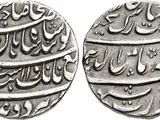
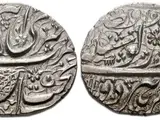
- Coin of Banda Singh Bahādur Silver coins struck at Lohgaṛh, 1710–1712 coin 1710–1712 CE The first coins struck in the name of the Sikh Gurus. Obverse couplet as William Irvine read it from the Persian chroniclers: "Sikkah zad bar har do alam tegh-i-Nanak wahib ast, / Fath Govind Shah-i-shahan fazl-i-Sacha Sahib ast"; reverse "Zarb ba Aman-ud-dahr, Maswarat-shahr, Zinat-ut-takht-i-mubarak-bakht" (Irvine, Later Mughals, I, p. 110). Persian cited in §06 §06 Banda, Persecution and the Misls
- Seal of Banda Singh Bahādur Seal impressed on Banda's letters artefact 1710–1716 CE A rhyming Persian couplet on the pot (deg) and the sword (tegh), saying that Guru Gobind Singh received them, with victory and ready help, from Nānak. Irvine prints "Teg, deg, o fath, nusrat-i-be-dirang, / Yaft az Nanak, Guru Govind Singh"; Ganda Singh and Grewal and Habib put deg first. The same couplet was used on the Sikh coins of Lahore in 1765. Persian cited in §06 §06 Banda, Persecution and the Misls
- Akhbārāt-i Darbār-i Muʿallā Mughal court newsletters (Jaipur archives), Punjab extracts prose 1708–1716 CE (the Banda entries) about ↗ Summaries of news presented to the emperor, with his orders. On 29 Shawwal 1122 (10 December 1710 Old Style), from his camp near Lohgaṛh, Bahādur Shāh directed Mahābat Khān to order the faujdārs around Shāhjahānābād "to kill the worshippers of Nanak (the Sikhs) wherever they were found"; a news-sheet of 21 Rabīʿ I, regnal year 5 (spring 1711), reports from Kalanaur that Banda proclaimed "I do not oppress the Muslims", paid Muslims who joined him and "permitted them to read khutba and namaz", so that five thousand had gathered round him. Extracts copied by Ganda Singh in 1944–45 and translated in his 1948 paper; fuller translation by Bhagat Singh (Patiala, 1984). Persian cited in §06 §06 Banda, Persecution and the Misls
- Sainapati, Srī Gur Sobhā Poem on Guru Gobind Singh by a poet of his court verse early 18th c. CE The earliest account of the Khālsā's creation, by a poet of Gobind Singh's court: the Guru makes the congregations his own khālsā and removes the masands. Braj in Gurmukhi cited in §00 cited in §05 §05 Guru Gobind Singh and the Khālsā
- Muḥammad Aḥsan Ijād, Farrukhsiyar-nāma History of the emperor Farrukhsiyar prose 1713–1719 CE The earliest Persian notice of Tegh Bahādur's death, known through Irvine: Aurangzeb secretly orders the arrest, Dilāwar Khān of Sirhind seizes the Guru near Ropar, and he is executed after refusing to become a Muslim. Persian cited in §04 §04 Miri and Piri: The Sword Beside the Rosary
- John Surman and Edward Stephenson, letter from Delhi, 10 March 1716 Letter of the East India Company's embassy to Farrukhsiyar, to the President of Fort William prose 10 March 1715/16 (Old Style) read the text ↗ "It is not a little remarkable with what patience they undergo their fate, and to the last it has not been found that one apostatized from this new formed Religion." Reports about 780 prisoners, 2,000 heads on poles and 100 beheaded a day. Printed in C. R. Wilson, The Early Annals of the English in Bengal, vol. II, part II (1911). English cited in §06 §06 Banda, Persecution and the Misls
- Hukamnāmās of Mātā Sundarī Letters of Guru Gobind Singh's widows to the Sikh congregations text 1717–1730 CE (Mātā Sāhib Devī's to 1734) Letters addressing the Sikhs as "the Khālsā of Akāl Purakh" and asking for offerings in the Guru's name, with no claim to Guruship by their writers (Grewal, reading Ganda Singh's edition, Hukamnāme, 1967). Punjabi in Gurmukhi cited in §06 §06 Banda, Persecution and the Misls
- Gurbilās Pātshāhī 6 Anonymous life of Guru Hargobind verse stated 1718 CE; date disputed (as late as 1843 proposed) The oldest life of the sixth Guru and the source of the tradition that the Akāl Takht was founded in 1606; anachronisms make its stated date of 1718 suspect, and one scholar proposes 1843. Braj in Gurmukhi cited in §04 §04 Miri and Piri: The Sword Beside the Rosary
- Tankhāhnāmā Code of penances attributed to Bhāī Nand Lāl verse earliest manuscript 1718–1719 CE A code of penances attributed to Bhāī Nand Lāl (an attribution McLeod discounts); its earliest manuscript is dated 1718–19, in the years of Banda's rising. It closes with the couplet "rāj karegā khālsā" (the Khālsā shall rule), sung after the daily Ardās. Punjabi in Gurmukhi cited in §00 cited in §05 cited in §06 §05 Guru Gobind Singh and the Khālsā
- Mīrzā Muḥammad, ʿIbratnāma Memoir of an imperial officer, to 1719 prose c. 1719 CE An eyewitness account of Banda and some 740 prisoners entering Delhi in March 1716 and of the daily executions; records the prisoners' reply, "Let them kill us! We do not fear death." Translated by Iqbal Husain in Grewal and Habib (2001), Text 11. Persian cited in §06 §06 Banda, Persecution and the Misls
- Dasam Granth The Book of the Tenth Guru text compiled early 18th c. CE Compositions attributed to Gobind Singh and his court: the Jāp, Akāl Ustat, Bachitar Nāṭak, Chaṇḍī Charitra, Chaubīs Avatār, Charitropākhyān and the Zafarnāmā. Who wrote which parts is the field's most heated textual argument. Braj, Punjabi and Persian in Gurmukhi cited in §00 cited in §03 cited in §05 §05 Guru Gobind Singh and the Khālsā
- Muḥammad Qāsim, ʿIbratnāma History by a Lahore accountant, written 1723 prose 1723 CE The earliest detailed account of Banda's rising, by a Lahore official who watched the siege of Gurdās Nangal; hostile to Banda, admiring of Guru Nānak. Translated by Irfan Habib in Grewal and Habib (2001), Text 10. Persian cited in §06 §06 Banda, Persecution and the Misls
- Kāmwar Khān, Tazkirat al-Salāṭīn Chaghtā Chronicle of the Mughal emperors prose c. 1724 CE A court chronicle with dated entries on the campaigns against Banda, his capture and execution, and the source of the coin legend Irvine quotes. Translated by S. Ali Nadeem Rezavi in Grewal and Habib (2001), Text 12. Persian cited in §06 §06 Banda, Persecution and the Misls
- Khāfī Khān, Muntakhab al-Lubāb History of the Mughal empire prose c. 1731 CE Describes Banda's following (4,000–5,000 horse and 7,000–8,000 foot at first, growing to 40,000), the war cries fateh daras (often written fateh darshan) and sachcha pādshāh, the Delhi procession and the young prisoner who denied his mother to die with his companions. Translated by Majida Bano in Grewal and Habib (2001), Text 13. Persian cited in §06 §06 Banda, Persecution and the Misls
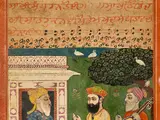
- B40 Janamsākhī British Library, MSS Panjabi B 40 manuscript 1733 CE A dated and illustrated janamsākhī with 57 paintings, among the earliest surviving images of Guru Nānak. Punjabi in Gurmukhi cited in §00 cited in §02 §00 How We Know
- Mahimā Prakāsh Vārtak Prose life of the Gurus, ascribed to Kirpāl Dās Bhallā (ed. Kulvinder Singh Bajwa, Singh Brothers 2004), sākhī 81 prose 1741 CE The first Sikh source to present the death as an execution: Chandū Shāh, a Khatrī dīwān, accuses the Guru of helping the rebel prince with money, pays the fine and takes possession of him. Punjabi in Gurmukhi cited in §03 §03 The Gurus Build a Community
- Chaupā Singh Rahitnāmā Code of conduct attributed to Chaupā Singh Chhibbar prose mid-18th c. CE The longest early rahitnāmā; McLeod dates its core to the 1740s–1760s. Punjabi in Gurmukhi cited in §00 cited in §05 cited in §06 §05 Guru Gobind Singh and the Khālsā
- Koer Singh, Gurbilās Pātshāhī 10 Life of the Tenth Guru verse dated 1751 CE in the text; possibly later A full narrative of the Khālsā's founding, including the call for heads; its date is disputed. Braj in Gurmukhi cited in §00 cited in §05 §05 Guru Gobind Singh and the Khālsā
- Hukamnāmā of the Khālsā to the Sikhs of Patna, 12 April 1759 Letter issued in the name of the Khālsā, in Ganda Singh, ed., Hukamnāme (Punjabi University, Patiala, 1967), p. 233 text 12 April 1759 CE A hukamnāmā addressed to the Sikhs of Patna by "the Khalsa of Sat Sri Akal Purakh Ji" (Grewal's rendering), which, as Grewal notes in his introduction to Grewal and Habib (2001), equates the Khālsā with the Guru. Punjabi in Gurmukhi cited in §06 §06 Banda, Persecution and the Misls
- Delhi news reports on the Sikhs, 1759–1765 News-reports from Delhi to the Maratha courts, ed. G. H. Khare, Persian Sources of Indian History, vol. V prose 1759–1765 CE Contemporary reports of the Sikh chiefs' gurmatā at Amritsar, the rebuilding work at Amritsar in 1763, the fall of Sirhind in 1764 and Ālā Singh's answer that he was "a zamīndār"; no mention of the 1762 massacre. Translated by Irfan Habib in Grewal and Habib (2001), Text 17. Persian cited in §06 §06 Banda, Persecution and the Misls
- Sikh rupee of Lahore, 1765 Coins struck by the Khālsā at Lahore, VS 1822 coin 1765 CE Coins struck after the Bhaṅgī and Kanhaiyā chiefs took Lahore, bearing the deg tegh fateh couplet of Banda's seal (C. J. Rodgers, cited by Irvine); Grewal treats them as the Sikhs' declaration of sovereignty. Persian cited in §06 §06 Banda, Persecution and the Misls
- Qāẓī Nūr Muḥammad, Jangnāma Persian verse account of Ahmad Shāh Abdālī's seventh campaign, 1764–65 verse 1765 CE An eyewitness hostile to the Sikhs praises their conduct in war (they do not kill one who is not a man, obstruct fugitives or plunder women) and says: "They are not from amongst the Hindus. These miscreants have a distinct religion of their own." Edited by Ganda Singh (1939); translated by Iqtidar Alam Khan in Grewal and Habib (2001), Text 18, pp. 208–209, who render the author's pun on sag ('dog') as 'Sikhs'. Persian cited in §06 §06 Banda, Persecution and the Misls
- Kesar Singh Chhibbar, Baṅsāvalīnāmā Genealogy of the Ten Gurus verse 1769 CE A Brahmin Sikh's history of the Gurus, with an early statement that the Granth is the Guru. Punjabi in Gurmukhi cited in §00 cited in §03 cited in §04 cited in §05 cited in §06 §05 Guru Gobind Singh and the Khālsā
- Sarūp Dās Bhallā, Mahimā Prakāsh Verse chronicle of the Gurus (ed. Gobind Singh Lamba and Khazan Singh, Bhasha Vibhag, Patiala, 1971), vol. 2, 22:2–8 verse 1776 CE Chandū Shāh misleads the emperor into fining Guru Arjan, pays the fine and tortures him to death in revenge for the refusal of his daughter as a bride for Hargobind; the emperor bears no blame. Punjabi in Gurmukhi cited in §03 §03 The Gurus Build a Community
- Ghulām Ḥusain Khān, Siyar al-Mutaʾakhkhirīn Review of Modern Times prose c. 1781–1782 CE The first full Persian narrative of Tegh Bahādur's execution, a century later and hostile: the Guru and a holy man, Ḥāfiẓ Ādam, gather followers and levy money in Punjab; the shaikh is banished and the Guru executed, placed at Lahore. Persian cited in §04 §04 Miri and Piri: The Sword Beside the Rosary
- Ṭahmās Khān, Ṭahmāsnāma Memoirs of a slave and officer of Muʿīn al-Mulk's household prose 1780–1782 CE First-hand account of the Sikhs' rise around Lahore, 1748–1764, by a servant of Mughlānī Begam; estimates about 25,000 Sikhs killed in the battle of February 1762. Translated by Irfan Habib in Grewal and Habib (2001), Text 16. Persian cited in §06 §06 Banda, Persecution and the Misls
- George Forster, A Journey from Bengal to England, Letter XI Travels of an East India Company servant through northern India, 1782–1784 prose travelled 1783; published 1798 read the text ↗ On the Sikhs: Amritsar razed in 1762; the "grand convention" (gurmatā) "now rarely summoned"; the prediction that "some ambitious chief" would raise "the standard of monarchy". Vol. 1 (London, 1798), Letter XI, pp. 253–295; the passages quoted on pp. 277–278 and 295. English cited in §06 §06 Banda, Persecution and the Misls
- Nānakshāhī rupee of Ranjit Singh Coinage of the Sarkār-i Khālsā, Lahore, Amritsar, Multān, Kashmir and other mints coin 1801–1839 CE about ↗ The Persian couplet "deg tegh fatah-o-nusrat bedraṅg, yāft az nānak gurū gobind siṅgh": the kingdom's coins name the Gurus, not the king, and carry no portrait. Persian cited in §07 §07 Ranjit Singh's Kingdom
- Treaty of Amritsar (1809), Article 1 Treaty with the Rajah of Lahore, 25 April 1809 law 25 April 1809 CE about ↗ "Perpetual friendship" between the British and the State of Lahore; the British "will have no concern" with the Rajah's territories north of the Sutlej. Article 2 limits his troops south of the river. English and Persian cited in §07 §07 Ranjit Singh's Kingdom
- Baghdad inscription (Bābā Nānak shrine) Inscription in Ottoman Turkish at the shrine of Bābā Nānak near the tomb of Bahlūl, Baghdad inscription 917 or 927 AH as read (1511–12 or 1520–21 CE); 1226 AH (1811–12 CE) by Ménage's reading of the chronogram A stone in Ottoman Turkish verse at the Bābā Nānak shrine near Bahlūl's tomb, noticed by Indian Army Sikh soldiers in the First World War and lost after 2003. Read by many Sikh writers as naming "Bābā Nānak" and dating to his lifetime; Ménage argued the name breaks the metre, the date was retouched, and the chronogram gives the early nineteenth century. Ottoman Turkish cited in §02 §02 Guru Nānak
- Emily Eden, 'Up the Country', letter of 10 December 1838 'Up the Country': Letters Written to Her Sister from the Upper Provinces of India (London: Richard Bentley, 1866; the linked Gutenberg text is the New Edition, Bentley, 1867) prose December 1838 CE (written); 1866 CE (published) read the text ↗ The Governor-General's sister at the Harmandir with Ranjit Singh: "The temple is of pure gold, really and truly covered completely with gold... till within eight feet from the ground". English cited in §07 §07 Ranjit Singh's Kingdom
- Emily Eden, 'Up the Country', letter of 1 July 1839 'Up the Country': Letters Written to Her Sister from the Upper Provinces of India (London: Richard Bentley, 1866; the linked Gutenberg text is the New Edition, Bentley, 1867) prose July 1839 CE (written); 1866 CE (published) read the text ↗ Reports the British despatch on Ranjit Singh's death: jewels sent to shrines "with directions that the Brahmins should pray for him", and the Koh-i-Nūr ordered to Jagannāth until his sardārs objected. English cited in §07 §07 Ranjit Singh's Kingdom
- Ratan Singh Bhaṅgū, Prāchīn Panth Prakāsh History of the Khālsā verse usually dated 1841 CE; c. 1810–1813 on G. S. Mann's reading The Khālsā's eighteenth century told by a grandson of one of its fighters, written in answer to a British officer's questions. Punjabi in Gurmukhi cited in §00 cited in §06 cited in §07 §00 How We Know
- Santokh Singh, Srī Gur Pratāp Sūraj Granth Sūraj Prakāsh verse 1843 CE The vast nineteenth-century verse history of the Gurus: Arjan's instruction that Hargobind sit armed, the Makhan Shāh story and much of the tradition in its full form. Braj in Gurmukhi cited in §04 §04 Miri and Piri: The Sword Beside the Rosary
- Ghulām Muḥyī al-Dīn (Būṭe Shāh), Tawārīkh-i Panjāb Persian history of Punjab prose c. 1848 CE The earliest written source for the story that the Sufi Mīāṅ Mīr laid the foundation of the Harmandir at Guru Arjan's request, placing four bricks on the sides and one in the middle. Persian cited in §03 §03 The Gurus Build a Community
- Terms of 29 March 1849, Article III Terms granted to the Maharajah Duleep Singh, Lahore, 29 March 1849 (Punjab Papers 1849, p. 653; Aitchison, Treaties, vol. 2, pp. 269–270) law 29 March 1849 CE about ↗ The annexation terms signed by Duleep Singh: "The gem called the Koh-i-noor, which was taken from Shah Shooja ool-Moolk by Maharajah Runjeet Singh, shall be surrendered by the Maharajah of Lahore to the Queen of England." English cited in §07 §07 Ranjit Singh's Kingdom
- Āgiā bhaī akāl kī Couplet recited after the Ardās verse 19th c. CE in writing "Every Sikh is commanded to accept the Granth as Guru": attributed to Gobind Singh. A variant is in the Rahitnāmā attributed to Prahlād Singh; the familiar wording is first found in Giānī Giān Singh's Panth Prakāsh (1880). Punjabi in Gurmukhi cited in §05 §05 Guru Gobind Singh and the Khālsā
- Honigberger, Thirty-Five Years in the East, vol. 1 Johann Martin Honigberger, Thirty-Five Years in the East (London, 1852), vol. 1, pp. 96–100 prose 1839 CE (events); 1852 CE (published) about ↗ The court physician's eyewitness account of Ranjit Singh's cremation: "four ranees (legal wives), and seven female slaves" burned; Brahmins, Sikh priests reading the Granth and Muslims all took part. English (from the German) cited in §07 §07 Ranjit Singh's Kingdom
- Satyārth Prakāś Dayānanda Sarasvatī book 1875 CE about ↗ "Back to the Vedas" — reform by declaring image worship, the Purāṇas, avatāras and caste-by-birth all later corruption. Hindi cited in §08 §08 Under the Raj: The Singh Sabhā and the Boundaries
- Sohan Lāl Sūrī, ʿUmdat ut-Tawārīkh Persian chronicle of the Lahore court (printed 1885) prose 19th c. CE; printed 1885 Says Guru Arjan went to Lahore and sought Mīāṅ Mīr's help in the construction of the tank and buildings at Amritsar. Persian cited in §03 §03 The Gurus Build a Community
- Handbook on Sikhs for the Use of Regimental Officers Captain R. W. Falcon (Allahabad: Pioneer Press, 1896) prose 1896 CE read the text ↗ A recruiting officer's guide to the Khālsā rahit and the Sikh districts; praises the Singh as 'that splendid pattern of a native soldier' and warns that Hinduism keeps Sikhs' sons from taking the pahul. English cited in §08 §08 Under the Raj: The Singh Sabhā and the Boundaries
- Ham Hindū Nahīṅ Kāhn Singh Nābhā prose 1898 CE about ↗ 'We are not Hindus': a dialogue between a Hindu and a Sikh arguing from scripture that Sikh doctrine on caste, incarnation, images and ritual makes the Sikhs a separate religion. The Tat Khālsā's manifesto. Punjabi in Gurmukhi cited in §08 §08 Under the Raj: The Singh Sabhā and the Boundaries
- Anand Marriage Act, 1909 Act VII of 1909, Imperial Legislative Council, 22 October 1909 law 22 October 1909 about ↗ Declares marriages by the Sikh Anand rite valid in law, past and future, while saving 'any other marriage ceremony customary among the Sikhs' (s. 4). English cited in §08 §08 Under the Raj: The Singh Sabhā and the Boundaries
- Disorders Inquiry Committee, Report The Hunter Committee (Calcutta: Superintendent Government Printing, 1920), with the Government of India's and Secretary of State's despatches prose 1920 CE read the text ↗ The official inquiry into the Punjab disorders of 1919: 1,650 rounds fired at Jallianwālā Bāgh, 'approximately 379 people were killed', and Dyer's statement that he fired to produce a 'moral effect … throughout the Punjab'. English cited in §08 §08 Under the Raj: The Singh Sabhā and the Boundaries
- Congress Punjab Inquiry Report Report of the Commissioners appointed by the Punjab Sub-Committee of the Indian National Congress (1920) prose 1920 CE read the text ↗ The Congress inquiry into the Punjab disorders of 1919: calls the Sevā Samiti's 500 dead at Jallianwālā Bāgh a minimum and a local count of 1,000 'by no means an exaggerated calculation'. English cited in §08 §08 Under the Raj: The Singh Sabhā and the Boundaries
- M. K. Gandhi, telegram to Kharak Singh, January 1922 Telegram on the return of the Golden Temple keys text January 1922 about ↗ "First decisive battle for India's freedom won": Gandhi on the return of the Golden Temple treasury keys to the SGPC president on 19 January 1922. Attested only secondarily (Mohinder Singh, The Akali Movement, 1978; Encyclopaedia of Sikhism); not found in the Collected Works of Mahatma Gandhi. English cited in §09 §09 Gurdwara Reform, Partition and Punjabi Suba
- C. F. Andrews, report on Guru kā Bāgh, September 1922 Eyewitness report sent to the press text 12 September 1922 about ↗ An English missionary describes police beating praying Akālī volunteers with brass-bound lathis: "I saw no act, no look, of defiance." English cited in §09 §09 Gurdwara Reform, Partition and Punjabi Suba
- Sikh Gurdwaras Act, 1925, section 2(9) Punjab Act VIII of 1925, as amended (clause 9 substituted by Punjab Act 3 of 1930) law 1925 CE; clause substituted 1930 about ↗ Defines a Sikh as one who professes the Sikh religion; a disputed living person is a Sikh if he declares belief in the Guru Granth Sahib and the Ten Gurus and that he has no other religion. Sections 7, 8 and 16(2) set the petition, objection and tribunal procedure for shrines not in Schedule I. English cited in §09 §09 Gurdwara Reform, Partition and Punjabi Suba
- Sikh Gurdwaras Act, 1925, s. 2 Punjab Act VIII of 1925, as amended law 1925; definitions amended from 1959 read the text ↗ Defines 'Sikh' by a declaration ('I solemnly affirm that I am a Sikh, that I believe in the Guru Granth Sahib, that I believe in the Ten Gurus, and that I have no other religion'), and separately the amritdhari Sikh, the sahajdhari Sikh and the patit. English cited in §11 §11 Sikhs Today
- All-India Muslim League, Lahore Resolution, 23 March 1940 Lahore Resolution text 23 March 1940 about ↗ Calls for Muslim-majority areas to be grouped 'to constitute "independent States" in which the constituent units shall be autonomous and sovereign'. English cited in §09 §09 Gurdwara Reform, Partition and Punjabi Suba
- Constitution of India, Article 25, drafting history Draft Constitution 1948 (draft Article 19) and Constituent Assembly debates law 1948–1950 CE about ↗ The 1948 draft had only the kirpān Explanation; an amendment to widen clause (2)(b) was rejected in December 1948, and the Drafting Committee later extended it to Sikhs, Jainas and Buddhists in Explanation II. English cited in §09 §09 Gurdwara Reform, Partition and Punjabi Suba
- Constitution of India, Arts. 17 & 25 Republic of India law 1950 CE about ↗ Untouchability abolished; religious freedom guaranteed; temples opened to all classes of Hindus by constitutional mandate. English cited in §09 §09 Gurdwara Reform, Partition and Punjabi Suba
- Sikh Rahit Maryādā Code of conduct of the Shiromaṇī Gurdwārā Prabandhak Committee law approved 1945 CE; published 1950 CE about ↗ The code most Sikh institutions follow: who is a Sikh, the amrit ceremony, the Five Ks and the four cardinal prohibitions. Punjabi cited in §00 cited in §05 cited in §09 cited in §11 §05 Guru Gobind Singh and the Khālsā
- Ardās The Sikh congregational prayer, in the text of the Sikh Rahit Maryādā text fixed in the 20th c. CE The daily prayer, in the SGPC's printed text, remembers the Singhs and Singhṇīs who "were cut apart joint by joint, whose scalps were taken off" and asks for deg tegh fateh; it opens with lines from the Vār Srī Bhagautī jī kī of the Dasam Granth. Punjabi in Gurmukhi cited in §06 §06 Banda, Persecution and the Misls
- Hindu Code Bills Parliament of India law 1955–56 CE about ↗ A secular legislature imposes monogamy, permits divorce, and grants daughters inheritance — the largest single change in Hindu practice in this history. English cited in §09 §09 Gurdwara Reform, Partition and Punjabi Suba
- Punjab Reorganisation Act, 1966, sections 3–5 Act 31 of 1966, Parliament of India law 18 September 1966; in force 1 November 1966 about ↗ Forms the State of Haryana and the Union territory of Chandigarh from Punjab and adds the hill districts to Himachal Pradesh, from the appointed day, 1 November 1966. English cited in §09 §09 Gurdwara Reform, Partition and Punjabi Suba
- Anandpur Sāhib Resolution Resolution of the working committee of the Shiromaṇī Akālī Dal, Anandpur Sāhib, 16–17 October 1973; endorsed at Ludhiana, 28–29 October 1978 (English version in the Encyclopaedia of Sikhism) text 1973 CE; 1978 CE about ↗ Names 'the pre-eminence of the Khālsā' as the Panth's political goal and asks that the centre's role in Punjab, as in all states, be restricted to defence, foreign relations, currency and communications. Several versions circulated. Punjabi; English version cited in §10 §10 1984
- Motor-Cycle Crash Helmets (Religious Exemption) Act 1976 Act of the Parliament of the United Kingdom law 1976 Exempts a follower of the Sikh religion wearing a turban from the requirement to wear a motorcycle helmet (the exemption later carried into the Road Traffic Act 1988). English cited in §11 §11 Sikhs Today
- Mandla v Dowell Lee [1983] 2 AC 548 House of Lords, [1982] UKHL 7, judgment of 24 March 1983 law 24 March 1983 read the text ↗ Sikhs are an ethnic group under the Race Relations Act 1976, so a school's 'no turban' rule was unlawful indirect discrimination; Lord Fraser's test of a long shared history and a cultural tradition of the group's own. English cited in §11 §11 Sikhs Today
- White Paper on the Punjab Agitation Government of India, New Delhi, 10 July 1984 text 1984 CE read the text ↗ The government's account of the agitation and of Operation Blue Star. Annexure XI: in the Golden Temple complex 493 civilians/terrorists and 83 soldiers killed; in all, 554 and 92 killed and 4,712 apprehended, up to 30 June 1984. Para. 23 on the burning of the library. Annexure III (pp. 69–83) prints the version of the Anandpur Sāhib Resolution authenticated by Longowāl in November 1982. English cited in §10 §10 1984
- Who Are the Guilty? People's Union for Democratic Rights and People's Union for Civil Liberties, report of a joint inquiry into the causes and impact of the riots in Delhi, 31 October–10 November 1984 (1st edn November 1984, released 17 November; 2nd edn December 1984, the edition of the PUDR PDF) text 1984 CE read the text ↗ Concludes that the attacks on Sikhs in Delhi were 'the outcome of a well organised plan'; rejects the official figure of 325 dead and estimates more than a thousand; names police officers and Congress(I) politicians. English cited in §10 §10 1984
- Rajiv–Longowal Accord Memorandum of Settlement between the Government of India and the Shiromaṇī Akālī Dal, 24 July 1985 law 1985 CE about ↗ Promises Chandigarh to Punjab and a tribunal on the river waters; clause 8.2 refers the Anandpur Sāhib Resolution, 'in so far as it deals with Centre-State relations', to the Sarkaria Commission. English cited in §10 §10 1984
- Employment Act 1989, s. 11 Act of the Parliament of the United Kingdom law 1989 Exempts turban-wearing Sikhs from requirements to wear safety helmets on construction sites. English cited in §11 §11 Sikhs Today
- The Tribune, 'She raised woman's status among Sikhs', 28 March 1999 The Tribune (Chandigarh), Harihar Swarup, editorial page text 28 March 1999 about ↗ On the election of Bibī Jagīr Kaur, aged 45, as president of the SGPC, the first woman to head the body. English cited in §11 §11 Sikhs Today
- George Fernandes, letter to the SGPC, 23 May 2000 Letter of the Defence Minister to the Shiromaṇī Gurdwārā Prabandhak Committee, as reported in the Indian Express, 25 May 2000, 'George Fernandes admits Army removed items from Golden Temple during Operation Bluestar' text 2000 CE about ↗ The Defence Minister acknowledges that the army removed items from the Golden Temple complex during Operation Blue Star and handed them to the CBI. English cited in §10 §10 1984
- The Tribune, report on the excommunication of Bibī Jagīr Kaur, 28 January 2000 The Tribune (Chandigarh), Punjab page text 28 January 2000 about ↗ Giānī Pūran Singh, jathedār of the Akāl Takht, holding court at Guna with four amritdhārī Sikhs, pronounces Bibī Jagīr Kaur, the first woman president of the SGPC, excommunicated, over the Nanakshahi calendar and related issues. English cited in §11 §11 Sikhs Today
- National Commission to Review the Working of the Constitution, Report, 2002 Report of the Venkatachaliah Commission text 31 March 2002 about ↗ Recommends omitting Explanation II to Article 25 and naming Sikh, Jaina and Buddhist institutions directly in clause (2)(b). English cited in §09 §09 Gurdwara Reform, Partition and Punjabi Suba
- The Tribune, 'Sikh clergy clears Nanakshahi calendar', 17 January 2003 The Tribune (Chandigarh), Tribune News Service, Amritsar, 16 January 2003 text 17 January 2003 about ↗ The Sikh clergy approve Pal Singh Purewal's Nanakshahi calendar, with festivals shared with Hindus left on the old calendar for now; recalls the SGPC's attempt under Bibī Jagīr Kaur to bring it in against the Akāl Takht's direction, the hukamnāmā excommunicating her, which she did not accept, and the removal of the jathedār by SGPC members. English cited in §11 §11 Sikhs Today
- The Tribune, report on hukamnāmās from the Takhts, 23 May 2003 The Tribune (Chandigarh), main news text 23 May 2003 about ↗ Recalls that Giānī Pūran Singh's hukamnāmā excommunicating Bibī Jagīr Kaur, issued from Guna, was later rescinded by his successor, Joginder Singh Vedanti. English cited in §11 §11 Sikhs Today
- The Tribune, 'Nanakshahi Calendar gets the nod', 29 March 2003 The Tribune (Chandigarh), Amritsar, 28 March 2003 text 29 March 2003 about ↗ A meeting under the Akāl Takht's jathedār approves the final draft of the calendar; Guru Nānak's birthday will continue to be kept on the full moon of the Bikramī month of Kattak, not in Baisākh (April). English cited in §11 §11 Sikhs Today
- Nanavati Commission Report Report of the Justice Nanavati Commission of Inquiry (1984 Anti-Sikh Riots), vol. I, Ministry of Home Affairs, 2005 (commission appointed 8 May 2000) text 2005 CE read the text ↗ Accepts the Ahuja Committee's 2,733 Sikhs killed in Delhi, 31 October–7 November 1984 (p. 17); summarises the earlier inquiries; finds (pp. 179–180) that 'what had initially started, as an angry outburst became an organized carnage', with local Congress(I) backing. English cited in §10 §10 1984
- Manmohan Singh, Rajya Sabha, 11 August 2005 Prime minister's reply in the debate on the Nanavati Commission report, as reported in The Tribune, 12 August 2005 text 2005 CE about ↗ 'I apologise not only to the Sikh community but to the whole nation, because what took place in 1984 is a negation of the concept of nationhood enshrined in our Constitution.' English cited in §10 §10 1984
- The Tribune, 'Sikh clergy refuse to toe SGPC line', 19 August 2005 The Tribune (Chandigarh), Varinder Walia, Amritsar, 18 August 2005 text 19 August 2005 about ↗ The Sikh clergy decline to give the final nod to the SGPC's move to let initiated women perform kīrtan in the sanctum of the Harmandir Sāhib; the jathedār does not sign the proposed code of conduct. A report of 22 September 2005 describes rival women's groups demonstrating for and against outside the Akāl Takht. English cited in §11 §11 Sikhs Today
- Multani v. Commission scolaire Marguerite-Bourgeoys, 2006 SCC 6 Supreme Court of Canada, [2006] 1 S.C.R. 256, judgment of 2 March 2006 law 2 March 2006 read the text ↗ An absolute prohibition on a Sikh pupil's kirpan at school infringed freedom of religion under s. 2(a) of the Charter and was not a minimal impairment; the school board's decision declared a nullity. Para. 76: "Religious tolerance is a very important value of Canadian society." English and French cited in §11 §11 Sikhs Today
- State v. Roque, 213 Ariz. 193 (2006) Supreme Court of Arizona, 141 P.3d 368, decided 14 August 2006 law 14 August 2006 read the text ↗ Upholds the convictions of the man who shot Balbir Singh Sodhi, a Sikh, at his petrol station in Mesa, Arizona, on 15 September 2001, four days after the 9/11 attacks, and reduces his death sentence to imprisonment for the rest of his natural life (opinion by Berch V.C.J.). English cited in §11 §11 Sikhs Today
- TSA screening procedures for religious headwear, October 2007 US Transportation Security Administration, announced 16 October 2007 text August and October 2007 about ↗ Guidance of August 2007 named turbans for secondary screening; after objections from Sikh organisations the October 2007 procedure let travellers pat down their own religious head covering and have their hands swabbed, and removed the word 'turbans' from screener guidance. English cited in §11 §11 Sikhs Today
- Akāl Takht edict on the Ḍerā Sachā Saudā, May 2007 Akāl Takht and the Sikh high priests, Talvaṇḍī Sābo text May 2007 (17 May, as reported) about ↗ After the head of the Ḍerā Sachā Saudā appeared dressed in a manner Sikhs took as imitating Guru Gobind Singh, calls on Sikhs to boycott the ḍerā; clashes followed in Punjab. A pardon granted in 2015 was withdrawn, and the Akāl Takht treated the 2007 edict as in force in 2017. Punjabi cited in §11 §11 Sikhs Today
- SALDEF, 'TSA Changes Head Covering Screening Procedure in Response to Concerns of Religious Profiling', 16 October 2007 Sikh American Legal Defense and Education Fund text 16 October 2007 about ↗ The TSA's new procedure for all religious head coverings, replacing that of 4 August 2007: travellers may pat down their own head covering and have their hands swabbed for residue, with private screening offered. English cited in §11 §11 Sikhs Today
- Air India Flight 182: A Canadian Tragedy Commission of Inquiry into the Investigation of the Bombing of Air India Flight 182 (Commissioner John C. Major), final report, 5 vols., tabled 17 June 2010 text 2010 CE read the text ↗ The Canadian inquiry into the bombing of 23 June 1985 (329 killed) and the Narita bomb; finds the threat and the suspects were known to Canadian agencies before the bombing (vol. 2, part 1, p. 87). English cited in §10 §10 1984
- The Tribune, 'Amended Nanakshahi calendar released', 15 March 2010 The Tribune (Chandigarh), Amritsar, 14 March 2010 text 15 March 2010 about ↗ The Akāl Takht's jathedār releases the SGPC's amended Nanakshahi calendar on the first day of the 542nd Nanakshahi year; the amendments, made under pressure from the Sant Samāj and the Damdamī Ṭaksāl, returned several anniversaries to lunar dates. English cited in §11 §11 Sikhs Today
- The Tribune, 'SGPC panel suggests radical changes', 4 January 2010 The Tribune (Chandigarh), Amritsar, 3 January 2010 text 4 January 2010 about ↗ The SGPC's executive committee approves radical changes to the Nanakshahi calendar, against the dissent of three of its fifteen members and the opposition of several Sikh bodies. English cited in §11 §11 Sikhs Today
- Deseret News, '6 convicted in Austria temple shooting', 28 September 2010 Deseret News (wire report) text 28 September 2010 about ↗ A Vienna court convicts six men for the attack of 24 May 2009 on the temple: one to life imprisonment for murder and attempted murder, four to 17–18 years, one to six months; the prosecution argued that they were fundamentalist Sikhs who accused the visiting preachers of disrespect to a holy book. English cited in §11 §11 Sikhs Today
- DNA India (Austrian Press Agency), 'Six Sikh men sent to prison for attack on a temple in Austria', September 2010 DNA India, from the Austrian Press Agency text September 2010 about ↗ The six men convicted for the Vienna temple attack, all Sikhs: one sentenced to life for murder and two counts of attempted murder, four to 17–18 years, one to six months for attempted coercion. English cited in §11 §11 Sikhs Today
- Census of India 2011: Sikhs Office of the Registrar General and Census Commissioner, India text 2011 (religion tables released 2015) Counts 20,833,116 Sikhs, about 1.7 per cent of India (1.9 per cent in 2001); about 16.0 million in Punjab, 57.7 per cent of the state (59.9 per cent in 2001). Punjab's Scheduled Castes are about 31.9 per cent of its population, the highest share of any state. English cited in §11 §11 Sikhs Today
- Statement by the President on the Shooting in Wisconsin, 5 August 2012 The White House, Office of the Press Secretary text 5 August 2012 about ↗ The President's statement on the killing of six worshippers at the Sikh gurdwara in Oak Creek, Wisconsin, noting that it took place at a house of worship and recognising the contributions of Sikh Americans. English cited in §11 §11 Sikhs Today
- FBI Milwaukee, 'Oak Creek Sikh Temple Shooting Investigation Conclusion', November 2012 Federal Bureau of Investigation, Milwaukee Division, press release text November 2012 about ↗ The gunman acted alone, killing six and wounding four; no evidence that the attack was directed or facilitated by any white-supremacist group. English cited in §11 §11 Sikhs Today
- Reuters, 'Sikh shooting draws attention to white power music', 7 August 2012 Reuters (Brendan O'Brien and Nick Carey), as published by the Christian Science Monitor text 7 August 2012 about ↗ The Oak Creek gunman, Wade Michael Page, played in the white-power bands End Apathy and Definite Hate; the Anti-Defamation League had identified him in 2010. English cited in §11 §11 Sikhs Today
- Associated Press, 'FBI concludes that Sikh temple gunman who killed 6 acted alone', 20 November 2012 Associated Press, as published by Fox News text 20 November 2012 about ↗ The FBI's statement found no evidence that the gunman had help or followed any white-supremacist group's directive; it did not mention a motive, which an FBI spokesman said "may never be known". English cited in §11 §11 Sikhs Today
- US Department of Justice, 'Healing Communities and Remembering the Victims of Oak Creek', August 2013 Office of Public Affairs, US Department of Justice (blog post by Attorney General Eric Holder) text August 2013 about ↗ Names the six people killed at the Sikh Temple of Wisconsin on 5 August 2012 and the injured police lieutenant. English cited in §11 §11 Sikhs Today
- Home Minister's statement on the 1984 riots, 26 December 2014 Statement of the Union Home Minister, Rajnath Singh, on additional compensation for victims of the 1984 riots (press release on his website) text 2014 CE about ↗ 'As per records, 3,325 persons were killed in these riots across the country and out of these, 2,733 persons were killed in Delhi alone.' English cited in §10 §10 1984
- The Tribune, 'Gurdwara panel may revert to Bikrami calendar', 12 March 2015 The Tribune (Chandigarh), Perneet Singh text 12 March 2015 about ↗ Reports that the SGPC may publish a Bikramī calendar labelled 'Nanakshahi Year 547'; recalls that the 2010 amendments were made by a two-member committee of SGPC president Avtar Singh Makkar and Damdamī Ṭaksāl head Harnām Singh Khālsā. English cited in §11 §11 Sikhs Today
- Sikh Gurdwaras (Amendment) Act, 2016 Act No. 21 of 2016, Parliament of India law assent 5 May 2016 about ↗ Removes from ss. 49 and 92 of the Sikh Gurdwaras Act the exception that let sahajdhari Sikhs vote in Board and committee elections, with effect from 8 October 2003, the date of the central notification that the Punjab and Haryana High Court had quashed on 20 December 2011. English cited in §11 §11 Sikhs Today
- Army Times, 'Army ruling lets Sikh captain keep beard, turban', 1 April 2016 Army Times text 1 April 2016 about ↗ Capt. Simratpal Singh, who sued the Department of Defense on 29 February 2016 over special helmet and gas-mask testing (halted by a federal judge in March), receives a waiver of 30 March 2016 to keep his beard, hair and turban, subject to periodic review. English cited in §11 §11 Sikhs Today
- Army Directive 2017-03 Secretary of the Army, 3 January 2017; reported by Army News Service, 24 January 2017 text January 2017 about ↗ Amends Army Regulation 670-1 so that brigade-level commanders may approve religious accommodations for turbans, under-turbans, beards and hijabs, valid for a soldier's career; the Army had granted waivers to Sikh soldiers since 2009, among them Capt. Simratpal Singh. English cited in §11 §11 Sikhs Today
- State v. Sajjan Kumar (Delhi High Court, 2018) Delhi High Court, judgment of 17 December 2018 (S. Muralidhar and Vinod Goel JJ.), 2018 SCC OnLine Del 12930 law 2018 CE about ↗ Reverses a 2013 acquittal and convicts Sajjan Kumar of conspiracy in the killing of five Sikhs in Raj Nagar, Palam Colony, on 1–2 November 1984; life imprisonment. English cited in §10 §10 1984
- The Tribune, 'No Sikh-Nirankari tension in 3 decades', 20 November 2018 The Tribune (Chandigarh) text 20 November 2018 about ↗ A few months after the clash of 13 April 1978 the Akāl Takht issued a hukamnāmā severing ties with the Nirankārīs; Gurbachan Singh's reply in pamphlets; mediation in the early 1990s. English cited in §10 §10 1984
- Punjab Vidhan Sabha resolution on women's kīrtan at the Harmandir Sāhib, 7 November 2019 Punjab Legislative Assembly; reported in the Hindustan Times, 8 November 2019 text 7 November 2019 about ↗ The Assembly unanimously asks the Akāl Takht and the SGPC to allow women to perform kīrtan at the Harmandir Sāhib; a request, not an order, opposed by some members as state interference in religion. English cited in §11 §11 Sikhs Today
- Agreement between India and Pakistan on the Kartarpur Sahib Corridor, 24 October 2019 Governments of India and Pakistan text 24 October 2019 about ↗ Provides visa-free passage for pilgrims from Ḍerā Bābā Nānak to Gurdwara Darbār Sāhib, Kartārpur; the corridor opened on 9 November 2019, was suspended in 2020 and reopened in November 2021. English cited in §11 §11 Sikhs Today
- The Week, 'Her fight to be heard', 1 November 2019 The Week (India), cover story by Mandira Nayar text 1 November 2019 about ↗ Women's campaign to sing kīrtan and do sevā at the Harmandir Sāhib; a former SGPC member says the SGPC has no women rāgīs; women sing in gurdwaras in women's sessions, and at the Harmandir usually only by invitation on special occasions. English cited in §11 §11 Sikhs Today
- Deccan Herald, 'Farmers' protest: Who's feeding protesters at the borders?', 20 December 2020 Deccan Herald, drawing on The Indian Express text 20 December 2020 about ↗ Describes the laṅgars at the protest camps outside Delhi, the largest run by the Delhi Sikh Gurdwara Management Committee at the Singhu border, with volunteer groups and NGOs. English cited in §11 §11 Sikhs Today
- Ministry of Home Affairs (India), notifications under the Unlawful Activities (Prevention) Act, 1 July 2020 Ministry of Home Affairs, Government of India law 1 July 2020 about ↗ Adds to the Fourth Schedule of the Act, as individual terrorists, nine people, among them Hardeep Singh Nijjar, whom it believed to be involved in terrorism. English cited in §11 §11 Sikhs Today
- Statistics Canada, 2021 Census: Sikh population Statistics Canada, "Sikh strong" (StatsCAN Plus, 2 April 2024) text 2021 (census); published 2 April 2024 about ↗ 771,790 people in Canada reported the Sikh religion in 2021, about 2.1 per cent of the population; Ontario 300,435 and British Columbia 290,870; just under a third in the Toronto area and over a quarter in Vancouver; Canada has the largest Sikh population after India. English cited in §11 §11 Sikhs Today
- Interfaith America, '20 Years of the Sikh Coalition: How 9/11 Catalyzed a Civil Rights Movement for Sikh Americans', 2021 Interfaith America text 2021 about ↗ The Sikh Coalition's founding by volunteers in New York in September 2001, in response to attacks on Sikhs after 9/11, told by a co-founder. English cited in §11 §11 Sikhs Today
- The Tribune, 'Civil aviation body allows Sikh passengers to carry kirpan of specific measurement on domestic flights', 14 March 2022 The Tribune (Chandigarh) text 14 March 2022 about ↗ Quotes the Bureau of Civil Aviation Security's order of March 2022: Sikh passengers may carry a kirpan on domestic flights only, not exceeding 9 inches (6-inch blade and 3-inch handle). English cited in §11 §11 Sikhs Today
- Office for National Statistics, Sikh identity, England and Wales: Census 2021 Office for National Statistics, 15 December 2023 text 15 December 2023 (Census 2021) about ↗ 524,140 people identified as Sikh through the religion question; 525,865 (0.9 per cent) through religion, ethnic group or both, of whom 1,725 through the ethnic-group write-in only. English cited in §11 §11 Sikhs Today
- Justin Trudeau, statement in the House of Commons, 18 September 2023 House of Commons of Canada, 18 September 2023; wording as reported by the Associated Press and CBC text 18 September 2023 about ↗ The prime minister tells the House that Canadian security agencies are pursuing "credible allegations of a potential link between agents of the government of India and the killing of a Canadian citizen, Hardeep Singh Nijjar" (as reported by CBC and the Canadian Press), calling any such involvement an unacceptable violation of sovereignty. English and French cited in §11 §11 Sikhs Today
- Ministry of External Affairs (India), 'India rejects allegations by Canada', 19 September 2023 Ministry of External Affairs, Government of India, press release; text as reported by the Associated Press text 19 September 2023 about ↗ Rejects the statements of Canada's prime minister and foreign minister, calling allegations of Indian government involvement in violence in Canada "absurd and motivated". English cited in §11 §11 Sikhs Today
- NPR (Associated Press), 'India expels senior Canadian diplomat in tit-for-tat row over Sikh's killing', 19 September 2023 NPR, from the Associated Press text 19 September 2023 about ↗ Joly says the expelled Indian diplomat was the head of Indian intelligence in Canada; describes Nijjar as a Sikh independence advocate wanted by Indian authorities; India expels a senior Canadian diplomat and rejects the allegations as absurd. English cited in §11 §11 Sikhs Today
- Ministry of External Affairs (India), renewal of the Kartarpur Sahib Corridor agreement, 22 October 2024 Ministry of External Affairs, Government of India; as reported by The Wire text 22 October 2024 about ↗ India and Pakistan renew the 2019 corridor agreement for five years, to 2029. English cited in §11 §11 Sikhs Today
- The Tribune, 'Continued closure overshadows Kartarpur corridor's 6th anniversary', November 2025 The Tribune (Chandigarh) text November 2025 about ↗ Reports that the corridor has remained closed from the Indian side since May 2025, 'till further orders', despite the agreement's extension to 2029. English cited in §11 §11 Sikhs Today
- Registrar General of India, Census 2027 press note, 2026 Office of the Registrar General and Census Commissioner, India (state press note, Goa) text 2026 about ↗ Census 2027 in two phases: houselisting between April and September 2026, and population enumeration in February 2027, with reference date 1 March 2027 (October 2026 in snow-bound areas). English cited in §11 §11 Sikhs Today
- ThePrint, 'Extant security scenario compels Kartarpur corridor to remain suspended, govt tells Parl', 31 July 2026 ThePrint (PTI) text 31 July 2026 about ↗ The government tells Parliament that the corridor, suspended from 7 May 2025 after the Pahalgam attack, remains suspended because of the security situation. English cited in §11 §11 Sikhs Today
- The Tribune, 'Obituary: Haunted by ghosts of 1984 anti-Sikh riots, ex-Congress MP Sajjan Kumar dies', 21 August 2026 The Tribune (Chandigarh) text 21 August 2026 about ↗ Sajjan Kumar, serving two life sentences in Tihar Jail (convicted December 2018 and February 2025), dies on 21 August 2026 at Safdarjung Hospital after being taken there from the jail. English cited in §10 §10 1984
- Air & Space Forces Magazine, 'New rules for religious shaving waivers', 24 March 2026 Air & Space Forces Magazine text 24 March 2026 about ↗ A Defense Department memo of 11 March 2026, implementing the Defense Secretary's memo of 30 September 2025, requires religious facial-hair waivers to be approved at no lower level than each service's chief of personnel; holders of existing accommodations must submit a new request by 11 June with a sworn written statement that the belief is sincerely held and religious in nature. Sikhs had worn beards under accommodations since 2010. English cited in §11 §11 Sikhs Today
- Military Times, 'Service members must prove sincere religious beliefs for facial hair waivers', 19 March 2026 Military Times (Cristina Stassis) text 19 March 2026 about ↗ The memo of 11 March 2026 requires a sworn written attestation that the requester's belief is sincerely held and religious in nature, and the re-evaluation of approved accommodations within 90 days. English cited in §11 §11 Sikhs Today
- All India Radio News, 'Punjab Assembly urges Centre to reopen Kartarpur Sahib Corridor', 28 October 2026 News On AIR (All India Radio) text 28 October 2026 about ↗ The Punjab Vidhan Sabha passes a resolution urging the Union government to facilitate the reopening of the Kartārpur Sāhib corridor and to simplify visit procedures. English cited in §11 §11 Sikhs Today
- CBC News, 'Indictments tying Bishnoi to Surrey, B.C., killing detail alleged global criminal network', 8 July 2026 CBC News text 8 July 2026 about ↗ US indictments unsealed in Los Angeles charge 37 people; one accuses Lawrence Bishnoi, jailed in India, and Satinderjeet Singh (Goldy Brar) of ordering the killing of Hardeep Singh Nijjar in June 2023. India has repeatedly denied the earlier Canadian allegation. English cited in §11 §11 Sikhs Today
- CBC News, analysis of the RCMP's 'no evidence' remarks on Operation Hard Ball, 17 July 2026 CBC News text 17 July 2026 about ↗ RCMP Deputy Commissioner Lisa Moreland tells CBC's Power & Politics: "There's no evidence to suggest through this organized crime investigation and the charges and the indictment laid forward that Indian officials were charged or involved"; CBC notes the contrast with earlier statements by Trudeau and RCMP Commissioner Mike Duheme (2024), and that the new indictment does not allege Indian government involvement. English cited in §11 §11 Sikhs Today
No sources of that type.