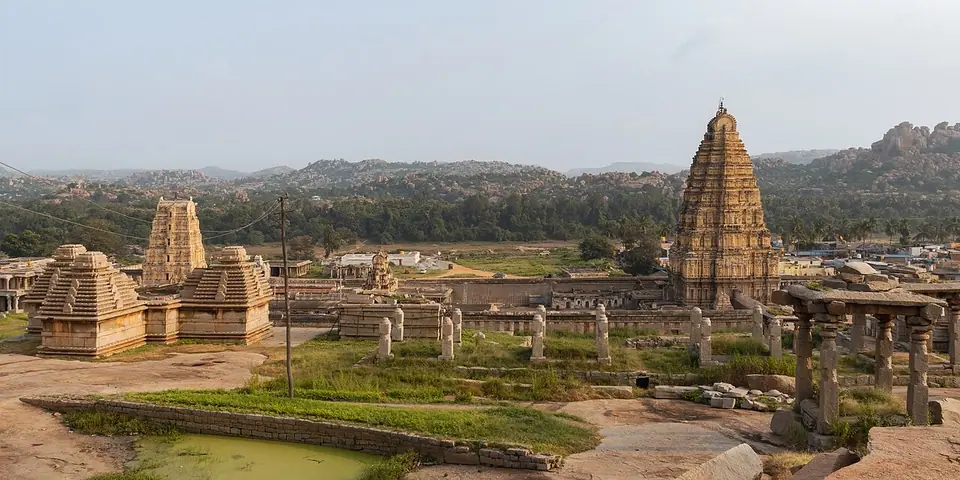
Hinduism under Muslim rule in one paragraph
From the Delhi Sultanate (founded c. 1206) to the decline of the Mughals in the 18th century, Hindu religion changed less through conversion than through vernacular devotion, the Sant poets, the birth of Sikhism, and a slowly sharpening sense of Hindu identity. For five and a half centuries most of northern India — and at times most of the subcontinent — is ruled by Muslim dynasties, and the religion of the majority changes in ways that have almost nothing to do with conversion. (The qualifier matters: Vijayanagara, the Gajapatis, the Rajput states, Ahom Assam, Kerala and the Marathas were under non-Muslim rule for long stretches of this same period.)
Three things happen. First, bhakti goes north and goes vernacular: Kabīr in Hindi, Tulsīdās in Awadhi, Mīrābāī in Rajasthani, Sūrdās in Braj, Tukārām in Marathi, Caitanya in Bengal — and for hundreds of millions of people, the Rāmāyaṇa they know becomes Tulsīdās’s, not Vālmīki’s. Sanskrit loses its monopoly on scripture permanently. Second, a body of teaching emerges — the Sants — that rejects image worship, caste, and the authority of both Veda and Qur’ān, in an idiom that borrows freely from Sufism; out of it Sikhism becomes a distinct religion.
Third, and least visible, is the conceptual change: living under rulers with a named, bounded, book-based religion gradually made “the religion of the Hindus” into a category people could use about themselves. The word “Hinduism” is still centuries away, but the thing it will name starts becoming thinkable here.
Timeline of Hinduism under Muslim rule
Under the Delhi Sultanate (from 1206) and the Mughals (from 1526), Hindu religious history runs through Madhva, Kabīr, Guru Nānak, Caitanya, Tulsīdās’s Rāmcaritmānas (1574) and Dārā Shukoh’s Persian Upaniṣads (1657).
| Date | Event | Confidence |
|---|---|---|
| 1206 | Delhi Sultanate founded; Quṭb al-Dīn Aibak | Consensus |
| 1238–1317 | Madhva — Dvaita, the third great Vedānta school | Majority |
| d. 1236 / d. 1325 | Muʿīn al-Dīn Chishtī (Ajmer); Niẓām al-Dīn Auliyā (Delhi) — Chishtī Sufism | Consensus |
| 1275–1296 | Jñāneśvar; the Jñāneśvarī, a Marathi Gītā commentary (1290) | Majority |
| 1336–1565 | Vijayanagara; falls after Talikota | Consensus |
| c. 1398–1448 or c. 1440–1518 | Kabīr — the dates are genuinely unsettled | Contested |
| 1469–1539 | Guru Nānak | Consensus |
| 1479–1531 | Vallabha — Śuddhādvaita, the Puṣṭimārga | Majority |
| 1486–1534 | Caitanya — Gauḍīya Vaiṣṇavism, Bengal | Consensus |
| c. 1498–1547 | Mīrābāī | Contested (dates) |
| 1526 | Bābur at Panipat; the Mughal empire | Consensus |
| 1556–1605 | Akbar; jizya abolished 1564; Razmnāma (Persian Mahābhārata) 1584 | Consensus |
| 1574 | Tulsīdās begins the Rāmcaritmānas — a date he states in the text itself | Consensus |
| 1604 | The Ādi Granth compiled | Consensus |
| 1657 | Dārā Shukoh’s Sirr-i-Akbar — 50 Upaniṣads in Persian; executed 1659 | Consensus |
| 1658–1707 | Aurangzeb; jizya reimposed 1679 | Consensus |
| 1674 | Śivājī’s coronation with Vedic rites | Consensus |
| 1708 | The Guru Granth Sāhib made the eternal Guru | Consensus |
Where: the vernacular bhakti regions
Across South Asia in the Sultanate and Mughal era, regional languages displace Sanskrit as the medium of religion, and devotional poetry is composed in every major regional language, from Punjabi to Tamil.
Political fragmentation and religious production run in parallel across the whole subcontinent, and for the first time the story cannot be told from one region:
| Region | Language | Figures |
|---|---|---|
| North / Braj / Awadh | Hindi, Braj, Awadhi | Kabīr, Sūrdās, Tulsīdās, Ravidās |
| Punjab | Punjabi | Nānak and the Sikh Gurus |
| Rajasthan | Rajasthani | Mīrābāī, Dādū |
| Maharashtra | Marathi | Jñāneśvar, Nāmdev, Eknāth, Tukārām, Cokhāmeḷā |
| Bengal | Bengali | Caitanya, Caṇḍīdās |
| Assam | Assamese | Śaṅkaradeva |
| Gujarat | Gujarati | Narsinh Mehta |
| Karnataka / Andhra | Kannada, Telugu | Purandara Dāsa, Annamācārya |
| Tamil / Kerala | Tamil, Malayalam | continuing traditions from §9 |
Sheldon Pollock’s term for what is happening — the “vernacular millennium” — captures it: across South Asia, regional languages displace Sanskrit as the medium of serious literature and religion, and the map of Indian religious life is redrawn along linguistic lines that persist to the present.[1] Majority
A caution about the framing of this whole chapter: “Sant” is a slipperier term than English usage suggests. It derives from Sanskrit sat, “true, real,” and is unrelated to Latin sanctus; in Indic usage it applies to devotees generally, including thoroughly saguṇa ones — the Vārkarī sants of Maharashtra worship an emphatically embodied Viṭṭhal. The Anglophone convention of reserving “Sant” for the north Indian nirguṇa poets builds a theological divide into the vocabulary. This chapter uses the narrow convention because it is standard, while flagging that it is a convention.[2][3] Majority
The evidence ledger for the Sultanate and Mughal era
Under the Sultanates and Mughals, vernacular texts gain scriptural authority, Sufi and Sant idioms interpenetrate, temples are destroyed in some places and endowed in others, and conversion is mostly gradual and regional.
| Dimension | What we can say | Evidence | Confidence |
|---|---|---|---|
| Scripture | Vernacular texts achieve functional scriptural authority | Rāmcaritmānas recited and revered in place of Vālmīki across the Hindi belt[4] | Consensus |
| Access | Devotion demonstrably practised and led by low-caste and women saints | Kabīr (weaver), Ravidās (leatherworker), Nāmdev (tailor), Cokhāmeḷā (Mahār), Mīrā, Bahiṇābāī[3][5] | Consensus |
| Theology | A nirguṇa stream — God without form, no image, no incarnation — becomes major | Sant poetry; the Ādi Granth[2] | Majority |
| Cross-tradition | Sufi and Sant idioms interpenetrate; shared shrines and audiences | Ādi Granth includes Kabīr, Ravidās, Nāmdev and the Sufi Farīd[6][7] | Consensus |
| Institutions | New sectarian orders (sampradāya) with lineages, seats and property | Puṣṭimārga, Gauḍīya, Rāmānandī networks | Consensus |
| Temples | Destroyed in some times and places; endowed in others, including by Muslim rulers | Documented desecrations; also Mughal farmāns granting temple lands[8] | Consensus on both; Contested on the balance |
| Conversion | Mostly gradual, concentrated regionally (Bengal, western Punjab), often via Sufi networks rather than force | Regional demographic patterns don’t match the map of political power[9] | Majority |
| Self-description | “Hindu” begins to be used as a religious rather than merely geographic term | Sant poetry contrasting hindū and turk/musalmān[10] | Majority |
Primary sources
The primary sources for the Sultanate and Mughal era come from Kabīr, Guru Nānak, Tulsīdās and Mīrābāī, and from the Mughal prince Dārā Shukoh, whose Persian Upaniṣads reached Europe.
1. Kabir — refusing both sides
Kabīr (Kabir; c. 1398–1448 or c. 1440–1518, the dates are genuinely unsettled), a weaver of Banaras from a Muslim julāhā family, attacked Brahmanical ritual and Islamic legalism with equal force, and belongs fully to neither tradition. His verses survive in three main collections — the Bījak, the Kabīr Granthāvalī, and the Sikh Ādi Granth — which disagree, because he was transmitted orally for generations.[11][12]
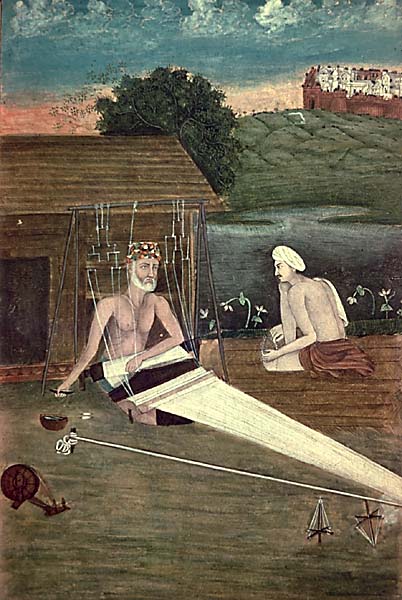
The most textually secure Kabīr we possess is what the Sikh Gurus canonized, because it sits in a dated 1604 manuscript. From Rāg Prabhātī, Guru Granth Sāhib ang 1349:
ਅਵਲਿ ਅਲਹ ਨੂਰੁ ਉਪਾਇਆ ਕੁਦਰਤਿ ਕੇ ਸਭ ਬੰਦੇ ॥ ਏਕ ਨੂਰ ਤੇ ਸਭੁ ਜਗੁ ਉਪਜਿਆ ਕਉਨ ਭਲੇ ਕੋ ਮੰਦੇ ॥
aval alah nūr upāiā kudrat ke sabh bande | ek nūr te sabh jag upajiā kaun bhale ko mande ||
“First Allah created the light; all creatures are of that creative power. From one light the whole world arose — so who is good, and who is bad?”[13]
He also asks what worshipping stone can achieve — if it could, he says, he would worship a mountain — and turns the same edge on the mosque: they piled up stones and built it, the mullah climbs up and gives the call to prayer, has God gone deaf? He rejects pilgrimage, caste, scripture and ritual purity from both traditions at once.[14][12]
A caution the chapter’s own argument demands. The single most quoted Kabīr couplet in India — pothī paṛhi paṛhi jag muā… ḍhāī ākhar prem kā, “reading book after book the world died; read the two and a half letters of love”[15] — could not be located in the Bījak, in Callewaert’s critical Kabīr Granthāvalī, or in the Ādi Granth. It circulates through popular anthologies, and a variant substitutes ekai ākhar for ḍhāī ākhar, which is itself a marker of late oral transmission. It is a fine verse and it may well be old; it is not securely Kabīr’s.[12] Since this chapter’s own point is that Kabīr’s recensions disagree because he was transmitted orally for generations, the most famous line attributed to him is a better illustration of that process than of his thought. Contested
A caution on the nirguṇa/saguṇa divide. It is conventional to sort these poets into a formless-God stream (Kabīr, Nānak, Ravidās) and an embodied-God stream (Sūrdās, Tulsīdās, Mīrā). The early manuscripts do not sort them that way. The Fatehpur manuscript of 1582, Rajasthani guṭkās and Dādūpanthī codices place Kabīr and Sūrdās side by side, and Sūrdās — the paradigm saguṇa poet — is transmitted in Dādūpanthī, i.e. paradigm nirguṇa, collections.[16] The two-streams scheme is largely an imposition of twentieth-century Hindi literary history. The pair remains useful as a description of theological register within a poem; it is not a reliable taxonomy of poets or communities.[17] Majority
What it proves. By the fifteenth century there is a large, popular religious current that is recognizably neither Hindu orthodoxy nor Islam, articulated in the spoken language, that treats both revealed traditions as obstacles. Kabīr’s audience was not scholars. The fact that both Hindus and Muslims claimed him after death — the famous legend has flowers found beneath his shroud, divided between cremation and burial — is itself evidence of where he stood.[10] Consensus
2. Guru Nanak — a new religion
Nānak (1469–1539) shares the Sant idiom but built an institution: a line of successors, a scripture, a communal kitchen (laṅgar) requiring people of all castes to eat together, and congregational worship.
The Mūl Mantar, the opening of the Guru Granth Sāhib:
ੴ ਸਤਿ ਨਾਮੁ ਕਰਤਾ ਪੁਰਖੁ ਨਿਰਭਉ ਨਿਰਵੈਰੁ ਅਕਾਲ ਮੂਰਤਿ ਅਜੂਨੀ ਸੈਭੰ ਗੁਰ ਪ੍ਰਸਾਦਿ ॥
ik oaṅkār sati nāmu karatā purakhu nirbhau niravairu akāl mūrati ajūnī saibhaṅ gur prasādi ||
“One reality. Truth by name. Creator. Without fear. Without enmity. Timeless in form. Unborn. Self-existent. Known by the Guru’s grace.” (after Nesbitt; Pashaura Singh gives akāl mūrati as “immortal” and ajūnī as “never incarnated,” and sati nāmu is disputed as one compound or two.)[18]
Ajūnī — “unborn,” not subject to birth — is read by most scholars as ruling out incarnation, and so as setting the Gurus against the avatāra doctrine of Chapter 7. The reading is not automatic: the word’s primary force is denial of transmigration, and the Gurus freely use Rām and Gobind as names of the formless one.
What it proves. Sikhism is not a syncretic blend of Hinduism and Islam, a description its adherents reject and the texts do not support. It is a distinct revelation with its own scripture, lineage and practice, which emerged from the Sant environment and defined itself against features of both neighbouring traditions.[19][2] Consensus
The Ādi Granth (compiled 1604) is remarkable in its own right: it includes compositions by the Sikh Gurus and by Kabīr, Ravidās, Nāmdev, and the Sufi Shaikh Farīd (whose identity is debated — either Farīduddīn Ganj-i-Shakar, d. 1265, or his successor Shaikh Ibrāhīm, d. 1552) — a scripture that canonizes voices from outside its own tradition, including a Muslim.[7] Consensus
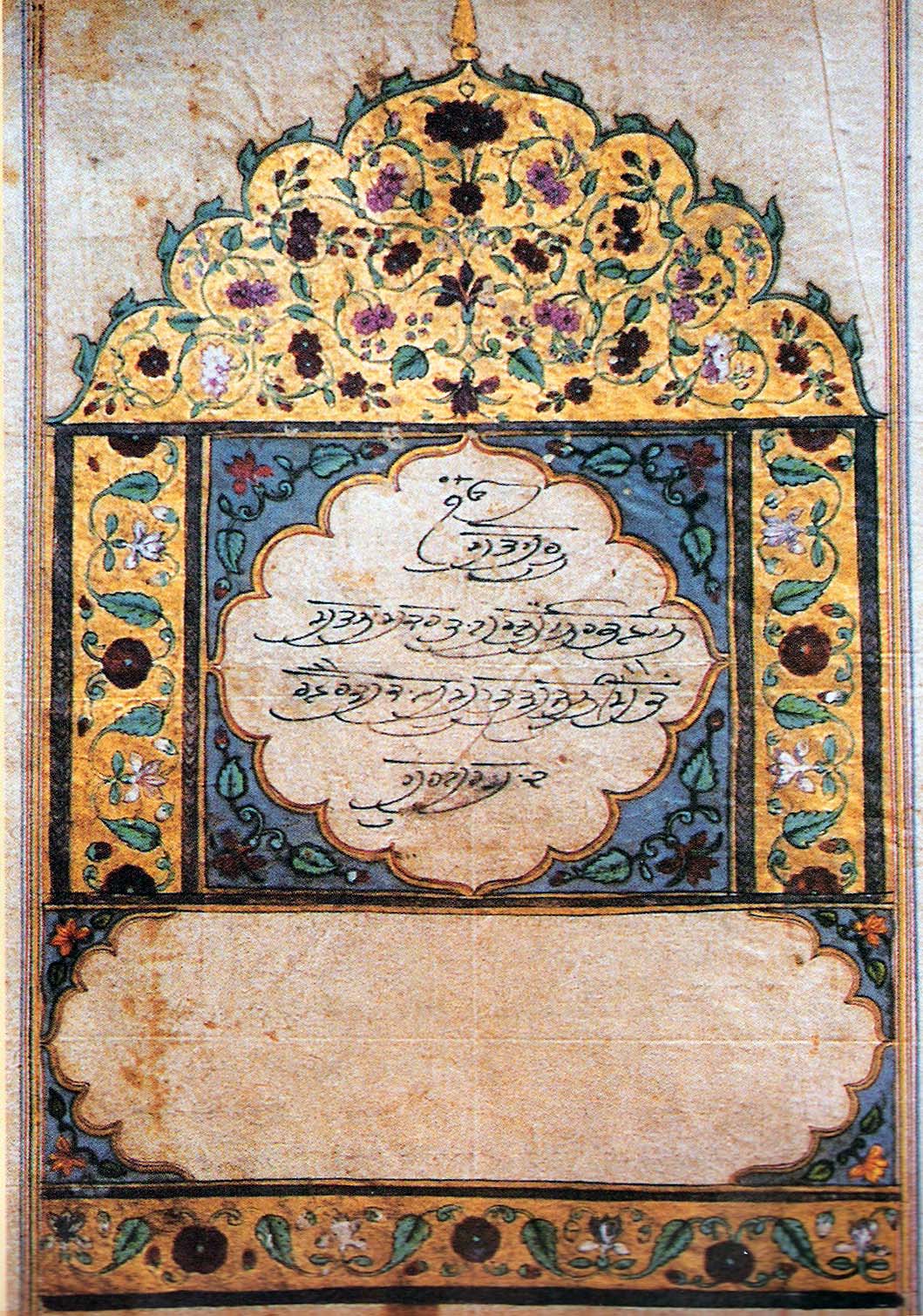
The tradition also records Nānak’s declaration after his revelation — na koī hindū na koī musalmān, “there is no Hindu, no Muslim.” It comes from the later Janamsākhī hagiographies rather than the Guru Granth Sāhib itself, and should be cited as tradition rather than as his documented words.[20][2] Contested
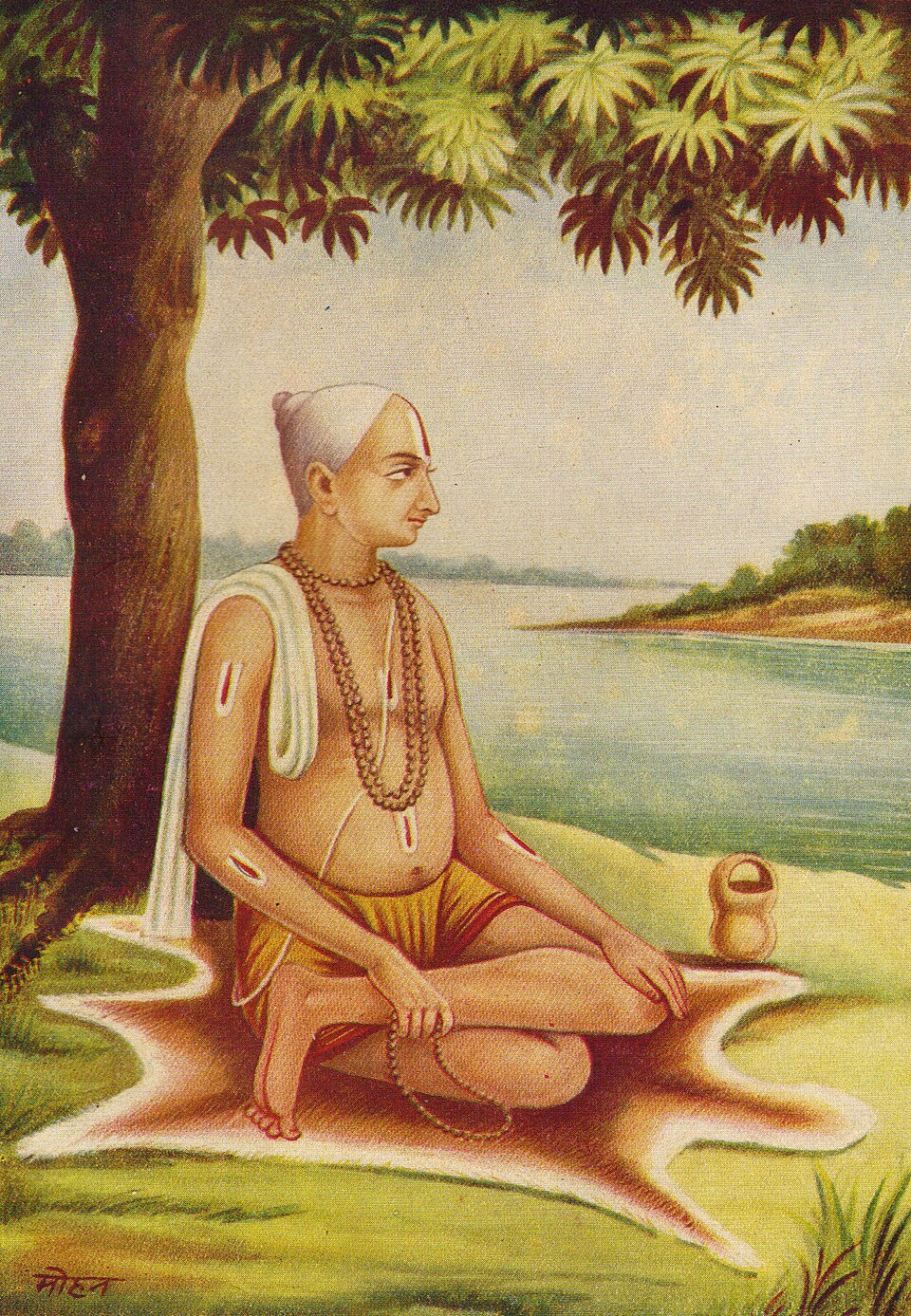
3. Tulsidas — the Ramayana people actually know
Tulsīdās (d. 1623; his birth is given variously as 1497, 1511 or 1532) began the Rāmcaritmānas in 1574 — a date secure because he states it in the text — retelling the Rāmāyaṇa in Awadhi, a spoken language of the eastern Hindi region.[21]
सियाराममय सब जग जानी । करउँ प्रनाम जोरि जुग पानी ॥
siyārāmamaya saba jaga jānī | karauṁ pranāma jori juga pānī ||
“Knowing the whole world to be filled with Sītā and Rāma, I make obeisance with both hands joined.”[21]
What it proves. This is the single most consequential act of vernacularization in Indian religious history. For the entire Hindi-speaking region — hundreds of millions of people — the Rāmcaritmānas is the Rāmāyaṇa: recited daily, performed as the annual Rāmlīlā, quoted as proverb, and treated as scripture. Vālmīki’s Sanskrit text is respected and largely unread.
Note what this does to religious authority. Access to scripture no longer requires Sanskrit, and therefore no longer requires the education that varṇa restrictions had controlled. Tulsīdās was reportedly attacked by Banaras pandits for writing scripture in a vulgar tongue. He won. Consensus
The honest complication: Tulsīdās is devotionally expansive and socially conservative. The Rāmcaritmānas upholds varṇa order and contains lines about the treatment of women and śūdras that have been contested for a century and remain contested now. Vernacularization democratized access without necessarily democratizing content.[4] Contested
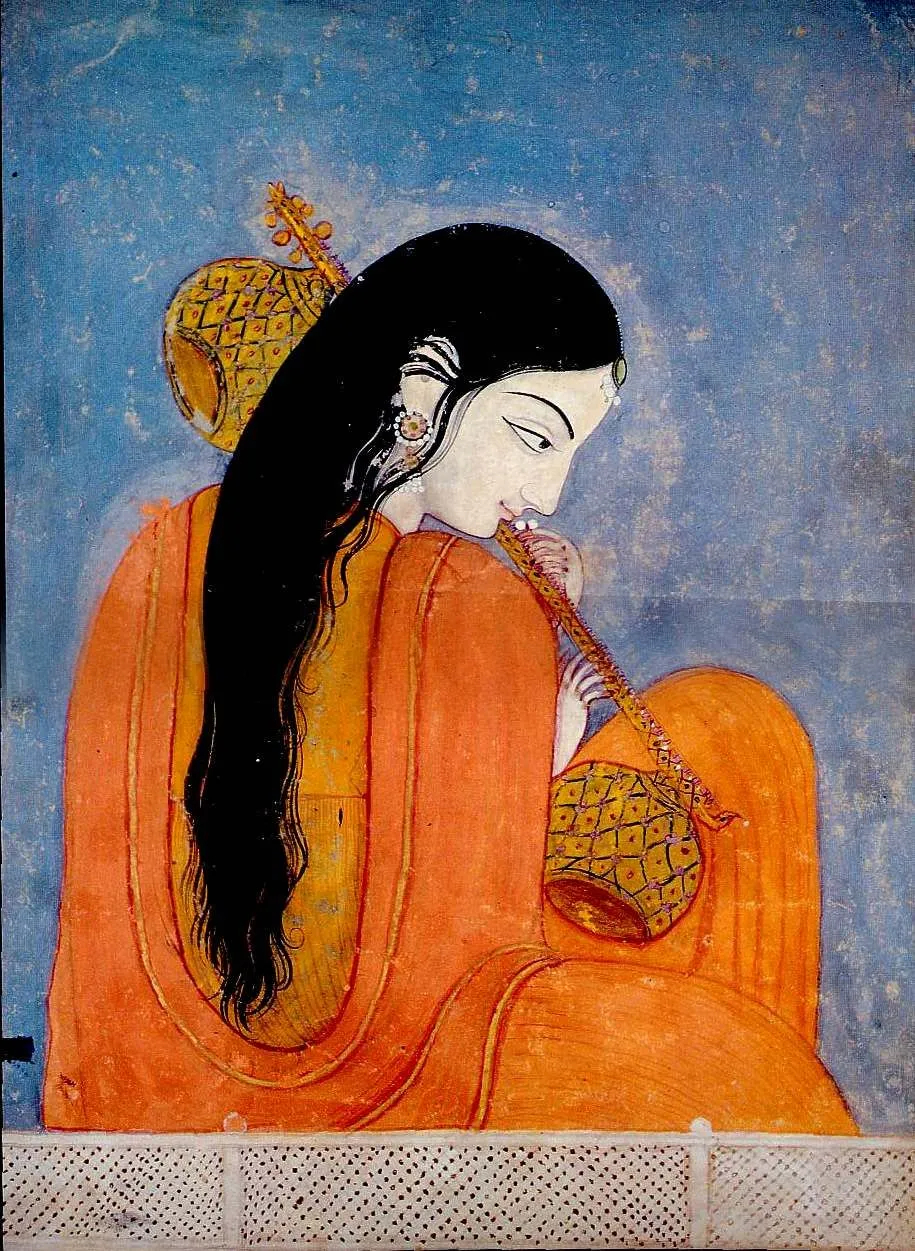
4. Mirabai, and devotion as refusal
Mīrābāī (c. 1498–1547), a Rajput noblewoman, abandoned her marital household for Kṛṣṇa.
मेरे तो गिरधर गोपाल दूसरो न कोई ॥
mere to giradhara gopāla dūsaro na koī || “Mine is only Giridhar Gopāl — no one else.”[22]
What it proves. Her poetry uses devotion to reject the specific obligations placed on high-caste women: marriage, seclusion, widowhood, family honour. The tradition remembers her in-laws attempting to poison her. Along with Akka Mahādēvi (§9), Bahiṇābāī and Āṇṭāḷ, she shows bhakti functioning as one of the very few available exits from prescribed female roles — at the price of leaving society altogether. Contested — and the instability is severe: the earliest records crediting poems to her date from the early eighteenth century, some 150 years after her traditional disappearance, and contain only two poems. Of the millions of hymns now attributed to her, scholars accept a few hundred.[17] This particular pada has no verifiable pre-1700 attestation. She is also absent from the standard Guru Granth Sāhib, appearing only in Bhai Banno’s rejected recension.
5. Dara Shikoh — the Upanishads go to Europe
Akbar (r. 1556–1605) abolished the jizya in 1564, held inter-religious debates in the ʿIbādat Khāna, promoted ṣulḥ-i kull (“universal peace”), and commissioned the Razmnāma, a Persian Mahābhārata, in 1584.[23]
His great-grandson Dārā Shukoh (Dara Shikoh) went further. In Majmaʿ al-Baḥrayn (“The Meeting of the Two Oceans,” 1655) he argued that Sufi metaphysics and Upanishadic Vedānta describe the same reality in different vocabularies. In 1657 he completed the Sirr-i-Akbar (“The Greatest Secret”), a Persian translation of some fifty Upaniṣads, arguing that these were the “hidden book” the Qur’ān refers to. He was defeated by his brother Aurangzeb and executed in 1659, with heresy among the charges.[24][25]
What it proves. Its afterlife is extraordinary and is the reason it belongs in this series. Anquetil-Duperron translated Dārā’s Persian into Latin as the Oupnek’hat (2 vols., 1801–02).[26] That Latin text reached Schopenhauer, who called it the consolation of his life and built his philosophy partly on it, and through him it shaped nineteenth-century European thought — and, circling back, the Neo-Vedānta of Chapter 11. The Upaniṣads entered Western philosophy through a Persian translation made by a Mughal prince.[25][27] Consensus
Temple destruction under Muslim rule: the evidence
Temples were destroyed under Muslim rule, but Richard Eaton’s survey finds about eighty documented desecrations over five centuries, clustered on royal temples of defeated or rebelling kings rather than aimed at eliminating Hindu worship.
Political — this is the most contested question in Indian history, and it deserves the actual record rather than either available slogan.
What is documented: Temples were destroyed. Specific, well-attested cases include Somnath under Maḥmūd (1026), the Kashi Vishwanath temple and the Keshava Deva temple at Mathura under Aurangzeb (1669–70), and the sack of Vijayanagara (1565). Contemporary Persian chronicles sometimes celebrate such acts in explicitly religious language. None of this is in dispute.[8][23]
What the pattern shows: Richard Eaton’s survey identifies on the order of eighty reasonably documented instances of temple desecration across some five centuries, a total usually cited from his appendix and best checked against the essay itself. His more specific figure for Aurangzeb’s reign is fifteen temples destroyed.[8] Eighty is a substantial number; it is also far fewer than the tens of thousands sometimes claimed. The targets cluster heavily on royal temples of defeated or rebelling kings: temples that were state institutions housing a dynasty’s tutelary deity and its treasury. Temples in territory already secure were generally left alone, and many received Mughal land grants — Aurangzeb himself issued farmāns endowing several.[23] Eaton’s reading is that desecration functioned mainly as a language of political conquest, following an older Indian convention of treating a defeated king’s temple as the seat of his sovereignty. The parallel is real but not identical, and Eaton (with Richard Davis, Lives of Indian Images) keeps the distinction: victorious Hindu kings characteristically carried the image off and installed it in their own temple as a trophy; Indo-Muslim rulers destroyed it instead, since it could not legitimately be re-installed. Same political logic, different outcome.[8][28] Majority among historians; strongly Contested politically
What is not supported: that destruction was systematic, continuous, or aimed at eliminating Hindu worship — the temple economy of Chapter 9 continued, new temples were built throughout the period, and Vijayanagara, Rajput, Maratha and Nayaka patronage sustained large-scale construction. Also unsupported: that the destructions were purely political with no religious dimension, when the chroniclers themselves frame them religiously. Both simplifications fail.
What changed regardless: the memory. These events became, from the nineteenth century onward, the central material of a political narrative (§11, §12), and the Ayodhya dispute is its direct continuation.[29]
The gods of the Sultanate and Mughal era
Rāma becomes the supreme popular deity of the north in the Sultanate and Mughal era, alongside Kṛṣṇa devotion in Braj and Bengal and a major imageless theology of nirguṇa Brahman.
| Deity | Status | Note |
|---|---|---|
| Rāma | Becomes the supreme popular deity of the north | Tulsīdās; the Rāmlīlā; Rāmānandī orders |
| Kṛṣṇa | Devotional centre of Braj, Bengal, Gujarat, Rajasthan | Caitanya’s ecstatic Gauḍīya tradition; Vallabha’s Puṣṭimārga |
| Nirguṇa Brahman / satnām | A major popular theology with no image at all | Kabīr, Nānak, Ravidās, Dādū |
| Devī | Strong regionally, especially Bengal (Kālī) and the Himalaya | Śākta Tantra continues |
| Viṭṭhal | The Maharashtra pilgrimage cult at Pandharpur | Nāmdev, Eknāth, Tukārām |
| Sufi saints | Pīrs venerated at shrines by Hindus and Muslims alike | Shared devotional culture that later reform movements attack |
What is absent before colonial rule
Before colonial rule there is still no word “Hinduism”, no print, and no reform movement of the modern type.
- The word “Hinduism” — still. “Hindu” is in use, increasingly with religious force, but the bounded -ism is a construction of Chapter 11. Majority
- Print — everything here circulates in manuscript and, far more, orally. Printing transforms religion only in §11.
- Reform movements of the modern type, colonial scholarship, and the Aryan question — §11.
Debates about Hindu identity, conversion and bhakti
Debates about Muslim-ruled India concern Hindu identity, conversion and bhakti; on the majority view, conversion was mostly not forced and bhakti began before any Muslim political presence.
Did Hindu self-identity exist before colonialism?
Two positions. Frykenberg and others: “Hinduism” as a unified religion is essentially a 19th-century construction.[30] David Lorenzen (“Who Invented Hinduism?”, 1999): a self-conscious Hindu identity is clearly visible from c. 1200–1500, formed precisely in contrast to Muslims, and Sant poetry contrasting hindū and turk is the evidence.[10] A tighter statement of where the field now sits: Hinduism was neither timeless nor a British invention. Colonial knowledge-practices decisively reified and bounded it, but they worked on materials in which a self-conscious, translocal, polemically defined Hindu identity had already been substantially assembled — philosophically by late-medieval doxographers, socially by early modern sectarian publics, and rhetorically by rulers and poets defining themselves against Muslim and rival-sectarian others, mainly between the fourteenth and eighteenth centuries.[31]
What remains genuinely open is the catalyst. Lorenzen’s case makes Islam the decisive Other. Work on South Indian sectarian publics — Elaine Fisher’s Hindu Pluralism (2017), Valerie Stoker on Vijayanagara — argues that competition between Hindu sects did as much or more of the boundary- drawing work, in regions where Muslim political presence was slight.[32][33] Divya Cherian’s Merchants of Virtue (2022) shows “Hindu” hardening as a legal and social category in eighteenth-century Marwar.[34] This series presents Islam as a catalyst, not the sole one. Contested
How did conversion to Islam actually happen in India?
Not principally by force — the geography rules that out. Conversion is heaviest in eastern Bengal and western Punjab, both far from the centres of Muslim political power, and lightest in the Gangetic core where that power was strongest. Eaton’s account for Bengal ties it to agrarian frontier expansion, where Sufi shrines organized the clearing and settlement of new land.[9] Majority
Was bhakti a response to Islam?
No — it is centuries older and starts in Tamil country (§9) before any Muslim political presence. But the northern vernacular phase, the Sant emphasis on a formless God and their rejection of images, and the shared idiom with Sufism all developed in a world where Islam was present and influential. Independent origin, entangled development.[7] Majority
Was there a single “bhakti movement”?
“Bhakti goes north” is itself a narrative with a history. The story of devotion travelling from the Tamil country northward — Draviḍa to Karnataka to Maharashtra to Gujarat — comes from the Bhāgavata Māhātmya, which was composed in the 17th–18th centuries in a north Indian, Brindavan-centred milieu. It is evidence for the northern manufacture of a southern pedigree, not a record of a historical transit.[35] J. S. Hawley’s A Storm of Songs (2015) traces how “the bhakti movement” as a single pan-Indian phenomenon was assembled in stages — Nābhādās’s Bhaktamāl (c. 1600) and Priyādās (1712) supplying the prototype; M. G. Ranade (1901) the Reformation analogy; Hazārīprasād Dvivedī the Hindi term bhakti āndolan; V. Raghavan (1964) the pan-Indian systematisation.[36] Hawley’s point is not that the poets are invented — they are abundantly real — but that the movement joining them is a twentieth-century historiographical object, built partly to fill the “medieval” slot in a colonial periodisation with something indigenous.[17][37] Contested / Historiographical
Further reading
- Richard M. Eaton, “Temple Desecration and Indo-Muslim States” (2000), and The Rise of Islam and the Bengal Frontier, 1204–1760 (1993).
- Richard M. Eaton, India in the Persianate Age, 1000–1765 (2019).
- David Lorenzen, “Who Invented Hinduism?”, Comparative Studies in Society and History 41 (1999).
- John Stratton Hawley, A Storm of Songs: India and the Idea of the Bhakti Movement (2015).
- Linda Hess & Shukdev Singh, The Bījak of Kabir (1983).
- Philip Lutgendorf, The Life of a Text: Performing the Rāmcaritmānas of Tulsidas (1991).
- Sheldon Pollock, The Language of the Gods in the World of Men (2006).
- Supriya Gandhi, The Emperor Who Never Was: Dara Shukoh in Mughal India (2020).
References
- ^ Sheldon Pollock The Language of the Gods in the World of Men. University of California Press, 2006. open library The vernacular millennium, and the politics of Sanskrit.
- ^ a b c d Karine Schomer & W. H. McLeod, eds. The Sants: Studies in a Devotional Tradition of India. Motilal Banarsidass, 1987. The foundational volume — and the source of the narrow Anglophone use of "Sant" that §10 flags as a convention.
- ^ a b Christian Lee Novetzke The Quotidian Revolution: Vernacularization, Religion, and the Premodern Public Sphere in India. Columbia University Press, 2016. open library Revises Pollock from inside his own paradigm: a premodern public sphere in Marathi where caste and gender could be argued about.
- ^ a b Philip Lutgendorf The Life of a Text: Performing the Rāmcaritmānas of Tulsidas. University of California Press, 1991.
- ^ Jon Keune Shared Devotion, Shared Food: Equality and the Bhakti-Caste Question in Western India. Oxford University Press, 2021. Reframes the caste question: not "was bhakti egalitarian?" but what work the claim that it was has done, and for whom. The liveliest debate in the field.
- ^ Salok Shaikh Farīd — Guru Granth Sāhib, angs 1377–1384. 1604 CE. Punjabi in Gurmukhi. Dozens of saloks by a Sufi, canonized inside Sikh scripture. The cross-tradition claim is structural, not token. read the text
- ^ a b c Patton E. Burchett A Genealogy of Devotion: Bhakti, Tantra, Yoga, and Sufism in North India. Columbia University Press, 2019. The major post-Hawley reperiodisation: "bhakti movements in plural," shaped regionally against tantra as much as with it.
- ^ a b c d Richard M. Eaton "Temple Desecration and Indo-Muslim States". Journal of Islamic Studies 11, 2000. doi The survey behind the ~80 documented cases and the political-target pattern.
- ^ a b Richard M. Eaton The Rise of Islam and the Bengal Frontier, 1204–1760. University of California Press, 1993. doi Why conversion was heaviest far from the centres of Muslim power.
- ^ a b c David N. Lorenzen "Who Invented Hinduism?". Comparative Studies in Society and History 41, 1999. doi The case that Hindu self-identity predates colonialism by centuries.
- ^ Goindval Pothīs — Early Sikh manuscript collections. c. 1570s. Punjabi in Gurmukhi. The earliest written Sikh collections, and the earliest datable manuscript witnesses to Kabīr, Nāmdev and Ravidās.
- ^ a b c Linda Hess & Shukdev Singh, trans. The Bījak of Kabir. North Point Press, 1983. full text With an essay on Kabir's unstable textual traditions.
- ^ Guru Granth Sāhib, ang 1349 — Kabīr, Rāg Prabhātī. 1604 CE (compiled). Punjabi in Gurmukhi. "From one light the whole world arose — so who is good, and who is bad?" The most textually secure Kabīr we possess, because it sits in a dated manuscript. read the text
- ^ Bījak — Kabīr. c. 17th c. (compiled). Old Hindi. The Kabīrpanthī recension — one of three collections that disagree with each other, which is the whole point about Kabīr's transmission. about
- ^ Kabīr, "pothī paṛhi paṛhi" — Kabīr Granthāvalī / Bījak. c. 1500 CE. Old Hindi. "Read the two and a half letters of love." A weaver rejects Brahmanical ritual and Islamic legalism with equal force. read the text
- ^ Fatehpur manuscript — Rajasthan. 1582 CE. Braj. A dated anthology placing Kabīr and Sūrdās side by side — the manuscript evidence that the nirguṇa/saguṇa split is a later editorial imposition, not how the tradition sorted its own poets.
- ^ a b c John Stratton Hawley A Storm of Songs: India and the Idea of the Bhakti Movement. Harvard University Press, 2015. full text Argues that "the bhakti movement" is itself a modern construction. Important and unsettling.
- ^ Mūl Mantar — Guru Granth Sāhib. 1604 CE (compiled). Punjabi in Gurmukhi. "Unborn, self-existent" — ajūnī is a direct rejection of the avatāra doctrine. A scripture that also canonizes Kabīr, Ravidās and a Sufi. about
- ^ Guru Granth Sāhib, ang 15 — Guru Nānak, Sirī Rāgu. 1604 CE. Punjabi in Gurmukhi. "Nānak is with the lowest of the low" — the rejection of caste in the Gurus' own voice, not later apologetic. read the text
- ^ Janamsākhīs — Sikh hagiographies. 17th c. CE onward. Punjabi. Where "na koī hindū na koī musalmān" comes from — the traditional life of Nānak, not the Guru Granth Sāhib itself.
- ^ a b Rāmcaritmānas, Bālkāṇḍ — Tulsīdās. 1574 CE. Awadhi. For hundreds of millions this, not Vālmīki, is the Rāmāyaṇa. Scripture in a spoken tongue, over pandits' objections. read the text
- ^ Mīrābāī, "mere to giradhara gopāla" — Mīrā's padas. c. 1540 CE. Rajasthani / Braj. Devotion used to refuse marriage, seclusion and family honour — one of the few available exits from prescribed female roles. read the text
- ^ a b c Richard M. Eaton India in the Persianate Age, 1000–1765. Penguin / University of California Press, 2019. doi The current standard synthesis of the period.
- ^ Sirr-i-Akbar — Dārā Shukoh. 1657 CE. Persian. Fifty Upaniṣads in Persian. Via Anquetil-Duperron's Latin it reached Schopenhauer — the Upaniṣads entered Western philosophy through a Mughal prince. about
- ^ a b Supriya Gandhi The Emperor Who Never Was: Dara Shukoh in Mughal India. Harvard University Press, 2020. The current biography.
- ^ Oupnek'hat — Anquetil-Duperron, trans.. 1801–02 CE. Latin. Dārā Shukoh's Persian Upaniṣads rendered into Latin. The text that reached Schopenhauer, and through him nineteenth-century European philosophy.
- ^ Wilhelm Halbfass India and Europe: An Essay in Understanding. SUNY Press, 1988. full text Still the best account of the mutual-construction argument.
- ^ Richard H. Davis Lives of Indian Images. Princeton University Press, 1997. open library Why a defeated king's image was a trophy of sovereignty — the argument behind Eaton's reading of temple desecration.
- ^ Cynthia Talbot The Last Hindu Emperor: Prithviraj Chauhan and the Indian Past, 1200–2000. Cambridge University Press, 2015. Eight centuries of memory-formation around a defeated king. The evidence behind §10's "what changed regardless was the memory."
- ^ Robert E. Frykenberg "The Emergence of Modern 'Hinduism' as a Concept and as an Institution". in Hinduism Reconsidered, Manohar, 1989. The classic statement of the strong colonial-construction position.
- ^ Andrew J. Nicholson Unifying Hinduism: Philosophy and Identity in Indian Intellectual History. Columbia University Press, 2010. full text Argues the unification of Hinduism began in the 12th–16th centuries, well before the British — a key correction to the strong constructionist thesis.
- ^ Elaine M. Fisher Hindu Pluralism: Religion and the Public Sphere in Early Modern South India. University of California Press (open access), 2017. doi Sectarian publics performing distinct identities — the case that intra-Hindu competition, not only Islam, did the boundary-drawing.
- ^ Valerie Stoker Polemics and Patronage in the City of Victory. University of California Press (open access), 2016. open library Sectarian competition at sixteenth-century Vijayanagara.
- ^ Divya Cherian Merchants of Virtue: Hindus, Muslims, and Untouchables in Eighteenth-Century South Asia. University of California Press, 2022. doi "Hindu" hardening as a legal and social category in eighteenth-century Marwar — precolonial, but late.
- ^ Bhāgavata Māhātmya — appended to the Padma Purāṇa. 17th–18th c. CE. Sanskrit. The allegory of Bhakti travelling Draviḍa → Karnataka → Maharashtra → Gujarat. Evidence for the **northern manufacture of a southern pedigree**, not a record of a historical transit. read the text
- ^ Bhaktamāl — Nābhādās. c. 1600 CE. Braj. The hagiographical anthology that supplies the four-sampradāya scheme and the "commonwealth of love" — a north Indian construction later read back as pan-Indian history. about
- ^ John Stratton Hawley, Christian Novetzke & Swapna Sharma, eds. Bhakti and Power: Debating India's Religion of the Heart. University of Washington Press, 2019. Bhakti as inescapably public and political — claimed both as the voice of the marginalised and as a vehicle for injustice.