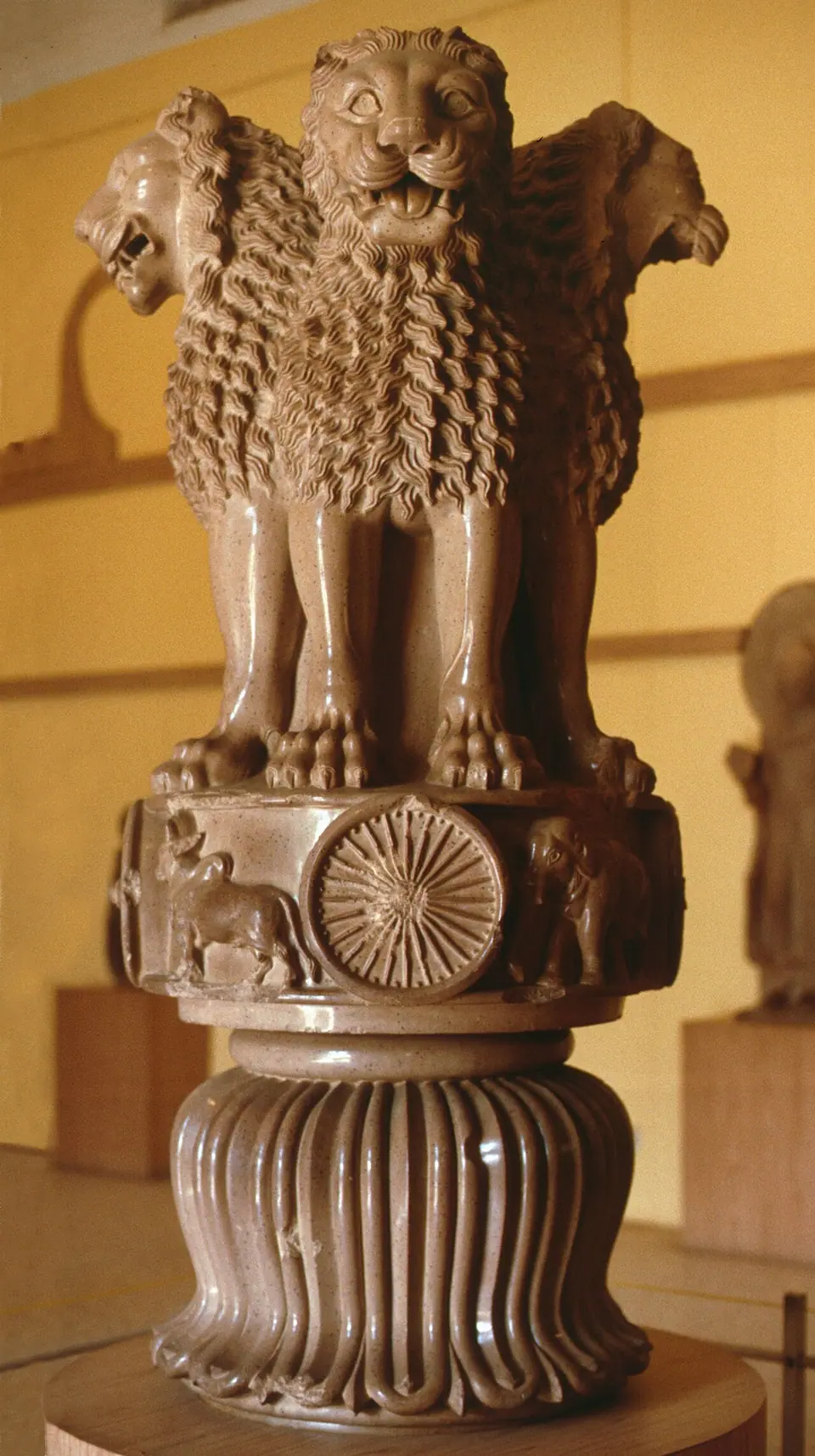
The Shramana challenge in one paragraph
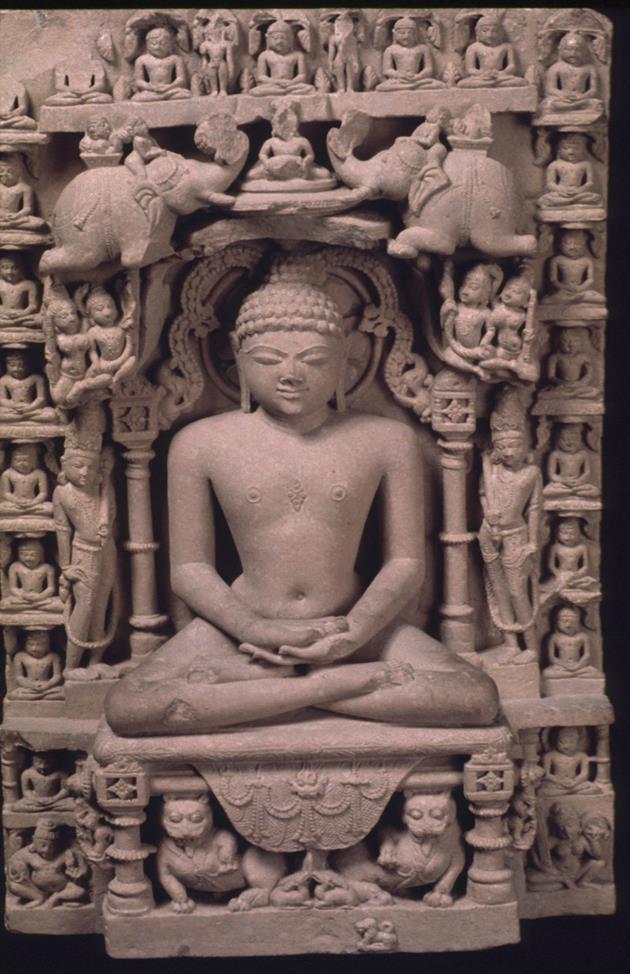
Between roughly 500 BCE and the fall of the Mauryas in 185 BCE, the Buddha, Mahāvīra (Mahavira) and other śramaṇa (shramana) movements challenged Vedic religion from within the same eastern ferment that produced the Upaniṣads — and Brahmanism survived by conceding. These movements accepted karma, rebirth and liberation but rejected the Veda, the sacrifice, and the brahmin outright. The Buddha and Mahāvīra are the two that survived; there were many more.
For four centuries these śramaṇas — “strivers” — held the intellectual initiative, won royal patronage, and forced the Vedic tradition into the most consequential set of concessions in its history. Animal sacrifice lost its prestige. Non-violence became a supreme value in a tradition that had been built on killing animals. Vegetarianism entered from outside — not caused by Buddhism alone, but adopted under Śramaṇa pressure. Renunciation, which threatened to drain society of its householders, was absorbed by inventing a scheme in which everyone renounces — but only in old age, and only after doing their varṇa duty first.
The word “Hindu” does not exist in this period. The real religious division in India from 500 BCE to 500 CE is not Hindu against Buddhist; it is Vedic against Śramaṇa, and much of what later counts as Hinduism is the settlement between them.
Timeline of the Shramana era
The Śramaṇa era runs from the mahājanapadas of c. 600–500 BCE through Mahāvīra, the Buddha and Ashoka’s edicts of c. 250 BCE to the Mauryan collapse in 185 BCE.
| Date | Event | Confidence |
|---|---|---|
| c. 600–500 BCE | The sixteen mahājanapadas; Magadha begins absorbing its rivals[1] | Consensus |
| c. 5th c. BCE | Mahāvīra, 24th Jain tīrthaṅkara, reforms an existing tradition[2] | Majority |
| c. 5th–4th c. BCE | The Buddha. Tradition gives 544/543 BCE; the corrected long chronology 486/483; the current working default is c. 400 BCE[3][4] | Contested |
| c. 5th c. BCE | Ājīvikas under Makkhali Gosāla; Lokāyata materialism (Ajita Kesakambalī); the six heterodox teachers[5][6] | Majority |
| c. 5th–4th c. BCE | Pāṇini’s Aṣṭādhyāyī — roughly 4,000 rules fixing Sanskrit. Now often placed mid-4th c.[7] | Contested |
| c. 300 BCE – 100 CE | The Dharmasūtras — Āpastamba, Gautama, Baudhāyana, Vasiṣṭha (Olivelle’s dating; later than often assumed)[8] | Majority |
| 322 BCE | Candragupta Maurya founds the empire; Megasthenes visits c. 300 BCE[9] | Consensus |
| c. 268–232 BCE | Ashoka. Kaliṅga war c. 261 BCE[10] | Consensus |
| c. 250 BCE | The edicts — the first securely dated writing in India (Brāhmī and Kharoṣṭhī)[11] | Consensus |
| 185 BCE | Mauryan collapse; Puṣyamitra Śuṅga performs an Aśvamedha[9] | Majority |
Where: Magadha and the eastern Ganga plain
Magadha, in southern Bihar, swallowed every rival yet was suspect country to orthodox brahmins, and the doctrines that define later Indian religion all appear first in this region the Vedic texts consider peripheral.
Magadha — southern Bihar, the plain around Rājagṛha and later Pāṭaliputra. Rich alluvial soil, iron ore at hand, elephants, and control of the Ganga’s traffic. It out-produced and out-fought every rival, and within two centuries had swallowed all of them.
It was also, from the orthodox brahmin point of view, suspect country. Late Vedic texts treat the far east as imperfectly brahmanized; the Dharmasūtras rank Magadha’s people as of mixed and irregular status.[12][8] Johannes Bronkhorst’s “Greater Magadha” thesis pushes this further: that this region had its own religious culture — ascetic, rebirth-believing, non-Vedic — which was the actual soil of both Buddhism and Jainism, and from which both the Vedic and the Buddhist traditions borrowed karma and rebirth rather than either inventing it. His load-bearing claim is chronological: that parts of the older Upaniṣads — perhaps precisely the parts introducing rebirth — were composed at or after the Buddha’s time. That directly contradicts §5’s statement that BU and CU are pre-Buddhist on almost all reckonings. Bronkhorst is the dissent from that majority, and this series uses his work in both places with that tension in view: his map of an eastern ascetic culture is drawn on here, while §5 follows the majority chronology he disputes. Witzel’s rebuttal (IIJ 52, 2009) is the central one.[13] The thesis is a respectable minority position, conspicuously under-reviewed. The underlying observation is solid: the doctrines that define later Indian religion all appear first in the region the Vedic texts consider peripheral.[14] Contested
The evidence ledger for the Shramana era
The Śramaṇa era brings the largest single change in the evidence base, writing in Ashoka’s edicts, alongside empire, organized religious competition, the declining prestige of animal sacrifice, and renunciation as a supported social role.
| Dimension | What we can say | Evidence | Confidence |
|---|---|---|---|
| Writing | Appears — the single largest change in the evidence base | Ashokan edicts c. 250 BCE in Brāhmī and Kharoṣṭhī. The absolute date comes from Rock Edict 13’s five named Hellenistic kings; the Kandahar Greek-Aramaic bilingual shows reach, not date. Earlier claims (Anuradhapura, Tamil Nadu) are contested on sample-association grounds[11][15] | Consensus on the Ashokan floor; Contested on anything earlier |
| Polity | Empire, with bureaucracy, roads, standing army, taxation | Edicts naming officials (rajjukas, mahāmātras); Megasthenes; Arthaśāstra[9] | Consensus |
| Economy | Coinage, guilds, urban craft specialization, long-distance trade | Punch-marked coins in bulk; NBPW distribution; Buddhist texts on merchants[16] | Consensus |
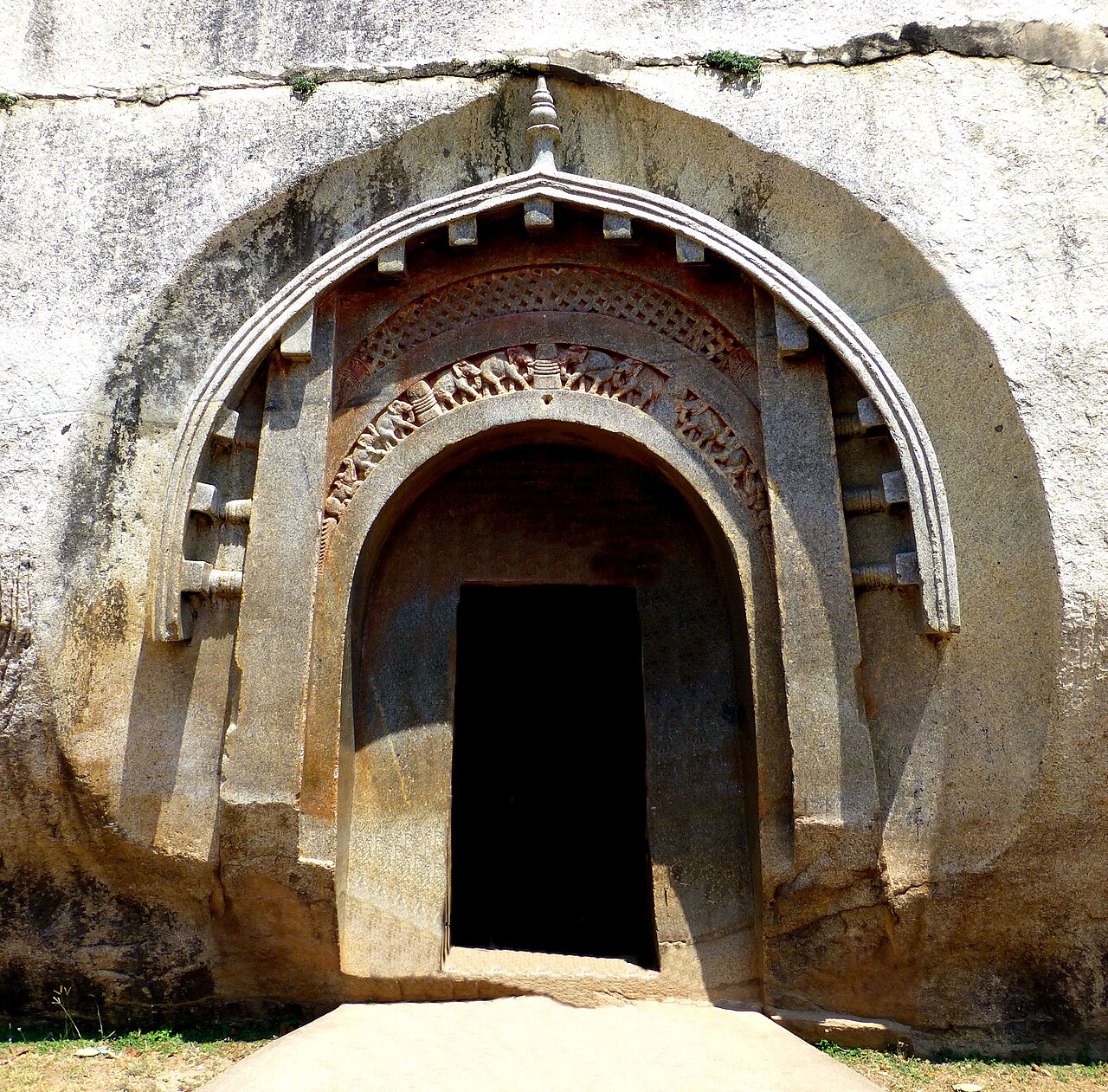
| Religious competition | Multiple organized movements competing for lay support and royal funding | Pillar Edict 7 names saṅgha, brahmins-and-Ājīvikas, Nirgranthas and “various sects” as distinct bodies each needing its own officers; Ashoka’s Barabar caves are endowed to the Ājīvikas by name[17][18][10] | Consensus |
| Diet | Animal sacrifice loses prestige; vegetarianism becomes a marker of purity | Ashoka RE 1; Dharmasūtra ambivalence; Jain and Buddhist polemic[19][20][8] | Majority |
| Renunciation | Becomes a recognized, economically supported social role | Monastic institutions; the āśrama theory devised to regulate it[21] | Consensus |
| Society | Varṇa theory elaborated in normative texts as the Śramaṇas attack it | Dharmasūtras; Buddhist suttas mocking brahmin birth-claims[22][23][24] | Consensus |
Primary sources
The primary sources of the Śramaṇa era record rival philosophies argued in public, an absolute ethic of ahiṃsā, an emperor banning sacrificial slaughter, an attack on hereditary brahmin status, and Brahmanism’s absorption of renunciation.
1. The rival teachers, listed by their opponents
The Buddhist Sāmaññaphala Sutta (Dīgha Nikāya 2) has King Ajātasattu describe six teachers he has consulted.[25] It is a hostile source, but it is the best map we have of the intellectual landscape:
| Teacher | Position |
|---|---|
| Pūraṇa Kassapa | Akiriya — action has no moral consequence at all |
| Makkhali Gosāla (Ājīvika) | Niyati — strict determinism; effort changes nothing, liberation comes when the allotted cycles run out[26] |
| Ajita Kesakambalī | Materialism — a person is four elements; nothing survives death (DN 2.22–23) |
| Pakudha Kaccāyana | Seven eternal substances; killing merely rearranges them |
| Sañjaya Belaṭṭhaputta | Radical scepticism; refuses to affirm any position |
| Nigaṇṭha Nātaputta (Mahāvīra) | Fourfold restraint; extreme asceticism to burn off karma |
What it proves. By 500 BCE northern India supported a genuinely open marketplace of systematic philosophies, including determinism, materialism and scepticism, argued in public and patronized by kings. This is the intellectual environment in which classical Indian philosophy — including Brahmanical philosophy — learned to argue. Consensus
The Lokāyata materialists deserve a separate note. (The school-label Cārvāka is not attested until roughly the 6th–8th c. CE; using it of a 5th-century-BCE thinker is an anachronism, and the 5th-century materialist in the record is Ajita Kesakambalī.) They denied rebirth, karma, the efficacy of ritual and the authority of the Veda, and remained part of the standard curriculum for two thousand years — yet we know them almost entirely through summaries written by opponents in order to refute them. Almost, but not quite: Jayarāśi Bhaṭṭa’s Tattvopaplavasiṃha (c. 8th c.) survives[27], though Eli Franco argues its author is a radical sceptic rather than a doctrinaire materialist, and fragments of the Cārvāka author Purandara survive in quotation.[6] Consensus on the loss; Contested on Jayarāśi
The single best surviving glimpse of the other side is Dīgha Nikāya 23, the Pāyāsi Sutta, in which a sceptical prince argues against rebirth by experiment — weighing a man before and after death, sealing a criminal in a jar to catch the escaping soul, dissecting a body to find the jīva.[28] A Jain parallel survives in the Rāyapaseṇaijja. Two traditions preserved his arguments at length in order to defeat them, which is the only reason we have them.
2. Ahiṃsā, stated absolutely
Ācārāṅga Sūtra 1.2.3 (Jain, Ardhamāgadhī Prakrit) — the oldest surviving Jain text:
सव्वे पाणा पियाउया सुहसाया दुक्खपडिकूला अप्पियवहा पियजीविणो जीविउकामा । सव्वेसिं जीवियं पियं ॥
savve pāṇā piyāuyā suhasāyā dukkhapaḍikūlā appiyavahā piyajīviṇo jīviukāmā | savvesiṃ jīviyaṃ piyaṃ ||
“All beings are fond of life; they like pleasure and hate pain, shun destruction, like life, and long to live. To all, life is dear.”[29]
What it proves. Compare Chapter 4, where the Aśvamedha kills a horse and Yājñavalkya, told not to eat cow or ox, answers that he eats it “provided it is tender.”[30] Within a few centuries, one Indian tradition has articulated a universal claim about the interests of all living things and made it the foundation of its ethics. Jainism pushed it furthest — filtering water, sweeping the path, the sallekhanā fast — but the principle spread far beyond Jainism, and it is the single most successful Śramaṇa export into what became Hinduism.[2] Consensus
3. A king renounces sacrifice — in stone
Ashoka, Rock Edict 1 (Girnar recension, Prakrit in Brāhmī script, c. 257 BCE):
iyaṃ dhaṃma-lipī devānaṃpriyena priyadasinā rāñā lekhāpitā | idha na kiṃci jīvaṃ ārabhitpā prajūhitavyaṃ |
“This dhamma-inscription was caused to be written by King Priyadarśin, Beloved of the Gods. Here no living creature is to be slaughtered and offered in sacrifice.”[19][15]
The edict goes on to record that the royal kitchen, which had killed many hundreds of thousands of animals daily for curry, is now down to three — two peacocks and a deer — and that even these three will not be killed in future.
[[img:ashoka-edict|An Ashokan inscription cut into the pillar at Lauriya Araraj in Bihar. This is a different recension and a different edict from the Girnar rock quoted above, but the same programme: royal dhamma published in the local vernacular, in public, in stone.|side]]
What it proves. Three things, and they are all large:
- It is a hard date. These are the first securely datable texts in Indian history, anchored by Rock Edict 13’s naming of five Hellenistic kings — Antiochus, Ptolemy, Antigonus, Magas and Alexander — whose reigns are known independently. Everything else in Indian chronology hangs off this peg.[11][31] Consensus
- State power turns against the Vedic sacrifice. The śrauta system of Chapter 4 required royal patronage. Here an emperor publicly prohibits sacrificial slaughter in his own capital. Whatever Ashoka’s personal motives, the prestige economy that sustained large-scale animal sacrifice never recovered.[32][9] Majority
- A new vocabulary of rule. Ashoka’s dhamma is deliberately non-sectarian — restraint, generosity, care for parents and servants, and (Rock Edict 12) honouring other sects, since praising your own by disparaging others harms your own.[33] This is a novel idea about how a plural society should be governed, and it is being addressed to everyone, in the local vernacular, in public, in stone.
4. Birth against conduct — the argument that landed
The Śramaṇa attack on brahmin status was relentless and specific. The Buddha’s standard move is to concede the word brahmin and redefine it by conduct.[34][35]
Dhammapada 393 (Pali):
na jaṭāhi na gottena na jaccā hoti brāhmaṇo | yamhi saccañ ca dhammo ca so sucī so ca brāhmaṇo ||
“Not by matted hair, not by lineage, not by birth does one become a brahmin. In whom there is truth and dhamma — he is pure, and he is a brahmin.”[36]
What it proves. The attack is not on ritual technique but on hereditary claim, and it is made in the vernacular, in public, to lay audiences including merchants and low-status people who had money and no standing. Brahmanism’s answer was not to abandon birth-status — it was to systematize it, which is what the Dharmasūtras of this same period do. The competition made both sides more explicit.[24] Majority
5. Absorbing renunciation — the āśrama system
The oldest Dharmasūtras (Āpastamba, Gautama; Olivelle dates them c. 300 BCE onward) present the four āśramas — permanent studentship, householder, forest-dweller, renouncer — but not as stages of a life. They present them as four alternatives, chosen once, after a temporary studentship that everyone passes through. The first option is a lifelong vocation, the naiṣṭhika brahmacārin, and that distinction is load-bearing: flatten it into “studentship” and the argument disappears. Gautama reports the option-scheme as the view of “some” (3.1), notes that the householder is the source of the others “because the others do not produce offspring” (3.3), and then rejects the scheme outright on a different ground — that only the householder order is explicitly prescribed in the Veda (3.36).[37][8] The fiercest single-āśrama polemic is Baudhāyana’s (2.11.9–34), where the asuras are said to have invented the other three.
Only in later texts does the scheme become the familiar sequence: study, then marry and raise sons, then withdraw, then renounce.
What it proves — the result is Patrick Olivelle’s, and worth stating in his own terms. The sequential scheme concedes that renunciation is the highest path while requiring you to complete your social duties first: nobody is forbidden to renounce; everybody is required to do it last.
Two cautions Olivelle himself insists on. The āśrama system is a theological construct, to be sharply distinguished from the social institutions it classifies — he warns explicitly against reading it as a description of how people lived. And he attributes the shift to the classical sequential form largely to scriptural hermeneutics rather than to a neat sociological manoeuvre. The functional reading above is a real one, but it is a gloss on his evidence, not his thesis.[21] Majority on the textual history; Contested on the functional explanation
The same period fixes the four puruṣārthas — dharma, artha, kāma, mokṣa — which perform the identical trick at the level of goals: liberation is admitted as the highest aim, and placed after the other three.
The gods in the age of the Buddha
Very little happens to the pantheon in this period, and that is itself the finding. The Śramaṇa movements are non-theistic in structure — the Buddha and Mahāvīra do not deny that gods exist, they deny that gods matter, since gods are themselves inside saṃsāra and need liberating.
Within the Vedic stream, meanwhile, the sacrificial deities continue their decline, and the deities who will matter later — Vāsudeva-Kṛṣṇa, Nārāyaṇa, Rudra-Śiva, and the yakṣa and nāga cults of popular religion — are gathering strength largely outside the texts we have. They surface abruptly in Chapter 7 with inscriptions and sculpture, which suggests they were already well established before anyone wrote them down. Majority
[[img:mathura-art|A club-bearing (mudgarpāṇi) yakṣa from Mathura, c. 100 BCE — among the earliest large stone cult figures from India. The yakṣa cults it belongs to are nearly invisible in the literature of this period and were plainly established long before they surface in it.|side]]
Two concrete signals from this period:
- Pāṇini (c. 5th–4th c. BCE) gives a grammatical rule forming the word for a devotee of Vāsudeva (Aṣṭādhyāyī 4.3.98), which implies an organized Vāsudeva cult already existed.[38] Majority
- Megasthenes (c. 300 BCE), reporting on India for the Greeks, describes worship of a “Herakles” in the plains and a “Dionysus” in the mountains — usually read as Kṛṣṇa/Vāsudeva and Śiva.[39] Contested
What is absent in the age of the Buddha
The age of the Buddha still has no temples in durable materials, no Purāṇas or Gītā, no word “Hindu”, no avatāra doctrine and no fully formed untouchability.
- Temples in durable materials and image worship — still not established. Ashoka builds stūpas and pillars, not temples. Consensus
- The Purāṇas, the epics in their surviving form, the Gītā — all later (§7).
- The word “Hindu” — the operative categories are brāhmaṇa and śramaṇa, or Vedic and non-Vedic. Consensus
- Devī as supreme goddess, avatāra doctrine, bhakti as a developed path — all §7 and §8.
- Untouchability as a fully formed institution — the Dharmasūtras have impurity rules and excluded groups (caṇḍāla), but the elaborated system comes later.[40]
Debates about the Buddha, Ashoka and Brahmanism
Debates about the Śramaṇa era concern the Buddha’s dates and historicity, whether Buddhism caused Hindu vegetarianism, whether Ashoka was a Buddhist or a pluralist king, and whether the Śuṅgas persecuted Buddhists.
When did the Buddha live?
Four schemes circulate, and conflating them is the commonest error in popular accounts:
| Scheme | Parinirvāṇa | Basis |
|---|---|---|
| Uncorrected long | 544/543 BCE | The Sri Lankan chronicles; still the Theravāda Buddhist Era |
| Corrected long | 486/483 BCE | A 19th-c. Western emendation keeping the chronicles’ 218-year interval but refixing Ashoka’s consecration at 268 BCE |
| Short | c. 368 BCE | Indian and Tibetan sources; Bechert’s own preference |
| Median (current default) | c. 400 BCE | Convergence after Bechert’s 1988 symposium |
So 483 BCE is not “the traditional date” — it is a corrected scholarly one; the tradition says 544/543. Bechert’s symposium reached no consensus; what it produced was convergence within about twenty years either side of 400 BCE. Gombrich argues 404 BCE; Prebish accepts the approximate date while attacking the reasoning. Contested
Was the Buddha a historical person?
A livelier current debate is historicity, not chronology. David Drewes (“The Idea of the Historical Buddha,” JIABS 40, 2017) argues that two centuries of scholarship have failed to establish anything about the man; Wynne, Levman and von Hinüber have all answered him.[41] Contested
Did Buddhism cause Hindu vegetarianism?
Not by itself. Ahiṃsā appears in the Chāndogya Upaniṣad[42], and Jainism pushed it harder than Buddhism ever did. The most defensible statement is that vegetarianism became a marker of high status in a competitive religious environment where the Śramaṇas had made non-violence the measure of virtue, and that Brahmanism adopted it because the argument was being lost, not won. Beef-eating in the Vedic period is well attested and was a significant embarrassment to later tradition.[30] Majority / Political
Was Ashoka a Buddhist king or a pluralist one?
The edicts endow Buddhist institutions, record a pilgrimage to Lumbinī[43], and address the saṅgha directly — but they also fund Ājīvika caves, tell his officers to honour all sects, and define dhamma in terms nobody could object to. Both readings have textual support; the safest is that he was a Buddhist layman pursuing a deliberately non-sectarian civic ethic.[44] Contested
Did Pushyamitra Shunga persecute Buddhists?
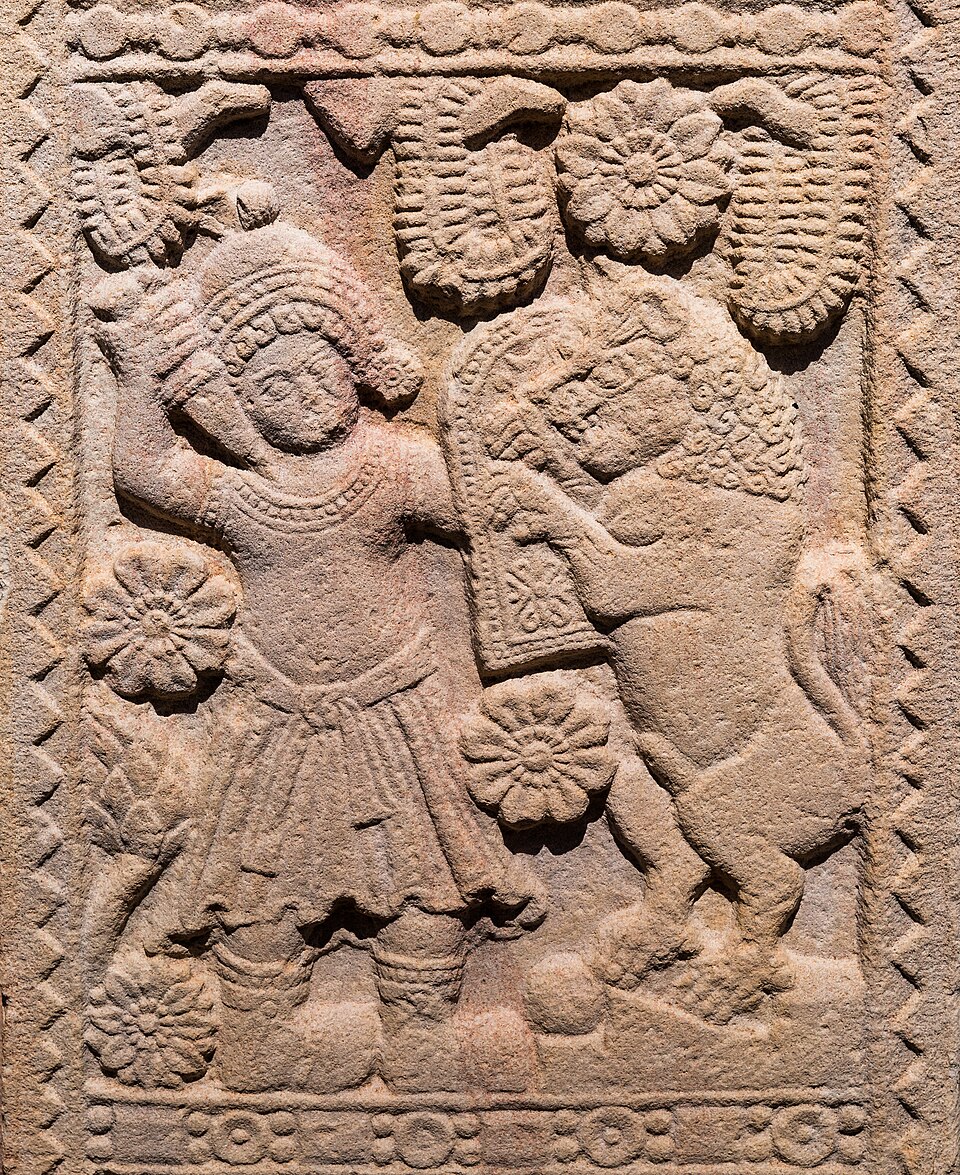
Buddhist sources (the Divyāvadāna) accuse him of destroying monasteries and offering bounties for monks’ heads. Archaeology shows Buddhist construction continuing at Sanchi and Bharhut under the Śuṅgas. The accusation is late, hostile, and poorly supported; a Brahmanical revival under the Śuṅgas is plausible, a persecution is not established. Contested
Further reading
- Johannes Bronkhorst, Greater Magadha: Studies in the Culture of Early India (2007).
- Patrick Olivelle, The Āśrama System: The History and Hermeneutics of a Religious Institution (1993).
- Patrick Olivelle, trans., Dharmasūtras: The Law Codes of Ancient India (Oxford, 1999).
- Richard Gombrich, Theravāda Buddhism: A Social History (2nd ed., 2006) — strong on the Brahmanical background the Buddha was arguing with.
- Paul Dundas, The Jains (2nd ed., 2002).
- Romila Thapar, Aśoka and the Decline of the Mauryas (3rd ed., 2012).
- E. Hultzsch, Inscriptions of Asoka, Corpus Inscriptionum Indicarum I (1925) — the primary edition.
- D. C. Sircar, Select Inscriptions Bearing on Indian History and Civilization, vol. I (1965).
References
- ^ Romila Thapar Early India: From the Origins to AD 1300. Penguin, 2002. full text The best single-volume political and social history for this whole span.
- ^ a b Paul Dundas The Jains. Routledge, 2nd ed., 2002. open library The standard survey.
- ^ Heinz Bechert, ed. The Dating of the Historical Buddha. Vandenhoeck & Ruprecht, 3 vols., 1991. The symposium that unsettled the traditional dates — and reached no consensus.
- ^ L. S. Cousins "The Dating of the Historical Buddha: A Review Article". Journal of the Royal Asiatic Society 6, 1996. doi Where the c. 400 BCE working default comes from.
- ^ Piotr Balcerowicz Early Asceticism in India: Ājīvikism and Jainism. Routledge, 2016. The first full reassessment of the Ājīvikas since Basham.
- ^ a b Ramkrishna Bhattacharya Studies on the Cārvāka/Lokāyata. Anthem Press, 2011. Why "Cārvāka" is anachronistic before the mid-first millennium CE.
- ^ Aṣṭādhyāyī — Pāṇini. c. 5th–4th c. BCE. Sanskrit. Roughly 4,000 ordered rules generating Sanskrit — the most rigorous grammar written anywhere before the modern era, and itself a dating anchor. about
- ^ a b c d Patrick Olivelle, trans. Dharmasūtras: The Law Codes of Ancient India. Oxford University Press, 1999. Āpastamba, Gautama, Baudhāyana, Vasiṣṭha in one volume.
- ^ a b c d Romila Thapar Aśoka and the Decline of the Mauryas. Oxford University Press, 3rd ed., 2012. open library
- ^ a b Nayanjot Lahiri Ashoka in Ancient India. Harvard University Press, 2015. open library The current biography, strong on the archaeology.
- ^ a b c Rock Edict 13 — Ashokan edicts. c. 256 BCE. Prakrit in Brāhmī. Names five Hellenistic kings whose reigns are independently dated — the peg the entire Indian chronology hangs from. read the text
- ^ Baudhāyana DhS 1.2.13 — Baudhāyana Dharmasūtra. c. 150 BCE. Sanskrit. Names the people of Magadha, Aṅga and Surāṣṭra as "of mixed origin" — the normative text behind §6's "suspect country." read the text
- ^ Michael Witzel "Moving Targets? Texts, Language, Archaeology and History in the Late Vedic and Early Buddhist Periods". Indo-Iranian Journal 52, 2009. doi The central chronological rebuttal to Bronkhorst.
- ^ Johannes Bronkhorst Greater Magadha: Studies in the Culture of Early India. Brill, 2007. full text The strongest case for an eastern, non-Vedic origin for karma and rebirth. Influential and contested.
- ^ a b E. Hultzsch Inscriptions of Asoka. Corpus Inscriptionum Indicarum I, Clarendon Press, 1925. full text The primary edition of the edicts. Public domain.
- ^ Upinder Singh A History of Ancient and Early Medieval India. Pearson, 2008. open library The best textbook on the archaeology-plus-text synthesis.
- ^ Pillar Edict 7 — Ashokan edicts. c. 242 BCE. Prakrit in Brāhmī. Names saṅgha, brahmins-and-Ājīvikas, Nirgranthas and "various sects" as distinct bodies each needing its own officers — the best contemporary evidence for a plural religious economy. read the text
- ^ Barabar cave dedications — Ashoka and Daśaratha. c. 250–230 BCE. Prakrit in Brāhmī. Rock-cut caves endowed to the **Ājīvikas** by name — the only contemporary documentary evidence for the sect. At one cave the word "Ājīvika" was later effaced. read the text
- ^ a b Rock Edict 1 (Girnar) — Ashokan edicts. c. 257 BCE. Prakrit in Brāhmī. "Here no living creature is to be slaughtered and sacrificed." A king turns state power against the Vedic sacrifice. read the text
- ^ DN 5 — Kūṭadanta Sutta (Dīgha Nikāya). c. 300 BCE. Pali. The Buddha reframes "the great sacrifice" as bloodless — the Śramaṇa attack on animal sacrifice made by capturing the vocabulary of sacrifice rather than rejecting it. read the text
- ^ a b Patrick Olivelle The Āśrama System: The History and Hermeneutics of a Religious Institution. Oxford University Press, 1993. Establishes that the āśramas began as alternatives, not stages.
- ^ DN 27 — Aggañña Sutta (Dīgha Nikāya). c. 300 BCE. Pali. The four varṇas originate by contract and labour, not from a primal being's body — a direct counter-narrative to the Puruṣa Sūkta, read by Gombrich as satire. read the text
- ^ MN 93 — Assalāyana Sutta (Majjhima Nikāya). c. 300 BCE. Pali. The fullest argument against brahmin birth-claims: brahmin women give birth like everyone; among the Yonas masters become slaves; a fire kindled by an outcaste burns identically. read the text
- ^ a b Richard Gombrich Theravāda Buddhism: A Social History. Routledge, 2nd ed., 2006. Excellent on the Brahmanical background the Buddha was arguing against.
- ^ DN 2 — Sāmaññaphala Sutta (Dīgha Nikāya). c. 400–300 BCE. Pali. The six heterodox teachers — determinism, materialism, scepticism, atomism — the best map we have of the intellectual landscape, written by a rival. read the text
- ^ Bhagavatī Sūtra 15 — Viyāhapannatti. c. 300 BCE. Ardhamāgadhī Prakrit. The Jain account of Makkhali Gosāla and his rupture with Mahāvīra — the fullest Ājīvika narrative anywhere, hostile but detailed. read the text
- ^ Tattvopaplavasiṃha — Jayarāśi Bhaṭṭa. c. 8th c. CE. Sanskrit. The one surviving text transmitted as Lokāyata — though Franco argues its author is a radical sceptic rather than a doctrinaire materialist. read the text
- ^ DN 23 — Pāyāsi Sutta (Dīgha Nikāya). c. 300 BCE. Pali. A sceptical prince argues against rebirth by experiment — weighing a man before and after death, sealing a criminal in a jar to catch the escaping soul. Preserved by opponents in order to refute it. read the text
- ^ Ācārāṅga 1.4.1 — Ācārāṅga Sūtra. c. 500–400 BCE. Ardhamāgadhī Prakrit. "To all, life is dear." The oldest Jain text states ahiṃsā as a universal claim about the interests of all living things. read the text
- ^ a b ŚB 3.1.2.21 — Śatapatha Brāhmaṇa. c. 900 BCE. Vedic Sanskrit. "Let him not eat the flesh of cow and ox. Nevertheless Yājñavalkya said: I, for one, eat it, provided it is tender." The prohibition and its casual violation in one sentence. read the text
- ^ Richard Salomon Indian Epigraphy. Oxford University Press, 1998. open library The standard handbook for inscriptions and their dating.
- ^ Pillar Edict 5 — Ashokan edicts. c. 243 BCE. Prakrit in Brāhmī. A detailed species-protection list, with fish inviolable on specified days and no burning of forests containing living creatures. Far more concrete than Rock Edict 1. read the text
- ^ Rock Edict 12 — Ashokan edicts. c. 257 BCE. Prakrit in Brāhmī. Honour other sects; praising your own by disparaging others harms your own. A novel theory of plural government. read the text
- ^ Sn 650 — Vāseṭṭha Sutta (Sutta Nipāta). c. 300 BCE. Pali. "Not by birth is one a brahmin, but by action" — and the surrounding verses argue it empirically: species differ among plants and animals, but not among humans. read the text
- ^ Uttarādhyayana 25 — Uttarādhyayana Sūtra. c. 300 BCE. Ardhamāgadhī Prakrit. One does not become a brahmin by the syllable oṃ but by action — the Jain counterpart to Dhammapada 393. read the text
- ^ Dhp 393 — Dhammapada. c. 300 BCE. Pali. "Not by matted hair, not by lineage, not by birth" — the Śramaṇa attack lands on hereditary claim, not on ritual technique. read the text
- ^ Gautama DhS 3.1–2 — Gautama Dharmasūtra. c. 500–300 BCE. Sanskrit. The four āśramas presented as alternatives, not stages — the evidence that the sequential scheme was a later device to absorb renunciation. read the text
- ^ Aṣṭādhyāyī 4.3.98 — Pāṇini. c. 500–400 BCE. Sanskrit. A grammatical rule forming the word for a devotee of Vāsudeva — implying an organized cult centuries before the Gītā. read the text
- ^ Indica — Megasthenes. c. 300 BCE. Greek. A Seleucid ambassador's report on Mauryan India, surviving only in quotation by Arrian, Diodorus and Strabo. Describes worship of a "Herakles" and a "Dionysus," usually read as Kṛṣṇa and Śiva. about
- ^ Gautama DhS 12.4–6 — Gautama Dharmasūtra. c. 300 BCE. Sanskrit. A śūdra who listens to Veda recitation shall have his ears filled with molten tin. Ritual exclusion becomes criminal penalty, exactly as the Śramaṇas make birth a public issue. read the text
- ^ David Drewes "The Idea of the Historical Buddha". Journal of the International Association of Buddhist Studies 40, 2017. Argues scholarship has established nothing about the man. Answered by Wynne, Levman and von Hinüber.
- ^ CU 3.17.4 — Chāndogya Upaniṣad. c. 700 BCE. Sanskrit. Ahiṃsā listed among the virtues — present in the Vedic stream before the Śramaṇas made it central. read the text
- ^ Rummindei pillar — Lumbinī. c. 249 BCE. Prakrit in Brāhmī. Lumbinī made tax-free because "here the Buddha was born, the Sakyamuni" — the earliest datable evidence for veneration of the birthplace.
- ^ Minor Rock Edict 1 — Ashokan edicts. c. 258 BCE. Prakrit in Brāhmī. Names the king as Asoka personally and records that he has been a lay follower for over two and a half years — his Buddhist affiliation in his own voice. read the text