The Buddha’s world in one paragraph
The Buddha taught in a world that was changing fast. Between about 600 and 400 BCE the eastern Ganga plain acquired its first cities since the Indus, its first coined money, a class of rich merchants and a set of kingdoms that were swallowing their neighbours. Alongside the kingdoms survived older clan republics governed by assemblies, including the Buddha’s own Śākyas. And the region was full of renunciants, samaṇas (Sanskrit śramaṇa), who left home to seek release from rebirth and competed for the alms and patronage of kings and householders. Consensus
Buddhism is one product of that world, and it carries its marks. The order of monks was named after the republican assembly, the saṅgha. Its calendar of fortnightly meetings and a rainy-season retreat copied practices other ascetics already kept. Its key ideas, karma and rebirth, were shared with Jains and with the Upaniṣads; what the Buddha did with them was new. The story of how the Vedic tradition responded to these movements is told in the Hinduism series (Hinduism §6). This chapter looks at the same world from the Buddhist side.
Timeline of the Buddha’s world
| Date | Event | Confidence |
|---|---|---|
| c. 700–200 BCE | Northern Black Polished Ware, the luxury pottery of the new cities of the Ganga plain[1] | Consensus |
| c. 600–400 BCE | Second urbanisation: Rājagaha, Sāvatthī, Vesālī, Kosambī, Bārāṇasī, Campā grow into walled cities[2] | Consensus |
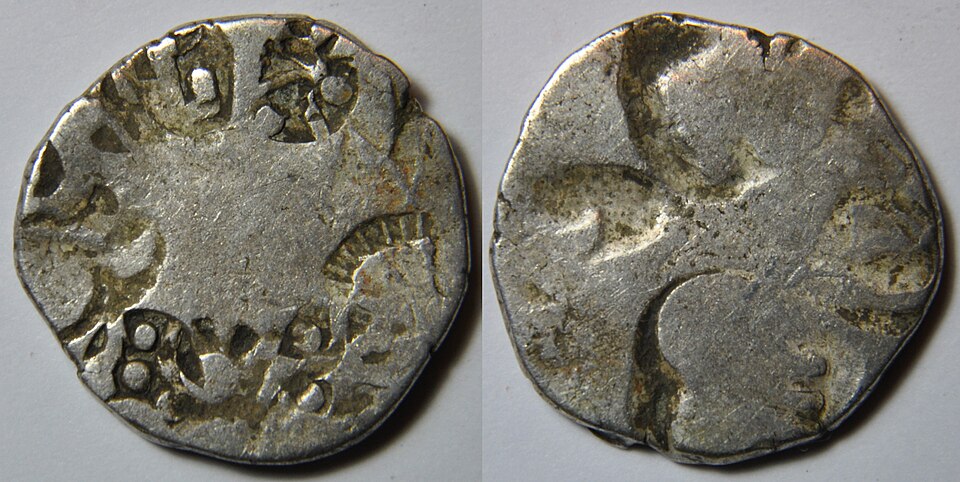
| c. 6th–4th c. BCE | First Indian coins: punch-marked silver; exact start disputed[3] | Contested |
| c. 5th c. BCE | Sixteen mahājanapadas; monarchies (Magadha, Kosala, Avanti, Vaṃsa) beside clan republics (Vajjī, Malla, Śākya)[4][5] | Majority |
| c. 5th c. BCE | Mahāvīra, leader of the Jains, dies at Pāvā before the Buddha, according to the Pali canon[6][7] | Majority |
| c. 5th c. BCE | Makkhali Gosāla leads the Ājīvikas; the six rival teachers of the Sāmaññaphala Sutta[8][9] | Majority |
| c. 5th c. BCE | Bimbisāra and then Ajātasattu rule Magadha from Rājagaha; Pasenadi rules Kosala[5] | Majority |
| c. 400 BCE | Death of the Buddha (median chronology, §2). Ajātasattu fortifies Pāṭaligāma, later Pāṭaliputra, against the Vajjīs[10] | Majority |
| c. 345–322 BCE | The Nanda kings unite most of the Ganga plain under Magadha[3] | Majority |
| c. 320 BCE | Candragupta Maurya founds the Mauryan empire (§4)[3] | Majority |
Where: kingdoms, republics and the Buddha’s circuit
The Buddha’s whole career took place in an area roughly 600 km across, between the Himalayan foothills and the Ganga, from Kosambī in the west to Campā in the east.
Two kingdoms dominated it. Magadha, in southern Bihar, ruled from Rājagaha, a capital ringed by hills and stone walls, was rich in rice land and iron ore and controlled the river trade.[3] Kosala, ruled from Sāvatthī, lay to the north-west and held the Śākya country as a dependency.[11] Most of the discourses are set in or near these two capitals, and most of them are set in parks given to the order by kings and merchants.
North of the Ganga lay the republics, which the texts call gaṇa or saṅgha, “assembly.” The Vajjī confederacy, led by the Licchavis of Vesālī, was the most powerful. The Mallas held Kusinārā, where the Buddha died, and Pāvā. The Śākyas held Kapilavatthu. These were not democracies in a modern sense. Power lay with a council of leading families, who met in an assembly hall (santhāgāra), debated, and decided.[5][3] Majority
The republics were losing. The Mahāparinibbāna Sutta opens with King Ajātasattu of Magadha planning to destroy the Vajjīs and sending his minister to ask the Buddha’s opinion, and has Magadhan ministers building a fort at Pāṭaligāma on the Ganga to hold them off.[10] Within a century of the Buddha’s death Magadha had absorbed the republics and most of the kingdoms of the plain.[3][5]
The geographical point carries a larger argument. The Vedic heartland lay to the west, in the Ganga–Yamuna doāb. The east was frontier, where brahmins were present but not dominant, and Vedic texts treated its people as of doubtful status (Hinduism §5); the Śatapatha Brāhmaṇa remembers the sacred fire being carried east across the Sadānīrā river into land not yet fit for brahmins.[12][13] Buddhism, like Jainism, grew up outside the centre of Vedic authority, and that is part of why it could reject it.
The evidence ledger for the Buddha’s world
| Dimension | What we can say | Evidence | Confidence |
|---|---|---|---|
| Cities | Walled towns of tens of thousands; the setting of most discourses | Excavated ramparts at Rājagaha, Kosambī, Sāvatthī; NBPW distribution[2][1] | Consensus |
| Money | Coined silver in circulation; prices, debts and wages in the texts | Punch-marked coins; Vinaya rules forbidding monks to handle gold and silver[3][14] | Majority (dates contested) |
| Polity | Monarchies expanding at the expense of clan republics | AN 3.70’s list of sixteen countries; DN 16 on Magadha and the Vajjīs[4][10] | Consensus |
| Patrons | Kings and merchants fund the order with parks and buildings | Bimbisāra’s Bamboo Grove; Anāthapiṇḍika’s Jeta Grove, also shown at Bharhut[15][16][17] | Majority |
| Religious field | Many organised renunciant groups competing for lay support | DN 2’s six teachers; Jain and Ājīvika parallels; Ashoka’s lists of sects[8][18] | Consensus |
| Shared practice | Alms-round, rainy-season retreat, fortnightly assemblies common to the groups | The Vinaya says Buddhists adopted these from others[19][20] | Majority |
| Writing | Not yet in use; teaching is oral | No securely dated script before Ashoka[21] | Consensus |
Primary sources
1. The sixteen great countries
Aṅguttara Nikāya 3.70, Pali. The Buddha tells the laywoman Visākhā that ruling all of these would not be worth a sixteenth part of one observance day kept with the eight precepts:
aṅgānaṁ, magadhānaṁ, kāsīnaṁ, kosalānaṁ, vajjīnaṁ, mallānaṁ, cetīnaṁ, vaṅgānaṁ, kurūnaṁ, pañcālānaṁ, macchānaṁ, sūrasenānaṁ, assakānaṁ, avantīnaṁ, gandhārānaṁ, kambojānaṁ
“Aṅga, Magadha, Kāsi, Kosala, Vajji, Malla, Cetī, Vaṅga, Kuru, Pañcāla, Maccha, Sūrasena, Assaka, Avanti, Gandhāra, Kamboja.” (The names in their Pali forms.)[4]
What it proves. That the early Buddhist community had a map of the political world stretching from Bengal to Afghanistan, and used it as a measure of the greatest worldly power imaginable. The list is a convention, repeated with variations in later texts, and some names are uncertain (Vaṅga is usually corrected to Vaṃsa, the kingdom of Kosambī). It is not a census. It is a fair picture of a world of many states, before the empire. Majority
2. The republic as a model for the order
Dīgha Nikāya 16, Pali. Asked whether Magadha can conquer the Vajjīs, the Buddha lists seven conditions under which the republic will prosper, beginning:
yāvakīvañca, ānanda, vajjī abhiṇhaṁ sannipātā sannipātabahulā bhavissanti, vuddhiyeva, ānanda, vajjīnaṁ pāṭikaṅkhā, no parihāni.
“As long as the Vajjis meet frequently and have many meetings, they can expect growth, not decline.” (Trans. Bhikkhu Sujato.)[10]
He then calls the monks together and gives them the same list, almost word for word: as long as the monks meet frequently, meet in harmony and keep the rules as they were laid down, they too can expect growth, not decline.
What it proves. The early tradition modelled its own community on the republican assembly, and said so. The order was called the saṅgha, the word for a republic. It took decisions in formal meetings, by motion and assent, with voting by tally sticks (salākā) in disputed cases.[22] The Buddha appointed no successor; according to the same text, he told the monks that the teaching and the discipline would be their teacher after his passing.[10] A monastic constitution borrowed from the clan republics outlived the republics by more than two thousand years. Majority
3. Copying the other ascetics
The Vinaya is unusually frank that several basic Buddhist institutions were adopted from other groups.
Mahāvagga 2.1 explains the fortnightly observance day (uposatha). Other wanderers met on the eighth, fourteenth and fifteenth days of each half-month to teach, and gained supporters by it; King Bimbisāra suggested the Buddha’s monks do the same, and the Buddha agreed.[20]
Mahāvagga 3.1 explains the rainy-season retreat. People complained that the Buddhist monks wandered in all seasons:
kathañhi nāma samaṇā sakyaputtiyā hemantampi gimhampi vassampi cārikaṁ carissanti, haritāni tiṇāni sammaddantā, ekindriyaṁ jīvaṁ viheṭhentā, bahū khuddake pāṇe saṅghātaṁ āpādentā. ime hi nāma aññatitthiyā durakkhātadhammā vassāvāsaṁ allīyissanti saṅkasāyissanti.
“How can the Sakyan monastics go wandering in the winter, in the summer, and even during the rainy season? They’re trampling down the green grass, oppressing one-sensed life, and destroying many small creatures. Even the monastics of other religions, with their flawed teachings, settle down for the rainy season.” (Trans. Bhikkhu Brahmali.)[19]
What it proves. The Buddhist order was not created from nothing. It entered an existing ascetic culture with its own calendar and its own standards, and lay people judged it by those standards. The phrase “one-sensed life” (ekindriya jīva) is a Jain technical term for plants and the smallest creatures, which suggests whose standards the complainers had in mind.[7] Buddhist monastic custom is in part a record of fitting in. Majority
4. A merchant pays in coins
Cullavagga 6.4.9, Pali. The banker Anāthapiṇḍika of Sāvatthī wants Prince Jeta’s park for the order. Jeta says he would not sell it even for enough coins to cover it. Anāthapiṇḍika takes him at his word:
atha kho anāthapiṇḍiko gahapati sakaṭehi hiraññaṁ nibbāhāpetvā jetavanaṁ koṭisantharaṁ santharāpesi.
“Anāthapiṇḍika then had gold coins brought out in carts and covered the Jeta Grove with ten million coins.” (Trans. Bhikkhu Brahmali.)[16] (The word koṭi can mean “ten million” or “edge,” so the phrase can also be read as coins laid edge to edge; translators differ.)
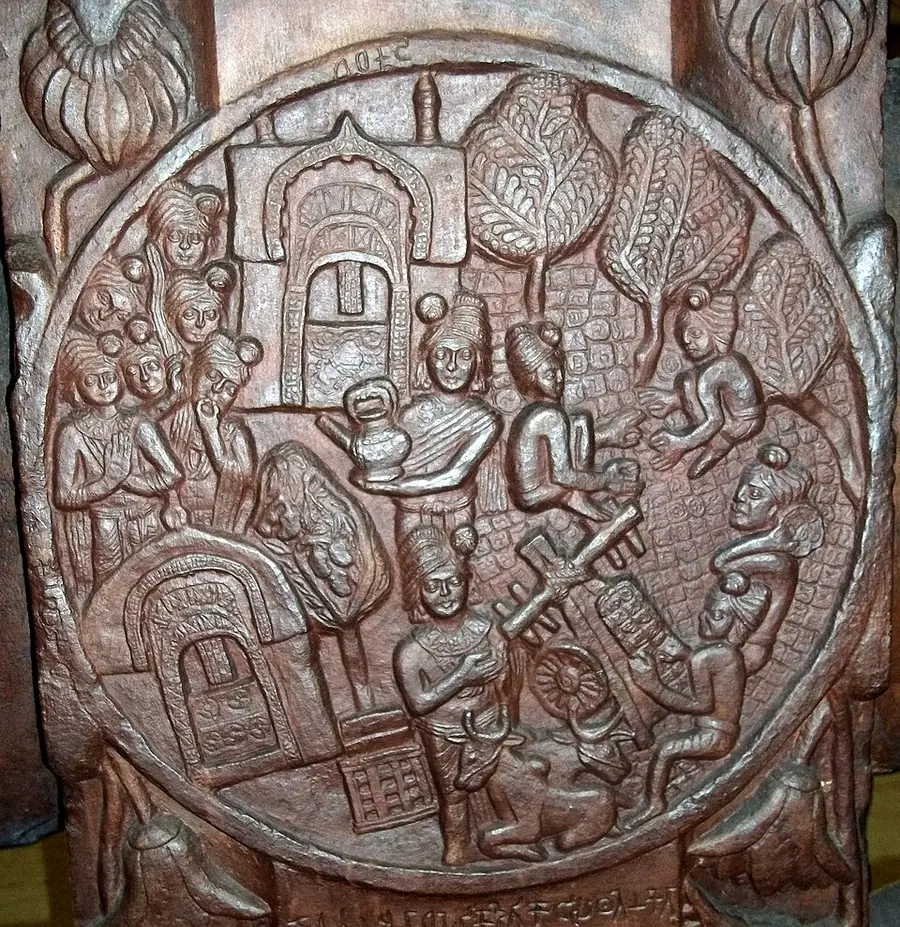
What it proves. That early Buddhism belonged to a monetised economy and was proud of it. The story is a legend, but it was carved in stone at Bharhut, in central India, within three or four centuries of the Buddha, with square coins laid in rows and an inscription naming the donor.[17] Monks were forbidden to touch money themselves;[14] their supporters were defined by it. The new merchant class had wealth and no place in the Vedic ritual order, and the saṅgha gave it a way to turn wealth into merit. Majority
5. Karma as intention
Aṅguttara Nikāya 6.63, Pali:
cetanāhaṁ, bhikkhave, kammaṁ vadāmi. cetayitvā kammaṁ karoti — kāyena vācāya manasā.
“It is intention that I call deeds. For after making a choice one acts by way of body, speech, and mind.” (Trans. Bhikkhu Sujato.)[23]
What it proves. That the Buddha used the shared vocabulary of his time and changed its meaning. In the Vedic ritual tradition karman meant above all ritual action, done correctly or not. For the Jains, karma was a fine physical substance that action, including unintended action, bound to the soul, and it could be burned off by austerity.[7] The Buddha made it psychological: the moral weight of an act lies in the intention behind it. The Upāli Sutta stages the contrast as a debate, in which a Jain monk says the Jain teacher holds bodily action most blameworthy, and the Buddha replies that he holds mental action most blameworthy.[24] Richard Gombrich calls the Buddha’s making intention the test of ethical value “a great step forward in the history of civilization,” because it made all human beings equal on the ethical plane, whatever their birth or ritual skill.[25] Majority
The śramaṇa field as the Buddhist texts describe it
The Buddhist texts present the Buddha as one teacher in a crowded field, and they name his rivals, his teachers and his opponents.
His teachers. In MN 26 the Buddha says that after leaving home he studied with Āḷāra Kālāma, who taught a meditative attainment called the “base of nothingness,” and then with Uddaka Rāmaputta, whose teacher Rāma had reached the “base of neither perception nor non-perception.” He mastered both and left both, judging that they did not lead to the end of suffering.[26] These two names appear nowhere else as founders of anything, which is one reason scholars take them as genuine memories (§0); Alexander Wynne argues that they taught an early brahminic form of meditation.[27] Majority
His rivals. The Sāmaññaphala Sutta has King Ajātasattu describe six famous teachers he has consulted: Pūraṇa Kassapa, Makkhali Gosāla, Ajita Kesakambalī, Pakudha Kaccāyana, Sañjaya Belaṭṭhaputta and Nigaṇṭha Nātaputta, who is Mahāvīra.[8] The Hinduism series sets out their positions, from determinism to materialism to scepticism (Hinduism §6). Two of the six led movements that lasted: the Jains, still a living religion, and the Ājīvikas, who were large enough for Ashoka to endow caves to them and survived in south India into the second millennium CE before disappearing.[9][28] The first person the Buddha met after his awakening, the wanderer Upaka, was an Ājīvika; MN 26 has him shake his head and take another road.[26]
The Jains as the closest relatives. Buddhist and Jain texts share vocabulary, places, patrons and even personal names, and each describes the other. The Pali canon reports that Mahāvīra died at Pāvā before the Buddha and that his followers split into quarrelling factions afterwards.[6] The two traditions differ on the self (Jains affirm an eternal soul, jīva; Buddhists deny a permanent self) and on method (Jains stress austerity, the Buddha the middle way), but they are recognisably siblings.[7] Consensus
Brahmins in the Pali canon. Brahmins appear constantly, and not only as opponents. The canon’s standard phrase for respected religious people is “samaṇas and brahmins,” treating the two as parallel callings. Ashoka uses the same pairing a few generations later.[29] Several of the Buddha’s leading disciples, Sāriputta, Moggallāna and Mahākassapa among them, were brahmins by birth. The Buddha argues with brahmins about sacrifice and birth-status (DN 5, MN 93), redefines the word “brahmin” as a title earned by conduct, and is depicted as visiting brahmin villages and accepting their hospitality.[30][31][32] The relationship is rivalry inside a shared world, not a war between religions. Majority
What the Buddha took from his world, and what he changed
| Shared assumption | Buddhist position | Confidence |
|---|---|---|
| Rebirth in many realms, driven by past action | Accepted; the cycle (saṃsāra) is the problem to be solved | Consensus |
| Karma | Accepted but redefined as intention[23] | Consensus |
| Liberation from rebirth as the highest goal | Accepted; called nibbāna, the “blowing out” of craving | Consensus |
| A permanent self (ātman, jīva) that is liberated | Rejected: nothing in experience is a permanent self (anattā) (Hinduism §5) | Consensus |
| Austerity as the means to liberation | Rejected as an extreme, after he practised it himself (§2)[33] | Consensus |
| The authority of the Veda and the value of sacrifice | Rejected; sacrifice reinterpreted as generosity and moral conduct[30] | Consensus |
| Status by birth | Rejected in favour of conduct; the order was open to all four varṇas[31] | Majority |
| Renunciation as a life supported by alms | Accepted and organised into a disciplined community | Consensus |
Greater Magadha: where did karma and rebirth come from?
The Buddha did not invent karma and rebirth. Whether he took them from the Upaniṣads, or whether both took them from an older eastern culture, is one of the main open questions about the origins of Buddhism.
The majority view. Karma and rebirth first appear in the oldest Upaniṣads, the Bṛhadāraṇyaka and Chāndogya, which are generally dated before the Buddha.[34] Buddhism, Jainism and the Upaniṣads drew on a pool of ideas that crystallised in the eastern Ganga plain in the sixth and fifth centuries BCE, with the Vedic texts giving the earliest written form (Hinduism §5).[35]
Bronkhorst’s “Greater Magadha.” Johannes Bronkhorst argues that the region east of the Vedic heartland had its own culture, non-Vedic and ascetic, which believed in rebirth and karmic retribution before the brahmins did. On his reading the Buddhists, Jains and Ājīvikas drew on it directly, the Upaniṣadic passages on rebirth were added under its influence, and the early Buddhist texts reflect a time when brahmins were not yet the dominant religious presence in Magadha.[13][36] Critics, notably Michael Witzel, reply that the thesis depends on dating the key Upaniṣads later than most specialists accept: on the evidence of language, place names and the people the texts mention, the late Vedic texts are separated from the earliest Buddhist ones by a real interval of time.[35] Alexander Wynne reads the Buddha’s own meditation teachers as brahminic, which places his training inside the Vedic world rather than outside it,[27] while Geoffrey Samuel accepts a distinct eastern cultural zone but treats it as related to the Vedic world rather than opposed to it.[37] Contested
What both sides agree on. The ideas that define Buddhism appeared first in the east, among people at the edge of the Vedic world, at the moment that world was being transformed by cities, money and the state.
What is absent from the Buddha’s world
- Writing for religious purposes. No texts were written; teachers and their followers relied on memory (§0). Consensus
- Empire. Magadha is expanding, but no single state rules the plain until the Nandas and the Mauryas (§4). Consensus
- Temples and images. Neither Buddhists nor anyone else in the region worshipped in stone temples or before sculpted images of a teacher. Consensus
- Monasteries in brick and stone. The order lived in parks and simple shelters; permanent monasteries come later (§3). Majority
- “Hinduism” and “Buddhism.” The categories in use are samaṇa and brāhmaṇa, and the followers of particular teachers (§0). Consensus
Debates about the origins of Buddhism
Why did Buddhism appear when and where it did?
The standard explanation is social: new cities, money and states loosened old ties of lineage and village, created a merchant class with wealth but no ritual status, produced enough surplus to feed renunciants, and exposed people to the instability that made a teaching about suffering and its end persuasive.[38][5] This fits the evidence well but is hard to test, and it explains the conditions more readily than the content. Majority
Was the Buddha influenced by the Upaniṣads?
Probably, at least indirectly. Some discourses seem to answer Upanishadic positions, most clearly in the denial that anything is a permanent self identical with the universe. Gombrich argues that several discourses parody specific Upanishadic passages.[25] Bronkhorst argues instead that the shared ideas came from the non-Vedic east. The two positions are not exclusive. Contested
Were the Śākyas brahmanical?
Not obviously. The early texts present them as a proud kṣatriya clan who looked down on brahmins, and their republic shows little sign of Vedic ritual.[39] How far Vedic religion had reached the Himalayan foothills by the fifth century BCE is part of the Greater Magadha question. Contested
Further reading
- Romila Thapar, Early India: From the Origins to AD 1300 (Penguin, 2002), chapters on the mahājanapadas and the republics.
- Robin Coningham and Ruth Young, The Archaeology of South Asia (Cambridge, 2015), on the second urbanisation.
- Richard Gombrich, What the Buddha Thought (Equinox, 2009) — the Buddha’s ideas against their background.
- Johannes Bronkhorst, Greater Magadha: Studies in the Culture of Early India (Brill, 2007), with Michael Witzel’s reply in Indo-Iranian Journal 52 (2009).
- A. L. Basham, History and Doctrines of the Ājīvikas (Luzac, 1951).
- Paul Dundas, The Jains (2nd ed., Routledge, 2002).
References
- ^ a b Chinmay Girish Kulkarni et al. "Northern Black Polished Ware: A Gazetteer". Heritage: Journal of Multidisciplinary Studies in Archaeology 8, 2020. 1,000+ sites; the authoritative compilation behind the c. 700–200 BCE range.
- ^ a b Robin Coningham & Ruth Young The Archaeology of South Asia: From the Indus to Asoka. Cambridge University Press, 2015. The standard synthesis for §§1–6.
- ^ a b c d e f g Upinder Singh A History of Ancient and Early Medieval India. Pearson, 2008. open library The best textbook on the archaeology-plus-text synthesis.
- ^ a b c AN 3.70 — Mūluposatha Sutta (Aṅguttara Nikāya). c. 400–200 BCE. Pali. Lists the sixteen great countries, from Aṅga to Kamboja, as the measure of the greatest worldly power, worth less than one day's observance of the eight precepts. read the text
- ^ a b c d e Romila Thapar Early India: From the Origins to AD 1300. Penguin, 2002. full text The best single-volume political and social history for this whole span.
- ^ a b DN 29 — Pāsādika Sutta (Dīgha Nikāya). c. 400–200 BCE. Pali. Opens with news that Nigaṇṭha Nātaputta (Mahāvīra) has just died at Pāvā and his followers have split into quarrelling factions: the Pali canon's evidence that Mahāvīra died before the Buddha. read the text
- ^ a b c d Paul Dundas The Jains. Routledge, 2nd ed., 2002. open library The standard survey.
- ^ a b c DN 2 — Sāmaññaphala Sutta (Dīgha Nikāya). c. 400–300 BCE. Pali. The six heterodox teachers — determinism, materialism, scepticism, atomism — the best map we have of the intellectual landscape, written by a rival. read the text
- ^ a b A. L. Basham History and Doctrines of the Ājīvikas: A Vanished Indian Religion. Luzac, 1951. full text Still the only monograph on the third Śramaṇa movement.
- ^ a b c d e DN 16 — Mahāparinibbāna Sutta (Dīgha Nikāya). c. 400–200 BCE, with later layers. Pali. The last months of the Buddha's life: his age (80), the last meal of sūkaramaddava at Cunda's house, the death at Kusinārā and the division of the relics into eight shares. read the text
- ^ DN 27 — Aggañña Sutta (Dīgha Nikāya). c. 300 BCE. Pali. The four varṇas originate by contract and labour, not from a primal being's body — a direct counter-narrative to the Puruṣa Sūkta, read by Gombrich as satire. read the text
- ^ ŚB 1.4.1.10–17 — Śatapatha Brāhmaṇa. c. 900–600 BCE. Vedic Sanskrit. Videgha Māthava, starting on the Sarasvatī, follows Agni east to the Sadānīrā, which "even now forms the boundary of the Kosalas and Videhas": the tradition's own memory of the frontier moving into the Ganga plain. read the text
- ^ a b Johannes Bronkhorst Greater Magadha: Studies in the Culture of Early India. Brill, 2007. full text The strongest case for an eastern, non-Vedic origin for karma and rebirth. Influential and contested.
- ^ a b Vinaya, Nissaggiya Pācittiya 18 — Vinaya Piṭaka, Suttavibhaṅga. c. 300–100 BCE. Pali. "If a monk takes, has someone else take, or consents to gold, silver, or money being deposited for him" he commits an offence entailing relinquishment and confession: the rule that kept money out of monks' hands in a monetised world. read the text
- ^ Mahāvagga 1.22 — Vinaya Piṭaka. c. 300–100 BCE. Pali. King Bimbisāra of Magadha gives the Bamboo Grove (Veḷuvana) at Rājagaha to the saṅgha, the first park donated to the order. read the text
- ^ a b Cullavagga 6.4.9 — Vinaya Piṭaka. c. 300–100 BCE. Pali. Anāthapiṇḍika buys Prince Jeta's park for the order by covering its ground with coins brought out in carts: the founding legend of the Jeta Grove at Sāvatthī. read the text
- ^ a b Bharhut Jetavana medallion — Bharhut stupa railing. c. 2nd–1st c. BCE. Prakrit in Brāhmī. A carved medallion of the Jeta Grove being covered with coins, labelled "Anāthapiṇḍika gives the Jetavana, having bought it for a layer of ten million." The Vinaya legend in stone within a few centuries. read the text
- ^ Pillar Edict 7 — Ashokan edicts. c. 242 BCE. Prakrit in Brāhmī. Names saṅgha, brahmins-and-Ājīvikas, Nirgranthas and "various sects" as distinct bodies each needing its own officers — the best contemporary evidence for a plural religious economy. read the text
- ^ a b Mahāvagga 3.1 — Vinaya Piṭaka. c. 300–100 BCE. Pali. People complain that Buddhist monks wander in the rains, harming "one-sensed life", when even other sects settle down for the season; the Buddha institutes the rains retreat. read the text
- ^ a b Mahāvagga 2.1 — Vinaya Piṭaka. c. 300–100 BCE. Pali. Other wanderers meet on the eighth, fourteenth and fifteenth days of the half-month and gain supporters; King Bimbisāra suggests the Buddha's monks do the same, and the uposatha is instituted. read the text
- ^ Richard Salomon Indian Epigraphy. Oxford University Press, 1998. open library The standard handbook for inscriptions and their dating.
- ^ Cullavagga 4.9–10 — Vinaya Piṭaka, Khandhaka (Samathakkhandhaka). c. 300–100 BCE. Pali. Allows disputes to be settled by majority decision (yebhuyyasikā), with a monk appointed by formal motion to manage the vote by tally sticks (salākā), and lists legitimate and illegitimate votes. read the text
- ^ a b AN 6.63 — Nibbedhika Sutta (Aṅguttara Nikāya). c. 400–200 BCE. Pali. "It is intention that I call deeds. For after making a choice one acts by way of body, speech, and mind" (trans. Sujato). The Buddhist redefinition of karma as intention. read the text
- ^ MN 56 — Upāli Sutta (Majjhima Nikāya). c. 400–200 BCE. Pali. A Jain monk says Mahāvīra holds bodily action the most blameworthy; the Buddha says he holds mental action the most blameworthy. The karma debate between the two traditions, staged. read the text
- ^ a b Richard Gombrich What the Buddha Thought. Equinox, 2009. The Buddha's ideas read against brahmin and Jain backgrounds; calls his making intention the criterion of karma "a great step forward in the history of civilization" (p. 195).
- ^ a b MN 26 — Ariyapariyesanā Sutta (Majjhima Nikāya). c. 400–200 BCE. Pali. The Buddha's own short account of leaving home: while young and black-haired, against the wishes of his weeping parents, he shaved his head and went forth. No palace, no secret flight at night. read the text
- ^ a b Alexander Wynne The Origin of Buddhist Meditation. Routledge, 2007. doi Argues that Āḷāra Kālāma and Uddaka Rāmaputta were historical teachers of an early brahminic form of meditation, placing the Buddha's training inside a Vedic milieu.
- ^ Barabar cave dedications — Ashoka and Daśaratha. c. 250–230 BCE. Prakrit in Brāhmī. Rock-cut caves endowed to the **Ājīvikas** by name — the only contemporary documentary evidence for the sect. At one cave the word "Ājīvika" was later effaced. read the text
- ^ Rock Edict 13 — Ashokan edicts. c. 256 BCE. Prakrit in Brāhmī. Names five Hellenistic kings whose reigns are independently dated — the peg the entire Indian chronology hangs from. read the text
- ^ a b DN 5 — Kūṭadanta Sutta (Dīgha Nikāya). c. 300 BCE. Pali. The Buddha reframes "the great sacrifice" as bloodless — the Śramaṇa attack on animal sacrifice made by capturing the vocabulary of sacrifice rather than rejecting it. read the text
- ^ a b MN 93 — Assalāyana Sutta (Majjhima Nikāya). c. 300 BCE. Pali. The fullest argument against brahmin birth-claims: brahmin women give birth like everyone; among the Yonas masters become slaves; a fire kindled by an outcaste burns identically. read the text
- ^ Dhp 393 — Dhammapada. c. 300 BCE. Pali. "Not by matted hair, not by lineage, not by birth" — the Śramaṇa attack lands on hereditary claim, not on ritual technique. read the text
- ^ MN 36 — Mahāsaccaka Sutta (Majjhima Nikāya). c. 400–200 BCE. Pali. The Buddha describes his extreme fasting and breath-holding, abandons them, and remembers sitting in the first jhāna as a boy under a rose-apple tree while his father worked. That memory becomes the way to awakening. read the text
- ^ Patrick Olivelle, trans. The Early Upaniṣads: Annotated Text and Translation. Oxford University Press, 1998. full text The scholarly standard. Its introduction is the best short account of the period.
- ^ a b Michael Witzel "Moving Targets? Texts, Language, Archaeology and History in the Late Vedic and Early Buddhist Periods". Indo-Iranian Journal 52: 287–310, 2009. doi The central chronological rebuttal to Bronkhorst.
- ^ Johannes Bronkhorst Buddhism in the Shadow of Brahmanism. Brill, 2011. full text
- ^ Geoffrey Samuel The Origins of Yoga and Tantra: Indic Religions to the Thirteenth Century. Cambridge University Press, 2008. A partial ally of the Greater Magadha thesis, explicitly softer than Bronkhorst's binary.
- ^ Richard Gombrich Theravāda Buddhism: A Social History. Routledge, 2nd ed., 2006. A social history of Theravāda from the Buddha to modern Sri Lanka: strong on the Brahmanical background, the monastic-royal compact and caste in the saṅgha.
- ^ DN 3 — Ambaṭṭha Sutta (Dīgha Nikāya). c. 400–200 BCE. Pali. A young brahmin complains that the Sakyans in their assembly hall laughed at him and offered him no seat: the Buddha's people as a proud kṣatriya clan unimpressed by brahmins. read the text