Colonial Hinduism in one paragraph
Hinduism as a named world religion, with one canon and one essence, was assembled between about 1750 and 1947 under British rule; the traditions it names are far older. In 1750 there is no religion called Hinduism. There are Vaiṣṇavas, Śaivas, Śāktas, Smārtas, Liṅgāyats, Rāmānandīs, hundreds of sampradāyas and thousands of jātis, sharing much and agreeing on no creed, no canon, no founder and no central authority. By 1947 there is a religion called Hinduism with a canon (the Vedas and the Gītā), an essential philosophy (Vedānta), a representative figure (Vivekananda), a global presence, and — increasingly — a politics.
That transformation is the subject of this chapter, and it was carried out jointly by people who disagreed about everything else: British Orientalists translating Sanskrit, Christian missionaries attacking idolatry, census officials who needed everyone to have exactly one religion, and Indian reformers who set out to define, defend and purify their own tradition.
Meanwhile European philology handed the world the word “Aryan,” which was promptly racialized, exported to Germany with catastrophic results, and turned back on India — where it was used by nationalists to claim ancient glory and by anti-caste thinkers to argue that brahmins were foreign invaders. None of this is a story of a religion being passively described. It is a religion being assembled, under pressure, by people who needed it to exist. Whether that means Hinduism was “invented” depends on what is being claimed. On two of the three main scholarly positions, set out in the debates at the end of this chapter, a philosophical unification and a Hindu self-identity are older; what belongs to this period is the world-religion packaging.
Timeline of Hinduism under British rule
Hinduism’s colonial period runs from Plassey in 1757 to Independence in 1947, through Jones’s Sanskrit discourse, the abolition of sati, the first census, the Ārya Samāj, Vivekananda in Chicago and Savarkar’s Essentials of Hindutva.
| Date | Event | Confidence |
|---|---|---|
| 1757 | Plassey; East India Company rule in Bengal begins | Consensus |
| 1772 | Hastings’s Judicial Plan, Art. 27 — Hindus to be governed in family matters by “the laws of the Shaster”[1] | Consensus |
| 1784 / 1786 | Asiatic Society founded; Jones’s Third Anniversary Discourse on Sanskrit | Consensus |
| 1785 | Wilkins’s Bhagvat-Geeta — first direct Sanskrit-to-English translation[2] | Consensus |
| 1794 | Jones translates the Manusmṛti; Anglo-Hindu personal law takes shape[3] | Consensus |
| 1828 / 1829 | Rammohan Roy founds the Brahmo Sabhā; sati abolished (Regulation XVII)[4] | Consensus |
| 1849–1874 | Max Müller’s edition of the Rigveda with Sāyaṇa’s commentary | Consensus |
| 1857–58 | The Rebellion; Crown rule replaces the Company | Consensus |
| 1871–72 | First India-wide census — synchronous only from 1881; religion and caste enumerated | Consensus |
| 1873 | Phule’s Gulāmgirī; Satyaśodhak Samāj | Consensus |
| 1875 | Ārya Samāj (Dayānanda); Satyārth Prakāś; Theosophical Society founded | Consensus |
| 1882 | Bankim’s Ānandamaṭh, containing Vande Mātaram[5] | Consensus |
| 1893 | Vivekananda at the World’s Parliament of Religions, Chicago | Consensus |
| 1897 | Ramakrishna Mission founded | Consensus |
| 1923 / 1925 | Savarkar’s Essentials of Hindutva; the RSS founded | Consensus |
| 1927 | Ambedkar’s Mahad satyagraha; the Manusmṛti burned publicly on 25 December | Consensus |
| 1932 | Poona Pact between Ambedkar and Gandhi[6] | Consensus |
| 1936 | Ambedkar’s Annihilation of Caste | Consensus |
| 1947 | Independence and Partition | Consensus |
Where modern Hinduism was assembled
Modern Hinduism was assembled first in Bengal, especially Calcutta, then in Bombay, Madras and Punjab, and for the first time partly in Europe and America, in argument with Western audiences.
The pivot is Bengal, and specifically Calcutta: the Company’s capital, the site of the Asiatic Society, the base of the Serampore missionaries, and the home of the first reform movement. Bombay and Madras follow, then Punjab, where the Ārya Samāj takes deepest root and where competitive religious mobilization between Hindus, Muslims and Sikhs becomes sharpest.
Crucially, the geography now includes Europe and America. Oxford, where Müller edited the Rigveda; Chicago, where Vivekananda spoke; New York and Adyar, where Theosophy operated. For the first time, what Hinduism is gets partly determined outside India, in argument with Western audiences. Consensus
The evidence ledger for the colonial period
Under colonial rule “Hinduism” became a bounded world religion, with the Vedas and the Gītā as its canon, Advaita Vedānta presented as its essence, and caste hardened by enumeration into fixed administrative categories.
| Dimension | What we can say | Evidence | Confidence |
|---|---|---|---|
| The category | “Hinduism” becomes a bounded world religion with a canon and an essence | English usage from c. 1787; Roy’s “Hindooism”; census categories; comparative-religion scholarship[7][8] | Majority |
| Canon | The Vedas and the Gītā are elevated as the Hindu scriptures | Reformers’ appeals to them; the Gītā’s transformation into a national text | Consensus |
| Philosophy | Advaita Vedānta is presented as the essence of Hinduism | Vivekananda; Neo-Vedānta; Western reception[8][9] | Majority |
| Law | One scholastic Sanskrit text becomes enforceable personal law across a subcontinent | Jones’s Manu, 1794; Anglo-Hindu law in colonial courts[10][11] | Consensus |
| Caste | Colonial enumeration hardens fluid, local, negotiable identities into fixed administrative categories | Censuses 1871–1931 (the last full caste count); Risley’s 1901 ranking; caste-based recruitment and reservation[12][13] | Majority |
| Cheap lithography standardizes texts that had been fluid for centuries | Mass-printed Rāmcaritmānas, Purāṇas, Gītā editions[14] | Consensus | |
| Reform | Movements reject image worship, caste, child marriage, sati, and appeal past them to an ancient purity | Brahmo Samaj, Ārya Samāj, Prārthanā Samāj[15] | Consensus |
| Anti-caste | A parallel and often opposed tradition rejects reform within Hinduism as impossible | Phule, Periyar, Narayana Guru, Ambedkar[16][17] | Consensus |
| Politics | Religion becomes a basis for national identity, in competing versions | Tilak’s public festivals; Bankim; Savarkar; the Muslim League[18][19] | Consensus |
Primary sources
The primary sources for colonial Hinduism run from Jones’s 1786 discourse and Max Müller on the word “Aryan”, through the reformers Rammohan Roy, Dayānanda and Vivekananda, to the census and Ambedkar’s rejection.
1. Jones, 1786 — the discovery that reorganized the world
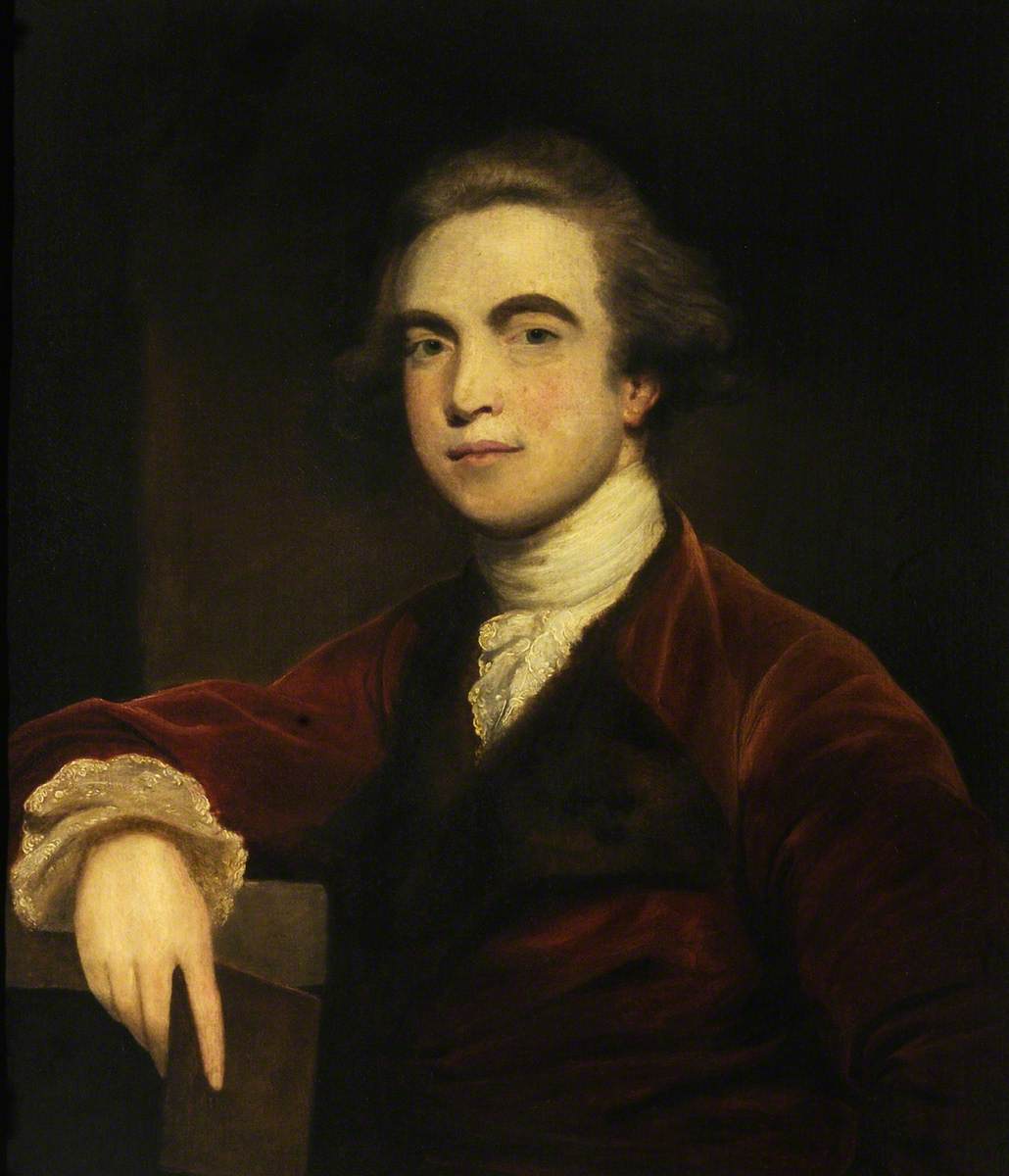
Sir William Jones, addressing the Asiatic Society on Sanskrit, Greek and Latin:
“…a stronger affinity, both in the roots of verbs and in the forms of grammar, than could possibly have been produced by accident; so strong, indeed, that no philologer could examine them all three, without believing them to have sprung from some common source, which, perhaps, no longer exists.”[20]
What it proves. Comparative linguistics — the method underlying Chapters 0 through 5 of this series — begins here, and it is genuinely one of the great intellectual achievements of the period. It also had two consequences nobody intended. It made India’s past a European scholarly possession, edited and published in Europe, with Indians as informants. And it produced the word Aryan as a technical term for a language family, which did not stay technical.[11] Consensus
2. The Aryan idea, and its four careers
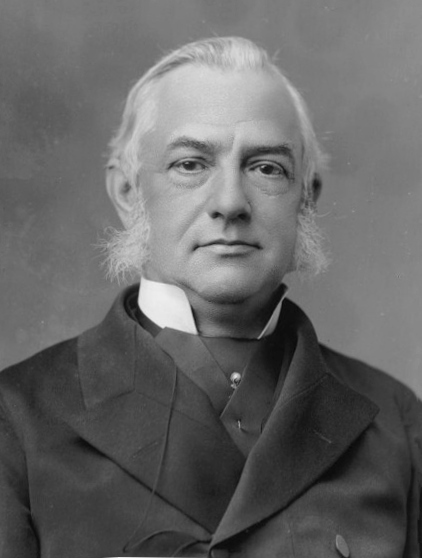
Max Müller used “Aryan” to mean a language group and protested vigorously when it was racialized. In Biographies of Words (1888):
“To me an ethnologist who speaks of Aryan race, Aryan blood, Aryan eyes and hair, is as great a sinner as a linguist who speaks of a dolichocephalic dictionary or a brachycephalic grammar.”[21]
He lost the argument comprehensively. The term went on to have four distinct careers, and this is the most useful thing to understand about it:
| Use | Who | Claim |
|---|---|---|
| Linguistic | Jones, Müller | A language family, nothing more |
| Racial (European) | Gobineau, Chamberlain, later the Nazis | A superior white race; ends in genocide |
| Nationalist (Indian) | Tilak (The Arctic Home in the Vedas, 1903), later indigenists | Ancient Aryan civilization as India’s glory — sometimes with India as the homeland[22] |
| Anti-caste (Indian) | Phule, later Periyar and the Dravidian movement | Aryans were invaders; brahmins are their descendants; śūdras and untouchables are the conquered indigenous people[23] |
One necessary distinction. The anti-caste use of the theory is Phule’s and Periyar’s, not Ambedkar’s. Ambedkar explicitly repudiated the Aryan racial thesis — in Who Were the Shudras? (1946) and The Untouchables (1948) he rejected both the racial framing and the invasion narrative, arguing that caste is a social and religious mechanism rather than the residue of a conquest.[24] Lumping all anti-caste thought into the invasion column gets him exactly backwards.
What it proves. The same theory was used to claim brahmin racial kinship with Europeans, to claim Indian civilizational priority, and to argue that brahmins were foreign occupiers who should be overthrown. That is why the origins debate in Chapter 0 is so bitter: the scholarly question of where Indo-Aryan speakers came from has been carrying two centuries of political freight that has nothing to do with the linguistic evidence.[25] Consensus on the history of the term
3. Rammohan Roy and Dayananda — reform by appeal to antiquity
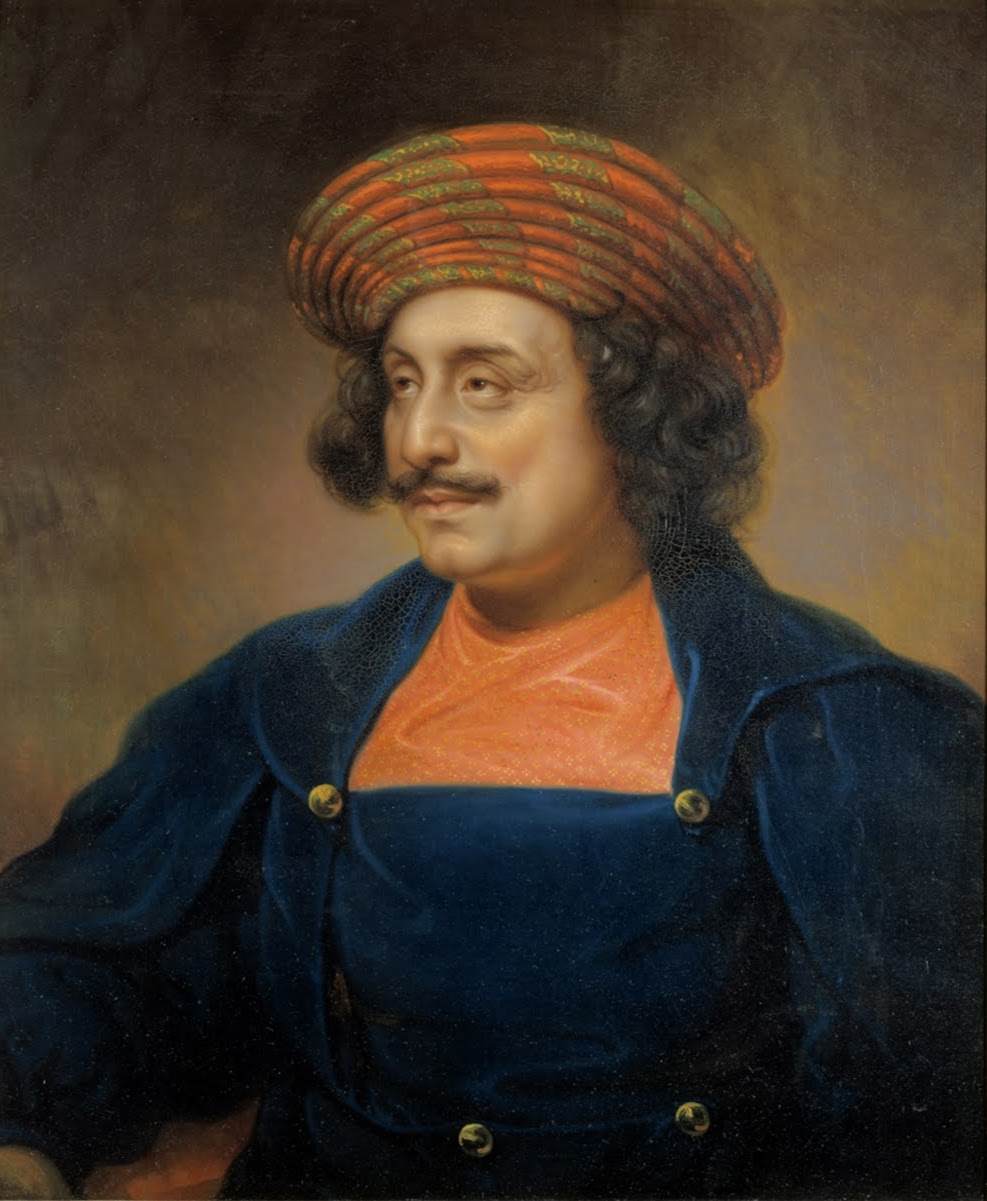
Rammohan Roy (1772–1833) founded the Brahmo Sabhā in 1828, campaigned successfully for the abolition of sati in 1829, and argued for a monotheism he derived from the Upaniṣads — while rejecting image worship, polytheism and much of contemporary practice as later corruption.[15]
Dayānanda Sarasvatī (1824–1883) founded the Ārya Samāj in 1875 with the slogan “back to the Vedas,” and went further: he rejected image worship, temples, pilgrimage, the Purāṇas, avatāra doctrine, caste by birth, child marriage, and untouchability — all as post-Vedic corruption.[26] He argued the Vedas contained all true knowledge, including modern science, and revived śuddhi, a rite for reconverting people to Hinduism. The rite itself has dharmaśāstric and early-modern precedent; what was unprecedented was its organisation and scale — and that came later than Dayānanda, through the Punjab Shuddhi Sabha, the Malkana Rajput campaign of 1922–23, and Shraddhānand’s Bhāratīya Hindū Shuddhi Sabhā of 1923.[27]
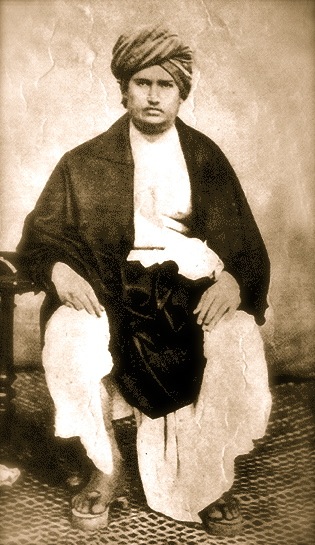
What it proves. Both men perform the same operation, which becomes the signature move of modern Hinduism: locate an authentic ancient core, declare everything you dislike a later corruption, and reform by return. It is powerful and it is historically selective. Dayānanda’s Veda — monotheistic, imageless, casteless, scientifically prescient — is not the Rigveda described in Chapter 3. The reformers were reading their conclusions back into a text whose actual contents (Indra’s soma-drinking, cattle raids, animal sacrifice) they largely set aside.
Note also the shape of the argument. Both were responding to missionary attacks on idolatry, polytheism and the treatment of women. The defence — we were never really like that — accepted the critics’ criteria and relocated the tradition’s essence to whatever passed them. Modern Hinduism’s emphasis on monism, on the Gītā, on ethics over ritual, and on “all religions lead to God” is substantially shaped by which parts survived that argument.[8][28] Majority
4. Vivekananda, 1893 — Hinduism goes global
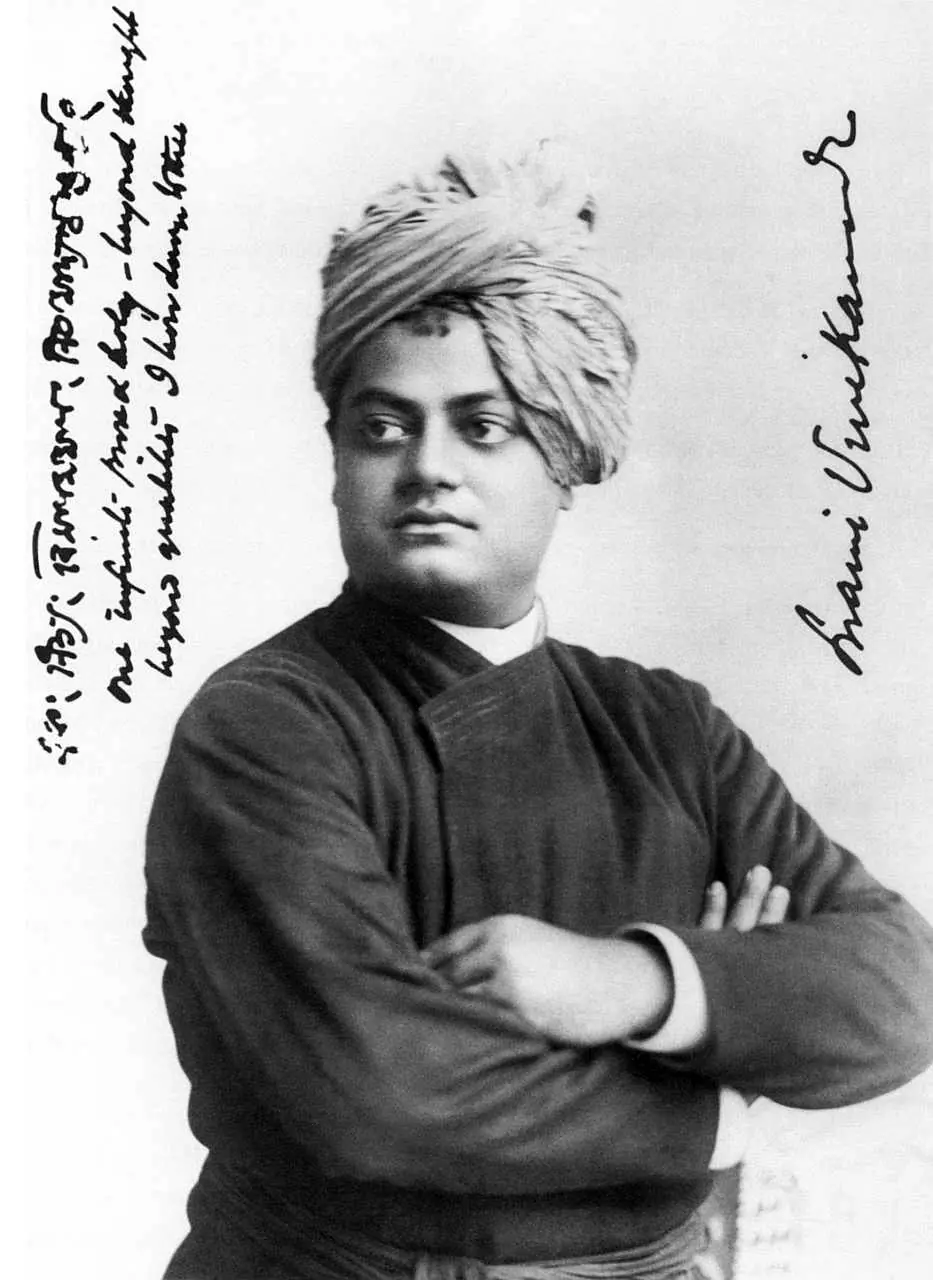
Vivekananda (1863–1902), disciple of the ecstatic Kālī-priest Ramakrishna, addressed the World’s Parliament of Religions in Chicago on 11 September 1893. He opened not with a doctrine but with “Sisters and Brothers of America,” and reportedly received a standing ovation before saying anything else.[29]
His message — Neo-Vedānta — held that Advaita is the highest truth and the essence of Hinduism; that all religions are paths to the same goal; that the divine is within every person; and that service to human beings is worship of God. He founded the Ramakrishna Mission in 1897 on that last principle.
What it proves. This is the version of Hinduism that most of the world, and a great many Hindus, now take to be simply what Hinduism is. It is also demonstrably modern. Advaita was one system among six (§8) and one Vedānta school among three (§9); the claim that all religions are equally valid paths is not a premodern Hindu position and would have puzzled Rāmānuja or Madhva, who spent their careers arguing that the others were wrong; and organized social service as religious practice owes much to the Christian missionary model it was competing with.
None of that makes it inauthentic — traditions develop, and this development was made by Hindus for Hindu purposes. It does mean that when a modern account says “Hinduism teaches that all paths lead to the same truth,” it is quoting the 1890s, not the Vedas.[8][9] Majority
5. The census — how caste got fixed
From 1871–72 the decennial census required every person to have one religion and one caste. The enumeration became synchronous only in 1881. Ranking castes by social precedence was specifically H. H. Risley’s 1901 census, conducted alongside his nasal-index anthropometry — the point at which the Aryan race theory and the colonial state’s caste machinery physically met.[12] It produced such an avalanche of petitions and litigation that official ranking was abandoned after 1901, though enumeration continued. Caste associations formed specifically to press claims, and it is worth noting that they generated the claims the state then adjudicated rather than merely reacting to classification.[30][31] The last full caste enumeration was Hutton’s in 1931 — which is why that figure still anchors every Indian argument about caste numbers a century later.[13]
What it proves. Before this, jāti identity was local, negotiable, occupationally fluid, and regionally inconsistent — the same group might rank differently a hundred miles away. Enumeration made it subcontinental, written, official, and consequential, since classification affected army recruitment, land rights, and later political representation.[32][33]
The strong version of this claim — that the British created caste — is not supportable; caste hierarchy, endogamy and untouchability are abundantly attested for centuries before (§7, §9). The defensible version is that colonial enumeration transformed a fluid local system into a rigid all-India one, and made caste into a political category people organized around.[13][30] Majority
The same logic applied to religion. A census cannot record “mostly attends the local goddess shrine, also visits the Sufi dargah, follows a guru lineage of uncertain sectarian affiliation.” It records Hindu or Muslim. Millions of ambiguous religious lives were resolved, on paper, into two blocs — and then those blocs were given separate electorates.[11] Majority
6. Ambedkar — the rejection
B. R. Ambedkar (1891–1956) was born into a Mahar family, earned doctorates at Columbia and the LSE, and became the most formidable critic Hinduism has faced from within India.[34]
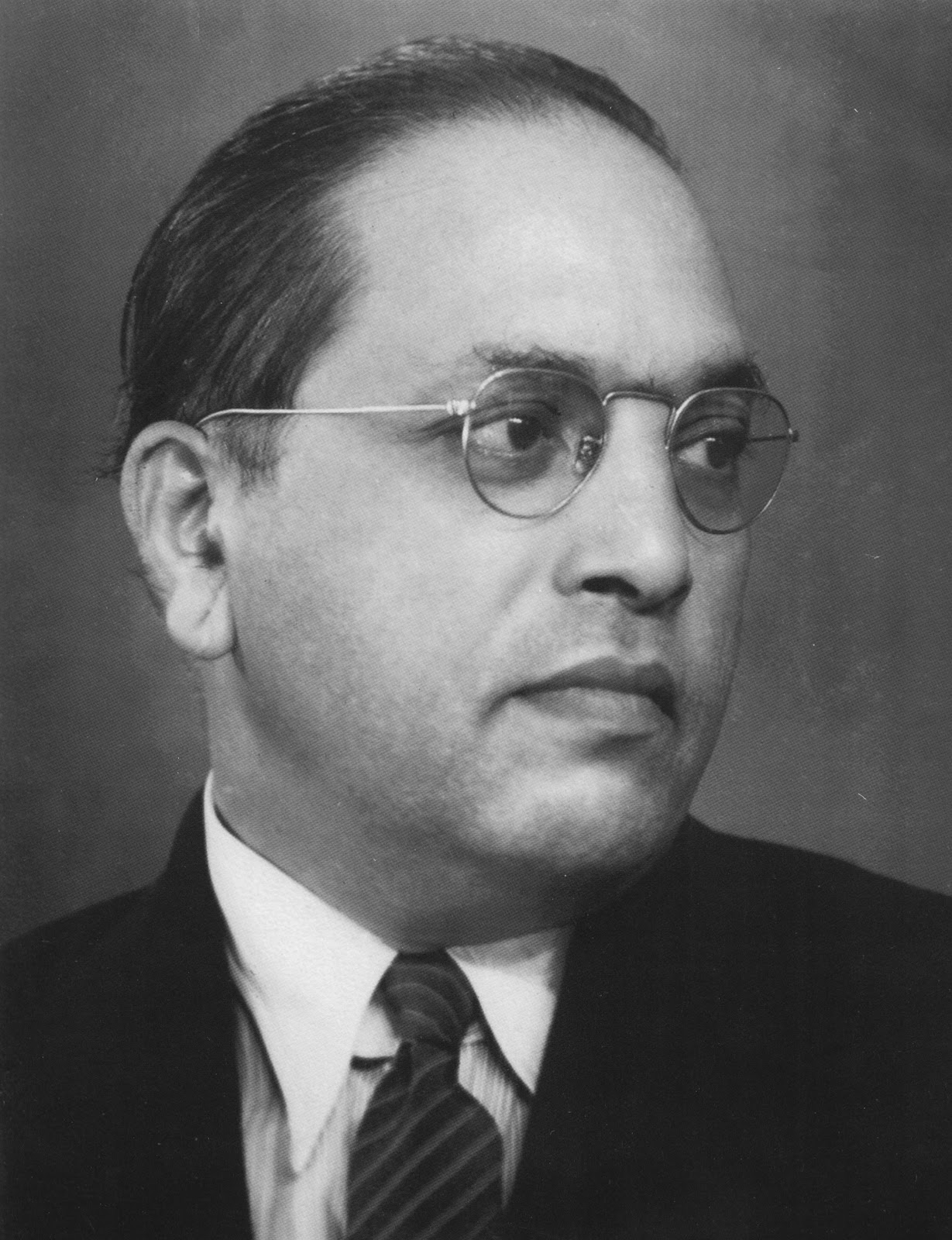
He led the Mahad satyagraha in 1927 to assert the right of untouchables to drink from a public tank, and on 25 December 1927 publicly burned the Manusmṛti.[35] In 1935 at Yeola he declared that though he had been born a Hindu, he would not die one. In Annihilation of Caste (1936) — written as a speech that its intended hosts withdrew because they found it unacceptable — he argued that caste is not a corruption of Hinduism but is authorized by its scriptures, and cannot be reformed away without destroying their authority:
“You cannot build anything on the foundations of caste. You cannot build up a nation, you cannot build up a morality.”[17][36]
What it proves. The reformist strategy traced in this chapter — an authentic ancient core, corrupted later — is directly rejected by the person with the most at stake. Ambedkar’s position was that the śāstric authority itself was the problem, and his conclusion was exit rather than reform: he converted to Buddhism in 1956 (§12).
His long argument with Gandhi frames much of twentieth-century Indian politics. Gandhi campaigned against untouchability, called untouchables harijan (“children of God”), and pressed for temple entry — while defending a purified varṇa order and insisting untouchables were Hindus who must remain within the fold. Ambedkar wanted separate electorates so that untouchables could choose their own representatives; Gandhi fasted against it; the Poona Pact of 1932 substituted reserved seats within the general electorate. Ambedkar regarded it as a defeat extracted under duress.[35][34] Consensus on events; Contested on assessment
The gods under colonial rule
Under colonial rule the Gītā rises to become the Hindu scripture, Rāma is politicized, and the nation itself becomes a goddess, Bhārat Mātā.
Little changes in the pantheon; a great deal changes in emphasis.
| Shift | Detail |
|---|---|
| The Gītā ascends | From one text among many to the Hindu scripture — portable, philosophical, defensible to Westerners, and quotable by nationalists. Tilak, Gandhi and Aurobindo all wrote commentaries |
| Rāma politicized | Already the popular northern deity (§10); increasingly a symbol of Hindu polity |
| Bhārat Mātā | A genuinely new deity: the nation as goddess. Bankim’s Vande Mātaram (1882); temples to her follow[5] |
| Kālī | Reframed by Ramakrishna as loving mother, and by revolutionaries as the goddess of the struggle |
| Image worship attacked | By missionaries, Brahmos and the Ārya Samāj alike — putting mainstream temple Hinduism on the defensive for the first time in a thousand years |
What is absent before independence
Before independence there is still no independent-state Hinduism, no mass diaspora Hinduism in the West, and no national mass movement over Ayodhya.
- Independent-state Hinduism — legal reform of Hindu personal law, temple-entry legislation and constitutional guarantees are all §12.
- Mass diaspora Hinduism in the West. The indentured diaspora (Mauritius, Fiji, Trinidad, Guyana, South Africa) is a 19th-century fact, but the large-scale professional migration that builds temples in Britain and North America follows 1947 and especially 1965 (§12).
- Ayodhya as a mass movement — the dispute is old and litigated from 1885, but the national mobilization is §12.
Debates about the invention of Hinduism
Debates about colonial Hinduism turn on whether it was invented: philosophical unification and a Hindu self-identity can be older, while the world-religion packaging of one canon, one essence and one census box belongs to 1750–1947.
Was Hinduism invented?
Three positions, and they are more compatible than the shouting suggests, because they are about different things.
- Colonial invention (Frykenberg; in its strongest form Balagangadhara): the unified religion is an artefact of the period covered by this chapter.[37]
- Early-modern indigenous unification (Andrew Nicholson, Unifying Hinduism, 2010): the decisive move was made by Indian philosophers between roughly the 14th and 17th centuries — Mādhava, Vijñānabhikṣu, Madhusūdana Sarasvatī — who treated Vedānta, Sāṃkhya, Yoga, Nyāya and the theistic traditions as one system opposed to Buddhists, Jains and Cārvākas.[38] The Orientalists inherited that scheme rather than inventing it. This is a serious qualification of position 1, and this series takes it seriously: the philosophical consolidation predates Jones by three centuries.
- Medieval self-identification (Lorenzen, §10): a Hindu identity formed in contrast to Muslims from roughly 1200–1500.[39]
Distinguish philosophical unification (position 2), communal self-identification (position 3), and world-religion packaging — one canon, one essence, one census box, comparable to Christianity and Islam — and all three can be true at once. What belongs to 1750–1947 is the third. Saying so is a claim about a category, not about whether anyone’s faith is real.[40][28] Contested
Were the reformers restoring or reinventing?
Both, and they could not have known the difference, because the historical scholarship that would let anyone tell was itself being created around them. Dayānanda’s Vedic monotheism is not what Chapter 3 finds in the Rigveda. That is a historical finding, not a verdict on the Ārya Samāj’s value. Majority
Did colonialism benefit Hinduism?
Some things cut both ways: printing standardized and spread texts; Orientalist scholarship recovered and dated a literature Indians themselves had partly lost track of; legal codification protected some practices while freezing others. Against that: the destruction of older patronage systems, the imposition of alien legal categories, missionary pressure, and the racial framing of Indian religion. Historians differ on the balance, and the question is not neutral.[11][28] Contested / Political
Is Hindutva a religious movement?
Savarkar’s 1923 pamphlet — published at Nagpur under the pseudonym “A Maratha,” and retitled Hindutva: Who Is a Hindu? in later editions — defines a Hindu by three things: a common rāṣṭra (nation and territory), a common jāti (race and blood-descent), and a common saṃskṛti (civilisation).[18] The familiar shorthand is the couplet: one who regards the land from the Indus to the seas as both fatherland (pitṛbhū) and holy land (puṇyabhū). Quoting only the couplet drops the blood-descent component, which is the part the Aryan-theory table above would lead you to expect and which recent scholarship (Bakhle, Chaturvedi) emphasises.[41][42] By this definition Buddhists, Jains and Sikhs are Hindus and Muslims and Christians are not, regardless of belief.
Savarkar was a professed rationalist who attacked ritual religion, refused to perform his wife’s funeral rites, and argued for cow protection on economic grounds while ridiculing cow worship. Scholars describe him variously as an atheist or an agnostic; this series attributes rather than asserts. Whatever one concludes about Hindutva, its founding text defines it as a doctrine of national belonging rather than of piety.[18] Consensus on the definition; Political throughout
Further reading
- Thomas Trautmann, Aryans and British India (1997).
- Richard King, Orientalism and Religion (1999).
- Bernard Cohn, Colonialism and Its Forms of Knowledge (1996); Nicholas Dirks, Castes of Mind (2001).
- Brian Pennington, Was Hinduism Invented? (2005) — a careful correction to the strong thesis.
- Christophe Jaffrelot, The Hindu Nationalist Movement in India (1996).
- B. R. Ambedkar, Annihilation of Caste (1936); annotated ed. by S. Anand with Arundhati Roy (2014).
- Amiya Sen, Swami Vivekananda (2000); Elizabeth De Michelis, A History of Modern Yoga (2004).
- Ramachandra Guha, Gandhi Before India and Gandhi: The Years That Changed the World.
References
- ^ Judicial Plan of 1772, Art. 27 — Warren Hastings / East India Company. 1772 CE. English. Hindus to be governed in family matters by "the laws of the Shaster" — the founding document of Anglo-Hindu law, and what made Jones's Manu consequential.
- ^ Bhagvat-Geeta — Charles Wilkins, trans.. 1785 CE. English. The first direct Sanskrit-to-English translation of any Indian text, and the beginning of the Gītā's career as *the* Hindu scripture in Western eyes. about
- ^ Institutes of Hindu Law — Sir William Jones, trans.. 1794 CE. English. Jones's Manusmṛti. The translation that gave one scholastic Sanskrit text the force of enforceable personal law across a subcontinent. about
- ^ Bengal Sati Regulation XVII — Government of Bengal. 1829 CE. English. Sati abolished, after campaigning by Rammohan Roy — the first major legal intervention by a state into Hindu religious practice. about
- ^ a b Ānandamaṭh — Bankim Chandra Chattopadhyay. 1882 CE. Bengali. The novel containing *Vande Mātaram* — where the nation first appears as a goddess to be worshipped. about
- ^ Poona Pact — Ambedkar and Gandhi. 24 September 1932. English. Reserved seats within a general electorate, replacing the separate electorates the Communal Award had granted the Depressed Classes. Ambedkar regarded it as extracted under duress. about
- ^ Will Sweetman "'Hinduism' and the History of 'Religion': Protestant Presuppositions in the Critique of the Concept of Hinduism". Method & Theory in the Study of Religion 15, 2003. doi The critique of Hinduism-as-a-religion smuggles in a Protestant model of what a religion must be. The best single citation for why the debate got distorted.
- ^ a b c d Richard King Orientalism and Religion: Postcolonial Theory, India and "The Mystic East". Routledge, 1999. full text
- ^ a b Wilhelm Halbfass India and Europe: An Essay in Understanding. SUNY Press, 1988. full text Still the best account of the mutual-construction argument.
- ^ Patrick Olivelle, trans. Manu's Code of Law: A Critical Edition and Translation. Oxford University Press, 2005. full text The critical edition, plus the standard account of the text's real historical status.
- ^ a b c d Bernard S. Cohn Colonialism and Its Forms of Knowledge. Princeton University Press, 1996. open library
- ^ a b Report on the Census of India, 1901 — H. H. Risley. 1901 CE. English. Castes ranked "by social precedence" alongside nasal-index anthropometry — where Aryan race theory and the caste machinery physically meet. Ranking abandoned after the backlash. about
- ^ a b c Nicholas B. Dirks Castes of Mind: Colonialism and the Making of Modern India. Princeton University Press, 2001. full text The strong statement of the colonial-construction-of-caste case. Widely cited and widely criticized.
- ^ Philip Lutgendorf The Life of a Text: Performing the Rāmcaritmānas of Tulsidas. University of California Press, 1991.
- ^ a b Kenneth W. Jones Socio-Religious Reform Movements in British India. Cambridge University Press, 1989. doi The survey that maps Brahmo, Arya Samaj, Prarthana and the rest against each other.
- ^ Aruvippuram consecration — Narayana Guru. 1888 CE. An Ezhava consecrates a Śiva liṅga — the most economical primary document of anti-caste religious action. about
- ^ a b Annihilation of Caste — B. R. Ambedkar. 1936 CE. English. Caste is authorized by the scriptures, not a corruption of them — so reform from inside is unavailable, and exit is the conclusion. about
- ^ a b c Essentials of Hindutva — V. D. Savarkar. 1923 CE. English. Defines a Hindu territorially and ethnically — fatherland and holy land — not theologically. Savarkar was an atheist. about
- ^ Christophe Jaffrelot The Hindu Nationalist Movement in India. Columbia University Press, 1996. open library
- ^ Third Anniversary Discourse — Sir William Jones. 1786 CE. English. Sanskrit, Greek and Latin "sprung from some common source" — comparative linguistics, and with it the word Aryan, begins here. about
- ^ Biographies of Words — Max Müller. 1888 CE. English. Müller protests that an Aryan race is as absurd as a dolichocephalic dictionary. He lost the argument comprehensively.
- ^ The Arctic Home in the Vedas — Bal Gangadhar Tilak. 1903 CE. English. The nationalist use of the Aryan theory: an ancient Arctic homeland, recovered from Vedic astronomy. One of the four careers the idea had. about
- ^ Gulāmgirī ("Slavery") — Jotirao Phule. 1873 CE. Marathi. Dedicated to American abolitionists. States the Aryan-invasion-as-brahmin-conquest thesis in its clearest form.
- ^ Who Were the Shudras? — B. R. Ambedkar. 1946 CE. English. Ambedkar repudiates the Aryan racial thesis — distinguishing him sharply from Phule and Periyar on the same question. about
- ^ Thomas R. Trautmann Aryans and British India. University of California Press, 1997. open library How the Aryan idea was constructed, and how it went wrong.
- ^ Satyārth Prakāś — Dayānanda Sarasvatī. 1875 CE. Hindi. "Back to the Vedas" — reform by declaring image worship, the Purāṇas, avatāras and caste-by-birth all later corruption. about
- ^ Gauri Viswanathan Outside the Fold: Conversion, Modernity, and Belief. Princeton University Press, 1998. full text
- ^ a b c Brian K. Pennington Was Hinduism Invented? Britons, Indians, and the Colonial Construction of Religion. Oxford University Press, 2005. A careful qualification of the invention thesis in both directions.
- ^ Elizabeth De Michelis A History of Modern Yoga: Patañjali and Western Esotericism. Continuum, 2004. full text The Vivekananda-to-modern-yoga line.
- ^ a b Padmanabh Samarendra "Census in Colonial India and the Birth of Caste". Economic and Political Weekly 46, 2011. The strongest surviving version of the Dirks line.
- ^ Norbert Peabody "Cents, Sense, Census: Human Inventories in Late Precolonial and Early Colonial India". Comparative Studies in Society and History 43, 2001. The standard citation against "enumeration itself was colonial."
- ^ Sumit Guha Beyond Caste: Identity and Power in South Asia, Past and Present. Brill; expanded ed. Permanent Black 2016, 2013. Precolonial states ranked and adjudicated caste too. The key corrective to the strong colonial-construction thesis.
- ^ Susan Bayly Caste, Society and Politics in India from the Eighteenth Century to the Modern Age. Cambridge University Press, 1999. open library The standard long-run history of caste.
- ^ a b Ashok Gopal A Part Apart: The Life and Thought of B. R. Ambedkar. Navayana, 2023. Fifteen years in the Marathi sources; corrects the English-only picture.
- ^ a b Anupama Rao The Caste Question: Dalits and the Politics of Modern India. University of California Press, 2009. full text
- ^ B. R. Ambedkar Annihilation of Caste: The Annotated Critical Edition. Navayana; ed. S. Anand, intro. Arundhati Roy, 2014. full text The 1936 text with apparatus, and Roy's contested introduction.
- ^ Robert E. Frykenberg "The Emergence of Modern 'Hinduism' as a Concept and as an Institution". in Hinduism Reconsidered, Manohar, 1989. The classic statement of the strong colonial-construction position.
- ^ Andrew J. Nicholson Unifying Hinduism: Philosophy and Identity in Indian Intellectual History. Columbia University Press, 2010. full text Argues the unification of Hinduism began in the 12th–16th centuries, well before the British — a key correction to the strong constructionist thesis.
- ^ David N. Lorenzen "Who Invented Hinduism?". Comparative Studies in Society and History 41, 1999. doi The case that Hindu self-identity predates colonialism by centuries.
- ^ Will Sweetman Mapping Hinduism: "Hinduism" and the Study of Indian Religions, 1600–1776. Verlag der Franckeschen Stiftungen, 2003. Pushes the European categorising impulse back before the Company state.
- ^ Janaki Bakhle Savarkar and the Making of Hindutva. Princeton University Press, 2024. open library The Marathi-sourced counterpart on the other side.
- ^ Vinayak Chaturvedi Hindutva and Violence: V. D. Savarkar and the Politics of History. SUNY Press, 2022. Reads Essentials of Hindutva as a work of historical theory.