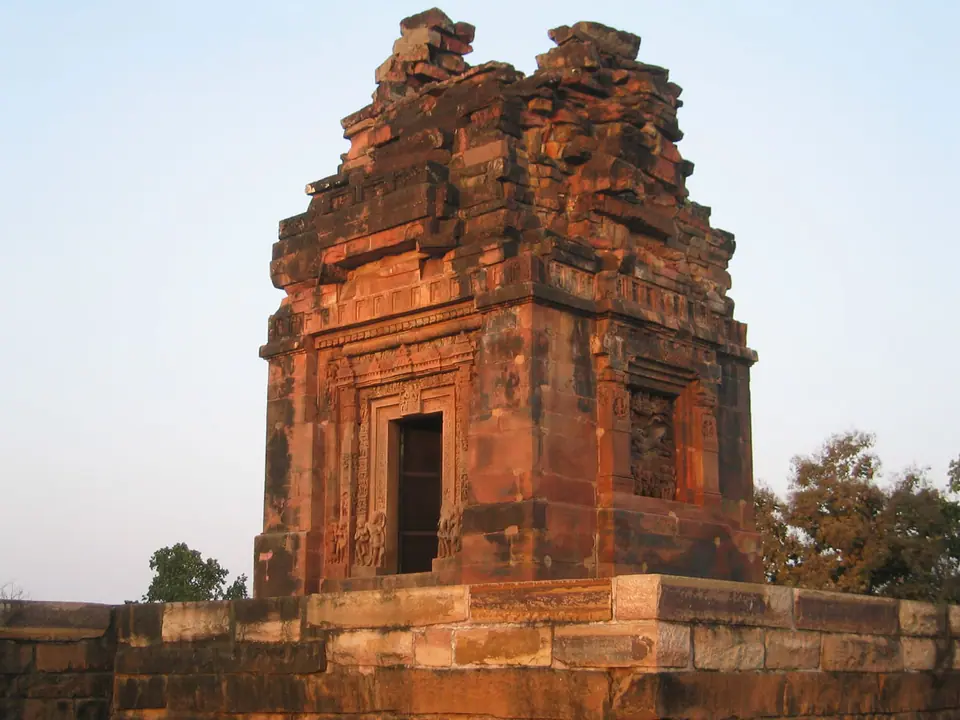
Buddhism did not vanish from India in one event. It lost its footing over many centuries, in stages. First it lost the royal and merchant patronage its monasteries depended on. Then it lost lay followers to a devotional Hinduism that offered them more. By the time the last great monasteries of Bihar and Bengal were destroyed, they were already the final strongholds of a religion that had been shrinking for generations (§8, §9).[1] The majority of historians describe the decline as institutional and economic. Violence played a real part, but mostly at the end.
The evidence
A religion of monasteries, funded from outside
From the start, Indian Buddhism was organised around monks and nuns. They did not farm, so they depended on gifts. In the Mauryan period the gifts came from the top. Ashoka calls himself a lay follower in his own inscriptions, made Lumbinī tax-free “because here the Buddha was born,” and addressed the monastic community directly.[2][3] He also funded the Ājīvikas and told his officials to honour all sects.[4][5] Royal patronage in India was plural from the beginning, and that pluralism cut both ways: support could shift elsewhere.
The next layer of support was broad and commercial. The railings of the stūpas at Sanchi and Bharhut, c. 150–50 BCE, carry donor inscriptions in quantity, including gifts from named women, nuns and guilds.[6] This is a religion paid for by the trading towns. When patterns of urban and royal wealth changed, so did Buddhism’s income.
Patronage moves to temples and brahmins
The Gupta age (c. 320–550 CE) is the turning point. Gupta kings styled themselves devotees of Viṣṇu and minted Garuḍa coins, while still endowing Buddhist institutions.[1] The long-term shift, though, shows in thousands of copper plates. Kings granted tax-free land in perpetuity to brahmins (agrahāra, brahmadeya) and to temples.[7] Brahmin status now had an independent economic base. The temple became a permanent, endowed institution, and in later centuries temples became landlords, employers and banks.[8][9] A monastery needed continuous giving. A brahmin village held its land permanently.
At the same time the Purāṇas gave laypeople what Buddhist monasticism mostly did not: pilgrimage, household vows, festivals, and a personal god to love. None of these required Sanskrit or ordination.[10] From about the 6th to the 13th century, Śaivism in particular became the dominant religious force in India, with royal initiations, Tantric ritual and endowed temples.[11]
The Buddha becomes an avatar of Vishnu
Vaiṣṇava theology absorbed the Buddha instead of refuting him. As the list of Viṣṇu’s avatāras settled toward the standard ten, the Buddha took his place in it.[10] §8 is careful about what this means: the absorption is a symptom of the process, not its cause.[1] A religion whose founder can be honoured as one of your own god’s appearances no longer looks like a rival that has to be chosen. For a lay household, the practical difference between the two narrowed.
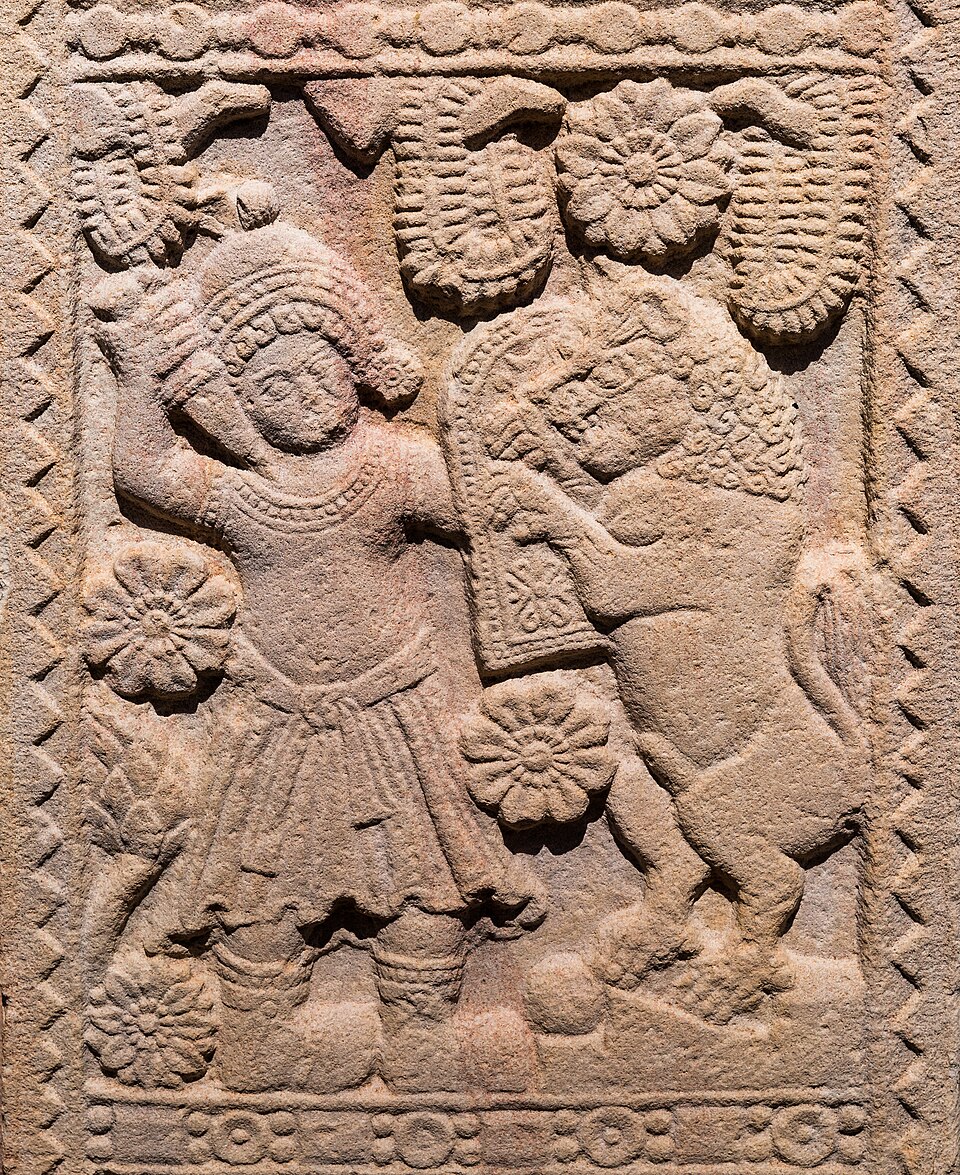
The last strongholds, and their end
By the period of §9 (c. 650–1200), Buddhism’s Indian base had contracted largely to the east. Bengal and Bihar sustained the last major institutions, above all the great monastic universities of Nālandā and Vikramaśīla.[1] These were concentrated targets. The Turkish conquests of the Gangetic plain, which led to the founding of the Delhi Sultanate around 1206, destroyed them. §8 summarises the majority view: later invasions destroyed institutions that were already weakened.[1] A religion with village temples and household rites can survive the loss of its great centres. A religion concentrated in a few large monasteries often cannot.
A short timeline
| Date | What happens | Confidence |
|---|---|---|
| c. 400 BCE (±20 years) | The Buddha’s death, on the current working default[12][13] | Contested |
| c. 268–232 BCE | Ashoka, a Buddhist lay follower who funds several sects[2][4] | Consensus |
| 185 BCE | Puṣyamitra Śuṅga; persecution alleged by later Buddhist texts[14] | Contested |
| c. 150–50 BCE | Sanchi and Bharhut railings: a broad lay donor economy[6] | Consensus |
| c. 320–550 CE | Gupta land grants to brahmins and temples; Buddhist endowments continue[7] | Consensus |
| c. 6th–13th c. | The “Śaiva age”[11] | Majority |
| c. 700–750 CE | Śaṅkara; later hagiography credits him with defeating Buddhism[15] | Contested |
| c. 650–1200 | Nālandā and Vikramaśīla as the last great Indian Buddhist centres (§9)[1] | Majority |
| c. 1192–1206 | Conquest of the north; Delhi Sultanate founded[16] | Consensus |
| 1956 | Ambedkar converts to Buddhism at Nagpur with several hundred thousand followers[17] | Consensus |
What scholars disagree about
Was Buddhism persecuted by Hindu kings? Buddhist sources, especially the Divyāvadāna, accuse the Śuṅga king Puṣyamitra of destroying monasteries and paying bounties for monks’ heads. The strongest version of this view says that Brahmanical revival meant violence. Against it: the accusation is late and hostile, and archaeology shows Buddhist building continuing at Sanchi and Bharhut under the Śuṅgas.[6][18] A Brahmanical revival is plausible. A persecution has not been established. Contested
Did Shankara defeat Buddhism in debate? This is a popular claim and largely a later hagiographical construction. Śaṅkara did argue against Buddhist schools, and his own opponents accused him of being a crypto-Buddhist because he owed so much to Madhyamaka and Yogācāra thought (§9).[15] The decline had begun before him and continued long after. Majority
Was Islam the cause? Popular accounts often make the conquests around 1200 the whole story. The destruction of the great monasteries was real, and it was final for them. Most historians nevertheless see it as the last stage of a long process: it struck institutions that had already lost most of their patronage and lay base (§8).[1] Majority
Absorption or competition? Some scholars emphasise how much Buddhism and Brahmanism came to share in practice, so that the boundary blurred.[19] Others emphasise hard economic competition for land and royal favour.[9] These accounts are compatible. Each single-cause story, whether Hindu persecution, Muslim destruction or peaceful absorption, fits one modern political argument better than it fits the evidence. Political
Common misconceptions
- “Buddhism disappeared suddenly.” The decline ran from the Gupta period to about 1200, around seven centuries.[7][1]
- “Buddhism was never really separate from Hinduism.” In the period that matters here, the main religious divide in India was Vedic against Śramaṇa, not Hindu against Buddhist, and Buddhism rejected the Veda and the authority of brahmins outright (§6).[20][21]
- “Buddhism is gone from India.” It survived at the Himalayan margins. In 1956 Ambedkar’s conversion at Nagpur began Navayāna Buddhism, which now has millions of adherents, concentrated in Maharashtra. It is the largest religious secession from Hinduism in modern history (§12).[17]
Why it matters
The disappearance of Buddhism from its homeland is often told as a morality tale about someone else’s violence. The evidence suggests a more instructive story: Indian religions competed for patrons as well as for truth. Hinduism kept much of what it had absorbed from the Buddhists. That includes, above all, the prestige of non-violence and vegetarianism (§6). The loss was of Buddhism’s Indian institutions, not of its ideas.[21]
For the full story, see §6 on the renouncer movements and §8 on the Gupta patronage shift.
References
- ^ a b c d e f g h Romila Thapar Early India: From the Origins to AD 1300. Penguin, 2002. full text The best single-volume political and social history for this whole span.
- ^ a b Minor Rock Edict 1 — Ashokan edicts. c. 258 BCE. Prakrit in Brāhmī. Names the king as Asoka personally and records that he has been a lay follower for over two and a half years — his Buddhist affiliation in his own voice. read the text
- ^ Rummindei pillar — Lumbinī. c. 249 BCE. Prakrit in Brāhmī. Lumbinī made tax-free because "here the Buddha was born, the Sakyamuni" — the earliest datable evidence for veneration of the birthplace.
- ^ a b Barabar cave dedications — Ashoka and Daśaratha. c. 250–230 BCE. Prakrit in Brāhmī. Rock-cut caves endowed to the **Ājīvikas** by name — the only contemporary documentary evidence for the sect. At one cave the word "Ājīvika" was later effaced. read the text
- ^ Rock Edict 12 — Ashokan edicts. c. 257 BCE. Prakrit in Brāhmī. Honour other sects; praising your own by disparaging others harms your own. A novel theory of plural government. read the text
- ^ a b c Sanchi and Bharhut railings — Madhya Pradesh. c. 150–50 BCE. Stūpa railings carrying donative inscriptions in quantity — including gifts by named women, nuns and guilds, evidence of a broad lay donor economy. about
- ^ a b c D. C. Sircar Select Inscriptions Bearing on Indian History and Civilization. University of Calcutta, 1965. full text Where to find the Heliodorus, Ghoṣuṇḍī and Ashokan texts in the original.
- ^ Michael Willis The Archaeology of Hindu Ritual: Temples and the Establishment of the Gods. Cambridge University Press, 2009. Includes the re-edition that undoes the "first Tantric temple" reading of Gaṅgdhār.
- ^ a b Johannes Bronkhorst How the Brahmins Won: From Alexander to the Guptas. Brill, 2016. How a priesthood without state power became indispensable to states.
- ^ a b Ludo Rocher The Purāṇas. Harrassowitz, 1986. open library The standard survey, and the clearest statement of why Purāṇas resist dating.
- ^ a b Alexis Sanderson "The Śaiva Age: The Rise and Dominance of Śaivism during the Early Medieval Period". in Genesis and Development of Tantrism, 2009. full text The argument that Śaivism, not Vedānta, was the dominant religious force of the age.
- ^ Heinz Bechert, ed. The Dating of the Historical Buddha. Vandenhoeck & Ruprecht, 3 vols., 1991. The symposium that unsettled the traditional dates — and reached no consensus.
- ^ L. S. Cousins "The Dating of the Historical Buddha: A Review Article". Journal of the Royal Asiatic Society 6, 1996. doi Where the c. 400 BCE working default comes from.
- ^ Romila Thapar Aśoka and the Decline of the Mauryas. Oxford University Press, 3rd ed., 2012. open library
- ^ a b Wilhelm Halbfass Tradition and Reflection: Explorations in Indian Thought. SUNY Press, 1991. full text On Śaṅkara and his Mīmāṃsā opponents.
- ^ Richard M. Eaton India in the Persianate Age, 1000–1765. Penguin / University of California Press, 2019. doi The current standard synthesis of the period.
- ^ a b Scott R. Stroud The Evolution of Pragmatism in India: Ambedkar, Dewey, and the Rhetoric of Reconstruction. University of Chicago Press, 2023. Why Ambedkar rejected the reformist "authentic ancient core" move: Dewey's meliorism made him hostile to arguments from origin.
- ^ Julia Shaw Buddhist Landscapes in Central India: Sanchi Hill and Archaeologies of Religious and Social Change. British Association for South Asian Studies, 2007. full text Landscape archaeology around the site §7 and §8 both use.
- ^ Johannes Bronkhorst Buddhism in the Shadow of Brahmanism. Brill, 2011. full text
- ^ Dhp 393 — Dhammapada. c. 300 BCE. Pali. "Not by matted hair, not by lineage, not by birth" — the Śramaṇa attack lands on hereditary claim, not on ritual technique. read the text
- ^ a b Richard Gombrich Theravāda Buddhism: A Social History. Routledge, 2nd ed., 2006. Excellent on the Brahmanical background the Buddha was arguing against.