Bhakti and Vedanta in one paragraph
Between c. 600 and 1200 CE, Hindu devotion (bhakti) and philosophy took their classical forms, sung into being by Tamil poet-saints and argued out by Śaṅkara (Adi Shankara) and Rāmānuja (Ramanuja). With no northern empire after Harṣa, religion follows politics into the regions — and the most consequential developments of these centuries happen in the Tamil south, not the Ganga plain. Poet-saints called Ālvārs (Alvars) and Nāyanārs (Nayanars) sing to Viṣṇu and Śiva in Tamil, not Sanskrit, in the first person, with an emotional intensity that has no earlier parallel: longing, jealousy, erotic surrender, rage at the god’s absence. Their number includes a woman whose poems are recited in temples to this day and an outcaste whose sainthood the tradition had to find room for. Devotion, not ritual competence, becomes the measure of religious standing.
In the same centuries, philosophy reaches its classical peak: Śaṅkara argues that only Brahman is real, Rāmānuja answers that God is real, personal, and loves you back, and Abhinavagupta in Kashmir builds a Tantric metaphysics of consciousness.
And the Chola kings turn the temple into the largest economic institution in South India — landlord, employer, bank and school. Bhakti democratizes access to God while the temple concentrates wealth and status. Both things are this period.
Timeline of the bhakti and Vedanta era
The bhakti and Vedānta era runs from Harṣa’s death in 647 CE to the founding of the Delhi Sultanate c. 1192–1206, spanning the Tamil poet-saints, Śaṅkara, Abhinavagupta, Rāmānuja and Basava.
| Date | Event | Confidence |
|---|---|---|
| 647 CE | Harṣa dies; no northern paramount power for centuries | Consensus |
| c. 6th–9th c. | Ālvārs (12) and Nāyanārs (63) compose in Tamil[1][2] | Majority |
| c. 6th c. | Kāraikkāl Ammaiyār — earliest Nāyanār, a woman[3] | Majority |
| c. 600–897 | Pallava temple building; Mahābalipuram, Kāñcīpuram. The dynasty ends in 897 with Aparājitavarman’s defeat by the Chola Āditya I | Consensus |
| 711 CE | Arab conquest of Sindh — Islam’s first political foothold | Consensus |
| c. 700–750 CE | Śaṅkara (traditional dates 788–820)[4] | Contested |
| c. 850 CE | Vasugupta; the Śiva Sūtras — Kashmir Śaivism begins[5] | Majority |
| fl. c. 975–1025 | Abhinavagupta; the Tantrāloka. No birth or death dates are recorded; the colophons date the work[6] | Majority |
| c. 900–1000 | Bhāgavata Purāṇa — southern, post-Ālvār, the great Kṛṣṇa text | Majority |
| 1000–1027 | Maḥmūd of Ghazni’s raids; Somnath 1026 | Consensus |
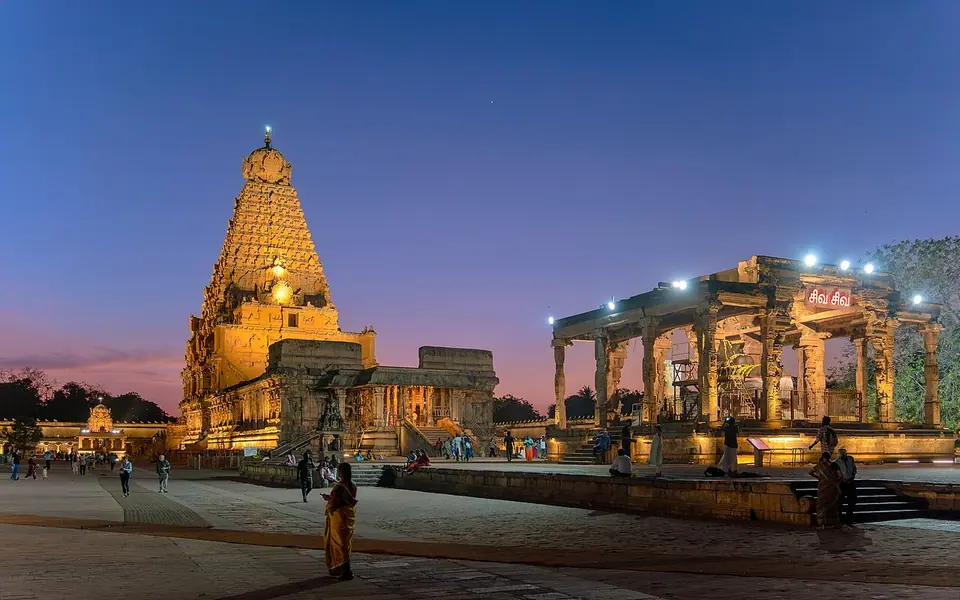
| 1010 CE | Bṛhadīśvara (Brihadeeswarar) temple, Thanjavur — Rājarāja Chola I[7] | Consensus |
| c. 1077–1157 | Rāmānuja; Viśiṣṭādvaita; Śrīraṅgam. The familiar 1017–1137 is hagiography — a 120-year life[8] | Contested |
| c. 1106–1167 or 1131–1196 | Basava and the Vīraśaiva/Liṅgāyat movement, Karnataka[9] | Contested (dates) |
| c. 1192–1206 | Delhi Sultanate founded → §10 | Consensus |
Where: Tamil Nadu, Kashmir and Karnataka
In the bhakti era religious creativity is regional: Tamil Nadu leads in devotion, Kashmir in philosophy and Karnataka in social radicalism, while Bengal sustains the last major Buddhist institutions.
Tamil Nadu is the centre of gravity for this chapter, which is a first. The Kāverī delta under the Pallavas and then the Cholas is wealthy, densely settled, and politically stable enough to sustain enormous temple construction. Every major development in devotional religion in this period either happens there or responds to what happened there.
Kashmir produces the most sophisticated philosophy of the age. Karnataka produces the most socially radical movement. Bengal and the east sustain the last major Buddhist institutions — Nālandā, Vikramaśīla — as Buddhism’s Indian base contracts.
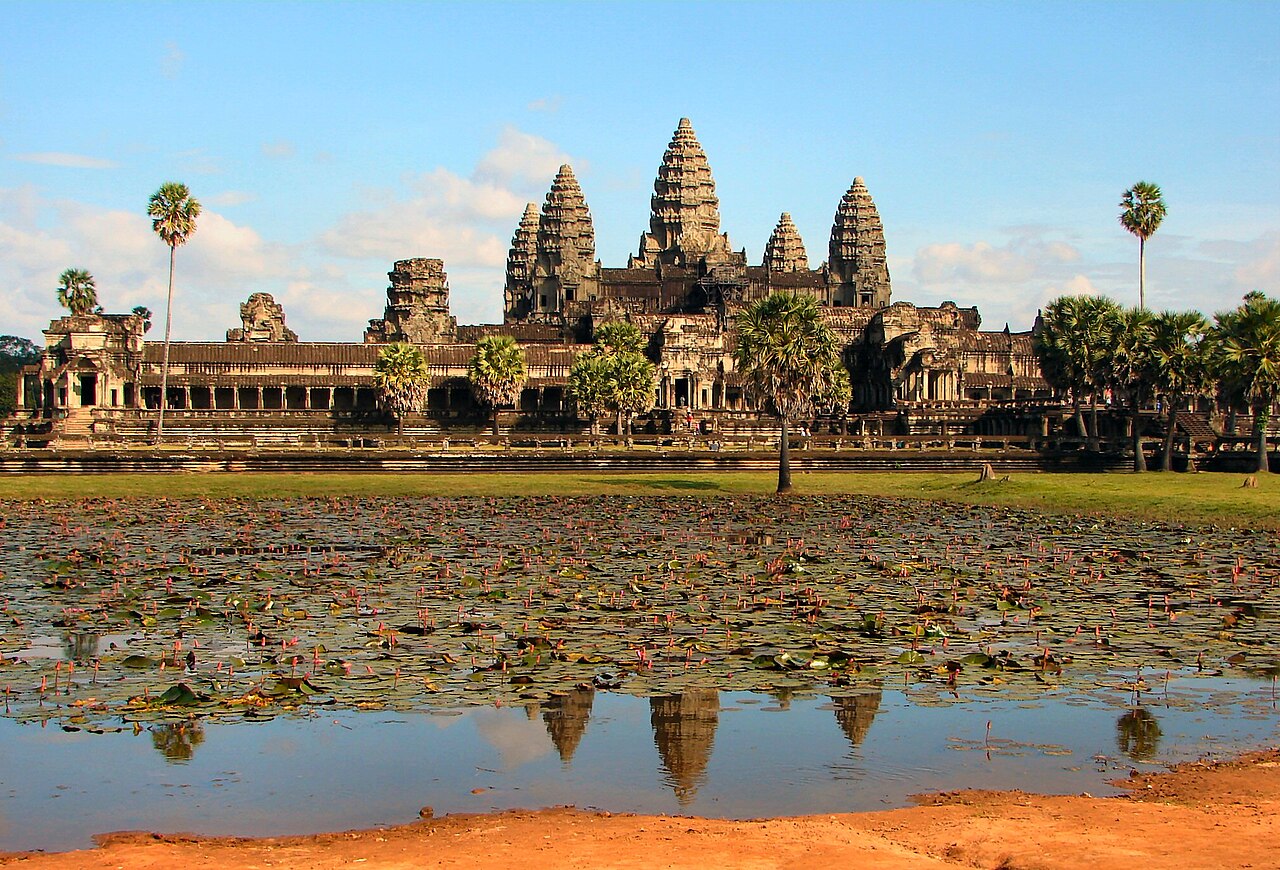
Southeast Asia continues building on the Indian model at a scale India itself rarely matched: Prambanan in Java (9th c.), Angkor Wat (12th c.) — the largest religious monument on earth, built as a Viṣṇu temple.[10][11] Consensus
The evidence ledger for the bhakti era
In the bhakti era vernacular devotional poetry gains scriptural status, Vedānta splits into rival schools and temples become the largest landholders, while bhakti’s radicalism on caste stays limited in social effect.
| Dimension | What we can say | Evidence | Confidence |
|---|---|---|---|
| Language of religion | Vernacular devotional poetry acquires scriptural status | The Ālvārs’ Nālāyira Divya Prabandham is called the “Tamil Veda” and recited in temples[1][12] | Consensus |
| Access | Devotion outranks birth in principle; saints include women and low-caste people | Āṇṭāḷ; Kāraikkāl Ammaiyār; Nandaṉār; Basava’s movement[13][3][14] | Consensus that the tradition claims this |
| Practice | Emotional, personal, often erotic devotion to a chosen deity | The poems themselves, in the tens of thousands of verses | Consensus |
| Temple economy | Temples are the largest landholders, employers and lenders in the region | Thousands of dated Chola inscriptions on temple walls recording grants, loans, wages[7][15] | Consensus |
| Philosophy | Vedānta becomes the dominant Brahmanical system, splitting into rival schools | Śaṅkara’s, Rāmānuja’s and later Madhva’s commentaries on the same Brahmasūtra[16][17] | Consensus |
| Ritual | Temple worship is Tantric in structure across sects | Śaiva Siddhānta and Pāñcarātra ritual manuals in temple use[18] | Majority |
| Caste | Bhakti’s radicalism is real in doctrine and limited in social effect | Saints’ hagiographies dwell on the exceptional nature of low-caste sainthood[19] | Majority |
Primary sources
The primary sources for the bhakti era are the Tamil saints’ hymns, the Vedānta commentaries of Śaṅkara and Rāmānuja, Kashmir Śaiva philosophy, Basava’s Kannada vacanas and the inscriptions on Chola temple walls.
1. The Tamil saints
The Ālvārs (“those immersed in God”) sang to Viṣṇu; the Nāyanārs (“leaders”) to Śiva. Their work was collected into canons — the Ālvārs’ 4,000 verses as the Nālāyira Divya Prabandham, the Nāyanārs’ hymns as the twelve-book Tirumuṟai, whose first seven books are the Tēvāram — that are sung in temple liturgy today, alongside Sanskrit.[1][2] (The distinction matters: the Tēvāram proper holds only Campantar, Appar and Cuntarar. Kāraikkāl Ammaiyār is in book 11 — so “the Tēvāram” would exclude the very saint discussed below.)
What is new is not devotion but its register. The poets address god as lover, as absent beloved, as thief, as tormentor. They complain, accuse, beg, and describe physical symptoms of longing. Sanskrit stotra literature has nothing comparable; the closest antecedent is Tamil secular love poetry from the Sangam era (§7), whose conventions the saints deliberately borrow.[20][21]
Three figures make the social claim concrete:
- Kāraikkāl Ammaiyār (c. 6th c.), the earliest Nāyanār — a woman who, in her own poems and in the tradition about her, asks Śiva to strip her of beauty and give her a ghoulish form so she can attend him at the cremation ground. She is one of the founding voices of Tamil Śaivism.[3]
- Āṇṭāḷ (Andal, c. 9th c.), the only woman among the twelve Ālvārs, whose Tiruppāvai is recited every Mārgaḻi month across Tamil Nadu. Her poems declare she will marry no one but Viṣṇu.[22][13]
- Nandaṉār, a Nāyanār of an untouchable community, whose story turns on his being unable to enter the temple at Chidambaram. Note which tradition preserves it and when: the only premodern narrative is Cēkkiḻār’s Periya Purāṇam (12th c., Tirumuṟai book 12), three or four centuries after the poets; the version most people know, with the temple-entry refusal foregrounded, is Gopalakrishna Bharati’s Nandanār Carittiram (1861), shaped by nineteenth-century caste-reform argument. The exclusion is real in the sources — but the sources are late, and the emphasis is later still.[23][24][2]
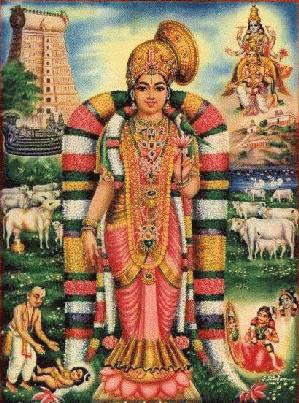
What it proves. Devotional religion generated genuine religious authority outside the brahmin male monopoly — and the tradition remembered it, canonized it, and put it into temple liturgy. Consensus
And the honest counterweight. These saints are celebrated as extraordinary. Nandaṉār’s story is told precisely because an untouchable saint was remarkable; in most versions he is admitted to the temple only after passing through fire. The temples the Ālvārs sang about continued to exclude people like Nandaṉār for another thousand years, until twentieth-century legislation (§12). Bhakti relativized caste in the domain of salvation without dismantling it in the domain of social life.[19][25] Majority
2. Shankara — only Brahman is real
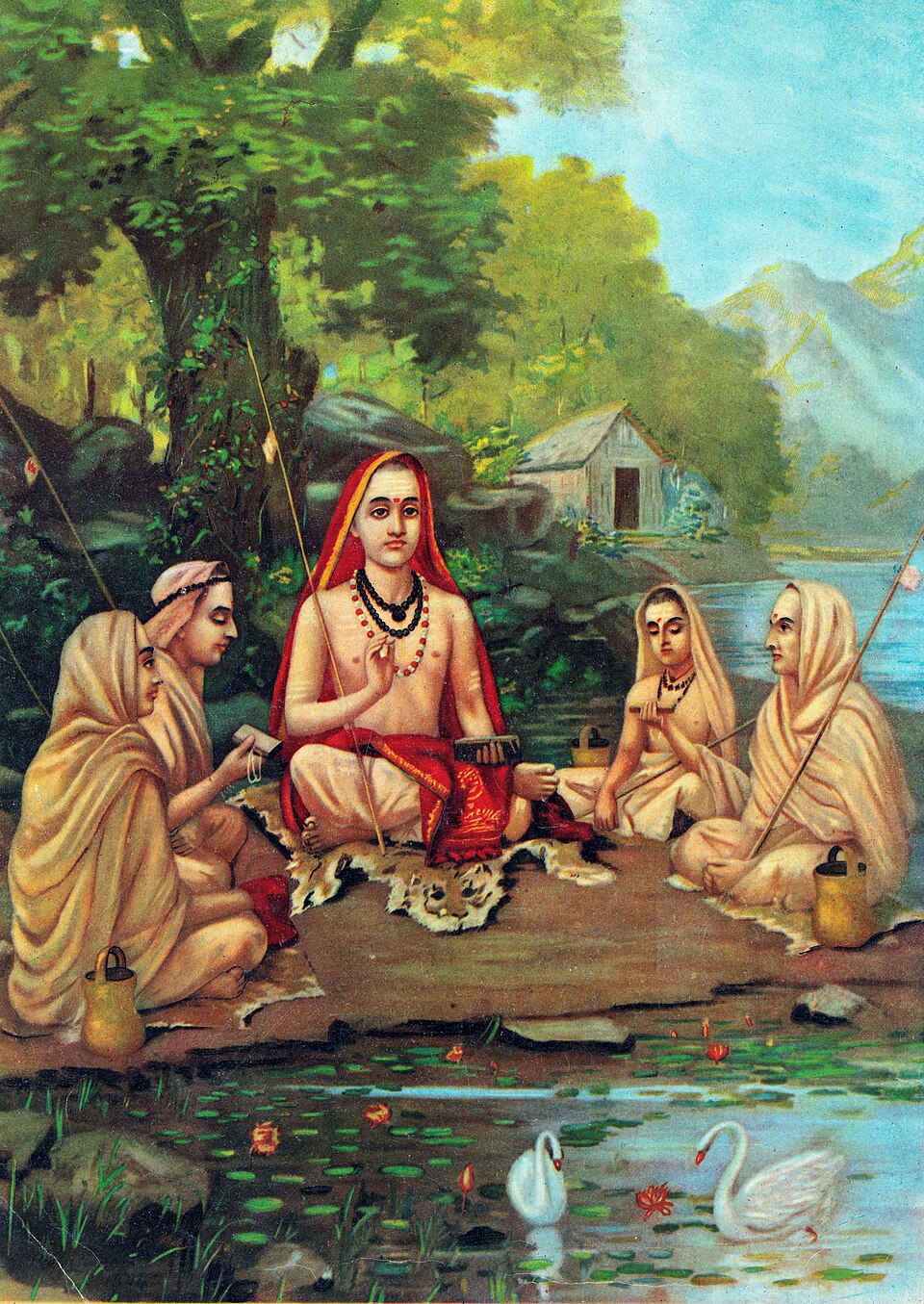
Śaṅkara (c. 700–750 CE) is the most influential Indian philosopher, and Advaita — non-dualism — became for many the definition of Hindu philosophy. His Brahmasūtrabhāṣya opens by asking how error is possible at all:
युष्मदस्मत्प्रत्ययगोचरयोर्विषयविषयिणोस्तमःप्रकाशवद्विरुद्धस्वभावयो- रितरेतरभावानुपपत्तौ सिद्धायाम् …
yuṣmad-asmat-pratyaya-gocarayor viṣaya-viṣayiṇos tamaḥ-prakāśavad viruddha-svabhāvayor itaretara-bhāvānupapattau siddhāyām…
“The object, which is the sphere of the notion ‘you’, and the subject, which is the sphere of the notion ‘I’, are by nature as opposed as darkness and light, and cannot be identified with one another…”[16]
— and yet, he continues, we do exactly that all the time, superimposing (adhyāsa) the object onto the subject, saying “I am fat,” “I am blind.” The whole of Advaita follows from taking that ordinary confusion seriously: what you take to be a self in a world is a superimposition on pure consciousness, which is Brahman, which alone is.
A later summary verse compresses it — Brahmajñānāvalīmālā 20, a short work attributed to Śaṅkara but not among those scholarship accepts as his (a variant appears at Vivekacūḍāmaṇi 20, whose attribution is also largely rejected). Over three hundred texts are ascribed to Śaṅkara; the accepted core is the Brahmasūtra and Upaniṣad commentaries and the Upadeśasāhasrī:[4]
ब्रह्म सत्यं जगन्मिथ्या जीवो ब्रह्मैव नापरः ।
brahma satyaṃ jagan mithyā jīvo brahmaiva nāparaḥ | “Brahman is real; the world is false; the individual self is none other than Brahman.”[26]
What it proves. Śaṅkara systematizes the Upanishadic material of Chapter 5 into a rigorous philosophy, and he does it by subordinating everything else — ritual, devotion, the personal god — to knowledge. Rituals purify; devotion prepares; only jñāna liberates. He is answering Mīmāṃsā ritualists and Buddhists at once, and his method (root text, commentary, objection, reply) sets the form of Indian scholastic argument. Consensus
Two cautions. His traditional dates (788–820) come from later hagiography and are probably too late; c. 700–750 is more defensible. And his enormous modern prominence owes a great deal to nineteenth-century Neo-Vedānta (§11), which presented Advaita as the essence of Hinduism. In his own period he was one contested voice among many, and Śaivism, not Vedānta, was the dominant religious force.[27] Majority
3. Ramanuja — God is real, and personal
Rāmānuja (probably c. 1077–1157; the traditional 1017–1137 gives him a 120-year life), based at Śrīraṅgam, wrote the Śrībhāṣya on the same Brahmasūtra and reached almost opposite conclusions.[17] His system, Viśiṣṭādvaita, “qualified non-dualism,” holds that Brahman is one — but a one that genuinely possesses attributes, and of which the world and individual souls are the body (śarīra-śarīri-bhāva). Souls are real, distinct, and eternally dependent on God; they are not erased in liberation. And the path is bhakti, later systematized as prapatti, total surrender.
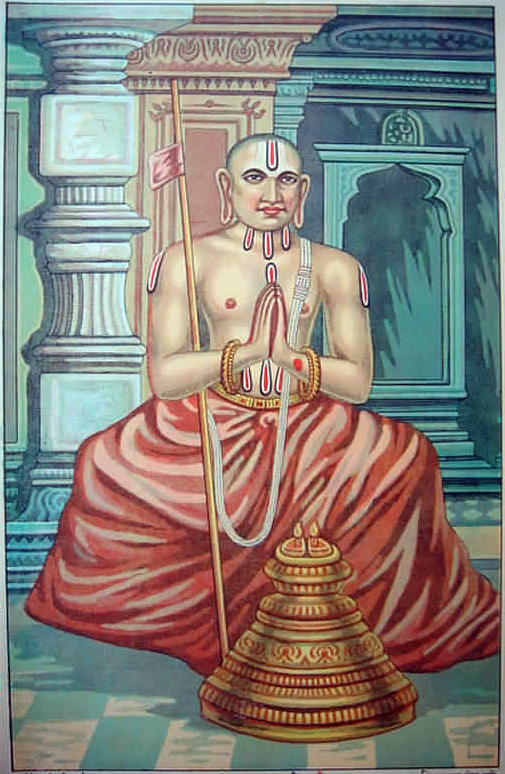
What it proves. This is the intellectual synthesis of the Tamil devotional movement with Sanskrit philosophy. Rāmānuja is heir to the Ālvārs — though the liturgical work was not his: it was Nāthamuni (c. 824–924) who compiled the Prabandham, called it the Drāviḍa Veda, and set it into temple recitation more than a century earlier.[1][21] What Rāmānuja adds is a rigorous Vedāntic defence of that inherited devotional theism. The stakes are not academic: if Śaṅkara is right, the personal god you love is ultimately unreal. Rāmānuja’s system exists to say that he is not. Consensus
The tradition also credits Rāmānuja with pressing for temple access for excluded groups. The hagiographical accounts are later and probably improved in the telling, but the theological logic — that surrender is available to all — is genuinely in his work.[8] Contested on the biography
4. Kashmir Shaivism
In Kashmir, a non-dual Śaiva tradition develops on entirely different foundations from Advaita. Where Śaṅkara’s absolute is pure, attributeless consciousness and the world is illusion, the Pratyabhijñā (“recognition”) school — founded by Somānanda, systematized by his pupil Utpaladeva, brought to its height by Abhinavagupta (fl. c. 975–1025) — holds that reality is a single consciousness that is active, self-aware, and joyfully manifesting itself as the world. The world is not false; it is Śiva’s play. Liberation is recognizing what you already are.[18]
(“Kashmir Śaivism” is itself a modern umbrella term; specialists distinguish Trika, Krama, Pratyabhijñā and Kaula, and prefer “the Śaiva non-dualism of Kashmir.”)
Abhinavagupta’s Tantrāloka is a vast synthesis of Tantric practice and philosophy; he also wrote the most important surviving commentary on the Nāṭyaśāstra, and his theory of aesthetic experience (rasa) — that the appreciation of art is a form of the same self-relishing consciousness — is still the reference point in Indian aesthetics.[6] Consensus
5. Basava and the Lingayats — the radical case
In 12th-century Karnataka, Basava (c. 1106–1167), a state minister, led a movement whose positions were unusually explicit:
- Reject temple worship in favour of a personal iṣṭaliṅga worn on the body — abolishing the need for temple, priest, and the exclusions both entail.
- Reject caste and birth-purity outright. The movement admitted members of all castes and performed inter-caste marriage. The tradition that this brought lethal retaliation at Kalyāṇa rests on much later sources — Palkuriki Somanātha’s Basava Purāṇa (c. 1300) and the Śūnyasampādane (15th c.) — and should be read as tradition rather than as recorded event.[28]
- Reject Sanskrit scripture in favour of vacanas — short, direct, first-person prose-poems in Kannada.[14]
- Reject the ritual subordination of women. Akka Mahādēvi’s vacanas are among the movement’s central texts.[29]
Basava’s best-known vacana contrasts the rich who build temples for Śiva with his own poor body as the temple — legs as pillars, body as shrine, head as the golden dome — and ends by observing that what is built will fall, while what moves will stay.[9][14]
What it proves. The most radical social critique in premodern Indian religion was made from inside a devotional Hindu movement, in a vernacular, in the 12th century. It also shows the limits: the Liṅgāyats survived by becoming, over time, a distinct community with internal stratification of its own. Majority
6. The temple as an economy
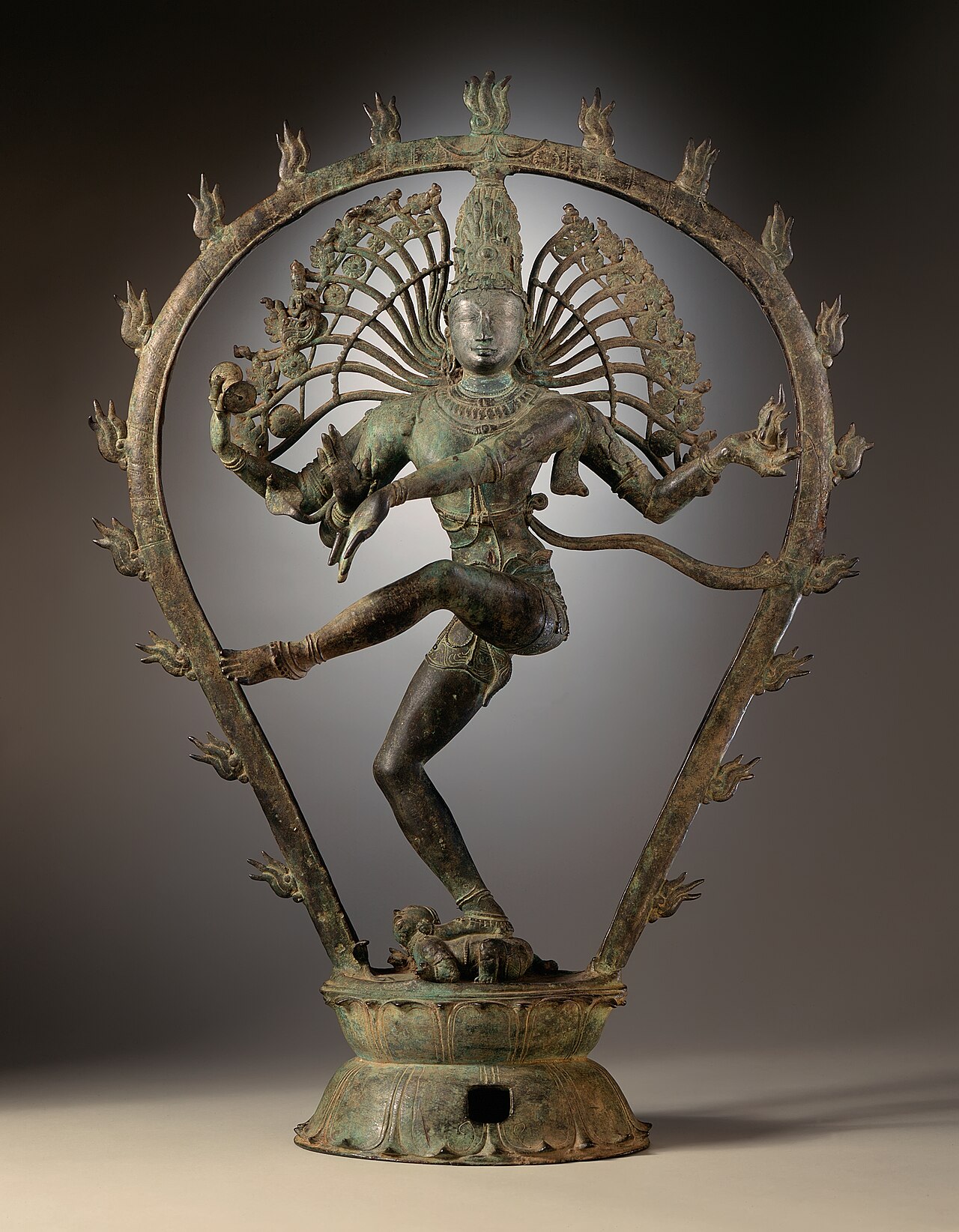
The walls of Chola temples are covered in inscriptions — thousands of them, dated, recording transactions. Rājarāja I explicitly ordered that all grants, his own and others’, be engraved on the temple (South Indian Inscriptions II, no. 1): the epigraphic habit is deliberate royal archival policy, which is why this economy is documented at all.[30][7]
The Bṛhadīśvara temple at Thanjavur, consecrated in 1010 with a vimāna of about 63 metres, carries in SII II, no. 66 (regnal year 29, c. 1014) a register of temple personnel.[7] It is worth getting the details right, because the usual summary gets them wrong:
- Paragraphs 3–402 name, individually, four hundred talicceṟi peṇṭukaḷ — temple women transferred from other temples and settled in the streets around the shrine.[7][31]
- The male servants are a separate list in the same record: dance-masters, singers, drummers, musicians, accountants, parasol-bearers, lamp-lighters, watermen, potters, washermen, barbers, astrologers, tailors, carpenters, a brazier, a goldsmith. Total documented personnel is over six hundred, not four hundred.[7]
- They were not paid salaries and rations. Each received a paṅku — a share consisting of a house and one veli of land yielding 100 kalam of paddy. That is an assignment of land rights, not a wage, and it makes these women property-holders.
Leslie Orr’s study of the Chola corpus (Donors, Devotees, and Daughters of God, 2000) argues that “temple dancer,” and the later devadāsī image attached to it, are anachronisms for this period: the Tamil terms are honorific and devotional rather than occupational, and temple women appear in the inscriptions as donors in their own right, with increasing economic power across the period.[31]
Other Chola records document the temple’s other functions: villages in Ceylon granted to the temple out of overseas conquest (SII II, no. 92); gifts by Rājarāja’s sister Kuntavai under her own name (nos. 2, 6–8); and, across the wider corpus, the perpetual-lamp endowments in which a deposit of gold or of ninety-odd ewes is placed with a village assembly or shepherd, who owes ghee in perpetuity from the interest — the temple as depositor, the village as borrower.[32]
What it proves. This is the best-documented religious economy in premodern India, and it changes what a temple is. The temple:
- owns land on a large scale, redistributed from royal conquest;
- employs hundreds of specialists, creating hereditary service communities;
- places deposits with village assemblies against perpetual obligations — functioning as a financial institution, though usually as the lender-depositor rather than the borrower;
- legitimates the king, who appears as the god’s chief servant;
- stores wealth in gold and jewels — which is precisely why temples became military targets.
Bhakti says God is available to everyone without intermediaries. The temple institution says God is located here, administered by these people, funded by this land. Both propositions are held simultaneously throughout this period, and the tension between them drives much of what follows.[15] Consensus
The gods of the bhakti era
Śiva is arguably the dominant deity of the bhakti era, while Viṣṇu gains a philosophy through Rāmānuja, Kṛṣṇa rises sharply, and the Vedic gods are reduced to ritual survivals and directional guardians.
| Deity | Status | Note |
|---|---|---|
| Śiva | Arguably the dominant deity of the age across India and Southeast Asia | Śaiva Siddhānta, Kashmir Śaivism, Vīraśaivism, Chola royal cult |
| Viṣṇu | Supreme for Śrīvaiṣṇavas; the Ālvārs’ god; Angkor Wat’s god | Rāmānuja gives him a philosophy |
| Kṛṣṇa | Rising sharply; the Bhāgavata Purāṇa (c. 900–1000) supplies the childhood and Vṛndāvana material | Sets up §10 |
| Devī | Established; Śrī Vidyā and Kaula traditions elaborate her Tantric theology | |
| Murugaṉ / Skanda | Central in Tamil religion | Continuity from Sangam (§7) |
| Gaṇeśa | Now ubiquitous as the remover of obstacles | Absent from the Vedas |
| The Vedic gods | Ritual survivals and directional guardians | ▼ complete |
What is absent in the bhakti era
The bhakti era still lacks northern vernacular bhakti, Madhva’s Dvaita, sustained Muslim political rule, and the word “Hinduism” itself.
- Northern vernacular bhakti — Kabīr, Sūrdās, Tulsīdās are all §10. The vernacular revolution starts in Tamil and reaches the north centuries later.
- Madhva’s Dvaita — 13th century (§10), completing the three main Vedānta schools.
- Sustained Muslim political rule — raids from 1000 CE, but the Sultanate is 1206 (§10).
- The word “Hinduism” — still no such category. Majority
Debates about Shankara and bhakti
Debates about Śaṅkara and bhakti concern his dates, which internal evidence puts at c. 700–750, his supposed defeat of Buddhism, and whether bhakti’s subversive claims about caste produced structural change.
When did Shankara live?
Traditional dates 788–820 come from monastic records centuries later. Internal evidence — whom he cites and who cites him — supports c. 700–750.[4] Contested
Did Shankara “defeat Buddhism”?
A common claim, and largely a later hagiographical construction. Śaṅkara argues against Buddhist schools, and his opponents accused him of being a crypto-Buddhist because of his debts to Madhyamaka and Yogācāra. Buddhism’s Indian decline was principally institutional and economic (§8), unfolding over centuries. Majority
Was bhakti a social movement or a religious one?
It produced genuinely subversive claims about caste and gender, and genuinely low-caste and female saints. It did not produce structural change, and its institutions were frequently reabsorbed into caste hierarchies within a few generations. Both the radicalism and its containment are documented, and readings that keep only one half are incomplete.[25][19] Contested / Political
Was Islam’s arrival a rupture in this period?
Not yet in this period. Sindh was conquered in 711 and remained peripheral; Maḥmūd’s 11th-century raids were destructive but did not establish rule. Arab traders had settled peacefully on the Malabar coast for centuries. The transformation begins in §10.[33] Consensus
Further reading
- A. K. Ramanujan, Hymns for the Drowning (Nammāḻvār) and Speaking of Śiva (the vacanas) — the translations that brought this poetry into English.
- Friedhelm Hardy, Viraha-Bhakti: The Early History of Kṛṣṇa Devotion in South India (1983).
- Karen Pechilis, The Embodiment of Bhakti (1999) — on Kāraikkāl Ammaiyār and women saints.
- Burton Stein, Peasant State and Society in Medieval South India (1980) — the temple economy.
- Alexis Sanderson, “The Śaiva Age” (2009).
- Wilhelm Halbfass, Tradition and Reflection (1991) — on Śaṅkara and Mīmāṃsā.
- John Carman, The Theology of Rāmānuja (1974).
References
- ^ a b c d Nālāyira Divya Prabandham — The twelve Ālvārs. c. 6th–9th c. CE. Tamil. 4,000 verses called the "Tamil Veda" and sung in temple liturgy — vernacular poetry achieving scriptural status. about
- ^ a b c Indira Viswanathan Peterson Poems to Śiva: The Hymns of the Tamil Saints. Princeton University Press, 1989. full text The standard Tēvāram translation.
- ^ a b c Karen Pechilis The Embodiment of Bhakti. Oxford University Press, 1999. open library On Kāraikkāl Ammaiyār and women saints.
- ^ a b c Wilhelm Halbfass Tradition and Reflection: Explorations in Indian Thought. SUNY Press, 1991. full text On Śaṅkara and his Mīmāṃsā opponents.
- ^ Śiva Sūtras — Vasugupta. c. 850 CE. Sanskrit. The revealed text at the head of the Kashmirian Śaiva non-dual tradition. about
- ^ a b Tantrāloka — Abhinavagupta. c. 1000 CE. Sanskrit. Kashmir Śaivism's synthesis: reality is a single consciousness joyfully manifesting as the world — not an illusion to be seen through. about
- ^ a b c d e f Bṛhadīśvara temple inscriptions — Thanjāvūr. 1010 CE onward. Tamil. Land grants, loans at interest, and the rations of four hundred temple dancers — the best-documented religious economy in premodern India. about
- ^ a b John B. Carman The Theology of Rāmānuja. Yale University Press, 1974. full text
- ^ a b Basavaṇṇa vacana 820 — Vīraśaiva corpus. 12th c. CE. Kannada. The rich build temples for Śiva; the poor man's body is the temple — closing on the sthāvara/jaṅgama contrast, the standing and the moving. Ramanujan's translation is in copyright. read the text
- ^ Prambanan — Java. 9th c. CE. A monumental Śaiva temple complex in Java, contemporary with the Ālvārs. about
- ^ Angkor Wat — Cambodia. 12th c. CE. The largest religious monument on earth, built as a **Viṣṇu** temple — the scale of the Purāṇic model's export. about
- ^ A. K. Ramanujan, trans. Hymns for the Drowning: Poems for Viṣṇu by Nammāḻvār. Princeton University Press, 1981. The translation that brought Ālvār poetry into English.
- ^ a b Archana Venkatesan The Secret Garland: Āṇṭāḷ's Tiruppāvai and Nācciyār Tirumoḻi. Oxford University Press, 2010. The only woman among the twelve Ālvārs, in full.
- ^ a b c A. K. Ramanujan, trans. Speaking of Śiva. Penguin, 1973. full text The Vīraśaiva vacanas. Still in copyright — quote sparingly.
- ^ a b Burton Stein Peasant State and Society in Medieval South India. Oxford University Press, 1980. open library The temple economy, from the inscriptions.
- ^ a b Brahmasūtrabhāṣya, adhyāsa-bhāṣya — Śaṅkara. c. 700–750 CE. Sanskrit. Subject and object are as opposed as light and darkness — and we confuse them constantly. All of Advaita follows. read the text
- ^ a b Śrībhāṣya — Rāmānuja. c. 1100 CE. Sanskrit. The world and souls are the body of God. A theistic answer to Śaṅkara, giving Tamil devotion a Vedāntic defence. about
- ^ a b Alexis Sanderson "The Śaiva Age: The Rise and Dominance of Śaivism during the Early Medieval Period". in Genesis and Development of Tantrism, 2009. full text The argument that Śaivism, not Vedānta, was the dominant religious force of the age.
- ^ a b c Jon Keune Shared Devotion, Shared Food: Equality and the Bhakti-Caste Question in Western India. Oxford University Press, 2021. Reframes the caste question: not "was bhakti egalitarian?" but what work the claim that it was has done, and for whom. The liveliest debate in the field.
- ^ Tiruvāymoḻi 1.1.1 — Nammāḻvār. c. 9th c. CE. Tamil. The Tamil canon opens by addressing the poet's own mind, in the metre and idiom of Tamil love poetry rather than Sanskrit stotra — the register claim, in one verse. read the text
- ^ a b Friedhelm Hardy Viraha-Bhakti: The Early History of Kṛṣṇa Devotion in South India. Oxford University Press, 1983. full text
- ^ Tiruppāvai — Āṇṭāḷ. c. 9th c. CE. Tamil. Thirty verses recited across Tamil Nadu every Mārgaḻi month, twelve centuries later — a woman's voice organising a collective vow. about
- ^ Periya Purāṇam — Cēkkiḻār. 12th c. CE. Tamil. Tirumuṟai book 12: the hagiographies of the 63 Nāyanārs, including the only premodern narrative of Nandaṉār — three or four centuries after the poets themselves. about
- ^ Nandanār Carittiram — Gopalakrishna Bharati. 1861 CE. Tamil. The Tamil musical drama that made the temple-entry refusal the centre of Nandaṉār's story, shaped by nineteenth-century caste-reform argument. The version most people actually know.
- ^ a b John Stratton Hawley A Storm of Songs: India and the Idea of the Bhakti Movement. Harvard University Press, 2015. full text Argues that "the bhakti movement" is itself a modern construction. Important and unsettling.
- ^ Andrew J. Nicholson Unifying Hinduism: Philosophy and Identity in Indian Intellectual History. Columbia University Press, 2010. full text Argues the unification of Hinduism began in the 12th–16th centuries, well before the British — a key correction to the strong constructionist thesis.
- ^ Śūnyasampādane — Vīraśaiva anthology. 15th c. CE. Kannada. The anthology through which the twelfth-century vacanas reach us — a three-century gap that should be stated whenever they are quoted as evidence.
- ^ Akka Mahādēvi's vacanas — Vīraśaiva corpus. 12th c. CE. Kannada. Signed with the ankita Cennamallikārjuna. "When all the world is the eye of the lord, what can you cover and conceal?" — a woman's signed repudiation of the modesty regime. read the text
- ^ SII II, no. 1 — Rājarāja I, Thanjavur. c. 1010 CE. Tamil. Rājarāja's own order that all grants, his and others', be engraved on the temple. The epigraphic habit is deliberate royal archival policy — which is why this economy is documented at all. read the text
- ^ a b Leslie C. Orr Donors, Devotees, and Daughters of God: Temple Women in Medieval Tamilnadu. Oxford University Press, 2000. full text Dismantles "temple dancer" as an anachronism: the Chola inscriptions show temple women as property-holders and donors.
- ^ SII II, no. 92 — Thanjavur. c. 1014 CE. Tamil. Villages **in Ceylon** granted to the Thanjavur temple — the endowment funded directly out of overseas conquest. read the text
- ^ Richard M. Eaton India in the Persianate Age, 1000–1765. Penguin / University of California Press, 2019. doi The current standard synthesis of the period.