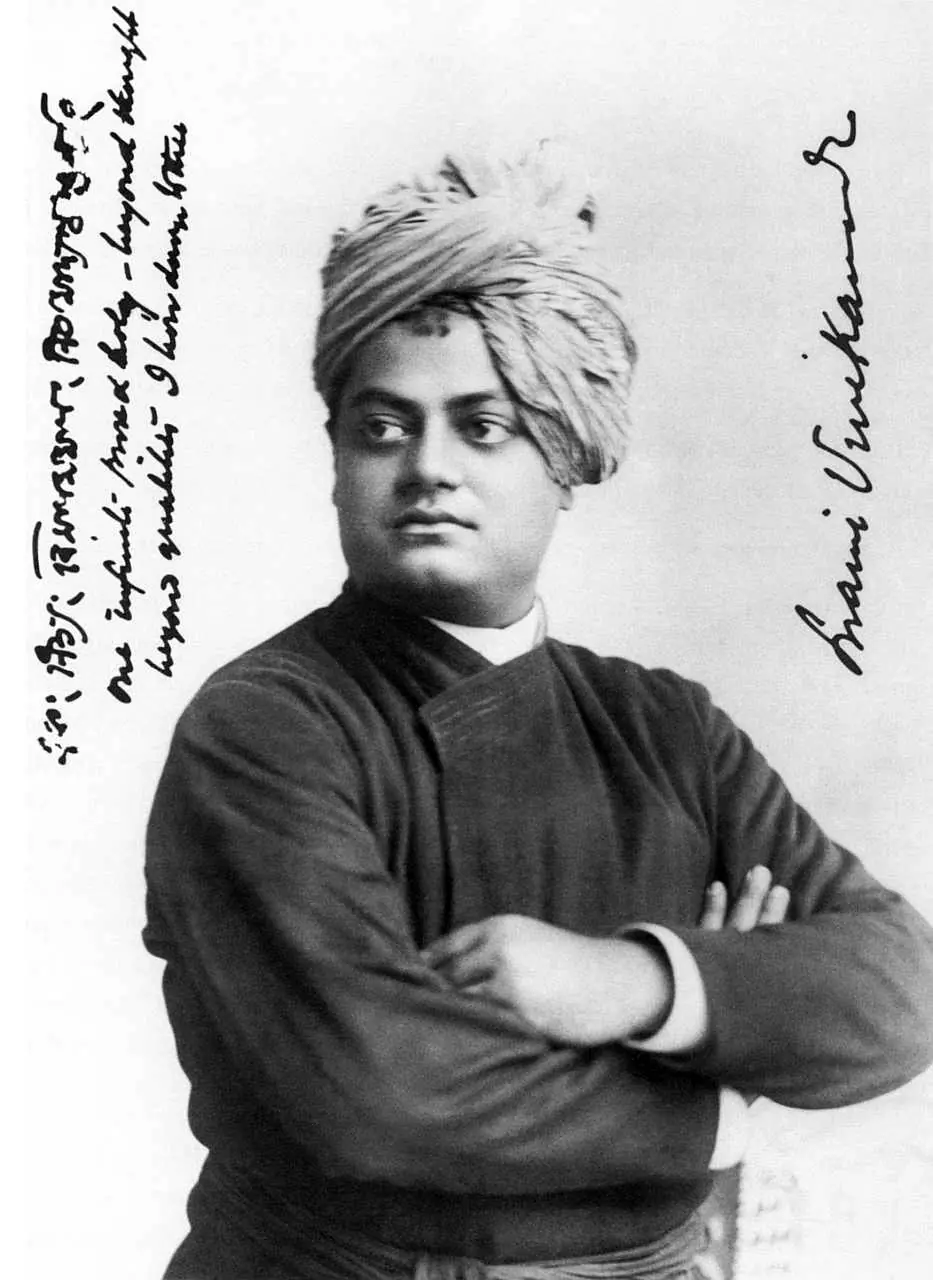
No. The traditions now called Hinduism are ancient, and people in India were calling themselves Hindus, in a religious sense, centuries before the British arrived. But the claim is not simply wrong either, and it is worth understanding what it actually says. In 1750 there was no single religion called Hinduism with an agreed canon, essence and boundary. There were Vaiṣṇavas, Śaivas, Śāktas, Smārtas, Liṅgāyats, hundreds of sampradāyas and thousands of jātis, sharing much and agreeing on no creed, no canon, no founder and no central authority. By 1947 there was a religion called Hinduism, with the Vedas and the Gītā as its scriptures, Vedānta as its philosophy, Vivekananda as its representative voice, and a census category.[1][2] Majority
The whole debate turns on which of those two facts you think is more important.
Three positions, not two
The argument is often reported as “invented” versus “ancient.” In the scholarship there are three positions, and they are about different things.[3][4]
- Colonial invention. The unified religion is an artefact of 1750–1947.
- Early-modern indigenous unification. Indian philosophers of the 14th–17th centuries had already treated the orthodox schools as one family.
- Medieval self-identification. A Hindu identity formed in contrast to Muslims from roughly 1200–1500.
Distinguish philosophical unification, communal self-identification and world-religion packaging, and all three can be true at once. Contested
The case for invention, at its strongest
Robert Frykenberg argued that “Hinduism,” as a single religion and as an institution, emerged in the nineteenth century from the joint work of East India Company administration, Orientalist scholarship and missionary polemic.[5] S. N. Balagangadhara put the strongest version: that Indian traditions are not “religions” in the sense Christianity is at all, and that Europeans, carrying a theological template of what a religion must be, found one in India because they expected to.[6] Richard King traced how Orientalist scholarship picked out Vedānta, and a mystical, text-based Hinduism, as the essence, partly because it matched European expectations of what a high religion looks like.[2]
The evidence behind this case is solid. Warren Hastings’s Judicial Plan of 1772 directed that Hindus be governed in family matters by “the laws of the Shaster,” which turned one scholastic Sanskrit text into enforceable personal law across a subcontinent once Jones translated Manu in 1794.[7][8][9] From 1871–72 the census required every person to have exactly one religion. A census cannot record “mostly attends the local goddess shrine, also visits the Sufi dargah, follows a guru lineage of uncertain affiliation.” It records Hindu or Muslim, and millions of ambiguous religious lives were resolved on paper into two blocs.[10]
And the reformers who defined modern Hinduism did so under pressure. Rammohan Roy derived a monotheism from the Upaniṣads and rejected image worship; Dayānanda’s Ārya Samāj went “back to the Vedas”; Vivekananda told Chicago in 1893 that Advaita was the essence of Hinduism and that all religions lead to one goal. Much of this answered missionary attacks on idolatry, and much of it became what the world takes Hinduism to be.[11][12][13] Majority
The case against invention, at its strongest
David Lorenzen’s “Who Invented Hinduism?” (1999) is the classic reply. He shows that between about 1200 and 1500, long before any European scholar, Indian writers were using hindū as the name of a religious community set against turk and musalmān, most vividly in the poetry of the Sants.[14] Kabīr, a Banaras weaver probably of the fifteenth century, attacks Hindu and Muslim practice in the same breath, turning on the worship of stone and then on the call to prayer: has God gone deaf?[15][16] Nobody writes like that unless both sides already exist in the reader’s mind as two religions.
The Sikh scripture compiled in 1604 is itself evidence of the categories. Its Kabīr verse asks,
ਏਕ ਨੂਰ ਤੇ ਸਭੁ ਜਗੁ ਉਪਜਿਆ ਕਉਨ ਭਲੇ ਕੋ ਮੰਦੇ ॥
ek nūr te sabh jag upajiā kaun bhale ko mande || “From one light the whole world arose — so who is good, and who is bad?”[17]
What it proves: a dated manuscript already treats the Hindu–Muslim divide as the thing a religious teacher must address. The communities were named before the British named them.
Andrew Nicholson adds a second line of evidence. Between the 14th and 17th centuries Indian doxographers such as Mādhava, Vijñānabhikṣu and Madhusūdana Sarasvatī grouped Vedānta, Sāṃkhya, Yoga, Nyāya and the theistic traditions into one family of orthodox systems, set against Buddhists, Jains and materialists. The Orientalists inherited that map; they did not draw it.[18] Will Sweetman adds a methodological point: the invention thesis quietly assumes that a “real” religion must be unified, credal and bounded, which is a Protestant model of religion. By that standard many religions would count as inventions.[1]
Finally, Brian Pennington argues that even in the colonial period Indians were not passive recipients of European categories. Hindu intellectuals and publics in Bengal actively shaped the Hinduism that emerged, for their own purposes.[3]
A short timeline
| Date | What happens | Confidence |
|---|---|---|
| c. 1200–1500 | Hindū contrasted with turk in Indian vernacular poetry | Majority |
| 14th–17th c. | Doxographers group orthodox schools into one family | Majority |
| 1604 | Ādi Granth compiled: Hindu and Muslim both addressed | Consensus |
| 18th c. | “Hindu” hardening as a legal category in Marwar | Majority |
| 1772 | Hastings’s Judicial Plan: Hindus under “the laws of the Shaster” | Consensus |
| c. 1787 | “Hinduism” in English | Majority |
| 1794 | Jones translates Manu; Anglo-Hindu law | Consensus |
| 1871–72 | First India-wide census enumerates religion | Consensus |
| 1893 | Vivekananda at Chicago presents Neo-Vedānta | Consensus |
| 1923 | Savarkar’s Essentials of Hindutva defines a Hindu by nation, descent and civilization | Consensus |
What scholars still disagree about
The catalyst. Lorenzen makes Islam the decisive Other. Work on South Indian sectarian publics, Elaine Fisher’s on early modern South India and Valerie Stoker’s on Vijayanagara, argues that competition between Hindu sects did as much boundary-drawing in regions where Muslim political presence was slight. Divya Cherian shows “Hindu” hardening as a legal and social category in eighteenth-century Marwar.[19][20][21] Contested
How much the packaging changed the contents. Even on the anti-invention side, the modern emphasis on the Gītā, on monism, on ethics over ritual and on “all religions lead to God” is widely seen as shaped by the colonial argument.[2][3] When a modern account says “Hinduism teaches that all paths lead to the same truth,” it is quoting the 1890s, not the Vedas. Majority
The politics. The question is not neutral. For many Hindus the invention thesis sounds like a denial that their religion is old or real, and Hindu nationalist writers reject it for that reason. Critics of Hindutva, meanwhile, point out that the movement’s own founding text defines a Hindu by territory, descent and civilization rather than by belief, which is itself a modern definition.[22][23] Political
Common misconceptions
- “The British invented Hindu beliefs.” Nobody in the debate claims this. The dispute is about the category, not the gods, texts or practices.[1]
- “The British created caste.” Caste hierarchy, endogamy and untouchability are attested for centuries before. Colonial enumeration hardened a fluid local system into a rigid all-India one.[24]
- “Before the British there was no word ‘Hindu.’” The word is more than two thousand years old. Only the English “-ism” is modern.[25]
Why it matters
The fairest short answer is the one this series gives: Hinduism was neither timeless nor a British invention. Colonial knowledge reified and bounded it, but it worked on materials in which a self-conscious, translocal Hindu identity had already been substantially assembled, mainly between the fourteenth and eighteenth centuries.[18][14] That is a claim about a category, not about whether anyone’s faith is real.
For the full story, see §11 on the colonial period and §10 on the medieval evidence.
References
- ^ a b c Will Sweetman "'Hinduism' and the History of 'Religion': Protestant Presuppositions in the Critique of the Concept of Hinduism". Method & Theory in the Study of Religion 15, 2003. doi The critique of Hinduism-as-a-religion smuggles in a Protestant model of what a religion must be. The best single citation for why the debate got distorted.
- ^ a b c Richard King Orientalism and Religion: Postcolonial Theory, India and "The Mystic East". Routledge, 1999. full text
- ^ a b c Brian K. Pennington Was Hinduism Invented? Britons, Indians, and the Colonial Construction of Religion. Oxford University Press, 2005. A careful qualification of the invention thesis in both directions.
- ^ Will Sweetman Mapping Hinduism: "Hinduism" and the Study of Indian Religions, 1600–1776. Verlag der Franckeschen Stiftungen, 2003. Pushes the European categorising impulse back before the Company state.
- ^ Robert E. Frykenberg "The Emergence of Modern 'Hinduism' as a Concept and as an Institution". in Hinduism Reconsidered, Manohar, 1989. The classic statement of the strong colonial-construction position.
- ^ S. N. Balagangadhara "The Heathen in His Blindness…": Asia, the West and the Dynamic of Religion. Brill, 1994. The strongest and most polemical form of the radical constructionist position — that "religion" itself is a Western category India lacked. Included for completeness; widely disputed.
- ^ Judicial Plan of 1772, Art. 27 — Warren Hastings / East India Company. 1772 CE. English. Hindus to be governed in family matters by "the laws of the Shaster" — the founding document of Anglo-Hindu law, and what made Jones's Manu consequential.
- ^ Institutes of Hindu Law — Sir William Jones, trans.. 1794 CE. English. Jones's Manusmṛti. The translation that gave one scholastic Sanskrit text the force of enforceable personal law across a subcontinent. about
- ^ Patrick Olivelle, trans. Manu's Code of Law: A Critical Edition and Translation. Oxford University Press, 2005. full text The critical edition, plus the standard account of the text's real historical status.
- ^ Bernard S. Cohn Colonialism and Its Forms of Knowledge. Princeton University Press, 1996. open library
- ^ Kenneth W. Jones Socio-Religious Reform Movements in British India. Cambridge University Press, 1989. doi The survey that maps Brahmo, Arya Samaj, Prarthana and the rest against each other.
- ^ Elizabeth De Michelis A History of Modern Yoga: Patañjali and Western Esotericism. Continuum, 2004. full text The Vivekananda-to-modern-yoga line.
- ^ Wilhelm Halbfass India and Europe: An Essay in Understanding. SUNY Press, 1988. full text Still the best account of the mutual-construction argument.
- ^ a b David N. Lorenzen "Who Invented Hinduism?". Comparative Studies in Society and History 41, 1999. doi The case that Hindu self-identity predates colonialism by centuries.
- ^ Bījak — Kabīr. c. 17th c. (compiled). Old Hindi. The Kabīrpanthī recension — one of three collections that disagree with each other, which is the whole point about Kabīr's transmission. about
- ^ Linda Hess & Shukdev Singh, trans. The Bījak of Kabir. North Point Press, 1983. full text With an essay on Kabir's unstable textual traditions.
- ^ Guru Granth Sāhib, ang 1349 — Kabīr, Rāg Prabhātī. 1604 CE (compiled). Punjabi in Gurmukhi. "From one light the whole world arose — so who is good, and who is bad?" The most textually secure Kabīr we possess, because it sits in a dated manuscript. read the text
- ^ a b Andrew J. Nicholson Unifying Hinduism: Philosophy and Identity in Indian Intellectual History. Columbia University Press, 2010. full text Argues the unification of Hinduism began in the 12th–16th centuries, well before the British — a key correction to the strong constructionist thesis.
- ^ Elaine M. Fisher Hindu Pluralism: Religion and the Public Sphere in Early Modern South India. University of California Press (open access), 2017. doi Sectarian publics performing distinct identities — the case that intra-Hindu competition, not only Islam, did the boundary-drawing.
- ^ Valerie Stoker Polemics and Patronage in the City of Victory. University of California Press (open access), 2016. open library Sectarian competition at sixteenth-century Vijayanagara.
- ^ Divya Cherian Merchants of Virtue: Hindus, Muslims, and Untouchables in Eighteenth-Century South Asia. University of California Press, 2022. doi "Hindu" hardening as a legal and social category in eighteenth-century Marwar — precolonial, but late.
- ^ Essentials of Hindutva — V. D. Savarkar. 1923 CE. English. Defines a Hindu territorially and ethnically — fatherland and holy land — not theologically. Savarkar was an atheist. about
- ^ Christophe Jaffrelot The Hindu Nationalist Movement in India. Columbia University Press, 1996. open library
- ^ Nicholas B. Dirks Castes of Mind: Colonialism and the Making of Modern India. Princeton University Press, 2001. full text The strong statement of the colonial-construction-of-caste case. Widely cited and widely criticized.
- ^ Gavin Flood An Introduction to Hinduism. Cambridge University Press, 1996. open library The standard university textbook, and the most balanced single overview.