At the start of the 2020s there were somewhere between 2.3 and 2.6 billion Christians, depending on who counts and how: the largest religion in the world, but one whose share of the world’s population has stopped rising. For the first time since the Middle Ages, its largest population is not in Europe but in sub-Saharan Africa, and the typical Christian is no longer a European or North American but an African or Latin American, often in a Pentecostal or charismatic church. In the West, the opposite has happened: in Britain, much of Western Europe, Australia and, more slowly, the United States, a growing share of people raised Christian no longer call themselves Christian at all. The large church bodies have divided over sexuality, women’s leadership and, in Orthodoxy, the war over Ukraine; and the abuse crises have damaged the authority of the churches where they were once strongest. Majority
Every number in this chapter comes from a named source with a date, because the numbers themselves are disputed. Surveys measure what people call themselves; church records measure who was baptised or who belongs; governments in some countries do not allow either to be measured freely. The Center for the Study of Global Christianity counts more Christians than the Pew Research Center does, and both are right on their own terms.[1][2] Consensus on the difference in method.
Timeline
| Date | Event or evidence | Confidence |
|---|---|---|
| 1989–1991 | The fall of communist rule in Eastern Europe and the USSR; Orthodox and Catholic churches regain freedom and property across the region[3] | Consensus |
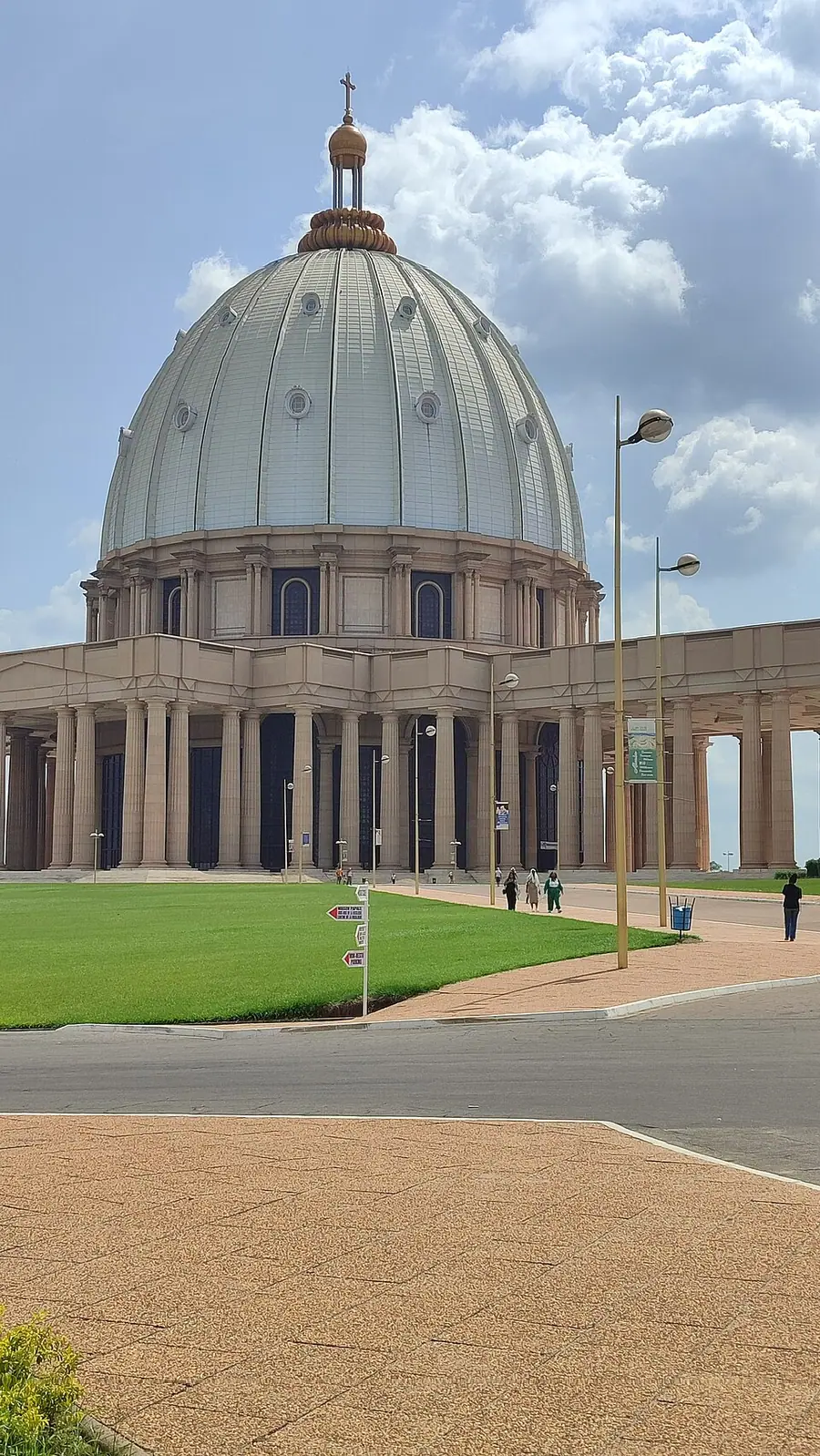
| 1990 | John Paul II consecrates the Basilica of Our Lady of Peace at Yamoussoukro, Côte d’Ivoire[4] | Consensus |
| 2002 | The Boston Globe’s “Spotlight” reports (from 6 January) expose abuse and cover-up in the Archdiocese of Boston[5] | Consensus |
| 2004 | The John Jay report counts 10,667 allegations against 4,392 US Catholic clergy for 1950–2002[6] | Consensus |
| 2008 | Conservative Anglicans meet in Jerusalem and found the Global Anglican Future Conference (GAFCON)[7] | Consensus |
| 2009 | Ireland’s Ryan Report (May) on residential institutions and Murphy Report (November) on the Archdiocese of Dublin[8][9] | Consensus |
| 2013 | Benedict XVI resigns; Francis, from Argentina, the first pope from the Americas, is elected (13 March)[10] | Consensus |
| 2018 | Pennsylvania grand jury report (14 August); Moscow breaks communion with Constantinople over Ukraine (15 October)[11][12] | Consensus |
| 2019 | Tomos of autocephaly for the Orthodox Church of Ukraine (5–6 January); United Methodist special General Conference (February)[12][13] | Consensus |
| 2021 | France’s CIASE report estimates 216,000 minors abused by Catholic clergy and religious since 1950[14] | Consensus |
| 2021 | Census of England and Wales: 46.2 per cent Christian, the first time below half[15] | Consensus |
| 2023 | Global South Anglican primates (February) and GAFCON’s Kigali Commitment (April) reject the Archbishop of Canterbury’s leadership; Vatican declaration Fiducia supplicans allows non-liturgical blessings of same-sex couples (18 December)[16][17][18] | Consensus |
| 2023 | 7,631 US United Methodist congregations have left since 2019[13] | Consensus |
| 2025 | Pew’s Religious Landscape Study: 62 per cent of US adults Christian (February); Pew’s global report: sub-Saharan Africa has the most Christians (June)[19][1] | Consensus |
| 2025 | Francis dies (21 April); Leo XIV, the first pope from the United States, is elected (8 May)[20] | Consensus |
| 2025 | Sarah Mullally named the first woman Archbishop of Canterbury (3 October); GAFCON says it no longer recognises Canterbury’s leadership (16 October)[21] | Consensus |
| 2025 | A Vatican study commission advises against ordaining women as deacons; its synthesis is published (December)[22] | Consensus |
| 2026 | Open Doors’ World Watch List estimates 388 million Christians facing high levels of persecution or discrimination[23] | Majority (methods disputed) |
Where: the shift to the South
The numbers
Pew’s 2025 report, based on more than 2,700 censuses and surveys, found that the world’s Christians grew from about 2.1 billion in 2010 to about 2.3 billion in 2020, an increase of 6 per cent, while the rest of the world’s population grew by 15 per cent. Christians’ share of the world fell from 31 to 29 per cent.[1] Consensus on the figures, as Pew’s estimate.
The Center for the Study of Global Christianity (CSGC) at Gordon-Conwell Theological Seminary, which publishes the World Christian Database and an annual statistical article in the International Bulletin of Mission Research, counts about 2.6 billion Christians in 2025, 32.3 per cent of the world. It counts people affiliated with churches, including baptised children and members of churches that surveys may miss, and it estimates that 69 per cent of Christians now live in the global South.[2] Majority The two are not contradictory so much as answering different questions: Pew measures what people say they are; the CSGC measures, as far as it can, who the churches count. Consensus
Where Christians live
| Region | Share of the world’s Christians, 2020 | Change since 2010 | Christian share of the region |
|---|---|---|---|
| Sub-Saharan Africa | 31% | +6 points | 62% |
| Latin America and Caribbean | 24% | −1 | 85% (down 5) |
| Europe | 22% | −4 | 67% (down 8) |
| North America | 10% | −2 | 63% (down 14) |
Source: Pew Research Center, 2025.[1] Consensus as Pew’s estimates.
The shift has two causes. Sub-Saharan Africa’s Christian population grew by 31 per cent in the decade, to 697 million, carried by the region’s fast population growth. In Europe and the Americas, by contrast, the main cause is people leaving: Pew’s 2025 study of religious switching, which analysed movement into and out of Christianity in 27 countries, found that in Germany, for every adult who had become a Christian, almost twenty raised as Christians no longer identified as one; in a few places, such as Singapore, the flow ran the other way.[1][24] Consensus on the direction; the ratios are Pew’s.
Philip Jenkins’ The Next Christendom (2002) made the shift famous to Western readers; historians of world Christianity such as Andrew Walls and Lamin Sanneh had been describing it since the 1970s, and argued that the faith had always moved its centre, from Jerusalem to the Mediterranean, to Europe, and now to the South (§0).[25][26] Majority
China
China’s Christians are the hardest population in the world to count. The Chinese General Social Survey found about 2 per cent of adults, roughly 20 million people, identifying as Christians in 2018, around 90 per cent of them Protestants, and only 1 per cent in a narrower 2021 survey. Pew, analysing these surveys in 2023, concluded that the rapid growth of the 1980s and 1990s appears to have stopped, but noted that other surveys find more people who believe in the Christian God without formally identifying, and that members of unregistered churches have reasons to hide.[27] Estimates by Christian organisations and some scholars, among them the sociologist Fenggang Yang, run to tens of millions more.[28] Contested
Latin America
Latin America is still the most Christian region of the world, but its Catholic monopoly has broken. Brazil, the country with the most Catholics, recorded 56.7 per cent of its people as Catholic in the 2022 census, down from 65.1 per cent in 2010, and 26.9 per cent as evangelical, up from 21.6 per cent; most of the evangelical growth is Pentecostal.[29] Consensus The pace of change slowed in the 2010s, and earlier forecasts that evangelicals would soon outnumber Catholics in Brazil have been pushed back by decades. Majority Pew’s global report shows the same region losing Christians to “no religion” as well, above all in the Southern Cone: Chile and Uruguay saw the largest falls in Christian share anywhere in the decade.[1] Consensus as Pew’s estimates.
Asia beyond China
Christianity in Asia is a set of very different stories. The Philippines, colonised by Spain in the sixteenth century (§10), remains overwhelmingly Catholic: 78.8 per cent of the household population in the 2020 census.[30] Consensus South Korea, where Christianity grew from a small minority in 1945 to about 28 per cent of the population by 2015 (19.7 per cent Protestant and 7.9 per cent Catholic in that year’s census), is the clearest case in the modern world of a society converting to Christianity without colonial rule.[31] Majority In India, Christians are about 2.3 per cent of the population (2011 census), concentrated in the south, the north-east and among Dalit and tribal communities; the old Thomas Christian churches of Kerala (§7) are a minority among them.[32] Consensus
Migration: the South comes north
The shift south is also visible in Europe and North America. Immigrants from Africa, Latin America and Asia have filled churches that the native-born have left, and founded their own. The Nigerian-founded Redeemed Christian Church of God reports more than 800 parishes in Britain; the borough of Southwark in south London has one of the densest concentrations of African-led churches outside Africa.[33] Majority on the church’s own figures. In the United States, Hispanic Catholics and Pentecostals, and Korean, Chinese and African congregations, are a large part of what growth there is. Churches and scholars call this “reverse mission”: the descendants of those evangelised by European missionaries (§10) now evangelising Europe. Majority
Pentecostal and charismatic Christianity
The fastest-growing form of Christianity in the late twentieth century was the one that began at Azusa Street in 1906 (§12): worship centred on the gifts of the Holy Spirit, speaking in tongues, healing and prophecy. Pew, using CSGC estimates, counted about 279 million Pentecostals and 305 million charismatics in other churches in 2010, together about 27 per cent of all Christians.[34] The CSGC’s 2025 figures put “Pentecostals/charismatics” above 660 million.[2] Contested on every such figure, because the categories blur: a Catholic charismatic prayer group, an African independent church and a Brazilian Assembly of God are all counted, and many churches use the practices without the label.[35]
In Africa, Latin America and Asia, Pentecostal churches have often grown fastest among the urban poor and in the new middle classes; they offer healing, a strict personal morality, and, in some, a “prosperity gospel” promising health and wealth to the faithful. Scholars disagree about whether Pentecostalism mainly helps believers adapt to modern economies, as David Martin argued, or mainly offers protection in insecure lives.[36][35] Contested
The very large congregation is a feature of this world. Seoul’s Yoido Full Gospel Church has claimed several hundred thousand members; in the United States, the Hartford Institute’s 2020 study of Protestant churches with 1,800 or more in weekly attendance found them still growing and becoming more ethnically diverse.[37] Majority Membership claims of single churches are self-reported and hard to check. Consensus
The West: decline, and its limits
Britain
The census of England and Wales in 2021 recorded 46.2 per cent of the population as Christian, down from 59.3 per cent in 2011, the first time in census history below half; “no religion” rose to 37.2 per cent.[15] Consensus The British Social Attitudes survey, which asks the question differently, found 40 per cent Christian and 49 per cent with no religion in 2024, and 14 per cent attending a religious service at least monthly.[38] Consensus as the survey’s figures.
In 2025 the Bible Society published polling by YouGov suggesting a “quiet revival”, with monthly church attendance rising from 8 to 12 per cent between 2018 and 2024, and much faster among young adults. The British Social Attitudes team and the Pew Research Center both disputed it: the YouGov figures came from opt-in online panels, which are vulnerable to inattentive or fraudulent respondents, and surveys with random samples showed no such rise among the young.[38][39] In March 2026 the Bible Society withdrew the report after YouGov acknowledged that the 2024 survey data were flawed.[40] Consensus
The United States
The United States is more religious than Western Europe but has moved in the same direction. Pew’s Religious Landscape Study, a survey of 36,908 adults in 2023–24, found 62 per cent identifying as Christian: down from 78 per cent in 2007 and 71 per cent in 2014, but roughly stable between 2019 and 2024. About 29 per cent identified with no religion. Younger adults remained much less religious than older ones.[19] Consensus on the figures. Whether the levelling off is a pause or a plateau is unknown. Contested
Elsewhere
Pew’s global report found Christian shares falling by large margins in Australia (down 20 points between 2010 and 2020), Chile (down 18) and Uruguay (down 16), as well as the United States and Canada (down 14 each).[1] Consensus as Pew’s estimates. Secularisation is not only a European story.
The churches: authority, splits and new leaders
The Catholic Church
The Catholic Church, about half of all Christians, has had four popes in this period. John Paul II (1978–2005) made more than a hundred foreign journeys and consecrated the basilica at Yamoussoukro. Benedict XVI resigned in February 2013, the first pope to resign since 1415. Francis (2013–2025), from Buenos Aires, the first pope from the Americas and the first Jesuit, emphasised the poor and the environment (Laudato si’, 2015), allowed some divorced and remarried Catholics a path to communion (Amoris laetitia, 2016), restricted the old Latin Mass (2021), and held a worldwide “synod on synodality” (2021–2024).[10] Consensus on the events; how far they changed the church is debated. Contested
In December 2023 the Vatican’s doctrinal office allowed priests to give short, non-liturgical blessings to couples in “irregular situations”, including same-sex couples, while restating that marriage is between a man and a woman. The bishops of Africa, through their continental body SECAM, declared in January 2024 that the blessings would not be given in Africa.[18][41] Consensus on the text and the reaction. Francis died on 21 April 2025. On 8 May the cardinals elected Robert Francis Prevost, born in Chicago in 1955, for many years a missionary and then a bishop in Peru, who took the name Leo XIV.[20] Consensus
Orthodoxy and Ukraine Political
After 1991, the Russian Orthodox Church rebuilt rapidly with state support; the Cathedral of Christ the Saviour in Moscow, demolished in 1931, was rebuilt and consecrated in 2000.[3] Consensus Ukraine’s Orthodox were divided between a church under Moscow and two unrecognised national churches. In October 2018 the Ecumenical Patriarch of Constantinople announced that he would grant independence (autocephaly) to a Ukrainian church; the Russian church broke communion with Constantinople on 15 October 2018, and on 5–6 January 2019 Patriarch Bartholomew issued the tomos establishing the Orthodox Church of Ukraine.[12] Consensus on the events.
Each side tells this story differently. For Constantinople and the new church, it ended an anomaly that dated from Moscow’s annexation of the Kyiv metropolis in 1686; for Moscow, it was an uncanonical intrusion into its territory.[42] Political After Russia’s invasion of Ukraine in 2022, Patriarch Kirill’s support for the war divided Orthodoxy further, and in August 2024 Ukraine passed a law allowing the banning of religious organisations affiliated with the Russian church.[43] Consensus on these events; Political on their meaning, which each church describes differently. This series reports the church schism and how each side describes it; the war itself is outside its scope.
The Anglican Communion
The Anglican Communion, commonly said to number 85 to 110 million people, has been divided since the 1990s over homosexuality and, less sharply, women bishops. After the Episcopal Church in the United States consecrated a gay bishop in 2003, conservative bishops mainly from Africa founded GAFCON at Jerusalem in 2008.[7] When the Church of England’s synod approved prayers of blessing for same-sex couples in February 2023, the Global South Fellowship of Anglican Churches said the Church of England had “departed from the historic faith” and that it could no longer recognise the Archbishop of Canterbury as “first among equals”, and GAFCON’s Kigali Commitment (April 2023) called for the Communion to be “reset”.[16][17] In October 2025, after Sarah Mullally was named the first woman Archbishop of Canterbury, GAFCON declared that it no longer recognised Canterbury’s leadership and described itself as the “Global Anglican Communion”.[21] Consensus on the statements; what they mean for the Communion’s future is unclear. Contested
The Methodist split
In February 2019 the United Methodist Church’s General Conference voted to strengthen its bans on same-sex weddings and the ordination of “self-avowed practicing homosexuals”, and created a temporary process for US congregations to leave with their buildings. By 31 December 2023, 7,631 congregations, about 25 per cent of the US total, had been approved to leave; many joined the Global Methodist Church, launched in May 2022. In 2024 the General Conference removed the bans.[13] Consensus
Women’s ordination
Most Protestant denominations in the West now ordain women; the Church of England ordained women priests from 1994 and bishops from 2015, and in 2025 named a woman as Archbishop of Canterbury.[21] The Catholic and Orthodox churches do not ordain women as priests. A Vatican study commission reported in December 2025 against ordaining women as deacons, proposing new lay ministries instead, and the Vatican published the members’ votes on specific questions.[22] The Southern Baptist Convention, the largest US Protestant body, upheld the expulsion of churches with women pastors in 2023.[44] Consensus on each decision.
Ecumenism: the churches drawing closer
Alongside the splits, the period has seen more official reconciliation between the old divisions than any before it. In 1999 the Catholic Church and the Lutheran World Federation signed a Joint Declaration on the Doctrine of Justification, stating that the mutual condemnations of the sixteenth century over how sinners are saved (§9) no longer applied to the teaching of either side; Methodist, Reformed and Anglican bodies later associated themselves with it.[45] Consensus In 2016 Francis and Patriarch Kirill of Moscow met in Havana, the first meeting of a pope and a Russian patriarch.[46] And in November 2025, for the 1,700th anniversary of the Council of Nicaea, Leo XIV and Patriarch Bartholomew prayed together at Iznik, ancient Nicaea, on 28 November, and the next day in Istanbul signed a joint declaration recalling the creed of 325 and the lifting of the excommunications of 1054 in 1965 (§6, §8).[47] Consensus None of these restored full communion; all of them would have been unthinkable a century earlier. Majority
The abuse crises
From the 1980s, and above all after 2002, investigations in many countries revealed sexual abuse of children and vulnerable adults by clergy and church workers, and the moving of abusers by church authorities. The Catholic Church has been the most investigated, but Anglican, Protestant and Orthodox churches and other institutions have faced inquiries too.[6][14] Consensus The figures below come from national inquiries with different methods and cannot be added together.
| Inquiry | Year | Finding (as stated by the inquiry) |
|---|---|---|
| Boston Globe “Spotlight” | 2002 | Abuse by priests in the Archdiocese of Boston and its concealment by church leaders[5] |
| John Jay College, for the US bishops | 2004 | 10,667 allegations of child sexual abuse against 4,392 clergy, 1950–2002[6] |
| Ryan Report, Ireland | 2009 | Endemic abuse in residential institutions run by religious orders[8] |
| Murphy Report, Ireland | 2009 | Cover-up of abuse in the Archdiocese of Dublin, 1975–2004[9] |
| Pennsylvania grand jury | 2018 | 301 priests; more than 1,000 identifiable victims in six dioceses[11] |
| CIASE, France | 2021 | An estimated 216,000 minors abused by clergy and religious since 1950; about 330,000 including lay church workers[14] |
The CIASE estimate was extrapolated from a population survey and was criticised as too high in November 2021 by eight members of the Académie catholique de France; the commission published a defence of its method in February 2022.[14][48] Contested on the size; Consensus that abuse was widespread and was concealed. The crises have been followed by falling trust and attendance in several countries where the Catholic Church had been dominant, such as Chile, where Pew found the Christian share down 18 points between 2010 and 2020, though other causes are also at work.[1] Majority
Persecution and restriction
Christians are also among the most widely restricted religious groups in the world. Two sources are most often cited, and they measure different things:
- Pew Research Center codes government restrictions and social hostilities country by country. In 2022, Christians were harassed by governments or social groups in 166 countries, the highest number Pew had recorded.[49] Consensus as Pew’s coding.
- Open Doors, a Christian advocacy organisation, ranks the 50 countries where it judges Christians most persecuted. Its 2026 list estimated 388 million Christians facing high levels of persecution and discrimination, with North Korea first, and counted 4,849 Christians killed for their faith between October 2024 and September 2025.[23] Contested Its counts depend on its own definitions of persecution and on reports from partners, and some researchers think they include violence with mixed causes.
Both agree on the main places: North Korea, parts of the Middle East, the Sahel and northern Nigeria, and several countries in South Asia. Majority
The evidence
| Question | What the evidence supports | Key evidence | Confidence |
|---|---|---|---|
| Size | 2.3 billion (2020, survey-based) to 2.6 billion (2025, church-based) | Pew; CSGC[1][2] | Majority (range) |
| Share of the world | Falling slightly: 31% to 29% between 2010 and 2020 | Pew[1] | Consensus |
| Centre of gravity | Sub-Saharan Africa has the most Christians | Pew[1] | Consensus |
| Pentecostal growth | Hundreds of millions; size depends on definition | Pew 2011; CSGC[34][2] | Contested (numbers) |
| Western decline | Steep in Britain, Western Europe, Australia; slower and lately stable in the US | Census 2021; BSA; Pew RLS[15][38][19] | Consensus |
| A British revival | Claimed in 2025 from opt-in polling; not found in random-sample surveys; report withdrawn in 2026 | BSA; Pew; Bible Society[38][39][40] | Consensus |
| China | Somewhere between about 20 million and 100 million | CGSS via Pew; other estimates[27][28] | Contested |
| Splits | Orthodox (2018), Methodist (2019–23), Anglican (2008–25) | Tomos; Lewis Center; GAFCON[12][13][21] | Consensus |
| Abuse | Widespread and concealed; national counts not comparable | John Jay; CIASE; grand jury[6][14][11] | Consensus |
| Persecution | Christians harassed in 166 countries (2022); counts of the persecuted vary by definition | Pew; Open Doors[49][23] | Majority |
Primary sources
Show the 10 primary sources
1. The global count: Pew Research Center, 2025
Pew’s How the Global Religious Landscape Changed From 2010 to 2020 (9 June 2025) estimates the size of every major religion in 201 countries from more than 2,700 sources. For Christians: about 2.3 billion in 2020, 29 per cent of the world, with 31 per cent of them in sub-Saharan Africa.[1]
What it proves. A careful, survey-based estimate that the centre of Christianity has moved to Africa and that Christians’ share of the world fell over the decade. It counts self-identification, so it will be lower than counts based on baptism. Consensus
2. The church count: the CSGC’s 2025 figures
Gina Zurlo’s annual article for the CSGC, “World Christianity 2025: Regional Perspectives”, gives 2.6 billion Christians (32.3 per cent) in 2025, 69 per cent of them in the global South, and more than 660 million Pentecostals and charismatics.[2]
What it proves. The higher, church-based estimate, built on the World Christian Database. Its figures are the source of most numbers quoted by churches and missions. Majority
3. The census of England and Wales, 2021
The Office for National Statistics recorded 46.2 per cent of residents as Christian, 37.2 per cent with no religion.[15]
What it proves. A whole-population count, not a sample, showing Christians below half of the population of England and Wales for the first time since the question was first asked in 2001. Consensus
4. The US Religious Landscape Study, 2023–24
Pew’s survey of 36,908 adults, published on 26 February 2025, found 62 per cent Christian, 29 per cent religiously unaffiliated, and a Christian share roughly stable since 2019.[19]
What it proves. That US decline was real and large (16 points since 2007) but has paused, at least for now. Consensus
5. The tomos of the Orthodox Church of Ukraine, January 2019
The decree of the Ecumenical Patriarch establishing an independent Orthodox Church of Ukraine, and the Russian synod’s decision of 15 October 2018 to break communion with Constantinople.[12]
What it proves. The deepest division within Eastern Orthodoxy in modern times, and one driven as much by national politics as by doctrine. Majority
6. The Kigali Commitment, April 2023
GAFCON’s statement from its fourth conference, attended by more than 1,300 Anglicans from 52 countries, condemned the Church of England’s approval of blessings for same-sex couples and called for the Communion to be reordered around its conservative provinces.[17]
What it proves. That provinces which GAFCON says represent most of the world’s Anglicans, most of them in Africa, reject the leadership of the Communion’s historic centre. Majority
7. Fiducia supplicans, December 2023
The declaration of the Dicastery for the Doctrine of the Faith on the “pastoral meaning of blessings”, allowing spontaneous, non-liturgical blessings of couples in irregular situations, including same-sex couples, without approving the unions.[18]
What it proves. A cautious change in practice without a change in doctrine, and how quickly a Vatican decision can be contested by bishops in Africa and elsewhere. Majority
8. The CIASE report, October 2021
The Independent Commission on Sexual Abuse in the Church, chaired by Jean-Marc Sauvé, estimated 216,000 victims of clergy and religious in France since 1950, and between 2,900 and 3,200 abusers.[14]
What it proves. The scale of abuse in one country, measured by a population survey rather than by complaints, and the church’s failure to act. Its extrapolation is disputed in detail. Majority
9. The Lewis Center’s report on Methodist disaffiliation, January 2024
The Lewis Center for Church Leadership at Wesley Theological Seminary counted 7,631 United Methodist congregations approved to leave by 31 December 2023, 25 per cent of US churches and 24 per cent of members.[13]
What it proves. The largest split in American Protestantism since the nineteenth century, measured congregation by congregation. Majority
10. The Open Doors World Watch List, 2026
Open Doors’ annual ranking of persecution of Christians, covering 1 October 2024 to 30 September 2025.[23]
What it proves. How a major Christian advocacy organisation measures persecution, and where it finds it worst. Its figures are widely cited and should always be attributed to it. Majority
What changed and what didn’t
The series began (§2) with a Galilean Jew who preached that the kingdom of God was about to arrive, gathered twelve disciples and some women, and was crucified around 30 or 33 CE. Set beside that, the Christianity of the 2020s is almost unrecognisably different, and yet its oldest elements are still there.
What changed:
- Who Christians are. A Jewish movement in Galilee became, within a generation, mostly gentile (§3), and two thousand years later mostly African, Latin American and Asian. Consensus
- Its relation to Judaism. The movement began inside Judaism; the churches defined themselves against it for centuries (§4, §6), and only after 1965 did the largest of them reject the charge of collective Jewish guilt (§12). Consensus
- Its relation to power. A persecuted minority (§5) became an empire’s religion (§6), the established church of most European states, and now, in much of the West, a minority again. Majority
- The ideas tracked in this series, most of them later than Jesus: the 27-book canon (367, §5), the Trinity defined (325 and 381, §6), Christmas on 25 December (336, §6), purgatory set out (1274, §8), papal infallibility (1870, §11), the Rapture (from the 1830s, §11), women priests (from 1944, §12). Consensus on most of the dates; Majority for Christmas and the Rapture.
- Its forms. One movement became the Catholic, Orthodox, Oriental Orthodox and Church of the East families (§6–§8), the Protestant churches (§9), and now a vast and loosely organised Pentecostal world. Consensus
What did not:
- The scriptures. Almost all Christians read the same New Testament, settled by the fourth century (§5). Consensus
- The rites. Baptism and the Lord’s Supper, both attested in Paul’s letters in the 50s CE, remain the shared practice of nearly every church (§3). Consensus
- The creed. The creed of 381 (the “Nicene” Creed) is still recited in the liturgy of the Catholic, Orthodox, Anglican and Lutheran churches, and accepted by most others. Majority
- The expectation. Jesus’ own message of a coming kingdom, which most historians think he expected soon (§2), lives on in the hope of his return, central to the Pentecostal and evangelical churches that are growing fastest. Majority
Whether those constants make today’s churches the same religion as Jesus’ movement is a question of faith and definition, not history. This series has tried to show when each piece arrived, and on what evidence. Consensus
Debates
Is Christianity declining?
| View | Main argument | Main proponents |
|---|---|---|
| Global growth, Western decline | Numbers grow with Africa’s population; the West secularises | Pew; Jenkins[1][25] |
| Secularisation will follow development | As societies grow richer and more secure, religion declines everywhere, Africa included, as happened in Europe | Norris and Inglehart[50] |
| No general law | Religious change follows national histories; the US, South Korea and others do not fit a single pattern | Berger (later work), Casanova[51] |
Contested
How many Christians are there?
The answer depends on whether one counts self-identification (Pew), affiliation with a church (CSGC), or practice (attendance). The gap between them, several hundred million people, is itself evidence of how loosely Christian identity is now held in many places. Majority
Are the splits about sexuality, or about authority?
Those leaving the Methodist and Anglican bodies frame the issue as fidelity to scripture; those staying as inclusion and the freedom of provinces or congregations. Many scholars note that the deeper question is who has authority to decide: a global body, a national church or a congregation.[13][17] Contested
Further reading
Show further reading (8 works)
- Pew Research Center, How the Global Religious Landscape Changed From 2010 to 2020 (2025) and Religious Landscape Study (2025): free online, with full methods.
- Gina A. Zurlo, Global Christianity: A Guide to the World’s Largest Religion from Afghanistan to Zimbabwe (Zondervan, 2022).
- Philip Jenkins, The Next Christendom: The Coming of Global Christianity (Oxford, 2002; 3rd ed. 2011).
- Allan Heaton Anderson, An Introduction to Pentecostalism (Cambridge, 2nd ed. 2014).
- Andrew F. Walls, The Missionary Movement in Christian History (Orbis, 1996).
- Pippa Norris and Ronald Inglehart, Sacred and Secular (Cambridge, 2nd ed. 2011).
- Massimo Faggioli, Pope Francis: Tradition in Transition (Paulist, 2015).
- Cyril Hovorun, Political Orthodoxies (Fortress, 2018).
References
- ^ a b c d e f g h i j k l m Pew Research Center, How the Global Religious Landscape Changed From 2010 to 2020: Christian population change (9 June 2025) — Pew Research Center report. 2025. English. Christians grew from 2.1 to 2.3 billion in 2010–2020 while their share of the world fell from 31% to 29%; sub-Saharan Africa now has the most Christians (31% of the world's total, 697 million). about
- ^ a b c d e f Gina A. Zurlo World Christianity 2025: Regional Perspectives. International Bulletin of Mission Research, 2025. doi The CSGC's annual figures: 2.6 billion Christians (32.3 per cent) in 2025, 69 per cent in the global South.
- ^ a b Timothy (Kallistos) Ware The Orthodox Church: An Introduction to Eastern Christianity. Penguin, new ed., 2015. The standard introduction, updated for the post-communist revival.
- ^ Basilica of Our Lady of Peace, Yamoussoukro — Yamoussoukro, Côte d'Ivoire. consecrated 10 September 1990. A domed basilica modelled on St Peter's in Rome, consecrated by John Paul II. about
- ^ a b Boston Globe, 'Spotlight' reports on the Archdiocese of Boston — The Boston Globe. from 6 January 2002. English. Investigative reports exposing abuse by priests in the Archdiocese of Boston and its concealment by church leaders. about
- ^ a b c d The Nature and Scope of Sexual Abuse of Minors by Catholic Priests and Deacons in the United States, 1950–2002 — John Jay College of Criminal Justice, for the US Conference of Catholic Bishops. 2004. English. Counts 10,667 allegations of child sexual abuse against 4,392 clergy for 1950–2002. about
- ^ a b Global Anglican Future Conference, Jerusalem — GAFCON. June 2008. English. Conservative Anglican bishops, mainly from Africa, found a movement in response to the consecration of a gay bishop in the US Episcopal Church. about
- ^ a b Report of the Commission to Inquire into Child Abuse (Ryan Report) — Government of Ireland. 20 May 2009. English. Finds abuse endemic in residential institutions for children run by Catholic religious orders. about
- ^ a b Commission of Investigation: Report into the Catholic Archdiocese of Dublin (Murphy Report) — Government of Ireland. 26 November 2009. English. Finds that the Archdiocese of Dublin concealed abuse by priests between 1975 and 2004. about
- ^ a b Massimo Faggioli Pope Francis: Tradition in Transition. Paulist Press, 2015. Francis' early pontificate set against Vatican II.
- ^ a b c Report I of the 40th Statewide Investigating Grand Jury — Commonwealth of Pennsylvania. 14 August 2018. English. Names 301 priests and more than 1,000 identifiable child victims in six Pennsylvania dioceses. about
- ^ a b c d e Tomos of autocephaly of the Orthodox Church of Ukraine — Ecumenical Patriarchate of Constantinople. 5–6 January 2019. Greek. Grants independence to the Orthodox Church of Ukraine; the Russian Orthodox Church had broken communion with Constantinople on 15 October 2018. about
- ^ a b c d e f Twenty-Five Percent of Churches Disaffiliated from the United Methodist Church — Lewis Center for Church Leadership, Wesley Theological Seminary. 16 January 2024. English. Counts 7,631 US congregations approved to leave the United Methodist Church by 31 December 2023, 25 per cent of churches and 24 per cent of members. about
- ^ a b c d e f Sexual Violence in the Catholic Church, France 1950–2020 (CIASE report) — Independent Commission on Sexual Abuse in the Church (CIASE), chaired by Jean-Marc Sauvé. 5 October 2021. French. Estimates 216,000 minors abused by clergy and religious since 1950, about 330,000 including lay church workers, and 2,900–3,200 abusing clergy. read the text
- ^ a b c d Religion, England and Wales: Census 2021 — Office for National Statistics. 29 November 2022. English. 46.2 per cent of residents Christian (59.3 per cent in 2011) and 37.2 per cent with no religion. about
- ^ a b Statement of the Global South Fellowship of Anglican Churches — GSFA primates. 20 February 2023. English. Says the primates can no longer recognise the Archbishop of Canterbury as 'first among equals' after the Church of England approved blessings for same-sex couples. about
- ^ a b c d The Kigali Commitment — GAFCON IV, Kigali. April 2023. English. Condemns the Church of England's approval of blessings for same-sex couples and calls for the Anglican Communion to be reordered. about
- ^ a b c Fiducia supplicans — Dicastery for the Doctrine of the Faith, Declaration on the Pastoral Meaning of Blessings. 18 December 2023. Italian. Allows spontaneous, non-liturgical blessings of couples in irregular situations, including same-sex couples, without approving their unions. read the text
- ^ a b c d Pew Research Center Decline of Christianity in the U.S. Has Slowed, May Have Leveled Off (Religious Landscape Study). Pew Research Center, 2025. open access 62 per cent of US adults Christian in 2023–24, down from 78 per cent in 2007; stable since 2019.
- ^ a b Election of Pope Leo XIV — 2025 papal conclave. 8 May 2025. Latin. Cardinal Robert Francis Prevost, born in Chicago in 1955, is elected pope and takes the name Leo XIV after the death of Francis on 21 April. about
- ^ a b c d GAFCON statement on the See of Canterbury — GAFCON Primates' Council. 16 October 2025. English. After Sarah Mullally is named the first woman Archbishop of Canterbury, GAFCON says it no longer recognises Canterbury as first among equals and calls itself the Global Anglican Communion. about
- ^ a b Synthesis of the study commission on the female diaconate — Commission chaired by Cardinal Giuseppe Petrocchi, published by order of Leo XIV. December 2025. Italian. Advises against ordaining women as deacons, publishes members' votes, and proposes new lay ministries for women. about
- ^ a b c d World Watch List 2026 — Open Doors International. January 2026. English. Estimates 388 million Christians facing high levels of persecution and discrimination, with North Korea ranked first, and counts 4,849 Christians killed between October 2024 and September 2025. about
- ^ Pew Research Center Religious Switching Into and Out of Christianity. Pew Research Center, 2025. open access In most of 27 countries analysed, more people have left Christianity than joined it.
- ^ a b Philip Jenkins The Next Christendom: The Coming of Global Christianity. Oxford University Press, 2002. The southward shift and its consequences.
- ^ Andrew F. Walls The Missionary Movement in Christian History: Studies in the Transmission of Faith. Orbis Books, 1996. Essays on mission, translation and the shift of Christianity's centre.
- ^ a b Pew Research Center Measuring Religion in China. Pew Research Center, 2023. open access About 2 per cent of Chinese adults identified as Christian in 2018 and 1 per cent in 2021, by the Chinese General Social Survey.
- ^ a b Fenggang Yang Religion in China: Survival and Revival under Communist Rule. Oxford University Press, 2012. Includes higher estimates of China's Christian population than official surveys.
- ^ Brazil 2022 census: religion — Instituto Brasileiro de Geografia e Estatística (IBGE). 2025 (census of 2022). Portuguese. 56.7 per cent Catholic (65.1 per cent in 2010) and 26.9 per cent evangelical (21.6 per cent in 2010). about
- ^ Philippines 2020 Census of Population and Housing: religious affiliation — Philippine Statistics Authority. 2023 (census of 2020). English. 78.8 per cent of the household population reported Roman Catholic affiliation. about
- ^ South Korea 2015 census: religion — Statistics Korea. 2016 (census of 2015). Korean. 19.7 per cent Protestant and 7.9 per cent Catholic. about
- ^ Census of India 2011, religion data — Office of the Registrar General of India. 2011 (released 2015). English. Counts 966 million Hindus (79.8 percent of India) and 8.44 million Buddhists (0.7 percent), about 6.5 million of the latter in Maharashtra.
- ^ Redeemed Christian Church of God — Nigerian-founded Pentecostal church. founded 1952; in Britain from 1988. English. The church reports more than 800 parishes in Britain. about
- ^ a b Pew Research Center Global Christianity: A Report on the Size and Distribution of the World's Christian Population. Pew Forum on Religion & Public Life, 2011. open access Uses CSGC figures for about 279 million Pentecostals and 305 million charismatics in 2010.
- ^ a b Allan Heaton Anderson An Introduction to Pentecostalism: Global Charismatic Christianity. Cambridge University Press, 2nd ed., 2014. The standard global history, arguing for Pentecostalism's many origins.
- ^ David Martin Pentecostalism: The World Their Parish. Blackwell, 2002. Pentecostalism as a carrier of social change among the poor of the global South.
- ^ Megachurch 2020: The Changing Reality in America's Largest Churches — Scott Thumma and Warren Bird, Hartford Institute for Religion Research. October 2020. English. A survey of 580 US Protestant churches with 1,800 or more weekly attenders: still growing and becoming more diverse. about
- ^ a b c d John Curtice et al., National Centre for Social Research Is There a Religious Revival in Britain?. NatCen (British Social Attitudes briefing), 2025. open access BSA 2024: 40 per cent Christian, 49 per cent no religion, 14 per cent attending monthly; no evidence of a revival among the young.
- ^ a b Pew Research Center Has there been a Christian revival among young adults in the UK? Recent surveys may be misleading. Pew Research Center, 2026. open access Argues that the 'quiet revival' findings rest on opt-in online panels; random-sample surveys show no rise.
- ^ a b Bible Society withdraws The Quiet Revival report (26 March 2026) — Report in Anglican Ink. 2026. English. The Bible Society withdrew its 2025 'Quiet Revival' report after YouGov said the 2024 survey sample was faulty. about
- ^ SECAM, statement on Fiducia supplicans (11 January 2024) — Symposium of Episcopal Conferences of Africa and Madagascar. 2024. English and French. Africa's bishops declare that blessings of same-sex couples under Fiducia supplicans will not be given in Africa. about
- ^ Cyril Hovorun Political Orthodoxies: The Unorthodoxies of the Church Coerced. Fortress Press, 2018. An Orthodox theologian on church, nation and state, including Ukraine.
- ^ Law of Ukraine 'On the Protection of the Constitutional Order in the Field of Activities of Religious Organizations' — Verkhovna Rada of Ukraine. August 2024. Ukrainian. Allows the banning of religious organisations affiliated with the Russian Orthodox Church. about
- ^ Southern Baptist Convention annual meeting vote on Saddleback Church — Southern Baptist Convention. June 2023. English. Messengers uphold the removal of Saddleback Church from the convention for having women pastors. about
- ^ Joint Declaration on the Doctrine of Justification — Lutheran World Federation and the Catholic Church. 31 October 1999. English. States that the sixteenth-century condemnations over justification do not apply to the teaching of the other side as now presented. about
- ^ Joint Declaration of Pope Francis and Patriarch Kirill — Havana, Cuba. 12 February 2016. English. The first meeting of a pope and a patriarch of Moscow. about
- ^ Joint Declaration of Pope Leo XIV and Ecumenical Patriarch Bartholomew — Iznik (Nicaea) and Istanbul. 29 November 2025. English. Marks the 1,700th anniversary of the Council of Nicaea and the 60th of the lifting of the 1054 excommunications, and commits both churches to seek full communion. read the text
- ^ CIASE, reply to the Académie catholique de France (7 February 2022) — Commission indépendante sur les abus sexuels dans l'Église. 2022. French. The commission defends the survey method behind its estimate of 216,000 victims of clergy, answering criticism by members of the Académie catholique. about
- ^ a b Pew Research Center Government Restrictions on Religion Stayed at Peak Levels Globally in 2022. Pew Research Center, 2024. open access Christians were harassed by governments or social groups in 166 countries in 2022.
- ^ Pippa Norris and Ronald Inglehart Sacred and Secular: Religion and Politics Worldwide. Cambridge University Press, 2nd ed., 2011. Links secularisation to existential security.
- ^ Peter L. Berger, ed. The Desecularization of the World: Resurgent Religion and World Politics. Eerdmans, 1999. Berger's retreat from the secularisation thesis he had once championed.