Primary sources
In chronological order of the source itself, not of when it was written down. Every row links to the section that uses it and, where one exists, to somewhere you can read or see it: read the text goes to a free edition of the work (not a permalink to the individual verse, which rarely exists), about to a reference page on a site, artefact or law.
- Isaiah 7:14 Isaiah (Hebrew Bible) verse 8th–6th c. BCE read the text ↗ 'The young woman (ʿalmāh) is with child'; the Greek Septuagint renders it parthenos, the reading Matthew quotes for the virgin birth. Hebrew cited in §02 §02 The Historical Jesus
- Micah 5:2 Micah (Hebrew Bible) verse late 8th c. BCE and later read the text ↗ A ruler of Israel will come from Bethlehem Ephrathah (5:1 in Hebrew numbering). Hebrew cited in §02 §02 The Historical Jesus
- Isaiah 2:2–4 Isaiah (Hebrew Bible) verse 8th–6th c. BCE read the text ↗ In days to come all the nations shall stream to the mountain of the Lord's house. Hebrew cited in §03 §03 Paul and the Gentile Mission
- Isaiah 45:22–23 Isaiah (Hebrew Bible) verse 8th–6th c. BCE read the text ↗ 'To me every knee shall bow, every tongue shall swear', applied to Jesus in Philippians 2:10–11. Hebrew cited in §03 §03 Paul and the Gentile Mission
- Leviticus 17:8–16 Leviticus (Hebrew Bible) law c. 6th–5th c. BCE read the text ↗ Laws binding Israelites and resident aliens alike on sacrifice and eating blood. Hebrew cited in §03 §03 Paul and the Gentile Mission
- Daniel 12:1–3 Book of Daniel (Hebrew Bible) prose c. 165 BCE read the text ↗ Michael the great prince arises; 'many of those who sleep in the dust of the earth shall awake, some to everlasting life, and some to shame and everlasting contempt': the first clear biblical statement of resurrection and judgment. Hebrew cited in §01 §01 The World of Jesus
- Daniel 7:13–14 Daniel (Hebrew Bible) prose c. 165 BCE read the text ↗ 'One like a son of man' comes with the clouds of heaven and receives everlasting dominion, the source of the Gospels' 'Son of Man'. Hebrew and Aramaic cited in §01 cited in §02 §02 The Historical Jesus
- Daniel 9:24–27 Daniel (Hebrew Bible) prose c. 165 BCE read the text ↗ The 'seventy weeks' prophecy; dispensationalists place its last 'week' of years in the future as a seven-year tribulation. Hebrew and Aramaic
- 1QS 8:12–16 Community Rule (Dead Sea Scrolls) rule c. 100 BCE (copy) about ↗ The community separates to go into the wilderness 'to prepare there the way of the Lord', quoting Isaiah 40:3. Hebrew cited in §01 §01 The World of Jesus
- 2 Maccabees 12:43–45 2 Maccabees prose late 2nd or 1st c. BCE read the text ↗ Judas Maccabeus sends money for a sin offering for the fallen: 'he made atonement for the dead, so that they might be delivered from their sin' (NRSV). Greek cited in §08 §08 The Medieval West
- 1QS 9:9–11 (Community Rule) Community Rule (Serekh ha-Yaḥad), Qumran Cave 1 rule c. 100–75 BCE (manuscript) about ↗ The community is to keep its first ordinances 'until there shall come a prophet and the messiahs of Aaron and Israel': two expected anointed leaders, priestly and royal. Hebrew cited in §01 §01 The World of Jesus
- 4Q521 (Messianic Apocalypse), frag. 2 ii Dead Sea Scrolls, Qumran Cave 4 text c. 100–80 BCE (manuscript) about ↗ Heaven and earth will obey God's anointed; the Lord will heal the wounded, revive the dead and bring good news to the poor. Hebrew cited in §01 §01 The World of Jesus
- Psalms of Solomon 17 Psalms of Solomon verse after 63 BCE about ↗ A prayer for God to raise up 'the son of David' to purge Jerusalem, calling him christos kyrios, 'the Lord Messiah' (often emended to 'the Lord's anointed'): one of the earliest texts using Messiah as a title for the expected Davidic king. Greek (from Hebrew) cited in §01 §01 The World of Jesus
- Temple Warning inscription Balustrade inscription from Herod's Temple inscription c. 20 BCE–70 CE about ↗ Forbids any foreigner to pass the barrier around the inner Temple courts on pain of death; one complete copy found in 1871, a fragment in 1935. Greek cited in §01 §01 The World of Jesus
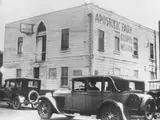
- Theodotos inscription Synagogue dedication from the City of David, Jerusalem inscription 1st c. BCE–70 CE (majority view) about ↗ Theodotos son of Vettenos, priest and archisynagōgos, built the synagogue 'for the reading of the Law and the teaching of the commandments', with a guest house for visitors from abroad. Found 1913. Greek cited in §01 §01 The World of Jesus
- 1 Enoch 37–71 (Parables or Similitudes of Enoch) 1 Enoch (Ethiopic) text c. 1st c. BCE–1st c. CE (disputed) about ↗ A heavenly figure called 'that Son of Man', the Chosen One, sits on God's throne to judge the kings of the earth. Ge'ez (from Aramaic or Hebrew) cited in §01 §01 The World of Jesus
- Sea of Galilee boat Fishing boat from Ginosar (Yigal Allon Centre, Ginosar) artefact 1st c. BCE–1st c. CE about ↗ A first-century-BCE-to-CE fishing boat about 8.2 by 2.3 metres, built and repaired with ten or more kinds of wood, found in 1986. — cited in §01 §01 The World of Jesus
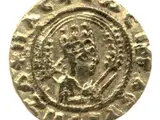
- Aretas IV Aretas IV Philopatris, king of Nabataea event reigned 9 BCE–c. 40 CE about ↗ The Nabataean king whose official guarded Damascus against Paul; his death about 40 dates the escape. — cited in §03 §03 Paul and the Gentile Mission
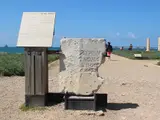
- Pilate Stone Dedicatory inscription, Caesarea Maritima (Israel Museum) inscription 26–36 CE about ↗ '[Pon]tius Pilatus, [prae]fectus Iuda[ea]e' dedicates a building in honour of Tiberius; the only inscription securely naming Pontius Pilate, and the source of his title. Latin cited in §00 cited in §01 cited in §02 §00 How We Know
- Heel bone of Yehoḥanan Tomb at Giv'at ha-Mivtar, Jerusalem artefact 1st c. CE about ↗ A right heel bone pierced by an iron nail, from a crucified man buried in a family tomb; found in 1968. — cited in §00 cited in §02 §00 How We Know
- Magdala synagogue and Magdala stone Migdal, western shore of the Sea of Galilee site 1st c. CE (before 70) about ↗ A first-century synagogue found in 2009, with benches, a mosaic floor and a carved stone block showing a menorah. — cited in §01 §01 The World of Jesus
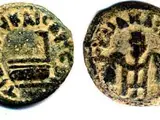
- Coins of Pontius Pilate Bronze prutot struck in Judea, 29–31 CE coin 29–31 CE about ↗ Small bronze coins naming Tiberius (and Julia), with the simpulum and the lituus, Roman cultic implements. Greek cited in §01 §01 The World of Jesus
- Gondophares coins and the Takht-i-Bahi inscription Indo-Parthian royal coinage and inscription coin 1st c. CE about ↗ Coins and an inscription name Gondophares, an Indo-Parthian king, the Gudnaphar of the Acts of Thomas. Greek and Kharoṣṭhī cited in §07 §07 Beyond Rome
- Caiaphas ossuary Ossuary from the Peace Forest tomb, Jerusalem (Israel Museum) artefact 1st c. CE about ↗ An ornate ossuary inscribed 'Yehosef bar Qayafa', found in 1990 and widely identified with the high priest Caiaphas. Aramaic cited in §00 §00 How We Know
- Philo, Embassy to Gaius Legatio ad Gaium prose c. 41 CE Philo's own account of the riots against Alexandria's Jews in 38 CE and of the embassy he led to the emperor Gaius (Caligula) in 40 CE. Greek cited in §01 §01 The World of Jesus
- 1 Thessalonians 4:15–17 Paul, First Letter to the Thessalonians letter c. 50 CE read the text ↗ Paul expects that 'we who are alive, who are left until the coming of the Lord' will meet him in the air. Greek cited in §02 cited in §03 cited in §11 §02 The Historical Jesus
- James ossuary Limestone ossuary from the antiquities market artefact 1st c. CE (inscription disputed) about ↗ Inscribed 'Yaakov bar Yosef akhui di Yeshua'; an Israel Antiquities Authority panel judged the inscription partly forged, and in 2012 its owner was acquitted of forgery, the judge saying this did not show the inscription was authentic. Aramaic cited in §00 §00 How We Know
- 1 Thessalonians 1:1–10 Paul, First Letter to the Thessalonians letter c. 50 CE read the text ↗ Paul, Silvanus and Timothy to the church of the Thessalonians, who 'turned to God from idols'. Greek cited in §03 §03 Paul and the Gentile Mission
- 1 Thessalonians 2:9 Paul, First Letter to the Thessalonians letter c. 50 CE read the text ↗ 'We worked night and day, so that we might not burden any of you.' Greek cited in §03 §03 Paul and the Gentile Mission
- Erastus inscription Paving inscription, Corinth inscription 1st c. CE about ↗ 'Erastus, in return for his aedileship, laid the pavement at his own expense'; found in 1929, perhaps the Erastus of Romans 16:23. Latin cited in §03 §03 Paul and the Gentile Mission
- Galatians 1:13–2:14 Paul, Letter to the Galatians letter c. 50–55 CE read the text ↗ Paul's own account: he persecuted the church, received a revelation, stayed with Cephas and met 'James the Lord's brother', and later confronted Peter at Antioch. Greek cited in §00 cited in §02 cited in §03 §00 How We Know
- Gallio inscription Letter of Claudius to Delphi (Delphi, Greece) inscription c. 52 CE about ↗ A letter of the emperor Claudius naming Lucius Junius Gallio as proconsul of Achaia, which fixes Paul's stay in Corinth to about 50–52 CE. Greek cited in §00 cited in §03 §00 How We Know
- Galatians 2:1–10 Paul, Letter to the Galatians letter c. 50–55 CE read the text ↗ After fourteen years Paul, Barnabas and Titus meet James, Cephas and John, who give 'the right hand of fellowship'. Greek cited in §03 §03 Paul and the Gentile Mission
- Galatians 2:15–21 Paul, Letter to the Galatians letter c. 50–55 CE read the text ↗ 'A person is justified not by the works of the law but through faith in Jesus Christ.' Greek cited in §03 §03 Paul and the Gentile Mission
- Galatians 3:27–28 Paul, Letter to the Galatians letter c. 50–55 CE read the text ↗ 'There is no longer Jew or Greek… slave or free… male and female; for all of you are one in Christ Jesus.' Greek cited in §03 §03 Paul and the Gentile Mission
- Galatians 4:4–7 Paul, Letter to the Galatians letter c. 50–55 CE read the text ↗ God sent his Son, 'born of a woman, born under the law', and the Spirit of his Son into our hearts, crying 'Abba! Father!' Greek cited in §03 §03 Paul and the Gentile Mission
- Galatians 5:2–6 Paul, Letter to the Galatians letter c. 50–55 CE read the text ↗ 'If you let yourselves be circumcised, Christ will be of no benefit to you.' Greek cited in §03 §03 Paul and the Gentile Mission
- Galatians 6:11 Paul, Letter to the Galatians letter c. 50–55 CE read the text ↗ 'See what large letters I make when I am writing in my own hand!' Greek cited in §03 §03 Paul and the Gentile Mission
- 1 Corinthians 11:23–26 Paul, First Letter to the Corinthians letter c. 54 CE read the text ↗ Paul hands on the words over the bread and cup 'on the night when he was betrayed', the oldest account of the Last Supper. Greek cited in §00 cited in §02 §00 How We Know
- 1 Corinthians 15:3–8 Paul, First Letter to the Corinthians letter c. 54 CE read the text ↗ A creed Paul 'received': Christ died, was buried, was raised on the third day, and appeared to Cephas, the Twelve, five hundred, James, all the apostles and Paul. Greek cited in §00 cited in §02 cited in §03 §00 How We Know
- 1 Corinthians 16:22 Paul, First Letter to the Corinthians letter c. 54 CE read the text ↗ Paul closes with the Aramaic prayer maranatha, 'Our Lord, come!', preserved untranslated in a Greek letter. Greek cited in §00 cited in §03 §00 How We Know
- 1 Corinthians 7:10–11 Paul, First Letter to the Corinthians letter c. 54 CE read the text ↗ Paul cites a command 'not I but the Lord' forbidding divorce, an independent witness to a teaching of Jesus also in Mark. Greek cited in §02 §02 The Historical Jesus
- 1 Corinthians 1:26–29 Paul, First Letter to the Corinthians letter c. 54 CE read the text ↗ 'Not many of you were wise by human standards, not many were powerful, not many were of noble birth.' Greek cited in §03 §03 Paul and the Gentile Mission
- 1 Corinthians 10:25–29 Paul, First Letter to the Corinthians letter c. 54 CE read the text ↗ Paul allows eating meat sold in the market without asking whether it was sacrificed, unless someone points it out. Greek cited in §03 §03 Paul and the Gentile Mission
- 1 Corinthians 11:17–34 Paul, First Letter to the Corinthians letter c. 54 CE read the text ↗ Divisions at the Corinthian Lord's supper: 'one goes hungry and another becomes drunk'. Greek cited in §03 §03 Paul and the Gentile Mission
- 1 Corinthians 11:2–16 Paul, First Letter to the Corinthians letter c. 54 CE read the text ↗ Women who pray or prophesy in the assembly should have their heads covered. Greek cited in §03 §03 Paul and the Gentile Mission
- 1 Corinthians 14:26–33 Paul, First Letter to the Corinthians letter c. 54 CE read the text ↗ Orderly worship: each brings a hymn, a lesson, a revelation, a tongue or an interpretation. Greek cited in §03 §03 Paul and the Gentile Mission
- 1 Corinthians 14:34–35 Paul, First Letter to the Corinthians letter c. 54 CE read the text ↗ 'Women should be silent in the churches'; placed after 14:40 in some Western manuscripts. Greek cited in §03 cited in §04 §03 Paul and the Gentile Mission
- 1 Corinthians 15:9 Paul, First Letter to the Corinthians letter c. 54 CE read the text ↗ Paul calls himself 'the least of the apostles… because I persecuted the church of God'. Greek cited in §03 §03 Paul and the Gentile Mission
- 1 Corinthians 16:1–4 Paul, First Letter to the Corinthians letter c. 54 CE read the text ↗ Instructions for the collection for the saints in Jerusalem, set aside on the first day of every week. Greek cited in §03 §03 Paul and the Gentile Mission
- 1 Corinthians 16:19 Paul, First Letter to the Corinthians letter c. 54 CE read the text ↗ Greetings from Aquila and Prisca 'together with the church in their house'. Greek cited in §03 §03 Paul and the Gentile Mission
- 1 Corinthians 16:8–9 Paul, First Letter to the Corinthians letter c. 54 CE read the text ↗ Paul will stay in Ephesus until Pentecost. Greek cited in §03 §03 Paul and the Gentile Mission
- 1 Corinthians 7:17–20 Paul, First Letter to the Corinthians letter c. 54 CE read the text ↗ The circumcised should not remove its marks, and the uncircumcised should not seek circumcision. Greek cited in §03 §03 Paul and the Gentile Mission
- 1 Corinthians 7:29–31 Paul, First Letter to the Corinthians letter c. 54 CE read the text ↗ 'The appointed time has grown short… the present form of this world is passing away.' Greek cited in §03 §03 Paul and the Gentile Mission
- 1 Corinthians 8:4–6 Paul, First Letter to the Corinthians letter c. 54 CE read the text ↗ 'For us there is one God, the Father… and one Lord, Jesus Christ, through whom are all things.' Greek cited in §03 §03 Paul and the Gentile Mission
- 1 Corinthians 9:1–18 Paul, First Letter to the Corinthians letter c. 54 CE read the text ↗ 'Have I not seen Jesus our Lord?' Paul defends his apostleship and his refusal of support. Greek cited in §03 §03 Paul and the Gentile Mission
- 1 Corinthians 3:11–15 Paul, First Letter to the Corinthians letter c. 54 CE read the text ↗ Each builder's work will be tested by fire; if it is burned up, 'the builder will be saved, but only as through fire'. Greek
- 1 Corinthians 12:4–11 Paul, First Letter to the Corinthians letter c. 54 CE read the text ↗ The Spirit's varieties of gifts: wisdom, knowledge, faith, gifts of healing, miracles, prophecy, discernment, tongues and their interpretation. Greek
- Philippians 3:5 Paul, Letter to the Philippians letter c. 50s CE read the text ↗ Paul describes himself as circumcised on the eighth day, of the tribe of Benjamin, a Hebrew of Hebrews, 'as to the law a Pharisee'. Greek
- Philippians 2:6–11 Paul, Letter to the Philippians letter c. 50s CE read the text ↗ A hymn, probably pre-Pauline: Christ Jesus 'in the form of God' empties himself, is exalted, and every knee bows at his name. Greek cited in §00 cited in §03 §00 How We Know
- 2 Corinthians 1:8–9 Paul, Second Letter to the Corinthians letter c. 55–56 CE read the text ↗ An affliction in Asia so severe that 'we despaired of life itself'. Greek cited in §03 §03 Paul and the Gentile Mission
- 2 Corinthians 10:10 Paul, Second Letter to the Corinthians letter c. 55–56 CE read the text ↗ Critics say Paul's 'letters are weighty and strong, but his bodily presence is weak'. Greek cited in §03 §03 Paul and the Gentile Mission
- 2 Corinthians 11:23–27 Paul, Second Letter to the Corinthians letter c. 55–56 CE read the text ↗ Paul lists five floggings of forty lashes minus one, three beatings with rods, a stoning and three shipwrecks. Greek cited in §03 §03 Paul and the Gentile Mission
- 2 Corinthians 11:32–33 Paul, Second Letter to the Corinthians letter c. 55–56 CE read the text ↗ The ethnarch of King Aretas guards Damascus to seize Paul, who escapes in a basket through the wall. Greek cited in §03 §03 Paul and the Gentile Mission
- 2 Corinthians 8:1–15 Paul, Second Letter to the Corinthians letter c. 55–56 CE read the text ↗ Paul urges the Corinthians to complete the collection, citing the generosity of the Macedonian churches. Greek cited in §03 §03 Paul and the Gentile Mission
- Philippians 3:5–6 Paul, Letter to the Philippians letter c. 50s CE read the text ↗ 'Circumcised on the eighth day… a Hebrew born of Hebrews; as to the law, a Pharisee; as to zeal, a persecutor of the church.' Greek cited in §03 §03 Paul and the Gentile Mission
- Philippians 4:2–3 Paul, Letter to the Philippians letter c. 50s CE read the text ↗ Euodia and Syntyche, women who 'struggled beside me in the work of the gospel'. Greek cited in §03 §03 Paul and the Gentile Mission
- Philemon 1–2 Paul, Letter to Philemon letter c. 50s CE read the text ↗ Paul writes to Philemon, Apphia, Archippus 'and to the church in your house'. Greek cited in §03 §03 Paul and the Gentile Mission
- Philippians 1:1 Paul, Letter to the Philippians letter c. 50s CE read the text ↗ Paul greets the saints at Philippi 'with the overseers and deacons', in the plural. Greek cited in §04 §04 After the Temple
- 2 Corinthians 13:13 Paul, Second Letter to the Corinthians letter c. 55–56 CE read the text ↗ Paul's closing blessing names the Lord Jesus Christ, God and the Holy Spirit together: 'the grace of the Lord Jesus Christ, the love of God, and the communion of the Holy Spirit be with all of you' (13:14 in some Bibles). Greek
- Romans 1:3–4 Paul, Letter to the Romans letter c. 56–57 CE read the text ↗ Jesus 'descended from David according to the flesh' and 'declared to be Son of God… by resurrection from the dead'. Greek cited in §03 §03 Paul and the Gentile Mission
- Romans 11:25–29 Paul, Letter to the Romans letter c. 56–57 CE read the text ↗ 'And so all Israel will be saved'; 'the gifts and the calling of God are irrevocable'. Greek cited in §03 §03 Paul and the Gentile Mission
- Romans 15:22–29 Paul, Letter to the Romans letter c. 56–57 CE read the text ↗ Paul plans to visit Rome on his way to Spain after delivering the collection. Greek cited in §03 §03 Paul and the Gentile Mission
- Romans 15:25–28 Paul, Letter to the Romans letter c. 56–57 CE read the text ↗ Macedonia and Achaia have contributed for 'the poor among the saints at Jerusalem'. Greek cited in §03 §03 Paul and the Gentile Mission
- Romans 15:30–31 Paul, Letter to the Romans letter c. 56–57 CE read the text ↗ Paul asks for prayer 'that my ministry to Jerusalem may be acceptable to the saints'. Greek cited in §03 §03 Paul and the Gentile Mission
- Romans 16:1–7 Paul, Letter to the Romans letter c. 56–57 CE read the text ↗ Phoebe, deacon of Cenchreae; Prisca and Aquila; Andronicus and Junia, 'prominent among the apostles'. Greek cited in §03 §03 Paul and the Gentile Mission
- Romans 16:21–23 Paul, Letter to the Romans letter c. 56–57 CE read the text ↗ Greetings from Tertius, 'the writer of this letter', Gaius the host, and Erastus the city treasurer. Greek cited in §03 §03 Paul and the Gentile Mission
- Romans 8:15 Paul, Letter to the Romans letter c. 56–57 CE read the text ↗ 'When we cry, Abba! Father! it is that very Spirit bearing witness.' Greek cited in §03 §03 Paul and the Gentile Mission
- Romans 5:12 Paul, Letter to the Romans letter c. 57 CE read the text ↗ Sin came into the world through one man, 'and so death spread to all because all have sinned' (Latin: in quo omnes peccaverunt). Greek cited in §06 §06 Constantine, the Creeds and the Councils
- Mark 1:15 Gospel of Mark (New Testament) prose c. 70 CE read the text ↗ Jesus' first proclamation: 'The time is fulfilled, and the kingdom of God has come near.' Greek cited in §02 §02 The Historical Jesus
- Mark 1:21 Gospel of Mark (New Testament) prose c. 70 CE read the text ↗ Jesus teaches in the synagogue at Capernaum. Greek cited in §02 §02 The Historical Jesus
- Mark 1:9–11 Gospel of Mark (New Testament) prose c. 70 CE read the text ↗ Jesus comes from Nazareth and is baptised by John in the Jordan. Greek cited in §02 §02 The Historical Jesus
- Mark 10:18 Gospel of Mark (New Testament) prose c. 70 CE read the text ↗ 'Why do you call me good? No one is good but God alone', a saying Matthew rewords. Greek cited in §00 §00 How We Know
- Mark 10:2–12 Gospel of Mark (New Testament) prose c. 70 CE read the text ↗ Jesus forbids divorce and remarriage, appealing to Genesis against Deuteronomy's permission. Greek cited in §02 §02 The Historical Jesus
- Mark 11:15–18 Gospel of Mark (New Testament) prose c. 70 CE read the text ↗ Jesus overturns the tables of the money-changers in the Temple, quoting Isaiah 56 and Jeremiah 7. Greek cited in §02 §02 The Historical Jesus
- Mark 13:1–2 Gospel of Mark (New Testament) prose c. 70 CE read the text ↗ Jesus predicts that not one stone of the Temple will be left upon another. Greek cited in §00 §00 How We Know
- Mark 13:30 Gospel of Mark (New Testament) prose c. 70 CE read the text ↗ 'This generation will not pass away until all these things have taken place.' Greek cited in §02 §02 The Historical Jesus
- Mark 13:32 Gospel of Mark (New Testament) prose c. 70 CE read the text ↗ 'About that day or hour no one knows, neither the angels in heaven, nor the Son, but only the Father.' Greek cited in §00 §00 How We Know
- Mark 14:12–25 Gospel of Mark (New Testament) prose c. 70 CE read the text ↗ The Last Supper presented as a Passover meal. Greek cited in §02 §02 The Historical Jesus
- Mark 14:36 Gospel of Mark (New Testament) prose c. 70 CE read the text ↗ Jesus prays in Gethsemane, addressing God in Aramaic as Abba. Greek cited in §02 §02 The Historical Jesus
- Mark 14:53–65 Gospel of Mark (New Testament) prose c. 70 CE read the text ↗ A night hearing before the high priest and council, at which Jesus is condemned for blasphemy. Greek cited in §02 §02 The Historical Jesus
- Mark 15:26 Gospel of Mark (New Testament) prose c. 70 CE read the text ↗ The charge posted on the cross: 'The King of the Jews.' Greek cited in §02 §02 The Historical Jesus
- Mark 15:34 Gospel of Mark (New Testament) prose c. 70 CE read the text ↗ Jesus' cry in Aramaic, 'Eloi, Eloi, lema sabachthani?', the opening of Psalm 22. Greek cited in §02 §02 The Historical Jesus
- Mark 15:40–41 Gospel of Mark (New Testament) prose c. 70 CE read the text ↗ Women who had followed Jesus in Galilee, including Mary Magdalene, watch the crucifixion. Greek cited in §02 cited in §08 §02 The Historical Jesus
- Mark 15:42 Gospel of Mark (New Testament) prose c. 70 CE read the text ↗ Jesus dies on the day of Preparation, 'the day before the sabbath'. Greek cited in §02 §02 The Historical Jesus
- Mark 15:42–47 Gospel of Mark (New Testament) prose c. 70 CE read the text ↗ Joseph of Arimathea asks Pilate for the body and lays it in a rock-cut tomb. Greek cited in §02 §02 The Historical Jesus
- Mark 16:1–8 Gospel of Mark (New Testament) prose c. 70 CE read the text ↗ Women find the tomb empty; a young man tells them Jesus has been raised. Greek cited in §02 cited in §08 §02 The Historical Jesus
- Mark 16:8 Gospel of Mark (New Testament) prose c. 70 CE read the text ↗ The earliest manuscripts of Mark end here: the women flee the tomb and 'said nothing to anyone, for they were afraid'. Greek cited in §00 cited in §02 §00 How We Know
- Mark 3:13–19 Gospel of Mark (New Testament) prose c. 70 CE read the text ↗ Jesus appoints twelve, named, including Judas Iscariot 'who betrayed him'. Greek cited in §02 §02 The Historical Jesus
- Mark 3:21 Gospel of Mark (New Testament) prose c. 70 CE read the text ↗ Jesus' family go out to restrain him, 'for people were saying, He has gone out of his mind'. Greek cited in §00 cited in §02 §00 How We Know
- Mark 3:22 Gospel of Mark (New Testament) prose c. 70 CE read the text ↗ Scribes from Jerusalem say Jesus casts out demons by Beelzebul. Greek cited in §02 §02 The Historical Jesus
- Mark 3:31–35 Gospel of Mark (New Testament) prose c. 70 CE read the text ↗ Jesus' mother and brothers wait outside; he names those who do God's will as his family. Greek cited in §02 §02 The Historical Jesus
- Mark 5:41 Gospel of Mark (New Testament) prose c. 70 CE read the text ↗ Jesus raises a girl with the Aramaic words talitha koum. Greek cited in §02 §02 The Historical Jesus
- Mark 6:17–29 Gospel of Mark (New Testament) prose c. 70 CE read the text ↗ Herod Antipas has John beheaded at the request of Herodias' daughter. Greek cited in §02 §02 The Historical Jesus
- Mark 6:3 Gospel of Mark (New Testament) prose c. 70 CE read the text ↗ 'Is not this the carpenter, the son of Mary and brother of James and Joses and Judas and Simon, and are not his sisters here with us?' Greek cited in §02 §02 The Historical Jesus
- Mark 8:27–30 Gospel of Mark (New Testament) prose c. 70 CE read the text ↗ Peter declares Jesus the Messiah; Jesus orders the disciples to tell no one. Greek cited in §02 §02 The Historical Jesus
- Mark 9:1 Gospel of Mark (New Testament) prose c. 70 CE read the text ↗ 'There are some standing here who will not taste death until they see that the kingdom of God has come with power.' Greek cited in §02 §02 The Historical Jesus
- Mark 1:16–20 Gospel of Mark (New Testament) prose c. 70 CE read the text ↗ Jesus calls the fishermen Simon, Andrew, James and John from their nets and their father's boat with hired men. Greek cited in §01 §01 The World of Jesus
- Mark 1:4–8 Gospel of Mark (New Testament) prose c. 70 CE read the text ↗ John baptises in the wilderness, and people from Judea and Jerusalem come out to be immersed in the Jordan. Greek cited in §01 §01 The World of Jesus
- Mark 12:13–17 Gospel of Mark (New Testament) prose c. 70 CE read the text ↗ Asked whether it is lawful to pay tribute to Caesar, Jesus asks whose image is on a denarius: 'Give to the emperor the things that are the emperor's, and to God the things that are God's.' Greek cited in §01 §01 The World of Jesus
- Mark 2:13–17 Gospel of Mark (New Testament) prose c. 70 CE read the text ↗ Jesus calls Levi from the tax booth at Capernaum and eats with tax collectors and sinners. Greek cited in §01 §01 The World of Jesus
- Mark 13:14 Gospel of Mark (New Testament) prose c. 70 CE read the text ↗ The 'desolating sacrilege' and the aside 'let the reader understand': Mark's readers are told to flee Judea, usually read as written during or just after the war of 66–70. Greek cited in §04 §04 After the Temple
- Mark 7:3–4 Gospel of Mark (New Testament) prose c. 70 CE read the text ↗ Mark explains to his readers that 'the Pharisees, and all the Jews' wash their hands before eating, implying a largely gentile audience. Greek cited in §04 §04 After the Temple
- Mark 1:29–31 Gospel of Mark (New Testament) prose c. 70 CE read the text ↗ Jesus heals Simon Peter's mother-in-law, evidence that Peter was married. Greek cited in §08 §08 The Medieval West
- Colossians 4:14 Letter to the Colossians (New Testament) letter c. 60–90 CE read the text ↗ 'Luke, the beloved physician, and Demas greet you', the basis of the tradition that Luke was a physician. Greek cited in §04 §04 After the Temple
- Josephus, Jewish War 6.236–266 Jewish War prose c. 75–79 CE read the text ↗ An eyewitness on the Roman side describes Titus's council of war and the burning of the Temple in the summer of 70 CE, claiming Titus wished to spare it. Greek cited in §04 §04 After the Temple
- Josephus, Jewish War 4.317 Jewish War prose c. 75–79 CE read the text ↗ Jews take down even the crucified and bury them before sunset. Greek cited in §02 §02 The Historical Jesus
- Josephus, Jewish War 2.261–263 Jewish War prose c. 75–79 CE read the text ↗ The Egyptian false prophet gathers some thirty thousand followers and is routed by Felix. Greek cited in §01 §01 The World of Jesus
- Josephus, Jewish War 5.184–237 Jewish War prose c. 75–79 CE read the text ↗ Josephus' description of Herod's Temple, its courts, the warning notices in Greek and Latin, and the sanctuary. Greek cited in §01 §01 The World of Jesus
- Josephus, Jewish War 6.300–309 Jewish War prose c. 75–79 CE read the text ↗ Jesus son of Ananias cries woe against Jerusalem from 62 CE; he is beaten, handed to the governor Albinus, scourged and released as a madman. Greek cited in §01 §01 The World of Jesus
- Josephus, Jewish War 6.422–425 Jewish War prose c. 75–79 CE read the text ↗ A Passover census under Cestius counts 255,600 lambs and, by Josephus' reckoning, 2,700,000 participants. Greek cited in §01 §01 The World of Jesus
- 2 Thessalonians 2:2 Second Letter to the Thessalonians (New Testament) letter c. 50–100 CE read the text ↗ Readers are warned not to be alarmed by a letter 'as though from us' saying the day of the Lord is already here. Greek cited in §04 §04 After the Temple
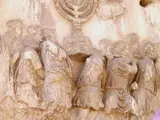
- Arch of Titus, spoils relief Arch of Titus, Roman Forum artefact after 81 CE about ↗ Roman soldiers carry the Temple's menorah, trumpets and table in Titus's triumph of 71 CE: Rome's own record of the spoils of Jerusalem. Latin cited in §04 §04 After the Temple
- Acts 11:26 Acts of the Apostles (New Testament) prose c. 80–90 CE read the text ↗ At Antioch 'the disciples were first called Christians'. Greek cited in §00 §00 How We Know
- Acts 18:1–2 Acts of the Apostles (New Testament) prose c. 80–90 CE read the text ↗ Paul meets Aquila and Priscilla in Corinth, who had left Italy 'because Claudius had ordered all Jews to leave Rome'. Greek cited in §00 cited in §03 §00 How We Know
- Acts 18:12–17 Acts of the Apostles (New Testament) prose c. 80–90 CE read the text ↗ Paul is brought before Gallio, proconsul of Achaia, in Corinth; Gallio's year of office is fixed by the Delphi inscription. Greek cited in §00 cited in §03 §00 How We Know
- Luke 1:26–38 Gospel of Luke (New Testament) prose c. 80–90 CE read the text ↗ Gabriel announces to Mary in Nazareth that she will conceive by the Holy Spirit. Greek cited in §02 §02 The Historical Jesus
- Luke 11:20 Gospel of Luke (New Testament) prose c. 80–90 CE read the text ↗ 'If it is by the finger of God that I cast out the demons, then the kingdom of God has come to you' (Q). Greek cited in §02 §02 The Historical Jesus
- Luke 13:31–33 Gospel of Luke (New Testament) prose c. 80–90 CE read the text ↗ Warned that Herod Antipas wants to kill him, Jesus calls him 'that fox'. Greek cited in §02 §02 The Historical Jesus
- Luke 2:1–5 Gospel of Luke (New Testament) prose c. 80–90 CE read the text ↗ Augustus' decree of registration 'while Quirinius was governor of Syria' brings Joseph and Mary from Nazareth to Bethlehem. Greek cited in §02 §02 The Historical Jesus
- Luke 21:20 Gospel of Luke (New Testament) prose c. 80–90 CE read the text ↗ 'When you see Jerusalem surrounded by armies, then know that its desolation has come near', often read as written after 70. Greek cited in §00 §00 How We Know
- Luke 23:46 Gospel of Luke (New Testament) prose c. 80–90 CE read the text ↗ Jesus' last words in Luke: 'Father, into your hands I commend my spirit.' Greek cited in §02 §02 The Historical Jesus
- Luke 24:33–51 Gospel of Luke (New Testament) prose c. 80–90 CE read the text ↗ The risen Jesus appears to the eleven in Jerusalem and is carried up into heaven near Bethany. Greek cited in §02 §02 The Historical Jesus
- Luke 3:1–2 Gospel of Luke (New Testament) prose c. 80–90 CE read the text ↗ John begins preaching 'in the fifteenth year of the reign of Emperor Tiberius', when Pilate was governor and Annas and Caiaphas high priests. Greek cited in §01 cited in §02 §02 The Historical Jesus
- Luke 3:19–22 Gospel of Luke (New Testament) prose c. 80–90 CE read the text ↗ Luke reports John's imprisonment before narrating, in the passive, that Jesus 'had been baptised'. Greek cited in §02 §02 The Historical Jesus
- Luke 6:20–36 Gospel of Luke (New Testament) prose c. 80–90 CE read the text ↗ The Sermon on the Plain (Q): blessings on the poor and hungry, woes on the rich, love of enemies. Greek cited in §02 §02 The Historical Jesus
- Luke 7:33–34 Gospel of Luke (New Testament) prose c. 80–90 CE read the text ↗ Critics call Jesus 'a glutton and a drunkard, a friend of tax collectors and sinners' (Q). Greek cited in §02 §02 The Historical Jesus
- Luke 8:1–3 Gospel of Luke (New Testament) prose c. 80–90 CE read the text ↗ Women travel with Jesus and the Twelve and provide for them: Mary Magdalene, Joanna wife of Herod's steward Chuza, Susanna and many others. Greek cited in §01 cited in §02 cited in §08 §02 The Historical Jesus
- Matthew 1:18–25 Gospel of Matthew (New Testament) prose c. 80–90 CE read the text ↗ Mary is found with child from the Holy Spirit; Matthew cites Isaiah 7:14 in its Greek form. Greek cited in §02 §02 The Historical Jesus
- Matthew 11:21–23 Gospel of Matthew (New Testament) prose c. 80–90 CE read the text ↗ Woes on the lakeside towns of Chorazin, Bethsaida and Capernaum (Q). Greek cited in §02 §02 The Historical Jesus
- Matthew 13:55 Gospel of Matthew (New Testament) prose c. 80–90 CE read the text ↗ Matthew's version of Mark 6:3: 'Is not this the carpenter's son?' Greek cited in §02 §02 The Historical Jesus
- Matthew 19:17 Gospel of Matthew (New Testament) prose c. 80–90 CE read the text ↗ Matthew rewords Mark 10:18 as 'Why do you ask me about what is good?' Greek cited in §00 §00 How We Know
- Matthew 2:1 Gospel of Matthew (New Testament) prose c. 80–90 CE read the text ↗ Jesus is born in Bethlehem 'in the time of King Herod'. Greek cited in §02 §02 The Historical Jesus
- Matthew 22:7 Gospel of Matthew (New Testament) prose c. 80–90 CE read the text ↗ In the parable of the wedding banquet the king sends troops who 'burned their city', often read as Jerusalem in 70. Greek cited in §00 §00 How We Know
- Matthew 27:25 Gospel of Matthew (New Testament) prose c. 80–90 CE read the text ↗ Only in Matthew: the crowd answers Pilate, 'His blood be on us and on our children!' Greek cited in §02 §02 The Historical Jesus
- Matthew 28:16–20 Gospel of Matthew (New Testament) prose c. 80–90 CE read the text ↗ The risen Jesus meets the eleven on a mountain in Galilee and sends them to baptise 'in the name of the Father and of the Son and of the Holy Spirit'. Greek cited in §02 cited in §04 cited in §05 §02 The Historical Jesus
- Matthew 3:13–15 Gospel of Matthew (New Testament) prose c. 80–90 CE read the text ↗ John protests that Jesus should baptise him; Jesus answers that it is proper 'to fulfil all righteousness'. Greek cited in §02 §02 The Historical Jesus
- Acts 21:27–30 Acts of the Apostles (New Testament) prose c. 80–90 CE read the text ↗ A crowd seizes Paul in the Temple, claiming he brought a gentile, Trophimus, inside. Greek cited in §01 §01 The World of Jesus
- Acts 21:38 Acts of the Apostles (New Testament) prose c. 80–90 CE read the text ↗ A Roman tribune asks Paul whether he is 'the Egyptian who recently stirred up a revolt and led the four thousand assassins out into the wilderness'. Greek cited in §01 §01 The World of Jesus
- Acts 5:36–37 Acts of the Apostles (New Testament) prose c. 80–90 CE read the text ↗ Gamaliel cites Theudas, and after him Judas the Galilean 'in the days of the census', as failed movements. Greek cited in §01 §01 The World of Jesus
- Luke 13:1 Gospel of Luke (New Testament) prose c. 80–90 CE read the text ↗ 'The Galileans whose blood Pilate had mingled with their sacrifices', an incident known only from this verse. Greek cited in §01 §01 The World of Jesus
- Luke 6:15 Gospel of Luke (New Testament) prose c. 80–90 CE read the text ↗ Among the Twelve, 'Simon, who was called the Zealot'. Greek cited in §01 §01 The World of Jesus
- Luke 7:22 Gospel of Luke (New Testament) prose c. 80–90 CE read the text ↗ Jesus answers John's disciples: the blind see, the lame walk, the dead are raised, the poor have good news brought to them (Q). Greek cited in §01 §01 The World of Jesus
- Matthew 17:24–27 Gospel of Matthew (New Testament) prose c. 80–90 CE read the text ↗ Collectors of the Temple's half-shekel tax ask Peter in Capernaum whether his teacher pays it. Greek cited in §01 §01 The World of Jesus
- 1 Peter 5:13 First Letter of Peter (New Testament) letter c. 70–100 CE read the text ↗ Greetings from 'your sister church in Babylon', usually read as Rome. Greek cited in §03 §03 Paul and the Gentile Mission
- Acts 11:19–26 Acts of the Apostles (New Testament) prose c. 80–90 CE read the text ↗ Believers at Antioch preach to Greeks; Barnabas brings Saul from Tarsus. Greek cited in §03 §03 Paul and the Gentile Mission
- Acts 13:16 Acts of the Apostles (New Testament) prose c. 80–90 CE read the text ↗ Paul addresses the synagogue at Pisidian Antioch: 'You Israelites, and others who fear God'. Greek cited in §03 §03 Paul and the Gentile Mission
- Acts 15:1–29 Acts of the Apostles (New Testament) prose c. 80–90 CE read the text ↗ The Jerusalem council and its letter asking gentile believers to abstain from idol offerings, fornication, strangled meat and blood. Greek cited in §03 §03 Paul and the Gentile Mission
- Acts 16:10–17 Acts of the Apostles (New Testament) prose c. 80–90 CE read the text ↗ The first of the passages in which Acts switches to 'we'. Greek cited in §03 cited in §04 §03 Paul and the Gentile Mission
- Acts 18:3 Acts of the Apostles (New Testament) prose c. 80–90 CE read the text ↗ Paul works with Aquila and Priscilla, 'for by trade they were tentmakers'. Greek cited in §03 §03 Paul and the Gentile Mission
- Acts 21:27–36 Acts of the Apostles (New Testament) prose c. 80–90 CE read the text ↗ Paul is seized in the Temple and taken into custody by the Roman tribune. Greek cited in §03 §03 Paul and the Gentile Mission
- Acts 22:25–29 Acts of the Apostles (New Testament) prose c. 80–90 CE read the text ↗ Paul claims Roman citizenship to avoid being flogged: 'I was born a citizen.' Greek cited in §03 §03 Paul and the Gentile Mission
- Acts 22:3 Acts of the Apostles (New Testament) prose c. 80–90 CE read the text ↗ 'I am a Jew, born in Tarsus in Cilicia, but brought up in this city at the feet of Gamaliel.' Greek cited in §03 §03 Paul and the Gentile Mission
- Acts 22:6–11 Acts of the Apostles (New Testament) prose c. 80–90 CE read the text ↗ Paul's second account of the Damascus road: his companions saw the light but did not hear the voice. Greek cited in §03 §03 Paul and the Gentile Mission
- Acts 24:17 Acts of the Apostles (New Testament) prose c. 80–90 CE read the text ↗ Paul tells Felix he came 'to bring alms to my nation', Acts' only mention of the collection. Greek cited in §03 §03 Paul and the Gentile Mission
- Acts 24:27 Acts of the Apostles (New Testament) prose c. 80–90 CE read the text ↗ Paul is held two years at Caesarea until Festus succeeds Felix. Greek cited in §03 §03 Paul and the Gentile Mission
- Acts 28:30–31 Acts of the Apostles (New Testament) prose c. 80–90 CE read the text ↗ Acts ends with Paul two years in Rome 'at his own expense', preaching 'without hindrance'. Greek cited in §03 cited in §04 §03 Paul and the Gentile Mission
- Acts 9:1–19 Acts of the Apostles (New Testament) prose c. 80–90 CE read the text ↗ The first account of the Damascus road: a light, a voice; his companions hear the voice but see no one. Greek cited in §03 §03 Paul and the Gentile Mission
- Matthew 5:17–20 Gospel of Matthew (New Testament) prose c. 80–90 CE read the text ↗ Jesus has come not to abolish the law or the prophets but to fulfil them; not one letter or stroke will pass from the law. Greek cited in §04 §04 After the Temple
- Matthew 23:1–36 Gospel of Matthew (New Testament) prose c. 80–90 CE read the text ↗ The seven woes against 'scribes and Pharisees, hypocrites', Matthew's sustained polemic against the Pharisees. Greek cited in §04 §04 After the Temple
- Matthew 4:23 Gospel of Matthew (New Testament) prose c. 80–90 CE read the text ↗ Jesus teaches 'in their synagogues', a phrase Matthew uses repeatedly. Greek cited in §04 §04 After the Temple
- Luke 1:1–4 Gospel of Luke (New Testament) prose c. 80–90 CE read the text ↗ Luke's preface: many have compiled accounts handed on by eyewitnesses; he writes an orderly account for 'most excellent Theophilus'. Greek cited in §04 §04 After the Temple
- Acts 20:17–28 Acts of the Apostles (New Testament) prose c. 80–90 CE read the text ↗ Paul summons the elders (presbyteroi) of Ephesus and tells them the Holy Spirit has made them overseers (episkopoi). Greek cited in §04 §04 After the Temple
- Acts 21:20–26 Acts of the Apostles (New Testament) prose c. 80–90 CE read the text ↗ James tells Paul of 'many thousands of believers among the Jews… all zealous for the law', and Paul purifies himself in the Temple. Greek cited in §04 §04 After the Temple
- Luke 7:36–50 Gospel of Luke (New Testament) prose c. 80–90 CE read the text ↗ An unnamed 'woman in the city, who was a sinner' anoints Jesus' feet in a Pharisee's house. Greek cited in §08 §08 The Medieval West
- Matthew 12:32 Gospel of Matthew (New Testament) prose c. 80–90 CE read the text ↗ A sin against the Holy Spirit will not be forgiven 'either in this age or in the age to come'. Greek
- Matthew 24:29–41 Gospel of Matthew (New Testament) prose c. 80–90 CE read the text ↗ After the suffering of those days the Son of Man comes on the clouds and gathers his elect; 'one will be taken and one will be left'. Greek
- Acts 2:1–4 Acts of the Apostles (New Testament) prose c. 80–90 CE read the text ↗ At Pentecost the disciples are filled with the Holy Spirit and 'began to speak in other languages, as the Spirit gave them ability'. Greek
- Ephesians 6:5–8 Letter to the Ephesians (New Testament) letter c. 80–100 CE read the text ↗ 'Slaves, obey your earthly masters with fear and trembling, in singleness of heart, as you obey Christ' (NRSVUE); cited in defence of slavery and kept, in the KJV, in the 1807 'Slave Bible'. Greek cited in §10 §10 Mission and Empire
- 1 Peter 4:16 First Letter of Peter (New Testament) letter c. 80–100 CE read the text ↗ 'If any of you suffers as a Christian, do not consider it a disgrace', one of the earliest uses of the name. Greek
- Josephus, Antiquities 18.11–25 Jewish Antiquities prose c. 93 CE read the text ↗ The Pharisees, Sadducees and Essenes (more than four thousand), and the 'fourth philosophy' of Judas the Galilean, founded in opposition to the Roman census of 6 CE. Greek cited in §01 §01 The World of Jesus
- Josephus, Antiquities 20.200 Jewish Antiquities prose c. 93 CE read the text ↗ The high priest Ananus has 'the brother of Jesus who was called Christ, whose name was James' stoned in 62 CE; the passage is generally accepted as authentic. Greek cited in §00 cited in §02 cited in §03 cited in §04 §00 How We Know
- Josephus, Antiquities 14.69–73 Jewish Antiquities prose c. 93 CE read the text ↗ Pompey takes the Temple in 63 BCE and enters the Holy of Holies with his men, but leaves its treasures untouched. Greek cited in §01 §01 The World of Jesus
- Josephus, Antiquities 15.380–425 Jewish Antiquities prose c. 93 CE read the text ↗ Herod, in his eighteenth year (20/19 BCE), undertakes to rebuild the Temple; Josephus describes the enlarged platform, porticoes, courts and the warning barrier for gentiles. Greek cited in §01 §01 The World of Jesus
- Josephus, Antiquities 17.167 Jewish Antiquities prose c. 93 CE read the text ↗ An eclipse of the moon during Herod's last illness, the main evidence for dating his death to 4 BCE. Greek cited in §02 §02 The Historical Jesus
- Josephus, Antiquities 17.191 Jewish Antiquities prose c. 93 CE read the text ↗ Herod dies having reigned 34 years from Antigonus' death and 37 from his appointment by Rome. Greek cited in §01 cited in §02 §02 The Historical Jesus
- Josephus, Antiquities 18.1–10 Jewish Antiquities prose c. 93 CE read the text ↗ Quirinius comes to Syria to assess property after Judea's annexation in 6 CE; Judas the Galilean leads resistance to the census. Greek cited in §01 cited in §02 §02 The Historical Jesus
- Josephus, Antiquities 18.35 Jewish Antiquities prose c. 93 CE read the text ↗ Valerius Gratus appoints 'Joseph, who was called Caiaphas' high priest. Greek cited in §00 cited in §01 cited in §02 §00 How We Know
- Josephus, Antiquities 18.36–38 Jewish Antiquities prose c. 93 CE read the text ↗ Herod Antipas founds Tiberias on the Sea of Galilee and settles it with a mixed population. Greek cited in §01 cited in §02 §02 The Historical Jesus
- Josephus, Antiquities 18.55–62 Jewish Antiquities prose c. 93 CE read the text ↗ Pilate's prefecture: the standards brought into Jerusalem and the riot over Temple funds used for an aqueduct. Greek cited in §01 cited in §02 §02 The Historical Jesus
- Josephus, Antiquities 18.63–64 (Testimonium Flavianum) Jewish Antiquities prose c. 93 CE (received text later expanded) read the text ↗ Jesus as 'a wise man', 'a doer of surprising deeds', condemned to the cross by Pilate; the received text's Christian phrases are generally thought to be interpolations. Greek cited in §00 cited in §02 §00 How We Know
- Josephus, Antiquities 18.95 Jewish Antiquities prose c. 93 CE read the text ↗ Vitellius removes Joseph Caiaphas from the high priesthood in 36/37 CE. Greek cited in §01 cited in §02 §02 The Historical Jesus
- Josephus, Antiquities 18.116–119 Jewish Antiquities prose c. 93 CE read the text ↗ John 'surnamed the Baptist', a good man who urged righteousness and baptism, executed at Machaerus by Herod Antipas for fear of sedition. Greek cited in §01 cited in §02 §02 The Historical Jesus
- Josephus, Antiquities 13.318–319 Jewish Antiquities prose c. 93 CE read the text ↗ Aristobulus I makes war on the Itureans, annexes much of their land and requires those who stay to be circumcised and live by Jewish law. Greek cited in §01 §01 The World of Jesus
- Josephus, Antiquities 14.159–160 Jewish Antiquities prose c. 93 CE read the text ↗ The young Herod, governor of Galilee, captures and kills the bandit chief Hezekiah and many of his men. Greek cited in §01 §01 The World of Jesus
- Josephus, Antiquities 14.381–389 Jewish Antiquities prose c. 93 CE read the text ↗ The Roman Senate, at Antony's and Octavian's urging, declares Herod king of Judea in 40 BCE. Greek cited in §01 §01 The World of Jesus
- Josephus, Antiquities 15.259–260 Jewish Antiquities prose c. 93 CE read the text ↗ Herod's sister Salome sends her husband Costobarus a bill of divorce, 'not according to the Jewish laws', which allow only men to divorce. Greek cited in §01 §01 The World of Jesus
- Josephus, Antiquities 15.331–341 Jewish Antiquities prose c. 93 CE read the text ↗ Herod builds Caesarea, with its harbour and a temple of Caesar, over about twelve years. Greek cited in §01 §01 The World of Jesus
- Josephus, Antiquities 17.271–298 Jewish Antiquities prose c. 93 CE read the text ↗ Risings after Herod's death: Judas son of Hezekiah at Sepphoris, Simon in Peraea and Athronges; Varus burns Sepphoris and crucifies about two thousand. Greek cited in §01 §01 The World of Jesus
- Josephus, Antiquities 17.317–320 Jewish Antiquities prose c. 93 CE read the text ↗ Augustus divides Herod's kingdom between Archelaus, Antipas and Philip. Greek cited in §01 §01 The World of Jesus
- Josephus, Antiquities 18.27 Jewish Antiquities prose c. 93 CE read the text ↗ Antipas rebuilds Sepphoris as 'the ornament of all Galilee' and makes it his capital. Greek cited in §01 §01 The World of Jesus
- Josephus, Antiquities 18.85–89 Jewish Antiquities prose c. 93 CE read the text ↗ Pilate's troops attack Samaritans gathering at Mount Gerizim behind a prophet; Vitellius sends Pilate to Rome to answer to the emperor. Greek cited in §01 §01 The World of Jesus
- Josephus, Antiquities 20.97–98 Jewish Antiquities prose c. 93 CE read the text ↗ Under Fadus, the prophet Theudas leads a crowd to the Jordan, promising to divide it; cavalry kill many and behead him. Greek cited in §01 §01 The World of Jesus
- Josephus, Antiquities 20.169–172 Jewish Antiquities prose c. 93 CE read the text ↗ A prophet from Egypt leads a crowd to the Mount of Olives, promising Jerusalem's walls will fall; Felix kills four hundred and the Egyptian escapes. Greek cited in §01 §01 The World of Jesus
- Josephus, Antiquities 20.118 Jewish Antiquities prose c. 93 CE read the text ↗ It was the custom of Galileans going up to Jerusalem for the festivals to travel through Samaria; around 52 CE a Galilean pilgrim was killed there. Greek cited in §01 §01 The World of Jesus
- Revelation 1:9 Revelation (New Testament) prose c. 95 CE read the text ↗ John is on the island of Patmos 'because of the word of God and the testimony of Jesus'. Greek cited in §04 §04 After the Temple
- Revelation 2:13 Revelation (New Testament) prose c. 95 CE read the text ↗ Antipas, 'my witness, my faithful one', killed at Pergamum, 'where Satan lives'. Greek cited in §04 §04 After the Temple
- Revelation 13:18 Revelation (New Testament) prose c. 95 CE read the text ↗ The number of the beast is 666, usually decoded as 'Nero Caesar' in Hebrew letters. Greek cited in §04 §04 After the Temple
- Revelation 17:9 Revelation (New Testament) prose c. 95 CE read the text ↗ The seven heads are 'seven mountains on which the woman is seated', a reference to Rome. Greek cited in §04 §04 After the Temple
- Revelation 3:10 Revelation (New Testament) prose c. 95 CE read the text ↗ 'I will keep you from the hour of trial that is coming on the whole world', read by pre-tribulationists as a promise of removal. Greek
- 1 Clement 5 First Letter of Clement (church of Rome to Corinth) letter c. 96 CE read the text ↗ Peter and Paul as examples of endurance 'through jealousy'; Paul reached 'the farthest bounds of the West' and bore witness before the rulers. Greek cited in §03 cited in §04 §03 Paul and the Gentile Mission
- 1 Clement 6 First Letter of Clement (church of Rome to Corinth) letter c. 96 CE read the text ↗ 'A vast multitude of the elect' joined the apostles in suffering, usually taken as Nero's victims. Greek cited in §03 §03 Paul and the Gentile Mission
- 1 Clement 42–44 First Letter of Clement letter c. 96 CE read the text ↗ The apostles appointed bishops and deacons and, foreseeing strife over the episcopē, arranged for approved men to succeed them; Corinth's deposed presbyters should be restored. Greek cited in §04 §04 After the Temple
- Nerva sestertius, FISCI IVDAICI CALVMNIA SVBLATA Roman imperial coinage coin 96–97 CE about ↗ Nerva's coins proclaim the removal of false accusations in collecting the Jewish tax. Latin cited in §04 §04 After the Temple
- John 10:30 Gospel of John (New Testament) prose c. 90–110 CE read the text ↗ 'The Father and I are one.' Greek cited in §02 §02 The Historical Jesus
- John 11:55 Gospel of John (New Testament) prose c. 90–110 CE read the text ↗ The third Passover of Jesus' ministry in John's chronology. Greek cited in §02 §02 The Historical Jesus
- John 19:14 Gospel of John (New Testament) prose c. 90–110 CE read the text ↗ Jesus is condemned at noon on 'the day of Preparation for the Passover', a day earlier than in the Synoptic Gospels. Greek cited in §02 §02 The Historical Jesus
- John 19:30 Gospel of John (New Testament) prose c. 90–110 CE read the text ↗ Jesus' last words in John: 'It is finished.' Greek cited in §02 §02 The Historical Jesus
- John 2:13 Gospel of John (New Testament) prose c. 90–110 CE read the text ↗ The first of three Passovers in John's account of Jesus' ministry, with the Temple incident placed at its start. Greek cited in §02 §02 The Historical Jesus
- John 20:30–31 Gospel of John (New Testament) prose c. 90–110 CE read the text ↗ The Gospel states its purpose: 'these are written so that you may come to believe that Jesus is the Messiah, the Son of God'. Greek cited in §00 §00 How We Know
- John 6:4 Gospel of John (New Testament) prose c. 90–110 CE read the text ↗ A second Passover in John's chronology of the ministry. Greek cited in §02 §02 The Historical Jesus
- John 7:41–42 Gospel of John (New Testament) prose c. 90–110 CE read the text ↗ Some in the crowd object: 'Surely the Messiah does not come from Galilee?… from Bethlehem, the village where David lived.' Greek cited in §02 §02 The Historical Jesus
- John 7:53–8:11 Gospel of John (New Testament) prose c. 90–110 CE read the text ↗ The woman taken in adultery, absent from the earliest manuscripts and placed in different spots by later ones. Greek cited in §00 §00 How We Know
- John 8:58 Gospel of John (New Testament) prose c. 90–110 CE read the text ↗ 'Very truly, I tell you, before Abraham was, I am.' Greek cited in §02 §02 The Historical Jesus
- John 9:22 Gospel of John (New Testament) prose c. 90–110 CE read the text ↗ Anyone confessing Jesus as Messiah would be 'put out of the synagogue' (aposynagōgos), usually read as reflecting the late first century. Greek cited in §00 cited in §04 §00 How We Know
- John 1:1–18 Gospel of John (New Testament) prose c. 90–110 CE read the text ↗ The prologue: 'In the beginning was the Word… and the Word was God… And the Word became flesh.' Greek cited in §04 §04 After the Temple
- John 8:44 Gospel of John (New Testament) prose c. 90–110 CE read the text ↗ Jesus tells 'the Jews who had believed in him', 'You are from your father the devil.' Greek cited in §04 §04 After the Temple
- John 12:42 Gospel of John (New Testament) prose c. 90–110 CE read the text ↗ Many authorities believed in Jesus but did not confess it, 'for fear that they would be put out of the synagogue'. Greek cited in §04 §04 After the Temple
- John 16:2 Gospel of John (New Testament) prose c. 90–110 CE read the text ↗ 'They will put you out of the synagogues', and those who kill you will think they serve God. Greek cited in §04 §04 After the Temple
- John 21:24 Gospel of John (New Testament) prose c. 90–110 CE read the text ↗ 'This is the disciple who is testifying to these things and has written them, and we know that his testimony is true.' Greek cited in §04 §04 After the Temple
- Didache 7 Didache (The Teaching of the Twelve Apostles) rule c. 50–120 CE read the text ↗ Baptism in running water in the name of the Father, Son and Holy Spirit, or by pouring water three times on the head if none is available. Greek cited in §04 §04 After the Temple
- Didache 8–10 Didache (The Teaching of the Twelve Apostles) rule c. 50–120 CE read the text ↗ Fast on Wednesday and Friday, not with 'the hypocrites' on Monday and Thursday; pray the Lord's Prayer three times daily; Eucharist prayers over cup and bread without words of institution. Greek cited in §04 §04 After the Temple
- Didache 11–15 Didache (The Teaching of the Twelve Apostles) rule c. 50–120 CE read the text ↗ How to test apostles and prophets (one who stays three days is false), and 'appoint for yourselves bishops and deacons'. Greek cited in §04 §04 After the Temple
- 1 Timothy 3:2 First Letter to Timothy (New Testament) letter c. 100 CE (disputed) read the text ↗ A bishop must be 'above reproach, married only once' (literally 'husband of one wife'). Greek cited in §08 §08 The Medieval West
- John 12:1–8 Gospel of John (New Testament) prose c. 90–110 CE read the text ↗ Mary of Bethany, sister of Martha and Lazarus, anoints Jesus' feet and wipes them with her hair. Greek cited in §08 §08 The Medieval West
- John 20:11–18 Gospel of John (New Testament) prose c. 90–110 CE read the text ↗ The risen Jesus appears first to Mary Magdalene and sends her to tell the disciples. Greek cited in §08 §08 The Medieval West
- John 19:25 Gospel of John (New Testament) prose c. 90–110 CE read the text ↗ Standing near the cross are Jesus' mother, his mother's sister, Mary the wife of Clopas, and Mary Magdalene. Greek
- Ignatius, To the Magnesians 10 Letters of Ignatius of Antioch letter c. 110 CE read the text ↗ The earliest known use of the word Christianismos, 'Christianity', set against Ioudaismos. Greek cited in §00 cited in §04 §00 How We Know
- Ignatius, To the Romans 4 Letters of Ignatius of Antioch letter c. 110 CE read the text ↗ 'I do not command you as Peter and Paul did', an early hint that both were linked with Rome. Greek cited in §03 cited in §04 §03 Paul and the Gentile Mission
- 1 Timothy 2:11–15 First Letter to Timothy (New Testament) letter c. 100–120 CE read the text ↗ 'I permit no woman to teach or to have authority over a man; she is to keep silent', grounded in Adam's priority and Eve's deception. Greek cited in §04 §04 After the Temple
- 1 Timothy 3:1–13 First Letter to Timothy (New Testament) letter c. 100–120 CE read the text ↗ Qualifications for an overseer (episkopos), who must be 'husband of one wife', and for deacons. Greek cited in §04 §04 After the Temple
- 1 Timothy 5:3–16 First Letter to Timothy (New Testament) letter c. 100–120 CE read the text ↗ Rules for an enrolled order of widows, who must be at least sixty. Greek cited in §04 §04 After the Temple
- Ignatius, To the Smyrnaeans 8 Letters of Ignatius of Antioch letter c. 110 CE (date disputed) read the text ↗ Follow the bishop as Jesus Christ the Father; 'wherever Jesus Christ is, there is the catholic church', the first known use of the phrase. Greek cited in §04 cited in §05 §04 After the Temple
- Ignatius, To the Trallians 10 Letters of Ignatius of Antioch letter c. 110 CE (date disputed) read the text ↗ Against those who say Christ only seemed to suffer: if so, Ignatius asks, why is he in chains? Greek cited in §04 §04 After the Temple
- Ignatius, To the Ephesians 18.2 Letters of Ignatius of Antioch letter c. 110 CE read the text ↗ 'Our God, Jesus the Christ, was conceived by Mary', an early second-century statement of Jesus' divinity. Greek cited in §06 §06 Constantine, the Creeds and the Councils
- Pliny the Younger, Letters 10.96 Letters letter c. 112 CE about ↗ The governor of Bithynia-Pontus reports that Christians met before dawn to sing 'a hymn to Christ as to a god', and that he tortured two enslaved women called ministrae. Latin cited in §00 cited in §06 §00 How We Know
- Trajan to Pliny, Letters 10.97 Pliny the Younger, Letters letter c. 112 CE about ↗ Trajan's reply: Christians are not to be sought out; if accused and convicted they are to be punished, but pardoned if they sacrifice; anonymous accusations are not to be admitted. Latin cited in §04 cited in §05 §04 After the Temple
- Tacitus, Annals 15.44 Annals prose c. 116 CE Explaining the name of the Christians blamed for the fire of Rome, Tacitus says Christus was executed in the reign of Tiberius by the procurator Pontius Pilate. Latin cited in §00 cited in §02 cited in §03 cited in §04 §00 How We Know
- Babatha archive (P.Yadin 1–35) Cave of Letters, Naḥal Ḥever text 94–132 CE about ↗ The legal papers of a Jewish woman of the Dead Sea region: marriage contract, property deeds and lawsuits in Roman courts. Greek, Aramaic and Nabataean cited in §01 §01 The World of Jesus
- Suetonius, Claudius 25.4 Lives of the Caesars prose c. 121 CE about ↗ Claudius 'expelled the Jews from Rome, since they were constantly making disturbances at the instigation of Chrestus'. Latin cited in §00 cited in §03 §00 How We Know
- Suetonius, Domitian 12.2 Lives of the Caesars prose c. 121 CE about ↗ The Jewish tax was levied 'with the utmost rigour' under Domitian (trans. Rolfe), including on those who lived as Jews without professing it. Latin cited in §04 §04 After the Temple
- 2 Peter 3:15–16 Second Letter of Peter (New Testament) letter c. 100–150 CE read the text ↗ Paul's letters contain things 'hard to understand, which the ignorant and unstable twist… as they do the other scriptures'. Greek cited in §04 §04 After the Temple
- Epistle of Barnabas 4.6–8 Epistle of Barnabas letter c. 130 CE read the text ↗ The covenant was lost when Moses broke the tablets at Sinai; readers are warned against those who say it belongs to both peoples. Greek cited in §04 §04 After the Temple
- Gospel of Thomas Nag Hammadi Codex II,2 text 2nd c. CE (composition; date disputed) about ↗ One hundred and fourteen sayings of Jesus with almost no narrative. Coptic (from Greek) cited in §00 cited in §05 §00 How We Know
- Gospel of Thomas, saying 114 Nag Hammadi Codex II,2 text 2nd c. CE (composition; date disputed) read the text ↗ Peter: 'Let Mary leave us, for women are not worthy of life'; Jesus: 'I myself shall lead her in order to make her male'. Coptic (from Greek) cited in §05 §05 Many Christianities
- Protevangelium of James 9 Protevangelium (Infancy Gospel) of James prose mid-2nd c. CE read the text ↗ Joseph, chosen to take Mary into his care, protests 'I have sons and am old', the source of the view that Jesus' brothers were Joseph's sons by an earlier marriage. Greek cited in §02 §02 The Historical Jesus
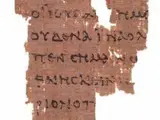
- Papyrus 52 (P. Rylands Gk. 457) Fragment of the Gospel of John (John Rylands Library, Manchester) manuscript c. 125–175 CE, perhaps later about ↗ A scrap with John 18:31–33, 37–38, long called the oldest New Testament manuscript; its date range is now disputed. Greek cited in §00 §00 How We Know
- Gospel of Mary Berlin Codex (P. Berol. 8502); P.Oxy. 3525; P.Ryl. 463 text 2nd c. CE (composition) about ↗ Mary Magdalene comforts and teaches the disciples, and Peter questions whether the Saviour would speak to a woman privately. Coptic and Greek cited in §00 cited in §05 §00 How We Know
- Mark 16:17 Gospel of Mark, longer ending (New Testament) prose 2nd c. CE (added ending) read the text ↗ 'They will speak in new tongues', in the longer ending of Mark that is absent from the earliest manuscripts. Greek
- Justin, First Apology 26 First Apology prose c. 150–155 CE read the text ↗ Marcion of Pontus 'is even at this day alive', teaching another god than the creator, with followers 'in every nation'. Greek cited in §05 §05 Many Christianities
- Justin, First Apology 67 First Apology prose c. 150–155 CE read the text ↗ Sunday worship: readings from the memoirs of the apostles or the prophets, a homily, prayers and the Eucharist. Greek cited in §05 §05 Many Christianities
- Justin Martyr, First Apology 31 First Apology prose c. 155 CE read the text ↗ In the recent Jewish war Bar Kokhba ordered Christians alone to be punished unless they denied Jesus Christ and blasphemed. Greek cited in §04 §04 After the Temple
- Justin Martyr, First Apology 67 First Apology prose c. 155 CE read the text ↗ On Sunday 'the memoirs of the apostles or the writings of the prophets are read, as long as time permits', followed by the Eucharist. Greek cited in §04 §04 After the Temple
- Justin, Second Apology 13 Second Apology prose c. 150–160 CE read the text ↗ Each philosopher spoke well 'according to the share he had of the seminal divine Word (logos spermatikos)'. Greek cited in §05 §05 Many Christianities
- Justin Martyr, First Apology 66 First Apology prose c. 155 CE read the text ↗ The apostles' memoirs, 'which are called Gospels', hand down Jesus' words over the bread and cup. Greek cited in §04 §04 After the Temple
- Justin Martyr, Dialogue with Trypho 11 Dialogue with Trypho prose c. 155–160 CE read the text ↗ Christians are 'the true spiritual Israel', heirs of the new covenant. Greek cited in §04 §04 After the Temple
- Justin Martyr, Dialogue with Trypho 16 Dialogue with Trypho prose c. 155–160 CE read the text ↗ Justin accuses Jews of cursing in their synagogues those who believe in Christ. Greek cited in §04 §04 After the Temple
- Vatican Necropolis and the 'Red Wall' shrine Excavations under St Peter's Basilica (1939–1949) site shrine c. 160 CE about ↗ A small aedicula of about 160 CE over a modest grave, identified with Gaius' 'trophy' of Peter. — cited in §03 §03 Paul and the Gentile Mission
- Martyrdom of Polycarp Letter of the church of Smyrna letter c. 155–167 CE (event); text soon after read the text ↗ The earliest surviving account of a Christian martyrdom, modelled on the passion of Jesus. Greek cited in §05 §05 Many Christianities
- Ptolemy, Letter to Flora Preserved in Epiphanius, Panarion 33.3–7 letter mid-2nd c. CE read the text ↗ A Valentinian teacher explains that the Jewish law came from an intermediate god, neither the perfect Father nor the devil. Greek cited in §05 §05 Many Christianities
- Melito of Sardis, On Pascha 96 On Pascha (Peri Pascha) prose c. 160–170 CE about ↗ 'God has been murdered; the King of Israel has been put to death by an Israelite right hand', the first explicit deicide charge. Greek cited in §04 §04 After the Temple
- Acts of Paul and Thecla Acts of Paul prose 2nd c. CE (before c. 200) about ↗ Thecla of Iconium leaves her fiancé to follow Paul, survives pyre and arena, baptises herself and is sent to teach. Greek cited in §04 §04 After the Temple
- Eusebius, Ecclesiastical History 5.1.26 Ecclesiastical History (quoting the Letter of the Churches of Vienne and Lyon) prose letter of 177 CE read the text ↗ The martyr Biblis asks how Christians could eat children when they may not eat even the blood of animals. Greek cited in §03 §03 Paul and the Gentile Mission
- Irenaeus, Against Heresies 3.1.1 Against Heresies prose c. 180 CE read the text ↗ The earliest list naming Matthew, Mark, Luke and John as authors of the four Gospels. Greek (Latin translation) cited in §00 cited in §04 cited in §05 §00 How We Know
- Irenaeus, Against Heresies 3.11.8 Against Heresies prose c. 180 CE read the text ↗ There can be neither more nor fewer than four Gospels, as there are four zones of the world and four principal winds. Greek (Latin translation) cited in §00 cited in §05 §00 How We Know
- Irenaeus, Against Heresies 1.31.1 Against Heresies prose c. 180 CE read the text ↗ Irenaeus mentions 'a fictitious history' called the Gospel of Judas, used by a group later called Cainites. Greek (Latin translation) cited in §00 cited in §05 §00 How We Know
- Irenaeus, Against Heresies 1.26.2 Against Heresies prose c. 180 CE read the text ↗ The Ebionites use only Matthew's Gospel, reject Paul as an apostate from the law, practise circumcision and keep the law. Greek (Latin translation) cited in §04 §04 After the Temple
- Irenaeus, Against Heresies 5.30.3 Against Heresies prose c. 180 CE read the text ↗ The apocalyptic vision was seen 'towards the end of Domitian's reign'. Greek (Latin translation) cited in §04 §04 After the Temple
- Irenaeus, Against Heresies 1.1.1 Against Heresies prose c. 180 CE read the text ↗ Irenaeus' summary of the Valentinian myth of the aeons. Greek (Latin translation) cited in §05 §05 Many Christianities
- Irenaeus, Against Heresies 1.10.1 Against Heresies prose c. 180 CE read the text ↗ The church's faith received from the apostles: one God, Creator, his Son incarnate, the Spirit, and the coming judgment. Greek (Latin translation) cited in §05 §05 Many Christianities
- Irenaeus, Against Heresies 1.24.3–7 Against Heresies prose c. 180 CE read the text ↗ Irenaeus on the teaching of Basilides in Alexandria. Greek (Latin translation) cited in §05 §05 Many Christianities
- Irenaeus, Against Heresies 1.25.6 Against Heresies prose c. 180 CE read the text ↗ Irenaeus says the Carpocratians 'style themselves Gnostics' and keep images of Christ alongside those of philosophers. Greek (Latin translation) cited in §05 §05 Many Christianities
- Irenaeus, Against Heresies 1.29 Against Heresies prose c. 180 CE read the text ↗ A myth of Barbelo and the ignorant creator, closely parallel to the Apocryphon of John. Greek (Latin translation) cited in §05 §05 Many Christianities
- Irenaeus, Against Heresies 3.3.3 Against Heresies prose c. 180 CE read the text ↗ The list of bishops of Rome from Linus to Eleutherus, as a succession from the apostles. Greek (Latin translation) cited in §05 §05 Many Christianities
- Irenaeus, Against Heresies 3.4.3 Against Heresies prose c. 180 CE read the text ↗ Valentinus came to Rome under Hyginus, flourished under Pius and remained until Anicetus; Marcion flourished under Anicetus. Greek (Latin translation) cited in §05 §05 Many Christianities
- Theophilus of Antioch, To Autolycus 2.15 Ad Autolycum prose c. 180 CE read the text ↗ The three days before the luminaries are 'types of the Trinity (trias), of God, and His Word, and His wisdom'. Greek cited in §05 §05 Many Christianities
- Irenaeus, Against Heresies 1.11.1 Against Heresies prose c. 180 CE read the text ↗ Valentinus adapted the principles of 'the so-called Gnostic school' (haeresis) to his own teaching. Greek (Latin translation) cited in §05 §05 Many Christianities
- Irenaeus, Against Heresies 1.29.1 Against Heresies prose c. 180 CE read the text ↗ Irenaeus summarises the myth of Barbelo taught by a multitude of Gnostics, the account scholars connect with the Sethian Apocryphon of John. Greek (Latin translation) cited in §05 §05 Many Christianities
- Acts of Peter Apocryphal Acts of Peter (Vercelli Acts) text late 2nd c. CE about ↗ Peter's contest with Simon Magus in Rome and his crucifixion head downwards. Greek (Latin version) cited in §03 §03 Paul and the Gentile Mission
- Muratorian fragment Biblioteca Ambrosiana, Milan, Cod. J 101 sup. list 8th-c. copy of a list of the late 2nd or 4th c. about ↗ A list of New Testament books, incomplete at the start; rejects the Shepherd as written 'very recently, in our times'. Latin cited in §05 §05 Many Christianities
- Tertullian, Apology 2 Apology prose 197 CE read the text ↗ Tertullian mocks Trajan's ruling: if Christians are guilty, why not seek them out; if innocent, why punish them? Latin cited in §04 §04 After the Temple
- Tertullian, Apology 50 Apologeticum prose c. 197 CE read the text ↗ 'We grow more numerous every time we are mown down by you: the blood of Christians is seed.' Latin cited in §05 §05 Many Christianities
- Tertullian, On Baptism 17 On Baptism prose c. 200 CE read the text ↗ Women citing Thecla's example to claim the right to teach and baptise are answered: the presbyter in Asia who wrote the Acts of Paul was convicted and removed from office. Latin cited in §04 §04 After the Temple
- Tertullian, Prescription Against Heretics 13 De praescriptione haereticorum prose c. 200 CE read the text ↗ The rule of faith: one God, the Creator, his Word born of the virgin, crucified, risen, who will come to judge. Latin cited in §05 §05 Many Christianities
- Tertullian, Prescription Against Heretics 30 De praescriptione haereticorum prose c. 200 CE read the text ↗ Marcion and Valentinus were members of the Roman church until expelled; Marcion's donation of 200,000 sesterces was returned. Latin cited in §05 §05 Many Christianities
- Passion of Perpetua and Felicity Passio sanctarum Perpetuae et Felicitatis prose 203 CE (with Perpetua's prison account, ch. 3–10) read the text ↗ The arrest, imprisonment, visions and execution of Perpetua, Felicity and companions at Carthage on 7 March 203. Latin cited in §05 §05 Many Christianities
- Hippolytus, Commentary on Daniel 4.23 Commentary on Daniel prose c. 204 CE (passage's authenticity disputed) Gives Jesus' birth as Wednesday 25 December, a reading many scholars think was interpolated. Greek cited in §06 §06 Constantine, the Creeds and the Councils
- Tertullian, Against Marcion 1.19 Against Marcion prose c. 207–208 CE read the text ↗ Dates Marcion's break with the church and describes his Antitheses, setting Law against Gospel. Latin cited in §05 §05 Many Christianities
- Tertullian, Against Marcion 4.2 Against Marcion prose c. 207–208 CE read the text ↗ Marcion's Gospel carries no author's name; Tertullian identifies it as a mutilated Luke. Latin cited in §05 §05 Many Christianities
- Tertullian, Against Praxeas 2 Adversus Praxean prose c. 213 CE read the text ↗ Against monarchianism: the Trinity (trinitas), three persons of one substance. Latin cited in §05 §05 Many Christianities
- Cassius Dio, Roman History 69.12–14 Roman History prose early 3rd c. CE read the text ↗ Blames the Bar Kokhba revolt on Hadrian's refounding of Jerusalem as a Roman colony with a temple of Jupiter, and reports 580,000 Jewish dead and 985 villages destroyed. Greek cited in §04 §04 After the Temple
- Cassius Dio, Roman History 67.14 Roman History prose early 3rd c. CE about ↗ Domitian executes his cousin Flavius Clemens and exiles Domitilla on a charge of atheism, under which many who drifted into Jewish ways were condemned. Greek cited in §04 §04 After the Temple
- Acts of Thomas 1–2 Acts of Thomas prose 3rd c. CE about ↗ The apostles divide the world by lot; Thomas receives India and is sold by Jesus to Habban, a merchant of King Gudnaphar. Syriac (and Greek) cited in §07 §07 Beyond Rome
- Papyrus 46 (Chester Beatty II) Codex of Paul's letters (Chester Beatty Library, Dublin; University of Michigan) manuscript c. 200–250 CE about ↗ The oldest substantial manuscript of Paul's letters. Greek cited in §00 §00 How We Know
- Papyrus 75 (Bodmer XIV–XV) Codex of Luke and John (Vatican Library) manuscript c. 200–250 CE (some argue later) about ↗ The oldest substantial copy of Luke and one of the oldest of John; its text is very close to Codex Vaticanus. Greek cited in §00 §00 How We Know
- P.Oxy. 1, 654, 655 Greek fragments of the Gospel of Thomas from Oxyrhynchus manuscript c. 200–250 CE about ↗ Sayings of Jesus found from 1897, identified after 1945 as parts of the Gospel of Thomas. Greek cited in §00 §00 How We Know
- Hippolytus, Refutation of All Heresies 9.12 Refutation of All Heresies prose c. 225–235 CE read the text ↗ A hostile life of Callixtus: put in charge of the cemetery by Zephyrinus, later bishop of Rome; Roman monarchian controversies. Greek cited in §05 §05 Many Christianities
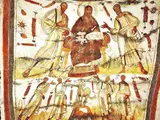
- Dura-Europos church House church at Dura-Europos, Syria (paintings now at Yale University Art Gallery) site c. 240–256 CE about ↗ The earliest securely identified Christian building, with a baptistery painted with a good shepherd, the healing of the paralytic and a procession of women, usually read as the women at the tomb. Greek cited in §00 §00 How We Know
- Origen, Against Celsus 1.47 Against Celsus prose c. 248 CE read the text ↗ Origen says Josephus 'did not believe in Jesus as the Christ', evidence that his text of Josephus lacked the Testimonium's Christian phrases. Greek cited in §00 §00 How We Know
- Origen, Against Celsus 3.44 Against Celsus prose c. 248 CE (quoting Celsus, c. 175–180) read the text ↗ Celsus: Christians wish to persuade 'only the foolish, dishonourable and stupid, and only slaves, women, and little children'. Greek cited in §05 §05 Many Christianities
- Megiddo church mosaic Prayer hall at Kefar ʿOthnay, near Megiddo inscription 3rd–early 4th c. CE (disputed) about ↗ 'The God-loving Akeptous has offered the table to God Jesus Christ as a memorial', found in 2005. Greek cited in §00 §00 How We Know
- Decian libelli Certificates of sacrifice from Egypt (papyri) text 250 CE about ↗ More than forty papyrus certificates in a fixed form, attesting that the holder sacrificed before the commissioners, as Decius' edict required. Greek cited in §05 §05 Many Christianities
- Gospel of Philip Nag Hammadi Codex II,3 text 2nd–3rd c. CE (composition) about ↗ A Valentinian anthology on sacraments; calls Mary Magdalene Jesus' companion (koinōnos) in a damaged passage. Coptic (from Greek) cited in §05 §05 Many Christianities
- Cyprian, On the Lapsed De lapsis prose 251 CE read the text ↗ Cyprian on Christians who sacrificed under Decius, arguing for readmission after penance. Latin cited in §05 §05 Many Christianities
- Acts of Cyprian (Acta Proconsularia) Acta Proconsularia Sancti Cypriani prose 258 CE about ↗ Cyprian's trial before the proconsul under Valerian's edict and his execution on 14 September 258. Latin cited in §05 §05 Many Christianities
- Gospel of Judas Codex Tchacos text codex c. 220–340 CE (radiocarbon); composition 2nd c. about ↗ A dialogue in which Jesus singles out Judas; the codex was found in the 1970s and published in 2006. Coptic cited in §00 cited in §05 §00 How We Know
- Caesarea inscription of the priestly courses Hebrew inscription, Caesarea Maritima inscription 3rd–4th c. CE about ↗ Lists the 24 priestly courses and their towns of residence; the course of Happizzez is placed at Nazareth. Hebrew cited in §02 §02 The Historical Jesus
- Panegyrici Latini 6(7).21 Latin Panegyrics prose 310 CE about ↗ An orator describes Constantine's vision of Apollo, with Victory, at a shrine in Gaul. Latin cited in §06 §06 Constantine, the Creeds and the Councils
- Eusebius, The Martyrs of Palestine The Martyrs of Palestine prose c. 311–313 CE read the text ↗ An eyewitness account of the executions in Palestine during the Great Persecution, by name and date. Greek cited in §05 §05 Many Christianities
- Lactantius, On the Deaths of the Persecutors 48 On the Deaths of the Persecutors prose 313 CE (letter); c. 315 (book) read the text ↗ The text of the 'Edict of Milan', Licinius' letter granting Christians and all others freedom of religion and restoring church property. Latin cited in §06 §06 Constantine, the Creeds and the Councils
- Lactantius, On the Deaths of the Persecutors 12–13 De mortibus persecutorum prose c. 315 CE read the text ↗ The destruction of the church at Nicomedia and the first edict of the Great Persecution, February 303. Latin cited in §05 §05 Many Christianities
- Lactantius, On the Deaths of the Persecutors 34 De mortibus persecutorum prose c. 314–315 CE (edict of 311) read the text ↗ Galerius' edict of toleration: Christians may exist again and rebuild their meeting places. Latin cited in §05 §05 Many Christianities
- Lactantius, On the Deaths of the Persecutors 34 On the Deaths of the Persecutors prose c. 314–315 CE read the text ↗ Galerius' edict of toleration of 311, allowing Christians to exist and assemble again. Latin cited in §06 §06 Constantine, the Creeds and the Councils
- Lactantius, On the Deaths of the Persecutors 44.5–6 On the Deaths of the Persecutors prose c. 314–315 CE read the text ↗ Constantine is told in a dream to mark the heavenly sign of God on his soldiers' shields before the battle of the Milvian Bridge. Latin cited in §06 §06 Constantine, the Creeds and the Councils
- Eusebius, Ecclesiastical History 9.9 Ecclesiastical History prose c. 315 CE read the text ↗ Eusebius' earlier account of the victory at the Milvian Bridge, with no vision. Greek cited in §06 §06 Constantine, the Creeds and the Councils
- Lebaba inscription (Le Bas–Waddington 2558) Lintel inscription from Deir Ali (Lebaba), Syria inscription 318/319 CE about ↗ 'The synagogue of the Marcionites of the village of Lebaba', built under the presbyter Paul in year 630 of the Seleucid era. Greek cited in §05 §05 Many Christianities
- Arius, Letter to Eusebius of Nicomedia (Theodoret, HE 1.5; 1.4 in NPNF) Letter to Eusebius of Nicomedia letter c. 318 CE read the text ↗ Arius complains that he is persecuted for saying that the Son has a beginning while God is without beginning. Greek cited in §06 §06 Constantine, the Creeds and the Councils
- Codex Theodosianus 16.2.2 Codex Theodosianus law 319 CE Constantine exempts Christian clergy from public obligations. Latin cited in §06 §06 Constantine, the Creeds and the Councils
- Eusebius, Ecclesiastical History 3.39 Ecclesiastical History prose early 4th c. CE (quoting Papias, c. 110–130) read the text ↗ Papias' testimony that Mark wrote down Peter's recollections and Matthew collected the oracles 'in the Hebrew language'. Greek cited in §00 cited in §04 §00 How We Know
- Eusebius, Ecclesiastical History 2.25 Ecclesiastical History prose early 4th c. CE (quoting Gaius, c. 200, and Dionysius of Corinth, c. 170) read the text ↗ Paul beheaded and Peter crucified in Rome under Nero; Gaius' 'trophies of the apostles' on the Vatican and the Ostian Way. Greek cited in §03 §03 Paul and the Gentile Mission
- Eusebius, Ecclesiastical History 3.5.3 Ecclesiastical History prose early 4th c. CE read the text ↗ Before the war the Jerusalem church, warned by an oracle, moved to Pella in Peraea. Greek cited in §04 §04 After the Temple
- Eusebius, Ecclesiastical History 3.17–20 Ecclesiastical History prose early 4th c. CE read the text ↗ Domitian as the second persecutor after Nero; John exiled to Patmos; Flavia Domitilla banished for her Christian testimony. Greek cited in §04 §04 After the Temple
- Eusebius, Ecclesiastical History 4.5–6 Ecclesiastical History prose early 4th c. CE read the text ↗ Fifteen bishops of Jerusalem 'of the circumcision' until the Bar Kokhba revolt; Jews barred from Aelia; Mark the first gentile bishop. Greek cited in §04 §04 After the Temple
- Eusebius, Ecclesiastical History 5.10 Ecclesiastical History prose early 4th c. CE read the text ↗ Pantaenus is said to have found in 'India' Christians with Matthew's Gospel in Hebrew, left by Bartholomew. Greek cited in §07 §07 Beyond Rome
- Codex Justinianus 3.12.2 Codex Justinianus law 7 March 321 CE Constantine orders courts and city people to rest 'on the venerable day of the Sun', while allowing farm work. Latin cited in §06 §06 Constantine, the Creeds and the Councils
- Codex Vaticanus (Vat. gr. 1209) Vatican Library, Rome manuscript c. 300–350 CE about ↗ One of the two oldest near-complete Bibles: most of the Greek Old Testament and most of the New Testament in one book. Greek cited in §00 §00 How We Know
- Eusebius, Ecclesiastical History 3.25 Ecclesiastical History prose c. 325 CE read the text ↗ Eusebius sorts Christian books into recognised, disputed, spurious and heretical. Greek cited in §05 §05 Many Christianities
- Eusebius, Ecclesiastical History 5.1 Ecclesiastical History prose c. 325 CE (quoting a letter of 177) read the text ↗ The letter of the churches of Vienne and Lyon on the martyrs of 177, including Blandina. Greek cited in §05 §05 Many Christianities
- Eusebius, Ecclesiastical History 5.16 Ecclesiastical History prose c. 325 CE (quoting 2nd-c. sources) read the text ↗ An anonymous anti-Montanist writer on Montanus, Priscilla and Maximilla and their ecstatic prophecy in Phrygia. Greek cited in §05 §05 Many Christianities
- Eusebius, Ecclesiastical History 5.28 Ecclesiastical History prose c. 325 CE (quoting an early 3rd-c. source) read the text ↗ Theodotus the leather-worker, who called Christ a mere man, excommunicated by Victor of Rome. Greek cited in §05 §05 Many Christianities
- Eusebius, Ecclesiastical History 6.12 Ecclesiastical History prose c. 325 CE (quoting Serapion, c. 190) read the text ↗ Serapion of Antioch first allows, then forbids, the Gospel of Peter at Rhossus after finding docetic additions. Greek cited in §05 §05 Many Christianities
- Eusebius, Ecclesiastical History 6.25 Ecclesiastical History prose c. 325 CE (quoting Origen) read the text ↗ Origen's views on the Hebrew canon, the four Gospels and the disputed epistles. Greek cited in §05 §05 Many Christianities
- Eusebius, Ecclesiastical History 6.39 Ecclesiastical History prose c. 325 CE read the text ↗ Under Decius, Fabian of Rome is executed and Origen is tortured in prison. Greek cited in §05 §05 Many Christianities
- Eusebius, Ecclesiastical History 6.43 Ecclesiastical History prose c. 325 CE (quoting Cornelius, 251) read the text ↗ Bishop Cornelius lists the Roman church's 46 presbyters and other clergy and more than 1,500 widows and needy people. Greek cited in §05 §05 Many Christianities
- Eusebius, Ecclesiastical History 7.13 Ecclesiastical History prose c. 325 CE read the text ↗ Gallienus' rescript returning places of worship to the bishops. Greek cited in §05 §05 Many Christianities
- Eusebius, Ecclesiastical History 7.30 Ecclesiastical History prose c. 325 CE (quoting the synod's letter) read the text ↗ The synod of Antioch's letter deposing Paul of Samosata (268). Greek cited in §05 §05 Many Christianities
- Eusebius, Life of Constantine 3.18–19 Life of Constantine letter 325 CE (letter) read the text ↗ Constantine's letter to the churches announcing a common date for Easter, independent of the Jewish reckoning. Greek cited in §06 §06 Constantine, the Creeds and the Councils
- Eusebius of Caesarea, Letter to his church (in Socrates, HE 1.8) Letter to the Church of Caesarea letter 325 CE read the text ↗ Eusebius explains to his congregation why he signed the Nicene creed and how he understood homoousios. Greek cited in §06 §06 Constantine, the Creeds and the Councils
- Creed of Nicaea (325) Council of Nicaea statement 325 CE read the text ↗ The original Nicene creed: the Son 'from the substance of the Father… of one substance (homoousios) with the Father', with anathemas against Arius' formulas. Greek cited in §06 §06 Constantine, the Creeds and the Councils
- Canons of the Council of Nicaea Council of Nicaea law 325 CE read the text ↗ Twenty canons on church discipline, including the precedence of Alexandria, Rome and Antioch (canon 6) and standing for prayer on Sundays (canon 20). Greek cited in §06 §06 Constantine, the Creeds and the Councils
- Eusebius, Life of Constantine 4.36 Life of Constantine letter c. 331 CE (letter); c. 337–339 (book) read the text ↗ Constantine asks Eusebius to have fifty copies of the sacred Scriptures written on parchment for the churches of Constantinople, at the treasury's expense. Greek
- Chronograph of 354, Depositio martyrum Chronograph of 354 (Philocalian calendar) list list of 336 CE; compiled 354 read the text ↗ A Roman list of martyrs' feast days that begins 'VIII kal. Ian. natus Christus in Betleem Iudeae': 25 December, Christ born in Bethlehem. Latin cited in §06 §06 Constantine, the Creeds and the Councils
- Eusebius, Life of Constantine 1.28–31 Life of Constantine prose c. 337–339 CE read the text ↗ Constantine's own account, told on oath, of a cross of light in the sky with the words 'By this, conquer', a dream of Christ, and the making of the labarum. Greek cited in §06 §06 Constantine, the Creeds and the Councils
- Eusebius, Life of Constantine 3.6–14 Life of Constantine prose c. 337–339 CE read the text ↗ An eyewitness account of the Council of Nicaea, with bishops that 'exceeded two hundred and fifty' (NPNF) and the emperor presiding. Greek cited in §06 §06 Constantine, the Creeds and the Councils
- Eusebius, Life of Constantine 4.61–64 Life of Constantine prose c. 337–339 CE read the text ↗ Constantine's deathbed baptism near Nicomedia and his death in 337. Greek cited in §06 §06 Constantine, the Creeds and the Councils
- Eusebius, Life of Constantine 2.45 Life of Constantine prose c. 337–339 CE read the text ↗ Eusebius reports two laws after 324, one forbidding the erection of images, divination and sacrifice, the other ordering churches enlarged; whether a general ban on sacrifice was made or enforced is debated. Greek
- Aphrahat, Demonstrations Demonstrations prose 337–345 CE read the text ↗ Twenty-three treatises by 'the Persian Sage' written inside the Persian Empire, with no reference to Nicaea. Syriac cited in §07 §07 Beyond Rome
- Codex Sinaiticus British Library (most leaves); Leipzig, St Catherine's Monastery and St Petersburg manuscript c. 325–360 CE read the text ↗ About half of the Greek Old Testament survives, with the oldest complete copy of the New Testament. Greek cited in §00 cited in §05 §00 How We Know
- Coinage of Ezana Aksumite gold, silver and bronze coins coin mid-4th c. CE about ↗ Ezana's coins change from the disc-and-crescent symbol to the cross. Greek and Ge'ez cited in §07 §07 Beyond Rome
- Nag Hammadi codices Thirteen papyrus codices (Coptic Museum, Cairo) manuscript mid-4th c. CE (cartonnage dated 340s) about ↗ Fifty-two texts found buried in a jar in December 1945, including the Gospel of Thomas, the Gospel of Philip and the Apocryphon of John. Coptic cited in §00 cited in §05 §00 How We Know
- Ezana's Christian inscription Royal inscription of Ezana, Aksum inscription mid-4th c. CE about ↗ Ezana's later inscription opens 'In the faith of God and the power of the Father and Son and Holy Spirit', replacing invocations of Mahrem. Greek (with Ge'ez versions) cited in §07 §07 Beyond Rome
- Chronograph of 354, civic calendar (December) Chronograph of 354 (Philocalian calendar) list 354 CE read the text ↗ The Roman civic calendar marks 25 December as N(atalis) Invicti, the birthday of the Unconquered Sun. Latin cited in §06 §06 Constantine, the Creeds and the Councils
- Athanasius, Apology to Constantius 31 Apology to the Emperor Constantius letter c. 357 CE (quoting a letter of 356) read the text ↗ Constantius II writes to 'Aizanas and Sazanas', rulers of Aksum, asking that Frumentius be sent to Alexandria to be examined by Bishop George. Greek cited in §07 §07 Beyond Rome
- Athanasius, Life of Antony Life of Antony prose c. 360 CE read the text ↗ The life of the Egyptian hermit Antony, the model for Christian monasticism. Greek cited in §06 §06 Constantine, the Creeds and the Councils
- Ephrem the Syrian, Hymns Hymns (madrāshē) hymn c. 350–373 CE about ↗ The hymns of the deacon of Nisibis and Edessa, the major poet of early Syriac Christianity. Syriac cited in §07 §07 Beyond Rome
- Julian, Letter 36 (rescript on Christian teachers) Letters of Julian law 362 CE Julian forbids Christians to teach the classical authors whose gods they reject. Greek cited in §06 §06 Constantine, the Creeds and the Councils
- Athanasius, Festal Letter 39 Festal (Easter) Letters letter 367 CE read the text ↗ The first list of exactly the 27 books of the New Testament: 'Let no man add to these, neither let him take ought from these.' Greek cited in §05 §05 Many Christianities
- Epiphanius, Panarion 29 Panarion (Medicine Chest against Heresies) prose c. 375 CE about ↗ The Nazarenes: Jewish believers in Jesus who keep the law and use a Hebrew Gospel. Greek cited in §04 §04 After the Temple
- Jerome, Dialogue against the Luciferians 19 Dialogue against the Luciferians prose c. 379 CE read the text ↗ After the councils of 359, 'the whole world groaned, and was astonished to find itself Arian'. Latin cited in §06 §06 Constantine, the Creeds and the Councils
- Codex Theodosianus 16.1.2 (Cunctos populos) Codex Theodosianus law 27 February 380 CE about ↗ Theodosius orders all peoples to follow the faith of Damasus of Rome and Peter of Alexandria; only they are 'catholic Christians'. Latin cited in §06 §06 Constantine, the Creeds and the Councils
- Jerome, Chronicle, year 337 Chronicle prose c. 380 CE Constantine, at the end of his life, is baptised by Eusebius of Nicomedia. Latin cited in §06 §06 Constantine, the Creeds and the Councils
- Gregory of Nyssa, Life of Macrina Life of Macrina prose c. 380 CE about ↗ Gregory's life of his elder sister, who turned the family estate into an ascetic community and shaped her brothers' vocations. Greek cited in §06 §06 Constantine, the Creeds and the Councils
- Martyrdom of Simeon bar Sabba'e Acts of the Persian Martyrs prose 4th–5th c. CE about ↗ The execution of the catholicos Simeon and many clergy under Shapur II. Syriac cited in §07 §07 Beyond Rome
- Creed of Constantinople (381) Council of Constantinople statement 381 CE (first recorded 451) read the text ↗ The expanded creed, with the Holy Spirit 'the Lord and giver of life… worshipped and glorified' with Father and Son, now recited as the Nicene Creed. Greek cited in §06 §06 Constantine, the Creeds and the Councils
- Council of Constantinople, canon 3 Council of Constantinople law 381 CE read the text ↗ The bishop of Constantinople to have the precedence of honour after the bishop of Rome, 'because Constantinople is New Rome'. Greek cited in §06 §06 Constantine, the Creeds and the Councils
- Egeria, Itinerarium 1–5 Itinerarium Egeriae (Latin) text c. 381–384 CE about ↗ A pilgrim's account of climbing 'the holy mountain of God' in southern Sinai with the monks living there: the earliest detailed witness to the Christian identification of Sinai with the Jebel Musa massif. Latin cited in §06 §06 Constantine, the Creeds and the Councils
- Egeria, Itinerarium 17–19 Itinerarium Egeriae prose c. 381–384 CE read the text ↗ Egeria travels to Edessa to pray 'at the memorial of S. Thomas the Apostle, where his body is laid entire' (trans. McClure and Feltoe). Latin
- John Chrysostom, Adversus Judaeos, Homily 1 Adversus Judaeos (Against the Judaizers) prose 386 CE read the text ↗ The first of eight sermons preached at Antioch against Christians who went to the synagogue and kept the Jewish festivals. Greek cited in §06 §06 Constantine, the Creeds and the Councils
- John Chrysostom, Homily on the Birthday of Christ Homily on 25 December (In diem natalem) prose 386 CE Preaching in Antioch, Chrysostom says the feast of 25 December had been known there for less than ten years. Greek cited in §06 §06 Constantine, the Creeds and the Councils
- Ammianus Marcellinus 23.1.2–3 Res Gestae prose c. 390 CE read the text ↗ Julian plans at vast cost to restore the Temple in Jerusalem, entrusts the work to Alypius of Antioch, and abandons it when 'terrifying balls of flame' burst from the foundations. Latin cited in §06 §06 Constantine, the Creeds and the Councils
- Codex Theodosianus 16.10.10 Codex Theodosianus law 24 February 391 CE about ↗ No one to pollute himself with sacrifices, visit temples or revere images, at Rome. Latin cited in §06 §06 Constantine, the Creeds and the Councils
- Codex Theodosianus 16.10.12 Codex Theodosianus law 8 November 392 CE about ↗ A comprehensive ban on pagan sacrifice and worship, public or private, anywhere in the empire. Latin cited in §06 §06 Constantine, the Creeds and the Councils
- John Chrysostom, Homilies on Romans 31 Homilies on Romans prose c. 390s CE read the text ↗ On Romans 16:7: 'how great is the devotion of this woman, that she should be even counted worthy of the appellation of apostle'. Greek cited in §03 §03 Paul and the Gentile Mission
- Rufinus, Ecclesiastical History 11.22–30 Ecclesiastical History prose c. 402 CE about ↗ The conflict in Alexandria and the destruction of the Serapeum under bishop Theophilus. Latin cited in §06 §06 Constantine, the Creeds and the Councils
- Rufinus, Ecclesiastical History 10.9–10 Ecclesiastical History prose c. 402 CE about ↗ Frumentius and Aedesius, raised at the Aksumite court; Frumentius consecrated bishop for Aksum by Athanasius; Rufinus heard the story from Aedesius. Latin cited in §07 §07 Beyond Rome
- Rufinus, Ecclesiastical History 10.11 Ecclesiastical History prose c. 402 CE about ↗ A captive Christian woman heals the queen of Iberia, and the king, saved while lost on a hunt, adopts Christianity. Latin cited in §07 §07 Beyond Rome
- Synod of Isaac (Seleucia-Ctesiphon, 410) Synodicon Orientale decision 410 CE about ↗ The Persian bishops accept the creed of Nicaea and the authority of the bishop of Seleucia-Ctesiphon, with King Yazdegerd I's permission. Syriac cited in §07 §07 Beyond Rome
- Augustine, City of God 1, preface City of God prose 413–426 CE read the text ↗ Augustine sets out to defend the City of God against those who blamed Christianity for the sack of Rome. Latin cited in §06 §06 Constantine, the Creeds and the Councils
- Synod of Dadisho (Markabta, 424) Synodicon Orientale decision 424 CE about ↗ The Persian church forbids appeals beyond its own catholicos to 'the Western fathers'. Syriac cited in §07 §07 Beyond Rome
- Codex Theodosianus 16.8.29 (429 CE) Codex Theodosianus law 30 May 429 CE An imperial law ordering that the dues Jews had paid to their patriarchs be collected for the imperial treasury now that the patriarchs have passed away: the end of the patriarchate. Latin cited in §06 §06 Constantine, the Creeds and the Councils
- Socrates Scholasticus, Ecclesiastical History 7.15 Ecclesiastical History prose c. 440 CE read the text ↗ The killing of Hypatia in 415 by a Christian crowd led by the reader Peter, attributed to the feud between Cyril and Orestes. Greek cited in §06 §06 Constantine, the Creeds and the Councils
- Socrates Scholasticus, Ecclesiastical History 7.32–34 Ecclesiastical History prose c. 440 CE read the text ↗ Nestorius' objection to Theotokos and the Council of Ephesus. Greek cited in §06 §06 Constantine, the Creeds and the Councils
- Koriun, Life of Mashtots Life of Mashtots prose c. 440s CE about ↗ Mashtots' pupil describes the creation of the Armenian alphabet and the first translations. Armenian cited in §07 §07 Beyond Rome
- Theodoret, Letter 81 Letters letter c. 448 CE read the text ↗ To the consul Nomus: Theodoret says he 'led eight villages of Marcionists with their neighbourhood into the way of truth' in the diocese of Cyrrhus. Greek cited in §05 §05 Many Christianities
- Theodoret, Letter 113 Letters letter c. 449 CE read the text ↗ To Leo of Rome: 'more than a thousand souls did I rescue from the plague of Marcion'. Greek cited in §05 §05 Many Christianities
- Definition of Chalcedon Council of Chalcedon statement 451 CE about ↗ Christ 'acknowledged in two natures, inconfusedly, unchangeably, indivisibly, inseparably', one person. Greek cited in §06 §06 Constantine, the Creeds and the Councils
- Agathangelos, History of the Armenians History of the Armenians (attributed to Agathangelos) prose 5th c. CE about ↗ The traditional account of Gregory the Illuminator's imprisonment and the baptism of King Tiridates III. Armenian cited in §07 §07 Beyond Rome
- Rule of Benedict, Prologue and ch. 48 Regula Benedicti rule c. 530 CE read the text ↗ The monastery as 'a school for the Lord's service'; 'idleness is the enemy of the soul'; prayer, work and reading under an abbot. Latin cited in §08 §08 The Medieval West
- Chronicle of Edessa, entry for 201 CE Chronicle of Edessa prose 6th c. CE (compiled; using older archives) about ↗ An archival notice of the Edessa flood of 201 mentions damage to 'the temple of the church of the Christians'. Syriac cited in §07 §07 Beyond Rome
- Cosmas Indicopleustes, Christian Topography 3.65 Christian Topography prose c. 550 CE about ↗ Churches in Sri Lanka, Christians at Malé 'where the pepper grows', and a bishop at Kalliana appointed from Persia. Greek cited in §07 §07 Beyond Rome
- John of Ephesus, Ecclesiastical History 4.6–8 Ecclesiastical History, part 3 prose c. 580s CE about ↗ The rival missions to Nubia: Julian, backed by Theodora, reaches Nobadia before Justinian's envoys. Syriac cited in §07 §07 Beyond Rome
- Gregory the Great, Homilies on the Gospels 33 Homiliae in Evangelia prose c. 591 CE about ↗ Gregory identifies the sinful woman of Luke 7 and Mary of Bethany with Mary Magdalene, and reads her seven demons as all the vices. Latin cited in §08 §08 The Medieval West
- Gregory the Great, Dialogues 2 Dialogues prose c. 593–594 CE read the text ↗ The life and miracles of Benedict of Nursia, the only early source for his biography. Latin cited in §08 §08 The Medieval West
- Gregory the Great, Dialogues 4.39 (4.41 in some editions) Dialogues prose c. 593–594 CE read the text ↗ 'Before the day of judgment there is a Purgatory fire for certain small sins.' Latin cited in §08 §08 The Medieval West
- Bede, Ecclesiastical History 1.30 Ecclesiastical History of the English People letter 731 CE (letter of 601) read the text ↗ Gregory's letter to Mellitus: the temples of the English should be purified and turned into churches, and their feasts replaced by saints' days. Latin cited in §08 §08 The Medieval West
- Bede, Ecclesiastical History 1.25–26 Ecclesiastical History of the English People prose 731 CE read the text ↗ Augustine and his companions land in Kent in 597 and are received by King Æthelberht, who is baptised. Latin cited in §08 §08 The Medieval West
- Bede, Ecclesiastical History 3.25 Ecclesiastical History of the English People prose 731 CE read the text ↗ The Synod of Whitby (664), held at Hilda's monastery, adopts the Roman reckoning of Easter. Latin cited in §08 §08 The Medieval West
- John of Damascus, On Heresies 100 Fount of Knowledge, part 2 prose c. 740s CE about ↗ The chapter on 'the heresy of the Ishmaelites', an early Christian polemic against Islam. Greek cited in §07 §07 Beyond Rome
- Willibald, Life of Boniface 6 Vita Bonifatii prose c. 760s CE about ↗ Boniface fells the great oak at Geismar, which Willibald calls the oak of Jupiter. Latin cited in §08 §08 The Medieval West
- Xi'an Stele (Da Qin Jingjiao liuxing Zhongguo bei) Stele erected in Chang'an (Beilin Museum, Xi'an) inscription 781 CE about ↗ Jingjing's inscription records Alopen's arrival in 635, Taizong's edict of 638 and the church's history. Chinese and Syriac cited in §07 §07 Beyond Rome
- Timothy I, Dialogue with the caliph al-Mahdi Apology of Timothy the Patriarch before the caliph Mahdi prose c. 782 CE about ↗ The patriarch's written account of his debate with the caliph on the Trinity and on Muhammad. Syriac (and Arabic) cited in §07 §07 Beyond Rome
- Capitulatio de partibus Saxoniae Capitulary of Charlemagne for Saxony law 782 or 785 CE (perhaps later) read the text ↗ Death for Saxons who hide to avoid baptism, for cremating the dead by pagan rites and for eating meat in Lent. Latin cited in §08 §08 The Medieval West
- Second Council of Nicaea, definition (787) Acts of the Second Council of Nicaea decision 787 CE read the text ↗ Images receive honourable reverence (proskynēsis), not the worship (latreia) due to God alone; the honour passes to the prototype. Greek cited in §08 §08 The Medieval West
- Royal Frankish Annals, 782 Annales regni Francorum prose late 8th c. CE about ↗ After a Saxon rising, Charlemagne has 4,500 Saxons executed at Verden. Latin cited in §08 §08 The Medieval West
- Opus Caroli regis contra synodum (Libri Carolini) Treatise of Charlemagne's court theologians prose c. 790–793 CE about ↗ The Frankish court's rejection of the Second Council of Nicaea, based partly on a faulty Latin translation of its acts. Latin cited in §08 §08 The Medieval West
- Timothy I, Letter 47 (to Rabban Sergius) Letters of Timothy I, patriarch of the Church of the East letter c. 792–793 CE about ↗ Timothy reports that he has anointed a metropolitan for the Turks and is preparing to anoint another for the Tibetans. Syriac cited in §07 §07 Beyond Rome
- Alcuin, letters of 796 to Charlemagne and Meginfrid Letters of Alcuin letter 796 CE about ↗ Alcuin warns that faith cannot be compelled, that teaching must come before baptism, and that tithes are alienating the Saxons. Latin cited in §08 §08 The Medieval West
- Zhenyuan xinding shijiao mulu (Yuanzhao's catalogue) Buddhist scriptural catalogue of the Zhenyuan era list 800 CE about ↗ Records Jingjing's work with the Kashmiri monk Prajña on a Buddhist translation and the emperor's ruling that the two teachings be kept apart. Chinese cited in §07 §07 Beyond Rome
- Luoyang Christian pillar Inscribed stone pillar from Luoyang inscription early 9th c. CE about ↗ A Christian text inscribed in Chinese on a funerary pillar erected c. 815, found in 2006. Chinese cited in §07 §07 Beyond Rome
- Tang huiyao 47–49 (Huichang suppression, 845) Tang huiyao (Institutional history of the Tang) law 845 CE (compiled 961) about ↗ Wuzong's edict laicises Buddhist clergy and orders more than three thousand monks of the Da Qin and Zoroastrian temples to return to lay life. Chinese cited in §07 §07 Beyond Rome
- Tharisapalli copper plates Copper-plate grant, Quilon (Kollam) inscription c. 849 CE about ↗ A local ruler grants land and privileges to the church of Tharisapalli founded by Mar Sapir Iso. Old Malayalam, with Pahlavi, Arabic and Judeo-Persian signatures cited in §07 §07 Beyond Rome
- Pact of Umar (al-Ṭurṭūshī, Sirāj al-Mulūk) Pact of Umar (Shurūṭ ʿUmar) prose 9th c. CE (form); attributed to Umar I, 634–644 about ↗ Conditions on non-Muslim subjects, framed as a letter from Christians to the caliph Umar: no new churches or synagogues, distinctive dress, no riding on saddles or bearing arms. Surviving versions are later than Umar; a legal ideal, enforced unevenly. Arabic cited in §07 §07 Beyond Rome
- Jelling runestone of Harald Bluetooth (DR 42) Runestone, Jelling, Denmark inscription c. 965 CE about ↗ Harald raised the stone for his parents, 'that Harald who won for himself all Denmark and Norway and made the Danes Christian'. Old Norse (runic) cited in §08 §08 The Medieval West
- Ibn al-Nadim, Fihrist (on China) Kitāb al-Fihrist prose 987 CE about ↗ A Christian monk returned from China reports that the Christians there have perished. Arabic cited in §07 §07 Beyond Rome
- Faras cathedral paintings Wall paintings from the cathedral of Faras (National Museum, Warsaw; Sudan National Museum) site 8th–12th c. CE about ↗ Paintings of bishops, saints and rulers rescued in the 1960s before the Aswan flooding. Greek, Coptic and Old Nubian cited in §07 §07 Beyond Rome
- Bull of excommunication against Michael Cerularius (16 July 1054) Papal legates' bull, Hagia Sophia decision 1054 CE about ↗ Cardinal Humbert's bull excommunicating the patriarch and his supporters, laid on the altar of Hagia Sophia after Leo IX's death. Latin cited in §08 §08 The Medieval West
- Codex Hierosolymitanus (Jerusalem, Greek Patriarchal Library 54) Greek manuscript containing the Didache, 1–2 Clement and Barnabas manuscript 1056 CE about ↗ Found by Philotheos Bryennios in Constantinople in 1873; the only complete Greek text of the Didache, published 1883. Greek cited in §04 §04 After the Temple
- Gregory VII, Dictatus papae Register of Gregory VII list 1075 CE read the text ↗ Propositions that the pope alone is universal, may depose emperors, and that the Roman church has never erred. Latin cited in §08 §08 The Medieval West
- Fulcher of Chartres, Urban II's speech at Clermont Historia Hierosolymitana prose c. 1100–1105 CE (speech 1095) read the text ↗ Urban promises 'immediate remission of sins' to those who die on the way or in battle against the pagans. Latin cited in §08 §08 The Medieval West
- Russian Primary Chronicle, entries for 986–988 Povest' vremennykh let prose early 12th c. CE about ↗ Vladimir's envoys compare religions and are overwhelmed by the liturgy in Constantinople; Vladimir is baptised and marries a Byzantine princess. Old East Slavic cited in §08 §08 The Medieval West
- First Lateran Council (1123), canon 7 Canons of the First Lateran Council law 1123 CE read the text ↗ Priests, deacons and subdeacons are absolutely forbidden to live with wives or concubines. Latin cited in §08 §08 The Medieval West
- Ari Thorgilsson, Íslendingabók 7 Íslendingabók (Book of the Icelanders) prose c. 1122–1133 CE about ↗ The Althing accepts Christianity in 1000 on the lawspeaker Thorgeir's proposal, with private pagan worship allowed for a time. Old Norse cited in §08 §08 The Medieval West
- Second Lateran Council (1139), canon 7 Canons of the Second Lateran Council law 1139 CE read the text ↗ Clergy in major orders, monks and canons who marry are to be separated; such a union is not deemed a marriage. Latin cited in §08 §08 The Medieval West
- Chronicle of Solomon bar Samson Hebrew chronicles of the First Crusade prose c. 1140 CE about ↗ The longest Hebrew account of the 1096 massacres in Speyer, Worms, Mainz and other towns, celebrating those who chose death over baptism as sanctifying God's name. Hebrew cited in §08 §08 The Medieval West
- Hildegard of Bingen, Scivias Scivias (Know the Ways) text c. 1141–1151 CE about ↗ Hildegard's first book of visions, with her account of receiving them. Latin cited in §08 §08 The Medieval West
- Rock-hewn churches of Lalibela Churches carved in rock, Lalibela, Ethiopia site c. 12th–13th c. CE (some debated) about ↗ Eleven monolithic churches associated with the Zagwe king Lalibela. Ge'ez cited in §07 §07 Beyond Rome
- Arnaud Amalric, letter to Innocent III (August 1209) Papal legate's report on Béziers letter 1209 CE about ↗ The crusaders took Béziers and spared no one, killing almost 20,000 people by the legate's count. Latin cited in §08 §08 The Medieval West
- Fourth Lateran Council, canon 68 Canons of the Fourth Lateran Council prose 1215 CE read the text ↗ Orders that Jews and Muslims of both sexes be publicly distinguished from Christians "by the quality of their garment". Latin cited in §08 §08 The Medieval West
- Fourth Lateran Council (1215), canon 1 Canons of the Fourth Lateran Council law 1215 CE read the text ↗ The profession of faith: no salvation outside the one church; bread and wine 'transubstantiated' into Christ's body and blood. Latin cited in §08 §08 The Medieval West
- Fourth Lateran Council (1215), canon 21 (Omnis utriusque sexus) Canons of the Fourth Lateran Council law 1215 CE read the text ↗ Every Christian of the age of discretion must confess to their own priest at least once a year and receive communion at Easter. Latin cited in §08 §08 The Medieval West
- Caesarius of Heisterbach, Dialogus miraculorum 5.21 Dialogue on Miracles prose c. 1219–1223 CE about ↗ The story that Arnaud Amalric answered 'Kill them all; the Lord knows his own' at Béziers. Latin cited in §08 §08 The Medieval West
- Second Council of Lyon (1274), profession of faith Acts of the Second Council of Lyon decision 1274 CE about ↗ Souls who die in charity before completing penance are cleansed after death and helped by the prayers and masses of the living. Latin cited in §08 §08 The Medieval West
- Bar Hebraeus, Ecclesiastical Chronicle (the Kerait conversion) Chronicon Ecclesiasticum prose 13th c. CE about ↗ Reports the conversion of a Turkic people, identified with the Kerait, around 1007 through the metropolitan of Merv. Syriac cited in §07 §07 Beyond Rome
- Marguerite Porete, The Mirror of Simple Souls Le Mirouer des simples ames text c. 1290s CE about ↗ A mystical treatise on the annihilated soul; its author was burned as a relapsed heretic in Paris in 1310. Old French cited in §08 §08 The Medieval West
- History of Mar Yahballaha and Rabban Sauma Syriac history (from a Persian original) prose early 14th c. CE about ↗ Rabban Sauma's pilgrimage and his embassy of 1287–1288 to Constantinople, Rome, Paris and Bordeaux. Syriac cited in §07 §07 Beyond Rome
- Bernard Gui, Liber sententiarum Book of Sentences of the Inquisition of Toulouse report 1308–1323 CE about ↗ Gui's register of 636 people convicted; most were imprisoned, made to wear crosses or sent on pilgrimage; a minority were burned. Latin cited in §08 §08 The Medieval West
- Chu valley (Issyk-Kul) gravestones Christian cemeteries at Kara-Djigach and Burana inscription 13th–14th c. CE Gravestones of 1338–1339 record deaths from 'pestilence'. Syriac and Turkic cited in §07 §07 Beyond Rome
- Mark of Ephesus, writings against purgatory at Ferrara–Florence Mark Eugenikos, metropolitan of Ephesus text 1438–1439 about ↗ The Greek spokesman at Ferrara–Florence argues against the Latin doctrine of purgatory, above all against a purgatorial fire. Greek
- Council of Florence, Laetentur caeli (6 July 1439) Decree of union with the Greeks decision 1439 CE read the text ↗ Accepts the filioque as licitly added, allows leavened or unleavened bread, and says the souls of the penitent 'are cleansed after death by cleansing pains', without mentioning fire. Latin and Greek
- Nicholas V, Romanus Pontifex (8 January 1455) Papal bull law 1455 CE about ↗ Grants the king of Portugal rights over lands, goods and peoples conquered in Africa, including their enslavement; a foundation of the Portuguese padroado. Latin cited in §10 §10 Mission and Empire
- Heinrich Kramer, Malleus Maleficarum (1486/1487) Malleus Maleficarum book 1486/1487 about ↗ A Dominican inquisitor's treatise presenting witchcraft as a pact with the devil made chiefly by women. Latin cited in §09 §09 Reformations
- Alexander VI, Inter caetera (4 May 1493) Papal bull law 1493 CE read the text ↗ Assigns to the Castilian crown lands west and south of a line in the Atlantic, charging it to send men to instruct their inhabitants in the Catholic faith. Latin cited in §10 §10 Mission and Empire
- Julius II, Universalis ecclesiae (28 July 1508) Papal bull law 1508 CE about ↗ Grants the Spanish crown the right to found churches and present bishops throughout the Indies, the patronato real. Latin cited in §10 §10 Mission and Empire
- Antonio de Montesinos, Advent sermon on Hispaniola (December 1511) Sermon, as reported by Bartolomé de las Casas, Historia de las Indias text 1511 CE (reported c. 1550s) about ↗ A Dominican tells the colonists they are in mortal sin for their treatment of the Taíno and asks whether these are not human beings with rational souls. Spanish cited in §10 §10 Mission and Empire
- Laws of Burgos (1512) Royal ordinances of Castile for the Indies law 1512 CE about ↗ Regulate the treatment of Indigenous labourers under the encomienda without abolishing it. Spanish cited in §10 §10 Mission and Empire
- Requerimiento (1513) Text drafted by Juan López de Palacios Rubios text 1513 CE about ↗ A declaration to be read to Indigenous peoples before war, demanding submission to the pope and the Castilian crown and blaming them for the consequences of refusal. Spanish cited in §10 §10 Mission and Empire
- Martin Luther, Ninety-five Theses and letter to Albrecht of Mainz (31 October 1517) Disputation on the Power and Efficacy of Indulgences text 1517 read the text ↗ The theses against the preaching of indulgences, with Luther's covering letter to Archbishop Albrecht dated 31 October 1517; thesis 27 attacks the claim that the soul flies out of purgatory when the penny jingles. Latin cited in §09 §09 Reformations
- Leo X, Exsurge Domine (15 June 1520) Papal bull text 1520 about ↗ Condemns forty-one propositions from Luther's writings and gives him sixty days to recant; Luther burned it on 10 December 1520. Latin cited in §09 §09 Reformations
- Martin Luther, speech before the Diet of Worms (18 April 1521) Speech at the Diet of Worms statement 1521 read the text ↗ Luther refuses to recant unless convinced by Scripture or plain reason; the closing 'I stand here' comes from the first printed editions, not the diet's record. Latin and German cited in §09 §09 Reformations
- Martin Luther, Preface to the New Testament (1522) Das Newe Testament Deutzsch (the 'September Testament') text 1522 about ↗ Luther ranks John, Romans, Galatians, Ephesians and 1 Peter highest, calls James a letter of straw by comparison, and places Hebrews, James, Jude and Revelation together at the end of his New Testament. German
- Martin Luther, That Jesus Christ Was Born a Jew (1523) Dass Jesus Christus ein geborener Jude sei text 1523 about ↗ Blames the church's cruelty for Jews' refusal to convert and urges that they be treated kindly. German cited in §09 §09 Reformations
- The Twelve Articles (Memmingen, March 1525) Twelve Articles of the Upper Swabian peasants text 1525 about ↗ The peasants' manifesto: communities to choose their pastors, serfdom to end because Christ redeemed all, commons restored, each demand backed by Scripture. German cited in §09 §09 Reformations
- Martin Luther, Against the Robbing and Murdering Hordes of Peasants (May 1525) Wider die räuberischen und mörderischen Rotten der Bauern text 1525 about ↗ Luther urges the princes to strike down the rebels without mercy, as one would kill a mad dog. German cited in §09 §09 Reformations
- Afonso I of Kongo to João III of Portugal (6 July 1526) Letters of Afonso I (Mvemba a Nzinga) letter 1526 CE about ↗ The Christian king of Kongo complains that Portuguese merchants are seizing and selling free subjects and relatives, and asks for priests and teachers instead of merchants. Portuguese cited in §10 §10 Mission and Empire
- Schleitheim Confession (24 February 1527) Brotherly Union of a Number of Children of God text 1527 about ↗ Seven articles of the Swiss Brethren drafted by Michael Sattler: believers' baptism, the ban, separation from the world, no sword, no oaths. German cited in §09 §09 Reformations
- Marburg Articles (October 1529) Marburg Colloquy statement 1529 about ↗ Luther, Zwingli and their colleagues agree on fourteen of fifteen articles and divide on the presence of Christ in the Lord's Supper. German cited in §09 §09 Reformations
- Augsburg Confession (25 June 1530) Confessio Augustana text 1530 about ↗ Melanchthon's statement of Lutheran belief presented to Charles V at the Diet of Augsburg; justification by faith (art. 4) and the real presence (art. 10). German and Latin cited in §09 §09 Reformations
- Luther's German Bible (New Testament 1522; complete Bible 1534) Biblia, das ist, die gantze Heilige Schrifft Deudsch book 1522–1534 about ↗ The 'September Testament' translated from Erasmus' Greek at the Wartburg, and the complete Bible of 1534, revised until Luther's death. German cited in §09 §09 Reformations
- Act of Supremacy 1534 (26 Hen. VIII c. 1) Statute of the Parliament of England law 1534 read the text ↗ Declares the king 'the only supreme head in earth of the church of England'. English cited in §09 §09 Reformations
- Paul III, Sublimis Deus (2 June 1537) Papal bull law 1537 CE read the text ↗ Declares that the Indigenous peoples of the Americas are truly human and capable of the faith, and may not be deprived of liberty or property. Latin cited in §10 §10 Mission and Empire
- Paul III, Regimini militantis Ecclesiae (27 September 1540) Papal bull text 1540 about ↗ Approves the Society of Jesus founded by Ignatius of Loyola and his companions. Latin cited in §09 §09 Reformations
- Toribio de Benavente (Motolinía), Historia de los indios de la Nueva España History of the Indians of New Spain book c. 1541 about ↗ A Franciscan's account of the early mission in Mexico, claiming millions of baptisms. Spanish cited in §10 §10 Mission and Empire
- New Laws of the Indies (1542) Leyes Nuevas of Charles V law 1542 CE about ↗ Forbid the enslavement of Indigenous people and restrict new encomiendas; partly repealed after colonists' resistance. Spanish cited in §10 §10 Mission and Empire
- Martin Luther, On the Jews and Their Lies (1543) Von den Juden und ihren Lügen text 1543 about ↗ Urges rulers to burn synagogues and schools, destroy Jewish houses, confiscate prayer books, forbid rabbis to teach and impose forced labour. German cited in §09 §09 Reformations
- Council of Trent, Session 4, Decree concerning the Canonical Scriptures (8 April 1546) Canons and Decrees of the Council of Trent decision 1546 read the text ↗ Receives Scripture and unwritten traditions with equal reverence and lists the canonical books, including the deuterocanonical ones, under anathema. Latin cited in §09 §09 Reformations
- Valladolid debate (1550–1551) Junta of theologians and jurists, Valladolid event 1550–1551 CE about ↗ Las Casas against Juan Ginés de Sepúlveda on whether war and subjection of the Indigenous peoples were just. Spanish and Latin cited in §10 §10 Mission and Empire
- Bartolomé de las Casas, Brevísima relación de la destrucción de las Indias A Brief Account of the Destruction of the Indies book written 1542, printed 1552 about ↗ A region-by-region account of atrocities in the Spanish conquest, written for the emperor and widely translated. Spanish cited in §10 §10 Mission and Empire
- Chaldean Catholic Church Eastern Catholic church in communion with Rome site from 1553 about ↗ Yohannan Sulaqa enters communion with Rome in 1553; the churches in communion with Rome become the Chaldean Catholic Church, today the largest church among Iraq's Christians. Syriac and Arabic
- Peace of Augsburg (25 September 1555) Recess of the Imperial Diet of Augsburg law 1555 about ↗ Ends religious war in the Empire between Catholic and Lutheran estates, leaves the choice to each ruler, and allows dissenting subjects to emigrate. German cited in §09 §09 Reformations
- Francisco de Bustamante, sermon against the Guadalupe cult (8 September 1556) Recorded in the inquiry (Información) of 1556 text 1556 CE about ↗ The Franciscan provincial attacks the devotion at Tepeyac and says the image was painted by an Indigenous artist named Marcos. Spanish cited in §10 §10 Mission and Empire
- Bartolomé de las Casas, Historia de las Indias History of the Indies book c. 1527–1561 (printed 1875) about ↗ Las Casas' history of the conquest, including Montesinos' sermon and his own regret at having proposed African slavery. Spanish cited in §10 §10 Mission and Empire
- Goa Inquisition (1560–1812) Tribunal of the Holy Office at Goa event 1560–1812 CE about ↗ Established in 1560, suppressed 1774, restored 1778 and abolished 1812; aimed chiefly at converts suspected of Hindu or Jewish practice. Portuguese cited in §10 §10 Mission and Empire
- Council of Trent, Session 25, Decree concerning Purgatory (3 December 1563) Canons and Decrees of the Council of Trent decision 1563 CE read the text ↗ Reaffirms 'that there is a Purgatory' helped by the suffrages of the faithful, and excludes 'the more difficult and subtle questions' from popular preaching. Latin
- Thirty-nine Articles, Article 22: Of Purgatory Articles of Religion of the Church of England statement 1563/1571 read the text ↗ 'The Romish Doctrine concerning Purgatory… is a fond thing vainly invented, and grounded upon no warranty of Scripture.' English
- The twenty-six martyrs of Japan (5 February 1597) Execution at Nagasaki event 1597 CE about ↗ Twenty-six Christians, Japanese and European, crucified at Nagasaki on Hideyoshi's orders. — cited in §10 §10 Mission and Empire
- Edict of Nantes (April 1598) Royal edict of Henry IV of France law 1598 about ↗ Grants Huguenots freedom of conscience, limited public worship and security towns; revoked by Louis XIV in 1685. French cited in §09 §09 Reformations
- Synod of Diamper (Udayamperur), June 1599 Decrees of the synod under Aleixo de Menezes law 1599 CE about ↗ Imposes Latin practice and Portuguese authority on the Thomas Christians and orders Syriac books corrected or burned. Portuguese and Malayalam cited in §10 §10 Mission and Empire
- Matteo Ricci, Tianzhu shiyi (The True Meaning of the Lord of Heaven) Catechetical dialogue book 1603 CE about ↗ Presents Christianity as consistent with ancient Confucian teaching and argues against Buddhism and Neo-Confucianism. Classical Chinese cited in §10 §10 Mission and Empire
- 'The Translators to the Reader', King James Bible (1611) The Holy Bible (King James Version) text 1611 read the text ↗ The translators say they set out not to make a new translation 'but to make a good one better'. English cited in §09 §09 Reformations
- Tokugawa ban on Christianity (1614) Edict of the Tokugawa shogunate law 1614 CE about ↗ Bans Christianity throughout Japan and expels the missionaries. Japanese cited in §10 §10 Mission and Empire
- Reformation centenary, 31 October–1 November 1617 Protestant celebrations in Germany event 1617 about ↗ The first centenary of the Reformation is celebrated across Protestant Germany from 31 October to 2 November 1617; annual Reformation Day observance comes later. German
- Susenyos' profession of Catholicism (1622) and abdication (1632) Ethiopian court and Jesuit sources event 1622–1632 CE about ↗ The Ethiopian emperor accepts Catholicism and a Portuguese patriarch, provokes revolts, restores Orthodoxy and abdicates. Ge'ez and Portuguese cited in §10 §10 Mission and Empire
- Shimabara Rebellion (1637–1638) Uprising in Shimabara and Amakusa, Japan event 1637–1638 CE about ↗ A peasant uprising with Christian banners crushed by the shogunate, after which Japanese Christianity survived only in secret. — cited in §10 §10 Mission and Empire
- Peace of Westphalia (October 1648) Treaties of Osnabrück and Münster law 1648 about ↗ Ends the Thirty Years' War, extends the Augsburg settlement to the Reformed, and fixes 1624 as the normative year for church property. Latin cited in §09 §09 Reformations
- Miguel Sánchez, Imagen de la Virgen María, Madre de Dios de Guadalupe Devotional history book 1648 CE about ↗ The first written account of the Guadalupe apparitions to Juan Diego. Spanish cited in §10 §10 Mission and Empire
- Luis Laso de la Vega, Huei tlamahuiçoltica Nahuatl account including the Nican mopohua book 1649 CE about ↗ The Nahuatl narrative of the 1531 apparitions, published by the vicar of the Guadalupe shrine. Nahuatl cited in §10 §10 Mission and Empire
- Coonan Cross Oath (January 1653) Oath at Mattancherry, Kochi event 1653 CE about ↗ Thomas Christians swear not to submit to the Jesuit prelates, beginning the division of the community. Malayalam cited in §10 §10 Mission and Empire
- Spinoza, Tractatus Theologico-Politicus, ch. 8 Tractatus Theologico-Politicus (Amsterdam, 1670) book 1670 CE about ↗ Spinoza decodes Ibn Ezra's hints and argues openly that the Pentateuch was written not by Moses but by someone who lived many centuries after him. Latin cited in §11 §00 How We Know
- Philipp Jakob Spener, Pia Desideria Pia Desideria (Frankfurt) book 1675 about ↗ The programme of German Pietism: Bible study in small groups, a larger role for the laity, and faith shown in a changed life. German cited in §11 §11 Revival, Reason and Criticism
- Richard Simon, Histoire critique du Vieux Testament Histoire critique du Vieux Testament (Paris) book 1678 about ↗ A Catholic Oratorian's critical history of the Old Testament text, suppressed in France; it denied Mosaic authorship of the whole Pentateuch. French cited in §11 §11 Revival, Reason and Criticism
- Germantown Quaker Petition Against Slavery (1688) Petition by four Quakers of Germantown, Pennsylvania text 1688 CE about ↗ Argues that buying and selling people breaks the rule of doing as one would be done by; usually counted as the first such protest in the English colonies. English cited in §10 §10 Mission and Empire
- John Toland, Christianity Not Mysterious Christianity Not Mysterious (London) book 1696 about ↗ Argues that nothing in true Christianity is contrary to or above reason; a founding text of English Deism. English cited in §11 §11 Revival, Reason and Criticism
- Kimpa Vita (Dona Beatriz) and the Antonian movement Kongo, 1704–1706 event 1704–1706 CE about ↗ A Kongolese prophet who claimed possession by Saint Anthony and was burned as a heretic in 1706. Kikongo and Portuguese cited in §10 §10 Mission and Empire
- Clement XI, Ex illa die (19 March 1715) Papal bull law 1715 CE about ↗ Forbids Chinese Christians to take part in rites to Confucius and the ancestors and to call God Tian or Shangdi. Latin cited in §10 §10 Mission and Empire
- First Moravian mission (1732) Leonard Dober and David Nitschmann to St Thomas event 1732 CE about ↗ The Moravian Church of Herrnhut sends its first missionaries to the Danish West Indies. — cited in §10 §10 Mission and Empire
- Jonathan Edwards, A Faithful Narrative of the Surprising Work of God A Faithful Narrative (London) book 1737 about ↗ Edwards' account of the Northampton revival of 1734–1735, read widely in Britain and America as a model of revival. English cited in §11 §11 Revival, Reason and Criticism
- John Wesley, Journal, 24 May 1738 The Journal of John Wesley text 1738 about ↗ Wesley's account of the evening at Aldersgate Street when he 'felt [his] heart strangely warmed'. English cited in §11 §11 Revival, Reason and Criticism
- Jonathan Edwards, Sinners in the Hands of an Angry God Sermon preached at Enfield, Connecticut sermon 8 July 1741 about ↗ The best-known revival sermon of the Great Awakening, with its image of the sinner held over hell like a spider over a fire. English cited in §11 §11 Revival, Reason and Criticism
- Benedict XIV, Ex quo singulari (11 July 1742) Papal bull law 1742 CE about ↗ Confirms the ban on the Chinese rites and requires missionaries to swear to observe it. Latin cited in §10 §10 Mission and Empire
- David Hume, An Enquiry concerning Human Understanding, section 10, 'Of Miracles' Philosophical Essays concerning Human Understanding (London; titled An Enquiry from 1758) book 1748 read the text ↗ No testimony suffices to establish a miracle unless its falsehood would be more miraculous than the fact it reports. English cited in §11 §11 Revival, Reason and Criticism
- John Wesley, A Plain Account of Christian Perfection (1766) A Plain Account of Christian Perfection book 1766 read the text ↗ Wesley's statement of 'entire sanctification': a second work of grace after conversion in which the believer is made perfect in love. English
- John Wesley, Thoughts upon Slavery (1774) Pamphlet text 1774 CE about ↗ Wesley condemns the slave trade and slavery as contrary to justice and natural rights. English cited in §10 §10 Mission and Empire
- Hermann Samuel Reimarus, Wolfenbüttel Fragments (ed. Lessing) Fragmente eines Ungenannten book 1774–1778 about ↗ Extracts from Reimarus' unpublished defence of rational religion; the last presents Jesus as a failed messianic claimant whose disciples invented the resurrection. German cited in §11 §11 Revival, Reason and Criticism
- G. E. Lessing, On the Proof of the Spirit and of Power Über den Beweis des Geistes und der Kraft text 1777 about ↗ Accidental truths of history can never become the proof of necessary truths of reason: 'the ugly, broad ditch'. German cited in §11 §11 Revival, Reason and Criticism
- Morgan Edwards, Two Academical Exercises on Subjects Bearing the Following Titles; Millennium, Last-Novelties Two Academical Exercises (Philadelphia) book 1788 (written 1742–1744) about ↗ A Baptist student essay that places a rapture of the saints before the reign of Antichrist, cited as an early anticipation of the pre-tribulation Rapture. English cited in §11 §11 Revival, Reason and Criticism
- William Carey, An Enquiry into the Obligations of Christians to Use Means for the Conversion of the Heathens (1792) Pamphlet text 1792 CE about ↗ The manifesto of the British Protestant missionary movement, with a survey of the world's religions and populations. English cited in §10 §10 Mission and Empire
- Thomas Paine, The Age of Reason The Age of Reason book 1794–1807 read the text ↗ A Deist attack on revealed religion and the Bible as a human book, widely read in Britain and America. English cited in §11 §11 Revival, Reason and Criticism
- Friedrich Schleiermacher, On Religion: Speeches to Its Cultured Despisers Über die Religion (Berlin) book 1799 about ↗ Religion is neither metaphysics nor morality but intuition and feeling of the infinite. German cited in §11 §11 Revival, Reason and Criticism
- Slave Trade Act 1807 Act of the Parliament of the United Kingdom law 1807 CE about ↗ Abolishes the slave trade in the British Empire; slavery itself was abolished by the Act of 1833. English cited in §10 §10 Mission and Empire
- Select Parts of the Holy Bible, for the Use of the Negro Slaves, in the British West-India Islands (London, 1807) Abridged Bible book 1807 CE about ↗ A selection omitting most of scripture, including the Exodus, while keeping passages on obedience; exhibited by the Museum of the Bible in 2018. English cited in §10 §10 Mission and Empire
- African Methodist Episcopal Church (founded 1816) Founding conference, Philadelphia event 1816 CE about ↗ Richard Allen and other Black Methodists form an independent denomination after discrimination in white churches. English cited in §10 §10 Mission and Empire
- Thomas Jefferson, The Life and Morals of Jesus of Nazareth The 'Jefferson Bible' (Smithsonian Institution) book c. 1820 about ↗ Jefferson's cut-and-pasted Gospels, without miracles or resurrection. English, Greek, Latin, French cited in §11 §11 Revival, Reason and Criticism
- Friedrich Schleiermacher, The Christian Faith §4 Der christliche Glaube (2nd ed.) book 1830–1831 (1st ed. 1821–1822) about ↗ The essence of piety is the consciousness of being absolutely dependent, that is, of being in relation with God. German cited in §11 §11 Revival, Reason and Criticism
- The Book of Mormon Book of Mormon (Palmyra, New York) book March 1830 about ↗ Published by Joseph Smith as a translation of golden plates recording Israelite peoples in ancient America. English cited in §11 §11 Revival, Reason and Criticism
- Slavery Abolition Act 1833 Act of the Parliament of the United Kingdom (3 & 4 Will. IV c. 73) law 1833 about ↗ Abolished slavery in most British colonies from 1834, with compensation to slave-owners and a period of 'apprenticeship'. English cited in §11 §11 Revival, Reason and Criticism
- John Keble, National Apostasy Assize sermon, Oxford sermon 14 July 1833 about ↗ The sermon Newman regarded as the start of the Oxford Movement. English cited in §11 §11 Revival, Reason and Criticism
- D. F. Strauss, Das Leben Jesu, kritisch bearbeitet The Life of Jesus Critically Examined (Tübingen; English by George Eliot, 1846) book 1835–1836 about ↗ Reads the Gospel miracles as myths expressing the early church's faith; cost Strauss his post at Tübingen. German cited in §11 §11 Revival, Reason and Criticism
- Phoebe Palmer, The Way of Holiness (1843) The Way of Holiness book 1843 about ↗ Palmer's teaching that entire sanctification can be received at once, by faith, the basis of the Holiness movement's 'altar theology'. English
- Frederick Douglass, Narrative of the Life of Frederick Douglass, Appendix Narrative of the Life of Frederick Douglass, an American Slave (Boston) book 1845 read the text ↗ Distinguishes 'the slaveholding religion of this land' from 'the Christianity of Christ'. English cited in §11 §11 Revival, Reason and Criticism
- John Henry Newman, An Essay on the Development of Christian Doctrine An Essay on the Development of Christian Doctrine (London) book 1845 (rev. 1878) read the text ↗ Doctrine develops over time like a living idea; tests distinguish true development from corruption. English cited in §11 §11 Revival, Reason and Criticism
- Taiping Heavenly Kingdom (1850–1864) Movement led by Hong Xiuquan event 1850–1864 CE about ↗ A rebellion led by a visionary who believed himself the younger brother of Jesus; one of the deadliest wars of the century. Chinese cited in §10 §10 Mission and Empire
- Pius IX, Ineffabilis Deus Apostolic constitution decision 8 December 1854 read the text ↗ Defines that Mary was preserved from original sin from the first moment of her conception. Latin cited in §11 §11 Revival, Reason and Criticism
- Doors of the Castle Church (All Saints' Church), Wittenberg All Saints' Church, Wittenberg site 1858 (bronze doors) about ↗ The wooden doors burned in 1760; in 1858 Frederick William IV installed bronze doors with the Latin text of the theses. Latin
- Charles Darwin, On the Origin of Species On the Origin of Species (London, John Murray) book 24 November 1859 (2nd ed. January 1860) read the text ↗ Natural selection explains the variety of species; the second edition adds 'by the Creator' to the closing sentence. English cited in §11 §11 Revival, Reason and Criticism
- Ernest Renan, Vie de Jésus Vie de Jésus (Paris) book 1863 about ↗ A bestselling portrait of Jesus as a gentle Galilean preacher, without miracles. French cited in §11 §11 Revival, Reason and Criticism
- Consecration of Samuel Ajayi Crowther (29 June 1864) Canterbury Cathedral event 1864 CE about ↗ Crowther consecrated bishop of 'the countries of Western Africa beyond the limits of the Queen's dominions', the first African Anglican bishop. English cited in §10 §10 Mission and Empire
- Pius IX, Syllabus of Errors Syllabus Errorum, issued with the encyclical Quanta Cura decision 8 December 1864 read the text ↗ Eighty condemned propositions, the last that the pope ought to reconcile himself with 'progress, liberalism and modern civilization'. Latin cited in §11 §11 Revival, Reason and Criticism
- Discovery of the hidden Christians at Ōura (17 March 1865) Ōura Church, Nagasaki event 1865 CE about ↗ Villagers from Urakami tell the French priest Bernard Petitjean that they share his faith, after two centuries in secret. Japanese cited in §10 §10 Mission and Empire
- First Vatican Council, Pastor aeternus Dogmatic constitution on the Church of Christ decision 18 July 1870 read the text ↗ Defines papal primacy and the infallibility of the pope's ex cathedra definitions of faith and morals. Latin cited in §11 §11 Revival, Reason and Criticism
- J. W. Draper, History of the Conflict between Religion and Science History of the Conflict between Religion and Science (New York) book 1874 about ↗ The founding text of the 'conflict thesis', aimed chiefly at the Catholic Church. English cited in §11 §11 Revival, Reason and Criticism
- Mary Baker Eddy, Science and Health Science and Health (Boston) book 1875 about ↗ The textbook of Christian Science, teaching healing through spiritual understanding; Eddy's church was chartered in 1879. English cited in §11 §11 Revival, Reason and Criticism
- Aubrey Moore, 'The Christian Doctrine of God', in Lux Mundi Lux Mundi, ed. Charles Gore (London) book 1889 about ↗ 'Darwinism appeared, and, under the disguise of a foe, did the work of a friend', by ending the picture of God as an occasional visitor to nature. English cited in §11 §11 Revival, Reason and Criticism
- Ethiopian Church founded by Mangena Mokone (1892) Pretoria, South African Republic event 1892 CE about ↗ A Methodist minister leaves over racial discrimination and founds an African-led church named from Psalm 68:31. English cited in §10 §10 Mission and Empire
- A. D. White, A History of the Warfare of Science with Theology in Christendom A History of the Warfare of Science with Theology in Christendom (New York) book 1896 about ↗ Two volumes presenting the history of science as a long war against dogmatic theology. English cited in §11 §11 Revival, Reason and Criticism
- The Apostolic Faith, vol. 1 no. 1 (September 1906) The Apostolic Faith (Apostolic Faith Mission, Los Angeles) report September 1906 about ↗ The Azusa Street mission's paper reports the revival under the headline 'Pentecost Has Come'. English cited in §12 §12 The Twentieth Century
- Scofield Reference Bible C. I. Scofield, ed. (Oxford University Press) book 1909 about ↗ A King James Bible with dispensationalist notes that spread the pre-tribulation Rapture among American Protestants. English cited in §12 §12 The Twentieth Century
- World Missionary Conference, Edinburgh (1910) Conference of Protestant missionary societies event 1910 CE about ↗ The high point of the Protestant missionary movement and a starting point of the ecumenical movement. English cited in §10 §10 Mission and Empire
- The Fundamentals: A Testimony to the Truth R. A. Torrey, A. C. Dixon et al., eds. (Testimony Publishing, Chicago) book 1910–1915 about ↗ Ninety essays in twelve volumes defending inerrancy and core doctrines, funded by Lyman and Milton Stewart and distributed free. English cited in §12 §12 The Twentieth Century
- Decree on the Separation of Church from State and School from Church Council of People's Commissars, Soviet Russia law January 1918 about ↗ Separates church from state and school, removes its legal personality and nationalises church property. Russian cited in §12 §12 The Twentieth Century
- Harry Emerson Fosdick, "Shall the Fundamentalists Win?" Sermon at First Presbyterian Church, New York sermon 21 May 1922 about ↗ Pleads for a church broad enough to hold liberals and conservatives; a turning point of the fundamentalist–modernist controversy. English cited in §12 §12 The Twentieth Century
- Karl Barth, Der Römerbrief The Epistle to the Romans (1st ed. 1919; 2nd ed. 1922) book 1919, 1922 about ↗ The commentary that launched dialectical theology, stressing God's otherness and revelation over religion and culture. German cited in §12 §12 The Twentieth Century
- Revised Julian calendar (1923) and the Orthodox churches Pan-Orthodox congress, Constantinople, 1923, and later adoption event 1923–present about ↗ Several Orthodox churches keep fixed feasts, including Christmas, by a revised calendar matching the Gregorian; the Russian, Serbian, Georgian and Jerusalem churches, among others, keep the Julian calendar, thirteen days behind the Gregorian from 1900 to 2099, so their 25 December falls on 7 January. —
- Declaration of Metropolitan Sergii Acting Patriarchal Locum Tenens of the Russian Orthodox Church statement 29 July 1927 about ↗ Declares the church's loyalty to the Soviet state, accepted by some as the price of survival and rejected by others as capitulation. Russian cited in §12 §12 The Twentieth Century
- Reichskonkordat Concordat between the Holy See and the German Reich law 20 July 1933 about ↗ Guarantees Catholic worship, schools and associations in return for clergy withdrawing from party politics. German and Italian cited in §12 §12 The Twentieth Century
- Barmen Theological Declaration Confessional Synod of the German Evangelical Church, Barmen statement 31 May 1934 about ↗ Six theses, largely drafted by Karl Barth, rejecting the German Christians' claim that God is revealed in other events and powers beside Christ. German cited in §12 §12 The Twentieth Century
- Pius XI, Mit brennender Sorge Encyclical on the Church and the German Reich statement 14 March 1937 read the text ↗ Smuggled into Germany and read from pulpits on Palm Sunday, it condemns violations of the concordat and the idolatry of race and nation. German cited in §12 §12 The Twentieth Century
- Pius XII, Christmas radio message Radiomessaggio natalizio (24 December 1942) statement 24 December 1942 read the text ↗ Refers to hundreds of thousands condemned to death or progressive extinction, sometimes only because of their nationality or descent, without naming Jews or Germany. Italian cited in §12 §12 The Twentieth Century
- Ordination of Florence Li Tim-Oi Anglican diocese of Victoria (Hong Kong) event 25 January 1944 about ↗ Bishop Ronald Hall ordains the first woman priest in the Anglican Communion, for wartime ministry in Macau. Chinese and English cited in §12 §12 The Twentieth Century
- First Assembly of the World Council of Churches Amsterdam event August 1948 about ↗ The World Council of Churches is founded by 147 Protestant, Anglican and Orthodox churches. English cited in §12 §12 The Twentieth Century
- Sacrosanctum Concilium Second Vatican Council, Constitution on the Sacred Liturgy statement 4 December 1963 read the text ↗ Keeps Latin in the Latin rites but allows the use of the mother tongue to be extended in the Mass and sacraments (art. 36). Latin cited in §12 §12 The Twentieth Century
- Martin Luther King Jr., "Letter from Birmingham Jail" Letter answering 'A Call for Unity' by eight white clergymen letter 16 April 1963 read the text ↗ Defends nonviolent civil disobedience against unjust laws: 'Injustice anywhere is a threat to justice everywhere.' English cited in §12 §12 The Twentieth Century
- Nostra Aetate 4 Second Vatican Council, Declaration on the Relation of the Church to Non-Christian Religions statement 28 October 1965 read the text ↗ What happened in Christ's passion 'cannot be charged against all the Jews, without distinction, then alive, nor against the Jews of today'. Latin cited in §02 cited in §04 cited in §12 §02 The Historical Jesus
- Catholic–Orthodox Joint Declaration (7 December 1965) Paul VI and Athenagoras I statement 7 December 1965 read the text ↗ The pope and the patriarch regret the events of 1054 and 'commit these excommunications to oblivion'. Latin and Greek cited in §08 §08 The Medieval West
- Dignitatis Humanae Second Vatican Council, Declaration on Religious Freedom statement 7 December 1965 read the text ↗ Declares that the human person has a right to religious freedom, grounded in human dignity. Latin cited in §12 §12 The Twentieth Century
- Medellín conference documents Second General Conference of the Latin American Episcopate (CELAM) statement August–September 1968 about ↗ The Latin American bishops apply Vatican II to poverty and dictatorship and speak of 'institutionalised violence'. Spanish cited in §12 §12 The Twentieth Century
- Ancient Church of the East East Syriac church based in Baghdad site from 1964/1968 about ↗ Separated from the Assyrian Church of the East after the 1964 calendar reform; elected its own patriarch in 1968. Syriac
- The Lausanne Covenant International Congress on World Evangelization, Lausanne statement July 1974 read the text ↗ Section 5 affirms that evangelism and socio-political involvement are both part of Christian duty. English cited in §12 §12 The Twentieth Century
- Ordination of women in the Episcopal Church General Convention of the Episcopal Church (USA) decision 1974 (irregular); 1976 (authorised) about ↗ Eleven women are ordained irregularly in Philadelphia in 1974; the General Convention authorises women priests in 1976. English cited in §12 §12 The Twentieth Century
- Inter Insigniores Congregation for the Doctrine of the Faith, Declaration on the Admission of Women to the Ministerial Priesthood statement 15 October 1976 read the text ↗ Holds that the Catholic Church does not consider itself authorised to admit women to priestly ordination. Latin cited in §12 §12 The Twentieth Century
- John Paul II, homily in Victory Square, Warsaw Homily, 2 June 1979 sermon 2 June 1979 read the text ↗ Ends with the prayer 'Let your Spirit descend… and renew the face of the earth, the face of this land.' Polish cited in §12 §12 The Twentieth Century
- Libertatis Nuntius Congregation for the Doctrine of the Faith, Instruction on Certain Aspects of the Theology of Liberation statement 6 August 1984 read the text ↗ Criticises the uncritical borrowing of Marxist analysis in some liberation theology. Latin cited in §12 §12 The Twentieth Century
- Libertatis Conscientia Congregation for the Doctrine of the Faith, Instruction on Christian Freedom and Liberation statement 22 March 1986 read the text ↗ A more positive account of Christian liberation and the preferential love of the poor. Latin cited in §12 §12 The Twentieth Century
- Redeemed Christian Church of God Nigerian-founded Pentecostal church text founded 1952; in Britain from 1988 about ↗ The church reports more than 800 parishes in Britain. English cited in §13 §13 Christianity Today
- Basilica of Our Lady of Peace, Yamoussoukro Yamoussoukro, Côte d'Ivoire site consecrated 10 September 1990 about ↗ A domed basilica modelled on St Peter's in Rome, consecrated by John Paul II. — cited in §13 §13 Christianity Today
- Common Christological Declaration (1994) Pope John Paul II and Patriarch Mar Dinkha IV statement 11 November 1994 read the text ↗ The Catholic Church and the Assyrian Church of the East affirm a common faith in Christ, setting aside the Ephesus-era divisions. English cited in §06 §06 Constantine, the Creeds and the Councils
- Declaration of the Evangelical Lutheran Church in America to the Jewish Community (18 April 1994) Evangelical Lutheran Church in America statement 1994 about ↗ The ELCA rejects Luther's anti-Jewish writings and expresses its 'deep and abiding sorrow' over their tragic effects. English cited in §09 §09 Reformations
- First ordinations of women priests in the Church of England Bristol Cathedral event 12 March 1994 about ↗ Thirty-two women are ordained priest, following the General Synod vote of November 1992. English cited in §12 §12 The Twentieth Century
- Catechism of the Catholic Church 1030–1032 Catechism of the Catholic Church text 1992/1997 read the text ↗ Purgatory is 'this final purification of the elect, which is entirely different from the punishment of the damned'; the church's tradition, 'by reference to certain texts of Scripture, speaks of a cleansing fire'. English (Latin typical edition 1997)
- Joint Declaration on the Doctrine of Justification Lutheran World Federation and the Catholic Church statement 31 October 1999 about ↗ States that the sixteenth-century condemnations over justification do not apply to the teaching of the other side as now presented. English cited in §13 §13 Christianity Today
- John Paul II, General Audience (4 August 1999) Papal general audience statement 1999 read the text ↗ The term purgatory 'does not indicate a place, but a condition of existence'. Italian (English translation)
- Chaldean Syrian Church (Thrissur) Archdiocese of India of the Assyrian Church of the East site modern about ↗ A Kerala church based at Thrissur that belongs to the Assyrian Church of the East. Malayalam and Syriac
- Boston Globe, 'Spotlight' reports on the Archdiocese of Boston The Boston Globe report from 6 January 2002 about ↗ Investigative reports exposing abuse by priests in the Archdiocese of Boston and its concealment by church leaders. English cited in §13 §13 Christianity Today
- The Nature and Scope of Sexual Abuse of Minors by Catholic Priests and Deacons in the United States, 1950–2002 John Jay College of Criminal Justice, for the US Conference of Catholic Bishops report 2004 about ↗ Counts 10,667 allegations of child sexual abuse against 4,392 clergy for 1950–2002. English cited in §13 §13 Christianity Today
- Global Anglican Future Conference, Jerusalem GAFCON event June 2008 about ↗ Conservative Anglican bishops, mainly from Africa, found a movement in response to the consecration of a gay bishop in the US Episcopal Church. English cited in §13 §13 Christianity Today
- Report of the Commission to Inquire into Child Abuse (Ryan Report) Government of Ireland report 20 May 2009 about ↗ Finds abuse endemic in residential institutions for children run by Catholic religious orders. English cited in §13 §13 Christianity Today
- Commission of Investigation: Report into the Catholic Archdiocese of Dublin (Murphy Report) Government of Ireland report 26 November 2009 about ↗ Finds that the Archdiocese of Dublin concealed abuse by priests between 1975 and 2004. English cited in §13 §13 Christianity Today
- Census of India 2011, religion data Office of the Registrar General of India statistics 2011 (released 2015) Counts 966 million Hindus (79.8 percent of India) and 8.44 million Buddhists (0.7 percent), about 6.5 million of the latter in Maharashtra. English cited in §13 §13 Christianity Today
- Census of India 2011: Christians by state Office of the Registrar General of India statistics 2011 (released 2015) about ↗ Christians are 2.3% of India (about 28 million), about 18% of Kerala, and the majority in Nagaland, Mizoram and Meghalaya. English
- Novum Testamentum Graece, 28th ed. Nestle–Aland critical edition (Deutsche Bibelgesellschaft) book 2012 about ↗ The standard critical text of the Greek New Testament and the base of most modern translations. Greek cited in §00 §00 How We Know
- South Korea 2015 census: religion Statistics Korea statistics 2016 (census of 2015) about ↗ 19.7 per cent Protestant and 7.9 per cent Catholic. Korean cited in §13 §13 Christianity Today
- Congregation for Divine Worship, decree on the feast of Mary Magdalene (3 June 2016), with Arthur Roche's article Vatican decree and commentary decision 3 June 2016 read the text ↗ Raises Mary Magdalene's memorial to a feast, citing Rabanus Maurus and Thomas Aquinas for the title 'apostle of the apostles'. Latin and English cited in §08 §08 The Medieval West
- Joint Declaration of Pope Francis and Patriarch Kirill Havana, Cuba statement 12 February 2016 about ↗ The first meeting of a pope and a patriarch of Moscow. English cited in §13 §13 Christianity Today
- Report I of the 40th Statewide Investigating Grand Jury Commonwealth of Pennsylvania report 14 August 2018 about ↗ Names 301 priests and more than 1,000 identifiable child victims in six Pennsylvania dioceses. English cited in §13 §13 Christianity Today
- Tomos of autocephaly of the Orthodox Church of Ukraine Ecumenical Patriarchate of Constantinople decision 5–6 January 2019 about ↗ Grants independence to the Orthodox Church of Ukraine; the Russian Orthodox Church had broken communion with Constantinople on 15 October 2018. Greek cited in §13 §13 Christianity Today
- Philippines 2020 Census of Population and Housing: religious affiliation Philippine Statistics Authority statistics 2023 (census of 2020) about ↗ 78.8 per cent of the household population reported Roman Catholic affiliation. English cited in §13 §13 Christianity Today
- Megachurch 2020: The Changing Reality in America's Largest Churches Scott Thumma and Warren Bird, Hartford Institute for Religion Research report October 2020 about ↗ A survey of 580 US Protestant churches with 1,800 or more weekly attenders: still growing and becoming more diverse. English cited in §13 §13 Christianity Today
- Sexual Violence in the Catholic Church, France 1950–2020 (CIASE report) Independent Commission on Sexual Abuse in the Church (CIASE), chaired by Jean-Marc Sauvé report 5 October 2021 read the text ↗ Estimates 216,000 minors abused by clergy and religious since 1950, about 330,000 including lay church workers, and 2,900–3,200 abusing clergy. French cited in §13 §13 Christianity Today
- Assyrian Church of the East East Syriac church, led from Erbil site modern about ↗ Patriarch exiled after 1933 and settled in Chicago in 1940; the name Assyrian Church of the East official from 1976; patriarchs consecrated in Erbil in 2015 and 2021; a few hundred thousand members. Syriac
- Religion, England and Wales: Census 2021 Office for National Statistics statistics 29 November 2022 about ↗ 46.2 per cent of residents Christian (59.3 per cent in 2011) and 37.2 per cent with no religion. English cited in §13 §13 Christianity Today
- Brazil 2022 census: religion Instituto Brasileiro de Geografia e Estatística (IBGE) statistics 2025 (census of 2022) about ↗ 56.7 per cent Catholic (65.1 per cent in 2010) and 26.9 per cent evangelical (21.6 per cent in 2010). Portuguese cited in §13 §13 Christianity Today
- CIASE, reply to the Académie catholique de France (7 February 2022) Commission indépendante sur les abus sexuels dans l'Église report 2022 about ↗ The commission defends the survey method behind its estimate of 216,000 victims of clergy, answering criticism by members of the Académie catholique. French cited in §13 §13 Christianity Today
- Joint Statement on the 'Doctrine of Discovery' (30 March 2023) Dicasteries for Culture and Education and for Promoting Integral Human Development statement 2023 CE read the text ↗ The bulls 'did not adequately reflect the equal dignity and rights of indigenous peoples' and have 'never been considered expressions of the Catholic faith'. English cited in §10 §10 Mission and Empire
- Statement of the Global South Fellowship of Anglican Churches GSFA primates statement 20 February 2023 about ↗ Says the primates can no longer recognise the Archbishop of Canterbury as 'first among equals' after the Church of England approved blessings for same-sex couples. English cited in §13 §13 Christianity Today
- The Kigali Commitment GAFCON IV, Kigali statement April 2023 about ↗ Condemns the Church of England's approval of blessings for same-sex couples and calls for the Anglican Communion to be reordered. English cited in §13 §13 Christianity Today
- Fiducia supplicans Dicastery for the Doctrine of the Faith, Declaration on the Pastoral Meaning of Blessings statement 18 December 2023 read the text ↗ Allows spontaneous, non-liturgical blessings of couples in irregular situations, including same-sex couples, without approving their unions. Italian cited in §13 §13 Christianity Today
- Southern Baptist Convention annual meeting vote on Saddleback Church Southern Baptist Convention decision June 2023 about ↗ Messengers uphold the removal of Saddleback Church from the convention for having women pastors. English cited in §13 §13 Christianity Today
- Law of Ukraine 'On the Protection of the Constitutional Order in the Field of Activities of Religious Organizations' Verkhovna Rada of Ukraine law August 2024 about ↗ Allows the banning of religious organisations affiliated with the Russian Orthodox Church. Ukrainian cited in §13 §13 Christianity Today
- Twenty-Five Percent of Churches Disaffiliated from the United Methodist Church Lewis Center for Church Leadership, Wesley Theological Seminary report 16 January 2024 about ↗ Counts 7,631 US congregations approved to leave the United Methodist Church by 31 December 2023, 25 per cent of churches and 24 per cent of members. English cited in §13 §13 Christianity Today
- SECAM, statement on Fiducia supplicans (11 January 2024) Symposium of Episcopal Conferences of Africa and Madagascar statement 2024 about ↗ Africa's bishops declare that blessings of same-sex couples under Fiducia supplicans will not be given in Africa. English and French cited in §13 §13 Christianity Today
- GAFCON statement on the See of Canterbury GAFCON Primates' Council statement 16 October 2025 about ↗ After Sarah Mullally is named the first woman Archbishop of Canterbury, GAFCON says it no longer recognises Canterbury as first among equals and calls itself the Global Anglican Communion. English cited in §13 §13 Christianity Today
- Election of Pope Leo XIV 2025 papal conclave event 8 May 2025 about ↗ Cardinal Robert Francis Prevost, born in Chicago in 1955, is elected pope and takes the name Leo XIV after the death of Francis on 21 April. Latin cited in §13 §13 Christianity Today
- Joint Declaration of Pope Leo XIV and Ecumenical Patriarch Bartholomew Iznik (Nicaea) and Istanbul statement 29 November 2025 read the text ↗ Marks the 1,700th anniversary of the Council of Nicaea and the 60th of the lifting of the 1054 excommunications, and commits both churches to seek full communion. English cited in §13 §13 Christianity Today
- Synthesis of the study commission on the female diaconate Commission chaired by Cardinal Giuseppe Petrocchi, published by order of Leo XIV report December 2025 about ↗ Advises against ordaining women as deacons, publishes members' votes, and proposes new lay ministries for women. Italian cited in §13 §13 Christianity Today
- Pew Research Center, How the Global Religious Landscape Changed From 2010 to 2020: Christian population change (9 June 2025) Pew Research Center report report 2025 about ↗ Christians grew from 2.1 to 2.3 billion in 2010–2020 while their share of the world fell from 31% to 29%; sub-Saharan Africa now has the most Christians (31% of the world's total, 697 million). English cited in §13 §13 Christianity Today
- World Watch List 2026 Open Doors International report January 2026 about ↗ Estimates 388 million Christians facing high levels of persecution and discrimination, with North Korea ranked first, and counts 4,849 Christians killed between October 2024 and September 2025. English cited in §13 §13 Christianity Today
- Bible Society withdraws The Quiet Revival report (26 March 2026) Report in Anglican Ink report 2026 about ↗ The Bible Society withdrew its 2025 'Quiet Revival' report after YouGov said the 2024 survey sample was faulty. English cited in §13 §13 Christianity Today
No sources of that type.