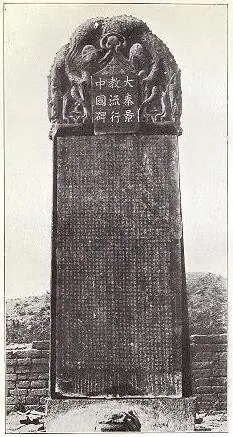
Christianity in India is older than Christianity in most of Europe. How much older depends on whether one starts from tradition or from evidence. The tradition says the first century; the firm evidence says the sixth century at the latest; and between the two lies one of the most argued-over questions in the history of Asian Christianity.[1][2] Majority
The tradition: Thomas in Kerala
The Christians of Kerala call themselves Nasrani or Saint Thomas Christians. Their tradition holds that the apostle Thomas landed at Muziris (Kodungallur) in 52 CE, founded seven churches along the coast, converted families of high caste, and was martyred near Mylapore, in modern Chennai, in 72.[1] Consensus on the tradition. It is old, uniform and central to the community’s identity, and it is sung in their songs and marked at their pilgrimage sites.
The journey itself was possible. Roman ships sailed to the Malabar coast for pepper every year in the first century, and Muziris was one of their main ports.[1] Majority Possibility is not evidence, though, and nothing written before the third century connects Thomas with India.
The earliest text points north-west
The earliest written story of Thomas in India is the Acts of Thomas, composed in Syriac at Edessa in the third century. The apostles divide the world by lot; Thomas draws India, refuses to go, and is sold by Jesus himself as a slave to Habban, the merchant of King Gudnaphar.[3] Consensus on the text.
Gudnaphar is real. Coins and an inscription name Gondophares, an Indo-Parthian king who ruled in the first century in what is now Pakistan and Afghanistan.[4][1] Consensus The match shows that the author of the Acts, a romance full of miracles, knew the name of a real first-century king. It does not show that Thomas met him, and it places the story in the north-west, not in Kerala. Majority By the late fourth century Edessa, where the Acts were written, honoured a shrine where, the pilgrim Egeria wrote, Thomas’s “body is laid entire” (trans. M. L. McClure and C. L. Feltoe), a sign of how important his memory was in Syriac Christianity.[5] Majority
Another early report is ambiguous. Eusebius, writing around 320, says that the Alexandrian teacher Pantaenus, around 180, found Christians in “India” who had a Gospel of Matthew in Hebrew, left by the apostle Bartholomew. But Greek writers used “India” loosely, for southern Arabia and Ethiopia as well as the subcontinent.[6] Contested
The firm evidence: 550 and 849
The first secure evidence comes from a merchant turned monk, Cosmas Indicopleustes, writing around 550. He reports a church with clergy in Sri Lanka, a church at “Malé, where the pepper grows”, that is the Malabar coast, and a bishop at Kalliana “appointed from Persia” (trans. J. W. McCrindle).[7] Consensus The last detail matters: by then the Indian Christians looked to the Church of the East, the church of the Persian Empire, for their bishops.
Three centuries later the community appears in its own documents. The Tharisapalli copper plates, from around 849, record a grant by a local ruler at Quilon (Kollam) to the church of Tharisapalli, founded by a man named Mar Sapir Iso, with rights for the Christians over trade guilds and land. The witnesses signed in Middle Persian, in Arabic in Kufic script, and in Judeo-Persian in Hebrew characters: a picture of a merchant world shared by Christians, Muslims, Jews and Zoroastrians.[8][9] Consensus Stone crosses with Middle Persian inscriptions, found at Mylapore and Kottayam, date from about the seventh to ninth centuries.[1] Majority
Kerala tradition also remembers a second founding: the arrival of a Syriac merchant, Thomas of Cana, with Christian families from Mesopotamia, from whom the Knanaya community traces its descent. The Tradition dates his arrival to 345; the copper plates said to record it are lost, and proposed dates range from the fourth century to the ninth.[1] Contested
A church of the East in India
From at least the sixth century, then, the Indian Christians belonged to the Church of the East. They received bishops from Mesopotamia, worshipped in Syriac, and lived as a respected, caste-like community of traders and landholders within Kerala society, with privileges granted by local kings.[1][2] Majority (See the question on what the Church of the East was.) When that church collapsed across Asia in the fourteenth century, its Indian branch was one of the few parts to survive.[2] Majority
Portuguese Catholicism and the Synod of Diamper
The Portuguese reached the Malabar coast with Vasco da Gama in 1498 and found Christians already there. At first the Thomas Christians welcomed them as fellow Christians. Portugal took Goa in 1510, Francis Xavier arrived in 1542, and from 1560 the Inquisition at Goa targeted converts suspected of keeping Hindu or Jewish practice.[1][10] Consensus
At the Synod of Diamper (Udayamperur) in 1599, Archbishop Aleixo de Menezes of Goa imposed Latin customs on the Thomas Christians, condemned their bishops as Nestorian heretics, ordered their Syriac books corrected or burned, required clerical celibacy and placed them under Latin bishops of the Portuguese padroado.[11] Consensus In 1653 a large crowd swore at the Coonan Cross at Mattancherry never to submit to the Jesuit prelates.[12] The community split, and its heirs are several churches today: the Catholic Syro-Malabar and Syro-Malankara churches, the Malankara Orthodox and Jacobite Syrian churches, the reformed Mar Thoma Church, and a small Chaldean Syrian Church, which rejoined the East Syriac patriarchate from 1874 and belongs to the Assyrian Church of the East.[1][13] Majority
Protestant missions and the modern church
Protestant missions came later. German Lutherans of the Halle mission began work at the Danish settlement of Tranquebar in 1706, and the Baptist William Carey arrived in 1793 and, with his colleagues at Serampore, translated the Bible in whole or part into more than thirty languages.[14] Majority on the number. In the nineteenth and twentieth centuries Christianity spread most among Dalit and tribal communities, and in parts of the north-east it became the majority religion.[1] Majority
According to the 2011 census, Christians are about 2.3 per cent of India’s population, some 28 million people. They are about 18 per cent of Kerala’s population, and the majority in Nagaland, Mizoram and Meghalaya.[15] Consensus The ancient Thomas Christian churches are thus a minority among India’s Christians today. (§13)
The case on each side
| View | Argument | Main proponents |
|---|---|---|
| Thomas founded the church | An ancient, uniform tradition; Roman trade made the journey possible | Thomas Christian tradition; some historians[1] |
| Possibly, unprovably | The Acts know a real king, but nothing before c. 550 places Christians in Kerala | Most historians |
| Later origins | The Kerala church began with Persian merchants and clergy, and the Thomas story was attached to it | Some historians |
Contested Historians can say that Christianity reached south India by about 550 at the latest; whether it arrived with an apostle in 52 cannot be tested with the evidence that survives.
Common misconceptions
- “Christianity came to India with the British.” It was there more than a thousand years before them, and Catholic missions came with the Portuguese two centuries before British rule. Consensus
- “The Thomas Christians were converted by the Portuguese.” They were already Christian, with their own bishops from Mesopotamia; the Portuguese tried to Latinise them. Consensus
- “The Acts of Thomas prove Thomas went to India.” They prove that a third-century author knew a first-century king’s name; the story is a romance. Majority
- “Most Indian Christians are Thomas Christians.” Most today belong to churches founded by Catholic and Protestant missions. Majority
Why it matters
India’s Christians are a reminder that Christianity was an Asian religion long before it was a colonial one. Their history runs through the Church of the East (§7), the Portuguese empire (§10) and the modern global church (§13), and it is told from the Hindu side in the Hinduism series.
References
- ^ a b c d e f g h i j k Robert Eric Frykenberg Christianity in India: From Beginnings to the Present. Oxford University Press, 2008. The standard history, including the Thomas Christians.
- ^ a b c Christoph Baumer The Church of the East: An Illustrated History of Assyrian Christianity. I. B. Tauris, 2nd ed., 2016. The fullest general history, from Mesopotamia to China.
- ^ Acts of Thomas 1–2 — Acts of Thomas. 3rd c. CE. Syriac (and Greek). The apostles divide the world by lot; Thomas receives India and is sold by Jesus to Habban, a merchant of King Gudnaphar. about
- ^ Gondophares coins and the Takht-i-Bahi inscription — Indo-Parthian royal coinage and inscription. 1st c. CE. Greek and Kharoṣṭhī. Coins and an inscription name Gondophares, an Indo-Parthian king, the Gudnaphar of the Acts of Thomas. about
- ^ Egeria, Itinerarium 17–19 — Itinerarium Egeriae. c. 381–384 CE. Latin. Egeria travels to Edessa to pray 'at the memorial of S. Thomas the Apostle, where his body is laid entire' (trans. McClure and Feltoe). read the text
- ^ Eusebius, Ecclesiastical History 5.10 — Ecclesiastical History. early 4th c. CE. Greek. Pantaenus is said to have found in 'India' Christians with Matthew's Gospel in Hebrew, left by Bartholomew. read the text
- ^ Cosmas Indicopleustes, Christian Topography 3.65 — Christian Topography. c. 550 CE. Greek. Churches in Sri Lanka, Christians at Malé 'where the pepper grows', and a bishop at Kalliana appointed from Persia. about
- ^ Tharisapalli copper plates — Copper-plate grant, Quilon (Kollam). c. 849 CE. Old Malayalam, with Pahlavi, Arabic and Judeo-Persian signatures. A local ruler grants land and privileges to the church of Tharisapalli founded by Mar Sapir Iso. about
- ^ M. G. S. Narayanan Perumāḷs of Kerala. CosmoBooks, 2013. Kerala's early medieval kingdom, including the Tharisapalli plates.
- ^ Goa Inquisition (1560–1812) — Tribunal of the Holy Office at Goa. 1560–1812 CE. Portuguese. Established in 1560, suppressed 1774, restored 1778 and abolished 1812; aimed chiefly at converts suspected of Hindu or Jewish practice. about
- ^ Synod of Diamper (Udayamperur), June 1599 — Decrees of the synod under Aleixo de Menezes. 1599 CE. Portuguese and Malayalam. Imposes Latin practice and Portuguese authority on the Thomas Christians and orders Syriac books corrected or burned. about
- ^ Coonan Cross Oath (January 1653) — Oath at Mattancherry, Kochi. 1653 CE. Malayalam. Thomas Christians swear not to submit to the Jesuit prelates, beginning the division of the community. about
- ^ Chaldean Syrian Church (Thrissur) — Archdiocese of India of the Assyrian Church of the East. modern. Malayalam and Syriac. A Kerala church based at Thrissur that belongs to the Assyrian Church of the East. about
- ^ Andrew F. Walls The Missionary Movement in Christian History: Studies in the Transmission of Faith. Orbis Books, 1996. Essays on mission, translation and the shift of Christianity's centre.
- ^ Census of India 2011: Christians by state — Office of the Registrar General of India. 2011 (released 2015). English. Christians are 2.3% of India (about 28 million), about 18% of Kerala, and the majority in Nagaland, Mizoram and Meghalaya. about