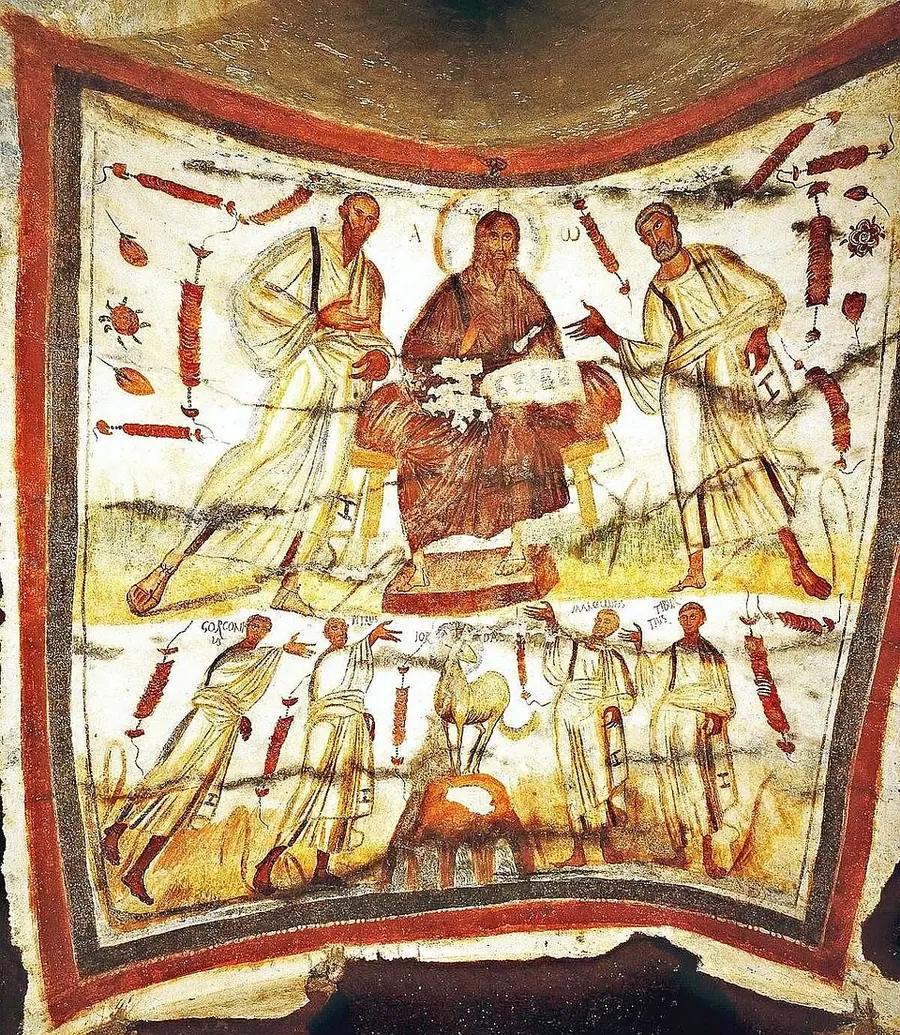
Within twenty years of the crucifixion, the Jesus movement had spread from Judea to the cities of Syria, Asia Minor, Greece and Rome, and most of its new members were not Jews. The best-documented agent of that change is Paul, a Pharisee from the Greek-speaking diaspora who first persecuted the movement and then, after a vision of the risen Jesus, spent the rest of his life founding small communities of gentiles who worshipped Israel’s God and awaited Jesus’ return from heaven. Paul insisted that these converts should not be circumcised or take on the Jewish law, and fought for that position with the leaders in Jerusalem and with rival missionaries in his own churches. His letters to those churches, written between about 50 and 60 CE, are the earliest Christian writings that survive. He was probably executed in Rome under Nero, in the mid-60s. Majority
Paul did not found Christianity, and he did not think of himself as leaving Judaism; neither the word “Christian” nor “Christianity” appears in his letters (§0). But the choices made in his lifetime, above all that gentiles could belong to Israel’s Messiah without becoming Jews, made a separate religion possible. Much of what this chapter reports comes from Paul himself, read against Acts, which tells his story a generation later and often differently. Majority
Timeline
Paul’s letters give relative dates (“after three years”, “after fourteen years”); outside evidence fixes a few points absolutely. Different reconstructions move most dates by two or three years.[1][2]
| Date | Event or evidence | Confidence |
|---|---|---|
| c. 5–10 CE | Paul is born, according to Acts in Tarsus in Cilicia; his letters do not name his birthplace[3] | Majority (Tarsus) |
| c. 30–33 | Paul, by his own account, “was violently persecuting the church of God and was trying to destroy it”[4][5] | Consensus |
| c. 31–36 | God “was pleased to reveal his Son to me”; Paul goes to Arabia, then returns to Damascus[4][6] | Majority |
| before 40 | Paul escapes Damascus in a basket when the governor under King Aretas guards the city; Aretas IV of Nabataea died about 40[7][8] | Majority |
| c. 34–37 | “After three years” Paul spends fifteen days in Jerusalem with Cephas and meets James[4] | Majority |
| c. 37–47 | Paul works in “the regions of Syria and Cilicia”; Antioch becomes a base for preaching to gentiles[4][9] | Majority |
| 41–54 | Claudius emperor; around 49 he expels Jews from Rome after disturbances over “Chrestus”[10][11] | Majority |
| c. 48–49 | “After fourteen years” Paul goes up to Jerusalem with Barnabas and Titus; the “pillars” agree to the gentile mission. The Antioch incident follows[12][4] | Majority |
| c. 50–52 | Paul in Corinth for eighteen months; he appears before the proconsul Gallio, whose year of office (51–52) is fixed by an inscription at Delphi. He writes 1 Thessalonians[13][14][15] | Majority |
| c. 52–55 | Paul based in Ephesus; writes 1 Corinthians and probably Galatians; perhaps imprisoned[16][17] | Majority |
| c. 55–57 | 2 Corinthians from Macedonia; Romans from Corinth; the collection for Jerusalem[18][19] | Majority |
| c. 57 | Paul arrested in the Jerusalem Temple, according to Acts; held two years at Caesarea[20][21] | Majority |
| c. 60–62 | Paul under house arrest in Rome for two years, where Acts ends[22] | Majority |
| 64 | Fire of Rome; Nero blames the Christians[23] | Consensus |
| c. 64–68 | Paul and Peter die in Rome, according to tradition from 1 Clement (c. 96) on[24][25] | Majority |
Where: from Damascus to Rome
Paul’s world was the eastern Roman Empire’s network of cities, linked by roads and sea lanes and governed in Greek. He worked in provincial capitals and ports: Antioch, the third city of the empire; Ephesus in Asia; Thessalonica and Philippi in Macedonia; Corinth in Achaia. His letters are addressed to communities in four Roman provinces and one city he had not yet visited, Rome.[26] Consensus
Each city had a Jewish community with synagogues, and around many of them gentile sympathisers who attended, gave money and observed some Jewish customs without converting; Acts calls them “God-fearers”. Most historians think Paul’s first gentile converts came largely from this circle, though the evidence for how many there were is mostly from inscriptions of later centuries.[27][28] Majority
“Galatia” is disputed. If Paul’s letter to the Galatians was written to the ethnic Galatians of central Anatolia, around Ancyra (Ankara), it was written later; if to the southern cities of the Roman province (Pisidian Antioch, Iconium, Lystra), which Acts says he visited on his first journey, it may be his earliest letter. This “North” and “South Galatian” debate decides how Galatians fits the chronology above.[1][2] Contested
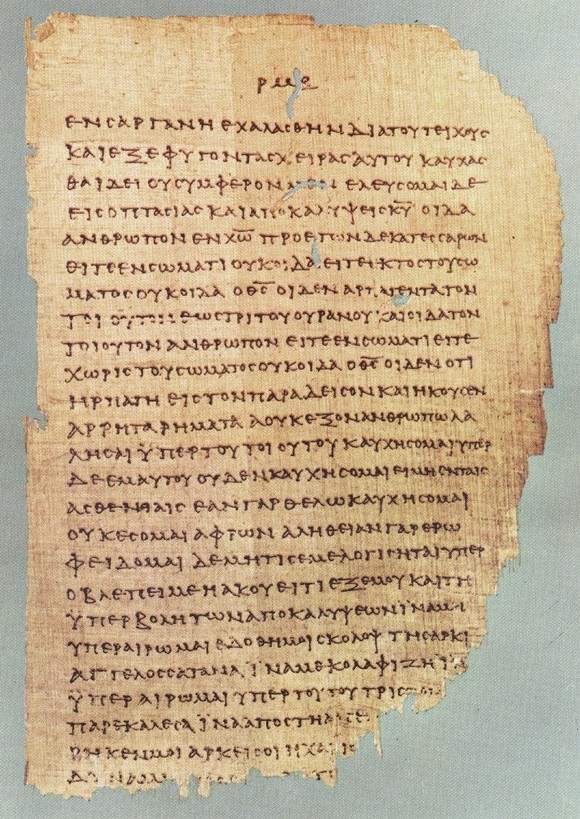
Who Paul was: the letters and Acts
In his own words
Paul tells his readers little about himself, and only when an argument requires it. What he does say is first-hand:
- A Jew and a Pharisee. “Circumcised on the eighth day, a member of the people of Israel, of the tribe of Benjamin, a Hebrew born of Hebrews; as to the law, a Pharisee” (Phil 3:5). He is the only Pharisee of the Second Temple period whose own writings survive.[5] Consensus
- A persecutor. “I was violently persecuting the church of God and was trying to destroy it. I advanced in Judaism beyond many among my people of the same age, for I was far more zealous for the traditions of my ancestors” (Gal 1:13–14).[4][29] What the persecution involved, and why, he does not say. Consensus on the fact.
- A call, not a conversion. He describes the change in the language of the prophets’ call: God “had set me apart before I was born and called me through his grace” and “was pleased to reveal his Son to me, so that I might proclaim him among the Gentiles” (Gal 1:15–16, echoing Jeremiah 1:5 and Isaiah 49:1).[4][30] Krister Stendahl argued (1963; fully in 1976) that Paul was “called” rather than “converted”: he did not change religion, but received a new task within the same one.[30][31] Majority
- A worker. He supported himself “working night and day, so that we might not burden any of you” (1 Thess 2:9), and boasts that he took no money from the Corinthians (1 Cor 9).[32][33] Consensus
- A sufferer. He lists five floggings of thirty-nine lashes, three beatings with rods, a stoning, three shipwrecks and many imprisonments (2 Cor 11:23–27). The thirty-nine lashes were a synagogue punishment: whatever the Jewish authorities thought of him, Paul kept submitting to their discipline.[34][35] Majority
- Not an impressive speaker. His opponents in Corinth said that “his letters are weighty and strong, but his bodily presence is weak, and his speech contemptible” (2 Cor 10:10).[36]
What only Acts says
Acts, written by the author of Luke in the 80s or later (§0), is the source for most of the familiar biography: the name Saul; birth in Tarsus; study in Jerusalem “at the feet of Gamaliel”; Roman citizenship; tentmaking; the light and the voice on the road to Damascus; three missionary journeys; the speech on the Areopagus in Athens.[3][37][38]
Historians weigh these one by one. The Tarsus origin and the trade fit the letters well and are generally accepted. The Roman citizenship, which explains Paul’s appeal to Caesar and his transfer to Rome in Acts, is never mentioned by Paul, even where it would have saved him a flogging; some scholars accept it, others doubt it.[37][34][39] Contested The Damascus story is told three times in Acts with differences: in one version Paul’s companions hear the voice but see no one, in another they see the light but do not hear the voice (Acts 9:7, 22:9).[40][41] Consensus on the differences.
Where Paul and Acts disagree
| Question | Paul’s letters | Acts | Most historians follow |
|---|---|---|---|
| After the vision | Went to Arabia, then back to Damascus; went up to Jerusalem only after three years (Gal 1:17–18) | Preached in Damascus, then soon went to Jerusalem, where Barnabas introduced him to the apostles (Acts 9:19–27) | Paul |
| Visits to Jerusalem before the meeting | One, of fifteen days; “I did not see any other apostle except James” (Gal 1:18–19) | Two (Acts 9:26–30; 11:30) | Paul |
| The Jerusalem meeting | A private agreement with the “pillars”; nothing added to Paul’s gospel (Gal 2:1–10) | A public council issuing a decree on food and sexual conduct (Acts 15) | Paul, with debate |
| Paul and the law | Gentiles must not be circumcised; Paul lived “as one outside the law” among gentiles (1 Cor 9:21) | Paul circumcises Timothy (Acts 16:3) and pays for a Temple vow to show he keeps the law (Acts 21:23–26) | Contested |
The pattern is that Acts presents a harmonious church with Jerusalem at the centre, and Paul as its loyal missionary; Paul presents an independent apostle whose authority came “not from human beings” (Gal 1:1).[4][42] Majority That does not make Acts worthless: its itinerary matches the letters at many points, and its author may have used a travel diary, since some passages switch to “we”.[43] Contested on what the “we” passages mean.
The letters
| Letter | Written from, and when | Occasion | Confidence |
|---|---|---|---|
| 1 Thessalonians | Corinth, c. 50 | Encouragement for a new church; the fate of members who have died before the Lord’s coming | Majority |
| Galatians | Ephesus or Macedonia, c. 50–55 (debated) | Rival missionaries urge Paul’s gentile converts to be circumcised | Consensus (authorship); Contested (date) |
| 1 Corinthians | Ephesus, c. 54 (1 Cor 16:8) | Factions, sex and marriage, food offered to idols, worship, the resurrection | Majority |
| 2 Corinthians | Macedonia, c. 55–56 | Reconciliation after a crisis; many scholars think it combines two or more letters | Majority (date); Contested (unity) |
| Philippians | Prison: Ephesus c. 54–55, Caesarea c. 57–59, or Rome c. 60–62 | Thanks for a gift; warning against teachers who demand circumcision | Contested (place) |
| Philemon | Prison, same options | A personal appeal about Onesimus, a slave | Contested (place) |
| Romans | Corinth, c. 56–57 | Introducing himself and his gospel to a church he had not founded, before a planned visit on the way to Spain | Majority |
Places and dates follow the standard critical introductions.[44][45]
Paul did not write alone. Most letters name co-senders (Sosthenes, Timothy, Silvanus); he dictated to a scribe, Tertius, who adds his own greeting in Romans 16:22; and he sometimes added a closing in his own hand: “See what large letters I make when I am writing in my own hand!” (Gal 6:11).[46][47] Consensus
The six disputed letters are not treated as Paul’s in this series. The Pastoral letters (1–2 Timothy, Titus) assume a church with appointed overseers, elders and enrolled widows, and use a vocabulary unlike Paul’s; most scholars date them around 100 or later. Ephesians, Colossians and 2 Thessalonians are closer to Paul and opinion is more divided.[44][45] Majority (§4)
Before Paul: the earliest worship of Jesus
Paul’s letters contain material older than themselves. Besides the resurrection creed of 1 Corinthians 15 (§2), he passes on:
- An Aramaic prayer. Maranatha, “Our Lord, come!” (1 Cor 16:22), left untranslated in a letter to Greek speakers. It must come from the Aramaic-speaking communities of Judea and Syria, and it addresses Jesus in prayer.[48] Majority
- An Aramaic address to God. Believers cry “Abba! Father!” through the Spirit (Gal 4:6; Rom 8:15), the word Jesus used in Mark 14:36.[49][50] Majority
- A Christ hymn. Philippians 2:6–11 describes Christ Jesus, “who, though he was in the form of God”, emptied himself, took “the form of a slave”, died on a cross, and was exalted so that “at the name of Jesus every knee should bend… and every tongue should confess that Jesus Christ is Lord”.[51] Many scholars think the hymn was composed before the letter; whether Paul wrote it himself is debated. Contested
- A reworked Shema. “For us there is one God, the Father, from whom are all things and for whom we exist, and one Lord, Jesus Christ, through whom are all things and through whom we exist” (1 Cor 8:6).[52]
- A two-stage creed. Jesus was “descended from David according to the flesh and was declared to be Son of God with power according to the spirit of holiness by resurrection from the dead” (Rom 1:3–4).[53] Majority that this formula is pre-Pauline.
How early was Jesus worshipped as divine?
The material above shows that within twenty years of the crucifixion, communities that held to Israel’s one God prayed to Jesus, sang hymns about him, baptised and healed in his name, and applied to him scriptures about the Lord God. Philippians 2:10–11 takes Isaiah 45:23, where God says “to me every knee shall bow, every tongue shall swear”, and applies it to Jesus.[51][54] Consensus on these practices. What they meant is one of the liveliest debates in the field.
| View | Argument | Main proponents |
|---|---|---|
| Early “high” Christology | The devotion described in Paul’s letters was a sudden and remarkable development within Jewish monotheism: Jesus received the kind of worship otherwise reserved for God, and 1 Corinthians 8:6 places him inside the Shema itself | Hurtado; Bauckham[55][56] |
| Exaltation, then development | The earliest belief was that God exalted the man Jesus at his resurrection (Rom 1:3–4); Paul already sees him as a pre-existent heavenly being, perhaps an angel-like figure; full equality with God came later | Ehrman[57] |
| A Jewish category, stretched | Ancient Jews could speak of principal angels, personified Wisdom and exalted patriarchs in divine terms; Jesus was fitted into such a category before the later creeds drew sharper lines | Fredriksen and others[28] |
All three agree on the dates; they disagree on whether this was a change in kind or a step on a longer road, and on what Paul’s monotheism allowed. Contested Paul’s letters do not use the language of the later creeds, such as “of one substance with the Father”; that vocabulary belongs to the fourth century (§6). Consensus
Should gentiles become Jews? Jerusalem and Antioch
The problem
The first followers of Jesus were Jews who expected Israel’s restoration. Many Jewish texts of the period expected that in the last days the nations would turn to Israel’s God, as nations, without becoming Jews.[58][28] When gentiles began to join the movement, the question was whether they should become Jews first, which for men meant circumcision, or join as gentiles. Majority
The meeting in Jerusalem (c. 48–49)
Paul’s account in Galatians 2 is the earliest. After fourteen years he went up to Jerusalem “in response to a revelation”, with Barnabas and an uncircumcised gentile convert, Titus, and laid out his gospel privately before “the acknowledged leaders”:
kai gnontes tēn charin tēn dotheisan moi, Iakōbos kai Kēphas kai Iōannēs, hoi dokountes styloi einai, dexias edōkan emoi kai Barnaba koinōnias, hina hēmeis eis ta ethnē, autoi de eis tēn peritomēn; monon tōn ptōchōn hina mnēmoneuōmen.
“And when James and Cephas and John, who were acknowledged pillars, recognised the grace that had been given to me, they gave to Barnabas and me the right hand of fellowship, agreeing that we should go to the Gentiles and they to the circumcised. They asked only one thing, that we remember the poor.”[12]
Titus “was not compelled to be circumcised”, though “false believers” had argued that he should be.[12] Majority that this is substantially what happened, with the caveat that Paul is writing in his own defence.
Acts 15 tells of a public assembly of apostles and elders. Peter speaks, then James proposes that gentile believers be asked only to abstain “from things polluted by idols and from fornication and from whatever has been strangled and from blood”, and a letter is sent to the churches of Antioch, Syria and Cilicia.[42] These four rules resemble the laws Leviticus 17–18 lays on foreigners living in Israel.[59] Paul never mentions the decree, and when he discusses food sacrificed to idols in 1 Corinthians 8–10 he does not appeal to it and permits what it forbids, in some circumstances.[52][60] Most scholars think the decree is real but later, a ruling made after Paul’s departure and attached by Acts to the meeting. Whether Galatians 2 and Acts 15 describe the same event, or Galatians 2 corresponds to the famine-relief visit of Acts 11:30, is debated.[2][45] Contested
The quarrel at Antioch
The agreement settled less than it seemed. Soon afterwards Peter came to Antioch and ate with gentile believers, until “certain people came from James”, after which he “drew back and kept himself separate for fear of the circumcision faction”. The other Jewish believers, even Barnabas, followed him.
hote de ēlthen Kēphas eis Antiocheian, kata prosōpon autō antestēn, hoti kategnōsmenos ēn.
“But when Cephas came to Antioch, I opposed him to his face, because he stood self-condemned.”[4]
The issue was table fellowship: whether Jewish believers could share meals, including the Lord’s Supper, with uncircumcised gentiles on equal terms. Paul gives his own speech against Peter but not the outcome. Many scholars infer that Paul lost the argument in Antioch, since he never mentions working with Barnabas again, though he still speaks of him warmly (1 Cor 9:6), and Antioch drops out of his letters.[61][39] Contested
James, Peter and Paul
The three men represent different positions within the same movement, not three religions. James, the brother of Jesus, led the Jerusalem church and was respected for his observance of the law; Josephus records his execution in 62 at the instigation of the high priest.[62] Peter moved between the two worlds. Paul called his own position the “gospel for the uncircumcised” (Gal 2:7). Majority The nineteenth-century Tübingen school, led by F. C. Baur, built a history of early Christianity on the conflict between a Jewish “Petrine” party and a gentile “Pauline” one, resolved in the second century.[63] The outline of a real conflict survives in scholarship; the neat two-party scheme does not. Majority
The collection for Jerusalem
One promise Paul kept was to “remember the poor”. For several years he organised a collection from his gentile churches in Galatia, Macedonia and Achaia for “the poor among the saints at Jerusalem” (Rom 15:26).[64][19][18] He saw it as a sign that gentiles owed Israel a debt, and he feared that the Jerusalem church might refuse it: he asked the Romans to pray “that my ministry to Jerusalem may be acceptable to the saints” (Rom 15:31).[65] Acts, which tells of the journey to Jerusalem at length, mentions the money only once, in passing (Acts 24:17), which some scholars take as a sign that it was not accepted.[66] Contested
Paul’s churches
House churches
Paul’s communities met in private houses. He greets “Prisca and Aquila… and the church in their house” (Rom 16:3–5), and Gaius, “host to me and to the whole church” in Corinth (Rom 16:23).[67][46][68] A large house might hold thirty or forty people at a meal; a city’s believers might be divided among several houses.[69] Majority The meetings centred on a shared meal, the “Lord’s supper”, with prayer, prophecy, speaking in tongues and readings (1 Cor 11, 14).[70][71]
Who joined
“Not many of you were wise by human standards, not many were powerful, not many were of noble birth” (1 Cor 1:26), Paul tells the Corinthians: not many, but some.[72] Wayne Meeks and Gerd Theissen argued that the Pauline churches were a cross-section of urban society, without the very top or the very bottom, led by a few householders of some means; Theissen read the disorder at the Lord’s supper in Corinth, where “one goes hungry and another becomes drunk”, as a clash between rich hosts and poorer members.[26][73][70] Majority Justin Meggitt countered that almost all of Paul’s converts, like almost everyone in the empire, lived near subsistence; Bruce Longenecker’s economic scale places most in the middle ranges of poverty, with a few modestly prosperous.[74][75] Contested
Romans 16:23 sends greetings from “Erastus, the city treasurer”. An inscription found at Corinth in 1929 records that an Erastus laid a pavement at his own expense in return for the office of aedile. Whether he is the same man is debated.[76][46] Contested
Women in Paul’s churches
Paul’s letters name more women co-workers than any other New Testament writer.[67][77]
- Phoebe, “a deacon (diakonos) of the church at Cenchreae” and “a benefactor (prostatis) of many and of myself as well” (Rom 16:1–2). Paul commends her to Rome, and most scholars think she carried the letter.[67] Majority
- Prisca (Priscilla), named before her husband Aquila in four of six mentions, Paul’s fellow worker in Corinth, Ephesus and Rome.[67][78][11] Consensus
- Junia, greeted with Andronicus as “prominent among the apostles” (Rom 16:7). See primary source 8.
- Euodia and Syntyche, who “struggled beside me in the work of the gospel” at Philippi (Phil 4:2–3).[77]
- Women who pray and prophesy in the Corinthian assembly, whom Paul tells to keep their heads covered (1 Cor 11:2–16), and the baptismal formula of Galatians 3:28: “there is no longer male and female; for all of you are one in Christ Jesus”.[79][80] Majority
The same letter that assumes women will pray and prophesy aloud in 1 Corinthians 11 also says, at 14:34–35, that “women should be silent in the churches”. That contradiction, and the fact that some manuscripts place the two verses after 14:40 instead, led Gordon Fee and others to argue that they are a later scribal addition, in the spirit of 1 Timothy 2:11–12.[81][82][83] Others defend the verses as Paul’s, restricting a particular kind of speech. Contested (§4)
Paul and the law
What Paul meant by “justified by faith… and not by doing the works of the law” (Gal 2:16) has been argued over since the Reformation, and the argument has shaped how Christians saw Judaism.[84]
| View | Paul’s problem with the law | Main proponents |
|---|---|---|
| Lutheran / traditional | No one can earn salvation by keeping the law; Judaism taught that one could, and Paul replaced works with grace and faith | Luther; Bultmann; defended and refined by Westerholm[85] |
| New Perspective | Judaism was a religion of grace (“covenantal nomism”); Paul objected to “works of the law” as markers that kept gentiles out: circumcision, food laws, sabbath | Sanders, Dunn, Wright[86][87][88] |
| Paul within Judaism | Paul never stopped being a law-observant Jew; his letters are addressed to gentiles and his rejection of the law is a rejection of it for them | Stendahl, Fredriksen, Eisenbaum[30][28][89] |
| Gift | Paul’s distinctive point is that God’s grace was given to the unworthy, without regard to prior worth, which overturned every system of status, Jewish or gentile | Barclay[90] |
E. P. Sanders’ Paul and Palestinian Judaism (1977) changed the field by showing, from rabbinic and Qumran texts, that the Judaism of Paul’s time did not teach salvation by merit: Israel was in the covenant by God’s choice, and the law was the way to stay in it. James Dunn named the result “the New Perspective on Paul” in a 1982 lecture.[86][87] Majority that Sanders’ description of Judaism is broadly right; Contested what follows for Paul.
What is clear from the letters is that Paul told gentile men not to be circumcised, “if you let yourselves be circumcised, Christ will be of no benefit to you” (Gal 5:2), and told Jews not to undo their circumcision (1 Cor 7:18).[91][92] He insisted that God had not rejected Israel and that in the end “all Israel will be saved” (Rom 11:26).[93] Consensus on the texts. Later Christian anti-Judaism read him as the founder of a religion that had replaced Judaism; most scholars now think that reading would have surprised him. Majority
The end is near: Paul’s expectation
Paul expected Jesus to return within his own lifetime. To the Thessalonians, worried about members who had died, he wrote that “we who are alive, who are left until the coming of the Lord” would be caught up with them “in the clouds… to meet the Lord in the air” (1 Thess 4:15–17).[94] To the Corinthians: “the appointed time has grown short… the present form of this world is passing away”, which is why, he says, the unmarried should stay as they are (1 Cor 7:26–31).[95] Majority That expectation explains much of his advice on marriage, slavery and property, which was given for a short interval, not for a church that would last two thousand years. Majority The passage in 1 Thessalonians is also the main text behind the much later doctrine of the “Rapture”, systematised from the 1830s (§11).
Rome: Paul’s last years and the deaths of Peter and Paul
Paul wrote Romans to a church he had not founded, which already existed when Claudius expelled Jews from the city around 49 (§0). He planned to visit on his way to Spain (Rom 15:24, 28).[96] Acts takes him there as a prisoner after his arrest in Jerusalem and ends with him living “two whole years at his own expense”, preaching “with all boldness and without hindrance” (Acts 28:30–31).[22] Acts does not narrate his death, though it hints that it knows of it (Acts 20:25, 38). Consensus
The earliest testimony is the letter known as 1 Clement, written from the church of Rome to Corinth around 96:
“Paul… after that he had been seven times in bonds, had been driven into exile, had been stoned, had preached in the East and in the West, he won the noble renown which was the reward of his faith, having taught righteousness unto the whole world and having reached the farthest bounds of the West; and when he had borne his testimony before the rulers, so he departed from the world.” (trans. J. B. Lightfoot)[24]
The same chapter names Peter, who “endured not one but many labours, and thus having borne his testimony went to his appointed place of glory”. The letter places both among those who suffered “through jealousy”, alongside “a vast multitude” of Roman martyrs, apparently those of Nero’s persecution of 64.[24][97][23] Majority
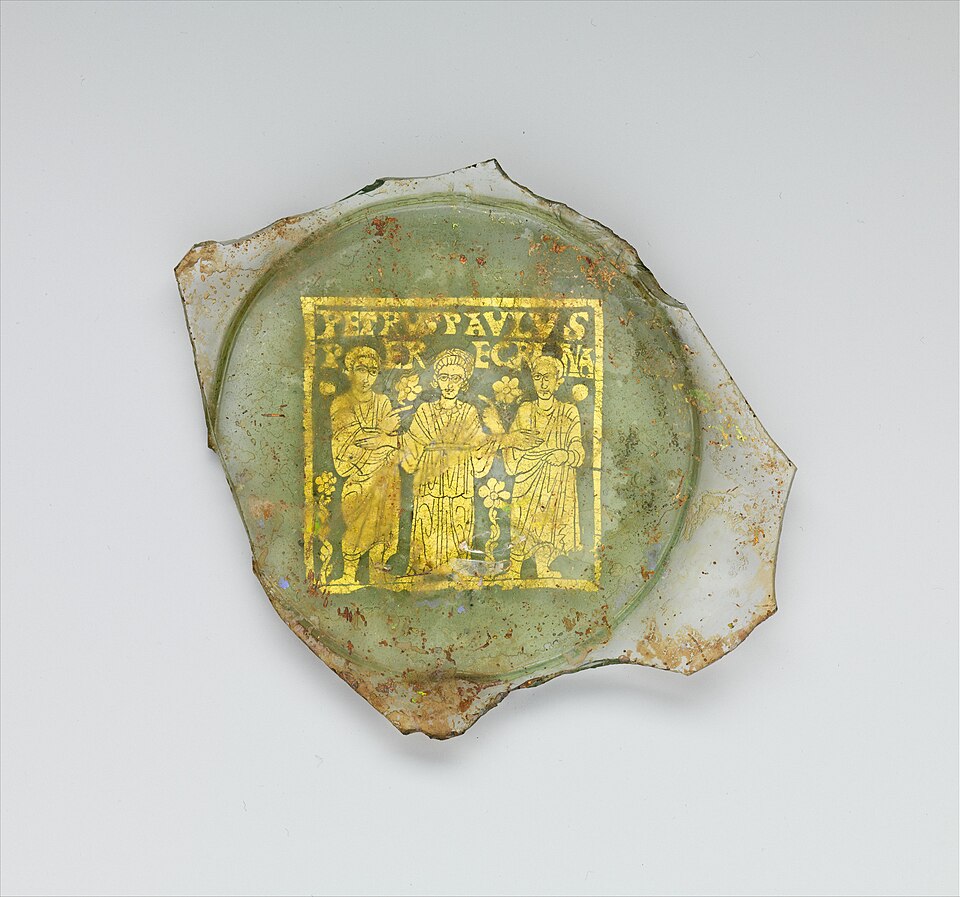
Later witnesses fill in the picture. Ignatius, around 110, writes to the Romans that he does not “enjoin” them “as Peter and Paul did” (trans. J. B. Lightfoot).[98] Around 200 a Roman presbyter named Gaius said he could show “the trophies of the apostles” on the Vatican hill and on the road to Ostia, and Eusebius, who quotes him, says Paul was beheaded and Peter crucified in Rome under Nero.[25] The tradition that Peter was crucified upside down first appears in the apocryphal Acts of Peter, late in the second century.[99] Majority that Paul died in Rome under Nero; the manner of death is tradition.
Was Peter ever in Rome? The New Testament never says so directly; 1 Peter, written in his name, sends greetings from “Babylon” (1 Pet 5:13), a common early Christian code for Rome.[100] Excavations under St Peter’s Basilica in the 1940s found a small shrine of about 160 CE built over a modest grave in a pagan cemetery, which matches Gaius’ “trophy”.[101] Most historians accept that Peter died in Rome; a minority, notably Otto Zwierlein, have argued that the tradition was created in the second century.[102][103] Majority Whether the bones found near the shrine, announced by Pope Paul VI in 1968 as Peter’s, are his is another matter. Contested
The evidence
| Question | What the evidence supports | Key evidence | Confidence |
|---|---|---|---|
| Paul’s letters | Seven written by Paul, c. 50–60 CE | Style, vocabulary, content; consistent personal details[44][45] | Consensus (seven) |
| Background | A Greek-speaking diaspora Jew and Pharisee | Philippians 3:5–6; Acts 22:3[5][3] | Consensus (Pharisee); Majority (Tarsus) |
| Persecutor | Persecuted the Jesus movement before his vision | Galatians 1; 1 Corinthians 15:9[4][29] | Consensus |
| The vision | Experienced as a revelation of the risen Jesus and a call to the gentiles, c. 31–36 | Galatians 1:15–16; 1 Corinthians 9:1, 15:8[4][33][6] | Consensus (claim); Majority (date) |
| Chronology | Corinth c. 50–52; letters c. 50–60 | Gallio inscription; Aretas[14][7] | Majority |
| Early devotion to Jesus | Prayed to, sung to, worshipped alongside God within 20 years | Maranatha; Phil 2; 1 Cor 8:6[48][51][52] | Consensus (practice); Contested (meaning) |
| Gentiles and circumcision | Jerusalem leaders agreed gentiles need not be circumcised | Galatians 2:1–10[12] | Majority |
| Apostolic decree | A real ruling, probably later than the meeting | Acts 15; Paul’s silence[42][60] | Contested |
| Antioch | Peter and Barnabas withdrew from table fellowship with gentiles | Galatians 2:11–14[4] | Consensus (event); Contested (outcome) |
| Social level | Mixed, mostly non-elite, a few householders of means | 1 Cor 1:26; Romans 16[72][46] | Majority |
| Women leaders | Women as deacon, patron, co-worker and apostle | Romans 16; Philippians 4[67][77] | Majority |
| Death | Executed in Rome, probably under Nero | 1 Clement 5; Eusebius[24][25] | Majority |
Primary sources
Show the 10 primary sources
1. Called to the gentiles: Galatians 1:15–17, c. 50–55 CE
hote de eudokēsen ho aphorisas me ek koilias mētros mou kai kalesas dia tēs charitos autou apokalypsai ton huion autou en emoi, hina euangelizōmai auton en tois ethnesin…
“But when God, who had set me apart before I was born and called me through his grace, was pleased to reveal his Son to me, so that I might proclaim him among the Gentiles, I did not confer with any human being, nor did I go up to Jerusalem to those who were already apostles before me, but I went away at once into Arabia, and afterwards I returned to Damascus.”[4]
What it proves. Paul’s only first-hand account of his turning point. It is brief, describes an inner revelation rather than a scene, uses the language of a prophet’s call, and ties the experience directly to a mission to non-Jews. The Arabia episode, absent from Acts, shows how much the later narrative smoothed. Consensus on the text; Majority on the reading as a call.
2. The basket at Damascus: 2 Corinthians 11:32–33
“In Damascus, the governor (ethnarchēs) under King Aretas guarded the city of Damascus in order to seize me, but I was let down in a basket through a window in the wall, and escaped from his hands.”[7]
What it proves. The only point in Paul’s early career that can be tied to an outside ruler. Aretas IV of Nabataea reigned from 9 BCE to about 40 CE, so the escape happened before 40. How a Nabataean official came to control Damascus, a city normally under Roman Syria, is unclear. Majority
3. One God, one Lord: 1 Corinthians 8:6, c. 54 CE
all’ hēmin heis theos ho patēr, ex hou ta panta kai hēmeis eis auton, kai heis kyrios Iēsous Christos, di’ hou ta panta kai hēmeis di’ autou.
“Yet for us there is one God, the Father, from whom are all things and for whom we exist, and one Lord, Jesus Christ, through whom are all things and through whom we exist.”[52]
What it proves. Paul quotes, or composes, a confession that splits the Shema’s “the Lord our God, the Lord is one” (Deut 6:4) between God the Father and the Lord Jesus, and makes Jesus the agent of creation. Bauckham and Hurtado read it as Jesus included within the identity of the one God; Ehrman and others as a high but subordinate position. Either way, it is evidence of a very exalted view of Jesus within twenty-five years of his death.[56][57] Consensus on the date; Contested on the meaning.
4. The right hand of fellowship: Galatians 2:9–10
Quoted above. What it proves. The leaders of the Jerusalem church accepted a mission to gentiles that did not require circumcision, and divided the field. It is the founding agreement of gentile Christianity, in the words of one party to it. Majority
5. “I opposed him to his face”: Galatians 2:11–14
Quoted above. What it proves. The agreement did not settle whether Jewish and gentile believers could eat together. James’ envoys, Peter and Barnabas took a different view from Paul, and the first recorded quarrel among Christian leaders was about food and the law. Consensus
6. The apostolic decree: Acts 15:19–20
“Therefore I have reached the decision that we should not trouble those Gentiles who are turning to God, but we should write to them to abstain only from things polluted by idols and from fornication and from whatever has been strangled and from blood.”[42]
What it proves. By the time Acts was written, some churches held that gentile believers were bound by a minimum of Jewish law, modelled on the rules for resident foreigners in Leviticus 17–18. Whether the decree was issued at the meeting Paul describes is doubtful, since Paul never mentions it. The rule against eating blood was still observed by some Christians in Lyon in 177.[104] Contested
7. Phoebe the deacon: Romans 16:1–2, c. 56–57 CE
synistēmi de hymin Phoibēn tēn adelphēn hēmōn, ousan [kai] diakonon tēs ekklēsias tēs en Kenchreais… kai gar autē prostatis pollōn egenēthē kai emou autou.
“I commend to you our sister Phoebe, a deacon of the church at Cenchreae… for she has been a benefactor of many and of myself as well.”[67]
What it proves. Paul uses diakonos for Phoebe as he does for himself and his male co-workers, and calls her a prostatis, a patron. Older translations rendered it “servant” for her but “minister” for Paul and his male colleagues. A woman held a recognised role in a Pauline church in the 50s; whether diakonos was already an office is debated. Majority (role); Contested (office)
8. “Prominent among the apostles”: Romans 16:7
aspasasthe Andronikon kai Iounian tous syngeneis mou kai synaichmalōtous mou, hoitines eisin episēmoi en tois apostolois, hoi kai pro emou gegonan en Christō.
“Greet Andronicus and Junia, my relatives who were in prison with me; they are prominent among the apostles, and they were in Christ before I was.”[67]
What it proves. Iounia is a common Latin woman’s name, and patristic writers, including John Chrysostom, praised her as a woman apostle. From around 1300 some interpreters read the name as a masculine “Junias”, which is unattested in antiquity, and that reading dominated twentieth-century Greek editions, from Nestle’s 1927 edition until 1998, and many translations; Eldon Epp traced the history, and the standard critical editions restored Junia in 1998.[105][106] Michael Burer and Daniel Wallace argued that the Greek means “well known to the apostles”; most scholars still read “prominent among the apostles”.[107][105] Consensus that Junia was a woman; Majority that Paul counts her as an apostle.
9. “Women should be silent”: 1 Corinthians 14:34–35
“Women should be silent in the churches. For they are not permitted to speak, but should be subordinate, as the law also says. If there is anything they desire to know, let them ask their husbands at home.”[81]
What it proves. That some form of this rule was in Paul’s letter by the time the manuscripts were copied; whether Paul wrote it is debated. In a group of Western manuscripts the two verses stand after 14:40, a displacement that suggests a marginal note copied into the text at different places; Fee and Payne argue for interpolation, while others think Paul was restricting disruptive questioning rather than all speech.[82][83] Contested
10. Peter and Paul at Rome: 1 Clement 5, c. 96 CE
Quoted above. What it proves. About thirty years after the events, the church of Rome remembered Peter and Paul as its martyrs, put to death “through jealousy” among a great multitude, in the period of Nero. It gives no place or manner of death, and its “farthest bounds of the West” may mean Rome itself or the planned journey to Spain. Majority on the Roman martyrdom tradition; Speculative on Spain.
What is absent
- The word “Christian”. Paul never uses it; he speaks of “the saints”, “the brothers and sisters”, “those in Christ” and “the church of God”. Consensus
- The Gospels. Paul shows no knowledge of written Gospels, which had not yet been written; he quotes a handful of sayings of Jesus and never mentions his miracles or parables, and says nothing of his birth beyond “born of a woman” (Gal 4:4). Consensus
- A New Testament. Paul’s “scriptures” are the Jewish scriptures, mostly in Greek. That his own letters would become scripture is first hinted at in 2 Peter 3:16, decades later (§4, §5). Consensus
- Bishops over a city. Paul’s churches had overseers (episkopoi) and deacons (Phil 1:1) but no single bishop; that structure appears with Ignatius around 110 (§4). Majority
- A separate religion. Paul argues with other Jews as a Jew, accepts synagogue discipline, and expects the gentiles to share in Israel’s restoration, not to replace Israel. Majority
- Paul’s death. Neither Paul nor Acts narrates it. Consensus
Debates
Was Paul the founder of Christianity?
| View | Argument | Main proponents |
|---|---|---|
| Founder | Paul turned a Jewish preacher’s message about God’s kingdom into a religion about Jesus himself, open to gentiles and free of the law | Wrede (1904), Maccoby[108][109] |
| Continuator | The worship of Jesus, the resurrection creed, baptism and the Lord’s supper all predate Paul; he inherited them and argued over one issue, the terms of gentile membership | Hurtado; Dunn; most scholars[55][87] |
| Neither | Christianity as a religion separate from Judaism did not exist in Paul’s lifetime; it emerged over the next century from choices Paul helped make | Fredriksen; Eisenbaum[28][89] |
Majority for continuity on worship and ritual; Contested on how much Paul changed.
Paul and the law
See the table above. Contested
Which letters are Paul’s?
The seven are accepted by almost all critical scholars, and the Pastorals rejected by most. For Colossians, Ephesians and 2 Thessalonians, the arguments turn on style and theology: Colossians and Ephesians have long sentences, a cosmic Christ and a church that is a universal body; 2 Thessalonians reverses 1 Thessalonians by warning that the Day of the Lord has not yet come and must be preceded by signs.[44][45] Raymond Brown estimated that about 60 percent of critical scholars thought Colossians was not by Paul, and about 80 percent the same of Ephesians.[45] Contested
Was Peter in Rome?
See above. Majority that he died there.
Further reading
Show further reading (9 works)
- E. P. Sanders, Paul: A Very Short Introduction (Oxford, 2001; first published 1991): the best brief account; and Paul and Palestinian Judaism (Fortress, 1977).
- Jerome Murphy-O’Connor, Paul: A Critical Life (Oxford, 1996): the life, reconstructed from the letters first.
- Paula Fredriksen, Paul: The Pagans’ Apostle (Yale, 2017): Paul within Judaism.
- Pamela Eisenbaum, Paul Was Not a Christian (HarperOne, 2009).
- Larry W. Hurtado, Lord Jesus Christ: Devotion to Jesus in Earliest Christianity (Eerdmans, 2003).
- Wayne A. Meeks, The First Urban Christians: The Social World of the Apostle Paul (Yale, 1983).
- John M. G. Barclay, Paul and the Gift (Eerdmans, 2015).
- Eldon Jay Epp, Junia: The First Woman Apostle (Fortress, 2005).
- Krister Stendahl, Paul Among Jews and Gentiles (Fortress, 1976), which reprints “The Apostle Paul and the Introspective Conscience of the West” (1963).
References
- ^ a b Robert Jewett A Chronology of Paul's Life. Fortress Press, 1979. Reconstructs Paul's chronology from the letters, checked against outside dates.
- ^ a b c Rainer Riesner Paul's Early Period: Chronology, Mission Strategy, Theology. Eerdmans, 1998. Detailed chronology of Paul's first missions.
- ^ a b c Acts 22:3 — Acts of the Apostles (New Testament). c. 80–90 CE. Greek. 'I am a Jew, born in Tarsus in Cilicia, but brought up in this city at the feet of Gamaliel.' read the text
- ^ a b c d e f g h i j k l m Galatians 1:13–2:14 — Paul, Letter to the Galatians. c. 50–55 CE. Greek. Paul's own account: he persecuted the church, received a revelation, stayed with Cephas and met 'James the Lord's brother', and later confronted Peter at Antioch. read the text
- ^ a b c Philippians 3:5–6 — Paul, Letter to the Philippians. c. 50s CE. Greek. 'Circumcised on the eighth day… a Hebrew born of Hebrews; as to the law, a Pharisee; as to zeal, a persecutor of the church.' read the text
- ^ a b 1 Corinthians 15:3–8 — Paul, First Letter to the Corinthians. c. 54 CE. Greek. A creed Paul 'received': Christ died, was buried, was raised on the third day, and appeared to Cephas, the Twelve, five hundred, James, all the apostles and Paul. read the text
- ^ a b c 2 Corinthians 11:32–33 — Paul, Second Letter to the Corinthians. c. 55–56 CE. Greek. The ethnarch of King Aretas guards Damascus to seize Paul, who escapes in a basket through the wall. read the text
- ^ Aretas IV — Aretas IV Philopatris, king of Nabataea. reigned 9 BCE–c. 40 CE. The Nabataean king whose official guarded Damascus against Paul; his death about 40 dates the escape. about
- ^ Acts 11:19–26 — Acts of the Apostles (New Testament). c. 80–90 CE. Greek. Believers at Antioch preach to Greeks; Barnabas brings Saul from Tarsus. read the text
- ^ Suetonius, Claudius 25.4 — Lives of the Caesars. c. 121 CE. Latin. Claudius 'expelled the Jews from Rome, since they were constantly making disturbances at the instigation of Chrestus'. about
- ^ a b Acts 18:1–2 — Acts of the Apostles (New Testament). c. 80–90 CE. Greek. Paul meets Aquila and Priscilla in Corinth, who had left Italy 'because Claudius had ordered all Jews to leave Rome'. read the text
- ^ a b c d Galatians 2:1–10 — Paul, Letter to the Galatians. c. 50–55 CE. Greek. After fourteen years Paul, Barnabas and Titus meet James, Cephas and John, who give 'the right hand of fellowship'. read the text
- ^ Acts 18:12–17 — Acts of the Apostles (New Testament). c. 80–90 CE. Greek. Paul is brought before Gallio, proconsul of Achaia, in Corinth; Gallio's year of office is fixed by the Delphi inscription. read the text
- ^ a b Gallio inscription — Letter of Claudius to Delphi (Delphi, Greece). c. 52 CE. Greek. A letter of the emperor Claudius naming Lucius Junius Gallio as proconsul of Achaia, which fixes Paul's stay in Corinth to about 50–52 CE. about
- ^ 1 Thessalonians 1:1–10 — Paul, First Letter to the Thessalonians. c. 50 CE. Greek. Paul, Silvanus and Timothy to the church of the Thessalonians, who 'turned to God from idols'. read the text
- ^ 1 Corinthians 16:8–9 — Paul, First Letter to the Corinthians. c. 54 CE. Greek. Paul will stay in Ephesus until Pentecost. read the text
- ^ 2 Corinthians 1:8–9 — Paul, Second Letter to the Corinthians. c. 55–56 CE. Greek. An affliction in Asia so severe that 'we despaired of life itself'. read the text
- ^ a b Romans 15:25–28 — Paul, Letter to the Romans. c. 56–57 CE. Greek. Macedonia and Achaia have contributed for 'the poor among the saints at Jerusalem'. read the text
- ^ a b 2 Corinthians 8:1–15 — Paul, Second Letter to the Corinthians. c. 55–56 CE. Greek. Paul urges the Corinthians to complete the collection, citing the generosity of the Macedonian churches. read the text
- ^ Acts 21:27–36 — Acts of the Apostles (New Testament). c. 80–90 CE. Greek. Paul is seized in the Temple and taken into custody by the Roman tribune. read the text
- ^ Acts 24:27 — Acts of the Apostles (New Testament). c. 80–90 CE. Greek. Paul is held two years at Caesarea until Festus succeeds Felix. read the text
- ^ a b Acts 28:30–31 — Acts of the Apostles (New Testament). c. 80–90 CE. Greek. Acts ends with Paul two years in Rome 'at his own expense', preaching 'without hindrance'. read the text
- ^ a b Tacitus, Annals 15.44 — Annals. c. 116 CE. Latin. Explaining the name of the Christians blamed for the fire of Rome, Tacitus says Christus was executed in the reign of Tiberius by the procurator Pontius Pilate.
- ^ a b c d 1 Clement 5 — First Letter of Clement (church of Rome to Corinth). c. 96 CE. Greek. Peter and Paul as examples of endurance 'through jealousy'; Paul reached 'the farthest bounds of the West' and bore witness before the rulers. read the text
- ^ a b c Eusebius, Ecclesiastical History 2.25 — Ecclesiastical History. early 4th c. CE (quoting Gaius, c. 200, and Dionysius of Corinth, c. 170). Greek. Paul beheaded and Peter crucified in Rome under Nero; Gaius' 'trophies of the apostles' on the Vatican and the Ostian Way. read the text
- ^ a b Wayne A. Meeks The First Urban Christians: The Social World of the Apostle Paul. Yale University Press, 1983. The Pauline churches as a cross-section of urban society.
- ^ Acts 13:16 — Acts of the Apostles (New Testament). c. 80–90 CE. Greek. Paul addresses the synagogue at Pisidian Antioch: 'You Israelites, and others who fear God'. read the text
- ^ a b c d e Paula Fredriksen Paul: The Pagans' Apostle. Yale University Press, 2017. Paul as an apocalyptic Jew whose mission was to bring gentiles, as gentiles, to Israel's God.
- ^ a b 1 Corinthians 15:9 — Paul, First Letter to the Corinthians. c. 54 CE. Greek. Paul calls himself 'the least of the apostles… because I persecuted the church of God'. read the text
- ^ a b c Krister Stendahl The Apostle Paul and the Introspective Conscience of the West. Harvard Theological Review 56: 199–215, 1963. Argues that the introspective Western reading of Paul, from Augustine to Luther, is not Paul's own concern.
- ^ Krister Stendahl Paul Among Jews and Gentiles. Fortress Press, 1976. Includes 'Call Rather Than Conversion', the case that Paul received a new task within Judaism.
- ^ 1 Thessalonians 2:9 — Paul, First Letter to the Thessalonians. c. 50 CE. Greek. 'We worked night and day, so that we might not burden any of you.' read the text
- ^ a b 1 Corinthians 9:1–18 — Paul, First Letter to the Corinthians. c. 54 CE. Greek. 'Have I not seen Jesus our Lord?' Paul defends his apostleship and his refusal of support. read the text
- ^ a b 2 Corinthians 11:23–27 — Paul, Second Letter to the Corinthians. c. 55–56 CE. Greek. Paul lists five floggings of forty lashes minus one, three beatings with rods, a stoning and three shipwrecks. read the text
- ^ E. P. Sanders Paul, the Law, and the Jewish People. Fortress Press, 1983. Paul's statements on the law, and his continued submission to synagogue discipline.
- ^ 2 Corinthians 10:10 — Paul, Second Letter to the Corinthians. c. 55–56 CE. Greek. Critics say Paul's 'letters are weighty and strong, but his bodily presence is weak'. read the text
- ^ a b Acts 22:25–29 — Acts of the Apostles (New Testament). c. 80–90 CE. Greek. Paul claims Roman citizenship to avoid being flogged: 'I was born a citizen.' read the text
- ^ Acts 18:3 — Acts of the Apostles (New Testament). c. 80–90 CE. Greek. Paul works with Aquila and Priscilla, 'for by trade they were tentmakers'. read the text
- ^ a b Jerome Murphy-O'Connor Paul: A Critical Life. Oxford University Press, 1996. A biography built from the letters first.
- ^ Acts 9:1–19 — Acts of the Apostles (New Testament). c. 80–90 CE. Greek. The first account of the Damascus road: a light, a voice; his companions hear the voice but see no one. read the text
- ^ Acts 22:6–11 — Acts of the Apostles (New Testament). c. 80–90 CE. Greek. Paul's second account of the Damascus road: his companions saw the light but did not hear the voice. read the text
- ^ a b c d Acts 15:1–29 — Acts of the Apostles (New Testament). c. 80–90 CE. Greek. The Jerusalem council and its letter asking gentile believers to abstain from idol offerings, fornication, strangled meat and blood. read the text
- ^ Acts 16:10–17 — Acts of the Apostles (New Testament). c. 80–90 CE. Greek. The first of the passages in which Acts switches to 'we'. read the text
- ^ a b c d Bart D. Ehrman The New Testament: A Historical Introduction to the Early Christian Writings. Oxford University Press, 7th ed., 2020. The standard critical introduction.
- ^ a b c d e f Raymond E. Brown An Introduction to the New Testament. Doubleday, 1997. The Catholic standard introduction, fair to every position.
- ^ a b c d Romans 16:21–23 — Paul, Letter to the Romans. c. 56–57 CE. Greek. Greetings from Tertius, 'the writer of this letter', Gaius the host, and Erastus the city treasurer. read the text
- ^ Galatians 6:11 — Paul, Letter to the Galatians. c. 50–55 CE. Greek. 'See what large letters I make when I am writing in my own hand!' read the text
- ^ a b 1 Corinthians 16:22 — Paul, First Letter to the Corinthians. c. 54 CE. Greek. Paul closes with the Aramaic prayer maranatha, 'Our Lord, come!', preserved untranslated in a Greek letter. read the text
- ^ Galatians 4:4–7 — Paul, Letter to the Galatians. c. 50–55 CE. Greek. God sent his Son, 'born of a woman, born under the law', and the Spirit of his Son into our hearts, crying 'Abba! Father!' read the text
- ^ Romans 8:15 — Paul, Letter to the Romans. c. 56–57 CE. Greek. 'When we cry, Abba! Father! it is that very Spirit bearing witness.' read the text
- ^ a b c Philippians 2:6–11 — Paul, Letter to the Philippians. c. 50s CE. Greek. A hymn, probably pre-Pauline: Christ Jesus 'in the form of God' empties himself, is exalted, and every knee bows at his name. read the text
- ^ a b c d 1 Corinthians 8:4–6 — Paul, First Letter to the Corinthians. c. 54 CE. Greek. 'For us there is one God, the Father… and one Lord, Jesus Christ, through whom are all things.' read the text
- ^ Romans 1:3–4 — Paul, Letter to the Romans. c. 56–57 CE. Greek. Jesus 'descended from David according to the flesh' and 'declared to be Son of God… by resurrection from the dead'. read the text
- ^ Isaiah 45:22–23 — Isaiah (Hebrew Bible). 8th–6th c. BCE. Hebrew. 'To me every knee shall bow, every tongue shall swear', applied to Jesus in Philippians 2:10–11. read the text
- ^ a b Larry W. Hurtado Lord Jesus Christ: Devotion to Jesus in Earliest Christianity. Eerdmans, 2003. The case that worship of Jesus began very early, within Jewish monotheism.
- ^ a b Richard Bauckham Jesus and the God of Israel. Eerdmans, 2008. Argues that the earliest Christians included Jesus within the identity of Israel's one God.
- ^ a b Bart D. Ehrman How Jesus Became God: The Exaltation of a Jewish Preacher from Galilee. HarperOne, 2014. A developmental account of early Christology and the resurrection visions.
- ^ Isaiah 2:2–4 — Isaiah (Hebrew Bible). 8th–6th c. BCE. Hebrew. In days to come all the nations shall stream to the mountain of the Lord's house. read the text
- ^ Leviticus 17:8–16 — Leviticus (Hebrew Bible). c. 6th–5th c. BCE. Hebrew. Laws binding Israelites and resident aliens alike on sacrifice and eating blood. read the text
- ^ a b 1 Corinthians 10:25–29 — Paul, First Letter to the Corinthians. c. 54 CE. Greek. Paul allows eating meat sold in the market without asking whether it was sacrificed, unless someone points it out. read the text
- ^ James D. G. Dunn The Incident at Antioch (Gal. 2:11–18). Journal for the Study of the New Testament 5 (18): 3–57, 1983. The Antioch dispute in its Jewish setting.
- ^ Josephus, Antiquities 20.200 — Jewish Antiquities. c. 93 CE. Greek. The high priest Ananus has 'the brother of Jesus who was called Christ, whose name was James' stoned in 62 CE; the passage is generally accepted as authentic. read the text
- ^ Ferdinand Christian Baur Paulus, der Apostel Jesu Christi. Becher & Müller, Stuttgart, 1845. The Tübingen reading of early Christianity as a conflict between Petrine and Pauline parties.
- ^ 1 Corinthians 16:1–4 — Paul, First Letter to the Corinthians. c. 54 CE. Greek. Instructions for the collection for the saints in Jerusalem, set aside on the first day of every week. read the text
- ^ Romans 15:30–31 — Paul, Letter to the Romans. c. 56–57 CE. Greek. Paul asks for prayer 'that my ministry to Jerusalem may be acceptable to the saints'. read the text
- ^ Acts 24:17 — Acts of the Apostles (New Testament). c. 80–90 CE. Greek. Paul tells Felix he came 'to bring alms to my nation', Acts' only mention of the collection. read the text
- ^ a b c d e f g Romans 16:1–7 — Paul, Letter to the Romans. c. 56–57 CE. Greek. Phoebe, deacon of Cenchreae; Prisca and Aquila; Andronicus and Junia, 'prominent among the apostles'. read the text
- ^ Philemon 1–2 — Paul, Letter to Philemon. c. 50s CE. Greek. Paul writes to Philemon, Apphia, Archippus 'and to the church in your house'. read the text
- ^ Jerome Murphy-O'Connor St. Paul's Corinth: Texts and Archaeology. Liturgical Press, 3rd ed., 2002. Includes the estimate of house-church size from Corinthian villas.
- ^ a b 1 Corinthians 11:17–34 — Paul, First Letter to the Corinthians. c. 54 CE. Greek. Divisions at the Corinthian Lord's supper: 'one goes hungry and another becomes drunk'. read the text
- ^ 1 Corinthians 14:26–33 — Paul, First Letter to the Corinthians. c. 54 CE. Greek. Orderly worship: each brings a hymn, a lesson, a revelation, a tongue or an interpretation. read the text
- ^ a b 1 Corinthians 1:26–29 — Paul, First Letter to the Corinthians. c. 54 CE. Greek. 'Not many of you were wise by human standards, not many were powerful, not many were of noble birth.' read the text
- ^ Gerd Theissen The Social Setting of Pauline Christianity: Essays on Corinth. Fortress Press, 1982. Social stratification and the Lord's supper at Corinth.
- ^ Justin J. Meggitt Paul, Poverty and Survival. T&T Clark, 1998. Argues that Paul and his converts shared the poverty of most of the empire.
- ^ Bruce W. Longenecker Remember the Poor: Paul, Poverty, and the Greco-Roman World. Eerdmans, 2010. An economy scale for Paul's converts.
- ^ Erastus inscription — Paving inscription, Corinth. 1st c. CE. Latin. 'Erastus, in return for his aedileship, laid the pavement at his own expense'; found in 1929, perhaps the Erastus of Romans 16:23. about
- ^ a b c Philippians 4:2–3 — Paul, Letter to the Philippians. c. 50s CE. Greek. Euodia and Syntyche, women who 'struggled beside me in the work of the gospel'. read the text
- ^ 1 Corinthians 16:19 — Paul, First Letter to the Corinthians. c. 54 CE. Greek. Greetings from Aquila and Prisca 'together with the church in their house'. read the text
- ^ 1 Corinthians 11:2–16 — Paul, First Letter to the Corinthians. c. 54 CE. Greek. Women who pray or prophesy in the assembly should have their heads covered. read the text
- ^ Galatians 3:27–28 — Paul, Letter to the Galatians. c. 50–55 CE. Greek. 'There is no longer Jew or Greek… slave or free… male and female; for all of you are one in Christ Jesus.' read the text
- ^ a b 1 Corinthians 14:34–35 — Paul, First Letter to the Corinthians. c. 54 CE. Greek. 'Women should be silent in the churches'; placed after 14:40 in some Western manuscripts. read the text
- ^ a b Gordon D. Fee The First Epistle to the Corinthians (NICNT). Eerdmans, 1987. Includes the argument that 1 Corinthians 14:34–35 is an interpolation.
- ^ a b Philip B. Payne Man and Woman, One in Christ. Zondervan, 2009. Textual evidence that 1 Corinthians 14:34–35 is an interpolation.
- ^ Galatians 2:15–21 — Paul, Letter to the Galatians. c. 50–55 CE. Greek. 'A person is justified not by the works of the law but through faith in Jesus Christ.' read the text
- ^ Stephen Westerholm Perspectives Old and New on Paul: The 'Lutheran' Paul and His Critics. Eerdmans, 2004. A defence of the Reformation reading against the New Perspective.
- ^ a b E. P. Sanders Paul and Palestinian Judaism: A Comparison of Patterns of Religion. Fortress Press, 1977. 'Covenantal nomism' and the end of the picture of Judaism as works-righteousness.
- ^ a b c James D. G. Dunn The New Perspective on Paul. Bulletin of the John Rylands Library 65: 95–122, 1983. The 1982 Manson lecture that named the New Perspective.
- ^ N. T. Wright Paul and the Faithfulness of God. Fortress Press, 2013. A comprehensive New Perspective reading of Paul.
- ^ a b Pamela Eisenbaum Paul Was Not a Christian: The Original Message of a Misunderstood Apostle. HarperOne, 2009. Paul as a Jew who remained within Judaism, writing to gentiles.
- ^ John M. G. Barclay Paul and the Gift. Eerdmans, 2015. Paul's grace as an incongruous gift, given without regard to worth.
- ^ Galatians 5:2–6 — Paul, Letter to the Galatians. c. 50–55 CE. Greek. 'If you let yourselves be circumcised, Christ will be of no benefit to you.' read the text
- ^ 1 Corinthians 7:17–20 — Paul, First Letter to the Corinthians. c. 54 CE. Greek. The circumcised should not remove its marks, and the uncircumcised should not seek circumcision. read the text
- ^ Romans 11:25–29 — Paul, Letter to the Romans. c. 56–57 CE. Greek. 'And so all Israel will be saved'; 'the gifts and the calling of God are irrevocable'. read the text
- ^ 1 Thessalonians 4:15–17 — Paul, First Letter to the Thessalonians. c. 50 CE. Greek. Paul expects that 'we who are alive, who are left until the coming of the Lord' will meet him in the air. read the text
- ^ 1 Corinthians 7:29–31 — Paul, First Letter to the Corinthians. c. 54 CE. Greek. 'The appointed time has grown short… the present form of this world is passing away.' read the text
- ^ Romans 15:22–29 — Paul, Letter to the Romans. c. 56–57 CE. Greek. Paul plans to visit Rome on his way to Spain after delivering the collection. read the text
- ^ 1 Clement 6 — First Letter of Clement (church of Rome to Corinth). c. 96 CE. Greek. 'A vast multitude of the elect' joined the apostles in suffering, usually taken as Nero's victims. read the text
- ^ Ignatius, To the Romans 4 — Letters of Ignatius of Antioch. c. 110 CE. Greek. 'I do not command you as Peter and Paul did', an early hint that both were linked with Rome. read the text
- ^ Acts of Peter — Apocryphal Acts of Peter (Vercelli Acts). late 2nd c. CE. Greek (Latin version). Peter's contest with Simon Magus in Rome and his crucifixion head downwards. about
- ^ 1 Peter 5:13 — First Letter of Peter (New Testament). c. 70–100 CE. Greek. Greetings from 'your sister church in Babylon', usually read as Rome. read the text
- ^ Vatican Necropolis and the 'Red Wall' shrine — Excavations under St Peter's Basilica (1939–1949). shrine c. 160 CE. A small aedicula of about 160 CE over a modest grave, identified with Gaius' 'trophy' of Peter. about
- ^ Otto Zwierlein Petrus in Rom: Die literarischen Zeugnisse. De Gruyter, 2009. Argues that Peter's stay and death in Rome are a second-century construction.
- ^ Peter Lampe From Paul to Valentinus: Christians at Rome in the First Two Centuries. Fortress Press, 2003. Social history of Roman Christianity, including the Vatican shrine.
- ^ Eusebius, Ecclesiastical History 5.1.26 — Ecclesiastical History (quoting the Letter of the Churches of Vienne and Lyon). letter of 177 CE. Greek. The martyr Biblis asks how Christians could eat children when they may not eat even the blood of animals. read the text
- ^ a b Eldon Jay Epp Junia: The First Woman Apostle. Fortress Press, 2005. The textual and translation history of Romans 16:7.
- ^ John Chrysostom, Homilies on Romans 31 — Homilies on Romans. c. 390s CE. Greek. On Romans 16:7: 'how great is the devotion of this woman, that she should be even counted worthy of the appellation of apostle'. read the text
- ^ Michael H. Burer and Daniel B. Wallace Was Junia Really an Apostle? A Re-examination of Rom 16.7. New Testament Studies 47: 76–91, 2001. Argues for 'well known to the apostles'.
- ^ William Wrede Paulus. Gebauer-Schwetschke, Halle (Religionsgeschichtliche Volksbücher), 1904. Paul as the 'second founder of Christianity'.
- ^ Hyam Maccoby The Mythmaker: Paul and the Invention of Christianity. Harper & Row, 1986. Argues that Paul, not Jesus, founded Christianity; a minority view.