Jesus of Nazareth was a Jew from a village in Galilee, born around 6–4 BCE, who worked as a craftsman, was baptised by the prophet John in the Jordan, and then, for one to three years from about 28 CE, preached in the towns and villages of Galilee that the kingdom of God was at hand. He was known as a healer and exorcist, told parables, ate with people others avoided, and gathered a group of twelve close disciples and a wider following that included women. At Passover, probably in 30 or 33 CE, he caused a disturbance in the Jerusalem Temple, was arrested, handed over by the high priest’s circle to the Roman prefect Pontius Pilate, and crucified as “the King of the Jews”. Soon afterwards his followers proclaimed that God had raised him from the dead. Majority
That outline is accepted by Christian, Jewish and secular historians alike; it is close to what the Jewish historian Geza Vermes, the Catholic priest John P. Meier and the agnostic Bart Ehrman each concluded independently.[1][2][3] Consensus What it leaves open is almost everything people most want to know: what Jesus thought he was, whether he expected the world to end, and what happened after his death. Those questions are argued over below. This chapter reports what the evidence supports and who disagrees; it does not adjudicate faith (§0).
Timeline
The Gospels give few dates. The ones below are fixed by outside sources, and Jesus’ own dates are worked out from them.
| Date | Event or evidence | Confidence |
|---|---|---|
| 37–4 BCE | Herod the Great rules Judea as a Roman client king; Josephus dates his death shortly before a Passover after a lunar eclipse, usually taken as 4 BCE[4][5] | Majority |
| c. 6–4 BCE | Jesus is born, if Matthew is right that it was under Herod[6] | Majority |
| 4 BCE–39 CE | Herod Antipas, Herod’s son, rules Galilee and Peraea; he rebuilds Sepphoris and founds Tiberias (c. 19 CE)[7] | Consensus |
| 6 CE | Judea comes under direct Roman rule; Quirinius, governor of Syria, holds a census and Judas the Galilean leads a revolt against it[8] | Consensus |
| 18–36 CE | Joseph Caiaphas is high priest[9][10] | Consensus |
| 26–36 CE | Pontius Pilate is prefect of Judea[11][12] | Consensus |
| c. 28–29 CE | John the Baptist begins preaching “in the fifteenth year of the reign of Tiberius” (Luke 3:1); Jesus is baptised by him[13][14] | Majority |
| c. 28–30 or 33 CE | Jesus preaches in Galilee; the Synoptic Gospels imply about a year, John mentions three Passovers[15][16][17] | Majority |
| before 36 CE | Antipas imprisons and executes John at Machaerus[18][19] | Consensus |
| 30 or 33 CE | Jesus is crucified at Passover on a Friday; if, as in John, that was 14 Nisan, astronomical tables make 7 April 30 or 3 April 33 the likeliest days[20][21][22] | Majority |
| c. 31–36 CE | Paul’s vision of the risen Jesus; three years later he meets Peter and “James the Lord’s brother” in Jerusalem[23] | Majority |
| c. 50–55 CE | Paul quotes the creed listing Jesus’ resurrection appearances, which he had “received” earlier[24] | Consensus |
| 62 CE | James, “the brother of Jesus who was called Christ”, is stoned in Jerusalem[25] | Consensus |
Where: Galilee, the lake, and Jerusalem
Jesus’ world was small. Nazareth was a hamlet of perhaps a few hundred people in the hills of lower Galilee, about six kilometres from Sepphoris, the administrative city Antipas was rebuilding during Jesus’ youth.[26][27] The Gospels never place Jesus in Sepphoris or Tiberias, Galilee’s two cities, and set his preaching instead in fishing towns and villages around the Sea of Galilee: Capernaum, Bethsaida, Chorazin, Magdala.[28][29] Consensus (§1 describes the setting.)
His ministry crossed political lines. Galilee belonged to Antipas, who had executed John the Baptist and whom Jesus called “that fox” (Luke 13:32); Judea and Jerusalem were under a Roman prefect and the Temple aristocracy; Bethsaida and Caesarea Philippi, north and north-east of the lake, belonged to Antipas’ brother Philip; and the Decapolis to the east was largely gentile.[30] The last week of his life took place in Jerusalem at Passover, when the city’s population swelled with pilgrims and the prefect came up from Caesarea with troops.[31][32] Majority
Was Nazareth a real place? Some mythicist writers have claimed that Nazareth did not exist in Jesus’ time, because it is not mentioned in the Hebrew Bible, Josephus or the Mishnah. Excavations have found Roman-period tombs, agricultural terraces and houses, including a first-century courtyard house excavated by Yardenna Alexandre in 2009 and a house under the Sisters of Nazareth convent studied by Ken Dark. A Hebrew inscription from Caesarea, of the third or fourth century, lists Nazareth as the home of one of the priestly families after the revolts against Rome, probably after 135 CE.[27][33] Consensus
Birth and family
The birth stories
Only two of the four Gospels tell of Jesus’ birth, and they tell different stories.
| Matthew 1–2 | Luke 1–2 | |
|---|---|---|
| Home before the birth | Bethlehem | Nazareth |
| Why Bethlehem | It is where the family lives | A Roman census requires Joseph to register in his ancestral town |
| Date marker | “In the days of King Herod” (d. 4 BCE) | “In the days of King Herod” (1:5) and “when Quirinius was governor of Syria” (2:2; 6 CE) |
| Visitors | Magi from the east, following a star | Shepherds, told by angels |
| Afterwards | Flight to Egypt; massacre of the boys of Bethlehem; move to Nazareth | Presentation in the Temple; return to Nazareth |
| Genealogy | Abraham to Joseph through Solomon (counted as 3 × 14 generations) | Joseph back to Adam through Nathan |
Both say Mary conceived without a human father; neither story is mentioned by Paul, Mark or John.[34][35] Consensus on what the texts say.
Most critical historians draw four conclusions. First, the two accounts are independent and cannot both be accurate in their details. Second, Luke’s census is a problem: Josephus dates Quirinius’ census to 6 CE, when Judea was annexed, and there is no evidence of an empire-wide census under Augustus requiring people to travel to ancestral towns.[36][8][37] Majority Third, the massacre of the infants, though in keeping with Herod’s character, is recorded nowhere else, including in Josephus’ detailed account of his reign. Fourth, Bethlehem is best explained as theology: Micah 5:2 expected a ruler from David’s town, and the Gospel of John records objections that Jesus could not be the Messiah because he came from Galilee (John 7:41–42).[38][39] Majority Raymond Brown’s The Birth of the Messiah, written by a Catholic priest, reaches these conclusions while treating the stories as serious theology.[37]
The virginal conception is a different kind of claim: historians can date it (both Gospels, about 80–90 CE) and note its use of Isaiah 7:14, which in Hebrew speaks of an ʿalmāh, a young woman, and in the Greek Septuagint of a parthenos, usually a virgin; they cannot test it.[40][37] Consensus on the texts.
Brothers, sisters and a trade
Mark records the reaction of Jesus’ home town:
ouch houtos estin ho tektōn, ho huios tēs Marias kai adelphos Iakōbou kai Iōsētos kai Iouda kai Simōnos? kai ouk eisin hai adelphai autou hōde pros hēmas?
“Is not this the craftsman, the son of Mary and brother of James and Joses and Judas and Simon, and are not his sisters here with us?”[41]
A tektōn worked in wood or stone, a builder or carpenter. Matthew changes the line to “the craftsman’s son” (Matt 13:55), perhaps finding it beneath Jesus.[42] Paul met “James the Lord’s brother”, and Josephus independently calls James “the brother of Jesus”.[23][25] Consensus that Jesus had siblings in some sense. Catholic and Orthodox teaching, which holds that Mary remained a virgin, reads them as cousins (Jerome’s view) or as Joseph’s children by an earlier marriage (the view of the second-century Protevangelium of James); most Protestant and critical scholars read them as Mary’s children.[2][43] Contested
His family did not follow him at first. Mark says they came to restrain him because people said he was “out of his mind”, a saying later Gospels drop.[44][45] After his death, James became the leader of the Jerusalem church (§3). Majority
Language
Jesus spoke Aramaic, the everyday language of Galilee and Judea. Mark keeps several of his Aramaic words, transliterated into Greek: talitha koum, “little girl, get up” (5:41); ephphatha, “be opened” (7:34); Abba, “Father” (14:36); and the cry from the cross, Elōi, Elōi, lema sabachthani (15:34).[46][47][48] Consensus He probably read Hebrew scripture; whether he spoke Greek, widely used in Galilee’s towns, is debated.[2] Contested
John the Baptist
Jesus’ public life begins with John. The Gospels make John the forerunner who announces Jesus; Josephus, writing independently around 93 CE, gives a different picture:
“Herod had put him to death, though he was a good man and had exhorted the Jews to lead righteous lives, to practise justice towards their fellows and piety towards God, and so doing to join in baptism.” (trans. Louis Feldman)[18]
Herod, Josephus goes on, feared that John’s eloquence and influence over the crowds might lead to sedition, and struck first.
Josephus says nothing of Jesus in this passage, and his John is a moral preacher executed for political reasons, where Mark’s is beheaded at the whim of Herodias’ daughter.[19] Consensus that John was a real and popular prophet executed by Antipas.
That Jesus was baptised by John is one of the most secure facts about him, because the early church found it awkward. Mark says plainly that John preached “a baptism of repentance for the forgiveness of sins” and that Jesus came and was baptised (Mark 1:4, 9). Matthew adds a dialogue in which John protests that Jesus should baptise him (Matt 3:14–15); Luke narrates the baptism after John has already been imprisoned (Luke 3:20–21); John’s Gospel does not narrate it at all.[14][49][50] Consensus Most scholars infer that Jesus began as a follower of John and shared his expectation of imminent judgment.[51][31] Majority
What Jesus taught
The kingdom of God
The centre of Jesus’ preaching in the Synoptic Gospels is the basileia tou theou, the kingdom (or reign) of God: “The time is fulfilled, and the kingdom of God has come near; repent, and believe in the good news” (Mark 1:15).[52] Consensus Some sayings place it in the future and soon; others speak as if it were already arriving in Jesus’ own exorcisms: “if it is by the finger of God that I cast out demons, then the kingdom of God has come upon you” (Luke 11:20, from Q, the sayings source most scholars posit behind Matthew and Luke; §0).[53] How to reconcile the two is the core of the debate below.
Parables, the poor and the outsiders
He taught in parables drawn from village life: the sower, the mustard seed, the lost sheep. Sayings preserved in both Matthew and Luke (from Q) bless the poor and the hungry, demand love of enemies, and forbid judging.[54] Majority He ate with “tax collectors and sinners”, which his critics held against him: “a glutton and a drunkard, a friend of tax collectors and sinners” (Luke 7:34, Q), a jibe the church would hardly have invented.[55] Majority
Torah
Jesus argued about the Jewish law as other Jewish teachers of his day did: about the Sabbath, purity and divorce. His prohibition of divorce is attested independently by Mark and by Paul, who quotes it as a command “not I but the Lord” (1 Cor 7:10–11).[56][57] Majority The picture of Jesus abolishing the law and of Pharisees as legalists owes more to later conflict than to the 20s CE; E. P. Sanders and others have shown that the Gospel debates fit within the range of first-century Jewish argument.[31][58] Majority (Judaism §6)
Healings and exorcisms
All strands of the tradition present Jesus as a healer and exorcist, and so did his opponents, who did not deny the deeds but attributed them to Beelzebul (Mark 3:22).[59] Josephus’ passage, in its likely original form, calls him “a doer of surprising deeds” (paradoxōn ergōn poiētēs).[60][51] Historians do not judge whether miracles occur (§0). They can say that Jesus was widely believed in his lifetime to heal and exorcise, and that this is as well attested as anything about him. Consensus
The Twelve, and the women
Jesus chose an inner group of twelve, symbolising the twelve tribes of Israel. The Gospels’ lists of names vary slightly, but Paul already refers to “the twelve” in his creed (1 Cor 15:5), and the tradition that one of them, Judas, betrayed Jesus is unlikely to have been invented.[61][24] Majority Luke names women who travelled with him and supported the group “out of their resources”: Mary Magdalene, Joanna the wife of Herod’s steward Chuza, Susanna and many others.[62] All four Gospels make women, Mary Magdalene above all, the witnesses of the crucifixion and the empty tomb, at a time when women’s testimony carried less weight.[63][64] Majority
Jerusalem: the Temple, the arrest and the cross
The Temple incident
The Synoptic Gospels have Jesus go to Jerusalem once during his ministry, at Passover, and overturn the tables of the money-changers in the Temple courts, quoting Isaiah and Jeremiah: “My house shall be called a house of prayer for all the nations, but you have made it a den of robbers” (Mark 11:17).[65] John places a version at the start of his ministry (John 2:13–22). Sanders argued that the action was a prophetic sign of the Temple’s coming destruction and replacement, and that it, more than anything Jesus taught, led to his death.[31] Majority
The last meal
The oldest account of Jesus’ last meal is Paul’s, written about 54 CE and introduced as a tradition he had received: “on the night when he was betrayed, he took a loaf of bread… ‘This is my body that is for you’”.[66] The Synoptics make the meal a Passover supper; John has Jesus die on the afternoon before Passover, as the lambs were slaughtered.[67][21] The difference cannot be harmonised without strain, and both of the favoured dates for the crucifixion, 30 and 33 CE, assume John’s chronology. Consensus on the conflict; Contested on which is right.
Trial and execution
The Gospels describe a hearing before the high priest Caiaphas and the council, then a trial before Pilate. The night hearing in Mark breaks several rules later recorded in the Mishnah, though whether those rules applied in the 30s is uncertain.[68][69] What is certain is the outcome: Jesus was crucified, a Roman punishment for slaves, bandits and rebels, and the charge posted on the cross was ho basileus tōn Ioudaiōn, “the King of the Jews”.[70][71] Consensus A Roman would read that as sedition. Most historians think the high priestly circle, responsible to Rome for order in the Temple, handed Jesus over as a threat at a dangerous festival, and that Pilate executed him as a would-be king; he did not round up Jesus’ followers, which suggests he did not see an armed movement.[32][69] Majority
The Gospels grow steadily kinder to Pilate and harsher to “the Jews” from Mark to John. Matthew alone has the crowd cry “His blood be on us and on our children” (Matt 27:25), a line that would be used for centuries to justify violence against Jews; the Catholic Church formally rejected the collective charge in 1965 (§12).[72][73] Political for the later use; Majority that the shift is literary rather than historical.
Burial
Mark says that Joseph of Arimathea, a member of the council, asked Pilate for the body and laid it in a rock-cut tomb.[74] John Dominic Crossan argued that crucified men were normally left on the cross or thrown in a common pit, and that the tomb story is a later creation.[75] Others point to the heel bone of Yehoḥanan, a crucified man buried in his family’s tomb, and to Josephus’ statement that Jews took down and buried even the crucified before sunset, as Deuteronomy 21:22–23 required.[76][77][78] Contested
After the cross: the resurrection belief
Paul’s first letter to the Corinthians, written about 54 CE, quotes a formula he says he received and passed on when he founded the church in Corinth, around 50:
paredōka gar hymin en prōtois ho kai parelabon, hoti Christos apethanen hyper tōn hamartiōn hēmōn kata tas graphas, kai hoti etaphē, kai hoti egēgertai tē hēmera tē tritē kata tas graphas, kai hoti ōphthē Kēpha, eita tois dōdeka.
“For I handed on to you as of first importance what I in turn had received: that Christ died for our sins in accordance with the scriptures, and that he was buried, and that he was raised on the third day in accordance with the scriptures, and that he appeared to Cephas, then to the twelve.”[24]
Paul goes on to list appearances to more than five hundred at once, to James, to “all the apostles”, and last to himself. Most scholars date the formula to within about five years of the crucifixion, and think Paul learned it in Jerusalem or Damascus in the 30s.[79][80] Majority
What this establishes is a date: the belief that Jesus had been raised and had appeared to named followers goes back to within a few years of the crucifixion. It was not a slow legend of later generations. Majority on the date; Consensus that the belief is early. The Gospel accounts of the appearances, written later, differ in place and detail: Mark’s oldest manuscripts end with the empty tomb and no appearance (§0); Matthew sets the appearance to the eleven in Galilee; Luke keeps everything in and around Jerusalem.[81][82][83] Consensus What produced the belief, and whether it is true, is the subject of the debate below.
The evidence
| Question | What the evidence supports | Key evidence | Confidence |
|---|---|---|---|
| Existence | A real Jewish teacher executed in Judea under Pilate | Paul, who met his brother; Mark; Josephus; Tacitus[23][25][71] | Consensus |
| Birth | c. 6–4 BCE, probably in Nazareth; the Bethlehem stories are theological | Matthew and Luke disagree; the census of 6 CE[6][36][8] | Majority |
| Family | Mary, Joseph, four brothers, sisters; James later led the Jerusalem church | Mark 6:3; Galatians 1:19; Josephus[41][23][25] | Consensus (siblings exist); Contested (relationship) |
| Language | Aramaic | Aramaic words in Mark[46][48] | Consensus |
| Baptism | Baptised by John, whose follower he probably was | Mark 1:9 and the later Gospels’ unease; Josephus on John[14][49][18] | Consensus |
| Message | The kingdom of God, coming soon and in some sense already present | Mark 1:15; Q; Mark 9:1[52][53][84] | Majority (imminence); Contested (meaning) |
| Healer and exorcist | Widely believed to heal and cast out demons in his lifetime | All Gospel strands; opponents’ charge of sorcery; Josephus[59][60] | Consensus (reputation) |
| The Twelve | An inner circle symbolising Israel’s tribes; Judas among them | Paul’s creed; Mark 3[24][61] | Majority |
| Women followers | Travelled with and funded the group; witnesses of the cross and tomb | Luke 8:1–3; Mark 15–16[62][63] | Majority |
| Temple incident | A disruptive act in the Temple shortly before his arrest | Mark 11; John 2[65] | Majority |
| Crucifixion | Executed by Rome under Pilate, as “King of the Jews”, 30 or 33 CE | Tacitus; Gospels; the titulus[71][70] | Consensus |
| Resurrection belief | Followers claimed appearances within a few years | 1 Corinthians 15:3–8[24] | Consensus |
Primary sources
Show the 10 primary sources
1. The earliest creed: 1 Corinthians 15:3–8, c. 54 CE (formula c. 30s)
Quoted in full above. What it proves. Within a few years of the crucifixion, Jesus’ followers proclaimed that he died, was buried, was raised and appeared to Peter, the Twelve, James and others. It is the oldest datable statement of Christian belief and the reason the resurrection belief cannot be a late legend. It does not, by itself, describe an empty tomb. Majority
2. “The brother of the Lord”: Galatians 1:18–19, c. 50 CE
epeita meta etē tria anēlthon eis Hierosolyma historēsai Kēphan… heteron de tōn apostolōn ouk eidon, ei mē Iakōbon ton adelphon tou kyriou.
“Then after three years I went up to Jerusalem to visit Cephas and stayed with him fifteen days; but I saw none of the other apostles except James the Lord’s brother.”[23]
What it proves. Paul, writing in the first person, stayed two weeks with Jesus’ leading disciple and met his brother, within about five years of the crucifixion. It is the strongest single argument against the theory that Jesus never existed: Paul knew his family. Majority Mythicists read “brother of the Lord” as a title for any Christian; specialists reject this because Paul calls other believers “brothers” without the phrase “of the Lord”.[3][85]
3. The craftsman and his family: Mark 6:3, c. 70 CE
Quoted above. What it proves. The earliest Gospel names Jesus’ four brothers and mentions sisters, and calls him a manual worker. It is the earliest witness to the names of Jesus’ family, and its plainness (and Matthew’s softening of it) is a mark of early tradition. Majority
4. John the Baptist in Josephus: Antiquities 18.116–119, c. 93 CE
Quoted above. What it proves. John was a real, popular prophet who baptised and was executed by Herod Antipas, independently of the Gospels. The passage is accepted as genuine by nearly all scholars, because it differs from the Gospels and does not mention Jesus. Consensus
5. The baptism, and Matthew’s unease: Mark 1:9 and Matthew 3:14–15
Mark 1:9: “In those days Jesus came from Nazareth of Galilee and was baptised by John in the Jordan.”[14]
Matthew 3:14–15: “John would have prevented him, saying, ‘I need to be baptised by you, and do you come to me?’ But Jesus answered him, ‘Let it be so now; for it is proper for us in this way to fulfil all righteousness.’”[49]
What it proves. Mark records the baptism without explanation; Matthew, written later from Mark, adds a dialogue explaining why Jesus, the greater of the two, should be baptised by John at all; Matthew also drops “for the forgiveness of sins” from his description of John’s baptism (compare Mark 1:4 with Matthew 3:2). A tradition that the church had to explain away is unlikely to have been invented by it. This is the classic example of the criterion of embarrassment (§0). Consensus
6. “Before they taste death”: Mark 9:1, c. 70 CE
amēn legō hymin hoti eisin tines hōde tōn hestēkotōn hoitines ou mē geusōntai thanatou heōs an idōsin tēn basileian tou theou elēlythuian en dynamei.
“Truly I tell you, there are some standing here who will not taste death until they see that the kingdom of God has come with power.”[84]
What it proves. A saying attributed to Jesus that expects the kingdom within the lifetime of his hearers; Mark 13:30 says the same of “this generation”. Paul too expected to be alive at the Lord’s coming (1 Thess 4:15–17). A prediction that went unfulfilled is unlikely to have been invented after it failed; for many scholars it is among the strongest evidence that Jesus expected the end soon.[86][87][88] Majority Others read it as fulfilled in the transfiguration that follows, or in the resurrection.
7. Blessed are the poor: Luke 6:20–21 (Q)
“Blessed are you who are poor, for yours is the kingdom of God. Blessed are you who are hungry now, for you will be filled. Blessed are you who weep now, for you will laugh.”[54]
What it proves. In Luke’s form, probably closer to Q than Matthew’s “poor in spirit”, the kingdom reverses present conditions. It shows the social edge of Jesus’ preaching, in a source most scholars date before 70. Majority
8. The charge on the cross: Mark 15:26
kai ēn hē epigraphē tēs aitias autou epigegrammenē: ho basileus tōn Ioudaiōn.
“The inscription of the charge against him read, ‘The King of the Jews.’”[70]
What it proves. All four Gospels give the charge in nearly the same words. “King of the Jews” was not a Christian title for Jesus, who was “Messiah” and “Lord” to his followers; it is how a Roman would describe a pretender to the throne. Most historians accept it as the actual charge. Majority
9. The cry from the cross: Mark 15:34
Elōi, Elōi, lema sabachthani? “My God, my God, why have you forsaken me?”[48]
What it proves. The earliest Gospel gives Jesus’ last words in Aramaic, as the opening of Psalm 22, and as a cry of abandonment. Luke replaces it with “Father, into your hands I commend my spirit”, and John with “It is finished”.[89][90] Watching the later Gospels change the words is a lesson in how the tradition developed. Consensus on the change; whether Mark’s words are historical is debated.
10. The census of Quirinius: Luke 2:1–2 and Antiquities 18.1–2
Luke 2:2: hautē apographē prōtē egeneto hēgemoneuontos tēs Syrias Kyrēniou. “This was the first registration, taken while Quirinius was governor of Syria.”[36]
Josephus: “Quirinius, a Roman senator… came to Syria, sent by Caesar to be judge of the nation and to take an assessment of their property… Coponius was sent with him to have supreme power over the Jews.”[8]
What it proves. Josephus dates Quirinius’ census to the annexation of Judea in 6 CE, which matches what is known of his career. Luke places Jesus’ birth at that census, though his own story begins “in the days of King Herod” (1:5), about ten years earlier; Matthew places the birth under Herod. Attempts to find an earlier census or an earlier governorship for Quirinius have not persuaded most historians. Majority
What is absent
Much of what later Christianity holds about Jesus is not in the earliest evidence.
- Anything he wrote. Jesus left no writings. The only story of him writing, in the dust in John 8:6, is in the passage that is missing from the earliest manuscripts (§0). Consensus
- A record from his lifetime. No Roman or Jewish document from before his death mentions him; the earliest mentions are Paul’s letters, twenty years later. This is normal for a provincial preacher. Consensus
- The Trinity. Apart from the baptismal formula of Matthew 28:19, “in the name of the Father and of the Son and of the Holy Spirit”, no saying of Jesus in the Synoptic Gospels uses the language of the later creeds, and the doctrine is defined only in the fourth century (§6). Consensus
- A church. The word ekklēsia appears in the Gospels in only two passages, both in Matthew (16:18; 18:17); most scholars think Jesus founded a movement within Israel, not an institution. Majority
- A new religion. Jesus worshipped in synagogues, went up to the Temple, and argued about the Torah as a Jew. The break with Judaism took generations (§4; Judaism §7). Consensus
- Christmas, 25 December and the year 1. None of the Gospels gives a date or season; the year 1 CE comes from Dionysius Exiguus in 525, a few years too late, and 25 December is first securely attested as a feast in Rome in 336; an earlier mention in Hippolytus is disputed (§6). Majority
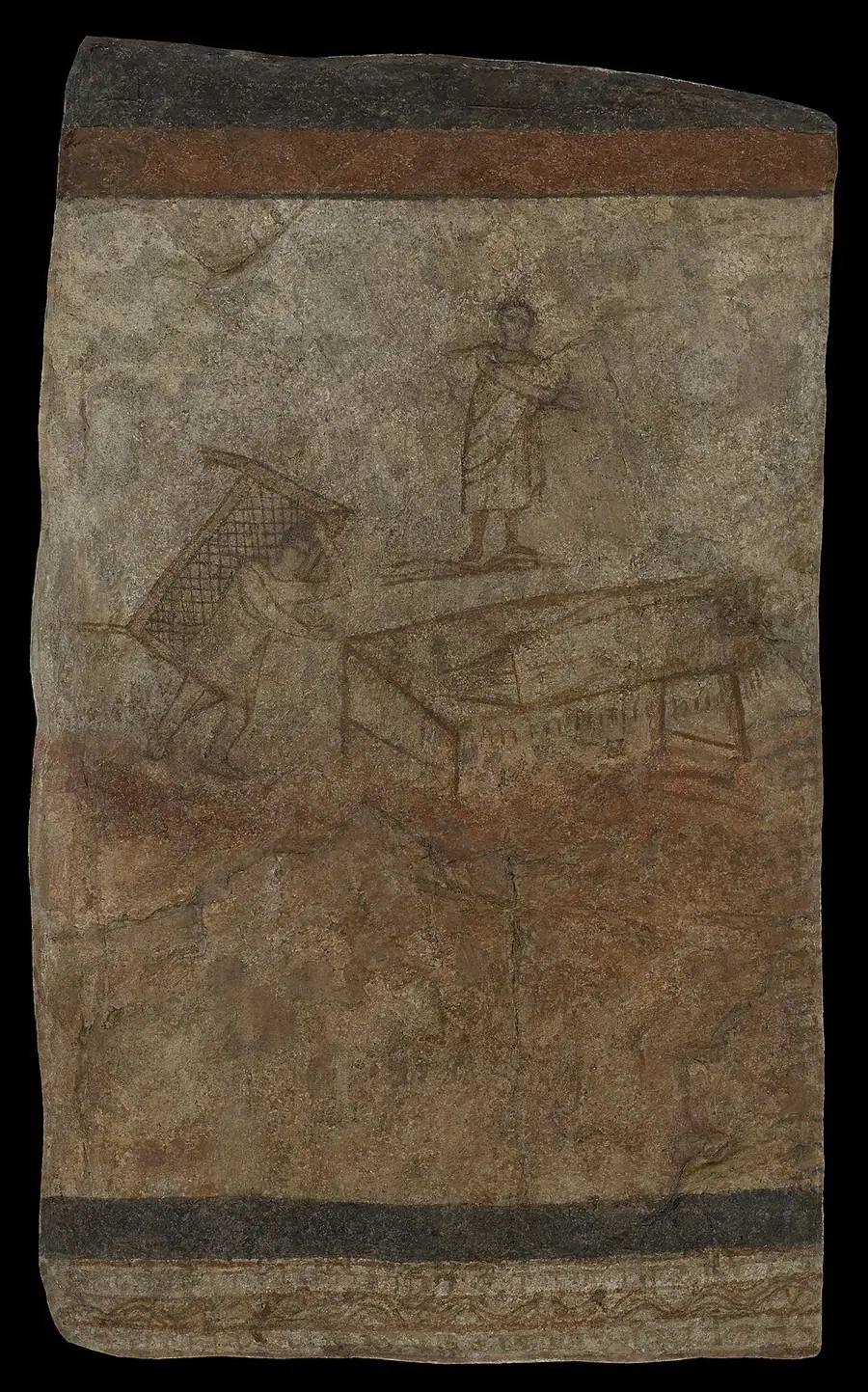
- His appearance. The New Testament never describes what Jesus looked like. The oldest images, from Dura-Europos and the catacombs of Rome, come two centuries later and show a young, beardless shepherd or healer; the bearded, long-haired Christ is later still. Consensus
Debates
Did Jesus exist?
| View | Main argument | Main proponents |
|---|---|---|
| Historical (the overwhelming majority) | Paul knew his brother and his chief disciple; independent sources (Paul, Mark, Q, John, Josephus, Tacitus); embarrassing details no inventor would add, such as baptism by John and crucifixion | Ehrman, Meier, Vermes, Sanders, Casey[3][2][91] |
| Mythicist | Jesus began as a heavenly being in early Christian belief and was later historicised; Paul’s Jesus lives in a celestial realm; outside sources are late or interpolated | Carrier, Price; earlier Bauer, Drews[85] |
Bart Ehrman, an agnostic critic of traditional belief, wrote Did Jesus Exist? (2012) specifically to answer the mythicists; Maurice Casey, a non-Christian specialist in Aramaic, did the same.[3][91] The mythicist case has almost no support among scholars of antiquity, Christian or not. Consensus
What kind of figure was he?
| View | Picture of Jesus | Main proponents |
|---|---|---|
| Apocalyptic prophet | Expected God to intervene soon, judge the world and restore Israel; the Twelve would rule its tribes | Schweitzer, Sanders, Allison, Ehrman, Fredriksen[92][31][88][93][32] |
| Wisdom teacher / social reformer | A subversive sage whose kingdom was a present way of life; the apocalyptic sayings were added by the church | The Jesus Seminar, Crossan, Borg[94][95] |
| Charismatic holy man | A Galilean Jewish healer and teacher like Ḥoni the Circle-Drawer and Ḥanina ben Dosa | Vermes[1] |
| Restoration prophet, reinterpreted | Spoke in apocalyptic language, but meant the end of Israel’s exile and the renewal of its story around himself, not the end of the world | N. T. Wright[96] |
The Jesus Seminar, a group of scholars who voted on the sayings with coloured beads in the 1980s and 1990s, concluded that only about 18 percent of the words attributed to Jesus in the four Gospels and Thomas went back to him and that he was not apocalyptic.[94] Its method and its results were widely criticised, and since the 1990s the apocalyptic view has regained majority status. Majority for the apocalyptic reading; Contested overall.
Did Jesus think he was the Messiah, or God?
In Mark, Jesus forbids those who recognise him to say so, a pattern William Wrede in 1901 called the “messianic secret” and attributed to Mark’s theology.[97][98] In the Synoptics his most frequent self-designation is “the Son of Man”, a phrase whose meaning (simply “a human being”, or the heavenly figure of Daniel 7:13) is itself debated.[99][100] In John, by contrast, he speaks openly of his divinity: “I and the Father are one” (10:30); “before Abraham was, I am” (8:58).[101][102]
Most critical scholars think the historical Jesus spoke mainly of God’s kingdom, accepted or implied a special role in it, probably as Messiah, and did not claim to be God; John’s sayings reflect the theology of the 90s.[80][79] Majority Others argue that his actions, such as forgiving sins and choosing twelve, imply an authority that his followers made explicit, not invented.[96][103] Contested How quickly his followers came to worship him is the subject of §3.
What happened at Easter?
| View | Explanation of the belief | Main proponents |
|---|---|---|
| Bodily resurrection | The empty tomb plus appearances is the only adequate historical explanation of a belief no Jew would otherwise have formed | Wright[104] |
| Visions | Grief and expectation produced real visionary experiences, first to Peter, then others; belief in the empty tomb followed | Lüdemann, Ehrman[80] |
| History cannot decide | The evidence for appearances is strong; the explanation depends on prior beliefs about God and nature | Allison[105] |
Contested. All three agree on the dated evidence: that the first followers sincerely believed they had seen Jesus alive after his death. (§0)
Further reading
Show further reading (10 works)
- E. P. Sanders, The Historical Figure of Jesus (Penguin, 1993): the best short account, by a leader of the field.
- John P. Meier, A Marginal Jew: Rethinking the Historical Jesus, several volumes (Doubleday / Yale, from 1991). Exhaustive and judicious.
- Paula Fredriksen, Jesus of Nazareth, King of the Jews (Knopf, 1999): Jesus, Pilate and Passover.
- Geza Vermes, Jesus the Jew (Collins, 1973): the Jewishness of Jesus, from a Jewish historian.
- Dale C. Allison Jr., Jesus of Nazareth: Millenarian Prophet (Fortress, 1998).
- John Dominic Crossan, The Historical Jesus: The Life of a Mediterranean Jewish Peasant (HarperCollins, 1991): the strongest non-apocalyptic portrait.
- N. T. Wright, Jesus and the Victory of God (Fortress, 1996) and The Resurrection of the Son of God (Fortress, 2003).
- Bart D. Ehrman, Did Jesus Exist? (HarperOne, 2012) and How Jesus Became God (HarperOne, 2014).
- Raymond E. Brown, The Birth of the Messiah (Doubleday, updated 1993) and The Death of the Messiah (Doubleday, 1994).
- Albert Schweitzer, The Quest of the Historical Jesus (1906; English 1910): the classic history of the question, and still the place to start.
References
- ^ a b Geza Vermes Jesus the Jew: A Historian's Reading of the Gospels. Collins, 1973. Jesus as a Galilean charismatic in the line of Ḥoni and Ḥanina ben Dosa.
- ^ a b c d John P. Meier A Marginal Jew: Rethinking the Historical Jesus, vol. 1: The Roots of the Problem and the Person. Doubleday, 1991. The outside sources, the criteria, and the 'unpapal conclave'.
- ^ a b c d Bart D. Ehrman Did Jesus Exist? The Historical Argument for Jesus of Nazareth. HarperOne, 2012. An agnostic scholar's answer to the mythicists.
- ^ Josephus, Antiquities 17.167 — Jewish Antiquities. c. 93 CE. Greek. An eclipse of the moon during Herod's last illness, the main evidence for dating his death to 4 BCE. read the text
- ^ Josephus, Antiquities 17.191 — Jewish Antiquities. c. 93 CE. Greek. Herod dies having reigned 34 years from Antigonus' death and 37 from his appointment by Rome. read the text
- ^ a b Matthew 2:1 — Gospel of Matthew (New Testament). c. 80–90 CE. Greek. Jesus is born in Bethlehem 'in the time of King Herod'. read the text
- ^ Josephus, Antiquities 18.36–38 — Jewish Antiquities. c. 93 CE. Greek. Herod Antipas founds Tiberias on the Sea of Galilee and settles it with a mixed population. read the text
- ^ a b c d Josephus, Antiquities 18.1–10 — Jewish Antiquities. c. 93 CE. Greek. Quirinius comes to Syria to assess property after Judea's annexation in 6 CE; Judas the Galilean leads resistance to the census. read the text
- ^ Josephus, Antiquities 18.35 — Jewish Antiquities. c. 93 CE. Greek. Valerius Gratus appoints 'Joseph, who was called Caiaphas' high priest. read the text
- ^ Josephus, Antiquities 18.95 — Jewish Antiquities. c. 93 CE. Greek. Vitellius removes Joseph Caiaphas from the high priesthood in 36/37 CE. read the text
- ^ Pilate Stone — Dedicatory inscription, Caesarea Maritima (Israel Museum). 26–36 CE. Latin. '[Pon]tius Pilatus, [prae]fectus Iuda[ea]e' dedicates a building in honour of Tiberius; the only inscription securely naming Pontius Pilate, and the source of his title. about
- ^ Josephus, Antiquities 18.55–62 — Jewish Antiquities. c. 93 CE. Greek. Pilate's prefecture: the standards brought into Jerusalem and the riot over Temple funds used for an aqueduct. read the text
- ^ Luke 3:1–2 — Gospel of Luke (New Testament). c. 80–90 CE. Greek. John begins preaching 'in the fifteenth year of the reign of Emperor Tiberius', when Pilate was governor and Annas and Caiaphas high priests. read the text
- ^ a b c d Mark 1:9–11 — Gospel of Mark (New Testament). c. 70 CE. Greek. Jesus comes from Nazareth and is baptised by John in the Jordan. read the text
- ^ John 2:13 — Gospel of John (New Testament). c. 90–110 CE. Greek. The first of three Passovers in John's account of Jesus' ministry, with the Temple incident placed at its start. read the text
- ^ John 6:4 — Gospel of John (New Testament). c. 90–110 CE. Greek. A second Passover in John's chronology of the ministry. read the text
- ^ John 11:55 — Gospel of John (New Testament). c. 90–110 CE. Greek. The third Passover of Jesus' ministry in John's chronology. read the text
- ^ a b c Josephus, Antiquities 18.116–119 — Jewish Antiquities. c. 93 CE. Greek. John 'surnamed the Baptist', a good man who urged righteousness and baptism, executed at Machaerus by Herod Antipas for fear of sedition. read the text
- ^ a b Mark 6:17–29 — Gospel of Mark (New Testament). c. 70 CE. Greek. Herod Antipas has John beheaded at the request of Herodias' daughter. read the text
- ^ Mark 15:42 — Gospel of Mark (New Testament). c. 70 CE. Greek. Jesus dies on the day of Preparation, 'the day before the sabbath'. read the text
- ^ a b John 19:14 — Gospel of John (New Testament). c. 90–110 CE. Greek. Jesus is condemned at noon on 'the day of Preparation for the Passover', a day earlier than in the Synoptic Gospels. read the text
- ^ Colin J. Humphreys and W. G. Waddington Dating the Crucifixion. Nature 306: 743–746, 1983. Astronomical calculation of the possible Passover Fridays, favouring 3 April 33 CE.
- ^ a b c d e Galatians 1:13–2:14 — Paul, Letter to the Galatians. c. 50–55 CE. Greek. Paul's own account: he persecuted the church, received a revelation, stayed with Cephas and met 'James the Lord's brother', and later confronted Peter at Antioch. read the text
- ^ a b c d e 1 Corinthians 15:3–8 — Paul, First Letter to the Corinthians. c. 54 CE. Greek. A creed Paul 'received': Christ died, was buried, was raised on the third day, and appeared to Cephas, the Twelve, five hundred, James, all the apostles and Paul. read the text
- ^ a b c d Josephus, Antiquities 20.200 — Jewish Antiquities. c. 93 CE. Greek. The high priest Ananus has 'the brother of Jesus who was called Christ, whose name was James' stoned in 62 CE; the passage is generally accepted as authentic. read the text
- ^ Jonathan L. Reed Archaeology and the Galilean Jesus: A Re-examination of the Evidence. Trinity Press International, 2000. Nazareth, Capernaum and Sepphoris in the archaeology.
- ^ a b Ken Dark Roman-Period and Byzantine Nazareth and its Hinterland. Routledge, 2020. The archaeology of first-century Nazareth, including the house under the Sisters of Nazareth convent.
- ^ Mark 1:21 — Gospel of Mark (New Testament). c. 70 CE. Greek. Jesus teaches in the synagogue at Capernaum. read the text
- ^ Matthew 11:21–23 — Gospel of Matthew (New Testament). c. 80–90 CE. Greek. Woes on the lakeside towns of Chorazin, Bethsaida and Capernaum (Q). read the text
- ^ Luke 13:31–33 — Gospel of Luke (New Testament). c. 80–90 CE. Greek. Warned that Herod Antipas wants to kill him, Jesus calls him 'that fox'. read the text
- ^ a b c d e E. P. Sanders Jesus and Judaism. Fortress Press, 1985. Starts from the Temple incident and places Jesus within Jewish restoration eschatology.
- ^ a b c Paula Fredriksen Jesus of Nazareth, King of the Jews: A Jewish Life and the Emergence of Christianity. Knopf, 1999. Jesus' execution read through Passover, Pilate and the Temple.
- ^ Caesarea inscription of the priestly courses — Hebrew inscription, Caesarea Maritima. 3rd–4th c. CE. Hebrew. Lists the 24 priestly courses and their towns of residence; the course of Happizzez is placed at Nazareth. about
- ^ Matthew 1:18–25 — Gospel of Matthew (New Testament). c. 80–90 CE. Greek. Mary is found with child from the Holy Spirit; Matthew cites Isaiah 7:14 in its Greek form. read the text
- ^ Luke 1:26–38 — Gospel of Luke (New Testament). c. 80–90 CE. Greek. Gabriel announces to Mary in Nazareth that she will conceive by the Holy Spirit. read the text
- ^ a b c Luke 2:1–5 — Gospel of Luke (New Testament). c. 80–90 CE. Greek. Augustus' decree of registration 'while Quirinius was governor of Syria' brings Joseph and Mary from Nazareth to Bethlehem. read the text
- ^ a b c Raymond E. Brown The Birth of the Messiah: A Commentary on the Infancy Narratives in Matthew and Luke. Doubleday, updated ed., 1993. The standard study of the birth stories, by a Catholic priest-scholar.
- ^ Micah 5:2 — Micah (Hebrew Bible). late 8th c. BCE and later. Hebrew. A ruler of Israel will come from Bethlehem Ephrathah (5:1 in Hebrew numbering). read the text
- ^ John 7:41–42 — Gospel of John (New Testament). c. 90–110 CE. Greek. Some in the crowd object: 'Surely the Messiah does not come from Galilee?… from Bethlehem, the village where David lived.' read the text
- ^ Isaiah 7:14 — Isaiah (Hebrew Bible). 8th–6th c. BCE. Hebrew. 'The young woman (ʿalmāh) is with child'; the Greek Septuagint renders it parthenos, the reading Matthew quotes for the virgin birth. read the text
- ^ a b Mark 6:3 — Gospel of Mark (New Testament). c. 70 CE. Greek. 'Is not this the carpenter, the son of Mary and brother of James and Joses and Judas and Simon, and are not his sisters here with us?' read the text
- ^ Matthew 13:55 — Gospel of Matthew (New Testament). c. 80–90 CE. Greek. Matthew's version of Mark 6:3: 'Is not this the carpenter's son?' read the text
- ^ Protevangelium of James 9 — Protevangelium (Infancy Gospel) of James. mid-2nd c. CE. Greek. Joseph, chosen to take Mary into his care, protests 'I have sons and am old', the source of the view that Jesus' brothers were Joseph's sons by an earlier marriage. read the text
- ^ Mark 3:21 — Gospel of Mark (New Testament). c. 70 CE. Greek. Jesus' family go out to restrain him, 'for people were saying, He has gone out of his mind'. read the text
- ^ Mark 3:31–35 — Gospel of Mark (New Testament). c. 70 CE. Greek. Jesus' mother and brothers wait outside; he names those who do God's will as his family. read the text
- ^ a b Mark 5:41 — Gospel of Mark (New Testament). c. 70 CE. Greek. Jesus raises a girl with the Aramaic words talitha koum. read the text
- ^ Mark 14:36 — Gospel of Mark (New Testament). c. 70 CE. Greek. Jesus prays in Gethsemane, addressing God in Aramaic as Abba. read the text
- ^ a b c Mark 15:34 — Gospel of Mark (New Testament). c. 70 CE. Greek. Jesus' cry in Aramaic, 'Eloi, Eloi, lema sabachthani?', the opening of Psalm 22. read the text
- ^ a b c Matthew 3:13–15 — Gospel of Matthew (New Testament). c. 80–90 CE. Greek. John protests that Jesus should baptise him; Jesus answers that it is proper 'to fulfil all righteousness'. read the text
- ^ Luke 3:19–22 — Gospel of Luke (New Testament). c. 80–90 CE. Greek. Luke reports John's imprisonment before narrating, in the passive, that Jesus 'had been baptised'. read the text
- ^ a b John P. Meier A Marginal Jew, vol. 2: Mentor, Message, and Miracles. Doubleday, 1994. John the Baptist, the kingdom of God and the miracle traditions.
- ^ a b Mark 1:15 — Gospel of Mark (New Testament). c. 70 CE. Greek. Jesus' first proclamation: 'The time is fulfilled, and the kingdom of God has come near.' read the text
- ^ a b Luke 11:20 — Gospel of Luke (New Testament). c. 80–90 CE. Greek. 'If it is by the finger of God that I cast out the demons, then the kingdom of God has come to you' (Q). read the text
- ^ a b Luke 6:20–36 — Gospel of Luke (New Testament). c. 80–90 CE. Greek. The Sermon on the Plain (Q): blessings on the poor and hungry, woes on the rich, love of enemies. read the text
- ^ Luke 7:33–34 — Gospel of Luke (New Testament). c. 80–90 CE. Greek. Critics call Jesus 'a glutton and a drunkard, a friend of tax collectors and sinners' (Q). read the text
- ^ Mark 10:2–12 — Gospel of Mark (New Testament). c. 70 CE. Greek. Jesus forbids divorce and remarriage, appealing to Genesis against Deuteronomy's permission. read the text
- ^ 1 Corinthians 7:10–11 — Paul, First Letter to the Corinthians. c. 54 CE. Greek. Paul cites a command 'not I but the Lord' forbidding divorce, an independent witness to a teaching of Jesus also in Mark. read the text
- ^ E. P. Sanders Judaism: Practice and Belief, 63 BCE–66 CE. SCM Press / Trinity Press International, 1992. Introduces 'common Judaism': what most Jews shared, centred on Temple, Torah and festivals.
- ^ a b Mark 3:22 — Gospel of Mark (New Testament). c. 70 CE. Greek. Scribes from Jerusalem say Jesus casts out demons by Beelzebul. read the text
- ^ a b Josephus, Antiquities 18.63–64 (Testimonium Flavianum) — Jewish Antiquities. c. 93 CE (received text later expanded). Greek. Jesus as 'a wise man', 'a doer of surprising deeds', condemned to the cross by Pilate; the received text's Christian phrases are generally thought to be interpolations. read the text
- ^ a b Mark 3:13–19 — Gospel of Mark (New Testament). c. 70 CE. Greek. Jesus appoints twelve, named, including Judas Iscariot 'who betrayed him'. read the text
- ^ a b Luke 8:1–3 — Gospel of Luke (New Testament). c. 80–90 CE. Greek. Women travel with Jesus and the Twelve and provide for them: Mary Magdalene, Joanna wife of Herod's steward Chuza, Susanna and many others. read the text
- ^ a b Mark 15:40–41 — Gospel of Mark (New Testament). c. 70 CE. Greek. Women who had followed Jesus in Galilee, including Mary Magdalene, watch the crucifixion. read the text
- ^ Mark 16:1–8 — Gospel of Mark (New Testament). c. 70 CE. Greek. Women find the tomb empty; a young man tells them Jesus has been raised. read the text
- ^ a b Mark 11:15–18 — Gospel of Mark (New Testament). c. 70 CE. Greek. Jesus overturns the tables of the money-changers in the Temple, quoting Isaiah 56 and Jeremiah 7. read the text
- ^ 1 Corinthians 11:23–26 — Paul, First Letter to the Corinthians. c. 54 CE. Greek. Paul hands on the words over the bread and cup 'on the night when he was betrayed', the oldest account of the Last Supper. read the text
- ^ Mark 14:12–25 — Gospel of Mark (New Testament). c. 70 CE. Greek. The Last Supper presented as a Passover meal. read the text
- ^ Mark 14:53–65 — Gospel of Mark (New Testament). c. 70 CE. Greek. A night hearing before the high priest and council, at which Jesus is condemned for blasphemy. read the text
- ^ a b Raymond E. Brown The Death of the Messiah: From Gethsemane to the Grave. Doubleday, 1994. Two volumes on the passion narratives, verse by verse.
- ^ a b c Mark 15:26 — Gospel of Mark (New Testament). c. 70 CE. Greek. The charge posted on the cross: 'The King of the Jews.' read the text
- ^ a b c Tacitus, Annals 15.44 — Annals. c. 116 CE. Latin. Explaining the name of the Christians blamed for the fire of Rome, Tacitus says Christus was executed in the reign of Tiberius by the procurator Pontius Pilate.
- ^ Matthew 27:25 — Gospel of Matthew (New Testament). c. 80–90 CE. Greek. Only in Matthew: the crowd answers Pilate, 'His blood be on us and on our children!' read the text
- ^ Nostra Aetate 4 — Second Vatican Council, Declaration on the Relation of the Church to Non-Christian Religions. 28 October 1965. Latin. What happened in Christ's passion 'cannot be charged against all the Jews, without distinction, then alive, nor against the Jews of today'. read the text
- ^ Mark 15:42–47 — Gospel of Mark (New Testament). c. 70 CE. Greek. Joseph of Arimathea asks Pilate for the body and lays it in a rock-cut tomb. read the text
- ^ John Dominic Crossan Jesus: A Revolutionary Biography. HarperCollins, 1994. Includes the argument that Jesus' body was probably not placed in a tomb.
- ^ Heel bone of Yehoḥanan — Tomb at Giv'at ha-Mivtar, Jerusalem. 1st c. CE. A right heel bone pierced by an iron nail, from a crucified man buried in a family tomb; found in 1968. about
- ^ Josephus, Jewish War 4.317 — Jewish War. c. 75–79 CE. Greek. Jews take down even the crucified and bury them before sunset. read the text
- ^ Jodi Magness Ossuaries and the Burials of Jesus and James. Journal of Biblical Literature 124: 121–154, 2005. Jewish burial practice and the Gospel burial stories.
- ^ a b James D. G. Dunn Jesus Remembered. Eerdmans, 2003. Jesus as remembered by his first followers, with a full treatment of the resurrection traditions.
- ^ a b c Bart D. Ehrman How Jesus Became God: The Exaltation of a Jewish Preacher from Galilee. HarperOne, 2014. A developmental account of early Christology and the resurrection visions.
- ^ Mark 16:8 — Gospel of Mark (New Testament). c. 70 CE. Greek. The earliest manuscripts of Mark end here: the women flee the tomb and 'said nothing to anyone, for they were afraid'. read the text
- ^ Matthew 28:16–20 — Gospel of Matthew (New Testament). c. 80–90 CE. Greek. The risen Jesus meets the eleven on a mountain in Galilee and sends them to baptise 'in the name of the Father and of the Son and of the Holy Spirit'. read the text
- ^ Luke 24:33–51 — Gospel of Luke (New Testament). c. 80–90 CE. Greek. The risen Jesus appears to the eleven in Jerusalem and is carried up into heaven near Bethany. read the text
- ^ a b Mark 9:1 — Gospel of Mark (New Testament). c. 70 CE. Greek. 'There are some standing here who will not taste death until they see that the kingdom of God has come with power.' read the text
- ^ a b Richard Carrier On the Historicity of Jesus: Why We Might Have Reason for Doubt. Sheffield Phoenix Press, 2014. The fullest academic statement of the case that Jesus did not exist; rejected by most specialists.
- ^ Mark 13:30 — Gospel of Mark (New Testament). c. 70 CE. Greek. 'This generation will not pass away until all these things have taken place.' read the text
- ^ 1 Thessalonians 4:15–17 — Paul, First Letter to the Thessalonians. c. 50 CE. Greek. Paul expects that 'we who are alive, who are left until the coming of the Lord' will meet him in the air. read the text
- ^ a b Dale C. Allison Jr. Jesus of Nazareth: Millenarian Prophet. Fortress Press, 1998. The case that Jesus expected the end of the age, built from many sayings rather than a few.
- ^ Luke 23:46 — Gospel of Luke (New Testament). c. 80–90 CE. Greek. Jesus' last words in Luke: 'Father, into your hands I commend my spirit.' read the text
- ^ John 19:30 — Gospel of John (New Testament). c. 90–110 CE. Greek. Jesus' last words in John: 'It is finished.' read the text
- ^ a b Maurice Casey Jesus: Evidence and Argument or Mythicist Myths?. Bloomsbury T&T Clark, 2014. A non-Christian Aramaic specialist answers the mythicists.
- ^ Albert Schweitzer Von Reimarus zu Wrede (The Quest of the Historical Jesus). Mohr Siebeck, 1906. The history of the quest, ending in an apocalyptic Jesus who expected the end.
- ^ Bart D. Ehrman Jesus: Apocalyptic Prophet of the New Millennium. Oxford University Press, 1999. A popular statement of the apocalyptic Jesus.
- ^ a b Robert W. Funk, Roy W. Hoover and the Jesus Seminar The Five Gospels: The Search for the Authentic Words of Jesus. Macmillan, 1993. The Jesus Seminar's colour-coded verdicts on every saying.
- ^ John Dominic Crossan The Historical Jesus: The Life of a Mediterranean Jewish Peasant. HarperCollins, 1991. The most influential non-apocalyptic portrait of Jesus.
- ^ a b N. T. Wright Jesus and the Victory of God. Fortress Press, 1996. Jesus as a prophet announcing the end of Israel's exile.
- ^ William Wrede Das Messiasgeheimnis in den Evangelien (The Messianic Secret). Vandenhoeck & Ruprecht, 1901. Argues that the secrecy motif in Mark is the evangelist's theology.
- ^ Mark 8:27–30 — Gospel of Mark (New Testament). c. 70 CE. Greek. Peter declares Jesus the Messiah; Jesus orders the disciples to tell no one. read the text
- ^ Daniel 7:13–14 — Daniel (Hebrew Bible). c. 165 BCE. Hebrew and Aramaic. 'One like a son of man' comes with the clouds of heaven and receives everlasting dominion, the source of the Gospels' 'Son of Man'. read the text
- ^ Maurice Casey The Solution to the 'Son of Man' Problem. T&T Clark, 2007. Reads the Aramaic idiom behind 'the Son of Man' as a general statement that includes the speaker.
- ^ John 10:30 — Gospel of John (New Testament). c. 90–110 CE. Greek. 'The Father and I are one.' read the text
- ^ John 8:58 — Gospel of John (New Testament). c. 90–110 CE. Greek. 'Very truly, I tell you, before Abraham was, I am.' read the text
- ^ Richard Bauckham Jesus and the God of Israel. Eerdmans, 2008. Argues that the earliest Christians included Jesus within the identity of Israel's one God.
- ^ N. T. Wright The Resurrection of the Son of God. Fortress Press, 2003. The fullest historical case for a bodily resurrection.
- ^ Dale C. Allison Jr. The Resurrection of Jesus: Apologetics, Polemics, History. T&T Clark, 2021. The most thorough recent examination of the resurrection evidence, concluding that history cannot settle the question.