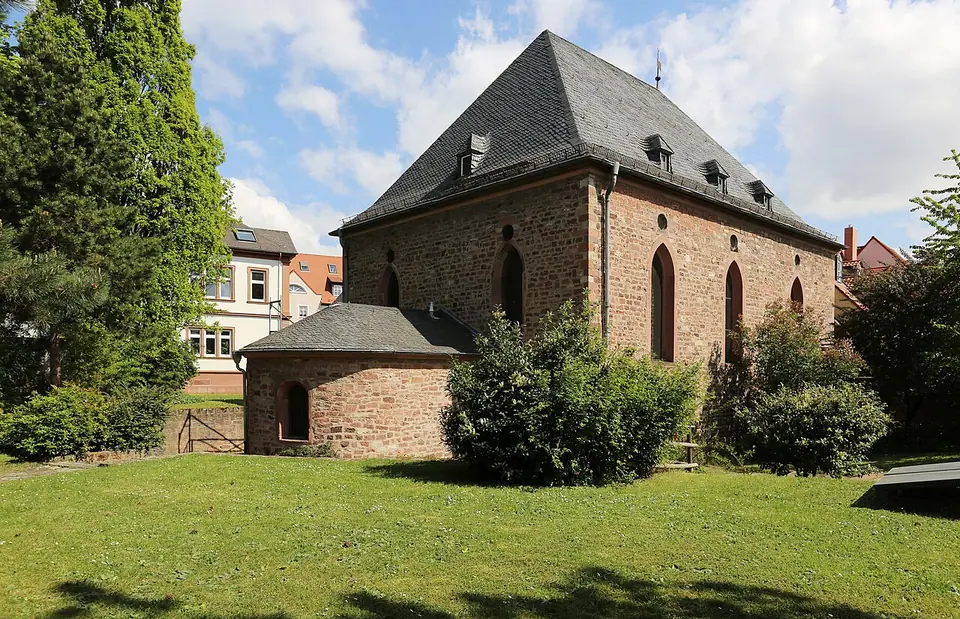
Medieval European Judaism in one paragraph
Between about 1000 and 1650 the Jews of Latin Europe built two distinct cultures. In the Rhineland and northern France, called Ashkenaz in Hebrew, small merchant communities produced Rashi’s commentaries and the Talmud study of the Tosafists, and lived through the Crusade massacres, the blood libel and repeated expulsions. In Iberia, called Sepharad, Jews under Christian kings inherited the philosophy and poetry of the Islamic-era golden age (§8), produced the Zohar, and were forcibly converted or expelled in the 1490s. The exiles carried their traditions to the Ottoman Empire, Italy and North Africa, where sixteenth-century Safed gave Judaism its standard law code and a new kabbalah. Ashkenazi Jews, meanwhile, moved east, and by 1650 Poland–Lithuania held one of the largest Jewish populations in the world. Consensus
Two things changed for good in these centuries. The relationship between Jews and their Christian neighbours took a harsher form, with new accusations and new kinds of exclusion, though historians argue about how far that defines the period. And Jewish religion gained a mystical layer, the kabbalah, which by the seventeenth century had entered prayer, custom and popular belief across the Jewish world. Majority
Timeline of Ashkenaz and Sepharad and its evidence
| Date | Event | Confidence |
|---|---|---|
| c. 1000 | Gershom ben Judah of Mainz teaches in the Rhineland; a ban on polygamy is later attributed to him[1][2] | Consensus (Gershom); Contested (the ban’s date) |
| 1040–1105 | Rashi of Troyes writes commentaries on the Bible and the Babylonian Talmud[3] | Consensus |
| May 1096 | Crusader bands massacre the Jews of Speyer, Worms, Mainz and other Rhineland towns[4][5] | Consensus |
| 1144 | A boy, William, found dead at Norwich; c. 1150 Thomas of Monmouth accuses the Jews[6][7] | Consensus |
| c. 1150–1250 | The Tosafists of northern France and Germany; the German Pietists and Sefer Ḥasidim (Judah he-Ḥasid, d. 1217)[8][9] | Consensus |
| c. 1180–1230 | The first kabbalistic texts: Sefer ha-Bahir; Isaac the Blind in Provence[10] | Majority |
| 1215 | The Fourth Lateran Council orders Jews and Muslims to wear distinguishing dress[11] | Consensus |
| 1240–1242 | The Talmud is put on trial in Paris and about 24 cartloads of books are burned[12] | Consensus |
| 1264 | The Statute of Kalisz grants Jews protection in Greater Poland[13] | Consensus |
| 1272 | The Worms Maḥzor contains the oldest dated sentence in Yiddish[14] | Consensus |
| c. 1280–1290s | The Zohar begins to circulate in Castile, copied by Moses de León[10][15] | Majority |
| 1290 | Edward I expels the Jews of England, perhaps 2,000–3,000 people[16] | Consensus |
| 1306; 1394 | France expels its Jews; they are readmitted in 1315 and expelled again in 1394[17][12] | Consensus |
| 1348–1351 | Jews are accused of poisoning wells during the Black Death; about 2,000 burned at Strasbourg on 14 February 1349[18] | Consensus |
| 1391 | Riots against the Jews spread from Seville through Castile and Aragon; mass conversions follow[19] | Consensus |
| 1475 | Rashi’s Torah commentary, printed at Reggio di Calabria, is the first dated printed Hebrew book[20] | Consensus |
| 1478 | The Spanish Inquisition is established to investigate conversos[21] | Consensus |
| 31 March 1492 | The Alhambra Decree orders Jews to leave Castile and Aragon by the end of July[22][23] | Consensus |
| 1496–1497 | Portugal decrees expulsion, then forcibly baptises most of its Jews[24] | Consensus |
| 1516 | Venice confines its Jews to the Ghetto | Consensus |
| 1520–1523 | Daniel Bomberg prints the first complete Babylonian Talmud in Venice, fixing its pagination[25] | Consensus |
| 1558–1560 | The Zohar is printed at Mantua and Cremona[26] | Consensus |
| 1565; 1571 | Joseph Karo’s Shulḥan ʿArukh (Venice); Moses Isserles’s glosses (Kraków)[27] | Consensus |
| 1570–1572 | Isaac Luria teaches in Safed[28] | Consensus |
| 1580 | First recorded session of the Council of Four Lands, the Jewish self-government of Poland[29] | Consensus |
Two Jewish worlds: what “Ashkenaz” and “Sepharad” mean
Both names come from the Bible. Ashkenaz is a descendant of Japheth in Genesis 10:3, and medieval Jews used the name for Germany; Sepharad is a place of exile in Obadiah 1:20, which they applied to Spain.[30][31] By the eleventh century they were the names of two cultural regions, each with its own scholars, customs and liturgy. Consensus
The two worlds started from different places. The Jews of Sepharad had lived for three centuries under Muslim rule, wrote in Arabic as well as Hebrew, and shared in the philosophy, science and poetry of al-Andalus (§8). As the Christian kingdoms of the north conquered the peninsula, most of those communities came under Christian kings, keeping their courtly culture and their role as royal administrators, physicians and tax-farmers. The Jews of Ashkenaz descended from merchants who settled in the Rhineland and northern France from about the ninth and tenth centuries, invited by bishops and counts. They were fewer, lived in small, tightly organised communities, and wrote almost entirely in Hebrew about law, liturgy and the Bible. Majority
The differences that resulted are still visible:
| Ashkenaz | Sepharad | |
|---|---|---|
| Everyday language | Yiddish, from medieval German with Hebrew and later Slavic elements | Arabic, then Castilian and Judeo-Spanish (Ladino) |
| Intellectual style | Talmud commentary and dialectic; little philosophy | Philosophy, grammar, poetry and science alongside law |
| Legal authorities | Rashi, the Tosafists; later Isserles | Alfasi, Maimonides; later Karo |
| Marriage | Monogamy enforced by communal ban | Polygamy allowed in principle, rare in practice |
| Response to forced conversion | Martyrdom celebrated as sanctifying God’s name | Large numbers converted; many conversos lived between two faiths |
| Mysticism | The German Pietists (Ḥasidei Ashkenaz) | The kabbalah of Provence, Gerona and Castile |
The table simplifies. There were Provençal and Italian communities that belonged to neither, and scholars and books moved between the two worlds throughout the period. Majority
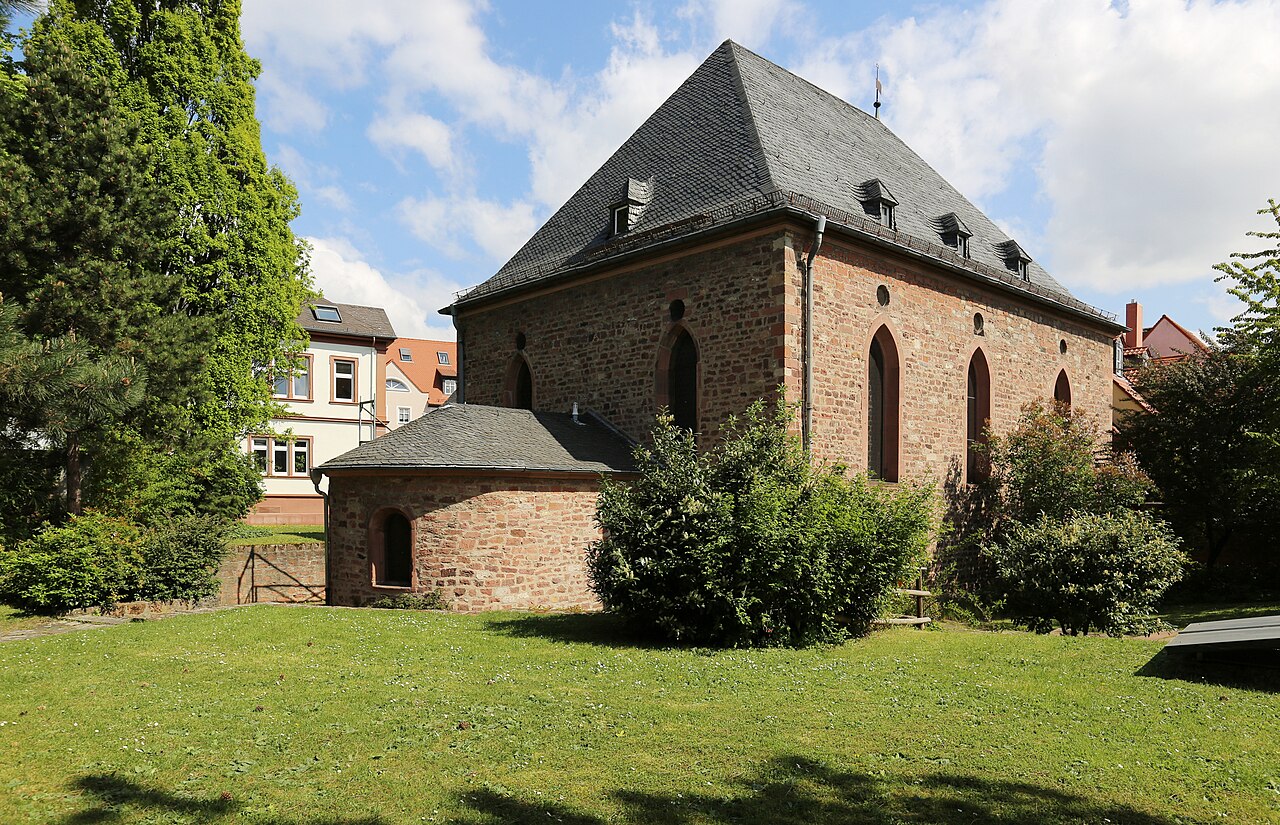
Rashi and the Tosafists: the Talmud becomes a European book
Rabbi Shlomo Yitzḥaki, known by his initials as Rashi, was born in Troyes in 1040, studied at the academies of Mainz and Worms, and returned home to teach. Tradition says he supported himself as a winegrower; his responsa mention the local wine trade. He wrote two running commentaries: one on almost the whole Hebrew Bible and one on most of the Babylonian Talmud.[32] Consensus
Rashi’s method was to explain the plain sense, pešaṭ, briefly and in order, adding a rabbinic interpretation, derāš, when the plain sense needed one. He glossed hard words in Old French, written in Hebrew letters, and those glosses are now a source for the history of the French language. His Talmud commentary made the Babylonian Talmud readable without a teacher at one’s side, and that changed who could study it.[32] Consensus
His grandsons, Samuel ben Meir (Rashbam) and Jacob ben Meir (Rabbenu Tam), and their students over the next two centuries are called the Tosafists, from tosafot, “additions”. They compared passages across the whole Talmud, found contradictions, and resolved them with fine distinctions, creating the dialectical method of Talmud study that Ashkenazi yeshivas still use.[8] In standard editions of the Talmud, Rashi’s commentary runs on the inner margin of each page and the Tosafot on the outer one, a layout fixed by Daniel Bomberg’s Venice edition of 1520–23.[25] Consensus
The German Pietists, Ḥasidei Ashkenaz, were a smaller movement of the late twelfth and early thirteenth centuries, led by the Kalonymide family of Speyer, Worms and Regensburg. Their Sefer Ḥasidim, attributed to Judah he-Ḥasid of Regensburg (d. 1217), demanded extreme piety, penance and attention to the hidden will of God beyond the letter of the law. Scholars debate how far it reflects Christian penitential practice of the time.[9] Majority on the movement; Contested on Christian influence.
The ban on polygamy
Ashkenazi tradition credits Rabbenu Gershom of Mainz (c. 960–1028 or 1040) with two decrees enforced by excommunication: a ban on marrying more than one wife, and a ban on divorcing a wife without her consent. Biblical and Talmudic law allowed polygamy; Ashkenazi Jews have been monogamous since the Middle Ages, while some Jews in Islamic lands practised polygamy into the twentieth century. The earliest sources that name Gershom as the author date from well after his death. Ze’ev Falk treated the ban as one step in a long, gradual move towards monogamy,[2] and Avraham Grossman argues that it formalised what was already the usual practice of the Jews of Christian Europe rather than introducing it.[1] Majority that monogamy came from the Christian environment; Contested on who issued the ban and when.
1096: the Crusade massacres
When Pope Urban II preached the First Crusade in November 1095, he said nothing about Jews. But bands of crusaders heading east through the Rhineland in the spring of 1096, above all the army of Count Emicho of Flonheim, attacked the Jewish communities on their route. In Speyer on 3 May the bishop protected most of the Jews; eleven were killed and a woman took her own life. In Worms, about 18 May, at least 800 died. In Mainz, on 27 May, the archbishop’s protection failed and more than a thousand were killed. Communities at Cologne, Trier, Metz, Regensburg and Prague suffered as well.[5] Consensus
Three Hebrew chronicles describe the events: the chronicle of Solomon bar Samson, the shorter one of Eliezer bar Nathan, and the so-called Mainz Anonymous.[4] Their most disturbing feature is that they celebrate Jews who, faced with forced baptism, killed their own children and then themselves. The chroniclers present this as qiddûš ha-šēm, the sanctification of God’s name, and compare the victims to Abraham binding Isaac. Consensus on what the chronicles report.
The massacres did not end Jewish life in the Rhineland; the communities were rebuilt within years. But they became central to Ashkenazi memory. Lists of the dead, Memorbücher, were read in synagogues, and the memorial prayer Av ha-Raḥamim, recited in Ashkenazi synagogues to this day (weekly in the Eastern European rite), asks God to remember “the holy communities who gave their lives for the sanctification of the Name”.[33] Majority
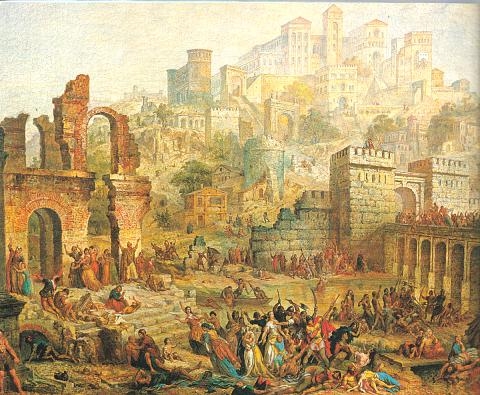
The blood libel and the new hostility
From the twelfth century a set of accusations against Jews appears in Latin Europe that had no real precedent. Consensus
- Ritual murder. In 1144 a boy named William was found dead in a wood outside Norwich. Some years later a monk, Thomas of Monmouth, wrote The Life and Miracles of St William of Norwich (c. 1150), claiming that the city’s Jews had tortured and killed him in mockery of Christ’s crucifixion.[6] It is the first recorded case of the charge.
- Blood libel proper. The claim that Jews used Christian blood in their rituals appears at Fulda in 1235, when thirty-four Jews were killed. Popes, starting with Innocent IV in 1247, and Emperor Frederick II condemned the charge, without stopping it.[34][35]
- Host desecration. From the late thirteenth century, after the doctrine of transubstantiation was defined in 1215, Jews were accused of stealing and torturing the consecrated wafer. The Rintfleisch massacres in Franconia in 1298 followed such an accusation.[36]
- Well poisoning. During the Black Death of 1348–51 Jews were accused of spreading the plague. Pope Clement VI pointed out that Jews were dying of it too.[37] Hundreds of communities in the German lands, Switzerland and France were attacked; at Strasbourg on 14 February 1349, before the plague had arrived, about 2,000 Jews were burned.[18] Consensus
Church law also hardened. Canon 68 of the Fourth Lateran Council (1215) ordered that Jews and Muslims be distinguished from Christians “by the quality of their garment”, which led over the next century to the yellow badge in France and the pointed hat in Germany.[11] In 1240 the convert Nicholas Donin brought charges against the Talmud before the French court; after a disputation with Rabbi Yeḥiel of Paris, about twenty-four cartloads of Talmud manuscripts were burned in Paris in 1242.[12] Consensus
Why the change? Historians point to several causes at once: the crusading movement’s religious mobilisation; the Church’s drive for uniformity, which also targeted heretics; Jews’ growing dependence on moneylending as Christian guilds closed other trades to them, which made them both useful to kings and resented by debtors; and new forms of devotion centred on the suffering body of Christ.[12][38] Majority
Expulsions: England, France and the end of Jewish Western Europe
In 1290 Edward I of England, having taxed the Jewish community into poverty, ordered all Jews to leave the country by 1 November; perhaps 2,000–3,000 people left. Philip IV of France expelled the Jews of his kingdom in 1306 and seized their property; his successor Louis X readmitted them in 1315, and Charles VI expelled them again in 1394. Expulsions from cities and territories of the Holy Roman Empire followed through the fifteenth century. By 1500 Jews had been expelled from most of Western Europe, outside parts of Italy and the German lands.[16][17][12] Consensus
Royal finance explains the timing of many expulsions: kings who had taxed Jewish moneylenders heavily found that expulsion let them seize the remaining debts and property and win favour with indebted subjects. Religious pressure, from friars and from rulers who saw a Christian kingdom as one without Jews, explains why expulsion seemed thinkable at all.[17][12] Majority
Sepharad: from 1391 to 1492
Under the Christian kings of Castile and Aragon, Jews remained prominent for most of the thirteenth and fourteenth centuries. Jewish courtiers served as royal treasurers and physicians, and Jewish scholars took part in Alfonso X’s translations. Public disputations were staged to win converts: at Barcelona in 1263 Nahmanides debated the convert Pablo Christiani before James I of Aragon, and at Tortosa in 1413–14 Jewish leaders were made to defend their faith for more than a year.[39] Consensus
In June 1391, riots incited by the archdeacon of Écija, Ferrand Martínez, broke out in Seville and spread across Castile and Aragon. Thousands were killed and many more were baptised under threat. Further conversions followed in the early fifteenth century. By the 1470s Spain had a large population of conversos, or New Christians, many in high positions, alongside a smaller Jewish community.[19] Consensus
The conversos became the centre of the problem. Old Christians accused them of secretly practising Judaism and resented their success; statutes of “purity of blood”, beginning at Toledo in 1449, barred people of Jewish descent from offices. In 1478 Ferdinand and Isabella obtained papal permission for a new Inquisition under royal control, whose first auto-da-fé was held in Seville in 1481.[21] Consensus
On 31 March 1492, three months after the conquest of Granada, the monarchs signed the edict of expulsion. The Castilian text’s reason was not Jewish usury or ritual murder but the converts (the Aragonese version adds usury): the Jews, it said, always sought “by every way and means they can to subvert and draw away faithful Christians from our holy Catholic faith”, and only expelling them would end it.[22] Jews had until the end of July to convert or leave. Estimates of how many left vary widely: most recent ones fall between about 40,000 and 100,000, while older ones ran to 150,000 or more. Many others converted to stay.[23] Contested on numbers.
Most exiles went first to Portugal, where in 1496 King Manuel I, as a condition of marrying a Spanish princess, decreed their expulsion, then in 1497 had most of them forcibly baptised instead of letting them leave. Others went to North Africa, Italy and above all the Ottoman Empire, whose sultan Bayezid II welcomed them. Within a generation Salonica (Thessaloniki) had a Jewish majority, and Judeo-Spanish was spoken from Sarajevo to Izmir.[24][40] Consensus
Kabbalah: a new mystical layer
Jewish mysticism is older than the Middle Ages; late antique texts describe ascents to God’s heavenly throne. But the system called kabbalah, “received tradition”, emerges in Provence and Catalonia in the late twelfth and early thirteenth centuries. Its central idea is the doctrine of the ten sefirot: emanations or aspects of God through which the hidden, infinite God, ʾEin Sôf (“without end”), becomes manifest and governs the world. The commandments, performed with the right intention, affect the relations among the sefirot and so the state of the world. Consensus
The earliest text is Sefer ha-Bahir, a short, enigmatic collection that appeared in Provence around 1180–1230. Isaac the Blind (c. 1160–1235) taught kabbalah in Provence, and his students brought it to Gerona, where Nahmanides wove kabbalistic hints into his Torah commentary. Gershom Scholem’s history of the movement, Major Trends in Jewish Mysticism (1941), founded the modern study of the subject.[10] Moshe Idel has since argued that Scholem underplayed older Jewish roots and ecstatic, experiential forms of kabbalah, such as that of Abraham Abulafia.[41] Majority on dates; Contested on origins.
The Zohar
The Zohar (“Radiance”) is the classic text of kabbalah: a sprawling commentary on the Torah, written in an artificial Aramaic, in which the second-century sage Shimon bar Yoḥai and his companions wander through Galilee discussing the secrets of Scripture. It presents itself as ancient, and many Jews have regarded it as such; in traditional circles it is treated as a sacred text alongside the Talmud. Consensus on what it claims.
Manuscripts of parts of the Zohar began to circulate in Castile in the 1280s and 1290s, copied out by Moses de León (c. 1240–1305). Gershom Scholem, who at first set out to defend its antiquity, concluded that de León was its author: its Aramaic contains grammatical errors and words taken from medieval Spanish and Arabic, its geography of Galilee is imaginary, and its ideas depend on thirteenth-century kabbalah.[10] A testimony preserved in Abraham Zacuto’s Sefer Yuḥasin (1504) reports that the kabbalist Isaac of Acre, who came to Spain in 1305, heard that de León’s widow and daughter had said he wrote the book entirely by himself; Scholem, who accepted de León’s authorship on other grounds, treated this report as second- or third-hand.[42][10] Majority
Later scholarship has complicated Scholem’s single author. Yehuda Liebes argued that the Zohar was the work of a circle of Castilian kabbalists that included de León, mirroring the fellowship it describes.[15] Daniel Abrams has shown that the Zohar circulated for centuries as separate units in different combinations, and argues that it became a single “book” only when sixteenth-century editors and the printers of Mantua and Cremona (1558–60) made it one.[26] Majority on a thirteenth-century Castilian origin; Contested on single or collective authorship.
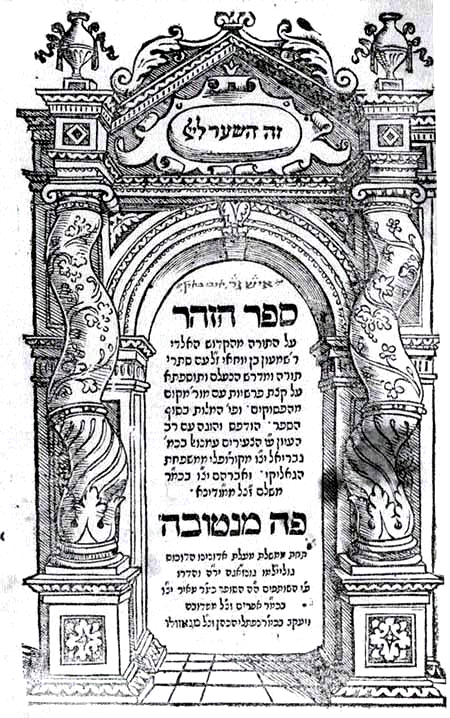
Safed: law and mysticism after the expulsion
In the sixteenth century the small Galilean town of Safed, then in the Ottoman Empire, became the centre of Jewish learning, with many exiles from Spain and Portugal and a textile trade to support them. Two of its achievements shaped all later Judaism. Consensus
The code. Joseph Karo (1488–1575), born in Toledo or Portugal around the time of the expulsion, spent decades on a commentary on the fourteenth-century code of Jacob ben Asher, then condensed his conclusions into the Shulḥan ʿArukh, “the set table”, printed in Venice in 1565. It mostly follows the majority of three earlier authorities (Alfasi, Maimonides and Asher ben Yeḥiel), which in practice favoured Sephardic rulings. In Kraków, Moses Isserles (c. 1530–1572) added glosses giving Ashkenazi custom where it differed, the Mappah or “tablecloth” for Karo’s table, first printed in 1571. Printed together, the two became the common reference of Jewish law, which they still are.[27] Consensus
The new kabbalah. Isaac Luria (1534–1572), known as the Ari, taught in Safed for only about two years before he died in an epidemic. His teachings, written down by his student Ḥayyim Vital, retell creation as a cosmic drama: God withdraws to make room for the world (ṣimṣûm), the vessels meant to hold the divine light shatter (šĕvîrat ha-kēlîm), and sparks of holiness are scattered and trapped in matter. Human beings, above all Jews performing the commandments with mystical intention, repair the world (tiqqûn) by raising the sparks; when the repair is complete, the Messiah will come.[28] Scholem argued that Lurianic kabbalah answered the trauma of the expulsion by giving exile a cosmic meaning; Idel and others reply that its ideas grew mainly from earlier kabbalah and Safed’s own devotional life.[10][41] Contested
Safed also changed the liturgy. Kabbalists there welcomed the Sabbath on Friday evening in the fields as a bride and a queen, and the hymn Lĕkhāh Dôdî, composed by Solomon Alkabetz in the mid-sixteenth century, became part of the Friday-evening service everywhere.[43] Customs such as the all-night study vigil of Shavuot, which Karo and Alkabetz had kept in the Ottoman Balkans in the 1530s before settling in Safed, and the tiqqûn ḥăṣôt, a midnight lament for the Temple, spread from Safed through printed prayer books. Consensus
Printing, ghettos and the move east
Printing turned medieval Judaism into a shared textual culture. Hebrew printing began in Italy around 1469–75; the first dated Hebrew book was Rashi’s Torah commentary, printed at Reggio di Calabria in February 1475, in a typeface based on a Sephardic semi-cursive script that is still called “Rashi script”.[20] Daniel Bomberg, a Christian printer from Antwerp working in Venice, produced the Rabbinic Bible (1517–18) and the first complete Babylonian Talmud (1520–23), whose page numbers every later edition follows.[25] Standardised printed books made the same texts, commentaries and codes available in Amsterdam, Salonica and Kraków.[44] Consensus
Italy, where Jews were tolerated but increasingly controlled, gave Europe a new word. In 1516 the Venetian Senate confined the city’s Jews to an island in the Cannaregio district named after a foundry, the ghetto. After Pope Paul IV’s bull Cum nimis absurdum (1555) established one in Rome, ghettos spread across Catholic Italy.[45] The Talmud was burned in Rome in 1553, and Hebrew books were censored thereafter. Consensus
Ashkenazi Jews, pushed out of the German lands, moved east. In 1264 Bolesław the Pious of Greater Poland issued the Statute of Kalisz, a charter that protected Jews’ persons, property, synagogues and cemeteries, gave them their own courts, and, citing papal rulings, forbade accusing them of using Christian blood; Casimir the Great confirmed it for the whole kingdom in 1334.[13] Polish–Lithuanian nobles employed Jews as merchants, lessees of mills and taverns, and managers of estates. The Jewish population of Poland–Lithuania grew from perhaps 10,000 around 1500 to something like 150,000–200,000 by 1650; one recent estimate puts it at about 185,000 on the eve of the Cossack uprising of 1648, and older estimates ran higher.[46][29] From 1580 the Council of Four Lands, a central Jewish parliament, met at the fairs of Lublin and Jarosław to apportion taxes and regulate communal life. Majority on population estimates; Consensus on the rest.
These Jews spoke Yiddish, the German-based Jewish language whose oldest dated sentence is a rhyming blessing written in 1272 in a prayer book from Worms.[14][47] Consensus
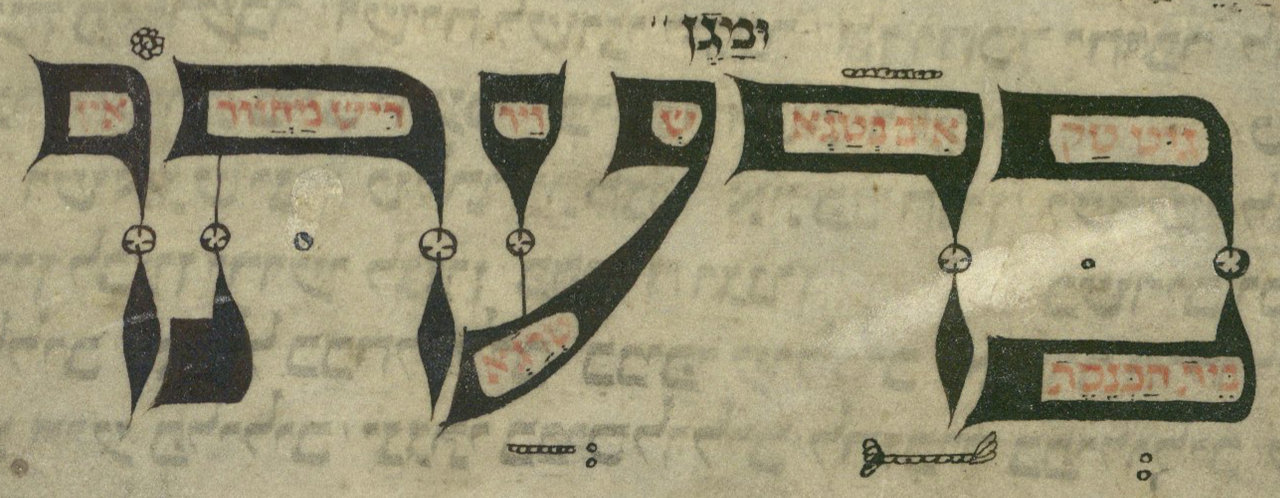
The evidence ledger for Ashkenaz and Sepharad
| Question | What the evidence supports | Key evidence | Confidence |
|---|---|---|---|
| The 1096 massacres | Thousands killed in the Rhineland communities; some chose death over baptism | Hebrew chronicles; Latin chroniclers[4][5] | Consensus |
| Origin of the ritual-murder charge | Norwich, c. 1150, in a monk’s hagiography; not an older folk belief | Thomas of Monmouth[6][38][7] | Majority |
| Church policy | Distinctive dress from 1215; the Talmud burned 1242 | Lateran IV canon 68; the Paris trial[11][12] | Consensus |
| The 1492 expulsion | Justified by converso “Judaising”; four months’ notice | The Alhambra Decree[22] | Consensus |
| Numbers expelled from Spain | Tens of thousands, not the hundreds of thousands once claimed | Census and tax records[23] | Contested |
| Date of the Zohar | Castile, c. 1280–1300 | Language, ideas, earliest manuscripts, Isaac of Acre’s report[10][42] | Majority |
| Author of the Zohar | Moses de León alone, or a circle including him | Scholem vs. Liebes; Abrams on the manuscripts[10][15][26] | Contested |
| Lurianic kabbalah | Taught in Safed 1570–72; spread through Vital’s writings and printed liturgy | Vital’s writings; Safed sources[28] | Consensus |
| A single code of law | Karo’s code plus Isserles’s glosses, accepted by both communities | The printed Shulḥan ʿArukh[27] | Consensus |
| The rise of Polish Jewry | Charters of protection and economic opportunity drew Ashkenazim east | Statute of Kalisz; population estimates[13][46][29] | Majority |
Primary sources
1. Why the Torah begins with creation: Rashi on Genesis 1:1
Rashi’s first comment on the Torah, written in Troyes in the late eleventh century, has been read by more Jewish children than any other commentary.[3]
Hebrew: ʾāmar rabbî yiṣḥāq: lōʾ hāyāh ṣārîkh lĕhatḥîl ʾet ha-tôrāh ʾellāʾ me-ha-ḥōdeš ha-zeh lākhem, šeh-hîʾ miṣwāh rîʾšônāh še-niṣṭawwû bāh yiśrāʾēl. û-mah ṭaʿam pātaḥ bi-vĕrēʾšît?
“Rabbi Isaac said: the Torah should have begun only from ‘This month shall be to you’ [Exodus 12:2], which is the first commandment given to Israel. Why, then, did it begin with ‘In the beginning’?”
His answer: so that if the nations of the world call Israel robbers for taking the land of the seven nations of Canaan, Israel can reply that the whole earth belongs to God, who created it and gives it to whom he pleases.
What it proves. Rashi’s method in miniature: a question any careful reader might ask, answered from an earlier rabbinic source, briefly. It also shows the Torah being read first as a book of commandments, with its narratives needing a reason. Consensus
2. Remembering the martyrs: Av ha-Raḥamim
This memorial prayer was composed in the Rhineland after the massacres of 1096, perhaps in the early twelfth century, and is attested in prayer books from 1290.[33]
Hebrew: ʾav ha-raḥămîm šôkhēn mĕrômîm, bĕ-raḥămāyw hā-ʿăṣûmîm hûʾ yifqōd bĕ-raḥămîm … qĕhillôt ha-qōdeš še-māsĕrû nafšām ʿal qĕdûššat ha-šēm
“Father of mercies, who dwells on high, in his great mercy may he remember in mercy … the holy communities who gave their lives for the sanctification of the Name.”
What it proves. The massacres entered the liturgy, and the ideal of dying for qiddûš ha-šēm became part of Ashkenazi identity. It is still recited on most Sabbaths in the Eastern European Ashkenazi rite (in the western rite only on two Sabbaths a year) and at memorial services on festivals. Majority
3. The chronicle of Solomon bar Samson, c. 1140
The longest Hebrew account of 1096 was compiled about two generations later from earlier reports.[4] It narrates the attacks city by city, names the dead, and describes parents who killed their children rather than see them baptised, presenting them as new versions of Abraham at the binding of Isaac.
What it proves. How the Rhineland survivors understood the massacres: not as defeat but as martyrdom that sanctified God. Historians use the chronicles for facts as well as for that outlook, while noting that they are literary works shaped by later memory. Haym Soloveitchik has argued that killing others was not justified by Jewish law as then known. Avraham Grossman and Israel Ta-Shma argued that Ashkenazi scholars did draw legal conclusions from aggadic, narrative sources, which could have given the martyrs a basis in the law as they understood it; Soloveitchik replied that such reasoning was alien to the halakhists of the time.[48][49] Contested on the legal question.
4. The first ritual-murder accusation: Thomas of Monmouth, c. 1150
Thomas, a monk of Norwich cathedral priory, wrote a Latin Life and Miracles of St William of Norwich to promote a local cult. He claimed that the Jews of Norwich had bound, gagged and crucified the boy William in Holy Week 1144, and that the Jews of Europe met each year to choose a country where a Christian child would be killed.[6]
What it proves. That the ritual-murder charge has an identifiable beginning, in one text with a motive: the creation of a saint’s cult. Gavin Langmuir argued that Thomas effectively invented the accusation; E. M. Rose places it in the politics of Norwich and the Second Crusade.[38][7] Majority
5. Distinguishing dress: the Fourth Lateran Council, 1215, canon 68
Latin: ut tales utriusque sexus in omni Christianorum provincia et omni tempore qualitate habitus publice ab aliis populis distinguantur
“That such persons of both sexes, in every Christian province and at all times, shall be publicly distinguished from other peoples by the quality of their garment.”[11]
What it proves. The Church’s highest council required visible separation of Jews and Muslims from Christians, justifying it by the danger of sexual relations across religious lines. The canon did not specify a badge; kings and bishops applied it in different ways over the following century. Consensus
6. The oldest dated Yiddish: the Worms Maḥzor, 1272
Yiddish (in Hebrew letters): gut tak im betage se waer dis maḥzor in beis hakneses trage
“A good day to him who carries this maḥzor into the synagogue.”[14]
What it proves. That the Jews of Germany spoke a form of German with Hebrew words in it, and wrote it in Hebrew letters, by the thirteenth century. The scribe, Simḥah ben Judah, wrote it in the same hand as the rest of the manuscript, completed in 1272. Consensus
7. The expulsion decree: Granada, 31 March 1492
The edict survives in two versions: one for Castile in the names of Ferdinand and Isabella, and one for the Crown of Aragon in Ferdinand’s name alone. The Castilian text reads:[22]
Castilian: los quales se prueban que procuran siempre por quantas bias e maneras pueden de subvertir e subtraer de nuestra santa fee católica a los fieles christianos e los apartar della
”… who, it is proven, always seek, by every way and means they can, to subvert and draw away faithful Christians from our holy Catholic faith, and to separate them from it.”
The order follows: mandamos a todos los judios e judias de qualquier hedad que sean … que fasta en fin del mes de jullio primero que biene de este presente año, salgan … con sus hijos e hijas, “we order all Jews and Jewesses of whatever age they may be … that by the end of the month of July next of this present year they shall leave … with their sons and daughters”.
What it proves. The crown’s stated reason was the converts, not the Jews’ economic role: the decree treats the presence of practising Jews as the obstacle to the conversos’ full Christianity. It is the logic of the Inquisition extended to the whole Jewish population. Consensus
8. “Before the King”: the opening of the Zohar’s account of creation
Aramaic: bĕ-rêš hûrmĕnûtāʾ dĕ-malkāʾ, gālîf gĕlûfê bi-ṭĕhîrû ʿillāʾāh, bôṣînāʾ dĕ-qardînûtāʾ
“At the head of the King’s authority, he engraved engravings in the supernal radiance, a spark of darkness.”[50] (Zohar 1:15a)
What it proves. The Zohar’s style: an Aramaic that imitates the Talmud’s but uses words found nowhere else, describing the first stirring of creation within the hidden God as light, engraving and a “spark of darkness”. The obscurity of the language is part of why scholars date it late; the grammar does not match any spoken Aramaic of antiquity. Majority
9. The widow’s testimony: Isaac of Acre in Sefer Yuḥasin
Abraham Zacuto’s chronicle, completed in 1504, preserves a fragment of Isaac of Acre’s diary. Isaac says he came to Spain in 1305, met de León at Valladolid, and heard him swear that he owned the ancient manuscript; de León died before he could produce it. In Ávila Isaac was told that a wealthy man, Joseph of Ávila, had planned to marry his son to de León’s daughter in exchange for the book, and that de León’s widow and daughter told Joseph’s wife that there had never been such an ancient original and that de León had written the Zohar all by himself, in Scholem’s rendering.[42][10]
What it proves. That doubts about the Zohar’s antiquity existed within a generation of its appearance. The story is second-hand, survives in one late chronicle (it was cut from the second edition of 1580 and restored only in 1857), and breaks off without Isaac’s conclusion; it supports but does not prove de León’s authorship. Majority
10. The Shulḥan ʿArukh, Oraḥ Ḥayyim 1:1, with Isserles’s gloss
Hebrew (Karo): yitgabbēr kā-ʾărî la-ʿămōd ba-bōqer la-ʿăvôdat bôrĕʾô, šeh-yĕhēʾ hûʾ mĕʿôrēr ha-šaḥar
“One should strengthen oneself like a lion to rise in the morning for the service of one’s Creator, so that he awakens the dawn.”[27]
Hebrew (Isserles): šiwwîtî YHWH lĕ-negdî tāmîd, hûʾ kĕlāl gādôl ba-tôrāh
“‘I have set the LORD before me always’ [Psalm 16:8]: this is a great principle in the Torah.”
What it proves. The code’s first paragraph, with the Polish rabbi’s gloss printed in the same block: a Sephardic code with an Ashkenazi layer, which is how Jewish law reached most Jews after 1571. Isserles also quotes Maimonides’ Guide, a sign of how philosophy entered even a legal code. Consensus
What is absent from medieval European Judaism
Several things that later Jews took for granted appear only at the end of this period or after it:
- A single code accepted everywhere. Until the Shulḥan ʿArukh, Ashkenazim and Sephardim followed different authorities, and even Maimonides’ code was resisted in Ashkenaz. Consensus
- Kabbalah as popular religion. Before the sixteenth century kabbalah was the study of small circles. Through Safed and printed prayer books it reached ordinary worshippers in the seventeenth century. Majority
- The ghetto as a word and an institution. Jews often lived in their own quarters by choice and for safety; compulsory walled ghettos begin in Venice in 1516. Consensus
- Bar mitzvah as a ceremony. A boy became legally adult at thirteen in Talmudic law, but a public ceremony marking it is attested only from the late Middle Ages in Ashkenaz.[51] Majority
- Sephardic Jews in northern Europe. Amsterdam’s Portuguese community and the readmission of Jews to England (1656) come after this period, when former conversos returned openly to Judaism. Consensus
Debates about Ashkenaz and Sepharad
Was medieval Jewish history mainly a history of suffering?
| View | Position | Main proponents |
|---|---|---|
| The “lachrymose” tradition | Jewish history in Christian Europe was a chain of persecutions, endured through faith and learning | Graetz and the nineteenth-century historians |
| Baron’s correction | Persecution was real but exaggerated; Jews often had better legal status and living standards than Christian serfs | Salo Baron[52] |
| Comparative | Jews fared better under Islam than under Christendom because they were a recognised protected group there; treatment worsened in Latin Europe after 1096 | Mark R. Cohen[53] |
The debate is not about the facts of the massacres and expulsions, which are not in doubt, but about whether they define the period. Baron’s 1928 essay “Ghetto and Emancipation” attacked the “lachrymose” view of the Jewish past, which he later named “the lachrymose conception of Jewish history”, and is still the starting point.[52] Most historians now treat violence as a recurring threat in an otherwise largely stable communal life, but one that worsened sharply from the twelfth century in the north and from 1391 in Iberia. Majority
Who wrote the Zohar?
| View | Position | Main proponents |
|---|---|---|
| Traditional | The teachings of Shimon bar Yoḥai and his circle, transmitted secretly and written down or compiled later; its depth reflects ancient revelation. Defenders note that the widow’s report is hearsay and that Isaac of Acre himself later quoted the Zohar as Shimon bar Yoḥai’s | Most traditional authorities since the sixteenth century |
| Single medieval author | Moses de León, in Castile, c. 1280–1290s | Scholem[10] |
| A circle | A group of Castilian kabbalists including de León and perhaps Joseph Gikatilla | Liebes[15] |
| No single book | Separate units written and reworked by different hands; “the Zohar” as a book is a creation of sixteenth-century editors and printers | Abrams[26] |
The traditional view has defenders who note that the Zohar may contain older traditions, and some scholars accept that it reworks earlier material. But the language, the anachronisms and the manuscript history make a second-century composition very unlikely, and no historian of the subject now defends it. Majority
Were the conversos secret Jews?
| View | Position | Main proponents |
|---|---|---|
| Many were crypto-Jews | A substantial number secretly kept Jewish practices, as Inquisition records show | Yitzhak Baer, Haim Beinart[19] |
| Most were sincere Christians | The Inquisition’s records are coerced and biased; hostility to conversos was racial and political | Benzion Netanyahu[54] |
Most historians take a middle position: converso identity ranged from devout Catholicism through mixed or ambiguous practice to secret Judaism, and the proportions changed across generations. Those who later returned to Judaism in Amsterdam, Venice and Salonica show that some families kept a Jewish identity for a century or more. Contested
Did the expulsion shape the kabbalah of Safed?
Scholem argued that Lurianic kabbalah, with its myth of a shattered cosmos and scattered sparks, was a response to the catastrophe of 1492, giving exile a cosmic meaning and a messianic remedy, and that this explains its rapid spread.[10] Idel and others point out that Luria’s teachings rarely mention the expulsion, that their main ideas have earlier kabbalistic sources, and that their spread in the seventeenth century owes more to printing and to Safed’s prestige.[41][28] Contested
Further reading
- Robert Chazan, The Jews of Medieval Western Christendom, 1000–1500 (Cambridge, 2006) — the best single survey.
- Robert Chazan, European Jewry and the First Crusade (California, 1987).
- Mark R. Cohen, Under Crescent and Cross: The Jews in the Middle Ages (Princeton, 1994).
- E. M. Rose, The Murder of William of Norwich: The Origins of the Blood Libel in Medieval Europe (Oxford, 2015).
- Yitzhak Baer, A History of the Jews in Christian Spain (2 vols., JPS, 1961–66), and Joseph Pérez, History of a Tragedy: The Expulsion of the Jews from Spain (Illinois, 2007).
- Gershom Scholem, Major Trends in Jewish Mysticism (Schocken, 1941) — still the classic.
- Moshe Idel, Kabbalah: New Perspectives (Yale, 1988) — the main revision of Scholem.
- Lawrence Fine, Physician of the Soul, Healer of the Cosmos: Isaac Luria and His Kabbalistic Fellowship (Stanford, 2003).
- David B. Ruderman, Early Modern Jewry: A New Cultural History (Princeton, 2010) — printing, mobility and the Jewish world around 1500–1750.
References
- ^ a b Avraham Grossman Pious and Rebellious: Jewish Women in Medieval Europe. Brandeis University Press, 2004. Includes the history of the ban on polygamy attributed to Rabbenu Gershom.
- ^ a b Ze'ev W. Falk Jewish Matrimonial Law in the Middle Ages. Oxford University Press, 1966. Treats the ban on polygamy ascribed to Rabbenu Gershom as one stage in a long development towards monogamy in Ashkenaz.
- ^ a b Rashi on Genesis 1:1 — Rashi, Commentary on the Torah. late 11th c. CE. Hebrew. Rashi's first comment: why the Torah opens with creation rather than the first commandment, so that Israel can answer the charge of having seized Canaan. read the text
- ^ a b c d Chronicle of Solomon bar Samson — Hebrew chronicles of the First Crusade. c. 1140 CE. Hebrew. The longest Hebrew account of the 1096 massacres in Speyer, Worms, Mainz and other towns, celebrating those who chose death over baptism as sanctifying God's name. about
- ^ a b c Robert Chazan European Jewry and the First Crusade. University of California Press, 1987. The 1096 massacres and the Hebrew chronicles, with translations.
- ^ a b c d Thomas of Monmouth, Life and Miracles of St William of Norwich — Latin hagiography. c. 1150 CE. Latin. Claims the Jews of Norwich crucified the boy William in 1144: the first recorded ritual-murder accusation against Jews. about
- ^ a b c E. M. Rose The Murder of William of Norwich: The Origins of the Blood Libel in Medieval Europe. Oxford University Press, 2015. Places the Norwich accusation in local politics and the Second Crusade.
- ^ a b Ephraim Kanarfogel The Intellectual History and Rabbinic Culture of Medieval Ashkenaz. Wayne State University Press, 2013. The Tosafists and the wider learned culture of medieval Ashkenaz, including the German Pietists.
- ^ a b Ivan G. Marcus Piety and Society: The Jewish Pietists of Medieval Germany. Brill, 1981. The Ḥasidei Ashkenaz and Sefer Ḥasidim, including the question of Christian penitential parallels.
- ^ a b c d e f g h i j k Gershom Scholem Major Trends in Jewish Mysticism. Schocken, 1941. Founded the modern study of kabbalah; argues for Moses de León's authorship of the Zohar.
- ^ a b c d Fourth Lateran Council, canon 68 — Canons of the Fourth Lateran Council. 1215 CE. Latin. Orders that Jews and Muslims of both sexes be publicly distinguished from Christians "by the quality of their garment". read the text
- ^ a b c d e f g Robert Chazan The Jews of Medieval Western Christendom, 1000–1500. Cambridge University Press, 2006. The best single survey of Jews in Latin Europe.
- ^ a b c Statute of Kalisz — Charter of Bolesław the Pious for the Jews of Greater Poland. 1264 CE. Latin. Charter protecting Jews' persons, property, synagogues and cemeteries, granting Jewish courts and, citing papal rulings, forbidding the charge that Jews used Christian blood; confirmed for all Poland in 1334. about
- ^ a b c Worms Maḥzor, fol. 54r — Maḥzor of Worms (National Library of Israel). 1272 CE. Yiddish. A rhyming blessing for whoever carries the prayer book to synagogue, written by the scribe in 1272: the oldest dated sentence in Yiddish. about
- ^ a b c d Yehuda Liebes Studies in the Zohar. SUNY Press, 1993. Includes "How the Zohar Was Written", the case for a circle of authors.
- ^ a b Robin R. Mundill England's Jewish Solution: Experiment and Expulsion, 1262–1290. Cambridge University Press, 1998. Edward I's policy towards the Jews and the expulsion of 1290; estimates that about 2,000 Jews were expelled.
- ^ a b c William Chester Jordan The French Monarchy and the Jews: From Philip Augustus to the Last Capetians. University of Pennsylvania Press, 1989. Royal finance and the Jews of France through the expulsion of 1306 and the readmission of 1315.
- ^ a b Jacob von Königshofen, Chronicle (on Strasbourg, 14 February 1349) — Strasbourg chronicle, trans. in J. R. Marcus, The Jew in the Medieval World (1938). late 14th c. CE. German. Reports that on St Valentine's Day 1349 the Jews of Strasbourg, accused of poisoning wells, were burned on a wooden platform in their cemetery, 'about two thousand people of them'. read the text
- ^ a b c Yitzhak Baer A History of the Jews in Christian Spain. Jewish Publication Society, 2 vols., 1961. The classic history, reading Inquisition records as evidence of crypto-Judaism.
- ^ a b A. K. Offenberg Hebrew Incunabula in Public Collections: A First International Census. De Graaf, 1990. The standard census of fifteenth-century Hebrew printing, including Abraham Garton's Rashi of Reggio di Calabria, 1475.
- ^ a b Henry Kamen The Spanish Inquisition: A Historical Revision. Yale University Press, 1998. The founding of the Inquisition in 1478, the first autos-da-fé and the purity-of-blood statutes.
- ^ a b c d Edict of Expulsion (Alhambra Decree) — Decree of Ferdinand and Isabella. 31 March 1492. Castilian. Orders all Jews to leave Castile and Aragon by the end of July 1492, on the grounds that they were drawing conversos away from the Catholic faith. about
- ^ a b c Joseph Pérez History of a Tragedy: The Expulsion of the Jews from Spain. University of Illinois Press, 2007. A concise account of 1391–1492, with a critical discussion of the numbers.
- ^ a b François Soyer The Persecution of the Jews and Muslims of Portugal: King Manuel I and the End of Religious Tolerance (1496–7). Brill, 2007. The Portuguese expulsion decree and the forced baptisms of 1497.
- ^ a b c Marvin J. Heller The Sixteenth Century Hebrew Book. Brill, 2004. Reference work on early Hebrew printing, including Bomberg's Venice editions.
- ^ a b c d Daniel Abrams Kabbalistic Manuscripts and Textual Theory. Magnes Press and Cherub Press, 2010. Argues that the Zohar was not written or circulated as a single book before its sixteenth-century editors and printers.
- ^ a b c d Shulḥan ʿArukh, Oraḥ Ḥayyim 1:1 — Joseph Karo, Shulḥan ʿArukh, with the glosses of Moses Isserles. 1565; glosses 1571. Hebrew. The opening of the standard code of Jewish law, on rising like a lion to serve the Creator, with Isserles's Ashkenazi gloss "I have set the LORD before me always". read the text
- ^ a b c d Lawrence Fine Physician of the Soul, Healer of the Cosmos: Isaac Luria and His Kabbalistic Fellowship. Stanford University Press, 2003. The standard study of Luria and his circle in Safed.
- ^ a b c Bernard D. Weinryb The Jews of Poland: A Social and Economic History of the Jewish Community in Poland from 1100 to 1800. Jewish Publication Society, 1973. Survey of Jewish settlement and self-government in Poland–Lithuania.
- ^ Genesis 10:3 — Genesis (Hebrew Bible). 1st millennium BCE. Hebrew. Lists Ashkenaz among the sons of Gomer, son of Japheth: the biblical name medieval Jews applied to Germany. read the text
- ^ Obadiah 1:20 — Obadiah (Hebrew Bible). 6th c. BCE. Hebrew. Speaks of 'the captivity of Jerusalem, which is in Sepharad': the place-name medieval Jews applied to Spain. read the text
- ^ a b Avraham Grossman Rashi. Littman Library of Jewish Civilization, 2012. The standard biography and study of Rashi's commentaries on the Bible and Talmud.
- ^ a b Av ha-Raḥamim — Ashkenazi Sabbath liturgy. 12th c. CE; attested 1290. Hebrew. Memorial prayer composed after the 1096 Rhineland massacres, asking God to remember "the holy communities who gave their lives for the sanctification of the Name". about
- ^ Gavin I. Langmuir Toward a Definition of Antisemitism. University of California Press, 1990. Its chapter 'Ritual Cannibalism' studies the Fulda accusation of 1235, Frederick II's inquiry and the papal response.
- ^ Innocent IV, Lachrymabilem Judaeorum (5 July 1247) — Papal letter to the prelates of Germany. 1247 CE. Latin. Answering complaints from the Jews of Germany, the pope rejects the charge that Jews share the heart of a murdered Christian child at Passover, notes that their own law forbids it, and orders the bishops to stop persecutions based on it. about
- ^ Miri Rubin Gentile Tales: The Narrative Assault on Late Medieval Jews. Yale University Press, 1999. The host-desecration accusation, including the Rintfleisch massacres of 1298.
- ^ Clement VI, Quamvis perfidiam (26 September 1348) — Papal bull. 1348 CE. Latin. Rejects the charge that Jews caused the Black Death by poisoning, observing that the plague also struck the Jews themselves and places where no Jews lived, and orders the clergy to protect them.
- ^ a b c Gavin I. Langmuir Thomas of Monmouth: Detector of Ritual Murder. Speculum 59, 1984. Argues that Thomas effectively created the ritual-murder accusation.
- ^ Robert Chazan Barcelona and Beyond: The Disputation of 1263 and Its Aftermath. University of California Press, 1992. Nahmanides' disputation with Pablo Christiani and the Christian missionizing campaign that followed.
- ^ Esther Benbassa and Aron Rodrigue Sephardi Jewry: A History of the Judeo-Spanish Community, 14th–20th Centuries. University of California Press, 2000. The settlement of the Iberian exiles in the Ottoman Empire and the rise of Salonica.
- ^ a b c Moshe Idel Kabbalah: New Perspectives. Yale University Press, 1988. The main revision of Scholem: older roots and experiential kabbalah.
- ^ a b c Isaac of Acre, in Abraham Zacuto, Sefer Yuḥasin — Sefer Yuḥasin. c. 1305 (completed 1504). Hebrew. Isaac of Acre reports hearing in Ávila that Moses de León's widow had said her husband never had an ancient Zohar manuscript and wrote it from his own head. about
- ^ Lĕkhāh Dôdî — Solomon Alkabetz, hymn for welcoming the Sabbath. mid-16th c. CE. Hebrew. Safed kabbalist hymn welcoming the Sabbath as a bride, now sung in the Friday-evening service everywhere. read the text
- ^ David B. Ruderman Early Modern Jewry: A New Cultural History. Princeton University Press, 2010. Printing, mobility, communal authority and kabbalah as forces that made an early modern Jewish culture.
- ^ Paul IV, Cum nimis absurdum (14 July 1555) — Papal bull. 1555 CE. Latin. Orders the Jews of Rome and the Papal States confined to a single enclosed quarter, limits them to one synagogue, requires distinguishing headgear and restricts their trades: the founding text of the Roman ghetto.
- ^ a b Mark Kupovetsky Population and Migration before World War I. in The YIVO Encyclopedia of Jews in Eastern Europe, ed. Gershon David Hundert, Yale University Press, 2008. open library Table 1 estimates the Jews of Poland–Lithuania at about 10,000 in 1495, 55,000 in 1550 and 185,000 in 1648, drawing partly on Weinryb.
- ^ Max Weinreich History of the Yiddish Language. University of Chicago Press, 1980. The classic account of Yiddish's origins in the Rhineland.
- ^ Haym Soloveitchik Halakhah, Hermeneutics, and Martyrdom in Medieval Ashkenaz. Jewish Quarterly Review 94, 2004. Argues that the killing of others in 1096 had no basis in the Jewish law then known.
- ^ Haym Soloveitchik Collected Essays, Volume II. Littman Library of Jewish Civilization, 2014. Includes 'On the Use of Aggadah by the Tosafists: A Response to I. M. Ta-Shma', answering the view, first proposed by Avraham Grossman, that Ashkenazi halakhists drew legal conclusions from aggadah.
- ^ Zohar 1:15a — Zohar. c. 1280–1300 CE. Aramaic. The Zohar's account of the first stirring of creation within the hidden God: engravings in the supernal radiance and a "spark of darkness". read the text
- ^ Ivan G. Marcus The Jewish Life Cycle: Rites of Passage from Biblical to Modern Times. University of Washington Press, 2004. Traces the bar mitzvah ceremony to late medieval Ashkenaz.
- ^ a b Salo W. Baron Ghetto and Emancipation: Shall We Revise the Traditional View?. Menorah Journal 14, 1928. The attack on the "lachrymose" view of the Jewish past, which Baron later called "the lachrymose conception of Jewish history".
- ^ Mark R. Cohen Under Crescent and Cross: The Jews in the Middle Ages. Princeton University Press, 1994. Compares Jewish life under Islam and Latin Christendom, between the myth of an interfaith utopia and its counter-myth.
- ^ Benzion Netanyahu The Origins of the Inquisition in Fifteenth Century Spain. Random House, 1995. Argues that most conversos were sincere Christians and that the Inquisition was driven by racial and political hostility.