The historical Buddha in one paragraph
A teacher of the Gotama clan, from the Śākya people at the foot of the Himalaya, renounced household life as a young man, spent years as a wandering ascetic, and after an experience he called awakening taught for about forty-five years across Kosala and Magadha. He died at Kusinārā at the age of about eighty, probably around 400 BCE.[1][2] That much is accepted by most historians. David Drewes has argued that scholarship has never actually established any of it, including whether the man existed; Alexander Wynne and Oskar von Hinüber replied that the names, places and legal details in the early texts make most sense as memories of a real person.[3][4][5] Majority
Almost everything else in the familiar story, including the palace, the princely upbringing, the four sights, the flight at midnight and the name Siddhārtha, belongs to biographies written between three and nine centuries after his death. The early discourses contain only fragments of a life, told in the first person and in passing, and they are often plainer than the legend. Comparing those fragments with the later lives shows how the story grew, and that growth is itself part of the history of Buddhism. Consensus
Timeline of the Buddha’s life and its evidence
The dates below follow the median chronology (death c. 400 BCE). On the corrected long chronology, every date in the first block moves about eighty years earlier.
| Date | Event | Confidence |
|---|---|---|
| c. 480 BCE | Birth at Lumbini, in Śākya territory, to Suddhodana of the Gotama clan and Māyā[6][7] | Majority (event); Contested (date) |
| c. 450 BCE | Leaves home as a young man to become a wandering renunciant (pabbajita)[8] | Majority |
| c. 450–445 BCE | Studies meditation under Āḷāra Kālāma and Uddaka Rāmaputta; years of extreme fasting[8][9] | Majority |
| c. 445 BCE | Awakening at Uruvelā (Bodh Gaya); first teaching at the Deer Park, Isipatana (Sarnath)[10] | Majority (event); Contested (content) |
| c. 445–400 BCE | Teaching in Kosala and Magadha under the patronage of King Pasenadi and King Bimbisāra[11][12] | Majority |
| c. 400 BCE | Death at Kusinārā at about eighty; relics divided among eight claimants[1] | Majority (event); Contested (date) |
| c. 258 BCE | Ashoka “went to Sambodhi,” the place of the awakening, in his tenth year[13] | Consensus |
| c. 249 BCE | Ashoka worships at Lumbini and at the stupa of the past Buddha Konākamana[6][14] | Consensus |
| c. 3rd–2nd c. BCE | Piprahwa relic vase inscribed as the Buddha’s relics, of the Śākyas[15] | Contested (date) |
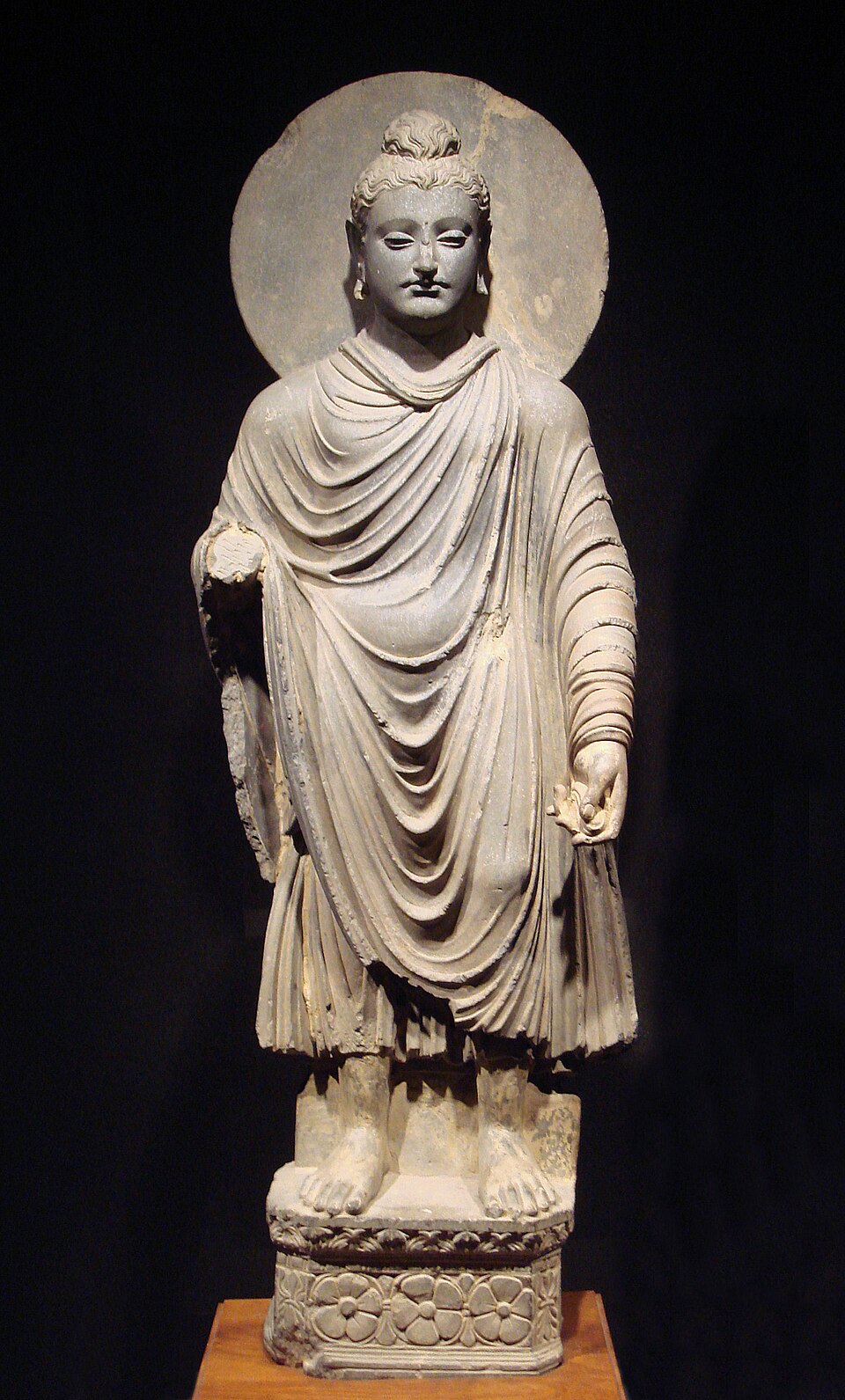
| c. 1st–2nd c. CE | First full biography, Aśvaghoṣa’s Buddhacarita; first Buddha images in Gandhāra and Mathurā[16] | Majority |
| c. 5th c. CE | Nidānakathā, the Theravāda biography[17] | Majority |
| 1896 | Ashoka’s pillar at Lumbini rediscovered[18] | Consensus |
Where: Lumbini, Kapilavastu and the Śākya country
The Buddha was born at Lumbini, now in southern Nepal, and grew up in the Śākya territory around Kapilavastu, on the northern edge of the Ganga plain. Lumbini is fixed by Ashoka’s inscription. Kapilavastu is disputed between India and Nepal.
The Buddha’s world was the middle Ganga plain in the second urbanisation, a landscape of new cities, coinage and kingdoms competing for territory (§1). The two great powers were Kosala, with its capital at Sāvatthī, and Magadha, with its capital at Rājagaha. Most of the discourses are set in or near those two cities, and the Buddha’s principal lay patrons were their kings.
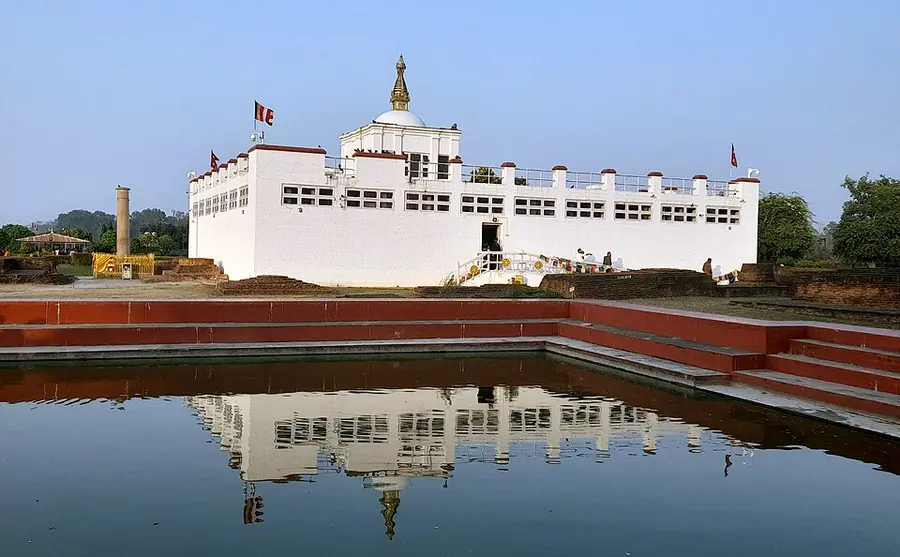
Lumbini. The site was lost for centuries and found again in December 1896, when the Nepali governor Khadga Shumsher Rana and the German archaeologist Alois Führer uncovered the inscribed lower part of Ashoka’s pillar. Xuanzang had described the pillar in the seventh century, already broken by lightning, which helped to locate it.[19][18] Führer was later exposed as a forger of other inscriptions, and that has sometimes been used to cast doubt on Lumbini. The doubt is misplaced: the pillar was dug out of the ground with witnesses present, and its inscription matches Ashokan language and script exactly.[18][20] Consensus
Kapilavastu. The Śākya home town has two candidates:
- Piprahwa-Ganwaria in Uttar Pradesh, India, where William Peppé excavated an inscribed relic vase in 1898 and K. M. Srivastava found, in the 1970s, terracotta sealings naming the monastic community of Kapilavastu.[15][21][22]
- Tilaurakot in Nepal, about 25 km west of Lumbini, a walled town first proposed as Kapilavastu by P. C. Mukherji in 1899 and since excavated by Indian, Japanese, Nepali and British teams, who identify it with the city the Chinese pilgrims describe.[19][23]
The sealings date from the early centuries CE, so they show what a monastery called itself then, not where the Śākya town stood five hundred years earlier.[21][23] Both governments have official positions, and both sites are promoted to pilgrims. Political
The Śākyas were not a kingdom. The early texts describe them as a gaṇa or saṅgha, a clan governed by an assembly of leading men that met in a council hall (santhāgāra).[24][25] The Aggañña Sutta says plainly that the Śākyas were vassals of King Pasenadi of Kosala and paid him homage.[26] Suddhodana is called rājā, but in a clan of this kind the word could mean a member of the ruling class or an elected head, not a monarch.[27] The legend’s great king in his palace is a later picture. Majority
The evidence ledger for the life of the Buddha
| Dimension | What we can say | Evidence | Confidence |
|---|---|---|---|
| Existence | A real teacher, remembered by a real community | Ashoka at Lumbini 150 or more years later; incidental names and awkward episodes in the early texts[6][4][5] | Majority |
| Dates | Death c. 400 BCE ± 20; lifespan about 80 years | Bechert symposium; teacher lineages in the chronicles; DN 16 for the age[7][2][1] | Contested |
| Birthplace | Lumbini | The Rummindei pillar[6] | Consensus |
| Social origin | A kṣatriya family of a dependent clan republic, not a royal dynasty | DN 27; descriptions of the Śākya assembly[26] | Majority |
| Leaving home | As a young man, openly, against his parents’ wishes | MN 26 and MN 36 in the first person[8][9] | Majority |
| Training | Under two named meditation teachers; then extreme asceticism, abandoned | MN 26, MN 36, with Chinese parallels[8][9][28] | Majority |
| Teaching | A middle way, dependent origination, not-self, an end to suffering; exact formulations disputed | Material shared across the early schools[10][29] | Majority (core); Contested (wording) |
| Death and relics | Died at Kusinārā after illness; relics divided and enshrined | DN 16 and its parallels; Piprahwa vase[1][30][15] | Majority |
| Name | Called Gotama (clan name), Sakyamuni (“sage of the Śākyas”) or Bhagavā (“the Blessed One”) | “Siddhattha” does not appear in the early discourses[31] | Consensus |
Primary sources
1. The oldest account of leaving home
The Buddha describes his own renunciation in a few lines that appear in two discourses of the Majjhima Nikāya, with Chinese parallels.
Majjhima Nikāya 26 (Ariyapariyesanā Sutta), Pali, with Bhikkhu Sujato’s translation:
so kho ahaṃ, bhikkhave, aparena samayena daharova samāno susukāḷakeso, bhadrena yobbanena samannāgato paṭhamena vayasā akāmakānaṃ mātāpitūnaṃ assumukhānaṃ rudantānaṃ kesamassuṃ ohāretvā kāsāyāni vatthāni acchādetvā agārasmā anagāriyaṃ pabbajiṃ.
“Some time later, while still with pristine black hair, blessed with youth, in the prime of life—though my mother and father wished otherwise, weeping with tearful faces—I shaved off my hair and beard, dressed in ocher robes, and went forth from the lay life to homelessness.” (trans. Bhikkhu Sujato)[8]
What it proves. The early tradition remembered the renunciation as a plain event: a young man leaves, his parents grieve. There is no palace, no guarded youth, no wife and newborn son left asleep, no horse, no escape at midnight. All of those come later. The passage also mentions his “mother,” while another early discourse says a bodhisatta’s mother dies seven days after his birth.[32] Later tradition resolved the tension with his aunt and foster-mother, Mahāpajāpatī. The early texts were not yet working from one agreed life story. Majority
2. The four sights, told about someone else
The most famous episode of the legend, the four sights, appears in the Pali canon in full only once, and not about Gotama.
Dīgha Nikāya 14 (Mahāpadāna Sutta) tells the life of Vipassī, a Buddha said to have lived ninety-one aeons earlier. Driving to the park, the young Vipassī sees in turn an old man, a sick man, a dead man and a renunciant. Disturbed, he returns to his palace, and eventually goes forth.[33]
What it proves. By the time the Pali canon was closed, a standard pattern for a Buddha’s life existed, told about a past Buddha. Later tradition held that every Buddha’s life follows the same pattern, and the biographies of the early centuries CE apply it to Gotama: the Buddhacarita, the Lalitavistara and the Pali Nidānakathā all make the four sights the turning point of his youth.[16][34][17] The episode most people know best about the Buddha’s life is, in the oldest layer, about someone else. Consensus
3. Three mansions: where the palace comes from
The palace is not invented from nothing. One early discourse has the Buddha describe a privileged youth.
Aṅguttara Nikāya 3.39 (Sukhumāla Sutta; 3.38 in the older Pali Text Society numbering), Pali:
tassa mayhaṃ, bhikkhave, tayo pāsādā ahesuṃ — eko hemantiko, eko gimhiko, eko vassiko.
“I had three stilt longhouses—one for the winter, one for the summer, and one for the rainy season.” (trans. Bhikkhu Sujato; pāsāda is more often translated “mansion” or “palace”)[35]
What it proves. That the tradition remembered the Buddha as coming from a wealthy family, and that the memory was already being used as a teaching device: the discourse goes on to say that in the midst of all this he reflected on old age, sickness and death.[35] The three seasonal mansions became the palaces of the legend. A comfortable house in a clan of landowners is plausible; a great royal court is not supported by anything early. Majority
4. Ashoka at Lumbini
Rummindei pillar inscription (Prakrit in Brāhmī, c. 249 BCE):
devāna piyena piyadasina lājina vīsativasābhisitena atana āgāca mahīyite hida budhe jāte sakyamunī ti silā vigaḍabhī cā kālāpita silāthabhe ca usapāpite hida bhagavaṃ jāte ti lumminigāme ubalike kaṭe aṭhabhāgiye ca.
In a translation adapted from Hultzsch’s: “When King Devānaṃpiya Piyadasi had been consecrated twenty years, he came in person and worshipped, because here the Buddha, the sage of the Śākyas, was born. He had a stone [vigaḍabhī] made and a stone pillar set up, because here the Blessed One was born. He made the village of Lumminī free of the bali tax and liable to pay only an eighth share.”[6][36]
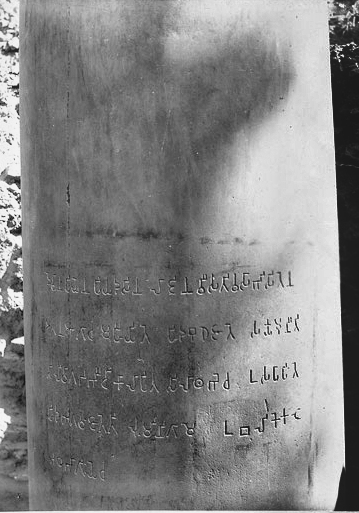
What it proves. That by about 150 years after the Buddha’s death, a specific spot was identified as his birthplace, honoured by an emperor and given a tax privilege that only makes sense if pilgrims already came. It is the earliest dated evidence connecting the Buddha to any place. It does not prove the identification was correct, but a local tradition that strong within a few generations is hard to explain away. The meaning of silā vigaḍabhī is still argued over: a stone railing, a stone with a figure on it, or a stone free of flaws.[36][20] Consensus
The same year Ashoka visited a stupa at Nigali Sagar, which he says he had already enlarged to double its size, dedicated to the past Buddha Konākamana.[14] Belief in a line of Buddhas before Gotama, the belief that the four-sights story depends on, was already a matter of imperial building by the mid-third century BCE.
5. The Piprahwa vase
In January 1898 William Peppé, manager of an estate at Piprahwa just south of the Nepal border, excavated a brick stupa and found inside it a stone coffer with five reliquaries, bone fragments and more than a thousand small jewels.[37][18] One soapstone vase carried a line of Brāhmī around its shoulder:
sukiti bhatinaṃ sa-bhaginikanaṃ sa-puta-dalanaṃ iyaṃ salila-nidhane budhasa bhagavate sakiyanaṃ
One reading, in the site’s own rendering: “This deposit of relics of the Blessed One, the Buddha, of the Śākyas, is the gift of the brothers of Sukīrti, together with their sisters, sons and wives.”[15]
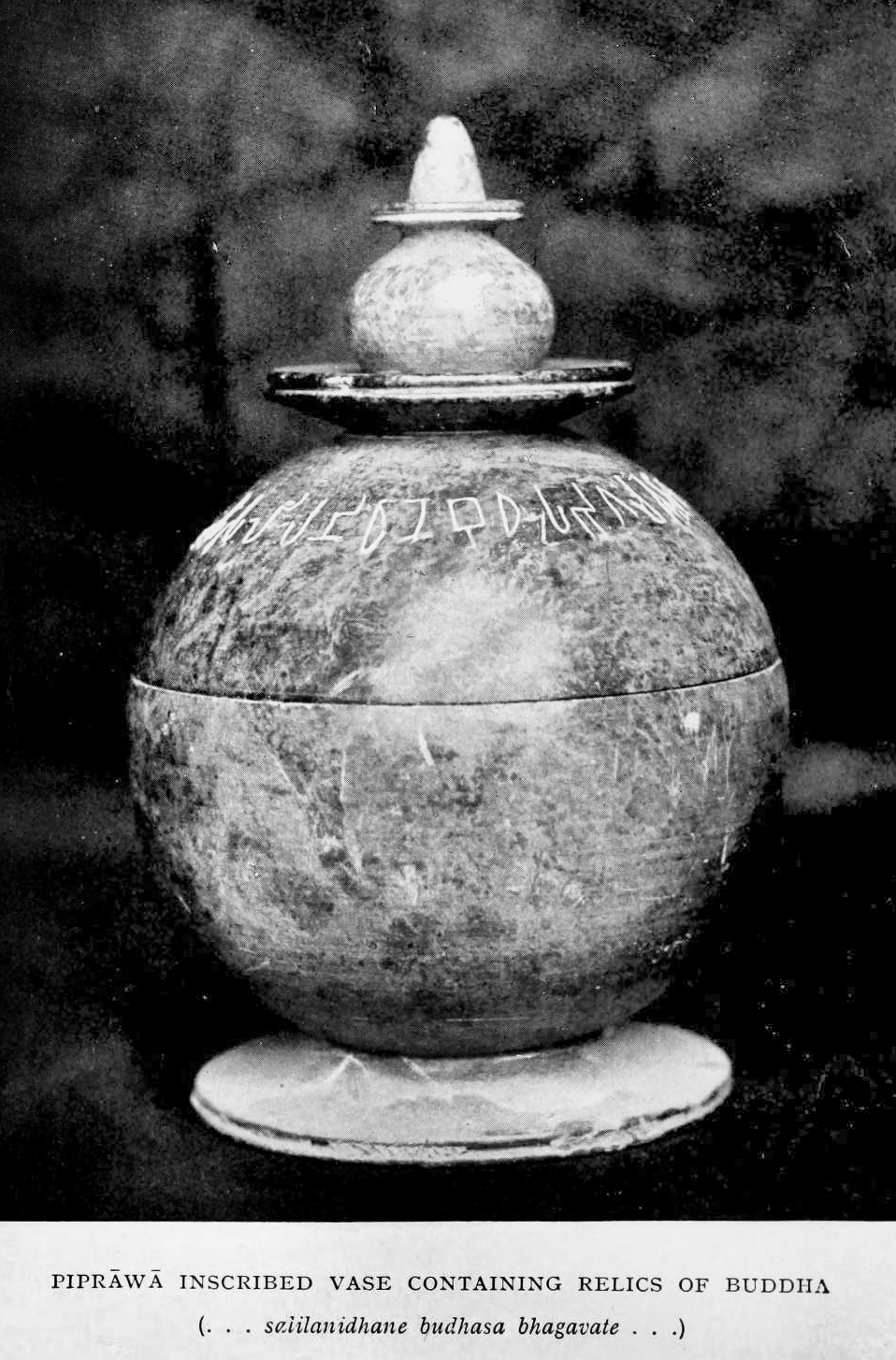
What it proves. Less than it is often said to. The grammar can be read several ways: the Śākyas may be the donors or the Buddha’s people, and sukiti may be a name or an adjective. The script is Ashokan or later, so the vase is not a fifth-century BCE deposit by the Buddha’s own relatives, as was first claimed.[18] K. M. Srivastava’s excavations in the 1970s showed that the stupa was enlarged in several phases and found further relic caskets in an earlier, lower level, which he took to be the original Śākya deposit.[22] Harry Falk, re-reading the inscription, takes it as a genuine record of the Buddha’s bodily relics and argues that nidhāna means the whole stupa foundation, not the vase alone.[38] What is solid is that, by the third or second century BCE, Buddhists in this area were enshrining what they believed were the Buddha’s relics and associating them with the Śākyas.[18] Contested
The relics have had a modern history of their own. The bone fragments were given to King Chulalongkorn of Siam and distributed to Buddhist communities across Asia; most jewels went to the Indian Museum in Calcutta; a share stayed with the Peppé family.[18] That share was offered for sale at Sotheby’s Hong Kong in May 2025, postponed after the Indian government served a legal notice, and returned to India in July 2025 in an arrangement between the Ministry of Culture and the Godrej Industries Group.[39]
6. The first teaching
Saṃyutta Nikāya 56.11 (Dhammacakkappavattana Sutta), Pali, with Bhikkhu Sujato’s translation:
dveme, bhikkhave, antā pabbajitena na sevitabbā … ete kho, bhikkhave, ubho ante anupagamma majjhimā paṭipadā tathāgatena abhisambuddhā.
“Mendicants, these two extremes should not be cultivated by one gone forth. … Avoiding these two extremes, the Realized One understood the middle way of practice.” (trans. Bhikkhu Sujato)[10]
The discourse goes on to the four noble truths: suffering, its origin in craving, its ending, and the eightfold path that leads to its ending.
What it proves. That all the early schools remembered the first teaching as the middle way between indulgence and self-mortification followed by the four truths: the sermon survives in versions from several schools. Whether the four-truths formula in its present form was part of the original teaching is one of the field’s long-running arguments (see Debates). The middle way itself fits the autobiographical accounts of years of fasting that brought him close to death and gave him nothing.[9] Majority on the middle way; Contested on the formula
7. The last meal
Dīgha Nikāya 16 (Mahāparinibbāna Sutta) describes the Buddha, aged about eighty, accepting a meal from Cunda the smith at Pāvā. Among the dishes is sūkaramaddava. The Buddha tells Cunda to serve it only to him and to bury what is left: “I don’t see anyone in this world … who could properly digest it except the Realized One” (trans. Bhikkhu Sujato, who renders the dish “pork on the turn”). He falls ill with bloody dysentery, travels on to Kusinārā, and dies there.[1]
What sūkaramaddava was is not known. The word combines sūkara, pig, with maddava, soft or tender. Buddhaghosa, writing in the fifth century, glosses it as the soft meat of a prime pig, and then reports that others took it to be soft rice cooked in cow’s broth, or a kind of elixir.[40] Modern suggestions include truffles or mushrooms that pigs root for.[41]
What it proves. The fifth-century commentators no longer knew what the word meant and gave it several readings. Pork was an acceptable gift to the Buddha in their eyes. The meat question is taken up in the Debates below. The death narrative itself is shared across the Pali, Sanskrit, Tibetan and Chinese versions, and is among the best-attested episodes of the life.[30] Majority
How the life story grew
The Buddha’s biography was built up over about nine centuries, from scattered first-person memories to a complete epic. Each stage can be dated, and each added episodes.
| Stage | Source | Date | What it adds |
|---|---|---|---|
| Fragments | MN 26, MN 36, AN 3.39, DN 16 | c. 400–200 BCE | Leaving home, training, awakening, a comfortable youth, the last journey[8][9][35][1] |
| A pattern for all Buddhas | DN 14, MN 123 | c. 300–100 BCE | The four sights (told of Vipassī), birth marvels, the mother’s early death[33][32] |
| The first long lives | Mahāvastu; Vinaya biographies of several schools | c. 2nd c. BCE–3rd c. CE | Past lives (Jātaka), the vow under Dīpaṅkara, the life to the founding of the order[42] |
| The epic | Aśvaghoṣa, Buddhacarita | c. 1st–2nd c. CE | A complete life from birth to death as Sanskrit court poetry: the palace, the four sights, the sleeping women, the midnight departure on the horse Kanthaka[16] |
| The cosmic drama | Lalitavistara | c. 3rd c. CE, reworked later | The Buddha as a cosmic being who chooses his birth; the standard Mahāyāna life[34] |
| The Theravāda standard | Nidānakathā | c. 5th c. CE | The canonical Theravāda life, with the personal name Siddhattha[17] |
Three patterns run through the table:
- The setting grows grander. Three mansions become palaces; a clan leader becomes a great king; an anxious parent becomes a father who walls his son in to stop him seeing suffering. Consensus
- The people get names. In the early discourses the Buddha’s wife is only “the mother of Rāhula” (rāhulamātā); names such as Yasodharā belong to later texts. His personal name, Siddhattha (Sanskrit Siddhārtha, “he whose aim is accomplished”), appears only in later texts.[31] Consensus
- The life becomes a model. The four sights, the birth marvels and the great departure are presented as what happens in the life of every Buddha. That made the biography a teaching about the path, not a record, and the authors who wrote it would not have seen the difference as important.[31] Majority
None of this means the later lives are worthless. They preserve what Buddhists in the early centuries CE believed and taught, and they shaped all later Buddhist art, from the Gandhāran reliefs to the Borobudur galleries. They are evidence for the history of Buddhism, not for the life of the Buddha.
What did the Buddha first teach?
The core ideas shared by all early schools, including the middle way, dependent origination, not-self and the ending of craving, are probably close to the Buddha’s own teaching. How he formulated them, and which formulations came first, is disputed.
What the early schools share points to a teaching that:
- Rejected both extremes of sensual indulgence and of the self-torture practised by many renunciants, including, by his own account, the Buddha himself.[9][10]
- Analysed experience into processes (the five aggregates: form, feeling, perception, formations, consciousness), none of which can be identified as a permanent self (anattā). This was a direct challenge to the Upaniṣadic ātman (Hinduism §5).
- Explained suffering causally. Suffering arises from craving through a chain of conditions (paṭicca-samuppāda), and ends when the conditions end.
- Placed meditative absorption (jhāna) at the centre of practice. In MN 36 the turning point is the Buddha’s memory of entering the first jhāna as a boy, sitting under a rose-apple tree while his father worked in the fields.[9]
On these points there is broad agreement. Majority The disagreements are about what came first. Lambert Schmithausen showed that the canon preserves several different accounts of what liberates: insight into the four truths, insight into the impermanence of the aggregates, or the meditative states themselves. These sit uneasily together, and he argued they belong to different stages.[29] Tilmann Vetter and Johannes Bronkhorst argued that the earliest path was meditative absorption, and that “liberating insight” was a later intellectualisation.[43][44] K. R. Norman argued, from the grammar of the first sermon, that the four-truths formula there is a later insertion.[45] Contested
The safest summary is that the early community remembered a teacher who taught a disciplined path of ethics and meditation, explained suffering by causes rather than by fate or gods, and denied that any part of experience was a permanent self. How he put it in words is less certain than what he meant.
The Buddha among the gods
The Buddha of the early texts does not deny the gods. He outranks them. Gods appear constantly in the discourses, but always inside saṃsāra, needing the teaching as much as humans do.
- Brahmā asks him to teach. In MN 26 the Buddha, after his awakening, is inclined not to teach; the god Brahmā Sahampati appears and begs him to, for the sake of beings “with little dust in their eyes.”[8] The high god of the brahmins is cast as a petitioner.
- Sakka (Indra) is a lay follower. The king of the gods of the Rigveda appears in the Pali canon as Sakka, who questions the Buddha and declares himself his disciple.[46] The decline of Indra traced in the Hinduism series (Why Indra stopped being worshipped) is reflected here too, from another direction.
- Gods die and are reborn. A god’s life is long and pleasant but finite; good karma runs out. Liberation is above all rebirth, divine or human.[47]
So the early Buddha is not an atheist in the modern sense, and not a god. He is a human being who has gone beyond the gods. The step that turns him into a cosmic, superhuman being, eternal and present in many worlds at once, is taken in the following centuries, in the Mahāvastu’s “supramundane” Buddha and in the Mahāyāna sūtras (§6).[42] Consensus
What is absent from the earliest record of the Buddha
The earliest layer of evidence for the Buddha’s life has no images of him, no complete biography, no name Siddhārtha, no palace and no four sights in his own life.
- Images of the Buddha. None exist from his lifetime or for centuries after; the earliest sculpted figures of him are from Gandhāra and Mathurā in the first or second century CE (§5). Consensus
- A complete life. No early text tells the whole story; it is assembled from fragments and supplied by the biographies of the early centuries CE. Consensus
- The personal name. “Siddhattha” does not occur in the early discourses. Consensus
- The palace and the four sights as events in Gotama’s own life. Consensus
- Mahāyāna ideas. No bodhisattva path for ordinary followers, no Amitābha, no Pure Land, no eternal Buddha (§6). Consensus
- Vegetarianism as a rule. The early Vinaya allows meat under conditions; see below. Consensus
- Writing. Nothing in the Buddha’s world was written down for religious purposes, as far as is known; the teachings lived in recitation (§0). Majority
Debates about the historical Buddha
When did the Buddha live?
Four schemes circulate, and they are often confused:
| Scheme | Death (parinibbāna) | Basis |
|---|---|---|
| Uncorrected long chronology | 544/543 BCE | The Sri Lankan chronicles; still the basis of the Theravāda Buddhist Era (2569–2570 BE in 2026)[2] |
| Corrected long chronology | 486/483 BCE | A nineteenth- and early-twentieth-century emendation keeping the chronicles’ 218 years from the Buddha’s death to Ashoka’s consecration but fixing that consecration at c. 268 BCE[2] |
| Short chronology | c. 368 BCE | North Indian, Chinese and Tibetan sources putting Ashoka about a century after the Buddha[7] |
| Median (current working date) | c. 400 BCE ± 20 | Convergence after Heinz Bechert’s Göttingen symposium of 1988[7][2] |
The date 483 BCE, still common in textbooks, is a corrected scholarly date and not the tradition’s. Richard Gombrich argued from the lineages of teachers recorded in the chronicles for c. 404 BCE; L. S. Cousins reviewed the evidence and arrived at a similar range.[48][2] Charles Prebish accepts the later date but notes how much of the field’s reconstruction of early Buddhism was built on the older one.[49] Contested
The Lumbini excavation. In 2013 Robin Coningham’s team reported a timber structure beneath the brick temples at Lumbini, with an open space at its centre that may have held a tree. Radiocarbon and luminescence dates put it in the sixth century BCE, and the excavators argued that this supported an earlier date for the Buddha.[50] The finding is real and important. What it shows is less clear. A sacred tree shrine at Lumbini before the Buddha’s lifetime is as consistent with the evidence as a Buddhist shrine built within it: Lumbini may have been a holy place for some other reason before it was the Buddha’s birthplace. A 2025 biomarker study by the same team identified the pipal tree (Ficus religiosa), the species later revered as the bodhi tree, in that central space from about the mid-sixth century BCE, which confirms the tree shrine but not whose shrine it was.[51] The excavation has not displaced the c. 400 BCE consensus. Contested
Was the Buddha a prince?
He was a member of a ruling family of a small clan republic, not the heir to a kingdom. The Śākyas governed themselves through an assembly and were subject to Kosala.[26] The early texts remember wealth (three mansions) but not kingship. The “Prince Siddhārtha” of the later biographies reflects the expectations of their authors and audiences, who were writing for courts and wanted a renunciation as large as possible: the more he gave up, the greater the renunciation.[31][27] Majority
Did the Buddha eat meat?
On the evidence of the early monastic code, yes, and he allowed his monks to do so. Monks begged for food and were expected to eat what they were given. The Vinaya forbids ten kinds of meat, including human, elephant, horse, dog and snake,[52] and forbids monks to eat meat they have seen, heard or suspect was killed specially for them. Otherwise, after the general Sīha served meat to the saṅgha, the Buddha rules, in Bhikkhu Brahmali’s translation: “I allow you to eat meat and fish that’s pure in three respects: you haven’t seen, heard, or suspected that the animal was killed for your sake.”[53] When Devadatta, his cousin and rival, demanded that monks be forbidden fish and meat altogether, the Buddha refused.[54] Majority
The principle is about intention, not diet: what matters is not to cause killing. That is why Buddhist ethics could be strongly opposed to killing animals, and to Vedic animal sacrifice, without making vegetarianism compulsory. Vegetarianism became a Buddhist rule later, in Mahāyāna sūtras such as the Laṅkāvatāra and the Mahāyāna Mahāparinirvāṇa, and became the norm for monks in China after imperial decrees in the sixth century (§7).[55][56][57] In Theravāda countries monks still eat what they are given, including meat. The Hinduism series traces the other side of this story: why many Hindus became vegetarian. Majority
Was the Buddha a Hindu?
The question is anachronistic. “Hindu” as a religious category did not exist in his time; the division that mattered was between Vedic brahmins and renunciant śramaṇas (Hinduism §6). The Buddha was born into a kṣatriya family in a region only partly brahmanised, shared with the Upaniṣads ideas such as karma, rebirth and liberation, and rejected the authority of the Veda, the sacrificial system and the claim that birth made a brahmin. He was a śramaṇa, and both his followers and the brahmins of his day understood him that way. Brahmanical tradition later absorbed him as an avatar of Viṣṇu, in Purāṇic lists from roughly the mid-first millennium CE, which shows that the two traditions had become rivals for the same followers, not that they had been one.[58][59] Political
Can the four sights and the palace be historical after all?
A minority of traditional and popular authors argue that the later biographies preserve genuine memories that the early discourses simply had no reason to record. That is possible in principle: the discourses are teaching texts, not biographies. But the specific episodes in question appear first in the early layer as stories about a past Buddha, or as a teaching device, before they are attached to Gotama, and that pattern of transfer is hard to reconcile with independent memory.[33][31] Majority against
Further reading
- John S. Strong, The Buddha: A Short Biography (Oneworld, 2001) — how the life was assembled.
- Rupert Gethin, The Foundations of Buddhism (Oxford, 1998).
- Heinz Bechert, ed., The Dating of the Historical Buddha (3 parts, 1991–97), and L. S. Cousins, “The Dating of the Historical Buddha: A Review Article,” JRAS (1996).
- Richard Gombrich, What the Buddha Thought (Equinox, 2009).
- Charles Allen, The Buddha and Dr Führer (Haus, 2008) — the discovery of Lumbini and Piprahwa.
- Ñāṇamoli and Bodhi, trans., The Middle Length Discourses of the Buddha (Wisdom, 1995) — MN 26 and MN 36 in a reliable translation; free versions on SuttaCentral.
- Patrick Olivelle, trans., Life of the Buddha by Aśvaghoṣa (Clay Sanskrit Library, 2008).
References
- ^ a b c d e f DN 16 — Mahāparinibbāna Sutta (Dīgha Nikāya). c. 400–200 BCE, with later layers. Pali. The last months of the Buddha's life: his age (80), the last meal of sūkaramaddava at Cunda's house, the death at Kusinārā and the division of the relics into eight shares. read the text
- ^ a b c d e f L. S. Cousins "The Dating of the Historical Buddha: A Review Article". Journal of the Royal Asiatic Society 6, 1996. doi Where the c. 400 BCE working default comes from.
- ^ David Drewes "The Idea of the Historical Buddha". Journal of the International Association of Buddhist Studies 40, 2017. Argues scholarship has established nothing about the man. Answered by Wynne, Levman and von Hinüber.
- ^ a b Alexander Wynne "Did the Buddha Exist?". Journal of the Oxford Centre for Buddhist Studies 16, 2019. The reply to Drewes.
- ^ a b Oskar von Hinüber "The Buddha as a Historical Person". Journal of the International Association of Buddhist Studies 42: 231–264, 2019. A specialist's reply to Drewes: personal names, place details and legal practice that make most sense as memories of a real person.
- ^ a b c d e Rummindei pillar — Lumbinī. c. 249 BCE. Prakrit in Brāhmī. Lumbinī freed of the bali tax and liable to only an eighth share because "here the Buddha was born, the Sakyamuni" — the earliest datable evidence for veneration of the birthplace.
- ^ a b c d Heinz Bechert, ed. The Dating of the Historical Buddha. Vandenhoeck & Ruprecht, 3 vols., 1991. The symposium that unsettled the traditional dates — and reached no consensus.
- ^ a b c d e f g MN 26 — Ariyapariyesanā Sutta (Majjhima Nikāya). c. 400–200 BCE. Pali. The Buddha's own short account of leaving home: while young and black-haired, against the wishes of his weeping parents, he shaved his head and went forth. No palace, no secret flight at night. read the text
- ^ a b c d e f g MN 36 — Mahāsaccaka Sutta (Majjhima Nikāya). c. 400–200 BCE. Pali. The Buddha describes his extreme fasting and breath-holding, abandons them, and remembers sitting in the first jhāna as a boy under a rose-apple tree while his father worked. That memory becomes the way to awakening. read the text
- ^ a b c d SN 56.11 — Dhammacakkappavattana Sutta (Saṃyutta Nikāya). c. 400–200 BCE. Pali. The first sermon in its canonical form: the middle way between indulgence and self-mortification, then the four noble truths and the eightfold path. read the text
- ^ SN 3.1 — Dahara Sutta (Saṃyutta Nikāya). c. 400–200 BCE. Pali. King Pasenadi of Kosala asks how so young a man can claim awakening; the Buddha answers with four things not to be despised for being young, and the king goes for refuge. The canon's account of how the Buddha won his Kosalan patron. read the text
- ^ Mahāvagga 1.22 — Vinaya Piṭaka. c. 300–100 BCE. Pali. King Bimbisāra of Magadha gives the Bamboo Grove (Veḷuvana) at Rājagaha to the saṅgha, the first park donated to the order. read the text
- ^ Rock Edict 8 — Ashokan rock edicts. c. 258 BCE. Prakrit in Brāhmī. Ashoka says that in his tenth regnal year he "went to Sambodhi", replacing pleasure tours with tours of dhamma. The earliest reference to the place of the awakening. read the text
- ^ a b Nigali Sagar pillar — Nigali Sagar, Nepal. c. 249 BCE. Prakrit in Brāhmī. Ashoka records that he enlarged the stupa of the past Buddha Konākamana to double its size in his fourteenth year and came to worship in his twentieth. A cult of earlier Buddhas already existed by c. 250 BCE. read the text
- ^ a b c d Piprahwa vase inscription — Piprahwa stupa, Uttar Pradesh. c. 3rd–2nd c. BCE. Prakrit in Brāhmī. Inscribed on a soapstone relic vase excavated in 1898: a relic deposit of the Lord Buddha, of the Sakyas, given by Sukiti's brothers with their sisters, sons and wives. Its date and grammar are still debated. about
- ^ a b c Buddhacarita — Aśvaghoṣa. c. 1st–2nd c. CE. Sanskrit. The first complete life of the Buddha from birth to death, a court epic in Sanskrit verse. The palace, the four sights and the flight at midnight appear here as one connected story. read the text
- ^ a b c Nidānakathā — Jātaka commentary. c. 5th c. CE. Pali. The Theravāda biography, prefaced to the Jātaka commentary: the vow under the past Buddha Dīpaṅkara, the birth, the four sights, the great departure and the awakening. about
- ^ a b c d e f g Charles Allen The Buddha and Dr Führer: An Archaeological Scandal. Haus, 2008. How Lumbini was found in 1896, by whom, and why Alois Führer's later forgeries have made people wrongly doubt the Rummindei pillar and Piprahwa.
- ^ a b Xuanzang, Record of the Western Regions 6 — Da Tang Xiyu ji. 646 CE. Classical Chinese. Xuanzang visits Lumbini c. 635 and describes Ashoka's pillar topped by a horse, broken in half by lightning. His account helped Führer and Khadga Shamsher identify the site in 1896. about
- ^ a b Harry Falk Aśokan Sites and Artefacts: A Source-book with Bibliography. Philipp von Zabern, 2006. The archaeological handbook for the edicts.
- ^ a b Ganwaria and Piprahwa sealings — Kapilavastu monastery. c. 1st–2nd c. CE. Prakrit in Brāhmī. Terracotta sealings excavated by K. M. Srivastava in the 1970s naming the monastic community of Kapilavastu. India's main evidence that Piprahwa is Kapilavastu; Nepal identifies Tilaurakot. about
- ^ a b K. M. Srivastava Buddha's Relics from Kapilavastu. Agam Kala Prakashan, 1986. The excavator's case that Piprahwa-Ganwaria is Kapilavastu, from the 1971–77 digs and the inscribed sealings.
- ^ a b Robin Coningham & Ruth Young The Archaeology of South Asia: From the Indus to Asoka. Cambridge University Press, 2015. The standard synthesis for §§1–6.
- ^ DN 3 — Ambaṭṭha Sutta (Dīgha Nikāya). c. 400–200 BCE. Pali. A young brahmin complains that the Sakyans in their assembly hall laughed at him and offered him no seat: the Buddha's people as a proud kṣatriya clan unimpressed by brahmins. read the text
- ^ MN 53 — Sekha Sutta (Majjhima Nikāya). c. 400–200 BCE. Pali. The Sakyans of Kapilavatthu invite the Buddha to inaugurate their newly built council hall (santhāgāra): the clan's assembly house, not a royal palace. read the text
- ^ a b c DN 27 — Aggañña Sutta (Dīgha Nikāya). c. 300 BCE. Pali. The four varṇas originate by contract and labour, not from a primal being's body — a direct counter-narrative to the Puruṣa Sūkta, read by Gombrich as satire. read the text
- ^ a b Richard Gombrich Theravāda Buddhism: A Social History. Routledge, 2nd ed., 2006. A social history of Theravāda from the Buddha to modern Sri Lanka: strong on the Brahmanical background, the monastic-royal compact and caste in the saṅgha.
- ^ Bhikkhu Anālayo A Comparative Study of the Majjhima-nikāya. Dharma Drum, 2 vols., 2011. Every Majjhima discourse set beside its Chinese, Sanskrit and Tibetan parallels. The method of §0 carried out at full scale.
- ^ a b Lambert Schmithausen "On Some Aspects of Descriptions or Theories of 'Liberating Insight' and 'Enlightenment' in Early Buddhism". In Studien zum Jainismus und Buddhismus, ed. K. Bruhn & A. Wezler, Steiner, 1981. Shows that the canon preserves several different accounts of what liberates, and argues for their relative order.
- ^ a b Ernst Waldschmidt Das Mahāparinirvāṇasūtra. Akademie-Verlag, 3 parts, 1950–51, 1950. full text The Sanskrit and Tibetan versions of the last-days narrative printed against the Pali, with a German translation of the Chinese Mūlasarvāstivāda Vinaya parallel. The classic demonstration of the comparative method.
- ^ a b c d e John S. Strong The Buddha: A Short Biography. Oneworld, 2001. Traces how the life story was assembled across texts and centuries. The best single book for §2.
- ^ a b MN 123 — Acchariyabbhutadhamma Sutta (Majjhima Nikāya). c. 300–100 BCE. Pali. Ānanda lists the marvels of a bodhisatta's birth: the mother stands to give birth, the child takes seven steps and declares himself foremost in the world, and the mother dies seven days later. read the text
- ^ a b c DN 14 — Mahāpadāna Sutta (Dīgha Nikāya). c. 300–100 BCE. Pali. The four sights (an old man, a sick man, a corpse, a renunciant) told at length, but about the past Buddha Vipassī. Later biographies transfer the story to Gotama. read the text
- ^ a b Lalitavistara — Lalitavistara Sūtra. c. 3rd c. CE, reworked later. Buddhist Hybrid Sanskrit. The life up to the first sermon, told as a cosmic drama. Its account of the palace youth and the four sights became the standard one across Mahāyāna Asia and the source for the Borobudur reliefs. read the text
- ^ a b c AN 3.39 (PTS 3.38) — Sukhumāla Sutta (Aṅguttara Nikāya). c. 400–200 BCE. Pali. The Buddha recalls a delicate upbringing with three mansions, one for each season. The earliest seed of the palace story. read the text
- ^ a b E. Hultzsch Inscriptions of Asoka. Corpus Inscriptionum Indicarum I, Clarendon Press, 1925. full text The primary edition of the edicts. Public domain.
- ^ W. C. Peppé, with a note by V. A. Smith "The Piprāhwā Stūpa, Containing Relics of Buddha". Journal of the Royal Asiatic Society 30: 573–588, 1898. doi The excavator's own report of the January 1898 dig: the stone coffer, the five reliquaries, the jewels and the inscribed vase.
- ^ Harry Falk "The Ashes of the Buddha". Bulletin of the Asia Institute 27: 43–75, 2013. A fresh reading of the Piprahwa vase inscription as a genuine record of the Buddha's bodily relics, taking nidhāna to mean the whole stupa foundation.
- ^ Agence France-Presse "India Secures Return of Ancient Buddhist Gems". France 24, 30 July 2025, 2025. open library News report of the return of the Peppé family's Piprahwa gems to India after the postponed Sotheby's Hong Kong sale, with the Godrej Industries Group.
- ^ Sumaṅgalavilāsinī on DN 16 — Buddhaghosa's commentary on the Dīgha Nikāya. 5th c. CE. Pali. Explains sūkaramaddava as tender pork from a prime pig, then reports other views: soft rice cooked in a broth of the five products of the cow, or an elixir. Even the commentators did not know what the word meant. read the text
- ^ R. Gordon Wasson "The Last Meal of the Buddha". Journal of the American Oriental Society 102: 591–603, 1982. doi Collects the ancient explanations of sūkaramaddava and argues for a mushroom. A reading, not a settled fact.
- ^ a b Mahāvastu — Lokottaravāda Vinaya. c. 2nd c. BCE–4th c. CE. Buddhist Hybrid Sanskrit. A sprawling biography of the Buddha embedded in a monastic code, built up over centuries. One of the first texts to tell the life at length, with many Jātaka stories. about
- ^ Tilmann Vetter The Ideas and Meditative Practices of Early Buddhism. Brill, 1988. Argues that dhyāna, not discriminating insight, was the Buddha's original path.
- ^ Johannes Bronkhorst The Two Traditions of Meditation in Ancient India. Motilal Banarsidass, 2nd ed., 1993. Separates the Buddha's own meditation from the ascetic practices the canon says he rejected.
- ^ K. R. Norman "The Four Noble Truths: A Problem of Pāli Syntax". In Indological and Buddhist Studies, ed. L. A. Hercus et al., Australian National University, 1982. Argues from grammar that the four-truths formula in the first sermon is a later insertion.
- ^ DN 21 — Sakkapañha Sutta (Dīgha Nikāya). c. 400–200 BCE. Pali. Sakka, king of the gods (the Vedic Indra), questions the Buddha and declares himself the Buddha's disciple and a stream-enterer. read the text
- ^ AN 4.33 — Sīha Sutta (Aṅguttara Nikāya). c. 400–200 BCE. Pali. Long-lived gods who hear the Buddha's teaching realise with dismay that they too are impermanent: the gods are inside saṃsāra. read the text
- ^ Richard Gombrich "Dating the Buddha: A Red Herring Revealed". In The Dating of the Historical Buddha, part 2, ed. H. Bechert, Vandenhoeck & Ruprecht, 1992. Argues from the chronicles' teacher lineages for a death c. 404 BCE.
- ^ Charles S. Prebish "Cooking the Buddhist Books: The Implications of the New Dating of the Buddha". Journal of Buddhist Ethics 15, 2008. Accepts the c. 400 BCE date while attacking the reasoning behind it.
- ^ R. A. E. Coningham, K. P. Acharya et al. "The Earliest Buddhist Shrine: Excavating the Birthplace of the Buddha, Lumbini (Nepal)". Antiquity 87: 1104–1123, 2013. doi The timber structure under the Maya Devi temple and its sixth-century BCE dates. Read the dating section closely before quoting the headline.
- ^ Michaela K. Reay, Ian A. Simpson, Robin A. E. Coningham et al. "Triterpenoid Wax Esters Confirm Ficus religiosa in Archaeological Sequences within the Mayadevi Temple Shrine, Lumbini – the Birthplace of Buddha". Frontiers in Geochemistry 3: 1507366, 2025. doi Biomarker evidence that a pipal tree stood in the central open space of the Lumbini shrine from about the mid-sixth century BCE.
- ^ Mahāvagga 6.23.9–15 (Vin I 218–220) — Vinaya Piṭaka. c. 300–100 BCE. Pali. Case by case the Buddha forbids monks to eat ten kinds of meat: human, elephant, horse, dog, snake, lion, tiger, leopard, bear and hyena. read the text
- ^ Mahāvagga 6.31.14 (Vin I 238) — Vinaya Piṭaka. c. 300–100 BCE. Pali. After the general Sīha serves meat to the saṅgha, the Buddha rules that monks may eat fish and meat unless they have seen, heard or suspect it was killed for them. read the text
- ^ Cullavagga 7.3.14–15 (Vin II 196–197) — Vinaya Piṭaka. c. 300–100 BCE. Pali. Devadatta demands five stricter rules, including that monks never eat fish or meat. The Buddha refuses: meat is allowed when it is pure in the three ways. read the text
- ^ Laṅkāvatāra Sūtra, ch. 8 — Laṅkāvatāra Sūtra. c. 4th–5th c. CE (chapter probably later). Buddhist Sanskrit. A chapter on the faults of eating meat, in which the Buddha says he has never permitted meat to anyone and never will; generally treated as a later addition to the sūtra. read the text
- ^ Duan jiurou wen, in Guang hongming ji 26 (T 2103) — Emperor Wu of Liang. c. 517–523 CE. Classical Chinese. Emperor Wu's essay on abstaining from wine and meat, read to assemblies of monks and nuns, requiring them to give up both on the authority of the Mahāparinirvāṇa Sūtra. The basis of Chinese monastic vegetarianism. read the text
- ^ John Kieschnick "Buddhist Vegetarianism in China". In Of Tripod and Palate, ed. Roel Sterckx, Palgrave Macmillan, 2005. How Chinese monks became vegetarian, centred on Emperor Wu of Liang.
- ^ Viṣṇu Purāṇa 3.17–18 — Viṣṇu Purāṇa. c. 400–500 CE, hard to date. Sanskrit. Viṣṇu sends Māyāmoha, 'great delusion', who first naked and then in red robes teaches the demons to reject animal sacrifice and the Veda, punning on budh-, 'know'. The earliest Purāṇic treatment of Buddhist and Jain teaching as a divine trick.
- ^ Ādivarāha cave inscription, Mahābalipuram — Pallava inscriptions. Pallava, c. 7th–8th c. CE. Sanskrit. A single verse listing ten avatars of Viṣṇu: Fish, Tortoise, Boar, Man-lion, Dwarf, three Rāmas, Buddha and Kalkin. The earliest datable list of the ten, with the Buddha ninth and no Kṛṣṇa. read the text