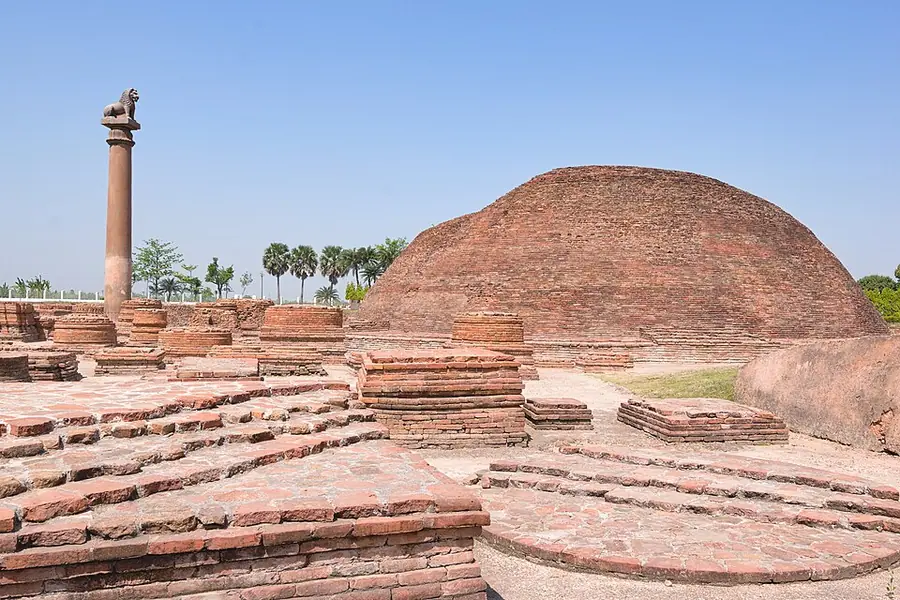
The early saṅgha in one paragraph
After the Buddha’s death the saṅgha, the order of monks and nuns, had no leader and no book. It held together through a set of shared rules, recited aloud every fortnight, and a body of teachings kept in memory by groups of specialist reciters. Over the next century and a half it grew, spread, and argued about its rules. Buddhist tradition remembers this period through three councils, at Rājagaha, Vesālī and Pāṭaliputra. The first is best read as a founding story, the second as a real dispute about discipline, and the third as one school’s account of its own origins. Somewhere in the same period the order divided, probably over monastic rules rather than doctrine, into the Sthaviras and the Mahāsāṃghikas, the ancestors of every later school. Majority
The order of nuns belongs to this earliest layer too. Its founding story, as the Vinaya tells it, includes the Buddha’s reluctance, eight rules subordinating nuns to monks, and a prediction that admitting women would halve the teaching’s lifespan. Comparison of the different schools’ versions suggests that much of this was added later. The voices of the early nuns survive directly in the Therīgāthā. Majority
Timeline of the early saṅgha
Dates follow the median chronology (the Buddha’s death c. 400 BCE, §2). The intervals come from Buddhist sources and are themselves conventional.
| Date | Event | Confidence |
|---|---|---|
| c. 400 BCE | The Buddha’s death; the First Council at Rājagaha, according to the Vinaya[1] | Contested (as an event) |
| 5th–4th c. BCE | The saṅgha lives by the pātimokkha, recited every fortnight at the uposatha, and by the rains retreat[2][3] | Majority |
| c. 300 BCE | The Second Council at Vesālī, “a hundred years after” the Buddha, condemns ten practices including accepting money[4] | Majority |
| c. 300–250 BCE | The first schism: Sthaviras and Mahāsāṃghikas[5][6][7] | Majority (event); Contested (cause and date) |
| c. 250 BCE | Ashoka’s schism edicts order dissident monks and nuns expelled[8] | Consensus |
| c. 250 BCE | The “Third Council” at Pāṭaliputra under Moggaliputta Tissa, in Theravāda sources only[9] | Contested |
| c. 2nd–1st c. BCE | Monks and nuns appear in numbers as donors, and reciters by title, at Bharhut and Sanchi[10][11][12] | Consensus |
| 3rd c. BCE onward | The Therīgāthā takes shape as a collection[13][14][15] | Majority |
Where: from Rājagaha to Vesālī and beyond
The councils are placed in the cities where the Buddha had taught. Rājagaha (Rajgir), the old capital of Magadha ringed by hills, is the setting of the First Council. Vesālī (Vaishali), capital of the Vajjian confederacy north of the Ganga, is the setting of the Second. Pāṭaliputra (Patna), the Mauryan capital, is the setting of the Third.
The geography of the dispute at Vesālī is telling. The Vinaya describes monks travelling from the west, from Pāvā, Avanti and the southern region (dakkhiṇāpatha), gathered at Yasa’s call to oppose the eastern monks of Vesālī.[4] Within a century of the Buddha’s death the saṅgha had spread far enough along the trade routes that its members came from different regions with different habits, and that alone could produce disputes about how the rules should be kept. Majority
The evidence ledger for the early saṅgha
| Dimension | What we can say | Evidence | Confidence |
|---|---|---|---|
| Institution | A self-governing order with fortnightly assemblies, legal procedures and decisions by consensus | The Vinaya’s chapters on uposatha, rains retreat and formal acts[2][3] | Consensus |
| Transmission | Teachings held in memory by specialist reciters, collection by collection | The commentaries; reciters (bhāṇaka) named in Bharhut inscriptions[10][14] | Majority |
| Councils | The First is a charter story; the Second a real dispute about discipline; the Third a Theravāda account | Comparison of all surviving Vinayas[1][4][16] | Majority |
| First schism | Between Sthaviras and Mahāsāṃghikas, possibly over the Vinaya | The Mahāsāṃghika Śāriputraparipṛcchā; Theravāda chronicles; Vasumitra[5][6][17] | Majority (event); Contested (cause) |
| Royal involvement | The king acts against schism in the saṅgha | Ashoka’s schism edicts at Sarnath, Sanchi and Kauśāmbī[8] | Consensus |
| Nuns | A nuns’ order exists from the early period and its members are active donors | Vinayas of all schools; Sanchi and Bharhut inscriptions[18][11][12][19] | Consensus |
| Founding conditions for nuns | The eight heavy rules and the decline prediction are probably later | Comparative study of the foundation story[20][21] | Contested |
Keeping the teaching: recitation, rules and the rains
The saṅgha was held together by two practices of recitation. One kept the rules, the other kept the teachings. Both were communal and both were checked by the group.
The fortnightly recitation of the rules. On the new-moon and full-moon days all monks of a district met for the uposatha and recited the pātimokkha, the list of monastic rules, and any monk who had broken a rule confessed it.[2] The nuns did the same with their own, longer list. In the Theravāda version there are 227 rules for monks and 311 for nuns; other schools’ lists run to roughly 250 and 350.[22][7] The recitation was a legal act, and it defined the community. Monks who recited the pātimokkha together within a boundary (sīmā) were one saṅgha; monks who recited separately were not. That is why, in Buddhist law, a schism is defined not as a disagreement about doctrine but as holding a separate uposatha (see the Debates).[2][23] Consensus
The rains retreat. For three months of the monsoon, monks and nuns stopped wandering and stayed in one place, a rule the Vinaya says was adopted after lay people complained that wandering monks trampled the green grass and harmed small creatures.[3] The retreat turned temporary shelters into permanent residences. Over generations, rains residences given by lay patrons became the first monasteries. Majority
The reciters of the teachings. The commentaries say that at the First Council each collection was entrusted to a lineage of pupils: the Dīgha Nikāya to Ānanda’s, the Majjhima to the pupils of Sāriputta, and so on.[24][14] Whatever the truth of the attribution, specialised reciters, called bhāṇaka, are real. A pillar at Bharhut, from about the late second century BCE, is in Lüders’s translation “the gift of Nadagiri (Nandagiri), the reciter, the Selapuraka (inhabitant of Sailapura),” and several other Bharhut donors are called reciters.[10][25] Sanchi donors describe themselves as knowing the five collections (§0).[26] By the second century BCE, knowing the texts by heart was a recognised title. Consensus
This system explains the shape of the texts described in §0. It was good at preserving wording, which is why parallel versions agree so closely. It was not designed to stop texts from being added, which is why the canon kept growing.[14][27]
The First Council: a charter for the canon
The Vinaya says that soon after the Buddha’s death five hundred arahants met at Rājagaha, Upāli recited the rules and Ānanda the discourses, and the canon was fixed. Most historians read the account as a founding story rather than a record of an event.
The story is told in the eleventh chapter of the Pali Cullavagga, and every surviving Vinaya has a version.[1] Mahākassapa, the senior disciple, calls the council after hearing a monk say that, now the Buddha is dead, they can do as they like. Upāli is questioned on the rules and Ānanda on the discourses, and the assembly recites them together. Consensus that the story is shared by all schools
Several details in the story are revealing:
- Ānanda on trial. After the recitation the elders charge Ānanda with five faults. He did not ask the Buddha which were the “minor rules” that could be abolished; he stepped on the Buddha’s robe while sewing it; he let women pay respects to the Buddha’s body first, so their tears stained it; he did not ask the Buddha to remain alive; and he pleaded for women to be allowed to go forth.[1] He replies that he sees no fault in any of them, but confesses out of respect. The episode reads less like a record than like a later argument, conducted through the figure of Ānanda, about women and about who had authority to interpret the rules.
- The minor rules. The Buddha had said the saṅgha could abolish the minor rules after his death, but nobody had asked which ones. Mahākassapa proposes that the saṅgha neither add nor remove any rule. The council accepts.[1] This is the conservative principle on which the Theravāda tradition still rests.
- The dissenter. A monk called Purāṇa arrives with his followers after the council is over. Asked to accept its recitation, he answers:
susaṅgītāvuso, therehi dhammo ca vinayo ca. api ca yatheva mayā bhagavato sammukhā sutaṃ, sammukhā paṭiggahitaṃ, tathevāhaṃ dhāressāmi.
“The Teaching and the Monastic Law have been well-recited by the senior monks. Nevertheless, I’ll remember what I myself have received from the Buddha.” (trans. Bhikkhu Brahmali; the Pali says more literally that he will keep them as he heard and received them “face to face” with the Buddha)[1]
What it proves. The story was told to give the canon its authority: these are the Buddha’s words, recited by the people who heard them. That a council-founding text preserves a dissenter who kept his own version suggests a memory that the canon was never as uniform as the story claims. Historians do not deny that the disciples gathered after the Buddha’s death, but the claim that the canon was fixed there is contradicted by the evidence of §0, which shows texts being added for centuries.[16][28] Majority
The Second Council: a dispute about money
The Second Council, at Vesālī, is more plausibly historical. It is told in all the Vinayas, it is about a specific dispute, and it concerns discipline, not doctrine.
The Pali account opens: “One hundred years after the Buddha had attained final extinguishment” (trans. Bhikkhu Brahmali).[4] The monk Yasa Kākaṇḍakaputta, visiting Vesālī, found the local Vajjian monks setting a bronze bowl of water in the middle of the assembly on uposatha days and asking lay supporters to put coins in it. When Yasa objected, publicly, they carried out a formal “legal procedure of reconciliation” against him, charging him with abusing the lay followers and requiring him to apologise to them. He went west to gather support, and a council of seven hundred monks was eventually convened at Vesālī. A committee of four monks from the east and four from Pāvā in the west judged ten practices:[4]
| Practice | What it allowed |
|---|---|
| Salt in a horn (siṅgiloṇa) | Keeping salt to season food later, against the rule on stored food |
| Two fingerbreadths (dvaṅgula) | Eating after midday until the sun’s shadow had moved two fingers |
| Going to another village (gāmantara) | Eating a second meal after leaving the first village |
| Separate residences (āvāsa) | Holding separate uposathas within the same boundary |
| Consent (anumati) | Taking a formal act and getting the absent monks’ consent afterwards |
| Customary practice (āciṇṇa) | Doing something because one’s teacher did it |
| Unchurned milk (amathita) | Drinking milk past its “fresh” stage after the meal |
| Palm juice (jaḷogi) | Drinking palm toddy that had begun to ferment but was not yet fully alcoholic |
| Unbordered mat (adasaka nisīdana) | Using a sitting mat without the required fringe |
| Gold and silver (jātarūparajata) | Accepting money |
The council condemned all ten.[4] Majority
What it proves. That a century or so after the Buddha the saṅgha’s main disputes were about how to live by the rules, and that one of the hottest was money. A community that relied on gifts was growing richer, and the rule against handling gold and silver was under pressure. The same tension runs through the whole history of Buddhist monasticism, and in later centuries monasteries became substantial owners of land and money (§4, §8). Majority
The Second Council also shows how the saṅgha resolved a dispute: through formal procedure, a committee and consensus, not through a ruling by a single leader. The Buddha appointed no successor. The tradition remembers him saying that the teaching and the discipline would be the community’s teacher after him.[29] Consensus
The first schism: elders and the great community
At some point in the century after the Second Council the saṅgha divided into two bodies, the Sthaviras (“elders,” Pali Thera) and the Mahāsāṃghikas (“the great community”). Every later school descends from one or the other. Why they divided is told differently by different sources.
There are three main accounts:
- The Theravāda chronicles. The Dīpavaṃsa says that the Vajjian monks defeated at Vesālī refused to accept the verdict, held their own council, and became the Mahāsaṃgītikas, distorting the texts.[6] This connects the schism to the money dispute, from the side of the winners.
- The five points of Mahādeva. Northern sources, especially the treatise on the schools attributed to Vasumitra, say a monk called Mahādeva proposed five theses about arhats: that they can have nocturnal emissions, can have ignorance, can have doubts, can be taught by others, and can reach the path through an exclamation. The dispute over these is said to have split the saṅgha.[17] On this account the split concerned doctrine, specifically how perfect an arhat is.
- The Mahāsāṃghika account. The Śāriputraparipṛcchā, preserved in Chinese, says that an elder had added rules to the Vinaya, and that the majority, the “great community,” refused to accept the expanded code.[30][5]
In a 1977 study Jan Nattier and Charles Prebish argued that the third account is the most plausible. The schism was about whether the Vinaya could be expanded, and the Sthaviras were the innovators, not the conservatives. The Mahādeva controversy, they argued, came later and divided the Mahāsāṃghikas internally.[5] This reading is widely cited, though not universally accepted, and the exact date and details remain uncertain. Akira Hirakawa, for example, follows the Vinayas and the chronicles in treating the dispute over the ten points at Vesālī as the cause of the “basic schism,” with Mahādeva’s five points at most adding to it.[7] Contested
What it proves. That the first split followed the line of what the Vinaya defines as schism: a disagreement about the rules and their recitation, not about what the Buddha taught. The Mahāsāṃghika Vinaya, translated into Chinese in 416 CE, survives, and some of its sections are less elaborated than the Sthavira codes, which fits a community that refused additions.[31][5] Doctrinal differences between the schools are real, but they developed after the institutional split. Majority
The “eighteen schools”
Buddhist sources say the early saṅgha divided into eighteen schools. The number is a convention. The lists disagree with each other, and more than thirty school names are known from texts and inscriptions.[16][7][23] Consensus
What can be said with confidence is that within a few centuries there were several distinct lineages, each with its own Vinaya and, often, its own collection of discourses and Abhidharma:
| School | Branch | What survives |
|---|---|---|
| Theravāda (Sthavira lineage of Sri Lanka) | Sthavira | The complete Pali canon |
| Sarvāstivāda | Sthavira | Vinaya and Abhidharma in Chinese; Sanskrit fragments; probably the Madhyama Āgama |
| Mūlasarvāstivāda | Sthavira | Vinaya in Sanskrit, Tibetan and Chinese; the Vinaya of Tibetan Buddhism |
| Dharmaguptaka | Sthavira | Vinaya and Dīrgha Āgama in Chinese; Gāndhārī scrolls (§0); the Vinaya of East Asian Buddhism[32] |
| Mahīśāsaka | Sthavira | Vinaya in Chinese |
| Mahāsāṃghika | Mahāsāṃghika | Vinaya in Chinese[31] |
| Lokottaravāda (Mahāsāṃghika sub-school) | Mahāsāṃghika | The Mahāvastu in Sanskrit (§2) |
A “school” here is mainly a Vinaya lineage: a group of monastic communities that ordained by the same rules and recited the same pātimokkha. Monks of different schools could live in the same monastery and hold different doctrinal views, as the Chinese pilgrims later reported.[33] The schools are not denominations in the modern sense, and the habit of treating them as rival churches comes from later histories (§10).[23] Majority
The Third Council: one school’s history
The Theravāda chronicles describe a Third Council at Pāṭaliputra, about 250 BCE, under Ashoka’s patronage and led by the monk Moggaliputta Tissa. No other school records it.
On the Theravāda account, the saṅgha’s uposatha had been suspended for seven years because heretics had joined the order for the sake of royal gifts. Moggaliputta Tissa questioned the monks, the king expelled those who did not hold the correct view, defined as vibhajjavāda (“teaching of distinctions”), and Moggaliputta Tissa composed the Kathāvatthu (“Points of Controversy”), a book refuting more than two hundred wrong views. Missionaries were then sent to the borderlands, including Mahinda to Sri Lanka (§4).[34][9][16]
Three points make historians cautious:
- It is a Theravāda-only story. No other school’s history mentions this council or gives Moggaliputta Tissa such a role, and other schools place their councils at different times and places.[16] Consensus
- The Kathāvatthu is later in parts. It refutes positions held by schools that, on any reckoning, did not exist in 250 BCE. It is a growing text attributed to a founding figure.[27] Majority
- Ashoka says something close but not the same. His edicts at Sarnath, Sanchi and Kauśāmbī do order that monks or nuns who divide the saṅgha be dressed in white and expelled.[8] So a king did intervene against schism in Ashoka’s time. What the edicts do not mention is a council, Moggaliputta Tissa or a doctrinal test. Consensus
What it proves. That royal patronage brought royal interference, and that by the mid-third century BCE schism was a political matter as well as a monastic one. The Third Council narrative is best read as the Mahāvihāra tradition of Sri Lanka explaining how its own lineage became the orthodox one and how it reached the island (§10). Majority
The order of nuns
The order of nuns (bhikkhunī saṅgha) existed from the early period in every school. Its founding story, as the Vinaya tells it, was shaped over time, and the version known today contains layers.
The founding story
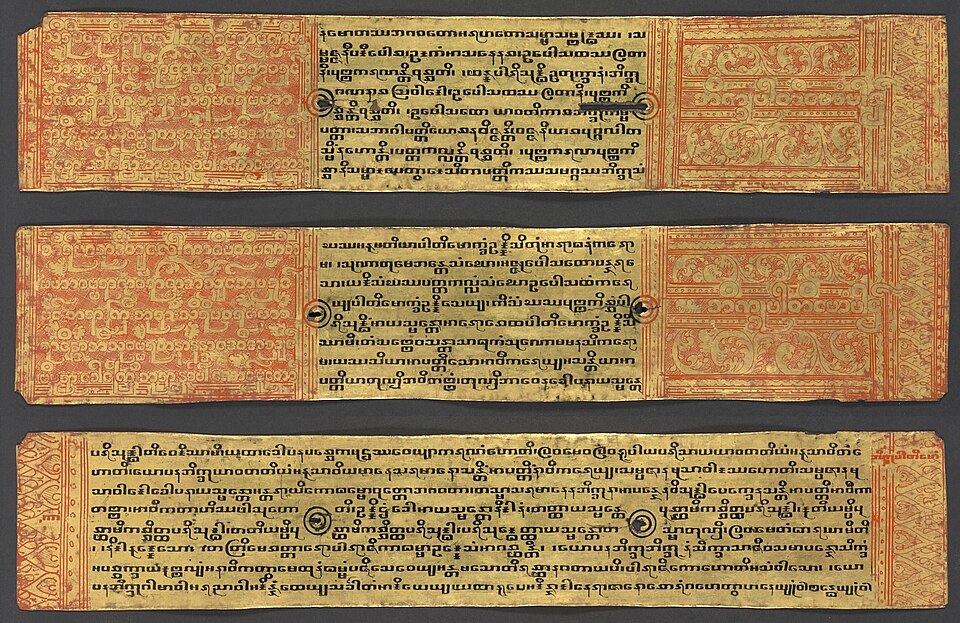
The story is told in the Cullavagga’s chapter on nuns and, almost word for word, in the Aṅguttara Nikāya.[35][18] Mahāpajāpatī Gotamī, the Buddha’s aunt and foster-mother, asks three times to be allowed to go forth and is refused. She cuts off her hair, puts on robes and follows him with other Śākyan women to Vesālī, where she stands outside the gate,
sūnehi pādehi rajokiṇṇena gattena dukkhī dummanā assumukhī rudamānā
“her feet swollen, her limbs covered with dust, miserable and sad, with tearful face,” crying (trans. Bhikkhu Sujato).[18]
Ānanda asks the Buddha on her behalf, and when refused he changes the question. Are women able, after going forth, to realise stream-entry, once-return, non-return and arahantship? The Buddha says they are. Ānanda then reminds him of what Mahāpajāpatī did for him as a child, and the Buddha agrees, on condition that she accept eight “heavy rules” (garudhamma). The first is:
vassasatūpasampannāya bhikkhuniyā tadahūpasampannassa bhikkhuno abhivādanaṃ paccuṭṭhānaṃ añjalikammaṃ sāmīcikammaṃ kattabbaṃ.
“A nun, even if she has been ordained for a hundred years, should bow down to a monk who was ordained that very day. She should rise up for him, greet him with cupped palms, and observe proper etiquette toward him.” (trans. Bhikkhu Sujato)[18]
Others require nuns to spend the rains retreat near monks, to receive instruction from them, to be ordained by both orders, and never to admonish a monk. The story ends with a prediction. Had women not gone forth, the true teaching would have lasted a thousand years; now it will last only five hundred.[18]
Which parts are early?
The answer the Buddha gives to Ānanda, that women can reach every stage of awakening, is the doctrinal centre of the story, and it is shared by every version. The founding of a nuns’ order is not in doubt. What scholars have questioned is the frame around it.[20] Majority
Bhikkhu Anālayo, comparing the account across the Pali, Chinese, Sanskrit and Tibetan Vinayas, argues that the refusal, the eight heavy rules and the decline prediction grew into the story over time:
- The heavy rules assume an existing order. One requires that a woman train as a probationer (sikkhamānā) for two years and then be ordained by both orders. That cannot have applied to the first nuns, because there was no order of nuns to ordain them, and the Vinaya itself has to explain how Mahāpajāpatī’s companions were ordained without it.[35][20]
- The versions disagree. The rules are not listed in the same order or with the same content across the schools, which suggests they were assembled separately.[20]
- The prediction looks back on decline. A prophecy that the teaching would last five hundred years makes most sense when written by people worrying about decline, and later traditions had to reinterpret it when the five hundred years passed.[20][36]
Anālayo also argues, from the Madhyama Āgama and other parallels, that in some versions the Buddha offers Mahāpajāpatī an alternative, a celibate life with shaven head and robes at home, so that the refusal concerned the hardships of homeless wandering rather than women’s ordination in principle.[21] The opposing case, found in standard histories such as Hirakawa’s, takes the reluctance and the heavy rules as the Buddha’s own arrangements, made to keep monks and nuns chaste and above suspicion; and features shared by every school’s Vinaya are, on any reckoning, old.[7] Both readings agree that the founding story as it stands expresses the interests of a monastic community run by men, and that it was used for centuries to justify the nuns’ subordination. Contested
The nuns in their own words: the Therīgāthā
The Therīgāthā, “Verses of the Senior Nuns,” is a collection of about 520 verses attributed to early nuns, preserved in the Khuddaka Nikāya of the Pali canon. It is often described as the oldest anthology of women’s religious poetry in India.[14][15] Its poems are about specific lives: a mother who has lost a child, a woman worn out by poverty and a cruel husband, a courtesan, an old woman looking at her aging body.[15] Majority
Therīgāthā 1.11, attributed to a nun called Muttā (“Freed”):
sumuttā sādhumuttāmhi, tīhi khujjehi muttiyā; udukkhalena musalena, patinā khujjakena ca; muttāmhi jātimaraṇā, bhavanetti samūhatā.
“I’m well freed, so very well freed, freed from the three things that humped me: the mortar, the pestle, and my humpbacked husband. I’m freed from birth and death; the leash to existence is eradicated.” (trans. Bhikkhu Sujato)[13]
Therīgāthā 2.4, attributed to Aḍḍhakāsī, a former courtesan:
“The price for my services amounted to the nation of Kāsi. By setting that price, the townsfolk made me priceless. Then, growing disillusioned with my form, I became dispassionate. … I’ve realized the three knowledges, and fulfilled the Buddha’s instructions.” (trans. Bhikkhu Sujato)[37]
What it proves. The collection keeps the nuns’ own concerns: release from household drudgery and marriage as well as from rebirth. The poems were transmitted within the monastic community and were edited, and the life stories attached to the named nuns come from the commentary, compiled centuries later.[15][19] But the voices are distinct, and a tradition that preserved them evidently valued women’s attainment as real. Majority
Nuns in stone
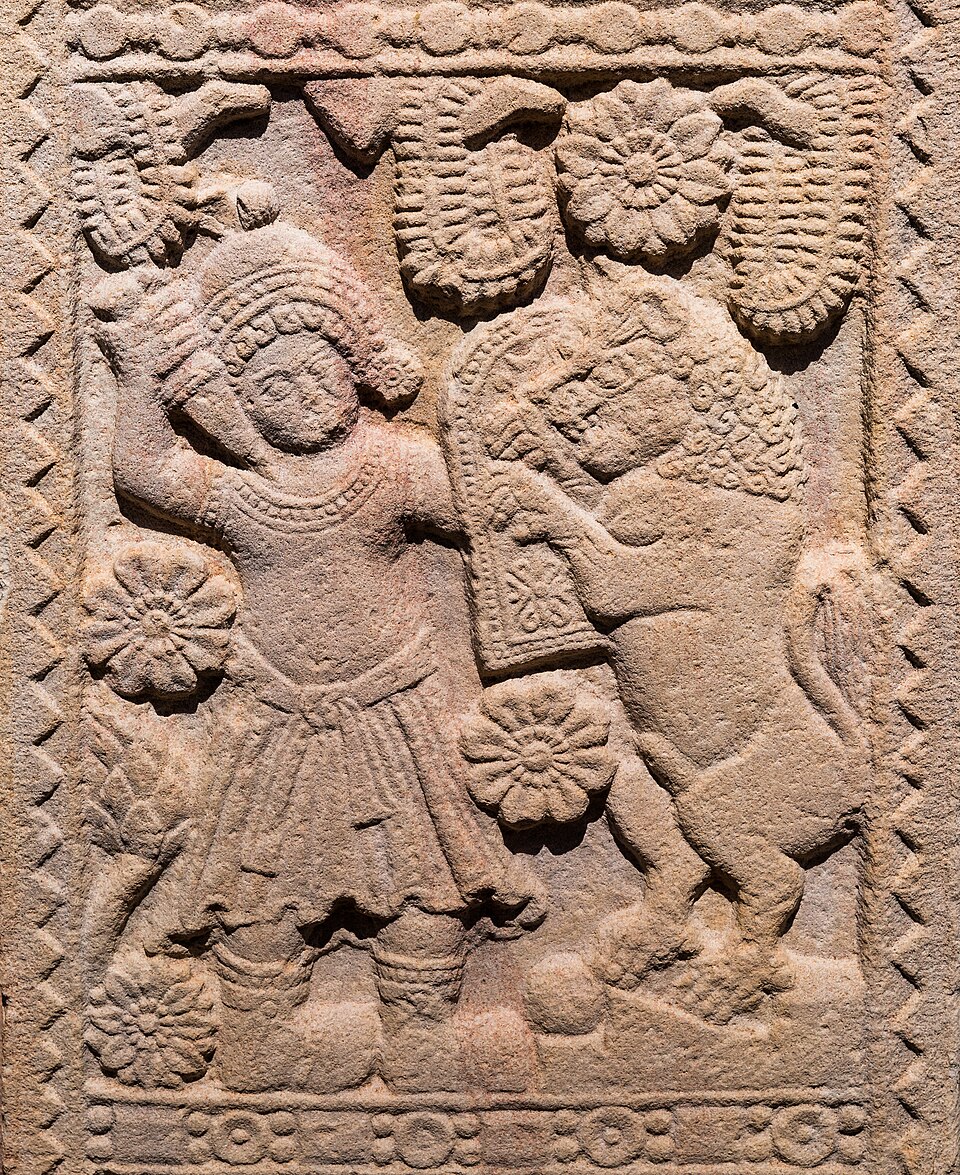
Inscriptions show nuns as an active, propertied part of the saṅgha. At Sanchi and Bharhut, in the second and first centuries BCE, nuns appear among the donors of railings, pillars and gateways in large numbers, alongside monks, and they give in their own names.[11][19] Some are recorded with their pupils or with titles of learning.[12] This is the same pattern Schopen found for monks (§0): the inscriptions show renunciants with means of their own, which the texts’ ideal of possessionless mendicancy hides.[26][38] Consensus
The later history of the nuns’ order, its disappearance in Sri Lanka in the eleventh century and in Burma by the thirteenth, its survival in East Asia and its modern revival, belongs to §10 and §13.
What is absent in the early saṅgha
- A head of the order. The Buddha appointed no successor, and no early source describes a patriarch with authority over all monks.[29] Later lineages of “patriarchs” are reconstructions (§7). Consensus
- A written canon. Everything was recited; writing comes later (§0, §5). Consensus
- Doctrinal heresy trials. Until the Third Council narrative, which is late, disputes are about rules, procedure and practice. Majority
- Mahāyāna. No bodhisattva path for followers, no Mahāyāna sūtras (§6). Consensus
- Large monasteries with endowments. Rains residences existed; the great endowed monasteries of stone and brick come with Ashoka and after (§4). Majority
Debates about the councils and the nuns
Did the First Council happen?
Some gathering of disciples after the Buddha’s death is likely, and every school remembers one. That the canon was recited and closed there is not credible: the canon kept growing, and the schools’ versions of the council disagree about what was recited. Most scholars treat the account as a charter story that gave authority to each school’s canon. A minority read it as substantially historical, with later elaboration.[16][28] Majority
Did schisms concern doctrine?
In Buddhist law, no: a schism (saṅghabheda) is defined by separate legal acts within one boundary, whatever the participants believe. Historically, the first split seems to have been about the Vinaya, and doctrinal differences developed within and between the resulting lineages afterwards. Sources that put doctrine first, such as the Mahādeva story, are later and come from one side.[5][23] Majority
Was the Buddha reluctant to ordain women?
All versions of the founding story report an initial refusal, which means it is old within the tradition, though in some versions it comes with an offer of a renunciant life at home.[21] Whether it goes back to the Buddha, and what it refused, is another question. The comparative evidence suggests that the eight heavy rules and the prediction of decline were shaped later, and the doctrinal heart of the story, that women can reach awakening, is not in doubt. The question matters today because the eight heavy rules and the absence of a Theravāda nuns’ order are central to modern arguments over women’s ordination (§13).[20] Contested
Was the Mahāsāṃghika split about lax monks?
That is the Theravāda account. The Mahāsāṃghika account says the opposite, that the elders added rules. Each side tells the story in a way that makes the other the innovator. Nattier and Prebish’s reading favours the Mahāsāṃghika version, partly because the Mahāsāṃghika Vinaya is shorter, but it is an inference from late sources on all sides.[5] Contested
Further reading
- Étienne Lamotte, History of Indian Buddhism: From the Origins to the Śaka Era (trans. Sara Webb-Boin, Louvain, 1988) — the councils and schools in detail.
- Janice J. Nattier and Charles S. Prebish, “Mahāsāṃghika Origins: The Beginnings of Buddhist Sectarianism,” History of Religions 16 (1977).
- Bhikkhu Sujato, Sects and Sectarianism: The Origins of Buddhist Schools (Santipada, 2006).
- Bhikkhu Anālayo, The Foundation History of the Nuns’ Order (Hamburg Buddhist Studies 6, 2016).
- Charles Hallisey, trans., Therigatha: Poems of the First Buddhist Women (Murty Classical Library of India, 2015).
- Alice Collett, Lives of Early Buddhist Nuns: Biographies as History (Oxford, 2016).
- Vidya Dehejia, “The Collective and Popular Basis of Early Buddhist Patronage,” in The Powers of Art, ed. Barbara Stoler Miller (Oxford, 1992).
References
- ^ a b c d e f Cullavagga 11 (Pañcasatikakkhandhaka) — Vinaya Piṭaka. c. 300–100 BCE. Pali. The First Council at Rājagaha: Upāli recites the rules, Ānanda the discourses; Ānanda is charged with five faults; the saṅgha resolves to neither add nor remove rules; the monk Purāṇa keeps his own version. read the text
- ^ a b c d Mahāvagga 2 (Uposathakkhandhaka) — Vinaya Piṭaka. c. 300–100 BCE. Pali. The fortnightly uposatha assembly at which the pātimokkha is recited and offences confessed; the boundary (sīmā) that defines one saṅgha. read the text
- ^ a b c Mahāvagga 3.1 — Vinaya Piṭaka. c. 300–100 BCE. Pali. People complain that Buddhist monks wander in the rains, harming "one-sensed life", when even other sects settle down for the season; the Buddha institutes the rains retreat. read the text
- ^ a b c d e f Cullavagga 12 (Sattasatikakkhandhaka) — Vinaya Piṭaka. c. 300–100 BCE. Pali. The Second Council at Vesālī, a hundred years after the Buddha: Yasa objects to monks collecting money in a bowl, and seven hundred monks judge ten disputed practices. read the text
- ^ a b c d e f g Janice J. Nattier & Charles S. Prebish "Mahāsāṃghika Origins: The Beginnings of Buddhist Sectarianism". History of Religions 16: 237–272, 1977. doi Argues from the Mahāsāṃghika account that the first schism was over expanding the Vinaya, not over doctrine.
- ^ a b c Dīpavaṃsa 5 — Dīpavaṃsa. c. 4th c. CE. Pali. The Theravāda account of the schools: the Vajjian monks defeated at Vesālī hold their own council and become the Mahāsaṃgītikas, from whom further schools split. read the text
- ^ a b c d e Akira Hirakawa A History of Indian Buddhism: From Śākyamuni to Early Mahāyāna. Trans. Paul Groner, University of Hawai'i Press (Asian Studies at Hawaii 36), 1990. full text Standard Japanese-school survey; treats the Vesālī dispute over the ten points as the cause of the basic schism (pp. 81–82) and notes that many more than twenty school names are known (p. 2).
- ^ a b c Sarnath schism edict — Sarnath pillar. c. 250 BCE. Prakrit in Brāhmī. Ashoka orders that any monk or nun who splits the saṅgha be dressed in white and made to live apart. Division within the order was already a royal concern. read the text
- ^ a b Kathāvatthu — Abhidhamma Piṭaka. c. 250 BCE onward, with later additions. Pali. 'Points of Controversy': over two hundred debates refuting other schools' views, attributed by Theravāda tradition to Moggaliputta Tissa at the Third Council. read the text
- ^ a b c Bharhut pillar inscription of Nandagiri — Bharhut stupa railing. c. 2nd–1st c. BCE. Prakrit in Brāhmī. "The pillar, the gift of the reciter (bhāṇaka) Nandagiri of Selapura": a monk identified by his role as a reciter of the texts, giving in his own name. read the text
- ^ a b c Vidya Dehejia "The Collective and Popular Basis of Early Buddhist Patronage: Sacred Monuments, 100 BC–AD 250". In The Powers of Art: Patronage in Indian Culture, ed. Barbara Stoler Miller, Oxford University Press, 1992. Who paid for Sanchi and Bharhut: many small donors, monks and nuns among them.
- ^ a b c Peter Skilling "Nuns, Laywomen, Donors, Goddesses: Female Roles in Early Indian Buddhism". Journal of the International Association of Buddhist Studies 24.2: 241–274, 2001. open library Uses inscriptions and texts to show nuns as donors and as transmitters of the scriptures in early Indian Buddhism.
- ^ a b Thig 1.11 — Therīgāthā. c. 3rd c. BCE (collection). Pali. Muttā's verse: freed from the mortar, the pestle and her humpbacked husband, and from birth and death. read the text
- ^ a b c d e K. R. Norman Pāli Literature. Harrassowitz, 1983. Short, dense and still reliable on the layers of the canon and the dialect problem.
- ^ a b c d Charles Hallisey, trans. Therigatha: Poems of the First Buddhist Women. Murty Classical Library of India, Harvard University Press, 2015. The best modern translation, with the Pali on facing pages.
- ^ a b c d e f Étienne Lamotte History of Indian Buddhism: From the Origins to the Śaka Era. Trans. Sara Webb-Boin, Institut Orientaliste, Louvain, 1988. Still the fullest survey of the councils, schools and early inscriptions.
- ^ a b T 2031 (Samayabhedoparacanacakra) — Vasumitra's treatise on the schools. c. 1st–4th c. CE; Chinese 662 CE. Classical Chinese (trans. Xuanzang). A Sarvāstivāda account of the schools and their doctrines, attributing the first schism to five theses about the arhat associated with Mahādeva. read the text
- ^ a b c d e AN 8.51 — Gotamī Sutta (Aṅguttara Nikāya). c. 300–100 BCE. Pali. Mahāpajāpatī's request, Ānanda's question whether women can reach awakening (the Buddha says they can), the eight heavy rules and the prediction that the teaching will last five hundred years instead of a thousand. read the text
- ^ a b c Alice Collett Lives of Early Buddhist Nuns: Biographies as History. Oxford University Press, 2016. Uses texts and inscriptions together to recover early nuns as historical people.
- ^ a b c d e f Bhikkhu Anālayo The Foundation History of the Nuns' Order. Hamburg Buddhist Studies 6, Projektverlag, 2016. open library Compares every version of Mahāpajāpatī's ordination and argues the refusal, heavy rules and decline prediction grew into the story.
- ^ a b c Bhikkhu Anālayo "Mahāpajāpatī's Going Forth in the Madhyama-āgama". Journal of Buddhist Ethics 18: 268–317, 2011. open library Translates MĀ 116 and argues that in several versions the Buddha's refusal comes with an offer of a renunciant life at home, so it concerned homeless wandering rather than women's ordination in principle.
- ^ William Pruitt (ed.) & K. R. Norman (trans.) The Pātimokkha. Pali Text Society, 2001. Pali text and translation of the Theravāda monks' and nuns' rule lists, the source for the 227 and 311 rule counts.
- ^ a b c d Bhikkhu Sujato Sects and Sectarianism: The Origins of Buddhist Schools. Santipada, 2006. Reads the schism stories critically and argues the early schools were divided more by geography and lineage than by doctrine.
- ^ Sumaṅgalavilāsinī, Nidānakathā — Sumaṅgalavilāsinī (commentary on the Dīgha Nikāya). 5th c. CE. Pali. The commentary's account of the First Council: each collection is entrusted to a lineage of reciters, the Dīgha Nikāya to Ānanda's pupils, the Majjhima to Sāriputta's, the Saṃyutta to Mahākassapa's, the Aṅguttara to Anuruddha's.
- ^ Heinrich Lüders Bharhut Inscriptions. Corpus Inscriptionum Indicarum II.2, rev. E. Waldschmidt & M. A. Mehendale, 1963. full text The standard edition of the Bharhut donor and label inscriptions.
- ^ a b Gregory Schopen "Archaeology and Protestant Presuppositions in the Study of Indian Buddhism". History of Religions 31: 1–23, 1991. doi Why scholars trusted texts over inscriptions, and what changes when you reverse that. The most cited methodological essay in the field.
- ^ a b Oskar von Hinüber A Handbook of Pāli Literature. De Gruyter, 1996. The standard reference on what the Pali canon is, when its parts were fixed and how the language relates to what the Buddha spoke.
- ^ a b Rupert Gethin The Foundations of Buddhism. Oxford University Press, 1998. The clearest introduction to early Buddhist thought and to what the canon is.
- ^ a b DN 16 — Mahāparinibbāna Sutta (Dīgha Nikāya). c. 400–200 BCE, with later layers. Pali. The last months of the Buddha's life: his age (80), the last meal of sūkaramaddava at Cunda's house, the death at Kusinārā and the division of the relics into eight shares. read the text
- ^ T 1465 (Shelifu wen jing, Śāriputraparipṛcchā) — Śāriputraparipṛcchā. Chinese trans. 4th–5th c. CE. Classical Chinese. A Mahāsāṃghika text whose account of the first schism has an elder expanding the Vinaya and the majority, the 'great community', refusing the additions.
- ^ a b T 1425 (Mohe sengqi lü) — Mahāsāṃghika Vinaya. trans. 416 CE. Classical Chinese. The Mahāsāṃghika monastic code, brought from India by Faxian and translated with Buddhabhadra; the main evidence for that school's rules. read the text
- ^ Richard Salomon Ancient Buddhist Scrolls from Gandhāra: The British Library Kharoṣṭhī Fragments. University of Washington Press, 1999. open library The discovery that put physical first-century Buddhist manuscripts on the table. Readable and careful about what the scrolls do and don't prove.
- ^ Yijing, Account of Buddhism Sent from the Southern Seas — Nanhai jigui neifa zhuan. c. 691 CE. Classical Chinese. Mahāyāna and non-Mahāyāna monks keep the same Vinaya; those who worship bodhisattvas and read Mahāyāna sūtras are called Mahāyānists. The clearest contemporary statement that Mahāyāna was not a separate order. read the text
- ^ Mahāvaṃsa 5 — Mahāvaṃsa. c. 5th–6th c. CE. Pali. The Theravāda chronicle's account of the Third Council: uposatha suspended for seven years at Ashoka's monastery, Moggaliputta Tissa examines the monks, the vibhajjavāda is declared the true teaching and the Kathāvatthu is composed.
- ^ a b Cullavagga 10 (Bhikkhunikkhandhaka) — Vinaya Piṭaka. c. 300–100 BCE. Pali. The Vinaya's chapter on nuns: Mahāpajāpatī's going forth, the eight heavy rules, and how her companions were ordained by monks before a nuns' order existed. read the text
- ^ Jan Nattier Once Upon a Future Time: Studies in a Buddhist Prophecy of Decline. Asian Humanities Press (Nanzan Studies in Asian Religions 1), 1991. The standard study of Buddhist predictions of the teaching's decline, including how the five-hundred-year timetable was later extended.
- ^ Thig 2.4 — Therīgāthā. c. 3rd c. BCE (collection). Pali. Aḍḍhakāsī, a former courtesan whose fee equalled the revenue of Kāsi, grows weary of her beauty and realises the three knowledges. read the text
- ^ Gregory Schopen Bones, Stones, and Buddhist Monks: Collected Papers on the Archaeology, Epigraphy, and Texts of Monastic Buddhism in India. University of Hawai'i Press, 1997. Includes the essays on relics as living presences, on the Buddha as a legal resident of monasteries, and on Indian monks' donations for their parents ('Filial Piety and the Monk in the Practice of Indian Buddhism').