Primary sources
In chronological order of the source itself, not of when it was written down. Every row links to the section that uses it, and — where one exists — to somewhere you can read or see it: read the text goes to a free edition of the work (not a permalink to the individual verse, which rarely exists), about to a reference page on a site, artefact or law.
- ŚB 1.4.1.10–17 Śatapatha Brāhmaṇa prose c. 900–600 BCE read the text ↗ Videgha Māthava, starting on the Sarasvatī, follows Agni east to the Sadānīrā, which "even now forms the boundary of the Kosalas and Videhas": the tradition's own memory of the frontier moving into the Ganga plain. Vedic Sanskrit cited in §01 §01 The World the Buddha Entered →
- BU 3.2.13 Bṛhadāraṇyaka Upaniṣad prose c. 700 BCE read the text ↗ The single most important passage on this site: karma is taught in private, away from the assembly — which is how we know the idea was new. Sanskrit
- DN 2 Sāmaññaphala Sutta (Dīgha Nikāya) prose c. 400–300 BCE read the text ↗ The six heterodox teachers — determinism, materialism, scepticism, atomism — the best map we have of the intellectual landscape, written by a rival. Pali cited in §01 §01 The World the Buddha Entered →
- DN 11 Kevaddha Sutta (Dīgha Nikāya) prose c. 400–300 BCE read the text ↗ Set 'near Nāḷandā in Pāvārika's Mango Grove', a 'successful and prosperous' town: the Pali canon knows Nālandā as a place the Buddha stayed, not as a monastery. Pali cited in §08 §08 Tantra and the Last Age of Indian Buddhism →
- Dhp 393 Dhammapada verse c. 300 BCE read the text ↗ "Not by matted hair, not by lineage, not by birth" — the Śramaṇa attack lands on hereditary claim, not on ritual technique. Pali cited in §01 §01 The World the Buddha Entered →
- DN 27 Aggañña Sutta (Dīgha Nikāya) prose c. 300 BCE read the text ↗ The four varṇas originate by contract and labour, not from a primal being's body — a direct counter-narrative to the Puruṣa Sūkta, read by Gombrich as satire. Pali cited in §01 cited in §02 §01 The World the Buddha Entered →
- MN 93 Assalāyana Sutta (Majjhima Nikāya) prose c. 300 BCE read the text ↗ The fullest argument against brahmin birth-claims: brahmin women give birth like everyone; among the Yonas masters become slaves; a fire kindled by an outcaste burns identically. Pali cited in §01 §01 The World the Buddha Entered →
- DN 5 Kūṭadanta Sutta (Dīgha Nikāya) prose c. 300 BCE read the text ↗ The Buddha reframes "the great sacrifice" as bloodless — the Śramaṇa attack on animal sacrifice made by capturing the vocabulary of sacrifice rather than rejecting it. Pali cited in §01 §01 The World the Buddha Entered →
- DN 16 Mahāparinibbāna Sutta (Dīgha Nikāya) prose c. 400–200 BCE, with later layers read the text ↗ The last months of the Buddha's life: his age (80), the last meal of sūkaramaddava at Cunda's house, the death at Kusinārā and the division of the relics into eight shares. Pali cited in §00 cited in §01 cited in §02 cited in §03 cited in §04 §02 The Buddha →
- MN 26 Ariyapariyesanā Sutta (Majjhima Nikāya) prose c. 400–200 BCE read the text ↗ The Buddha's own short account of leaving home: while young and black-haired, against the wishes of his weeping parents, he shaved his head and went forth. No palace, no secret flight at night. Pali cited in §00 cited in §01 cited in §02 §02 The Buddha →
- AN 3.39 (PTS 3.38) Sukhumāla Sutta (Aṅguttara Nikāya) prose c. 400–200 BCE read the text ↗ The Buddha recalls a delicate upbringing with three mansions, one for each season. The earliest seed of the palace story. Pali cited in §02 §02 The Buddha →
- SN 56.11 Dhammacakkappavattana Sutta (Saṃyutta Nikāya) prose c. 400–200 BCE read the text ↗ The first sermon in its canonical form: the middle way between indulgence and self-mortification, then the four noble truths and the eightfold path. Pali cited in §02 §02 The Buddha →
- MN 36 Mahāsaccaka Sutta (Majjhima Nikāya) prose c. 400–200 BCE read the text ↗ The Buddha describes his extreme fasting and breath-holding, abandons them, and remembers sitting in the first jhāna as a boy under a rose-apple tree while his father worked. That memory becomes the way to awakening. Pali cited in §01 cited in §02 §02 The Buddha →
- AN 3.70 Mūluposatha Sutta (Aṅguttara Nikāya) prose c. 400–200 BCE read the text ↗ Lists the sixteen great countries, from Aṅga to Kamboja, as the measure of the greatest worldly power, worth less than one day's observance of the eight precepts. Pali cited in §01 §01 The World the Buddha Entered →
- AN 6.63 Nibbedhika Sutta (Aṅguttara Nikāya) prose c. 400–200 BCE read the text ↗ "It is intention that I call deeds. For after making a choice one acts by way of body, speech, and mind" (trans. Sujato). The Buddhist redefinition of karma as intention. Pali cited in §01 §01 The World the Buddha Entered →
- DN 29 Pāsādika Sutta (Dīgha Nikāya) prose c. 400–200 BCE read the text ↗ Opens with news that Nigaṇṭha Nātaputta (Mahāvīra) has just died at Pāvā and his followers have split into quarrelling factions: the Pali canon's evidence that Mahāvīra died before the Buddha. Pali cited in §01 §01 The World the Buddha Entered →
- MN 56 Upāli Sutta (Majjhima Nikāya) prose c. 400–200 BCE read the text ↗ A Jain monk says Mahāvīra holds bodily action the most blameworthy; the Buddha says he holds mental action the most blameworthy. The karma debate between the two traditions, staged. Pali cited in §01 §01 The World the Buddha Entered →
- DN 3 Ambaṭṭha Sutta (Dīgha Nikāya) prose c. 400–200 BCE read the text ↗ A young brahmin complains that the Sakyans in their assembly hall laughed at him and offered him no seat: the Buddha's people as a proud kṣatriya clan unimpressed by brahmins. Pali cited in §01 cited in §02 §01 The World the Buddha Entered →
- MN 55 Jīvaka Sutta (Majjhima Nikāya) prose c. 400–200 BCE read the text ↗ The Buddha tells the physician Jīvaka that meat may be eaten in three cases: when it is not seen, heard or suspected to have been killed for the monk. Pali §02 The Buddha →
- Sn 2.2 Āmagandha Sutta (Sutta Nipāta) verse c. 400–200 BCE read the text ↗ A vegetarian brahmin ascetic accuses the past Buddha Kassapa of eating 'putrefaction'; Kassapa answers that killing, theft and lying are putrefaction, 'not eating meat'. Pali §02 The Buddha →
- DN 13 Tevijja Sutta (Dīgha Nikāya) prose c. 400–200 BCE read the text ↗ The Buddha compares brahmins learned in the three Vedas, none of whom has seen Brahmā, to a line of blind men, then teaches his own path to union with Brahmā through the four boundless states. Pali §01 The World the Buddha Entered →
- MN 10 Satipaṭṭhāna Sutta (Majjhima Nikāya) prose c. 400–200 BCE read the text ↗ The four establishments of mindfulness: body, feelings, mind and dhammas, presented as the direct path to purification and nirvana; includes breath, posture, the body's impurity and charnel-ground contemplations. Pali §13 Global and Contemporary Buddhism →
- SN 48.9 Paṭhamavibhaṅga Sutta (Saṃyutta Nikāya) prose c. 400–200 BCE read the text ↗ Defines the faculty of mindfulness as being able to remember and recall what was said and done long ago: sati as keeping in mind. Pali §13 Global and Contemporary Buddhism →
- AN 4.28 Ariyavaṃsa Sutta (Aṅguttara Nikāya) prose c. 400–200 BCE read the text ↗ The four 'noble lineages' of a monk: contentment with robes, almsfood and lodging, and delight in meditation. Usually identified with Ashoka's Aliya-vasāṇi in the Bairāṭ edict. Pali cited in §00 §00 How We Know →
- MN 61 Ambalaṭṭhikārāhulovāda Sutta (Majjhima Nikāya) prose c. 400–200 BCE read the text ↗ The Buddha's advice to the boy Rāhula, opening on the wrongness of deliberate lying. Usually identified with Ashoka's Lāghulovāde 'spoken on falsehood'. Pali cited in §00 §00 How We Know →
- SN 3.1 Dahara Sutta (Saṃyutta Nikāya) prose c. 400–200 BCE read the text ↗ King Pasenadi of Kosala asks how so young a man can claim awakening; the Buddha answers with four things not to be despised for being young, and the king goes for refuge. The canon's account of how the Buddha won his Kosalan patron. Pali cited in §02 §02 The Buddha →
- MN 53 Sekha Sutta (Majjhima Nikāya) prose c. 400–200 BCE read the text ↗ The Sakyans of Kapilavatthu invite the Buddha to inaugurate their newly built council hall (santhāgāra): the clan's assembly house, not a royal palace. Pali cited in §02 §02 The Buddha →
- DN 21 Sakkapañha Sutta (Dīgha Nikāya) prose c. 400–200 BCE read the text ↗ Sakka, king of the gods (the Vedic Indra), questions the Buddha and declares himself the Buddha's disciple and a stream-enterer. Pali cited in §02 §02 The Buddha →
- AN 4.33 Sīha Sutta (Aṅguttara Nikāya) prose c. 400–200 BCE read the text ↗ Long-lived gods who hear the Buddha's teaching realise with dismay that they too are impermanent: the gods are inside saṃsāra. Pali cited in §02 §02 The Buddha →
- DN 31 Sigālovāda Sutta (Dīgha Nikāya) prose c. 400–200 BCE read the text ↗ The Buddha's code for householders: duties to parents, teachers, spouse, friends, servants and ascetics. Bhandarkar's main parallel for Ashoka's public dhamma. Pali cited in §04 §04 Ashoka and the Making of a Pan-Indian Religion →
- SN 5.10 Vajirā Sutta (Saṃyutta Nikāya) verse c. 400–200 BCE read the text ↗ The nun Vajirā answers Māra: just as the word 'chariot' is used when the parts are assembled, 'sentient being' is a convention used when the aggregates are present. Nāgasena quotes the verse in the Milindapañha. Pali cited in §05 §05 Writing It Down →
- MN 115 Bahudhātuka Sutta (Majjhima Nikāya) prose c. 400–200 BCE read the text ↗ Among the things that are impossible: for two fully awakened Buddhas to arise in the same world-system at the same time. The early view that Mahāyāna's many simultaneous Buddhas in other worlds had to work around. Pali cited in §06 §06 The Mahāyāna Turn →
- SN 6.1 Brahmāyācana Sutta (Saṃyutta Nikāya) prose c. 400–200 BCE read the text ↗ After his awakening the Buddha inclines not to teach; the god Brahmā Sahampati appears, kneels and begs him to teach the Dhamma, and he agrees. Pali §02 The Buddha →
- SN 22.58 Sammāsambuddha Sutta (Saṃyutta Nikāya) prose c. 400–200 BCE read the text ↗ The Buddha and a monk freed by wisdom are freed in the same way; the difference is that the Buddha discovered, created and taught the unarisen path, which his disciples follow. Pali §06 The Mahāyāna Turn →
- DN 26 Cakkavattisīhanāda Sutta (Dīgha Nikāya) prose c. 400–200 BCE, with later layers read the text ↗ A myth of moral decline and renewal ending with the prophecy that, when human lifespan has risen to 80,000 years, a Buddha named Metteyya (Maitreya) will arise: the only mention of Maitreya in the Pali discourses. Pali §02 The Buddha →
- Minor Rock Edict 1 Ashokan edicts inscription c. 258 BCE read the text ↗ Names the king as Asoka personally and records that he has been a lay follower for over two and a half years — his Buddhist affiliation in his own voice. Prakrit in Brāhmī cited in §04 §04 Ashoka and the Making of a Pan-Indian Religion →
- Rock Edict 8 Ashokan rock edicts inscription c. 258 BCE read the text ↗ Ashoka says that in his tenth regnal year he "went to Sambodhi", replacing pleasure tours with tours of dhamma. The earliest reference to the place of the awakening. Prakrit in Brāhmī cited in §02 cited in §04 §02 The Buddha →
- Kandahar bilingual inscription Chehel Zina, Kandahar inscription c. 258 BCE about ↗ Ashoka's tenth-year edict in Greek and Aramaic. The Greek renders dhamma as eusebeia, piety, and speaks of abstaining from killing and obeying parents, never of the Buddha. Greek and Aramaic cited in §04 §04 Ashoka and the Making of a Pan-Indian Religion →
- Rock Edict 1 (Girnar) Ashokan edicts inscription c. 257 BCE read the text ↗ "Here no living being must be killed and sacrificed" (trans. Hultzsch, who glosses "here" as "in my territory"). The royal kitchen is cut to two peacocks and a deer. A king turns state power against the Vedic sacrifice. Prakrit in Brāhmī
- Rock Edict 12 Ashokan edicts inscription c. 257 BCE read the text ↗ Honour other sects; praising your own by disparaging others harms your own. A novel theory of plural government. Prakrit in Brāhmī cited in §04 §04 Ashoka and the Making of a Pan-Indian Religion →
- Rock Edict 9 Ashokan edicts inscription c. 257 BCE read the text ↗ "Women are practising many and various vulgar and useless ceremonies" — the only contemporary description of ordinary, gendered domestic religion in the 3rd century BCE. Prakrit in Brāhmī cited in §04 §04 Ashoka and the Making of a Pan-Indian Religion →
- Rock Edict 13 Ashokan edicts inscription c. 256 BCE read the text ↗ Names five Hellenistic kings whose reigns are independently dated — the peg the entire Indian chronology hangs from. Prakrit in Brāhmī cited in §00 cited in §01 cited in §04 §00 How We Know →
- Separate Edicts (Dhauli and Jaugada) Ashokan edicts inscription c. 256 BCE about ↗ In conquered Kalinga, Rock Edict 13's confession of remorse is left out and two edicts to local officials, urging just treatment of the people, are carved instead. Prakrit in Brāhmī cited in §04 §04 Ashoka and the Making of a Pan-Indian Religion →
- Rock Edict 5 Ashokan edicts inscription c. 256 BCE about ↗ Creates officers of dhamma (dhamma-mahāmātras) and sends them among all sects and into the households of the king's brothers and sisters, which tells against the legend that he killed his brothers. Prakrit in Brāhmī cited in §04 §04 Ashoka and the Making of a Pan-Indian Religion →
- Barabar cave dedications Ashoka and Daśaratha inscription c. 250–230 BCE read the text ↗ Rock-cut caves endowed to the **Ājīvikas** by name — the only contemporary documentary evidence for the sect. At one cave the word "Ājīvika" was later effaced. Prakrit in Brāhmī cited in §01 cited in §04 §01 The World the Buddha Entered →
- Calcutta-Bairāṭ edict Bairāṭ, Rajasthan inscription c. 250 BCE read the text ↗ Ashoka addresses the saṅgha directly and names seven texts he wants monks, nuns and laypeople to hear often. The only Ashokan list of Buddhist texts, and several can be matched to suttas that still survive. Prakrit in Brāhmī cited in §00 cited in §04 §00 How We Know →
- Sarnath schism edict Sarnath pillar inscription c. 250 BCE read the text ↗ Ashoka orders that any monk or nun who splits the saṅgha be dressed in white and made to live apart. Division within the order was already a royal concern. Prakrit in Brāhmī cited in §00 cited in §03 cited in §04 §00 How We Know →
- Thig 1.11 Therīgāthā verse c. 3rd c. BCE (collection) read the text ↗ Muttā's verse: freed from the mortar, the pestle and her humpbacked husband, and from birth and death. Pali cited in §03 §03 The Early Saṅgha, the Councils and the First Split →
- Thig 2.4 Therīgāthā verse c. 3rd c. BCE (collection) read the text ↗ Aḍḍhakāsī, a former courtesan whose fee equalled the revenue of Kāsi, grows weary of her beauty and realises the three knowledges. Pali cited in §03 §03 The Early Saṅgha, the Councils and the First Split →
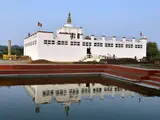
- Rummindei pillar Lumbinī inscription c. 249 BCE Lumbinī freed of the bali tax and liable to only an eighth share because "here the Buddha was born, the Sakyamuni" — the earliest datable evidence for veneration of the birthplace. Prakrit in Brāhmī cited in §00 cited in §02 cited in §04 §00 How We Know →
- Nigali Sagar pillar Nigali Sagar, Nepal inscription c. 249 BCE read the text ↗ Ashoka records that he enlarged the stupa of the past Buddha Konākamana to double its size in his fourteenth year and came to worship in his twentieth. A cult of earlier Buddhas already existed by c. 250 BCE. Prakrit in Brāhmī cited in §00 cited in §02 cited in §04 §02 The Buddha →
- Pillar Edict 7 Ashokan edicts inscription c. 242 BCE read the text ↗ Names saṅgha, brahmins-and-Ājīvikas, Nirgranthas and "various sects" as distinct bodies each needing its own officers — the best contemporary evidence for a plural religious economy. Prakrit in Brāhmī cited in §01 cited in §04 §01 The World the Buddha Entered →
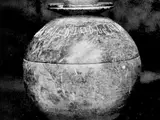
- Piprahwa vase inscription Piprahwa stupa, Uttar Pradesh inscription c. 3rd–2nd c. BCE about ↗ Inscribed on a soapstone relic vase excavated in 1898: a relic deposit of the Lord Buddha, of the Sakyas, given by Sukiti's brothers with their sisters, sons and wives. Its date and grammar are still debated. Prakrit in Brāhmī cited in §02 §02 The Buddha →
- Cullavagga 5.33.1 (Vin II 139) Vinaya Piṭaka prose c. 300–100 BCE read the text ↗ Two monks ask to put the Buddha's words into Vedic-style metre; the Buddha refuses and allows them to be learned "in one's own dialect". The phrase sakāya niruttiyā is read two ways. Pali cited in §00 §00 How We Know →
- DN 14 Mahāpadāna Sutta (Dīgha Nikāya) prose c. 300–100 BCE read the text ↗ The four sights (an old man, a sick man, a corpse, a renunciant) told at length, but about the past Buddha Vipassī. Later biographies transfer the story to Gotama. Pali cited in §02 §02 The Buddha →
- Mahāvagga 6.31.14 (Vin I 238) Vinaya Piṭaka prose c. 300–100 BCE read the text ↗ After the general Sīha serves meat to the saṅgha, the Buddha rules that monks may eat fish and meat unless they have seen, heard or suspect it was killed for them. Pali cited in §02 §02 The Buddha →
- MN 123 Acchariyabbhutadhamma Sutta (Majjhima Nikāya) prose c. 300–100 BCE read the text ↗ Ānanda lists the marvels of a bodhisatta's birth: the mother stands to give birth, the child takes seven steps and declares himself foremost in the world, and the mother dies seven days later. Pali cited in §02 §02 The Buddha →
- Cullavagga 7.3.14–15 (Vin II 196–197) Vinaya Piṭaka prose c. 300–100 BCE read the text ↗ Devadatta demands five stricter rules, including that monks never eat fish or meat. The Buddha refuses: meat is allowed when it is pure in the three ways. Pali cited in §02 §02 The Buddha →
- Mahāvagga 2.1 Vinaya Piṭaka prose c. 300–100 BCE read the text ↗ Other wanderers meet on the eighth, fourteenth and fifteenth days of the half-month and gain supporters; King Bimbisāra suggests the Buddha's monks do the same, and the uposatha is instituted. Pali cited in §01 §01 The World the Buddha Entered →
- Mahāvagga 3.1 Vinaya Piṭaka prose c. 300–100 BCE read the text ↗ People complain that Buddhist monks wander in the rains, harming "one-sensed life", when even other sects settle down for the season; the Buddha institutes the rains retreat. Pali cited in §01 cited in §03 §01 The World the Buddha Entered →
- Cullavagga 6.4.9 Vinaya Piṭaka prose c. 300–100 BCE read the text ↗ Anāthapiṇḍika buys Prince Jeta's park for the order by covering its ground with coins brought out in carts: the founding legend of the Jeta Grove at Sāvatthī. Pali cited in §01 §01 The World the Buddha Entered →
- Cullavagga 10 (Bhikkhunikkhandhaka) Vinaya Piṭaka prose c. 300–100 BCE read the text ↗ The Vinaya's chapter on nuns: Mahāpajāpatī's going forth, the eight heavy rules, and how her companions were ordained by monks before a nuns' order existed. Pali cited in §03 §03 The Early Saṅgha, the Councils and the First Split →
- Cullavagga 11 (Pañcasatikakkhandhaka) Vinaya Piṭaka prose c. 300–100 BCE read the text ↗ The First Council at Rājagaha: Upāli recites the rules, Ānanda the discourses; Ānanda is charged with five faults; the saṅgha resolves to neither add nor remove rules; the monk Purāṇa keeps his own version. Pali cited in §00 cited in §03 §03 The Early Saṅgha, the Councils and the First Split →
- Cullavagga 12 (Sattasatikakkhandhaka) Vinaya Piṭaka prose c. 300–100 BCE read the text ↗ The Second Council at Vesālī, a hundred years after the Buddha: Yasa objects to monks collecting money in a bowl, and seven hundred monks judge ten disputed practices. Pali cited in §03 §03 The Early Saṅgha, the Councils and the First Split →
- Mahāvagga 2 (Uposathakkhandhaka) Vinaya Piṭaka prose c. 300–100 BCE read the text ↗ The fortnightly uposatha assembly at which the pātimokkha is recited and offences confessed; the boundary (sīmā) that defines one saṅgha. Pali cited in §03 §03 The Early Saṅgha, the Councils and the First Split →
- AN 8.51 Gotamī Sutta (Aṅguttara Nikāya) prose c. 300–100 BCE read the text ↗ Mahāpajāpatī's request, Ānanda's question whether women can reach awakening (the Buddha says they can), the eight heavy rules and the prediction that the teaching will last five hundred years instead of a thousand. Pali cited in §03 §03 The Early Saṅgha, the Councils and the First Split →
- Kathāvatthu Abhidhamma Piṭaka prose c. 250 BCE onward, with later additions read the text ↗ 'Points of Controversy': over two hundred debates refuting other schools' views, attributed by Theravāda tradition to Moggaliputta Tissa at the Third Council. Pali cited in §03 cited in §05 §03 The Early Saṅgha, the Councils and the First Split →
- Mahāvagga 1.22 Vinaya Piṭaka prose c. 300–100 BCE read the text ↗ King Bimbisāra of Magadha gives the Bamboo Grove (Veḷuvana) at Rājagaha to the saṅgha, the first park donated to the order. Pali cited in §01 cited in §02 §01 The World the Buddha Entered →
- Vinaya, Nissaggiya Pācittiya 18 Vinaya Piṭaka, Suttavibhaṅga rule c. 300–100 BCE read the text ↗ "If a monk takes, has someone else take, or consents to gold, silver, or money being deposited for him" he commits an offence entailing relinquishment and confession: the rule that kept money out of monks' hands in a monetised world. Pali cited in §01 §01 The World the Buddha Entered →
- Cullavagga 4.9–10 Vinaya Piṭaka, Khandhaka (Samathakkhandhaka) rule c. 300–100 BCE read the text ↗ Allows disputes to be settled by majority decision (yebhuyyasikā), with a monk appointed by formal motion to manage the vote by tally sticks (salākā), and lists legitimate and illegitimate votes. Pali cited in §01 §01 The World the Buddha Entered →
- Mahāvagga 6.23.9–15 (Vin I 218–220) Vinaya Piṭaka prose c. 300–100 BCE read the text ↗ Case by case the Buddha forbids monks to eat ten kinds of meat: human, elephant, horse, dog, snake, lion, tiger, leopard, bear and hyena. Pali cited in §02 §02 The Buddha →
- Sanchi Stupa 2 reliquary inscriptions Sanchi inscription c. 2nd c. BCE about ↗ Relic caskets of ten teachers, among them Kāsapagota, 'teacher of all the Hemavatas', Majhima and Mogaliputa: names the Dīpavaṃsa gives for the Himalayan mission, written centuries earlier. Majumdar read 'Hemavata' as the Haimavata school rather than the Himalaya. Prakrit in Brāhmī cited in §04 §04 Ashoka and the Making of a Pan-Indian Religion →
- Shinkot casket Bajaur reliquary inscription c. 150 BCE, with later additions about ↗ A steatite relic box whose lid inscription is dated in the reign of Mahārāja Minedra (Menander I); later inscriptions record its reuse by the local ruler Vijayamitra. Probably the oldest inscribed Buddhist relic casket from Gandhāra. Gāndhārī in Kharoṣṭhī cited in §05 §05 Writing It Down →
- Buddhavaṃsa 2 Buddhavaṃsa (Khuddaka Nikāya) verse c. 2nd–1st c. BCE read the text ↗ The ascetic Sumedha, meeting the past Buddha Dīpaṅkara, vows to become a Buddha and takes up the ten perfections (pāramī) one by one, beginning with giving: the Pali bodhisatta path. Pali §10 Theravāda and Southeast Asia →
- Bharhut pillar inscription of Nandagiri Bharhut stupa railing inscription c. 2nd–1st c. BCE read the text ↗ "The pillar, the gift of the reciter (bhāṇaka) Nandagiri of Selapura": a monk identified by his role as a reciter of the texts, giving in his own name. Prakrit in Brāhmī cited in §03 §03 The Early Saṅgha, the Councils and the First Split →
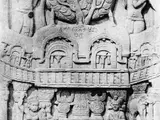
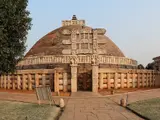
- Sanchi and Bharhut railings Madhya Pradesh site c. 150–50 BCE about ↗ Stūpa railings carrying donative inscriptions in quantity — including gifts by named women, nuns and guilds, evidence of a broad lay donor economy. — cited in §04 §04 Ashoka and the Making of a Pan-Indian Religion →
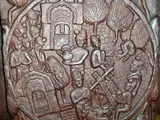
- Bharhut Jetavana medallion Bharhut stupa railing inscription c. 2nd–1st c. BCE read the text ↗ A carved medallion of the Jeta Grove being covered with coins, labelled "Anāthapiṇḍika gives the Jetavana, having bought it for a layer of ten million." The Vinaya legend in stone within a few centuries. Prakrit in Brāhmī cited in §01 §01 The World the Buddha Entered →
- Bharhut label inscriptions Bharhut stupa railing inscription c. 125–75 BCE read the text ↗ Short labels naming the scenes, including 'Ajātasatu worships the Holy One' (Lüders) over an empty seat and 'the Bodhi of the Blessed Śākyamuni' over a tree shrine. Prakrit in Brāhmī cited in §04 §04 Ashoka and the Making of a Pan-Indian Religion →
- Bharhut gateway inscription Bharhut stupa inscription c. 100 BCE about ↗ Records the gateway as the gift of Vātsīputra Dhanabhūti 'in the reign of the Śuṅgas' (suganaṃ raje), the usual reading. Buddhist building under the dynasty accused of persecution. Prakrit in Brāhmī cited in §04 §04 Ashoka and the Making of a Pan-Indian Religion →
- Jātaka 461 (Dasaratha Jātaka) Jātaka prose Verses c. 3rd–1st c. BCE; prose commentary c. 5th c. CE read the text ↗ A Buddhist Rāma story in which the wise prince Rāma accepts exile calmly; the Buddha identifies Rāma as a past life of his own. Pali §08 Tantra and the Last Age of Indian Buddhism →
- Sanchi south gateway inscription Sanchi Stupa 1 inscription c. 1st c. BCE about ↗ The gateway is the gift of Ānanda, son of Vāsiṭhī, foreman of the artisans of King Siri Sātakaṇi: the Great Stupa's carved gateways belong to the Sātavāhana period. Prakrit in Brāhmī cited in §04 §04 Ashoka and the Making of a Pan-Indian Religion →
- Milindapañha 25–28 Milindapañha prose core c. 1st c. BCE–1st c. CE, expanded later read the text ↗ The monk Nāgasena tells the Indo-Greek king Milinda that his name is only a designation, using the chariot simile and a verse from SN 5.10. Pali cited in §05 §05 Writing It Down →
- Aṣṭasāhasrikā 3 Perfection of Wisdom in 8,000 Lines prose c. 1st c. BCE–1st c. CE, expanded later Copying and worshipping the written Perfection of Wisdom earns more merit than filling the continent with relic stupas, since the Buddha's body itself was produced by the perfection of wisdom. Sanskrit cited in §06 §06 The Mahāyāna Turn →
- Gāndhārī Rhinoceros Sūtra (BL fragment 5B) British Library Kharoṣṭhī fragments manuscript c. 1st c. CE read the text ↗ A Gāndhārī version of the poem known in Pali as the Khaggavisāṇa Sutta (Sn 1.3). Its verses match the Pali closely but not exactly: the clearest physical proof that early texts circulated in more than one language. Gāndhārī in Kharoṣṭhī cited in §00 §00 How We Know →
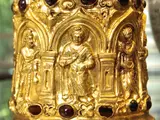
- Bimaran reliquary Bimaran stupa 2, Afghanistan artefact c. 1st–2nd c. CE (disputed) about ↗ Gold reliquary set with garnets, showing a haloed standing Buddha between Brahmā and Indra. Found with coins in the name of Azes, now thought posthumous issues; dated anywhere from the early first to the second century CE. — cited in §05 §05 Writing It Down →
- Hou Hanshu 42 (Liu Ying) History of the Later Han prose 65 CE (edict); compiled 5th c. CE read the text ↗ Emperor Ming's edict of 65 CE praising the prince of Chu, who 'recites the subtle words of Huang-Lao and honours the gentle sacrifices of the Buddha', and returning his silk to feed upāsakas and śramaṇas. Classical Chinese cited in §07 §07 Into China →
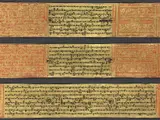
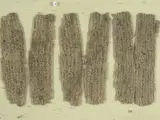
- Split collection Aṣṭasāhasrikā, parivarta 1 Prajñāpāramitā (Gāndhārī) manuscript c. 47–147 CE (radiocarbon) about ↗ The oldest surviving Mahāyāna manuscript: a birch-bark copy of the Perfection of Wisdom in 8,000 Lines, close to the text Lokakṣema translated into Chinese in 179 CE. Gāndhārī in Kharoṣṭhī cited in §00 cited in §06 §00 How We Know →
- Buddhacarita Aśvaghoṣa verse c. 1st–2nd c. CE read the text ↗ The first complete life of the Buddha from birth to death, a court epic in Sanskrit verse. The palace, the four sights and the flight at midnight appear here as one connected story. Sanskrit cited in §02 §02 The Buddha →
- Mahāvastu Lokottaravāda Vinaya prose c. 2nd c. BCE–4th c. CE about ↗ A sprawling biography of the Buddha embedded in a monastic code, built up over centuries. One of the first texts to tell the life at length, with many Jātaka stories. Buddhist Hybrid Sanskrit cited in §02 cited in §06 §02 The Buddha →
- Ganwaria and Piprahwa sealings Kapilavastu monastery artefact c. 1st–2nd c. CE about ↗ Terracotta sealings excavated by K. M. Srivastava in the 1970s naming the monastic community of Kapilavastu. India's main evidence that Piprahwa is Kapilavastu; Nepal identifies Tilaurakot. Prakrit in Brāhmī cited in §02 §02 The Buddha →
- Plutarch, Praecepta gerendae reipublicae 28 (821D–E) Moralia prose c. 100 CE read the text ↗ When Menander died in camp his cities disputed his remains and agreed to divide the ashes and build monuments to him in each city, as the Buddha's relics were divided. Greek cited in §05 §05 Writing It Down →
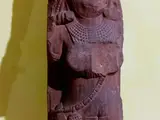
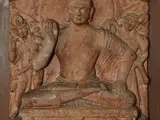
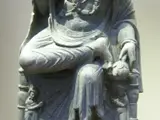
- Kaṭrā stele (Mathurā Museum A-1) Kaṭrā Keśavdev, Mathurā artefact late 1st–early 2nd c. CE about ↗ Seated Buddha with attendants in Mathurā red sandstone; the base inscription records that Amohāsī set up this 'bodhisattva'. An early standardised Mathurā image in the Indian yakṣa idiom. Prakrit in Brāhmī cited in §05 §05 Writing It Down →
- Bajaur Mahāyāna sūtra (BC 2) Bajaur collection manuscript c. late 1st–2nd c. CE about ↗ Part of a Mahāyāna sūtra about the Buddha Akṣobhya and his eastern buddha-field Abhirati, on birch bark. Evidence that Pure Land ideas were circulating in Gandhāra almost as early as the Perfection of Wisdom. Gāndhārī in Kharoṣṭhī cited in §06 §06 The Mahāyāna Turn →
- Rabatak inscription Kaniṣka I, Afghanistan inscription c. 127 CE about ↗ The Kuṣāṇa dynastic pantheon — Nana, Umma, Aurmuzd, Mihr and others. Oēśo is absent, which is one of the arguments against reading him as Śiva. Bactrian in Greek script cited in §05 §05 Writing It Down →
- Kaniṣka casket Shāh-jī-kī-Ḍherī, Peshawar inscription deposited c. mid-2nd c. CE (reign of Huviṣka?) read the text ↗ Gilt-copper relic casket from the great stupa near Peshawar. Its Kharoṣṭhī inscription names Kaniṣka and his monastery; on Falk's rereading the donors were two architects, Mahasena and Saṃgharakṣita, who gave it for the acceptance of the Sarvāstivādin teachers. A coin of Huviṣka among the finds suggests it was deposited in his reign. Gāndhārī in Kharoṣṭhī cited in §05 §05 Writing It Down →
- Bala's bodhisattva, Sarnath Sarnath inscription year 3 of Kaniṣka (c. 130 CE) Colossal standing figure in Mathurā sandstone with its umbrella shaft, set up by the monk Bala, 'master of the three baskets' (trepiṭaka). The earliest securely dated large Buddhist image. Prakrit in Brāhmī cited in §05 §05 Writing It Down →
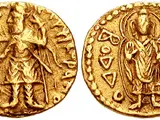
- Kaniṣka's Buddha coins Kushan coinage artefact c. 127–150 CE about ↗ Gold coins with a standing Buddha labelled ΒΟΔΔΟ, and copper coins labelled ΣΑΚΑΜΑΝΟ ΒΟΥΔΟ (Śākyamuni) and ΜΕΤΡΑΓΟ ΒΟΥΔΟ (Maitreya). The earliest images that name the Buddha in writing. Bactrian in Greek script cited in §05 §05 Writing It Down →
- Kuṣāṇa coinage (Oēśo) Kaniṣka and successors artefact c. 127–200 CE Śiva with trident and bull on imperial state currency — standardized divine iconography. Greek script cited in §05 §05 Writing It Down →
- Aśokāvadāna Divyāvadāna prose c. 2nd c. CE about ↗ The North Indian legend of Ashoka: the dirt offering of his past life, the hell-prison, conversion by a monk, 84,000 stupas, the pilgrimage with Upagupta, and the half myrobalan given at his death. Buddhist Sanskrit cited in §04 §04 Ashoka and the Making of a Pan-Indian Religion →
- T 1545 (Abhidharma-mahāvibhāṣā) Sarvāstivāda Abhidharma prose compiled c. 2nd c. CE; translated 656–659 read the text ↗ The great Sarvāstivāda commentary compiled in Kashmir, defending the existence of dharmas in past, present and future; known from Xuanzang's two-hundred-fascicle translation. Classical Chinese (from Sanskrit) cited in §05 §05 Writing It Down →
- Saddharmapuṇḍarīka 2–3 Lotus Sūtra prose c. 1st–2nd c. CE (Chinese 286 CE) read the text ↗ Skilful means (upāya) and the one vehicle (ekayāna): the earlier paths were provisional, and the parable of the burning house shows all three carts replaced by one great carriage of Buddhahood. Buddhist Sanskrit cited in §06 §06 The Mahāyāna Turn →
- Larger Sukhāvatīvyūha Sūtra of the Land of Bliss prose c. 1st–2nd c. CE (Chinese by 3rd c.) read the text ↗ The monk Dharmākara's vows to create a pure land where anyone who calls on him with faith will be reborn. He becomes the Buddha Amitābha. The founding text of Pure Land devotion. Buddhist Sanskrit cited in §06 §06 The Mahāyāna Turn →
- Saddharmapuṇḍarīka (whole) Lotus Sūtra prose c. 1st–3rd c. CE, in layers (Chinese 286 and 406 CE) read the text ↗ The full Lotus Sūtra, including its later chapters: the Buddha's lifespan as immeasurable, his death a display for the sake of beings, and the chapter on Avalokiteśvara that circulated on its own in East Asia. Buddhist Sanskrit cited in §06 §06 The Mahāyāna Turn →
- Govindnagar Amitābha pedestal Mathurā Museum inscription Year 26 of Huviṣka, c. 153 CE A broken image base found at Mathurā in 1977, dated in Huviṣka's reign and naming the image as the Buddha Amitābha. The only Indian inscription naming a Mahāyāna Buddha before the fifth century. Sanskritised Prakrit in Brāhmī cited in §06 §06 The Mahāyāna Turn →
- T 602 (Anban shouyi jing) An Shigao's translations prose c. 148–170 CE read the text ↗ An Shigao's text on mindfulness of breathing, one of the first Buddhist meditation manuals in Chinese, from the Parthian translator who began work in Luoyang about 148. Classical Chinese cited in §00 cited in §07 §07 Into China →
- Hou Hanshu 30B (Xiang Kai) History of the Later Han prose 166 CE (memorial) read the text ↗ Xiang Kai's memorial to Emperor Huan: shrines to Huang-Lao and the Buddha stand in the palace, and 'some say Laozi went among the barbarians and became the Buddha'. Classical Chinese cited in §07 §07 Into China →
- T 224 (Daoxing banruo jing) Lokakṣema's translations prose 179 CE read the text ↗ Lokakṣema's Chinese translation of the Perfection of Wisdom in 8,000 Lines, dated by its colophon to 179 CE. A dated translation proves the source text existed by that year. Classical Chinese cited in §00 cited in §06 cited in §07 §00 How We Know →
- T 418 (Banzhou sanmei jing) Lokakṣema's translations prose 179 CE read the text ↗ Lokakṣema's translation of the Pratyutpanna Samādhi Sūtra, a meditation in which the practitioner sees the Buddhas of the present, Amitābha among them. The earliest dated text to name Amitābha. Classical Chinese cited in §06 §06 The Mahāyāna Turn →
- T 322 (Fa jing jing) Inquiry of Ugra (Ugraparipṛcchā) prose c. 181 CE read the text ↗ The earliest Chinese translation of the Inquiry of Ugra, a guide for householder and monastic bodhisattvas that praises renunciation and life in the wilderness. Classical Chinese cited in §06 §06 The Mahāyāna Turn →
- T 2031 (Samayabhedoparacanacakra) Vasumitra's treatise on the schools prose c. 1st–4th c. CE; Chinese 662 CE read the text ↗ A Sarvāstivāda account of the schools and their doctrines, attributing the first schism to five theses about the arhat associated with Mahādeva. Classical Chinese (trans. Xuanzang) cited in §03 §03 The Early Saṅgha, the Councils and the First Split →
- Mūlamadhyamakakārikā 24.18 Nāgārjuna verse c. 150–250 CE "Whatever is dependent origination, that we call emptiness": Nāgārjuna identifies emptiness with the oldest Buddhist doctrine of causation and calls it the middle way. Sanskrit cited in §06 §06 The Mahāyāna Turn →
- Mūlamadhyamakakārikā 15.7 Nāgārjuna verse c. 150–250 CE Nāgārjuna cites the Buddha's instruction to Kātyāyana (the Kaccānagotta discourse, SN 12.15), in which both 'it is' and 'it is not' are rejected: the only discourse named in the Root Verses, and an early, not a Mahāyāna, text. Sanskrit cited in §06 §06 The Mahāyāna Turn →
- Lalitavistara Lalitavistara Sūtra prose c. 3rd c. CE, reworked later read the text ↗ The life up to the first sermon, told as a cosmic drama. Its account of the palace youth and the four sights became the standard one across Mahāyāna Asia and the source for the Borobudur reliefs. Buddhist Hybrid Sanskrit cited in §02 cited in §10 §02 The Buddha →
- Vajracchedikā 12 Diamond Sūtra prose c. 2nd–4th c. CE read the text ↗ Any place where even four lines of this sūtra are recited "will become a shrine" (caityabhūta). The phrase Schopen used to argue for a Mahāyāna cult of the book. Sanskrit cited in §06 §06 The Mahāyāna Turn →
- Tathāgatagarbha Sūtra Sūtra of the Buddha-embryo prose c. 3rd c. CE (Chinese 420 CE) Every being contains a Buddha-embryo hidden by defilements, compared to honey among bees, gold in filth and a Buddha image wrapped in rags. The starting point of Buddha-nature doctrine. Buddhist Sanskrit (lost); Chinese and Tibetan cited in §06 §06 The Mahāyāna Turn →
- Nāgārjunakoṇḍa Mahācaitya inscriptions Nāgārjunakoṇḍa inscription c. 3rd c. CE about ↗ Records of gifts by Ikṣvāku royal women, led by Cāṃtisirī, to the great stupa and to monasteries of named mainstream schools, among them the Aparamahāvinaseliyas, Bahuśrutīyas, Mahīśāsakas and Theriyas from Sri Lanka. Prakrit in Brāhmī cited in §06 §06 The Mahāyāna Turn →
- Weilüe, in Sanguozhi 30 (Pei Songzhi's commentary) Weilüe prose 3rd c. CE (quoted 429) read the text ↗ Reports that in 2 BCE the student Jing Lu received a Buddhist scripture orally from Yicun, envoy of the Kushan (Great Yuezhi) king. The earliest claimed date for Buddhism in China, known only at second hand. Classical Chinese §07 Into China →
- T 263 (Zheng fahua jing) Dharmarakṣa's Lotus Sūtra prose 286 CE read the text ↗ Dharmarakṣa's translation of the Lotus Sūtra, made at Chang'an in 286: the earliest surviving Chinese version and the earliest firm date for the sūtra. Classical Chinese cited in §06 §06 The Mahāyāna Turn →
- Dīpavaṃsa 20.20–21 Dīpavaṃsa prose c. 4th c. CE read the text ↗ Sri Lanka's oldest chronicle says that under King Vaṭṭagāmaṇi the monks, seeing beings decline, wrote down the Piṭakas and commentary, which had until then been passed on by mouth. Pali cited in §00 cited in §04 cited in §05 §00 How We Know →
- Dīpavaṃsa 5 Dīpavaṃsa prose c. 4th c. CE read the text ↗ The Theravāda account of the schools: the Vajjian monks defeated at Vesālī hold their own council and become the Mahāsaṃgītikas, from whom further schools split. Pali cited in §03 §03 The Early Saṅgha, the Councils and the First Split →
- Dīpavaṃsa 8 Dīpavaṃsa verse c. 4th c. CE about ↗ The earlier Sri Lankan chronicle's list of the missions sent after the third council, including Majjhima and Kassapagotta to the Himalayan region. Pali cited in §04 §04 Ashoka and the Making of a Pan-Indian Religion →
- Viṃśatikā 1 Vasubandhu verse c. 4th–5th c. CE The opening of Vasubandhu's Twenty Verses: the three realms are mere representation (vijñaptimātra), like hairs seen by someone with an eye disease. The classic statement of Yogācāra. Sanskrit cited in §06 §06 The Mahāyāna Turn →
- T 1465 (Shelifu wen jing, Śāriputraparipṛcchā) Śāriputraparipṛcchā prose Chinese trans. 4th–5th c. CE A Mahāsāṃghika text whose account of the first schism has an elder expanding the Vinaya and the majority, the 'great community', refusing the additions. Classical Chinese cited in §03 §03 The Early Saṅgha, the Councils and the First Split →
- Laṅkāvatāra Sūtra, ch. 2 Laṅkāvatāra Sūtra prose c. 4th–5th c. CE read the text ↗ Mahāmati asks whether the tathāgatagarbha is not the same as the self (ātman) taught by non-Buddhist philosophers; the Buddha replies that it is taught as a skilful means to draw those attached to a self, and means emptiness. Buddhist Sanskrit cited in §06 §06 The Mahāyāna Turn →
- Shamen bu jing wangzhe lun Huiyuan, in the Hongming ji (T 2102) prose 404 CE read the text ↗ Huiyuan's treatise 'A monk does not bow to a king': having left the household, monks stand outside the order of ruler and subject. Classical Chinese cited in §07 §07 Into China →
- T 1435 (Shisong lü), fasc. 48 Sarvāstivāda Vinaya (Daśādhyāya Vinaya) prose trans. 404 CE read the text ↗ Anāthapiṇḍika asks: since an image of the Buddha's body should not be made (如佛身像不應作), may he make bodhisattva attendant images? The Buddha permits it (T23:352a). The closest thing to a textual ban on Buddha images, and centuries later than Bharhut and Sanchi. Classical Chinese cited in §04 §04 Ashoka and the Making of a Pan-Indian Religion →
- T 2047 (Longshu pusa zhuan) Life of the Bodhisattva Nāgārjuna, attributed to Kumārajīva prose early 5th c. CE read the text ↗ A great nāga bodhisattva takes Nāgārjuna into his palace under the sea and gives him countless profound vaipulya (Mahāyāna) sūtras, which he then spreads in South India: the legend of the hidden sūtras. Classical Chinese §06 The Mahāyāna Turn →
- T 262 (Miaofa lianhua jing) Kumārajīva's Lotus Sūtra prose 406 CE read the text ↗ Kumārajīva's translation of the Lotus Sūtra, made at Chang'an in 406 and still the standard text across East Asia. Classical Chinese cited in §06 cited in §07 §07 Into China →
- T 1425 (Mohe sengqi lü) Mahāsāṃghika Vinaya prose trans. 416 CE read the text ↗ The Mahāsāṃghika monastic code, brought from India by Faxian and translated with Buddhabhadra; the main evidence for that school's rules. Classical Chinese cited in §03 §03 The Early Saṅgha, the Councils and the First Split →
- Faxian, Record of Buddhist Kingdoms Foguo ji prose c. 416 CE read the text ↗ The pilgrim's account of India c. 399–414, describing monasteries as Mahāyāna, non-Mahāyāna or mixed, and the two kinds of monks living side by side; he also stayed two years in Sri Lanka and counted the monks of its great monasteries. Classical Chinese cited in §06 cited in §07 cited in §10 §06 The Mahāyāna Turn →
- T 374 (Da banniepan jing) Dharmakṣema's Mahāparinirvāṇa Sūtra prose 421 CE read the text ↗ The long Mahāyāna Mahāparinirvāṇa Sūtra, translated at Liangzhou in 421, teaching that all beings, even icchantikas, have Buddha-nature; it vindicated Daosheng. Classical Chinese cited in §07 §07 Into China →
- Sumaṅgalavilāsinī on DN 16 Buddhaghosa's commentary on the Dīgha Nikāya prose 5th c. CE read the text ↗ Explains sūkaramaddava as tender pork from a prime pig, then reports other views: soft rice cooked in a broth of the five products of the cow, or an elixir. Even the commentators did not know what the word meant. Pali cited in §02 §02 The Buddha →
- Manorathapūraṇī on AN 1 Buddhaghosa's commentary on the Aṅguttara Nikāya prose 5th c. CE Recalls a famine-era debate between monks who held practice to be the root of the teaching and monks who held learning to be; learning (pariyatti) won. Pali cited in §05 §05 Writing It Down →
- Visuddhimagga 1.1 Buddhaghosa prose 5th c. CE read the text ↗ Buddhaghosa opens his Path of Purification by quoting SN 1.23, "a wise person grounded in ethics, developing the mind and wisdom", and builds the whole book on its three terms: ethics, concentration, wisdom. Pali cited in §10 §10 Theravāda and Southeast Asia →
- Hou Hanshu 88 (Xiyu zhuan) History of the Later Han prose 5th c. CE read the text ↗ Fan Ye's account of the Western Regions gives Emperor Ming's dream of a golden man as something 'commonly said' (世傳), then notes Liu Ying and Emperor Huan as early followers. Classical Chinese cited in §07 §07 Into China →
- Nidānakathā Jātaka commentary prose c. 5th c. CE about ↗ The Theravāda biography, prefaced to the Jātaka commentary: the vow under the past Buddha Dīpaṅkara, the birth, the four sights, the great departure and the awakening. Pali cited in §02 §02 The Buddha →
- Laṅkāvatāra Sūtra, ch. 8 Laṅkāvatāra Sūtra prose c. 4th–5th c. CE (chapter probably later) read the text ↗ A chapter on the faults of eating meat, in which the Buddha says he has never permitted meat to anyone and never will; generally treated as a later addition to the sūtra. Buddhist Sanskrit cited in §02 cited in §07 §07 Into China →
- Viṣṇu Purāṇa 3.17–18 Viṣṇu Purāṇa prose c. 400–500 CE, hard to date Viṣṇu sends Māyāmoha, 'great delusion', who first naked and then in red robes teaches the demons to reject animal sacrifice and the Veda, punning on budh-, 'know'. The earliest Purāṇic treatment of Buddhist and Jain teaching as a divine trick. Sanskrit cited in §02 §08 Tantra and the Last Age of Indian Buddhism →
- Sumaṅgalavilāsinī, Nidānakathā Sumaṅgalavilāsinī (commentary on the Dīgha Nikāya) prose 5th c. CE The commentary's account of the First Council: each collection is entrusted to a lineage of reciters, the Dīgha Nikāya to Ānanda's pupils, the Majjhima to Sāriputta's, the Saṃyutta to Mahākassapa's, the Aṅguttara to Anuruddha's. Pali cited in §03 §03 The Early Saṅgha, the Councils and the First Split →
- T 452 (Guan Mile pusa shangsheng doushuaitian jing) Sūtra on the Visualisation of Maitreya's Ascent to Tuṣita Heaven, trans. Juqu Jingsheng prose 5th c. CE read the text ↗ Describes Maitreya's rebirth in the Tuṣita heaven, where he teaches as a bodhisattva until his descent as the next Buddha, and the merit of visualising him there; a basis of the Chinese Maitreya cult. Classical Chinese §07 Into China →
- Śrī Kṣetra gold leaves Khin Ba stupa, Myanmar artefact c. 5th–6th c. CE about ↗ Twenty gold leaves inscribed with Pali passages, buried in a reliquary at the Pyu city of Śrī Kṣetra. The oldest physical Pali texts, centuries older than any Pali manuscript. Pali cited in §00 cited in §10 §00 How We Know →
- Mahāvaṃsa 12–14 Mahāvaṃsa verse c. 5th–6th c. CE about ↗ After the third council Moggaliputta Tissa sends nine missions to the borderlands, and Ashoka's son Mahinda converts King Devānaṃpiya Tissa of Sri Lanka. Pali cited in §04 §04 Ashoka and the Making of a Pan-Indian Religion →
- Mahāvaṃsa 33 Mahāvaṃsa prose c. 5th–6th c. CE read the text ↗ Vaṭṭagāmaṇi's defeat by a brahmin rebel and Tamil invaders, fourteen years of exile, his return, the founding of the Abhayagiri and the writing down of the texts. Pali cited in §00 cited in §04 cited in §05 cited in §10 §05 Writing It Down →
- Mahāvaṃsa 37 Mahāvaṃsa prose c. 5th–6th c. CE read the text ↗ King Mahāsena, under the influence of a monk of the rival party, has the Mahāvihāra demolished and its materials taken to the Abhayagiri; it is later restored. Pali cited in §05 §05 Writing It Down →
- T 685 (Yulanpen jing) Ullambana Sūtra prose c. 5th–6th c. CE read the text ↗ Mulian rescues his mother from hell by offering food to the saṅgha on the fifteenth day of the seventh month: the scripture of the Ghost Festival. Classical Chinese cited in §07 §07 Into China →
- Mahāvaṃsa 5 Mahāvaṃsa prose c. 5th–6th c. CE The Theravāda chronicle's account of the Third Council: uposatha suspended for seven years at Ashoka's monastery, Moggaliputta Tissa examines the monks, the vibhajjavāda is declared the true teaching and the Kathāvatthu is composed. Pali cited in §03 cited in §04 §03 The Early Saṅgha, the Councils and the First Split →
- Mahāvaṃsa 36 Mahāvaṃsa prose c. 5th–6th c. CE read the text ↗ King Vohārika Tissa suppresses the Vetulya doctrine; King Goṭhābhaya banishes sixty Abhayagiri monks who had turned to it. The Mahāvihāra's view of Mahāyāna-type teaching as heresy. Pali cited in §05 §05 Writing It Down →
- T 2145 (Chu sanzang jiji) Sengyou's catalogue prose c. 515 CE read the text ↗ Sengyou's catalogue of translations, which preserves Dao'an's lost catalogue of 374 and his preface on the 'five losses and three difficulties' of translation. Classical Chinese cited in §07 §07 Into China →
- Liang shu 2 (Wudi), Tianjian 16 History of the Liang prose 517 CE (event); compiled 636 read the text ↗ Fourth month of 517: 'for the first time animal victims were removed from the ancestral temple'; in the tenth month dried meat offerings were dropped too and 'vegetables and fruit were first used'. Classical Chinese cited in §07 §07 Into China →
- Duan jiurou wen, in Guang hongming ji 26 (T 2103) Emperor Wu of Liang prose c. 517–523 CE read the text ↗ Emperor Wu's essay on abstaining from wine and meat, read to assemblies of monks and nuns, requiring them to give up both on the authority of the Mahāparinirvāṇa Sūtra. The basis of Chinese monastic vegetarianism. Classical Chinese cited in §02 cited in §07 §07 Into China →
- T 2059 (Gaoseng zhuan) 1 Huijiao, Biographies of Eminent Monks prose c. 519–530 read the text ↗ Opens with Emperor Ming's dream and the legendary first monks; its life of Kang Senghui, a Sogdian raised in Jiaozhi, has him reach Jianye in 247 and build a monastery with Sun Quan's support. Classical Chinese cited in §07 §07 Into China →
- T 2059 (Gaoseng zhuan) 4, 'Zhu Faya' Huijiao, Biographies of Eminent Monks prose c. 519–530 read the text ↗ The classic definition of geyi: Zhu Faya and Kang Falang 'matched the numbered items in the sūtras with outside [non-Buddhist] books, as a way of producing understanding; this was called geyi' (以經中事數擬配外書為生解之例謂之格義). Classical Chinese cited in §07 §07 Into China →
- T 2059 (Gaoseng zhuan) 5, 'Dao'an' and 'Sengxian' Huijiao, Biographies of Eminent Monks prose c. 519–530 read the text ↗ Dao'an tells Sengxian that 'the old geyi often goes against the principle' (先舊格義,於理多違), and, since 'none is more honoured than Śākyamuni', has monks take Shi 釋 as their surname (乃以釋命氏), later confirmed by the Ekottarika's 'four rivers entering the sea'. Classical Chinese cited in §07 §07 Into China →
- T 2059 (Gaoseng zhuan) 2, 'Kumārajīva' Huijiao, Biographies of Eminent Monks prose c. 519–530 read the text ↗ Kumārajīva, son of Kumārāyana and the Kuchean princess Jīva, reaches Chang'an on the twentieth day of the twelfth month of Hongshi 3 (early 402) and translates at Yao Xing's Xiaoyao park, replacing older versions that 'clung to the wording and to geyi'; Huijiao notes that the records disagree on the year of his death. Classical Chinese cited in §07 §07 Into China →
- T 2059 (Gaoseng zhuan) 7, 'Zhu Daosheng' Huijiao, Biographies of Eminent Monks prose c. 519–530 read the text ↗ From the six-fascicle Nirvāṇa Daosheng argues that even icchantikas will become Buddhas, is expelled by the assembly, and is vindicated when the 'great text' reaches the south; he dies at Lushan in the eleventh month of Yuanjia 11 (434). Classical Chinese cited in §07 §07 Into China →
- T 2092 (Luoyang qielan ji) Yang Xuanzhi, Record of the Buddhist Monasteries of Luoyang prose 547 CE read the text ↗ A memoir of Luoyang's monasteries; it mentions a western monk named Bodhidharma who admired the Yongning pagoda and said he was 150 years old. The earliest mention of the name. Classical Chinese cited in §07 §07 Into China →
- T 1666 (Dasheng qixin lun) Awakening of Faith in the Mahāyāna prose c. 550 CE read the text ↗ Attributed to Aśvaghoṣa and to Paramārtha as translator (553); no Indian original exists and it is generally held to be a Chinese composition. The basic text of East Asian 'original enlightenment' thought. Classical Chinese cited in §07 §07 Into China →
- Wei shu 114 (Shi-Lao zhi) History of the Wei prose 554 CE read the text ↗ The Treatise on Buddhism and Daoism: Faguo calls the Northern Wei founder 'the Tathāgata of today'; the suppression of 446; Tanyao's five cave temples west of the capital. Classical Chinese cited in §07 §07 Into China →
- T 2049 (Posoupandou fashi zhuan) Paramārtha, Life of Vasubandhu prose c. 546–569 CE read the text ↗ Paramārtha's biography of Vasubandhu, making him and Asaṅga brothers from a brahmin family of Puruṣapura (Peshawar) and describing Asaṅga's conversion of Vasubandhu to Mahāyāna. Classical Chinese cited in §06 §06 The Mahāyāna Turn →
- Zhou shu 5 (Wudi), Jiande 3 History of the Northern Zhou prose 574 CE (event); compiled 636 read the text ↗ Fifth month of 574: 'for the first time Buddhism and Daoism were both abolished; scriptures and images were all destroyed, and monks and Daoist priests were dismissed and returned to the people'. Classical Chinese cited in §07 §07 Into China →
- T 1716 (Miaofa lianhua jing xuanyi) Zhiyi, Profound Meaning of the Lotus Sūtra commentary 593 CE (lectures) read the text ↗ Zhiyi's lectures on the Lotus, which review the earlier southern and northern schemes of 'five periods' of teaching and rank all the Buddha's teachings with the Lotus at their summit. Classical Chinese cited in §07 §07 Into China →
- T 2034 (Lidai sanbao ji) 11 Fei Changfang, Record of the Three Jewels through the Ages prose 597 CE read the text ↗ The 'dotted record': a dot added to the Vinaya each year after the Buddha's death, passed from Upāli to Saṃghabhadra, who added the last at Guangzhou in 489 (Yongming 7), making 975 dots. Counting back gives 486 BCE. Classical Chinese §02 The Buddha →
- Nihon shoki, Suiko 12 (Seventeen Articles) Nihon shoki prose dated 604; compiled 720 CE about ↗ The Seventeen-Article Constitution attributed to Prince Shōtoku; Article 2 orders reverence for the three treasures as the final refuge of all beings. Classical Chinese cited in §11 §11 Japan and the Kamakura Reformations →
- T 1958 (Anle ji) Daochuo, Collection on the Land of Peace and Bliss prose 7th c. CE read the text ↗ 'Now is the age of the final Dharma, an evil world of five defilements; only the one gate of the Pure Land offers a road through' (當今末法,現是五濁惡世,唯有淨土一門,可通入路). Classical Chinese cited in §07 §07 Into China →
- T 2060 (Xu gaoseng zhuan) 16 Daoxuan, Continued Biographies of Eminent Monks prose 645 read the text ↗ Daoxuan's Bodhidharma: a South Indian brahmin who reached the south, went north to the Wei, and taught Daoyu and Huike 'wall contemplation' (biguan) and the two entrances of principle and practice. Classical Chinese cited in §07 §07 Into China →
- T 2060 (Xu gaoseng zhuan) 16, 'Sengke' (Huike) Daoxuan, Continued Biographies of Eminent Monks prose 645 CE read the text ↗ Daoxuan's Huike: Bodhidharma gives him the four-fascicle Laṅkāvatāra as the only scripture fit for China; Huike loses an arm to bandits, not by cutting it off himself as later legend has it. Classical Chinese §07 Into China →
- Xuanzang, Record of the Western Regions 6 Da Tang Xiyu ji prose 646 CE about ↗ Xuanzang visits Lumbini c. 635 and describes Ashoka's pillar topped by a horse, broken in half by lightning. His account helped Führer and Khadga Shamsher identify the site in 1896. Classical Chinese cited in §02 §02 The Buddha →
- Xuanzang, Record of the Western Regions 3 Da Tang Xiyu ji prose 646 CE about ↗ Tells how Kaniṣka convened five hundred monks in Kashmir to compose commentaries on the three baskets, engraved on copper plates and sealed in a stupa. Classical Chinese cited in §05 §05 Writing It Down →
- T 2087 (Da Tang Xiyu ji) Xuanzang, Record of the Western Regions prose 646 CE read the text ↗ Xuanzang's account of the lands and monasteries he saw between 629 and 645, from the Tarim basin to south India; still a guide for archaeologists. Classical Chinese cited in §07 §07 Into China →
- Xuanzang, Record of the Western Regions 9 Da Tang Xiyu ji prose 646 CE about ↗ Xuanzang's account of Nālandā, where he studied in the 630s: the line of kings from Śakrāditya who built its monasteries one after another, and its reputation for learning and debate. Classical Chinese cited in §08 §08 Tantra and the Last Age of Indian Buddhism →
- Xuanzang, Record of the Western Regions 11 Da Tang Xiyu ji prose 646 CE about ↗ On Sri Lanka, from reports: the Mahāvihāra monks reject the Mahāyāna, while the Abhayagiri monks study both vehicles. Both groups are called Sthaviras. Classical Chinese cited in §04 cited in §10 §10 Theravāda and Southeast Asia →
- Xuanzang, Record of the Western Regions 2 Da Tang Xiyu ji prose 646 CE about ↗ The legend of Kaniṣka's great stupa near Puruṣapura (Peshawar): he builds round a shepherd boy's small stupa until his reaches 400 (Chinese) feet, in five storeys, crowned with gilded copper discs. Beal's translation, vol. 1, pp. 99–100. Classical Chinese cited in §05 §05 Writing It Down →
- T 251 (Bore boluomiduo xin jing) Heart Sūtra (Xuanzang's version) prose 649 CE read the text ↗ The standard Chinese Heart Sūtra, attributed to Xuanzang. Its core passage matches Kumārajīva's Large Perfection of Wisdom word for word, the basis of the argument that it was compiled in China. Classical Chinese cited in §07 §07 Into China →
- T 848 (Mahāvairocana Sūtra) Vairocanābhisaṃbodhi prose before 674 CE read the text ↗ An early systematic esoteric scripture: the maṇḍala of the cosmic Buddha Vairocana, mantra and initiation, translated into Chinese by Śubhakarasiṃha and Yixing. Sanskrit (Chinese translation 724–725) cited in §08 §08 Tantra and the Last Age of Indian Buddhism →
- Sarvatathāgatatattvasaṃgraha Yoga tantra prose late 7th c. CE read the text ↗ The root text of 'yoga tantra': the practitioner visualises himself as a Buddha within the Vajradhātu maṇḍala. Partly translated into Chinese by Vajrabodhi and Amoghavajra in the eighth century. Sanskrit cited in §08 §08 Tantra and the Last Age of Indian Buddhism →
- T 1866 (Huayan yisheng jiaoyi fenqi zhang) Fazang, Treatise on the Five Teachings of Huayan prose late 7th c. CE read the text ↗ Fazang divides all the Buddha's teachings into five, Hīnayāna, elementary Mahāyāna, final, sudden and perfect, with the Avataṃsaka as the perfect teaching in which 'one is all and all is one'. Classical Chinese cited in §07 §07 Into China →
- Yijing, Account of Buddhism Sent from the Southern Seas Nanhai jigui neifa zhuan prose c. 691 CE read the text ↗ Mahāyāna and non-Mahāyāna monks keep the same Vinaya; those who worship bodhisattvas and read Mahāyāna sūtras are called Mahāyānists. The clearest contemporary statement that Mahāyāna was not a separate order. Classical Chinese cited in §03 cited in §06 cited in §07 cited in §08 cited in §10 §06 The Mahāyāna Turn →
- Nālandā monastery seals Nālandā artefact c. 5th–12th c. CE about ↗ Clay sealings with a wheel between two deer and the legend śrī-nālandā-mahāvihārīyārya-bhikṣu-saṅghasya, 'of the community of noble monks of the great monastery of glorious Nālandā': the monastery as a legal corporation. Sanskrit in Gupta and later scripts cited in §08 §08 Tantra and the Last Age of Indian Buddhism →
- Old Tibetan Annals Dunhuang manuscripts (IOL Tib J 750; PT 1288) prose 650–764 about ↗ A year-by-year record of the Tibetan empire's councils, campaigns and hunts. The first dated Tibetan writing, and almost silent about religion. Old Tibetan cited in §09 §09 Tibet: The Second Home →
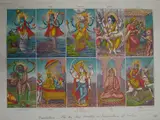
- Ādivarāha cave inscription, Mahābalipuram Pallava inscriptions inscription Pallava, c. 7th–8th c. CE read the text ↗ A single verse listing ten avatars of Viṣṇu: Fish, Tortoise, Boar, Man-lion, Dwarf, three Rāmas, Buddha and Kalkin. The earliest datable list of the ten, with the Buddha ninth and no Kṛṣṇa. Sanskrit cited in §02 §08 Tantra and the Last Age of Indian Buddhism →
- T 2837 (Lengqie shizi ji), 'Hongren' Jingjue, Record of the Masters and Disciples of the Laṅkāvatāra prose c. 713–720 CE read the text ↗ A Northern-school genealogy, quoting Xuanze, in which the dying Hongren names the disciples fit to teach, among them Shenxiu and 'Huineng of Shaozhou' (韶州惠能): evidence for Huineng independent of Shenhui. Classical Chinese §07 Into China →
- Nihon shoki, Kinmei 13 Nihon shoki prose compiled 720 CE about ↗ The court chronicle's account of King Sŏng of Paekche sending a Buddha image and sūtras in 552, and the debate between the Soga and the Mononobe over whether to worship it. Classical Chinese cited in §07 cited in §11 §11 Japan and the Kamakura Reformations →
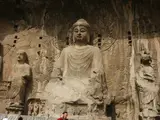
- Inscription of the Great Vairocana niche, Longmen (Quan Tang wen 987) Heluo shangdu Longmen zhi yang da Lushena xiang kan ji inscription Tang, 8th c. read the text ↗ Records that Empress Wu gave 20,000 strings of cash from her cosmetics allowance in the fourth month of 672 and that the colossal Vairocana was completed on the last day of the twelfth month of 675. Classical Chinese cited in §07 §07 Into China →
- T 2154 (Kaiyuan shijiao lu) 8, 'Xuanzang' Zhisheng, Kaiyuan Catalogue of Buddhist Teachings list 730 CE read the text ↗ From 645 to 664 Xuanzang 'produced in all seventy-five works in 1,335 fascicles' of sūtra, vinaya and treatise, and separately wrote the Record of the Western Regions. Classical Chinese cited in §07 §07 Into China →
- Putidamo nanzong ding shifei lun Shenhui, recorded by Dugu Pei prose 732 CE (debate), recorded later The record of Shenhui's attack at Huatai on the disciples of Shenxiu as a 'gradual' side branch, and his claim that Huineng was the true sixth patriarch. Survives in Dunhuang manuscripts. Classical Chinese cited in §07 §07 Into China →
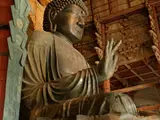
- Shoku Nihongi, Tenpyō 15 (743) Shoku Nihongi prose 743 CE Emperor Shōmu's edict announcing the Great Buddha of Tōdaiji: he holds the realm's wealth and power, yet invites anyone to help with even a twig or a handful of earth. Classical Chinese cited in §11 §11 Japan and the Kamakura Reformations →
- Guhyasamāja Tantra Esoteric Buddhist scripture prose c. 8th c. CE A foundational 'great yoga' tantra whose antinomian language and yoga of the subtle body became the centre of later monastic tantric study. Sanskrit cited in §08 §08 Tantra and the Last Age of Indian Buddhism →
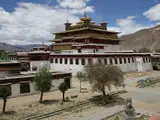
- Samye pillar Samye monastery inscription c. 779–800 about ↗ Trisong Detsen's edict on stone: the shrines of the Three Jewels at Lhasa, Samye and elsewhere are founded, and the ruler and ministers swear never to abandon or destroy them. Old Tibetan cited in §09 §09 Tibet: The Second Home →
- Bhāvanākrama I–III (Tōh. 3915–3917) Kamalaśīla prose late 8th c. about ↗ Three treatises on the stages of meditation, combining calm and analytical insight, traditionally linked to Kamalaśīla's dispute with Moheyan. Sanskrit (and Tibetan) cited in §09 §09 Tibet: The Second Home →
- Somapura monastery seals Paharpur, Bangladesh artefact late 8th–9th c. CE about ↗ Seals naming the great monastery of Śrī Dharmapāladeva at Somapura, which identify the Paharpur ruins and their royal Pāla founder. Sanskrit cited in §08 §08 Tantra and the Last Age of Indian Buddhism →
- Dunwu dacheng zhengli jue (Pelliot chinois 4646) Dunhuang manuscript prose late 8th–9th c. about ↗ Moheyan's answers to the Indian party's questions, with a preface by Wangxi saying that the Chinese master prevailed and was endorsed by the Tibetan ruler. Classical Chinese cited in §09 §09 Tibet: The Second Home →
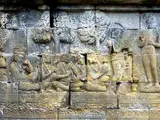
- Borobudur Central Java site c. 780–830 CE about ↗ The Śailendra Mahāyāna monument: galleries carved with the Lalitavistara life of the Buddha, Jātakas and the Gaṇḍavyūha, rising to latticed stupas with seated Buddhas. — cited in §10 §10 Theravāda and Southeast Asia →
- Karchung pillar Karchung (Skar-cung), near Lhasa inscription c. 800–815 about ↗ Tride Songtsen renews his father's oath to protect Buddhism and recalls that in Songtsen Gampo's time the religion of the Buddha was practised by building the temple at Rasa (Lhasa). Old Tibetan cited in §09 §09 Tibet: The Second Home →
- Madhyavyutpatti (sGra sbyor bam po gnyis pa) Imperial translation decree prose 814 The court's ruling on how Sanskrit Buddhist terms must be translated, with explanations of the choices. Translation in Tibet was a state project with fixed rules. Classical Tibetan and Sanskrit cited in §09 §09 Tibet: The Second Home →
- Sange gakushō shiki (Regulations in Six Articles) Saichō prose 818 CE Saichō's petitions for training Tendai monks on Mount Hiei: "What is the treasure of the nation? It is our religious nature" (trans. Paul Groner); he who sheds light over a corner of the country is the nation's treasure. Classical Chinese cited in §11 §11 Japan and the Kamakura Reformations →
- Lhasa treaty pillar Tang–Tibet treaty of 821–822 inscription 823 about ↗ Bilingual pillar before the Jokhang recording the peace between Ralpacan and the Tang: each side keeps the frontiers it holds, east to Great China and west to Great Tibet. Old Tibetan and Chinese cited in §09 §09 Tibet: The Second Home →
- Pelliot tibétain 134 Dunhuang manuscript manuscript 9th c. about ↗ An aspiration prayer for the emperor 'U'i dum brtan (Langdarma) at his accession, addressing him as a Buddhist ruler; Yamaguchi read it as proof of his piety, van Schaik as a reminder of a Buddhist king's duties. Old Tibetan cited in §09 §09 Tibet: The Second Home →
- Platform Sūtra (Dunhuang, S. 5475) Liuzu tanjing prose copied c. 830–860 CE about ↗ The earliest surviving version of the Platform Sūtra, in which Huineng's verse reads 'Buddha-nature is always pure' where later editions read 'originally there is not a single thing'. Classical Chinese cited in §07 §07 Into China →
- Jiu Tang shu 18A (Wuzong) Old History of the Tang prose 845 CE (edict); compiled 945 read the text ↗ Wuzong's edict of 845: 'how can a petty teaching from the West stand against us?'; over 4,600 monasteries destroyed, 260,500 monks and nuns laicised, over 40,000 shrines demolished. Classical Chinese cited in §07 §07 Into China →
- Nittō guhō junrei gyōki Ennin's diary prose 838–847 CE The Japanese monk Ennin's day-by-day diary of his years in Tang China, including an eyewitness account of the Huichang suppression. Classical Chinese cited in §07 §07 Into China →
- Nepal Cullavagga folios The Oldest Pāli Manuscript manuscript c. 8th–9th c. CE about ↗ Four palm-leaf folios of the Cullavagga in the National Archives, Kathmandu. The oldest Pali manuscript known, more than a thousand years younger than the texts it carries. Pali cited in §00 §00 How We Know →
- Nālandā copper plate of Devapāla Nālandā inscription mid-9th c. CE about ↗ Records that Bālaputradeva, Śailendra king of Suvarṇadvīpa, built a monastery at Nālandā and that the Pāla king Devapāla granted five villages for its upkeep. Sanskrit cited in §08 §08 Tantra and the Last Age of Indian Buddhism →
- Laghuśaṃvara Tantra Cakrasaṃvara cycle verse c. 8th–9th c. CE about ↗ Root text of the Cakrasaṃvara cycle. Alexis Sanderson identified some two hundred of its roughly seven hundred verses as redacted from Śaiva Vidyāpīṭha scriptures. Sanskrit cited in §08 §08 Tantra and the Last Age of Indian Buddhism →
- Diamond Sūtra, Dunhuang (BL Or. 8210/P.2) Jingang bore boluomi jing artefact 868 CE about ↗ A woodblock-printed scroll of Kumārajīva's Diamond Sūtra, 'made for universal free distribution by Wang Jie on behalf of his two parents' on 11 May 868; the oldest complete dated printed book. Classical Chinese cited in §07 §07 Into China →
- Hevajra Tantra 2.2.51 Hevajra Tantra verse c. 9th–10th c. CE read the text ↗ 'The world is bound by passion; by passion too it is released': the yoginī tantras' principle that desire is the material of awakening. Sanskrit cited in §08 §08 Tantra and the Last Age of Indian Buddhism →
- Bhāgavata Purāṇa 1.3.24 Bhāgavata Purāṇa verse c. 9th–10th c. CE read the text ↗ At the start of the Kali age Viṣṇu will be born among the Kīkaṭas as the son of Añjana, 'Buddha by name', to delude the enemies of the gods. Sanskrit §08 Tantra and the Last Age of Indian Buddhism →
- Bhāgavata Purāṇa 1.3.28 Bhāgavata Purāṇa verse c. 9th–10th c. CE read the text ↗ After listing Viṣṇu's descents, including the Buddha, the text declares that these are portions of the Person, but Kṛṣṇa is the Lord himself (kṛṣṇas tu bhagavān svayam). Sanskrit §08 Tantra and the Last Age of Indian Buddhism →
- IOL Tib J 321 Dunhuang manuscript manuscript 10th c. about ↗ A commentary on a tantra connected with Padmasambhava, among the earliest evidence for him: a tantric master, not yet the tamer of all Tibet. Old Tibetan cited in §09 §09 Tibet: The Second Home →
- Jetavanārāma slab inscription of Mahinda IV Anurādhapura inscriptions inscription 10th c. CE (r. 956–972) A tenth-century royal inscription from Anurādhapura declaring that none but bodhisattvas become kings of Lanka: the bodhisattva ideal used for kingship in a Theravāda country. Sinhala §10 Theravāda and Southeast Asia →
- T 2061 (Song gaoseng zhuan) 21, 'Qici' Zanning, Song Biographies of Eminent Monks prose 988 read the text ↗ The earliest life of Budai: pot-bellied, wrinkled brow, begging with a cloth bag on a staff; a verse naming Maitreya; died in the Tianfu era (901–904); 'many paint his image' in Jiangsu and Zhejiang. Classical Chinese cited in §07 §07 Into China →
- Caryāgīti (Charyapada) Songs of the siddhas verse c. 9th–12th c. CE about ↗ Forty-seven tantric songs by twenty-three siddha poets, found in the Nepal royal library in 1907 by Haraprasad Shastri; among the oldest literature in Bengali. Early Bengali (Old Bengali-Assamese-Odia) cited in §08 §08 Tantra and the Last Age of Indian Buddhism →
- T 2076 (Jingde chuandeng lu) Record of the Transmission of the Lamp prose 1004 CE read the text ↗ The Song compilation that fixed Chan's genealogy of patriarchs from the past Buddhas through Bodhidharma and Huineng, with their recorded encounters. Classical Chinese cited in §07 §07 Into China →
- T 2076 (Jingde chuandeng lu) 27, 'Budai' Record of the Transmission of the Lamp prose 1004 read the text ↗ Lists Budai of Mingzhou among unaffiliated Chan adepts and gives his death in 916 at Yuelin monastery after the verse 'Maitreya, true Maitreya ... the people do not recognise him'. Classical Chinese cited in §07 §07 Into China →
- Laghukālacakra Tantra 1.154 Kālacakra Tantra verse c. 1025–1040 CE about ↗ Lists the teachers of the barbarian (mleccha) religion: 'Adam, Noah, Abraham, and five others – Moses, Jesus, the White-Clad One, Muhammad, and Mahdi' (trans. Alexander Berzin). Indian Buddhist knowledge of Islam on the eve of conquest. Sanskrit cited in §08 §08 Tantra and the Last Age of Indian Buddhism →
- Vimalaprabhā (year 403 of the barbarians) Puṇḍarīka, commentary on the Kālacakra prose c. 1025–1040 CE about ↗ Names a year 403 of the barbarians' era; as a Hijra year, 1012–13 CE. One of the clues that date the Kālacakra corpus to the early eleventh century. Sanskrit cited in §08 §08 Tantra and the Last Age of Indian Buddhism →
- Bodhipathapradīpa (Tōh. 3947) Atiśa verse c. 1042 about ↗ Atiśa's Lamp for the Path to Awakening, written in western Tibet: three kinds of practitioners and one graduated path that includes tantra. Sanskrit (surviving in Tibetan) cited in §08 cited in §09 §09 Tibet: The Second Home →
- dBa' bzhed (Testament of Ba) Account of the founding of Samye prose versions from the 11th c. onward; core possibly older about ↗ The main narrative of how Buddhism was established under Trisong Detsen: Śāntarakṣita, Padmasambhava's short stay, the building of Samye and the debate with the Chinese party. Classical Tibetan cited in §08 cited in §09 §09 Tibet: The Second Home →
- Daśāvatāracarita (Buddha chapter) Kṣemendra verse 1066 CE about ↗ The Kashmiri poet's account of Viṣṇu's ten avatars, completed in 1066, tells the Buddha avatar as a sympathetic version of the Buddha's own life, without the Purāṇic deluder motif. Sanskrit §08 Tantra and the Last Age of Indian Buddhism →
- Abhayadatta, Caturaśītisiddhapravṛtti Lives of the Eighty-Four Siddhas prose c. 11th–12th c. CE about ↗ The source of the canonical count of eighty-four mahāsiddhas: short lives of adepts who include low-caste labourers, kings who abandoned their thrones and monks who left their monasteries. Sanskrit (surviving in Tibetan) cited in §08 §08 Tantra and the Last Age of Indian Buddhism →
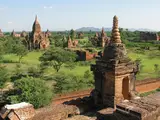
- Bagan (Pagan) Bagan Archaeological Zone, Myanmar site 11th–13th c. CE about ↗ The capital of the Pagan kingdom (1044–1287), where rulers and donors built thousands of temples, stupas and monasteries; the remains of over 2,000 temples and pagodas still stand on the plain. — cited in §10 §10 Theravāda and Southeast Asia →
- X 1261 (Zuting shiyuan) 5 Muan Shanqing, Collection from the Garden of the Patriarchs prose 1108 read the text ↗ A Song Chan reference work which, under 'single transmission', says Bodhidharma 'singly transmitted the mind-seal ... what is called a separate transmission outside the teachings, not founded on words and letters, pointing directly at the human mind, seeing one's nature and becoming a Buddha' (教外別傳,不立文字,直指人心,見性成佛), the four phrases together as one formula. Classical Chinese cited in §07 §07 Into China →
- Myazedi inscription Pagan inscription 1113 CE about ↗ One text in four languages on two pillars: Prince Rājakumār dedicates a golden Buddha image for the merit of his dying father, King Kyanzittha. The key to reading Pyu. Pali, Old Mon, Old Burmese, Pyu cited in §10 §10 Theravāda and Southeast Asia →
- Nālandā inscription of Vipulaśrīmitra Nālandā, Monastery 7 inscription c. 12th c. CE Found at Nālandā: a eulogy of the monk Vipulaśrīmitra recording that his predecessor Karuṇāśrīmitra died when his house at Somapura monastery was set on fire by an army of Vaṅgāla. Sanskrit cited in §08 §08 Tantra and the Last Age of Indian Buddhism →
- T 2003 (Biyan lu) Yuanwu Keqin, Blue Cliff Record prose c. 1125 CE (preface 1128) read the text ↗ Yuanwu's commentary on Xuedou's verses on one hundred 'public cases' (gong'an), the classic kōan collection; its preface by Puzhao is dated 1128, and a later preface records that Yuanwu's disciple Dahui burned the blocks. Classical Chinese §07 Into China →
- Samguk sagi 18, 24 and 4 Kim Pusik, History of the Three Kingdoms prose compiled 1145 read the text ↗ Fu Jian of the Former Qin sends the monk Sundo with images and scriptures to Goguryeo (Sosurim 2, 372); the 'foreign monk' Mālānanda reaches Baekje from Jin (Chimnyu 1, 384); in Silla 'the Buddhist law was first practised' in Beopheung 15 (528) after the death of Ichadon. Classical Chinese cited in §07 §07 Into China →
- Gal Vihāra inscription Polonnaruwa inscription c. 1165 CE about ↗ Parākramabāhu I records his reform of the order: an assembly under the elder Mahākassapa expels corrupt monks, unites the three fraternities under the Mahāvihāra and issues a code of conduct (katikāvata). Sinhala cited in §05 cited in §10 §10 Theravāda and Southeast Asia →
- Gītagovinda 1, Daśāvatāra hymn Jayadeva verse Late 12th c. CE The opening hymn to the ten avatars praises Keśava 'who took the Buddha's body' for condemning Vedic sacrifice and the slaughter of animals out of compassion. Sanskrit §08 Tantra and the Last Age of Indian Buddhism →
- Senchaku hongan nembutsu shū Hōnen prose 1198 CE Hōnen's argument that in the final age all other practices should be set aside for the recitation of Amida's name, the practice chosen in Amida's original vow. Classical Chinese cited in §11 §11 Japan and the Kamakura Reformations →
- Kōzen gokokuron Eisai (Yōsai) prose 1198 CE "Promoting Zen for the Protection of the Country": Eisai argues that Chan practice and strict precepts will strengthen the state and support Tendai, not threaten it. Classical Chinese cited in §11 §11 Japan and the Kamakura Reformations →
- Maṇi bka' 'bum Treasure compilation prose 12th–13th c. about ↗ The fullest telling of Songtsen Gampo as an emanation of Avalokiteśvara and of his Chinese and Nepali queens bringing the sacred images to Lhasa. Classical Tibetan cited in §09 §09 Tibet: The Second Home →
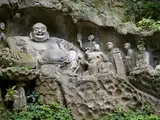
- Feilaifeng niche 68 Feilaifeng, Hangzhou site Song dynasty, usually dated Southern Song (1127–1279) about ↗ A rock-cut Budai, laughing and pot-bellied, at the centre of a group of eighteen arhats on the hill opposite Lingyin monastery. — §07 Into China →
- Shōbōgenzō, Genjōkōan Dōgen prose 1233 CE "To study the Buddha Way is to study the self. To study the self is to forget the self" (trans. Robert Aitken and Kazuaki Tanahashi): practice and realisation are one. Medieval Japanese cited in §11 §11 Japan and the Kamakura Reformations →
- Kyōgyōshinshō, postscript Shinran prose c. 1224–1250s CE read the text ↗ Shinran recalls the 1207 ban on the nembutsu and his laicisation, and calls himself "neither monk nor layman" (hisō hizoku). Classical Chinese cited in §11 §11 Japan and the Kamakura Reformations →
- Biography of Dharmasvāmin Chos dpal dar dpyang prose 13th c. CE about ↗ Eyewitness of Bihar in 1234–36: Vikramaśīla razed by Turkic troops and its stones thrown into the Ganges; Nālandā damaged but still teaching about seventy monks under its aged abbot. Classical Tibetan cited in §08 §08 Tantra and the Last Age of Indian Buddhism →
- Cūḷavaṃsa 37 Cūḷavaṃsa prose c. 13th c. CE read the text ↗ The chronicle's life of Buddhaghosa: a brahmin from near Bodh Gaya who came to Anurādhapura under King Mahānāma, wrote the Visuddhimagga to prove his learning, and translated the Sinhala commentaries into Pali. Pali cited in §10 §10 Theravāda and Southeast Asia →
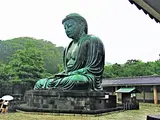
- Great Buddha of Kōtoku-in Kamakura artefact cast from 1252 CE A colossal bronze Amida Buddha raised by public subscription in the warrior capital; its hall was lost in the late fifteenth century. — cited in §11 §11 Japan and the Kamakura Reformations →
- Ṭabaqāt-i Nāṣirī (Raverty, vol. 1, p. 552) Minhāj al-Sirāj Jūzjānī prose c. 1260 CE about ↗ Muhammad Bakhtiyār Khalji's troops take a fortified 'Bihar', kill its shaven-headed inhabitants and find it full of books: a Buddhist monastery, probably Odantapurī, sacked around 1200. Persian cited in §08 §08 Tantra and the Last Age of Indian Buddhism →
- Risshō ankoku ron Nichiren prose 1260 CE read the text ↗ Nichiren's treatise to Hōjō Tokiyori blaming disasters on the nembutsu and urging the country to embrace the Lotus Sūtra so that "the threefold world will become the Buddha land." Medieval Japanese (kanbun) cited in §11 §11 Japan and the Kamakura Reformations →
- Shuju onfurumai gosho (The Actions of the Votary of the Lotus Sutra) Nichiren letter 1276 CE read the text ↗ Nichiren's own account, written to the lay nun Kōnichi, of his arrest in 1271, his near-execution at Tatsunokuchi near Kamakura and his exile to Sado. Medieval Japanese cited in §11 §11 Japan and the Kamakura Reformations →
- Tannishō 3 Tannishō (sayings of Shinran, compiled by Yuien) prose late 13th c. CE "Even the good person attains birth in the Pure Land, how much more so the evil person" (trans. Taitetsu Unno): birth depends on Amida's vow, not on one's own goodness. Medieval Japanese cited in §11 §11 Japan and the Kamakura Reformations →
- T 2008 (Liuzu dashi fabao tan jing) Platform Sūtra, Zongbao edition prose 1291 CE read the text ↗ The Yuan-dynasty edition that became standard. Huineng's verse reads 菩提本無樹,明鏡亦非臺,本來無一物,何處惹塵埃, where the Dunhuang copy has 'Buddha-nature is always pure'. Classical Chinese §07 Into China →
- Ram Khamhaeng inscription Sukhothai inscription 1292 CE (traditional; disputed) about ↗ "There is fish in the water and rice in the fields" (Griswold and Prasert); a forest monastery for a saṅgharāja "who has studied the scriptures from beginning to end" and came from Nakhon Si Thammarat; a stone throne where monks preach on holy days. Authenticity debated since the 1980s. Old Thai cited in §10 §10 Theravāda and Southeast Asia →
- Zhou Daguan, The Customs of Cambodia Zhenla fengtu ji prose c. 1297–1312 CE about ↗ The only eyewitness account of Angkor (1296–97). Its section on the 'three doctrines' describes Buddhist monks beside Brahmanical scholars and Śaiva ascetics; the text survives in shortened form. Classical Chinese cited in §10 §10 Theravāda and Southeast Asia →
- Pūjāvaliya and Nikāya-saṅgrahaya on the writing of the canon Sinhala Buddhist histories prose 13th and 14th c. CE Sinhala works of the thirteenth and fourteenth centuries that first place the writing down of the Pali Canon at the Aluvihāra monastery, at a council of 500 monks. The older chronicles name no place. Sinhala cited in §05 §00 How We Know →
- Wat Kok Svay Chek inscription (K. 754) Angkor inscription 1309 CE The oldest Pali inscription in Cambodia, dated 1309 and attributed to King Śrīndravarman two years after his abdication in 1307; it commemorates the building of a vihāra and a Buddha image. Pali and Khmer cited in §10 §10 Theravāda and Southeast Asia →
- Mokuan Reien, Hotei MOA Museum of Art, Atami artefact c. 1333–1343 about ↗ An ink painting of Budai by a Japanese Zen monk-painter working in China, inscribed by the Chan master Liaoan Qingyu; an Important Cultural Property. — §11 Japan and the Kamakura Reformations →
- Hall of the Heavenly Kings (Tianwang dian) Chinese monastery layout site Ming onward about ↗ The entrance hall of Chinese monasteries: Maitreya in Budai's form faces the gate, with the guardian Weituo behind him facing the main hall, a standard arrangement by the Ming period. — §07 Into China →
- Lam rim chen mo Tsongkhapa prose 1402 Tsongkhapa's Great Treatise on the Stages of the Path, building on Atiśa's scheme; the foundation text of the Geluk school. Classical Tibetan cited in §09 §09 Tibet: The Second Home →
- Kalyani inscriptions Bago (Pegu) inscription 1476–1479 CE about ↗ King Dhammazedi sends 22 senior monks to be reordained in the Mahāvihāra lineage on the Kalyāṇī river in Sri Lanka, then has Lower Burma's monks reordained through them; also records earlier missions such as Chapaṭa's. Pali and Mon cited in §10 §10 Theravāda and Southeast Asia →
- Shichifukujin JAANUS (Japanese Architecture and Art Net Users System) report reference about ↗ The Seven Lucky Gods, Hotei among them, grouped in the Muromachi period; the membership was not fixed at first. English §11 Japan and the Kamakura Reformations →
- Tāranātha, History of Buddhism in India (Rgya gar chos 'byung) Tāranātha prose 1608 about ↗ A late but detailed Tibetan history of Indian Buddhism: credits Dharmapāla with Vikramaśīla and its 108 temples, fifty-three of them for the secret tantras; names its six gatekeeper scholars; ties Candrakīrti and Śāntideva to Nālandā; also preserves legends, such as Aśoka founding a temple there, that excavation does not confirm. Classical Tibetan cited in §08 §08 Tantra and the Last Age of Indian Buddhism →
- Tāranātha, History of Buddhism in India (Chimpa & Chattopadhyaya, pp. 318–320) Tāranātha prose 1608 CE read the text ↗ The petty Turuṣka rulers overrun Magadha, massacre monks at Odantapurī and destroy it and Vikramaśīla; the Persians later build a fort on Odantapurī's ruins, and scholars flee to Odisha, Nepal, Tibet, south India and Southeast Asia. At Nālandā Rāhulaśrībhadra still has about seventy listeners. Tibetan §08 Tantra and the Last Age of Indian Buddhism →
- Fudōchi shinmyōroku (The Mysterious Record of Immovable Wisdom) Takuan Sōhō prose early 17th c. CE about ↗ The Rinzai monk Takuan's treatise for the sword master Yagyū Munenori, explaining swordsmanship through the Zen idea of a mind that does not stop or attach anywhere. Early modern Japanese cited in §11 §11 Japan and the Kamakura Reformations →
- History of Tibet (Song of the Spring Queen) The Fifth Dalai Lama prose 1643 Written a year after he took power: the Tibetan emperors as emanations of Avalokiteśvara, the bodhisattva with whom the Dalai Lamas were identified. Classical Tibetan cited in §09 §09 Tibet: The Second Home →
- Pag Sam Jon Zang Sumpa Khenpo Yeshe Paljor prose 1748 about ↗ A Tibetan history of Buddhism in India that tells how two non-Buddhist mendicants, insulted by young monks, set Nālandā's library on fire. Legendary, and written five centuries after the events. Tibetan cited in §08 §08 Tantra and the Last Age of Indian Buddhism →
- Twenty-nine-article ordinance Qing government prose 1793 about ↗ Qing regulations for Tibet after the Gurkha war, including the rule that high reincarnations be chosen by lot from a Golden Urn. Tibetan, Chinese and Manchu cited in §09 §09 Tibet: The Second Home →
- Joinville, "On the Religion and Manners of the People of Ceylon" Asiatic Researches 7 prose 1801 The earliest recorded English use of the word, spelled "Boudhism", in a survey of the religion of Ceylon for the Asiatic Society of Bengal. English cited in §12 §12 Colonial Encounter and Buddhist Modernism →
- Introduction à l'histoire du Buddhisme indien Eugène Burnouf prose 1844 The first major European study of Indian Buddhism from Sanskrit sources, written from the manuscripts Brian Hodgson sent from Nepal. Its Buddha is a moral reformer who rejected caste and ritual. French cited in §12 §12 Colonial Encounter and Buddhist Modernism →
- Shinbutsu hanzen rei Meiji government edicts law 1868 CE Orders separating kami from buddhas: Buddhist images and titles removed from shrines, and monks serving shrines to become shrine priests or return to lay life. Japanese cited in §11 §11 Japan and the Kamakura Reformations →
- Kuthodaw Pagoda Tipiṭaka slabs Mandalay inscription 1860–68; ratified 1871 about ↗ The whole Pali canon carved on 729 marble slabs for King Mindon, each in its own shrine, and recited and ratified by about 2,400 monks at the Fifth Council of 1871. Pali in Burmese script cited in §12 §12 Colonial Encounter and Buddhist Modernism →
- Dajōkan Proclamation 133 Meiji Council of State law 1872 CE about ↗ "From now on Buddhist clerics shall be free to eat meat, marry, grow their hair, and so on" (trans. Richard Jaffe): the state stops enforcing the precepts. Japanese cited in §11 §11 Japan and the Kamakura Reformations →
- Full Account of the Buddhist Controversy held at Pantura Ceylon Times (John Capper, ed.) prose 1873 about ↗ The English record of the August 1873 Pānadura debate between the monk Guṇānanda and Christian ministers. Its circulation in America brought Henry Steel Olcott to Ceylon. English cited in §12 §12 Colonial Encounter and Buddhist Modernism →
- Buddhism and Christianity Face to Face J. M. Peebles, ed. (Boston: Colby and Rich) book 1878 about ↗ The American reissue of John Capper's report of the 1873 Pānadura debate, with Peebles's introduction; it records crowds of five to seven thousand, notes that both sides claimed victory, and is the edition through which Olcott learned of the debate. English cited in §12 §12 Colonial Encounter and Buddhist Modernism →
- The Light of Asia Edwin Arnold book 1879 read the text ↗ A blank-verse life of the Buddha, "Prince Siddartha", that became a Victorian bestseller and gave many Western and Indian readers their first picture of him. English cited in §12 §12 Colonial Encounter and Buddhist Modernism →
- The Buddhist Catechism Henry Steel Olcott prose 1881; 44th ed. c. 1908 read the text ↗ A question-and-answer primer for Buddhist schools, certified by Hikkaduvē Sumaṅgala. It calls "Buddhism" a western term, says Buddhism is "not a religion, but a moral philosophy", and declares it consistent with modern science. English (from Sinhala first edition) cited in §12 §12 Colonial Encounter and Buddhist Modernism →
- Chulalongkorn Tipiṭaka, 1893 Siamese printed edition of the Pali Canon text 1893 about ↗ The first printed edition of an almost complete Pali Canon, 39 volumes in Thai script, issued for King Chulalongkorn's jubilee. It omits eight Khuddaka Nikāya texts, including the Theragāthā, Therīgāthā and Jātaka. Pali in Thai script cited in §12 §00 How We Know →
- Vivekananda, 'Buddhism, the Fulfilment of Hinduism' (26 September 1893) Address at the World's Parliament of Religions, Chicago lecture 1893 read the text ↗ Vivekananda tells the Parliament that 'Shâkya Muni came not to destroy, but he was the fulfilment, the logical conclusion, the logical development of the religion of the Hindus': the classic modern statement of the Buddha as a Hindu reformer. English §02 The Buddha →
- Proclamation of the Thirteenth Dalai Lama Lhasa prose 1913 about ↗ Issued on the Dalai Lama's return from exile: in Shakabpa's translation, relations with the Mongol, Ming and Manchu rulers had been 'that of patron and priest and had not been based on the subordination of one to the other', and 'We are a small, religious, and independent nation.' Read by Tibetans as a declaration of independence and by the PRC as no such thing. Classical Tibetan cited in §09 §09 Tibet: The Second Home →
- Nālandā Mahāvihāra (archaeological site) Bihar site 5th–12th c. CE; excavated 1915–37 and 1974–82 about ↗ The excavated monastery at Bargaon: eleven monasteries and six large brick temples exposed by the Archaeological Survey of India in 1915–37 and 1974–82; a UNESCO World Heritage Site since 2016. — §08 Tantra and the Last Age of Indian Buddhism →
- Essays in Zen Buddhism, First Series D. T. Suzuki (London: Luzac) book 1927 The first of Suzuki's three series of essays presenting Zen to Western readers as an immediate experience beyond doctrine and ritual. English cited in §12 §12 Colonial Encounter and Buddhist Modernism →
- Yeola speech, 13 October 1935 B. R. Ambedkar lecture 1935 At a Depressed Classes conference Ambedkar declares that he was born a Hindu but will not die one, announcing the search for another religion. Marathi cited in §12 §12 Colonial Encounter and Buddhist Modernism →
- Bodh Gaya Temple Act, 1949 Bihar Act XVII of 1949 law 1949; amended 2013 about ↗ Places the Mahabodhi temple under a committee of four Hindus and four Buddhists chaired by the district magistrate of Gaya, who had to be Hindu until the 2013 amendment. English cited in §12 §12 Colonial Encounter and Buddhist Modernism →
- Constitution of India, Arts. 17 & 25 Republic of India law 1950 CE about ↗ Untouchability abolished; religious freedom guaranteed; temples opened to all classes of Hindus by constitutional mandate. English
- Hindu Code Bills Parliament of India law 1955–56 CE about ↗ A secular legislature imposes monogamy, permits divorce, and grants daughters inheritance — the largest single change in Hindu practice in this history. English
- Hindu Marriage Act, 1955, s. 2(1)(b) Act No. 25 of 1955, Parliament of India law 1955 about ↗ Applies the Act to Hindus and also to any person who is a Buddhist, Jaina or Sikh by religion. English §12 Colonial Encounter and Buddhist Modernism →
- The twenty-two vows B. R. Ambedkar, Nagpur prose 14 October 1956 about ↗ The vows Ambedkar administered at his conversion: no faith in Brahmā, Viṣṇu and Maheśa, Rāma or Kṛṣṇa; denial that the Buddha was an avatar of Viṣṇu; and a commitment to equality. Marathi cited in §12 cited in §13 §12 Colonial Encounter and Buddhist Modernism →
- Sixth Council edition (Chaṭṭha Saṅgāyana) Burmese printed edition of the Pali Canon text 1950s–1962 about ↗ The edition prepared for the Sixth Council held at Rangoon in 1954–56, with canon, commentaries and subcommentaries. Its Khuddaka Nikāya includes the Milindapañha, Peṭakopadesa and Nettippakaraṇa. Pali in Burmese script §00 How We Know →
- The Buddha and His Dhamma, introduction B. R. Ambedkar prose 1956; published 1957 read the text ↗ Ambedkar's "four problems" with the inherited tradition: the renunciation story, the four noble truths, karma and rebirth, and the purpose of the monk. He replaces the four sights with a dispute over the Rohiṇī river. English cited in §12 cited in §13 §12 Colonial Encounter and Buddhist Modernism →
- Malcolm Browne, photograph of Thích Quảng Đức, 11 June 1963 Associated Press report 11 June 1963 about ↗ Browne's AP photograph of the monk's self-immolation at a Saigon intersection, protesting the Diệm government's treatment of Buddhists; it won the World Press Photo of the Year for 1963 and was reproduced worldwide. English cited in §13 §13 Global and Contemporary Buddhism →
- Return to Righteousness: A Collection of Speeches, Essays and Letters of the Anagarika Dharmapala Anagārika Dharmapāla, ed. Ananda Guruge (Colombo: Ministry of Education and Cultural Affairs) prose speeches and essays 1890s–1930s; collected 1965 The standard collection of Dharmapāla's writings, including his praise of the "Aryan-Sinhalese" and his attacks on Christianity, "polytheism" and foreign influence. English cited in §12 §12 Colonial Encounter and Buddhist Modernism →
- Fourteen Mindfulness Trainings Order of Interbeing (Thích Nhất Hạnh) prose 1966, revised later read the text ↗ The precepts of Thích Nhất Hạnh's engaged Buddhist order, founded in Saigon during the war; the first rejects attachment to any doctrine or ideology, "even Buddhist ones". Vietnamese / English cited in §13 §13 Global and Contemporary Buddhism →
- Buddha Jayanti Tipiṭaka, 1957–1989 Sri Lankan printed edition of the Pali Canon text 1957–1989 about ↗ The Sri Lankan government edition begun for the 2,500th Buddha Jayanti, Pali text with Sinhala translation. It includes the Peṭakopadesa and Nettippakaraṇa but not the Milindapañha. Pali in Sinhala script, with Sinhala translation §00 How We Know →
- Constitution of Sri Lanka, Article 9 Constitution of the Democratic Socialist Republic of Sri Lanka law 1978 read the text ↗ The state shall give Buddhism the foremost place and protect and foster the Buddha Sāsana, while assuring all religions the rights in Articles 10 and 14(1)(e). English, Sinhala, Tamil cited in §13 §13 Global and Contemporary Buddhism →
- Tibet: Its Ownership and Human Rights Situation (white paper, September 1992) Information Office of the State Council of the People's Republic of China statement 1992 about ↗ The PRC's official historical case: Tibet incorporated into the Yuan in the mid-13th century, continuous Chinese sovereignty for over 700 years, the Golden Urn and imperial titles as proof of central authority, and 'Tibetan independence' as a British-instigated fiction that no government ever recognised. Chinese (official English version) cited in §09 §09 Tibet: The Second Home →
- Wherever You Go, There You Are Jon Kabat-Zinn prose 1994 Defines mindfulness as "paying attention in a particular way: on purpose, in the present moment, and nonjudgmentally" — the definition of the secular movement. English cited in §13 §13 Global and Contemporary Buddhism →
- International full ordination ceremony in Bodh Gaya Thubten Chodron report 1998 about ↗ A participant's account of the February 1998 ordination organised by Fo Guang Shan at Bodh Gaya, with women from Theravāda and Tibetan communities among the ordinands. English cited in §13 §13 Global and Contemporary Buddhism →
- State Religious Affairs Bureau Order No. 5 Measures on the Management of the Reincarnation of Living Buddhas in Tibetan Buddhism law 2007 about ↗ Requires government approval for every recognition of a reincarnate lama, State Council approval for the most important, and bars foreign interference (Article 2). English quotations follow the International Campaign for Tibet translation. Chinese cited in §13 §13 Global and Contemporary Buddhism →
- International Congress on Buddhist Women's Role in the Sangha University of Hamburg event 18–20 July 2007 about ↗ About 400 participants and the Dalai Lama discuss restoring full ordination for nuns in the Tibetan tradition; no decision is reached. English cited in §13 §13 Global and Contemporary Buddhism →
- The 17th Karmapa's instruction on meat, 2007 Karma Kagyu monasteries report 2007 about ↗ After several years as a vegetarian, the 17th Karmapa asks the monasteries of his lineage to stop serving meat in their dining halls. English §07 Into China →
- Nalanda University Act, 2010 Parliament of India law 2010 about ↗ Act founding the modern Nalanda University near Rajgir; first classes 2014, new campus inaugurated in June 2024. English §08 Tantra and the Last Age of Indian Buddhism →
- Census of India 2011, religion data Office of the Registrar General of India statistics 2011 (released 2015) Counts 966 million Hindus (79.8 percent of India) and 8.44 million Buddhists (0.7 percent), about 6.5 million of the latter in Maharashtra. English cited in §12 cited in §13 §13 Global and Contemporary Buddhism →
- First geshema degrees, 22 December 2016 Tibetan Nuns Project / Central Tibetan Administration event 2016 Twenty Tibetan nuns receive the geshema, the highest Geluk scholastic degree, from the Dalai Lama at Drepung in south India: the first women to hold it. Tibetan cited in §13 §13 Global and Contemporary Buddhism →
- Sangha Act amendments, B.E. 2560 (2016) and B.E. 2561 (2018) Kingdom of Thailand, amendments to the Sangha Act B.E. 2505 (1962) law December 2016; 2018 about ↗ The December 2016 amendment lets the king appoint the Supreme Patriarch directly, with the prime minister countersigning; the 2018 amendment gives the king the appointment of the Sangha Supreme Council. Thai cited in §13 §13 Global and Contemporary Buddhism →
- UN Fact-Finding Mission on Myanmar (A/HRC/39/64) UN Human Rights Council report 2018 The UN fact-finding mission's report on the 2017 'clearance operations' in Rakhine State, which drove more than 725,000 Rohingya into Bangladesh. English cited in §13 §13 Global and Contemporary Buddhism →
- Sakyong Mipham steps back, July 2018 Shambhala International; Buddhist Project Sunshine and Wickwire Holm reports report 2018 about ↗ After reports of sexual misconduct and abuse of power by its leader Sakyong Mipham, published from February 2018, he stepped back from leadership of Shambhala in July 2018. English cited in §13 §13 Global and Contemporary Buddhism →
- The Gambia v. Myanmar (case 178) International Court of Justice legal case 2019– about ↗ Genocide Convention case over the 2016–17 clearance operations against the Rohingya; merits hearings concluded January 2026, judgment pending as of October 2026. English, French cited in §13 §13 Global and Contemporary Buddhism →
- Glimpses on History of Tibet Central Tibetan Administration (Tibetan government in exile), tibet.net statement current website text about ↗ The exile government's historical case: a priest-patron relationship with the Mongol and Manchu emperors, the Golden Urn as an 'imperialist imposition' not adhered to by Tibetans, Tibetan sovereignty never lost, and the 1913 declaration of independence. English cited in §09 §09 Tibet: The Second Home →
- Bhutan full ordination of nuns, June 2022 Lion's Roar report report 2022 about ↗ Bhutan's Je Khenpo gives full ordination to 144 nuns at Punakha, the first such ordination in the Himalayan Vajrayana world in modern times. English cited in §13 §13 Global and Contemporary Buddhism →
- Statement of 2 July 2025 Office of the 14th Dalai Lama statement 2025 about ↗ The Dalai Lama affirms that the institution of the Dalai Lama will continue and that the Gaden Phodrang Trust has sole authority to recognise his reincarnation. English (also Tibetan) cited in §13 §13 Global and Contemporary Buddhism →
- Foreign Ministry press conference, 2 July 2025 Ministry of Foreign Affairs of the PRC statement 2025 Spokesperson Mao Ning: the Dalai Lama's reincarnation must follow domestic recognition, the golden urn and approval by the central government. Chinese cited in §13 §13 Global and Contemporary Buddhism →
- Kōmeitō leaves the ruling coalition, 10 October 2025 Kōmeitō statement report 2025 about ↗ Kōmeitō, the party founded by Sōka Gakkai, ends its coalition with the Liberal Democratic Party after 26 years. English cited in §13 §13 Global and Contemporary Buddhism →
- Centrist Reform Alliance, 2026 Japanese party politics report 2026 about ↗ Kōmeitō's lower-house members merge with the Constitutional Democrats in January 2026; the alliance falls from 167 to 49 seats in February and disbands in September 2026. English cited in §13 §13 Global and Contemporary Buddhism →
No sources of that type.