Buddhism since 1950 in one paragraph
Since 1950 Buddhism has been reshaped by the modern state more than by any doctrinal movement. Communist governments destroyed it in China and Tibet and then regulated its return; independent Sri Lanka, Myanmar and Thailand made it a pillar of national identity, sometimes against minorities; India gained a new Buddhist community of Dalit converts; the Tibetan exile created a global teacher in the Dalai Lama and a succession dispute that is now a matter of international politics. In the West, Buddhism arrived as meditation and was partly turned into a secular health technique, mindfulness. Women began to restore full ordination in the Theravāda world for the first time in about a thousand years. And in the first decade for which a consistent global count exists, Buddhism is shrinking. Majority
None of these developments is unprecedented in kind. Kings had regulated the saṅgha since Ashoka (§4), monks had served national causes in Sri Lanka since the chronicles (§10), and lay meditation had been reinvented in colonial Burma (§12). What is new is their scale and speed, and that they now happen in public, in many languages at once. Majority
Timeline of Buddhism since 1950
| Date | Event | Confidence |
|---|---|---|
| 1950–51 | People’s Liberation Army enters Tibet; Seventeen Point Agreement[1] | Consensus |
| 1953 | Buddhist Association of China founded under state supervision[2] | Consensus |
| 1956 | 2,500th Buddha Jayanti; Sinhala Only Act in Sri Lanka; Ambedkar’s conversion at Nagpur, 14 October[3][4] | Consensus |
| 1959 | The 14th Dalai Lama flees to India; government in exile later settles at Dharamsala[1] | Consensus |
| 1962 | San Francisco Zen Center incorporated; Thailand’s Sangha Act centralises the monkhood[5][6] | Consensus |
| 1963 | Thích Quảng Đức burns himself to death in Saigon, 11 June, protesting the Diệm government[7][8] | Consensus |
| 1966 | Thích Nhất Hạnh founds the Order of Interbeing[9] | Consensus |
| 1966–76 | Cultural Revolution: monasteries closed or destroyed across China and Tibet[2][1] | Consensus |
| 1969 | S. N. Goenka begins teaching Vipassanā courses in India[10] | Consensus |
| 1975 | Insight Meditation Society founded at Barre, Massachusetts[5] | Consensus |
| 1979 | Jon Kabat-Zinn opens the Stress Reduction Clinic at the University of Massachusetts[11][12] | Consensus |
| 1982 | China’s Document 19 restores limited religious freedom[2] | Consensus |
| 1995 | Rival 11th Panchen Lamas: Dalai Lama’s candidate (May) disappears; Beijing’s chosen by golden urn (November)[1] | Consensus |
| 1996–98 | Theravāda nuns ordained at Sarnath (1996) and Bodh Gaya (1998)[13] | Consensus |
| 2007 | China’s Order No. 5 requires state approval of reincarnations; Hamburg congress on nuns’ ordination[14][13] | Consensus |
| 2009 | Bhikkhunī ordination in Perth; Ajahn Brahm expelled from the Wat Pah Pong network[15] | Consensus |
| 2012–15 | Bodu Bala Sena (Sri Lanka); 969 and Ma Ba Tha (Myanmar); four “race and religion” laws[16][4] | Consensus |
| 2016 | First geshema degrees awarded to Tibetan nuns[17] | Consensus |
| 2017 | More than 700,000 Rohingya flee Myanmar to Bangladesh[18] | Consensus |
| 2022 | Bhutan’s Je Khenpo fully ordains 144 nuns[19] | Consensus |
| 2025 | Dalai Lama affirms the institution will continue (2 July); Beijing rejects his authority[20][21] | Consensus |
| 2026 | ICJ judgment in The Gambia v. Myanmar pending after January merits hearings[22] | Consensus |
Where: Asia, the diasporas and the converts
About 98 percent of the world’s Buddhists live in Asia and the Pacific. The largest Buddhist populations are in Thailand (about 68 million) and China (about 53 million), and Buddhists form majorities in Cambodia, Thailand, Myanmar, Bhutan, Sri Lanka, Laos and Mongolia.[23] Majority
Three other geographies matter more than their numbers suggest:
- The Tibetan diaspora. Some tens of thousands followed the Dalai Lama in 1959. Dharamsala in Himachal Pradesh, with the Central Tibetan Administration and the Dalai Lama’s residence, became the capital of a stateless religion, and the great Geluk monasteries, refounded in refugee settlements in Karnataka, became among the largest monastic communities in the Tibetan world.[1][24] Consensus
- Maharashtra. Of India’s 8.4 million Buddhists in the 2011 census, about 6.5 million, 77 percent, live in Maharashtra, Ambedkar’s home state; most are converts or their descendants from Dalit families.[25] Consensus
- The West. About 2 percent of Buddhists live in North America and 1 percent in Europe,[23] but Western convert Buddhism, and the mindfulness movement that came out of it, has shaped how Buddhism is presented worldwide, including back in Asia. Majority
The evidence ledger for Buddhism since 1950
| Dimension | What we can say | Evidence | Confidence |
|---|---|---|---|
| Numbers | About 324 million in 2020, down 5 percent from 2010 | Pew global estimates[23] | Majority |
| State control | Communist states regulate recognition of lamas, monastery registration and clergy | China’s Order No. 5 (2007); 2025 foreign ministry statement[14][21] | Consensus |
| State privilege | Theravāda states give Buddhism constitutional priority | Sri Lanka Article 9; Thailand’s Sangha Acts[26][4] | Consensus |
| Nationalism | Monk-led movements targeting Muslim minorities in Sri Lanka and Myanmar | BBS rallies before Aluthgama (2014); Ma Ba Tha’s 2015 laws[16][4] | Consensus |
| Converts | A new Indian Buddhism from the Dalit movement | 1956 conversion; 2011 census[3][25] | Consensus |
| Meditation | Lay meditation becomes the central practice of Western Buddhism and secular therapy | IMS, Goenka centres, MBSR, MBCT[27][12][28] | Consensus |
| Women | Full ordination restarted in Theravāda; resisted by Thai and Burmese hierarchies | 1996, 1998, 2009 ordinations; Hamburg 2007[13][15] | Consensus |
| Social ethics | “Engaged Buddhism” applies Buddhist ethics to war, poverty and ecology | Thích Nhất Hạnh’s Order of Interbeing; Ambedkarite movement[7][9] | Majority |
Primary sources
1. A state gives Buddhism “the foremost place”
Constitution of Sri Lanka (1978), Article 9:
“The Republic of Sri Lanka shall give to Buddhism the foremost place and accordingly it shall be the duty of the State to protect and foster the Buddha Sasana, while assuring to all religions the rights granted by Articles 10 and 14(1)(e).”[26]
What it proves. That the post-colonial Theravāda state took over the role the chronicles give the ancient kings: protector of the sāsana, the Buddha’s dispensation (§10). The clause first appeared in the 1972 constitution and was kept in 1978. It sits beside guarantees of religious freedom, and much of Sri Lankan politics since has been an argument over which half of the sentence governs the other. Benjamin Schonthal shows that writing Buddhism into law did not settle disputes but multiplied them, as monks, ministers and minorities took each other to court over what “protecting the sāsana” requires.[4] Majority
2. Engaged Buddhism in a war zone
Order of Interbeing, First Mindfulness Training (Thích Nhất Hạnh, Saigon, 1966, current wording):
“Aware of the suffering created by fanaticism and intolerance, we are determined not to be idolatrous about or bound to any doctrine, theory, or ideology, even Buddhist ones.”[9]
What it proves. That a Vietnamese Zen monk, writing during the Vietnam War, recast the bodhisattva precepts (§6) as an ethic of non-partisanship aimed at the ideologies tearing his country apart. The phrase “engaged Buddhism,” which he did much to popularise, names a wider movement: Buddhist activism on war, poverty, caste and ecology, from Vietnam and Thailand to Ambedkar’s India.[7] Three years earlier Thích Quảng Đức had burned himself to death at a Saigon intersection on 11 June 1963, protesting the Diệm government’s treatment of Buddhists; Malcolm Browne’s photograph of it became one of the most reproduced images of the century, and won the World Press Photo of the Year.[8] Consensus
3. The definition of secular mindfulness
Jon Kabat-Zinn, Wherever You Go, There You Are (1994):
“Mindfulness means paying attention in a particular way: on purpose, in the present moment, and nonjudgmentally.”[29]
What it proves. How far the term had travelled. In the Pali discourses sati is one factor of the eightfold path, bound to ethics, to the analysis of experience into impermanent processes, and to the goal of ending rebirth (§2). Kabat-Zinn’s definition keeps the attentional core and leaves the rest implicit. He has said that he removed Buddhist vocabulary deliberately so that the method could enter hospitals, and that the dharma remains in it unnamed.[30][12] Whether that is translation or loss is the central argument about mindfulness (see Debates). Majority
4. A convert questions the four noble truths
B. R. Ambedkar, The Buddha and His Dhamma (1957), Introduction:
“The second problem is created by the four Aryan Truths. Do they form part of the original teachings of the Buddha? This formula cuts at the root of Buddhism. … The four Aryan Truths make the gospel of the Buddha a gospel of pessimism. Do they form part of the original gospel, or are they a later accretion by the monks?”[31]
What it proves. That the most consequential convert of the twentieth century read the canon critically, asking which parts were original, the same question professional scholars were asking (§2, where K. R. Norman’s grammatical argument about the first sermon is discussed). Ambedkar’s answer was a Buddhism of reason, equality and social liberation, which reinterpreted karma and rebirth and set aside much monastic tradition. His followers took 22 vows, the first of which reads, in a common English rendering: “I shall have no faith in Brahma, Vishnu and Maheshwara, and I shall not worship them.”[32][3] Navayāna, the “new vehicle,” is the most self-conscious reinvention of Buddhism in modern times, made by people for whom the stakes were caste. Majority
5. Two claims to one reincarnation
Statement of the 14th Dalai Lama, signed 21 May and released at Dharamsala on 2 July 2025:
“I am affirming that the institution of the Dalai Lama will continue. … The Gaden Phodrang Trust has sole authority to recognize the future reincarnation; no one else has any such authority to interfere in this matter.”[20]
Chinese Ministry of Foreign Affairs, 2 July 2025 (spokesperson Mao Ning): the reincarnation of the Dalai Lama “must follow the principles of domestic recognition, the ‘Golden Urn’ process, and approval by the central government, in line with religious traditions and laws.”[21]
State Religious Affairs Bureau Order No. 5 (2007), Article 2: “Reincarnating living Buddhas shall not be interfered with or be under the dominion of any foreign organization or individual.”[14]
What it proves. That the recognition of a reincarnate lama, a practice that began in Tibet in the thirteenth century (§9), has become a matter of state law. Beijing’s position rests on the golden urn that the Qianlong emperor introduced in 1792 and wrote into the 29-article ordinance of 1793, and on the claim that recognitions have always required the approval of the central government; the Tibetan side replies that the urn was used inconsistently and that recognition is a religious matter for Tibetans. Both statements were issued days before the Dalai Lama’s ninetieth birthday on 6 July 2025.[1] Political
Exile, the state and the lamas
The Tibetan exile turned a regional religion into a global one, while inside China, Buddhism was first destroyed and then rebuilt under close state supervision.
Tibet and the exile. Chinese troops entered Tibet in 1950; in March 1959, after an uprising in Lhasa, the Dalai Lama escaped to India. In exile he became one of the world’s most recognisable religious figures, received the Nobel Peace Prize in 1989, and moved Tibetan Buddhism from a closed monastic system into university lecture halls and Western retreat centres. Teachers who left with him or soon after, among them Chögyam Trungpa, who founded Naropa in Boulder in 1974, built the first Tibetan institutions in the West.[1][5] Consensus
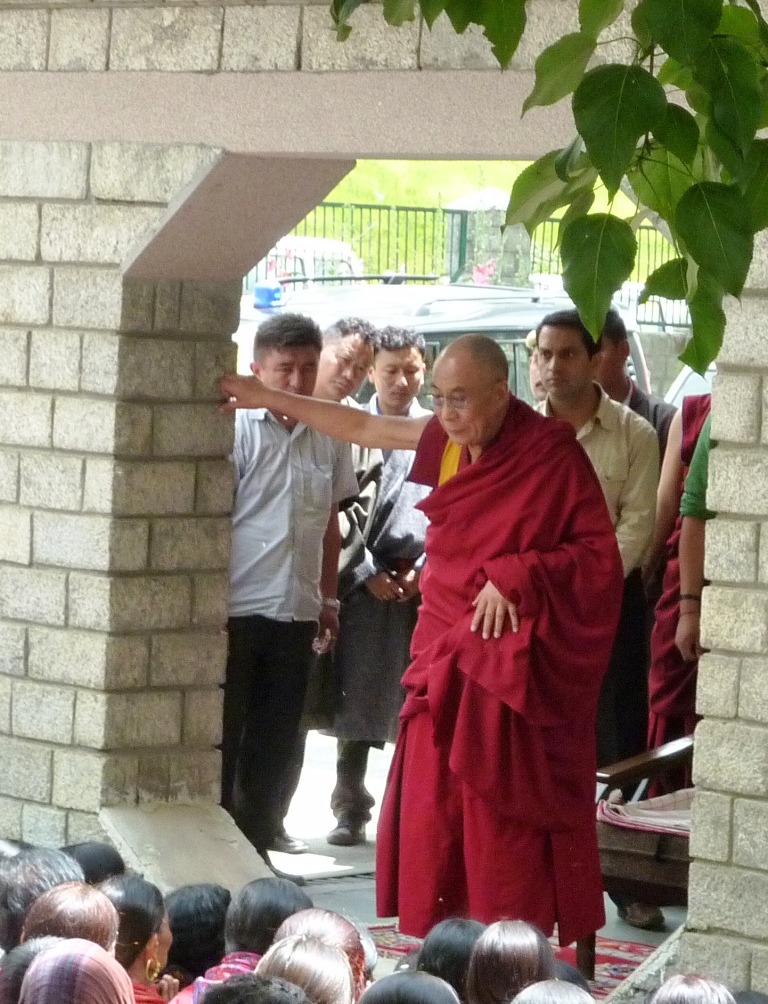
The Panchen Lama case. On 14 May 1995 the Dalai Lama recognised six-year-old Gedhun Choekyi Nyima as the 11th Panchen Lama, the second-ranking Geluk reincarnation. Within days the boy and his family were taken into Chinese custody and have not been seen in public since; Chinese officials say he lives a normal life and does not wish to be disturbed. On 29 November 1995 Beijing held a golden-urn draw that selected Gyaincain Norbu, who has since served in state Buddhist bodies.[1] Since the Panchen Lama traditionally helps recognise the next Dalai Lama, the case was a rehearsal for the succession now openly in dispute. Political The facts of the two recognitions and the disappearance are not in doubt; their legitimacy is.
Mainland China. The Buddhist Association of China was founded in 1953 as a state-supervised body. During the Cultural Revolution (1966–76) monasteries across China and Tibet were closed, looted or destroyed and monks laicised. From 1982, under the policy set out in Document 19, temples reopened, ordinations resumed and pilgrimage and lay donation revived, all within a system of registration and oversight that in Tibetan areas extends to the size of monasteries and, since 2007, the recognition of lamas.[2][14] The revival is real and the controls are real; scholars describe both. Majority
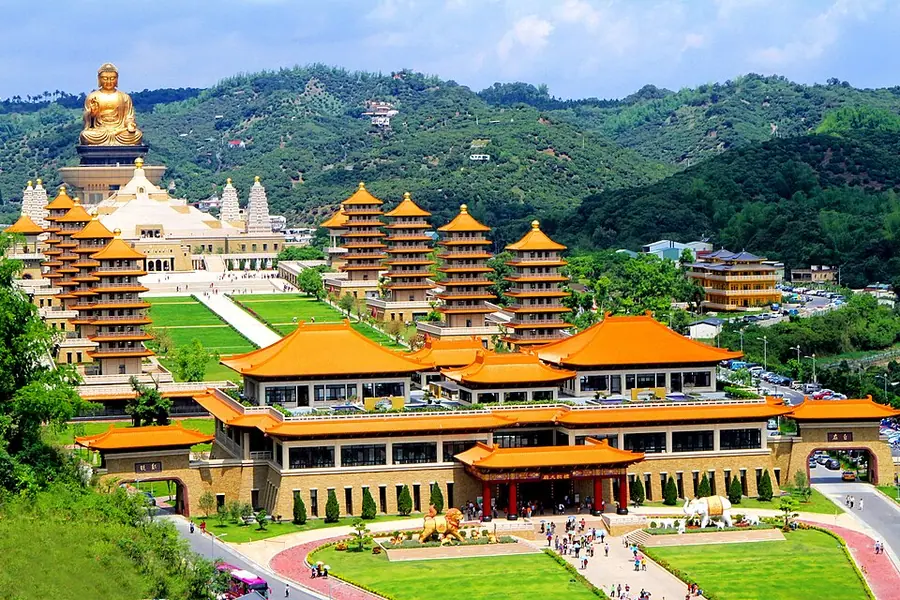
Taiwan. Chinese Buddhism’s other modern centre grew out of the monks who left the mainland in 1949. Fo Guang Shan (Hsing Yun, 1967), Tzu Chi (the nun Cheng Yen, 1966) and Dharma Drum (Sheng Yen, 1989) built “Humanistic Buddhism” (renjian fojiao): lay-centred, charitable, educational and global. They run universities, hospitals, disaster relief and temples on every continent, and a large share of their leaders and members are women.[33] Consensus
War, nationalism and the saṅgha
In the Theravāda states, the modern nation inherited the old compact between king and saṅgha (§10), and with it the idea that Buddhism needs a state to protect it.
Sri Lanka. In 1956, the 2,500th anniversary of the Buddha’s death by Theravāda reckoning, S. W. R. D. Bandaranaike won power with the support of a monks’ front and passed the Sinhala Only Act; in 1959 he was assassinated by a Buddhist monk. Buddhism received “the foremost place” in the 1972 and 1978 constitutions. During and after the civil war (1983–2009), monk-led groups gained new ground. The Bodu Bala Sena (“Buddhist Power Force”), founded in 2012, campaigned against Muslim businesses and customs, and its rally in Aluthgama in June 2014 was followed by riots in which four people were killed and Muslim homes and shops were burned.[4] Consensus
Myanmar. The 969 movement emerged around 2012, preaching boycotts of Muslim businesses; the State Saṅgha Mahā Nāyaka Committee moved against it in 2013, and its leaders regrouped in 2013–14 as the Association for the Protection of Race and Religion, known as Ma Ba Tha. By August 2015 Ma Ba Tha had secured four “race and religion” laws regulating interfaith marriage, conversion, birth spacing and monogamy. The monk Wirathu became its best-known voice. When the army’s “clearance operations” began in August 2017, more than 700,000 Rohingya Muslims fled to Bangladesh. The Gambia brought a genocide case against Myanmar at the International Court of Justice in 2019; merits hearings ended in January 2026, and as of early October 2026 the judgment had not been delivered.[16][18][22] Consensus on events; Political on interpretation
Thailand. The Sangha Act of 1962 placed the monkhood under a centralised hierarchy answerable to the state; amendments in 2016 and 2018 returned the appointment of the Supreme Patriarch and the governing council to the king. Alongside the state saṅgha, the forest tradition of Ajahn Mun and Ajahn Chah (Wat Pah Pong, 1954) became Thailand’s most successful export, with branch monasteries in Britain, Australia and the United States run by Western monks.[6][34][35] Consensus
How to read Buddhist nationalism is the most charged question in modern Buddhist studies, and it is set out in the Debates below.
India: the new Buddhists
Ambedkar’s conversion on 14 October 1956 created a Buddhist community in the land of Buddhism’s origin for the first time in centuries, and gave it a political purpose.
B. R. Ambedkar, born into the Mahar caste, considered untouchable, had chaired the committee that drafted India’s constitution. In 1935 he announced that although he had been born a Hindu he would not die one, and he spent two decades weighing alternatives. At Nagpur, on 14 October 1956, he took the three refuges and five precepts from a Burmese monk and then administered them, with 22 vows, to a crowd usually estimated at several hundred thousand. He died seven weeks later, on 6 December.[3][36] The Hinduism series tells the story from the other side: modern Hinduism since 1947. Consensus
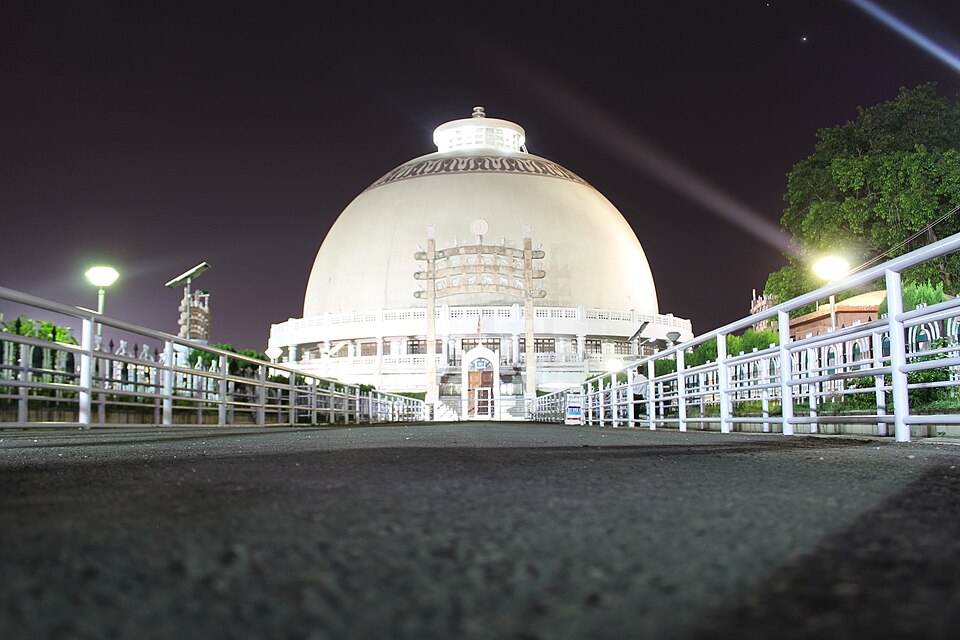
The movement he founded is concentrated in Maharashtra, among people of Mahar background, and has spread more slowly elsewhere. The 2011 census counted 8.44 million Buddhists in India, 0.7 percent of the population, about 6.5 million of them in Maharashtra.[25] Ambedkarite Buddhism is distinctive in its texts (The Buddha and His Dhamma serves many as scripture), its images (Ambedkar beside the Buddha), its festivals and its politics. Whether it is a new vehicle or a return to the Buddha’s original social teaching is argued inside the movement itself. Majority
Japan: the new religions
Japan has one of the world’s largest populations of people who use Buddhist temples, mostly for funerals and memorial rites, and the most successful new Buddhist movements of the twentieth century.
Sōka Gakkai, founded in 1930 as a lay educational society within Nichiren Shōshū (§11), grew after 1945 into a mass movement of urban families; it founded the Kōmeitō party in 1964, broke with the Nichiren Shōshū priesthood in 1991, and runs Soka Gakkai International abroad. Kōmeitō was the Liberal Democratic Party’s coalition partner from 1999 (in opposition with it in 2009–12) until it left the coalition on 10 October 2025.[37] In January 2026 its lower-house members joined the Constitutional Democrats in a new Centrist Reform Alliance, which lost heavily in the February 2026 election and broke up that September, leaving Kōmeitō an independent party again.[38] Sōka Gakkai’s history and politics are traced by Levi McLaughlin.[39] Aum Shinrikyō, a new religion mixing Buddhist, Hindu and apocalyptic Christian elements, carried out the sarin attack on the Tokyo subway on 20 March 1995, which led to tighter regulation of religious corporations.[40] Consensus
Buddhism goes West
Western Buddhism grew in three waves: Zen in the 1950s and 1960s, Tibetan teachers after 1959, and Theravāda-derived insight meditation from the 1970s. Its centre of gravity was meditation, which is the least typical feature of Asian lay Buddhism.
D. T. Suzuki’s Zen (§12) reached a wide audience through the Beat writers; Jack Kerouac’s The Dharma Bums appeared in 1958. Shunryu Suzuki arrived in San Francisco in 1959; the San Francisco Zen Center was incorporated in 1962 and opened Tassajara, often described as the first Zen training monastery outside Asia, in 1967. Joseph Goldstein, Jack Kornfield and Sharon Salzberg, who had trained in Burma, Thailand and India, founded the Insight Meditation Society at Barre, Massachusetts, in 1975. S. N. Goenka, a Burmese-Indian student of the lay teacher U Ba Khin, taught ten-day silent Vipassanā courses from 1969 and built a worldwide network of centres.[5][41][10] Consensus
The convert communities this produced were largely lay, middle-class and white, organised around retreats rather than temples, and quite separate from the Asian immigrant Buddhists of the same cities. Their teachers held unusual authority with few institutional checks, and from the 1980s a series of scandals over sex, money and power, at the San Francisco Zen Center in 1983 and in Trungpa’s Shambhala network repeatedly until its leader stepped back in 2018, led many communities to adopt codes of conduct and shared governance.[41][42] Consensus
Mindfulness: from the Burmese reform to the hospital
Secular mindfulness draws largely on the lay meditation movements of colonial Burma, as well as on Zen and yoga, through Western insight teachers, into medicine. It is a modern product with ancient materials.
Jon Kabat-Zinn, a molecular biologist who practised Zen and insight meditation, founded the Stress Reduction Clinic at the University of Massachusetts Medical Center in 1979 and taught an eight-week course, later called Mindfulness-Based Stress Reduction (MBSR), to patients with chronic pain and illness.[11] In 2002 Zindel Segal, Mark Williams and John Teasdale combined it with cognitive therapy as Mindfulness-Based Cognitive Therapy (MBCT) for recurrent depression, which British health guidelines later recommended.[28][43] From there mindfulness spread into schools, companies, the military and smartphone apps. Consensus
Historians place the movement in a longer line. The idea that laypeople, not only monks, should meditate to gain insight was a twentieth-century reform led by Burmese teachers such as Ledi Sayadaw and Mahasi Sayadaw (§12), and the “Buddhist modernism” David McMahan describes, which presents Buddhism as rational, psychological and compatible with science, prepared Western audiences to receive meditation as a technique.[10][27][12] Majority The critique arrived with the success. Ronald Purser’s McMindfulness (2019) argues that corporate and state mindfulness teaches people to adjust to stress rather than to question its causes.[44] Kabat-Zinn’s reply is that MBSR was always meant as an expression of the dharma in a secular idiom, not a replacement for it.[30] Contested
Women’s ordination: reviving a lost order
The Theravāda nuns’ order, which disappeared in Sri Lanka in the eleventh century and in Burma by the thirteenth (§3), was restarted in the 1990s using the unbroken East Asian lineage. Whether that is valid is the question.
On 8 December 1996 at Sarnath, ten Sri Lankan ten-precept nuns received full ordination with Korean nuns in the assembly; in February 1998 Fo Guang Shan organised an international ordination at Bodh Gaya with more than a hundred women. Ordinations inside Sri Lanka followed, and the island now has several hundred bhikkhunīs, though the state does not formally recognise them.[13][45][46] On 22 October 2009 Ajahn Brahm and Bhante Sujato ordained four women at Bodhinyana Monastery near Perth; on 1 November the senior monks of Wat Pah Pong removed Ajahn Brahm from the Ajahn Chah lineage’s network.[15] Consensus
In Thailand a 1928 ruling of the Supreme Patriarch forbids monks to ordain women, and the most prominent Thai bhikkhunī, Dhammananda, was ordained in Sri Lanka in 2003.[47] The Tibetan tradition never established the full nuns’ ordination; its debate is over whether a lineage can be created from Chinese or Korean sources. In June 2022 Bhutan’s Je Khenpo fully ordained 144 nuns, while the Tibetan exile hierarchy has not followed.[19] The International Congress on Buddhist Women’s Role in the Saṅgha at Hamburg in July 2007, attended by the Dalai Lama, did not resolve it.[13][48] What changed instead was education: on 22 December 2016 twenty Tibetan nuns received the geshema degree, the highest scholastic title, for the first time.[17] Consensus
The arguments on both sides go back to the canon. Opponents point to the eight heavy rules and the rule that nuns must be ordained by both orders, which cannot be satisfied once the nuns’ order has died; supporters point to the evidence that the heavy rules are later additions and to the Buddha’s statement that women can reach awakening (§3).[49] Contested
How many Buddhists, and is Buddhism shrinking?
Pew estimates about 324 million Buddhists in 2020, around 4 percent of the world’s population, down from 343 million in 2010. Buddhists were the only major group to decline in absolute numbers in that decade.[23] Majority
Two causes are given: people raised Buddhist ceasing to identify as Buddhist, especially in China, Japan and South Korea, and Buddhists’ older age profile in ageing countries such as China and Japan.[23] The numbers are softer than for most religions. Many East Asians visit temples, hold Buddhist funerals and venerate ancestors without calling themselves Buddhists in a survey that asks for one religion, and Pew’s own 2012 report had put the 2010 figure at 488 million, before revisions to data and method.[50][23] Majority What is not in doubt is the direction: Buddhism’s share of humanity is falling, while its cultural reach, through meditation, has never been wider.
What is new since 1950
- States that legislate reincarnation. China’s 2007 rules and the 2025 dispute make the recognition of lamas a matter of administrative law. Consensus
- Mass conversion as social protest. Ambedkar’s movement is Buddhism adopted to leave a caste system, by people who knew exactly what they were rejecting. Consensus
- Meditation without Buddhism. Secular mindfulness separates a Buddhist practice from Buddhist identity, ethics and cosmology. Consensus
- Global institutions. Fo Guang Shan, Tzu Chi, Soka Gakkai International, the Plum Village network and the Goenka centres operate across dozens of countries. Consensus
- Women restoring ordination themselves, against parts of the monastic hierarchy. Consensus
- Decline in numbers. In Pew’s 2010–2020 comparison, Buddhists were the only major group whose numbers fell. Majority
Debates about Buddhism today
Is mindfulness Buddhist?
Supporters say MBSR is a skilful translation of Buddhist practice for a secular setting: the Buddha taught in his listeners’ idiom too (§0), and the evidence for the clinical effects of MBCT on relapse in recurrent depression is strong enough for health services to fund it.[28][43][12] Critics say that stripping out ethics and the analysis of craving turns a path of liberation into a stress-management tool, and that the Buddhist branding is used to sell it.[44] Historians add a third point: the “traditional Buddhist meditation” both sides invoke was itself largely a twentieth-century creation for laypeople.[27] Contested
Is Buddhist nationalism a betrayal of Buddhism?
Many Buddhists, including senior monks in both countries, say that anti-Muslim campaigns contradict the first precept and the teaching on hatred. Scholars such as Matthew Walton argue that the movements are better understood on their own terms: their members see themselves as protecting a fragile sāsana that, in the tradition’s own prophecy, will decline and disappear, and they draw on a long chronicle tradition in which kings fought for the dhamma (§10).[16][4] Neither reading excuses the violence; they disagree about whether it is a deviation from Buddhist history or a recurring possibility within it. Political
Who will choose the next Dalai Lama?
The Tibetan position is that recognition is a religious act belonging to the Dalai Lama’s own office, which he has placed in the Gaden Phodrang Trust, and that he may be reborn outside Chinese control. The Chinese position is that recognitions have required central-government approval since the Qing, that the golden urn is the established method, and that the matter is internal to China.[20][21][14] Historians note that the urn was introduced in 1792 and used for some recognitions but bypassed for others, including the 14th Dalai Lama’s own; Beijing points out that the Nationalist government formally approved that exemption in 1940, while the Tibetan side notes that the search and recognition had already been completed in Lhasa.[1] Two rival candidates are widely expected. Political
Can the nuns’ order be revived?
See the section above. The legal arguments within the Vinaya are finely balanced, and the outcome is likely to be decided by communities acting on their own judgment, as they have since 1996, rather than by any council. Contested
What changed and what didn’t
The series began with a question: how much of what people now call Buddhism was there at the start? The answer, chapter by chapter, is that most of it arrived later, and each arrival has a date and a place.
| The earliest layer (§2) had no … | It arrives … | Where |
|---|---|---|
| Images of the Buddha | 1st–2nd c. CE, after two centuries of symbols | Gandhāra and Mathurā (§4, §5) |
| Relic and stupa worship on a large scale | 3rd c. BCE | Ashoka’s empire (§4) |
| A bodhisattva path for ordinary followers | 1st c. BCE–2nd c. CE | Mahāyāna sūtras in the northwest (§6) |
| Amitābha and the Pure Land | 1st–2nd c. CE; mass devotion from the 12th c. | India, then China and Japan (§6, §7, §11) |
| Zen (Chan) | 7th–8th c. CE, with a lineage written backwards | China (§7) |
| Tantra | 7th c. CE onward | India, then Tibet (§8, §9) |
| Reincarnate lamas | 13th c. CE | Tibet (§9) |
| Meditation for laypeople | late 19th–20th c. | Burma, then the world (§12, §13) |
| Secular mindfulness | 1979 | Massachusetts (§13) |
What did not change is just as striking. The core analysis preserved in the material shared by all the early schools, that suffering arises from craving, that nothing in experience is a permanent self, and that a disciplined path of ethics and meditation leads to its end (§2), is still recited in Pali in Myanmar, in Chinese in Taiwan, in Tibetan in Dharamsala and in English in Massachusetts. The monastic code the first councils argued over (§3) still governs monks from Sri Lanka to Korea, with differences that would have been recognisable at Vesālī. And the habit the Buddha is remembered for, allowing the teaching to be put into each person’s own language (§0), is the reason all of this happened. The continuity, as the Hinduism series found for its own subject, is a continuity of process: a tradition that kept its core argument and allowed almost everything else to be reinvented. Majority
Further reading
- David L. McMahan, The Making of Buddhist Modernism (Oxford, 2008).
- Christopher S. Queen and Sallie B. King, eds., Engaged Buddhism: Buddhist Liberation Movements in Asia (SUNY, 1996).
- Melvyn C. Goldstein, The Snow Lion and the Dragon: China, Tibet, and the Dalai Lama (California, 1997).
- Ji Zhe, Gareth Fisher and André Laliberté, eds., Buddhism after Mao (Hawai’i, 2019).
- Benjamin Schonthal, Buddhism, Politics and the Limits of Law (Cambridge, 2016).
- Matthew J. Walton, Buddhism, Politics and Political Thought in Myanmar (Cambridge, 2017).
- Gail Omvedt, Ambedkar: Towards an Enlightened India (2004).
- Rick Fields, How the Swans Came to the Lake (Shambhala, 1981; 3rd ed. 1992).
- Jeff Wilson, Mindful America (Oxford, 2014), and Ronald Purser, McMindfulness (Repeater, 2019).
- Thea Mohr and Jampa Tsedroen, eds., Dignity and Discipline: Reviving Full Ordination for Buddhist Nuns (Wisdom, 2010).
References
- ^ a b c d e f g h i Melvyn C. Goldstein The Snow Lion and the Dragon: China, Tibet, and the Dalai Lama. University of California Press, 1997. The clearest short history of the Tibet question, including the golden urn and the Panchen Lama dispute.
- ^ a b c d Ji Zhe, Gareth Fisher & André Laliberté, eds. Buddhism after Mao: Negotiations, Continuities, and Reinventions. University of Hawai'i Press, 2019. How Chinese Buddhism revived after 1978 inside a system of state supervision.
- ^ a b c d Gail Omvedt Ambedkar: Towards an Enlightened India. Penguin, 2004. full text
- ^ a b c d e f g Benjamin Schonthal Buddhism, Politics and the Limits of Law: The Pyrrhic Constitutionalism of Sri Lanka. Cambridge University Press, 2016. What happened when Sri Lanka wrote Buddhism's "foremost place" into its constitution.
- ^ a b c d Rick Fields How the Swans Came to the Lake: A Narrative History of Buddhism in America. Shambhala, 1981. The standard narrative history of American Buddhism, by a participant.
- ^ a b S. J. Tambiah World Conqueror and World Renouncer: A Study of Buddhism and Polity in Thailand against a Historical Background. Cambridge University Press, 1976. Mongkut's reform, the Dhammayut and the 1902 Sangha Act.
- ^ a b c Christopher S. Queen & Sallie B. King, eds. Engaged Buddhism: Buddhist Liberation Movements in Asia. State University of New York Press, 1996. The book that defined engaged Buddhism as a field: Ambedkar, Thích Nhất Hạnh, Sarvodaya, Buddhadasa and others.
- ^ a b Malcolm Browne, photograph of Thích Quảng Đức, 11 June 1963 — Associated Press. 11 June 1963. English. Browne's AP photograph of the monk's self-immolation at a Saigon intersection, protesting the Diệm government's treatment of Buddhists; it won the World Press Photo of the Year for 1963 and was reproduced worldwide. about
- ^ a b c Fourteen Mindfulness Trainings — Order of Interbeing (Thích Nhất Hạnh). 1966, revised later. Vietnamese / English. The precepts of Thích Nhất Hạnh's engaged Buddhist order, founded in Saigon during the war; the first rejects attachment to any doctrine or ideology, "even Buddhist ones". read the text
- ^ a b c Erik Braun The Birth of Insight: Meditation, Modern Buddhism, and the Burmese Monk Ledi Sayadaw. University of Chicago Press, 2013. How lay meditation became a mass practice in colonial Burma.
- ^ a b Jon Kabat-Zinn Full Catastrophe Living. Delacorte, 1990. The MBSR course in book form, from its founder.
- ^ a b c d e Jeff Wilson Mindful America: The Mutual Transformation of Buddhist Meditation and American Culture. Oxford University Press, 2014. How mindfulness was adapted, marketed and medicalised in the United States.
- ^ a b c d e Thea Mohr & Jampa Tsedroen, eds. Dignity and Discipline: Reviving Full Ordination for Buddhist Nuns. Wisdom Publications, 2010. The papers of the 2007 Hamburg congress: the Vinaya arguments for and against reviving the order.
- ^ a b c d e State Religious Affairs Bureau Order No. 5 — Measures on the Management of the Reincarnation of Living Buddhas in Tibetan Buddhism. 2007. Chinese. Requires government approval for every recognition of a reincarnate lama, State Council approval for the most important, and bars foreign interference (Article 2). English quotations follow the International Campaign for Tibet translation. about
- ^ a b c Thanissara, Cintamani & Jitindriya "The Time Has Come". Lion's Roar (Shambhala Sun), 2010. open access Three senior women of the Ajahn Chah tradition on the 2009 Perth ordination and Ajahn Brahm's expulsion.
- ^ a b c d Matthew J. Walton Buddhism, Politics and Political Thought in Myanmar. Cambridge University Press, 2017. Reads Burmese Buddhist politics, including Ma Ba Tha, on its own terms.
- ^ a b First geshema degrees, 22 December 2016 — Tibetan Nuns Project / Central Tibetan Administration. 2016. Tibetan. Twenty Tibetan nuns receive the geshema, the highest Geluk scholastic degree, from the Dalai Lama at Drepung in south India: the first women to hold it.
- ^ a b UN Fact-Finding Mission on Myanmar (A/HRC/39/64) — UN Human Rights Council. 2018. English. The UN fact-finding mission's report on the 2017 'clearance operations' in Rakhine State, which drove more than 725,000 Rohingya into Bangladesh.
- ^ a b Bhutan full ordination of nuns, June 2022 — Lion's Roar report. 2022. English. Bhutan's Je Khenpo gives full ordination to 144 nuns at Punakha, the first such ordination in the Himalayan Vajrayana world in modern times. about
- ^ a b c Statement of 2 July 2025 — Office of the 14th Dalai Lama. 2025. English (also Tibetan). The Dalai Lama affirms that the institution of the Dalai Lama will continue and that the Gaden Phodrang Trust has sole authority to recognise his reincarnation. about
- ^ a b c d Foreign Ministry press conference, 2 July 2025 — Ministry of Foreign Affairs of the PRC. 2025. Chinese. Spokesperson Mao Ning: the Dalai Lama's reincarnation must follow domestic recognition, the golden urn and approval by the central government.
- ^ a b The Gambia v. Myanmar (case 178) — International Court of Justice. 2019–. English, French. Genocide Convention case over the 2016–17 clearance operations against the Rohingya; merits hearings concluded January 2026, judgment pending as of October 2026. about
- ^ a b c d e f Pew Research Center How the Global Religious Landscape Changed From 2010 to 2020. Pew Research Center, 2025. open access The source of the 343 and 324 million estimates and the explanation of the decline.
- ^ Sam van Schaik Tibet: A History. Yale University Press, 2011. Readable narrative history from the empire to the present, by a specialist in the Dunhuang manuscripts.
- ^ a b c Census of India 2011, religion data — Office of the Registrar General of India. 2011 (released 2015). English. Counts 966 million Hindus (79.8 percent of India) and 8.44 million Buddhists (0.7 percent), about 6.5 million of the latter in Maharashtra.
- ^ a b Constitution of Sri Lanka, Article 9 — Constitution of the Democratic Socialist Republic of Sri Lanka. 1978. English, Sinhala, Tamil. The state shall give Buddhism the foremost place and protect and foster the Buddha Sāsana, while assuring all religions the rights in Articles 10 and 14(1)(e). read the text
- ^ a b c David L. McMahan The Making of Buddhist Modernism. Oxford University Press, 2008. The standard account of modern Buddhism as detraditionalised, demythologised and psychologised.
- ^ a b c Zindel V. Segal, J. Mark G. Williams & John D. Teasdale Mindfulness-Based Cognitive Therapy for Depression. Guilford Press, 2002. The manual that turned MBSR into a therapy for recurrent depression.
- ^ Wherever You Go, There You Are — Jon Kabat-Zinn. 1994. English. Defines mindfulness as "paying attention in a particular way: on purpose, in the present moment, and nonjudgmentally" — the definition of the secular movement.
- ^ a b Jon Kabat-Zinn "Some Reflections on the Origins of MBSR, Skillful Means, and the Trouble with Maps". Contemporary Buddhism 12(1): 281–306, 2011. doi MBSR's founder explains why he kept Buddhist vocabulary out of the programme while regarding it as an expression of the dharma.
- ^ The Buddha and His Dhamma, introduction — B. R. Ambedkar. 1956; published 1957. English. Ambedkar's "four problems" with the inherited tradition: the renunciation story, the four noble truths, karma and rebirth, and the purpose of the monk. He replaces the four sights with a dispute over the Rohiṇī river. read the text
- ^ The twenty-two vows — B. R. Ambedkar, Nagpur. 14 October 1956. Marathi. The vows Ambedkar administered at his conversion: no faith in Brahmā, Viṣṇu and Maheśa, Rāma or Kṛṣṇa; denial that the Buddha was an avatar of Viṣṇu; and a commitment to equality. about
- ^ Richard Madsen Democracy's Dharma: Religious Renaissance and Political Development in Taiwan. University of California Press, 2007. doi A sociologist's study of Fo Guang Shan, Tzu Chi, Dharma Drum and their role in Taiwan's democratisation.
- ^ Sangha Act amendments, B.E. 2560 (2016) and B.E. 2561 (2018) — Kingdom of Thailand, amendments to the Sangha Act B.E. 2505 (1962). December 2016; 2018. Thai. The December 2016 amendment lets the king appoint the Supreme Patriarch directly, with the prime minister countersigning; the 2018 amendment gives the king the appointment of the Sangha Supreme Council. about
- ^ Kamala Tiyavanich Forest Recollections: Wandering Monks in Twentieth-Century Thailand. University of Hawai'i Press, 1997. open library The history of Ajahn Mun's forest lineage and its uneasy relation to the centralised state saṅgha.
- ^ Ashok Gopal A Part Apart: The Life and Thought of B. R. Ambedkar. Navayana, 2023. Fifteen years in the Marathi sources; corrects the English-only picture.
- ^ Kōmeitō leaves the ruling coalition, 10 October 2025 — Kōmeitō statement. 2025. English. Kōmeitō, the party founded by Sōka Gakkai, ends its coalition with the Liberal Democratic Party after 26 years. about
- ^ Centrist Reform Alliance, 2026 — Japanese party politics. 2026. English. Kōmeitō's lower-house members merge with the Constitutional Democrats in January 2026; the alliance falls from 167 to 49 seats in February and disbands in September 2026. about
- ^ Levi McLaughlin Soka Gakkai's Human Revolution: The Rise of a Mimetic Nation in Modern Japan. University of Hawai'i Press, 2019. doi The standard scholarly history of Sōka Gakkai, its break with Nichiren Shōshū and its party, Kōmeitō.
- ^ Ian Reader Religious Violence in Contemporary Japan: The Case of Aum Shinrikyō. Curzon / University of Hawai'i Press, 2000. doi The fullest account of Aum Shinrikyō, the 1995 sarin attack and its aftermath.
- ^ a b James William Coleman The New Buddhism: The Western Transformation of an Ancient Tradition. Oxford University Press, 2001. A sociologist's survey of Western convert Buddhism, including its teacher scandals.
- ^ Sakyong Mipham steps back, July 2018 — Shambhala International; Buddhist Project Sunshine and Wickwire Holm reports. 2018. English. After reports of sexual misconduct and abuse of power by its leader Sakyong Mipham, published from February 2018, he stepped back from leadership of Shambhala in July 2018. about
- ^ a b Willem Kuyken et al. "Efficacy of Mindfulness-Based Cognitive Therapy in Prevention of Depressive Relapse: An Individual Patient Data Meta-analysis". JAMA Psychiatry 73(6), 2016. doi Nine trials: relapse within 60 weeks in 38 percent with MBCT against 49 percent without.
- ^ a b Ronald E. Purser McMindfulness: How Mindfulness Became the New Capitalist Spirituality. Repeater Books, 2019. The best-known critique of secular mindfulness.
- ^ International full ordination ceremony in Bodh Gaya — Thubten Chodron. 1998. English. A participant's account of the February 1998 ordination organised by Fo Guang Shan at Bodh Gaya, with women from Theravāda and Tibetan communities among the ordinands. about
- ^ Susanne Mrozik "A Robed Revolution: The Contemporary Buddhist Nun's (Bhikṣuṇī) Movement". Religion Compass 3(3): 360–378, 2009. doi Survey of the bhikkhunī revival, with particular attention to Sri Lanka and the arguments over its legitimacy.
- ^ Monica Lindberg Falk Making Fields of Merit: Buddhist Female Ascetics and Gendered Orders in Thailand. NIAS Press, 2007. Ethnography of Thai mae chi and the bhikkhunī question, including the 1928 ban and Dhammananda's ordination.
- ^ International Congress on Buddhist Women's Role in the Sangha — University of Hamburg. 18–20 July 2007. English. About 400 participants and the Dalai Lama discuss restoring full ordination for nuns in the Tibetan tradition; no decision is reached. about
- ^ Bhikkhu Anālayo The Foundation History of the Nuns' Order. Hamburg Buddhist Studies 6, Projektverlag, 2016. open library Compares every version of Mahāpajāpatī's ordination and argues the refusal, heavy rules and decline prediction grew into the story.
- ^ Pew Research Center The Global Religious Landscape. Pew Research Center, 2012. open library The earlier Pew estimate, which put the 2010 Buddhist population at about 488 million (7 percent), before later revisions.