Buddhist modernism in one paragraph
Between about 1800 and 1956, the Buddhist traditions of Asia met European empires, Christian missions and Western science, and came out of the meeting changed. Europeans gave them a single name, “Buddhism,” and a single story: a rational, ethical teaching founded by a historical man, preserved most purely in Pali texts and corrupted by later ritual. Asian reformers took that story, argued with it and used it. In Ceylon, monks and laymen fought the missions with schools, tracts and a catechism written by an American. In Burma, monks taught meditation to lay people on a mass scale for the first time. In Siam a prince-monk purged the order by the standard of the Pali canon. Japanese and Chinese reformers presented Buddhism as the religion best suited to science. In India, where Buddhism had almost vanished, Ambedkar re-founded it as a movement against caste. Much of what the world now thinks Buddhism has always been, from meditation as a lay practice to the claim that Buddhism is “not a religion but a philosophy,” dates from this period. Majority
Timeline of the colonial encounter
| Date | Event | Confidence |
|---|---|---|
| 1801 | “Boudhism” first printed in English, in an article on Ceylon in Asiatic Researches[1][2] | Consensus |
| 1824–51 | Prince Mongkut a monk in Siam; founds the reforming Dhammayut order c. 1833[3] | Consensus |
| 1837 | Brian Hodgson’s Sanskrit manuscripts from Nepal reach Paris; Burnouf’s Introduction follows in 1844[4][5] | Consensus |
| 1871 | King Mindon’s Fifth Council at Mandalay ratifies the canon carved on 729 marble slabs[6] | Consensus |
| 1873 | The Pānadura debate between Buddhist monks and Christian ministers in Ceylon[7] | Consensus |
| 1879 | Edwin Arnold’s The Light of Asia[8] | Consensus |
| 1880 | Olcott and Blavatsky take the refuges and precepts at Galle; Buddhist Theosophical Society founded[9] | Consensus |
| 1881 | Pali Text Society founded in London by T. W. Rhys Davids; Olcott’s Buddhist Catechism[2][10] | Consensus |
| 1885 | British annex Upper Burma, ending the Burmese monarchy; the Buddhist flag designed in Colombo and first flown on Vesak[11][12] | Consensus |
| 1891 | Anagārika Dharmapāla founds the Maha Bodhi Society to recover Bodh Gaya[13][14] | Consensus |
| 1893 | World’s Parliament of Religions, Chicago; Shaku Sōen’s paper, translated by D. T. Suzuki[15][16] | Consensus |
| c. 1900–1923 | Ledi Sayadaw writes meditation manuals for lay people in colonial Burma[17] | Majority |
| 1902 | Siam’s Sangha Act centralises the monastic order under the crown[3] | Consensus |
| 1920s | Taixu calls for a “Buddhism for human life” in China[18] | Consensus |
| 1927 | Suzuki’s Essays in Zen Buddhism published in English[19] | Consensus |
| 1935 | Ambedkar at Yeola: he will not die a Hindu[20] | Consensus |
| 1949 | Bodh Gaya Temple Act; Mahasi Sayadaw begins teaching in Rangoon[21][22] | Consensus |
| 1956 | Ambedkar’s conversion at Nagpur, 14 October[23][24] | Consensus |
Where: from Colombo to Chicago
The colonial encounter happened in port cities and capitals that connected Asia to Europe and America: Colombo and Galle in British Ceylon, Rangoon and Mandalay in Burma, Bangkok in Siam (never colonised, but reforming to stay so), Yokohama and Kyoto in Meiji Japan, Shanghai and Nanjing in China, and Calcutta, Bombay and Nagpur in British India. Its ideas travelled through London, Paris, Boston and Chicago, in journals, translations and conferences.
Two geographies mattered. One was the map of empire: Ceylon (British from 1796–1815), Lower Burma (from 1826 and 1852) and Upper Burma (1885) were ruled directly; Siam and Japan modernised under their own kings to avoid being ruled.[11][3] The other was the new map of Buddhist sacred sites in India, which British archaeologists were identifying and excavating from the 1830s on: Sarnath, Sanchi, Bodh Gaya, Kusinārā and Lumbini (§2). Buddhists from Ceylon, Burma, Siam and Japan began to travel to these places as pilgrims, met one another there, and started to think of themselves as members of a single world religion.[14][13] Majority
The evidence ledger for Buddhist modernism
| Dimension | What we can say | Evidence | Confidence |
|---|---|---|---|
| The category | “Buddhism” as one religion is a European construct of c. 1800–1850 | First uses of the word; Burnouf’s synthesis; the Pali Text Society[1][2][25] | Consensus |
| The textual turn | Western scholars and Asian reformers both made the canon, read directly, the measure of true Buddhism | Mongkut’s reforms; Pali Text Society; Olcott’s catechism[3][10] | Consensus |
| Lay authority | Lay organisations, schools and publications gain religious authority alongside monks | Buddhist Theosophical Society; Maha Bodhi Society; YMBA in Burma[26][11] | Majority |
| Meditation | Insight meditation becomes a mass practice for lay people, first in Burma | Ledi Sayadaw’s manuals; Mahasi’s centre from 1949[17][22] | Majority |
| Science | Buddhism presented as uniquely compatible with modern science | Olcott’s catechism; Shaku Sōen in Chicago; Taixu[10][27] | Consensus |
| Nationalism | Buddhism becomes a marker of national identity against colonial rule | Dharmapāla in Ceylon; YMBA and monks in Burmese politics; Zen in imperial Japan[13][28] | Majority |
| India | Buddhism returns to India as pilgrimage, scholarship and then mass conversion | Maha Bodhi Society; Bodh Gaya Act; Nagpur 1956[14][29] | Consensus |
Primary sources
1. The first “Boudhism”
The earliest known use of the word in English is in a paper on the religion of Ceylon published by the Asiatic Society of Bengal in 1801, where its author writes of “Boudhism.”[1] The spelling wandered (Boodhism, Buddism, Bouddhism) for decades, and the modern form became standard only around the middle of the nineteenth century.[2]
What it proves. That the name is younger than the United States. Before it, Europeans had reported on the “religion of Fo” in China, of “Godama” in Burma, of the lamas in Tibet and of “Budu” in Ceylon without being sure these were one thing. Buddhists themselves spoke of the dhamma (the teaching) or the sāsana (the Buddha’s dispensation), and seldom thought of the Buddhists of other countries as co-religionists. The word made the unity visible, and the unity was partly real and partly the work of scholars. Consensus
Philip Almond put the point sharply: by the middle of the century Buddhism existed for the West chiefly as an object of study, located in texts held in European libraries, and the living traditions of Asia were measured against it and found wanting.[2] Eugène Burnouf’s Introduction to the History of Indian Buddhism (1844), written from the Sanskrit manuscripts that Brian Hodgson sent from Nepal, was the founding work. Its picture of the Buddha as a moral reformer who rejected caste and ritual shaped a century of Western reading.[4][5][25] Consensus
2. The Pānadura debate, 1873
By the 1860s Protestant missions ran most of the English-medium schools in Ceylon and published a steady stream of tracts attacking Buddhism. Buddhist monks answered with presses of their own and a series of public debates. The last and largest was held at Pānadura, south of Colombo, on 26 and 28 August 1873, before a crowd reported in the thousands. The Buddhist speaker, the monk Mohoṭṭivattē (Migettuvattē) Guṇānanda, faced the Wesleyan minister David de Silva and the catechist F. S. Sirimanne. Both sides claimed victory, but the crowd, and most observers, gave it to Guṇānanda. John Capper, editor of the Ceylon Times, published an English account of the speeches the same year.[7][30]
What it proves. That the revival began with monks, not Westerners: Guṇānanda and the scholar-monk Hikkaduvē Sumaṅgala, who founded the Vidyodaya college in 1873, were organising before any European arrived to help. Capper’s account was reissued in Boston in 1878 by the Spiritualist J. M. Peebles as Buddhism and Christianity Face to Face, and in America it was read by Henry Steel Olcott, and that is how the Ceylonese revival acquired its most famous Western ally.[9][31] Consensus
3. Olcott’s Buddhist Catechism
Olcott, a lawyer and former Union army colonel who had co-founded the Theosophical Society in New York in 1875, landed in Ceylon with Helena Blavatsky in May 1880. On 25 May at a temple in Galle they recited the three refuges and five precepts in Pali, among the first Westerners known to have embraced Buddhism in a public ceremony.[9] The next year he published a Buddhist Catechism, modelled on the Christian catechisms used in mission schools and certified by Hikkaduvē Sumaṅgala as “in agreement with the Canon of the Southern Buddhist Church.”[10] In its later editions (quoted here from the forty-fourth) it opens:
“1. Question. Of what religion are you? Answer. The Buddhist. 2. Q. What is Buddhism? A. It is a body of teachings given out by the great personage known as the Buddha. 3. Q. Is ‘Buddhism’ the best name for this teaching? A. No; that is only a western term: the best name for it is Bauddha Dharma.”
A footnote to the first answer adds: “The word ‘religion’ is most inappropriate to apply to Buddhism which is not a religion, but a moral philosophy.” Later questions ask whether Buddhist doctrine is “consistent or inconsistent with common sense and the teachings of modern science” (“Perfectly consistent”), and the book acquired a section on “Buddhism and Science.”[10]
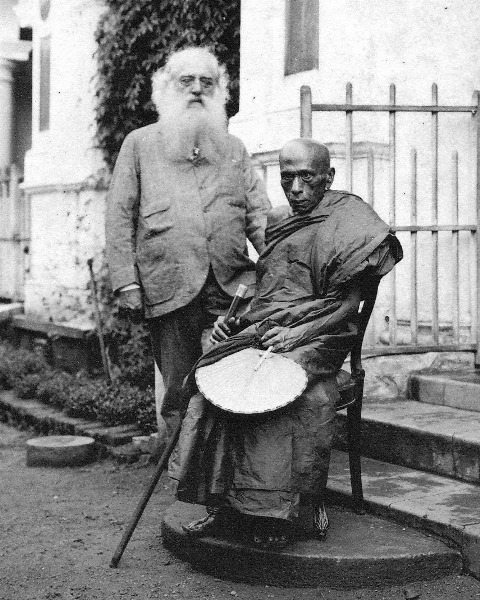
What it proves. Three things about modern Buddhism appear here in one small book, in a text that ran to more than forty editions and was translated into many languages.[10][9] It is defined as a body of teachings, not a set of practices. It is declared “not a religion” but a philosophy, in a footnote by a Theosophist. And it is claimed to agree with modern science. Each of those claims has been repeated so often since that it can sound like something Buddhism always said about itself. In the form we know it, it comes from this period and this kind of text. Consensus
4. Stone as a defence: the Kuthodaw slabs
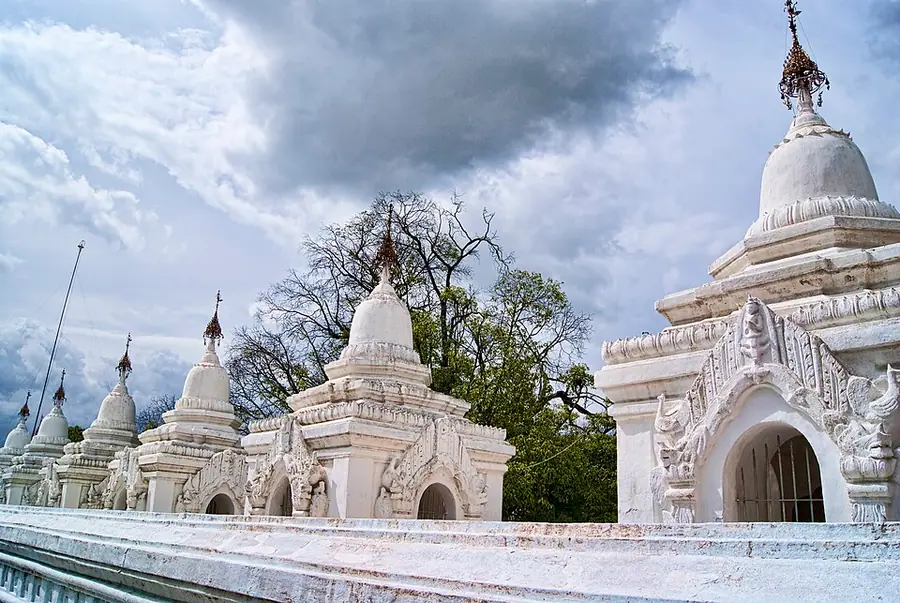
In Burma the threat was conquest, not missions. The British took the coast in 1826 and Lower Burma in 1852. King Mindon (r. 1853–78), ruling what was left from Mandalay, had the whole Pali canon carved on 729 marble slabs, each housed in its own small shrine around the Kuthodaw Pagoda. The texts were opened to the public in 1868, and in 1871 Mindon convened what Burmese tradition counts as the Fifth Buddhist Council, at which some 2,400 monks recited and ratified the canon.[6][11]
What it proves. That a Buddhist king, facing the end of his kingdom, understood the survival of Buddhism as the survival of its texts, and fixed them in the most durable medium he had. The fear was specific. In Burmese thought the king protected the sāsana, and without a king the teaching would decline. When the British deposed Mindon’s son Thibaw in 1885 that fear came true, and it is the background to the lay movements that followed. Majority
5. Ambedkar’s vows, 1956
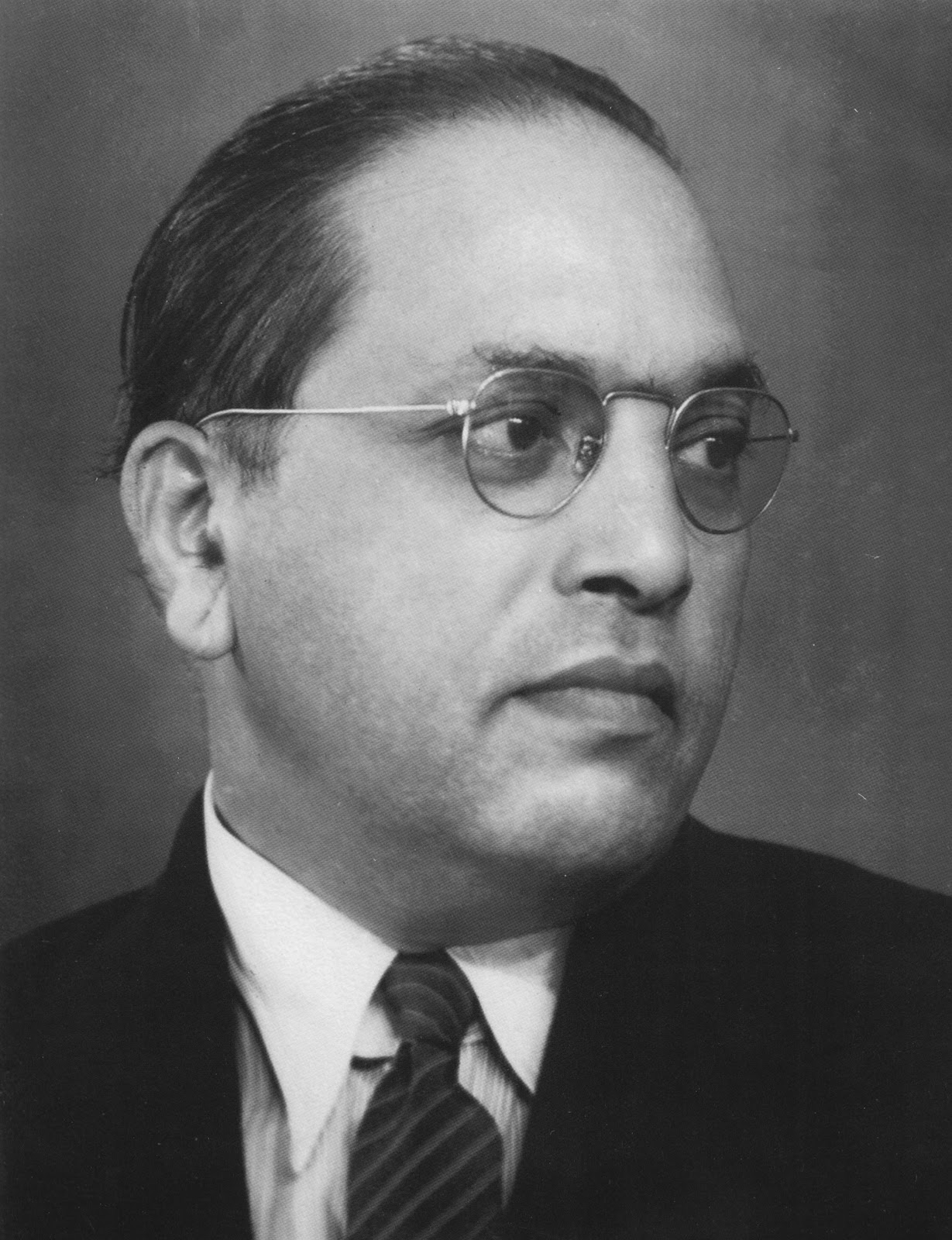
B. R. Ambedkar, the jurist and Dalit leader who chaired the drafting of India’s Constitution, had told a conference at Yeola in 1935 that although he had been born a Hindu, he would not die one.[20] On 14 October 1956 at Nagpur he and his wife took the refuges and precepts from the Burmese-born monk U Chandramani, and Ambedkar then administered them, with twenty-two vows of his own, to a crowd usually estimated at around 400,000, with many more converting at Nagpur and Chandrapur in the days following.[24][32] The vows were given in Marathi; English versions differ. In Gail Omvedt’s translation they include:
“(1) I will not regard Brahma, Vishnu or Mahadev as gods and I will not worship them. … (5) I agree that the propaganda that the Buddha was the avatar of Vishnu is false and mischievous.”[23][24]
What it proves. That the conversion was designed as a clean break. The fifth vow is aimed precisely at the Purāṇic absorption of the Buddha as an avatar of Viṣṇu (§2), which Ambedkar read as the means by which Buddhism had been swallowed. It is the most explicit statement in modern history that Buddhism and Hinduism are separate religions, made by a man who had spent his life arguing that caste was the core of the second (Hinduism §11). Consensus
The central question: was modern Buddhism made in the West?
Modern Buddhism was made by Asian Buddhists, under pressure from the West and often with Western categories, but for their own purposes. Neither “Western invention” nor “pure Asian revival” fits the evidence.
The case for Western making is strong. The category, the textual canon as a measure, the picture of the Buddha as a rational reformer and the claim of harmony with science all appear first or most clearly in European scholarship and in Western converts such as Olcott. Donald Lopez and his colleagues showed how much the academic study of Buddhism was shaped by the needs of empire, from Burnouf’s Paris to the Pali Text Society’s London.[25][2] David McMahan summarises the result as three processes running through modern Buddhism: detraditionalisation (authority moves from institutions to individual experience), demythologisation (gods, realms and miracles are reread as symbols or psychology) and psychologisation (the teaching becomes a science of the mind).[27] Majority
But the agency was Asian, and much of it began before or apart from Western influence:
- Siam. Prince Mongkut, a monk from 1824 to 1851, read the Vinaya and concluded that Siamese monks were not keeping it. About 1833 he founded the Dhammayut (“adhering to the dhamma”) order, with ordination received from Mon monks, stricter discipline and the Pali canon as its standard. As king (1851–68) he and his son Chulalongkorn used it to build a centralised national saṅgha, formalised by the Sangha Act of 1902, with a single curriculum. Siam also printed the canon in Thai script in 1893, among the first printed editions of the Pali canon. This was modernisation to resist colonisation, run by a royal house.[3][33] Consensus
- Ceylon. Monks such as Hikkaduvē Sumaṅgala and Guṇānanda led the revival from the 1860s, and the monastic colleges of Vidyodaya (1873) and Vidyālaṅkāra (1875) predate Olcott. Anne Blackburn argues that the “Protestant” lay revival rested on monastic networks and reform debates that reached back into the eighteenth century.[31] Majority
- Burma. Ledi Sayadaw’s lay meditation (below) was a response to the loss of the monarchy, built from Abhidhamma scholarship, not from Western psychology.[17] Majority
The fairest summary is Steven Kemper’s on Dharmapāla: these reformers were not simply reacting to the West, they were choosing from everything available to them, Western and Asian, to make a Buddhism that could survive in the world they lived in.[13]
Ceylon: “Protestant Buddhism”
The Ceylonese revival produced a new kind of Buddhist: urban, English-educated, lay, and organised. Gananath Obeyesekere called it “Protestant Buddhism” in an essay of 1970, and with Richard Gombrich gave the term its classic statement in 1988.[26]
The label has two meanings. The movement protested against Protestant missions, and it was Protestant in form. It had lay associations, Sunday schools, tracts, hymns, a catechism, a flag and a public holiday: Vesak became a holiday in Ceylon in 1885 after Olcott lobbied for it. It stressed the individual’s own effort and the authority of the text, and was suspicious of ritual, spirit cults and the monk as intermediary.[26][9] Olcott’s Buddhist Theosophical Society founded schools that became leading institutions, among them Ananda College in Colombo (1886).[9]
Anagārika Dharmapāla (1864–1933), born Don David Hewavitarne, was its most important figure. He took the title anagārika, “homeless one,” for a new role between monk and householder: celibate and white-robed, but living and working in the world. He wore it for most of his life, before taking novice ordination in 1931 and full ordination in 1933, months before his death at Sarnath.[13] He travelled to Chicago in 1893, founded the Maha Bodhi Society, and preached a Buddhism of discipline, hygiene, temperance and national pride. He also attacked Christians, Muslims and Hindu “polytheism,” and praised the “Aryan-Sinhalese” as the island’s rightful heirs, in terms that have since fed Sinhalese Buddhist nationalism (§13).[34][13] Kemper argues that he was at least as much a Buddhist internationalist as a nationalist. Both sides of his legacy are real. Majority
How far the label fits is argued (see Debates).
Bodh Gaya: recovering the place of awakening
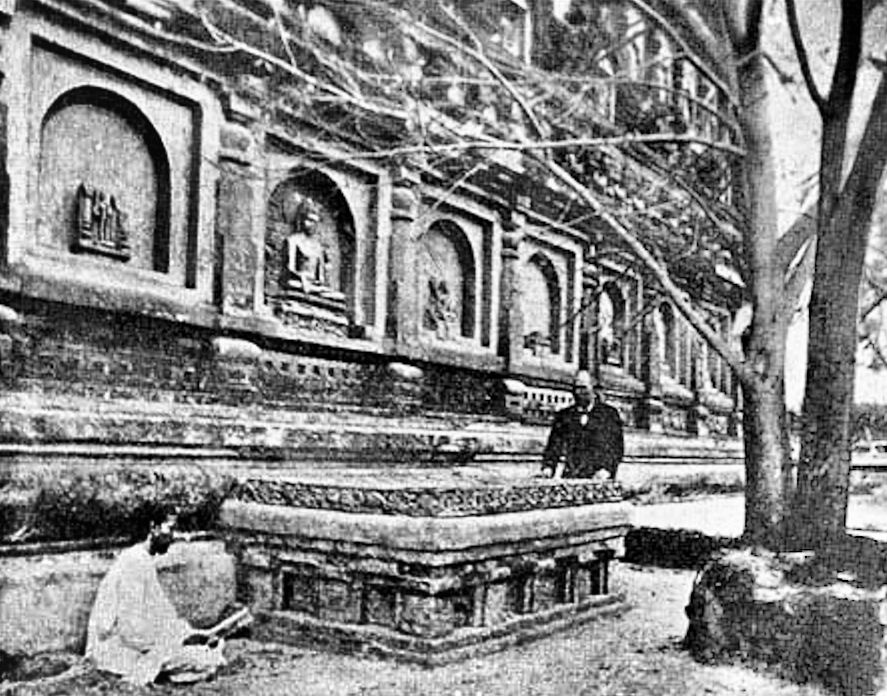
The temple at Bodh Gaya, built on the site Ashoka called Sambodhi (§2), had been in the hands of a Śaiva monastery, the Giri mahants, since the late sixteenth century. Burmese envoys of King Mindon began restoration in the 1870s; the British under Alexander Cunningham and J. D. Beglar rebuilt it in 1880–84.[14] Edwin Arnold, author of The Light of Asia, visited in 1885–86 and publicly urged that it be returned to Buddhists.[14]
Dharmapāla visited in January 1891, found Buddhists unable to worship freely, and founded the Maha Bodhi Society that May to recover the temple. In February 1895 he and his associates tried to install a Buddha image presented from Japan; the mahant’s men stopped them, and the case went to court. The courts upheld the mahant’s ownership while recognising Buddhists’ right to worship there. The dispute outlived the empire.[14][35][13] Consensus
The settlement came in independent India. The Bodh Gaya Temple Act, 1949, passed by the Bihar legislature, placed the temple under a committee of four Hindus and four Buddhists chaired by the district magistrate of Gaya, who had to be a Hindu; if the magistrate was not, the state nominated a Hindu chairman. A 2013 amendment removed that requirement.[21] Buddhist organisations, including many Ambedkarite groups, continue to campaign for exclusive Buddhist management. Political
Burma: meditation for everyone
Meditation, for ordinary Buddhists, is a modern practice. Before the late nineteenth century, insight meditation (vipassanā) was a specialist pursuit of some monks; most lay Buddhists made merit through giving, precepts and ritual. Colonial Burma changed this.[17] Majority
The pivotal figure is the monk Ledi Sayadaw (1846–1923). After the British deposed the last king in 1885, Burmese Buddhists feared that the sāsana would decline without royal protection. Ledi’s answer was to put its protection in the hands of everyone. He wrote dozens of short manuals in Burmese that explained Abhidhamma analysis and meditation in plain terms, and argued that lay people could and should practise insight meditation themselves, without years of study.[17] Lay study groups and meditation associations spread across the country, alongside lay organisations such as the Young Men’s Buddhist Association (1906), which became a seedbed of nationalist politics.[11]
The movement became a mass institution in the next generation. Mingun Sayadaw (1868–1955) developed a method of noting each bodily and mental event, and his student Mahasi Sayadaw (1904–82), invited to Rangoon by Prime Minister U Nu in 1949, ran a centre where thousands of lay people did intensive retreats.[22] The lay teacher U Ba Khin, a government accountant, taught a related method in the Ledi line.[17] Through Mahasi, U Ba Khin and their students, Burmese lay meditation is the main source of the “insight meditation” taught in the West after the 1970s (§13).[17][22] Majority
Japan and China: Buddhism for a modern state
Japan. After the Meiji government’s separation of Shinto and Buddhism in 1868 and the attacks on temples that followed (§11), Buddhist intellectuals set out to show that Buddhism was useful to a modern nation. The “New Buddhism” (shin bukkyō) of the 1890s presented it as philosophical, scientific, ethical and patriotic, against both Christianity and the charge that Buddhism was superstition.[36] At the World’s Parliament of Religions in Chicago in 1893, the Rinzai Zen abbot Shaku Sōen presented a paper on “The Law of Cause and Effect, as Taught by Buddha,” translated by his young lay student D. T. Suzuki and read aloud by the Parliament’s chairman, John Henry Barrows.[15] The paper brought Sōen into contact with the publisher Paul Carus, and Suzuki went to work for Carus in La Salle, Illinois, from 1897 to 1908.[16]
Suzuki then spent sixty years explaining Zen to the West, notably in his Essays in Zen Buddhism (first series 1927).[19] His Zen was an immediate experience beyond doctrine and ritual, expressed in Japanese art and culture and available to anyone. Robert Sharf has argued that this Zen owed much to Western philosophy of religious experience and to Japanese nationalism, and little to the ritual life of actual Zen monasteries.[37] Majority Its relation to Japanese militarism is taken up in the Debates.
China. Late Qing and Republican China saw temples seized to fund modern schools, missionary competition and attacks on Buddhism as superstition. Reformers responded with lay printing houses (Yang Wenhui’s from 1866), Buddhist seminaries and national associations.[38] The leading monk-reformer, Taixu (1890–1947), called for a “Buddhism for human life” (rensheng fojiao): Buddhism should serve the living, not only perform funerals, and should reform its monasteries, education and property. His student Yinshun took the idea, as “Buddhism for the human realm” (renjian fojiao), to Taiwan, where it became the basis of the large “Humanistic Buddhist” organisations of the later twentieth century (§13).[18] Consensus
India: Buddhism returns
By 1800 Buddhism survived in South Asia only at its edges: in Ladakh and Sikkim, among the Newars of the Kathmandu valley, and among the Barua Buddhists of Chittagong (§8). Its return came in three waves.
- Archaeology and pilgrimage. British surveys from the 1830s onward identified and excavated the sacred sites. Asian pilgrims followed, and the Maha Bodhi Society built temples and rest houses, among them the Mūlagandhakuṭī Vihāra at Sarnath (1931).[14][13] Consensus
- Intellectuals. Indian scholars and activists took up Buddhism as an Indian, rational, anti-caste heritage. In Madras the Tamil Dalit intellectual Iyothee Thass founded a Sakya Buddhist Society in 1898, arguing that the “untouchables” of Tamil country were descendants of the original Buddhists.[39] Consensus
- Mass conversion. Ambedkar’s conversion of 1956 turned Buddhism from a heritage into a mass religion of Dalits, especially Mahars in Maharashtra.[29][32]
Ambedkar’s Buddhism was deliberately reformed. In The Buddha and His Dhamma, completed just before his death and published in 1957, he set out “four problems” with the inherited tradition. The first was the reason for the Buddha’s renunciation: he rejected the traditional story of the sights (an old man, a sick man and a corpse) as “absurd on the face of it” and replaced them with the story of a dispute between the Śākyas and the Koliyas over the waters of the Rohiṇī river, in which the young Siddhārtha refused to go to war. The second asked whether the four noble truths were part of the original teaching. The third concerned karma and rebirth, which he reinterpreted in social and ethical terms. The fourth asked what the monk was for.[40]
The first two problems are the same questions that historical scholarship raises about the biography and the first sermon (§2). Ambedkar reached his own answers from different premises: he wanted a Buddhism that could be a social programme. The result is often called Navayāna, the “new vehicle.” It now counts several million followers, most of them in Maharashtra, and is the largest Buddhist community in India: the 2011 census counted 8.4 million Buddhists, about 6.5 million of them in Maharashtra (Hinduism §12).[41] Consensus
What is absent before this period
- The word “Buddhism” and the idea of one world religion with national branches. Consensus
- Meditation as a mass lay practice. Insight meditation was a specialist pursuit. Majority
- “Not a religion but a philosophy.” The claim is a nineteenth-century apologetic, first made prominently in English. Consensus
- Buddhism as the “religion of science.” Asian Buddhists had their own cosmologies; reconciling them with Western science became a project only in this period. Consensus
- A Buddhist flag, a world Buddhist body, Vesak as a public holiday. All are products of the 1880s and after; the World Fellowship of Buddhists followed in 1950.[9][12] Consensus
- Buddhism as an organised religion in the Indian heartland for some seven centuries, outside the Himalayas and the Barua Buddhists of Chittagong. Majority
Debates about Buddhist modernism
Was “Protestant Buddhism” really Protestant?
Gombrich and Obeyesekere argued that the Ceylonese revival internalised Protestant values: lay religious individualism, scripture over ritual, a this-worldly ethic.[26] Critics reply that the label makes Asian Buddhists into imitators. Anne Blackburn shows that the monks at the centre of the revival drew on pre-colonial monastic reform, Pali scholarship and networks reaching to Siam and Burma, and that “Protestant” features such as lay study and textual authority had local precedents.[31] Most scholars still find the comparison useful for the urban lay movement and less so for the monastic revival. Contested
Did Zen support Japanese militarism?
Brian Victoria’s Zen at War (1997) documented how leading Zen teachers and institutions supported Japan’s wars in Asia, and argued that D. T. Suzuki’s writings linking Zen to the samurai ethic helped supply the justification.[28] Few dispute the institutional record. On Suzuki the argument continues. Defenders, most fully Kemmyō Taira Satō, point to letters, articles and talks in which he opposed State Shinto, right-wing thought and the drift to war, and to his post-war reflections; critics point to his pre-war writing on Zen and the sword.[42][37][28] Contested
Was the Mahabodhi temple Hindu or Buddhist?
It was built as a Buddhist temple and is a Buddhist sacred site, a point no historian disputes. For roughly three centuries before 1891 it was also a working Hindu shrine under a Śaiva mahant, with the Buddha worshipped as an avatar of Viṣṇu. The legal question of who should manage it turned on ownership and long possession, not on its origin, and the 1949 compromise reflected Indian politics at independence. Calls to repeal the Act continue.[14][35][21] Political
Is Ambedkar’s Navayāna Buddhism?
Some traditional Buddhists and some scholars have questioned whether a Buddhism that reinterprets karma and rebirth, doubts the four noble truths and rejects the renunciation story is still Buddhism. Ambedkarites reply that every Buddhist tradition has reinterpreted the teaching for its own time, as this series shows chapter by chapter, and that Navayāna is in this sense a normal Buddhist move. Converts took the same refuges and precepts as any Buddhist.[43][24] Political
Further reading
- Philip C. Almond, The British Discovery of Buddhism (Cambridge, 1988).
- Donald S. Lopez Jr., ed., Curators of the Buddha: The Study of Buddhism under Colonialism (Chicago, 1995).
- David L. McMahan, The Making of Buddhist Modernism (Oxford, 2008).
- Richard Gombrich and Gananath Obeyesekere, Buddhism Transformed: Religious Change in Sri Lanka (Princeton, 1988).
- Anne M. Blackburn, Locations of Buddhism: Colonialism and Modernity in Sri Lanka (Chicago, 2010).
- Stephen Prothero, The White Buddhist: The Asian Odyssey of Henry Steel Olcott (Indiana, 1996).
- Steven Kemper, Rescued from the Nation: Anagarika Dharmapala and the Buddhist World (Chicago, 2015).
- Erik Braun, The Birth of Insight: Meditation, Modern Buddhism, and the Burmese Monk Ledi Sayadaw (Chicago, 2013).
- Brian Daizen Victoria, Zen at War (Weatherhill, 1997).
- Don A. Pittman, Toward a Modern Chinese Buddhism: Taixu’s Reforms (Hawai’i, 2001).
- Gail Omvedt, Ambedkar: Towards an Enlightened India (Penguin, 2004).
- Gail Omvedt, Buddhism in India: Challenging Brahmanism and Caste (Sage, 2003).
References
- ^ a b c Joinville, "On the Religion and Manners of the People of Ceylon" — Asiatic Researches 7. 1801. English. The earliest recorded English use of the word, spelled "Boudhism", in a survey of the religion of Ceylon for the Asiatic Society of Bengal.
- ^ a b c d e f Philip C. Almond The British Discovery of Buddhism. Cambridge University Press, 1988. How Victorian Britain constructed "Buddhism" as an object located in texts, and measured living Asian practice against it.
- ^ a b c d e S. J. Tambiah World Conqueror and World Renouncer: A Study of Buddhism and Polity in Thailand against a Historical Background. Cambridge University Press, 1976. Mongkut's reform, the Dhammayut and the 1902 Sangha Act.
- ^ a b Introduction à l'histoire du Buddhisme indien — Eugène Burnouf. 1844. French. The first major European study of Indian Buddhism from Sanskrit sources, written from the manuscripts Brian Hodgson sent from Nepal. Its Buddha is a moral reformer who rejected caste and ritual.
- ^ a b Eugène Burnouf, trans. Katia Buffetrille & Donald S. Lopez Jr. Introduction to the History of Indian Buddhism. University of Chicago Press, 2010. doi The first English translation of Burnouf's 1844 work, with an introduction on Hodgson's Nepalese manuscripts and Burnouf's place in the European invention of Buddhism.
- ^ a b Kuthodaw Pagoda Tipiṭaka slabs — Mandalay. 1860–68; ratified 1871. Pali in Burmese script. The whole Pali canon carved on 729 marble slabs for King Mindon, each in its own shrine, and recited and ratified by about 2,400 monks at the Fifth Council of 1871. about
- ^ a b Full Account of the Buddhist Controversy held at Pantura — Ceylon Times (John Capper, ed.). 1873. English. The English record of the August 1873 Pānadura debate between the monk Guṇānanda and Christian ministers. Its circulation in America brought Henry Steel Olcott to Ceylon. about
- ^ The Light of Asia — Edwin Arnold. 1879. English. A blank-verse life of the Buddha, "Prince Siddartha", that became a Victorian bestseller and gave many Western and Indian readers their first picture of him. read the text
- ^ a b c d e f g Stephen Prothero The White Buddhist: The Asian Odyssey of Henry Steel Olcott. Indiana University Press, 1996. Olcott's life, his catechism and his role in Ceylon.
- ^ a b c d e f The Buddhist Catechism — Henry Steel Olcott. 1881; 44th ed. c. 1908. English (from Sinhala first edition). A question-and-answer primer for Buddhist schools, certified by Hikkaduvē Sumaṅgala. It calls "Buddhism" a western term, says Buddhism is "not a religion, but a moral philosophy", and declares it consistent with modern science. read the text
- ^ a b c d e Alicia Turner Saving Buddhism: The Impermanence of Religion in Colonial Burma. University of Hawai'i Press, 2014. Lay associations and the fear of the sāsana's decline under British rule.
- ^ a b Donald S. Lopez Jr., ed. A Modern Buddhist Bible: Essential Readings from East and West. Beacon Press, 2002. An anthology of Buddhist modernist writers whose introduction surveys the movement, including the Buddhist flag and the first Vesak holiday in Ceylon in 1885.
- ^ a b c d e f g h Steven Kemper Rescued from the Nation: Anagarika Dharmapala and the Buddhist World. University of Chicago Press, 2015. Dharmapāla as an internationalist as much as a nationalist.
- ^ a b c d e f g h Alan Trevithick The Revival of Buddhist Pilgrimage at Bodh Gaya (1811–1949): Anagarika Dharmapala and the Mahabodhi Temple. Motilal Banarsidass, 2006. The full history of the Bodh Gaya dispute to the 1949 Act.
- ^ a b Richard Hughes Seager The World's Parliament of Religions: The East/West Encounter, Chicago, 1893. Indiana University Press, 1995. The Parliament and its Asian delegates, including Shaku Sōen and Dharmapāla.
- ^ a b Rick Fields How the Swans Came to the Lake: A Narrative History of Buddhism in America. Shambhala, 1981. The standard narrative history of American Buddhism, by a participant.
- ^ a b c d e f g Erik Braun The Birth of Insight: Meditation, Modern Buddhism, and the Burmese Monk Ledi Sayadaw. University of Chicago Press, 2013. How lay meditation became a mass practice in colonial Burma.
- ^ a b Don A. Pittman Toward a Modern Chinese Buddhism: Taixu's Reforms. University of Hawai'i Press, 2001. Taixu's "Buddhism for human life" and its heirs.
- ^ a b Essays in Zen Buddhism, First Series — D. T. Suzuki (London: Luzac). 1927. English. The first of Suzuki's three series of essays presenting Zen to Western readers as an immediate experience beyond doctrine and ritual.
- ^ a b Yeola speech, 13 October 1935 — B. R. Ambedkar. 1935. Marathi. At a Depressed Classes conference Ambedkar declares that he was born a Hindu but will not die one, announcing the search for another religion.
- ^ a b c Bodh Gaya Temple Act, 1949 — Bihar Act XVII of 1949. 1949; amended 2013. English. Places the Mahabodhi temple under a committee of four Hindus and four Buddhists chaired by the district magistrate of Gaya, who had to be Hindu until the 2013 amendment. about
- ^ a b c d Ingrid Jordt Burma's Mass Lay Meditation Movement: Buddhism and the Cultural Construction of Power. Ohio University Press, 2007. The Mahasi movement and its place in Burmese society.
- ^ a b The twenty-two vows — B. R. Ambedkar, Nagpur. 14 October 1956. Marathi. The vows Ambedkar administered at his conversion: no faith in Brahmā, Viṣṇu and Maheśa, Rāma or Kṛṣṇa; denial that the Buddha was an avatar of Viṣṇu; and a commitment to equality. about
- ^ a b c d Gail Omvedt Buddhism in India: Challenging Brahmanism and Caste. Sage, 2003. full text A history of Indian Buddhism written from an Ambedkarite standpoint; pp. 261–62 give the Nagpur conversion, U Chandramani, the crowd of about 400,000 and an English translation of the twenty-two vows.
- ^ a b c Donald S. Lopez Jr., ed. Curators of the Buddha: The Study of Buddhism under Colonialism. University of Chicago Press, 1995. Essays on how the academic study of Buddhism grew up with empire.
- ^ a b c d Richard Gombrich & Gananath Obeyesekere Buddhism Transformed: Religious Change in Sri Lanka. Princeton University Press, 1988. The classic statement of "Protestant Buddhism".
- ^ a b David L. McMahan The Making of Buddhist Modernism. Oxford University Press, 2008. The standard account of modern Buddhism as detraditionalised, demythologised and psychologised.
- ^ a b c Brian Daizen Victoria Zen at War. Weatherhill, 1997. Zen institutions and teachers in support of Japanese militarism; the start of the debate over the modern 'Zen and the samurai' image.
- ^ a b Gail Omvedt Ambedkar: Towards an Enlightened India. Penguin, 2004. full text
- ^ Buddhism and Christianity Face to Face — J. M. Peebles, ed. (Boston: Colby and Rich). 1878. English. The American reissue of John Capper's report of the 1873 Pānadura debate, with Peebles's introduction; it records crowds of five to seven thousand, notes that both sides claimed victory, and is the edition through which Olcott learned of the debate. about
- ^ a b c Anne M. Blackburn Locations of Buddhism: Colonialism and Modernity in Sri Lanka. University of Chicago Press, 2010. Hikkaduvē Sumaṅgala and the monastic, pre-colonial roots of the Ceylonese revival; the main corrective to the Protestant Buddhism model.
- ^ a b Ashok Gopal A Part Apart: The Life and Thought of B. R. Ambedkar. Navayana, 2023. Fifteen years in the Marathi sources; corrects the English-only picture.
- ^ Chulalongkorn Tipiṭaka, 1893 — Siamese printed edition of the Pali Canon. 1893. Pali in Thai script. The first printed edition of an almost complete Pali Canon, 39 volumes in Thai script, issued for King Chulalongkorn's jubilee. It omits eight Khuddaka Nikāya texts, including the Theragāthā, Therīgāthā and Jātaka. about
- ^ Return to Righteousness: A Collection of Speeches, Essays and Letters of the Anagarika Dharmapala — Anagārika Dharmapāla, ed. Ananda Guruge (Colombo: Ministry of Education and Cultural Affairs). speeches and essays 1890s–1930s; collected 1965. English. The standard collection of Dharmapāla's writings, including his praise of the "Aryan-Sinhalese" and his attacks on Christianity, "polytheism" and foreign influence.
- ^ a b Nikhil Joshi The Mahābodhi Temple at Bodhgayā: Constructing Sacred Placeness, Deconstructing the 'Great Case' of 1895. Routledge, 2019. doi A study of the 1895 court case over the Japanese Buddha image and of how Hindu and Buddhist claims to the temple were built.
- ^ James Edward Ketelaar Of Heretics and Martyrs in Meiji Japan: Buddhism and Its Persecution. Princeton University Press, 1990. The separation of 1868, haibutsu kishaku and the Buddhist response.
- ^ a b Robert H. Sharf "The Zen of Japanese Nationalism". History of Religions 33, 1993. Argues that Suzuki's Zen of pure experience was a modern construction shaped by Western philosophy and Japanese nationalism.
- ^ Holmes Welch The Buddhist Revival in China. Harvard University Press, 1968. Chinese Buddhist reform from the late Qing to 1949.
- ^ G. Aloysius Religion as Emancipatory Identity: A Buddhist Movement among the Tamils under Colonialism. New Age International, 1998. Iyothee Thass and the Tamil Dalit Buddhist movement from 1898.
- ^ The Buddha and His Dhamma, introduction — B. R. Ambedkar. 1956; published 1957. English. Ambedkar's "four problems" with the inherited tradition: the renunciation story, the four noble truths, karma and rebirth, and the purpose of the monk. He replaces the four sights with a dispute over the Rohiṇī river. read the text
- ^ Census of India 2011, religion data — Office of the Registrar General of India. 2011 (released 2015). English. Counts 966 million Hindus (79.8 percent of India) and 8.44 million Buddhists (0.7 percent), about 6.5 million of the latter in Maharashtra.
- ^ Kemmyō Taira Satō, trans. Thomas Kirchner "D. T. Suzuki and the Question of War". The Eastern Buddhist n.s. 39, no. 1, pp. 61–120, 2008. The fullest defence of Suzuki against Victoria, arguing from his letters, articles and talks that he consistently distrusted State Shinto and opposed the drift to war.
- ^ Christopher S. Queen & Sallie B. King, eds. Engaged Buddhism: Buddhist Liberation Movements in Asia. State University of New York Press, 1996. The book that defined engaged Buddhism as a field: Ambedkar, Thích Nhất Hạnh, Sarvodaya, Buddhadasa and others.