Primary sources
In chronological order of the source itself, not of when it was written down. Every row links to the section that uses it, and — where one exists — to somewhere you can read or see it: read the text goes to a free edition of the work (not a permalink to the individual verse, which rarely exists), about to a reference page on a site, artefact or law.
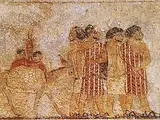
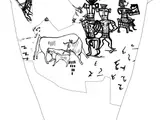
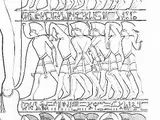
- Tomb of Khnumhotep II, Beni Hasan (BH 3): procession of the ʿAamu Tomb painting artefact c. 1890 BCE (year 6 of Senusret II) about ↗ Thirty-seven ʿAamu, 'Asiatics', led by Abisha, arrive with donkeys, weapons and goods; the caption records their number. Egyptian §01 Out of Canaan →
- Jericho (Tell es-Sultan), Late Bronze Age levels Excavations of Garstang (1930–36) and Kenyon (1952–58) archaeology c. 1550 BCE destruction; little occupation in the 13th c. about ↗ Kenyon showed the last walled city fell c. 1550 BCE, confirmed by radiocarbon in 1995; there was no walled city for Joshua to take in the 13th century. — cited in §01 §01 Out of Canaan →
- Soleb temple list, "Land of the Shasu, Yhw" Temple of Amenhotep III at Soleb, Nubia inscription c. 1390–1350 BCE about ↗ Names a land or group of Shasu nomads as Yhw, possibly the earliest trace of the name Yahweh; repeated in a list of Ramesses II at Amara West. Whether it refers to the god is debated. Egyptian (hieroglyphic) cited in §00 cited in §01 cited in §02 §02 Yahweh Among the Gods →
- Mitanni–Hittite treaty Boğazköy archive inscription c. 1350–1320 BCE about ↗ Invokes Mitra, Varuṇa, Indra and the Nāsatyas as witnesses — Indo-Aryan gods attested in writing in the Near East more than a thousand years before the earliest deciphered writing from India. Akkadian, with Indo-Aryan divine names §00 How We Know →
- EA 286 Amarna letters (Vorderasiatisches Museum, Berlin, VAT 1642) letter c. 1350–1335 BCE about ↗ Abdi-Heba, king of Jerusalem, protests his loyalty to the pharaoh and warns that 'the ʿApiru have plundered all the lands of the king': Jerusalem as a Canaanite city-state under Egypt, with uprooted groups in the hills. Akkadian cited in §01 §01 Out of Canaan →
- KTU 1.5 I 1–3 Baal Cycle (Ugarit) poem c. 1300–1185 BCE about ↗ 'When you smote Litan, the fleeing serpent, finished off the twisting serpent': the Canaanite formula that Isa 27:1 applies to Yahweh and Leviathan. Ugaritic cited in §00 §00 How We Know →
- KTU 1.4 (Baal Cycle) Ugaritic texts, Ras Shamra verse c. 1350–1185 BCE about ↗ Part of the Baal Cycle: El as father of the gods, Athirat (Asherah) his consort with her "seventy sons", and Baal's kingship and palace. The Canaanite background of Israel's god. Ugaritic cited in §02 §02 Yahweh Among the Gods →
- KTU 1.2 (Baal Cycle: Baal and Yamm) Baal Cycle (Ugarit) poem c. 1350–1185 BCE about ↗ Baal, armed with two clubs made by the craftsman god Kothar-wa-Hasis, defeats Yamm (Sea) and is acclaimed king: the Canaanite storm god's victory over the waters that biblical poetry later gives to Yahweh. Ugaritic cited in §02 §02 Yahweh Among the Gods →
- KTU 1.5–1.6 (Baal Cycle: Baal and Mot) Baal Cycle (Ugarit) poem c. 1350–1185 BCE about ↗ Baal goes down into the realm of Mot (Death) and dies; Anat destroys Mot, Baal returns, and the two gods fight until the sun goddess Shapsh makes Mot yield. Ugaritic cited in §02 §02 Yahweh Among the Gods →
- Hazor, Late Bronze Age destruction layer Tel Hazor excavations (Yadin; Ben-Tor) archaeology 13th c. BCE about ↗ The largest city in Canaan is burned and abandoned; Yadin and Ben-Tor attribute it to the Israelites, Zuckerman to an internal revolt. — cited in §01 §01 Out of Canaan →
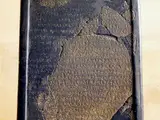
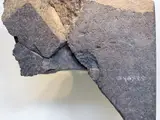
- Merneptah Stele Egyptian Museum, Cairo inscription c. 1208 BCE about ↗ A victory hymn of Pharaoh Merneptah naming "Israel" as a people: the earliest mention of Israel outside the Bible. Egyptian (hieroglyphic) cited in §00 cited in §01 cited in §02 §00 How We Know →
- Papyrus Anastasi VI, lines 54–56 Papyrus Anastasi VI (British Museum, EA 10245) letter c. 1213–1203 BCE about ↗ A model letter reporting that the tribes of the Shasu of Edom were let past the fortress of Merneptah in Tjeku to the pools of Pithom to keep their herds alive: Levantine herders crossing into the eastern Delta. Egyptian (hieratic) cited in §01 §01 Out of Canaan →
- Mount Ebal structure Iron Age I site on Mount Ebal, near Shechem (Zertal excavations 1982–89) archaeology 12th c. BCE about ↗ A stone structure with burned bones of young male animals, identified by Adam Zertal as the altar of Joshua 8:30–35; others read it as a watchtower, farmstead or another kind of cult site. — cited in §01 §01 Out of Canaan →
- et-Tell (Ai) Excavations of Marquet-Krause (1933–35) and Callaway (1964–72) archaeology Early Bronze city; abandoned c. 2400–2200 BCE until c. 1200 BCE about ↗ The site identified with biblical Ai was empty ruins for about a millennium before a small Iron I village was built there: no city existed for Joshua to conquer. — cited in §00 cited in §01 §01 Out of Canaan →
- Medinet Habu, Year 8 inscription of Ramesses III Mortuary temple of Ramesses III, Medinet Habu, Thebes inscription c. 1177 BCE about ↗ Ramesses III describes the Sea Peoples who overran Hatti, Carchemish, Arzawa and Alashiya, naming the Peleset (Philistines) among them: the collapse that opened Canaan to new peoples. Egyptian (hieroglyphic) cited in §01 §01 Out of Canaan →
- The "Bull Site" Open-air cult site in the northern Samarian hills site 12th c. BCE about ↗ A hilltop shrine of the early Iron Age that produced a bronze bull figurine, an animal associated with El and Baal. — cited in §01 cited in §02 §02 Yahweh Among the Gods →
- ʿIzbet Ṣarṭah ostracon Ostracon from ʿIzbet Ṣarṭah (Israel Museum) inscription 12th or early 11th c. BCE about ↗ Five lines of letters scratched on a sherd in a hill-country village, one of them an abecedary: the Canaanite alphabet in use among the early highland settlers. Proto-Canaanite / early alphabetic cited in §01 §01 Out of Canaan →
- Judges 5:14–18 Judges (Hebrew Bible) poetry 12th–10th c. BCE (debated) read the text ↗ The Song of Deborah praises and rebukes ten tribal groups (Ephraim, Benjamin, Machir, Zebulun, Issachar, Reuben, Gilead, Dan, Asher, Naphtali); Judah, Simeon and Levi are not named. Hebrew §01 Out of Canaan →
- Judges 5:4–5 Song of Deborah (Hebrew Bible) verse c. 1100–900 BCE (debated) read the text ↗ Yahweh marches out from Seir and the field of Edom as a storm god; the mountains quake before "the One of Sinai". Among the oldest poems locating Yahweh in the south. Hebrew cited in §01 cited in §02 §02 Yahweh Among the Gods →
- Khirbet Qeiyafa Fortified Iron Age town above the Elah Valley site c. 1020–980 BCE about ↗ A casemate-walled town with two gates, radiocarbon-dated to c. 1020–980 BCE; claimed as Judahite and Davidic by its excavators, attributed to a northern or Saulide polity by critics. — cited in §02 §02 Yahweh Among the Gods →
- Ishbaal inscription Incised jar from Khirbet Qeiyafa inscription c. 1020–980 BCE about ↗ A jar inscribed with the personal name ʾIšbaʿal, the same name as Saul's son (later altered to Ish-bosheth in Samuel). Hebrew/Canaanite cited in §02 §02 Yahweh Among the Gods →
- Yasna 44.5 Gathas (Avesta) hymn c. 1200–600 BCE (debated) about ↗ Zarathustra asks Ahura Mazda what craftsman made light and darkness, sleep and waking, dawn, noon and night: a Zoroastrian question often compared with Isaiah 45:7. Avestan cited in §04 §04 Exile and the Birth of Monotheism →
- Sheshonq I campaign list (Bubastite Portal) Relief of Sheshonq I at Karnak inscription c. 925 BCE about ↗ Lists towns in the Negev and northern Israel taken on Sheshonq I's campaign; Jerusalem is not among the legible names. Egyptian (hieroglyphic) cited in §02 §02 Yahweh Among the Gods →
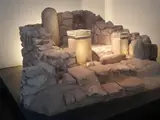
- Tel Moẓa temple Iron Age temple at Tel Moẓa, west of Jerusalem site late 10th–early 9th c. BCE about ↗ A monumental temple with altar, ash pit and figurines a few kilometres from Jerusalem: Yahweh worship at more than one sanctuary in Judah. — cited in §02 §02 Yahweh Among the Gods →
- Kurkh Monolith Annals of Shalmaneser III (British Museum) inscription c. 852 BCE about ↗ Records "Ahab the Israelite" bringing 2,000 chariots and 10,000 soldiers to the battle of Qarqar in 853 BCE. Akkadian cited in §00 cited in §02 §02 Yahweh Among the Gods →
- Deuteronomy 33:2 Blessing of Moses (Hebrew Bible) verse c. 1000–700 BCE (debated) read the text ↗ "Yahweh came from Sinai, and dawned from Seir upon them; he shone forth from Mount Paran": a second poem placing Yahweh's home in the south. Hebrew cited in §02 §02 Yahweh Among the Gods →
- Psalm 29 Psalms (Hebrew Bible) hymn c. 10th–8th c. BCE (debated) read the text ↗ "The voice of Yahweh" thunders over the waters and breaks the cedars; so close to Canaanite storm-god poetry that many scholars think it adapts a hymn to Baal. Hebrew cited in §02 §02 Yahweh Among the Gods →
- Mesha Stele Louvre AO 5066 inscription c. 840 BCE about ↗ King Mesha of Moab names Omri king of Israel and boasts of taking the vessels of YHWH from Nebo and dragging them before Chemosh: the earliest certain mention of Yahweh outside the Bible. Moabite cited in §00 cited in §02 §00 How We Know →
- Tel Dan Stele Israel Museum, Jerusalem inscription c. 840–800 BCE about ↗ An Aramean king, probably Hazael, claims to have killed a king of Israel and a king of the 'House of David' (bytdwd): the only certain mention of David outside the Bible from the Iron Age. Old Aramaic cited in §00 cited in §02 §00 How We Know →
- Kuntillet ʿAjrud, Pithos A Kuntillet ʿAjrud inscriptions (Meshel 2012) inscription c. 800 BCE about ↗ Blessing written on a storage jar at a Sinai way-station: 'I bless you by Yahweh of Samaria and by his Asherah.' A second jar names 'Yahweh of Teman and his Asherah'. Hebrew cited in §00 cited in §02 §00 How We Know →
- Kuntillet ʿAjrud, Pithos B Ink inscription on a storage jar, Kuntillet ʿAjrud (Ḥorvat Teman), Sinai inscription c. 800 BCE about ↗ "I bless you by Yahweh of Teman and by his asherah": a southern local form of Yahweh, matching Habakkuk 3:3, paired with asherah. Hebrew cited in §00 cited in §02 §02 Yahweh Among the Gods →
- Deir ʿAlla plaster inscription (Combination I) Ink text on plaster, Tell Deir ʿAlla, Jordan inscription c. 800 BCE about ↗ Its heading names "Balaam son of Beor", "a seer of the gods": a non-Israelite prophet, known also from Numbers 22–24, receives a night vision of disaster decreed by a council of gods (the šaddayin). Found in 1967 by a Dutch expedition led by H. J. Franken. Aramaic or Canaanite dialect (debated) cited in §03 §03 The Prophets and the Yahweh-Alone Movement →
- Psalm 68:8–9 (Eng. 68:7–8) Psalms (Hebrew Bible) verse debated, 10th–6th c. BCE read the text ↗ When God marched through the wilderness the earth quaked and the heavens poured "before God, the One of Sinai": a reuse of the Song of Deborah's image of Yahweh coming from the south. Hebrew cited in §02 §02 Yahweh Among the Gods →
- Samaria ostraca Administrative ostraca from the palace at Samaria inscription early 8th c. BCE about ↗ Shipping notes of wine and oil whose personal names are built more often on Yahweh than on Baal (roughly eleven to seven). Hebrew cited in §02 §02 Yahweh Among the Gods →
- Amos 5:21–24 Amos (Hebrew Bible) verse core c. 760–750 BCE; edited later read the text ↗ "I hate, I despise your festivals ... let justice roll down like waters": Yahweh rejects the sacrifices of people who practise injustice. Hebrew cited in §03 §03 The Prophets and the Yahweh-Alone Movement →
- Amos 9:7 Amos (Hebrew Bible) verse c. 760–750 BCE (some argue later) read the text ↗ Yahweh brought the Philistines from Caphtor and the Aramaeans from Kir as he brought Israel from Egypt: Israel's god directs the history of other peoples. Hebrew cited in §03 §03 The Prophets and the Yahweh-Alone Movement →
- Amos 1:1; 7:14–15 Amos (Hebrew Bible) verse superscription added by editors; setting c. 760–750 BCE read the text ↗ Amos, "among the shepherds of Tekoa", saw his words "in the days of Jeroboam son of Joash, king of Israel, two years before the earthquake"; at Bethel he says he was a herdsman and dresser of sycamore figs, not a prophet's son. Hebrew cited in §03 §03 The Prophets and the Yahweh-Alone Movement →
- Arad sanctuary Shrine in the Judahite fortress at Tel Arad site c. 760–715 BCE about ↗ A sanctuary of Yahweh inside a royal fortress, with a courtyard altar, standing stones and two incense altars (frankincense and cannabis residues); later dismantled and buried. — cited in §00 cited in §02 cited in §03 §02 Yahweh Among the Gods →
- Hosea 2:16–17 (Heb. 2:18–19) Hosea (Hebrew Bible) verse 8th c. BCE read the text ↗ Israel will call Yahweh "my husband" and no longer "my baal", and the names of the Baals will be removed from her mouth. Hebrew cited in §02 cited in §03 §02 Yahweh Among the Gods →
- Isaiah 6:1–5 Isaiah (Hebrew Bible) prose c. 740 BCE (core) read the text ↗ Isaiah's vision of Yahweh enthroned in the Temple among the seraphim: "Holy, holy, holy is Yahweh of hosts; the whole earth is full of his glory." Hebrew cited in §03 §03 The Prophets and the Yahweh-Alone Movement →
- Hosea 13:4 Hosea (Hebrew Bible) verse c. 750–725 BCE read the text ↗ "You know no god but me, and besides me there is no saviour": the demand for exclusive worship, tied to the Exodus. Monolatry, not a denial that other gods exist. Hebrew cited in §03 §03 The Prophets and the Yahweh-Alone Movement →
- Khirbet el-Qom, Tomb Inscription 3 Tomb inscription, Khirbet el-Qom, near Hebron inscription 2nd half of the 8th c. BCE about ↗ "Blessed is Uriyahu by Yahweh; from his enemies, by his asherah, he has saved him": the Yahweh–asherah pairing in a Judahite burial. Hebrew cited in §00 cited in §02 §02 Yahweh Among the Gods →
- Sargon II, annals and Nimrud Prism (Samaria) Inscriptions of Sargon II inscription c. 720–706 BCE about ↗ Sargon claims the conquest of Samaria, the deportation of 27,280 of its people and the resettlement of the region with captives from elsewhere. Akkadian cited in §03 §03 The Prophets and the Yahweh-Alone Movement →
- Micah 3:12 (cf. Jeremiah 26:18) Micah (Hebrew Bible) verse c. 725–700 BCE read the text ↗ "Zion shall be ploughed as a field": quoted word for word in Jeremiah 26:18 a century later and dated to Hezekiah's reign, the earliest evidence that a prophet's sayings circulated as a collection. Hebrew cited in §03 §03 The Prophets and the Yahweh-Alone Movement →
- Lachish gate shrine (Level III) Shrine in the inner city gate of Tel Lachish site late 8th c. BCE about ↗ A shrine in the city gate whose altar horns were trimmed and beside whose altar a stone toilet seat was placed, apparently a deliberate desecration before Sennacherib destroyed the gate in 701 BCE; linked by its excavators with Hezekiah's reform. Final report: Ganor and Kreimerman, 'Atiqot 111. — cited in §03 §03 The Prophets and the Yahweh-Alone Movement →
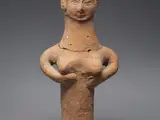
- Judean pillar figurines Clay figurines from Judahite houses and tombs artefact 8th–early 6th c. BCE about ↗ Hundreds of small clay women supporting their breasts, the most common religious objects of late-monarchic Judah; read as Asherah or as household protective figures. — cited in §02 §02 Yahweh Among the Gods →
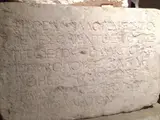
- Siloam inscription Hebrew inscription from the Siloam tunnel, Jerusalem (Istanbul Archaeology Museum) inscription c. 700 BCE (palaeography) about ↗ Records the moment two teams of tunnellers met "axe against axe" and the water flowed from the spring to the pool, 1,200 cubits; matches the Bible's credit to Hezekiah for bringing water into Jerusalem. Hebrew cited in §03 §03 The Prophets and the Yahweh-Alone Movement →
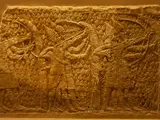
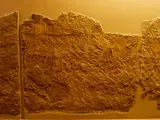
- Lachish reliefs Wall reliefs from Sennacherib's Southwest Palace, Nineveh (British Museum) artefact c. 700–690 BCE about ↗ Sennacherib's palace shows the siege and capture of Lachish in 701 BCE, the deportation of its people and the king receiving the spoil: the victory he chose to display instead of Jerusalem. — cited in §03 §03 The Prophets and the Yahweh-Alone Movement →
- Sennacherib's annals (Taylor, Chicago and Jerusalem prisms) Annals of Sennacherib inscription 700 BCE (first edition); prisms c. 691–689 BCE read the text ↗ Sennacherib conquers 46 fortified cities of Judah, brings out 200,150 people and confines Hezekiah inside Jerusalem "like a bird in a cage"; after the king's departure Hezekiah sends 30 talents of gold and 800 of silver to Nineveh. No claim that Jerusalem fell. Akkadian cited in §00 cited in §03 §03 The Prophets and the Yahweh-Alone Movement →
- Esarhaddon, Prism Nineveh A (list of 22 kings) Annals of Esarhaddon inscription c. 673–672 BCE read the text ↗ Lists "Manasseh, king of Judah" among 22 kings of the west who delivered timber and stone for Esarhaddon's palace: Manasseh as a loyal Assyrian vassal. Akkadian cited in §03 §03 The Prophets and the Yahweh-Alone Movement →
- Esarhaddon's succession treaty (SAA 2 6; Tell Tayinat copy) Succession oath of Esarhaddon for Ashurbanipal law 672 BCE read the text ↗ Vassals swear total loyalty to Ashurbanipal, must report anyone urging disloyalty, and are threatened with curses (ground of iron, sky of bronze) closely paralleled in Deuteronomy 13 and 28. Akkadian cited in §03 §03 The Prophets and the Yahweh-Alone Movement →
- Deuteronomy 32:8–9 (MT, 4QDeutj, LXX) Song of Moses (Hebrew Bible) verse c. 8th–6th c. BCE (debated) read the text ↗ The Most High divides the nations "according to the number of the sons of God" (Qumran, Septuagint) or "the sons of Israel" (Masoretic text); Yahweh's portion is Israel. Trace of the divine council. Hebrew cited in §00 cited in §02 §02 Yahweh Among the Gods →
- Psalm 82 Psalms (Hebrew Bible) hymn c. 8th–6th c. BCE (debated) read the text ↗ God stands "in the assembly of El" and judges among the gods, sentencing them to die like mortals: the divine council in session. Hebrew cited in §02 §02 Yahweh Among the Gods →
- Deuteronomy 13:7–10 (Eng. 13:6–9) Deuteronomy (Hebrew Bible) law core 7th c. BCE read the text ↗ Anyone, even a brother, child, wife or friend, who secretly urges "Let us go and serve other gods" must be denounced and put to death: the loyalty clause compared with Esarhaddon's succession treaty. Hebrew cited in §03 §03 The Prophets and the Yahweh-Alone Movement →
- Deuteronomy 28:23 Deuteronomy (Hebrew Bible) law core 7th c. BCE read the text ↗ "The heavens over your head shall be bronze, and the earth under you iron": the curse that parallels §§63–64 of Esarhaddon's succession treaty. Hebrew cited in §03 §03 The Prophets and the Yahweh-Alone Movement →
- Deuteronomy 6:4–5 Deuteronomy (Hebrew Bible) law core 7th c. BCE read the text ↗ The Shema: "Hear, O Israel: Yahweh is our God, Yahweh alone" (or "Yahweh is one"), with the command to love Yahweh with all the heart: exclusive loyalty in the language of treaty. Hebrew cited in §03 §03 The Prophets and the Yahweh-Alone Movement →
- Deuteronomy 12:13–14 Deuteronomy (Hebrew Bible) law core 7th c. BCE read the text ↗ Burnt offerings may be offered only "at the place that Yahweh will choose": the centralisation law that Josiah enforced and no other book of the Torah contains. Hebrew cited in §03 cited in §04 §03 The Prophets and the Yahweh-Alone Movement →
- Yavneh-Yam ostracon Letter from Meṣad Ḥashavyahu letter c. 630 BCE about ↗ A field worker petitions the governor to return his confiscated cloak, saying he finished his work 'before the Sabbath' (or 'before stopping'); possibly the earliest mention of the Sabbath outside the Bible. Hebrew cited in §04 §04 Exile and the Birth of Monotheism →
- Deuteronomy 16:21–22 Deuteronomy (Hebrew Bible) law c. 7th c. BCE read the text ↗ Forbids planting an asherah beside the altar of Yahweh or setting up a standing stone: a law that implies both were practised. Hebrew cited in §00 cited in §02 cited in §03 §02 Yahweh Among the Gods →
- Deuteronomy 26:5 Deuteronomy (Hebrew Bible) verse c. 7th c. BCE read the text ↗ 'A wandering Aramean was my father': the first-fruits confession traces Israel's ancestry to Aram before Egypt. Hebrew cited in §01 §01 Out of Canaan →
- Deuteronomy 7:3–4 Deuteronomy (Hebrew Bible) law 7th–6th c. BCE read the text ↗ Forbids marriage with the peoples of Canaan, 'For he will turn away thy son from following Me'; the verse from which the Talmud derives the matrilineal rule. Hebrew cited in §07 §07 Without a Temple: The Rabbis →
- Exod 20:3 Exodus (Hebrew Bible) prose uncertain; pre-exilic to exilic read the text ↗ 'You shall have no other gods before me': a command of exclusive worship that does not itself deny other gods exist. Hebrew cited in §04 §04 Exile and the Birth of Monotheism →
- Deuteronomy 5:12–15 (cf. Exodus 20:8–11) Deuteronomy (Hebrew Bible) law core 7th c. BCE read the text ↗ The Sabbath commandment grounded in the memory of slavery in Egypt, where the Exodus version grounds it in God's rest after the six days of creation. Hebrew §00 How We Know →
- Habakkuk 3:3 Prayer of Habakkuk (Hebrew Bible) verse late 7th c. BCE, possibly older material read the text ↗ "God comes from Teman, the Holy One from Mount Paran": the same southern geography as the Kuntillet Ajrud blessings by "Yahweh of Teman". Hebrew cited in §02 §02 Yahweh Among the Gods →
- Tell el-Maskhuta (Pithom?) Excavations of John S. Holladay (1978–85), Wadi Tumilat archaeology Middle Bronze; then from c. 610 BCE about ↗ Occupied in the Middle Bronze Age and then not again until Necho II built there c. 610 BCE, with no Ramesside remains: if this is Pithom, Exodus 1:11 reflects the Egypt of the 7th–6th centuries. — cited in §01 §01 Out of Canaan →
- Jeremiah 26:17–19 Jeremiah (Hebrew Bible) prose set c. 609–608 BCE; composed 6th c. BCE read the text ↗ Elders defend Jeremiah by quoting Micah of Moresheth's oracle that "Zion shall be ploughed as a field", dated to Hezekiah's reign, and noting that Hezekiah did not kill him. Hebrew cited in §03 §03 The Prophets and the Yahweh-Alone Movement →
- Jeremiah 36:9–12 Jeremiah (Hebrew Bible) prose set 604 BCE; composed 6th c. BCE read the text ↗ Baruch reads Jeremiah's scroll in the Temple from the chamber of Gemariah son of Shaphan the scribe, and the officials then hear it in the palace. Hebrew cited in §03 §03 The Prophets and the Yahweh-Alone Movement →
- Ketef Hinnom amulets (KH1, KH2) Israel Museum, Jerusalem inscription c. 650–587 BCE about ↗ Two rolled silver amulets from a Jerusalem burial cave containing a form of the priestly blessing of Num 6:24–26: the oldest surviving text paralleling a biblical verse. Hebrew cited in §00 §00 How We Know →
- Arad Ostracon 18 Letter from the Arad fortress archive inscription c. 600 BCE about ↗ A letter mentioning "the house of Yahweh", possibly the Temple in Jerusalem. Hebrew cited in §00 cited in §02 §02 Yahweh Among the Gods →
- Genesis 33:20 Genesis (Hebrew Bible) prose c. 8th–5th c. BCE read the text ↗ Jacob builds an altar and calls it "El, the god of Israel". Hebrew cited in §02 §02 Yahweh Among the Gods →
- 2 Kings 23:4–7 Kings (Hebrew Bible) prose c. late 7th–6th c. BCE read the text ↗ Josiah removes from the Temple the vessels made for Baal, Asherah and the host of heaven, burns the asherah, and destroys the houses where women wove for Asherah. Hebrew cited in §02 cited in §03 §02 Yahweh Among the Gods →
- 1 Kings 18 Kings (Hebrew Bible) prose c. 7th–6th c. BCE read the text ↗ Elijah's contest with the prophets of Baal on Mount Carmel: the Bible's portrait of Yahweh's rivalry with Baal. Hebrew cited in §02 cited in §03 §02 Yahweh Among the Gods →
- 1 Kings 12:28–29 Kings (Hebrew Bible) prose c. 7th–6th c. BCE read the text ↗ Jeroboam sets up golden calves at Bethel and Dan: "Here are your gods, O Israel, who brought you up from the land of Egypt." Hebrew cited in §02 §02 Yahweh Among the Gods →
- Exodus 1:11 Exodus (Hebrew Bible) verse c. 7th–5th c. BCE read the text ↗ The Hebrews build the store-cities Pithom and Raamses for Pharaoh: real Delta place names, one pointing to the 13th century, the other perhaps to the 7th. Hebrew cited in §01 §01 Out of Canaan →
- Exodus 12:37–38 Exodus (Hebrew Bible) verse c. 7th–5th c. BCE read the text ↗ About 600,000 men on foot besides children leave Egypt, with a 'mixed multitude': numbers far beyond what the archaeology can support, and a people not of one descent. Hebrew cited in §01 §01 Out of Canaan →
- Joshua 11:23; Judges 1:21, 1:27–33 Joshua and Judges (Hebrew Bible) verse c. 7th–6th c. BCE read the text ↗ Joshua takes 'the whole land'; Judges 1 lists the cities the tribes did not capture, including Megiddo, Beth-shean and Jerusalem: two biblical accounts of the settlement. Hebrew cited in §01 §01 Out of Canaan →
- 2 Kings 17:6 Kings (Hebrew Bible) prose composed 7th–6th c. BCE read the text ↗ The king of Assyria captures Samaria and deports Israel to Assyria, Halah, the Habor and the cities of the Medes. Hebrew cited in §03 §03 The Prophets and the Yahweh-Alone Movement →
- 2 Kings 18:4 Kings (Hebrew Bible) prose composed 7th–6th c. BCE read the text ↗ Hezekiah removes the high places, breaks the standing stones, cuts down the asherah and breaks the bronze serpent Nehushtan "that Moses had made", to which Israelites had been making offerings. Hebrew cited in §03 §03 The Prophets and the Yahweh-Alone Movement →
- 2 Kings 18:13–16 Kings (Hebrew Bible) prose composed 7th–6th c. BCE read the text ↗ Sennacherib takes the fortified cities of Judah; Hezekiah submits at Lachish and pays 300 talents of silver and 30 of gold, stripping the Temple doors. Close to the Assyrian account. Hebrew cited in §03 §03 The Prophets and the Yahweh-Alone Movement →
- 1 Kings 11:14 Kings (Hebrew Bible) prose c. 7th–6th c. BCE (composition) read the text ↗ Yahweh raises up 'a satan' against Solomon, Hadad the Edomite: a human enemy, not a supernatural being. Hebrew §06 Hellenism, the Maccabees and the Second Temple Sects →
- Jeremiah 7:31 Jeremiah (Hebrew Bible) prose late 7th–6th c. BCE read the text ↗ The high place of Topheth in the valley of the son of Hinnom, where children were burned: the place whose name became Gehinnom, Gehenna. Hebrew §03 The Prophets and the Yahweh-Alone Movement →
- 1 Kings 22:19 Kings (Hebrew Bible) prose composed 7th–6th c. BCE read the text ↗ The prophet Micaiah sees Yahweh enthroned "with all the host of heaven standing beside him": the divine council recast as Yahweh's court. Hebrew cited in §02 §02 Yahweh Among the Gods →
- 1 Kings 15:13 Kings (Hebrew Bible) prose composed 7th–6th c. BCE read the text ↗ King Asa removes the queen mother Maacah because she had made "an abominable image for Asherah", and burns it in the Kidron valley. Hebrew cited in §02 §02 Yahweh Among the Gods →
- 2 Kings 21:7 Kings (Hebrew Bible) prose composed 7th–6th c. BCE read the text ↗ Manasseh sets "the carved image of Asherah" in the house of which Yahweh had said he would put his name there for ever. Hebrew cited in §02 §02 Yahweh Among the Gods →
- 2 Kings 16:5–9 Kings (Hebrew Bible) prose composed 7th–6th c. BCE read the text ↗ Rezin of Aram and Pekah of Israel besiege Ahaz in Jerusalem; Ahaz sends the Temple's silver and gold to Tiglath-pileser of Assyria, who takes Damascus. Isaiah 7 gives the prophet's opposing counsel. Hebrew cited in §03 §03 The Prophets and the Yahweh-Alone Movement →
- 2 Kings 19:35–36 Kings (Hebrew Bible) prose composed 7th–6th c. BCE read the text ↗ The angel of Yahweh strikes down 185,000 in the Assyrian camp in one night, and Sennacherib returns to Nineveh. Hebrew cited in §03 §03 The Prophets and the Yahweh-Alone Movement →
- 2 Kings 21:3–6 Kings (Hebrew Bible) prose composed 7th–6th c. BCE read the text ↗ Manasseh rebuilds the high places, sets up altars for Baal and an asherah, worships all the host of heaven, makes his son pass through the fire and practises divination: the case Kings makes against him. Hebrew cited in §03 §03 The Prophets and the Yahweh-Alone Movement →
- 2 Kings 23:8–23 Kings (Hebrew Bible) prose composed 7th–6th c. BCE read the text ↗ Josiah brings the priests of the high places to Jerusalem and defiles the high places from Geba to Beersheba, defiles the Tophet, removes the horses dedicated to the sun, destroys the altar at Bethel and keeps a Passover in Jerusalem such as had not been kept since the days of the judges. Hebrew cited in §03 §03 The Prophets and the Yahweh-Alone Movement →
- 2 Kings 20:20; 2 Chronicles 32:30 Kings and Chronicles (Hebrew Bible) prose composed 7th–4th c. BCE read the text ↗ Hezekiah "made the pool and the conduit and brought water into the city"; Chronicles adds that he directed the upper Gihon waters down to the west side of the City of David. Hebrew cited in §03 §03 The Prophets and the Yahweh-Alone Movement →
- Judges 1:16; 4:11 Judges (Hebrew Bible) prose c. 7th–6th c. BCE (composition) read the text ↗ The Kenites, descendants of Moses' father-in-law, go up with Judah into the Negev; Heber the Kenite camps apart from them: the Bible's own link between Moses' in-laws and southern clans allied with Israel. Hebrew §02 Yahweh Among the Gods →
- Deuteronomy 31:9, 22 (cf. Exodus 24:4) Deuteronomy (Hebrew Bible) prose 7th–6th c. BCE read the text ↗ Moses writes 'this law' and gives it to the priests, and writes down a song: the Torah describes Moses writing particular texts, not the five books as a whole. Hebrew §00 How We Know →
- 1 Kings 9:15 Kings (Hebrew Bible) prose composed 7th–6th c. BCE read the text ↗ Solomon's forced labour builds the Temple, his palace, the Millo, the wall of Jerusalem, and Hazor, Megiddo and Gezer. Hebrew §02 Yahweh Among the Gods →
- 1 Kings 11:41 Kings (Hebrew Bible) prose composed 7th–6th c. BCE read the text ↗ 'The rest of the acts of Solomon … are they not written in the book of the acts of Solomon?': the text names an older source. Hebrew §02 Yahweh Among the Gods →
- Genesis 3:1, 14 Genesis (Hebrew Bible) prose uncertain; non-Priestly layer read the text ↗ The serpent is 'more crafty than any beast of the field that Yahweh God had made' and is cursed to crawl on its belly; nothing identifies it with another being. Hebrew §06 Hellenism, the Maccabees and the Second Temple Sects →
- Deuteronomy 32:39 Deuteronomy (Hebrew Bible) verse Song of Moses; date debated read the text ↗ 'I deal death and give life; I wounded and I will heal': a verse the rabbis read as a proof of resurrection from the Torah. Hebrew §07 Without a Temple: The Rabbis →
- Babylonian Chronicle ABC 5 (BM 21946) Chronicle of the early years of Nebuchadnezzar II inscription 6th c. BCE about ↗ Nebuchadnezzar besieges "the city of Judah" and captures it on the second day of Adar in his seventh year (March 597 BCE), seizes its king and appoints a king of his own choice. Akkadian cited in §00 cited in §03 §03 The Prophets and the Yahweh-Alone Movement →
- ABC 5 Babylonian Chronicle of Nebuchadnezzar's early years (BM 21946) prose after 594 BCE about ↗ Records that in his seventh year Nebuchadnezzar besieged 'the city of Judah', seized it on 2 Adar (16 March 597 BCE), captured its king and appointed a king of his choice: the first fall of Jerusalem, dated to the day. Akkadian cited in §04 §04 Exile and the Birth of Monotheism →
- Jer 29:5–7 Jeremiah (Hebrew Bible) prose c. 6th c. BCE read the text ↗ Jeremiah's letter tells the deportees of 597 to build houses, raise families and 'seek the welfare of the city' where they are exiled, praying to Yahweh on its behalf. Hebrew cited in §04 §04 Exile and the Birth of Monotheism →
- Ezek 1:1–3 Ezekiel (Hebrew Bible) prose c. 6th c. BCE read the text ↗ Ezekiel, a priest among the deportees, sees the heavens open by the Chebar canal in the land of the Chaldeans in the fifth year of Jehoiachin's exile (593 BCE). Hebrew cited in §04 §04 Exile and the Birth of Monotheism →
- Jehoiachin ration tablets Ration lists from the Southern Palace, Babylon (VAT 16378 and others) text c. 592/591 BCE about ↗ Oil rations issued from Nebuchadnezzar's stores to 'Ya'u-kinu, king of the land of Yahudu' and his five sons: King Jehoiachin held at the Babylonian court. Akkadian cited in §00 cited in §04 §04 Exile and the Birth of Monotheism →
- Ezek 8:12–16 Ezekiel (Hebrew Bible) prose c. 593–570 BCE read the text ↗ Ezekiel's vision of the Temple: elders saying 'Yahweh does not see us; Yahweh has forsaken the land', women weeping for Tammuz, and men bowing to the sun in the inner court. Hebrew cited in §04 §04 Exile and the Birth of Monotheism →
- Bulla of Gemaryahu son of Shaphan Clay seal impression from the "House of the Bullae", City of David inscription early 6th c. BCE One of 51 bullae found in 1982 in a building burned in 586 BCE; names Gemaryahu son of Shaphan, the official in whose chamber Baruch read Jeremiah's scroll (Jeremiah 36:10). Hebrew cited in §03 §03 The Prophets and the Yahweh-Alone Movement →
- Ezek 11:16 Ezekiel (Hebrew Bible) prose c. 6th c. BCE read the text ↗ Yahweh says he has been to the exiles 'a little sanctuary' (or 'a sanctuary for a little while') in the lands where they have gone: divine presence outside the Temple. Hebrew cited in §04 §04 Exile and the Birth of Monotheism →
- Lachish Letter 4 Lachish ostraca inscription c. 588 BCE about ↗ An officer reports that he is watching for the fire-signals of Lachish 'for we cannot see Azekah', matching Jer 34:7 on the last fortified cities of Judah before Babylon. Hebrew cited in §00 cited in §03 cited in §04 §00 How We Know →
- Ezekiel 16:3 Ezekiel (Hebrew Bible) verse 6th c. BCE read the text ↗ 'Your origin and your birth are of the land of the Canaanites; your father was an Amorite, and your mother a Hittite': a prophet's insult to Jerusalem that assumes Canaanite roots. Hebrew cited in §01 §01 Out of Canaan →
- 2 Kings 23:29 Kings (Hebrew Bible) prose composed 6th c. BCE read the text ↗ Pharaoh Necho goes up to the Euphrates and kills Josiah at Megiddo. Hebrew cited in §03 §03 The Prophets and the Yahweh-Alone Movement →
- Jeremiah 44:15–19 Jeremiah (Hebrew Bible) prose after 586 BCE read the text ↗ Judahite refugees in Egypt, led by women, refuse to stop offering to "the queen of heaven": things went well while they did, and badly after they stopped. The reform's opponents in their own words. Hebrew cited in §03 §03 The Prophets and the Yahweh-Alone Movement →
- Ezekiel 37:1–14 Ezekiel (Hebrew Bible) prose 6th c. BCE read the text ↗ The valley of dry bones: bones that rise and live are explained as 'the whole house of Israel', the nation restored from exile, not individuals raised from death. Hebrew cited in §04 cited in §06 §04 Exile and the Birth of Monotheism →
- Jeremiah 34:7 Jeremiah (Hebrew Bible) prose c. 6th c. BCE read the text ↗ Babylon's army fights against Jerusalem and against Lachish and Azekah, 'for these alone remained of the fortified cities of Judah'. Hebrew cited in §00 §00 How We Know →
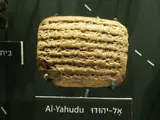
- Āl-Yāhūdu tablets Cuneiform archive of Judean exiles in Babylonia (Pearce and Wunsch 2014) text 572–477 BCE about ↗ About two hundred contracts, receipts and leases written in 'Judah-town' and neighbouring villages, recording Judean exiles and their descendants as tenant farmers who kept Yahweh names for generations. Akkadian cited in §04 §04 Exile and the Birth of Monotheism →
- Jer 44:15–18 Jeremiah (Hebrew Bible) prose c. 6th c. BCE read the text ↗ Judahite refugees in Egypt tell Jeremiah that they prospered while they made offerings to 'the queen of heaven' and have lacked everything since they stopped: a rival explanation of the catastrophe. Hebrew cited in §04 §04 Exile and the Birth of Monotheism →
- 2 Kgs 22:8 2 Kings (Hebrew Bible) prose c. 6th c. BCE read the text ↗ The high priest Hilkiah 'finds the book of the law' in the Temple in Josiah's reign (622 BCE); since de Wette (1805) identified with an early form of Deuteronomy. Hebrew cited in §00 cited in §03 §00 How We Know →
- Ps 137 Psalms (Hebrew Bible) verse c. 6th c. BCE read the text ↗ 'By the rivers of Babylon we sat down and wept, when we remembered Zion': the exiles' lament and oath never to forget Jerusalem. Hebrew cited in §04 §04 Exile and the Birth of Monotheism →
- 2 Kgs 25:27–30 2 Kings (Hebrew Bible) prose c. 560–540 BCE read the text ↗ Amel-Marduk (Evil-merodach) releases Jehoiachin from prison in 562 BCE and gives him a seat at the king's table: the last event in the books of Kings. Hebrew cited in §04 §04 Exile and the Birth of Monotheism →
- 2 Kgs 24:3–4 2 Kings (Hebrew Bible) prose c. 6th c. BCE read the text ↗ Explains the fall of Judah as Yahweh's punishment for the sins of Manasseh and the innocent blood he shed, which Yahweh 'would not pardon'. Hebrew cited in §04 §04 Exile and the Birth of Monotheism →
- 2 Kings 3:4–27 Kings (Hebrew Bible) prose c. 6th c. BCE read the text ↗ Mesha king of Moab rebels after Ahab's death; Israel, Judah and Edom invade, but withdraw after Mesha sacrifices his eldest son on the wall: the Israelite side of the revolt the Mesha Stele celebrates. Hebrew cited in §00 §00 How We Know →
- 2 Kgs 24:14–16 2 Kings (Hebrew Bible) prose c. 6th c. BCE read the text ↗ Says Nebuchadnezzar deported ten thousand from Jerusalem in 597 with King Jehoiachin, including seven thousand men of valour and a thousand craftsmen and smiths, leaving only 'the poorest people of the land'. Hebrew cited in §04 §04 Exile and the Birth of Monotheism →
- 2 Kgs 25:1–12 2 Kings (Hebrew Bible) prose c. 6th c. BCE read the text ↗ Narrates the siege of Jerusalem from Zedekiah's ninth to eleventh year, the killing of his sons before his eyes and his blinding, and Nebuzaradan's burning of the Temple, the palace and the houses of Jerusalem. Hebrew cited in §04 §04 Exile and the Birth of Monotheism →
- Deut 34:5–6 Deuteronomy (Hebrew Bible) prose c. 7th–5th c. BCE read the text ↗ The Torah narrates the death and burial of Moses and says no one knows his grave 'unto this day', a classic sign that Moses is not its author. Hebrew cited in §00 §00 How We Know →
- Genesis 14:19 Genesis (Hebrew Bible) prose c. 7th–5th c. BCE read the text ↗ Melchizedek blesses Abram by "El Elyon, creator of heaven and earth", a title of El also found in Phoenician inscriptions. Hebrew cited in §02 §02 Yahweh Among the Gods →
- Exodus 3:13–15 Exodus (Hebrew Bible) prose c. 7th–5th c. BCE read the text ↗ At the burning bush God answers Moses "I will be what I will be" (ʾehyeh ʾăšer ʾehyeh) and gives the name YHWH: the Bible's own explanation of the name. Hebrew cited in §02 §02 Yahweh Among the Gods →
- Exodus 18 Exodus (Hebrew Bible) prose c. 7th–5th c. BCE read the text ↗ Jethro, priest of Midian and Moses' father-in-law, blesses Yahweh, offers sacrifice and advises Moses: a basis of the Midianite–Kenite hypothesis. Hebrew cited in §02 §02 Yahweh Among the Gods →
- Jer 52:28–30 Jeremiah (Hebrew Bible) prose c. 6th c. BCE read the text ↗ Lists three Babylonian deportations, 3,023 in 597, 832 in 587/586 and 745 in 582, 'four thousand six hundred persons in all'. Hebrew cited in §04 §04 Exile and the Birth of Monotheism →
- Deut 4:35, 39 Deuteronomy (Hebrew Bible) prose c. 6th c. BCE read the text ↗ 'Yahweh is God; there is no other besides him': an exilic framing of Deuteronomy that also says the heavenly bodies were allotted to the other nations (4:19). Hebrew cited in §04 §04 Exile and the Birth of Monotheism →
- 2 Kings 17:24–41 Kings (Hebrew Bible) prose c. 6th–5th c. BCE read the text ↗ The Judean account of Samaria after 722 BCE: settlers from Cuthah and elsewhere worship Yahweh alongside their own gods. Hebrew cited in §05 §05 Persian Yehud and the Making of the Torah →
- 1 Kings 6:1 Hebrew Bible, Kings verse c. 6th c. BCE read the text ↗ Solomon begins the Temple in the 480th year after the Israelites left Egypt: the basis of the traditional 15th-century BCE Exodus date. Hebrew cited in §01 §01 Out of Canaan →
- Leviticus 11:7; Deuteronomy 14:8 Hebrew Bible, Leviticus and Deuteronomy law c. 7th–5th c. BCE read the text ↗ The swine has cloven hoofs but does not chew the cud, so it is impure and its flesh may not be eaten: the written pork ban, centuries after the pig-free highland villages. Hebrew cited in §01 §01 Out of Canaan →
- Obadiah 1:20 Obadiah (Hebrew Bible) verse 6th c. BCE read the text ↗ Speaks of 'the captivity of Jerusalem, which is in Sepharad': the place-name medieval Jews applied to Spain. Hebrew cited in §09 §09 Ashkenaz, Sepharad and the Kabbalah →
- Ps 69:3 (KJV 69:2) Psalms (Hebrew Bible) verse c. 7th–5th c. BCE (debated) read the text ↗ 'I sink in deep mire, where there is no standing': the lament from which Nathan Hannover took the title of his 1653 chronicle, Yeven Metsulah. Hebrew cited in §10 §10 False Messiahs, Hasidism and Their Opponents →
- Isaiah 14:4, 12 Isaiah (Hebrew Bible) poetry uncertain; 8th–6th c. BCE read the text ↗ A taunt 'against the king of Babylon': 'How you are fallen from heaven, Day Star (hêlēl), son of Dawn!'; the Vulgate renders the epithet lucifer. Hebrew §06 Hellenism, the Maccabees and the Second Temple Sects →
- Isa 45:1–7 Isaiah (Hebrew Bible) verse c. 550–539 BCE read the text ↗ Yahweh calls Cyrus his 'anointed' and declares 'I am Yahweh and there is no other; besides me there is no god ... I form light and create darkness, I make peace and create evil': the Bible's first explicit monotheism. Hebrew cited in §04 cited in §05 cited in §06 §04 Exile and the Birth of Monotheism →
- Isa 44:6–20 Isaiah (Hebrew Bible) verse c. 550–539 BCE read the text ↗ 'I am the first and I am the last; besides me there is no god', followed by the satire of the carpenter who cooks over half a log and worships the other half. Hebrew cited in §04 §04 Exile and the Birth of Monotheism →
- Isa 46:1–2 Isaiah (Hebrew Bible) verse c. 550–539 BCE read the text ↗ 'Bel bows down, Nebo stoops': the gods of Babylon carried off as burdens on pack animals. Hebrew cited in §04 §04 Exile and the Birth of Monotheism →
- Isa 43:10 Isaiah (Hebrew Bible) verse c. 550–539 BCE read the text ↗ 'Before me no god was formed, nor shall there be any after me': Second Isaiah denies that any god preceded or will follow Yahweh. Hebrew cited in §04 §04 Exile and the Birth of Monotheism →
- Isa 45:22 Isaiah (Hebrew Bible) verse c. 550–539 BCE read the text ↗ 'Turn to me and be saved, all the ends of the earth! For I am God, and there is no other': Yahweh's claim extended to all nations. Hebrew cited in §04 §04 Exile and the Birth of Monotheism →
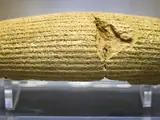
- Cyrus Cylinder British Museum 90920 inscription 539/538 BCE about ↗ Cyrus's Babylonian proclamation: Marduk grasped his hand and called his name; he restored neglected cults and returned gods and peoples to their cities in Mesopotamia and western Iran. Judah is not mentioned. Akkadian cited in §04 cited in §05 §04 Exile and the Birth of Monotheism →
- ABC 7 Nabonidus Chronicle (BM 35382) prose after 539 BCE read the text ↗ Records that Nabonidus stayed in Tayma and the New Year festival was not held, and that in October 539 BCE Sippar fell 'without a battle' and the army of Cyrus entered Babylon 'without battle', Cyrus himself entering on 3 Arahsamna. Akkadian cited in §04 §04 Exile and the Birth of Monotheism →
- Ezra 6:3–5 Ezra (Hebrew Bible) prose c. 4th c. BCE (composition); claims 538 BCE read the text ↗ An Aramaic memorandum of Cyrus ordering the house of God in Jerusalem rebuilt and the vessels taken by Nebuchadnezzar returned; Bickerman argued it preserves a real Persian document, and that the Hebrew proclamation of Ezra 1 is authentic too. Aramaic cited in §05 §05 Persian Yehud and the Making of the Torah →
- Exod 6:2–3 Exodus (Hebrew Bible) prose c. 6th–5th c. BCE (Priestly source) read the text ↗ God tells Moses he appeared to the patriarchs as El Shaddai but did not make his name YHWH known to them, contradicting Genesis passages where they use the name: a key piece of evidence for separate sources. Hebrew cited in §00 cited in §02 §00 How We Know →
- Exod 31:12–17 Exodus (Hebrew Bible, Priestly source) prose c. 6th–5th c. BCE read the text ↗ The Sabbath as 'a sign between me and you throughout your generations' and a perpetual covenant, rooted in God's rest at creation. Hebrew cited in §04 §04 Exile and the Birth of Monotheism →
- Gen 17:9–14 Genesis (Hebrew Bible, Priestly source) prose c. 6th–5th c. BCE read the text ↗ Circumcision as 'the sign of the covenant' between God and Abraham's descendants. Hebrew cited in §04 §04 Exile and the Birth of Monotheism →
- Gen 1:1–2:3 Genesis (Hebrew Bible, Priestly source) prose c. 6th–5th c. BCE read the text ↗ Creation by word in six days, with the sun and moon as 'lights' and the deep (tĕhôm) as inert matter, ending with God's rest on the seventh day. Hebrew cited in §00 cited in §04 §04 Exile and the Birth of Monotheism →
- Haggai 1:1–4 Haggai (Hebrew Bible) prose 520 BCE read the text ↗ In the second year of Darius, Haggai rebukes the people for living in panelled houses while Yahweh's house lies in ruins, addressing the governor Zerubbabel and the high priest Joshua. Hebrew cited in §05 §05 Persian Yehud and the Making of the Torah →
- Zechariah 3:1–2 Zechariah (Hebrew Bible) verse c. 520 BCE read the text ↗ "The satan" stands at the high priest Joshua's right hand to accuse him, and Yahweh rebukes him: an accuser in the divine court, not yet a rebel. Hebrew cited in §05 cited in §06 §05 Persian Yehud and the Making of the Torah →
- Ezra 6:15 Ezra (Hebrew Bible) prose c. 4th c. BCE (composition) read the text ↗ The house is finished on the third of Adar in the sixth year of Darius, about 515 BCE. Aramaic cited in §05 §05 Persian Yehud and the Making of the Torah →
- Numbers 22:22 Numbers (Hebrew Bible) prose uncertain; Torah complete by the Persian period read the text ↗ The angel of Yahweh stands in Balaam's road 'as a satan', an obstacle sent by God: the word as a common noun for an adversary. Hebrew §06 Hellenism, the Maccabees and the Second Temple Sects →
- Leviticus 24:10–11 Leviticus (Hebrew Bible) prose Priestly material, c. 6th–5th c. BCE read the text ↗ The son of an Israelite woman and an Egyptian father goes out among the Israelites and quarrels in the camp; cited in debates over whether descent through the mother is biblical. Hebrew cited in §07 §07 Without a Temple: The Rabbis →
- Numbers 1:46 Hebrew Bible, Numbers verse c. 6th–5th c. BCE read the text ↗ The wilderness census totals 603,550 men of fighting age, echoing the 600,000 of Exodus 12:37. Hebrew cited in §01 §01 Out of Canaan →
- Genesis 41:50–52 Genesis (Hebrew Bible) prose 1st millennium BCE read the text ↗ Joseph's sons Manasseh and Ephraim are born to Asenath, daughter of an Egyptian priest of On. Hebrew cited in §07 §07 Without a Temple: The Rabbis →
- Exodus 2:21–22 Exodus (Hebrew Bible) prose 1st millennium BCE read the text ↗ Moses marries Zipporah, daughter of the Midianite priest, and she bears his son Gershom. Hebrew cited in §07 §07 Without a Temple: The Rabbis →
- Genesis 10:3 Genesis (Hebrew Bible) verse 1st millennium BCE read the text ↗ Lists Ashkenaz among the sons of Gomer, son of Japheth: the biblical name medieval Jews applied to Germany. Hebrew cited in §09 §09 Ashkenaz, Sepharad and the Kabbalah →
- Exodus 20:2–3 (cf. Deuteronomy 5:6–7) Exodus (Hebrew Bible) law uncertain; Torah complete by the Persian period read the text ↗ 'I am Yahweh your God, who brought you out of the land of Egypt … You shall have no other gods before me': a ban on worshipping other gods, not a denial that they exist. Hebrew §03 The Prophets and the Yahweh-Alone Movement →
- Isaiah 56:3–7 Isaiah (Hebrew Bible) verse c. late 6th–5th c. BCE read the text ↗ Foreigners and eunuchs who keep the Sabbath will be brought to Yahweh's holy mountain: "my house shall be called a house of prayer for all peoples". Hebrew cited in §05 §05 Persian Yehud and the Making of the Torah →
- Isa 27:1 Isaiah (Hebrew Bible) poem c. 6th–4th c. BCE read the text ↗ Yahweh will punish 'Leviathan the fleeing serpent, Leviathan the twisting serpent', word for word the Ugaritic description of Baal's enemy Litan. Hebrew cited in §00 §00 How We Know →
- Mount Gerizim sacred precinct Excavations of Yitzhak Magen, 1983–2006 site mid-5th c. BCE – c. 110 BCE about ↗ A temple of Yahweh on Mount Gerizim built by the mid-fifth century BCE, enlarged in the Hellenistic period and destroyed by John Hyrcanus c. 112–110 BCE. — cited in §05 cited in §06 §05 Persian Yehud and the Making of the Torah →
- Job 1:6–12 Job (Hebrew Bible) prose probably Persian period (debated) read the text ↗ 'The satan' comes among the sons of God before Yahweh and, with Yahweh's permission, tests Job: a member of the divine council, not a rebel. Hebrew cited in §02 cited in §05 cited in §06 §05 Persian Yehud and the Making of the Torah →
- Psalm 115:17 Psalms (Hebrew Bible) verse uncertain; probably Persian period read the text ↗ 'The dead do not praise Yah, nor any who go down into silence': the older biblical view of the dead in Sheol. Hebrew cited in §06 §06 Hellenism, the Maccabees and the Second Temple Sects →
- Passover ostraca (TAD D7.6, D7.24) Elephantine ostraca (Porten and Yardeni, TAD vol. 4) letter 5th c. BCE about ↗ Short letters on potsherds from Elephantine that use the word psḥ, "Passover"; in one (Bodleian Aram. Inscr. 7 = TAD D7.6) the writer asks to be told when the Passover will be kept. Aramaic cited in §05 §05 Persian Yehud and the Making of the Torah →
- Sabbath ostraca (e.g. TAD D7.12, D7.16) Elephantine ostraca (Porten and Yardeni, TAD vol. 4) letter 5th c. BCE about ↗ Everyday letters on potsherds from Elephantine that mention the Sabbath (šbh) by name, including the ostracon Clermont-Ganneau 152 published by Dupont-Sommer as "l'ostracon araméen du sabbat". Aramaic cited in §05 §05 Persian Yehud and the Making of the Torah →
- Ruth 4:13–17 Ruth (Hebrew Bible) prose Persian period (debated) read the text ↗ Boaz marries Ruth the Moabite; their son Obed is the grandfather of David. Hebrew cited in §07 §07 Without a Temple: The Rabbis →
- Nehemiah 2:1–8 Nehemiah (Hebrew Bible) prose Memoir set in 445 BCE read the text ↗ In the twentieth year of Artaxerxes, Nehemiah the king's cupbearer asks to be sent to rebuild Jerusalem. Hebrew cited in §05 §05 Persian Yehud and the Making of the Torah →
- Herodotus, Histories 2.141 Histories prose c. 430 BCE read the text ↗ An Egyptian priests' tale: field mice gnaw the quivers, bows and shield handles of Sennacherib's army at Pelusium, forcing its retreat. A separate tradition of a disaster to the Assyrian army. Greek cited in §03 §03 The Prophets and the Yahweh-Alone Movement →
- Nehemiah 13:23–28 Nehemiah (Hebrew Bible) prose Memoir, c. 430 BCE read the text ↗ Nehemiah finds children who speak the language of Ashdod and cannot speak Judean, and expels a high priest's grandson married to Sanballat's daughter. Hebrew cited in §05 §05 Persian Yehud and the Making of the Torah →
- Elephantine 'Passover Letter' (TAD A4.1) Elephantine papyri letter 419 BCE about ↗ Hananiah writes to the Judean garrison at Elephantine with instructions for the festival of Unleavened Bread, in the fifth year of Darius II. Aramaic cited in §00 cited in §05 §00 How We Know →
- Collection list (TAD C3.15; Cowley 22) Elephantine papyri list 419 BCE (if year 5 of Darius II) or c. 400 BCE about ↗ Garrison members each give two shekels for YHW the God; the treasury's silver is divided between YHW, Eshembethel and Anathbethel. Aramaic cited in §05 §05 Persian Yehud and the Making of the Torah →
- Oath by Anat-Yahu (TAD B7.3; Cowley 44) Elephantine papyri legal late 5th c. BCE about ↗ A Judean takes a legal oath by a god whose name is damaged, by the place of worship and by "Anat-Yahu", a divine name combining the goddess Anat with YHW. Aramaic cited in §05 §05 Persian Yehud and the Making of the Torah →
- Petition to Bagavahya (TAD A4.7; Cowley 30) Elephantine papyri letter 407 BCE about ↗ The Elephantine priests ask the governor of Judah to help rebuild the temple of YHW destroyed in 410 BCE; it predates Cambyses (525 BCE), and they name the high priest Jehohanan and the sons of Sanballat of Samaria. Aramaic cited in §00 cited in §05 §05 Persian Yehud and the Making of the Torah →
- Memorandum of Bagavahya and Delaiah (TAD A4.9) and offer (TAD A4.10) Elephantine papyri letter c. 407–402 BCE about ↗ Permission to rebuild the temple of YHW "on its site as it was formerly" for meal-offering and incense; the Judeans offer that no sheep, ox or goat will be burnt there. Aramaic cited in §05 §05 Persian Yehud and the Making of the Torah →
- Ezra 1:1–4 Ezra (Hebrew Bible) prose c. 4th c. BCE (debated) read the text ↗ Quotes a proclamation of Cyrus in his first year allowing the Judeans to return and rebuild the house of Yahweh in Jerusalem; an Aramaic memorandum version appears in Ezra 6:3–5. Hebrew cited in §04 §04 Exile and the Birth of Monotheism →
- Ezra 7:25–26 Ezra (Hebrew Bible) prose c. 4th c. BCE (composition); set in 458 or 398 BCE read the text ↗ Artaxerxes' letter empowers Ezra to appoint judges and punish whoever will not obey "the law of your God and the law of the king" — the key text for the imperial-authorisation theory. Aramaic cited in §05 §05 Persian Yehud and the Making of the Torah →
- Ezra 9–10 Ezra (Hebrew Bible) prose c. 4th c. BCE (composition) read the text ↗ Ezra mourns that "the holy seed" has mixed with the peoples of the lands; the assembly resolves to send away foreign wives and their children. Hebrew cited in §05 cited in §07 §05 Persian Yehud and the Making of the Torah →
- Nehemiah 8:1–8 Nehemiah (Hebrew Bible) prose c. 4th c. BCE (composition) read the text ↗ Ezra reads the book of the Torah of Moses to the assembled people from morning to midday, and Levites read it "distinctly" and give the sense. Hebrew cited in §05 §05 Persian Yehud and the Making of the Torah →
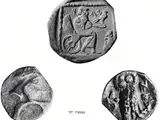
- "God on the Winged Wheel" drachm British Museum coin 4th c. BCE about ↗ A silver coin showing a bearded god seated on a winged wheel above letters usually read YHD (Yehud), once read YHW; whether the god is Yahweh or a Zeus-type figure is disputed. Aramaic cited in §05 §05 Persian Yehud and the Making of the Torah →
- 2 Chr 36:20–21 Chronicles (Hebrew Bible) prose c. 4th c. BCE read the text ↗ Presents the land as lying desolate and 'keeping sabbath' for seventy years while its people were in Babylon: the 'empty land' picture. Hebrew cited in §04 §04 Exile and the Birth of Monotheism →
- Ezra 1:2–4 Ezra (Hebrew Bible) prose c. 4th c. BCE (composition) read the text ↗ The Hebrew proclamation of Cyrus: Yahweh, the God of heaven, has charged him to build a house in Jerusalem, and any of his people may go up. Hebrew cited in §05 §05 Persian Yehud and the Making of the Torah →
- Ezra 2:64 (= Nehemiah 7:66) Ezra (Hebrew Bible) prose c. 4th c. BCE (composition) read the text ↗ The list of returnees totals 42,360 people besides slaves and singers; probably a composite census, not one caravan. Hebrew cited in §05 §05 Persian Yehud and the Making of the Torah →
- Ezra 3:12 Ezra (Hebrew Bible) prose c. 4th c. BCE (composition) read the text ↗ Old men who had seen the first Temple weep when the foundation of the second is laid. Hebrew cited in §05 §05 Persian Yehud and the Making of the Torah →
- 1 Chronicles 21:1 (cf. 2 Samuel 24:1) Chronicles (Hebrew Bible) prose c. 4th c. BCE read the text ↗ Where Samuel says Yahweh incited David to take a census, Chronicles says "a satan stood up against Israel and incited David". Hebrew cited in §05 cited in §06 §05 Persian Yehud and the Making of the Torah →
- Samaria papyri from Wadi Daliyeh Wadi Daliyeh cave finds (1962) legal c. 375–335 BCE about ↗ Legal documents left by refugees from Samaria who fled Alexander; they name members of the house of Sanballat as governors of Samaria. Aramaic cited in §05 §05 Persian Yehud and the Making of the Torah →
- Isaiah 26:19 Isaiah (Hebrew Bible) verse debated; Persian or Hellenistic period read the text ↗ 'Your dead shall live, their corpses shall rise': in the late 'Isaiah Apocalypse'; whether it means individual resurrection or national revival is debated. Hebrew §06 Hellenism, the Maccabees and the Second Temple Sects →
- Nehemiah 12:22 Nehemiah (Hebrew Bible) prose c. 4th c. BCE (composition) read the text ↗ Lists the high priests Eliashib, Joiada, Johanan and Jaddua; the Johanan named here is the high priest Jehohanan of the Elephantine petition of 407 BCE. Hebrew cited in §05 §05 Persian Yehud and the Making of the Torah →
- Diogenes Laertius, Lives 1.9 (citing Theopompus) Lives of the Eminent Philosophers prose report of the 4th c. BCE, preserved 3rd c. CE Theopompus, in book 8 of his Philippica, reports that according to the Magi people will come to life again and be immortal: early Greek evidence for a Persian belief in resurrection. Greek cited in §06 §06 Hellenism, the Maccabees and the Second Temple Sects →
- Letoon trilingual stele Letoon (Xanthos) trilingual; ed. H. Metzger et al., Fouilles de Xanthos VI (Klincksieck, 1979) inscription c. 337 BCE (first year of an Artaxerxes, probably Artaxerxes IV; 358 BCE if Artaxerxes III) about ↗ Records the founding of a local cult at Xanthos in Lycia, with an Aramaic version issued in the name of the satrap Pixodaros; Peter Frei's main example of Persian 'authorisation' of a local regulation. Lycian, Greek and Aramaic cited in §05 §05 Persian Yehud and the Making of the Torah →
- Esther 2:5 Esther (Hebrew Bible) prose c. 4th–2nd c. BCE read the text ↗ Mordecai is introduced as "a Judean man" (ʾîš yĕhûdî) of the tribe of Benjamin: Yehudi as the name of a dispersed people. Hebrew cited in §05 §05 Persian Yehud and the Making of the Torah →
- Rock Edict 13 Ashokan edicts inscription c. 256 BCE read the text ↗ Names five Hellenistic kings whose reigns are independently dated — the peg the entire Indian chronology hangs from. Prakrit in Brāhmī §00 How We Know →
- 1 Enoch 1–36 (Book of the Watchers) 1 Enoch prose 3rd c. BCE about ↗ Two hundred Watchers descend to Mount Hermon, father giants and teach forbidden arts; evil comes from fallen angels. Aramaic fragments at Qumran date from the early 2nd c. BCE. Aramaic (surviving complete in Ge'ez) cited in §06 §06 Hellenism, the Maccabees and the Second Temple Sects →
- Ecclesiastes 9:5–10 Ecclesiastes (Hebrew Bible) prose c. 3rd c. BCE read the text ↗ The dead know nothing and have no more reward; there is no work or thought or knowledge or wisdom in Sheol. Hebrew cited in §06 §06 Hellenism, the Maccabees and the Second Temple Sects →
- Ecclesiastes 3:19–21 Ecclesiastes (Hebrew Bible) verse c. 3rd c. BCE (debated) read the text ↗ Humans and animals share one fate and one breath and return to the same dust: 'Who knows if the lifebreath of humans does rise upward?' A biblical voice doubting any afterlife. Hebrew §06 Hellenism, the Maccabees and the Second Temple Sects →
- Schedia proseuchē inscription (JIGRE 22) Dedication of a Jewish prayer house, Schedia, Egypt inscription 246–221 BCE The Jews of Schedia dedicate a proseuchē 'on behalf of King Ptolemy and Queen Berenice his sister and wife and their children': the earliest dated evidence for a synagogue. Greek cited in §05 cited in §06 §06 Hellenism, the Maccabees and the Second Temple Sects →
- Mount Gerizim inscriptions Mount Gerizim sacred precinct inscription 3rd–2nd c. BCE about ↗ About four hundred dedicatory inscriptions, mostly Aramaic, several containing the divine name, from the Samaritan sanctuary. Aramaic and Hebrew cited in §05 §05 Persian Yehud and the Making of the Torah →
- Tobit 12:15 Tobit prose c. 3rd–2nd c. BCE read the text ↗ The angel reveals himself: 'I am Raphael, one of the seven angels who stand ready and enter before the glory of the Lord.' Aramaic/Hebrew (surviving complete in Greek) cited in §06 §06 Hellenism, the Maccabees and the Second Temple Sects →
- Sir 48:24–25 Wisdom of Ben Sira prose c. 180 BCE read the text ↗ Praises Isaiah son of Amoz, who 'comforted the mourners in Zion': by the early second century BCE Isaiah 40–55 was read as part of the eighth-century prophet's book. Hebrew/Greek cited in §04 §04 Exile and the Birth of Monotheism →
- Sirach 49:13 Wisdom of Ben Sira verse c. 180 BCE read the text ↗ Ben Sira praises Nehemiah, who "raised for us the walls that had fallen", but his list of famous men omits Ezra. Hebrew (Greek translation) cited in §05 §05 Persian Yehud and the Making of the Torah →
- Daniel 11:31 Book of Daniel (Hebrew Bible) prose c. 167–164 BCE read the text ↗ Forces of the king 'shall profane the temple and fortress and abolish the regular burnt offering and set up the abomination that makes desolate', describing Antiochus IV's actions of 167 BCE. Hebrew cited in §06 §06 Hellenism, the Maccabees and the Second Temple Sects →
- Daniel 12:1–3 Book of Daniel (Hebrew Bible) prose c. 165 BCE read the text ↗ Michael the great prince arises; 'many of those who sleep in the dust of the earth shall awake, some to everlasting life, and some to shame and everlasting contempt': the first clear biblical statement of resurrection and judgment. Hebrew cited in §04 cited in §05 cited in §06 §06 Hellenism, the Maccabees and the Second Temple Sects →
- Daniel 8:16; 9:21 Book of Daniel (Hebrew Bible) prose c. 165 BCE read the text ↗ The angel Gabriel is named and sent to explain Daniel's visions: the first angel named in the Hebrew Bible. Hebrew cited in §06 §06 Hellenism, the Maccabees and the Second Temple Sects →
- Jubilees 10:8–11 Book of Jubilees prose c. 160–150 BCE about ↗ Mastema, 'the chief of the spirits', asks God to leave him a tenth of the evil spirits so that he can exercise his authority over humankind. Hebrew (Ethiopic complete) §06 Hellenism, the Maccabees and the Second Temple Sects →
- Delos Samaritan inscriptions Two Greek inscriptions from Delos inscription 3rd–1st c. BCE about ↗ Honours voted by a community calling itself "Israelites" who make offerings to "Argarizein" (Mount Gerizim) — Samaritans in the Aegean calling themselves Israelites. Greek cited in §05 §05 Persian Yehud and the Making of the Torah →
- Samaritan Pentateuch, Exodus 20 and Deuteronomy 12 Samaritan Pentateuch verse text-type 2nd c. BCE about ↗ The Samaritan Torah adds a commandment to build an altar on Mount Gerizim and reads "the place Yahweh has chosen" where the Jewish text has "will choose". Hebrew (Samaritan script) cited in §00 cited in §05 §05 Persian Yehud and the Making of the Torah →
- Letter of Aristeas 301–307 Letter of Aristeas prose 2nd c. BCE about ↗ Legend of seventy-two Jewish elders translating the Torah into Greek for Ptolemy II in seventy-two days on the island of Pharos; shows the Greek Torah's authority among Alexandrian Jews. Greek cited in §00 cited in §06 §06 Hellenism, the Maccabees and the Second Temple Sects →
- Papyrus Rylands 458 John Rylands Library, Manchester manuscript mid-2nd c. BCE about ↗ Eight small fragments of Deuteronomy 23–28 in Greek: before the Dead Sea Scrolls, the oldest known manuscript of the Greek Bible. Greek §06 Hellenism, the Maccabees and the Second Temple Sects →
- Sirach, Prologue Wisdom of Ben Sira (Greek translation) prose soon after 132 BCE about ↗ Ben Sira's grandson speaks of 'the Law and the Prophets and the others that followed them': a three-part collection whose third part has no fixed name yet. Greek cited in §00 cited in §06 §00 How We Know →
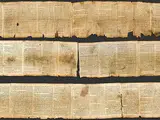
- 1QIsaᵃ (Great Isaiah Scroll) Dead Sea Scrolls, Qumran Cave 1 manuscript c. 150–100 BCE read the text ↗ All 66 chapters of Isaiah, over a thousand years older than the Aleppo Codex; some 2,600 variants from the Masoretic text, almost all minor. Hebrew cited in §00 §00 How We Know →
- Nash Papyrus (Cambridge University Library, MS Or. 233) Papyrus fragment from Egypt manuscript c. 150–100 BCE about ↗ Twenty-four lines with the Ten Commandments and the opening of the Shema; acquired in Egypt in 1902, it was the oldest known Hebrew biblical text before the Dead Sea Scrolls. Hebrew cited in §00 §00 How We Know →
- 1 Maccabees 1:41–64 1 Maccabees prose late 2nd c. BCE read the text ↗ Antiochus IV forbids sacrifice, Sabbath, festivals and circumcision; on 15 Kislev of year 145 (167 BCE) a 'desolating sacrilege' is set on the Temple altar; Torah scrolls are burned. Greek (from a lost Hebrew original) cited in §06 §06 Hellenism, the Maccabees and the Second Temple Sects →
- 1 Maccabees 4:52–59 1 Maccabees prose late 2nd c. BCE read the text ↗ On 25 Kislev of year 148 (164 BCE) sacrifice resumes on a new altar, and Judah and the assembly decree an annual eight-day festival of dedication. No oil miracle is mentioned. Greek (from a lost Hebrew original) cited in §06 §06 Hellenism, the Maccabees and the Second Temple Sects →
- 1 Maccabees 14:41–47 1 Maccabees prose late 2nd c. BCE read the text ↗ The Jews and priests decree in 140 BCE that Simon shall be their leader and high priest 'for ever, until a trustworthy prophet should arise'. Greek (from a lost Hebrew original) cited in §06 §06 Hellenism, the Maccabees and the Second Temple Sects →
- 2 Maccabees 1:18 2 Maccabees (prefixed letter) letter 2nd–1st c. BCE read the text ↗ A letter to the Jews of Egypt calls the 25 Chislev festival a feast of booths and 'the feast of the fire given when Nehemiah ... offered sacrifices', the earliest link between the festival and a miracle of fire. Greek §06 Hellenism, the Maccabees and the Second Temple Sects →
- 1 Maccabees 2:1–28 1 Maccabees prose late 2nd c. BCE read the text ↗ The priest Mattathias of Modein and his five sons; Mattathias kills a Jew sacrificing on the king's altar, and the family flees to the hills. Greek (from a lost Hebrew original) cited in §06 §06 Hellenism, the Maccabees and the Second Temple Sects →
- 2 Maccabees 4:7–17 2 Maccabees prose late 2nd–1st c. BCE read the text ↗ Jason buys the high priesthood from Antiochus IV, founds a gymnasium in Jerusalem and enrols citizens of Antioch; priests neglect the altar for the wrestling arena. Greek cited in §06 §06 Hellenism, the Maccabees and the Second Temple Sects →
- 2 Maccabees 7 2 Maccabees prose late 2nd–1st c. BCE read the text ↗ A mother and her seven sons are martyred for refusing pork; the brothers declare their hope that God will raise them up and restore their bodies. Greek cited in §06 §06 Hellenism, the Maccabees and the Second Temple Sects →
- 2 Maccabees 10:5–8 2 Maccabees prose late 2nd or 1st c. BCE read the text ↗ The purification of the sanctuary on 25 Chislev, celebrated for eight days 'in the manner of the feast of booths', which the rebels had missed while hiding in the mountains; decreed for the whole nation every year. Greek cited in §06 §06 Hellenism, the Maccabees and the Second Temple Sects →
- 2 Maccabees 2:21 2 Maccabees prose late 2nd–1st c. BCE read the text ↗ Praises those who fought bravely 'for Judaism' (Ioudaismos): the earliest attestation of the word. Greek cited in §00 cited in §06 §00 How We Know →
- 1QS 9:9–11 (Community Rule) Community Rule (Serekh ha-Yaḥad), Qumran Cave 1 rule c. 100–75 BCE (manuscript) about ↗ The community is to keep its first ordinances 'until there shall come a prophet and the messiahs of Aaron and Israel': two expected anointed leaders, priestly and royal. Hebrew cited in §06 §06 Hellenism, the Maccabees and the Second Temple Sects →
- Psalms of Solomon 17 Psalms of Solomon verse after 63 BCE about ↗ A prayer for God to raise up 'the son of David' to purge Jerusalem, calling him christos kyrios, 'the Lord Messiah' (often emended to 'the Lord's anointed'): one of the earliest texts using Messiah as a title for the expected Davidic king. Greek (from Hebrew) cited in §06 §06 Hellenism, the Maccabees and the Second Temple Sects →
- Wisdom of Solomon 2:24 Wisdom of Solomon (Greek) prose c. 1st c. BCE about ↗ 'Through the devil's envy death entered the world': the Greek diabolos, the Septuagint's word for satan, now an enemy of humankind behind death. Greek §06 Hellenism, the Maccabees and the Second Temple Sects →
- Wisdom of Solomon 3:1 Wisdom of Solomon (Greek) prose c. 1st c. BCE about ↗ 'The souls of the righteous are in the hand of God': an immortal soul rewarded after death, in Greek idiom, alongside the Hebrew hope of resurrection. Greek §06 Hellenism, the Maccabees and the Second Temple Sects →
- War Scroll (1QM) 1:1–7 Dead Sea Scrolls manuscript composition 2nd–1st c. BCE about ↗ The war of 'the sons of light' against 'the sons of darkness, the army of Belial'. Hebrew §06 Hellenism, the Maccabees and the Second Temple Sects →
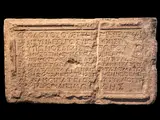
- Temple Warning inscription Balustrade inscription from Herod's Temple inscription c. 20 BCE–70 CE about ↗ Forbids any foreigner to pass the barrier around the inner Temple courts on pain of death; one complete copy found in 1871, a fragment in 1935. Greek cited in §06 §06 Hellenism, the Maccabees and the Second Temple Sects →
- Theodotos inscription Synagogue dedication from the City of David, Jerusalem inscription 1st c. BCE–70 CE (majority view) about ↗ Theodotos son of Vettenos, priest and archisynagōgos, built the synagogue 'for the reading of the Law and the teaching of the commandments', with a guest house for visitors from abroad. Found 1913. Greek cited in §06 §06 Hellenism, the Maccabees and the Second Temple Sects →
- Philo, Every Good Man Is Free 75–91 Quod omnis probus liber sit prose early 1st c. CE Philo describes the Essenes as more than four thousand in number, living in villages, holding property in common and keeping the Sabbath strictly. Greek cited in §06 §06 Hellenism, the Maccabees and the Second Temple Sects →
- Philo, Life of Moses 2.25–44 On the Life of Moses prose c. 20–50 CE Philo retells the Septuagint legend, says the translators, as if inspired, all used the very same words, and records an annual festival on Pharos celebrating the translation. Greek cited in §06 §06 Hellenism, the Maccabees and the Second Temple Sects →
- Philo, Embassy to Gaius Legatio ad Gaium prose c. 41 CE Philo's own account of the riots against Alexandria's Jews in 38 CE and of the embassy he led to the emperor Gaius (Caligula) in 40 CE. Greek cited in §06 §06 Hellenism, the Maccabees and the Second Temple Sects →
- Megillat Taʿanit, 25 Kislev, with its scholion Megillat Taʿanit (Scroll of Fasts) list list 1st c. CE; scholion later, of uncertain date read the text ↗ 'On the twenty-fifth of Kislev, Hanukkah, eight days, on which one does not eulogize.' The later Hebrew scholion offers several explanations of the eight days; the printed text includes the oil miracle, which the manuscript versions lack. Aramaic (scholion in Hebrew) §06 Hellenism, the Maccabees and the Second Temple Sects →
- Philippians 3:5 Paul, Letter to the Philippians letter c. 50s CE read the text ↗ Paul describes himself as circumcised on the eighth day, of the tribe of Benjamin, a Hebrew of Hebrews, 'as to the law a Pharisee'. Greek cited in §06 §06 Hellenism, the Maccabees and the Second Temple Sects →
- Mark 12:18–27 Gospel of Mark (New Testament) prose c. 70 CE read the text ↗ Sadducees, 'who say there is no resurrection', test Jesus with the case of a woman married in turn to seven brothers; he answers from the Torah's 'God of Abraham, Isaac and Jacob'. Greek §06 Hellenism, the Maccabees and the Second Temple Sects →
- Josephus, Jewish War 2.119–166 The Jewish War prose c. 75–79 CE read the text ↗ The three Jewish 'philosophies': a long idealised account of the Essenes, and the Pharisees' belief in the survival of the soul and reward and punishment against the Sadducees' denial. Greek cited in §06 §06 Hellenism, the Maccabees and the Second Temple Sects →
- Pliny, Natural History 5.73 Natural History prose c. 77 CE read the text ↗ A celibate community of Essenes without money lives on the west side of the Dead Sea, with Ein Gedi 'below' them: the main evidence linking the Essenes to Qumran. Latin cited in §06 §06 Hellenism, the Maccabees and the Second Temple Sects →
- Josephus, Jewish War 6.236–266 Jewish War prose c. 75–79 CE read the text ↗ An eyewitness on the Roman side describes Titus's council of war and the burning of the Temple in the summer of 70 CE, claiming Titus wished to spare it. Greek cited in §06 cited in §07 §07 Without a Temple: The Rabbis →
- Josephus, Jewish War 7.252–406 Jewish War prose c. 75–79 CE read the text ↗ The Roman siege and fall of Masada, the last rebel fortress, under Flavius Silva, with Eleazar ben Yair's speeches and the defenders' mass suicide. Greek cited in §07 §07 Without a Temple: The Rabbis →
- Josephus, Jewish War 7.218 Jewish War prose c. 75–79 CE read the text ↗ After the war Vespasian ordered every Jew to pay two drachmae a year to the Capitol in Rome, as they had formerly paid to the Temple: the origin of the fiscus Iudaicus. Greek cited in §07 §07 Without a Temple: The Rabbis →
- Josephus, Jewish War 3.399–408 Jewish War prose c. 75–79 CE read the text ↗ The captured Josephus tells Vespasian that he and his son will be emperors: the same prophecy the rabbinic legend later gives to Yohanan ben Zakkai. Greek cited in §07 §07 Without a Temple: The Rabbis →
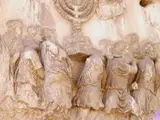
- Arch of Titus, spoils relief Arch of Titus, Roman Forum artefact after 81 CE about ↗ Roman soldiers carry the Temple's menorah, trumpets and table in Titus's triumph of 71 CE: Rome's own record of the spoils of Jerusalem. Latin cited in §07 §07 Without a Temple: The Rabbis →
- Luke 10:25–37 Gospel of Luke (New Testament) prose c. 80–90 CE read the text ↗ The parable of the Good Samaritan: a priest and a Levite pass by a wounded man, and a Samaritan, the outsider, is the one who helps him. Greek §06 Hellenism, the Maccabees and the Second Temple Sects →
- Josephus, Antiquities 12.323–325 Jewish Antiquities prose c. 93 CE read the text ↗ Josephus describes the Temple's rededication and says the festival is called 'Lights', supposing the name comes from liberty having 'appeared' to the Jews beyond their hopes. Greek cited in §06 §06 Hellenism, the Maccabees and the Second Temple Sects →
- Josephus, Antiquities 18.11–25 Jewish Antiquities prose c. 93 CE read the text ↗ The Pharisees, Sadducees and Essenes (more than four thousand), and the 'fourth philosophy' of Judas the Galilean, founded in opposition to the Roman census of 6 CE. Greek cited in §06 §06 Hellenism, the Maccabees and the Second Temple Sects →
- Josephus, Antiquities 13.297–298 Jewish Antiquities prose c. 93 CE read the text ↗ The Pharisees 'delivered to the people a great many observances by succession from their fathers, which are not written in the laws of Moses'; the Sadducees rejected them and accepted only the written law. Greek cited in §06 cited in §07 §06 Hellenism, the Maccabees and the Second Temple Sects →
- Josephus, Antiquities 20.200 Jewish Antiquities prose c. 93 CE read the text ↗ The high priest Ananus has 'the brother of Jesus who was called Christ, whose name was James' stoned in 62 CE; the passage is generally accepted as authentic. Greek cited in §06 §06 Hellenism, the Maccabees and the Second Temple Sects →
- Josephus, Antiquities 12.138–144 Jewish Antiquities prose c. 93 CE read the text ↗ Josephus quotes a letter of Antiochus III, after his conquest of Judea c. 200 BCE, granting the Jews the right to live by their ancestral laws and supporting the Temple. Greek cited in §06 §06 Hellenism, the Maccabees and the Second Temple Sects →
- Josephus, Antiquities 13.254–258 Jewish Antiquities prose c. 93 CE read the text ↗ John Hyrcanus takes Shechem and destroys the temple on Mount Gerizim, then conquers Idumea and makes the Idumeans adopt circumcision and the Jewish laws. Greek cited in §06 §06 Hellenism, the Maccabees and the Second Temple Sects →
- Josephus, Antiquities 13.408–409 Jewish Antiquities prose c. 93 CE read the text ↗ Queen Alexandra gives the Pharisees power in government and restores the practices they had introduced by tradition of the fathers. Greek cited in §06 §06 Hellenism, the Maccabees and the Second Temple Sects →
- Josephus, Antiquities 14.69–73 Jewish Antiquities prose c. 93 CE read the text ↗ Pompey takes the Temple in 63 BCE and enters the Holy of Holies with his men, but leaves its treasures untouched. Greek cited in §06 §06 Hellenism, the Maccabees and the Second Temple Sects →
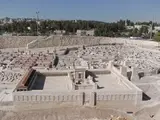
- Josephus, Antiquities 15.380–425 Jewish Antiquities prose c. 93 CE read the text ↗ Herod, in his eighteenth year (20/19 BCE), undertakes to rebuild the Temple; Josephus describes the enlarged platform, porticoes, courts and the warning barrier for gentiles. Greek cited in §06 §06 Hellenism, the Maccabees and the Second Temple Sects →
- Josephus, Antiquities 17.41–42 Jewish Antiquities prose c. 93 CE read the text ↗ Josephus says the Pharisees, who refused an oath of loyalty to Herod, numbered above six thousand. Greek cited in §06 §06 Hellenism, the Maccabees and the Second Temple Sects →
- Josephus, Jewish Antiquities 11.302–347 Jewish Antiquities prose c. 93–94 CE about ↗ Josephus's story of Sanballat, whom he calls a Cuthaean, building the Gerizim temple under Alexander for his son-in-law Manasseh, a Jerusalem priest. Greek cited in §05 §05 Persian Yehud and the Making of the Torah →
- Josephus, Against Apion 1.38–41 Against Apion prose c. 95 CE read the text ↗ Josephus counts twenty-two authoritative books (five of Moses, thirteen of prophets, four of hymns and precepts) and says later books lack equal authority because the succession of prophets failed. Greek cited in §00 cited in §07 §00 How We Know →
- Josephus, Against Apion 1.90 (quoting Manetho) Against Apion prose c. 95 CE (Manetho c. 280 BCE) read the text ↗ Manetho's expelled 'shepherds', the Hyksos, go to Judea and found Jerusalem: Egyptian and Jewish traditions about an exodus had met by the Hellenistic period. Greek cited in §01 §01 Out of Canaan →
- Revelation 12:9 Revelation (New Testament) prose c. 95 CE read the text ↗ 'The great dragon was thrown down, that ancient serpent, who is called the Devil and Satan': the explicit identification of the serpent with Satan. Greek §06 Hellenism, the Maccabees and the Second Temple Sects →
- Josephus, Life 10–12 The Life of Flavius Josephus prose c. 94–100 CE Josephus describes trying out the three Jewish schools as a youth and, at nineteen, beginning to conduct his public life following the school of the Pharisees. Greek cited in §06 §06 Hellenism, the Maccabees and the Second Temple Sects →
- 4 Ezra 14 4 Ezra (2 Esdras 3–14) prose c. 100 CE about ↗ Ezra, inspired, dictates ninety-four books to restore the scriptures burned in the destruction, twenty-four public and seventy secret. Latin (from lost Hebrew/Greek) cited in §05 §05 Persian Yehud and the Making of the Torah →
- Tacitus, Annals 15.44 Annals prose c. 116 CE Explaining the name of the Christians blamed for the fire of Rome, Tacitus says Christus was executed in the reign of Tiberius by the procurator Pontius Pilate. Latin cited in §06 §06 Hellenism, the Maccabees and the Second Temple Sects →
- Bar Kosiba letter on the four species (P.Yadin 57) Bar Kokhba letters, Cave of Letters, Naḥal Ḥever letter c. 134 CE about ↗ Shimon bar Kosiba orders an officer to send palm branches, citrons, myrtles and willows to his camp for Sukkot: religious observance in the middle of the revolt. Aramaic cited in §07 §07 Without a Temple: The Rabbis →
- Bar Kokhba silver sela, undated (year 3) Coinage of the Bar Kokhba revolt coin 134/135 CE about ↗ Temple facade with a star above and the name Shimon; on the reverse the lulav and etrog with 'For the freedom of Jerusalem' (this specimen Mildenberg 85, Meshorer 233). Hebrew (palaeo-Hebrew script) cited in §07 §07 Without a Temple: The Rabbis →
- Seder Olam Rabbah Seder Olam Rabbah (Hebrew) text c. 2nd c. CE (attributed to Yose ben Halafta) read the text ↗ The rabbinic chronology from creation to Alexander, on which the traditional Jewish dating of the Exodus to the year 2448 from creation rests. Hebrew §01 Out of Canaan →
- m. Sanhedrin 10:1 Mishnah prose c. 200 CE read the text ↗ Abba Saul adds to those with no share in the world to come 'one who pronounces the name according to its letters'. Hebrew cited in §00 cited in §06 cited in §08 §00 How We Know →
- Clement of Alexandria, Stromata 5.6 Stromata prose c. 200 CE about ↗ Gives a Greek transcription of the divine name (Iaoue in the standard edition; some manuscripts read Iaou), one of the witnesses behind the reconstruction 'Yahweh'. Greek cited in §00 §00 How We Know →
- m. Avot 1:1 Mishnah prose c. 200 CE read the text ↗ Moses received the Torah at Sinai and handed it to Joshua, the elders, the prophets and the men of the Great Assembly. Hebrew cited in §05 cited in §07 §05 Persian Yehud and the Making of the Torah →
- m. Yadayim 3:5 Mishnah law c. 200 CE read the text ↗ The debate over whether the Song of Songs and Ecclesiastes 'defile the hands', with Akiva's verdict that the Song is 'the holy of holies': the only rabbinic basis for the 'Council of Jamnia'. Hebrew cited in §00 cited in §07 §07 Without a Temple: The Rabbis →
- m. Kiddushin 3:12 Mishnah law c. 200 CE read the text ↗ The child of a gentile or slave woman 'is like her': the earliest statement of the matrilineal principle. Hebrew cited in §07 §07 Without a Temple: The Rabbis →
- m. ʿOrlah 3:9 Mishnah law c. 200 CE read the text ↗ 'New [grain] is forbidden by the Torah everywhere': a rule about the new harvest that the Hatam Sofer turned into a slogan against all religious innovation. Hebrew cited in §11 §11 Emancipation and the Modern Movements →
- m. Eduyot 2:10 Mishnah law c. 200 CE read the text ↗ 'The judgment of the wicked in Gehinnom is twelve months': rabbinic Gehenna as a limited purgation for most, not eternal torment. Hebrew §07 Without a Temple: The Rabbis →
- m. Bava Kamma 6:6 Mishnah law c. 200 CE read the text ↗ A shopkeeper's lamp sets fire to flax on a passing camel; Rabbi Judah exempts him if it was a Hanukkah lamp. The Mishnah's only mention of Hanukkah lights. Hebrew §07 Without a Temple: The Rabbis →
- m. Yoma 6:2 Mishnah law c. 200 CE read the text ↗ On the Day of Atonement the people in the Temple court prostrate themselves when they hear the explicit Name from the mouth of the high priest. Hebrew cited in §00 §00 How We Know →
- m. Pesaḥim 10 Mishnah law c. 200 CE read the text ↗ The order of the Passover evening meal: four cups of wine, the child's questions, the retelling from 'a wandering Aramean' and the Hallel. Hebrew cited in §07 §07 Without a Temple: The Rabbis →
- m. Berakhot 5:2 Mishnah law c. 200 CE read the text ↗ The mention of rain is inserted into the 'revival of the dead' (teḥiyyat ha-metim), the second blessing of the Amidah: the earliest attestation of the blessing by that name. Hebrew §07 Without a Temple: The Rabbis →
- m. Kilayim 8:4 Mishnah law c. 200 CE read the text ↗ Rabbi Judah: mules born of a mare, 'even though their father is a donkey', may be mated with one another, and likewise mules born of a she-donkey: the offspring's kind follows the mother. Hebrew §07 Without a Temple: The Rabbis →
- m. Bikkurim 1:6; Rosh Hashanah 1:3; Taanit 2:10; Megillah 3:4, 3:6; Moed Katan 3:9 Mishnah law c. 200 CE read the text ↗ Hanukkah as a date and a reading: first fruits brought until Hanukkah, messengers sent out in Kislev for it, no public fasts or laments on it, and the Torah reading of the princes' altar dedication (Numbers 7) on each of its days. No explanation of the festival is given. Hebrew §07 Without a Temple: The Rabbis →
- Cassius Dio, Roman History 69.12–14 Roman History prose early 3rd c. CE read the text ↗ Blames the Bar Kokhba revolt on Hadrian's refounding of Jerusalem as a Roman colony with a temple of Jupiter, and reports 580,000 Jewish dead and 985 villages destroyed. Greek cited in §07 §07 Without a Temple: The Rabbis →
- Origen, De principiis 1.5.5 On First Principles (Latin of Rufinus) text c. 220–230 CE read the text ↗ Reads Isaiah 14:12 with Luke 10:18 as the fall of the devil, 'who formerly was Lucifer': an early Christian witness to the traditional reading. Latin §06 Hellenism, the Maccabees and the Second Temple Sects →
- Dura-Europos synagogue Synagogue at Dura-Europos, Syria (frescoes now in the National Museum, Damascus) site 244/245 CE about ↗ A synagogue on the Euphrates rebuilt in 244/245 CE with walls painted with biblical scenes, preserved when it was buried under a rampart in 256. Aramaic and Greek cited in §07 §07 Without a Temple: The Rabbis →
- Codex Vaticanus (Vat. gr. 1209) Vatican Library, Rome manuscript c. 300–350 CE about ↗ One of the two oldest near-complete Bibles: most of the Greek Old Testament and most of the New Testament in one book. Greek §00 How We Know →
- Eusebius, Ecclesiastical History 4.2 Ecclesiastical History prose early 4th c. CE read the text ↗ The Jewish uprisings of 115–117 in Alexandria, the rest of Egypt and Cyrene, and their suppression by Trajan's generals. Greek cited in §07 §07 Without a Temple: The Rabbis →
- Codex Sinaiticus British Library (most leaves); Leipzig, St Catherine's Monastery and St Petersburg manuscript c. 325–360 CE read the text ↗ About half of the Greek Old Testament survives, with the oldest complete copy of the New Testament. Greek §00 How We Know →
- Hammat Tiberias synagogue mosaic Synagogue of Severus, Hammat Tiberias site 4th or early 5th c. CE about ↗ A synagogue floor with Helios in his chariot, the zodiac, the seasons and a Torah shrine, donated by a 'pupil of the most illustrious patriarchs'. Greek and Aramaic cited in §07 §07 Without a Temple: The Rabbis →
- Egeria, Itinerarium 1–5 Itinerarium Egeriae (Latin) text c. 381–384 CE about ↗ A pilgrim's account of climbing 'the holy mountain of God' in southern Sinai with the monks living there: the earliest detailed witness to the Christian identification of Sinai with the Jebel Musa massif. Latin §02 Yahweh Among the Gods →
- John Chrysostom, Adversus Judaeos, Homily 1 Adversus Judaeos (Against the Judaizers) prose 386 CE read the text ↗ The first of eight sermons preached at Antioch against Christians who went to the synagogue and kept the Jewish festivals. Greek cited in §07 §07 Without a Temple: The Rabbis →
- Ammianus Marcellinus 23.1.2–3 Res Gestae prose c. 390 CE read the text ↗ Julian plans at vast cost to restore the Temple in Jerusalem, entrusts the work to Alypius of Antioch, and abandons it when 'terrifying balls of flame' burst from the foundations. Latin cited in §07 §07 Without a Temple: The Rabbis →
- Historia Augusta, Hadrian 14.2 Historia Augusta prose late 4th c. CE read the text ↗ 'At this time also the Jews began war, because they were forbidden to practice circumcision': the late Roman explanation of the Bar Kokhba revolt. Latin cited in §07 §07 Without a Temple: The Rabbis →
- y. Rosh Hashanah 1:2 Jerusalem Talmud prose c. 400 CE read the text ↗ Rabbi Ḥanina: 'the names of the months came up with them from Babylon': the Jewish month names are Babylonian. Hebrew/Aramaic cited in §04 §04 Exile and the Birth of Monotheism →
- y. Taʿanit 4:5 (68d) Jerusalem Talmud prose c. 400 CE read the text ↗ Rabbi Akiva hails bar Kosiba as 'the King Messiah'; Rabbi Yohanan ben Torta replies that grass will grow from Akiva's cheeks before the son of David comes. Aramaic and Hebrew cited in §07 §07 Without a Temple: The Rabbis →
- y. Avodah Zarah 3:3 (42d) Jerusalem Talmud prose c. 400 CE read the text ↗ In the days of Rabbi Yohanan they began painting on walls, and in the days of Rabbi Abun depicting with mosaics, and neither rabbi protested; the Abun line survives in a Cairo Geniza fragment and is missing from the Leiden manuscript. Aramaic and Hebrew cited in §07 §07 Without a Temple: The Rabbis →
- Sulpicius Severus, Chronica 2.30 Chronica (Sacred History) prose c. 403 CE read the text ↗ Says Titus held a council and decided the Temple should be destroyed, to root out the religion of Jews and Christians; often thought to follow a lost passage of Tacitus. Latin cited in §07 §07 Without a Temple: The Rabbis →
- Codex Theodosianus 16.8.29 (429 CE) Codex Theodosianus law 30 May 429 CE An imperial law ordering that the dues Jews had paid to their patriarchs be collected for the imperial treasury now that the patriarchs have passed away: the end of the patriarchate. Latin cited in §07 §07 Without a Temple: The Rabbis →
- Genesis Rabbah 38:13 Genesis Rabbah prose c. 400–500 CE read the text ↗ The midrash of Abraham breaking the idols in his father Terah's shop: the traditional view that monotheism began with Abraham. Hebrew cited in §04 §04 Exile and the Birth of Monotheism →
- Beit Alfa synagogue mosaic Synagogue floor, Beit Alfa, Jezreel Valley site 6th c. CE about ↗ A complete synagogue floor of the 6th century: the binding of Isaac, the zodiac with Helios, and a Torah shrine, signed by the craftsmen Marianos and his son Hanina. Aramaic and Greek cited in §07 §07 Without a Temple: The Rabbis →
- b. Bava Batra 14b–15a Babylonian Talmud prose c. 500–600 CE read the text ↗ The rabbinic list of who wrote each biblical book: Moses wrote his book, Balaam's portion and Job; one opinion holds that Joshua wrote the last eight verses of the Torah. Hebrew/Aramaic cited in §00 §00 How We Know →
- b. Megillah 29a Babylonian Talmud prose c. 500–600 CE read the text ↗ Rabbi Yitzḥak reads Ezekiel's 'little sanctuary' as the synagogues and study houses of Babylonia: the rabbinic view of the synagogue's exilic roots. Hebrew/Aramaic cited in §04 §04 Exile and the Birth of Monotheism →
- b. Berakhot 11b Babylonian Talmud prose c. 500–600 CE read the text ↗ Explains that the morning blessing quotes Isaiah 45:7 but says 'creates all things' instead of 'creates evil', as a euphemism. Hebrew/Aramaic cited in §04 §04 Exile and the Birth of Monotheism →
- b. Sanhedrin 21b–22a Babylonian Talmud prose c. 500–600 CE read the text ↗ The Torah was first given in Hebrew script and given again in Ezra's day in the Assyrian script; Rabbi Yose: Ezra was worthy to receive the Torah had Moses not preceded him. Hebrew and Aramaic cited in §05 §05 Persian Yehud and the Making of the Torah →
- b. Megillah 3a Babylonian Talmud prose c. 500–600 CE read the text ↗ Reads mĕpōrāš, "distinctly", in Nehemiah 8:8 as translation into Aramaic: the rabbinic origin story of the targum. Hebrew and Aramaic cited in §05 §05 Persian Yehud and the Making of the Torah →
- b. Shabbat 21b Babylonian Talmud law redacted c. 5th–7th c. CE read the text ↗ 'What is Hanukkah?': the Greeks defiled the Temple oils, one sealed flask was found, and it burned for eight days. The earliest source for the oil miracle. Hebrew and Aramaic cited in §06 §06 Hellenism, the Maccabees and the Second Temple Sects →
- b. Bava Batra 4a Babylonian Talmud law redacted c. 5th–7th c. CE read the text ↗ The story of Herod and Bava ben Buta, in which Herod rebuilds the Temple; the Sages say that one who has not seen Herod's building has never seen a beautiful building. Hebrew and Aramaic cited in §06 §06 Hellenism, the Maccabees and the Second Temple Sects →
- Sanhedrin 98a Babylonian Talmud prose c. 500–600 CE read the text ↗ Rabbi Joshua ben Levi finds the Messiah at the gates of Rome and asks 'When will the master come?'; the answer is 'Today', if you listen to his voice (Ps 95:7). Aramaic cited in §10 §10 False Messiahs, Hasidism and Their Opponents →
- Babylonian Talmud, Ketubot 110b–111a Talmud Bavli, tractate Ketubot prose c. 500–600 CE (redaction) read the text ↗ The Three Oaths: Israel is not to go up to the land 'as a wall' or rebel against the nations, and the nations are not to oppress Israel too much. The main rabbinic text cited against Zionism. Hebrew/Aramaic cited in §12 §12 Zionism, the Holocaust and the State of Israel →
- b. Berakhot 19b Babylonian Talmud prose c. 500–600 CE read the text ↗ 'Great is human dignity, for it overrides a prohibition of the Torah', limited by the Talmud itself to rabbinic rules; the principle later used by the Conservative movement in 2006. Hebrew and Aramaic cited in §13 §13 Judaism Today →
- b. Bava Batra 16a Babylonian Talmud prose c. 500–600 CE (redaction) read the text ↗ Reish Lakish: 'Satan, the evil inclination and the angel of death are one': the rabbis fold the cosmic adversary back into God's service and the human heart. Hebrew and Aramaic §07 Without a Temple: The Rabbis →
- b. Kiddushin 68b Babylonian Talmud law redacted c. 5th–7th c. CE read the text ↗ Rabbi Yoḥanan in the name of Rabbi Shimon bar Yoḥai reads Deuteronomy 7:4: your son by an Israelite woman is called your son, your son by a gentile woman is not; Ravina infers that a daughter's son by a gentile father is called your son. Hebrew and Aramaic cited in §07 §07 Without a Temple: The Rabbis →
- b. Yevamot 45a–b Babylonian Talmud law redacted c. 5th–7th c. CE read the text ↗ Debates whether the child of a gentile or slave father and a Jewish mother is a mamzer; concludes that the child is fit (kasher). Hebrew and Aramaic §07 Without a Temple: The Rabbis →
- b. Kiddushin 75b Babylonian Talmud law redacted c. 5th–7th c. CE read the text ↗ Rabbi Ishmael holds that the Samaritans (Cutheans) are 'lion converts' who never truly converted; Rabbi Akiva holds that they are true converts. Hebrew and Aramaic §05 Persian Yehud and the Making of the Torah →
- Moʿed Qatan 28a Babylonian Talmud prose c. 500–600 CE read the text ↗ Rava: 'Length of life, children and sustenance' (ḥayyei, banei u-mezonei) depend not on merit but on fate; the source of the Hasidic formula for the blessings a tsaddik draws down. Aramaic cited in §10 §10 False Messiahs, Hasidism and Their Opponents →
- Avot de-Rabbi Natan A 4 Avot de-Rabbi Natan prose c. 3rd–9th c. CE (redaction debated) read the text ↗ Yohanan ben Zakkai's escape from Jerusalem in a coffin, and his answer to Rabbi Joshua at the ruined Temple: acts of loving-kindness atone as sacrifice did. Hebrew cited in §07 §07 Without a Temple: The Rabbis →
- b. Gittin 56a–b Babylonian Talmud prose c. 500–700 CE read the text ↗ The Talmud's version of Yohanan ben Zakkai's escape and his request to Vespasian: 'Give me Yavneh and its sages.' Aramaic and Hebrew cited in §07 §07 Without a Temple: The Rabbis →
- b. Berakhot 26b Babylonian Talmud prose c. 500–700 CE read the text ↗ The view that the daily prayers 'were instituted to correspond to the daily offerings' of the Temple. Aramaic and Hebrew cited in §07 §07 Without a Temple: The Rabbis →
- b. Berakhot 28b–29a Babylonian Talmud prose c. 500–700 CE read the text ↗ Attributes the ordering of the eighteen blessings to the sages at Yavneh under Rabban Gamaliel, and the blessing against heretics to Samuel the Small. Aramaic and Hebrew cited in §07 §07 Without a Temple: The Rabbis →
- b. Menahot 29b Babylonian Talmud prose c. 500–700 CE read the text ↗ Moses sits in Rabbi Akiva's class and cannot follow it, until Akiva attributes a ruling to 'a law given to Moses at Sinai'. Aramaic and Hebrew cited in §07 §07 Without a Temple: The Rabbis →
- b. Bava Metzia 59b Babylonian Talmud prose c. 500–700 CE read the text ↗ The oven of Akhnai: the sages overrule miracles and a heavenly voice because the Torah 'is not in heaven'; law follows the majority. Aramaic and Hebrew cited in §07 §07 Without a Temple: The Rabbis →
- Rehob mosaic inscription Synagogue floor at Rehob, near Beth Shean (Israel Museum) inscription c. 6th–7th c. CE about ↗ A 29-line, 364-word mosaic of agricultural law on the sabbatical year and tithes, closely parallel to the Tosefta and Jerusalem Talmud: the oldest physical copy of a rabbinic text. Hebrew cited in §07 §07 Without a Temple: The Rabbis →
- Amidah, seventeenth blessing (Avodah) Daily Amidah, Siddur Ashkenaz (Metsudah translation) liturgy rabbinic period; fixed text medieval read the text ↗ "And may our eyes behold Your merciful return to Zion. Blessed are You … Who returns His Divine Presence to Zion": the return to Zion prayed for three times daily. Hebrew cited in §12 §12 Zionism, the Holocaust and the State of Israel →
- b. Sanhedrin 90b Babylonian Talmud law redacted c. 5th–7th c. CE read the text ↗ Asked where the Torah teaches resurrection, Rabban Gamliel offers proofs from the Torah, Prophets and Writings, beginning with Deuteronomy 31:16, which his opponents do not accept: the rabbis reading resurrection into the Torah. Hebrew and Aramaic §07 Without a Temple: The Rabbis →
- b. Hullin 6a Babylonian Talmud law redacted c. 5th–7th c. CE read the text ↗ After a report that the Samaritans were not 'keepers of the Torah', Rabbi Ami and Rabbi Asi, sages of the late third century, 'did not move from there until they rendered them full-fledged gentiles'. Hebrew and Aramaic §07 Without a Temple: The Rabbis →
- b. Bava Metzia 86a Babylonian Talmud law redacted c. 5th–7th c. CE read the text ↗ 'Rabbi and Rabbi Natan are the end of the Mishnah; Rav Ashi and Ravina are the end of instruction': the Talmud's own closing date for the amoraic period. Hebrew and Aramaic §07 Without a Temple: The Rabbis →
- Qurʾan 2:34; 18:50 Qurʾan (Arabic) verse 7th c. CE read the text ↗ The angels bow to Adam except Iblis, who refuses in pride; 18:50 says he 'was one of the jinn'. Arabic §06 Hellenism, the Maccabees and the Second Temple Sects →
- Ibn Isḥāq, Sīrat Rasūl Allāh The Life of Muhammad (recension of Ibn Hishām) prose mid-8th c. CE (Ibn Hishām's recension, early 9th c.) about ↗ The earliest surviving Muslim biography of Muhammad; source for his alliance and conflicts with the Jewish tribes of Medina (Qaynuqāʿ, Naḍīr, Qurayẓa) and the conquest of Khaybar. Arabic cited in §08 §08 Under Islam →
- Anan ben David, Sefer ha-Mitzvot Book of Commandments (fragments) law c. 760s–770s CE about ↗ Anan's legal handbook in Aramaic, surviving in fragments and quotations: a strict, ascetic law that rejects rabbinic authority but uses rabbinic methods of interpretation. Aramaic cited in §08 §08 Under Islam →
- Saying attributed to Anan ben David Karaite tradition prose attributed to the 8th c. CE; recorded later "Search well in the Torah and do not rely on my opinion": the motto of Karaite independent reading of scripture. Its attribution to Anan is doubtful. Aramaic cited in §08 §08 Under Islam →
- Pact of Umar (al-Ṭurṭūshī, Sirāj al-Mulūk) Pact of Umar (Shurūṭ ʿUmar) prose 9th c. CE (form); attributed to Umar I, 634–644 about ↗ Conditions on non-Muslim subjects, framed as a letter from Christians to the caliph Umar: no new churches or synagogues, distinctive dress, no riding on saddles or bearing arms. Surviving versions are later than Umar; a legal ideal, enforced unevenly. Arabic cited in §08 §08 Under Islam →
- Seder Rav Amram Gaon Order of prayer of Amram Gaon liturgy c. 860–875 CE about ↗ The oldest surviving complete Jewish prayer book (its text later expanded and altered by copyists), sent by the gaon of Sura in reply to a request from Spain; the basis of later Sephardi and Ashkenazi rites. Hebrew and Aramaic cited in §07 cited in §08 §08 Under Islam →
- Aleppo Codex Israel Museum (Shrine of the Book) manuscript c. 930 CE about ↗ The most authoritative Masoretic manuscript, pointed by Aaron ben Asher in Tiberias and used by Maimonides; about 40% lost after 1947. Hebrew cited in §00 cited in §08 §00 How We Know →
- Saadia Gaon, Book of Beliefs and Opinions Kitāb al-Amānāt wa-l-Iʿtiqādāt (Hebrew: Emunot ve-Deʿot) prose 933 CE read the text ↗ The first systematic Jewish theology, using the methods of Muslim kalām. III.7: "our nation is a nation only by virtue of its laws", against the claim that the Torah had been abrogated. Judeo-Arabic cited in §08 §08 Under Islam →
- Letter of Sherira Gaon (987 CE) Iggeret Rav Sherira Gaon letter 987 CE about ↗ The head of the Pumbedita academy answers the Jews of Kairouan on how the Mishnah and Talmud were composed; its two recensions disagree on whether the Mishnah was written down. Aramaic and Hebrew cited in §07 §07 Without a Temple: The Rabbis →
- Epistle of Sherira Gaon Iggeret Rav Sherira Gaon prose 987 CE read the text ↗ Reply to the community of Kairouan on how the Mishnah and Talmud were composed: the first history of the rabbinic tradition and the basis of the chronology of the sages and geonim. Aramaic and Hebrew cited in §08 §08 Under Islam →
- Leningrad Codex (Firkovich B 19 A) National Library of Russia, St Petersburg manuscript 1008 or 1009 CE about ↗ Copied in Cairo by Samuel ben Jacob from Ben Asher manuscripts: the oldest complete Hebrew Bible, and the base text of modern scholarly editions. Hebrew cited in §00 §00 How We Know →
- Rashi on Genesis 1:1 Rashi, Commentary on the Torah prose late 11th c. CE read the text ↗ Rashi's first comment: why the Torah opens with creation rather than the first commandment, so that Israel can answer the charge of having seized Canaan. Hebrew cited in §09 §09 Ashkenaz, Sepharad and the Kabbalah →
- Cairo Geniza (Taylor-Schechter Collection) Cambridge University Library, Genizah Research Unit manuscript c. 9th–19th c. CE about ↗ Several hundred thousand fragments from the storeroom of the Ben Ezra synagogue in Fustat, about 193,000 of them at Cambridge: letters, contracts, court records, lost texts and Maimonides autographs. Hebrew, Judeo-Arabic, Aramaic cited in §00 cited in §08 §08 Under Islam →
- Judah Halevi, "Libbi ba-mizraḥ" "My heart is in the east" (poem) poetry early 12th c. CE about ↗ Halevi's short poem of longing for Zion, "My heart is in the east, and I am at the far end of the west", with Zion in the bonds of Edom (Christendom) and the poet in the chains of Arabia (Islam). Hebrew cited in §08 §08 Under Islam →
- Judah Halevi, Kuzari Kitāb al-Radd wa-l-Dalīl fī l-Dīn al-Dhalīl prose c. 1140 CE read the text ↗ A dialogue in which the king of the Khazars chooses Judaism after hearing a philosopher, a Christian, a Muslim and a rabbi; truth rests on the public revelation at Sinai and Israel's history rather than philosophical proof. Judeo-Arabic cited in §08 §08 Under Islam →
- Chronicle of Solomon bar Samson Hebrew chronicles of the First Crusade prose c. 1140 CE about ↗ The longest Hebrew account of the 1096 massacres in Speyer, Worms, Mainz and other towns, celebrating those who chose death over baptism as sanctifying God's name. Hebrew cited in §09 §09 Ashkenaz, Sepharad and the Kabbalah →
- Ibn Ezra on Isaiah 40:1 Abraham ibn Ezra, Commentary on Isaiah commentary c. 1145 CE read the text ↗ Reports that Rabbi Moses ha-Kohen (ibn Gikatilla) applied the opening comfort of Isaiah 40 to the Second Temple period and closes with 'the wise will understand': a medieval hint that the later chapters belong to the exile. Hebrew cited in §04 §04 Exile and the Birth of Monotheism →
- Av ha-Raḥamim Ashkenazi Sabbath liturgy verse 12th c. CE; attested 1290 about ↗ Memorial prayer composed after the 1096 Rhineland massacres, asking God to remember "the holy communities who gave their lives for the sanctification of the Name". Hebrew cited in §09 §09 Ashkenaz, Sepharad and the Kabbalah →
- Thomas of Monmouth, Life and Miracles of St William of Norwich Latin hagiography prose c. 1150 CE about ↗ Claims the Jews of Norwich crucified the boy William in 1144: the first recorded ritual-murder accusation against Jews. Latin cited in §09 §09 Ashkenaz, Sepharad and the Kabbalah →
- Ibn Ezra on Deuteronomy 1:2 Abraham ibn Ezra, Commentary on the Torah commentary c. 1150s CE read the text ↗ The cryptic note 'if you understand the secret of the twelve', together with Gen 12:6 and Deut 31:22, hinting that some verses of the Torah were written after Moses. Hebrew cited in §00 §00 How We Know →
- Maimonides, Commentary on Mishnah Sanhedrin 10 (Introduction to Perek Ḥeleq) Commentary on the Mishnah prose c. 1168 CE about ↗ The Thirteen Principles of faith; the eighth holds that the whole Torah now in our hands was given to Moses from heaven. Judeo-Arabic cited in §00 cited in §08 §00 How We Know →
- Maimonides, Letter to Japheth ben Elijah Letter to Japheth (Yefet) ben Elijah, dayyan of Acre letter c. 1176–1184 CE (dating disputed) about ↗ Maimonides recalls the drowning of his brother David in the Indian Ocean, with the family's capital, and says he lay ill for nearly a year after the news; 'close to eight years' later he still mourns. Hebrew cited in §08 §08 Under Islam →
- Maimonides, Mishneh Torah, Introduction Mishneh Torah law c. 1170–1180 CE read the text ↗ Maimonides explains the name of his code: a reader of the Written Torah and then of this book will know the whole Oral Torah "and does not need to read any other book between them". Hebrew cited in §08 §08 Under Islam →
- Maimonides, Guide of the Perplexed Dalālat al-Ḥāʾirīn (Hebrew: Moreh Nevukhim) prose c. 1185–1190 CE read the text ↗ Maimonides' philosophical work for readers caught between Torah and Aristotle: biblical anthropomorphisms as metaphor, negative theology, and reasons for the commandments. Judeo-Arabic cited in §08 §08 Under Islam →
- Fourth Lateran Council, canon 68 Canons of the Fourth Lateran Council prose 1215 CE read the text ↗ Orders that Jews and Muslims of both sexes be publicly distinguished from Christians "by the quality of their garment". Latin cited in §09 §09 Ashkenaz, Sepharad and the Kabbalah →
- Innocent IV, Lachrymabilem Judaeorum (5 July 1247) Papal letter to the prelates of Germany letter 1247 CE about ↗ Answering complaints from the Jews of Germany, the pope rejects the charge that Jews share the heart of a murdered Christian child at Passover, notes that their own law forbids it, and orders the bishops to stop persecutions based on it. Latin cited in §09 §09 Ashkenaz, Sepharad and the Kabbalah →
- Statute of Kalisz Charter of Bolesław the Pious for the Jews of Greater Poland prose 1264 CE about ↗ Charter protecting Jews' persons, property, synagogues and cemeteries, granting Jewish courts and, citing papal rulings, forbidding the charge that Jews used Christian blood; confirmed for all Poland in 1334. Latin cited in §09 §09 Ashkenaz, Sepharad and the Kabbalah →
- Worms Maḥzor, fol. 54r Maḥzor of Worms (National Library of Israel) verse 1272 CE about ↗ A rhyming blessing for whoever carries the prayer book to synagogue, written by the scribe in 1272: the oldest dated sentence in Yiddish. Yiddish cited in §09 §09 Ashkenaz, Sepharad and the Kabbalah →
- Zohar 1:15a Zohar prose c. 1280–1300 CE read the text ↗ The Zohar's account of the first stirring of creation within the hidden God: engravings in the supernal radiance and a "spark of darkness". Aramaic cited in §09 §09 Ashkenaz, Sepharad and the Kabbalah →
- Isaac of Acre, in Abraham Zacuto, Sefer Yuḥasin Sefer Yuḥasin prose c. 1305 (completed 1504) about ↗ Isaac of Acre reports hearing in Ávila that Moses de León's widow had said her husband never had an ancient Zohar manuscript and wrote it from his own head. Hebrew cited in §09 §09 Ashkenaz, Sepharad and the Kabbalah →
- Munich, Bayerische Staatsbibliothek, Cod. hebr. 95 Babylonian Talmud manuscript manuscript 1342 CE about ↗ The only nearly complete manuscript of the Babylonian Talmud, copied in 1342. Aramaic and Hebrew cited in §07 §07 Without a Temple: The Rabbis →
- Clement VI, Quamvis perfidiam (26 September 1348) Papal bull law 1348 CE Rejects the charge that Jews caused the Black Death by poisoning, observing that the plague also struck the Jews themselves and places where no Jews lived, and orders the clergy to protect them. Latin cited in §09 §09 Ashkenaz, Sepharad and the Kabbalah →
- Abu'l-Fath, Kitāb al-Taʾrīkh Samaritan chronicle (trans. Paul Stenhouse, Mandelbaum Trust, 1985) prose 14th c. CE (begun 1355/56, from older Samaritan sources) The Samaritan account of the schism: Eli son of Yafni, of the line of Ithamar, tried to usurp the high priesthood from the line of Phinehas, left Mount Gerizim and set up a rival sanctuary at Shiloh. Arabic cited in §05 §05 Persian Yehud and the Making of the Torah →
- Ibn Kathīr, Tafsīr al-Qurʾān al-ʿAẓīm, on Q 9:29 Tafsīr al-Qurʾān al-ʿAẓīm prose 14th c. CE (Ibn Kathīr d. 1373) read the text ↗ Commenting on the jizya verse, Ibn Kathīr quotes the conditions of Umar as transmitted from ʿAbd al-Raḥmān ibn Ghanm, opening: 'that we shall not build in our city or around it a monastery, church, cell or monk's hermitage'. Arabic cited in §08 §08 Under Islam →
- Jacob von Königshofen, Chronicle (on Strasbourg, 14 February 1349) Strasbourg chronicle, trans. in J. R. Marcus, The Jew in the Medieval World (1938) prose late 14th c. CE read the text ↗ Reports that on St Valentine's Day 1349 the Jews of Strasbourg, accused of poisoning wells, were burned on a wooden platform in their cemetery, 'about two thousand people of them'. German cited in §09 §09 Ashkenaz, Sepharad and the Kabbalah →
- Edict of Expulsion (Alhambra Decree) Decree of Ferdinand and Isabella prose 31 March 1492 about ↗ Orders all Jews to leave Castile and Aragon by the end of July 1492, on the grounds that they were drawing conversos away from the Catholic faith. Castilian cited in §09 §09 Ashkenaz, Sepharad and the Kabbalah →
- Lĕkhāh Dôdî Solomon Alkabetz, hymn for welcoming the Sabbath verse mid-16th c. CE read the text ↗ Safed kabbalist hymn welcoming the Sabbath as a bride, now sung in the Friday-evening service everywhere. Hebrew cited in §09 §09 Ashkenaz, Sepharad and the Kabbalah →
- Paul IV, Cum nimis absurdum (14 July 1555) Papal bull law 1555 CE Orders the Jews of Rome and the Papal States confined to a single enclosed quarter, limits them to one synagogue, requires distinguishing headgear and restricts their trades: the founding text of the Roman ghetto. Latin cited in §09 §09 Ashkenaz, Sepharad and the Kabbalah →
- Shulḥan ʿArukh, Oraḥ Ḥayyim 1:1 Joseph Karo, Shulḥan ʿArukh, with the glosses of Moses Isserles prose 1565; glosses 1571 read the text ↗ The opening of the standard code of Jewish law, on rising like a lion to serve the Creator, with Isserles's Ashkenazi gloss "I have set the LORD before me always". Hebrew cited in §09 §09 Ashkenaz, Sepharad and the Kabbalah →
- Council of Four Lands, decree on 20 Sivan (1650) Fast day for the massacres of 1648 prose 1650 about ↗ The Council of Four Lands takes on itself and its descendants an annual fast on 20 Sivan, the day the massacre at Nemyriv began in 1648. Hebrew cited in §10 §10 False Messiahs, Hasidism and Their Opponents →
- Yeven Metsulah (1653) Nathan Nata Hannover, chronicle of the Cossack massacres prose 1653 about ↗ The best-known Hebrew chronicle of the 1648–49 massacres, by a refugee from Volhynia, named after Psalm 69:3, 'I sink in deep mire'. Vivid on events and causes; its casualty figures are generally thought too high. Hebrew cited in §10 §10 False Messiahs, Hasidism and Their Opponents →
- Thomas Coenen, Ydele verwachtinge der Joden (1669) Eyewitness account of the Sabbatean movement at Smyrna prose 1669 read the text ↗ The Dutch Reformed pastor at Smyrna's account of Sabbatai Zevi's rise and fall, with the best-known engraved portraits of Sabbatai and Nathan of Gaza. Dutch cited in §10 §10 False Messiahs, Hasidism and Their Opponents →
- Spinoza, Tractatus Theologico-Politicus, ch. 8 Tractatus Theologico-Politicus (Amsterdam, 1670) book 1670 CE about ↗ Spinoza decodes Ibn Ezra's hints and argues openly that the Pentateuch was written not by Moses but by someone who lived many centuries after him. Latin cited in §00 §00 How We Know →
- Glikl of Hameln, Memoirs (on Sabbatai Zevi, 1666) Zikhroynes (Memoirs) of Glikl of Hameln prose 1691–1719 about ↗ A Hamburg businesswoman remembers 1666: Sephardic youths in green ribbons, and her father-in-law's casks of linen and preserved food packed for the journey to the Holy Land, which stood ready for three years. Yiddish cited in §10 §10 False Messiahs, Hasidism and Their Opponents →
- Międzybóż tax and property registers, 1740–1760 Czartoryski estate records (Czartoryski Library, Kraków) prose 1740–1760 List a 'kabbalist' (1740) and then a 'Baal Shem' or 'Baal Shem doctor' living tax-exempt in a house owned by the Jewish community: the documentary core of the Baal Shem Tov's life, found by Moshe Rosman. Polish cited in §10 §10 False Messiahs, Hasidism and Their Opponents →
- Iggeret ha-Qodesh (Holy Epistle), 1751/52 Letter of the Baal Shem Tov to Gershon of Kuty, printed in Ben Porat Yosef (Korets, 1781) prose 1751/52 The Besht describes his ascent of the soul on Rosh Hashanah 1746 (written 1751/52, entrusted to Jacob Joseph of Polonne, who never made the journey); the Messiah tells him he will come when the Besht's teaching spreads and 'your wellsprings spread outward'. Hebrew cited in §10 §10 False Messiahs, Hasidism and Their Opponents →
- Zemir ʿAritsim ve-Ḥarvot Tsurim (Oleksiniec, 1772) Anti-Hasidic collection of bans and letters prose 1772 The first anti-Hasidic publication: the Vilna ban of 1772 with letters from other communities, describing Hasidic prayer, separate prayer rooms, special slaughtering knives and claims of miracles. Hebrew cited in §10 §10 False Messiahs, Hasidism and Their Opponents →
- Toledot Yaʿakov Yosef (Korets, 1780) Jacob Joseph of Polonne, sermons on the Torah prose 1780 The first Hasidic book: sermons quoting the Besht again and again ('I heard from my teacher') and sharply criticising scholars and communal leaders. Hebrew cited in §10 §10 False Messiahs, Hasidism and Their Opponents →
- Über die bürgerliche Verbesserung der Juden Christian Wilhelm von Dohm book 1781 CE about ↗ Argues that Jews' faults are the product of oppression and that civil rights, trades and schooling would 'improve' them: the founding text of the emancipation debate in Germany. German cited in §11 §11 Emancipation and the Modern Movements →
- Netivot ha-Shalom (the Biʾur) Moses Mendelssohn and collaborators book 1780–1783 CE about ↗ German translation of the Torah printed in Hebrew script, with a Hebrew commentary; a textbook of the Haskalah and condemned by some traditional rabbis. German in Hebrew letters; Hebrew cited in §11 §11 Emancipation and the Modern Movements →
- Divrei Shalom ve-Emet (Words of Peace and Truth) Naphtali Herz Wessely prose 1782 CE about ↗ Welcomes Joseph II's Edict of Toleration and argues that Jews need 'the teaching of man' (secular learning) alongside 'the teaching of God'; denounced by rabbis in Prague and elsewhere. Hebrew cited in §11 §11 Emancipation and the Modern Movements →
- Jerusalem, or On Religious Power and Judaism, Part II Moses Mendelssohn book 1783 CE about ↗ Judaism has no 'revealed religion' in the Christian sense, only a 'revealed legislation'; the eternal truths are open to reason, and no religious body may coerce belief. English trans. Allan Arkush (1983). German cited in §11 §11 Emancipation and the Modern Movements →
- Noʿam Elimelekh (Lwów, 1788) Elimelekh of Lizhensk, homilies on the Torah prose 1788 The classic statement of the doctrine of the tsaddik as a channel who raises his followers' prayers and draws down children, life and livelihood for them. Hebrew cited in §10 §10 False Messiahs, Hasidism and Their Opponents →
- Speech to the National Assembly, 23 December 1789 Stanislas de Clermont-Tonnerre statement 1789 CE read the text ↗ 'We must refuse everything to the Jews as a nation and accord everything to Jews as individuals': the terms of emancipation stated in their clearest form. French cited in §11 §11 Emancipation and the Modern Movements →
- Tanya (Likkutei Amarim), ch. 1 Shneur Zalman of Liadi, Likkutei Amarim (Slavuta, 1796–97) prose 1796–97 read the text ↗ Opens by quoting Niddah 30b, 'even if the whole world tells you that you are righteous, regard yourself as wicked', and builds a psychology of the 'in-between' person: the founding text of Chabad. Hebrew cited in §10 §10 False Messiahs, Hasidism and Their Opponents →
- Statute on the Organisation of the Jews (1804) Russian imperial legislation on the Jews prose 1804 Among its provisions, allows a group that will not pray with the rest of a Jewish community to build its own synagogue and choose its own rabbis (while each town keeps a single kahal), which in effect gave the Hasidim legal standing. Russian cited in §10 §10 False Messiahs, Hasidism and Their Opponents →
- Decisions of the Grand Sanhedrin, Paris Napoleonic France law 1806–1807 CE about ↗ Answering Napoleon's twelve questions, rabbis and laymen forbid polygamy, require civil marriage and divorce first, declare mixed marriages civilly binding, and make France every Jew's fatherland. French; Hebrew cited in §11 §11 Emancipation and the Modern Movements →
- Transactions of the Parisian Sanhedrim, or Acts of the Assembly of Israelitish Deputies Diogène Tama (comp.), trans. F. D. Kirwan text 1806–1807 CE (trans. London 1807) read the text ↗ The official record of the Assembly of Notables and Grand Sanhedrin: Napoleon's twelve questions, the answers (including that Jewish religion makes it a duty 'to consider the law of the prince as the supreme law' in civil and political matters) and the Sanhedrin's decisions. French (English trans.) cited in §11 §11 Emancipation and the Modern Movements →
- Shivḥei ha-Besht (Kopys, 1814–15) In Praise of the Baal Shem Tov prose 1814–15 A collection of legends about the Besht's hidden years, miracles and disciples, printed fifty-four years after his death: the source of most of his popular image. Hebrew cited in §10 §10 False Messiahs, Hasidism and Their Opponents →
- Etwas über die rabbinische Literatur Leopold Zunz prose 1818 CE about ↗ Calls for rabbinic literature to be studied with modern historical and philological methods: the programme of Wissenschaft des Judentums. German cited in §11 §11 Emancipation and the Modern Movements →
- Seder ha-ʿAvodah (Hamburg Temple prayer book) New Israelite Temple Society, Hamburg text 1819 CE about ↗ The first comprehensive Reform liturgy: shortened, with German prayers, and with petitions for return to Zion and restored sacrifices omitted or reworded. Hebrew; German cited in §11 §11 Emancipation and the Modern Movements →
- Elleh Divrei ha-Berit (These Are the Words of the Covenant) Rabbinic court of Hamburg and other rabbis rule 1819 CE about ↗ Collective rabbinic condemnation of the Hamburg Temple: forbids changing the prayers, public prayer in languages other than Hebrew, and the synagogue organ. Hebrew cited in §11 §11 Emancipation and the Modern Movements →
- Neunzehn Briefe über Judentum (Nineteen Letters on Judaism) Samson Raphael Hirsch book 1836 CE about ↗ A defence of the full authority of the Written and Oral Torah in modern German prose, addressed to a young Jew drawn to assimilation. German cited in §11 §11 Emancipation and the Modern Movements →
- Tzavaʾah (ethical will) Moses Sofer (Hatam Sofer) text 1836–1839 CE about ↗ Ethical will to his descendants: study the Bible with Rashi and the Torah with Naḥmanides, keep away from the innovators, and do not 'put forth [your] hand' to the books of 'RMD' (Rabbi Moses of Dessau), Mendelssohn. Hebrew cited in §11 §11 Emancipation and the Modern Movements →
- Letter of withdrawal from the Frankfurt rabbinical conference Zacharias Frankel letter 18 July 1845 about ↗ Frankel leaves the Reform conference after it declares Hebrew unnecessary in public worship: the start of the 'positive-historical' movement. German cited in §11 §11 Emancipation and the Modern Movements →
- Die Religion im Bunde mit dem Fortschritt (Religion Allied to Progress) Samson Raphael Hirsch prose 1854 CE read the text ↗ 'We aim at progress allied to religion … Judaism is not a religion, the synagogue is not a church, and the rabbi is not a priest': Orthodoxy's rejection of Judaism as a mere confession. German cited in §11 §11 Emancipation and the Modern Movements →
- Der Sieg des Judenthums über das Germanenthum Wilhelm Marr book 1879 CE about ↗ A pamphlet (February 1879) casting the conflict of Jews and Germans as racial and already lost; with the League of Antisemites that Marr founded that September, it put the word 'antisemitism' into politics. German cited in §11 §11 Emancipation and the Modern Movements →
- Leon Pinsker, Autoemancipation! (1882) Autoemancipation! Mahnruf an seine Stammesgenossen von einem russischen Juden (Berlin, 1882); English trans. D. S. Blondheim prose 1882 read the text ↗ Jews appear to the nations as 'the ghostlike apparition of a living corpse', a people without land or organisation; Judeophobia is an incurable 'psychic aberration', and the only remedy is a national territory of their own. German cited in §12 §12 Zionism, the Holocaust and the State of Israel →
- Pittsburgh Platform Conference of Reform rabbis, Pittsburgh statement 16–19 November 1885 about ↗ Classical Reform's charter: only the moral law binding; dietary and purity laws obsolete; Jews 'no longer a nation, but a religious community' expecting no return to Palestine. English cited in §11 cited in §12 cited in §13 §11 Emancipation and the Modern Movements →
- Herzl, Der Judenstaat (1896) Theodor Herzl, Der Judenstaat: Versuch einer modernen Lösung der Judenfrage prose 1896 about ↗ The founding text of political Zionism: the Jewish question is a national question, to be solved by an internationally recognised Jewish state. Rejects theocracy: "We shall keep our priests within the confines of their temples." German cited in §12 §12 Zionism, the Holocaust and the State of Israel →
- Herzl, diary, 3 September 1897 Theodor Herzl, Tagebücher prose 1897 "At Basel I founded the Jewish State… Perhaps in five years, and certainly in fifty, everyone will see it." German cited in §12 §12 Zionism, the Holocaust and the State of Israel →
- Basel Program (1897) Programme of the First Zionist Congress prose 1897 about ↗ "Zionism seeks to establish a home in Palestine for the Jewish people, secured under public law": the movement's founding aim, political rather than religious. German cited in §12 §12 Zionism, the Holocaust and the State of Israel →
- Executive of the Rabbinerverband in Deutschland, declaration against Zionism (1897) Signed by S. Maybaum, M. Horovitz, J. Guttmann, A. Auerbach and C. Werner; English in The Jewish Chronicle, 9 July 1897, p. 9; repr. Posen Library, vol. 7 statement June–July 1897 read the text ↗ Liberal and Orthodox rabbis declare that "the efforts of so-called Zionists to create a Jewish National State in Palestine are antagonistic to the messianic promises of Judaism"; Herzl answered by calling them Protestrabbiner. German cited in §12 §12 Zionism, the Holocaust and the State of Israel →
- Ahad Haʿam, "Shabbat ve-Tziyonut" (1898) Ha-Shiloaḥ (1898), in the column "Yalkut katan"; reprinted in Al parashat derakhim prose 1898 "More than Israel has kept the Sabbath, the Sabbath has kept them" (yoter mi-she-yisraʾel shamru et ha-shabbat, shamrah ha-shabbat otam): the Sabbath valued as the guardian of the nation, not as divine command. Hebrew cited in §12 §12 Zionism, the Holocaust and the State of Israel →
- Igrot ha-Re'iyah, vol. 1, no. 164 Abraham Isaac Kook, collected letters prose 26 Tishri 5669 (21 October 1908) Letter from Jaffa to Moshe Seidel, October 1908: "the old will be renewed and the new will be sanctified" (ha-yashan yitḥadesh ve-he-ḥadash yitqadesh), Kook's programme for a national revival that would be made holy. Hebrew cited in §12 §12 Zionism, the Holocaust and the State of Israel →
- Balfour Declaration (2 November 1917) Letter of Arthur Balfour to Lord Rothschild prose 1917 about ↗ Britain views "with favour the establishment in Palestine of a national home for the Jewish people", without prejudice to "the civil and religious rights of existing non-Jewish communities". English cited in §12 §12 Zionism, the Holocaust and the State of Israel →
- Regina Jonas, Kann die Frau das rabbinische Amt bekleiden? Thesis, Hochschule für die Wissenschaft des Judentums, Berlin prose 1930 about ↗ The first halakhic argument for women's ordination, concluding from biblical, talmudic and later sources that almost nothing but prejudice and unfamiliarity stands against a woman holding rabbinic office; its author was ordained privately in 1935. German cited in §13 §13 Judaism Today →
- Columbus Platform (1937) The Guiding Principles of Reform Judaism (Central Conference of American Rabbis) prose 1937 about ↗ Reform reverses course: "We affirm the obligation of all Jewry to aid in its upbuilding as a Jewish homeland." English cited in §12 §12 Zionism, the Holocaust and the State of Israel →
- Status quo letter (19 June 1947) Letter of the Jewish Agency Executive (Ben-Gurion) to Agudath Israel prose 1947 about ↗ Promises the Sabbath as day of rest, kosher state kitchens, religious control of marriage and divorce, and autonomy for religious schools: the basis of Israel's religious arrangements. Hebrew cited in §12 §12 Zionism, the Holocaust and the State of Israel →
- UN General Assembly Resolution 181 (II), 29 November 1947 Future Government of Palestine (Plan of Partition with Economic Union) resolution 29 November 1947 read the text ↗ Adopted 33 to 13 with 10 abstentions: recommends ending the Mandate and partitioning Palestine into a Jewish state, an Arab state and an international regime for Jerusalem, joined in economic union. English cited in §12 §12 Zionism, the Holocaust and the State of Israel →
- Declaration of the Establishment of the State of Israel (14 May 1948) Megillat ha-Atzmaut prose 1948 about ↗ Closes "with trust in the Rock of Israel", a compromise between religious signatories who wanted God named and secular ones who refused. Hebrew cited in §12 §12 Zionism, the Holocaust and the State of Israel →
- Prayer for the Welfare of the State of Israel (1948) Chief Rabbinate of Israel (attributed to Isaac Herzog, edited by S. Y. Agnon) verse 1948 about ↗ Calls the state "the first flowering of our redemption" (reshit tzemiḥat ge'ulatenu); recited in religious Zionist synagogues, mostly not in Haredi ones. Hebrew cited in §12 §12 Zionism, the Holocaust and the State of Israel →
- Constantin Zureiq, Ma'na al-Nakba (August 1948) The Meaning of the Disaster (Beirut: Dar al-Ilm lil-Malayin) prose 1948 about ↗ Calls the Arab defeat in Palestine "no simple setback" but a nakba, "a catastrophe in every sense of the word": the first analytical use of the term. Arabic cited in §12 §12 Zionism, the Holocaust and the State of Israel →
- Law of Return (1950; amended 1970) Knesset legislation prose 1950, 1970 about ↗ "Every Jew has the right to come to this country as an oleh"; the 1970 amendment defines a Jew as one born of a Jewish mother or converted, and not a member of another religion, and extends the right to children and grandchildren of Jews. Hebrew cited in §12 §12 Zionism, the Holocaust and the State of Israel →
- Law of Return 5710–1950, §1; §4B (1970) Law of Return (Israel) law 1950; amended 1970 about ↗ Grants every Jew the right to immigrate to Israel; the 1970 amendment defines a Jew as one born of a Jewish mother or converted and not a member of another religion, and extends the right to children, grandchildren and spouses of Jews. Hebrew cited in §13 §13 Judaism Today →
- UN Conciliation Commission for Palestine, General Progress Report (1950) General Progress Report and Supplementary Report, 11 December 1949 to 23 October 1950 (A/1367/Rev.1) report 23 October 1950 read the text ↗ Estimates the number of Arab refugees from the territory held by Israel at about 711,000. English cited in §12 §12 Zionism, the Holocaust and the State of Israel →
- Joseph B. Soloveitchik, Kol Dodi Dofek (1956) Address on Israel's Independence Day, Yeshiva University prose 1956 Reads the founding of the state as six divine "knocks" calling the Jewish people to respond, without claiming that redemption has begun. Hebrew cited in §12 §12 Zionism, the Holocaust and the State of Israel →
- Joel Teitelbaum, Vayoel Moshe (1961) Vayoel Moshe prose 1961 about ↗ The Satmar Rebbe's legal and theological case that the Three Oaths are binding and that a Jewish state before the Messiah is forbidden. Hebrew cited in §12 §12 Zionism, the Holocaust and the State of Israel →
- Rufeisen v. Minister of the Interior, HCJ 72/62 (1962) Supreme Court of Israel judgment December 1962 about ↗ By four to one, the court held that Oswald Rufeisen (Brother Daniel), born Jewish but a Carmelite monk, was not a Jew for the purposes of the Law of Return: a Jew who adopts another religion is not a Jew in ordinary Jewish understanding. Hebrew cited in §12 cited in §13 §13 Judaism Today →
- Fackenheim, "Jewish Values in the Post-Holocaust Future" symposium (1967) Judaism 16, no. 3 (Summer 1967) prose 1967 First statement of the "614th commandment": Jews are forbidden to hand Hitler posthumous victories. English cited in §12 §12 Zionism, the Holocaust and the State of Israel →
- Zvi Yehuda Kook, Independence Day address at Mercaz HaRav (May 1967) Sermon on the eve of Independence Day, 5 Iyar 5727 (14 May 1967), known as "Mizmor 19 shel Medinat Yisrael"; edited by his students and printed in Le-Netivot Yisrael, vol. 2 prose 1967 about ↗ Recalling the UN partition vote of 1947 ("and they divided my land", Joel 4:2): "Where is our Hebron: are we forgetting it?! … And where is our Transjordan?!" Delivered three weeks before the Six-Day War; his students later read it as prophecy. Hebrew cited in §12 §12 Zionism, the Holocaust and the State of Israel →
- Federation of Reconstructionist Congregations and Havurot, 'Resolution Regarding Children of Mixed Marriages' (5 May 1968) Reconstructionist movement resolution resolution 1968 The Reconstructionist movement will consider the children of a Jewish father and a non-Jewish mother Jews if they are raised and educated as Jews: patrilineal descent, fifteen years before Reform. English §13 Judaism Today →
- Ovadia Yosef, ruling on the Beta Israel (1973) Sephardi Chief Rabbinate of Israel responsum 1973 about ↗ Following the sixteenth-century responsum of David ibn Zimra, rules that the Beta Israel of Ethiopia are Jews descended from the tribe of Dan, opening the way to their immigration under the Law of Return in 1975. Hebrew cited in §13 §13 Judaism Today →
- CCAR resolution, 15 March 1983 Status of Children of Mixed Marriages (Central Conference of American Rabbis) resolution 1983 read the text ↗ Declares the child of one Jewish parent, mother or father, presumptively Jewish, the status to be established by public acts of Jewish identification such as a Hebrew name, Torah study and bar/bat mitzvah. English cited in §07 cited in §13 §13 Judaism Today →
- Yechi Adoneinu Chabad messianist proclamation liturgy early 1990s–present about ↗ 'Long live our master, our teacher and our rabbi, the King Messiah, for ever and ever': the refrain of Chabad messianists identifying Menachem Mendel Schneerson as the Messiah. Hebrew cited in §13 §13 Judaism Today →
- A Statement of Principles for Reform Judaism (Pittsburgh, 1999) Central Conference of American Rabbis platform May 1999 about ↗ Affirms Torah as the foundation of Jewish life and commits Reform Jews to 'the ongoing study of the whole array of mitzvot' and to Hebrew study: a return towards ritual after the 1885 platform. English cited in §13 §13 Judaism Today →
- Dorff, Nevins and Reisner, responsum accepted 6 December 2006 Homosexuality, Human Dignity, and Halakhah (Committee on Jewish Law and Standards, Rabbinical Assembly) responsum 2006 about ↗ Uses the principle of human dignity to set aside rabbinic prohibitions on homosexual relations, permitting gay and lesbian rabbis and same-sex ceremonies in Conservative Judaism while retaining the biblical prohibition as the authors read it. English cited in §13 §13 Judaism Today →
- Sigd Law, 5768–2008 Knesset of Israel law 30 June 2008 about ↗ Makes Sigd, the Beta Israel festival held on 29 Heshvan, a national holiday with a state ceremony in Jerusalem. Hebrew cited in §13 §13 Judaism Today →
- Israeli government decision on the Western Wall, January 2016; frozen 25 June 2017 Government of Israel decision 2016–2017 about ↗ Approved a state-recognised egalitarian prayer area at the southern end of the Western Wall under a council including the non-Orthodox movements; frozen under ultra-Orthodox pressure seventeen months later. Hebrew cited in §13 §13 Judaism Today →
- Orthodox Union statement, 1 February 2017 Statement on halakhically valid roles for women in synagogue leadership statement 2017 about ↗ Adopting the responses of a seven-member rabbinic panel, rules that 'a woman should not be appointed to serve in a clergy position' in OU synagogues, barring clergy functions (ruling on law, officiating, preaching) with or without title, while encouraging other roles such as advanced Torah teaching, family-purity advising and pastoral counselling. English cited in §13 §13 Judaism Today →
- JTA, 'Over 90,000 people celebrate Siyum Hashas together in New Jersey' (2 January 2020) Jewish Telegraphic Agency news report report 2020 about ↗ More than 90,000 people, predominantly Orthodox, filled MetLife Stadium on 1 January 2020 to mark the completion of the 13th seven-and-a-half-year Daf Yomi cycle of the Babylonian Talmud. English §13 Judaism Today →
- AFP, 'Samaritans mark Passover in West Bank, hoping for "peace"' (12 April 2025) Agence France-Presse news report report 2025 about ↗ The Samaritans number about 880, some 440 on Mount Gerizim near Nablus and some 440 in Holon; the community still sacrifices the Passover lambs on Gerizim. English §13 Judaism Today →
No sources of that type.