Modern Judaism’s beginnings in one paragraph
Between about 1780 and 1880, the Jews of western and central Europe stopped being a separate, self-governing corporation and became citizens of modern states. Citizenship was offered on terms: Jews were to give up their communal courts and their sense of being a nation in exile, and become Frenchmen or Germans “of the Mosaic persuasion”. Every major movement of modern Judaism began as an answer to that offer. Reform reshaped worship and doctrine to fit citizenship; Orthodoxy organised to defend traditional law against Reform; the “positive-historical” school, later Conservative Judaism, tried to hold the law and historical scholarship together. Meanwhile, most of the world’s Jews lived in the Russian Empire, where emancipation did not come, and in the 1880s violence and poverty there started a mass migration that moved the centre of Jewish life to America. Majority
None of this means that traditional Judaism disappeared or that the movements were inventions out of nothing. Each drew on older sources, and each claimed, with some justice, to be the faithful continuation of what came before. But the division of Jews into denominations that define themselves by their attitude to the law is a nineteenth-century development, and the categories most people now use, “Orthodox”, “Reform” and “Conservative”, did not exist in 1750. Consensus
Timeline of emancipation and the new movements
| Date | Event | Confidence |
|---|---|---|
| 1763 | Moses Mendelssohn wins the Berlin Academy’s essay prize, ahead of Immanuel Kant[1] | Consensus |
| 1780–83 | Mendelssohn’s German Torah translation in Hebrew letters, with a Hebrew commentary (the Biʾur)[2] | Consensus |
| 1781 | Christian Wilhelm von Dohm’s On the Civil Improvement of the Jews argues for gradual civic equality[3] | Consensus |
| 1782 | Emperor Joseph II’s Edict of Toleration; Naphtali Herz Wessely’s Words of Peace and Truth urges Jews to accept secular schooling[4] | Consensus |
| 1783 | Mendelssohn’s Jerusalem[5] | Consensus |
| 1784 | Ha-Meʾassef, the first lasting Hebrew periodical, appears in Königsberg[6] | Consensus |
| 1789 | Clermont-Tonnerre: refuse “everything to the Jews as a nation”, “accord everything to Jews as individuals”[7] | Consensus |
| 27 September 1791 | The French National Assembly grants citizenship to all Jews of France[8] | Consensus |
| 1795 | The word “orthodox” is applied to Jews in the Berlinische Monatsschrift[9] | Majority |
| 1806–07 | Napoleon’s Assembly of Jewish Notables and Grand Sanhedrin[10] | Consensus |
| 1808 | Napoleon’s decrees create the state consistories and restrict Jewish lending for ten years[11] | Consensus |
| 1810 | Israel Jacobson’s service with organ, choir and German sermon at Seesen[12] | Consensus |
| 1812 | Prussian edict makes most Jews in Prussia citizens, with exclusions from state office[13] | Consensus |
| 1818 | The Hamburg Temple opens; its prayer book appears in 1819; rabbis respond with the ban These Are the Words of the Covenant[14][15] | Consensus |
| 1818–19 | Leopold Zunz’s essay on rabbinic literature; the Society for the Culture and Science of the Jews is founded in Berlin[16][17] | Consensus |
| 1836 | Samson Raphael Hirsch’s Nineteen Letters on Judaism[18] | Consensus |
| 1839 | Death of Moses Sofer (the Hatam Sofer), whose ethical will warns his descendants against Mendelssohn’s books[19] | Consensus |
| 1844–46 | Reform rabbinical conferences at Braunschweig, Frankfurt and Breslau; Frankel walks out in 1845[20][12] | Consensus |
| 1854 | Frankel heads the Jewish Theological Seminary in Breslau; Hirsch publishes Religion Allied to Progress[21] | Consensus |
| 1858–71 | Full civic equality in Britain (1858), Austria-Hungary (1867), the North German Confederation (1869) and the German Empire (1871)[13] | Consensus |
| 1868–69 | The Hungarian Jewish Congress splits Hungarian Jewry into Orthodox, Neolog and Status Quo communities[9] | Consensus |
| 1873–75 | Hildesheimer’s Orthodox seminary in Berlin (1873); the Union of American Hebrew Congregations (1873) and Hebrew Union College (1875)[22] | Consensus |
| 1876 | Prussia’s “secession law” lets Jews leave a community without leaving Judaism; Hirsch’s congregation secedes in Frankfurt[9] | Consensus |
| 1879 | Wilhelm Marr’s pamphlet; Marr founds the League of Antisemites in Berlin[23] | Consensus |
| 1881–82 | Pogroms across the south-west of the Russian Empire; the May Laws of 1882[24] | Consensus |
| 1885 | The Pittsburgh Platform of American Reform[25] | Consensus |
| 1886–87 | The Jewish Theological Seminary is founded in New York and holds its first classes[22] | Consensus |
Before emancipation: the corporate community
In 1750 nearly every Jew in Europe lived under a legal arrangement that would have been familiar for centuries. Jews were tolerated as a separate group, by charter or privilege, not as subjects with the same rights as Christians. They paid special taxes, were barred from guilds and most professions, were limited in where they could live, and in many places were limited in how many of them could marry. In return, the community (kehillah) governed itself: it collected taxes, ran courts that judged by Jewish law, supported its poor and its schools, and could enforce religious conformity with fines and the ban of excommunication (ḥerem).[13] Consensus
This is the background against which the rest of the chapter has to be read. Jewish law was not only a private religion. It was also the civil law of a semi-autonomous community, backed by the threat of expulsion from it. Rabbis had power because communities had power. When the state abolished the community’s jurisdiction, as every modern state eventually did, observance became voluntary for the first time, and the question of what Judaism was without enforcement became urgent. Majority
About 2.5 million Jews lived in the world around 1800. Most lived in the former Polish–Lithuanian lands, which had just been divided between Russia, Prussia and Austria; the Jews of Germany, France, the Netherlands and England, where most of the changes in this chapter began, were a small and mostly urban minority.[22][6] Majority
Moses Mendelssohn and the Haskalah
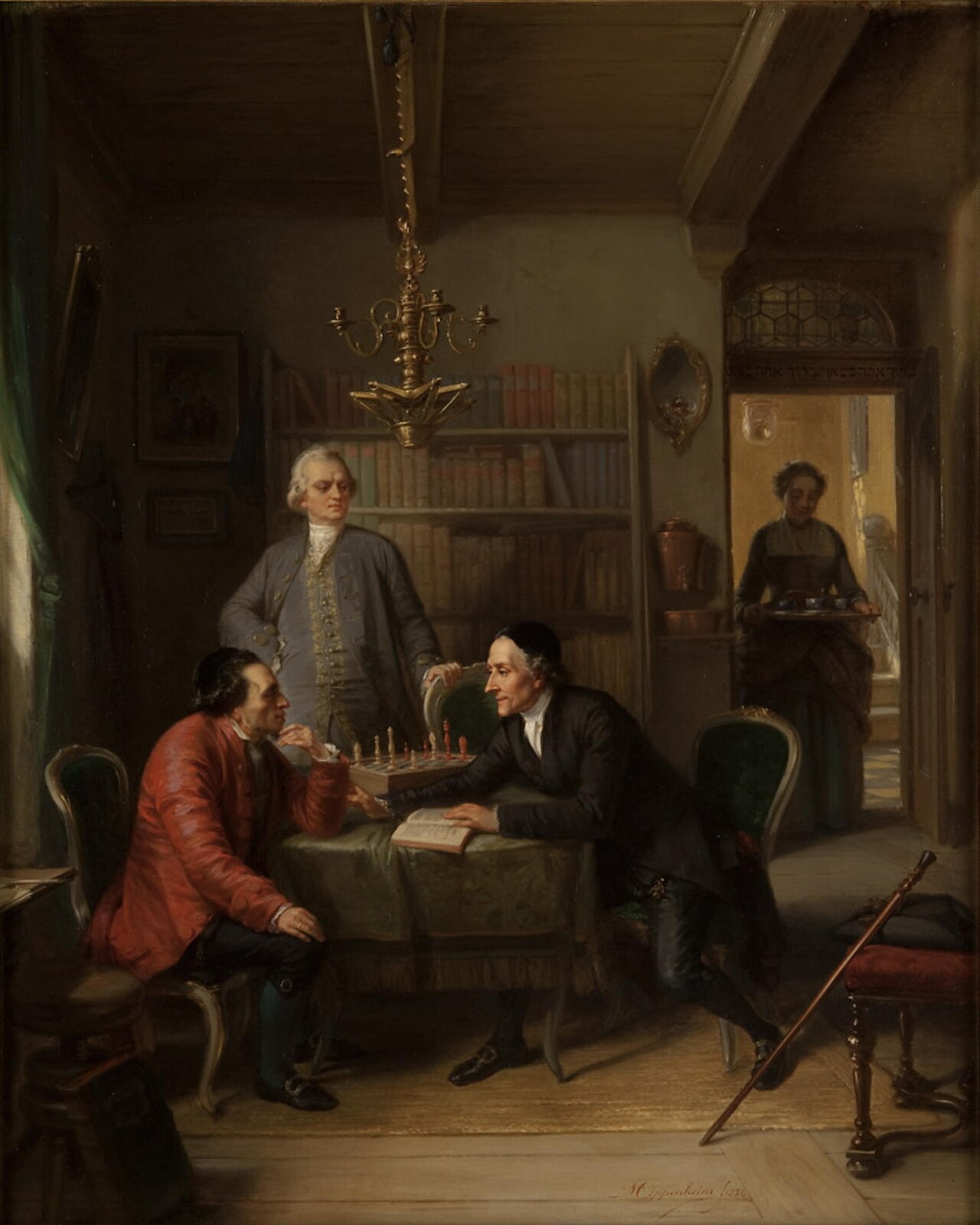
Moses Mendelssohn was born in Dessau in 1729, the son of a Torah scribe, and followed his teacher to Berlin in 1743 with the traditional education of a Talmud student. There he taught himself German, Latin, mathematics and philosophy, and by the 1760s he was one of the most admired writers in German. In 1763 the Prussian Academy awarded him its prize for an essay on metaphysics, ahead of Immanuel Kant. His dialogue Phaedon (1767) on the immortality of the soul made him famous across Europe as “the German Socrates”.[1] Consensus
He remained observant all his life, and that combination was itself the point. In 1769 the Swiss pastor Johann Caspar Lavater publicly challenged him either to refute the proofs of Christianity or to convert. Mendelssohn refused to debate, but the episode made his Judaism a public question, and his two great Jewish projects followed from it:[1] Consensus
- The Biʾur (1780–83), published as Netivot ha-Shalom (“Paths of Peace”): a German translation of the Torah, printed in Hebrew letters so that Jews who read only Hebrew script would learn standard German from it, with a Hebrew commentary written with collaborators including Naphtali Herz Wessely.[2] Some traditional rabbis condemned it; it became a textbook of the Haskalah. Consensus
- Jerusalem (1783), a book on religious power that argued for the separation of religion from state coercion, including the coercion of Jewish communities over their own members, and presented Judaism as a revealed law rather than a set of compulsory beliefs (source 1 below).[5] Consensus
Around him a circle of younger writers created the Haskalah, the Jewish Enlightenment. Its members, the maskilim, founded the Hebrew journal Ha-Meʾassef (1784), wrote textbooks and poetry in a revived Biblical Hebrew, and founded modern Jewish schools such as the Berlin Freischule (1778). Their programme was education: secular subjects, a European language instead of Yiddish, the Bible and Hebrew grammar instead of an almost exclusive diet of Talmud.[6] Wessely’s Words of Peace and Truth (1782), welcoming Joseph II’s Edict of Toleration, divided knowledge into “the teaching of man” and “the teaching of God” and argued that a Jew needed both. Rabbis in Prague, Vilna and elsewhere denounced it.[4] Consensus
The Haskalah was not a reform of religion, and most early maskilim were observant. It was a cultural movement that created a new kind of Jewish intellectual, independent of the rabbis, and a new standard of what an educated Jew should know. It later spread to Galicia and, from the 1820s, to the Russian Empire, where it lasted until the 1880s and fed into Hebrew literature, Jewish socialism and Zionism (§12).[6] Majority
Emancipation: rights on terms
Emancipation was argued for in the language of the Enlightenment, and it was conditional from the start. Christian Wilhelm von Dohm’s On the Civil Improvement of the Jews (1781), written at Mendelssohn’s request, argued that the faults Christians saw in Jews were the product of oppression and would disappear if Jews were given civil rights, trades and schooling. The title states the condition: Jews were to be improved.[3] Consensus
France was the first European state to grant Jews full citizenship. In the National Assembly’s debate of December 1789, Count Stanislas de Clermont-Tonnerre set out the bargain that would define emancipation everywhere (source 2). The Sephardic Jews of Bordeaux and Bayonne were made citizens in January 1790; the Ashkenazi Jews of Alsace and Lorraine, who were poorer, Yiddish-speaking and more resented, only on 27 September 1791.[7][8] Consensus
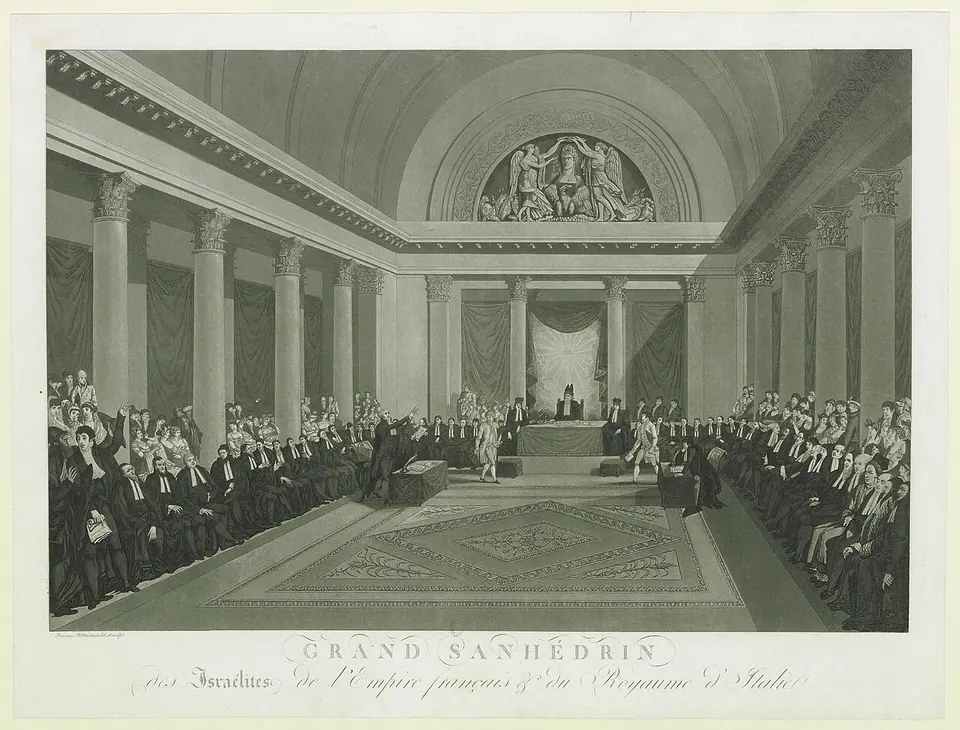
Napoleon tested the bargain. After complaints from Alsace about Jewish moneylending, he convened an Assembly of Jewish Notables, which first met on 26 July 1806, and put twelve questions to it: whether Jewish law allowed polygamy, whether it recognised civil divorce, whether a Jew could marry a Christian, whether Jews born in France regarded France as their country and its citizens as their brothers, who appointed rabbis and what authority they had, and whether Jewish law permitted usury. To give the answers religious authority, he then convened a “Grand Sanhedrin” of 71 members in February–March 1807, reviving the name of the ancient supreme court (source 3).[10][11] In 1808 he organised French Jews into state-supervised consistories and, despite the Sanhedrin’s answers, issued a decree restricting Jewish trade and lending for ten years, which Jews called the “Infamous Decree”.[8] Consensus
Elsewhere emancipation came slowly and in stages. Prussia’s edict of 1812 made most Jews citizens but kept them out of state office, and it was not extended to the provinces Prussia gained in 1815. Jews in Britain gained the right to sit in Parliament in 1858, Austria-Hungary granted full equality in 1867, and the German Empire in 1871. In the Russian Empire, home to most of the world’s Jews, there was no emancipation until the revolution of 1917.[13] Consensus
The effect on Judaism was deep. Once Jews were citizens, the community could no longer enforce observance, and Jews had to explain what Judaism was in terms the state would accept. The answer that emerged in western Europe was that Judaism was a religion, a “confession” like the Protestant and Catholic churches, and that Jews were Germans or Frenchmen of the Jewish faith. Leora Batnitzky has argued that this redefinition, which had no exact precedent in earlier Jewish thought, is the central question of modern Jewish thought, and that every later movement, including Zionism, can be read as an acceptance of it or a rebellion against it.[26] Majority
Reform: from changing worship to changing doctrine
Reform began with worship, not theology. Its first goal was a service that acculturated Jews would find dignified and understandable, and that Christian neighbours would recognise as worship.
- Seesen (1810). Israel Jacobson, a financier and the head of the Jewish consistory of the Napoleonic kingdom of Westphalia, dedicated a temple at his school in Seesen on 17 July 1810 with an organ, a choir, hymns and prayers in German, and a German sermon.[12] Consensus
- Berlin (1815–23). Private Reform services in the homes of Jacobson and the banker Jacob Herz Beer drew hundreds, until the Prussian government, hostile to religious innovation of any kind, closed them in 1823.[12][27] Majority
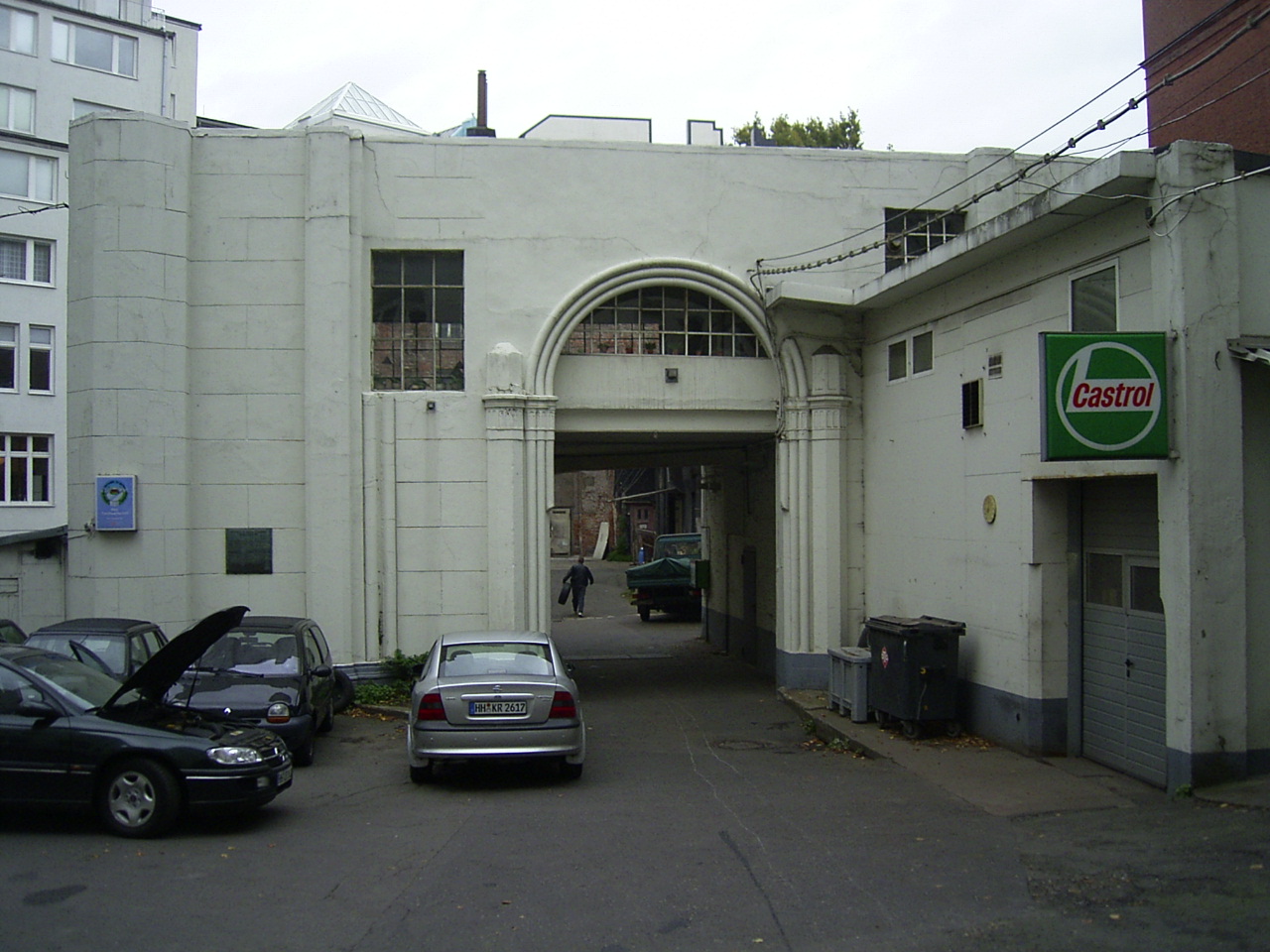
- Hamburg (1817–19). A lay association, the New Israelite Temple Society, was founded in December 1817 and opened its temple in October 1818. Its prayer book of 1819 shortened the service, added German prayers, and removed or reworded prayers for the return to Zion and the restoration of sacrifices (source 5). Rabbis in Europe published a collective condemnation, Elleh Divrei ha-Berit (“These Are the Words of the Covenant”, 1819), forbidding changes to the liturgy, prayer in any language but Hebrew, and the organ.[14][15] Consensus
The second generation turned these practical changes into a theology. Abraham Geiger (1810–1874), a rabbi trained both in Talmud and at a German university, argued that Judaism had always developed, that the Bible and the Talmud were products of history, and that the core of Judaism was its ethical monotheism and its “mission” to spread it, not its ritual law. Revelation, in this view, was progressive. Samuel Holdheim (1806–1860), rabbi of the radical Berlin Reform Congregation founded in 1845, went further: he moved the Sabbath service to Sunday and argued that the ritual laws had belonged to the ancient Jewish state and lapsed with it.[12] Consensus
Three rabbinical conferences, at Braunschweig (1844), Frankfurt (1845) and Breslau (1846), tried to set common positions. At Frankfurt a majority voted that Hebrew was not legally required in public worship, only advisable. Zacharias Frankel of Dresden withdrew in protest (source 7), a moment usually taken as the beginning of the third, middle movement.[20][12] Consensus
America. Reform’s greatest growth came in the United States, where there was no state-recognised Jewish community to capture and no government to restrain innovation. German-Jewish immigrants of the 1840s and 1850s founded Reform congregations across the country. Isaac Mayer Wise, who arrived from Bohemia in 1846, introduced mixed family pews at Albany in 1851, organised the Union of American Hebrew Congregations (1873) and Hebrew Union College in Cincinnati (1875), and hoped to unite all American Jews under one moderate rite.[22][28] That hope was badly damaged at a banquet in July 1883 celebrating the college’s first ordinations, where the menu included clams, crabs, shrimp and frogs’ legs and combined meat with dairy dishes. Traditionalists denounced the “trefa banquet”; a guest recalled decades later that two rabbis rushed from the room, and historians now treat it as one of several issues, not the sole cause, of the split that followed.[22] Majority Two years later Kaufmann Kohler convened the Pittsburgh conference, whose platform became the charter of “Classical Reform” (source 4).[25] Consensus
Orthodoxy: tradition becomes a movement
Orthodox Jews regard their Judaism as the tradition itself, continuous with Sinai and the rabbis, and in their practice that claim has real substance (see the debate below). But as a movement, with a name, institutions, a strategy and an enemy, Orthodoxy took shape in the same decades as Reform and in answer to it. The historian Jacob Katz argued that it was a modern phenomenon: tradition that had become self-conscious because it was no longer the only option.[9] Majority
The word itself came from outside. “Orthodox” was a Christian term, and the first known use for Jews is in a Berlin Enlightenment journal in 1795, as a label for Jews who resisted modernisation; for decades traditionalists did not use it of themselves.[9] Majority
Two strategies emerged.
Resistance: the Hatam Sofer. Moses Sofer (1762–1839), rabbi of Pressburg (Bratislava) from 1806 and head of its great yeshiva, led the rabbinic campaign against the Hamburg Temple and became the model for uncompromising traditionalism in Hungary and beyond. He turned a phrase of the Mishnah about new grain, ḥādāš ʾāsûr min ha-tôrâ, “new [grain] is forbidden by the Torah”, into a slogan: anything new is forbidden by the Torah (source 6). In his will he told his descendants not to touch the books of Mendelssohn and to keep away from the religious innovators.[29][19] Michael Silber has shown that the ultra-Orthodoxy built on this programme in Hungary after his death was itself an innovation, an “invention of a tradition” in a strict and defensive form.[30] Majority
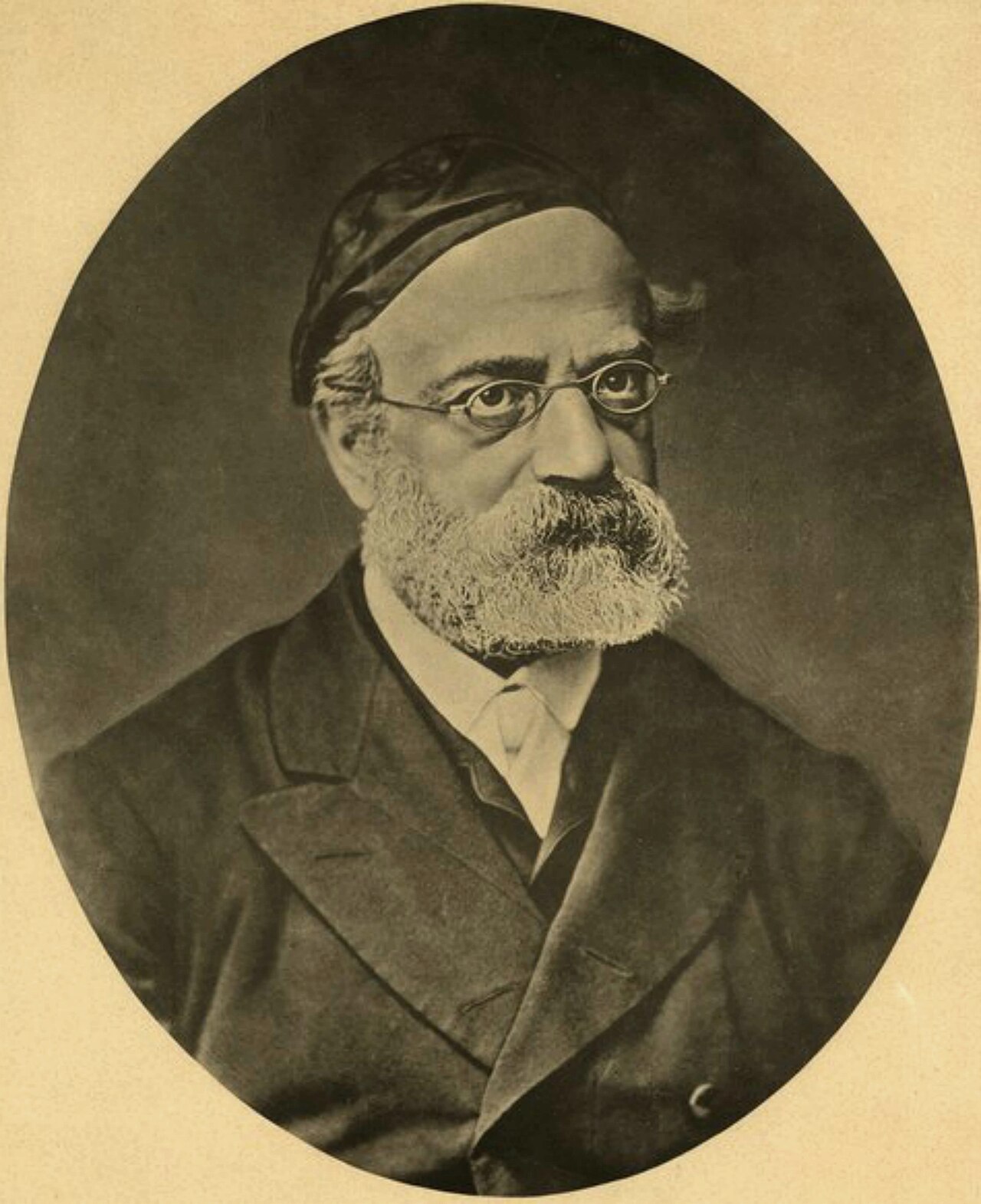
Engagement: Samson Raphael Hirsch. Hirsch (1808–1888), born in Hamburg and educated at the University of Bonn, offered the opposite strategy. His Nineteen Letters on Judaism (1836) defended the full authority of the Written and Oral Torah in elegant German. His programme, summed up in a phrase from the Mishnah, Torah ʿim derekh ʾereṣ, “Torah with worldly culture”, required full observance and full participation in German education, dress and civic life. From 1851 he led a small Orthodox congregation in Frankfurt; after Prussia’s law of 1876 allowed Jews to leave the official community without leaving Judaism, he insisted that his members secede from the Reform-led community altogether. Rabbi Seligmann Baer Bamberger of Würzburg, also Orthodox, ruled that they need not, and the dispute between them divided German Orthodoxy.[18][9] Consensus
In 1873 Azriel Hildesheimer founded a rabbinical seminary in Berlin that trained Orthodox rabbis with university degrees. In Hungary the attempt by the government to organise one national Jewish body broke down at the Jewish Congress of 1868–69, and Hungarian Jews were divided by law into three federations: Orthodox, the reforming “Neolog”, and a small “Status Quo Ante” group that joined neither.[9] Consensus
In Eastern Europe the story was different, because the state did not grant emancipation and traditional society remained intact for longer. Here the main new institutions were the yeshiva of Volozhin, founded in 1802–03 by Ḥayyim of Volozhin, which became the model for the great Lithuanian academies, and the Musar (“ethics”) movement of Israel Salanter from the 1840s.[6] Majority The struggle between Hasidim and their opponents (§10) gave way, in the face of the Haskalah, to alliances between them.
The middle way: Frankel, Graetz and the science of Judaism
The third movement grew out of scholarship. In 1818 the 24-year-old Leopold Zunz published a short essay on rabbinic literature arguing that Jewish texts should be studied with the same historical and philological methods as Greek and Latin ones. In 1819 he, the jurist Eduard Gans and Moses Moser founded in Berlin the Society for the Culture and Science of the Jews, the start of Wissenschaft des Judentums, the “science of Judaism”.[16][17] Consensus The Society dissolved within a few years; Gans and the poet Heinrich Heine, a member, were baptised in 1825. Zunz’s Sermons of the Jews, Historically Developed (1832) showed that preaching in the vernacular was an ancient Jewish practice, at a time when the Prussian government regarded German sermons in synagogues as suspicious innovation.[17] Majority
Historical scholarship cut both ways. It gave Reform its strongest argument, that Judaism had always changed. But it could also be used to show that change had come slowly, through the law’s own methods, and that the law and the people’s attachment to it were themselves the product of history and deserved respect.
That was the position of Zacharias Frankel (1801–1875), rabbi of Dresden. He called it “positive- historical Judaism”: positive because it accepted the authority of the law and tradition as given, historical because it accepted that they had developed over time and could be studied critically. After walking out of the Frankfurt conference he became in 1854 the first head of the Jewish Theological Seminary of Breslau, where the historian Heinrich Graetz wrote his eleven-volume History of the Jews (1853–76), which superseded Isaak Markus Jost’s earlier nine-volume history (1820–28) and became the most influential Jewish history of the century.[17][12] Consensus
In America, the founders of the Jewish Theological Seminary of America in New York (1886–87) were traditionalists alarmed by the Pittsburgh Platform; under Solomon Schechter, who arrived from Cambridge in 1902, the seminary became the centre of what came to be called Conservative Judaism.[22] Consensus Its full development belongs to the twentieth century (§13).
The evidence ledger for the modern movements
| Question | What the evidence supports | Key evidence | Confidence |
|---|---|---|---|
| Emancipation’s terms | Rights were offered to Jews as individuals in return for giving up communal autonomy and national identity | Clermont-Tonnerre; Napoleon’s questions[7][10] | Consensus |
| Mendelssohn’s position | Fully observant; argued that Judaism is revealed law, not compulsory doctrine, and that religious bodies should not coerce | Jerusalem[5][1] | Consensus |
| What Reform began with | Changes to worship (language, length, music, sermon, Zion prayers) before changes in doctrine | Seesen; Hamburg prayer book[14][12] | Consensus |
| Classical Reform doctrine | Only the moral law binding; Jews a religious community, not a nation | Pittsburgh Platform[25] | Consensus |
| Orthodoxy as a movement | A self-conscious response to Reform and emancipation, from c. 1820 | The word “orthodox” (1795); Hamburg controversy; Hirsch; Hungary[9][30] | Majority |
| The middle way | A distinct position by 1845, institutional from 1854 | Frankel’s withdrawal; Breslau seminary[20][17] | Consensus |
| Judaism as “religion” | Judaism was recast as a confession on the Protestant model in the nineteenth century | Hirsch’s protest; Pittsburgh’s “religious community”[26][21] | Majority |
| “Antisemitism” | A political term from 1879, framing hostility to Jews as racial | The Antisemiten-Liga; Marr[23] | Consensus |
| The migration | About two million Jews left the Russian Empire between 1881 and 1914, most for the United States | Immigration statistics[31] | Consensus |
Primary sources
1. Revealed law, not revealed religion: Mendelssohn, Jerusalem (1783)
Part I of Jerusalem argues that the state may compel actions but not beliefs, and that a religious body has no right to coerce at all, including a Jewish community through its ban of excommunication. Part II applies this to Judaism. Mendelssohn’s key distinction is between geoffenbarte Religion, “revealed religion”, which he says Judaism does not have, and geoffenbarte Gesetzgebung, “revealed legislation”, which it does:
“I believe that Judaism knows of no revealed religion in the sense in which Christians understand this term. The Israelites possess a divine legislation—laws, commandments, ordinances, rules of life, instruction in the will of God […]” (Allan Arkush’s translation)[5][32]
The eternal truths on which religion rests, the existence of God, providence and the immortality of the soul, are in his view accessible to reason and given to all humanity; what was revealed at Sinai was a law for one people, and its observance, not belief, is what binds Jews. He concludes that Jews should keep the law faithfully while living as loyal citizens, and should “bear both burdens as well as you can”.[32][1]
What it proves. That the most influential Jew of the Enlightenment defended both full observance and religious freedom, and reconceived Judaism in a way that both later movements could use. Reformers took from him the priority of reason and the claim that Judaism has no dogmas; the Orthodox took his insistence that the law remains binding until God revokes it. That he left room for both readings is one reason both claimed him. Consensus on the content; Majority on its influence.
2. “Everything to the Jews as individuals”: Clermont-Tonnerre, 23 December 1789
In the debate on whether non-Catholics, actors and Jews could hold office, the liberal deputy Count Stanislas de Clermont-Tonnerre said:
French: Il faut tout refuser aux Juifs comme nation, et tout accorder aux Juifs comme individus.
“We must refuse everything to the Jews as a nation and accord everything to Jews as individuals. […] They should not be allowed to form in the state either a political body or an order. They must be citizens individually. […] If they do not want to be citizens, they should say so, and then, we should banish them.”[7]
What it proves. That emancipation was offered on a condition: Jews could have equal rights only by giving up their corporate existence, their courts, their communal government and, by implication, their identity as a nation in exile. The speech was a defence of Jewish rights, and it is the clearest statement of the bargain that shaped every later debate about whether Jews were a religion, a nation or both. Consensus
3. “His fatherland”: the Grand Sanhedrin, 1807
Napoleon’s twelve questions, put to the Assembly of Notables in July 1806, included whether Jews regarded Frenchmen who were not Jews as their brethren or as strangers (question 4), and whether Jews born in France and treated by its laws as citizens regarded France as their country and were bound to defend it (question 6).
The Grand Sanhedrin, two-thirds rabbis and one-third laymen, presided over by Rabbi Joseph David Sinzheim of Strasbourg, confirmed the answers in a series of decisions: polygamy was forbidden; religious marriage and divorce required a prior civil act; marriages between Jews and Christians were civilly binding, though they could not be solemnised religiously; and every Jew must regard the land of his birth or adoption as his fatherland and defend it.[10]
What it proves. That a body of rabbis, under pressure from the state, distinguished explicitly between the religious precepts of Jewish law, which were eternal, and its political precepts, which its preamble said had lapsed when Israel ceased to be a nation.[10][33] Consensus The answers rested on the Talmudic principle dînāʾ dĕ-malkûtāʾ dînāʾ, “the law of the kingdom is law”: the Notables had told Napoleon that their religion obliged them “to consider the law of the prince as the supreme law” in civil and political matters (F. D. Kirwan’s 1807 translation), and Simon Schwarzfuchs and Gil Graff show the Sanhedrin’s decisions building on the same principle.[34][11][35] Many historians see this as stretching the principle far beyond its earlier use in taxation and civil law; others, such as the Encyclopaedia Judaica, argue that despite appearances the drafters did not in fact undermine halakhic principles, and that the separation of the political from the religious became a programme only for later, assimilating generations.[33] Contested
4. “No longer a nation”: the Pittsburgh Platform, 1885
Meeting in Pittsburgh on 16–19 November 1885, convened by Kaufmann Kohler with Isaac Mayer Wise presiding, a conference of Reform rabbis adopted eight principles.[12] Three of them read:
“We recognize in the Mosaic legislation a system of training the Jewish people for its mission during its national life in Palestine, and today we accept as binding only its moral laws, and maintain only such ceremonies as elevate and sanctify our lives, but reject all such as are not adapted to the views and habits of modern civilization.”
“We hold that all such Mosaic and rabbinical laws as regulate diet, priestly purity, and dress originated in ages and under the influence of ideas entirely foreign to our present mental and spiritual state.”
“We consider ourselves no longer a nation, but a religious community, and therefore expect neither a return to Palestine, nor a sacrificial worship under the sons of Aaron, nor the restoration of any of the laws concerning the Jewish state.”[25]
What it proves. How far Reform had gone in seventy years: from changing the language of prayer to declaring the dietary laws non-binding and the hope of return to Zion abandoned. It also shows the emancipation bargain fully accepted: Jews as “a religious community”. American Reform reversed much of this in its Columbus Platform of 1937 and later statements (§13). Consensus
5. Zion removed: the Hamburg Temple prayer book, 1819
The Hamburg prayer book, Seder ha-ʿAvodah, kept much of the Hebrew service but shortened it, introduced German prayers and hymns, and was printed to open from the left, like a German book. Its most controversial changes concerned the hope of return: petitions for the ingathering of the exiles to Zion and the rebuilding of the Temple and its sacrifices were omitted or reworded.[14][36] The rabbis’ collective response of 1819 ruled that it was forbidden to change the established prayers, to pray in any language but Hebrew in public, or to play an organ in the synagogue on the Sabbath.[15]
What it proves. That the first open break between Reform and its opponents was about the liturgy, and specifically about whether Jews still prayed to return to their land. The question of national hope, which the Pittsburgh Platform answered in 1885 and Zionism answered the other way (§12), was there from the beginning. Consensus
6. “The new is forbidden by the Torah”: the Hatam Sofer
The phrase comes from the Mishnah, where it refers to grain of the new harvest, which may not be eaten before the ʿomer offering on the second day of Passover:
Hebrew (m. ʿOrlah 3:9): he-ḥādāš ʾāsûr min ha-tôrâ bĕkol māqôm.
“New [grain] is forbidden by the Torah everywhere.”[29]
Moses Sofer used it as a principle against Reform: any change in the customs of Israel is forbidden simply because it is new. His ethical will told his children to study the Bible with the commentaries of Rashi and Naḥmanides, to keep away from the innovators, and not to “put forth [your] hand” to the books of “RMD” (Rabbi Moses of Dessau), Mendelssohn.[19]
What it proves. That traditionalism, faced with Reform, chose to treat custom itself as law and innovation itself as sin. Most historians see this as a strategy, not simply a continuation: earlier rabbis had disputed and changed customs constantly. Orthodox writers reply that the binding force of custom was an old principle, summed up in the medieval maxim that “the custom of Israel is Torah”, and that Sofer applied it to a new threat. Either way, it made Hungarian Orthodoxy strong and gave the later ultra-Orthodox world its defining stance. Contested
7. Frankel walks out, 1845
On 18 July 1845, after the Frankfurt conference voted that Hebrew was not legally required in public worship, Zacharias Frankel announced his withdrawal in a public letter. He wrote that he could not cooperate with a body of rabbis that had declared the Hebrew language unnecessary for public worship.[20] In his own writings he grounded the authority of Hebrew prayer, and of Jewish practice generally, in its historical development and in the attachment of the Jewish people to it.[17]
What it proves. That the third movement was defined by a method as much as a position: Jewish practice is authoritative because of its historical development and the consensus of the community, and change must be slow and organic. Majority
8. “Judaism is not a religion”: Hirsch, Religion Allied to Progress (1854)
Answering Reform’s slogan, Hirsch wrote:
“They aim at religion allied to progress […] while we aim at progress allied to religion. To them, progress is the absolute and religion is governed by it; to us, religion is the absolute. […] Judaism is not a religion, the synagogue is not a church, and the rabbi is not a priest. Judaism is not a mere adjunct to life: it comprises all of life. To be a Jew in the synagogue and the kitchen, in the field and the warehouse, in the office and the pulpit […] that is what it means to be a Jew.”[21]
What it proves. That the leading modern Orthodox thinker rejected the redefinition of Judaism as a “confession” that emancipation demanded, even while embracing German culture. It is the clearest contemporary statement that the dispute was not about music or language, but about whether the law governs all of life or only the part spent in synagogue. Consensus
9. “Antisemitism” enters politics: 1879
In February 1879 the Hamburg journalist Wilhelm Marr published Der Sieg des Judenthums über das Germanenthum (“The Victory of Judaism over Germandom”), which went through twelve printings that year. It presented the conflict between Jews and Germans as racial and already lost by the Germans. In September 1879 Marr founded an Antisemiten-Liga (“League of Antisemites”) in Berlin and did much to make the new word current.[23]
What it proves. That a new kind of hostility to Jews took shape just as legal emancipation was completed in Germany: one based on “race”, which no conversion or assimilation could escape. The word “antisemitism” was coined by its supporters as a respectable-sounding name for their politics. Marr is often credited with inventing the word; the adjective “antisemitic” was used by the scholar Moritz Steinschneider in 1860, and the noun “antisemitism” first appears in print in 1879, in reports on the League. Consensus
The east and the great migration
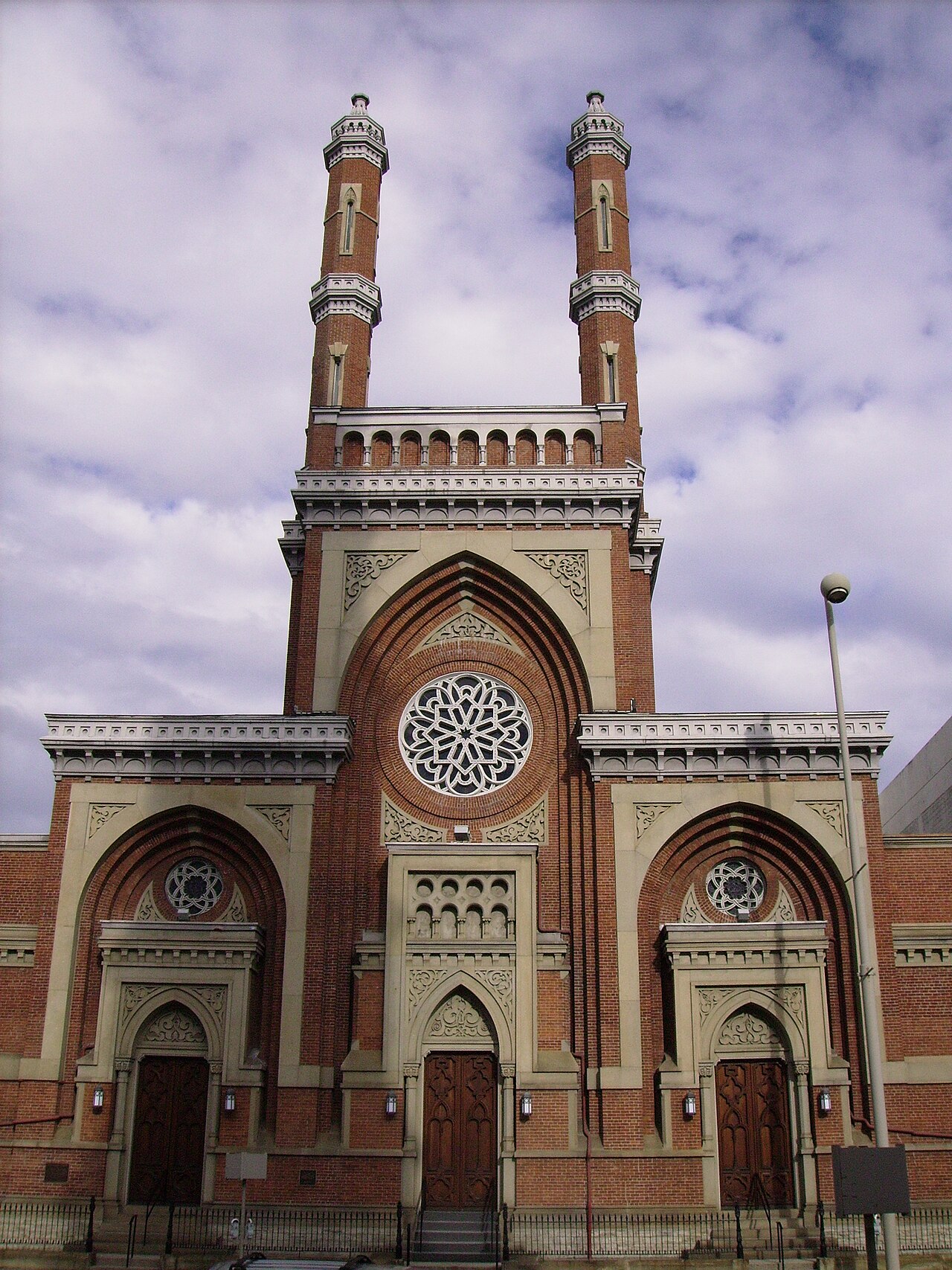
Most Jews never experienced Western emancipation in the nineteenth century. In the Russian Empire, which had acquired most of Polish Jewry in the partitions of 1772–95, Jews were confined to the “Pale of Settlement” in the western provinces, subjected to special taxes and, under Nicholas I (1825–55), to the conscription of boys for decades of military service. Alexander II eased some restrictions; his assassination in March 1881 was followed by a wave of more than two hundred anti-Jewish riots in the south-western provinces in 1881–82. The government responded with the “temporary” May Laws of 1882, which restricted where Jews could live and trade and remained in force until 1917.[24][37] Consensus
The migration that followed reshaped Judaism. Between 1881 and 1914 some two million Jews left the Russian Empire, alongside hundreds of thousands from Austrian Galicia and Romania; around 1.5 million went to the United States.[31] The American Jewish population grew from roughly a quarter of a million in 1880 to more than three million by the 1920s, and the German-Jewish Reform establishment found itself a minority among Yiddish-speaking immigrants from the east.[22] Majority Those immigrants brought traditional practice, Hasidic and Lithuanian rabbis, Jewish socialism and Zionism with them. The denominational map of twentieth-century America, with Conservative Judaism as the largest movement for much of the century, was formed by their children (§13).
What is absent before 1800
Several things that now look like permanent features of Judaism are absent from the record before the period this chapter covers:
- Denominations. No Jew before about 1800 identified as Orthodox, Reform or Conservative. There were Ashkenazim and Sephardim, Hasidim and their opponents, Karaites and Rabbanites, but no movements defined by their position on the authority of the law.[9] Consensus
- Judaism as a private religion. Jewish law was the law of a self-governing community; the idea of Jews as citizens “of the Mosaic persuasion” did not exist.[13][26] Consensus
- Trained rabbis with university degrees, and rabbinical seminaries. Rabbis were ordained by other rabbis; the first seminaries in the modern sense were founded in Padua (1829), Breslau (1854) and Berlin (1872–73).[38][17] Majority
- Organs, choirs, regular vernacular sermons and family pews in the synagogue.[12][28] Consensus
- Confirmation ceremonies, borrowed from Protestant practice and introduced in German Jewish schools in the 1810s; girls were confirmed for the first time in Berlin in 1817 and in Hamburg in 1818.[39][27] Majority
- Critical Jewish history. Jews had chronicles, but not history written by Jews using modern historical methods; that began with Zunz, Jost and Graetz.[17] Consensus
- “Antisemitism” as a word or as a political movement. Hostility to Jews was old; its racial, political form and its name were new.[23] Consensus
Debates about the modern movements
Was Reform a betrayal or a continuation?
| View | Position | Main proponents |
|---|---|---|
| Traditional Orthodox | Reform abandoned the divine authority of the Torah and its law and led its followers out of Judaism; its changes were capitulation to Christian society, not development | The Hatam Sofer; Hirsch[21][19] |
| Reform self-understanding | Judaism has always developed; revelation is progressive; the prophets’ ethical monotheism, not the ritual law, is its core, and Reform recovered it, while keeping in Judaism many acculturated Jews who would otherwise have left | Geiger; the Pittsburgh Platform[25][12] |
| Historical | Reform was a genuine religious movement, not simply assimilation, and many of its members were devout; but its specific choices were shaped by emancipation’s demand that Judaism look like a confession | Meyer; Batnitzky[12][26] |
Contested
Is Orthodoxy a modern movement?
Most historians, following Jacob Katz and Michael Silber, argue that Orthodoxy as an organised movement, with its name, its separatist institutions and its programme of treating every custom as binding, was a nineteenth-century response to Reform and emancipation.[9][30] Orthodox thinkers reply that the content of Orthodox belief and practice is the tradition as it was before 1800, and that only the need to defend it is new; Hirsch himself rejected the label, saying that Judaism “does not know Orthodox and Liberal Jews”, only Jews who fulfil their mission and Jews who do not.[21] Both claims can be true at once: the practice is continuous, the movement is modern. Majority that Orthodoxy is modern as a movement.
Did emancipation come at too high a price?
Arthur Hertzberg argued that the French Enlightenment itself carried a secular hostility to Jews, which demanded that they cease to be Jews in any collective sense, and that modern antisemitism grew out of it.[8] Other historians reply that emancipation was a real liberation, that most Jews welcomed it, and that the Enlightenment produced both Jews’ strongest defenders and some of their critics.[13][40] What no one disputes is that the offer was conditional, and that Jews divided over how much of the condition to accept. Contested
Was Mendelssohn the father of the Haskalah?
The traditional picture, shared by his admirers and his opponents, makes Mendelssohn the founder of the Jewish Enlightenment and, through it, of Reform. Shmuel Feiner and David Sorkin have argued that the Haskalah was a broader movement with its own leaders and goals, which used Mendelssohn as a symbol, and that Mendelssohn himself was a traditionally observant philosopher, not a reformer of religion.[6][40] Majority for the revised view.
Were the 1881 pogroms organised by the government?
For a century, Jewish historiography held that the tsarist government instigated or encouraged the pogroms of 1881–82 to deflect revolutionary anger onto the Jews. Hans Rogger, Michael Aronson and John Klier, working in Russian archives, found no evidence of an official pogrom policy; they argue that officials were taken by surprise, that the government feared disorder of any kind, and that its response, the May Laws, blamed the victims instead.[24][41][37] Majority for the revised view. A related debate concerns the migration: whether it was driven mainly by the pogroms or by poverty, population growth and the economic restrictions of the Pale. Most economic historians give more weight to the second.[31] Contested
Further reading
- Jacob Katz, Out of the Ghetto: The Social Background of Jewish Emancipation, 1770–1870 (Harvard, 1973), and A House Divided: Orthodoxy and Schism in Nineteenth-Century Central European Jewry (Brandeis, 1998).
- Michael A. Meyer, Response to Modernity: A History of the Reform Movement in Judaism (Oxford, 1988) — the standard history of Reform.
- Leora Batnitzky, How Judaism Became a Religion: An Introduction to Modern Jewish Thought (Princeton, 2011).
- Shmuel Feiner, The Jewish Enlightenment (Pennsylvania, 2004).
- Alexander Altmann, Moses Mendelssohn: A Biographical Study (Alabama, 1973), and Mendelssohn, Jerusalem, trans. Allan Arkush (Brandeis, 1983).
- Ismar Schorsch, From Text to Context: The Turn to History in Modern Judaism (Brandeis, 1994).
- Jonathan D. Sarna, American Judaism: A History (Yale, 2004).
- Paul Mendes-Flohr and Jehuda Reinharz, eds., The Jew in the Modern World: A Documentary History (3rd ed., Oxford, 2011) — most of the sources in this chapter in translation.
References
- ^ a b c d e Alexander Altmann Moses Mendelssohn: A Biographical Study. University of Alabama Press, 1973. The standard biography.
- ^ a b Netivot ha-Shalom (the Biʾur) — Moses Mendelssohn and collaborators. 1780–1783 CE. German in Hebrew letters; Hebrew. German translation of the Torah printed in Hebrew script, with a Hebrew commentary; a textbook of the Haskalah and condemned by some traditional rabbis. about
- ^ a b Über die bürgerliche Verbesserung der Juden — Christian Wilhelm von Dohm. 1781 CE. German. Argues that Jews' faults are the product of oppression and that civil rights, trades and schooling would 'improve' them: the founding text of the emancipation debate in Germany. about
- ^ a b Divrei Shalom ve-Emet (Words of Peace and Truth) — Naphtali Herz Wessely. 1782 CE. Hebrew. Welcomes Joseph II's Edict of Toleration and argues that Jews need 'the teaching of man' (secular learning) alongside 'the teaching of God'; denounced by rabbis in Prague and elsewhere. about
- ^ a b c d Jerusalem, or On Religious Power and Judaism, Part II — Moses Mendelssohn. 1783 CE. German. Judaism has no 'revealed religion' in the Christian sense, only a 'revealed legislation'; the eternal truths are open to reason, and no religious body may coerce belief. English trans. Allan Arkush (1983). about
- ^ a b c d e f Shmuel Feiner The Jewish Enlightenment. University of Pennsylvania Press (trans. Chaya Naor), 2004. The Haskalah as a movement larger than Mendelssohn.
- ^ a b c d Speech to the National Assembly, 23 December 1789 — Stanislas de Clermont-Tonnerre. 1789 CE. French. 'We must refuse everything to the Jews as a nation and accord everything to Jews as individuals': the terms of emancipation stated in their clearest form. read the text
- ^ a b c d Arthur Hertzberg The French Enlightenment and the Jews. Columbia University Press, 1968. Argues that the Enlightenment carried a secular hostility to Jews alongside emancipation.
- ^ a b c d e f g h i j Jacob Katz A House Divided: Orthodoxy and Schism in Nineteenth-Century Central European Jewry. Brandeis University Press, 1998. Orthodoxy as a modern movement; the Hungarian schism and the Frankfurt secession.
- ^ a b c d e Decisions of the Grand Sanhedrin, Paris — Napoleonic France. 1806–1807 CE. French; Hebrew. Answering Napoleon's twelve questions, rabbis and laymen forbid polygamy, require civil marriage and divorce first, declare mixed marriages civilly binding, and make France every Jew's fatherland. about
- ^ a b c Simon Schwarzfuchs Napoleon, the Jews and the Sanhedrin. Routledge & Kegan Paul, 1979. full text The standard study of the Assembly of Notables, the Grand Sanhedrin and the 1808 decrees, stressing the role of dina de-malkhuta dina in the answers.
- ^ a b c d e f g h i j k l Michael A. Meyer Response to Modernity: A History of the Reform Movement in Judaism. Oxford University Press, 1988. The standard history of Reform in Germany and America.
- ^ a b c d e f Jacob Katz Out of the Ghetto: The Social Background of Jewish Emancipation, 1770–1870. Harvard University Press, 1973. The classic account of the end of the corporate community.
- ^ a b c d Seder ha-ʿAvodah (Hamburg Temple prayer book) — New Israelite Temple Society, Hamburg. 1819 CE. Hebrew; German. The first comprehensive Reform liturgy: shortened, with German prayers, and with petitions for return to Zion and restored sacrifices omitted or reworded. about
- ^ a b c Elleh Divrei ha-Berit (These Are the Words of the Covenant) — Rabbinic court of Hamburg and other rabbis. 1819 CE. Hebrew. Collective rabbinic condemnation of the Hamburg Temple: forbids changing the prayers, public prayer in languages other than Hebrew, and the synagogue organ. about
- ^ a b Etwas über die rabbinische Literatur — Leopold Zunz. 1818 CE. German. Calls for rabbinic literature to be studied with modern historical and philological methods: the programme of Wissenschaft des Judentums. about
- ^ a b c d e f g h Ismar Schorsch From Text to Context: The Turn to History in Modern Judaism. Brandeis University Press, 1994. Wissenschaft des Judentums, Zunz, Frankel and the positive-historical school.
- ^ a b Neunzehn Briefe über Judentum (Nineteen Letters on Judaism) — Samson Raphael Hirsch. 1836 CE. German. A defence of the full authority of the Written and Oral Torah in modern German prose, addressed to a young Jew drawn to assimilation. about
- ^ a b c d Tzavaʾah (ethical will) — Moses Sofer (Hatam Sofer). 1836–1839 CE. Hebrew. Ethical will to his descendants: study the Bible with Rashi and the Torah with Naḥmanides, keep away from the innovators, and do not 'put forth [your] hand' to the books of 'RMD' (Rabbi Moses of Dessau), Mendelssohn. about
- ^ a b c d Letter of withdrawal from the Frankfurt rabbinical conference — Zacharias Frankel. 18 July 1845. German. Frankel leaves the Reform conference after it declares Hebrew unnecessary in public worship: the start of the 'positive-historical' movement. about
- ^ a b c d e Die Religion im Bunde mit dem Fortschritt (Religion Allied to Progress) — Samson Raphael Hirsch. 1854 CE. German. 'We aim at progress allied to religion … Judaism is not a religion, the synagogue is not a church, and the rabbi is not a priest': Orthodoxy's rejection of Judaism as a mere confession. read the text
- ^ a b c d e f g Jonathan D. Sarna American Judaism: A History. Yale University Press, 2004. The standard history, from colonial congregations to the present.
- ^ a b c d Der Sieg des Judenthums über das Germanenthum — Wilhelm Marr. 1879 CE. German. A pamphlet (February 1879) casting the conflict of Jews and Germans as racial and already lost; with the League of Antisemites that Marr founded that September, it put the word 'antisemitism' into politics. about
- ^ a b c John Doyle Klier Russians, Jews, and the Pogroms of 1881–1882. Cambridge University Press, 2011. Finds no evidence that the tsarist government instigated the pogroms.
- ^ a b c d e Pittsburgh Platform — Conference of Reform rabbis, Pittsburgh. 16–19 November 1885. English. Classical Reform's charter: only the moral law binding; dietary and purity laws obsolete; Jews 'no longer a nation, but a religious community' expecting no return to Palestine. about
- ^ a b c d Leora Batnitzky How Judaism Became a Religion: An Introduction to Modern Jewish Thought. Princeton University Press, 2011. Modern Jewish thought as a debate over whether Judaism is a religion.
- ^ a b Andreas Brämer "Reform Judaism, Positive-Historical School, Orthodoxy". European History Online (EGO), Leibniz Institute of European History, Mainz, 2020. open library Open-access overview of the three German movements, including the 1823 Prussian cabinet order closing the Berlin temple.
- ^ a b Jonathan D. Sarna "The Debate over Mixed Seating in the American Synagogue". In Jack Wertheimer, ed., The American Synagogue: A Sanctuary Transformed (Cambridge University Press), 1987. How family pews entered the synagogue at Wise's Anshe Emeth in Albany in 1851 and became a Reform marker.
- ^ a b m. ʿOrlah 3:9 — Mishnah. c. 200 CE. Hebrew. 'New [grain] is forbidden by the Torah everywhere': a rule about the new harvest that the Hatam Sofer turned into a slogan against all religious innovation. read the text
- ^ a b c Michael K. Silber "The Emergence of Ultra-Orthodoxy: The Invention of a Tradition". in Jack Wertheimer, ed., The Uses of Tradition, Jewish Theological Seminary of America, 1992. Hungarian ultra-Orthodoxy as a new, defensive construction after the Hatam Sofer.
- ^ a b c Simon Kuznets "Immigration of Russian Jews to the United States: Background and Structure". Perspectives in American History 9, 1975. The economic and demographic analysis of the great migration.
- ^ a b Moses Mendelssohn, trans. Allan Arkush, intro. and commentary Alexander Altmann Jerusalem, or On Religious Power and Judaism. Brandeis University Press / University Press of New England, 1983. open library The standard English translation of Jerusalem, the source of the quotations in this chapter.
- ^ a b Baruch Mevorah "Sanhedrin, French". In Encyclopaedia Judaica, 2nd ed. (Macmillan Reference USA), 2007. Reference account of the Sanhedrin's decisions and their doctrinal preamble; argues the drafters did not in fact undermine halakhic principles.
- ^ Transactions of the Parisian Sanhedrim, or Acts of the Assembly of Israelitish Deputies — Diogène Tama (comp.), trans. F. D. Kirwan. 1806–1807 CE (trans. London 1807). French (English trans.). The official record of the Assembly of Notables and Grand Sanhedrin: Napoleon's twelve questions, the answers (including that Jewish religion makes it a duty 'to consider the law of the prince as the supreme law' in civil and political matters) and the Sanhedrin's decisions. read the text
- ^ Gil Graff Separation of Church and State: Dina de-Malkhuta Dina in Jewish Law, 1750–1848. University of Alabama Press, 1985. full text Traces how the principle 'the law of the kingdom is law' was stretched in the emancipation era, including at the Paris Sanhedrin.
- ^ Michael A. Meyer The Origins of the Modern Jew: Jewish Identity and European Culture in Germany, 1749–1824. Wayne State University Press, 1967. From Mendelssohn to the Hamburg Temple; describes the 1819 Hamburg prayer book, which opened from left to right.
- ^ a b Hans Rogger Jewish Policies and Right-Wing Politics in Imperial Russia. University of California Press, 1986. full text Essays from the Russian archives on tsarist Jewish policy; gives the official count of 259 pogroms in 1881 and rejects the theory of government instigation.
- ^ Encyclopaedia Judaica "Luzzatto, Samuel David". In Encyclopaedia Judaica, 2nd ed. (Macmillan Reference USA), 2007. open library Records Luzzatto's appointment in 1829 as professor at the newly established rabbinical college of Padua.
- ^ Kaufmann Kohler and Max Landsberg "Confirmation, the Rite of". In The Jewish Encyclopedia, vol. 4 (Funk & Wagnalls), 1903. open library Early history of Jewish confirmation: Westphalia 1810, girls first confirmed in Berlin (1817) and Hamburg (1818).
- ^ a b David Sorkin The Transformation of German Jewry, 1780–1840. Oxford University Press, 1987. How emancipation produced a new German-Jewish culture.
- ^ I. Michael Aronson Troubled Waters: The Origins of the 1881 Anti-Jewish Pogroms in Russia. University of Pittsburgh Press, 1990. Refutes the belief that the 1881 pogroms were organised by the government or circles close to it.