The Persian period in one paragraph
In 539 BCE the Persian king Cyrus took Babylon, and the exiles of Judah (§4) found themselves subjects of an empire that stretched from the Aegean to India. Some of them returned. Judah became Yehud, a small Persian province around a small Jerusalem, and its Temple was rebuilt by about 515 BCE. Over the next two centuries, priests and scribes in Jerusalem, and perhaps in Babylonia, gave the Torah approximately the form it has today, and figures remembered as Ezra and Nehemiah tried to make it the law of the community. At the same time, Judeans in Egypt ran their own temple of YHW without, as far as their letters show, knowing any written Torah, and Yahweh-worshippers in Samaria built a temple on Mount Gerizim. By the time Alexander the Great conquered Persia in 332 BCE, there was a book, a temple and a people called Yehudim. That combination is the starting point of Judaism. Majority
The period is badly documented. The Bible’s account is concentrated in a few books (Ezra, Nehemiah, Haggai, Zechariah 1–8, Malachi, parts of Isaiah 56–66 and Chronicles), and for the fourth century there is almost no narrative at all. Most of what is solid comes from Persian inscriptions, from the papyri of Elephantine and Wadi Daliyeh, from coins and seal impressions, and from excavation. Where those sources and the biblical narrative disagree, this chapter says so. Consensus
Timeline of Persian Yehud and its evidence
| Date | Event or evidence | Confidence |
|---|---|---|
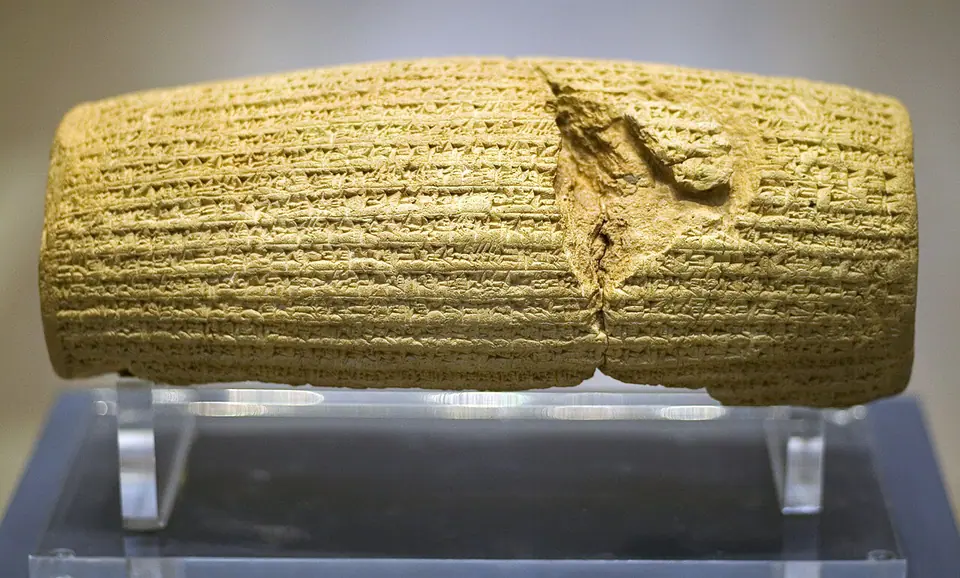
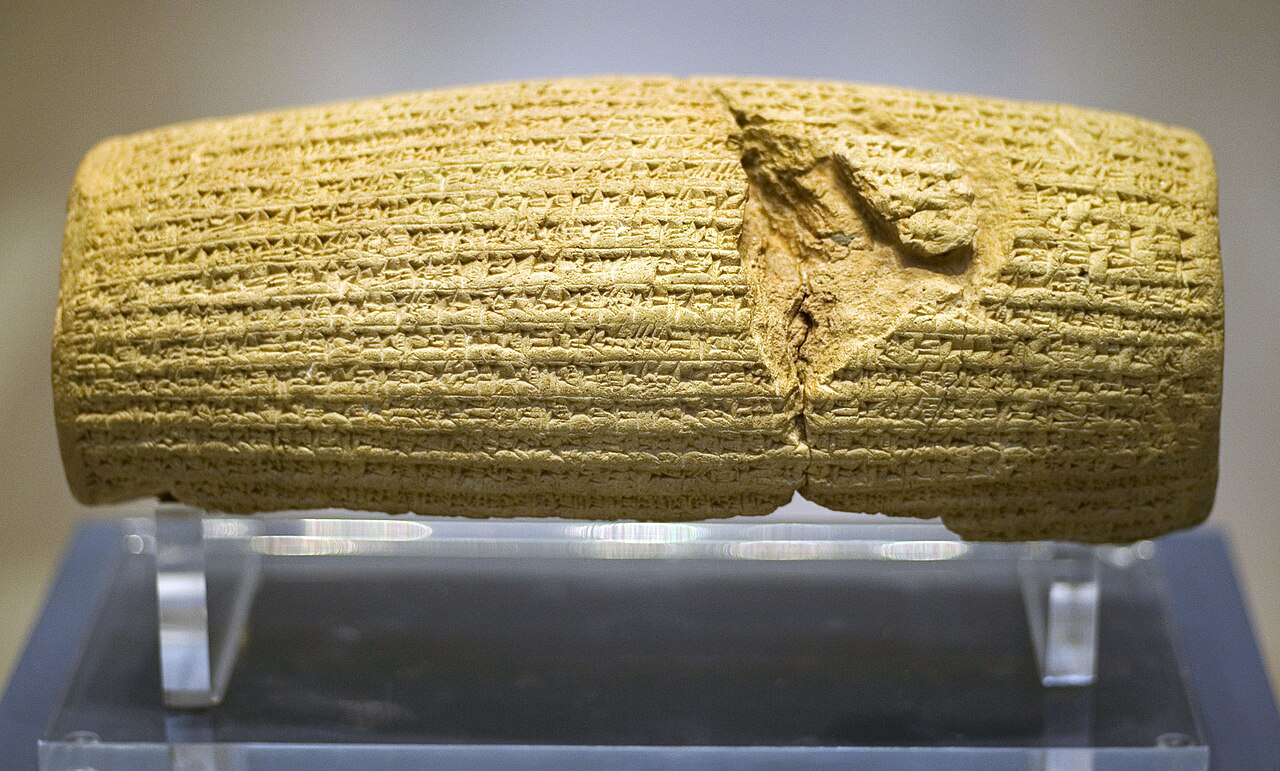
| 539 BCE | Cyrus takes Babylon; the Cyrus Cylinder proclaims the return of gods and peoples to their homes in Mesopotamia[1] | Consensus |
| 538 BCE (claimed) | Ezra 1 quotes an edict of Cyrus permitting the return to Jerusalem and the rebuilding of the Temple[2][3] | Majority (permission); Contested (wording) |
| c. 525 BCE | Cambyses conquers Egypt; the Judean temple of YHW at Elephantine already stands[4] | Consensus |
| 520 BCE | Haggai and Zechariah urge rebuilding under the governor Zerubbabel and the high priest Joshua[5] | Majority |
| c. 515 BCE | The Second Temple is completed, in the sixth year of Darius I[6] | Majority (date); Contested by some |
| mid-5th c. BCE | A temple of Yahweh is built on Mount Gerizim, above Shechem[7] | Majority |
| 458 or 398 BCE | Ezra arrives from Babylon “in the seventh year of King Artaxerxes” with the law of his God[8] | Contested |
| 445 BCE | Nehemiah, cupbearer to Artaxerxes I, comes as governor and rebuilds Jerusalem’s walls[9] | Majority |
| 471–402 BCE | Family archives of Elephantine Judeans: marriages, house sales, loans[10][11] | Consensus |
| 419 BCE | The “Passover letter” sends instructions for the Feast of Unleavened Bread to Elephantine[12] | Consensus |
| 410 BCE | Egyptian priests of Khnum, with the Persian commander Vidranga, destroy the Elephantine temple[4] | Consensus |
| 407 BCE | The Elephantine priests petition Bagavahya, governor of Judah, naming the high priest Jehohanan and the sons of Sanballat of Samaria[4] | Consensus |
| c. 407–402 BCE | Permission to rebuild the Elephantine temple, for meal-offerings and incense, not burnt offerings[13] | Consensus |
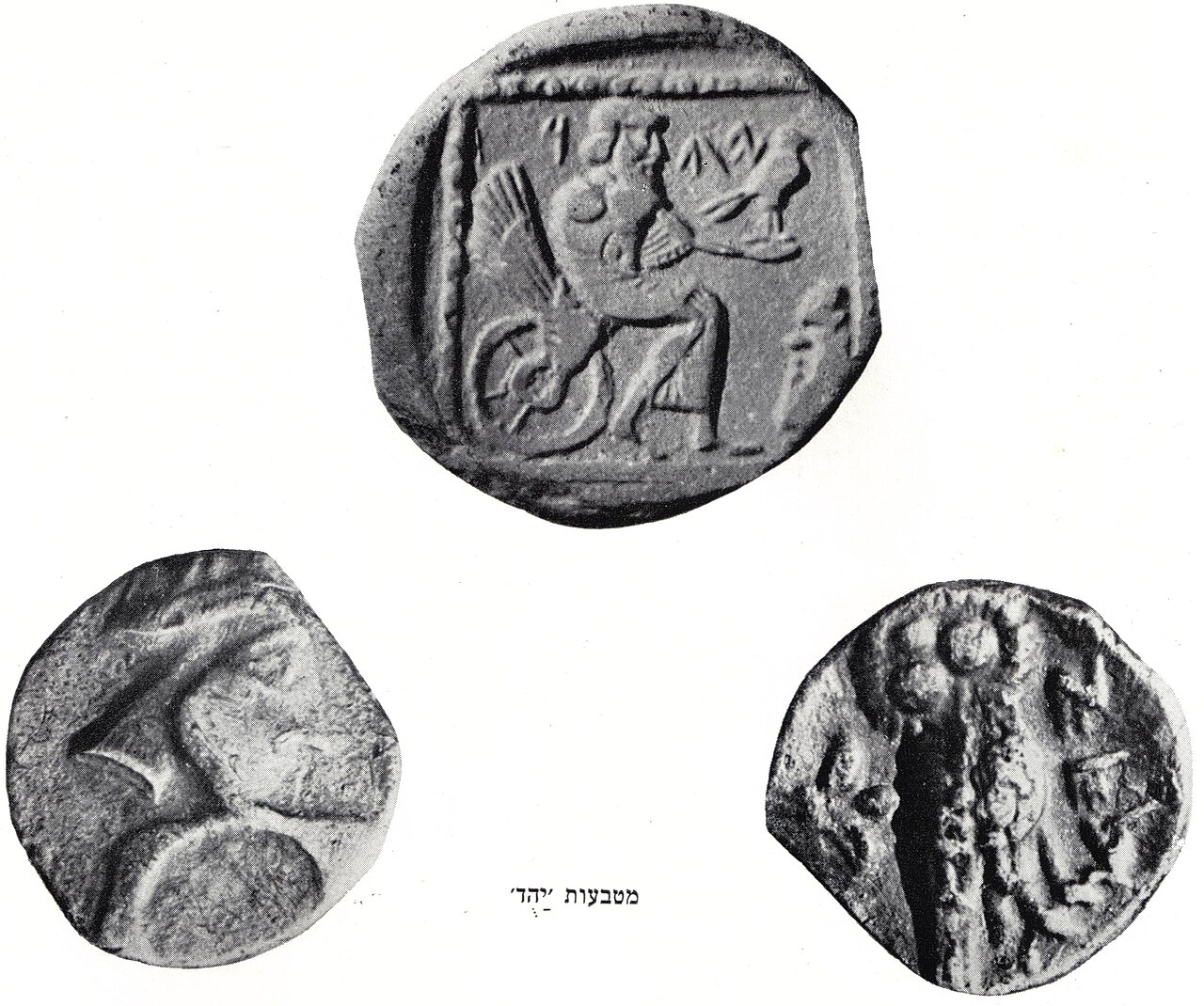
| 4th c. BCE | Silver coins inscribed YHD, “Yehud”, minted in the province[14] | Consensus |
| c. 375–335 BCE | Samaria papyri from Wadi Daliyeh name a governor’s family descended from Sanballat[15] | Consensus |
| 332 BCE | Alexander the Great conquers the Levant and Egypt (§6) | Consensus |
Cyrus and the return
The Bible remembers Cyrus with unusual warmth for a foreign king. Second Isaiah calls him Yahweh’s “anointed” (māšîaḥ, Isaiah 45:1),[16] and the book of Ezra opens with his decree:
“Thus says Cyrus king of Persia: Yahweh, the God of heaven, has given me all the kingdoms of the earth, and he has charged me to build him a house in Jerusalem, which is in Judah. Whoever is among you of all his people, may his God be with him, and let him go up to Jerusalem.”[2]
Ezra 6 gives a second version, in Aramaic, presented as a memorandum found in the royal archive at Ecbatana: the house of God at Jerusalem is to be rebuilt, at royal expense, with set dimensions, and the gold and silver vessels that Nebuchadnezzar took are to be returned.[3] Consensus on what the texts say.
The Cyrus Cylinder. In 1879 Hormuzd Rassam excavated at Babylon a clay barrel inscribed in Babylonian cuneiform, now in the British Museum. Written soon after the conquest of 539 BCE, it presents Cyrus as the choice of Marduk, Babylon’s god, who rescued the city from its impious king Nabonidus. Near its end Cyrus says that he returned the images of gods to their sanctuaries in a list of Mesopotamian cities, and that “I collected together all of their people and returned them to their settlements” (Irving Finkel’s translation).[1][17] Consensus
The Cylinder is often called the first charter of human rights, and in Jewish and Christian popular writing it is often read as confirming Ezra. It does neither. Amélie Kuhrt showed in 1983 that its language follows a long Mesopotamian tradition of conquerors presenting themselves as restorers of neglected cults, and that the cities it names are all in Mesopotamia and the lands east of the Tigris. It does not mention Judah, Jerusalem or the Judeans.[18] Consensus
What can be said is that early Persian kings did support local temples and priesthoods when it suited them, and that the return of Judean exiles and the rebuilding of the Jerusalem Temple fit that pattern. Elias Bickerman argued in 1946 that both are authentic: the Aramaic memorandum of Ezra 6 has the form of a genuine Persian administrative note, and the Hebrew proclamation of Ezra 1 is the herald’s version of the same decision, addressed to the Judeans in their own language.[19] Many who accept Ezra 6 regard Ezra 1 as a Judean rewording. Others think both texts were composed or heavily edited by later Judean writers, who gave Persian kings the language of Yahweh’s servants.[20] See the debate below. Contested
How many came back?
Ezra 2 and Nehemiah 7 give the same list of returnees, totalling 42,360 people besides slaves and singers.[21] Archaeology does not support anything close to that number arriving in one wave. Survey and excavation suggest that the whole province of Yehud in the Persian period had between about 12,000 and 30,000 inhabitants, depending on the method used, and that Jerusalem itself was small:
| Estimate | Jerusalem | Province of Yehud |
|---|---|---|
| Israel Finkelstein | c. 400–500 | c. 12,000 |
| Charles Carter | c. 1,250–1,500 | c. 13,350–20,650 |
| Oded Lipschits | c. 1,500 (c. 2,750 with its environs) | c. 30,000 |
The figures are each scholar’s own estimates.[22][23][24][25][26] Most scholars think the list in Ezra 2 is a composite census of the province over several generations, not a single caravan, and that return from Babylonia was gradual. Many Judeans stayed in Babylonia, where their descendants would build one of the great centres of Jewish life (§7, §8). Majority
The Second Temple
The rebuilding did not begin at once. The prophet Haggai, whose oracles are dated to the second year of Darius I, 520 BCE, complains that the people live in panelled houses while Yahweh’s house lies in ruins, and he and Zechariah urge the governor Zerubbabel, a descendant of the Davidic kings, and the high priest Joshua to build.[5] According to Ezra 6:15 the house was finished on the third of Adar in the sixth year of Darius, about 515 BCE.[6] Majority
The sources disagree on who laid the foundation. Ezra 5:16 credits Sheshbazzar, the “prince of Judah” of Ezra 1:8, under Cyrus; Ezra 3 and Zechariah credit Zerubbabel under Darius. Diana Edelman has argued that the Temple was in fact built later, under Artaxerxes I in the mid-fifth century, together with Jerusalem’s refoundation as a provincial capital, and that the earlier dates are a literary construction.[27] Most scholars still accept the late-sixth-century date for the Temple itself. Contested
The new Temple was modest. Ezra 3:12 records that old men who had seen the first house wept when they saw the foundations of the second. It had no ark: the ark of the covenant disappears from the record with the Babylonian destruction, and no source claims it was in the Second Temple.[28] It also had no king. Zerubbabel vanishes from the narrative, and from then on the high priest was the leading figure of Jerusalem, alongside a Persian-appointed governor. Majority
That arrangement, a temple-centred community under foreign rule led by priests, lasted, with interruptions, until 70 CE. It is the institutional frame within which most of the Hebrew Bible was edited and in which most of the ideas of §6 developed. Consensus
Yehud: a small province with a big archive
Yehud was one of many small districts in the Persian satrapy “Beyond the River” (ʿĂbar Naharā), the lands west of the Euphrates. Its governors are known from the Bible (Sheshbazzar, Zerubbabel, Nehemiah), from the Elephantine papyri (Bagavahya, in 407 BCE) and from seal impressions and coins. Consensus
- Seal impressions. Hundreds of jar handles stamped yhd or yhwd, “Yehud”, show a working provincial administration collecting produce in kind. Their distribution maps the province: from around Bethel in the north to just south of Bethlehem, a small territory centred on the hill country of Benjamin and Judah.[29][24]
- Coins. In the fourth century the province minted tiny silver coins inscribed YHD, and later yḥzqyh hpḥh, “Yehezqiyah the governor”. One larger coin in the British Museum shows a bearded god seated on a winged wheel above the letters usually read YHD, once read YHW; whether the god is Yahweh or a Zeus-like figure is disputed.[14]
- Aramaic. The administrative language of the empire was Aramaic, and parts of the book of Ezra (4:8–6:18 and 7:12–26) are written in it. Judeans increasingly spoke Aramaic. The square “Assyrian” script in which Hebrew is still written is a form of the Aramaic alphabet, adopted in this period and the next. Consensus
The Torah of the scribes. It was in this small, poor, literate province, with close ties to a larger and richer community in Babylonia, that the books of the Torah and the Former Prophets reached their final form. Karel van der Toorn and David Carr have stressed that this was the work of a professional scribal class attached to the Temple, trained by copying and memorising texts, whose masterpiece was the editing of a national library.[30][31] Majority
Ezra and Nehemiah
The books of Ezra and Nehemiah, originally a single book in the Hebrew Bible, tell how two Judeans of the Persian court came to Jerusalem to reform it. They are the Bible’s only narrative for the fifth century, and they are hard to use as history: they combine first-person memoirs, lists, Aramaic letters and connecting narrative, and the order of events is confused. Consensus
Nehemiah
Nehemiah’s memoir, written in the first person, is generally considered the most reliable part. Nehemiah is cupbearer to Artaxerxes I at Susa. In the king’s twentieth year, 445 BCE, he hears that Jerusalem’s walls lie in ruins and is sent as governor to rebuild them.[9] He completes the wall despite opposition from Sanballat the Horonite, governor of Samaria, Tobiah “the Ammonite official” and Geshem the Arab, all of whom are known or plausibly identified from outside sources. He remits debts, enforces the Sabbath by shutting the city gates against Tyrian traders, and, in his second term, attacks mixed marriages. Majority
Sanballat’s existence is confirmed by the Elephantine papyri, which in 407 BCE name “Delaiah and Shelemiah the sons of Sanballat governor of Samaria”.[4][11] Nehemiah himself appears in no inscription. Ben Sira, around 180 BCE, praises Nehemiah, who “raised for us the walls that had fallen”, but does not mention Ezra at all.[32] Consensus
The wall. Eilat Mazar identified a stretch of masonry on the eastern slope of the City of David as part of Nehemiah’s wall. Israel Finkelstein argued that the structures in question are earlier or later, and that no Persian-period city wall has been securely identified; on his reading the description of the wall in Nehemiah 3 reflects the larger Hasmonean city.[22] Contested
Ezra
Ezra is a priest and “a scribe skilled in the law of Moses”. He comes from Babylon in “the seventh year of King Artaxerxes” with a letter in Aramaic authorising him to teach and enforce “the law of your God”, and to punish anyone who will not obey “the law of your God and the law of the king”.[8] In Nehemiah 8 he reads “the book of the Torah of Moses” aloud to the assembled people from early morning until midday, while Levites explain it.[33] In Ezra 9–10 he leads the men of Judah to send away their foreign wives and the children born of them.[34] Consensus on what the texts say.
When? If the Artaxerxes of Ezra 7 is Artaxerxes I, Ezra came in 458 BCE, thirteen years before Nehemiah, which is the order of the biblical book. But the two men barely overlap in the narrative, and some details make better sense if Ezra came later. Since Albin van Hoonacker in 1890, many scholars have placed Ezra in the seventh year of Artaxerxes II, 398 BCE.[35] A third proposal emends the text to the thirty-seventh year of Artaxerxes I, about 428 BCE. Others, Williamson among them, defend the biblical order and the date of 458 BCE.[36][20] Contested
Did he exist? Charles Torrey argued in 1910 that Ezra was a literary creation of the Chronicler. More recently Juha Pakkala has shown how the Ezra material grew through successive editing, and argued that the figure of Ezra as Torah-teacher is largely a product of that growth.[37][38] Most scholars think a historical priest-scribe stands behind the story, but that his role was enlarged as later generations looked back for a founder of Torah-centred religion. Majority
What the tradition made of him. Rabbinic tradition treats Ezra as a second Moses. “Ezra was worthy that the Torah should have been given through him, had Moses not come before him,” says a saying attributed to Rabbi Yose, and the Talmud credits Ezra with introducing the square script.[39] The Mishnah’s chain of tradition passes the Torah from Moses to the prophets and then to “the men of the Great Assembly”, which later sources link with Ezra.[40] The apocalypse 4 Ezra, written around 100 CE, has Ezra restore the scriptures burned in the destruction by dictating ninety-four books under inspiration.[41] These are not historical records of the fifth century, but they show how central the Persian-period refoundation became in Jewish memory. Consensus
How the Torah took its final form
Every critical model of the Torah’s composition (§0) ends in the Persian period. The Deuteronomic law, connected with Josiah’s reform (§3), and the Priestly writing, from the exile and after (§4), were combined with the non-Priestly stories of the patriarchs and the Exodus into the five books we have, and given an ending: Moses dies before entering the land. Majority
Three facts frame the date:
- Upper limit. The Priestly material and the later layers of Deuteronomy presuppose the exile. Majority
- Lower limit. The Samaritans share the same five books, with only small sectarian changes, so the Torah was substantially complete before their final break with Jerusalem. The Septuagint translated it into Greek in Alexandria in the third century BCE, and the oldest Torah manuscripts at Qumran date to the third and second centuries BCE (§0).[42] Consensus
- Reading in public. Nehemiah 8 presents the Torah as a finished book that can be read aloud and explained, and Chronicles, from the late Persian or early Hellenistic period, quotes “the law of Moses” as a written authority. Majority
The question is why the Torah was completed then, and why it took the shape of a compromise in which rival traditions sit side by side, two creation stories, two versions of the Ten Commandments, two calendars of festivals.
Imperial authorisation. In 1984 Peter Frei proposed that the Persian empire, which governed through local institutions, “authorised” local law codes as imperial law for their communities. He pointed to a fourth-century trilingual inscription (probably 337 BCE) from the Letoon near Xanthos in Lycia, in which a local cult regulation was ratified by the Persian satrap, and to reports that Darius I had Egyptian law collected and written down. On this view, the Torah was finished because Persia required an agreed law for Yehud, and the Artaxerxes letter in Ezra 7, binding “the law of your God and the law of the king”, reflects the process.[43][44][8] Erhard Blum and others used the theory to explain why priestly and Deuteronomic groups had to agree on a single text.[45] Contested
Criticism. The theory was tested in a 2001 volume edited by James Watts. Critics noted that Persian “authorisation” is attested for small, specific regulations, not for a whole national literature; that the Torah is not shaped like a law code that an official could enforce; and that Ezra 7 may be a Judean composition.[46][47] Many scholars now think Persian rule created the conditions for the Torah, a temple community needing a shared identity under foreign rule, without directly commissioning it. Majority
The traditional view. Jewish tradition holds that the Torah was given by God to Moses, and that what happened after the exile was restoration and teaching, not composition. On this view Ezra recovered and promulgated an ancient text; the critical evidence for layers and doublets is answered by readings that harmonise them, or by the position that revelation came in more than one form (§0). Defenders of an early Torah also point out that its Hebrew, unlike that of Ezra, Nehemiah, Esther and Chronicles, contains no Persian loanwords and few features of Late Biblical Hebrew.[48] They add that the Samaritans, rivals of Jerusalem, would hardly have adopted a book newly issued there. Consensus that this is the traditional view.
Elephantine: Judaism before the Torah?
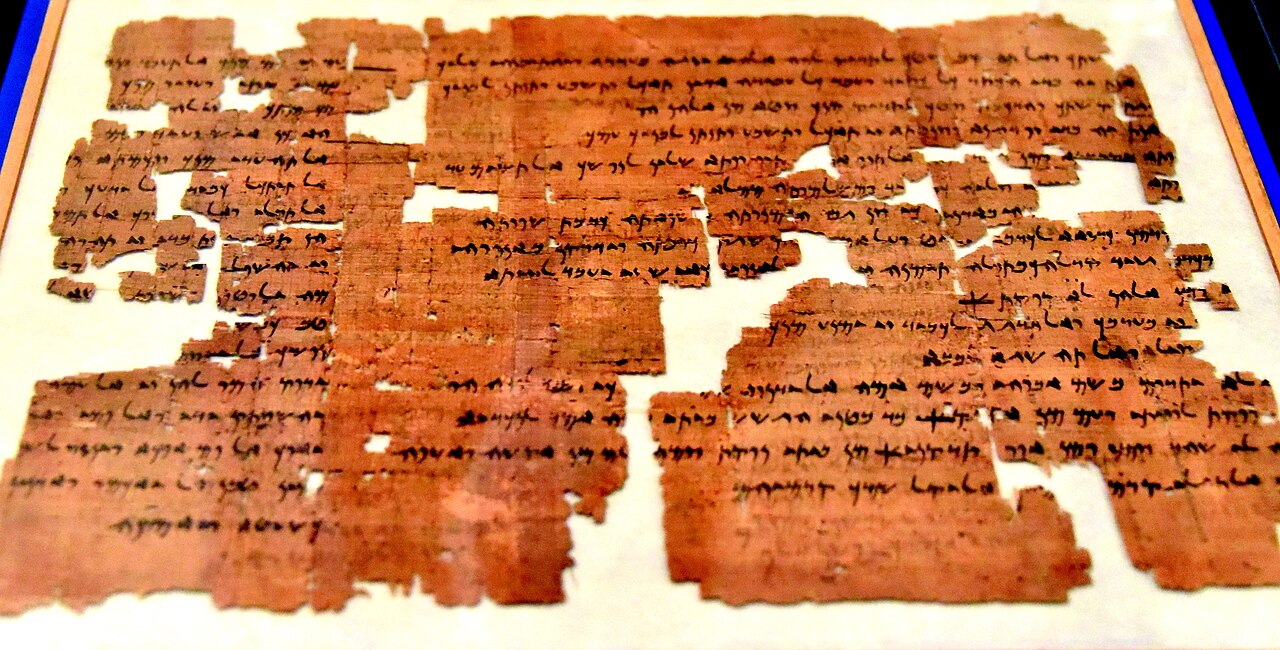
At the southern frontier of Egypt, on the island of Elephantine opposite Aswan, the Persian empire kept a military garrison. Part of it was made up of Judeans, who called themselves “the Judean garrison” (ḥaylāʾ yĕhûdāyāʾ) and lived there with their families. From the 1890s, papyri and ostraca from their houses began to reach museums in Berlin, Cairo, Paris, Oxford and New York, and German and French excavations between 1906 and 1911 found more. Written in Aramaic and dated mostly between about 495 and 399 BCE, they are the largest body of documents from any Judean community of the Persian period, and the only one written by ordinary people.[10][49][11] Consensus
A temple of YHW in Egypt
The Elephantine Judeans had a temple of their god, whom they called YHW (probably pronounced Yahu), “the God of heaven”, with an altar on which they offered meal-offerings, incense and burnt offerings. They claimed it was old: “Already in the days of the kings of Egypt our fathers had built that temple in the fortress of Yeb, and when Cambyses came into Egypt he found that temple built” (Cowley’s translation; Yeb is Elephantine).[4][11] Cambyses conquered Egypt in 525 BCE, so the temple dates from the Saite period, before Persian rule. Consensus
This alone shows how slowly the Deuteronomic demand for a single sanctuary (§3) took hold. Judeans in Egypt, a century after Josiah, saw nothing wrong in sacrificing to YHW outside Jerusalem, and when their temple was destroyed they wrote to Jerusalem for help in rebuilding it. Consensus
YHW and the other gods
A list of contributions from the garrison, dated only “year 5” with no king named (419 BCE if the king is Darius II, as most assume, or about 400 BCE), records that each donor gave two shekels to YHW the God. The total held by the temple’s treasurer, 31 karsh 8 shekels, was then divided: 12 karsh 6 shekels for YHW, 7 karsh for Eshembethel and 12 karsh for Anathbethel.[50] In a legal oath, a Judean swears by a god whose name is damaged, by the place of worship and by “Anat-Yahu” (ʿntyhw).[51] Personal names show Judeans marrying Egyptians and Arameans and naming children after their gods. Consensus on the texts.
What this means is debated. Some scholars read Anat-Yahu as a consort of YHW, a survival of the Asherah-type pairing of §2. Others think Eshembethel and Anathbethel were gods of Aramean neighbours to whom the temple treasury passed funds, or forms of a single divine presence (bethel, “house of god”), and that the Judeans themselves worshipped YHW alone.[10][52] Contested Either way, the community did not observe the boundaries that Deuteronomy and Ezra demanded.
The Passover letter
In 419 BCE, the fifth year of Darius II, a Judean named Hananiah wrote to the Judean garrison with instructions, said to have been sent “from the king to Arsames”, the satrap of Egypt, about a festival in the month of Nisan: count fourteen days, then from the fifteenth to the twenty-first keep the festival of unleavened bread, be pure, do no work, avoid fermented drink, and keep anything leavened out of sight. The papyrus is damaged and several of these words are restored.[12] The word “Passover” itself is not preserved in the surviving text, though it appears on ostraca from the island: in one short letter the writer asks to be told when the Passover will be kept.[53] Other everyday letters on potsherds mention the Sabbath by name.[54] Consensus
The letter is often taken as evidence of Jerusalem standardising practice in the diaspora with Persian backing. It also shows how much still needed standardising: the instructions match the Priestly calendar of Exodus 12 and Leviticus 23, but the writer had to spell them out, which suggests the garrison did not already follow them from a book. Majority
Destruction and the appeal to Jerusalem
In 410 BCE, while the satrap Arsames was away, the priests of the Egyptian ram-god Khnum, whose temple stood next door, bribed the local Persian commander Vidranga, and soldiers destroyed the temple of YHW. Three years later the Judean priests wrote to Bagavahya, the Persian governor of Judah. In A. E. Cowley’s 1923 translation, which renders the governor’s name Bigvai and Elephantine Yeb:
“To our lord Bigvai, governor of Judaea, your servants Yedoniah and his colleagues, the priests who are in Yeb the fortress. … Also before this, at the time when this evil was done to us, we sent a letter to your lordship and to Johanan the high priest and his colleagues the priests who are in Jerusalem … They have not sent any letter to us.”[4][11]
They add that they have also written to “Delaiah and Shelemiah the sons of Sanballat governor of Samaria”. A memorandum records the reply of Bagavahya and Delaiah: the temple may be rebuilt “in its place as it was before”, and meal-offering and incense offered on its altar. In a separate draft five leading Judeans offer a payment if the temple is rebuilt and “sheep, oxen (and) goats are not offered as burnt-sacrifice there, but incense, meal-offering …” (Cowley’s translation).[13][11] Consensus
What it proves. First, the high priest Jehohanan is the Johanan of Nehemiah 12:22, and Sanballat is Nehemiah’s adversary, so the papyri anchor the biblical chronology.[55][4] Second, the Elephantine Judeans treated the authorities of Jerusalem and Samaria as their natural patrons; for them, Judeans and Samarians were one family of YHW-worshippers. Third, Jerusalem’s silence, and the ban on animal sacrifice in the rebuilt temple, may reflect Jerusalem’s claim to be the only legitimate place of sacrifice, a claim that the authorities in Judah were now willing to enforce; others think the ban was meant to avoid offending the priests of the ram-god Khnum, or Persian scruples about fire.[11] Majority
What Elephantine does not mention
Across hundreds of documents there is no mention of Moses, the Exodus, Sinai, the patriarchs or a written Torah, and no fragment of any biblical book. The garrison’s library included the Aramaic story of Ahiqar and a copy of Darius I’s Behistun inscription. Reinhard Kratz has called this a “non-biblical Judaism”: a Judean religion with a temple, priests, festivals and the God of heaven, but without the book that later defined Judaism.[56][52] Majority
The argument from silence has limits. The surviving papyri are mostly legal and administrative, and a garrison need not keep scripture among its contracts. But the contrast is striking, and it suggests that in the fifth century the Torah was the possession of particular circles in Jerusalem and Babylonia, not yet of every Judean community. Contested on how far to press it.
Samaria and Mount Gerizim
North of Yehud lay the larger and richer province of Samaria, the heartland of the old kingdom of Israel. Its population also worshipped Yahweh. The Judean account in 2 Kings 17 says the Assyrians replaced the northern Israelites with foreigners from Cuthah and elsewhere, who worshipped Yahweh alongside their own gods; Josephus accordingly calls the Samaritans “Cuthaeans”, and on this view they are not Israelites at all.[57][58] The Samaritans’ own tradition says they are the descendants of the northern tribes, chiefly Ephraim and Manasseh, with priests of the line of Levi, who have kept the Torah and the sanctuary on Gerizim without a break; they call themselves Shamerim, “keepers” of the law. In their account the split came when the priest Eli left Gerizim and set up a rival sanctuary at Shiloh, from which the Judean tradition descends.[59][60] Consensus on what each tradition says.
Archaeology. Excavations on the summit of Mount Gerizim by Yitzhak Magen from 1983 to 2006 found a sacred precinct with a temple built by the mid-fifth century BCE, rebuilt on a larger scale in the Hellenistic period, and destroyed by John Hyrcanus around 112–110 BCE.[7][61] Around four hundred inscriptions, mostly dedications in Aramaic and some in Hebrew, date mostly to the third and second centuries BCE; several contain the divine name.[62][61] Two inscriptions from the Aegean island of Delos, of the third to first centuries BCE, honour donors on behalf of a community that called itself “Israelites” and made offerings to “Argarizein”, that is, to Mount Gerizim.[63][64] Majority
Papyri. In 1962 Bedouin found in a cave at Wadi Daliyeh, north of Jericho, papyri left by refugees from Samaria who fled Alexander’s army in 332–331 BCE. They are legal documents of about 375–335 BCE, and they name officials of the house of Sanballat, showing that the family governed Samaria for generations.[15] Most of their personal names that contain a divine name are built on Yahweh. Consensus
A shared heritage. On this evidence most scholars no longer treat the Samaritans as a late, heretical offshoot of Judaism. Gary Knoppers and Reinhard Pummer argue that Samarians and Judeans were two populations of Yahweh-worshippers with a shared past, close contacts and intermarriage (Nehemiah 13:28 records that a grandson of the high priest married Sanballat’s daughter), whose rivalry centred on which mountain Yahweh had chosen.[65][59][66] Josephus places the building of the Gerizim temple under Alexander, for Manasseh, a Jerusalem priest who had married Sanballat’s daughter; archaeology puts it about a century earlier.[58][7] The decisive break came in the Hasmonean period, when John Hyrcanus destroyed the Gerizim temple (§6). Majority
The Samaritan Pentateuch. The Samaritans’ Torah is the same five books, with a distinctive script and spelling and some deliberate changes. After the Ten Commandments it adds a commandment to build an altar on Mount Gerizim, and where the Jewish text of Deuteronomy speaks of “the place that Yahweh will choose”, the Samaritan text reads “has chosen”, meaning Gerizim.[67] That both communities accepted essentially the same Torah is one of the strongest arguments that the book was completed while they still shared a religious world. Majority
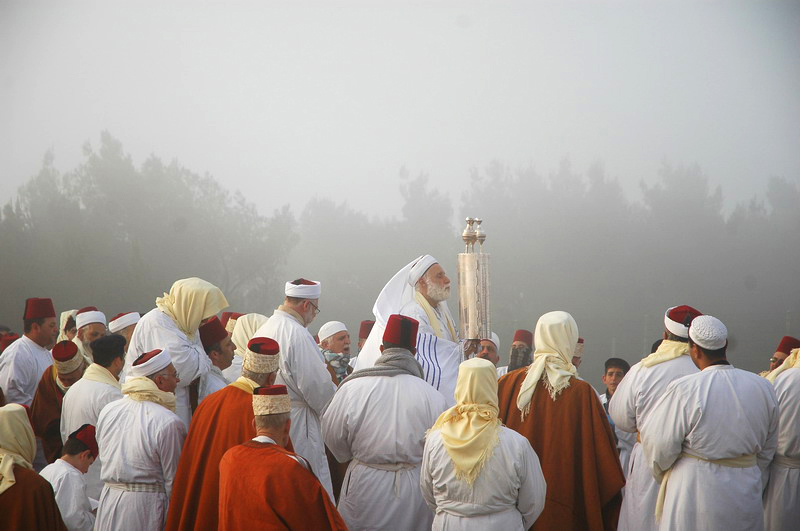
Who belongs? Mixed marriage and the boundaries of Israel
Ezra 9–10 is the Bible’s most drastic attempt to define who belongs. Leaders report that “the holy seed” has mixed itself with “the peoples of the lands”, Ezra tears his garments and prays, and an assembly resolves that men who have married foreign wives will send them away with their children. A list of offenders follows, including priests.[34] Nehemiah, in his memoir, finds Judean men married to women of Ashdod, Ammon and Moab, and complains that “half of their children spoke the language of Ashdod, and they could not speak the language of Judah”. He curses and beats some of them and expels a grandson of the high priest who had married Sanballat’s daughter.[66] Consensus on the texts.
Who were these “foreign” wives? Some scholars think they were not foreigners at all but Judahites who had never been to Babylon, the “people of the land” whose claims to property and status conflicted with the returnees’. On this reading the conflict was between those who defined Israel by the exile and those who defined it by residence. Contested
Other biblical voices disagree with Ezra. Isaiah 56, from the Persian period, promises that foreigners and eunuchs who keep the Sabbath and hold fast to the covenant will be brought to Yahweh’s holy mountain, “for my house shall be called a house of prayer for all peoples”.[68] The book of Ruth makes a Moabite woman the great-grandmother of David, and many scholars read it, if it dates to this period, as a quiet answer to Ezra’s position. Contested on the date of Ruth.
Neither Ezra nor Nehemiah speaks of conversion; the idea that an outsider could formally join the people by a rite does not appear until the Hellenistic period. And neither defines membership by the mother, a rule that appears in rabbinic law centuries later (§7). The Persian-period debate was about lineage, land and marriage, in a community that had not yet settled how one becomes a Jew.[69] Majority
From Judahite to Jew
The word Yehudi originally meant a Judahite, a person of the kingdom of Judah. In the Persian period, with Judah a province and many Judahites living in Babylonia, Egypt and Persia, it became the name of a people defined by descent from Judah wherever they lived. The Elephantine soldiers are “Judeans”, and the book of Esther, set at the Persian court, introduces Mordecai as “a Judean man” (ʾîš yĕhûdî) of the tribe of Benjamin, a Judean by people though not by tribe.[70] Consensus
Whether to translate the word as “Judean” or “Jew” is disputed. Shaye Cohen argues that Yehudi and its Greek equivalent Ioudaios remained an ethnic and geographic term until the late second century BCE, when the possibility of joining the community by adopting its god and laws gave it a religious sense. Steve Mason argues for “Judean” throughout antiquity.[69][71] Most scholars agree that by the end of the Persian period there was a people called Yehudim, defined by descent and increasingly by a shared temple, calendar and book, whatever the best English word for them. Majority
New ideas in the Persian period
Some of the ideas that §6 follows into the Hellenistic period first appear in Persian-period texts.
- “The satan”. In Zechariah 3, from about 520 BCE, haśśāṭān, “the adversary”, stands at the right hand of the high priest Joshua to accuse him in Yahweh’s court, and Yahweh rebukes him.[72] In Job 1–2 “the satan” is a member of the divine council who tests Job with Yahweh’s permission.[73] In both, the word has the definite article: it is an office, a prosecutor, not yet a personal name or a rebel against God. Majority
- Responsibility shifted. 2 Samuel 24:1 says Yahweh, in anger, incited David to take a census. Chronicles, retelling the same story in the late Persian or early Hellenistic period, says “a satan stood up against Israel and incited David”.[74] An act the older text attributed to Yahweh is now attributed to an adversary. This is the first step toward Satan as a figure of evil separate from God (§6). Majority
- “The God of heaven”. Persian-period texts in Ezra, Nehemiah and Elephantine call Yahweh “the God of heaven”, a title that fit the imperial language of a supreme sky god. Whether Zoroastrian ideas of a single good creator influenced Judean thought in this period is debated; the strongest claims for Persian influence concern later ideas, angels, demons and resurrection, and are discussed in §6. Contested
- Scripture read aloud. Nehemiah 8 shows the Torah read and explained to an assembly. The Talmud later read the word mĕpōrāš, “distinctly”, in Nehemiah 8:8 as translation into Aramaic, the origin of the targum.[33][75] There is no synagogue in this period, but the practice that synagogues would institutionalise has begun. Majority
The evidence ledger for Persian Yehud
| Question | What the evidence supports | Key evidence | Confidence |
|---|---|---|---|
| Persian permission to return and rebuild | Likely, as part of a general policy toward local cults | Ezra 1 and 6; Persian practice elsewhere; the Cyrus Cylinder as a parallel, not a proof[3][1][18] | Majority |
| Second Temple c. 515 BCE | Probably, though some argue for later | Haggai; Zechariah; Ezra 6:15[5][6][27] | Majority |
| Size of Jerusalem and Yehud | A small town in a province of perhaps 12,000–30,000 people | Surveys and excavations[22][25][24] | Consensus (small); Contested (numbers) |
| Nehemiah | A historical governor of the mid-5th century | His memoir; Sanballat and Johanan at Elephantine[9][4] | Majority |
| Ezra | A priest-scribe behind an enlarged tradition; date uncertain | Ezra 7–10; Nehemiah 8; silence of Ben Sira[8][32][38] | Contested |
| Torah’s final form | Persian period, 5th–4th centuries BCE | Shared Samaritan Torah; Septuagint; Qumran[67][42] | Majority |
| Imperial authorisation | Possible influence, not demonstrated | Frei; Ezra 7; the Xanthos trilingual[43][44][46] | Contested |
| Religion at Elephantine | A temple of YHW outside Jerusalem; funds for other gods; no trace of the Torah | The papyri[4][50][56] | Consensus (facts); Contested (meaning) |
| Gerizim temple | Built by the mid-5th century, destroyed c. 110 BCE | Magen’s excavations; inscriptions[7][62] | Majority |
| “Jew” as a name | Yehudi becomes the name of a dispersed people | Elephantine; Esther[70][69] | Majority |
Primary sources
1. The Cyrus Cylinder, lines 30–32, c. 539–538 BCE
Akkadian (end of line 32): napḫar nišīšunu upaḫḫiramma utēr dadmīšun
“From [Shuanna] I sent back to their places to the city of Ashur and Susa, Akkad, the land of Eshnunna, the city of Zamban, the city of Meturnu, Der, as far as the border of the land of Guti – the sanctuaries across the river Tigris – whose shrines had earlier become dilapidated, the gods who lived therein, and made permanent sanctuaries for them. I collected together all of their people and returned them to their settlements.” (Translation by Irving Finkel; Shuanna is a name for Babylon.)[1][17]
What it proves. That Cyrus advertised himself as a restorer of displaced gods and peoples, in the language of Babylonian royal propaganda. Every place it names is in Mesopotamia or east of the Tigris. It makes the biblical picture of a Persian king supporting the return of Judeans and the rebuilding of their temple plausible; it does not confirm it. Consensus
2. The decree of Cyrus in Ezra 6:3–5
Aramaic (v. 3): bišnat ḥădâ lĕkôreš malkāʾ, kôreš malkāʾ śām ṭĕʿēm: bêt-ʾĕlāhāʾ bîrûšĕlem baytāʾ yitbĕnēʾ
“In the first year of King Cyrus, King Cyrus issued a decree: concerning the house of God at Jerusalem, let the house be rebuilt, the place where sacrifices are offered … and let the gold and silver vessels of the house of God, which Nebuchadnezzar took out of the temple in Jerusalem and brought to Babylon, be restored.”[3]
What it proves. The Aramaic memorandum is written in the form of a Persian administrative record, unlike the Hebrew proclamation of Ezra 1, which speaks in a Judean theological voice. Bickerman argued that it preserves the substance of a real document; others think a later writer composed it on the model of Persian documents. Contested
3. The law of your God and the law of the king: Ezra 7:25–26
Aramaic (v. 26): wĕkol-dî-lāʾ lehĕwēʾ ʿābēd dātāʾ dî-ʾĕlāhāk wĕdātāʾ dî malkāʾ …
“And you, Ezra, according to the wisdom of your God which is in your hand, appoint magistrates and judges to judge all the people Beyond the River, all who know the laws of your God; and teach those who do not know them. Whoever will not obey the law of your God and the law of the king, let judgment be executed on him strictly.”[8]
What it proves. That the authors of Ezra understood the Torah as having the force of imperial law, using the Persian loanword dāt, “law”, for both. Whether a Persian king actually issued such a letter is disputed; the text is the cornerstone of the imperial-authorisation theory. Contested
4. The reading of the Torah: Nehemiah 8:1–8
Hebrew (v. 8): wayyiqrĕʾû bassēper bĕtôrat hāʾĕlōhîm mĕpōrāš, wĕśôm śekel, wayyābînû bammiqrāʾ.
“All the people gathered as one man in the square before the Water Gate, and they told Ezra the scribe to bring the book of the Torah of Moses … and he read from it from early morning until midday … They read from the book, from the Torah of God, distinctly, and gave the sense, so that the people understood the reading.”[33]
What it proves. That by the time this account was written, the Torah of Moses was a book that could be read aloud in full to the community and needed explanation, probably including translation into Aramaic. It describes a religion organised around a text, which is new. When this happened, and whether Ezra was the reader, is debated. Majority
5. Petition to Bagavahya, governor of Judah, 407 BCE (TAD A4.7)
Aramaic (from the opening): ʾl mrʾn bgwhy pḥt yhwd ʿbdyk ydnyh wknwth khnyʾ zy byb byrtʾ
“To our lord Bigvai, governor of Judaea, your servants Yedoniah and his colleagues, the priests who are in Yeb the fortress. … In the month of Tammuz in the 14th year of Darius the king, when Arsames departed and went to the king, the priests of the god Khnub, who is in the fortress of Yeb, (were) in league with Waidrang who was governor here, saying: The temple of Ya’u the God, which is in the fortress of Yeb let them remove from there. … Already in the days of the kings of Egypt our fathers had built that temple in the fortress of Yeb, and when Cambyses came into Egypt he found that temple built, and the temples of the gods of Egypt all of them they overthrew, but no one did any harm to that temple.” (Translation by A. E. Cowley, 1923; Bigvai is Bagavahya, Yeb is Elephantine, Waidrang is Vidranga, Ya’u is YHW.)[4][11][49]
What it proves. That a Judean temple of YHW stood in Egypt from before 525 BCE until 410 BCE, run by priests who saw no conflict with Jerusalem’s Temple; that the community looked to the governor of Judah, the high priest Jehohanan and the sons of Sanballat in Samaria for help; and that these figures are the same people named in Nehemiah. Consensus
6. Contributions for YHW and other gods (TAD C3.15)
“On the 3rd of Phamenoth, 5th year. This is (a list of) the names of the Jewish garrison who gave money for Ya’u the God, man by man the sum of 2 shekels … The money which was paid on that day into the hand of Yedoniah b. Gemariah in the month of Phamenoth, (was) the sum of 31 kerashin 8 shekels, of which 12 k 6 sh. for Ya’u, 7 kerashin for Ishumbethel, the sum of 12 kerashin for ‘Anathbethel.” (Translation by A. E. Cowley, 1923; Ya’u is YHW, Ishumbethel is Eshembethel.)[50][11]
What it proves. That the treasury of the YHW temple, in a Judean community, also handled money for other gods. Whether the Judeans worshipped them or administered funds for neighbours is debated, but the community was not organised on Deuteronomy’s exclusive lines. Consensus on the text; Contested on its meaning.
7. The Torah in two scripts: b. Sanhedrin 21b–22a
Hebrew: bataḥilla nittĕnâ tôrâ lĕyiśrāʾēl biktāb ʿibrî ûlĕšôn haqqôdeš; ḥāzĕrâ wĕnittĕnâ lāhem bîmê ʿezrāʾ biktāb ʾaššûrît ûlĕšôn ʾărāmî.
“Originally the Torah was given to Israel in Hebrew script and the holy tongue; it was given again in the days of Ezra in the Assyrian script and the Aramaic tongue.” And: “Rabbi Yose says: Ezra was worthy that the Torah should have been given through him to Israel, had Moses not come before him.”[39]
What it proves. Nothing directly about the fifth century, since the Talmud was compiled about a thousand years later. It shows that rabbinic tradition remembered the Persian period as a second giving of the Torah, and correctly associated it with the change from the old Hebrew script to the square Aramaic one, a change archaeology dates to the Persian and Hellenistic periods. Majority
8. From Yahweh to the satan: 2 Samuel 24:1 and 1 Chronicles 21:1
2 Samuel 24:1: wayyōsep ʾap-YHWH laḥărôt bĕyiśrāʾēl, wayyāset ʾet-dāwid bāhem lēʾmōr, lēk mĕnēh ʾet-yiśrāʾēl wĕʾet-yĕhûdâ.
“Again the anger of Yahweh was kindled against Israel, and he incited David against them, saying, ‘Go, number Israel and Judah.’”
1 Chronicles 21:1: wayyaʿămōd śāṭān ʿal-yiśrāʾēl, wayyāset ʾet-dāwîd limnôt ʾet-yiśrāʾēl.
“A satan stood up against Israel, and incited David to number Israel.”[74]
What it proves. The Chronicler, rewriting Samuel in the Persian or early Hellenistic period, was uncomfortable with Yahweh inciting David to sin and replaced him with an adversary, using the same verb. It is the clearest biblical example of a moral problem being solved by introducing a figure distinct from God, the beginning of a development that leads to Satan (§6). Majority
What is absent from the Persian-period record
- A closed canon. The Torah was taking final form; the Prophets and Writings were not yet fixed collections (§0, §7). Consensus
- Synagogues. Public reading of the Torah is described, but no synagogue building is attested before the third century BCE in Egypt (§6).[76] Consensus
- Rabbis, Oral Torah and the Mishnah. All are later (§7). Consensus
- Conversion. No rite or concept of joining the people exists yet; membership is by descent. Majority
- Matrilineal descent. Not a rule in this period; Ezra’s concern is foreign wives, not the status of children by the mother’s line. Majority
- Resurrection, heaven and hell. The dead go to Sheol; individual resurrection first appears clearly in Daniel, c. 165 BCE (§6).[77] Consensus
- A Davidic king. Zerubbabel’s line disappears; hope for a restored David survives in prophecy, but no Messiah in the later sense appears. Majority
Debates about Persian Yehud
Did Cyrus free the Jews?
| View | Position | Main proponents |
|---|---|---|
| Traditional | Cyrus, moved by God, issued the decree of Ezra 1 and funded the Temple; Isaiah’s prophecy of Cyrus was fulfilled | Jewish and Christian tradition |
| Substantially historical | The Aramaic memorandum of Ezra 6 preserves a real Persian decision; Bickerman held that Ezra 1 is an authentic herald’s proclamation of it, others that it is a Judean rewording | Bickerman, Williamson[19][36] |
| General policy, not a decree | Persia allowed displaced groups and cults to return as a matter of policy; the Judean decree texts were composed later | Kuhrt, Grabbe[18][20] |
| Later restoration | Significant rebuilding came only under Darius I or Artaxerxes I; the Cyrus story is a foundation legend | Edelman[27] |
Contested. All sides agree that the Cyrus Cylinder does not mention the Judeans.
Why was the Torah completed in the Persian period?
| View | Position | Main proponents |
|---|---|---|
| Traditional | The Torah was revealed to Moses; Ezra restored and taught it | Rabbinic tradition[39] |
| Imperial authorisation | Persia required an agreed local law; the Torah was ratified as such | Frei, Blum[43][45] |
| Internal compromise | Priestly and Deuteronomic circles in a small temple community combined their traditions to create a shared identity | Ska, Schmid, Römer[47][78][79] |
| Scribal culture | A professional scribal class edited the national library in the Temple; the Torah is their curated anthology | van der Toorn, Carr[30][31] |
The last three are not exclusive, and many scholars combine them. Contested
Who are the Samaritans?
| View | Position | Main proponents |
|---|---|---|
| Judean account (2 Kings 17; Josephus) | Descendants of foreign settlers (“Cuthaeans”) who mixed Yahweh worship with their own gods | Biblical and later Jewish tradition[57][58] |
| Samaritan tradition | The true Israel, descended from the northern tribes, who have kept the Torah and the sanctuary Yahweh chose on Gerizim since Eli’s breakaway shrine at Shiloh | Samaritan tradition[59] |
| Modern consensus | Yahweh-worshipping descendants of northern Israel with a shared heritage; the separation from Judeans was gradual, with John Hyrcanus’s destruction of the Gerizim temple c. 110 BCE as the decisive turning point | Knoppers, Pummer[65][59] |
Majority for the modern view.
How big and how Torah-observant was Persian Yehud?
Minimal readings, led by Finkelstein, see a tiny Jerusalem, a province of perhaps 12,000 people, and much of Ezra–Nehemiah as projected back from the Hasmonean era.[22] Others, such as Lipschits, see a larger, functioning province whose capital revived in the mid-fifth century, which fits a historical Nehemiah.[25] Elephantine shows that some Judeans lived without the Torah’s rules; whether that was true of Yehud itself is unknown. Contested
Further reading
- Lester L. Grabbe, A History of the Jews and Judaism in the Second Temple Period, Vol. 1: Yehud (T&T Clark, 2004) — the most careful survey of the sources.
- Pierre Briant, From Cyrus to Alexander: A History of the Persian Empire (Eisenbrauns, 2002) — the imperial context.[80]
- Irving Finkel, ed., The Cyrus Cylinder (I.B. Tauris, 2013).
- Bezalel Porten, Archives from Elephantine (University of California Press, 1968), and Porten and Ada Yardeni, Textbook of Aramaic Documents from Ancient Egypt (1986–99), for the papyri.
- Reinhard G. Kratz, Historical and Biblical Israel (Oxford, 2015) — the case for “non-biblical Judaism” at Elephantine.
- James W. Watts, ed., Persia and Torah: The Theory of Imperial Authorization of the Pentateuch (SBL, 2001).
- Gary N. Knoppers, Jews and Samaritans: The Origins and History of Their Early Relations (Oxford, 2013).
- Shaye J. D. Cohen, The Beginnings of Jewishness (University of California Press, 1999).
- H. G. M. Williamson, Ezra, Nehemiah (Word, 1985) — a detailed commentary.
References
- ^ a b c d Cyrus Cylinder — British Museum 90920. 539/538 BCE. Akkadian. Cyrus's Babylonian proclamation: Marduk grasped his hand and called his name; he restored neglected cults and returned gods and peoples to their cities in Mesopotamia and western Iran. Judah is not mentioned. about
- ^ a b Ezra 1:2–4 — Ezra (Hebrew Bible). c. 4th c. BCE (composition). Hebrew. The Hebrew proclamation of Cyrus: Yahweh, the God of heaven, has charged him to build a house in Jerusalem, and any of his people may go up. read the text
- ^ a b c d Ezra 6:3–5 — Ezra (Hebrew Bible). c. 4th c. BCE (composition); claims 538 BCE. Aramaic. An Aramaic memorandum of Cyrus ordering the house of God in Jerusalem rebuilt and the vessels taken by Nebuchadnezzar returned; Bickerman argued it preserves a real Persian document, and that the Hebrew proclamation of Ezra 1 is authentic too. read the text
- ^ a b c d e f g h i j Petition to Bagavahya (TAD A4.7; Cowley 30) — Elephantine papyri. 407 BCE. Aramaic. The Elephantine priests ask the governor of Judah to help rebuild the temple of YHW destroyed in 410 BCE; it predates Cambyses (525 BCE), and they name the high priest Jehohanan and the sons of Sanballat of Samaria. about
- ^ a b c Haggai 1:1–4 — Haggai (Hebrew Bible). 520 BCE. Hebrew. In the second year of Darius, Haggai rebukes the people for living in panelled houses while Yahweh's house lies in ruins, addressing the governor Zerubbabel and the high priest Joshua. read the text
- ^ a b c Ezra 6:15 — Ezra (Hebrew Bible). c. 4th c. BCE (composition). Aramaic. The house is finished on the third of Adar in the sixth year of Darius, about 515 BCE. read the text
- ^ a b c d Mount Gerizim sacred precinct — Excavations of Yitzhak Magen, 1983–2006. mid-5th c. BCE – c. 110 BCE. A temple of Yahweh on Mount Gerizim built by the mid-fifth century BCE, enlarged in the Hellenistic period and destroyed by John Hyrcanus c. 112–110 BCE. about
- ^ a b c d e Ezra 7:25–26 — Ezra (Hebrew Bible). c. 4th c. BCE (composition); set in 458 or 398 BCE. Aramaic. Artaxerxes' letter empowers Ezra to appoint judges and punish whoever will not obey "the law of your God and the law of the king" — the key text for the imperial-authorisation theory. read the text
- ^ a b c Nehemiah 2:1–8 — Nehemiah (Hebrew Bible). Memoir set in 445 BCE. Hebrew. In the twentieth year of Artaxerxes, Nehemiah the king's cupbearer asks to be sent to rebuild Jerusalem. read the text
- ^ a b c Bezalel Porten Archives from Elephantine: The Life of an Ancient Jewish Military Colony. University of California Press, 1968. The standard account of the Elephantine Judeans.
- ^ a b c d e f g h i A. Cowley Aramaic Papyri of the Fifth Century B.C.. Clarendon Press, Oxford, 1923. full text The classic English edition and translation of the Elephantine papyri, numbered 1–83; quoted here in its public-domain translation.
- ^ a b Elephantine 'Passover Letter' (TAD A4.1) — Elephantine papyri. 419 BCE. Aramaic. Hananiah writes to the Judean garrison at Elephantine with instructions for the festival of Unleavened Bread, in the fifth year of Darius II. about
- ^ a b Memorandum of Bagavahya and Delaiah (TAD A4.9) and offer (TAD A4.10) — Elephantine papyri. c. 407–402 BCE. Aramaic. Permission to rebuild the temple of YHW "on its site as it was formerly" for meal-offering and incense; the Judeans offer that no sheep, ox or goat will be burnt there. about
- ^ a b "God on the Winged Wheel" drachm — British Museum. 4th c. BCE. Aramaic. A silver coin showing a bearded god seated on a winged wheel above letters usually read YHD (Yehud), once read YHW; whether the god is Yahweh or a Zeus-type figure is disputed. about
- ^ a b Samaria papyri from Wadi Daliyeh — Wadi Daliyeh cave finds (1962). c. 375–335 BCE. Aramaic. Legal documents left by refugees from Samaria who fled Alexander; they name members of the house of Sanballat as governors of Samaria. about
- ^ Isa 45:1–7 — Isaiah (Hebrew Bible). c. 550–539 BCE. Hebrew. Yahweh calls Cyrus his 'anointed' and declares 'I am Yahweh and there is no other; besides me there is no god ... I form light and create darkness, I make peace and create evil': the Bible's first explicit monotheism. read the text
- ^ a b Irving Finkel, ed. The Cyrus Cylinder: The King of Persia's Proclamation from Ancient Babylon. I.B. Tauris, 2013. Text, translation and history of the Cylinder.
- ^ a b c Amélie Kuhrt The Cyrus Cylinder and Achaemenid Imperial Policy. Journal for the Study of the Old Testament 25, 1983. Shows the Cylinder follows Mesopotamian royal conventions and is no evidence of a general policy of repatriation.
- ^ a b Elias J. Bickerman The Edict of Cyrus in Ezra 1. Journal of Biblical Literature 65, 1946. Defends the authenticity of both versions of Cyrus's decree in Ezra.
- ^ a b c Lester L. Grabbe A History of the Jews and Judaism in the Second Temple Period, Vol. 1: Yehud: A History of the Persian Province of Judah. T&T Clark, 2004. A careful, sceptical survey of every source for Persian Yehud.
- ^ Ezra 2:64 (= Nehemiah 7:66) — Ezra (Hebrew Bible). c. 4th c. BCE (composition). Hebrew. The list of returnees totals 42,360 people besides slaves and singers; probably a composite census, not one caravan. read the text
- ^ a b c d Israel Finkelstein Jerusalem in the Persian (and Early Hellenistic) Period and the Wall of Nehemiah. Journal for the Study of the Old Testament 32, 2008. A minimal Jerusalem of a few hundred people; no Persian-period wall identified.
- ^ Israel Finkelstein The Territorial Extent and Demography of Yehud/Judea in the Persian and Early Hellenistic Periods. Revue Biblique 117, pp. 39–54, 2010. The minimal estimate: Yehud of about 12,000 people and a Jerusalem of a few hundred.
- ^ a b c Charles E. Carter The Emergence of Yehud in the Persian Period: A Social and Demographic Study. Sheffield Academic Press (JSOTSup 294), 1999. Survey-based estimates of Yehud's size and population.
- ^ a b c Oded Lipschits The Fall and Rise of Jerusalem: Judah under Babylonian Rule. Eisenbrauns, 2005. Archaeology and demography of Judah after 586: continuity in Benjamin, collapse around Jerusalem.
- ^ Oded Lipschits Persian Period Finds from Jerusalem: Facts and Interpretations. Journal of Hebrew Scriptures 9, article 20, 2009. open library Reviews the excavated evidence and every population estimate for Persian-period Jerusalem, and answers Finkelstein's minimal figure.
- ^ a b c Diana Edelman The Origins of the 'Second' Temple: Persian Imperial Policy and the Rebuilding of Jerusalem. Equinox, 2005. Argues the Temple was rebuilt under Artaxerxes I, not Darius I.
- ^ Ezra 3:12 — Ezra (Hebrew Bible). c. 4th c. BCE (composition). Hebrew. Old men who had seen the first Temple weep when the foundation of the second is laid. read the text
- ^ Oded Lipschits and David S. Vanderhooft The Yehud Stamp Impressions: A Corpus of Inscribed Impressions from the Persian and Hellenistic Periods in Judah. Eisenbrauns, 2011. open library The corpus of yhd/yhwd jar-handle impressions, with their typology and distribution.
- ^ a b Karel van der Toorn Scribal Culture and the Making of the Hebrew Bible. Harvard University Press, 2007. The Bible as the product of temple scribes who edited, expanded and combined.
- ^ a b David M. Carr Writing on the Tablet of the Heart: Origins of Scripture and Literature. Oxford University Press, 2005. How ancient scribes learned texts by heart and reworked them as they copied.
- ^ a b Sirach 49:13 — Wisdom of Ben Sira. c. 180 BCE. Hebrew (Greek translation). Ben Sira praises Nehemiah, who "raised for us the walls that had fallen", but his list of famous men omits Ezra. read the text
- ^ a b c Nehemiah 8:1–8 — Nehemiah (Hebrew Bible). c. 4th c. BCE (composition). Hebrew. Ezra reads the book of the Torah of Moses to the assembled people from morning to midday, and Levites read it "distinctly" and give the sense. read the text
- ^ a b Ezra 9–10 — Ezra (Hebrew Bible). c. 4th c. BCE (composition). Hebrew. Ezra mourns that "the holy seed" has mixed with the peoples of the lands; the assembly resolves to send away foreign wives and their children. read the text
- ^ Albin van Hoonacker Néhémie et Esdras: une nouvelle hypothèse sur la chronologie de l'époque de la Restauration. Le Muséon 9, pp. 151–184, 317–351, 389–401 (also issued separately, Louvain: Istas), 1890. The study that put Nehemiah first (445 BCE) and Ezra under Artaxerxes II (398 BCE).
- ^ a b H. G. M. Williamson Ezra, Nehemiah. Word Books (Word Biblical Commentary 16), 1985. Detailed commentary, sympathetic to the historicity of the Persian documents.
- ^ Charles C. Torrey Ezra Studies. University of Chicago Press, 1910. Argued that Ezra was a literary creation of the Chronicler.
- ^ a b Juha Pakkala Ezra the Scribe: The Development of Ezra 7–10 and Nehemia 8. de Gruyter (BZAW 347), 2004. How the Ezra tradition grew through successive editing.
- ^ a b c b. Sanhedrin 21b–22a — Babylonian Talmud. c. 500–600 CE. Hebrew and Aramaic. The Torah was first given in Hebrew script and given again in Ezra's day in the Assyrian script; Rabbi Yose: Ezra was worthy to receive the Torah had Moses not preceded him. read the text
- ^ m. Avot 1:1 — Mishnah. c. 200 CE. Hebrew. Moses received the Torah at Sinai and handed it to Joshua, the elders, the prophets and the men of the Great Assembly. read the text
- ^ 4 Ezra 14 — 4 Ezra (2 Esdras 3–14). c. 100 CE. Latin (from lost Hebrew/Greek). Ezra, inspired, dictates ninety-four books to restore the scriptures burned in the destruction, twenty-four public and seventy secret. about
- ^ a b Emanuel Tov Textual Criticism of the Hebrew Bible. Fortress Press, 3rd ed., 2012. The standard work on the Masoretic text, Septuagint, Samaritan Pentateuch and Scrolls.
- ^ a b c Peter Frei Zentralgewalt und Lokalautonomie im Achämenidenreich. in P. Frei and K. Koch, Reichsidee und Reichsorganisation im Perserreich (OBO 55), Universitätsverlag Freiburg / Vandenhoeck & Ruprecht, 1984. The original statement of the imperial-authorisation theory.
- ^ a b Letoon trilingual stele — Letoon (Xanthos) trilingual; ed. H. Metzger et al., Fouilles de Xanthos VI (Klincksieck, 1979). c. 337 BCE (first year of an Artaxerxes, probably Artaxerxes IV; 358 BCE if Artaxerxes III). Lycian, Greek and Aramaic. Records the founding of a local cult at Xanthos in Lycia, with an Aramaic version issued in the name of the satrap Pixodaros; Peter Frei's main example of Persian 'authorisation' of a local regulation. about
- ^ a b Erhard Blum Studien zur Komposition des Pentateuch. de Gruyter (BZAW 189), 1990. The Pentateuch as a Persian-period combination of Priestly and Deuteronomic compositions.
- ^ a b James W. Watts, ed. Persia and Torah: The Theory of Imperial Authorization of the Pentateuch. Society of Biblical Literature, 2001. The theory tested by its supporters and critics.
- ^ a b Jean-Louis Ska Introduction to Reading the Pentateuch. Eisenbrauns, 2006. Accessible survey of how the Torah was composed, critical of imperial authorisation.
- ^ Avi Hurvitz The Evidence of Language in Dating the Priestly Code: A Linguistic Study in Technical Idioms and Terminology. Revue Biblique 81, pp. 24–56, 1974. The main linguistic argument that the Priestly writing lacks the features of Late Biblical Hebrew and is therefore early.
- ^ a b Bezalel Porten and Ada Yardeni Textbook of Aramaic Documents from Ancient Egypt. Hebrew University, 4 vols., 1986. The edition (TAD) of the Elephantine papyri, 1986–1999.
- ^ a b c Collection list (TAD C3.15; Cowley 22) — Elephantine papyri. 419 BCE (if year 5 of Darius II) or c. 400 BCE. Aramaic. Garrison members each give two shekels for YHW the God; the treasury's silver is divided between YHW, Eshembethel and Anathbethel. about
- ^ Oath by Anat-Yahu (TAD B7.3; Cowley 44) — Elephantine papyri. late 5th c. BCE. Aramaic. A Judean takes a legal oath by a god whose name is damaged, by the place of worship and by "Anat-Yahu", a divine name combining the goddess Anat with YHW. about
- ^ a b Gard Granerød Dimensions of Yahwism in the Persian Period: Studies in the Religion and Society of the Judaean Community at Elephantine. de Gruyter (BZAW 488), 2016. The religion of the Elephantine Judeans, studied in its own right.
- ^ Passover ostraca (TAD D7.6, D7.24) — Elephantine ostraca (Porten and Yardeni, TAD vol. 4). 5th c. BCE. Aramaic. Short letters on potsherds from Elephantine that use the word psḥ, "Passover"; in one (Bodleian Aram. Inscr. 7 = TAD D7.6) the writer asks to be told when the Passover will be kept. about
- ^ Sabbath ostraca (e.g. TAD D7.12, D7.16) — Elephantine ostraca (Porten and Yardeni, TAD vol. 4). 5th c. BCE. Aramaic. Everyday letters on potsherds from Elephantine that mention the Sabbath (šbh) by name, including the ostracon Clermont-Ganneau 152 published by Dupont-Sommer as "l'ostracon araméen du sabbat". about
- ^ Nehemiah 12:22 — Nehemiah (Hebrew Bible). c. 4th c. BCE (composition). Hebrew. Lists the high priests Eliashib, Joiada, Johanan and Jaddua; the Johanan named here is the high priest Jehohanan of the Elephantine petition of 407 BCE. read the text
- ^ a b Reinhard G. Kratz Historical and Biblical Israel: The History, Tradition, and Archives of Israel and Judah. Oxford University Press, 2015. Contrasts the 'non-biblical Judaism' of Elephantine with the biblical Judaism of the Torah.
- ^ a b 2 Kings 17:24–41 — Kings (Hebrew Bible). c. 6th–5th c. BCE. Hebrew. The Judean account of Samaria after 722 BCE: settlers from Cuthah and elsewhere worship Yahweh alongside their own gods. read the text
- ^ a b c Josephus, Jewish Antiquities 11.302–347 — Jewish Antiquities. c. 93–94 CE. Greek. Josephus's story of Sanballat, whom he calls a Cuthaean, building the Gerizim temple under Alexander for his son-in-law Manasseh, a Jerusalem priest. about
- ^ a b c d Reinhard Pummer The Samaritans: A Profile. Eerdmans, 2016. Introduction to Samaritan history, scripture and practice.
- ^ Abu'l-Fath, Kitāb al-Taʾrīkh — Samaritan chronicle (trans. Paul Stenhouse, Mandelbaum Trust, 1985). 14th c. CE (begun 1355/56, from older Samaritan sources). Arabic. The Samaritan account of the schism: Eli son of Yafni, of the line of Ithamar, tried to usurp the high priesthood from the line of Phinehas, left Mount Gerizim and set up a rival sanctuary at Shiloh.
- ^ a b Yitzhak Magen, Haggai Misgav and Levana Tsfania Mount Gerizim Excavations, Vol. I: The Aramaic, Hebrew and Samaritan Inscriptions. Staff Officer of Archaeology, Civil Administration of Judea and Samaria; Israel Antiquities Authority (Judea and Samaria Publications 2), 2004. The excavator's publication of the Gerizim inscriptions.
- ^ a b Mount Gerizim inscriptions — Mount Gerizim sacred precinct. 3rd–2nd c. BCE. Aramaic and Hebrew. About four hundred dedicatory inscriptions, mostly Aramaic, several containing the divine name, from the Samaritan sanctuary. about
- ^ Delos Samaritan inscriptions — Two Greek inscriptions from Delos. 3rd–1st c. BCE. Greek. Honours voted by a community calling itself "Israelites" who make offerings to "Argarizein" (Mount Gerizim) — Samaritans in the Aegean calling themselves Israelites. about
- ^ Philippe Bruneau "Les Israélites de Délos" et la juiverie délienne. Bulletin de correspondance hellénique 106, pp. 465–504, 1982. doi First publication of the two Delos inscriptions of the "Israelites who make offerings to Argarizein", dated by letter forms to c. 250–175 and c. 150–50 BCE.
- ^ a b Gary N. Knoppers Jews and Samaritans: The Origins and History of Their Early Relations. Oxford University Press, 2013. Samarians and Judeans as kin with a shared heritage and a long rivalry.
- ^ a b Nehemiah 13:23–28 — Nehemiah (Hebrew Bible). Memoir, c. 430 BCE. Hebrew. Nehemiah finds children who speak the language of Ashdod and cannot speak Judean, and expels a high priest's grandson married to Sanballat's daughter. read the text
- ^ a b Samaritan Pentateuch, Exodus 20 and Deuteronomy 12 — Samaritan Pentateuch. text-type 2nd c. BCE. Hebrew (Samaritan script). The Samaritan Torah adds a commandment to build an altar on Mount Gerizim and reads "the place Yahweh has chosen" where the Jewish text has "will choose". about
- ^ Isaiah 56:3–7 — Isaiah (Hebrew Bible). c. late 6th–5th c. BCE. Hebrew. Foreigners and eunuchs who keep the Sabbath will be brought to Yahweh's holy mountain: "my house shall be called a house of prayer for all peoples". read the text
- ^ a b c Shaye J. D. Cohen The Beginnings of Jewishness: Boundaries, Varieties, Uncertainties. University of California Press, 1999. When Ioudaios came to mean a religious identity, and how conversion and matrilineal descent arose.
- ^ a b Esther 2:5 — Esther (Hebrew Bible). c. 4th–2nd c. BCE. Hebrew. Mordecai is introduced as "a Judean man" (ʾîš yĕhûdî) of the tribe of Benjamin: Yehudi as the name of a dispersed people. read the text
- ^ Steve Mason Jews, Judaeans, Judaizing, Judaism: Problems of Categorization in Ancient History. Journal for the Study of Judaism 38, 2007. Argues that Ioudaios should be translated 'Judean' throughout antiquity.
- ^ Zechariah 3:1–2 — Zechariah (Hebrew Bible). c. 520 BCE. Hebrew. "The satan" stands at the high priest Joshua's right hand to accuse him, and Yahweh rebukes him: an accuser in the divine court, not yet a rebel. read the text
- ^ Job 1:6–12 — Job (Hebrew Bible). probably Persian period (debated). Hebrew. 'The satan' comes among the sons of God before Yahweh and, with Yahweh's permission, tests Job: a member of the divine council, not a rebel. read the text
- ^ a b 1 Chronicles 21:1 (cf. 2 Samuel 24:1) — Chronicles (Hebrew Bible). c. 4th c. BCE. Hebrew. Where Samuel says Yahweh incited David to take a census, Chronicles says "a satan stood up against Israel and incited David". read the text
- ^ b. Megillah 3a — Babylonian Talmud. c. 500–600 CE. Hebrew and Aramaic. Reads mĕpōrāš, "distinctly", in Nehemiah 8:8 as translation into Aramaic: the rabbinic origin story of the targum. read the text
- ^ Schedia proseuchē inscription (JIGRE 22) — Dedication of a Jewish prayer house, Schedia, Egypt. 246–221 BCE. Greek. The Jews of Schedia dedicate a proseuchē 'on behalf of King Ptolemy and Queen Berenice his sister and wife and their children': the earliest dated evidence for a synagogue.
- ^ Daniel 12:1–3 — Book of Daniel (Hebrew Bible). c. 165 BCE. Hebrew. Michael the great prince arises; 'many of those who sleep in the dust of the earth shall awake, some to everlasting life, and some to shame and everlasting contempt': the first clear biblical statement of resurrection and judgment. read the text
- ^ Konrad Schmid Genesis and the Moses Story: Israel's Dual Origins in the Hebrew Bible. Eisenbrauns, 2010. The main European alternative: patriarchs and exodus as rival origin stories joined late.
- ^ Thomas Römer The Invention of God. Harvard University Press (trans. Raymond Geuss), 2015. Readable account from Yahweh's southern origins to biblical monotheism.
- ^ Pierre Briant From Cyrus to Alexander: A History of the Persian Empire. Eisenbrauns (trans. Peter T. Daniels), 2002. The standard history of the Achaemenid empire.