
Hasidism’s origins in one paragraph
Between 1648 and 1800 the largest Jewish population in the world, in the Polish–Lithuanian Commonwealth, went through three upheavals. The Cossack rising of 1648–49 killed thousands of Jews in Ukraine. In 1665–66 the Jewish world from Yemen to Amsterdam was swept by the belief that Sabbatai Zevi of Smyrna was the Messiah, until he converted to Islam; a hidden minority went on believing, and in the 1750s Jacob Frank led some of them into the Catholic Church. Then, in the middle of the eighteenth century, a new form of piety took shape in Podolia around a healer and mystic, Israel ben Eliezer, the Baal Shem Tov. After his death in 1760 his followers turned it into a movement, Hasidism, centred on the tsaddik, a holy leader whose court became the focus of his followers’ lives. The rabbis of Lithuania, led by the Vilna Gaon, tried from 1772 to stamp it out by excommunication and failed. Majority
How these three upheavals connect is the central question of this chapter. Older histories told a simple story: massacre led to despair, despair to a false messiah, and the false messiah’s failure to a popular revival that brought joy back to broken communities. Archival research since the 1970s has replaced almost every link of that chain. The massacres were smaller than the chronicles said, the Baal Shem Tov was a respected figure supported by his community, not a rebel of the poor, and Hasidism spread most where Polish Jewry was growing and prospering, not where it was broken. The story is still dramatic. It is just no longer simple.[1][2][3] Majority
Timeline of messianism and Hasidism, and its evidence
| Date | Event or evidence | Confidence |
|---|---|---|
| 1648–49 | Cossack rising under Bohdan Khmelnytsky; massacres of Jews at Nemyriv, Tulchyn, Polonne and elsewhere[4][1] | Consensus (events); Contested (numbers) |
| 1650 | The Council of Four Lands declares 20 Sivan, the date of the Nemyriv massacre, an annual fast[5] | Consensus |
| 1653 | Nathan Hannover’s chronicle Yeven Metsulah printed in Venice[4] | Consensus |
| 1665 | At Gaza, on 17 Sivan (31 May), with Nathan of Gaza as his prophet, Sabbatai Zevi proclaims himself the Messiah; in December Sabbatai and his followers force their way into a synagogue of Smyrna and take control of its Jewish community[6] | Consensus |
| Feb 1666 | Sabbatai arrested on reaching Constantinople; from April held at the fortress of Abydos, near Gallipoli[6] | Consensus |
| 1666 | Glikl’s father-in-law sends casks of food to her house in Hamburg, ready for the journey to the Holy Land[7] | Consensus |
| 16 Sep 1666 | Sabbatai converts to Islam before the court of Sultan Mehmed IV at Edirne[6][8] | Consensus |
| 1676 | Sabbatai dies in exile at Ulcinj (Dulcigno), in today’s Montenegro[6] | Consensus |
| 1683 | Two to three hundred Sabbatean families in Salonica convert to Islam; the Dönme[6] | Majority |
| c. 1700 | Birth of Israel ben Eliezer, the Baal Shem Tov[2] | Majority |
| 1740–1760 | Tax registers of Międzybóż list a “kabbalist” and then a “Baal Shem”, exempt from tax, in a house owned by the Jewish community[9][2] | Consensus |
| 1746 | Rosh Hashanah: the Baal Shem Tov’s “ascent of the soul”, described in his letter to his brother-in-law[10] | Majority (authenticity) |
| 1751 | Jacob Emden accuses Rabbi Jonathan Eybeschütz of writing Sabbatean amulets; the quarrel splits German and Polish Jewry[11] | Consensus |
| 1756–59 | Jacob Frank’s followers are condemned by rabbis (1756), win a disputation at Kamieniec (1757) after which the Talmud is burned, and after a second disputation at Lwów (1759) are baptised as Catholics[11] | Consensus |
| 1760 | Death of the Baal Shem Tov at Międzybóż[2] | Consensus |
| 1760s–1772 | Dov Ber, the Maggid of Mezeritch, gathers disciples who will lead the movement; he dies in 1772[12] | Consensus |
| 1772 | First excommunication of the Hasidim in Vilna, supported by the Gaon; the tract Zemir ʿAritsim printed[13][14] | Consensus |
| 1780 | Toledot Yaʿakov Yosef by Jacob Joseph of Polonne, the first Hasidic book, printed at Korets[15] | Consensus |
| 1781 | Second wave of bans; the Besht’s letter printed in Ben Porat Yosef[10][14] | Consensus |
| 1788 | Noʿam Elimelekh by Elimelekh of Lizhensk, the classic statement of the tsaddik’s role, printed at Lwów[16] | Consensus |
| 1796 | Shneur Zalman of Liadi’s Likkutei Amarim (the Tanya) printed at Slavuta, completed on 20 Kislev 5557[17] | Consensus |
| 1797 | Death of the Vilna Gaon[14] | Consensus |
| 1798 and 1800 | Shneur Zalman twice arrested by the Russian government after denunciations; released both times[12] | Consensus |
| 1804 | A Russian statute on the Jews allows a group that will not pray with the rest of a community to build its own synagogue and choose its own rabbis, in effect tolerating the Hasidim[18] | Majority |
| 1814–15 | Shivḥei ha-Besht, a collection of legends about the Baal Shem Tov, printed at Kopys[19] | Consensus |
1648: the massacres and their numbers
In the spring of 1648 the Zaporozhian Cossacks, under their hetman Bohdan Khmelnytsky, rose against the Polish crown, and were joined by Crimean Tatars and by peasants across Ukraine. Jews were among the rebels’ chief targets. In the Polish order of eastern Ukraine, many Jews worked as leaseholders (arendarze) of the nobles’ estates: they collected tolls and rents and ran the taverns and mills, which made them the visible face of a system the peasants hated. Polish nobles and Catholic clergy were also killed, and in some towns Jews and Poles died together.[20][4] Consensus
The worst massacres came in the first summer. At Nemyriv, on 20 Sivan 5408 (10 June 1648), the Cossacks took the town with the help of its Orthodox inhabitants and killed its Jews. At Tulchyn, Polish nobles who had sheltered with Jews in the fortress surrendered them in the hope of saving themselves. At Polonne, Ostroh and other towns of Volhynia and Podolia the pattern was repeated, and the killings continued, with intervals, into 1649 and after.[4][5] Consensus
In 1650 the Council of Four Lands, the central body of Polish Jewish self-government, declared 20 Sivan, the day the calamity had begun at Nemirov, a fast day. Liturgical poets wrote laments for it, and Hebrew and Yiddish chronicles spread the story across Europe.[5] In Jewish memory the years became gezerot taḥ ve-ṭat, “the decrees of [5]408 and [5]409”. Consensus
How many died?
The chroniclers gave very large figures, and their numbers passed into the histories of the nineteenth and twentieth centuries, where totals of 100,000 or more, and sometimes several hundred thousand, became standard. In 2003 Shaul Stampfer tested these figures against what is known about Jewish settlement in Ukraine before the rising, from tax records and the size of communities. He concluded that about 40,000 Jews lived in the affected region, that no more than half of them, and possibly far fewer, were killed, and that many survivors returned within a few years and rebuilt.[1] Most specialists now accept that the chroniclers’ numbers were inflated, though some defend higher totals. Majority on the lower figures; Contested on any exact number.
The lower toll matters for what follows. A story of Polish Jewry broken in 1648 and ready for any messiah was central to the older explanations of both Sabbateanism and Hasidism. If Jewish communities in Ukraine recovered within a generation, and the Jewish population of the Commonwealth grew strongly through the eighteenth century, as it did, then neither movement can be explained simply as a response to trauma.[1][3] Majority
Khmelnytsky himself is remembered very differently in Ukraine, where he is honoured as the founder of a Cossack state and a national hero; his rising is a foundational event of Ukrainian history. Historians on both sides now treat the massacres and the rising as one event seen from different places.[20] Political
1665–66: the messiah from Smyrna
Sabbatai Zevi was born in Smyrna (İzmir) in 1626, the son of a merchant. He was trained as a rabbi, studied Kabbalah, and from his twenties behaved in ways his contemporaries found strange: periods of exaltation followed by depression, deliberate breaches of Jewish law, and a ceremony in which he pronounced the divine name aloud. Gershom Scholem, whose biography remains the standard work, thought he suffered from what would now be called bipolar disorder; others are more cautious about diagnosing at a distance. He was expelled from Smyrna and wandered through Salonica, Constantinople, Cairo and Jerusalem.[6] Majority
In the spring of 1665 he went to see a young kabbalist in Gaza, Nathan Ashkenazi, who was known as a healer of souls. Nathan, in a visionary trance, told him he was the Messiah, and became his prophet; on 17 Sivan (31 May) 1665 Sabbatai publicly proclaimed himself the Messiah. Nathan’s letters announced that the redemption was imminent, that the Messiah would take the crown from the Ottoman sultan without war, and that Jews must prepare by repentance.[6][21] Consensus
The news ran through the Jewish world with startling speed. In December 1665 Sabbatai and his followers forced their way into a synagogue of Smyrna that opposed him and took control of the community, and fasts were turned into feasts. Letters reached Italy, Amsterdam, Hamburg, Poland and Yemen. People sold houses, did penance, and prepared to travel. The Christian world followed the excitement too, through pamphlets and newsletters, which is why there are so many eyewitness reports.[6][8] Consensus
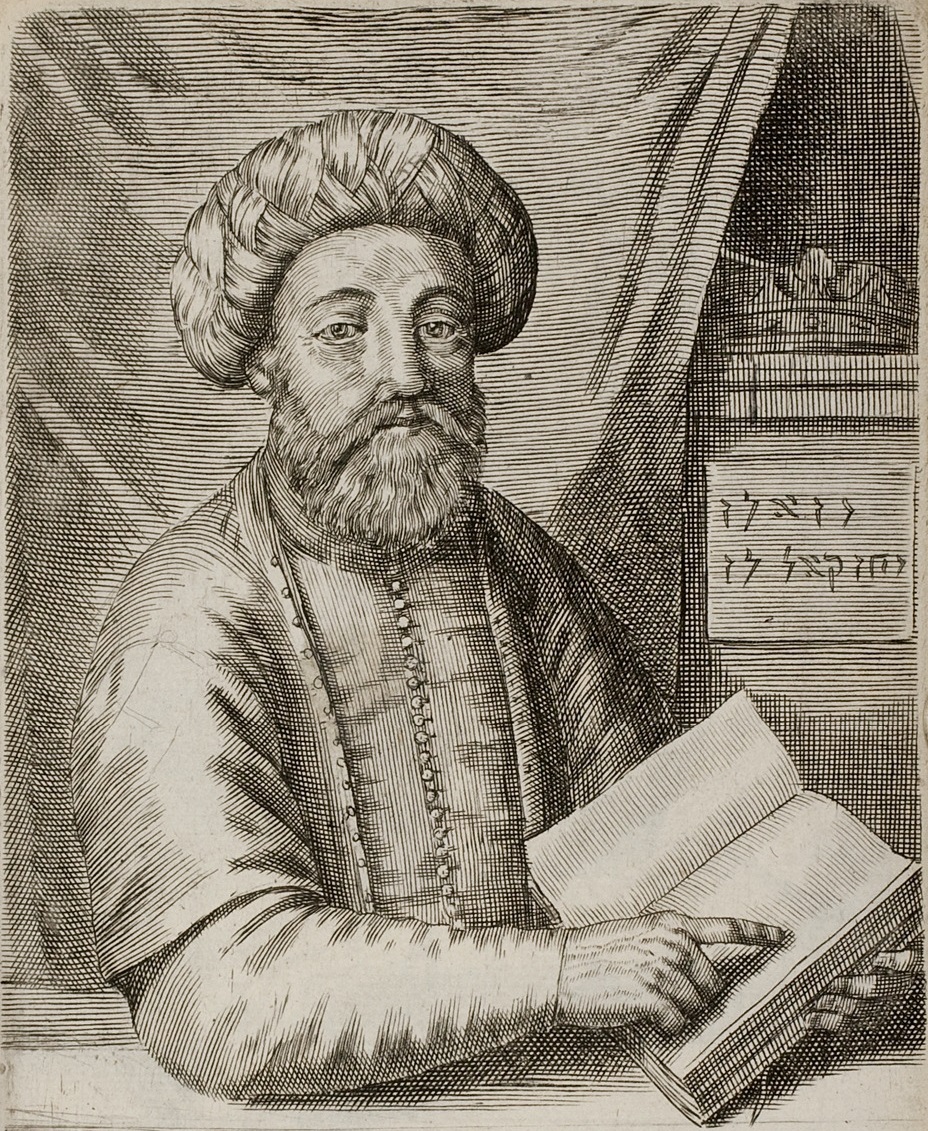
The conversion
In February 1666 Sabbatai sailed for Constantinople. The Ottoman authorities arrested him on arrival and, after two months in prison there, held him, in some comfort, in the fortress of Abydos on the Dardanelles, which his followers renamed Migdal ʿOz, “tower of strength”, and where pilgrims came to see him. In September he was brought before the sultan’s court at Edirne (Adrianople) and given a choice. On 16 September 1666 he put on a turban and converted to Islam, taking the name Aziz Mehmed Efendi and a salaried post at court.[6] Consensus
Most believers were shattered, and most communities tried to forget, sometimes tearing pages from their record books. But the movement did not end. Nathan of Gaza explained the conversion in the language of Lurianic Kabbalah (§9): the Messiah had to descend into the realm of evil, the “husks” (qelippot), to rescue the last holy sparks trapped there, and his apostasy was the deepest stage of that descent. On this view, the outward act of betrayal concealed a hidden act of redemption. A minority of believers, including some learned rabbis, kept that faith, secretly or openly, for generations.[6][21] Consensus
Sabbatai died in exile at Ulcinj, on the Adriatic, in 1676. In 1683 two to three hundred families in Salonica followed him into Islam and became the Dönme (“converts”), a community that kept its own rites behind an outwardly Muslim life until the twentieth century.[6] Majority
Why so many believed
Scholem argued that the movement succeeded because Lurianic Kabbalah had already spread through the Jewish world, teaching that the redemption was near and that each Jew’s prayer and repentance helped to bring it; Sabbatai’s appearance was the answer to a question the Kabbalah had made urgent.[6] Later historians have questioned how widely Lurianic ideas had spread among ordinary Jews by 1665, and point to other ingredients: the speed of letters and print in a connected Mediterranean world, the parallel millenarian expectations among Christians (many expected upheaval in 1666), and the social prestige of the rabbis and merchants who endorsed Sabbatai.[21] Contested on the weight of each factor; Consensus that the movement was not confined to 1648’s survivors: its centres were in the Ottoman Empire, Italy and the Netherlands.
The underground: Sabbateans and Frankists
For the next century, Sabbatean belief was a secret current inside rabbinic Judaism. Its believers kept the law in public, studied Sabbatean writings privately, and some held that the coming age would abolish the commandments altogether. Rabbis hunted for them, and accusations of secret Sabbateanism became a weapon in rabbinic politics. The most famous case broke out in 1751, when Jacob Emden of Altona accused the chief rabbi of the triple community of Altona, Hamburg and Wandsbek, Jonathan Eybeschütz, of writing amulets that hid Sabbatai’s name. The quarrel divided the rabbis of Germany, Bohemia and Poland for years. Whether Eybeschütz was in fact a secret believer is still argued; many historians now think the evidence against him is strong.[11] Contested
Jacob Frank
The last and strangest wave came from Podolia. Jacob Frank, born Jakub Lejbowicz in 1726, grew up among Sabbatean believers and spent years in the Ottoman Empire, where Jews called him “Frank”, a European. In 1755 he returned to Podolia and gathered a following. In 1756, at a gathering in Lanckorona, his followers were caught in rituals the rabbis described as sexual transgressions, and a rabbinical court at Satanów condemned them. The Frankists turned to the Catholic bishop of Kamieniec, Mikołaj Dembowski, presenting themselves as “anti-Talmudists”. After a disputation in 1757 the bishop ruled in their favour and ordered copies of the Talmud burned.[11] Consensus
In 1759, after a second disputation at Lwów, in which the Frankists repeated the blood libel against their former fellow Jews, Frank and hundreds of his followers were baptised at Lwów; Frank was baptised a second time in Warsaw in November 1759, with King Augustus III as his godfather. The church soon suspected that his Christianity was as tactical as Sabbatai’s Islam, and from 1760 to 1772 he was held in the monastery of Jasna Góra at Częstochowa. He spent his last years at a court in Offenbach, near Frankfurt, where he died in 1791.[11] Consensus
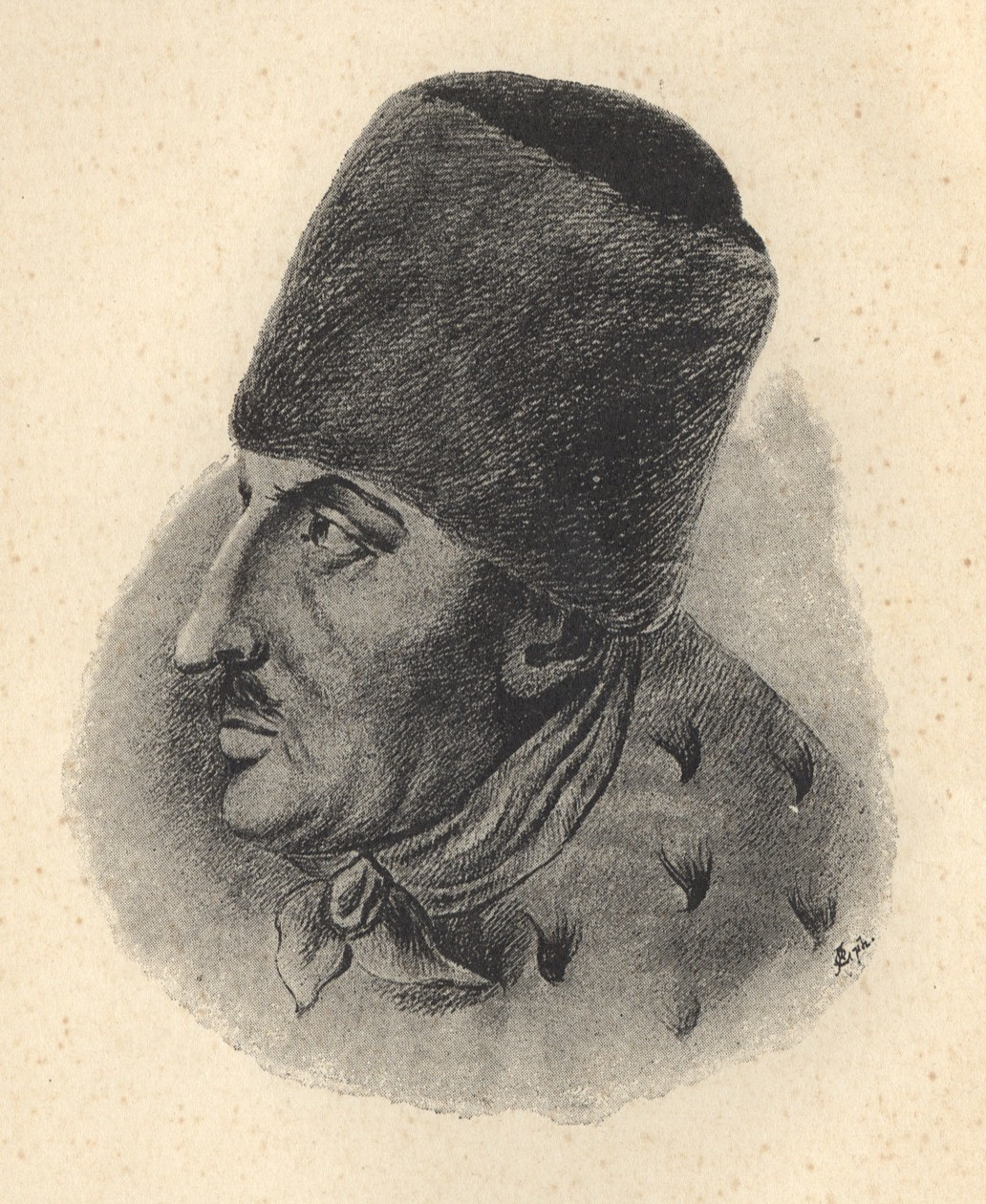
The Frankist episode happened in the same region, and in the same decade, in which the Baal Shem Tov was active. That is one reason the rabbis of the next generation looked at any new mystical movement in Podolia with deep suspicion. Majority
The Baal Shem Tov: legend and record
Israel ben Eliezer was born around 1700, probably in or near Podolia; the tradition naming Okopy is late and uncertain. He worked, according to the legends, as a teacher’s assistant, a lime digger and a ritual slaughterer before revealing himself as a holy man. By the 1730s he was known as a baʿal shem, “master of the name”, a recognised profession in eighteenth-century Jewish society: a healer who used divine names, amulets and herbal remedies, and who drove out demons and dybbuks. The title Baʿal Shem Tov, “master of the good name”, and its acronym Besht, became his name.[2][22] Majority
What the archives show
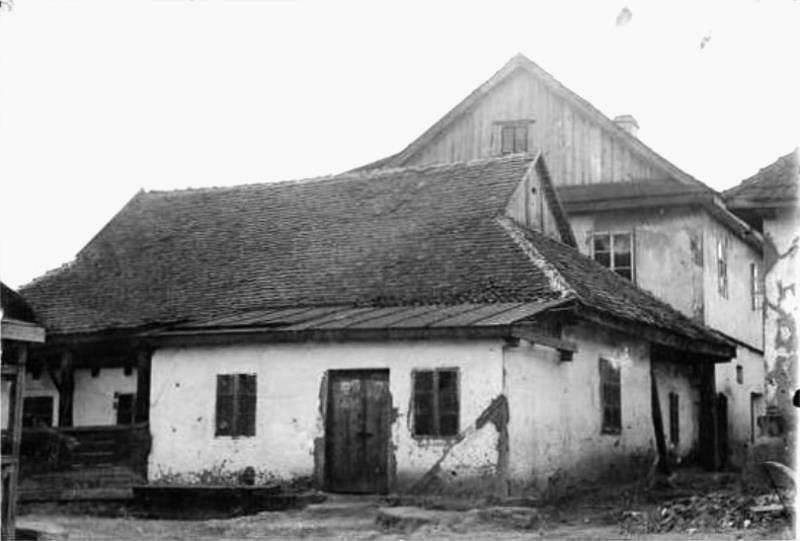
For most of the twentieth century historians had almost nothing but legends to go on. In the 1970s and 1980s Moshe Rosman found the tax and property registers of Międzybóż, a private town of the Czartoryski family in Podolia, in Polish archives. From 1740 the registers list a “kabbalist”, and later a “Baal Shem” and “Baal Shem doctor”, living in a house owned by the Jewish community and exempt from tax. Several of his relatives and associates appear in the same registers.[9][2] Consensus
Rosman drew two conclusions. First, the Besht was real, and his life can be placed: from about 1740 until his death in 1760 he lived at Międzybóż. Second, he was not an outsider. The community gave him a house and freed him from taxes, which means its leaders valued him: he was an established figure, a healer and teacher with a circle of followers, not a rebel against the rabbis or the leader of a movement of the poor.[2] Majority
What he taught
The Besht wrote no book. His teachings survive as quotations in his disciples’ works, introduced with formulas like “I heard from my teacher”, and in three or four letters, of which the most important is the “Holy Epistle” to his brother-in-law Gershon of Kuty, printed in 1781 (source 3 below).[2][10] From these, scholars reconstruct a teaching with a few clear emphases:
- God is everywhere. There is no place empty of God, so holiness can be found in ordinary things, in eating, work, conversation and stories, not only in study and ritual.[22]
- Prayer as attachment. The goal of prayer is devequt, “cleaving” to God, an intense, joyful state in which the worshipper loses awareness of self. Melancholy and excessive fasting are obstacles, not virtues.[22]
- Raising sparks and “strange thoughts”. Distracting or sinful thoughts during prayer are not to be fought off but “raised” to their divine source, an adaptation of Lurianic ideas about holy sparks (§9).[22][23]
- The holy man’s responsibility. A person of great spiritual power is responsible for the community and can intercede for it, which later became the doctrine of the tsaddik.[22]
Majority on the general picture; Contested on which sayings attributed to him are authentic, since all of them come through disciples who had their own agendas.
The legends
Almost everything in the popular image of the Besht, his hidden years, his miracles, his encounters with demons, robbers and the prophet Elijah, comes from Shivḥei ha-Besht (“In Praise of the Baal Shem Tov”), a collection of stories printed at Kopys in 1814–15, fifty-four years after his death (source 4). The stories were collected by a son-in-law of one of his scribes from oral tradition. Historians use them with care: they preserve real names and places, and they show what his admirers believed, but they are not a biography.[19][2] Consensus
From a circle to a movement
In the Besht’s lifetime there was no “Hasidism” in the sense of an organised movement with its own leaders, prayer houses and followers. There was a circle of mystics around a famous man, one of several such circles in Podolia. The word ḥasid, “pious one”, was then used for elite ascetics and kabbalists who prayed and studied apart from ordinary householders, such as those of the famous study house (kloyz) at Brody.[3][2] Majority
The movement was built by the next generation. Dov Ber, the Maggid (“preacher”) of Mezeritch, who had come to the Besht as a sick man seeking healing, gathered a remarkable group of students at Mezeritch in Volhynia in the 1760s. After his death in 1772 they spread out across Ukraine, Belarus, Galicia and central Poland, each founding a court of his own: Menachem Mendel of Vitebsk, Shneur Zalman of Liadi, Levi Yitzhak of Berdichev, Elimelekh of Lizhensk and others.[12] Consensus
Print followed. In 1780 Jacob Joseph of Polonne, the Besht’s most important disciple-author, published Toledot Yaʿakov Yosef at Korets, the first Hasidic book, full of teachings quoted “from my teacher” and of sharp criticism of rabbis and scholars who studied for honour rather than for God.[15] In 1781 he printed the Besht’s letter at the end of a second book, Ben Porat Yosef.[10] Books by the Maggid’s disciples followed in the 1780s and 1790s. Consensus
The tsaddik
The new movement’s most distinctive institution was the tsaddik, “righteous one”, also called the rebbe. Elimelekh of Lizhensk’s Noʿam Elimelekh (1788) set out the doctrine most fully: the tsaddik is a channel between heaven and earth, who raises his followers’ prayers and draws down blessing to them, children, life and livelihood (banei, ḥayyei u-mezonei, a Hasidic formula adapted from the Talmud’s “life, children and sustenance”, Moʿed Qatan 28a), in return for their devotion and their gifts.[16][24][12] Followers travelled to their rebbe’s court for the festivals, ate at his table, brought him written petitions (kvitlekh), and gave him money (pidyon, “redemption”). Consensus
This was something new. Rabbinic Judaism had always honoured scholars and saints, but authority rested on learning and on appointment by the community. The tsaddik’s authority rested on his charisma, and in the nineteenth century increasingly on descent from an earlier tsaddik. Dynasties named after their towns, such as Lubavitch, Ger, Belz and later Satmar, are mostly nineteenth-century creations; hereditary succession was not part of the movement’s beginnings.[12] Majority
How far it spread
Hasidism grew fastest in Ukraine, Galicia and central Poland, and more slowly in Lithuania and Belarus, where the opposition was strongest. Older claims that by 1800 most East European Jews were Hasidim are probably exaggerated; the most recent comprehensive history doubts that they were ever a majority of East European Jewry as a whole, though by the mid-nineteenth century they were the dominant form of Judaism in many places, especially eastern Galicia and parts of Ukraine and central Poland.[12] Majority
The opposition: the Vilna Gaon and the Mitnagdim
Opposition began as soon as the movement reached Lithuania. In 1772 the communal leaders of Vilna, with the support of Rabbi Elijah ben Solomon Zalman, the Gaon (“genius”) of Vilna, excommunicated the Hasidim. Brody and other communities issued bans of their own, and a collection of documents and polemics was printed the same year under the title Zemir ʿAritsim ve-Ḥarvot Tsurim, “the song of the tyrants and flint knives”, phrases borrowed from Isaiah 25:5 and Joshua 5:2.[13][14] Consensus
The opponents, mitnaggedim, listed their objections:
- Prayer. The Hasidim adopted the prayer rite associated with Isaac Luria (§9), with its Sephardic wording, and prayed late, past the times set by law, after long preparation, with shouting and violent movement.
- Separatism. They left the communal synagogues for their own prayer rooms (shtiblekh), which divided communities and their income.
- Slaughter. They insisted on knives sharpened in a special way and used their own ritual slaughterers, which meant they would not eat the community’s meat, a direct challenge to the communal economy and authority.
- Torah study. They seemed to put prayer and devotion above study, and some Hasidic teachers mocked scholars.
- Charisma. The claims of miracles for their leaders, and the devotion of followers to them, looked like the Sabbatean and Frankist movements of a generation before.[14][25]
Consensus
The Gaon himself was the greatest Talmudist of the age, a scholar who held no rabbinic office, lived in seclusion and studied almost without pause. He believed that miracles claimed for living men were deceptions, and that devotion without mastery of Torah was a danger. When Shneur Zalman of Liadi and Menachem Mendel of Vitebsk came to Vilna to seek reconciliation, he refused to see them. He backed further bans in 1781 and in the 1790s, and in 1796 denied Hasidic claims that he had softened his position.[14] Consensus
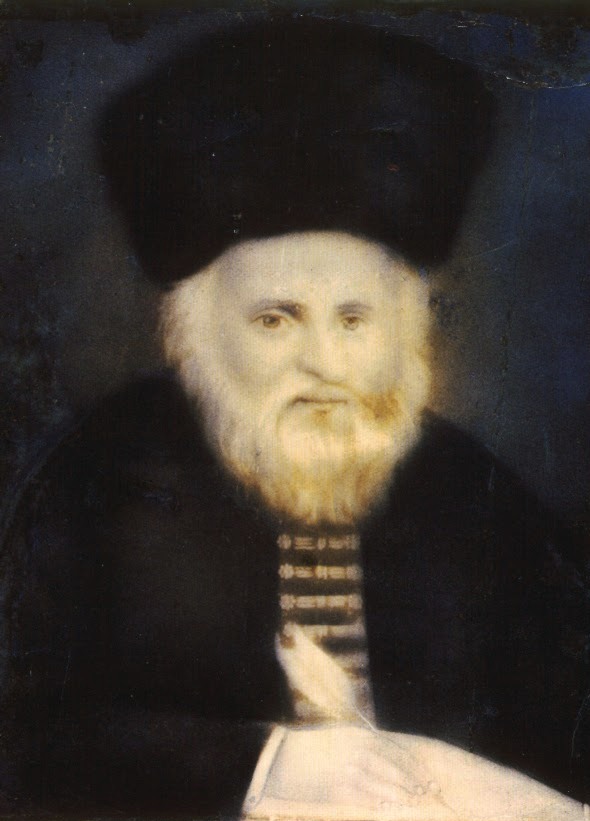
The state steps in
The quarrel ended up in the courts of the Russian Empire, which had absorbed Lithuania, Belarus and much of Ukraine in the partitions of Poland. In 1798 Shneur Zalman, founder of the Chabad branch of Hasidism, was arrested after a denunciation accusing him of sedition, held in St Petersburg for fifty-three days and released; Chabad Hasidim still celebrate his release on 19 Kislev. He was arrested again in 1800, and released in 1801 after the accession of Alexander I. The state found no crime, and in 1804 a new statute on the Jews allowed a group that would not pray with the rest of a community to build its own synagogue and choose its own rabbis, in effect granting the Hasidim legal standing.[18][12] Majority
The Gaon’s students took the argument in a different direction. Ḥayyim of Volozhin founded a new kind of yeshiva at Volozhin in 1802–03 (sources differ on the year), a large, independent academy devoted to Talmud study for its own sake, and in Nefesh ha-Ḥayyim, published after his death, gave the Mitnagdim a theology to match the Hasidim’s: Torah study itself, he argued, sustains the world and is the highest form of attachment to God.[26][25][14] Majority
The end of the war
By the 1830s the battle was over. Neither side had destroyed the other, and both now faced a common enemy: the Haskalah, the Jewish Enlightenment, and governments that wanted to reform Jewish education and dress (§11). Hasidim and Mitnagdim became allies in what was coming to be called Orthodoxy. Their descendants today are the Hasidic and the “Litvish” or yeshiva wings of Haredi Judaism, still distinct in prayer rite, dress and leadership, but long since at peace.[12][25] Consensus
The evidence ledger for Sabbateanism and early Hasidism
| Question | What the evidence supports | Key evidence | Confidence |
|---|---|---|---|
| The 1648 death toll | Thousands killed; probably not more than about 20,000 | Chronicles; demographic reconstruction[4][1] | Majority |
| Sabbatai’s following | Very wide in 1665–66, across the Ottoman Empire, Italy, the Netherlands, Germany and Poland | Letters, community records, Christian reports, Glikl’s memoir[6][7][8] | Consensus |
| The conversion | 16 September 1666, at Edirne, to avoid execution | Ottoman and Jewish sources; Coenen[6][8] | Consensus |
| Sabbatean survival | A secret current for a century; the Dönme in Salonica; the Frankists in Poland | Polemics, the Emden–Eybeschütz affair, Frankist records[6][11] | Consensus |
| The Baal Shem Tov’s existence | A healer and kabbalist at Międzybóż 1740–1760, supported by the community | Tax registers; letters; disciples’ quotations[9][10][2] | Consensus |
| The Besht as founder | The teacher whose memory the movement claimed; not the organiser of a movement | Rosman; Etkes; the later history of the Maggid’s circle[2][22][12] | Majority |
| The tsaddik | A doctrine formulated by the Maggid’s students in the 1770s–80s | Noʿam Elimelekh and other early books[16][15] | Consensus |
| Opposition | Organised bans from 1772, led from Vilna and backed by the Gaon | Zemir ʿAritsim; communal records[13][14] | Consensus |
| Hasidism and Sabbateanism | Shared Lurianic ideas; no organisational link has been shown | Comparison of teachings[27][23] | Majority |
Primary sources
1. The deep mire: Nathan Hannover, Yeven Metsulah (Venice, 1653)
Nathan Nata Hannover, a preacher from Volhynia, fled the Cossacks from Zasław and wrote the best-known Hebrew chronicle of the massacres. He took his title from Psalm 69:3:
Hebrew (Psalm 69:3): ṭāḇaʿtî bîwēn mĕṣûlâ wĕʾên māʿŏmād
“I sink in deep mire, where there is no standing” (Psalm 69:2 in the King James Version).[28]
In his preface Hannover explains that he chose the title because the Psalmist’s words seemed to him to allude to these terrible events.[4][29]
What it proves. That the massacres were remembered within a few years as a national catastrophe, and in the language of biblical lament. Hannover saw some events himself, and his account of the social causes, the leaseholds and the Jews’ role on the nobles’ estates, is still used by historians. His numbers, collected from refugees’ reports, are generally thought to be too high.[1] Majority
2. Packed and waiting: Glikl of Hameln’s memoir
Glikl (Glückel) of Hameln, a Jewish businesswoman of Hamburg, wrote her memoirs in Yiddish for her children from 1691 onwards. Looking back on the year 1666, she remembers the Sephardic youth of Hamburg going to synagogue in broad green silk ribbons, “the gear of Sabbatai Zevi”, and her father-in-law, who left Hameln for Hildesheim and “sent on to us in Hamburg two enormous casks packed with linens and with peas, beans, dried meats, shredded prunes and like stuff, every manner of food that would keep”. He waited for the signal to depart; “for three years the casks stood ready”.[7][30]
What it proves. That belief in Sabbatai reached comfortable, well-informed householders in northern Germany, far from Ukraine and far from the Ottoman Empire, and that people prepared practically to leave for the Land of Israel. It is one of the few accounts of the episode by a woman, and one of the few from someone with no stake in either defending or condemning the movement. Consensus
3. “When will the master come?”: the Baal Shem Tov’s letter
In 1751 or 1752 the Besht wrote to his brother-in-law Gershon of Kuty, then in the Land of Israel, describing, among other visions, what he had seen on Rosh Hashanah 1746, when he made an “ascent of the soul” to the heavenly palaces.[10][2] In the palace of the Messiah he asked a question:
Hebrew (as printed in Ben Porat Yosef): ve-shaʾalti et pi mashiaḥ: ʾeimat ʾatei mar? ve-heshiv li: be-zot tedaʿ, be-ʿet she-yitparsem limmudkha ve-yitgalleh ba-ʿolam, ve-yafutsu maʿyenotekha ḥutsah.
In paraphrase: he asked the Messiah when the master would come, and was answered that he would know it by this, when his teaching became known and revealed in the world and his wellsprings spread outward.[10]
The question repeats, almost word for word in Aramaic, the one Rabbi Joshua ben Levi asks the Messiah in the Talmud (Sanhedrin 98a), where the answer is “today”.[31] The phrase about wellsprings is from Proverbs 5:16.
What it proves. That the Besht saw himself as a mystic with access to heaven and a mission connected with redemption, but that he put the Messiah’s coming off to an indefinite future, tied to the spread of his teaching. The letter was entrusted to his disciple Jacob Joseph of Polonne to carry to the Land of Israel; when the journey was abandoned he kept it, and printed it in 1781. Two other versions, differing in some episodes, survive: a shorter one published by David Frankel in 1923, and one from a manuscript copied in Vilna in 1776, published by Yehoshua Mondshine in 1980.[32] Most scholars accept the letter as authentic in substance.[2][22] Majority What it implies about messianism is debated (see below). Contested
4. The record behind the legend: the Międzybóż registers
The registers Rosman found are lists of houses and taxpayers kept by the Czartoryski estate administration. In them the Besht appears not by name but by profession: “kabbalist” in 1740, “Baal Shem” in 1742 and 1758, and “Baal Shem doctor” in 1760, always in a house belonging to the Jewish community and marked as exempt.[9][2]
What it proves. That the Besht existed, where and when tradition says, and that he was a recognised, communally supported figure. It also shows what the records cannot: nothing in them says what he taught or how many followed him. Set beside Shivḥei ha-Besht, printed more than half a century later, the registers show how small the documented core of a founder’s life can be. Consensus
5. A new kind of book: Toledot Yaʿakov Yosef (Korets, 1780)
The first Hasidic book is a collection of sermons on the weekly Torah readings by Jacob Joseph of Polonne. It quotes the Besht again and again, usually with the formula shamaʿti mi-mori, “I heard from my teacher”, and attacks the scholarly elite in harsh language: rabbis who study for status, communal leaders who exploit the poor, and preachers who frighten people instead of leading them to God.[15]
What it proves. That by 1780 the Besht’s disciples were ready to present his teaching publicly and in print, as the basis of a programme of religious renewal with a critique of the existing leadership. Its social criticism is one reason older historians (Dubnow, Dinur) saw Hasidism as a revolt against the communal establishment.[33][34] Consensus on the content; Contested on how representative it is.
6. The opening of the Tanya (Slavuta, 1796–97)
Shneur Zalman of Liadi’s Likkutei Amarim, known by its first word as the Tanya, is the founding text of Chabad and the most systematic work of early Hasidic thought. It opens by quoting the Talmud (Niddah 30b):
Hebrew: tanya: mashbiʿim oto, tehi tsaddik ve-al tehi rashaʿ, va-afilu kol ha-ʿolam kulo omrim lekha tsaddik atah, heyeh be-ʿeinekha ke-rashaʿ.
In the Kehot Publication Society’s English translation: “It has been taught: An oath is administered to him [before birth, warning him]: ‘Be righteous and be not wicked; and even if the whole world tells you that you are righteous, in your own eyes regard yourself as if you were wicked.’”[17]
What it proves. The Tanya builds on this a psychology of the ordinary person, the beinoni (“in-between”), who never sins in deed but still feels the pull of evil. It is a work of careful, learned theology addressed to ordinary followers, which shows that the opponents’ picture of Hasidism as ignorant enthusiasm did not fit its leading thinkers. Consensus
7. The song of the tyrants: Zemir ʿAritsim (1772)
The first anti-Hasidic publication collected the Vilna ban of 1772 with letters and accusations from other communities. It is the first printed description of Hasidic practice, written by enemies: loud and late prayer, separate prayer rooms, special knives, contempt for scholars, and the claim that Hasidic leaders worked miracles.[13][14]
What it proves. That within a dozen years of the Besht’s death his followers were numerous and distinctive enough for the leading communities of Lithuania to treat them as a sect. Its descriptions are hostile and must be read as polemic, but many of the practices it names are confirmed by Hasidic sources themselves. Consensus
What is absent from the record of early Hasidism
- A book by the founder. The Besht wrote no book; a handful of letters and his disciples’ quotations are all that survive in his name.[2] Consensus
- A movement in the founder’s lifetime. No source from before 1760 speaks of “Hasidim” as a movement around the Besht, with its own prayer houses or followers in many towns.[2] Majority
- Dynasties. Hereditary succession of tsaddikim became normal only in the nineteenth century; the Maggid’s students were chosen for their charisma, not their parents.[12] Majority
- “Ultra-Orthodoxy”. Early Hasidism was a challenge to the rabbinic establishment, not its conservative wing. Its place in Haredi Orthodoxy came after the alliance against the Haskalah in the nineteenth century (§11).[12] Consensus
- Women as leaders. The movement’s courts were male. Women appear in the legends, as the Besht’s daughter Edel does, and in the nineteenth century one woman, Hannah Rachel Verbermacher, the “Maiden of Ludmir”, gathered followers of her own, but she was quickly pushed aside.[35][36] Majority
- A link with Frank. Despite the opponents’ suspicions, no evidence connects the Besht’s circle with Frankist or Sabbatean organisation. Majority
Debates about Hasidism and the false messiahs
Was Hasidism a response to 1648 and Sabbatai Zevi?
| View | Position | Main proponents |
|---|---|---|
| Trauma and revival | After the massacres and the false messiah, Hasidism restored hope and joy to broken, impoverished communities | Dubnow and older histories[33] |
| Social and messianic protest | Hasidism was a protest against an oppressive communal oligarchy, with messianic hopes at its core | Dinur[34] |
| Neutralised messianism | Hasidism took over Kabbalistic energy but deliberately turned it from national redemption to the redemption of the individual soul, in reaction to Sabbatean disaster | Scholem[27] |
| Continuity of mystical models | Hasidism drew on older ecstatic and magical traditions in Jewish mysticism, not mainly on Lurianic or Sabbatean messianism | Idel[23] |
| Growth, not crisis | Hasidism spread in a growing, prospering Polish Jewry; the massacres were a century earlier and smaller than once thought | Rosman, Hundert, Stampfer[2][3][1] |
Most historians now lean towards the last two views: Hasidism was a creative development within eighteenth-century Polish Jewish life, not a cry from its ruins. The traditional Hasidic view sees it differently again, as a renewal of authentic piety by a holy man sent to a spiritually exhausted generation, and the historical evidence can neither confirm nor refute the religious claim. Contested
Did the Baal Shem Tov found Hasidism?
The tradition of every Hasidic group says yes: the Besht revealed a new path, and his disciples handed it on. Many historians now distinguish between the founder of a teaching and the founder of a movement. On Rosman’s and Etkes’s reading, the Besht was the source of the teachings and the figure around whom the memory was built, but the movement, its courts and its institutions were the work of the Maggid and his students after 1760.[2][22] The two views are not as far apart as they look: the tradition itself honours the Maggid as the one who spread the Besht’s teaching. Majority on the distinction.
Did early Hasidism give up messianism?
Scholem argued that early Hasidism “neutralised” the messianic element: the Besht’s letter defers the Messiah, and Hasidic teaching turned redemption inward, to the individual’s raising of sparks.[27] Dinur and, later, others pointed to messianic themes throughout early Hasidic writing, and the twentieth-century history of Chabad, whose last rebbe was seen by many followers as the Messiah, shows how alive the theme could be.[34][12] Idel argued that the whole framing puts too much weight on messianism.[23] Contested
Were the opponents right to fear a new Sabbateanism?
Their fear was understandable: a mystical movement in Podolia with a charismatic leader, ecstatic practices and contempt for some rabbis appeared a few years after Frank’s followers were baptised in the same region. But Hasidism kept the law, and indeed made some of it stricter, and its leaders condemned Sabbateanism. The opponents’ other objections, to late prayer, separate congregations and the authority of charismatic leaders over scholars, did not depend on the charge of heresy. On the charge of Sabbateanism, in hindsight the fear was misplaced, and by the nineteenth century the opponents’ heirs accepted Hasidim as fellow Orthodox Jews.[25][14] Majority
Further reading
- Gershom Scholem, Sabbatai Ṣevi: The Mystical Messiah, 1626–1676 (Princeton, 1973) — the classic biography, still unsurpassed in detail.
- Matt Goldish, The Sabbatean Prophets (Harvard, 2004).
- Paweł Maciejko, The Mixed Multitude: Jacob Frank and the Frankist Movement, 1755–1816 (Pennsylvania, 2011).
- Moshe Rosman, Founder of Hasidism: A Quest for the Historical Baʿal Shem Tov (California, 1996).
- Immanuel Etkes, The Besht: Magician, Mystic, and Leader (Brandeis, 2005).
- David Biale and others, Hasidism: A New History (Princeton, 2018) — the fullest modern account, by eight historians.
- Immanuel Etkes, The Gaon of Vilna: The Man and His Image (California, 2002).
- Allan Nadler, The Faith of the Mithnagdim (Johns Hopkins, 1997).
- Gershon David Hundert, Jews in Poland-Lithuania in the Eighteenth Century (California, 2004).
- The Memoirs of Glückel of Hameln, trans. Marvin Lowenthal (Harper, 1932; Schocken reprint, 1977).
- Nathan Hannover, Abyss of Despair (Yeven Metzulah), trans. Abraham J. Mesch (Bloch, 1950).
References
- ^ a b c d e f g Shaul Stampfer What Actually Happened to the Jews of Ukraine in 1648?. Jewish History 17:2, 2003. Demographic reassessment: of about 40,000 Jews in the region, no more than half, possibly far fewer, were killed.
- ^ a b c d e f g h i j k l m n o p q r s Moshe Rosman Founder of Hasidism: A Quest for the Historical Baʿal Shem Tov. University of California Press, 1996. Uses the Polish archives of Międzybóż to separate the historical Besht from the legend.
- ^ a b c d Gershon David Hundert Jews in Poland-Lithuania in the Eighteenth Century: A Genealogy of Modernity. University of California Press, 2004. A growing, confident Polish Jewry: the setting in which Hasidism arose.
- ^ a b c d e f Yeven Metsulah (1653) — Nathan Nata Hannover, chronicle of the Cossack massacres. 1653. Hebrew. The best-known Hebrew chronicle of the 1648–49 massacres, by a refugee from Volhynia, named after Psalm 69:3, 'I sink in deep mire'. Vivid on events and causes; its casualty figures are generally thought too high. about
- ^ a b c Council of Four Lands, decree on 20 Sivan (1650) — Fast day for the massacres of 1648. 1650. Hebrew. The Council of Four Lands takes on itself and its descendants an annual fast on 20 Sivan, the day the massacre at Nemyriv began in 1648. about
- ^ a b c d e f g h i j k l m n o Gershom Scholem Sabbatai Ṣevi: The Mystical Messiah, 1626–1676. Princeton University Press (trans. R. J. Zwi Werblowsky), 1973. The classic biography and history of the Sabbatean movement; first published in Hebrew in 1957.
- ^ a b c Glikl of Hameln, Memoirs (on Sabbatai Zevi, 1666) — Zikhroynes (Memoirs) of Glikl of Hameln. 1691–1719. Yiddish. A Hamburg businesswoman remembers 1666: Sephardic youths in green ribbons, and her father-in-law's casks of linen and preserved food packed for the journey to the Holy Land, which stood ready for three years. about
- ^ a b c d Thomas Coenen, Ydele verwachtinge der Joden (1669) — Eyewitness account of the Sabbatean movement at Smyrna. 1669. Dutch. The Dutch Reformed pastor at Smyrna's account of Sabbatai Zevi's rise and fall, with the best-known engraved portraits of Sabbatai and Nathan of Gaza. read the text
- ^ a b c d Międzybóż tax and property registers, 1740–1760 — Czartoryski estate records (Czartoryski Library, Kraków). 1740–1760. Polish. List a 'kabbalist' (1740) and then a 'Baal Shem' or 'Baal Shem doctor' living tax-exempt in a house owned by the Jewish community: the documentary core of the Baal Shem Tov's life, found by Moshe Rosman.
- ^ a b c d e f g Iggeret ha-Qodesh (Holy Epistle), 1751/52 — Letter of the Baal Shem Tov to Gershon of Kuty, printed in Ben Porat Yosef (Korets, 1781). 1751/52. Hebrew. The Besht describes his ascent of the soul on Rosh Hashanah 1746 (written 1751/52, entrusted to Jacob Joseph of Polonne, who never made the journey); the Messiah tells him he will come when the Besht's teaching spreads and 'your wellsprings spread outward'.
- ^ a b c d e f Paweł Maciejko The Mixed Multitude: Jacob Frank and the Frankist Movement, 1755–1816. University of Pennsylvania Press, 2011. The standard modern history of Frank and his followers, including the Emden–Eybeschütz controversy.
- ^ a b c d e f g h i j k l David Biale, David Assaf, Benjamin Brown, Uriel Gellman, Samuel C. Heilman, Moshe Rosman, Gadi Sagiv and Marcin Wodziński Hasidism: A New History. Princeton University Press, 2018. The fullest modern history of Hasidism, from its eighteenth-century origins to the present.
- ^ a b c d Zemir ʿAritsim ve-Ḥarvot Tsurim (Oleksiniec, 1772) — Anti-Hasidic collection of bans and letters. 1772. Hebrew. The first anti-Hasidic publication: the Vilna ban of 1772 with letters from other communities, describing Hasidic prayer, separate prayer rooms, special slaughtering knives and claims of miracles.
- ^ a b c d e f g h i j Immanuel Etkes The Gaon of Vilna: The Man and His Image. University of California Press, 2002. The Gaon's life, his campaign against the Hasidim, and how his image was shaped after his death.
- ^ a b c d Toledot Yaʿakov Yosef (Korets, 1780) — Jacob Joseph of Polonne, sermons on the Torah. 1780. Hebrew. The first Hasidic book: sermons quoting the Besht again and again ('I heard from my teacher') and sharply criticising scholars and communal leaders.
- ^ a b c Noʿam Elimelekh (Lwów, 1788) — Elimelekh of Lizhensk, homilies on the Torah. 1788. Hebrew. The classic statement of the doctrine of the tsaddik as a channel who raises his followers' prayers and draws down children, life and livelihood for them.
- ^ a b Tanya (Likkutei Amarim), ch. 1 — Shneur Zalman of Liadi, Likkutei Amarim (Slavuta, 1796–97). 1796–97. Hebrew. Opens by quoting Niddah 30b, 'even if the whole world tells you that you are righteous, regard yourself as wicked', and builds a psychology of the 'in-between' person: the founding text of Chabad. read the text
- ^ a b Statute on the Organisation of the Jews (1804) — Russian imperial legislation on the Jews. 1804. Russian. Among its provisions, allows a group that will not pray with the rest of a Jewish community to build its own synagogue and choose its own rabbis (while each town keeps a single kahal), which in effect gave the Hasidim legal standing.
- ^ a b Shivḥei ha-Besht (Kopys, 1814–15) — In Praise of the Baal Shem Tov. 1814–15. Hebrew. A collection of legends about the Besht's hidden years, miracles and disciples, printed fifty-four years after his death: the source of most of his popular image.
- ^ a b Frank E. Sysyn The Khmel'nyts'kyi Uprising: A Characterization of the Ukrainian Revolt. Jewish History 17:2, 115–139, 2003. doi A Ukrainian historian's account of the 1648 rising, its social causes and its place in Ukrainian national memory, in the same journal issue as Stampfer's study.
- ^ a b c Matt Goldish The Sabbatean Prophets. Harvard University Press, 2004. Places Sabbateanism in the prophetic and millenarian culture of the seventeenth century, Jewish and Christian.
- ^ a b c d e f g h Immanuel Etkes The Besht: Magician, Mystic, and Leader. Brandeis University Press, 2005. The Besht as a baʿal shem, a mystic and the leader of a circle; close readings of his teachings.
- ^ a b c d Moshe Idel Hasidism: Between Ecstasy and Magic. State University of New York Press, 1995. Argues that Hasidism drew on older ecstatic and magical models in Jewish mysticism, not mainly on Lurianic messianism.
- ^ Moʿed Qatan 28a — Babylonian Talmud. c. 500–600 CE. Aramaic. Rava: 'Length of life, children and sustenance' (ḥayyei, banei u-mezonei) depend not on merit but on fate; the source of the Hasidic formula for the blessings a tsaddik draws down. read the text
- ^ a b c d Allan Nadler The Faith of the Mithnagdim: Rabbinic Responses to Hasidic Rapture. Johns Hopkins University Press, 1997. The theology of the opponents, from the Gaon to Ḥayyim of Volozhin.
- ^ Shaul Stampfer Lithuanian Yeshivas of the Nineteenth Century: Creating a Tradition of Learning. Littman Library of Jewish Civilization (trans. Lindsey Taylor-Guthartz), 2012. doi The standard history of Volozhin and the Lithuanian yeshivas, from Ḥayyim of Volozhin's foundation onward, based on archives, letters and memoirs.
- ^ a b c Gershom Scholem The Messianic Idea in Judaism and Other Essays on Jewish Spirituality. Schocken, 1971. Includes 'The Neutralization of the Messianic Element in Early Hasidism'.
- ^ Ps 69:3 (KJV 69:2) — Psalms (Hebrew Bible). c. 7th–5th c. BCE (debated). Hebrew. 'I sink in deep mire, where there is no standing': the lament from which Nathan Hannover took the title of his 1653 chronicle, Yeven Metsulah. read the text
- ^ Abraham J. Mesch, trans. Abyss of Despair (Yeven Metzulah). Bloch Publishing, 1950. English translation of Nathan Hannover's chronicle of 1648.
- ^ Marvin Lowenthal, trans. The Memoirs of Glückel of Hameln. Harper & Brothers (reprinted Schocken, 1977), 1932. The standard English translation of Glikl's Yiddish memoirs.
- ^ Sanhedrin 98a — Babylonian Talmud. c. 500–600 CE. Aramaic. Rabbi Joshua ben Levi finds the Messiah at the gates of Rome and asks 'When will the master come?'; the answer is 'Today', if you listen to his voice (Ps 95:7). read the text
- ^ Haviva Pedaya The Baal Shem Tov's Iggeret ha-Kodesh: Towards a Critique of the Textual Versions, and an Exploration of Its Convergence with the World-Picture (Hebrew). Zion 70:3, 311–354, 2005. open library Compares the three versions of the Besht's Holy Epistle: the Korets print of 1781, Frankel's of 1923 and the Vilna manuscript of 1776 published by Mondshine in 1980.
- ^ a b Simon Dubnow Toldot ha-ḥasidut (History of Hasidism). Dvir, Tel Aviv, 1931. The first critical history of Hasidism (1930–31), framing it as a popular revival after the catastrophes of the seventeenth century.
- ^ a b c Ben-Zion Dinur Reshitah shel ha-ḥasidut vi-yesodoteha ha-sotsialiyim veha-meshiḥiyim (The Origins of Hasidism and Its Social and Messianic Foundations). In Be-mifneh ha-dorot, Bialik Institute, 1955. Reads early Hasidism as a social and messianic protest movement.
- ^ Ada Rapoport-Albert On Women in Hasidism, S. A. Horodecky and the Maid of Ludmir Tradition. In A. Rapoport-Albert and S. J. Zipperstein, eds., Jewish History: Essays in Honour of Chimen Abramsky (Peter Halban), 1988. Shows that the image of Hasidism as egalitarian towards women is a modern construction.
- ^ Nathaniel Deutsch The Maiden of Ludmir: A Jewish Holy Woman and Her World. University of California Press, 2003. Biography of Hannah Rachel Verbermacher, the one woman known to have led a Hasidic following.