The short explanation is historical: Hinduism rarely threw a god away. Over three thousand years it took in the gods of the Vedic hymns, the gods of the villages, forests and regions it expanded into, and new gods of devotion — and, instead of choosing between them, it developed theologies in which they could all be true at once. The number of gods is the visible record of that layering.[1]
The evidence: four layers
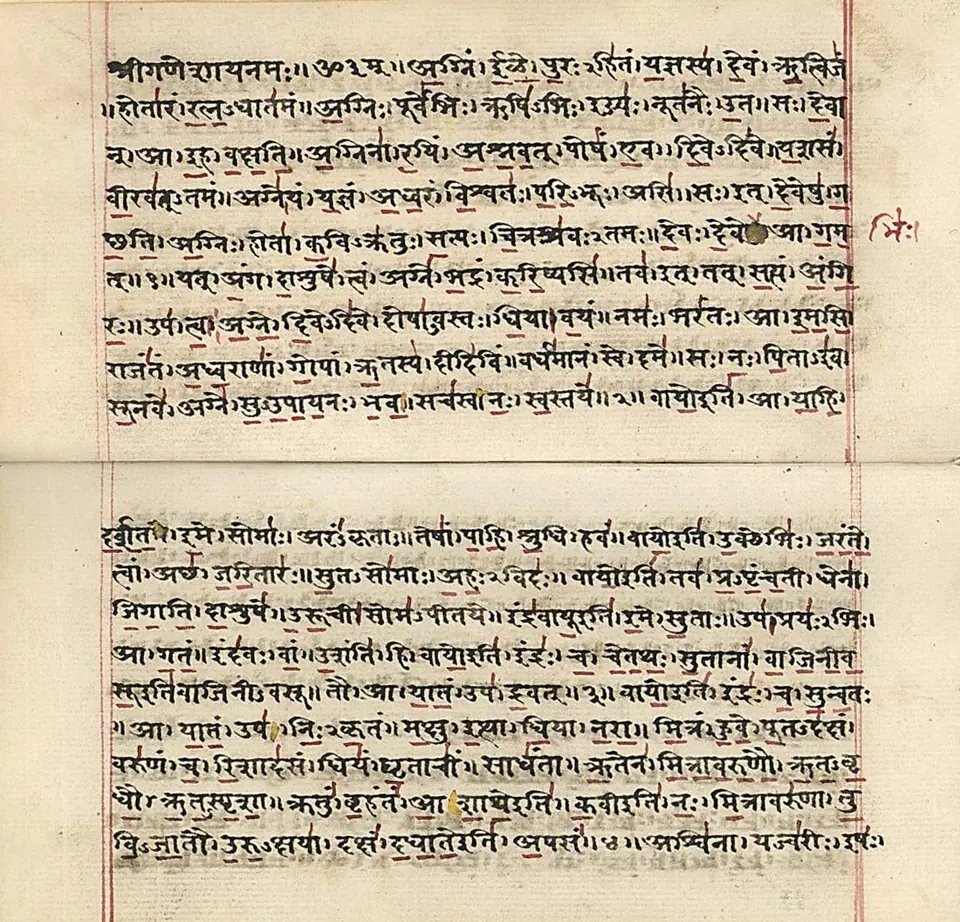
Layer 1 — the Vedic gods (c. 1500–1000 BCE). The Rigveda is already plural. Its hymns go to Indra (about 250), Agni (about 200), Soma (about 120), the Aśvins, Mitra and Varuṇa, the Maruts, the dawn goddess Uṣas, and many more; Viṣṇu gets about five hymns and Rudra, later Śiva, about three. The hymns themselves speak of the gods as “thrice eleven.”[2] In the oldest books these are distinct persons with distinct appetites, not aspects of one being. Consensus
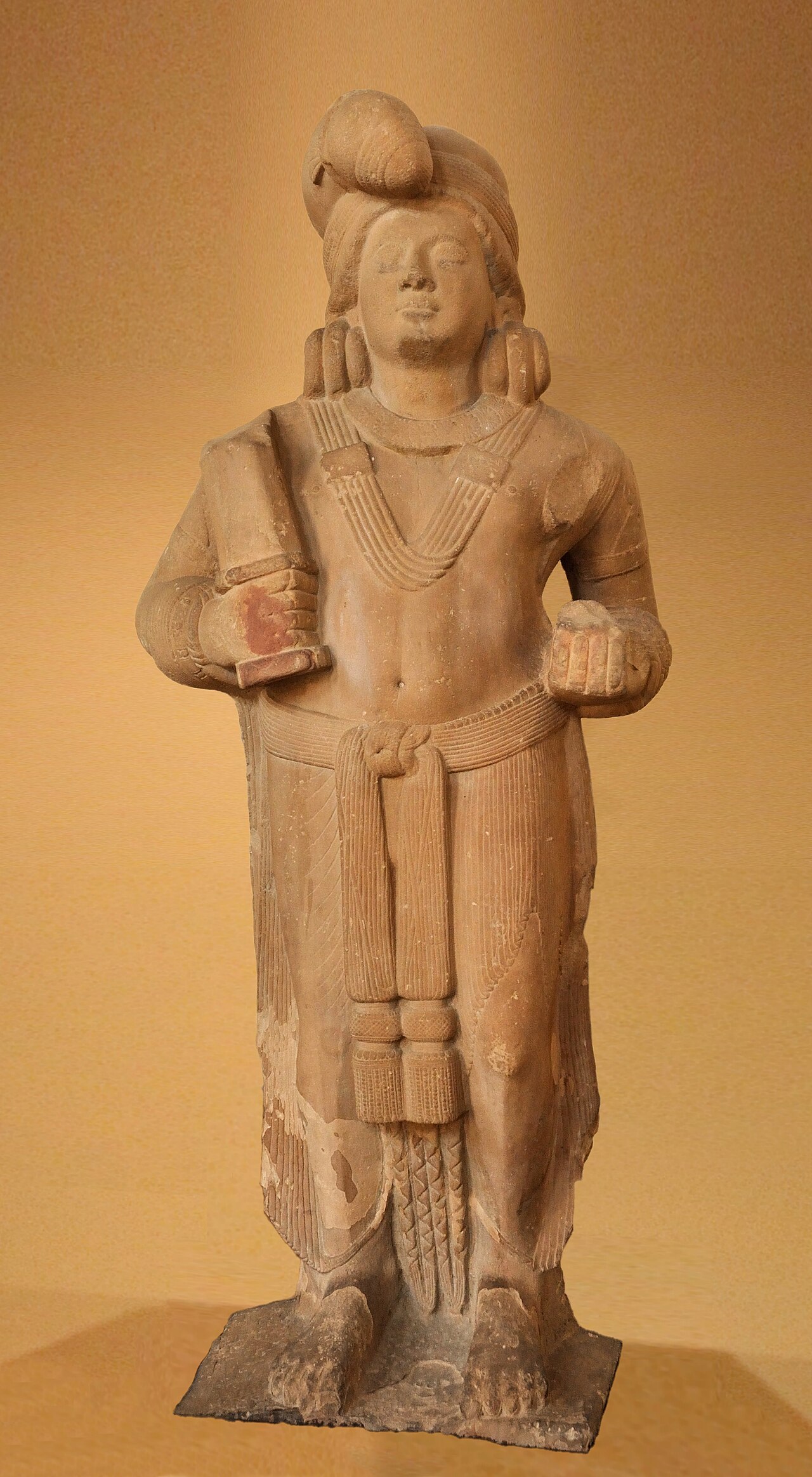
Layer 2 — the non-Vedic world that was always there. Village goddesses such as Māriamman, Śītalā and Yellamma, with buffalo sacrifice and non-brahmin priests; serpent (nāga) worship; sacred trees, above all the pipal — most scholars regard these as non-Vedic in origin, descending from the religion of the people who lived in South Asia before and alongside the Vedic stream.[1][3] Majority When image worship becomes visible at Mathurā from around 100 BCE, the images of Vāsudeva, Balarāma, Sūrya and others are carved in the sculptural language developed for yakṣa and nāga cults.[4][5]
Layer 3 — regional gods absorbed as the tradition spread. The Tamil Sangam poems (c. 300 BCE – 300 CE) document a fully developed southern religion of its own: Murugaṉ of the hills, worshipped with possession dance; Māyōṉ, “the dark one,” in the pastoral tracts; Koṟṟavai, a war goddess. Over the following centuries Murugaṉ is identified with Skanda-Kārttikeya, Māyōṉ with Kṛṣṇa, and Koṟṟavai with Durgā.[6][7] Majority Gaṇeśa, absent from the Vedas entirely, is emerging by the Gupta period.[8] Each identification added a name to the pantheon rather than removing one.
Layer 4 — the Goddess, and one-in-many (c. 550 CE). The Devī Māhātmya (c. 550–600 CE) makes a goddess the supreme reality and names a long list of local and independent goddesses as her forms. Its refrain:
या देवी सर्वभूतेषु शक्तिरूपेण संस्थिता । नमस्तस्यै नमस्तस्यै नमस्तस्यै नमो नमः ॥
yā devī sarvabhūteṣu śakti-rūpeṇa saṃsthitā | namas tasyai namas tasyai namas tasyai namo namaḥ ||
“The Goddess who abides in all beings in the form of power — to her salutation, to her salutation, to her salutation, salutation again and again.” — Devī Māhātmya 5[9]
What it proves: this is the machinery by which the village goddesses, with no Vedic ancestry at all, were brought inside one Sanskrit theology without being abolished.[10] Majority Mahiṣāsuramardinī sculptures at Mathurā are four centuries older than the text, so the text was claiming something already long practised.[5]
The theology that let the gods multiply
The key idea appears early, in a late hymn of the Rigveda:
इन्द्रं मित्रं वरुणमग्निमाहुरथो दिव्यः स सुपर्णो गरुत्मान् । एकं सद्विप्रा बहुधा वदन्त्यग्निं यमं मातरिश्वानमाहुः ॥
índraṃ mitráṃ váruṇam agním āhur átho divyáḥ sá suparṇó garútmān | ékaṃ sád víprā bahudhā́ vadanty agníṃ yamáṃ mātaríśvānam āhuḥ ||
“They call it Indra, Mitra, Varuṇa, Agni — and it is the heavenly winged Garutmān. That which is, is One; the seers speak of it in many ways.” — RV 1.164.46[11]
What it proves: the move that makes many gods compatible with one reality was available by the end of the Rigvedic period. It was not yet the operating theology of the oldest hymns, but every later tradition could build on it. Majority
Later strands developed it in different directions. The Upaniṣads subordinated all the gods to an impersonal brahman — the Kena Upaniṣad has Agni unable to burn a blade of grass without it.[12] Buddhists and Jains accepted that gods exist but placed them inside the cycle of rebirth.[13] The Purāṇas let each worshipper choose a personal deity (iṣṭadevatā) as supreme while treating the others as that deity’s forms, attendants or lesser powers; Indra, Agni and Varuṇa became guardians of the directions.[8] A system in which a god can be demoted without being deleted accumulates gods.
A short timeline
| Date | What happens | Confidence |
|---|---|---|
| c. 1500–1000 BCE | Rigveda: many distinct gods; Indra and Agni dominant[2] | Consensus |
| c. 1100 BCE | RV 1.164.46: “the One, called by many names”[11] | Majority |
| c. 1000–800 BCE | Brāhmaṇas: Prajāpati supreme; Rudra gains a liturgy; “the sacrifice is Viṣṇu”[14][15] | Consensus |
| c. 500 BCE | Kena Upaniṣad: the gods’ power is brahman’s[12] | Majority |
| c. 300 BCE – 300 CE | Sangam poems: Murugaṉ, Māyōṉ, Koṟṟavai[6] | Majority |
| c. 110 BCE | Heliodorus pillar: devotion to Vāsudeva inscribed[16] | Consensus |
| c. 100 BCE | Mathurā: first cult images in the yakṣa idiom[4] | Majority |
| c. 400–500 CE | Purāṇic genre consolidates; avatāra cycles; stone temples[8][17] | Majority |
| c. 550–600 CE | Devī Māhātmya: many goddesses as one Goddess[9][10] | Majority |
What scholars disagree about
Polytheism, henotheism or monotheism? Nineteenth-century scholars coined “henotheism” for the Vedic habit of praising whichever god is being addressed as if he were supreme. Others prefer to see the Rigveda as ordinary polytheism with a late monistic turn, and later sectarian Hinduism as effectively monotheistic for each worshipper — Viṣṇu, Śiva or the Goddess as the one God, with the others subordinate.[11][1] The labels are Western categories and fit awkwardly; the separate page on whether Hinduism is polytheistic or monotheistic takes this up. Contested
How much is absorption, how much internal growth? Some gods clearly grew from Vedic seeds: Rudra from three hymns to an entire Yajurvedic liturgy and then to supreme Śiva; Viṣṇu from three strides to the sacrifice itself and then to the god of the avatāras.[14][15] Others clearly entered from outside: the Goddess has no Vedic descent, and her sources are village goddesses, Sāṃkhya’s active prakṛti, and tribal and forest deities.[10] How much Śiva owes to a pre-Vedic figure such as the horned figure on the “Paśupati” seal is contested.[18]
The traditional view. Many Hindus would say the question starts from the wrong end: there is one ultimate reality, and the many gods are the ways it is known and approached — exactly the claim of RV 1.164.46 and the Devī Māhātmya. That is a theological position with deep roots in the texts themselves, and it is also the reason the pantheon could keep growing.[11][9]
Common misconceptions
- “Hinduism’s gods are all Vedic.” The two supreme gods were minor in the Rigveda, and the Goddess, Gaṇeśa and Skanda are absent from it.[2][7]
- “The oldest Hindu gods are still the most worshipped.” The reverse: Indra, Agni and Varuṇa, who dominate the Rigveda, became minor guardians.[8]
- “Many gods means no unifying idea.” The idea that the many are one is as old as the late Rigveda.[11]
Why it matters
The size of the pantheon is not disorder; it is a record. Each layer — Vedic, substrate, regional, devotional — can still be seen in who is worshipped where and how, and the theology of one-in-many is what held them together. The Vedic starting point is set out in §3, and the Goddess and the Purāṇic pantheon in §8.
References
- ^ a b c Gavin Flood An Introduction to Hinduism. Cambridge University Press, 1996. open library The standard university textbook, and the most balanced single overview.
- ^ a b c Stephanie W. Jamison & Joel P. Brereton, trans. The Rigveda: The Earliest Religious Poetry of India. Oxford University Press, 3 vols., 2014. The standard complete English translation. Supersedes Griffith entirely.
- ^ Asko Parpola The Roots of Hinduism: The Early Aryans and the Indus Civilization. Oxford University Press, 2015. full text The fullest statement of the Dravidian-Indus case. Argued, not established.
- ^ a b Bhūteśvar liṅga relief — Mathurā (Govt. Museum acc. 3625). c. 100 BCE. A liṅga inside a railing being worshipped — securely stratified, urban, and probably the earliest evidence anywhere for enshrined liṅga worship. read the text
- ^ a b Doris Srinivasan Many Heads, Arms and Eyes: Origin, Meaning and Form of Multiplicity in Indian Art. Brill, 1997. On how Hindu iconography emerged.
- ^ a b Sangam corpus — Eṭṭuttokai and Pattuppāṭṭu. c. 300 BCE – 300 CE. Old Tamil. A fully developed non-Vedic southern religion documented independently: Murugaṉ worshipped with possession dance, Māyōṉ in the pastoral tracts, Koṟṟavai a war goddess. about
- ^ a b George L. Hart The Poems of Ancient Tamil: Their Milieu and Their Sanskrit Counterparts. University of California Press, 1975. open library On Sangam-era southern religion.
- ^ a b c d Ludo Rocher The Purāṇas. Harrassowitz, 1986. open library The standard survey, and the clearest statement of why Purāṇas resist dating.
- ^ a b c Devī Māhātmya 5 — Mārkaṇḍeya Purāṇa. c. 550–600 CE. Sanskrit. yā devī sarvabhūteṣu — the first text making a goddess the supreme reality and the source of the male gods' power. about
- ^ a b c Thomas B. Coburn Devī-Māhātmya: The Crystallization of the Goddess Tradition. Motilal Banarsidass, 1984.
- ^ a b c d e RV 1.164.46 — Rigveda. c. 1100 BCE. Vedic Sanskrit. ekaṃ sad viprā bahudhā vadanti — "the One that is, the seers call by many names." Ancestor of every later Hindu claim that the gods are one. read the text
- ^ a b Kena 3 — Kena Upaniṣad. c. 500 BCE. Sanskrit. Agni cannot burn a blade of grass without brahman. The Vedic pantheon formally subordinated to an impersonal absolute. read the text
- ^ DN 2 — Sāmaññaphala Sutta (Dīgha Nikāya). c. 400–300 BCE. Pali. The six heterodox teachers — determinism, materialism, scepticism, atomism — the best map we have of the intellectual landscape, written by a rival. read the text
- ^ a b TS 4.5.8.1 — Taittirīya Saṃhitā (Śatarudrīya). c. 1000 BCE. Vedic Sanskrit. namaḥ śivāya ca śivatarāya ca — the first appearance of the most-recited mantra in Śaivism, as flattery of a feared god. read the text
- ^ a b ŚB 1.1.2.13 — Śatapatha Brāhmaṇa. c. 900 BCE. Vedic Sanskrit. yajño vai viṣṇuḥ — "the sacrifice is Viṣṇu." How Viṣṇu's three Rigvedic strides get him embedded in the ritual core just as ritual is declared supreme. read the text
- ^ Heliodorus pillar — Besnagar (Vidiśā). c. 110 BCE. Prakrit in Brāhmī. A Greek ambassador calls himself a Bhāgavata and Vāsudeva the God of Gods. The oldest hard evidence for bhakti, and datable by Antialkidas's coinage. about
- ^ Sanchi Temple 17 — Madhya Pradesh. c. 400 CE. Among the earliest surviving structural Hindu temples — small, plain, and the beginning of a lineage. about
- ^ Doris Srinivasan "The So-Called Proto-Śiva Seal from Mohenjo-Daro: An Iconological Assessment". Archives of Asian Art 29, 1975. The critique that dismantled the confident Paśupati reading.